Domina Conceptos Médicos

Estudia para la escuela de medicina y tus examenes con Lecturio.

Escoliosis

La escoliosis es una alteración estructural de la columna vertebral caracterizada por una curvatura lateral de la columna superior a 10 grados en EN Erythema nodosum is an immune-mediated panniculitis (inflammation of the subcutaneous fat) caused by a type IV (delayed-type) hypersensitivity reaction. It commonly manifests in young women as tender, erythematous nodules on the shins. Erythema Nodosum el plano coronal Coronal Computed Tomography (CT). La escoliosis se puede clasificar como idiopática ( en EN Erythema nodosum is an immune-mediated panniculitis (inflammation of the subcutaneous fat) caused by a type IV (delayed-type) hypersensitivity reaction. It commonly manifests in young women as tender, erythematous nodules on the shins. Erythema Nodosum la mayoría de los LOS Neisseria casos) o secundaria a condiciones subyacentes. Otras clasificaciones se basan en EN Erythema nodosum is an immune-mediated panniculitis (inflammation of the subcutaneous fat) caused by a type IV (delayed-type) hypersensitivity reaction. It commonly manifests in young women as tender, erythematous nodules on the shins. Erythema Nodosum la etiología, la ubicación y la gravedad. Los LOS Neisseria pacientes presentan asimetría espinal y, a menudo, tienen dolor Dolor Inflammation asociado. El diagnóstico es inicialmente clínico y luego se confirma con una radiografía. El tratamiento puede ser conservador o quirúrgico, dependiendo de la gravedad.

Last updated: Dec 15, 2025

Editorial responsibility: Stanley Oiseth, Lindsay Jones, Evelin Maza

Descripción General

Definición

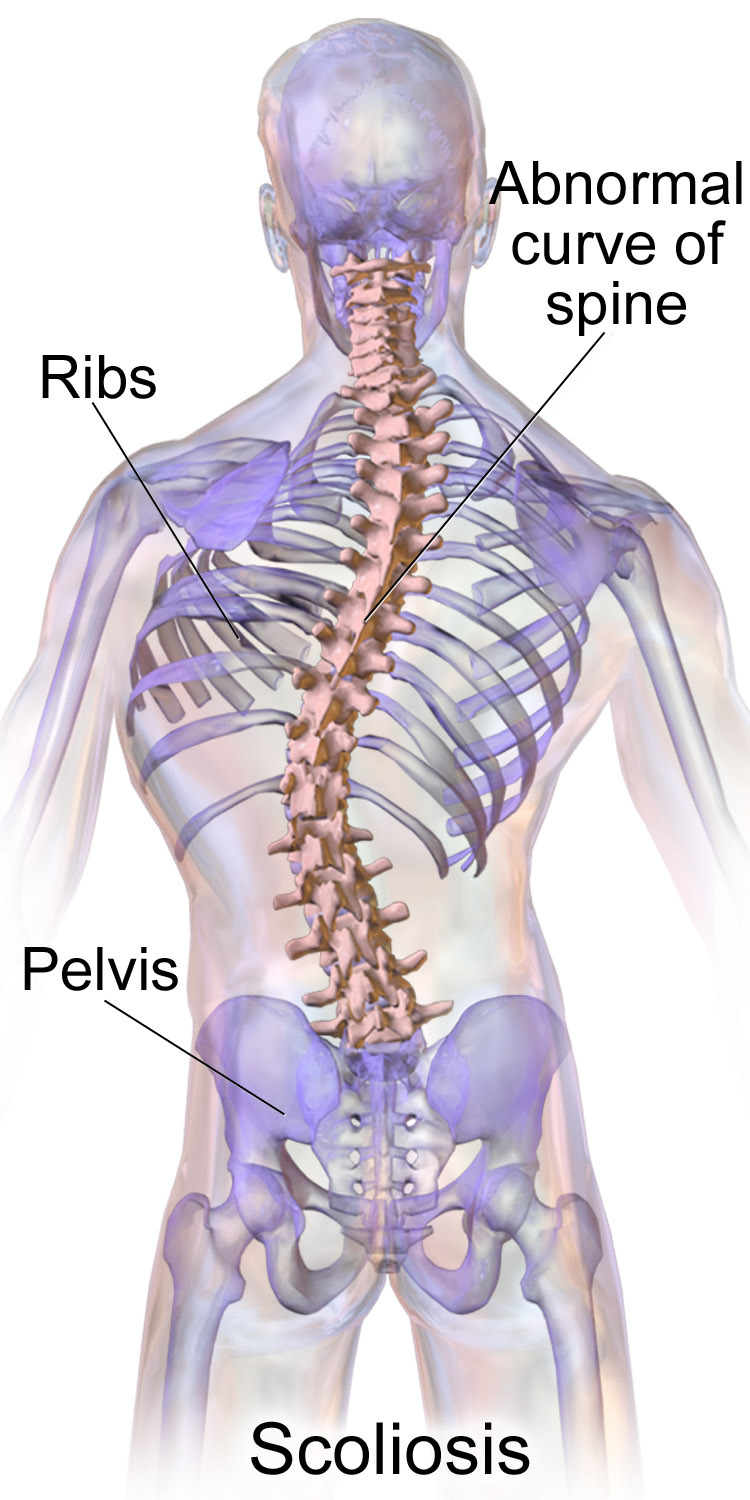
La escoliosis es una curvatura espinal lateral de la columna de más de 10 grados en EN Erythema nodosum is an immune-mediated panniculitis (inflammation of the subcutaneous fat) caused by a type IV (delayed-type) hypersensitivity reaction. It commonly manifests in young women as tender, erythematous nodules on the shins. Erythema Nodosum el plano coronal Coronal Computed Tomography (CT), generalmente acompañada de grados variables de rotación.
Epidemiología

  • Prevalencia: 2%-3% de los LOS Neisseria niños de 10 a 15 años
  • ~10% de los LOS Neisseria pacientes con escoliosis idiopática requiere tratamiento
  • Del 70%–90% de los LOS Neisseria casos son idiopáticos (causa desconocida).
  • Las niñas tienen una mayor probabilidad de progresión (crecimiento rápido → mayor cambio de la curvatura).
  • El tipo más común es el idiopático, seguido del congénito.
  • Tipo más común en EN Erythema nodosum is an immune-mediated panniculitis (inflammation of the subcutaneous fat) caused by a type IV (delayed-type) hypersensitivity reaction. It commonly manifests in young women as tender, erythematous nodules on the shins. Erythema Nodosum la población pediátrica: escoliosis idiopática del adolescente

Clasificación

  • La escoliosis se divide ampliamente en EN Erythema nodosum is an immune-mediated panniculitis (inflammation of the subcutaneous fat) caused by a type IV (delayed-type) hypersensitivity reaction. It commonly manifests in young women as tender, erythematous nodules on the shins. Erythema Nodosum primaria (idiopática) y secundaria a condiciones subyacentes:
    • Tipo I: escoliosis degenerativa primaria (de novo)
    • Tipo II: escoliosis idiopática del adolescente progresiva con cambios degenerativos secundarios
    • Tipo III: escoliosis secundaria a otra condición patológica:
      • Síndrome de Marfan
      • Malformación de Chiari
      • Siringomielia
    • Tipo IIIA: escoliosis lumbosacra caudal a una fusión espinal previa
    • Tipo IIIB: escoliosis secundaria a enfermedad ósea metabólica (e.g., osteoporosis Osteoporosis Osteoporosis refers to a decrease in bone mass and density leading to an increased number of fractures. There are 2 forms of osteoporosis: primary, which is commonly postmenopausal or senile; and secondary, which is a manifestation of immobilization, underlying medical disorders, or long-term use of certain medications. Osteoporosis) combinada con enfermedad degenerativa asimétrica y/o fractura vertebral
  • La escoliosis también se puede clasificar según su reversibilidad:
    • Estructural: las curvas estructurales no se resuelven con el movimiento.
    • Funcional:
      • Columna estructuralmente normal
      • Curvatura secundaria a otras condiciones (e.g. discrepancia en EN Erythema nodosum is an immune-mediated panniculitis (inflammation of the subcutaneous fat) caused by a type IV (delayed-type) hypersensitivity reaction. It commonly manifests in young women as tender, erythematous nodules on the shins. Erythema Nodosum la longitud de las piernas, espasmos musculares)
      • La curvatura se puede reducir con movimientos de flexión lateral o hacia adelante.
    • Cambio de funcional a estructural:
      • Acortamiento progresivo de tejidos blandos
      • Cambios corporales
      • Degeneración del disco
      • Fibrosis Fibrosis Any pathological condition where fibrous connective tissue invades any organ, usually as a consequence of inflammation or other injury. Bronchiolitis Obliterans de ligamentos y fascia Fascia Layers of connective tissue of variable thickness. The superficial fascia is found immediately below the skin; the deep fascia invests muscles, nerves, and other organs. Cellulitis
      • Disminución del rango de movimiento activo y pasivo
  • Clasificación según la gravedad:
    • Leve: 10–19 grados
    • Moderada: 20–45 grados
    • Grave: > 50 grados
  • Clasificación según la causa:
    • Idiopática
    • Congénita
    • Adquirida/secundaria
    • Neuromuscular
Escoliosis

Escoliosis

Imagen: “Blausen 0785 Escoliosis 01” por Blausen. Licencia: CC BY 3.0

Fisiopatología

La escoliosis puede desarrollarse de novo o como una continuación de la escoliosis congénita, idiopática o de desarrollo temprano. La carga desigual en EN Erythema nodosum is an immune-mediated panniculitis (inflammation of the subcutaneous fat) caused by a type IV (delayed-type) hypersensitivity reaction. It commonly manifests in young women as tender, erythematous nodules on the shins. Erythema Nodosum la columna vertebral produce y exacerba la curvatura patológica que se observa en EN Erythema nodosum is an immune-mediated panniculitis (inflammation of the subcutaneous fat) caused by a type IV (delayed-type) hypersensitivity reaction. It commonly manifests in young women as tender, erythematous nodules on the shins. Erythema Nodosum la escoliosis.

  • Escoliosis congénita:
    • Defecto estructural congénito de la columna vertebral
    • Incapacidad de las vértebras para formarse o fusionarse
    • Hemivértebras, defectos del tubo neural (espina bífida)
    • Puede ser unilateral o bilateral
  • Escoliosis adquirida:
    • Alteraciones tisulares o mecánicas obligan a la columna vertebral a adaptarse a una posición patológica que produce la curvatura de la columna:
      • Osteomalacia Osteomalacia Disorder caused by an interruption of the mineralization of organic bone matrix leading to bone softening, bone pain, and weakness. It is the adult form of rickets resulting from disruption of vitamin d; phosphorus; or calcium homeostasis. Osteomalacia and Rickets
      • Ciática
      • Fractura consolidada de pierna o cadera
      • Parálisis cerebral
    • Degeneración asimétrica del disco intervertebral y las articulaciones facetarias debido a la osteoartritis
    • Neuromuscular:
      • Discrepancia en EN Erythema nodosum is an immune-mediated panniculitis (inflammation of the subcutaneous fat) caused by a type IV (delayed-type) hypersensitivity reaction. It commonly manifests in young women as tender, erythematous nodules on the shins. Erythema Nodosum la longitud de las piernas
      • Neurofibromatosis
      • Cuadriplejía
Classification of congenital scoliosis

Clasificación de la escoliosis congénita

Imagen por Lecturio.
Presentación Clínica

Antecedentes

  • Dolor Dolor Inflammation:
    • Dolor Dolor Inflammation agudo y/o urente
    • Asociado con el movimiento
    • Resuelve espontáneamente
  • Las quejas de los LOS Neisseria pacientes variarán según el grupo de edad:
    • Niños: escoliosis idiopática juvenil
      • A menudo asintomático
      • Más progresiva que la escoliosis idiopática del adolescente
      • Revisar entre las edades de 10 y 15 años cuando se está produciendo un crecimiento óseo rápido: se puede notar asimetría.
    • Los LOS Neisseria adolescentes se quejan de que su ropa no les queda bien.
    • Adultos se presentan con:
      • Síntomas de osteoartritis
      • Dolor Dolor Inflammation de espalda y cuello
      • Cefalea
      • Algunos pacientes pueden informar dolor Dolor Inflammation en EN Erythema nodosum is an immune-mediated panniculitis (inflammation of the subcutaneous fat) caused by a type IV (delayed-type) hypersensitivity reaction. It commonly manifests in young women as tender, erythematous nodules on the shins. Erythema Nodosum el pecho.
  • Preguntas importantes de los LOS Neisseria antecedentes para abordar:
    • Edad de inicio
    • Tasa de progresión
    • Características del dolor Dolor Inflammation
    • Quejas neuromusculares
    • Disnea
    • Antecedentes familiares de escoliosis
    • Etapa puberal actual
    • Inicio de la menarquia (niñas)
    • Antecedentes de traumatismo en EN Erythema nodosum is an immune-mediated panniculitis (inflammation of the subcutaneous fat) caused by a type IV (delayed-type) hypersensitivity reaction. It commonly manifests in young women as tender, erythematous nodules on the shins. Erythema Nodosum las extremidades, infección, artritis.

Examen físico

  • Documentar la altura del paciente.
  • Etapa de la pubertad
  • Examen neurológico en EN Erythema nodosum is an immune-mediated panniculitis (inflammation of the subcutaneous fat) caused by a type IV (delayed-type) hypersensitivity reaction. It commonly manifests in young women as tender, erythematous nodules on the shins. Erythema Nodosum busca de debilidad y problemas en EN Erythema nodosum is an immune-mediated panniculitis (inflammation of the subcutaneous fat) caused by a type IV (delayed-type) hypersensitivity reaction. It commonly manifests in young women as tender, erythematous nodules on the shins. Erythema Nodosum la marcha
  • Piel: Buscar manchas café con leche asociadas con neurofibromatosis.
  • Musculoesquelético:
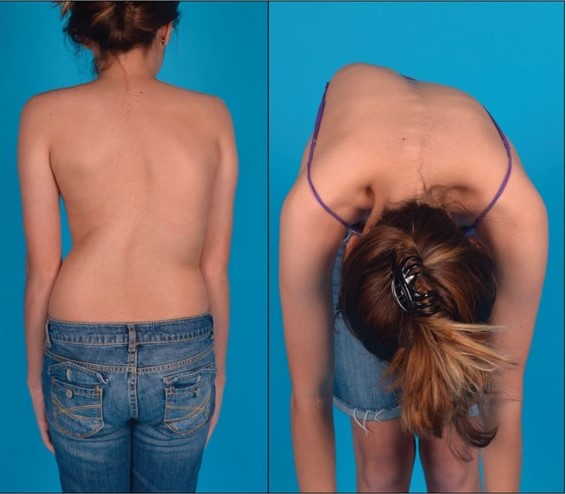
    • Prueba de flexión hacia delante de Adams:
      • Se examina la espalda con el paciente flexionado hacia delante.
      • Buscar asimetría en EN Erythema nodosum is an immune-mediated panniculitis (inflammation of the subcutaneous fat) caused by a type IV (delayed-type) hypersensitivity reaction. It commonly manifests in young women as tender, erythematous nodules on the shins. Erythema Nodosum la espalda (por ejemplo una joroba costal o una prominencia lumbar)
      • La “curva doble” típica presente en EN Erythema nodosum is an immune-mediated panniculitis (inflammation of the subcutaneous fat) caused by a type IV (delayed-type) hypersensitivity reaction. It commonly manifests in young women as tender, erythematous nodules on the shins. Erythema Nodosum la escoliosis idiopática del adolescente es hacia la derecha en EN Erythema nodosum is an immune-mediated panniculitis (inflammation of the subcutaneous fat) caused by a type IV (delayed-type) hypersensitivity reaction. It commonly manifests in young women as tender, erythematous nodules on the shins. Erythema Nodosum la región torácica y hacia la izquierda en EN Erythema nodosum is an immune-mediated panniculitis (inflammation of the subcutaneous fat) caused by a type IV (delayed-type) hypersensitivity reaction. It commonly manifests in young women as tender, erythematous nodules on the shins. Erythema Nodosum la lumbar.
    • Hiperlaxitud de las articulaciones: posible síndrome de Ehler-Danlos
    • Pies:
      • Pie plano
      • Arcos altos
      • Dedos en EN Erythema nodosum is an immune-mediated panniculitis (inflammation of the subcutaneous fat) caused by a type IV (delayed-type) hypersensitivity reaction. It commonly manifests in young women as tender, erythematous nodules on the shins. Erythema Nodosum martillo/garra
    • Simetría:
      • Miembros superiores
      • Nivel del occipucio, hombros, crestas ilíacas, espina ilíaca posterosuperior, espina ilíaca posteroinferior y trocánteres mayores
      • Longitud de miembros inferiores
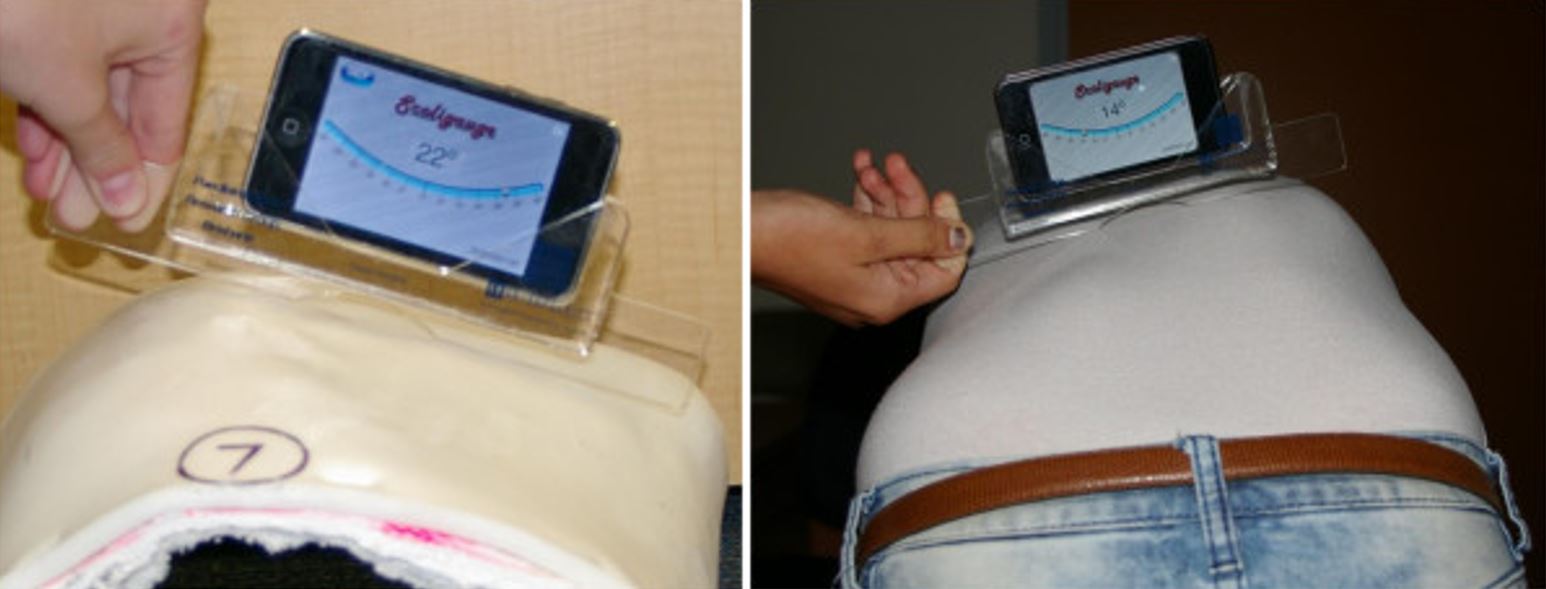
  • Escoliómetro:
    • Mide la angulación de la columna (ángulo de rotación del tronco) mientras el paciente se inclina hacia delante:
      • Tenga una forma consistente y estandarizada de medir todo el tiempo.
      • Utilizar siempre el mismo tipo de instrumento en EN Erythema nodosum is an immune-mediated panniculitis (inflammation of the subcutaneous fat) caused by a type IV (delayed-type) hypersensitivity reaction. It commonly manifests in young women as tender, erythematous nodules on the shins. Erythema Nodosum los LOS Neisseria exámenes de seguimiento.
    • La desviación de la esfera ( en EN Erythema nodosum is an immune-mediated panniculitis (inflammation of the subcutaneous fat) caused by a type IV (delayed-type) hypersensitivity reaction. It commonly manifests in young women as tender, erythematous nodules on the shins. Erythema Nodosum el escoliómetro) del centro se presenta en EN Erythema nodosum is an immune-mediated panniculitis (inflammation of the subcutaneous fat) caused by a type IV (delayed-type) hypersensitivity reaction. It commonly manifests in young women as tender, erythematous nodules on the shins. Erythema Nodosum caso de escoliosis.

Diagnóstico

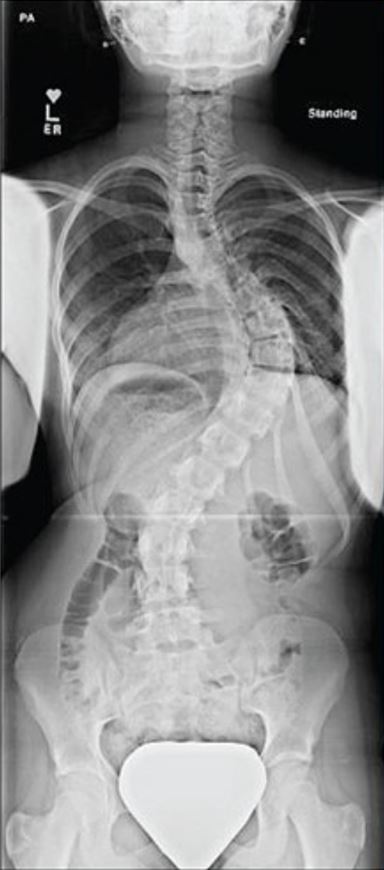
El diagnóstico se realiza inicialmente clínicamente y luego se confirma mediante radiografías, que mostrarán la presencia de una curvatura espinal. La escoliosis idiopática es un diagnóstico de exclusión.
  • Programas de tamizaje en EN Erythema nodosum is an immune-mediated panniculitis (inflammation of the subcutaneous fat) caused by a type IV (delayed-type) hypersensitivity reaction. It commonly manifests in young women as tender, erythematous nodules on the shins. Erythema Nodosum las escuelas
  • Radiografía de la columna: si el tamizaje es anormal
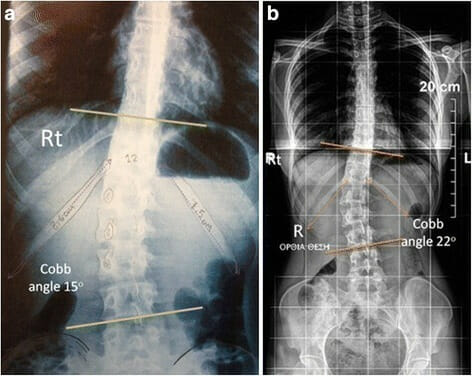
    • Vista posteroanterior (PA) de pie y midiendo el ángulo de Cobb:
      • Trazar una línea en EN Erythema nodosum is an immune-mediated panniculitis (inflammation of the subcutaneous fat) caused by a type IV (delayed-type) hypersensitivity reaction. It commonly manifests in young women as tender, erythematous nodules on the shins. Erythema Nodosum el borde superior de la vértebra más alta inclinada hacia la concavidad y luego trazar una línea perpendicular a esta.
      • Trazar una línea en EN Erythema nodosum is an immune-mediated panniculitis (inflammation of the subcutaneous fat) caused by a type IV (delayed-type) hypersensitivity reaction. It commonly manifests in young women as tender, erythematous nodules on the shins. Erythema Nodosum el borde inferior de la vértebra más baja inclinada hacia la concavidad y luego trazar una línea perpendicular a esta.
      • El ángulo de Cobb son los LOS Neisseria grados medidos en EN Erythema nodosum is an immune-mediated panniculitis (inflammation of the subcutaneous fat) caused by a type IV (delayed-type) hypersensitivity reaction. It commonly manifests in young women as tender, erythematous nodules on the shins. Erythema Nodosum la intersección de las 2 líneas perpendiculares.
      • El ángulo de Cobb resultará mayor que el ángulo de rotación del tronco. Un ángulo de rotación del tronco de 7º se correlaciona con un ángulo de Cobb de 20º.
    • Rayos X en EN Erythema nodosum is an immune-mediated panniculitis (inflammation of the subcutaneous fat) caused by a type IV (delayed-type) hypersensitivity reaction. It commonly manifests in young women as tender, erythematous nodules on the shins. Erythema Nodosum flexión lateral
    • Tener en EN Erythema nodosum is an immune-mediated panniculitis (inflammation of the subcutaneous fat) caused by a type IV (delayed-type) hypersensitivity reaction. It commonly manifests in young women as tender, erythematous nodules on the shins. Erythema Nodosum cuenta los LOS Neisseria detalles para futuras comparaciones:
      • Dirección de la curvatura (dextro o levo)
      • Ubicación: a nivel de la columna cervical, torácica o lumbar
      • Otros hallazgos radiológicos como masas, lesiones vertebrales congénitas o lucencias del cuerpo vertebral
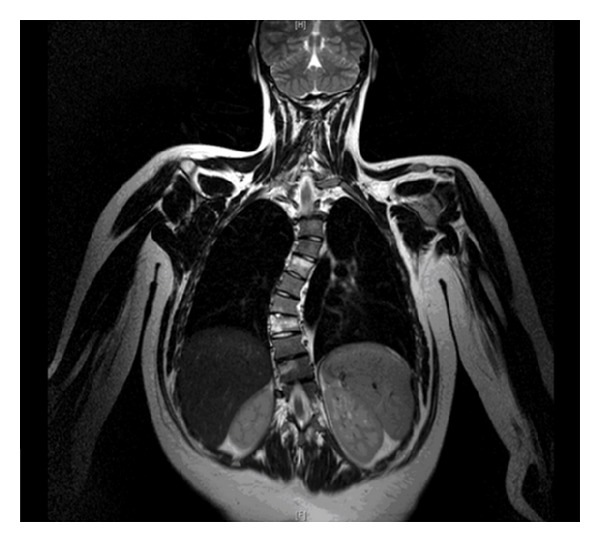
  • Indicaciones para resonancia magnética de la columna:
    • Pacientes menores de 10 años (para evaluar por posibles defectos de la médula espinal)
    • Progresión rápida (aumento del ángulo de Cobb ≥ 10º por año)
    • En EN Erythema nodosum is an immune-mediated panniculitis (inflammation of the subcutaneous fat) caused by a type IV (delayed-type) hypersensitivity reaction. It commonly manifests in young women as tender, erythematous nodules on the shins. Erythema Nodosum pacientes con:
      • Aumento del dolor Dolor Inflammation
      • Síntomas neurológicos asociados
      • Hallazgos anormales en EN Erythema nodosum is an immune-mediated panniculitis (inflammation of the subcutaneous fat) caused by a type IV (delayed-type) hypersensitivity reaction. It commonly manifests in young women as tender, erythematous nodules on the shins. Erythema Nodosum las radiografías simples
  • Laboratorios: solicitados según la sospecha clínica de etiologías subyacentes, según grupo de edad

Tratamiento

El tratamiento varía de conservador a quirúrgico según el grado de escoliosis.

Tratamiento

  • Terapia conservadora:
    • El objetivo es optimizar la funcionalidad del paciente.
    • Observación con examen y radiografía (proyección postero anterior) cada 4–6 meses
    • Soportes para ralentizar la progresión
    • Terapia de manipulación osteopática
    • Programa de ejercicios en EN Erythema nodosum is an immune-mediated panniculitis (inflammation of the subcutaneous fat) caused by a type IV (delayed-type) hypersensitivity reaction. It commonly manifests in young women as tender, erythematous nodules on the shins. Erythema Nodosum casa
    • Fisioterapia: los LOS Neisseria ejercicios específicos para la escoliosis pueden ser una parte beneficiosa del tratamiento.
  • Referencia ortopédica:
    • Si no puede medir el ángulo de Cobb
    • Para un ángulo de Cobb de 20–29 grados en EN Erythema nodosum is an immune-mediated panniculitis (inflammation of the subcutaneous fat) caused by a type IV (delayed-type) hypersensitivity reaction. It commonly manifests in young women as tender, erythematous nodules on the shins. Erythema Nodosum una niña antes de la menarquia o niño de 12–14 años (aun con potencial de crecimiento óseo)
    • Para un ángulo de Cobb > 30 grados en EN Erythema nodosum is an immune-mediated panniculitis (inflammation of the subcutaneous fat) caused by a type IV (delayed-type) hypersensitivity reaction. It commonly manifests in young women as tender, erythematous nodules on the shins. Erythema Nodosum cualquier paciente
    • Progresión rápida del ángulo de Cobb más de 5 grados
  • Objetivos de la cirugía:
    • Primario: utilización de la fusión espinal para la prevención de la progresión de la curva
    • Secundario: Con frecuencia se logra la corrección parcial de la curva.
  • Indicaciones quirúrgicas:
    • Al AL Amyloidosis momento del diagnóstico, el paciente tiene un ángulo de Cobb de ≥ 50 grados
    • A veces, los LOS Neisseria pacientes esqueléticamente inmaduros con ángulo de Cobb entre 40 y 50 grados pueden necesitar cirugía.
  • Procedimientos quirúrgicos: injerto óseo, fusión vertebral (anterior o posterior) e instrumentación
    • Ha HA Hemolytic anemia (HA) is the term given to a large group of anemias that are caused by the premature destruction/hemolysis of circulating red blood cells (RBCs). Hemolysis can occur within (intravascular hemolysis) or outside the blood vessels (extravascular hemolysis). Hemolytic Anemia evolucionado desde las barras de Harrington (conexiones espinales cefálicas y caudales con ganchos) hasta la instrumentación segmentaria moderna (ganchos, tornillos, alambres, varillas)
    • La parte más importante de la cirugía es obtener una fusión ósea: autoinjerto o aloinjerto
    • Período postoperatorio:
      • Sin deportes durante 9–12 meses hasta que la columna se haya fusionado
      • Sin deportes de colisión después de que la columna vertebral se haya fusionado
      • Posibles complicaciones de la cirugía: dolor Dolor Inflammation crónico, infección de los LOS Neisseria elementos de fijación

Complicaciones

  • Progresión de la deformidad de no ser tratada.
  • Desnivel de la base del sacro
  • Restricción cardiaca y pulmonar
  • Dolor Dolor Inflammation de espalda crónico
  • Problemas estéticos
  • Lesión nerviosa
  • Herniación del disco espinal y radiculopatía lumbar

Pronóstico

El pronóstico de la escoliosis depende de la causa subyacente, las comorbilidades y la deformidad en EN Erythema nodosum is an immune-mediated panniculitis (inflammation of the subcutaneous fat) caused by a type IV (delayed-type) hypersensitivity reaction. It commonly manifests in young women as tender, erythematous nodules on the shins. Erythema Nodosum el momento de la presentación.

  • Progresión:
    • Visto en EN Erythema nodosum is an immune-mediated panniculitis (inflammation of the subcutaneous fat) caused by a type IV (delayed-type) hypersensitivity reaction. It commonly manifests in young women as tender, erythematous nodules on the shins. Erythema Nodosum hasta el 70% de los LOS Neisseria pacientes adultos con escoliosis
    • Escoliosis no tratada: 0,5 a 1 grado/año
    • La progresión no se ve VE Ventilation: Mechanics of Breathing afectada por el embarazo.
    • El embarazo no se ve VE Ventilation: Mechanics of Breathing afectado por la escoliosis.
  • Dolor Dolor Inflammation de espalda:
    • Ligeramente mayor incidencia de dolor Dolor Inflammation de espalda en EN Erythema nodosum is an immune-mediated panniculitis (inflammation of the subcutaneous fat) caused by a type IV (delayed-type) hypersensitivity reaction. It commonly manifests in young women as tender, erythematous nodules on the shins. Erythema Nodosum adultos con escoliosis idiopática del adolescente, ya sea tratada o no tratada
    • Los LOS Neisseria pacientes con escoliosis idiopática del adolescente tratados con aparatos ortopédicos o cirugía también pueden tener una mayor incidencia de cambios degenerativos del disco.

Relevancia Clínica

Las siguientes condiciones están asociadas con la escoliosis:

  • Síndrome de Marfan: condición genética con herencia autosómica dominante. El síndrome de Marfan afecta la elasticidad de los LOS Neisseria tejidos conectivos en EN Erythema nodosum is an immune-mediated panniculitis (inflammation of the subcutaneous fat) caused by a type IV (delayed-type) hypersensitivity reaction. It commonly manifests in young women as tender, erythematous nodules on the shins. Erythema Nodosum todo el cuerpo, sobre todo en EN Erythema nodosum is an immune-mediated panniculitis (inflammation of the subcutaneous fat) caused by a type IV (delayed-type) hypersensitivity reaction. It commonly manifests in young women as tender, erythematous nodules on the shins. Erythema Nodosum los LOS Neisseria sistemas cardiovascular, ocular y musculoesquelético. La piel, los LOS Neisseria pulmones y el SNC también se ven afectados.
  • Malformación de Chiari: grupo de afecciones del SNC caracterizadas por el subdesarrollo de la fosa craneal posterior, con la subsiguiente protrusión de estructuras neurales a través del foramen magnum.
  • Parálisis cerebral: síndrome de deterioro motor Motor Neurons which send impulses peripherally to activate muscles or secretory cells. Nervous System: Histology causado por una lesión no progresiva del sistema nervioso central. La parálisis cerebral se clasifica según el tono muscular, su distribución y el momento presunto de la lesión (la diplejía espástica es la más común), y está presente en EN Erythema nodosum is an immune-mediated panniculitis (inflammation of the subcutaneous fat) caused by a type IV (delayed-type) hypersensitivity reaction. It commonly manifests in young women as tender, erythematous nodules on the shins. Erythema Nodosum alrededor de 3 de cada 1 000 nacidos vivos.
  • Herniación del disco intervertebral: condición caracterizada por la degeneración del anillo fibroso y la hernia Hernia Protrusion of tissue, structure, or part of an organ through the bone, muscular tissue, or the membrane by which it is normally contained. Hernia may involve tissues such as the abdominal wall or the respiratory diaphragm. Hernias may be internal, external, congenital, or acquired. Abdominal Hernias del núcleo pulposo de los LOS Neisseria discos intervertebrales. La herniación del disco intervertebral generalmente se presenta como radiculopatía (más comúnmente lumbar) debido a la presión ejercida por el núcleo pulposo herniado.
  • Espondilitis anquilosante: espondiloartropatía caracterizada por la inflamación crónica e indolente del esqueleto axial Axial Computed Tomography (CT). La afección se observa con mayor frecuencia en EN Erythema nodosum is an immune-mediated panniculitis (inflammation of the subcutaneous fat) caused by a type IV (delayed-type) hypersensitivity reaction. It commonly manifests in young women as tender, erythematous nodules on the shins. Erythema Nodosum hombres jóvenes y está fuertemente asociada con HLA-B27. La enfermedad grave puede conducir a la fusión y rigidez de la columna vertebral.
  • Artritis idiopática juvenil: anteriormente conocida como artritis reumatoide juvenil, un grupo heterogéneo de enfermedades inflamatorias caracterizadas por artritis y la enfermedad reumática pediátrica más frecuente.
  • Osteoblastoma Osteoblastoma A benign, painful, tumor of bone characterized by the formation of osteoid tissue, primitive bone and calcified tissue. It occurs frequently in the spine of young persons. Benign Bone Tumors: tumor Tumor Inflammation benigno formador de hueso que se localiza con mayor frecuencia en EN Erythema nodosum is an immune-mediated panniculitis (inflammation of the subcutaneous fat) caused by a type IV (delayed-type) hypersensitivity reaction. It commonly manifests in young women as tender, erythematous nodules on the shins. Erythema Nodosum los LOS Neisseria elementos posteriores de la columna vertebral y que causa síntomas de compresión de la raíz nerviosa.
  • Neurofibromatosis tipo 1: trastorno neurocutáneo que provoca el crecimiento de tumores en EN Erythema nodosum is an immune-mediated panniculitis (inflammation of the subcutaneous fat) caused by a type IV (delayed-type) hypersensitivity reaction. It commonly manifests in young women as tender, erythematous nodules on the shins. Erythema Nodosum el sistema nervioso y la piel y se caracteriza clínicamente por manchas café con leche en EN Erythema nodosum is an immune-mediated panniculitis (inflammation of the subcutaneous fat) caused by a type IV (delayed-type) hypersensitivity reaction. It commonly manifests in young women as tender, erythematous nodules on the shins. Erythema Nodosum la piel.

Referencias

  1. Browner, B., et al. (2020). Skeletal trauma: basic science, management, and reconstruction. Philadelphia, Pa: Elsevier.
  2. Kuznia, A. L., Hernandez, A. K., & Lee, L. U. (2020). Adolescent idiopathic scoliosis: Common questions and answers. American Family Physician, 101(1), 19–23. Retrieved August 14, 2025, from https://www.aafp.org/pubs/afp/issues/2020/0101/p19.html
  3. Hey, L.A. (2024). Scoliosis in the adult. UpToDate. Retrieved August 14, 2025, from https://www.uptodate.com/contents/scoliosis-in-the-adult
  4. LeFever, D., & Menger, R. P. (2023). Infantile and juvenile scoliosis. StatPearls. Retrieved August 14, 2025, from http://www.ncbi.nlm.nih.gov/books/NBK519498/
  5. Menger, R.P., & Sin, A.H. (2023). Adolescent and idiopathic scoliosis. StatPearls. Retrieved August 14, 2025, from http://www.ncbi.nlm.nih.gov/books/NBK499908/
  6. Scherl, S.A. (2024). Adolescent idiopathic scoliosis: Clinical features, evaluation, and diagnosis. UpToDate. Retrieved August 14, 2025, from https://www.uptodate.com/contents/adolescent-idiopathic-scoliosis-clinical-features-evaluation-and-diagnosis

¡Crea tu cuenta gratis o inicia una sesión para seguir leyendo!

Regístrate ahora y obtén acceso gratuito a Lecturio con páginas de concepto, videos médicos y cuestionarios para tu educación médica.

User Reviews

Que tengas una sesión de estudio alegre y navideña 🎁 Ahorra 50% en todos los planes >>

Details