Domina Conceptos Médicos

Estudia para la escuela de medicina y tus examenes con Lecturio.

Enfermedad Diverticular

Los LOS Neisseria divertículos son protuberancias de la pared intestinal que se producen con mayor frecuencia en EN Erythema nodosum is an immune-mediated panniculitis (inflammation of the subcutaneous fat) caused by a type IV (delayed-type) hypersensitivity reaction. It commonly manifests in young women as tender, erythematous nodules on the shins. Erythema Nodosum el colon Colon The large intestines constitute the last portion of the digestive system. The large intestine consists of the cecum, appendix, colon (with ascending, transverse, descending, and sigmoid segments), rectum, and anal canal. The primary function of the colon is to remove water and compact the stool prior to expulsion from the body via the rectum and anal canal. Colon, Cecum, and Appendix: Anatomy. La afección de tener divertículos (llamada diverticulosis Diverticulosis A pathological condition characterized by the presence of a number of colonic diverticula in the colon. Its pathogenesis is multifactorial, including colon aging, motor dysfunction, increases in intraluminal pressure, and lack of dietary fibers. Diverticular Disease) es mayormente asintomática. Sin embargo, estos divertículos pueden volverse sintomáticos cuando se asocian a enfermedades. La diverticulitis Diverticulitis Inflammation of a diverticulum or diverticula. Diverticular Disease es la inflamación de los LOS Neisseria divertículos, que suele presentarse con dolor Dolor Inflammation abdominal bajo y cambios en EN Erythema nodosum is an immune-mediated panniculitis (inflammation of the subcutaneous fat) caused by a type IV (delayed-type) hypersensitivity reaction. It commonly manifests in young women as tender, erythematous nodules on the shins. Erythema Nodosum los LOS Neisseria hábitos intestinales. La afección puede complicarse aún más con un absceso, una perforación, una fístula y una obstrucción intestinal. El tratamiento consiste en EN Erythema nodosum is an immune-mediated panniculitis (inflammation of the subcutaneous fat) caused by a type IV (delayed-type) hypersensitivity reaction. It commonly manifests in young women as tender, erythematous nodules on the shins. Erythema Nodosum antibióticos, reanimación con líquidos y reposo intestinal. La cirugía es necesaria para las complicaciones, el fracaso del tratamiento médico y la enfermedad recurrente. En EN Erythema nodosum is an immune-mediated panniculitis (inflammation of the subcutaneous fat) caused by a type IV (delayed-type) hypersensitivity reaction. It commonly manifests in young women as tender, erythematous nodules on the shins. Erythema Nodosum la mayoría de los LOS Neisseria casos de hemorragia diverticular, se produce un cese espontáneo. La intervención invasiva será necesaria para las hemorragias persistentes o recurrentes.

Last updated: Dec 15, 2025

Editorial responsibility: Stanley Oiseth, Lindsay Jones, Evelin Maza

Descripción General

Definiciones

La diverticulosis Diverticulosis A pathological condition characterized by the presence of a number of colonic diverticula in the colon. Its pathogenesis is multifactorial, including colon aging, motor dysfunction, increases in intraluminal pressure, and lack of dietary fibers. Diverticular Disease es la presencia de múltiples divertículos, que son protuberancias en EN Erythema nodosum is an immune-mediated panniculitis (inflammation of the subcutaneous fat) caused by a type IV (delayed-type) hypersensitivity reaction. It commonly manifests in young women as tender, erythematous nodules on the shins. Erythema Nodosum forma de saco de la pared intestinal.
La enfermedad diverticular es diverticulosis Diverticulosis A pathological condition characterized by the presence of a number of colonic diverticula in the colon. Its pathogenesis is multifactorial, including colon aging, motor dysfunction, increases in intraluminal pressure, and lack of dietary fibers. Diverticular Disease con síntomas asociados.
Presentación de las enfermedades diverticulares

  • Diverticulitis Diverticulitis Inflammation of a diverticulum or diverticula. Diverticular Disease (inflamación del divertículo/divertículo)
  • Complicaciones: obstrucción, fístula, perforación, absceso
  • Hemorragia diverticular
  • Colitis Colitis Inflammation of the colon section of the large intestine, usually with symptoms such as diarrhea (often with blood and mucus), abdominal pain, and fever. Pseudomembranous Colitis segmentaria asociada a divertículos
  • Enfermedad diverticular sintomática no complicada
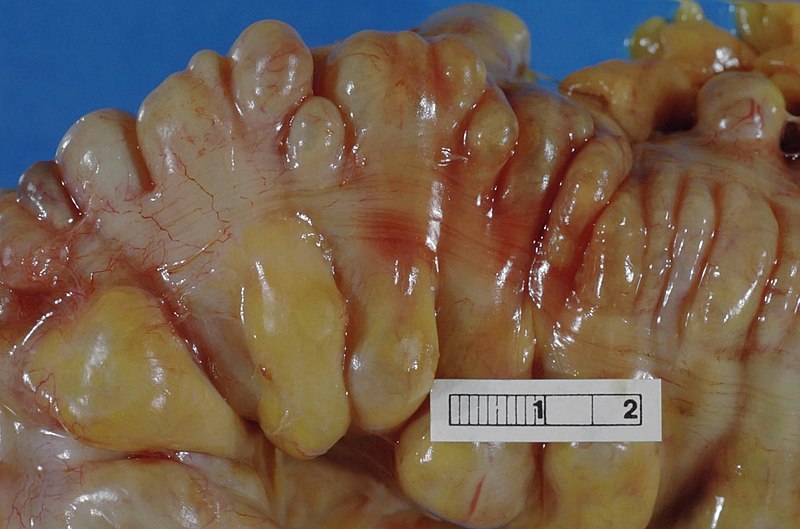
Divertículos, colon sigmoide

Diverticulosis: imagen que muestra el intestino grueso (colon sigmoide) con múltiples divertículos

Imagen: “Large bowel (sigmoid colon)” por Haymanj. Licencia: Dominio Público
Epidemiología

  • El tipo colónico es la diverticulosis Diverticulosis A pathological condition characterized by the presence of a number of colonic diverticula in the colon. Its pathogenesis is multifactorial, including colon aging, motor dysfunction, increases in intraluminal pressure, and lack of dietary fibers. Diverticular Disease más común.
  • Prevalencia:
    • Depende de la edad:
    • Más alto en EN Erythema nodosum is an immune-mediated panniculitis (inflammation of the subcutaneous fat) caused by a type IV (delayed-type) hypersensitivity reaction. It commonly manifests in young women as tender, erythematous nodules on the shins. Erythema Nodosum países con una dieta occidental
  • La distribución varía según la raza/origen étnico:
    • En EN Erythema nodosum is an immune-mediated panniculitis (inflammation of the subcutaneous fat) caused by a type IV (delayed-type) hypersensitivity reaction. It commonly manifests in young women as tender, erythematous nodules on the shins. Erythema Nodosum general, la diverticulosis Diverticulosis A pathological condition characterized by the presence of a number of colonic diverticula in the colon. Its pathogenesis is multifactorial, including colon aging, motor dysfunction, increases in intraluminal pressure, and lack of dietary fibers. Diverticular Disease del lado izquierdo es la más común en EN Erythema nodosum is an immune-mediated panniculitis (inflammation of the subcutaneous fat) caused by a type IV (delayed-type) hypersensitivity reaction. It commonly manifests in young women as tender, erythematous nodules on the shins. Erythema Nodosum los LOS Neisseria Estados Unidos.
    • Afroamericanos: mayor porcentaje de enfermedad en EN Erythema nodosum is an immune-mediated panniculitis (inflammation of the subcutaneous fat) caused by a type IV (delayed-type) hypersensitivity reaction. It commonly manifests in young women as tender, erythematous nodules on the shins. Erythema Nodosum el lado derecho que en EN Erythema nodosum is an immune-mediated panniculitis (inflammation of the subcutaneous fat) caused by a type IV (delayed-type) hypersensitivity reaction. It commonly manifests in young women as tender, erythematous nodules on the shins. Erythema Nodosum los LOS Neisseria blancos
    • Asiáticos: El colon Colon The large intestines constitute the last portion of the digestive system. The large intestine consists of the cecum, appendix, colon (with ascending, transverse, descending, and sigmoid segments), rectum, and anal canal. The primary function of the colon is to remove water and compact the stool prior to expulsion from the body via the rectum and anal canal. Colon, Cecum, and Appendix: Anatomy derecho está predominantemente afectado.
  • Alrededor del 4% de las personas con diverticulosis Diverticulosis A pathological condition characterized by the presence of a number of colonic diverticula in the colon. Its pathogenesis is multifactorial, including colon aging, motor dysfunction, increases in intraluminal pressure, and lack of dietary fibers. Diverticular Disease desarrollan diverticulitis Diverticulitis Inflammation of a diverticulum or diverticula. Diverticular Disease, con una tasa de recurrencia del 20% a los LOS Neisseria 5 años.

Factores de riesgo

  • Dieta:
    • Baja en EN Erythema nodosum is an immune-mediated panniculitis (inflammation of the subcutaneous fat) caused by a type IV (delayed-type) hypersensitivity reaction. It commonly manifests in young women as tender, erythematous nodules on the shins. Erythema Nodosum fibra
    • Alto contenido en EN Erythema nodosum is an immune-mediated panniculitis (inflammation of the subcutaneous fat) caused by a type IV (delayed-type) hypersensitivity reaction. It commonly manifests in young women as tender, erythematous nodules on the shins. Erythema Nodosum grasa
    • Carne roja
    • Semillas y frutos secos no son factores de riesgo.
  • Obesidad
  • Inactividad física
  • Mayor riesgo de enfermedad diverticular complicada:
    • Trastornos genéticos
      • Síndrome de Marfan
      • Síndrome de Ehlers-Danlos
      • Esclerodermia
    • Tabaquismo

Fisiopatología

Diverticulosis Diverticulosis A pathological condition characterized by the presence of a number of colonic diverticula in the colon. Its pathogenesis is multifactorial, including colon aging, motor dysfunction, increases in intraluminal pressure, and lack of dietary fibers. Diverticular Disease

  • La presión intraluminal provoca la herniación de la mucosa y la submucosa a través de las zonas débiles de la pared del colon Colon The large intestines constitute the last portion of the digestive system. The large intestine consists of the cecum, appendix, colon (with ascending, transverse, descending, and sigmoid segments), rectum, and anal canal. The primary function of the colon is to remove water and compact the stool prior to expulsion from the body via the rectum and anal canal. Colon, Cecum, and Appendix: Anatomy.
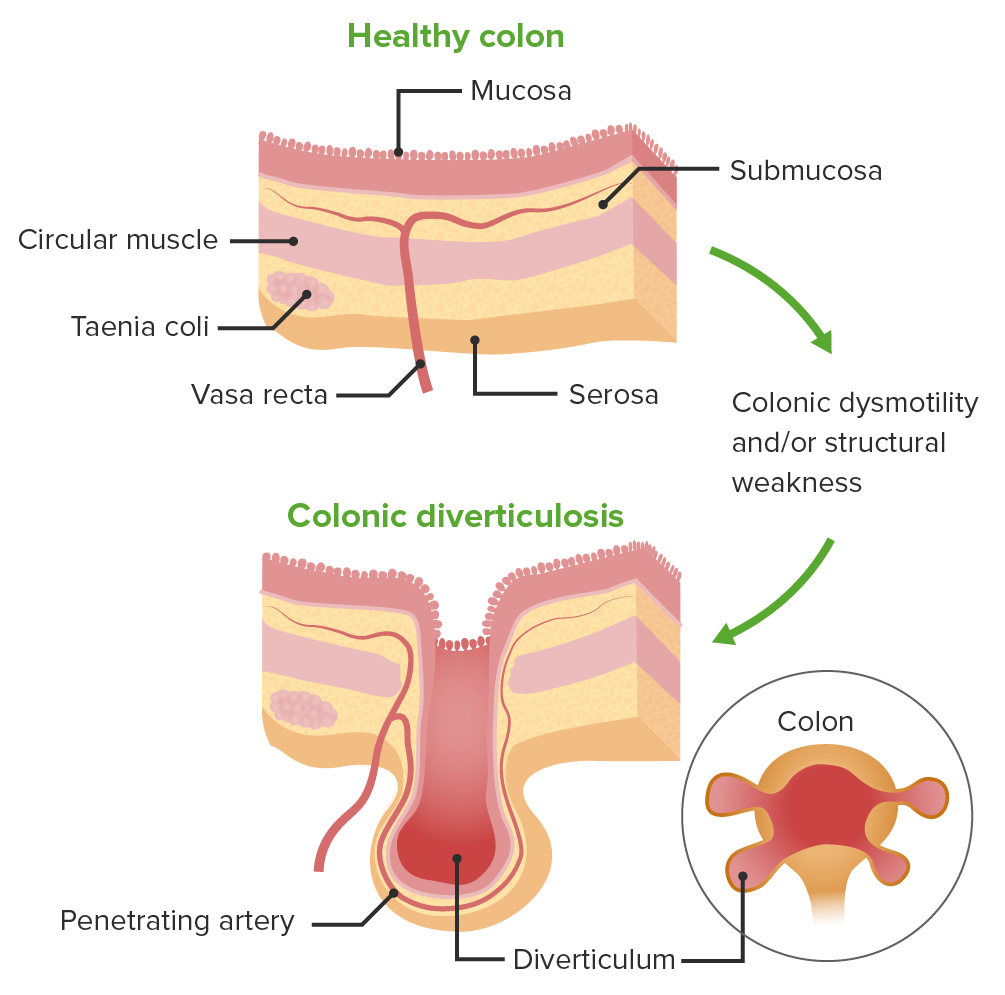
  • Los LOS Neisseria divertículos se producen en EN Erythema nodosum is an immune-mediated panniculitis (inflammation of the subcutaneous fat) caused by a type IV (delayed-type) hypersensitivity reaction. It commonly manifests in young women as tender, erythematous nodules on the shins. Erythema Nodosum estos puntos débiles (donde los LOS Neisseria vasos rectos o nutritivos penetran en EN Erythema nodosum is an immune-mediated panniculitis (inflammation of the subcutaneous fat) caused by a type IV (delayed-type) hypersensitivity reaction. It commonly manifests in young women as tender, erythematous nodules on the shins. Erythema Nodosum la capa muscular).
  • Los divertículos colónicos se consideran “falsos” divertículos o pseudodivertículos (no contienen todas las capas de la pared intestinal), ya que no contienen una capa muscular.
  • En EN Erythema nodosum is an immune-mediated panniculitis (inflammation of the subcutaneous fat) caused by a type IV (delayed-type) hypersensitivity reaction. It commonly manifests in young women as tender, erythematous nodules on the shins. Erythema Nodosum la mayoría de los LOS Neisseria pacientes, la diverticulosis Diverticulosis A pathological condition characterized by the presence of a number of colonic diverticula in the colon. Its pathogenesis is multifactorial, including colon aging, motor dysfunction, increases in intraluminal pressure, and lack of dietary fibers. Diverticular Disease afecta al AL Amyloidosis sigmoide (lugar más común) y al AL Amyloidosis colon Colon The large intestines constitute the last portion of the digestive system. The large intestine consists of the cecum, appendix, colon (with ascending, transverse, descending, and sigmoid segments), rectum, and anal canal. The primary function of the colon is to remove water and compact the stool prior to expulsion from the body via the rectum and anal canal. Colon, Cecum, and Appendix: Anatomy descendente.
Divertículos colónicos

Fisiopatología del desarrollo de la diverticulosis a partir de un colon sano.
Los divertículos colónicos se forman cuando la mucosa y la submucosa se hernian a través de la envoltura que rodea los vasos rectos intramurales (vasos nutritivos).

Imagen por Lecturio.

Diverticulitis Diverticulitis Inflammation of a diverticulum or diverticula. Diverticular Disease

  • El aumento de la presión intraluminal y/o el engrosamiento de las partículas de alimentos contribuyen a la erosión de la pared diverticular.
  • En EN Erythema nodosum is an immune-mediated panniculitis (inflammation of the subcutaneous fat) caused by a type IV (delayed-type) hypersensitivity reaction. It commonly manifests in young women as tender, erythematous nodules on the shins. Erythema Nodosum una minoría de casos de diverticulosis Diverticulosis A pathological condition characterized by the presence of a number of colonic diverticula in the colon. Its pathogenesis is multifactorial, including colon aging, motor dysfunction, increases in intraluminal pressure, and lack of dietary fibers. Diverticular Disease, se produce inflamación, isquemia focal y/o necrosis Necrosis The death of cells in an organ or tissue due to disease, injury or failure of the blood supply. Ischemic Cell Damage ( diverticulitis Diverticulitis Inflammation of a diverticulum or diverticula. Diverticular Disease), con translocación bacteriana y posible micro/macroperforación.

Tipos de diverticulitis Diverticulitis Inflammation of a diverticulum or diverticula. Diverticular Disease

La diverticulitis Diverticulitis Inflammation of a diverticulum or diverticula. Diverticular Disease suele ser leve, con el mesenterio y la grasa pericólica taponando una pequeña perforación. Una enfermedad más extensa puede provocar complicaciones.
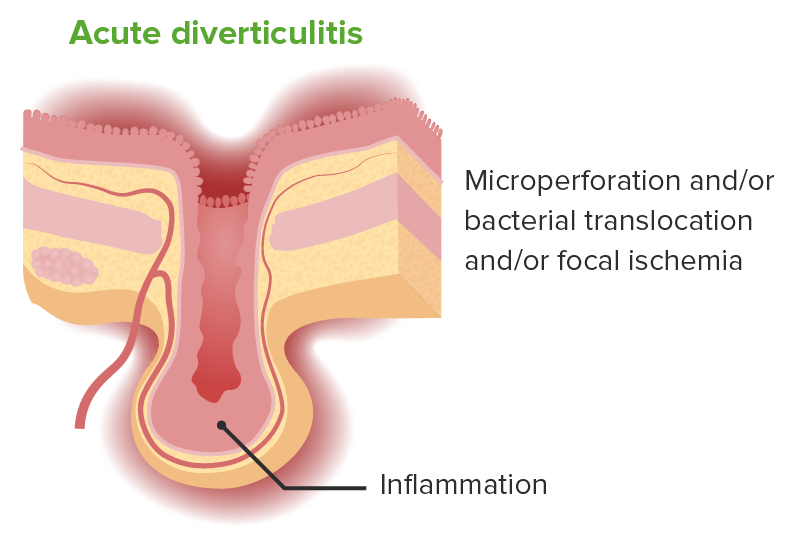
Diverticulitis aguda

Fisiopatología de la diverticulitis.
La diverticulitis aguda es una inflamación localizada en un divertículo y en la mucosa circundante. El proceso puede incluir la microperforación o la translocación bacteriana, o la isquemia focal.
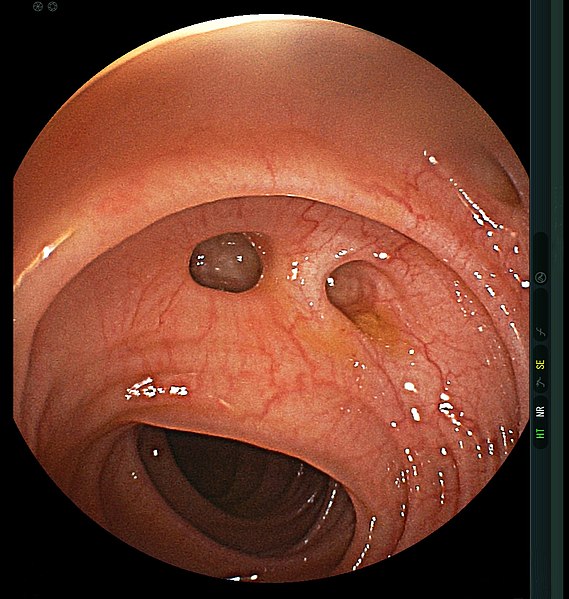
Imagen por Lecturio.

Presentación Clínica

Diverticulosis Diverticulosis A pathological condition characterized by the presence of a number of colonic diverticula in the colon. Its pathogenesis is multifactorial, including colon aging, motor dysfunction, increases in intraluminal pressure, and lack of dietary fibers. Diverticular Disease

  • Asintomática
  • En EN Erythema nodosum is an immune-mediated panniculitis (inflammation of the subcutaneous fat) caused by a type IV (delayed-type) hypersensitivity reaction. It commonly manifests in young women as tender, erythematous nodules on the shins. Erythema Nodosum la mayoría de los LOS Neisseria casos, se detecta incidentalmente en EN Erythema nodosum is an immune-mediated panniculitis (inflammation of the subcutaneous fat) caused by a type IV (delayed-type) hypersensitivity reaction. It commonly manifests in young women as tender, erythematous nodules on the shins. Erythema Nodosum la colonoscopia o el enema de bario

Diverticulitis Diverticulitis Inflammation of a diverticulum or diverticula. Diverticular Disease

  • Síntomas:
    • Dolor Dolor Inflammation abdominal
      • Constante
      • Cuadrante inferior izquierdo o suprapúbico más común
      • Cuadrante inferior derecho si es derecho
    • Urgencia urinaria (por irritación de la vejiga)
    • Estreñimiento o diarrea
    • Fiebre, náuseas/vómitos
  • Signos:
    • Sensibilidad en EN Erythema nodosum is an immune-mediated panniculitis (inflammation of the subcutaneous fat) caused by a type IV (delayed-type) hypersensitivity reaction. It commonly manifests in young women as tender, erythematous nodules on the shins. Erythema Nodosum el cuadrante inferior izquierdo y en EN Erythema nodosum is an immune-mediated panniculitis (inflammation of the subcutaneous fat) caused by a type IV (delayed-type) hypersensitivity reaction. It commonly manifests in young women as tender, erythematous nodules on the shins. Erythema Nodosum las zonas suprapúbicas ( en EN Erythema nodosum is an immune-mediated panniculitis (inflammation of the subcutaneous fat) caused by a type IV (delayed-type) hypersensitivity reaction. It commonly manifests in young women as tender, erythematous nodules on the shins. Erythema Nodosum el cuadrante inferior derecho si hay diverticulitis Diverticulitis Inflammation of a diverticulum or diverticula. Diverticular Disease del lado derecho)
    • Irritación peritoneal local (sensibilidad de rebote)
    • La defensa difusa y la peritonitis Peritonitis Inflammation of the peritoneum lining the abdominal cavity as the result of infectious, autoimmune, or chemical processes. Primary peritonitis is due to infection of the peritoneal cavity via hematogenous or lymphatic spread and without intra-abdominal source. Secondary peritonitis arises from the abdominal cavity itself through rupture or abscess of intra-abdominal organs. Penetrating Abdominal Injury sugieren una perforación.
    • La fiebre y la taquicardia suelen sugerir una enfermedad complicada.

Diagnóstico

Diverticulosis Diverticulosis A pathological condition characterized by the presence of a number of colonic diverticula in the colon. Its pathogenesis is multifactorial, including colon aging, motor dysfunction, increases in intraluminal pressure, and lack of dietary fibers. Diverticular Disease

  • El paciente es asintomático: no hay que hacer pruebas
  • Descubierto incidentalmente tras la realización de pruebas
  • Enfermedad diverticular: las pruebas dependen de los LOS Neisseria síntomas que se presenten y de la enfermedad que se sospeche.
Divertículo de colon

Diverticulosis: colonoscopia que muestra divertículos en el colon

Imagen: “Diverticulum” por MAC 06. Licencia: CC BY 4.0
Diverticulitis Diverticulitis Inflammation of a diverticulum or diverticula. Diverticular Disease

  • Antecedente clínico:
    • Dolor Dolor Inflammation en EN Erythema nodosum is an immune-mediated panniculitis (inflammation of the subcutaneous fat) caused by a type IV (delayed-type) hypersensitivity reaction. It commonly manifests in young women as tender, erythematous nodules on the shins. Erythema Nodosum cuadrante inferior izquierdo o suprapúbico
    • Episodios similares de dolor Dolor Inflammation recurrentes
  • Estudios de laboratorio:
    • Recuento elevado de leucocitos (con desviación a la izquierda)
    • Proteína C reactiva elevada
  • Tomografía computarizada(TC):
    • Examen de elección
    • Mostrará:
      • Divertículos
      • Engrosamiento de la pared del colon Colon The large intestines constitute the last portion of the digestive system. The large intestine consists of the cecum, appendix, colon (with ascending, transverse, descending, and sigmoid segments), rectum, and anal canal. The primary function of the colon is to remove water and compact the stool prior to expulsion from the body via the rectum and anal canal. Colon, Cecum, and Appendix: Anatomy (> 4 mm)
      • Heterogeneidad de la grasa pericolónica
      • Microperforaciones (pequeñas burbujas de gas junto a la pared del colon Colon The large intestines constitute the last portion of the digestive system. The large intestine consists of the cecum, appendix, colon (with ascending, transverse, descending, and sigmoid segments), rectum, and anal canal. The primary function of the colon is to remove water and compact the stool prior to expulsion from the body via the rectum and anal canal. Colon, Cecum, and Appendix: Anatomy)
    • Si hay complicaciones, los LOS Neisseria hallazgos incluyen:
      • Absceso: acumulación de líquido con restos necróticos o niveles de aire-líquido
      • Fístula: se observa la acumulación de aire dentro de otros órganos
      • Obstrucción: asas intestinales dilatadas
      • Perforación: aire libre presente
  • Ultrasonido:
    • Puede mostrar inflamación, engrosamiento de la pared intestinal, divertículos, abscesos
    • Depende del operador y requiere experiencia
    • Rara vez se utiliza en EN Erythema nodosum is an immune-mediated panniculitis (inflammation of the subcutaneous fat) caused by a type IV (delayed-type) hypersensitivity reaction. It commonly manifests in young women as tender, erythematous nodules on the shins. Erythema Nodosum la práctica
  • Resonancia magnética (RM):
    • Resultados similares a los LOS Neisseria de la TC
    • Puede utilizarse cuando la TC está contraindicada
  • Colonoscopia:
    • Contraindicada durante un episodio agudo de diverticulitis Diverticulitis Inflammation of a diverticulum or diverticula. Diverticular Disease debido al AL Amyloidosis mayor riesgo de perforación
    • Recomendado 68 semanas después de la resolución del episodio agudo:
      • Para establecer la extensión de la enfermedad
      • Para descartar otros diagnósticos (malignidad: se encuentra en EN Erythema nodosum is an immune-mediated panniculitis (inflammation of the subcutaneous fat) caused by a type IV (delayed-type) hypersensitivity reaction. It commonly manifests in young women as tender, erythematous nodules on the shins. Erythema Nodosum el 1,3% de las diverticulitis Diverticulitis Inflammation of a diverticulum or diverticula. Diverticular Disease simples y en EN Erythema nodosum is an immune-mediated panniculitis (inflammation of the subcutaneous fat) caused by a type IV (delayed-type) hypersensitivity reaction. It commonly manifests in young women as tender, erythematous nodules on the shins. Erythema Nodosum el 8% de las complicadas)

Tratamiento

Clasificación de Hinchey de la gravedad de la diverticulitis Diverticulitis Inflammation of a diverticulum or diverticula. Diverticular Disease aguda

  • Basado en EN Erythema nodosum is an immune-mediated panniculitis (inflammation of the subcutaneous fat) caused by a type IV (delayed-type) hypersensitivity reaction. It commonly manifests in young women as tender, erythematous nodules on the shins. Erythema Nodosum las características radiográficas
  • Ayuda a dirigir el tratamiento quirúrgico de las complicaciones de la diverticulitis Diverticulitis Inflammation of a diverticulum or diverticula. Diverticular Disease
Hinchey 1a Flemón (localizado)
Hinchey 1b Absceso pericolónico/mesentérico
Hinchey 2 Absceso pélvico
Hinchey 3 Peritonitis Peritonitis Inflammation of the peritoneum lining the abdominal cavity as the result of infectious, autoimmune, or chemical processes. Primary peritonitis is due to infection of the peritoneal cavity via hematogenous or lymphatic spread and without intra-abdominal source. Secondary peritonitis arises from the abdominal cavity itself through rupture or abscess of intra-abdominal organs. Penetrating Abdominal Injury purulenta generalizada
Hinchey 4 Peritonitis Peritonitis Inflammation of the peritoneum lining the abdominal cavity as the result of infectious, autoimmune, or chemical processes. Primary peritonitis is due to infection of the peritoneal cavity via hematogenous or lymphatic spread and without intra-abdominal source. Secondary peritonitis arises from the abdominal cavity itself through rupture or abscess of intra-abdominal organs. Penetrating Abdominal Injury feculenta generalizada

Tratamiento médico

  • Ambulatorio (generalmente para Hinchey 1a)
    • Curso de 7–10 días de antibióticos orales
      • Fluoroquinolonas + metronidazol
      • Amoxicilina-clavulanato
      • Trimetoprima-sulfametoxazol + metronidazol
    • Modificación de la dieta (opcional): 2–3 días de dieta líquida clara
    • Vuelva a evaluar en EN Erythema nodosum is an immune-mediated panniculitis (inflammation of the subcutaneous fat) caused by a type IV (delayed-type) hypersensitivity reaction. It commonly manifests in young women as tender, erythematous nodules on the shins. Erythema Nodosum 2–3 días.
  • Hospitalización
    • Criterios de admisión:
      • Diverticulitis Diverticulitis Inflammation of a diverticulum or diverticula. Diverticular Disease complicada
      • Microperforación en EN Erythema nodosum is an immune-mediated panniculitis (inflammation of the subcutaneous fat) caused by a type IV (delayed-type) hypersensitivity reaction. It commonly manifests in young women as tender, erythematous nodules on the shins. Erythema Nodosum la TC (Hinchey 1b)
      • Sepsis Sepsis Systemic inflammatory response syndrome with a proven or suspected infectious etiology. When sepsis is associated with organ dysfunction distant from the site of infection, it is called severe sepsis. When sepsis is accompanied by hypotension despite adequate fluid infusion, it is called septic shock. Sepsis and Septic Shock
      • Fiebre > 39°C (102,5°F)
      • Leucocitosis significativa
      • Edad > 70 años
      • Inmunosuprimido
      • Comorbilidades significativas
      • Intolerancia a la ingesta oral
      • Fracaso del tratamiento ambulatorio
    • Antibióticos intravenosos: de amplio espectro con cobertura entérica
    • Reposo intestinal/dieta líquida clara
    • Tratamiento analgésico
    • Repetir la TC en EN Erythema nodosum is an immune-mediated panniculitis (inflammation of the subcutaneous fat) caused by a type IV (delayed-type) hypersensitivity reaction. It commonly manifests in young women as tender, erythematous nodules on the shins. Erythema Nodosum 2–3 días si no hay mejora para evaluar si hay complicaciones.
  • Recuperación (unas 6–8 semanas): realizar una colonoscopia para descartar un cáncer de colon Colon The large intestines constitute the last portion of the digestive system. The large intestine consists of the cecum, appendix, colon (with ascending, transverse, descending, and sigmoid segments), rectum, and anal canal. The primary function of the colon is to remove water and compact the stool prior to expulsion from the body via the rectum and anal canal. Colon, Cecum, and Appendix: Anatomy.

Cirugía

Justificación:

  • Inmediata:
    • Perforación libre/ peritonitis Peritonitis Inflammation of the peritoneum lining the abdominal cavity as the result of infectious, autoimmune, or chemical processes. Primary peritonitis is due to infection of the peritoneal cavity via hematogenous or lymphatic spread and without intra-abdominal source. Secondary peritonitis arises from the abdominal cavity itself through rupture or abscess of intra-abdominal organs. Penetrating Abdominal Injury (Hinchey 3 y 4)
    • Empeoramiento del curso clínico a pesar del tratamiento médico
  • Retardada/electiva (10–12 semanas después de un ataque agudo):
    • La decisión de realizar una cirugía electiva debe ser individualizada y basarse en EN Erythema nodosum is an immune-mediated panniculitis (inflammation of the subcutaneous fat) caused by a type IV (delayed-type) hypersensitivity reaction. It commonly manifests in young women as tender, erythematous nodules on the shins. Erythema Nodosum una toma de decisiones compartida.
    • Ataques recurrentes de diverticulitis Diverticulitis Inflammation of a diverticulum or diverticula. Diverticular Disease complicada (p. ej., absceso, fístula, estenosis)
    • Episodios recurrentes con un impacto significativo en EN Erythema nodosum is an immune-mediated panniculitis (inflammation of the subcutaneous fat) caused by a type IV (delayed-type) hypersensitivity reaction. It commonly manifests in young women as tender, erythematous nodules on the shins. Erythema Nodosum la calidad de vida
    • Después de un ataque inicial para pacientes de alto riesgo:
      • Diabetes Diabetes Diabetes mellitus (DM) is a metabolic disease characterized by hyperglycemia and dysfunction of the regulation of glucose metabolism by insulin. Type 1 DM is diagnosed mostly in children and young adults as the result of autoimmune destruction of β cells in the pancreas and the resulting lack of insulin. Type 2 DM has a significant association with obesity and is characterized by insulin resistance. Diabetes Mellitus
      • Inmunosuprimido
      • Insuficiencia renal
      • Trastornos vasculares del colágeno (e.g., lupus)
    • La diverticulitis Diverticulitis Inflammation of a diverticulum or diverticula. Diverticular Disease complicada debe tratarse inicialmente con terapia médica.

Procedimientos:

  • Electiva/retrasada:
    • Resección segmentaria de colon Colon The large intestines constitute the last portion of the digestive system. The large intestine consists of the cecum, appendix, colon (with ascending, transverse, descending, and sigmoid segments), rectum, and anal canal. The primary function of the colon is to remove water and compact the stool prior to expulsion from the body via the rectum and anal canal. Colon, Cecum, and Appendix: Anatomy con anastomosis primaria
    • Generalmente después de una colonoscopia para descartar otras enfermedades (e.g., cáncer)
  • Admisión de urgencia:
    • Las anastomosis primarias corren el riesgo de tener fugas en EN Erythema nodosum is an immune-mediated panniculitis (inflammation of the subcutaneous fat) caused by a type IV (delayed-type) hypersensitivity reaction. It commonly manifests in young women as tender, erythematous nodules on the shins. Erythema Nodosum caso de inflamación/infección.
    • Es necesario desviar el flujo fecal de la anastomosis hasta su curación:
      • Procedimiento de Hartmann (resección del segmento de colon Colon The large intestines constitute the last portion of the digestive system. The large intestine consists of the cecum, appendix, colon (with ascending, transverse, descending, and sigmoid segments), rectum, and anal canal. The primary function of the colon is to remove water and compact the stool prior to expulsion from the body via the rectum and anal canal. Colon, Cecum, and Appendix: Anatomy implicado con colostomía final): estándar de oro
      • Resección del segmento implicado con anastomosis primaria e ileostomía de asa ASA Anterior Cord Syndrome desviadora: alternativa
      • La reversión de la colostomía/ileostomía puede realizarse en EN Erythema nodosum is an immune-mediated panniculitis (inflammation of the subcutaneous fat) caused by a type IV (delayed-type) hypersensitivity reaction. It commonly manifests in young women as tender, erythematous nodules on the shins. Erythema Nodosum 3–6 meses.

Complicaciones de la Diverticulitis

Absceso diverticular (Hinchey 2)

  • Colección de pus que se forma junto a un divertículo roto
  • El 17% de los LOS Neisseria pacientes hospitalizados con diverticulitis Diverticulitis Inflammation of a diverticulum or diverticula. Diverticular Disease aguda
  • Tratamiento:
    • Antibióticos intravenosos (tratamiento de primera línea)
    • Drenaje percutáneo guiado radiológicamente: para absceso > 4 cm (si es accesible)
    • Cirugía si el paciente no mejora con antibióticos/drenaje
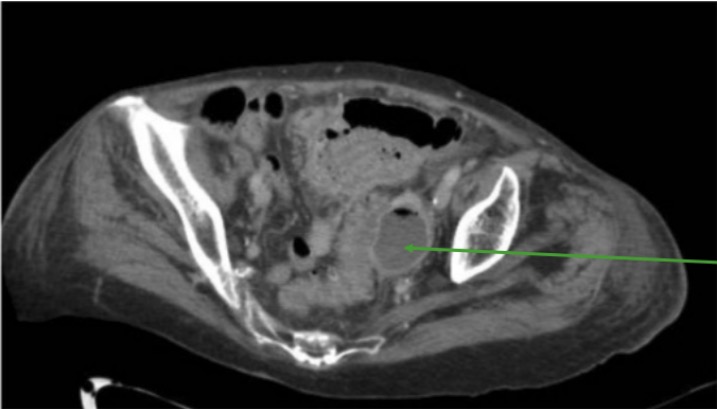
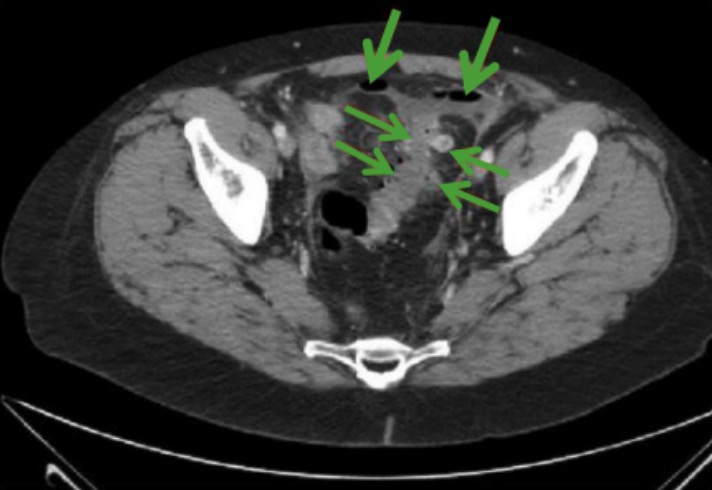
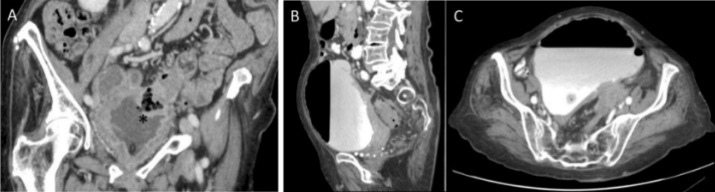
Absceso relacionado con la diverticulitis

Imagen que ilustra un absceso relacionado con diverticulitis sigmoidea: TC que muestra una colección de líquido pericolónico con un nivel de aire-líquido (flecha verde) consistente con un absceso

Imagen: “Sigmoid diverticulitis” por Department of Surgery, Macerata Hospital, Macerata, Italy. Licencia: CC BY 4.0
Obstrucción

  • Puede desarrollarse de forma aguda con una inflamación grave del colon Colon The large intestines constitute the last portion of the digestive system. The large intestine consists of the cecum, appendix, colon (with ascending, transverse, descending, and sigmoid segments), rectum, and anal canal. The primary function of the colon is to remove water and compact the stool prior to expulsion from the body via the rectum and anal canal. Colon, Cecum, and Appendix: Anatomy
  • Suele resolverse cuando la inflamación cede
  • Una estenosis puede desarrollarse después de una fase aguda (cicatrización por inflamación).
  • Estrechez diverticular:
    • Difícil de diferenciar del cáncer
    • Suele requerir una intervención quirúrgica

Perforación

  • Perforación colónica libre con fuga no contenida en EN Erythema nodosum is an immune-mediated panniculitis (inflammation of the subcutaneous fat) caused by a type IV (delayed-type) hypersensitivity reaction. It commonly manifests in young women as tender, erythematous nodules on the shins. Erythema Nodosum la cavidad peritoneal
  • Hinchey grado 3 y 4
  • Los LOS Neisseria pacientes suelen presentar peritonitis Peritonitis Inflammation of the peritoneum lining the abdominal cavity as the result of infectious, autoimmune, or chemical processes. Primary peritonitis is due to infection of the peritoneal cavity via hematogenous or lymphatic spread and without intra-abdominal source. Secondary peritonitis arises from the abdominal cavity itself through rupture or abscess of intra-abdominal organs. Penetrating Abdominal Injury, fiebre y taquicardia.
  • Requiere cirugía de urgencia (procedimiento de Hartmann)

Fístula

  • Las fístulas pueden desarrollarse a medida que la inflamación de la pared del colon Colon The large intestines constitute the last portion of the digestive system. The large intestine consists of the cecum, appendix, colon (with ascending, transverse, descending, and sigmoid segments), rectum, and anal canal. The primary function of the colon is to remove water and compact the stool prior to expulsion from the body via the rectum and anal canal. Colon, Cecum, and Appendix: Anatomy erosiona los LOS Neisseria órganos adyacentes:
    • Colovesical (a la vejiga; se presenta con neumaturia/fecaluria)
    • Colovaginal/colouterina (flujo vaginal maloliente/feculento)
    • Coloentérica ( al AL Amyloidosis intestino delgado)
    • Colocutánea (a la piel)
  • Puede manejarse inicialmente con antibióticos en EN Erythema nodosum is an immune-mediated panniculitis (inflammation of the subcutaneous fat) caused by a type IV (delayed-type) hypersensitivity reaction. It commonly manifests in young women as tender, erythematous nodules on the shins. Erythema Nodosum un paciente estable
  • Raramente se curan solos
  • Eventualmente requieren la resección quirúrgica del segmento de colon Colon The large intestines constitute the last portion of the digestive system. The large intestine consists of the cecum, appendix, colon (with ascending, transverse, descending, and sigmoid segments), rectum, and anal canal. The primary function of the colon is to remove water and compact the stool prior to expulsion from the body via the rectum and anal canal. Colon, Cecum, and Appendix: Anatomy fistulizante

Otras Presentaciones de la Enfermedad Diverticular

Hemorragia diverticular

  • La fuente más común de hemorragia digestiva inferior en EN Erythema nodosum is an immune-mediated panniculitis (inflammation of the subcutaneous fat) caused by a type IV (delayed-type) hypersensitivity reaction. It commonly manifests in young women as tender, erythematous nodules on the shins. Erythema Nodosum adultos
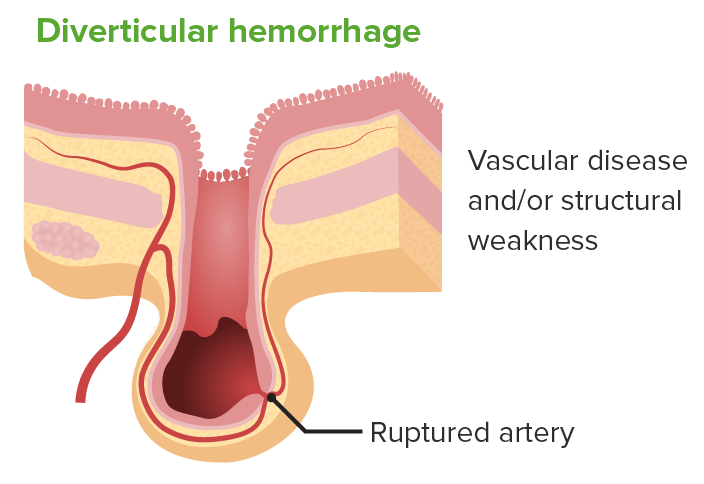
  • Los LOS Neisseria vasos rectos ( en EN Erythema nodosum is an immune-mediated panniculitis (inflammation of the subcutaneous fat) caused by a type IV (delayed-type) hypersensitivity reaction. It commonly manifests in young women as tender, erythematous nodules on the shins. Erythema Nodosum el divertículo), cubiertos únicamente por la capa mucosa, están expuestos a la lesión continua del contenido luminal.
  • Las paredes de los LOS Neisseria vasos se debilitan a causa de los LOS Neisseria cambios en EN Erythema nodosum is an immune-mediated panniculitis (inflammation of the subcutaneous fat) caused by a type IV (delayed-type) hypersensitivity reaction. It commonly manifests in young women as tender, erythematous nodules on the shins. Erythema Nodosum la íntima y la media, lo que predispone a la ruptura y a la hemorragia.
  • 50%–90% se producen en EN Erythema nodosum is an immune-mediated panniculitis (inflammation of the subcutaneous fat) caused by a type IV (delayed-type) hypersensitivity reaction. It commonly manifests in young women as tender, erythematous nodules on the shins. Erythema Nodosum el colon Colon The large intestines constitute the last portion of the digestive system. The large intestine consists of the cecum, appendix, colon (with ascending, transverse, descending, and sigmoid segments), rectum, and anal canal. The primary function of the colon is to remove water and compact the stool prior to expulsion from the body via the rectum and anal canal. Colon, Cecum, and Appendix: Anatomy derecho.
  • Manifestaciones:
    • Hematoquecia generalmente indolora
    • A veces se asocia con cólicos y distensión abdominal
    • La sangre del colon Colon The large intestines constitute the last portion of the digestive system. The large intestine consists of the cecum, appendix, colon (with ascending, transverse, descending, and sigmoid segments), rectum, and anal canal. The primary function of the colon is to remove water and compact the stool prior to expulsion from the body via the rectum and anal canal. Colon, Cecum, and Appendix: Anatomy izquierdo es de color rojo brillante; la del colon Colon The large intestines constitute the last portion of the digestive system. The large intestine consists of the cecum, appendix, colon (with ascending, transverse, descending, and sigmoid segments), rectum, and anal canal. The primary function of the colon is to remove water and compact the stool prior to expulsion from the body via the rectum and anal canal. Colon, Cecum, and Appendix: Anatomy derecho, de color granate/marrón.
    • Se detiene espontáneamente en EN Erythema nodosum is an immune-mediated panniculitis (inflammation of the subcutaneous fat) caused by a type IV (delayed-type) hypersensitivity reaction. It commonly manifests in young women as tender, erythematous nodules on the shins. Erythema Nodosum el 75% de los LOS Neisseria pacientes pero con mayor riesgo de resangrado
  • Diagnóstico y tratamiento de las hemorragias digestivas bajas:
    • El estudio comienza una vez que el paciente está estable y se ha HA Hemolytic anemia (HA) is the term given to a large group of anemias that are caused by the premature destruction/hemolysis of circulating red blood cells (RBCs). Hemolysis can occur within (intravascular hemolysis) or outside the blood vessels (extravascular hemolysis). Hemolytic Anemia completado la reanimación (para la pérdida de sangre).
    • Colonoscopia: prueba de elección por ser diagnóstica y terapéutica
    • Imagenología:
      • Gammagrafía nuclear (gammagrafía de eritrocitos marcados): detecta hemorragias con una tasa de 0,1–0,5 mL/min
      • Angiografía por TC:
        • Detecta las hemorragias con una tasa de 0,3–0,5 mL/min
        • Requiere contraste intravenoso y tiene exposición a la radiación
      • Angiografía:
        • Requiere una pérdida de sangre activa de 0,5–1 mL/min
        • Se puede realizar una intervención terapéutica con vasoconstrictores/embolización (conlleva riesgos de complicaciones).
    • Cirugía si no se puede controlar la hemorragia
Hemorragia diverticular

Ilustración de una hemorragia diverticular:
La hemorragia arterial puede complicar la diverticulosis, siendo la enfermedad vascular o la debilidad estructural los factores que probablemente contribuyan a ella. Es la fuente más común de sangrado digestivo inferior.
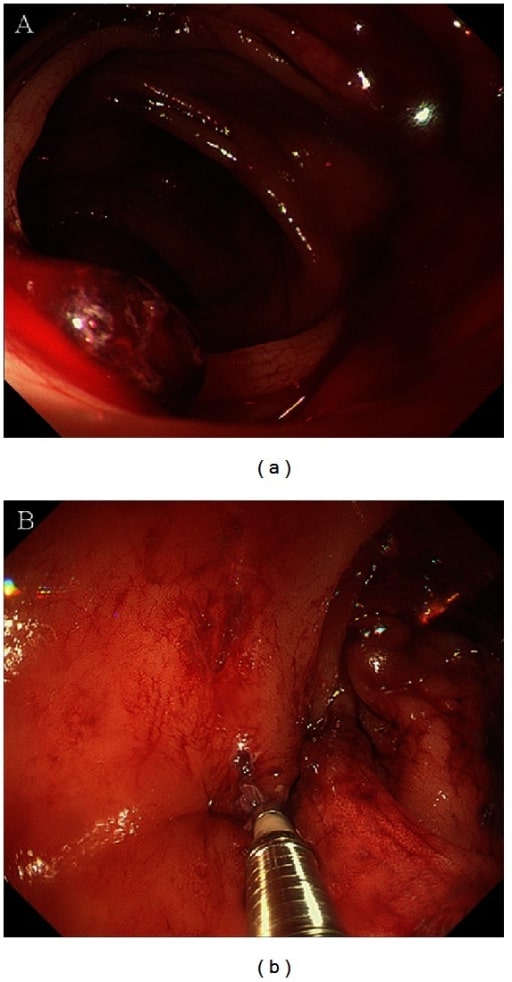
Imagen por Lecturio.

Colitis Colitis Inflammation of the colon section of the large intestine, usually with symptoms such as diarrhea (often with blood and mucus), abdominal pain, and fever. Pseudomembranous Colitis segmentaria asociada a diverticulosis Diverticulosis A pathological condition characterized by the presence of a number of colonic diverticula in the colon. Its pathogenesis is multifactorial, including colon aging, motor dysfunction, increases in intraluminal pressure, and lack of dietary fibers. Diverticular Disease

  • Inflamación de la mucosa interdiverticular (no de los LOS Neisseria divertículos en EN Erythema nodosum is an immune-mediated panniculitis (inflammation of the subcutaneous fat) caused by a type IV (delayed-type) hypersensitivity reaction. It commonly manifests in young women as tender, erythematous nodules on the shins. Erythema Nodosum sí)
  • < 2% de los LOS Neisseria casos con diverticulosis Diverticulosis A pathological condition characterized by the presence of a number of colonic diverticula in the colon. Its pathogenesis is multifactorial, including colon aging, motor dysfunction, increases in intraluminal pressure, and lack of dietary fibers. Diverticular Disease
  • La patogénesis no se entiende exactamente, pero puede estar relacionada con:
    • Inflamación crónica de la mucosa por hernia Hernia Protrusion of tissue, structure, or part of an organ through the bone, muscular tissue, or the membrane by which it is normally contained. Hernia may involve tissues such as the abdominal wall or the respiratory diaphragm. Hernias may be internal, external, congenital, or acquired. Abdominal Hernias diverticular
    • Estasis fecal con el consiguiente cambio en EN Erythema nodosum is an immune-mediated panniculitis (inflammation of the subcutaneous fat) caused by a type IV (delayed-type) hypersensitivity reaction. It commonly manifests in young women as tender, erythematous nodules on the shins. Erythema Nodosum la flora bacteriana
    • Isquemia por cambios en EN Erythema nodosum is an immune-mediated panniculitis (inflammation of the subcutaneous fat) caused by a type IV (delayed-type) hypersensitivity reaction. It commonly manifests in young women as tender, erythematous nodules on the shins. Erythema Nodosum la microcirculación de la mucosa
  • Manifestaciones:
    • Dolor Dolor Inflammation abdominal bajo o en EN Erythema nodosum is an immune-mediated panniculitis (inflammation of the subcutaneous fat) caused by a type IV (delayed-type) hypersensitivity reaction. It commonly manifests in young women as tender, erythematous nodules on the shins. Erythema Nodosum el cuadrante inferior izquierdo
    • Diarrea crónica y hematoquecia ocasional
  • Diagnóstico:
    • Descubierto incidentalmente en EN Erythema nodosum is an immune-mediated panniculitis (inflammation of the subcutaneous fat) caused by a type IV (delayed-type) hypersensitivity reaction. It commonly manifests in young women as tender, erythematous nodules on the shins. Erythema Nodosum la evaluación de la diarrea asociada a dolor Dolor Inflammation abdominal y hematoquecia
    • TC: engrosamiento de la pared del colon Colon The large intestines constitute the last portion of the digestive system. The large intestine consists of the cecum, appendix, colon (with ascending, transverse, descending, and sigmoid segments), rectum, and anal canal. The primary function of the colon is to remove water and compact the stool prior to expulsion from the body via the rectum and anal canal. Colon, Cecum, and Appendix: Anatomy en EN Erythema nodosum is an immune-mediated panniculitis (inflammation of the subcutaneous fat) caused by a type IV (delayed-type) hypersensitivity reaction. It commonly manifests in young women as tender, erythematous nodules on the shins. Erythema Nodosum un segmento con diverticulosis Diverticulosis A pathological condition characterized by the presence of a number of colonic diverticula in the colon. Its pathogenesis is multifactorial, including colon aging, motor dysfunction, increases in intraluminal pressure, and lack of dietary fibers. Diverticular Disease
    • Colonoscopia: inflamación interdiverticular a menudo en EN Erythema nodosum is an immune-mediated panniculitis (inflammation of the subcutaneous fat) caused by a type IV (delayed-type) hypersensitivity reaction. It commonly manifests in young women as tender, erythematous nodules on the shins. Erythema Nodosum el colon Colon The large intestines constitute the last portion of the digestive system. The large intestine consists of the cecum, appendix, colon (with ascending, transverse, descending, and sigmoid segments), rectum, and anal canal. The primary function of the colon is to remove water and compact the stool prior to expulsion from the body via the rectum and anal canal. Colon, Cecum, and Appendix: Anatomy sigmoide, respetando el recto
  • Tratamiento:
    • Antibióticos: ciprofloxacina, metronidazol
    • Otras opciones: mesalamina, curso de prednisona

Enfermedad diverticular sintomática no complicada

  • También se conoce como diverticulitis Diverticulitis Inflammation of a diverticulum or diverticula. Diverticular Disease “latente”.
  • Engrosamiento de la pared del colon Colon The large intestines constitute the last portion of the digestive system. The large intestine consists of the cecum, appendix, colon (with ascending, transverse, descending, and sigmoid segments), rectum, and anal canal. The primary function of the colon is to remove water and compact the stool prior to expulsion from the body via the rectum and anal canal. Colon, Cecum, and Appendix: Anatomy sin inflamación evidente
  • Posibles causas:
    • Motilidad colónica anormal
    • Hipersensibilidad visceral
  • Manifestaciones:
  • Diagnóstico:
    • Descartar otros trastornos funcionales gastrointestinales (e.g., el síndrome del intestino irritable)
    • Hallazgos clínicos:
      • Dolor Dolor Inflammation en EN Erythema nodosum is an immune-mediated panniculitis (inflammation of the subcutaneous fat) caused by a type IV (delayed-type) hypersensitivity reaction. It commonly manifests in young women as tender, erythematous nodules on the shins. Erythema Nodosum enfermedad diverticular sintomática no complicada: más sostenido (a menudo > 24 horas)
      • Dolor Dolor Inflammation que no se alivia con la defecación, a diferencia del síndrome del intestino irritable
      • Sensibilidad localizada en EN Erythema nodosum is an immune-mediated panniculitis (inflammation of the subcutaneous fat) caused by a type IV (delayed-type) hypersensitivity reaction. It commonly manifests in young women as tender, erythematous nodules on the shins. Erythema Nodosum la fosa ilíaca izquierda
    • TC y colonoscopia:
      • Se realiza en EN Erythema nodosum is an immune-mediated panniculitis (inflammation of the subcutaneous fat) caused by a type IV (delayed-type) hypersensitivity reaction. It commonly manifests in young women as tender, erythematous nodules on the shins. Erythema Nodosum función de los LOS Neisseria síntomas, el riesgo de cáncer y el estado clínico
      • La ausencia de divertículos excluye la enfermedad diverticular sintomática no complicada.
  • Tratamiento: dieta rica en EN Erythema nodosum is an immune-mediated panniculitis (inflammation of the subcutaneous fat) caused by a type IV (delayed-type) hypersensitivity reaction. It commonly manifests in young women as tender, erythematous nodules on the shins. Erythema Nodosum fibra; se ha HA Hemolytic anemia (HA) is the term given to a large group of anemias that are caused by the premature destruction/hemolysis of circulating red blood cells (RBCs). Hemolysis can occur within (intravascular hemolysis) or outside the blood vessels (extravascular hemolysis). Hemolytic Anemia probado con éxito la rifaximina

Diagnóstico Diferencial

  • Cáncer colorrectal: neoplasia colónica que suele presentarse con hemorragia rectal y obstrucción colónica. El cáncer colorrectal a veces puede estar asociado a la inflamación; puede perforar y simular una diverticulitis Diverticulitis Inflammation of a diverticulum or diverticula. Diverticular Disease complicada. El diagnóstico es por colonoscopia con biopsia en EN Erythema nodosum is an immune-mediated panniculitis (inflammation of the subcutaneous fat) caused by a type IV (delayed-type) hypersensitivity reaction. It commonly manifests in young women as tender, erythematous nodules on the shins. Erythema Nodosum un paciente estable. En EN Erythema nodosum is an immune-mediated panniculitis (inflammation of the subcutaneous fat) caused by a type IV (delayed-type) hypersensitivity reaction. It commonly manifests in young women as tender, erythematous nodules on the shins. Erythema Nodosum una situación de emergencia, el diagnóstico se realiza a veces durante la cirugía.
  • Enfermedad inflamatoria intestinal: familia de enfermedades autoinmunes que incluye la enfermedad de Crohn y la colitis Colitis Inflammation of the colon section of the large intestine, usually with symptoms such as diarrhea (often with blood and mucus), abdominal pain, and fever. Pseudomembranous Colitis ulcerosa. La presentación aguda puede ser similar a la diverticulitis Diverticulitis Inflammation of a diverticulum or diverticula. Diverticular Disease ( dolor Dolor Inflammation abdominal bajo, diarrea (a veces con sangre) y fiebre). El diagnóstico se establece mediante un antecedente detallado y una colonoscopia con biopsias.
  • Apendicitis: inflamación del apéndice. El síntoma principal es el dolor Dolor Inflammation en EN Erythema nodosum is an immune-mediated panniculitis (inflammation of the subcutaneous fat) caused by a type IV (delayed-type) hypersensitivity reaction. It commonly manifests in young women as tender, erythematous nodules on the shins. Erythema Nodosum el cuadrante inferior derecho. Puede ser imposible distinguir clínicamente la diverticulitis Diverticulitis Inflammation of a diverticulum or diverticula. Diverticular Disease derecha de la apendicitis aguda, ya que los LOS Neisseria síntomas son muy similares. El diagnóstico se establece mediante una TC o, a veces, durante la cirugía.
  • Enfermedad inflamatoria pélvica: infección de transmisión sexual de los LOS Neisseria órganos reproductores internos de la mujer. Se presenta con dolor Dolor Inflammation abdominal/pélvico bajo, peritonitis Peritonitis Inflammation of the peritoneum lining the abdominal cavity as the result of infectious, autoimmune, or chemical processes. Primary peritonitis is due to infection of the peritoneal cavity via hematogenous or lymphatic spread and without intra-abdominal source. Secondary peritonitis arises from the abdominal cavity itself through rupture or abscess of intra-abdominal organs. Penetrating Abdominal Injury local y fiebre. El diagnóstico se establece mediante el antecedente clínico, el examen ginecológico y el ultrasonido pélvico o la TC.

Referencias

  1. Camilleri, M., Sandler, R., Peery, A. (2019) Etiopathogenetic Mechanisms in Diverticular Disease of the Colon. Cellular and Molecular Gastroenterology and Hepatology Vol 9, Issue 1, P15-32; https://www.cmghjournal.org/article/S2352-345X(19)30095-5/fulltext
  2. Ghoulam, E., Clarrett, D., Marsicano, E. (2019) Diverticulitis. Medscape. Retrieved 8 Dec 2020, from https://emedicine.medscape.com/article/173388-overview
  3. Maconi, G. (2017). Diagnosis of symptomatic uncomplicated diverticular disease and the role of rifaximin in management. Acta Biomed 88(1): 25–32. https://www.ncbi.nlm.nih.gov/pmc/articles/PMC6166204/
  4. McQuaid K.R. (2021). Diverticular disease of the colon. Papadakis M.A., McPhee S.J., Rabow M.W. (Eds.). Current Medical Diagnosis & Treatment 2021. McGraw-Hill.
  5. Mizuki, A., Tatemichi, M., Nagata, H. (2018). Management of Diverticular Hemorrhage: Catching That Culprit Diverticulum Red-Handed! Inflamm Intest Dis. 3(2): 100–106. doi: 10.1159/000490387
  6. Pemberton J.H. (2019). Colonic diverticulosis and diverticular disease: Epidemiology, risk factors, and pathogenesis. UpToDate. Retrieved December 5, 2020, from https://www.uptodate.com/contents/colonic-diverticulosis-and-diverticular-disease-epidemiology-risk-factors-and-pathogenesis?search=diverticular%20disease&source=search_result&selectedTitle=1~98&usage_type=default&display_rank=1
  7. Pemberton J.H. (2019). Clinical manifestations and diagnosis of acute diverticulitis in adults. UpToDate. Retrieved December 5, 2020, from https://www.uptodate.com/contents/clinical-manifestations-and-diagnosis-of-acute-diverticulitis-in-adults?search=diverticular%20disease&source=search_result&selectedTitle=6~98&usage_type=default&display_rank=5
  8. Pemberton J.H. (2020). Acute colonic diverticulitis: Medical management. UpToDate. Retrieved December 6, 2020, from https://www.uptodate.com/contents/acute-colonic-diverticulitis-medical-management?search=diverticular%20disease&source=search_result&selectedTitle=8~98&usage_type=default&display_rank=7

¡Crea tu cuenta gratis o inicia una sesión para seguir leyendo!

Regístrate ahora y obtén acceso gratuito a Lecturio con páginas de concepto, videos médicos y cuestionarios para tu educación médica.

User Reviews

Que tengas una sesión de estudio alegre y navideña 🎁 Ahorra 50% en todos los planes >>

Details