
La colelitiasis (cálculos biliares) es la presencia de cálculos en EN Erythema nodosum is an immune-mediated panniculitis (inflammation of the subcutaneous fat) caused by a type IV (delayed-type) hypersensitivity reaction. It commonly manifests in young women as tender, erythematous nodules on the shins. Erythema Nodosum la vesícula biliar. La mayoría de los LOS Neisseria cálculos biliares son cálculos de colesterol, mientras que el resto está compuesto de bilirrubina (pigmento de cálculos) y otros componentes mixtos. Los LOS Neisseria pacientes suelen estar asintomáticos, pero pueden presentar cólico biliar ( dolor Dolor Inflammation intermitente en EN Erythema nodosum is an immune-mediated panniculitis (inflammation of the subcutaneous fat) caused by a type IV (delayed-type) hypersensitivity reaction. It commonly manifests in young women as tender, erythematous nodules on the shins. Erythema Nodosum el cuadrante superior derecho). El diagnóstico se establece por ultrasonido. Las opciones de tratamiento incluyen atención de soporte para prevenir y controlar los LOS Neisseria síntomas asociados. Cuando está indicada, la colecistectomía es el tratamiento definitivo. Los LOS Neisseria cálculos biliares pueden provocar complicaciones como coledocolitiasis (un cálculo atrapado en EN Erythema nodosum is an immune-mediated panniculitis (inflammation of the subcutaneous fat) caused by a type IV (delayed-type) hypersensitivity reaction. It commonly manifests in young women as tender, erythematous nodules on the shins. Erythema Nodosum el conducto biliar común), colecistitis (inflamación de la vesícula biliar) o colangitis ( sepsis Sepsis Systemic inflammatory response syndrome with a proven or suspected infectious etiology. When sepsis is associated with organ dysfunction distant from the site of infection, it is called severe sepsis. When sepsis is accompanied by hypotension despite adequate fluid infusion, it is called septic shock. Sepsis and Septic Shock biliar). Estas afecciones requieren atención médica urgente.
Last updated: Dec 15, 2025
La colelitiasis es la presencia de cálculos biliares en EN Erythema nodosum is an immune-mediated panniculitis (inflammation of the subcutaneous fat) caused by a type IV (delayed-type) hypersensitivity reaction. It commonly manifests in young women as tender, erythematous nodules on the shins. Erythema Nodosum la vesícula biliar.
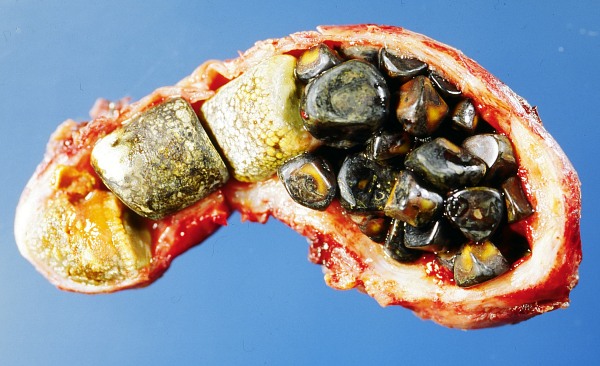
Vesícula biliar abierta con cálculos biliares
Imagen: “Opened gall bladder containing numerous gallstones” por Emmanuelm. Licencia: CC BY 3.0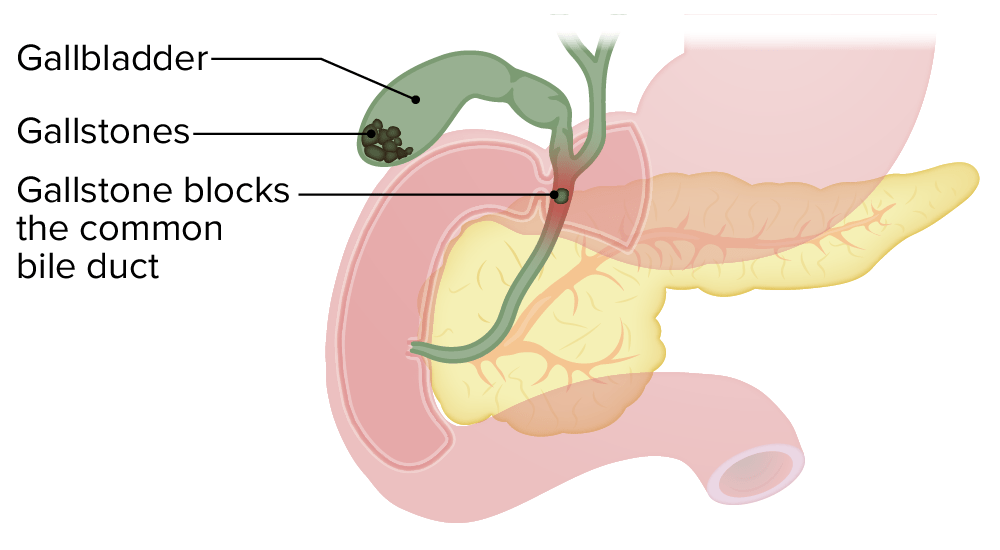
Los cálculos biliares se forman en la vesícula biliar. La obstrucción de las vías biliares por un cálculo biliar puede provocar síntomas.
Imagen por Lecturio.Factores de riesgo de cálculos de colesterol: “4 Fs” ( en EN Erythema nodosum is an immune-mediated panniculitis (inflammation of the subcutaneous fat) caused by a type IV (delayed-type) hypersensitivity reaction. It commonly manifests in young women as tender, erythematous nodules on the shins. Erythema Nodosum ingles)
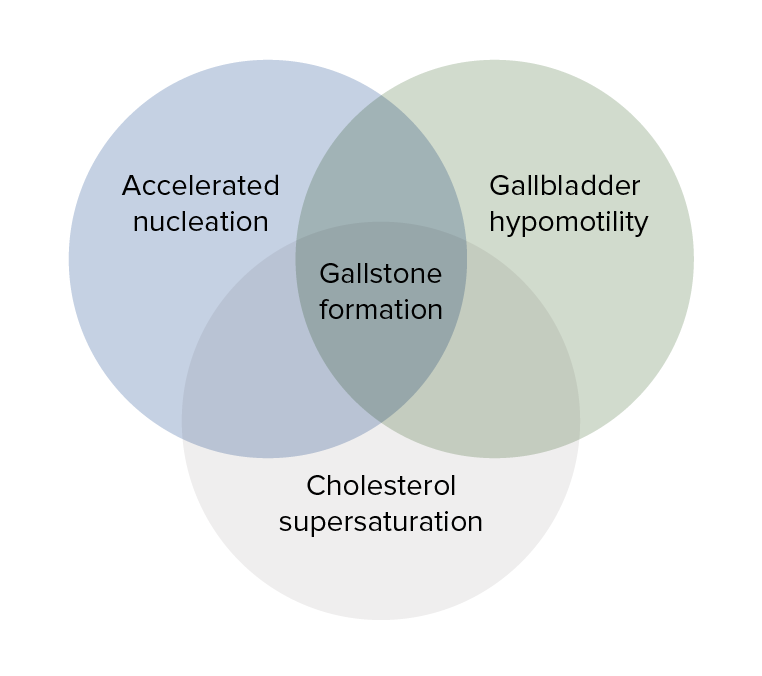
Mecanismos superpuestos que producen cálculos biliares: sobresaturación de colesterol, hipomotilidad de la vesícula biliar y nucleación acelerada
Imagen por Lecturio.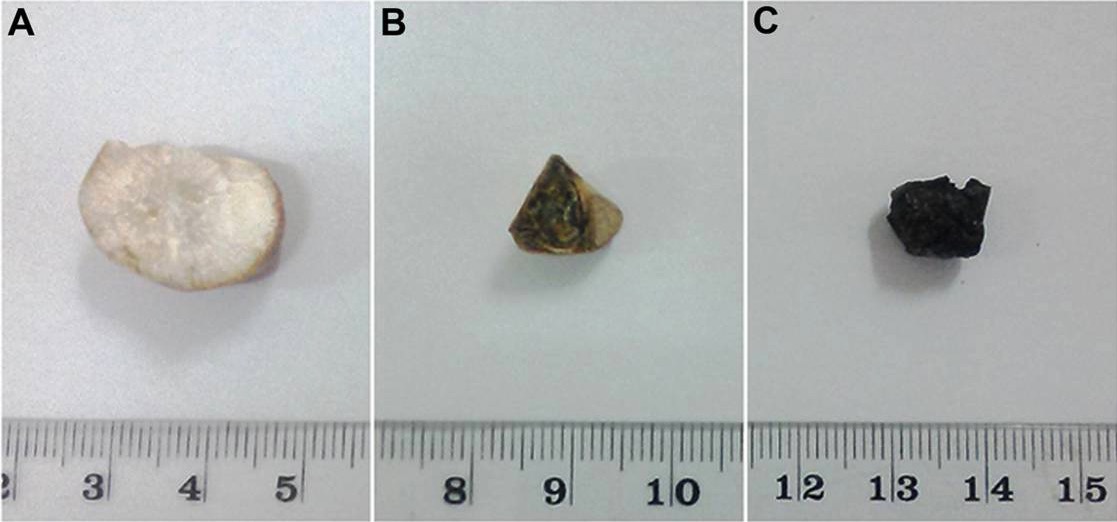
A: cálculos biliares de colesterol
B: cálculo biliar mixto
C: cálculo biliar de pigmento negro
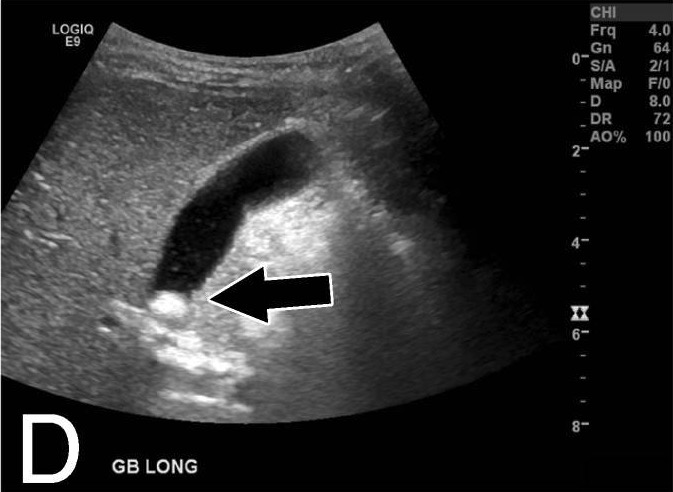
Ultrasonido que muestra cálculos biliares (flecha) dentro de la vesícula biliar
Imagen: “Anterior/posterior abdominal radiograph” por Division of Pediatric Surgery, Children’s Hospital Los Angeles, 4650 Sunset Blvd Mailstop 100, Los Angeles, CA 90027, USA. Licencia: CC BY 2.0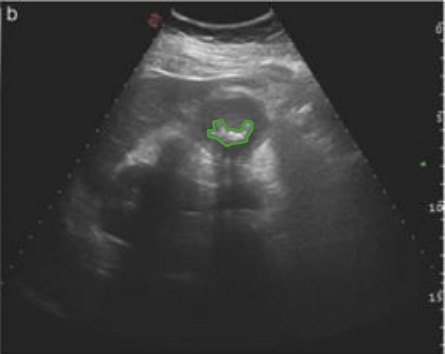
Ultrasonido que muestra cálculos biliares (resaltado verde) con sombra acústica posterior
Imagen: “Cholecystitis” de Mazzei et al. Licencia: CC BY 2.0, editada por Lecturio.| Afección | Patología | Presentación clínica | Estudios de laboratorio | Diagnóstico por imagenología | Tratamiento |
|---|---|---|---|---|---|
| Colecistitis | Obstrucción del conducto cístico con inflamación | Dolor Dolor Inflammation cuadrante superior derecho (> 6 horas), signo de Murphy | ↑ Leucocitos | Ultrasonido | Colecistectomía urgente |
| Coledocolitiasis | Cálculo biliar
en
EN
Erythema nodosum is an immune-mediated panniculitis (inflammation of the subcutaneous fat) caused by a type IV (delayed-type) hypersensitivity reaction. It commonly manifests in young women as tender, erythematous nodules on the shins.
Erythema Nodosum el conducto biliar común que causa obstrucción
|
Dolor Dolor Inflammation cólico postprandial en EN Erythema nodosum is an immune-mediated panniculitis (inflammation of the subcutaneous fat) caused by a type IV (delayed-type) hypersensitivity reaction. It commonly manifests in young women as tender, erythematous nodules on the shins. Erythema Nodosum el cuadrante superior derecho > 6 horas; otros: ictericia, heces acólicas, orina oscura, prurito | ↑ Bilirrubina, fosfatasa alcalina | Ultrasonido, colangiopancreatografía por resonancia magnética | CPRE para extracción de cálculos → colecistectomía para prevenir la recurrencia |
| Colangitis aguda | Coledocolitiasis con infección; con sepsis Sepsis Systemic inflammatory response syndrome with a proven or suspected infectious etiology. When sepsis is associated with organ dysfunction distant from the site of infection, it is called severe sepsis. When sepsis is accompanied by hypotension despite adequate fluid infusion, it is called septic shock. Sepsis and Septic Shock biliar (E. coli, Klebsiella Klebsiella Klebsiella are encapsulated gram-negative, lactose-fermenting bacilli. They form pink colonies on MacConkey agar due to lactose fermentation. The main virulence factor is a polysaccharide capsule. Klebsiella pneumoniae is the most important pathogenic species. Klebsiella, Pseudomonas Pseudomonas Pseudomonas is a non-lactose-fermenting, gram-negative bacillus that produces pyocyanin, which gives it a characteristic blue-green color. Pseudomonas is found ubiquitously in the environment, as well as in moist reservoirs, such as hospital sinks and respiratory equipment. Pseudomonas, Enterococcus Enterococcus Enterococcus is a genus of oval-shaped gram-positive cocci that are arranged in pairs or short chains. Distinguishing factors include optochin resistance and the presence of pyrrolidonyl arylamidase (PYR) and Lancefield D antigen. Enterococcus is part of the normal flora of the human GI tract. Enterococcus) |
|
↑ Leucocitos, ↑ bilirrubina, fosfatasa alcalina | Ultrasonido, colangiopancreatografía por RM | CPRE → colecistectomía emergente |
| Pancreatitis Pancreatitis Inflammation of the pancreas. Pancreatitis is classified as acute unless there are computed tomographic or endoscopic retrograde cholangiopancreatographic findings of chronic pancreatitis. The two most common forms of acute pancreatitis are alcoholic pancreatitis and gallstone pancreatitis. Acute Pancreatitis por cálculos biliares | Pequeños cálculos que obstruyen transitoriamente el conducto pancreático | Dolor Dolor Inflammation epigástrico, náuseas/vómitos | ↑ Leucocitos, ↑ amilasa/lipasa, ↑ bilirrubina, fosfatasa alcalina | colangiopancreatografía por RM/TC | Colecistectomía diferida |
| Íleo biliar | Cálculo grande (> 2,5 cm) que pasa al AL Amyloidosis intestino delgado a través de una fístula colecistoduodenal → obstrucción | Obstrucción del intestino delgado ( dolor Dolor Inflammation abdominal difuso, náuseas/vómitos) | ↑ Leucocitos | TC | Cirugía para extraer el cálculo (colecistectomía no realizada en EN Erythema nodosum is an immune-mediated panniculitis (inflammation of the subcutaneous fat) caused by a type IV (delayed-type) hypersensitivity reaction. It commonly manifests in young women as tender, erythematous nodules on the shins. Erythema Nodosum el mismo tiempo quirúrgico) |