Domina Conceptos Médicos

Estudia para la escuela de medicina y tus examenes con Lecturio.

Cáncer Anal

El cáncer anal representa el 2.7% de todos los LOS Neisseria cánceres del tracto gastrointestinal. El carcinoma de células escamosas es el tipo más común de cáncer anal. El paciente puede presentar sangrado rectal (muy frecuente), cambios en EN Erythema nodosum is an immune-mediated panniculitis (inflammation of the subcutaneous fat) caused by a type IV (delayed-type) hypersensitivity reaction. It commonly manifests in young women as tender, erythematous nodules on the shins. Erythema Nodosum los LOS Neisseria hábitos intestinales, una masa pruriginosa perianal o una ulceración dolorosa perianal. El diagnóstico se establece mediante una biopsia. La estadificación se realiza mediante imagenología. Dependiendo del estadio, las opciones de tratamiento incluyen quimiorradioterapia y/o cirugía. Si se trata a tiempo, el cáncer anal tiene un pronóstico favorable.

Last updated: Dec 15, 2025

Editorial responsibility: Stanley Oiseth, Lindsay Jones, Evelin Maza

Descripción General

Definición

Los LOS Neisseria cánceres anales son cánceres que surgen en EN Erythema nodosum is an immune-mediated panniculitis (inflammation of the subcutaneous fat) caused by a type IV (delayed-type) hypersensitivity reaction. It commonly manifests in young women as tender, erythematous nodules on the shins. Erythema Nodosum el canal anal o en EN Erythema nodosum is an immune-mediated panniculitis (inflammation of the subcutaneous fat) caused by a type IV (delayed-type) hypersensitivity reaction. It commonly manifests in young women as tender, erythematous nodules on the shins. Erythema Nodosum el margen anal.

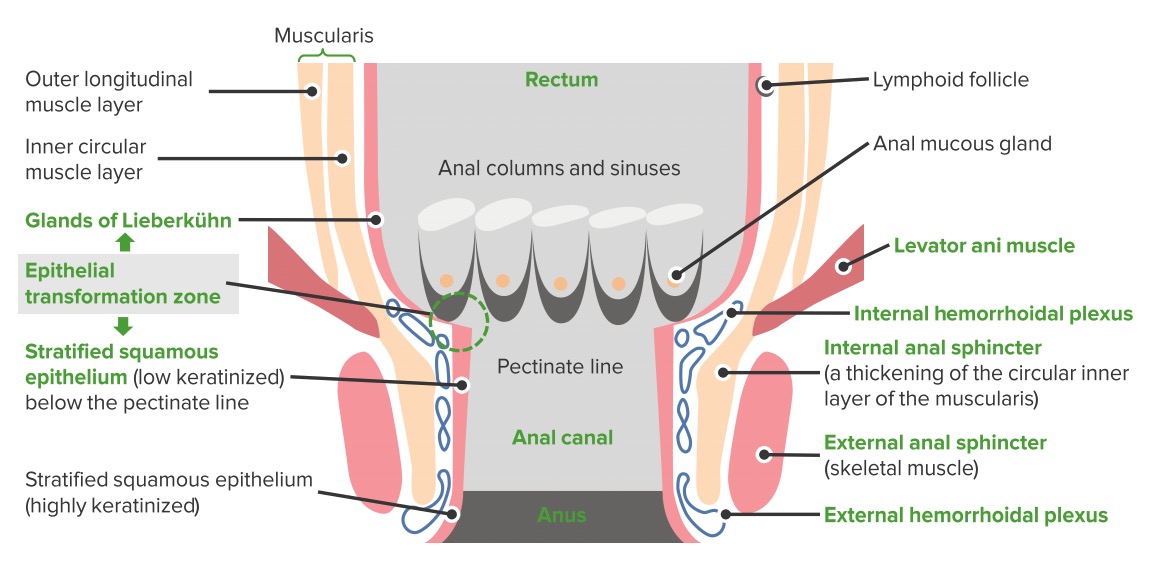
Anatomía:

  • Canal anal:
    • 2.5–3.5 cm de longitud
    • Desde el cabestrillo puborrectal (1–2 cm por encima de la línea dentada/pectínea) hasta la unión mucocutánea (donde comienza la piel perianal)
  • Margen anal (borde):
    • Donde el canal anal se conecta con la piel
    • Piel en EN Erythema nodosum is an immune-mediated panniculitis (inflammation of the subcutaneous fat) caused by a type IV (delayed-type) hypersensitivity reaction. It commonly manifests in young women as tender, erythematous nodules on the shins. Erythema Nodosum el borde anal: piel perianal

Histología:

  • Tipos de mucosa (de la zona proximal a la distal):
    • Glandular
    • Transicional
    • Escamosa no queratinizante (desprovista de apéndices epidérmicos; por encima de la línea dentada)
    • Escamosa queratinizante: en EN Erythema nodosum is an immune-mediated panniculitis (inflammation of the subcutaneous fat) caused by a type IV (delayed-type) hypersensitivity reaction. It commonly manifests in young women as tender, erythematous nodules on the shins. Erythema Nodosum el canal anal por debajo de la línea dentada y en EN Erythema nodosum is an immune-mediated panniculitis (inflammation of the subcutaneous fat) caused by a type IV (delayed-type) hypersensitivity reaction. It commonly manifests in young women as tender, erythematous nodules on the shins. Erythema Nodosum la piel perianal
  • Línea pectínea/dentada: zona de transición de la mucosa glandular a la escamosa
  • Importancia clínica:
    • Tumores procedentes de la zona glandular: adenocarcinoma
    • Tumores procedentes de la mucosa transicional y escamosa: carcinoma de células escamosas
    • Tumores procedentes de la zona escamosa queratinizante y de la piel: cánceres de piel perianal, a menudo carcinoma de células escamosas (mismo enfoque de tratamiento que los LOS Neisseria cánceres del canal anal)
Esquema del recto y del canal anal

Anatomía del canal anal

Imagen por Lecturio.

Epidemiología

  • 2.7% de todos los LOS Neisseria cánceres del tracto digestivo
  • Incidencia: 8500 casos al AL Amyloidosis año en EN Erythema nodosum is an immune-mediated panniculitis (inflammation of the subcutaneous fat) caused by a type IV (delayed-type) hypersensitivity reaction. It commonly manifests in young women as tender, erythematous nodules on the shins. Erythema Nodosum Estados Unidos
  • Incidencia en EN Erythema nodosum is an immune-mediated panniculitis (inflammation of the subcutaneous fat) caused by a type IV (delayed-type) hypersensitivity reaction. It commonly manifests in young women as tender, erythematous nodules on the shins. Erythema Nodosum aumento en EN Erythema nodosum is an immune-mediated panniculitis (inflammation of the subcutaneous fat) caused by a type IV (delayed-type) hypersensitivity reaction. It commonly manifests in young women as tender, erythematous nodules on the shins. Erythema Nodosum hombres jóvenes negros y mujeres mayores (> 60 años)
  • Más común en EN Erythema nodosum is an immune-mediated panniculitis (inflammation of the subcutaneous fat) caused by a type IV (delayed-type) hypersensitivity reaction. It commonly manifests in young women as tender, erythematous nodules on the shins. Erythema Nodosum las mujeres

Etiología

Factores de riesgo para cáncer anal:

  • Edad avanzada: > 50 años
  • Múltiples parejas sexuales
  • Coito anal receptivo
  • Antecedentes de cánceres vulvares, vaginales o cervicales en EN Erythema nodosum is an immune-mediated panniculitis (inflammation of the subcutaneous fat) caused by a type IV (delayed-type) hypersensitivity reaction. It commonly manifests in young women as tender, erythematous nodules on the shins. Erythema Nodosum mujeres
  • Virus Virus Viruses are infectious, obligate intracellular parasites composed of a nucleic acid core surrounded by a protein capsid. Viruses can be either naked (non-enveloped) or enveloped. The classification of viruses is complex and based on many factors, including type and structure of the nucleoid and capsid, the presence of an envelope, the replication cycle, and the host range. Virology del papiloma humano (VPH): infección subclínica o condilomas
  • Infección por el virus Virus Viruses are infectious, obligate intracellular parasites composed of a nucleic acid core surrounded by a protein capsid. Viruses can be either naked (non-enveloped) or enveloped. The classification of viruses is complex and based on many factors, including type and structure of the nucleoid and capsid, the presence of an envelope, the replication cycle, and the host range. Virology del herpes simple ( HSV HSV Herpes simplex virus (HSV) is a double-stranded DNA virus belonging to the family Herpesviridae. Herpes simplex virus commonly causes recurrent infections involving the skin and mucosal surfaces, including the mouth, lips, eyes, and genitals. Herpes Simplex Virus 1 and 2)
  • Clamidia en EN Erythema nodosum is an immune-mediated panniculitis (inflammation of the subcutaneous fat) caused by a type IV (delayed-type) hypersensitivity reaction. It commonly manifests in young women as tender, erythematous nodules on the shins. Erythema Nodosum mujeres
  • Gonorrea en EN Erythema nodosum is an immune-mediated panniculitis (inflammation of the subcutaneous fat) caused by a type IV (delayed-type) hypersensitivity reaction. It commonly manifests in young women as tender, erythematous nodules on the shins. Erythema Nodosum hombres
  • Infección por el virus Virus Viruses are infectious, obligate intracellular parasites composed of a nucleic acid core surrounded by a protein capsid. Viruses can be either naked (non-enveloped) or enveloped. The classification of viruses is complex and based on many factors, including type and structure of the nucleoid and capsid, the presence of an envelope, the replication cycle, and the host range. Virology de la inmunodeficiencia humana (VIH)
  • Inmunosupresión (por enfermedad o medicamentos)
  • Tabaquismo

Fisiopatología y Presentación Clínica

Fisiopatología

  • Carcinogénesis del carcinoma de células escamosas anal:
    • La respuesta inflamatoria del epitelio anal se desarrolla con mayor frecuencia como respuesta a la infección por el VPH.
    • La inflamación progresa hasta el desarrollo de la neoplasia intraepitelial anal (AIN, por sus siglas en EN Erythema nodosum is an immune-mediated panniculitis (inflammation of the subcutaneous fat) caused by a type IV (delayed-type) hypersensitivity reaction. It commonly manifests in young women as tender, erythematous nodules on the shins. Erythema Nodosum inglés):
      • AIN 1: corresponde a una lesión epitelial escamosa de bajo grado (LSIL, por sus siglas en EN Erythema nodosum is an immune-mediated panniculitis (inflammation of the subcutaneous fat) caused by a type IV (delayed-type) hypersensitivity reaction. It commonly manifests in young women as tender, erythematous nodules on the shins. Erythema Nodosum inglés)
      • AIN 2 y 3: lesión epitelial escamosa de alto grado (HSIL, por sus siglas en EN Erythema nodosum is an immune-mediated panniculitis (inflammation of the subcutaneous fat) caused by a type IV (delayed-type) hypersensitivity reaction. It commonly manifests in young women as tender, erythematous nodules on the shins. Erythema Nodosum inglés); premaligna
      • La HSIL puede evolucionar a un carcinoma de células escamosas invasor.
  • La progresión hacia el cáncer invasivo se ve VE Ventilation: Mechanics of Breathing favorecida por el VIH/inmunosupresión y otros factores de riesgo (múltiples tipos de VPH, comportamiento sexual de alto riesgo).

Tipos histológicos

  • Canal anal: situado por encima del borde anal
    • Carcinoma de células escamosas
      • El tumor Tumor Inflammation más común del canal anal (75%)
      • Carcinoma de células escamosas no queratinizante: por encima de la línea dentada
      • Carcinoma de células escamosas queratinizante: por debajo de la línea dentada
    • Adenocarcinoma:
      • Raros
      • Surge de elementos glandulares en EN Erythema nodosum is an immune-mediated panniculitis (inflammation of the subcutaneous fat) caused by a type IV (delayed-type) hypersensitivity reaction. It commonly manifests in young women as tender, erythematous nodules on the shins. Erythema Nodosum el canal anal
      • Historia natural y tratamiento similares a los LOS Neisseria adenocarcinomas rectales
    • Melanoma Melanoma Melanoma is a malignant tumor arising from melanocytes, the melanin-producing cells of the epidermis. These tumors are most common in fair-skinned individuals with a history of excessive sun exposure and sunburns. Melanoma de la mucosa:
      • Es la tercera localización más frecuente del melanoma Melanoma Melanoma is a malignant tumor arising from melanocytes, the melanin-producing cells of the epidermis. These tumors are most common in fair-skinned individuals with a history of excessive sun exposure and sunburns. Melanoma maligno primario, después de la piel y los LOS Neisseria ojos.
      • Surge de los LOS Neisseria melanocitos que se encuentran en EN Erythema nodosum is an immune-mediated panniculitis (inflammation of the subcutaneous fat) caused by a type IV (delayed-type) hypersensitivity reaction. It commonly manifests in young women as tender, erythematous nodules on the shins. Erythema Nodosum la zona de transición del canal anal
      • Agresivo: metástasis a distancia son comunes en EN Erythema nodosum is an immune-mediated panniculitis (inflammation of the subcutaneous fat) caused by a type IV (delayed-type) hypersensitivity reaction. It commonly manifests in young women as tender, erythematous nodules on the shins. Erythema Nodosum el momento del diagnóstico
  • Margen anal: por debajo del borde anal (cánceres de piel perianales)
    • Carcinoma de células escamosas
    • Enfermedad de Bowen: carcinoma de células escamosas in situ (premaligno)
    • Enfermedad de Paget del ano (adenocarcinoma intraepitelial):
      • Primaria: morfología de glándulas sudoríparas
      • Secundario: extensión del adenocarcinoma del recto o de las glándulas perianales
    • Melanoma Melanoma Melanoma is a malignant tumor arising from melanocytes, the melanin-producing cells of the epidermis. These tumors are most common in fair-skinned individuals with a history of excessive sun exposure and sunburns. Melanoma maligno del margen anal: similar a otros melanomas cutáneos

Drenaje linfático de los LOS Neisseria cánceres anales

  • Por encima de la línea dentada: ganglios mesorrectales e ilíacos internos
  • Por debajo de la línea dentada: ganglios inguinales
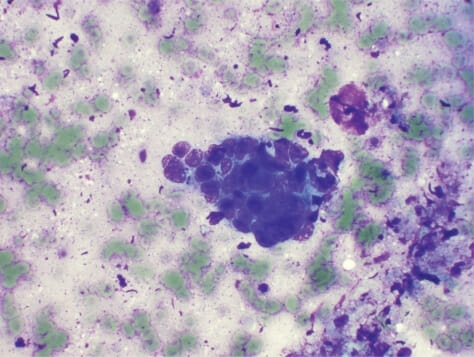
Squamous cell carcinoma of the anal canal

Carcinoma de células escamosas del canal anal:
La aspiración con aguja fina guiada por endoscopia revela un carcinoma de células escamosas poco diferenciado del canal anal. Se observan células nucleares periféricas en empalizada. (Tinción H&E, 40x)
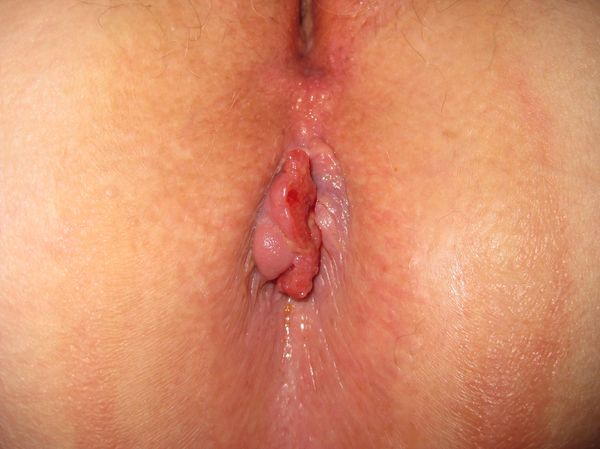
Imagen: “f4-cmo-2009-059” por Leblanc J, Kongkam P. Licencia: CC BY 3.0

Presentación clínica

  • Asintomático (25%)
  • Hemorragia rectal (presentación inicial más común)
  • Una masa alrededor del ano que puede invadir los LOS Neisseria tejidos más profundos
  • Ulceración perianal y prurito
  • Sensibilidad en EN Erythema nodosum is an immune-mediated panniculitis (inflammation of the subcutaneous fat) caused by a type IV (delayed-type) hypersensitivity reaction. It commonly manifests in young women as tender, erythematous nodules on the shins. Erythema Nodosum la zona anal
  • Incontinencia fecal/de flatos
  • Estreñimiento
  • Hemorroides trombosadas (una posible manifestación del melanoma Melanoma Melanoma is a malignant tumor arising from melanocytes, the melanin-producing cells of the epidermis. These tumors are most common in fair-skinned individuals with a history of excessive sun exposure and sunburns. Melanoma anal)

Diagnóstico y Estadificación

Hallazgos clínicos

  • Historia clínica:
    • Presentación clínica típica
    • Antecedentes de enfermedades de transmisión sexual y otros factores de riesgo
  • Examen físico:
    • Los LOS Neisseria tumores de gran tamaño o los LOS Neisseria del margen anal pueden visualizarse directamente.
    • Tacto rectal: se puede sentir un bulto duro, inmóvil y no doloroso
    • Anoscopia: Si se observa una masa, se puede realizar una biopsia.
    • Linfadenopatía inguinal
    • Se debe realizar un examen ginecológico en EN Erythema nodosum is an immune-mediated panniculitis (inflammation of the subcutaneous fat) caused by a type IV (delayed-type) hypersensitivity reaction. It commonly manifests in young women as tender, erythematous nodules on the shins. Erythema Nodosum las mujeres (buscando lesiones genitales concomitantes/ condilomas).

Pruebas diagnósticas

  • Biopsia:
    • Diagnóstico definitivo
    • La masa anal puede ser extirpada si es lo suficientemente pequeña o si se puede tomar una muestra.
    • La aspiración con aguja fina también puede proporcionar un diagnóstico del tejido.
  • Estudios de laboratorio:
    • El hemograma puede mostrar anemia Anemia Anemia is a condition in which individuals have low Hb levels, which can arise from various causes. Anemia is accompanied by a reduced number of RBCs and may manifest with fatigue, shortness of breath, pallor, and weakness. Subtypes are classified by the size of RBCs, chronicity, and etiology. Anemia: Overview and Types.
    • Se debe considerar la realización de pruebas de VIH, VPH y HSV HSV Herpes simplex virus (HSV) is a double-stranded DNA virus belonging to the family Herpesviridae. Herpes simplex virus commonly causes recurrent infections involving the skin and mucosal surfaces, including the mouth, lips, eyes, and genitals. Herpes Simplex Virus 1 and 2 en EN Erythema nodosum is an immune-mediated panniculitis (inflammation of the subcutaneous fat) caused by a type IV (delayed-type) hypersensitivity reaction. It commonly manifests in young women as tender, erythematous nodules on the shins. Erythema Nodosum función de los LOS Neisseria antecedentes individuales.
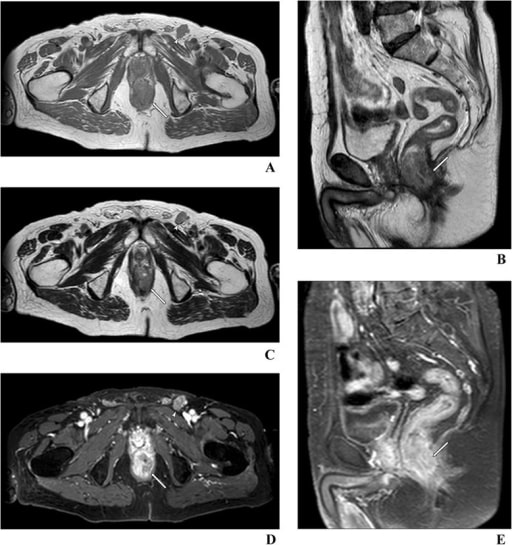
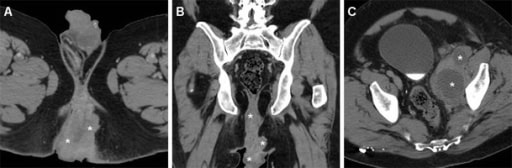
  • Imagenología para el diagnóstico y la estadificación:
    • Factores evaluados:
    • Para determinar el estadio de la enfermedad se utilizan los LOS Neisseria siguientes elementos:
      • Ultrasonido endoscópico
      • Tomografía computarizada (TC)
      • Resonancia magnética (RM)
      • Tomografía por emisión de positrones ( PET PET An imaging technique that combines a positron-emission tomography (PET) scanner and a ct X ray scanner. This establishes a precise anatomic localization in the same session. Nuclear Imaging, por sus siglas en EN Erythema nodosum is an immune-mediated panniculitis (inflammation of the subcutaneous fat) caused by a type IV (delayed-type) hypersensitivity reaction. It commonly manifests in young women as tender, erythematous nodules on the shins. Erythema Nodosum inglés)

Estadificación

Tabla: Estadificación TNM del cáncer anal
Tumor Tumor Inflammation primario (T) Nódulos (ganglios) linfáticos regionales (N) Metástasis a distancia (M)
Tx: tumor Tumor Inflammation primario no evaluable Nx: ganglios linfáticos regionales no evaluables M0: sin metástasis a distancia
T0: sin evidencia de tumor Tumor Inflammation primario N0: sin metástasis en EN Erythema nodosum is an immune-mediated panniculitis (inflammation of the subcutaneous fat) caused by a type IV (delayed-type) hypersensitivity reaction. It commonly manifests in young women as tender, erythematous nodules on the shins. Erythema Nodosum los LOS Neisseria ganglios linfáticos regionales M1: metástasis a distancia
Tis: lesión escamosa intraepitelial de alto grado N1: metástasis a los LOS Neisseria ganglios inguinales, mesorrectales, ilíacos internos o ilíacos externos
  • N1a: metástasis a los LOS Neisseria ganglios linfáticos inguinales, mesorrectales o ilíacos internos
  • N1b: metástasis a los LOS Neisseria ganglios linfáticos ilíacos externos
  • N1c: metástasis en EN Erythema nodosum is an immune-mediated panniculitis (inflammation of the subcutaneous fat) caused by a type IV (delayed-type) hypersensitivity reaction. It commonly manifests in young women as tender, erythematous nodules on the shins. Erythema Nodosum el ilíaco externo con cualquier ganglio N1a
T1: tumor Tumor Inflammation ≤ 2 cm
T2: tumor Tumor Inflammation > 2 cm pero ≤ 5 cm
T3 T3 A T3 thyroid hormone normally synthesized and secreted by the thyroid gland in much smaller quantities than thyroxine (T4). Most T3 is derived from peripheral monodeiodination of T4 at the 5′ position of the outer ring of the iodothyronine nucleus. The hormone finally delivered and used by the tissues is mainly t3. Thyroid Hormones: tumor Tumor Inflammation > 5 cm
T4 T4 The major hormone derived from the thyroid gland. Thyroxine is synthesized via the iodination of tyrosines (monoiodotyrosine) and the coupling of iodotyrosines (diiodotyrosine) in the thyroglobulin. Thyroxine is released from thyroglobulin by proteolysis and secreted into the blood. Thyroxine is peripherally deiodinated to form triiodothyronine which exerts a broad spectrum of stimulatory effects on cell metabolism. Thyroid Hormones: tumor Tumor Inflammation de cualquier tamaño que invade órganos adyacentes, como la vagina Vagina The vagina is the female genital canal, extending from the vulva externally to the cervix uteri internally. The structures have sexual, reproductive, and urinary functions and a rich blood supply, mainly arising from the internal iliac artery. Vagina, Vulva, and Pelvic Floor: Anatomy, la uretra o la vejiga
Fuente: American Joint Commitee on Cancer (AJCC), 8va edición
Tabla: Etapas del cáncer anal
Estadio T N M
0 Tis N0 M0
I T1 N0 M0
IIA T2 N0 M0
IIB T3 T3 A T3 thyroid hormone normally synthesized and secreted by the thyroid gland in much smaller quantities than thyroxine (T4). Most T3 is derived from peripheral monodeiodination of T4 at the 5′ position of the outer ring of the iodothyronine nucleus. The hormone finally delivered and used by the tissues is mainly t3. Thyroid Hormones N0 M0
IIIA T1–2 N1 M0
IIIB T4 T4 The major hormone derived from the thyroid gland. Thyroxine is synthesized via the iodination of tyrosines (monoiodotyrosine) and the coupling of iodotyrosines (diiodotyrosine) in the thyroglobulin. Thyroxine is released from thyroglobulin by proteolysis and secreted into the blood. Thyroxine is peripherally deiodinated to form triiodothyronine which exerts a broad spectrum of stimulatory effects on cell metabolism. Thyroid Hormones N0 M0
IIIC T3 T3 A T3 thyroid hormone normally synthesized and secreted by the thyroid gland in much smaller quantities than thyroxine (T4). Most T3 is derived from peripheral monodeiodination of T4 at the 5′ position of the outer ring of the iodothyronine nucleus. The hormone finally delivered and used by the tissues is mainly t3. Thyroid Hormones–4 N1 M0
IV Cualquier T Cualquier N M1

Tratamiento

Tratamiento del carcinoma de células escamosas

  • Localizado (estadio IIII):
    • Quimiorradioterapia:
      • Preferido; proporciona curación y preserva el esfínter anal
      • Fluorouracilo + mitomicina + radioterapia
    • Escisión local:
      • Para tumores superficiales pequeños (< 1 cm)
      • Invasión de la membrana basal de < 3 mm
      • < 7 mm de extensión horizontal
    • Linfadenectomía inguinal:
      • Para la enfermedad de los LOS Neisseria ganglios linfáticos inguinales persistente/recurrente después de la quimiorradiación
      • También se considera la radiación adicional a la región inguinal
  • Estadio IV (enfermedades metastásicas):
    • Quimioterapia sistémica
    • Inmunoterapia ( pembrolizumab Pembrolizumab Squamous Cell Carcinoma (SCC), nivolumab Nivolumab A genetically engineered, fully humanized immunoglobulin g4 monoclonal antibody that binds to the pd-1 receptor, activating an immune response to tumor cells. It is used as monotherapy or in combination with ipilimumab for the treatment of advanced malignant melanoma. It is also used in the treatment of advanced or recurring non-small cell lung cancer; renal cell carcinoma; and Hodgkin’s lymphoma. Melanoma)
    • La resección hepática puede desempeñar un papel en EN Erythema nodosum is an immune-mediated panniculitis (inflammation of the subcutaneous fat) caused by a type IV (delayed-type) hypersensitivity reaction. It commonly manifests in young women as tender, erythematous nodules on the shins. Erythema Nodosum los LOS Neisseria pacientes con metástasis hepáticas localizadas.
  • Enfermedad recurrente/persistente después de la quimiorradioterapia:
    • Debe confirmarse con una biopsia
    • Cirugía (resección abdominoperineal): Los LOS Neisseria pacientes acaban con una colostomía permanente.
    • Se puede considerar la quimiorradioterapia de rescate para evitar la colostomía.
  • Vigilancia:
    • Tacto rectal, anoscopia y palpación de los LOS Neisseria ganglios linfáticos inguinales:
      • Comienza 8–12 semanas después de la terapia
      • Cada 3–6 meses durante 5 años
      • La respuesta completa puede tardar hasta 26 semanas después del tratamiento.
    • TC o RM de tórax/abdomen/ pelvis Pelvis The pelvis consists of the bony pelvic girdle, the muscular and ligamentous pelvic floor, and the pelvic cavity, which contains viscera, vessels, and multiple nerves and muscles. The pelvic girdle, composed of 2 “hip” bones and the sacrum, is a ring-like bony structure of the axial skeleton that links the vertebral column with the lower extremities. Pelvis: Anatomy: Considerar anualmente durante 3 años.

Tratamiento de otros tipos de cáncer

  • Adenocarcinoma:
    • Enfoque similar a los LOS Neisseria adenocarcinomas rectales
    • Resección abdominoperineal o escisión local para tumores pequeños/tempranos
    • Quimioterapia sistémica para la enfermedad metastásica
  • Melanoma Melanoma Melanoma is a malignant tumor arising from melanocytes, the melanin-producing cells of the epidermis. These tumors are most common in fair-skinned individuals with a history of excessive sun exposure and sunburns. Melanoma:
    • Escisión local con radiación adyuvante
    • Resección abdominoperineal para una enfermedad más avanzada
    • Quimioterapia sistémica para la enfermedad metastásica

Pronóstico y Complicaciones

Pronóstico

  • Supervivencia a los LOS Neisseria 5 años del carcinoma de células escamosas:
    • T1: 86%
    • T2: 86%
    • T3 T3 A T3 thyroid hormone normally synthesized and secreted by the thyroid gland in much smaller quantities than thyroxine (T4). Most T3 is derived from peripheral monodeiodination of T4 at the 5′ position of the outer ring of the iodothyronine nucleus. The hormone finally delivered and used by the tissues is mainly t3. Thyroid Hormones: 60%
    • T4 T4 The major hormone derived from the thyroid gland. Thyroxine is synthesized via the iodination of tyrosines (monoiodotyrosine) and the coupling of iodotyrosines (diiodotyrosine) in the thyroglobulin. Thyroxine is released from thyroglobulin by proteolysis and secreted into the blood. Thyroxine is peripherally deiodinated to form triiodothyronine which exerts a broad spectrum of stimulatory effects on cell metabolism. Thyroid Hormones: 45%
    • N0: 76%
    • Ganglio positivo: 54%
    • Para todos los LOS Neisseria estadios con respuesta completa a la quimio/radiación (70%–80% de los LOS Neisseria pacientes): 65%.
  • Supervivencia a los LOS Neisseria 5 años del adenocarcinoma: 55% cuando se trata quirúrgicamente sin metástasis a distancia
  • Supervivencia a los LOS Neisseria 5 años del melanoma Melanoma Melanoma is a malignant tumor arising from melanocytes, the melanin-producing cells of the epidermis. These tumors are most common in fair-skinned individuals with a history of excessive sun exposure and sunburns. Melanoma:
    • Enfermedad local: 43%
    • Diseminación a los LOS Neisseria ganglios linfáticos regionales: 12.5%.

Complicaciones

  • Generalmente relacionado con el tratamiento
  • Quimioterapia:
    • Disfunción intestinal
    • Náuseas/vómitos
  • Radiación:
  • Cirugía:
    • Estenosis
    • Fístulas perianales
  • Infecciones de las heridas

Diagnóstico Diferencial

  • Chancroide: infección bacteriana que provoca úlceras alrededor de los LOS Neisseria genitales. Causada por Haemophilus ducreyi Haemophilus ducreyi A species of Haemophilus that appears to be the pathogen or causative agent of the sexually transmitted disease, chancroid. Haemophilus. El chancroide es una enfermedad de transmisión sexual que también puede contagiarse a través del contacto piel a piel con una persona infectada.
  • Fisura o fístula anal: una fisura es un pequeño desgarro en EN Erythema nodosum is an immune-mediated panniculitis (inflammation of the subcutaneous fat) caused by a type IV (delayed-type) hypersensitivity reaction. It commonly manifests in young women as tender, erythematous nodules on the shins. Erythema Nodosum la mucosa anal. El síntoma de presentación más común es el dolor Dolor Inflammation anal. Una fístula es una conexión anormal entre la mucosa anal/rectal y la piel perianal. La afección suele ser consecuencia de una infección recurrente/crónica, y una de las manifestaciones de la enfermedad de Crohn.
  • Hemorroides: venas abultadas/varicosas del canal anal y de la parte inferior del recto. Puede presentarse como una masa anal azulada. Las hemorroides pueden ser dolorosas (si se originan por debajo de la línea dentada) o indoloras (por encima de la línea dentada).
  • Condiloma acuminado: también conocido como verrugas anogenitales; es causado por la infección por VPH. Suele presentarse como lesiones carnosas, blandas y del color de la piel, alrededor del ano y los LOS Neisseria genitales.
  • Psoriasis Psoriasis Psoriasis is a common T-cell-mediated inflammatory skin condition. The etiology is unknown, but is thought to be due to genetic inheritance and environmental triggers. There are 4 major subtypes, with the most common form being chronic plaque psoriasis. Psoriasis: suele presentarse como lesiones pruriginosas rojas o púrpuras, típicamente no escamosas. Puede confundirse con una infección por hongos o por parásitos. También puede causar sangrado rectal y dolor Dolor Inflammation al AL Amyloidosis defecar.

Referencias

  1. Babiker, H.M, Kashyap S, Mehta S.R. et al. (2025). Anal Cancer. Retrieved November 15, 2025, from https://www.ncbi.nlm.nih.gov/books/NBK441891/
  2. Parra R.S., Ribeiro de Almeida A.L, Badiale, G.B. et al. (2010). Melanoma of the anal canal. Retrieved November 15, 2025, from DOI: 10.1590/s1807-59322010001000026
  3. Willett, C. G., & Eng, C. (2025). Anatomy, pathology, epidemiology, and risk factors of anal cancer. UpToDate. Retrieved November 15, 2025, from https://www.uptodate.com/contents/anatomy-pathology-epidemiology-and-risk-factors-of-anal-cancer
  4. Ryan D.P., Willett C.G. (2025). Treatment of anal cancer. Retrieved November 15, 2025, from https://www.uptodate.com/contents/treatment-of-anal-cancer
  5. Ryan D.P., Willett C.G. (2025). Clinical features and staging of anal cancer. Retrieved November 15, 2025, from https://www.uptodate.com/contents/clinical-features-and-staging-of-anal-cancer
  6. Wegner R.E., White R.J., Hasan S. et al. (2019). Anal Adenocarcinoma: Treatment outcomes and trends in a rare disease entity. onlinelibrary.wiley.com/doi/full/10.1002/cam4.2076

¡Crea tu cuenta gratis o inicia una sesión para seguir leyendo!

Regístrate ahora y obtén acceso gratuito a Lecturio con páginas de concepto, videos médicos y cuestionarios para tu educación médica.

User Reviews

Que tengas una sesión de estudio alegre y navideña 🎁 Ahorra 50% en todos los planes >>

Details