Domina Conceptos Médicos

Estudia para la escuela de medicina y tus examenes con Lecturio.

Absceso de Tejidos Blandos

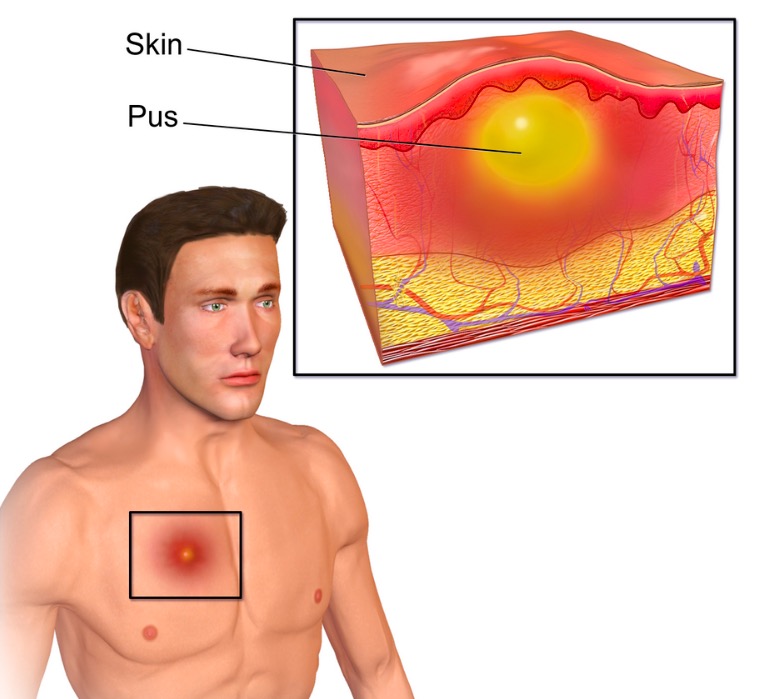
Un absceso es una acumulación de pus en EN Erythema nodosum is an immune-mediated panniculitis (inflammation of the subcutaneous fat) caused by a type IV (delayed-type) hypersensitivity reaction. It commonly manifests in young women as tender, erythematous nodules on the shins. Erythema Nodosum la dermis Dermis A layer of vascularized connective tissue underneath the epidermis. The surface of the dermis contains innervated papillae. Embedded in or beneath the dermis are sweat glands; hair follicles; and sebaceous glands. Skin: Structure and Functions o tejido subcutáneo. Los LOS Neisseria abscesos son una de las infecciones más frecuentes de la piel y los LOS Neisseria tejidos blandos. Aunque los LOS Neisseria abscesos pueden ocurrir de forma espontánea, a menudo se identifican factores predisponentes como abrasiones y pinchazos. Un paciente con un absceso cutáneo suele presentarse con una masa sensible, fluctuante y localizada que parece enrojecida y cálida. La incisión y el drenaje son los LOS Neisseria pilares del tratamiento, pero se pueden usar antibióticos según el tamaño del absceso y los LOS Neisseria factores de riesgo del paciente para una infección grave.

Last updated: Dec 15, 2025

Editorial responsibility: Stanley Oiseth, Lindsay Jones, Evelin Maza

Descripción General

Definición

El absceso de tejidos blandos es una acumulación de pus en EN Erythema nodosum is an immune-mediated panniculitis (inflammation of the subcutaneous fat) caused by a type IV (delayed-type) hypersensitivity reaction. It commonly manifests in young women as tender, erythematous nodules on the shins. Erythema Nodosum la dermis Dermis A layer of vascularized connective tissue underneath the epidermis. The surface of the dermis contains innervated papillae. Embedded in or beneath the dermis are sweat glands; hair follicles; and sebaceous glands. Skin: Structure and Functions o tejido subcutáneo.

Epidemiología

  • La incidencia de abscesos aumentó a lo largo de la década de 1990; asociado con un aumento de Staphylococcus aureus Staphylococcus aureus Potentially pathogenic bacteria found in nasal membranes, skin, hair follicles, and perineum of warm-blooded animals. They may cause a wide range of infections and intoxications. Brain Abscess resistente a la meticilina ( MRSA MRSA A strain of Staphylococcus aureus that is non-susceptible to the action of methicillin. The mechanism of resistance usually involves modification of normal or the presence of acquired penicillin binding proteins. Staphylococcus, por sus siglas en EN Erythema nodosum is an immune-mediated panniculitis (inflammation of the subcutaneous fat) caused by a type IV (delayed-type) hypersensitivity reaction. It commonly manifests in young women as tender, erythematous nodules on the shins. Erythema Nodosum inglés).
  • Desde el año 2000, la incidencia de abscesos se ha HA Hemolytic anemia (HA) is the term given to a large group of anemias that are caused by the premature destruction/hemolysis of circulating red blood cells (RBCs). Hemolysis can occur within (intravascular hemolysis) or outside the blood vessels (extravascular hemolysis). Hemolytic Anemia estancado.
  • Los LOS Neisseria abscesos pueden desarrollarse en EN Erythema nodosum is an immune-mediated panniculitis (inflammation of the subcutaneous fat) caused by a type IV (delayed-type) hypersensitivity reaction. It commonly manifests in young women as tender, erythematous nodules on the shins. Erythema Nodosum cualquier lugar, pero comúnmente se observan en EN Erythema nodosum is an immune-mediated panniculitis (inflammation of the subcutaneous fat) caused by a type IV (delayed-type) hypersensitivity reaction. It commonly manifests in young women as tender, erythematous nodules on the shins. Erythema Nodosum el tronco, las extremidades, las axilas y los LOS Neisseria gluteos.

Etiología

Agentes causales:

  • S. aureus S. aureus Potentially pathogenic bacteria found in nasal membranes, skin, hair follicles, and perineum of warm-blooded animals. They may cause a wide range of infections and intoxications. Staphylococcus (75% de los LOS Neisseria casos):
    • S. aureus S. aureus Potentially pathogenic bacteria found in nasal membranes, skin, hair follicles, and perineum of warm-blooded animals. They may cause a wide range of infections and intoxications. Staphylococcus sensible a meticilina (MSSA, por sus siglas en EN Erythema nodosum is an immune-mediated panniculitis (inflammation of the subcutaneous fat) caused by a type IV (delayed-type) hypersensitivity reaction. It commonly manifests in young women as tender, erythematous nodules on the shins. Erythema Nodosum inglés)
    • MRSA MRSA A strain of Staphylococcus aureus that is non-susceptible to the action of methicillin. The mechanism of resistance usually involves modification of normal or the presence of acquired penicillin binding proteins. Staphylococcus
  • Polimicrobiano:
    • S. aureus S. aureus Potentially pathogenic bacteria found in nasal membranes, skin, hair follicles, and perineum of warm-blooded animals. They may cause a wide range of infections and intoxications. Staphylococcus
    • Streptococcus Streptococcus Streptococcus is one of the two medically important genera of gram-positive cocci, the other being Staphylococcus. Streptococci are identified as different species on blood agar on the basis of their hemolytic pattern and sensitivity to optochin and bacitracin. There are many pathogenic species of streptococci, including S. pyogenes, S. agalactiae, S. pneumoniae, and the viridans streptococci. Streptococcus pyogenes
    • Bacilos gramnegativos
    • Anaerobios
  • Organismos raros:
    • Micobacterias
    • Nocardia Nocardia Nocardia is a branching, filamentous, gram-positive bacilli. It is partially acid fast due to the presence of mycolic acids in the cell wall. Nocardia is a ubiquitous soil organism that most commonly affects immunocompromised patients. Nocardia is transmitted via inhalation of aerosolized bacteria or less commonly, via direct contact with wounds. Nocardia/Nocardiosis
    • Hongos (criptococos, blastomicosis)
  • Estéril: por inyectarse drogas irritantes.

Factores de riesgo:

  • Pérdida de la integridad de la piel debido a:
  • Inmunosupresión (e.g., diabetes Diabetes Diabetes mellitus (DM) is a metabolic disease characterized by hyperglycemia and dysfunction of the regulation of glucose metabolism by insulin. Type 1 DM is diagnosed mostly in children and young adults as the result of autoimmune destruction of β cells in the pancreas and the resulting lack of insulin. Type 2 DM has a significant association with obesity and is characterized by insulin resistance. Diabetes Mellitus mellitus)
  • Infección cutánea preexistente (e.g., foliculitis)
  • Obesidad
  • Colonización por MRSA MRSA A strain of Staphylococcus aureus that is non-susceptible to the action of methicillin. The mechanism of resistance usually involves modification of normal or the presence of acquired penicillin binding proteins. Staphylococcus
  • Insuficiencia venosa
  • Linfedema

Fisiopatología y Presentación Clínica

Fisiopatología

  • Rotura de la barrera cutánea → introducción de infección / agente causal
  • La lesión celular local y la necrosis Necrosis The death of cells in an organ or tissue due to disease, injury or failure of the blood supply. Ischemic Cell Damage provocan la liberación de citoquinas.
  • Las células inflamatorias son atraídas hacia la fuente de infección/irritación.
  • Encapsulación por células circundantes:
    • Previene la propagación de infecciones.
    • Sin embargo, también inhibe la penetración de las células inmunitarias y los LOS Neisseria antibióticos.
  • La infección en EN Erythema nodosum is an immune-mediated panniculitis (inflammation of the subcutaneous fat) caused by a type IV (delayed-type) hypersensitivity reaction. It commonly manifests in young women as tender, erythematous nodules on the shins. Erythema Nodosum un espacio cerrado (e.g., glándula sudorípara o glándula perianal bloqueada, folículo piloso) también facilita el desarrollo de abscesos.
  • El pH pH The quantitative measurement of the acidity or basicity of a solution. Acid-Base Balance bajo dentro de la cavidad del absceso disminuye aún más la eficacia de los LOS Neisseria antibióticos.

Presentación clínica

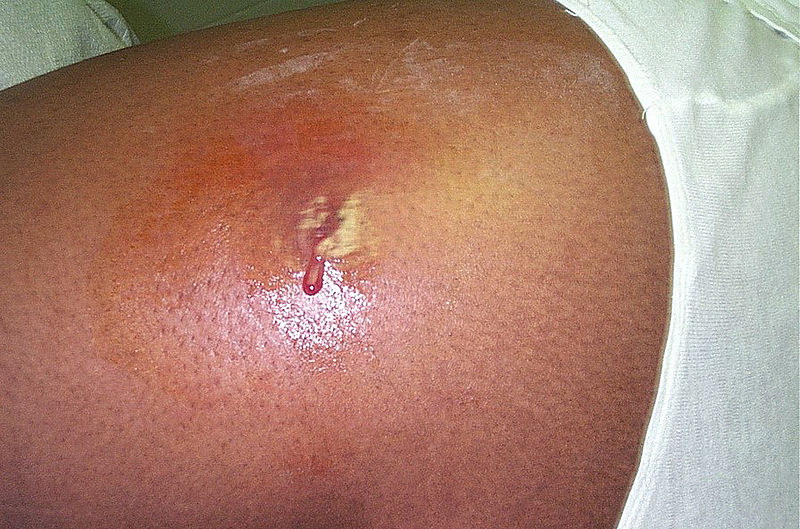
  • Hinchazón o nódulo discreto:
    • Sensible
    • Fluctuante
    • Eritematoso
  • Induración circundante
  • +/- Rayas enrojecidas
  • +/- Linfadenopatía regional
  • +/- Drenaje purulento espontáneo
  • El dolor Dolor Inflammation generalmente mejora cuando el nódulo comienza a drenar.
  • Síntomas sistémicos:
    • Fiebre
    • Malestar
    • Escalofríos
    • Sudor

Diagnóstico

Los LOS Neisseria abscesos de tejidos blandos generalmente se diagnostican según el examen físico y el antecedente clínico.

Estudios de laboratorio

  • No es necesario en EN Erythema nodosum is an immune-mediated panniculitis (inflammation of the subcutaneous fat) caused by a type IV (delayed-type) hypersensitivity reaction. It commonly manifests in young women as tender, erythematous nodules on the shins. Erythema Nodosum casos de rutina.
  • La biometría hemática puede mostrar leucocitosis.
  • ↑ Marcadores inflamatorios (velocidad de sedimentación globular, proteína C reactiva)
  • Hemocultivos y cultivos de heridas obtenidos si:
    • Manifestaciones sistémicas graves
    • Presencia de celulitis extensa
    • Extremos de la edad
    • Infecciones recurrentes
    • Fracaso de los LOS Neisseria antibióticos iniciales
    • Inmunodeficiencia (e.g., neutropenia Neutropenia Neutrophils are an important component of the immune system and play a significant role in the eradication of infections. Low numbers of circulating neutrophils, referred to as neutropenia, predispose the body to recurrent infections or sepsis, though patients can also be asymptomatic. Neutropenia, diabetes Diabetes Diabetes mellitus (DM) is a metabolic disease characterized by hyperglycemia and dysfunction of the regulation of glucose metabolism by insulin. Type 1 DM is diagnosed mostly in children and young adults as the result of autoimmune destruction of β cells in the pancreas and the resulting lack of insulin. Type 2 DM has a significant association with obesity and is characterized by insulin resistance. Diabetes Mellitus)
    • Circunstancias especiales (mordedura de animal, exposición inusual)

Imagenología

  • No es necesario si el absceso es evidente en EN Erythema nodosum is an immune-mediated panniculitis (inflammation of the subcutaneous fat) caused by a type IV (delayed-type) hypersensitivity reaction. It commonly manifests in young women as tender, erythematous nodules on the shins. Erythema Nodosum el examen físico
  • Ultrasonido: muestra masa hipoecoica
  • TC con contraste si:
    • Hay preocupación por celulitis más extensa o fascitis necrotizante
    • El absceso se manifiesta como una lesión que realza el borde.
Absceso de tejidos blandos en ecografía

Un ultrasonido que muestra un área hipoecoica rodeada por una inflamación de los tejidos blandos compatible con un absceso.

Imagen: “Abscess” por Section of Emergency Medicine, Department of Medicine, Louisiana State University Health Sciences Center, New Orleans, LA 70112, USA. Licencia: CC BY 3.0

Tratamiento

Casos no complicados

  • Incisión y drenaje son los LOS Neisseria pilares del tratamiento.
  • Si el absceso mide > 5 cm, el taponamiento de la cavidad del absceso puede ayudar a mantenerlo abierto y drenado.
  • Se deben considerar los LOS Neisseria antibióticos orales complementarios durante 5–7 días:
    • Para abscesos > 2 cm
    • Múltiples abscesos
    • Inmunodeficiencia/comorbilidades médicas
    • Síntomas sistémicos (fiebre, taquicardia)
    • Válvula protésica (riesgo de endocarditis Endocarditis Endocarditis is an inflammatory disease involving the inner lining (endometrium) of the heart, most commonly affecting the cardiac valves. Both infectious and noninfectious etiologies lead to vegetations on the valve leaflets. Patients may present with nonspecific symptoms such as fever and fatigue. Endocarditis)
    • Otros dispositivos protésicos (e.g., prótesis articulares, injertos vasculares)
  • Antibióticos con cobertura estafilocócica y estreptocócica:
    • Clindamicina
    • Cefalosporinas (p. ej., cefalexina)
  • Antibióticos principalmente para SARM adquirido en EN Erythema nodosum is an immune-mediated panniculitis (inflammation of the subcutaneous fat) caused by a type IV (delayed-type) hypersensitivity reaction. It commonly manifests in young women as tender, erythematous nodules on the shins. Erythema Nodosum la comunidad (nota: cobertura estreptocócica poco fiable):
    • Trimetoprim/sulfametoxazol
    • Doxiciclina
  • Medidas complementarias:
    • Elevación de la extremidad afectada ↓ la hinchazón
    • Compresas tibias (para promover el drenaje)
    • Fiebre sintomática y tratamiento del dolor Dolor Inflammation.

Casos que requirieron hospitalización y antibióticos intravenosos

  • Abscesos muy grandes con celulitis extensa
  • Presentación grave: ampollas, necrosis Necrosis The death of cells in an organ or tissue due to disease, injury or failure of the blood supply. Ischemic Cell Damage cutánea, signos de sepsis Sepsis Systemic inflammatory response syndrome with a proven or suspected infectious etiology. When sepsis is associated with organ dysfunction distant from the site of infection, it is called severe sepsis. When sepsis is accompanied by hypotension despite adequate fluid infusion, it is called septic shock. Sepsis and Septic Shock
  • Ancianos
  • Lactantes
  • Inmunodeficiencia significativa/ diabetes Diabetes Diabetes mellitus (DM) is a metabolic disease characterized by hyperglycemia and dysfunction of the regulation of glucose metabolism by insulin. Type 1 DM is diagnosed mostly in children and young adults as the result of autoimmune destruction of β cells in the pancreas and the resulting lack of insulin. Type 2 DM has a significant association with obesity and is characterized by insulin resistance. Diabetes Mellitus mal controlada
  • No mejora con antibióticos orales
  • Antibióticos intravenosos (absceso purulento o alto riesgo de SARM):
    • Vancomicina
    • Linezolid Linezolid An oxazolidinone and acetamide derived anti-bacterial agent and protein synthesis inhibitor that is used in the treatment of gram-positive bacterial infections of the skin and respiratory tract. Oxazolidinones
    • Daptomicina
    • Ceftarolina
  • Tratamiento quirúrgico:
    • El drenaje sigue siendo el pilar del tratamiento.
    • Puede ser necesario realizarlo en EN Erythema nodosum is an immune-mediated panniculitis (inflammation of the subcutaneous fat) caused by a type IV (delayed-type) hypersensitivity reaction. It commonly manifests in young women as tender, erythematous nodules on the shins. Erythema Nodosum el quirófano bajo anestesia general
    • Es posible que se requiera desbridamiento de tejidos:
      • Para abscesos extremadamente grandes o profundos con necrosis Necrosis The death of cells in an organ or tissue due to disease, injury or failure of the blood supply. Ischemic Cell Damage tisular
      • Necrosis Necrosis The death of cells in an organ or tissue due to disease, injury or failure of the blood supply. Ischemic Cell Damage cutánea

Diagnóstico Diferencial

  • Celulitis: una infección cutánea bacteriana común y dolorosa que afecta las capas más profundas de la dermis Dermis A layer of vascularized connective tissue underneath the epidermis. The surface of the dermis contains innervated papillae. Embedded in or beneath the dermis are sweat glands; hair follicles; and sebaceous glands. Skin: Structure and Functions y el tejido subcutáneo. Se presenta como un área eritematosa y edematosa que se siente cálida y sensible al AL Amyloidosis tacto. Causado más comúnmente por S. aureus S. aureus Potentially pathogenic bacteria found in nasal membranes, skin, hair follicles, and perineum of warm-blooded animals. They may cause a wide range of infections and intoxications. Staphylococcus y S. pyogenes. El diagnóstico suele ser clínico y el tratamiento se realiza con antibióticos en EN Erythema nodosum is an immune-mediated panniculitis (inflammation of the subcutaneous fat) caused by a type IV (delayed-type) hypersensitivity reaction. It commonly manifests in young women as tender, erythematous nodules on the shins. Erythema Nodosum función de los LOS Neisseria microorganismos sospechosos.
  • Fascitis necrotizante: una infección rápidamente progresiva que produce una necrosis Necrosis The death of cells in an organ or tissue due to disease, injury or failure of the blood supply. Ischemic Cell Damage extensa del tejido subcutáneo, la fascia Fascia Layers of connective tissue of variable thickness. The superficial fascia is found immediately below the skin; the deep fascia invests muscles, nerves, and other organs. Cellulitis y el músculo. Más comúnmente causado por estreptococos del grupo A, pero a menudo involucra a otros tipos de bacterias en EN Erythema nodosum is an immune-mediated panniculitis (inflammation of the subcutaneous fat) caused by a type IV (delayed-type) hypersensitivity reaction. It commonly manifests in young women as tender, erythematous nodules on the shins. Erythema Nodosum una infección mixta. Se presenta con necrosis Necrosis The death of cells in an organ or tissue due to disease, injury or failure of the blood supply. Ischemic Cell Damage, crepitación, ampollas y decoloración de la piel de color púrpura. El tratamiento consiste en EN Erythema nodosum is an immune-mediated panniculitis (inflammation of the subcutaneous fat) caused by a type IV (delayed-type) hypersensitivity reaction. It commonly manifests in young women as tender, erythematous nodules on the shins. Erythema Nodosum un desbridamiento quirúrgico urgente con antibióticos de amplio espectro.
  • Dermatitis Dermatitis Any inflammation of the skin. Atopic Dermatitis (Eczema): término general para una erupción cutánea edematosa. Causado por una infección o una reacción alérgica, generalmente no por bacterias. El diagnóstico se establece clínicamente. El tratamiento es con antihistamínicos y esteroides tópicos.
  • Foliculitis: inflamación localizada del folículo piloso o de las glándulas sebáceas causada principalmente por S. aureus S. aureus Potentially pathogenic bacteria found in nasal membranes, skin, hair follicles, and perineum of warm-blooded animals. They may cause a wide range of infections and intoxications. Staphylococcus. Se presenta como eritema, pápulas, pústulas y dolor Dolor Inflammation a la palpación del área afectada. El diagnóstico se realiza clínicamente y el tratamiento incluye limpiadores de piel con antibióticos y, a veces, antibióticos sistémicos.
  • Impétigo: una infección cutánea muy contagiosa de la epidermis Epidermis The external, nonvascular layer of the skin. It is made up, from within outward, of five layers of epithelium: (1) basal layer (stratum basale epidermidis); (2) spinous layer (stratum spinosum epidermidis); (3) granular layer (stratum granulosum epidermidis); (4) clear layer (stratum lucidum epidermidis); and (5) horny layer (stratum corneum epidermidis). Skin: Structure and Functions superior. Causado por S. aureus S. aureus Potentially pathogenic bacteria found in nasal membranes, skin, hair follicles, and perineum of warm-blooded animals. They may cause a wide range of infections and intoxications. Staphylococcus o Streptococcus Streptococcus Streptococcus is one of the two medically important genera of gram-positive cocci, the other being Staphylococcus. Streptococci are identified as different species on blood agar on the basis of their hemolytic pattern and sensitivity to optochin and bacitracin. There are many pathogenic species of streptococci, including S. pyogenes, S. agalactiae, S. pneumoniae, and the viridans streptococci. Streptococcus del grupo A. Se presenta con un área eritematosa cubierta por pequeñas vesículas, pústulas y / o costras color miel. El tratamiento es con antibióticos.
  • Síndrome de piel escaldada por estafilococos: un trastorno cutáneo con ampollas causado por una infección local generalmente debida a S. aureus S. aureus Potentially pathogenic bacteria found in nasal membranes, skin, hair follicles, and perineum of warm-blooded animals. They may cause a wide range of infections and intoxications. Staphylococcus. Se presenta con fiebre y eritema doloroso difuso, ampollas intraepidérmicas y desprendimiento de la capa superficial de la piel, dejando un aspecto rojo y escaldado. El tratamiento implica antibióticos por vía intravenosa.
  • Quiste epidermoide: el quiste cutáneo más común, generalmente se presenta como un nódulo dérmico del color de la piel, a veces con un punto central. Diagnosticado clínicamente y tratado con escisión quirúrgica u observación. Puede infectarse de forma secundaria y convertirse en EN Erythema nodosum is an immune-mediated panniculitis (inflammation of the subcutaneous fat) caused by a type IV (delayed-type) hypersensitivity reaction. It commonly manifests in young women as tender, erythematous nodules on the shins. Erythema Nodosum un absceso, en EN Erythema nodosum is an immune-mediated panniculitis (inflammation of the subcutaneous fat) caused by a type IV (delayed-type) hypersensitivity reaction. It commonly manifests in young women as tender, erythematous nodules on the shins. Erythema Nodosum cuyo caso los LOS Neisseria quistes se presentan como nódulos sensibles, eritematosos y fluctuantes, a menudo con drenaje espontáneo.
  • Hidradenitis supurativa: infección supurativa crónica de las glándulas sudoríparas que se manifiesta principalmente en EN Erythema nodosum is an immune-mediated panniculitis (inflammation of the subcutaneous fat) caused by a type IV (delayed-type) hypersensitivity reaction. It commonly manifests in young women as tender, erythematous nodules on the shins. Erythema Nodosum las áreas intertriginosas (axilas, ingles, pliegues inframamarios). La hidradenitis supurativa por lo general se presenta como nódulos cutáneos e induración a menudo asociados con múltiples senos de drenaje. El diagnóstico se establece clínicamente y el tratamiento incluye antibióticos y escisión quirúrgica.

Referencias

  1. Spelman, D., & Baddour, L. M. (2025). Acute cellulitis and erysipelas in adults: Treatment. UpToDate. Retrieved August 13, 2025, from https://www.uptodate.com/contents/acute-cellulitis-and-erysipelas-in-adults-treatment
  2. Spelman D., Baddour L.M. (2024). Cellulitis and skin abscess: Epidemiology, microbiology, clinical manifestations, and diagnosis. UpToDate. Retrieved on August 13, 2025, from https://www.uptodate.com/contents/cellulitis-and-skin-abscess-epidemiology-microbiology-clinical-manifestations-and-diagnosis
  3. Stevens DL et al. (2014). Infectious Diseases Society of America. Practice guidelines for the diagnosis and management of skin and soft tissue infections: 2014 update by the Infectious Diseases Society of America. Clin Infect Dis.

¡Crea tu cuenta gratis o inicia una sesión para seguir leyendo!

Regístrate ahora y obtén acceso gratuito a Lecturio con páginas de concepto, videos médicos y cuestionarios para tu educación médica.

User Reviews

Que tengas una sesión de estudio alegre y navideña 🎁 Ahorra 50% en todos los planes >>

Details