



O vírus Epstein-Barr ( EBV EBV Epstein-barr virus (EBV) is a linear, double-stranded DNA virus belonging to the herpesviridae family. This highly prevalent virus is mostly transmitted through contact with oropharyngeal secretions from an infected individual. The virus can infect epithelial cells and B lymphocytes, where it can undergo lytic replication or latency. Epstein-Barr Virus, pela sigla em inglês) é um vírus de DNA DNA A deoxyribonucleotide polymer that is the primary genetic material of all cells. Eukaryotic and prokaryotic organisms normally contain DNA in a double-stranded state, yet several important biological processes transiently involve single-stranded regions. DNA, which consists of a polysugar-phosphate backbone possessing projections of purines (adenine and guanine) and pyrimidines (thymine and cytosine), forms a double helix that is held together by hydrogen bonds between these purines and pyrimidines (adenine to thymine and guanine to cytosine). DNA Types and Structure linear de cadeia dupla pertencente à família Herpesviridae Herpesviridae A family of enveloped, linear, double-stranded DNA viruses infecting a wide variety of animals. Subfamilies, based on biological characteristics, include: alphaherpesvirinae; betaherpesvirinae; and gammaherpesvirinae. Herpes Simplex Virus 1 and 2. Este vírus altamente prevalente é transmitido principalmente através do contacto com secreções orofaríngeas de um indivíduo infetado. O vírus pode infetar células epiteliais e linfócitos B, onde pode sofrer replicação lítica ou latência. A infeção inicial pode apresentar-se como mononucleose infeciosa e a reativação (maioritariamente nos pacientes VIH positivos) pode causar leucoplasia pilosa oral. Uma das características importantes das infeções por EBV EBV Epstein-barr virus (EBV) is a linear, double-stranded DNA virus belonging to the herpesviridae family. This highly prevalent virus is mostly transmitted through contact with oropharyngeal secretions from an infected individual. The virus can infect epithelial cells and B lymphocytes, where it can undergo lytic replication or latency. Epstein-Barr Virus é a capacidade de transformar células B, proporcionando imortalização e proliferação do vírus. Assim, o EBV EBV Epstein-barr virus (EBV) is a linear, double-stranded DNA virus belonging to the herpesviridae family. This highly prevalent virus is mostly transmitted through contact with oropharyngeal secretions from an infected individual. The virus can infect epithelial cells and B lymphocytes, where it can undergo lytic replication or latency. Epstein-Barr Virus está associado a distúrbios linfoproliferativos e neoplasias malignas, como linfoma de Burkitt, linfoma de Hodgkin, linfohistiocitose hemofagocítica, doença linfoproliferativa pós-transplante, alguns carcinomas gástricos e carcinoma nasofaríngeo.
Last updated: Dec 29, 2025
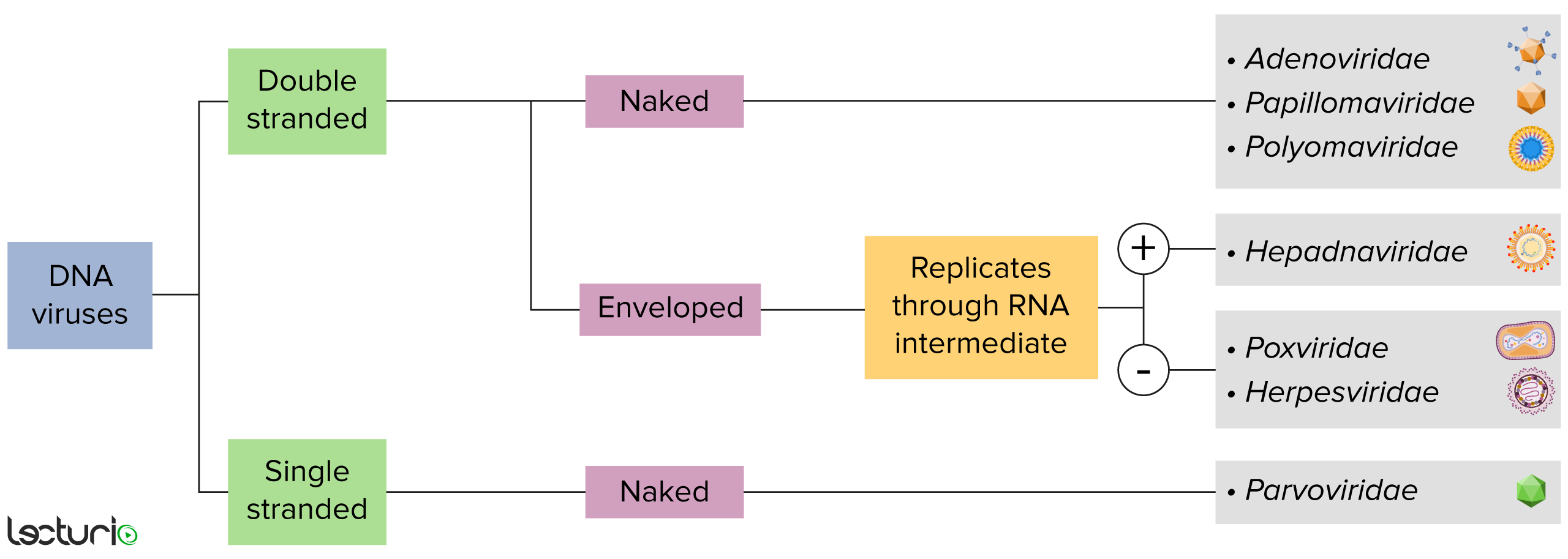
Identificação de vírus de DNA:
Os vírus podem ser classificados de várias formas. Contudo, a maioria dos vírus possui um genoma formado por DNA ou RNA. Os vírus com genoma de DNA podem ainda ser caracterizados como de cadeia simples ou dupla. Os vírus com envelope são revestidos por uma camada fina de membrana celular, que geralmente é retirada da célula hospedeira. Os vírus sem envelope são apelidados de vírus “nus”. Alguns vírus com envelope traduzem DNA em RNA antes de serem incorporados no genoma da célula hospedeira.
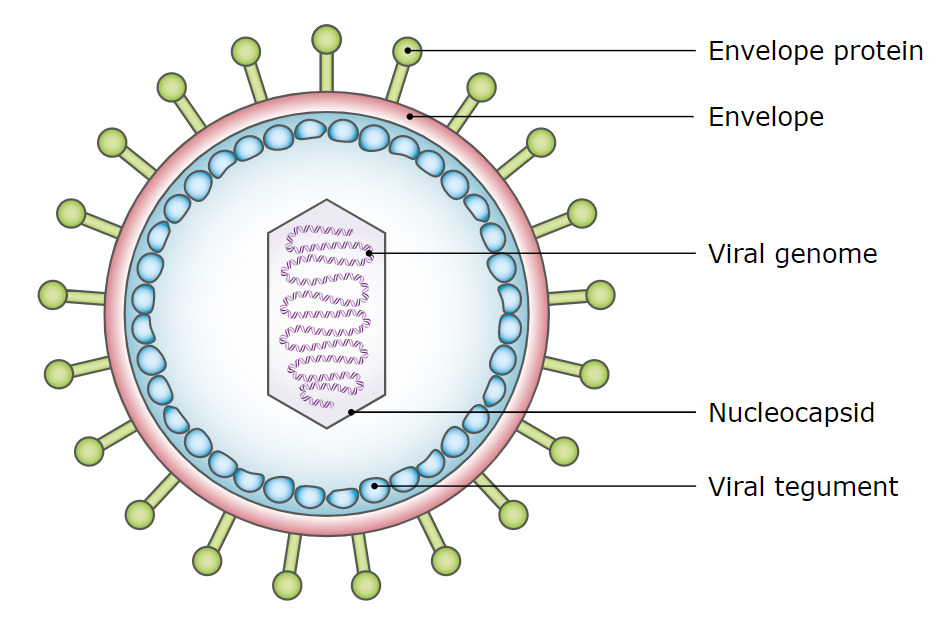
Diagrama simplificado da estrutura do vírus Epstein-Barr
Imagem: “Simplified diagram of the structure of EBV” por Ben Taylor. Licença: Domínio Público Simplified diagram of the structure of EBV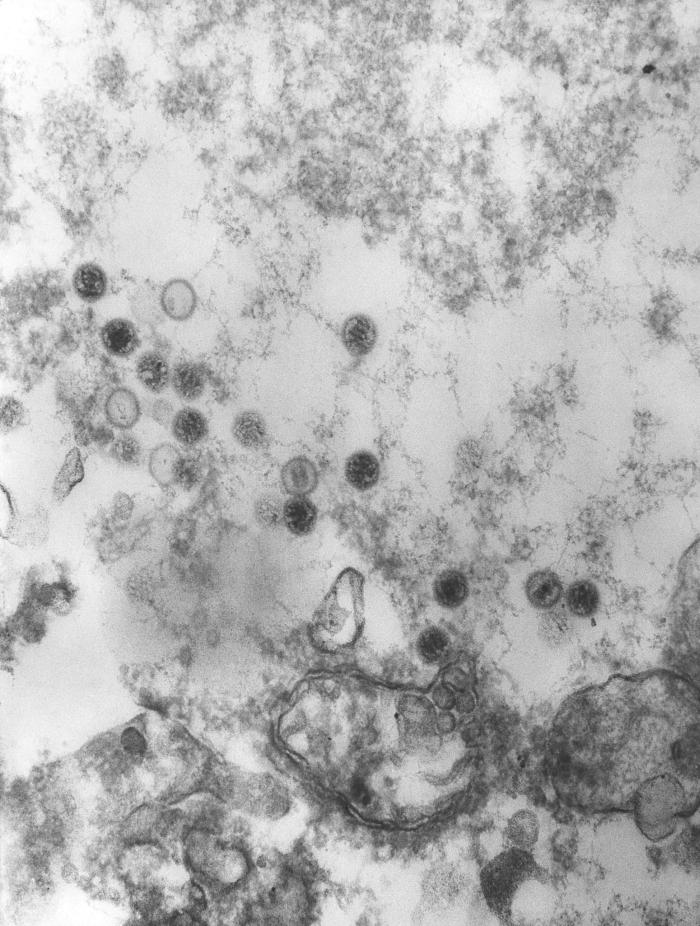
Imagem de microscopia eletrónica de transmissão que demonstra a presença de vários viriões do vírus Epstein-Barr (EBV), membros da família do vírus Herpesviridae:
No núcleo da sua cápside proteica, o EBV contém um genoma linear de DNA de cadeia dupla.
Os humanos são o único reservatório.
Entrada na célula:
Latência:
Replicação lítica:
Tipos de células infetadas:
Infeção primária:
Doenças linfoproliferativas:
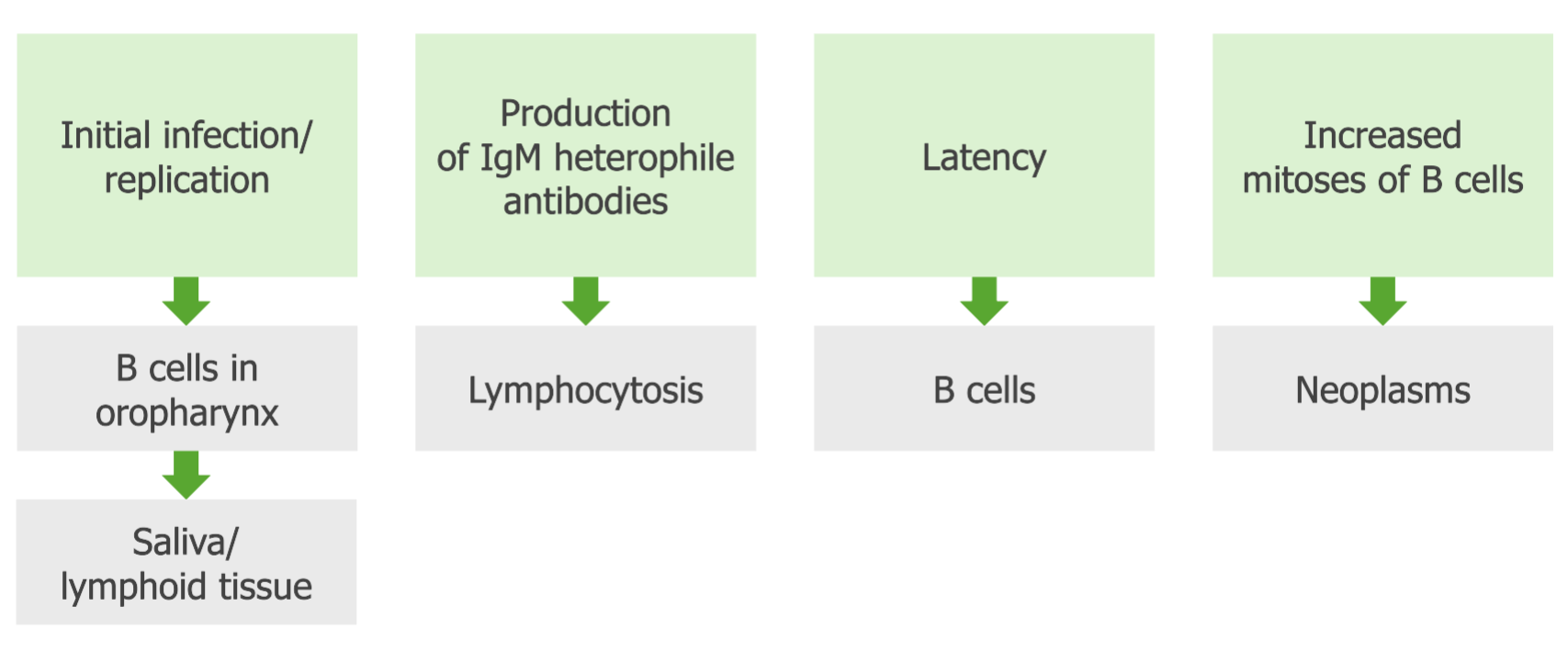
Patogénese da infeção por norovírus
Imagem por Lecturio. Licença: CC BY-NC-SA 4.0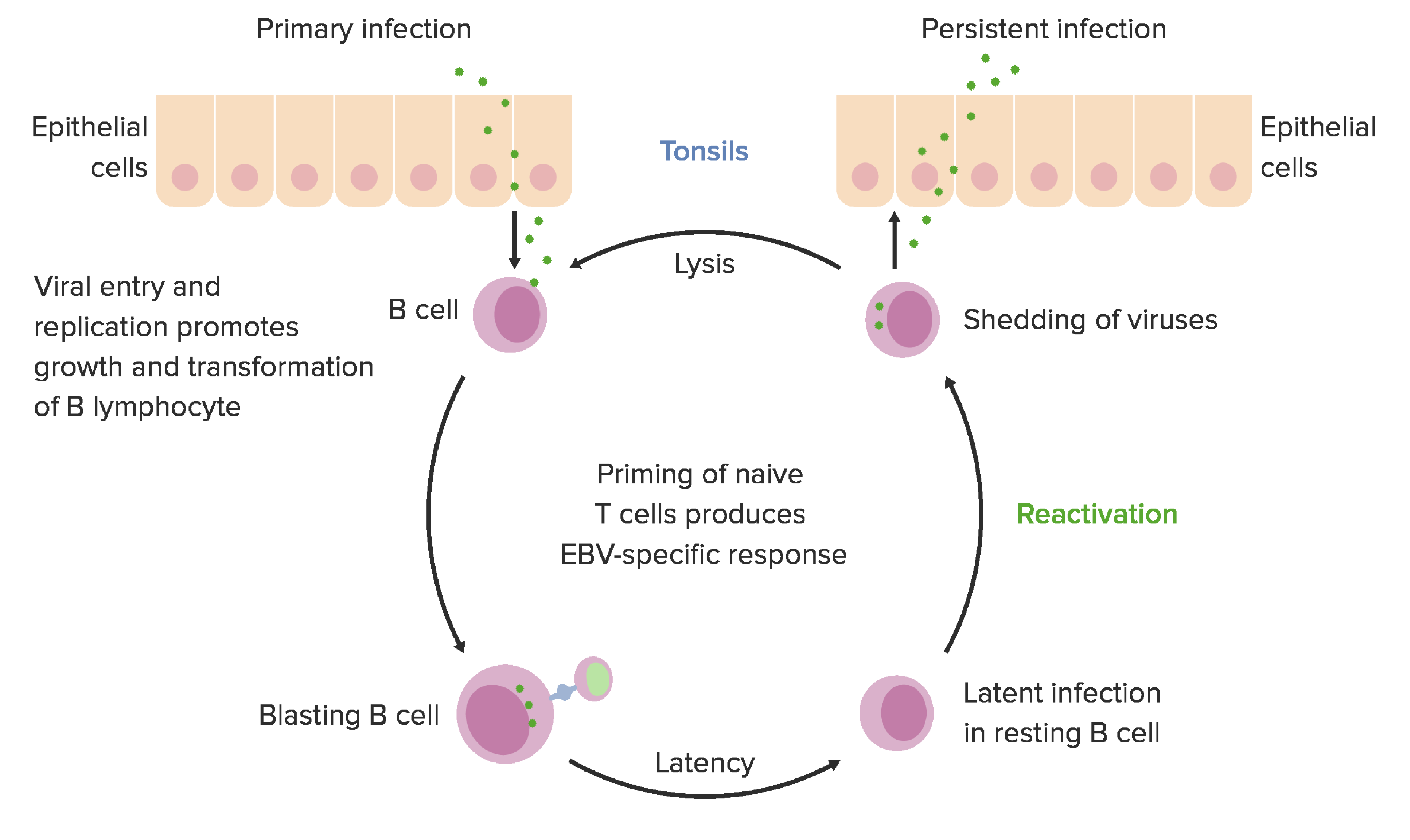
O EBV pode infetar células B e células epiteliais da orofaringe:
O vírus entra nas células B ligando-se ao recetor celular CD21, permitindo a fusão do envelope viral com a membrana celular.
O ciclo lítico resulta na produção de viriões infeciosos tanto nas células B como nas células epiteliais da orofaringe. Nas células B, a replicação lítica só ocorre após a reativação da latência, enquanto nas células epiteliais da orofaringe, a replicação lítica geralmente ocorre após a entrada viral.
Durante a replicação lítica, a DNA polimerase viral é responsável pela síntese do genoma viral. Por outro lado, na fase de latência, a DNA polimerase da célula hospedeira copia o genoma viral. No entanto, a latência não resulta na produção de viriões, pois apenas é expressa uma parte dos genes do EBV.
Apresentação Clínica:
Diagnóstico:
Tratamento:
Mononucleose infeciosa:
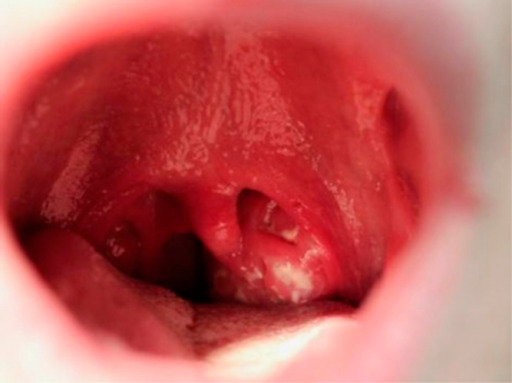
faringite com amigdalite exsudativa e aumento da úvula num estudante universitário de 19 anos, 5 dias após o início da mononucleose infeciosa
A leucoplasia pilosa oral é causada pela reativação do EBV EBV Epstein-barr virus (EBV) is a linear, double-stranded DNA virus belonging to the herpesviridae family. This highly prevalent virus is mostly transmitted through contact with oropharyngeal secretions from an infected individual. The virus can infect epithelial cells and B lymphocytes, where it can undergo lytic replication or latency. Epstein-Barr Virus latente e ocorre principalmente em pacientes VIH positivos.
Apresentação clínica:
Diagnóstico:
Tratamento:
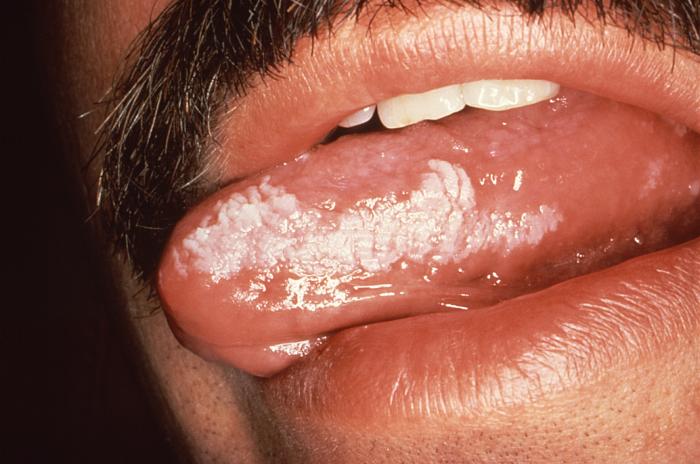
Mancha branca e pilosa na língua de um paciente, correspondente a leucoplasia pilosa oral
Imagem: “Advanced oral hairy leukoplakia (OHL)” por CDC. Licença: Domínio Público| Doença | Características | Apresentação clínica | Tratamento |
|---|---|---|---|
| Linfoma de Burkitt |
|
|
|
| Linfoma de Hodgkin | Células de Reed-Sternberg |
|
|
| Linfohistiocitose hemofagocítica |
|
|
|
| Doença linfoproliferativa pós-transplante |
|
|
↓ Terapêutica imunossupressora |
| Carcinoma nasofaríngeo |
|
|
|
| Carcinoma gástrico associado ao EBV EBV Epstein-barr virus (EBV) is a linear, double-stranded DNA virus belonging to the herpesviridae family. This highly prevalent virus is mostly transmitted through contact with oropharyngeal secretions from an infected individual. The virus can infect epithelial cells and B lymphocytes, where it can undergo lytic replication or latency. Epstein-Barr Virus |
|
|
|
Existem 115 diferentes espécies conhecidas de herpesvírus que são agrupadas em 3 famílias:
| HHV | Nome comum | Células de destino primárias | Site de latência | Apresentação clínica* |
|---|---|---|---|---|
|
1 (grupo alfa) |
HSV-1 | Células mucoepiteliais | Gânglios da raiz dorsal |
|
|
2 (grupo alfa) |
HSV-2 |
|
||
|
3 (grupo alfa) |
VZV |
|
||
|
4 (grupo gama) |
EBV EBV Epstein-barr virus (EBV) is a linear, double-stranded DNA virus belonging to the herpesviridae family. This highly prevalent virus is mostly transmitted through contact with oropharyngeal secretions from an infected individual. The virus can infect epithelial cells and B lymphocytes, where it can undergo lytic replication or latency. Epstein-Barr Virus |
|
Células B de memória |
|
|
5 (grupo beta) |
CMV |
|
Células progenitoras hematopoiéticas na medula óssea |
|
|
6A, 6B (grupo beta) |
HHV-6 HHV-6 Human herpesvirus (HHV)-6 and HHV-7 are similar double-stranded DNA viruses belonging to the Herpesviridae family. Human herpesviruses are ubiquitous and infections are commonly contracted during childhood. Human Herpesvirus 6 and 7 | células T | Monócitos | Roséola |
|
7 (grupo beta) |
HHV-7 HHV-7 Human herpesvirus (HHV)-6 and HHV-7 are similar double-stranded DNA viruses belonging to the Herpesviridae family. Human herpesviruses are ubiquitous and infections are commonly contracted during childhood. Human Herpesvirus 6 and 7 | células T | ||
|
8 (grupo gama) |
KSHV |
|
células B | Sarcoma de Kaposi Kaposi A multicentric, malignant neoplastic vascular proliferation characterized by the development of bluish-red cutaneous nodules, usually on the lower extremities, most often on the toes or feet, and slowly increasing in size and number and spreading to more proximal areas. The tumors have endothelium-lined channels and vascular spaces admixed with variably sized aggregates of spindle-shaped cells, and often remain confined to the skin and subcutaneous tissue, but widespread visceral involvement may occur. Hhv-8 is the suspected cause. There is also a high incidence in AIDS patients. AIDS-defining Conditions |