


Trypanosoma Brucei/Tripanossomíase Africana

A tripanossomíase africana, ou doença do sono africana, é uma infecção parasitária causada pelo protozoário Trypanosoma brucei Trypanosoma brucei African trypanosomiasis, or African sleeping sickness, is a parasitic infection caused by the protozoa Trypanosoma brucei. There are 2 notable subtypes, T. brucei gambiense and T. brucei rhodesiense. Transmission is primarily vector borne through the tsetse fly. Trypanosoma brucei/African trypanosomiasis. Existem 2 subtipos notáveis, T. brucei gambiense T. brucei gambiense A hemoflagellate subspecies of parasitic protozoa that causes gambian or West african sleeping sickness in humans. The vector host is usually the tsetse fly (glossina). Trypanosoma brucei/African trypanosomiasis e T. brucei rhodesiense. A transmissão é principalmente vetorial através da mosca tsé-tsé. As infeções iniciais apresentam inflamação localizada (úlcera), linfadenopatia cervical, febres intermitentes e outros achados inespecíficos. Se não tratada, ocorre o envolvimento do SNC, que é caracterizado por perturbações do sono, alterações comportamentais, coma Coma Coma is defined as a deep state of unarousable unresponsiveness, characterized by a score of 3 points on the GCS. A comatose state can be caused by a multitude of conditions, making the precise epidemiology and prognosis of coma difficult to determine. Coma e morte. O diagnóstico é confirmado pela identificação de tripanossomas em esfregaço de sangue ou serologia. O tratamento depende do subtipo e estadio da doença. O tratamento e a prevenção precoces são fundamentais na prevenção de sequelas e morte a longo prazo.

Last updated: Dec 15, 2025
Editorial responsibility: Stanley Oiseth, Lindsay Jones, Evelin Maza

Características Gerais e Epidemiologia

Características gerais do Trypanosoma brucei Trypanosoma brucei African trypanosomiasis, or African sleeping sickness, is a parasitic infection caused by the protozoa Trypanosoma brucei. There are 2 notable subtypes, T. brucei gambiense and T. brucei rhodesiense. Transmission is primarily vector borne through the tsetse fly. Trypanosoma brucei/African trypanosomiasis

  • Protozoário parasita
  • Taxonomia:
  • Características gerais:
    • Flagelo único
    • Membrana ondulante
    • As glicoproteínas de superfície variável permitem a variação antigénica.
  • Formas morfológicas:
    • Epimastigota (forma não infecciosa)
    • Tripomastigotas (forma infecciosa)
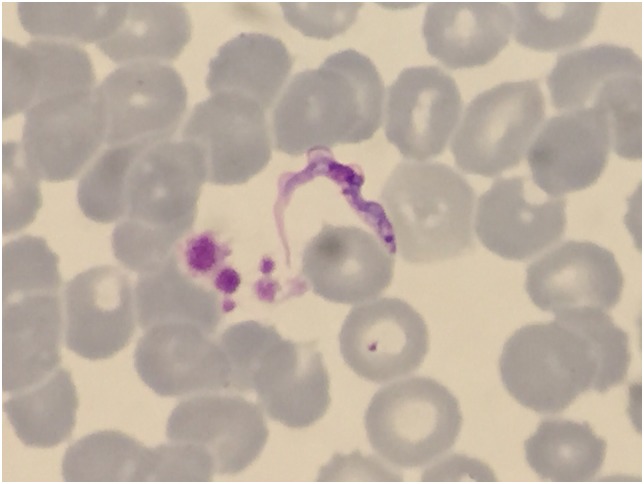
Tripanossomas em um filme de sangue fino corado por Giemsa

Tripanossomas num esfregação sanguíneo de Giemsa de um viajante retornado da Tanzânia

Imagem : “Trypanosomes in a Giemsa-stained thin blood film from a Spanish traveler returning from Tanzania” por Joan Gómez-Junyent et al. Licença: CC BY 4.0

Doenças associadas

O T. brucei causa a tripanossomíase africana, também conhecida como doença do sono africana.
Epidemiologia

  • Distribuição geográfica:
    • África Ocidental e Central (subtipo gambiense)
    • África Oriental e Austral (subtipo rodesiência)
  • Incidência:
    • 933 novos casos notificados em 2018 (> 98% eram do subtipo gambiense)
    • < 1 caso por ano nos EUA (em viajantes)
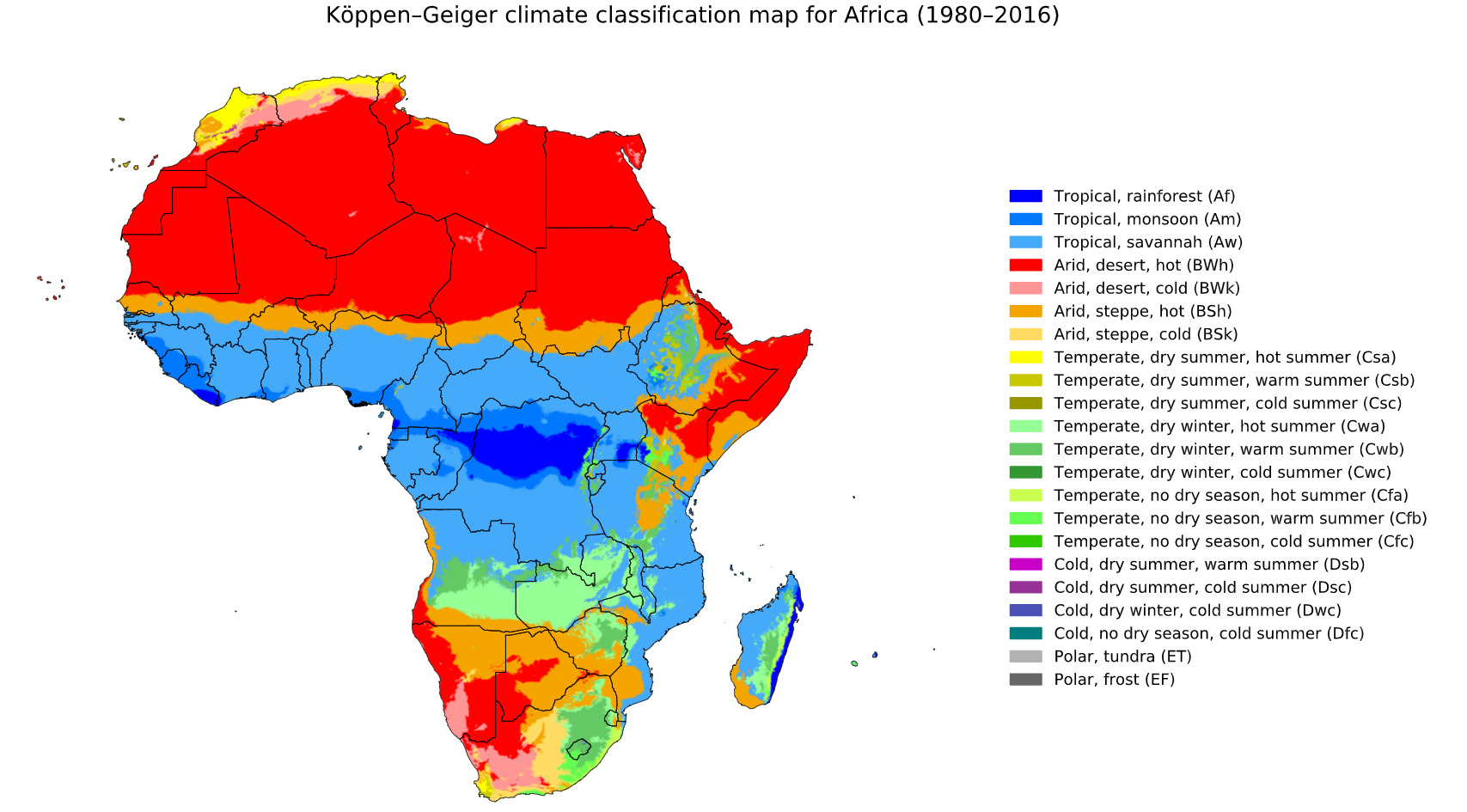
Distribuição geográfica da tripanossomíase africana

Distribuição geográfica da tripanossomíase africana: T. brucei é encontrado apenas nas áreas azuis.

Imagem : “T. brucei is only found in the blue areas” por Beck, HE et al. Licença: CC BY 4.0
Patogénese

Reservatório

  • Tb TB Tuberculosis (TB) is an infectious disease caused by Mycobacterium tuberculosis complex bacteria. The bacteria usually attack the lungs but can also damage other parts of the body. Approximately 30% of people around the world are infected with this pathogen, with the majority harboring a latent infection. Tuberculosis spreads through the air when a person with active pulmonary infection coughs or sneezes. Tuberculosis. rodesiense: animais de caça e gado
  • Tb TB Tuberculosis (TB) is an infectious disease caused by Mycobacterium tuberculosis complex bacteria. The bacteria usually attack the lungs but can also damage other parts of the body. Approximately 30% of people around the world are infected with this pathogen, with the majority harboring a latent infection. Tuberculosis spreads through the air when a person with active pulmonary infection coughs or sneezes. Tuberculosis. gambiense: principalmente humanos

Transmissão

  • Transmissão principalmente vetorial: mosca tsé-tsé
  • Menos comum:
    • Transfusão de sangue
    • Transplante de órgão
    • Inoculação laboratorial
    • Infeções congénitas

Fatores de risco do hospedeiro

  • Residência em regiões endémicas
  • Exposição prolongada a vetores

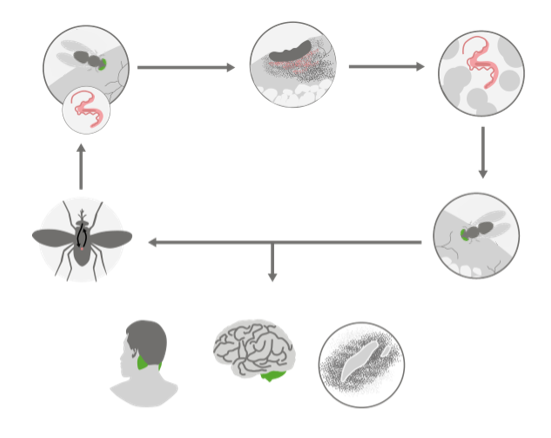
Ciclo de vida e fisiopatologia

  • A mosca tsé-tsé alimenta-se de um hospedeiro humano ou mamífero infectado → infecta com tripomastigotas (forma infecciosa)
    • Tripomastigotas migram para o intestino médio da mosca tsé-tsé → replicam (fissão binária)
    • Migram para a glândula salivar → diferenciam-se em epimastigotas (forma não infecciosa)
    • Após aproximadamente 3 semanas, diferenciam em tripomastigotas
  • A mosca tsé-tsé infectada pica Pica Pica is an eating disorder characterized by a desire or recurrent compulsion to eat substances that are nonnutritive and not food. These compulsions and ingested substances are inappropriate for age or culture. Pica o hospedeiro → injeta tripomastigotas no tecido do hospedeiro → desenvolve úlcera, secundária à inflamação localizada
  • Tripomastigotas migram para gânglios linfáticos regionais → disseminam-se pela corrente sanguínea
  • A motilidade dos tripomastigotas permite a invasão dos tecidos conjuntivos circundantes, incluindo LCR e SNC.
  • A progressão da doença depende das subespécies:
    • Rhodesiense: período de incubação de semanas
    • Gambiense: período de incubação de meses a anos
patogênese da tripanossomíase africana

Imagem que ilustra a patogénese da tripanossomíase africana

Imagem por Lecturio. Licença: CC BY-NC-SA 4.0

Apresentação Clínica

A tripanossomíase africana tem 2 fases: a fase hemolinfática e a fase neurológica
Estadio 1: fase hemolinfática

  • Sintomas localizados:
    • Úlcera dolorosa no local da inoculação
      • Eritema
      • Endurecimento
      • Aparência variável
      • Resolve espontaneamente
    • Sinal de Winterbottom:
      • Linfadenopatia indolor dos gânglios linfáticos cervicais posteriores
      • Característica de infeções por Tb TB Tuberculosis (TB) is an infectious disease caused by Mycobacterium tuberculosis complex bacteria. The bacteria usually attack the lungs but can also damage other parts of the body. Approximately 30% of people around the world are infected with this pathogen, with the majority harboring a latent infection. Tuberculosis spreads through the air when a person with active pulmonary infection coughs or sneezes. Tuberculosis. gambiense
  • Sintomas sistémicos inespecíficos:
    • Febre intermitente
    • Cefaleia
    • Mal-estar
    • Artralgias
  • Sintomas menos comuns:
    • Edema Edema Edema is a condition in which excess serous fluid accumulates in the body cavity or interstitial space of connective tissues. Edema is a symptom observed in several medical conditions. It can be categorized into 2 types, namely, peripheral (in the extremities) and internal (in an organ or body cavity). Edema facial
    • Hepatoesplenomegalia
    • Linfadenopatia generalizada
    • Cardiomiopatia
    • Rash Rash Rocky Mountain Spotted Fever cutâneo pruriginoso e eritematoso
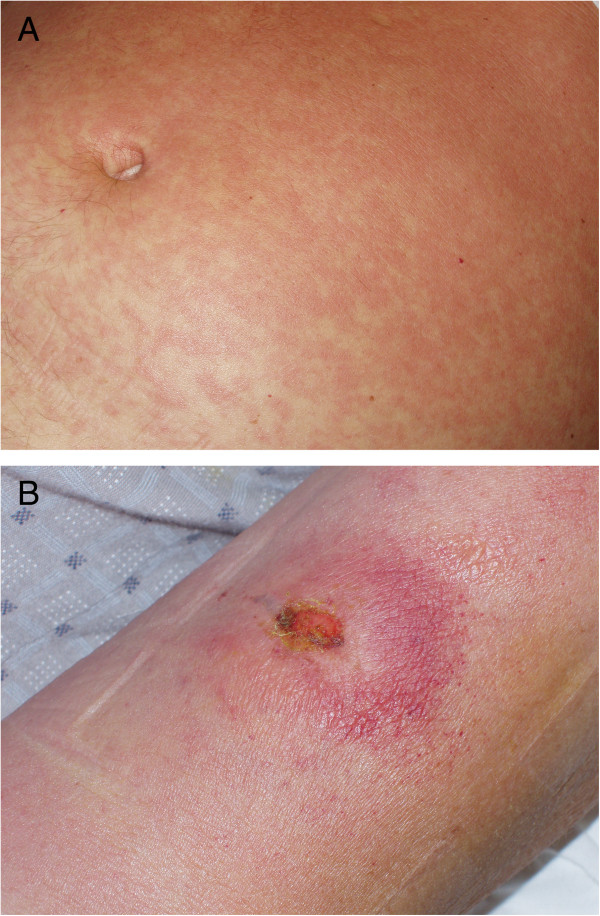
Manifestações cutâneas da tripanossomíase africana

Manifestações cutâneas da tripanossomíase africana:
A: rash ligeiro e rosado no abdómen
B: úlcera tripanossómica no braço esquerdo do doente, que ocorre no local da inoculação
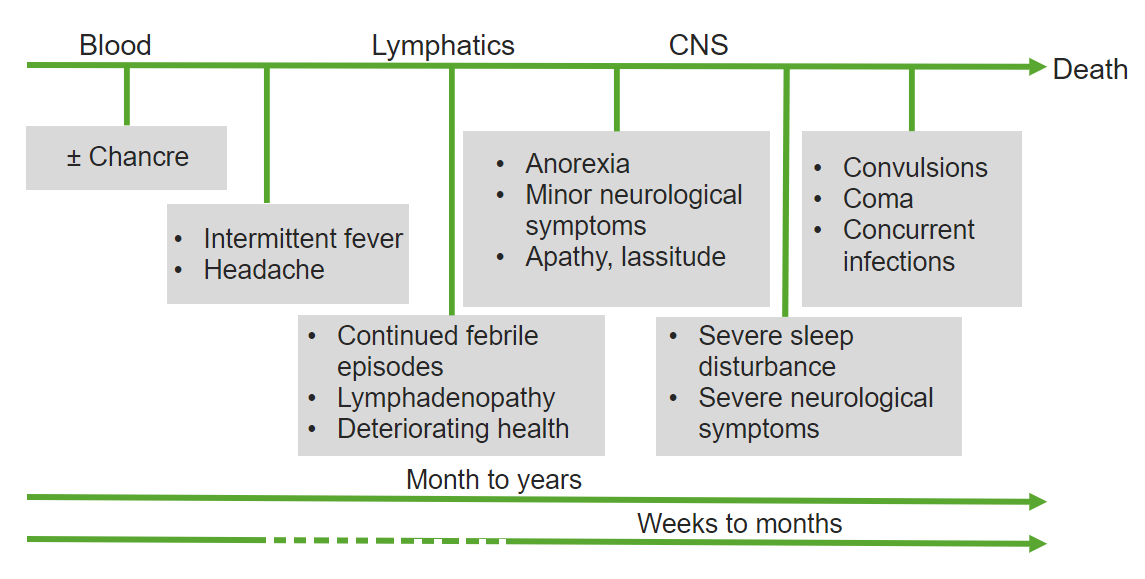
Imagem : “Typical clinical manifestations of acute African trypanosomiasis imported from Uganda” por Paul M et al. Licença: CC BY 2.0

Estadio 2: fase neurológica (meningoencefalite)

  • Cefaleia:
    • Persistente
    • Refratária a analgésicos
  • Linfadenopatia
  • Mudanças comportamentais:
    • Alterações de personalidade
    • Confusão (dificuldade de concentração e em completar tarefas)
    • Perturbações sensitivas
    • Apatia
    • Psicose
  • Sintomas neurológicos:
    • Ataxia Ataxia Impairment of the ability to perform smoothly coordinated voluntary movements. This condition may affect the limbs, trunk, eyes, pharynx, larynx, and other structures. Ataxia may result from impaired sensory or motor function. Sensory ataxia may result from posterior column injury or peripheral nerve diseases. Motor ataxia may be associated with cerebellar diseases; cerebral cortex diseases; thalamic diseases; basal ganglia diseases; injury to the red nucleus; and other conditions. Ataxia-telangiectasia
    • Perturbações sensitivas
    • Tremores
  • Distúrbio do sono:
    • Sonolência diurna
    • Insónia noturna
    • Grave o suficiente para causar anorexia Anorexia The lack or loss of appetite accompanied by an aversion to food and the inability to eat. It is the defining characteristic of the disorder anorexia nervosa. Anorexia Nervosa, emagrecimento e desnutrição
  • Progressão para coma Coma Coma is defined as a deep state of unarousable unresponsiveness, characterized by a score of 3 points on the GCS. A comatose state can be caused by a multitude of conditions, making the precise epidemiology and prognosis of coma difficult to determine. Coma e morte, se não tratada
Curso de tempo da doença da tripanossomíase africana

Imagem mostra o curso temporal da tripanossomíase africana desde a infecção inicial até a doença crónica meses a anos depois (dependendo da subespécie envolvida)

Imagem por Lecturio. Licença: CC BY-NC-SA 4.0

Diagnóstico e Tratamento

Diagnóstico

  • Testes Testes Gonadal Hormones confirmatórios:
    • Presença de tripomastigotas
      • Esfregaço de sangue (grosso ou fino)
      • Aspirado de tecido da úlcera
      • Biópsia de gânglio linfático
      • Análise do LCR
    • Teste serológico:
      • Teste de aglutinação para tripanossomíase ( CATT CATT Trypanosoma brucei/African trypanosomiasis, pela sigla em inglês)
      • ELISA ELISA An immunoassay utilizing an antibody labeled with an enzyme marker such as horseradish peroxidase. While either the enzyme or the antibody is bound to an immunosorbent substrate, they both retain their biologic activity; the change in enzyme activity as a result of the enzyme-antibody-antigen reaction is proportional to the concentration of the antigen and can be measured spectrophotometrically or with the naked eye. Many variations of the method have been developed. St. Louis Encephalitis Virus
      • PCR PCR Polymerase chain reaction (PCR) is a technique that amplifies DNA fragments exponentially for analysis. The process is highly specific, allowing for the targeting of specific genomic sequences, even with minuscule sample amounts. The PCR cycles multiple times through 3 phases: denaturation of the template DNA, annealing of a specific primer to the individual DNA strands, and synthesis/elongation of new DNA molecules. Polymerase Chain Reaction (PCR)
  • Achados que apoio o diagnóstico:
    • Anemia Anemia Anemia is a condition in which individuals have low Hb levels, which can arise from various causes. Anemia is accompanied by a reduced number of RBCs and may manifest with fatigue, shortness of breath, pallor, and weakness. Subtypes are classified by the size of RBCs, chronicity, and etiology. Anemia: Overview and Types hemolítica
    • Leucocitose
    • Trombocitopenia
    • ↑ Marcadores inflamatórios (VS e PCR PCR Polymerase chain reaction (PCR) is a technique that amplifies DNA fragments exponentially for analysis. The process is highly specific, allowing for the targeting of specific genomic sequences, even with minuscule sample amounts. The PCR cycles multiple times through 3 phases: denaturation of the template DNA, annealing of a specific primer to the individual DNA strands, and synthesis/elongation of new DNA molecules. Polymerase Chain Reaction (PCR))

Tratamento

  • Subespécie Rhodesiense:
    • Estadio 1: suramina
    • Estadio 2: melarsoprol
  • Subespécie Gambiense:
    • Estadio 1: pentamidina
    • Estadio 2: niturtimox e eflornitina

Prevenção

  • Não está disponível nenhuma vacina ou tratamento profilático.
  • Controlo de vetores com inseticidas e repelentes de insetos
  • Uso de mangas compridas e calças; roupas de cores neutras

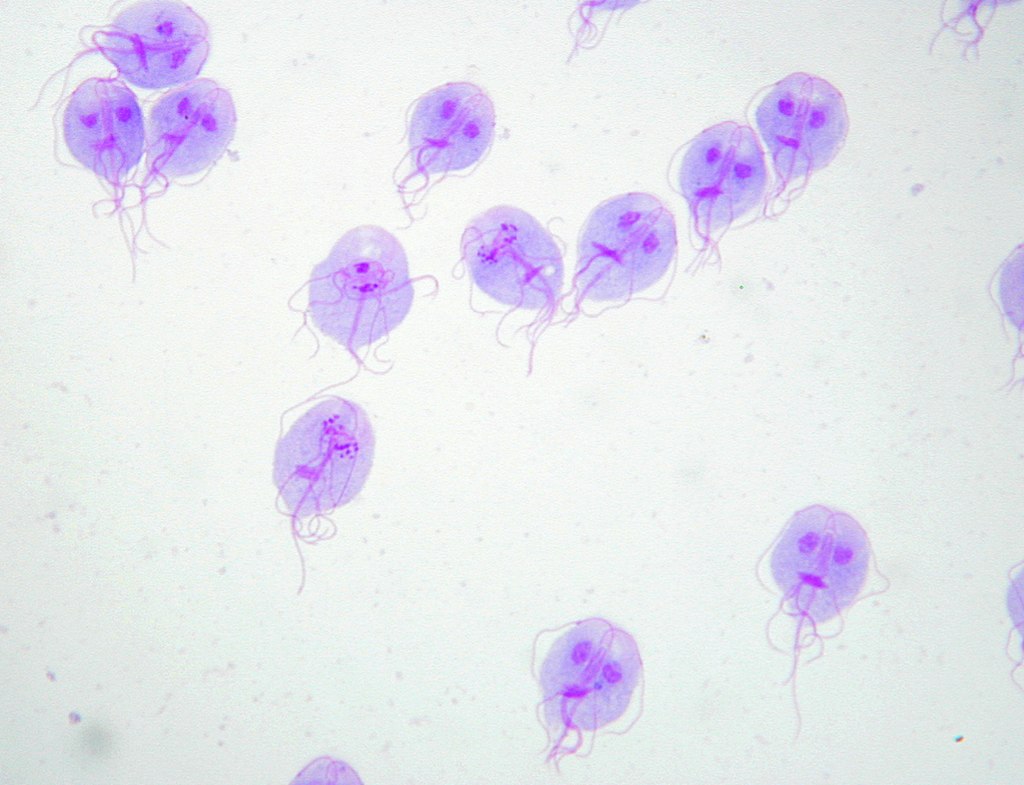
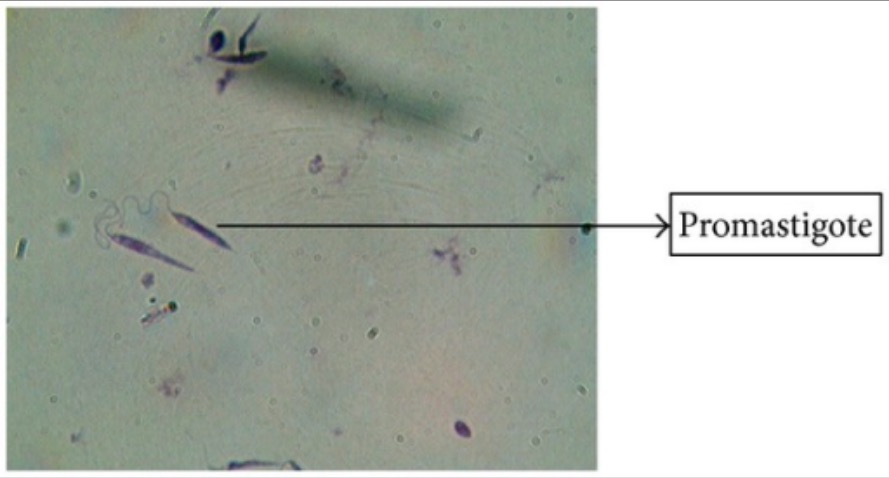
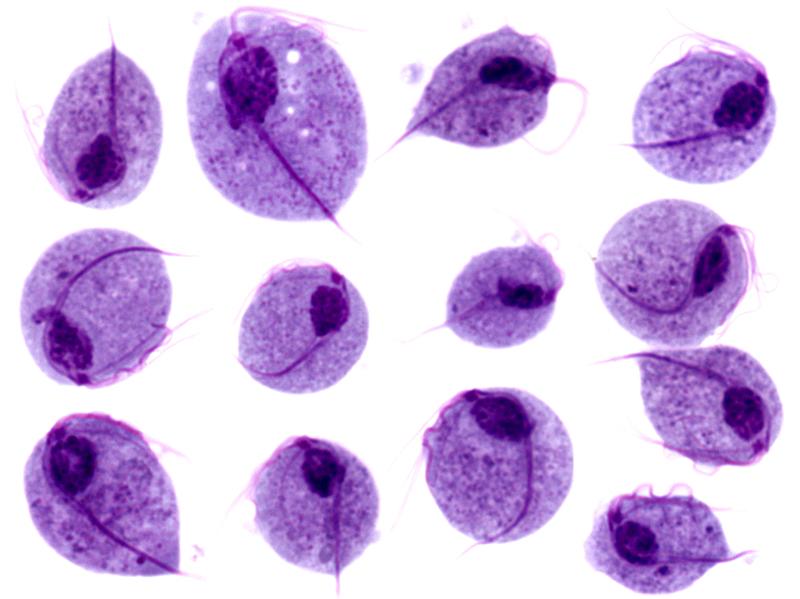
Comparação de Protozoários Flagelados

Tabela: Comparação de protozoários flagelados clinicamente relevantes
Protozoários Giardia Giardia A genus of flagellate intestinal eukaryotes parasitic in various vertebrates, including humans. Characteristics include the presence of four pairs of flagella arising from a complicated system of axonemes and cysts that are ellipsoidal to ovoidal in shape. Nitroimidazoles Leishmania Leishmania Leishmania species are obligate intracellular parasites that are transmitted by an infected sandfly. The disease is endemic to Asia, the Middle East, Africa, the Mediterranean, and South and Central America. Clinical presentation varies, dependent on the pathogenicity of the species and the host’s immune response. Leishmania/Leishmaniasis Trypanosoma Trichomonas Trichomonas A genus of parasitic flagellate eukaryotes distinguished by the presence of four anterior flagella, an undulating membrane, and a trailing flagellum. Nitroimidazoles
Características
  • 4 pares de flagelos
  • Forma ovóide
  • Disco adesivo
  • Anaeróbio
  • Variação antigénica
  • Flagelo polar único
  • Corpo esguio e alongado
  • Flagelo polar único
  • Membrana ondulante
  • Fino, de formato irregular
  • Variação antigénica
  • 5 flagelos
  • Membrana ondulante
  • Forma ovóide
  • Anaeróbio facultativo
Formas
  • Quisto
  • Trofozoíto
  • Promastigota
  • Amastigota
  • Tripomastigota
  • Amastigota
  • Epimastigota
  • Trofozoíto
  • Sem forma de quisto
Transmissão
  • À base de água (“Waterborne”)
  • Via fecal-oral
  • Vetor (flebotomíneo)
  • Transmissão de humano para humano
  • Zoonótico (roedores, cães, raposas)
  • Vetor (mosca tsé-tsé, beija-flor)
  • Transfusão de sangue
  • Sexualmente transmissível
Clínica
  • Giardíase
  • Leishmaniose
  • Doença do sono africana
  • Doença de Chagas
  • Tricomoníase
Diagnóstico
  • ELISA ELISA An immunoassay utilizing an antibody labeled with an enzyme marker such as horseradish peroxidase. While either the enzyme or the antibody is bound to an immunosorbent substrate, they both retain their biologic activity; the change in enzyme activity as a result of the enzyme-antibody-antigen reaction is proportional to the concentration of the antigen and can be measured spectrophotometrically or with the naked eye. Many variations of the method have been developed. St. Louis Encephalitis Virus
  • DFA
  • NAAT
  • Microscopia de fezes
  • Esfregaço de sangue
  • Biópsia
  • PCR PCR Polymerase chain reaction (PCR) is a technique that amplifies DNA fragments exponentially for analysis. The process is highly specific, allowing for the targeting of specific genomic sequences, even with minuscule sample amounts. The PCR cycles multiple times through 3 phases: denaturation of the template DNA, annealing of a specific primer to the individual DNA strands, and synthesis/elongation of new DNA molecules. Polymerase Chain Reaction (PCR)
  • Teste cutâneo de leishmaniose
  • Títulos de anticorpos
  • Esfregaço de sangue
  • Títulos de anticorpos
  • Xenodiagnóstico
  • Microscopia de secreções vaginais
  • NAAT
  • Urina ou cultura de zaragatoa da uretra
Tratamento
  • Metronidazol
  • Tinidazol
  • Nitazoxanida
Depende da síndrome clínica:
  • Anfotericina B
  • Antimoniais pentavalentes
  • Miltefosina
Depende da doença clínica:
  • Suramina
  • Pentamidina
  • Melarsoprol
  • Eflornitina
  • Niturtimox
  • Benznidazol
  • Metronidazol
  • Tinidazol
Prevenção
  • Lavagem das mãos
  • Tratamento de águas
  • Inseticidas
  • Repelentes de insetos
  • Roupa de proteção
  • Inseticidas
  • Repelentes de insetos
  • Mosquiteiros
  • Roupa de proteção
  • Tratamento dos parceiros sexuais
  • Uso de preservativos

DFA: ensaio de imunofluorescência direta
NAAT: teste de amplificação de ácido nucleico

Diagnóstico Diferencial

  • Doença de Chagas: infeção causada pelo tripanossoma americano, T. cruzi. As infeções agudas podem apresentar inflamação no local da inoculação ( chagoma Chagoma Trypanosoma cruzi/Chagas disease), febre e linfadenopatia. Infeções crónicas não tratadas podem evoluir para complicações graves, incluindo megacólon, megaesófago e cardiomiopatia. O diagnóstico pode ser confirmado por esfregaço de sangue, serologia ou PCR PCR Polymerase chain reaction (PCR) is a technique that amplifies DNA fragments exponentially for analysis. The process is highly specific, allowing for the targeting of specific genomic sequences, even with minuscule sample amounts. The PCR cycles multiple times through 3 phases: denaturation of the template DNA, annealing of a specific primer to the individual DNA strands, and synthesis/elongation of new DNA molecules. Polymerase Chain Reaction (PCR). O tratamento com benzonidazol ou nifurtimox Nifurtimox A nitrofuran thiazine that has been used against trypanosomiasis. Trypanosoma cruzi/Chagas disease é eficaz apenas na fase aguda.
  • Meningite bacteriana ou fúngica: os sintomas da meningite bacteriana podem imitar os da 2ª fase da doença do sono, incluindo febre, dor de cabeça, confusão e mialgias. O diagnóstico é confirmado por análise do LCR e/ou teste serológico. As causas bacterianas específicas da meningite variam dependendo da faixa etária e dos fatores de risco.
  • Malária: doença infecciosa transmitida por mosquitos causada por espécies de Plasmodium Plasmodium A genus of protozoa that comprise the malaria parasites of mammals. Four species infect humans (although occasional infections with primate malarias may occur). These are plasmodium falciparum; plasmodium malariae; plasmodium ovale, and plasmodium vivax. Species causing infection in vertebrates other than man include: plasmodium berghei; plasmodium chabaudi; p. Vinckei, and plasmodium yoelii in rodents; p. Brasilianum, plasmodium cynomolgi; and plasmodium knowlesi in monkeys; and plasmodium gallinaceum in chickens. Antimalarial Drugs. A malária geralmente apresenta-se com febre, calafrios, sudorese, icterícia, dor abdominal, anemia Anemia Anemia is a condition in which individuals have low Hb levels, which can arise from various causes. Anemia is accompanied by a reduced number of RBCs and may manifest with fatigue, shortness of breath, pallor, and weakness. Subtypes are classified by the size of RBCs, chronicity, and etiology. Anemia: Overview and Types hemolítica, hepatoesplenomegalia e insuficiência renal. O esfregaço de sangue mostra um único anel pleomórfico. Também podem ser realizados testes Testes Gonadal Hormones rápidos para antígenos de Plasmodium Plasmodium A genus of protozoa that comprise the malaria parasites of mammals. Four species infect humans (although occasional infections with primate malarias may occur). These are plasmodium falciparum; plasmodium malariae; plasmodium ovale, and plasmodium vivax. Species causing infection in vertebrates other than man include: plasmodium berghei; plasmodium chabaudi; p. Vinckei, and plasmodium yoelii in rodents; p. Brasilianum, plasmodium cynomolgi; and plasmodium knowlesi in monkeys; and plasmodium gallinaceum in chickens. Antimalarial Drugs. O tratamento requer um curso prolongado de vários fármacos antimaláricos.
  • Doença psiquiátrica: devido a manifestações comportamentais em estadio avançado, a doença do sono pode ser diagnosticada erradamente como uma doença psiquiátrica, especialmente em imigrantes de áreas não endémicas. É importante avaliar a possível exposição epidemiológica para evitar diagnósticos incorretos.

Referências

  1. Riedel, S., Jawetz, E., Melnick, J.L., Adelberg, E.A. (2019). Jawetz, Melnick & Adelberg’s Medical Microbiology, pp. 722-733 and 730-732. New York: McGraw-Hill Education.
  2. Krishna, S., Lindner, A., Lejon, V. (2025). Human African trypanosomiasis: Epidemiology, clinical manifestations, and diagnosis. UpToDate. Retrieved October 25, 2025, from https://www.uptodate.com/contents/human-african-trypanosomiasis-epidemiology-clinical-manifestations-and-diagnosis 
  3. Krishna, S., Lindner, A., Lejon, V. (2025). Human African trypanosomiasis: Treatment and prevention. UpToDate, Retrieved October 25, 2025, from https://www.uptodate.com/contents/human-african-trypanosomiasis-treatment-and-prevention
  4. Pearson, R.D. (2025). African trypanosomiasis (African sleeping sickness). MSD Manual Professional Version. Retrieved October 25, 2025, from https://www.msdmanuals.com/professional/infectious-diseases/extraintestinal-protozoa/african-trypanosomiasis
  5. Dunn, N., Wang, S., and Adigun, R. (2023). African trypanosomiasis. StatPearls. Retrieved October 25, 2025, from https://www.ncbi.nlm.nih.gov/books/NBK519580/
  6. Hnaide, H.A. (2023). African trypanosomiasis (sleeping sickness). In Chandrasekar, P.H. (Ed.), Medscape. Retrieved October 25, 2025, from https://emedicine.medscape.com/article/228613-overview
  7. Centers for Disease Control and Prevention. (2025). About sleeping sickness (African trypanosomiasis). Retrieved October 25, 2025, from https://www.cdc.gov/sleeping-sickness/about/index.html

Crie sua conta gratuita ou faça login para continuar lendo!

Cadastre-se agora e tenha acesso grátis ao Lecturio, com páginas de conceitos, vídeos de medicina e questões para sua educação médica.

Aprende mais com a Lecturio:

Multiple devices displaying human anatomy and health education content.

Complementa o teu estudo da faculdade com o companheiro de estudo tudo-em-um da Lecturio, através de métodos de ensino baseados em evidência.

Estuda onde quiseres

Two iPhones display medical education apps, one showing anatomy, the other Bookmatcher.

A Lecturio Medical complementa o teu estudo através de métodos de ensino baseados em evidência, vídeos de palestras, perguntas e muito mais – tudo combinado num só lugar e fácil de usar.

User Reviews

Have a holly, jolly study session 🎁 Save 50% on all plans now >>

Que tengas una sesión de estudio alegre y navideña 🎁 Ahorra 50% en todos los planes >>

Details