


Linfoma de Hodgkin

O linfoma de Hodgkin ( LH LH A major gonadotropin secreted by the adenohypophysis. Luteinizing hormone regulates steroid production by the interstitial cells of the testis and the ovary. The preovulatory luteinizing hormone surge in females induces ovulation, and subsequent luteinization of the follicle. Luteinizing hormone consists of two noncovalently linked subunits, alpha and beta. Within a species, the alpha subunit is common in the three pituitary glycoprotein hormones (TSH, LH, and FSH), but the beta subunit is unique and confers its biological specificity. Menstrual Cycle) é uma neoplasia dos linfócitos B com origem nos gânglios linfáticos. O achado histológico patognomónico do LH LH A major gonadotropin secreted by the adenohypophysis. Luteinizing hormone regulates steroid production by the interstitial cells of the testis and the ovary. The preovulatory luteinizing hormone surge in females induces ovulation, and subsequent luteinization of the follicle. Luteinizing hormone consists of two noncovalently linked subunits, alpha and beta. Within a species, the alpha subunit is common in the three pituitary glycoprotein hormones (TSH, LH, and FSH), but the beta subunit is unique and confers its biological specificity. Menstrual Cycle é uma célula de Hodgkin/Reed-Sternberg ( HRS HRS Hepatorenal syndrome (HRS) is a potentially reversible cause of acute kidney injury that develops secondary to liver disease. The main cause of hrs is hypovolemia, often as a result of forced diuresis or drainage of ascites. This leads to renal vasoconstriction resulting in hypoperfusion of the kidneys. Hepatorenal Syndrome) (células B gigantes multinucleadas com inclusões eosinofílicas). A doença apresenta-se mais MAIS Androgen Insensitivity Syndrome frequentemente com linfadenopatias (o pescoço é o mais MAIS Androgen Insensitivity Syndrome frequentemente envolvido), sudorese noturna, perda de peso, febre e, por vezes, esplenomegalia e hepatomegalia. Os exames complementares de diagnóstico incluem a análise histológica de gânglios linfáticos que mostram células HRS HRS Hepatorenal syndrome (HRS) is a potentially reversible cause of acute kidney injury that develops secondary to liver disease. The main cause of hrs is hypovolemia, often as a result of forced diuresis or drainage of ascites. This leads to renal vasoconstriction resulting in hypoperfusion of the kidneys. Hepatorenal Syndrome, análises sanguíneas, TAC e PET PET An imaging technique that combines a positron-emission tomography (PET) scanner and a ct X ray scanner. This establishes a precise anatomic localization in the same session. Nuclear Imaging. O LH LH A major gonadotropin secreted by the adenohypophysis. Luteinizing hormone regulates steroid production by the interstitial cells of the testis and the ovary. The preovulatory luteinizing hormone surge in females induces ovulation, and subsequent luteinization of the follicle. Luteinizing hormone consists of two noncovalently linked subunits, alpha and beta. Within a species, the alpha subunit is common in the three pituitary glycoprotein hormones (TSH, LH, and FSH), but the beta subunit is unique and confers its biological specificity. Menstrual Cycle é tratado com quimioterapia e radioterapia. O prognóstico melhorou significativamente com o advento dos regimes de quimioterapia.

Last updated: Dec 15, 2025

Editorial responsibility: Stanley Oiseth, Lindsay Jones, Evelin Maza

Descrição Geral

Definição

O linfoma de Hodgkin ( LH LH A major gonadotropin secreted by the adenohypophysis. Luteinizing hormone regulates steroid production by the interstitial cells of the testis and the ovary. The preovulatory luteinizing hormone surge in females induces ovulation, and subsequent luteinization of the follicle. Luteinizing hormone consists of two noncovalently linked subunits, alpha and beta. Within a species, the alpha subunit is common in the three pituitary glycoprotein hormones (TSH, LH, and FSH), but the beta subunit is unique and confers its biological specificity. Menstrual Cycle) é um linfoma monoclonal de células B (neoplasia) com origem nos gânglios linfáticos, nos quais as células malignas de Hodgkin/Reed-Sternberg ( HRS HRS Hepatorenal syndrome (HRS) is a potentially reversible cause of acute kidney injury that develops secondary to liver disease. The main cause of hrs is hypovolemia, often as a result of forced diuresis or drainage of ascites. This leads to renal vasoconstriction resulting in hypoperfusion of the kidneys. Hepatorenal Syndrome) estão misturadas com uma população heterogénea de células inflamatórias não neoplásicas.

Epidemiologia

  • Incidência nos Estados Unidos: 2 a 3 casos por 100.000 habitantes
  • Pico bimodal de idade: adultos jovens (15-34 anos) e > 55 anos de idade
  • Pode ser encontrado em crianças:
    • Idade de pico de incidência: 12 anos
    • Incidência: 1,1 casos por 100.000 crianças
    • Casos pediátricos: 85% do sexo masculino
  • M > F (3:2) em adultos
  • 30% de todos os linfomas (o restante é não Hodgkin)
  • Incidência mais MAIS Androgen Insensitivity Syndrome baixa (Estados Unidos):
    • Índios americanos
    • Nativos do Alasca
    • Asiáticos/Ilhas do Pacífico

Etiologia

  • A etiologia exata é desconhecida
  • O risco aumenta se:
    • EBV EBV Epstein-barr virus (EBV) is a linear, double-stranded DNA virus belonging to the herpesviridae family. This highly prevalent virus is mostly transmitted through contact with oropharyngeal secretions from an infected individual. The virus can infect epithelial cells and B lymphocytes, where it can undergo lytic replication or latency. Epstein-Barr Virus:
      • Responsável pela mononucleose infeciosa ( MI MI MI is ischemia and death of an area of myocardial tissue due to insufficient blood flow and oxygenation, usually from thrombus formation on a ruptured atherosclerotic plaque in the epicardial arteries. Clinical presentation is most commonly with chest pain, but women and patients with diabetes may have atypical symptoms. Myocardial Infarction)
      • Uma minoria dos doentes infetados com EBV EBV Epstein-barr virus (EBV) is a linear, double-stranded DNA virus belonging to the herpesviridae family. This highly prevalent virus is mostly transmitted through contact with oropharyngeal secretions from an infected individual. The virus can infect epithelial cells and B lymphocytes, where it can undergo lytic replication or latency. Epstein-Barr Virus desenvolverá LH LH A major gonadotropin secreted by the adenohypophysis. Luteinizing hormone regulates steroid production by the interstitial cells of the testis and the ovary. The preovulatory luteinizing hormone surge in females induces ovulation, and subsequent luteinization of the follicle. Luteinizing hormone consists of two noncovalently linked subunits, alpha and beta. Within a species, the alpha subunit is common in the three pituitary glycoprotein hormones (TSH, LH, and FSH), but the beta subunit is unique and confers its biological specificity. Menstrual Cycle.
      • O ADN de EBV EBV Epstein-barr virus (EBV) is a linear, double-stranded DNA virus belonging to the herpesviridae family. This highly prevalent virus is mostly transmitted through contact with oropharyngeal secretions from an infected individual. The virus can infect epithelial cells and B lymphocytes, where it can undergo lytic replication or latency. Epstein-Barr Virus é encontrado em células HRS HRS Hepatorenal syndrome (HRS) is a potentially reversible cause of acute kidney injury that develops secondary to liver disease. The main cause of hrs is hypovolemia, often as a result of forced diuresis or drainage of ascites. This leads to renal vasoconstriction resulting in hypoperfusion of the kidneys. Hepatorenal Syndrome em 50% dos doentes na América do Norte e Europa.
      • O ADN de EBV EBV Epstein-barr virus (EBV) is a linear, double-stranded DNA virus belonging to the herpesviridae family. This highly prevalent virus is mostly transmitted through contact with oropharyngeal secretions from an infected individual. The virus can infect epithelial cells and B lymphocytes, where it can undergo lytic replication or latency. Epstein-Barr Virus é encontrado em células HRS HRS Hepatorenal syndrome (HRS) is a potentially reversible cause of acute kidney injury that develops secondary to liver disease. The main cause of hrs is hypovolemia, often as a result of forced diuresis or drainage of ascites. This leads to renal vasoconstriction resulting in hypoperfusion of the kidneys. Hepatorenal Syndrome em 90% dos doentes em países em desenvolvimento.
    • Imunodeficiência:
      • VIH: risco aumentado em 5 a 25 vezes de desenvolver LH LH A major gonadotropin secreted by the adenohypophysis. Luteinizing hormone regulates steroid production by the interstitial cells of the testis and the ovary. The preovulatory luteinizing hormone surge in females induces ovulation, and subsequent luteinization of the follicle. Luteinizing hormone consists of two noncovalently linked subunits, alpha and beta. Within a species, the alpha subunit is common in the three pituitary glycoprotein hormones (TSH, LH, and FSH), but the beta subunit is unique and confers its biological specificity. Menstrual Cycle
      • Imunoterapia
      • Quase todos os casos de LH LH A major gonadotropin secreted by the adenohypophysis. Luteinizing hormone regulates steroid production by the interstitial cells of the testis and the ovary. The preovulatory luteinizing hormone surge in females induces ovulation, and subsequent luteinization of the follicle. Luteinizing hormone consists of two noncovalently linked subunits, alpha and beta. Within a species, the alpha subunit is common in the three pituitary glycoprotein hormones (TSH, LH, and FSH), but the beta subunit is unique and confers its biological specificity. Menstrual Cycle que ocorrem em condições de imunodeficiência são positivos para EBV EBV Epstein-barr virus (EBV) is a linear, double-stranded DNA virus belonging to the herpesviridae family. This highly prevalent virus is mostly transmitted through contact with oropharyngeal secretions from an infected individual. The virus can infect epithelial cells and B lymphocytes, where it can undergo lytic replication or latency. Epstein-Barr Virus.
    • Obesidade
    • Dieta rica em carnes e doces
    • Inatividade física
    • Alto peso ao nascer
    • Tabagismo
  • A aspirina e a amamentação parecem ser protetores.
  • Predisposição familiar:
    • Não é claro se é genético ou ambiental
    • Risco em familiares próximos: 3 a 5 vezes maior do que a incidência geral esperada
    • O risco varia com o subtipo.
    • Maior risco nos irmãos do que nos pais PAIS Androgen Insensitivity Syndrome.

Classificação

Com base na classificação da OMS, os LHs apresentam os seguintes tipos e subtipos de acordo com o imunofenótipo e a morfologia.

LH LH A major gonadotropin secreted by the adenohypophysis. Luteinizing hormone regulates steroid production by the interstitial cells of the testis and the ovary. The preovulatory luteinizing hormone surge in females induces ovulation, and subsequent luteinization of the follicle. Luteinizing hormone consists of two noncovalently linked subunits, alpha and beta. Within a species, the alpha subunit is common in the three pituitary glycoprotein hormones (TSH, LH, and FSH), but the beta subunit is unique and confers its biological specificity. Menstrual Cycle clássico (95%):

  • Esclerose nodular (NSHL, pela sigla em inglês):
    • 80% dos LHs
    • Homens = mulheres
    • Jovens adultos
    • Células lacunares
    • Células HRS HRS Hepatorenal syndrome (HRS) is a potentially reversible cause of acute kidney injury that develops secondary to liver disease. The main cause of hrs is hypovolemia, often as a result of forced diuresis or drainage of ascites. This leads to renal vasoconstriction resulting in hypoperfusion of the kidneys. Hepatorenal Syndrome clássicas
    • As células envolventes estão misturadas
    • Bandas de fibrose
    • Tipicamente estádio I ou II (mediastínico)
  • Celularidade mista:
    • 30% dos LHs
    • Homens > Mulheres
    • Todas as idades
    • Tipo histológico mais MAIS Androgen Insensitivity Syndrome frequentemente observado em doentes com VIH
    • Normalmente estádio III ou IV
    • Células mononucleares e HRS HRS Hepatorenal syndrome (HRS) is a potentially reversible cause of acute kidney injury that develops secondary to liver disease. The main cause of hrs is hypovolemia, often as a result of forced diuresis or drainage of ascites. This leads to renal vasoconstriction resulting in hypoperfusion of the kidneys. Hepatorenal Syndrome clássicas
    • Células envolventes misturadas
    • Eosinofilia
  • Rico em linfócitos:
    • 4% dos LHs
    • Predominantemente homens na faixa dos 30 anos
    • Células mononucleares e HRS HRS Hepatorenal syndrome (HRS) is a potentially reversible cause of acute kidney injury that develops secondary to liver disease. The main cause of hrs is hypovolemia, often as a result of forced diuresis or drainage of ascites. This leads to renal vasoconstriction resulting in hypoperfusion of the kidneys. Hepatorenal Syndrome clássicas
    • Células envolventes: linfócitos T
    • Melhor prognóstico
  • Depleção de linfócitos:
    • 2% dos LHs
    • Associado a idade avançada
    • Células HRS HRS Hepatorenal syndrome (HRS) is a potentially reversible cause of acute kidney injury that develops secondary to liver disease. The main cause of hrs is hypovolemia, often as a result of forced diuresis or drainage of ascites. This leads to renal vasoconstriction resulting in hypoperfusion of the kidneys. Hepatorenal Syndrome clássicas juntamente com variantes
    • Poucas células envolventes
    • Alguma fibrose difusa
    • Normalmente homens mais MAIS Androgen Insensitivity Syndrome velhos
    • Associação com VIH
    • Linfadenopatia abdominal
    • Pior prognóstico

LH LH A major gonadotropin secreted by the adenohypophysis. Luteinizing hormone regulates steroid production by the interstitial cells of the testis and the ovary. The preovulatory luteinizing hormone surge in females induces ovulation, and subsequent luteinization of the follicle. Luteinizing hormone consists of two noncovalently linked subunits, alpha and beta. Within a species, the alpha subunit is common in the three pituitary glycoprotein hormones (TSH, LH, and FSH), but the beta subunit is unique and confers its biological specificity. Menstrual Cycle com predominância de linfócitos nodulares (LLPHL, pela sigla em inglês):
  • 5% dos LHs
  • Entidade clínica distinta e não considerada parte do tipo LH LH A major gonadotropin secreted by the adenohypophysis. Luteinizing hormone regulates steroid production by the interstitial cells of the testis and the ovary. The preovulatory luteinizing hormone surge in females induces ovulation, and subsequent luteinization of the follicle. Luteinizing hormone consists of two noncovalently linked subunits, alpha and beta. Within a species, the alpha subunit is common in the three pituitary glycoprotein hormones (TSH, LH, and FSH), but the beta subunit is unique and confers its biological specificity. Menstrual Cycle clássico
  • Homens > mulheres: 3:1
  • A apresentação típica é a linfadenopatia periférica crónica assintomática.
  • Forte componente genético
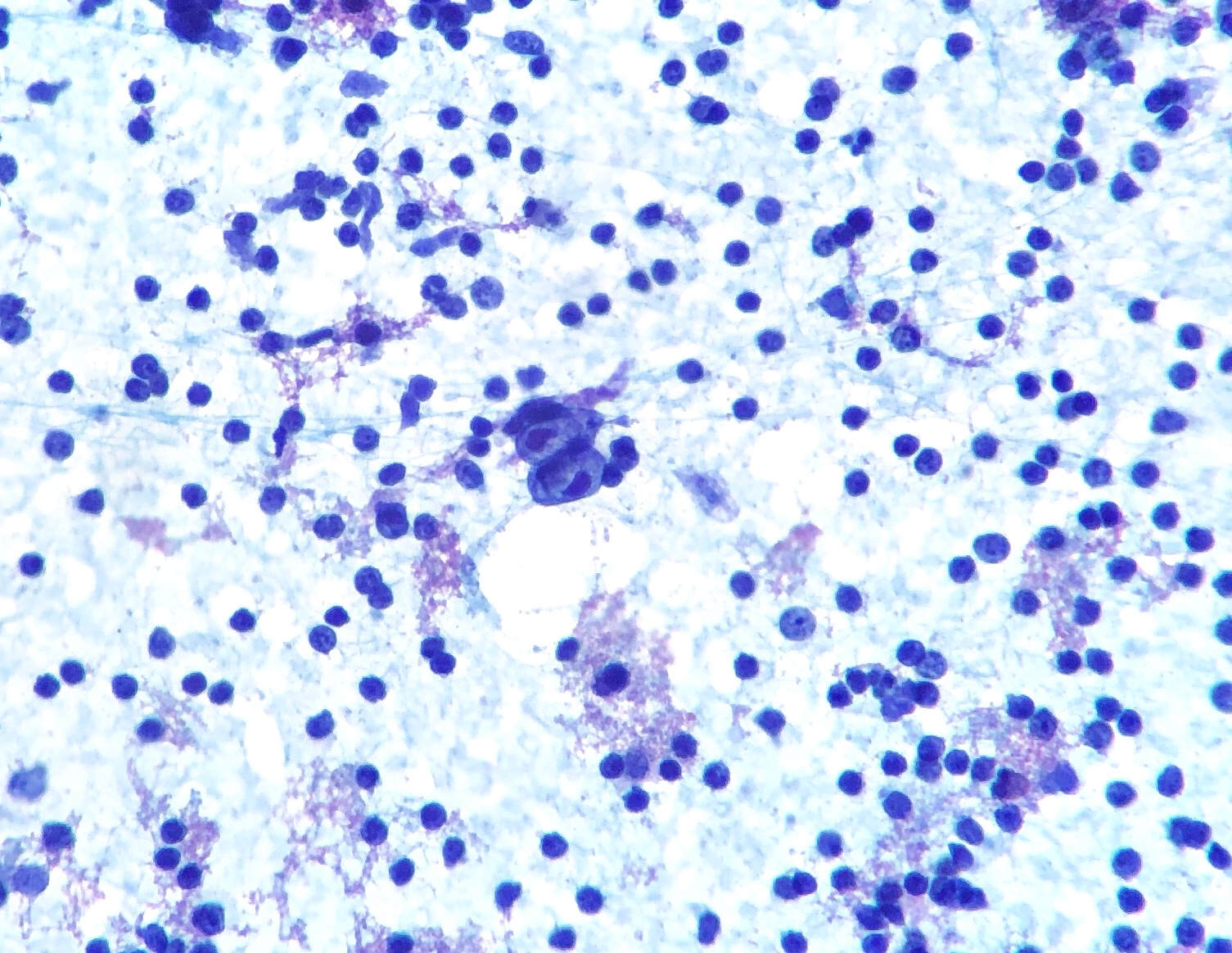
  • Células neoplásicas linfocíticas e histiocíticas (L&H) (em pipoca):
    • Expressam antigénio CD20
    • Negativas para CD15 e CD30
  • As células HRS HRS Hepatorenal syndrome (HRS) is a potentially reversible cause of acute kidney injury that develops secondary to liver disease. The main cause of hrs is hypovolemia, often as a result of forced diuresis or drainage of ascites. This leads to renal vasoconstriction resulting in hypoperfusion of the kidneys. Hepatorenal Syndrome típicas são pouco frequentes ou ausentes.
  • Células B e células dendríticas são as células envolventes.
  • Mais MAIS Androgen Insensitivity Syndrome comum em doentes mais MAIS Androgen Insensitivity Syndrome jovens
  • Envolvimento cervical e axilar típico

Fisiopatologia

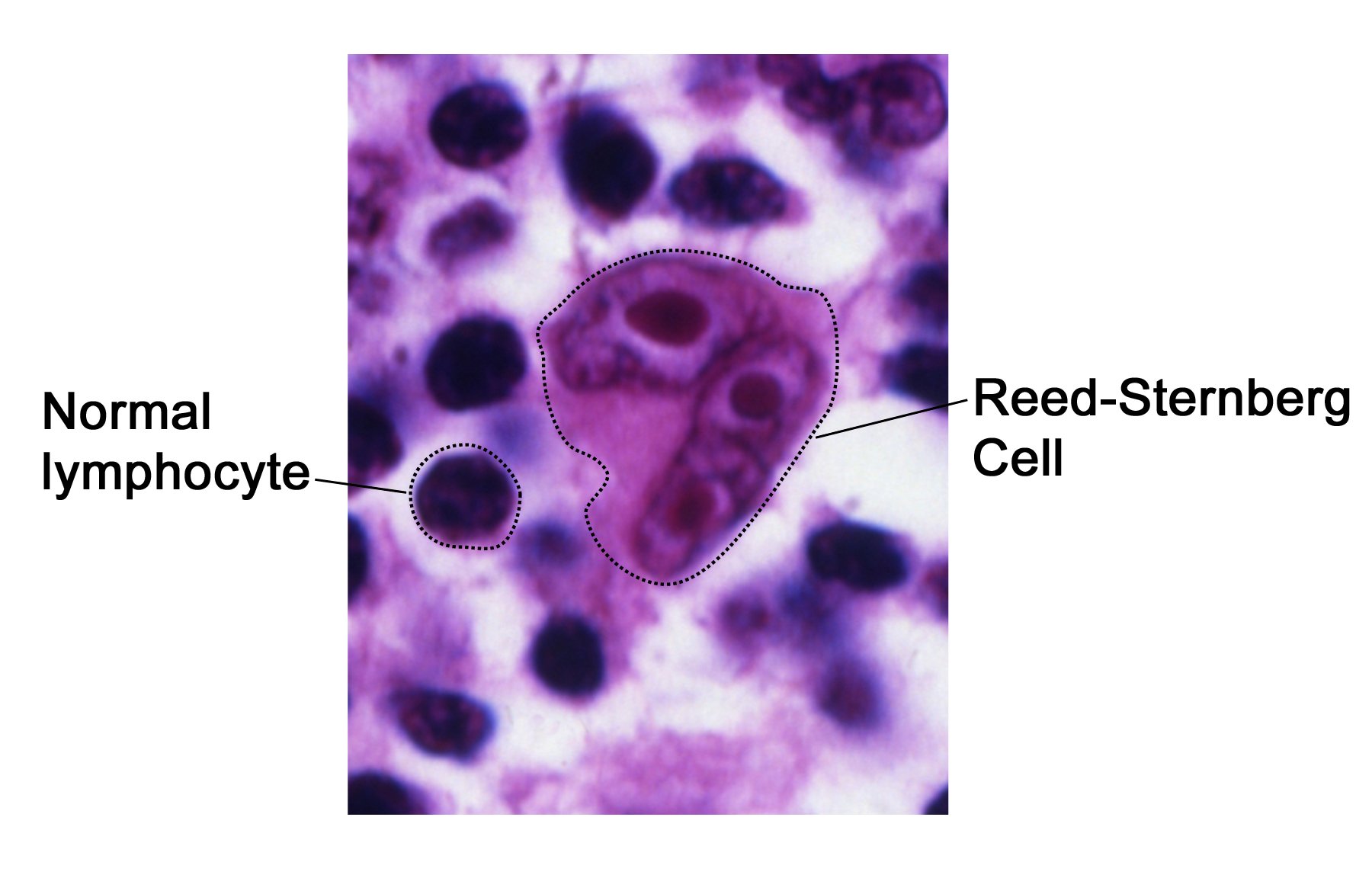
Células de Hodgkin/Reed-Sternberg

  • Células neoplásicas no linfoma de Hodgkin clássico (LHc)
  • Núcleos bilobados com nucléolos proeminentes (aparência de olho de coruja)
  • LHc expressa os antigénios CD15 (Leu-M1) e CD30 (Ki-1)
  • Compreendem apenas 1%–2% da massa total de células tumorais
  • Produz citocinas (e.g., interleucinas e fator de necrose tumoral ( TNF TNF Tumor necrosis factor (TNF) is a major cytokine, released primarily by macrophages in response to stimuli. The presence of microbial products and dead cells and injury are among the stimulating factors. This protein belongs to the TNF superfamily, a group of ligands and receptors performing functions in inflammatory response, morphogenesis, and cell proliferation. Tumor Necrosis Factor (TNF), pela sigla em inglês)), que estimulam a proliferação celular
  • Resultado da transformação clonal de células com origem em células B:
    • Derivado de centros germinativos linfáticos
    • As células de origem adquirem múltiplas mutações
  • Perdem a capacidade de sofrer apoptose:
    • A proteína latente de membrana 1 (LMP-1, pela sigla em inglês), que é expressa por células infetadas por Epstein-Barr, é responsável pela ativação da via do fator nuclear kappa-B (NF-kappaB, pela sigla em inglês), que é anti-apoptótica.
    • O NF-kappaB é translocado para o núcleo das células RS.
    • O NF-kappaB também é responsável pela proliferação das células HRS HRS Hepatorenal syndrome (HRS) is a potentially reversible cause of acute kidney injury that develops secondary to liver disease. The main cause of hrs is hypovolemia, often as a result of forced diuresis or drainage of ascites. This leads to renal vasoconstriction resulting in hypoperfusion of the kidneys. Hepatorenal Syndrome e secreção de citocinas pró-inflamatórias, que são responsáveis pelas características sistémicas do LHc.
  • Deixa de ser capaz de produzir anticorpos
  • Algumas células HRS HRS Hepatorenal syndrome (HRS) is a potentially reversible cause of acute kidney injury that develops secondary to liver disease. The main cause of hrs is hypovolemia, often as a result of forced diuresis or drainage of ascites. This leads to renal vasoconstriction resulting in hypoperfusion of the kidneys. Hepatorenal Syndrome mostram evidências de infeção por EBV EBV Epstein-barr virus (EBV) is a linear, double-stranded DNA virus belonging to the herpesviridae family. This highly prevalent virus is mostly transmitted through contact with oropharyngeal secretions from an infected individual. The virus can infect epithelial cells and B lymphocytes, where it can undergo lytic replication or latency. Epstein-Barr Virus e alterações citogenéticas frequentes:
    • O EBV EBV Epstein-barr virus (EBV) is a linear, double-stranded DNA virus belonging to the herpesviridae family. This highly prevalent virus is mostly transmitted through contact with oropharyngeal secretions from an infected individual. The virus can infect epithelial cells and B lymphocytes, where it can undergo lytic replication or latency. Epstein-Barr Virus é um vírus oncogénico associado ao LH LH A major gonadotropin secreted by the adenohypophysis. Luteinizing hormone regulates steroid production by the interstitial cells of the testis and the ovary. The preovulatory luteinizing hormone surge in females induces ovulation, and subsequent luteinization of the follicle. Luteinizing hormone consists of two noncovalently linked subunits, alpha and beta. Within a species, the alpha subunit is common in the three pituitary glycoprotein hormones (TSH, LH, and FSH), but the beta subunit is unique and confers its biological specificity. Menstrual Cycle.
    • Acredita-se que o EBV EBV Epstein-barr virus (EBV) is a linear, double-stranded DNA virus belonging to the herpesviridae family. This highly prevalent virus is mostly transmitted through contact with oropharyngeal secretions from an infected individual. The virus can infect epithelial cells and B lymphocytes, where it can undergo lytic replication or latency. Epstein-Barr Virus seja responsável pela produção de sinais que tornam as células imortais (ou seja, deixam de sofrer apoptose).
    • A deteção de EBV EBV Epstein-barr virus (EBV) is a linear, double-stranded DNA virus belonging to the herpesviridae family. This highly prevalent virus is mostly transmitted through contact with oropharyngeal secretions from an infected individual. The virus can infect epithelial cells and B lymphocytes, where it can undergo lytic replication or latency. Epstein-Barr Virus em células HRS HRS Hepatorenal syndrome (HRS) is a potentially reversible cause of acute kidney injury that develops secondary to liver disease. The main cause of hrs is hypovolemia, often as a result of forced diuresis or drainage of ascites. This leads to renal vasoconstriction resulting in hypoperfusion of the kidneys. Hepatorenal Syndrome varia com o subtipo histológico, geografia e imunocompetência.

Estroma inflamatório circundante

  • Células reativas benignas que são atraídas e proliferam pela expressão de citocinas pelas células HRS HRS Hepatorenal syndrome (HRS) is a potentially reversible cause of acute kidney injury that develops secondary to liver disease. The main cause of hrs is hypovolemia, often as a result of forced diuresis or drainage of ascites. This leads to renal vasoconstriction resulting in hypoperfusion of the kidneys. Hepatorenal Syndrome.
  • Representam a maior parte do tumor Tumor Inflammation
  • Mistura de macrófagos, linfócitos, mastócitos, neutrófilos, eosinófilos e plasmócitos
  • As células HRS HRS Hepatorenal syndrome (HRS) is a potentially reversible cause of acute kidney injury that develops secondary to liver disease. The main cause of hrs is hypovolemia, often as a result of forced diuresis or drainage of ascites. This leads to renal vasoconstriction resulting in hypoperfusion of the kidneys. Hepatorenal Syndrome também ativam fibroblastos e a deposição de colagénio.

Mutações genéticas

  • Afetam a proliferação e sobrevivência das células malignas
  • Mutações que produzem alterações da sinalização intracelular:
    • NF-kappaB
    • JAK-STAT
    • NOTCH
  • Mutações que produzem evasão imune: genes Genes A category of nucleic acid sequences that function as units of heredity and which code for the basic instructions for the development, reproduction, and maintenance of organisms. DNA Types and Structure relacionados com PD-1 PD-1 An inhibitory t-lymphocyte receptor that has specificity for CD274 antigen and programmed cell death 1 ligand 2 protein. Signaling by the receptor limits T cell proliferation and interferon gamma synthesis. The receptor also may play an essential role in the regulatory pathway that induces peripheral tolerance. T cells: Types and Functions

Disseminação

  • Ocorre a partir de um único gânglio linfático para gânglios linfáticos adjacentes através de canais linfáticos
  • A propagação à distância ocorre mais MAIS Androgen Insensitivity Syndrome tarde

Apresentação Clínica

Duração:

  • O LHc geralmente progride lentamente.
  • Alguma variabilidade

Apresentações mais MAIS Androgen Insensitivity Syndrome comuns:
  • Linfadenopatia assintomática:
    • 66% dos casos de LHc
    • Não dolorosa
    • Firme
    • Consistência de borracha
    • O local mais MAIS Androgen Insensitivity Syndrome comum é o pescoço
    • Gânglios axilares e inguinais são menos comuns
    • Envolvimento de gânglios retroperitoneais em 30% dos doentes
  • Massa torácica na imagem:
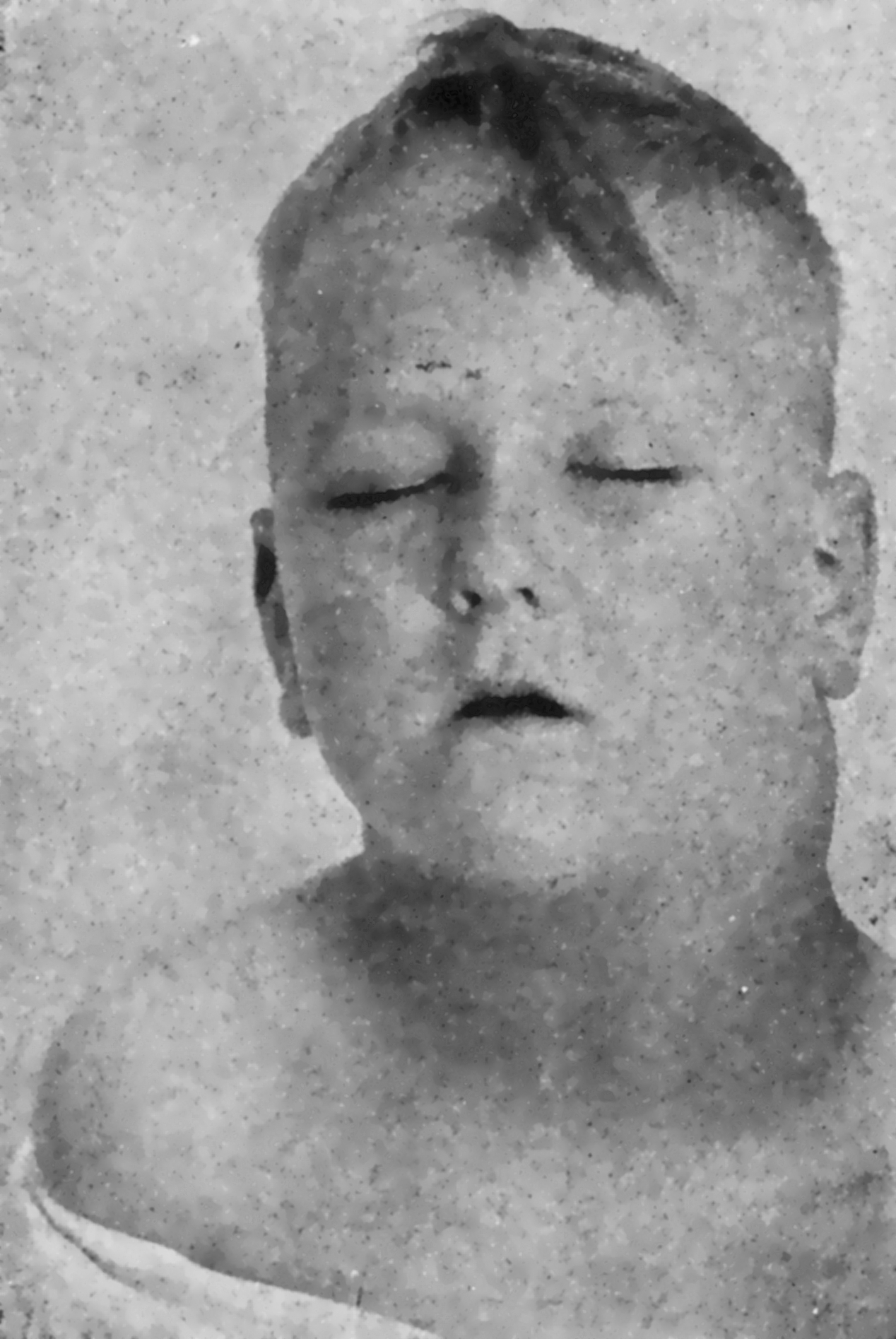
Linfadenopatia cervical proeminente

Linfoma de Hodgkin:
Linfadenopatia cervical proeminente

Imagem: “Hodgkin’s Disease (Essentials of Medicine)” por Charles Phillips Emerson, Nellie Gates Brown.  Licença: Public Domain

Sintomas “B” (constitucionais) presentes em 40% dos casos:

  • Febre
  • Suores noturnos
  • Perda de peso não intencional
  • Fadiga

Outros sintomas:

  • Prurido (10%–15%)
  • Dor associada ao álcool (raro): o consumo de álcool induz dor nos gânglios linfáticos (patognomónico).
  • Lesões cutâneas (ictiose, acroqueratose, eritema nodoso, urticária, eritema multiforme)
  • Dor óssea (se envolvimento ósseo)
  • Síndromes paraneoplásicas:
    • Neurológicas
    • Nefrótico

Diagnóstico e Estadiamento

História clínica

  • Linfadenopatia:
    • Sem dor
    • Sintoma mais MAIS Androgen Insensitivity Syndrome comum
    • Distribuição contígua ou gânglio único
    • Unilateral
    • Cervical/supraclavicular → axilar → inguinal
    • Não doloroso, consistência de borracha
  • Sintomas constitucionais B:
    • Febre baixa
    • Suores noturnos
    • Perda de peso
  • Prurido
  • Dor nas costas ou nos ossos
  • Febre de Pel-Ebstein: febre padrão intermitente-recidivante por semanas
  • Dor com o consumo de álcool
  • História familiar: particularmente útil na NSHL

Exame objetivo

  • Gânglios linfáticos:
    • Gânglios palpáveis
    • Não dolorosos
    • Pescoço: 60%–80%
    • Axila: 6%–20%
    • Inguinal: 6%–20%
  • Síndrome da veia cava superior (VCS):
    • Se existir obstrução física suficiente da VCS por infiltração dos gânglios mediastinais
    • Distensão venosa dos membros superiores e pescoço
    • Edema Edema Edema is a condition in which excess serous fluid accumulates in the body cavity or interstitial space of connective tissues. Edema is a symptom observed in several medical conditions. It can be categorized into 2 types, namely, peripheral (in the extremities) and internal (in an organ or body cavity). Edema e congestão facial
    • Derrame pleural: dispneia
    • Tosse
  • Manifestações extranodais raras:
    • Hepatomegalia
    • Esplenomegalia
    • Diminuição dos ruídos respiratórios e taquipneia (derrame pleural)
    • Dor óssea

Exames complementares de diagnóstico

Análises laboratoriais:

  • Hemograma com plaquetas
    • Anemia Anemia Anemia is a condition in which individuals have low Hb levels, which can arise from various causes. Anemia is accompanied by a reduced number of RBCs and may manifest with fatigue, shortness of breath, pallor, and weakness. Subtypes are classified by the size of RBCs, chronicity, and etiology. Anemia: Overview and Types
    • Linfopenia
    • Neutrofilia
    • Eosinofilia
  • Velocidade de hemossedimentação (VS):
    • Marcador geral de inflamação
    • Pode estar elevada
    • Associada a pior prognóstico
  • Bioquímica sérica:
    • Elevação do cálcio sérico
    • Elevação de sódio sérico
    • Creatinina sérica aumentada na síndrome nefrótica
  • Perfil hepático:
    • A fosfatase alcalina ( FA FA Inhaled Anesthetics) pode estar aumentada com o envolvimento do:
      • Fígado
      • Osso
    • LDH LDH Osteosarcoma aumentada
    • Pode correlacionar-se com a extensão e o volume da doença
  • Albumina
  • Teste do VIH
  • Testes Testes Gonadal Hormones da hepatite B e C

Imagiologia:

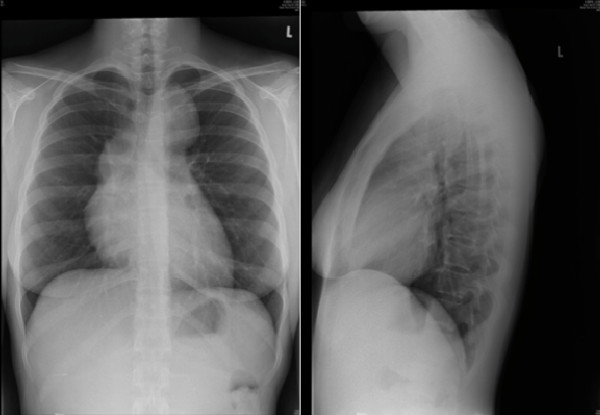
  • Radiografia de tórax (massas ou alargamento mediastinal)
  • TAC para avaliar:
    • Aumento dos gânglios linfáticos
    • Hepatomegalia
    • Esplenomegalia
    • Pulmão:
      • Nódulos
      • Efusões
      • Infiltrados
  • PET PET An imaging technique that combines a positron-emission tomography (PET) scanner and a ct X ray scanner. This establishes a precise anatomic localization in the same session. Nuclear Imaging:
    • Considerada essencial para o estadiamento inicial do LH LH A major gonadotropin secreted by the adenohypophysis. Luteinizing hormone regulates steroid production by the interstitial cells of the testis and the ovary. The preovulatory luteinizing hormone surge in females induces ovulation, and subsequent luteinization of the follicle. Luteinizing hormone consists of two noncovalently linked subunits, alpha and beta. Within a species, the alpha subunit is common in the three pituitary glycoprotein hormones (TSH, LH, and FSH), but the beta subunit is unique and confers its biological specificity. Menstrual Cycle:
    • Injeção de fluorodesoxiglicose (FDG), que é um análogo da glicose:
      • Capturado por células tumorais
      • Emite raios gama
      • Os raios gama são detetados pelo aparelho.
    • Capacidade de distinguir entre um tumor Tumor Inflammation viável e necrose ou fibrose
    • Frequentemente realizada em conjunto com a TAC
    • Orienta a necessidade de tratamento adicional
Radiografia de tórax mostrando linfadenopatia mediastinal no linfoma de Hodgin

Linfoma de Hodgkin. O raio-X mostra linfadenopatia mediastínica.

Imagem: “Hodgkin’s lymphoma presenting with markedly elevated IgE: a case report” por Ellis AK, Waserman S. Licença: CC BY 2.0

Biópsia:

  • Biópsia excisional de um gânglio periférico (preferencial):
    • Exame obrigatório
    • Microscopia:
      • Células RS
      • Infiltrado de células inflamatórias pleomórficas
      • Fibrose
    • Imunofenótipo:
      • CD30 ( LH LH A major gonadotropin secreted by the adenohypophysis. Luteinizing hormone regulates steroid production by the interstitial cells of the testis and the ovary. The preovulatory luteinizing hormone surge in females induces ovulation, and subsequent luteinization of the follicle. Luteinizing hormone consists of two noncovalently linked subunits, alpha and beta. Within a species, the alpha subunit is common in the three pituitary glycoprotein hormones (TSH, LH, and FSH), but the beta subunit is unique and confers its biological specificity. Menstrual Cycle clássico)
      • CD15 ( LH LH A major gonadotropin secreted by the adenohypophysis. Luteinizing hormone regulates steroid production by the interstitial cells of the testis and the ovary. The preovulatory luteinizing hormone surge in females induces ovulation, and subsequent luteinization of the follicle. Luteinizing hormone consists of two noncovalently linked subunits, alpha and beta. Within a species, the alpha subunit is common in the three pituitary glycoprotein hormones (TSH, LH, and FSH), but the beta subunit is unique and confers its biological specificity. Menstrual Cycle clássico)
      • CD20 ( NLPHL NLPHL Hodgkin Lymphoma)
      • Ausência de CD45 e CD3 CD3 Complex of at least five membrane-bound polypeptides in mature T-lymphocytes that are non-covalently associated with one another and with the T-cell receptor. The CD3 complex includes the gamma, delta, epsilon, zeta, and eta chains (subunits). When antigen binds to the T-cell receptor, the CD3 complex transduces the activating signals to the cytoplasm of the T-cell. The CD3 gamma and delta chains (subunits) are separate from and not related to the gamma/delta chains of the T-cell receptor. T cells: Types and Functions
  • Biópsia da medula óssea: para determinar a extensão da doença

Estadiamento

O estadiamento é baseado na classificação de Ann Arbor.
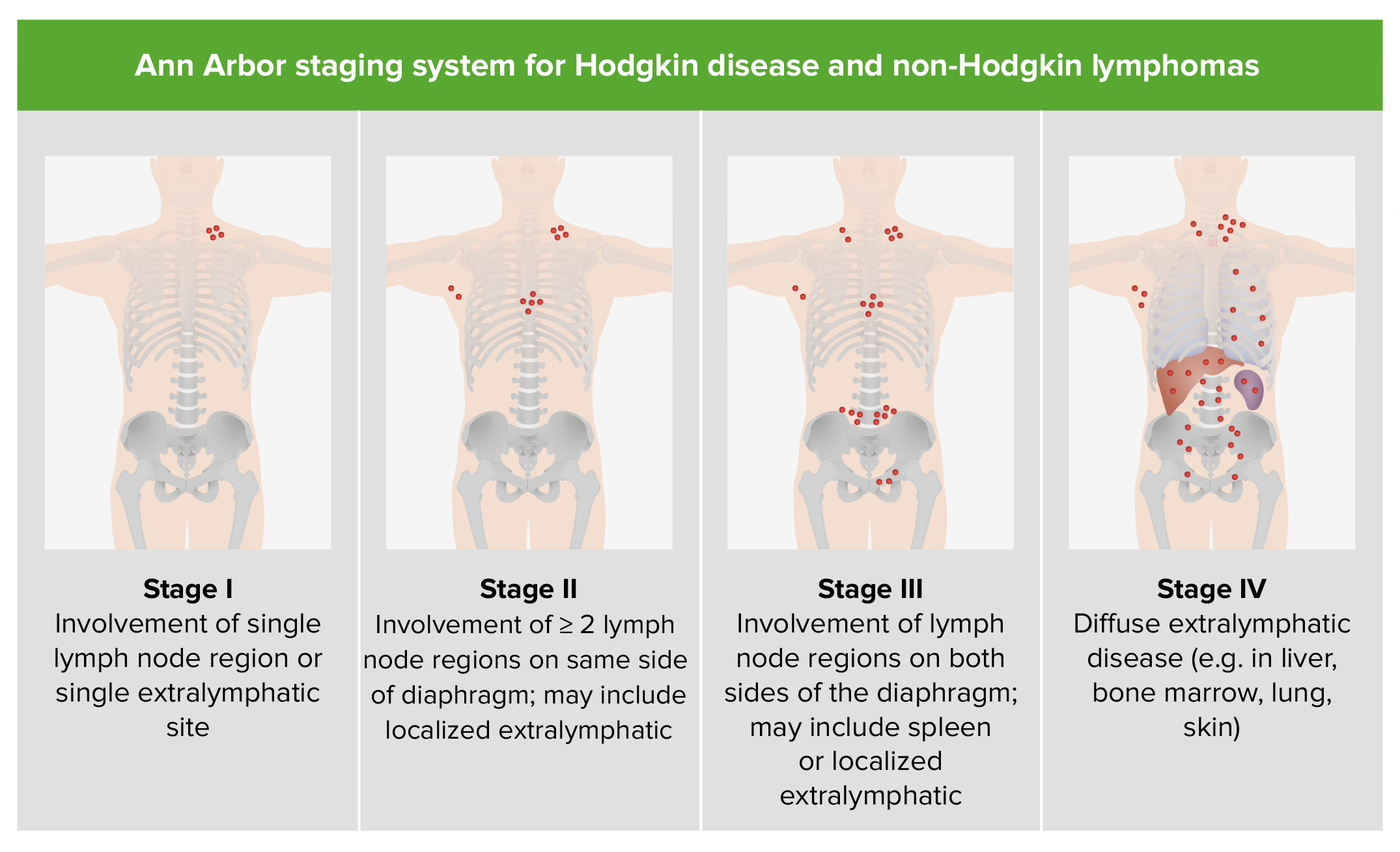
  • Estádio I:
    • 1 grupo de gânglios (I): principalmente cervicais ou
    • Um único local extralinfático ( Ie IE Infective endocarditis (IE) is caused by infection or inflammation of the inner lining of the heart (endocardium), most commonly affecting the heart valves. Endocarditis)
  • Estádio II:
    • ≥ 2 gânglios em 1 lado do diafragma (II) ou
    • Focos extralinfáticos localizados e acometimento de ≥ 1 gânglios em 1 lado do diafragma (IIe)
  • Estádio III:
    • Envolvimento dos gânglios em ambos os lados do diafragma (III), que pode incluir o baço (IIIs) ou
    • Órgão ou local extralinfático contíguo limitado (IIIe, IIIes)
  • Estádio IV: envolvimento disseminado de ≥ 1 órgão extralinfático sem envolvimento de gânglios
  • “A” indica ausência de sintomas sistémicos.
  • “B” indica a presença de sintomas sistémicos.
Hodgkin disease staging

Estadiamento da doença de Hodgkin e do LNH

Imagem por Lecturio.

Tratamento e Prognóstico

Tratamento

  • Objetivos da terapêutica:
    • Maximizar a cura em todos os estádios.
    • Minimizar as complicações de curto e longo prazo.
    • Minimizar os riscos de toxicidade.
  • Principalmente guiado pelo estádio clínico
  • Estádio IA:
    • Quimioterapia com ABVD (doxorrubicina (Adriamicina), bleomicina, vinblastina e dacarbazina)
    • Seguido de radioterapia localizada ou regional
  • Estádio IB/II:
    • 4-6 cursos de ABVD
    • Radioterapia se nódulos volumosos
  • Estádio III e IV:
    • 6-8 cursos de ABVD
    • Radioterapia se linfadenopatia volumosa residual
  • Casos refratários:
    • Transplante autólogo de células estaminais
    • Diferentes quimioterápicos
    • Anticorpos para bloquear PD-L1
    • Anticorpos contra CD30

Prognóstico

  • International Prognostic Score (IPS): baseado em 7 características desfavoráveis ao diagnóstico:
    • Sexo masculino
    • Idade > 45 anos
    • Doença estádio IV
    • Hipoalbuminemia: albumina sérica < 4 g/dL
    • Hemoglobina < 10,5 g/dL
    • Contagem de linfócitos < 600/µL e/ou < 8% da contagem leucocitária
    • Contagem leucocitária ≥ 15.000/µL
  • Sem progressão em 5 anos:
    • 0 fatores: 84% (7% dos doentes)
    • 1 fatores: 77% (22% dos doentes)
    • 2 fatores: 67% (29% dos doentes)
    • 3 fatores: 60% (23% dos doentes)
    • 4 fatores: 51% (12% dos doentes)
    • 5 ou mais MAIS Androgen Insensitivity Syndrome fatores: 42% (7% dos doentes)

Complicações

  • Complicações da radioterapia:
    • Mielodisplasia
    • Leucemia aguda
    • Sarcoma
    • Aumento do risco de cancro do pulmão ou doença pulmonar fibrótica, particularmente em tagabistas
  • Complicações da quimioterapia:
    • A adriamicina é cardiotóxica.
    • A bleomicina causa pneumonite.
    • Insuficiência cardíaca congestiva e aumento do risco de doença arterial coronária
    • Imunodeficiência de longa duração
    • Neuropatia e atrofia muscular

Diagnóstico Diferencial

  • Processos reativos: processos infeciosos, autoimunes e outros processos inflamatórios podem resultar em linfadenopatia, organomegalia, febre e outros sintomas sistémicos. Os processos reativos têm um infiltrado polimorfo, mas não possuem células de Reed-Sternberg. O diagnóstico é realizado por análise histológica, análises sanguíneas e estudos de imagem. O tratamento é adaptado à doença subjacente.
  • Linfoma não Hodgkin (LNH): inclui todas as formas de neoplasias linfocíticas que não apresentam as células HRS HRS Hepatorenal syndrome (HRS) is a potentially reversible cause of acute kidney injury that develops secondary to liver disease. The main cause of hrs is hypovolemia, often as a result of forced diuresis or drainage of ascites. This leads to renal vasoconstriction resulting in hypoperfusion of the kidneys. Hepatorenal Syndrome histologicamente. Os sinais e sintomas incluem linfadenopatia e sintomas constitucionais. O diagnóstico é realizado por exames histológicos do tecido linfoide ou medula óssea. A imagem é realizada para auxiliar no estadiamento. O tratameto é baseado na quimioterapia, radioterapia e transplante de células estaminais
  • Linfoma anaplásico de grandes células: neoplasia com origem em células T, que produz uma resposta inflamatória e fibrose tecidual (um subtipo de LNH). Os sinais e sintomas incluem linfadenopatia, mas os sintomas constitucionais são raros. O linfoma anaplásico de grandes células tem um curso agressivo. O diagnóstico é realizado com uma combinação de avaliações morfológicas e imunofenotípicas. O tratamento é com quimioterapia e transplante de células estaminais.
  • Úlcera mucocutânea EBV-positiva: distúrbio caracterizado por lesões ulcerativas circunscritas e isoladas, que ocorrem em doentes idosos ou no contexto de imunossupressão. As lesões ocorrem frequentemente na orofaringe, mas a pele ou o trato gastrointestinal pode estar envolvido. As lesões contêm infiltrados inflamatórios polimorfos dispersos, com células B infetadas pelo EBV EBV Epstein-barr virus (EBV) is a linear, double-stranded DNA virus belonging to the herpesviridae family. This highly prevalent virus is mostly transmitted through contact with oropharyngeal secretions from an infected individual. The virus can infect epithelial cells and B lymphocytes, where it can undergo lytic replication or latency. Epstein-Barr Virus que se assemelham às células HRS HRS Hepatorenal syndrome (HRS) is a potentially reversible cause of acute kidney injury that develops secondary to liver disease. The main cause of hrs is hypovolemia, often as a result of forced diuresis or drainage of ascites. This leads to renal vasoconstriction resulting in hypoperfusion of the kidneys. Hepatorenal Syndrome. A úlcera mucocutânea EBV-positiva tem apresentação extranodal, curso benigno e regressão espontâna frequente, sendo responsiva ao tratamento conservador.

Referências

  1. Ng, A., Aster, J.C., Herrera, A.F. (2025, Feb 18). Classic Hodgkin lymphoma: Presentation, evaluation, and diagnosis in adults. In LaCasce, A.S. (Ed.), UpToDate. Retrieved June 30, 2025, from https://www.uptodate.com/contents/clinical-presentation-and-diagnosis-of-classic-hodgkin-lymphoma-in-adults
  2. Lash, B., Wolfe, Z., Argiris, A. (2025, Jan 7). Hodgkin Lymphoma. In Besa, E.C. (Ed.), Medscape. Retrieved June 30, 2025, from https://reference.medscape.com/article/201886-overview
  3. Engert, A., Plütschow, A., Eich, H.T., et al. (2010). Reduced treatment intensity in patients with early-stage Hodgkin’s lymphoma. N Engl J Med 363:640–652. https://doi.org/10.1056/NEJMoa1000067
  4. Radford, J., Illidge, T., Counsell, N., et al. (2015). Results of a trial of PET-directed therapy for early-stage Hodgkin’s lymphoma. N Engl J Med 372:1598–1607. https://doi.org/10.1056/NEJMoa1408648
  5. Shimabukuro-Vornhagen, A., Haverkamp, H., Engert, A., et al. (2005). Lymphocyte-rich classical Hodgkin’s lymphoma: clinical presentation and treatment outcome in 100 patients treated within German Hodgkin’s Study Group trials. J Clin Oncol 23:5739–5745. https://pubmed.ncbi.nlm.nih.gov/16009944/
  6. Schlammerl K, Kommoss S, Krämer B, Hoopmann M, Bachmann C. Atypical course of a caesarean scar pregnancy. Arch Gynecol Obstet. 2023;307(6):2023-2024. doi:10.1007/s00404-022-06697-9
  7. Ansell SM. Hodgkin lymphoma: 2023 update on diagnosis, risk-stratification, and management. Am J Hematol. 2022;97(11):1478-1488. doi:10.1002/ajh.26717
  8. Ansell SM. Hodgkin lymphoma: 2025 update on diagnosis, risk-stratification, and management. Am J Hematol. 2024;99(12):2367-2378. doi:10.1002/ajh.27470
  9. Cortes J, Rugo HS, Cescon DW, et al. Pembrolizumab plus Chemotherapy in Advanced Triple-Negative Breast Cancer. N Engl J Med. 2022;387(3):217-226. doi:10.1056/NEJMoa2202809
  10. Borchmann P, Ferdinandus J, Schneider G, et al. Assessing the efficacy and tolerability of PET-guided BrECADD versus eBEACOPP in advanced-stage, classical Hodgkin lymphoma (HD21): a randomised, multicentre, parallel, open-label, phase 3 trial [published correction appears in Lancet. 2024 Nov 30;404(10468):2164. doi: 10.1016/S0140-6736(24)02571-6.]. Lancet. 2024;404(10450):341-352. doi:10.1016/S0140-6736(24)01315-1
  11. Arber DA, Orazi A, Hasserjian RP, et al. International Consensus Classification of Myeloid Neoplasms and Acute Leukemias: integrating morphologic, clinical, and genomic data. Blood. 2022;140(11):1200-1228. doi:10.1182/blood.2022015850
  12. Castellino SM, Pei Q, Parsons SK, et al. Brentuximab Vedotin with Chemotherapy in Pediatric High-Risk Hodgkin’s Lymphoma. N Engl J Med. 2022;387(18):1649-1660. doi:10.1056/NEJMoa2206660
  13. Connors JM, Cozen W, Steidl C, et al. Author Correction: Hodgkin lymphoma. Nat Rev Dis Primers. 2021;7(1):79. Published 2021 Oct 20. doi:10.1038/s41572-021-00319-5
  14. Evens AM. Enhancing the treatment landscape: PET-guided BrECADD for advanced-stage, classical Hodgkin lymphoma. Lancet. 2024;404(10450):312-313. doi:10.1016/S0140-6736(24)01404-1
  15. Herrera AF, LeBlanc M, Castellino SM, et al. Nivolumab+AVD in Advanced-Stage Classic Hodgkin’s Lymphoma. N Engl J Med. 2024;391(15):1379-1389. doi:10.1056/NEJMoa2405888
  16. Hoppe RT, Advani RH, Ai WZ, et al. NCCN Guidelines® Insights: Hodgkin Lymphoma, Version 2.2022. J Natl Compr Canc Netw. 2022;20(4):322-334. doi:10.6004/jnccn.2022.0021
  17. Mafra A, Laversanne M, Gospodarowicz M, et al. Global patterns of non-Hodgkin lymphoma in 2020. Int J Cancer. 2022;151(9):1474-1481. doi:10.1002/ijc.34163
  18. National Comprehensive Cancer Network. NCCN Clinical Practice Guidelines in Oncology: Hodgkin Lymphoma. Version 2.2025. https://www.nccn.org/guidelines/guidelines-detail?category=1&id=1439
  19. Rodday AM, Parsons SK, Upshaw JN, et al. The Advanced-Stage Hodgkin Lymphoma International Prognostic Index: Development and Validation of a Clinical Prediction Model From the HoLISTIC Consortium [published correction appears in J Clin Oncol. 2024 Mar 1;42(7):862. doi: 10.1200/JCO.23.02698.]. J Clin Oncol. 2023;41(11):2076-2086. doi:10.1200/JCO.22.02473
  20. Roswarski JL, Longo DL. Hodgkin lymphoma: Focus on evolving treatment paradigms. Best Pract Res Clin Haematol. 2023;36(4):101510. doi:10.1016/j.beha.2023.101510
  21. Siegel RL, Giaquinto AN, Jemal A. Cancer statistics, 2024 [published correction appears in CA Cancer J Clin. 2024 Mar-Apr;74(2):203. doi: 10.3322/caac.21830.]. CA Cancer J Clin. 2024;74(1):12-49. doi:10.3322/caac.21820
  22. Ullah F, Dima D, Omar N, et al. Advances in the treatment of Hodgkin lymphoma: Current and future approaches. Front Oncol. 2023;13:1067289. https://www.frontiersin.org/journals/oncology/articles/10.3389/fonc.2023.1067289/full
  23. Wang X, Zhang H. Hodgkin’s lymphoma: 2023 update on treatment. Cancer Biol Med. 2024;21(4):j.issn.2095-3941. https://pmc.ncbi.nlm.nih.gov/articles/PMC11033717/

Crie sua conta gratuita ou faça login para continuar lendo!

Cadastre-se agora e tenha acesso grátis ao Lecturio, com páginas de conceitos, vídeos de medicina e questões para sua educação médica.

Aprende mais com a Lecturio:

Multiple devices displaying human anatomy and health education content.

Complementa o teu estudo da faculdade com o companheiro de estudo tudo-em-um da Lecturio, através de métodos de ensino baseados em evidência.

Estuda onde quiseres

Two iPhones display medical education apps, one showing anatomy, the other Bookmatcher.

A Lecturio Medical complementa o teu estudo através de métodos de ensino baseados em evidência, vídeos de palestras, perguntas e muito mais – tudo combinado num só lugar e fácil de usar.

User Reviews

Have a holly, jolly study session 🎁 Save 50% on all plans now >>

Que tengas una sesión de estudio alegre y navideña 🎁 Ahorra 50% en todos los planes >>

Details