



Deficiência do Recetor de IL-12

A deficiência do recetor de interleucina-12 (IL-12) é uma imunodeficiência primária autossómica recessiva causada por uma mutação nos genes Genes A category of nucleic acid sequences that function as units of heredity and which code for the basic instructions for the development, reproduction, and maintenance of organisms. DNA Types and Structure que codificam os recetores de IL-12 nas células T. A IL-12 promove a imunidade mediada por células induzindo a maturação das células T em células Th1 Th1 A subset of helper-inducer T-lymphocytes which synthesize and secrete interleukin-2; interferon-gamma; and interleukin-12. Due to their ability to kill antigen-presenting cells and their lymphokine-mediated effector activity, th1 cells are associated with vigorous delayed-type hypersensitivity reactions. T cells: Types and Functions e estimulando a secreção de interferão-gama (IFN-γ). Este processo, por sua vez, ativa células natural killer (NK), macrófagos e células T citotóxicas. A deficiência do recetor de IL-12 resulta em deficiências em todas essas funções imunológicas; consequentemente, os doentes apresentam infeções disseminadas.

Last updated: Mar 28, 2025
Editorial responsibility: Stanley Oiseth, Lindsay Jones, Evelin Maza

Etiologia e Fisiopatologia

Epidemiologia

  • Distúrbio muito raro
  • Prevalência exata desconhecida

Etiologia

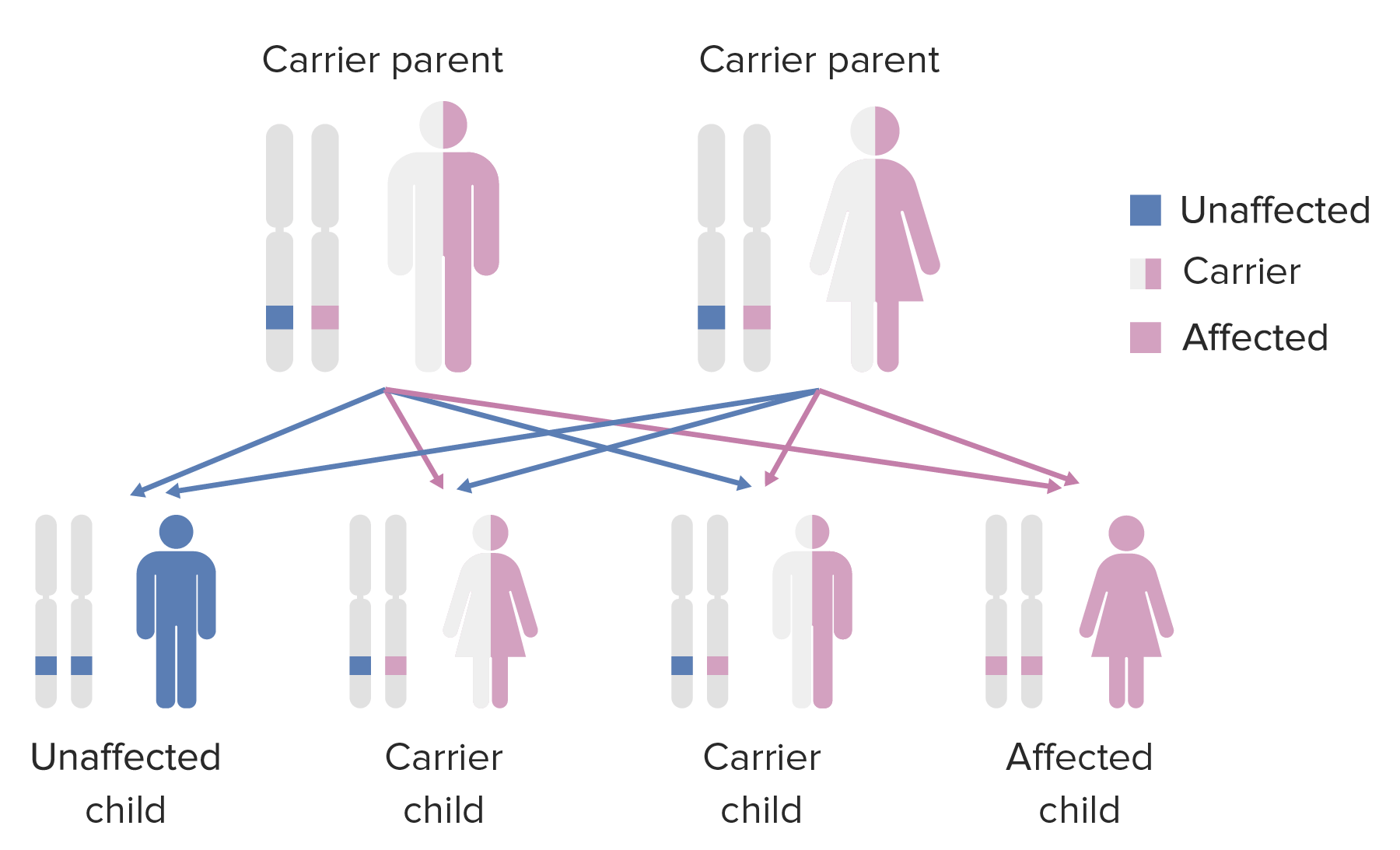
  • Padrão de hereditariedade autossómica recessiva
  • Causada por mutações nos genes Genes A category of nucleic acid sequences that function as units of heredity and which code for the basic instructions for the development, reproduction, and maintenance of organisms. DNA Types and Structure que codificam para o recetor de IL-12 (IL-12Rβ, IL-12Rβ1 e IL-12Rβ2)
  • A deficiência do recetor de IL-12 é considerada parte ou um subtipo da condição de suscetibilidade mendeliana à doença micobacteriana ( MSMD MSMD IL-12 Receptor Deficiency, pela sigla em inglês), que é caracterizada pela disfunção imunológica do seguinte:
    • Recetor 1 de interferão-gama (IFN-gamaR1) e recetor 2 (IFN-gamaR2)
    • Interleucina-12 (IL-12) e recetor de IL-12 ( mais MAIS Androgen Insensitivity Syndrome comum)
    • Proteína do gene Gene A category of nucleic acid sequences that function as units of heredity and which code for the basic instructions for the development, reproduction, and maintenance of organisms. Basic Terms of Genetics 15 estimulado por interferão (ISG15)
    • Transdutor de sinal e ativador de transcrição 1 (STAT1)
    • Fator regulador de interferão 8 (IRF8)
Padrão de herança de condições autossômicas recessivas

Diagrama do padrão de hereditariedade de condições autossómicas recessivas

Imagem por Lecturio.

Fisiopatologia

  • IL-12:
    • Codificado por 2 genes Genes A category of nucleic acid sequences that function as units of heredity and which code for the basic instructions for the development, reproduction, and maintenance of organisms. DNA Types and Structure separados, IL-12A (p35) e IL-12B (p40)
    • Produzido por células apresentadoras de antigénios ativadas (e.g., células dendríticas, macrófagos)
    • Promove a transição de células T auxiliares virgens em células Th1 Th1 A subset of helper-inducer T-lymphocytes which synthesize and secrete interleukin-2; interferon-gamma; and interleukin-12. Due to their ability to kill antigen-presenting cells and their lymphokine-mediated effector activity, th1 cells are associated with vigorous delayed-type hypersensitivity reactions. T cells: Types and Functions, que libertam IFN-γ para ativar macrófagos, responsáveis pela proteção citotóxica
    • Essencial para a imunidade protetora contra bactérias intracelulares como micobactérias e Salmonella Salmonella Salmonellae are gram-negative bacilli of the family Enterobacteriaceae. Salmonellae are flagellated, non-lactose-fermenting, and hydrogen sulfide-producing microbes. Salmonella enterica, the most common disease-causing species in humans, is further classified based on serotype as typhoidal (S. typhi and paratyphi) and nontyphoidal (S. enteritidis and typhimurium). Salmonella
  • Os doentes com alteração na IL-12Rβ1 têm variantes patogénicas bialélicas missense ou nonsense no gene Gene A category of nucleic acid sequences that function as units of heredity and which code for the basic instructions for the development, reproduction, and maintenance of organisms. Basic Terms of Genetics IL12RB1, que impedem a expressão superficial da proteína IL12RB1, bloqueando a formação e a função do recetor de IL-12.
  • Mutações nos recetores de IL-12 resultam numa resposta Th1 Th1 A subset of helper-inducer T-lymphocytes which synthesize and secrete interleukin-2; interferon-gamma; and interleukin-12. Due to their ability to kill antigen-presenting cells and their lymphokine-mediated effector activity, th1 cells are associated with vigorous delayed-type hypersensitivity reactions. T cells: Types and Functions alterada e diminuição da secreção de IFN-γ, resultando em infeções disseminadas.

Apresentação Clínica

  • Infeções disseminadas recorrentes na primeira infância, com a primeira infeção geralmente a ocorrer aos 3 anos de idade
    • Infeção disseminada após a vacina contra o bacilo Calmette-Guerin ( BCG BCG An active immunizing agent and a viable avirulent attenuated strain of Mycobacterium bovis, which confers immunity to mycobacterial infections. It is used also in immunotherapy of neoplasms due to its stimulation of antibodies and non-specific immunity. Cancer Immunotherapy) (>50%)
    • Salmonella Salmonella Salmonellae are gram-negative bacilli of the family Enterobacteriaceae. Salmonellae are flagellated, non-lactose-fermenting, and hydrogen sulfide-producing microbes. Salmonella enterica, the most common disease-causing species in humans, is further classified based on serotype as typhoidal (S. typhi and paratyphi) and nontyphoidal (S. enteritidis and typhimurium). Salmonella não tifoide (~25%)
    • Micobactérias não tuberculosas (<10%)
    • Tuberculose (<5%)
    • Candidíase mucocutânea crónica (~25%)
  • As infecões podem envolver a medula óssea (osteomielite), os pulmões ( pneumonia Pneumonia Pneumonia or pulmonary inflammation is an acute or chronic inflammation of lung tissue. Causes include infection with bacteria, viruses, or fungi. In more rare cases, pneumonia can also be caused through toxic triggers through inhalation of toxic substances, immunological processes, or in the course of radiotherapy. Pneumonia), a pele (celulite, abcessos) e gânglios (linfadenite), entre outras áreas
  • Frequentemente apresenta-se como sépsis (e.g., febre, calafrios, hipotensão) e coagulação intravascular disseminada (CID)
  • As infeções são muitas vezes disseminadas, mas também podem ser limitadas a órgãos específicos, especialmente nos pulmões ou no fígado (pneumonite ou hepatite, respetivamente).

Diagnóstico e Tratamento

Diagnóstico

  • A suspeita clínica surge após infeções recorrentes e disseminadas por agentes patogénicos intracelulares (e.g., Salmonella Salmonella Salmonellae are gram-negative bacilli of the family Enterobacteriaceae. Salmonellae are flagellated, non-lactose-fermenting, and hydrogen sulfide-producing microbes. Salmonella enterica, the most common disease-causing species in humans, is further classified based on serotype as typhoidal (S. typhi and paratyphi) and nontyphoidal (S. enteritidis and typhimurium). Salmonella, Mycobacterium Mycobacterium Mycobacterium is a genus of the family Mycobacteriaceae in the phylum Actinobacteria. Mycobacteria comprise more than 150 species of facultative intracellular bacilli that are mostly obligate aerobes. Mycobacteria are responsible for multiple human infections including serious diseases, such as tuberculosis (M. tuberculosis), leprosy (M. leprae), and M. avium complex infections. Mycobacterium) na primeira infância.
  • Os estudos laboratoriais revelarão níveis de IFN-γ diminuídos.

Tratamento

  • Não há cura para a deficiência do recetor de IL-12, mas as infeções resultantes podem ser tratadas com antibióticos e antifúngicos.
  • A administração de IFN-γ auxilia na ativação de macrófagos.
    • Iniciado com as doses padrão utilizadas na doença granulomatosa crónica (DGC)
    • A dose pode ser aumentada com base na tolerância e na resposta do doente
  • Prognóstico:
    • Taxa de mortalidade de 30% devido a infeções disseminadas
    • Os doentes com infeções por micobactérias não tuberculosas têm o pior prognóstico.

Diagnóstico Diferencial

As seguintes condições são diagnósticos diferenciais da deficiência do recetor de IL-12:

  • Síndrome de hiper-IgE autossómica dominante: também conhecida como síndrome de Job, uma forma rara de imunodeficiência primária que afeta vários sistemas orgânicos, além do sistema imunológico. Causada por mutações no gene Gene A category of nucleic acid sequences that function as units of heredity and which code for the basic instructions for the development, reproduction, and maintenance of organisms. Basic Terms of Genetics STAT3, resulta em alterações da quimiotaxia de neutrófilos. Os doentes apresentam pneumonias recorrentes, infeções de pele, erupções cutâneas, bolhas e abcessos.
  • Fibrose cística: doença autossómica recessiva causada por mutações no gene Gene A category of nucleic acid sequences that function as units of heredity and which code for the basic instructions for the development, reproduction, and maintenance of organisms. Basic Terms of Genetics CFTR. As mutações levam à disfunção dos canais de cloro, o que resulta num muco hiperviscoso e na acumulação de secreções. As apresentações comuns incluem infeções respiratórias crónicas, atrasos do crescimento e insuficiência pancreática.
  • Doença granulomatosa crónica: doença crónica caracterizada pela formação de granulomas Granulomas A relatively small nodular inflammatory lesion containing grouped mononuclear phagocytes, caused by infectious and noninfectious agents. Sarcoidosis. Este distúrbio é uma consequência de células fagocíticas disfuncionais que são incapazes de produzir superóxido bactericida, devido a um defeito na nicotinamida adenina dinucleotídeo fosfato ( NADPH NADPH Nicotinamide adenine dinucleotide phosphate. A coenzyme composed of ribosylnicotinamide 5′-phosphate (nmn) coupled by pyrophosphate linkage to the 5′-phosphate adenosine 2. Pentose Phosphate Pathway, pela sigla em inglês) oxidase Oxidase Neisseria nessas células. A apresentação inclui infeções recorrentes da pele, pneumonia Pneumonia Pneumonia or pulmonary inflammation is an acute or chronic inflammation of lung tissue. Causes include infection with bacteria, viruses, or fungi. In more rare cases, pneumonia can also be caused through toxic triggers through inhalation of toxic substances, immunological processes, or in the course of radiotherapy. Pneumonia e gastroenterite.
  • Imunodeficiência combinada severa ( SCID SCID Severe combined immunodeficiency (SCID), also called “bubble boy disease,” is a rare genetic disorder in which the development of functional B and T cells is disturbed due to several genetic mutations that result in reduced or absent immune function. Severe Combined Immunodeficiency (SCID), pela sigla em inglês): forma mais MAIS Androgen Insensitivity Syndrome grave de imunodeficiência primária. A condição é um distúrbio genético que envolve uma resposta defeituosa dos anticorpos devido ao envolvimento direto dos linfócitos B ou por ativação defeituosa de linfócitos B devido a células T auxiliares não funcionais. Apresenta-se com infeções oportunistas graves e recorrentes e é diagnosticada por reação em cadeia da polimerase ( PCR PCR Polymerase chain reaction (PCR) is a technique that amplifies DNA fragments exponentially for analysis. The process is highly specific, allowing for the targeting of specific genomic sequences, even with minuscule sample amounts. The PCR cycles multiple times through 3 phases: denaturation of the template DNA, annealing of a specific primer to the individual DNA strands, and synthesis/elongation of new DNA molecules. Polymerase Chain Reaction (PCR), pela sigla em inglês) quantitativa e citometria de fluxo.

Referências

  1. Abbas, A. K., Lichtman, A. H., & Pillai, S. (2021). Cellular and molecular immunology (10th ed.). Elsevier.
  2. Castaño, D., Rodríguez, D., Gómez, A. M., & Rojas, M. (2024). IL-12 drives the differentiation of human T follicular regulatory cells. Science Immunology, 9(97), eadf2047. https://doi.org/10.1126/sciimmunol.adf2047
  3. Freeman, A. F., & Holland, S. M. (2023). Mendelian susceptibility to mycobacterial diseases: Specific defects. In J. M. Puck (Section Ed.), UpToDate. Wolters Kluwer. Retrieved May 19, 2025.
  4. Hallstrand, T. S., Aksamit, T. R., & Olivier, K. N. (2004). Inhaled IFN-γ for persistent nontuberculous mycobacterial pulmonary disease due to functional IFN-γ deficiency. European Respiratory Journal, 24(3), 367–370. https://doi.org/10.1183/09031936.04.00036704
  5. Mitwalli, H., Alshahrani, A., & Alsaadi, M. (2024). A diagnostic challenge: A case of disseminated nocardiosis presenting with generalized lymphadenopathy in a patient with interleukin-12 deficiency. Cureus. https://doi.org/10.7759/cureus.62396
  6. Schneeberger, S., Nguyen, T., Xu, Z., & Li, L. (2025). Interleukin-12 signaling drives Alzheimer’s disease pathology through disrupting neuronal and oligodendrocyte homeostasis. Nature Aging, 5(4), 622–641. https://doi.org/10.1038/s43587-025-00816-2
  7. Shi, W., Zhang, Y., Liu, Y., & Wang, H. (2025). Adverse events associated with IL-23 and IL-12/23 inhibitors in the clinical management of psoriasis: A comprehensive pharmacovigilance analysis. BMC Pharmacology and Toxicology, 26(1), 11. https://doi.org/10.1186/s40360-025-00837-y
  8. UpToDate. https://www.uptodate.com/contents/mendelian-susceptibility-to-mycobacterial-diseases-specific-defects/print. Accessed 19 May 2025.

Crie sua conta gratuita ou faça login para continuar lendo!

Cadastre-se agora e tenha acesso grátis ao Lecturio, com páginas de conceitos, vídeos de medicina e questões para sua educação médica.

Aprende mais com a Lecturio:

Multiple devices displaying human anatomy and health education content.

Complementa o teu estudo da faculdade com o companheiro de estudo tudo-em-um da Lecturio, através de métodos de ensino baseados em evidência.

Estuda onde quiseres

Two iPhones display medical education apps, one showing anatomy, the other Bookmatcher.

A Lecturio Medical complementa o teu estudo através de métodos de ensino baseados em evidência, vídeos de palestras, perguntas e muito mais – tudo combinado num só lugar e fácil de usar.

User Reviews

Have a holly, jolly study session 🎁 Save 50% on all plans now >>

Que tengas una sesión de estudio alegre y navideña 🎁 Ahorra 50% en todos los planes >>

Details