


Artrite Reumatoide

A artrite reumatoide ( AR AR Aortic regurgitation (AR) is a cardiac condition characterized by the backflow of blood from the aorta to the left ventricle during diastole. Aortic regurgitation is associated with an abnormal aortic valve and/or aortic root stemming from multiple causes, commonly rheumatic heart disease as well as congenital and degenerative valvular disorders. Aortic Regurgitation) é uma poliartrite autoimune simétrica, inflamatória, crónica e progressiva. É mais MAIS Androgen Insensitivity Syndrome frequente em mulheres de meia-idade e manifesta-se por tumefação nas articulações, dor e rigidez matinal (muitas vezes nas mãos). A inflamação sistémica pode levar a manifestações extra-articulares, tais como nódulos reumatoides, doença pulmonar intersticial, síndrome de Felty e pericardite. A doença prolongada e grave pode levar a deformidades irreversíveis das articulações. O diagnóstico é baseado numa forte suspeita clínica e confirmado pela presença de fator reumatoide (FR), de anticorpos antipeptídeo citrulinado cíclico (anti-CCP, pela sigla em inglês) e imagem característica. O tratamento é crónico e envolve fármacos antirreumáticos modificadores de prognóstico ( DMARD DMARD Disease-modifying antirheumatic drugs are antiinflammatory medications used to manage rheumatoid arthritis. The medications slow, but do not cure, the progression of the disease. The medications are classified as either synthetic or biologic agents and each has unique mechanisms of action and side effects. Disease-Modifying Antirheumatic Drugs (DMARDs), pela sigla em inglês), agentes biológicos e fisioterapia. O tratamento de 1º linha nas exacerbações agudas consiste na utilização de glucocorticoides e anti-inflamatórios não esteroides (AINEs).

Last updated: Dec 15, 2025

Editorial responsibility: Stanley Oiseth, Lindsay Jones, Evelin Maza

Epidemiologia e Fatores de Risco

Epidemiologia

Fatores de risco

A etiologia da artrite reumatoide ( AR AR Aortic regurgitation (AR) is a cardiac condition characterized by the backflow of blood from the aorta to the left ventricle during diastole. Aortic regurgitation is associated with an abnormal aortic valve and/or aortic root stemming from multiple causes, commonly rheumatic heart disease as well as congenital and degenerative valvular disorders. Aortic Regurgitation) é desconhecida, mas existem vários fatores de risco reconhecidos.
  • Predisposição genética:
    • 2-3 vezes mais MAIS Androgen Insensitivity Syndrome provável se história familiar de 1º grau de AR AR Aortic regurgitation (AR) is a cardiac condition characterized by the backflow of blood from the aorta to the left ventricle during diastole. Aortic regurgitation is associated with an abnormal aortic valve and/or aortic root stemming from multiple causes, commonly rheumatic heart disease as well as congenital and degenerative valvular disorders. Aortic Regurgitation
    • Associado a:
  • Fatores ambientais:
    • Estilo de vida:
      • Tabagismo
      • Obesidade
    • Hormonal
    • Infeciosa:
      • Vírus Epstein-Barr ( EBV EBV Epstein-barr virus (EBV) is a linear, double-stranded DNA virus belonging to the herpesviridae family. This highly prevalent virus is mostly transmitted through contact with oropharyngeal secretions from an infected individual. The virus can infect epithelial cells and B lymphocytes, where it can undergo lytic replication or latency. Epstein-Barr Virus)
      • Parvovírus B19
      • Hepatite B e C
      • Rubéola
      • Mycoplasma Mycoplasma Mycoplasma is a species of pleomorphic bacteria that lack a cell wall, which makes them difficult to target with conventional antibiotics and causes them to not gram stain well. Mycoplasma bacteria commonly target the respiratory and urogenital epithelium. Mycoplasma pneumoniae (M. pneumoniae), the causative agent of atypical or “walking” pneumonia. Mycoplasma
      • Infeções dentárias recorrentes

Fisiopatologia

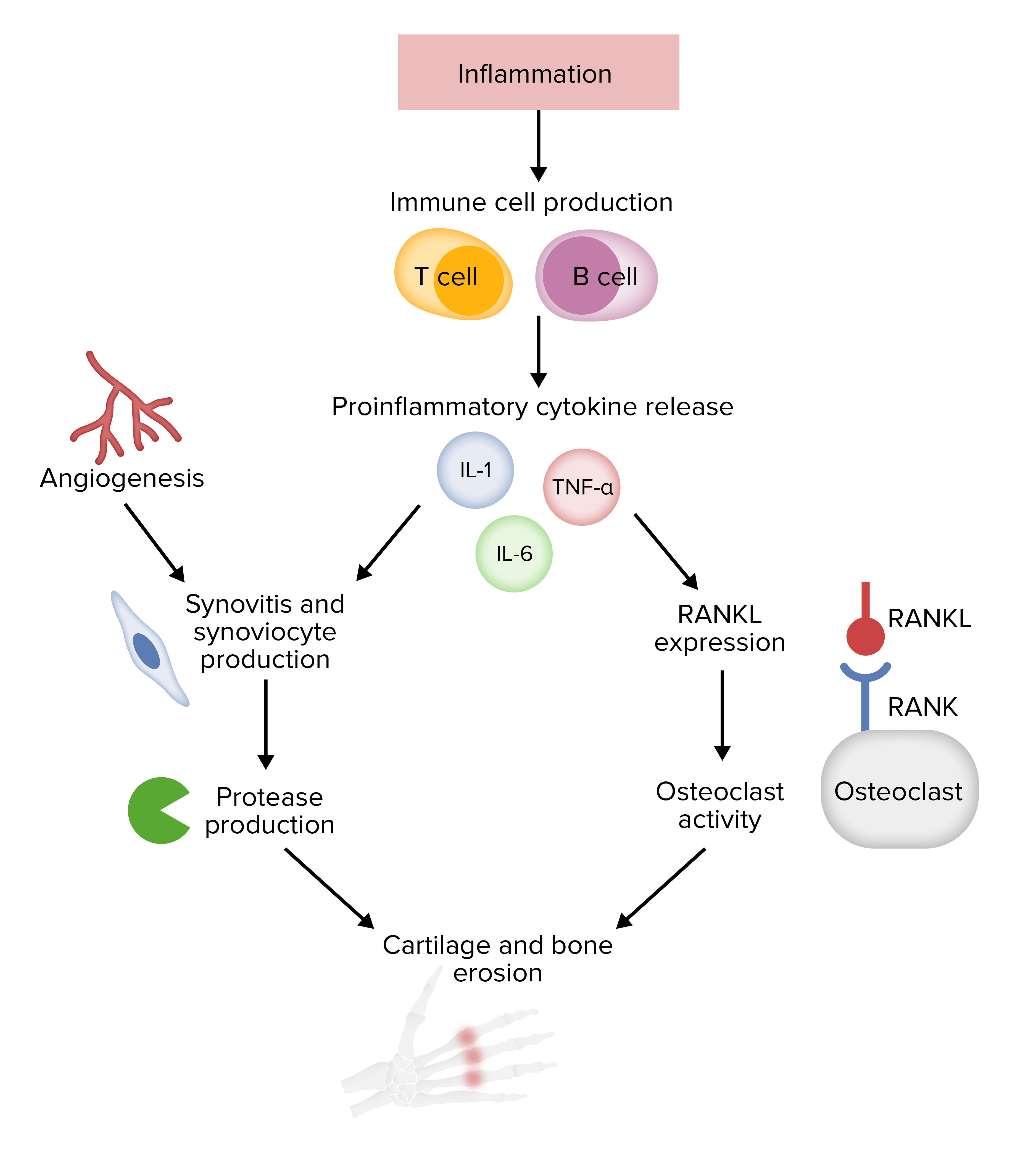
  • Não é completamente compreendida
  • Um estímulo externo desencadeia uma resposta autoimune e ↑ expressão de enzimas que convertem arginina em citrulina → criação de antigénios
  • As células B produzem anticorpos contra proteínas citrulinadas → ligam-se ao fibrinogénio e ao colagénio → ativação do complemento
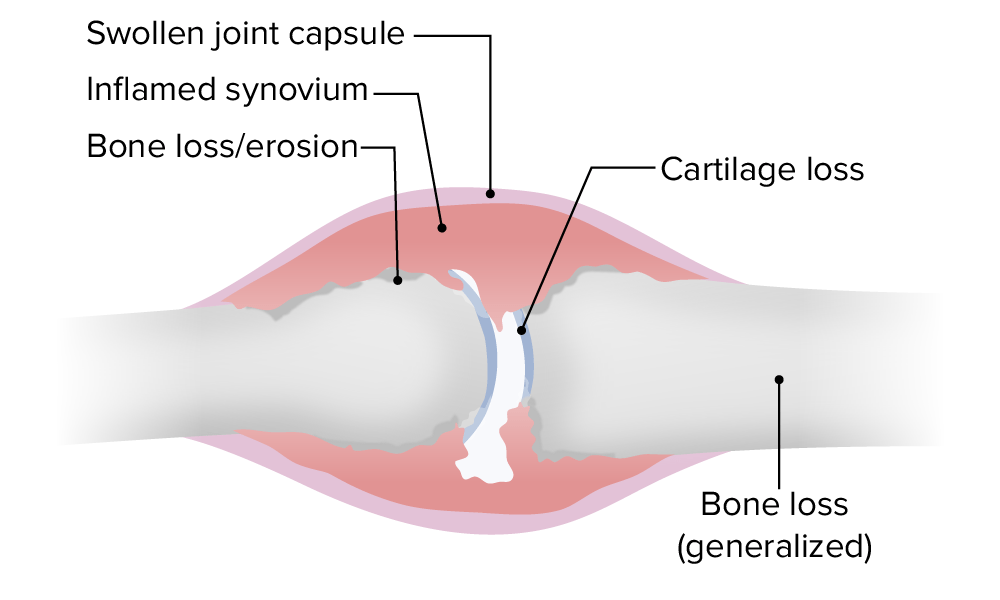
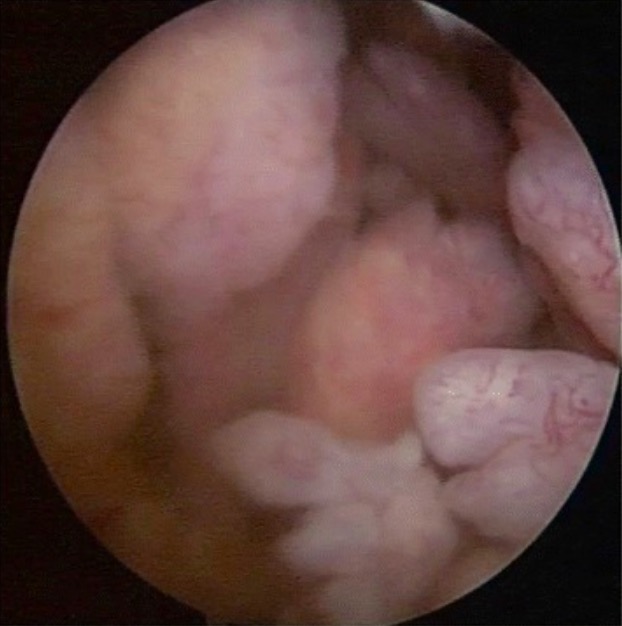
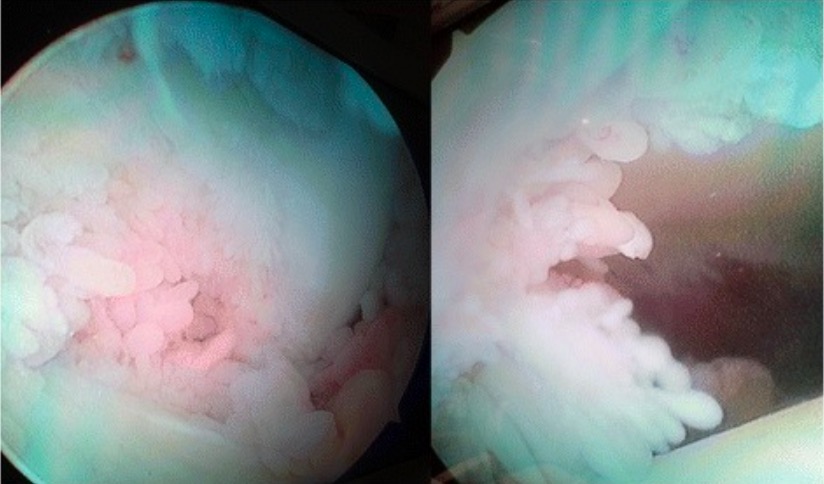
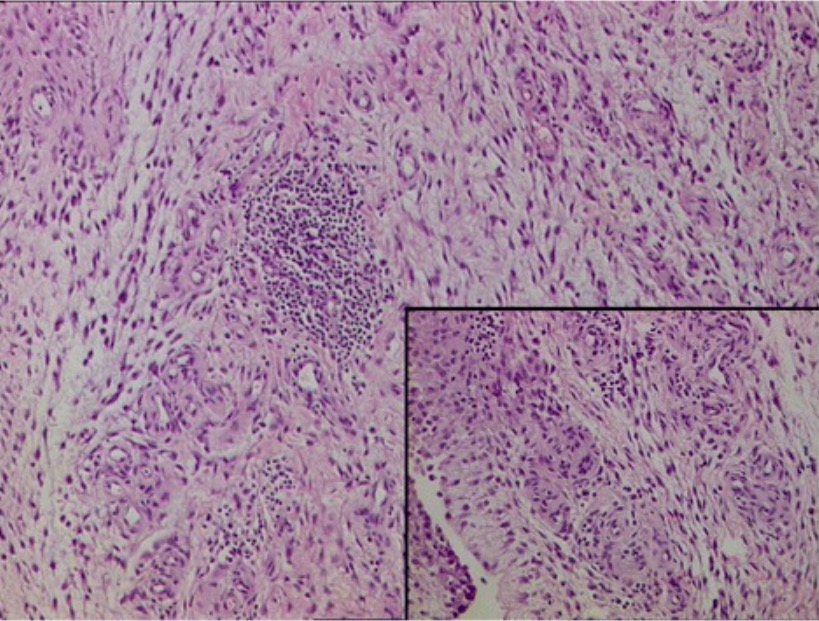
  • A membrana sinovial é infiltrada por células imunitárias (e.g., macrófagos, mastócitos, células B, células T CD4) → produção de citocinas e quimiocinas → espessamento da membrana sinovial e formação de vilosidades
  • O tecido sinovial ( pannus Pannus A genus of cyanobacteria in the family synechococcaceae that is free-floating and occurs in various water environments attaching to algae and submersed plants. Septic Arthritis) hiperplásico liberta:
    • Colagenase
    • Estromelisina
    • Interleucinas (IL)
    • Factor de necrose tumoral ( TNF TNF Tumor necrosis factor (TNF) is a major cytokine, released primarily by macrophages in response to stimuli. The presence of microbial products and dead cells and injury are among the stimulating factors. This protein belongs to the TNF superfamily, a group of ligands and receptors performing functions in inflammatory response, morphogenesis, and cell proliferation. Tumor Necrosis Factor (TNF), pela sigla em inglês)-alfa
  • Leva a:
    • Inflamação sinovial contínua
    • Destruição da cartilagem
    • Destruição óssea mediada por osteoclastos

Apresentação Clínica

Manifestações articulares

  • Sintomas:
    • Dor nas articulações
    • Tumefação das articulações
    • Rigidez matinal ( > 1 hora)
  • Características:
    • Início insidioso
    • Poliarticular
    • Simétricas
  • Articulações frequentemente afetadas:
    • Punhos
    • 2ª e 3ª articulações metacarpofalângicas (MCP, pela sigla em inglês)
    • Articulações interfalângicas proximais (PIP, pela sigla em inglês)
    • Articulações metatarsofalângicas (MTP, pela sigla em inglês)
    • Ombros
    • Cotovelos
    • Ancas
    • Joelhos
    • Tornozelos
  • A subluxação atlantoaxial pode ocorrer em 20%–50% dos doentes:
    • Rigidez e dor nos ombros e pescoço
    • Radiculopatia
  • Nota: As articulações interfalângicas distais (DIP, pela sigla em inglês) e carpometacárpicas (CMC) são, normalmente, poupadas.

Exame objetivo

  • Gerais:
    • Sinovite:
      • Dor articular
      • Tumefação
      • Podem ocorrer derrames articulares em articulações maiores.
    • Atrofia muscular interóssea
    • Deformidades articulares
    • ↓ Amplitude do movimento
  • Achados comuns nas mãos:
    • ↓ Força de prensão palmar
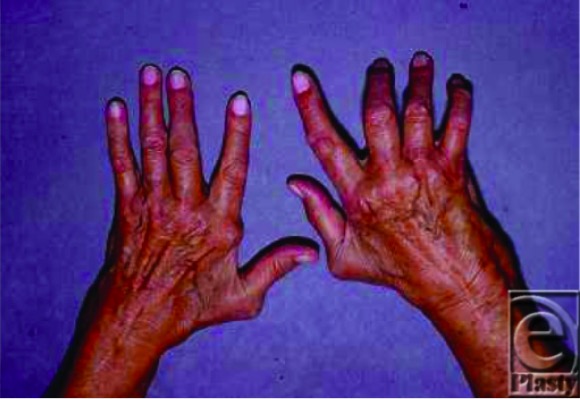
    • Desvio cubital das articulações MCP
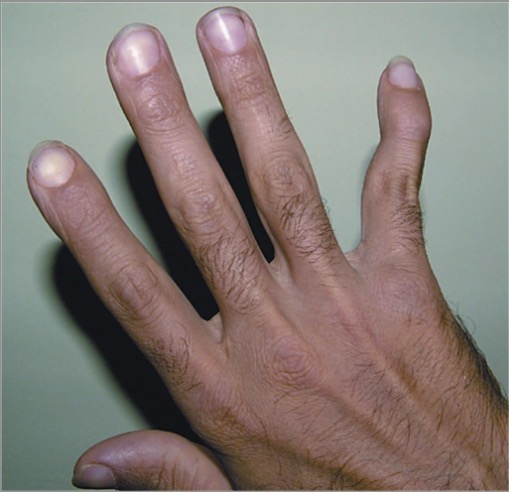
    • Deformidade de Boutonniere:
      • Flexão das PIP
      • Hiperextensão DIP
    • Deformidade em pescoço de cisne:
      • Hiperextensão das PIP
      • Flexão das DIP
    • Polegar com deformidade em “Z”:
      • Flexão da MCP
      • Hiperextensão da articulação interfalângica (IP, pela sigla em inglês)
    • Sinal do tendão: proeminência dos tendões no compartimento extensor da mão
  • Achados comuns nas extremidades inferiores:
    • Restrição do movimento das ancas
    • Quisto de Baker:
      • Causado por grandes derrames no joelho
      • Quisto causado pelo aprisionamento de sinovia entre estruturas articulares.
      • A tumefação é visível na face posterior do joelho.
      • Também encontrado na osteoartrose, em traumatismos, gota e lesões meniscais
    • Dedo em martelo: hiperextensão da articulação MTP

Manifestações extra-articulares

  • Gerais:
    • Astenia
    • Febre
    • Perda ponderal
    • Mialgias
  • Cutâneas:
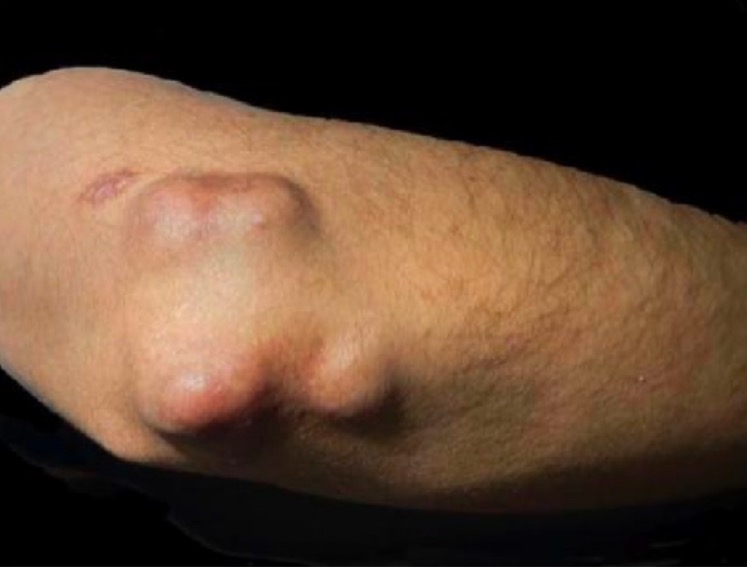
    • Nódulos reumatoides:
      • Indolores
      • Ocorrem na superfície extensora dos cotovelos, nos calcanhares, nas tuberosidades isquiáticas e dedos das mãos
      • Também podem ocorrer em vísceras
    • Úlceras cutâneas
    • Dermatose neutrofílica
      • Infiltração estéril por neutrófilos
      • Pápulas simétricas e eritematosas
  • Oculares:
    • Síndrome de Sjögren (queratoconjuntivite sicca)
    • Episclerite
    • Uveíte
  • Neurológicas:
    • Mielopatia e radiculopatia
    • Mononeurite multiplex ou polineuropatia
    • Síndrome do túnel cárpico
    • Depressão
  • Respiratórias:
    • Doença pulmonar intersticial
    • Obstrução das vias aéreas superiores devido a:
      • Artrite da articulação cricoaritenoide
      • Nódulos reumatóides nas cordas vocais
    • Pleurite
    • Derrame pleural
    • Nódulos pulmonares
  • Cardíacas:
    • Síndrome coronário agudo
    • Pericardite
    • Miocardite
    • Derrame pericárdico
    • Insuficiência valvular (causada por nódulos reumatoides)
    • Anomalias da condução (causadas por nódulos reumatoides)
  • Vascular:
    • Vasculite
    • Doença vascular periférica
    • Trombose venosa profunda
  • Hematológicas:
    • Síndrome de Felty:
      • AR AR Aortic regurgitation (AR) is a cardiac condition characterized by the backflow of blood from the aorta to the left ventricle during diastole. Aortic regurgitation is associated with an abnormal aortic valve and/or aortic root stemming from multiple causes, commonly rheumatic heart disease as well as congenital and degenerative valvular disorders. Aortic Regurgitation
      • Neutropenia Neutropenia Neutrophils are an important component of the immune system and play a significant role in the eradication of infections. Low numbers of circulating neutrophils, referred to as neutropenia, predispose the body to recurrent infections or sepsis, though patients can also be asymptomatic. Neutropenia
      • Esplenomegalia
    • Anemia Anemia Anemia is a condition in which individuals have low Hb levels, which can arise from various causes. Anemia is accompanied by a reduced number of RBCs and may manifest with fatigue, shortness of breath, pallor, and weakness. Subtypes are classified by the size of RBCs, chronicity, and etiology. Anemia: Overview and Types das doenças crónicas
Nódulos reumatoides isolados

Nódulos reumatoides na AR:
Tumefação subcutânea firme, indolor, na superfície extensora do cotovelo de um doente com AR

Imagem: “Right elbow” por Department of Medicine, Woodhull Medical Center, Brooklyn, NY 11206, USA. Licença: CC BY 3.0

Diagnóstico

O diagnóstico da artrite reumatoide ( AR AR Aortic regurgitation (AR) is a cardiac condition characterized by the backflow of blood from the aorta to the left ventricle during diastole. Aortic regurgitation is associated with an abnormal aortic valve and/or aortic root stemming from multiple causes, commonly rheumatic heart disease as well as congenital and degenerative valvular disorders. Aortic Regurgitation) é baseado numa alta suspeita clínica e confirmado pela serologia e imagem.
Exames laboratoriais

  • Gerais:
    • Hemograma completo:
      • ↓ Hemoglobina → anemia Anemia Anemia is a condition in which individuals have low Hb levels, which can arise from various causes. Anemia is accompanied by a reduced number of RBCs and may manifest with fatigue, shortness of breath, pallor, and weakness. Subtypes are classified by the size of RBCs, chronicity, and etiology. Anemia: Overview and Types das doenças crónicas
      • ↑ Plaquetas
      • Neutropenia Neutropenia Neutrophils are an important component of the immune system and play a significant role in the eradication of infections. Low numbers of circulating neutrophils, referred to as neutropenia, predispose the body to recurrent infections or sepsis, though patients can also be asymptomatic. Neutropenia → Síndrome de Felty
      • Pode estar presente uma leucocitose leve.
    • Marcadores inflamatórios:
      • ↑ Velocidade de sedimentação dos eritrócitos (VS)
      • ↑ Proteína C reativa ( PCR PCR Polymerase chain reaction (PCR) is a technique that amplifies DNA fragments exponentially for analysis. The process is highly specific, allowing for the targeting of specific genomic sequences, even with minuscule sample amounts. The PCR cycles multiple times through 3 phases: denaturation of the template DNA, annealing of a specific primer to the individual DNA strands, and synthesis/elongation of new DNA molecules. Polymerase Chain Reaction (PCR))
      • ↑ Ferritina
  • Serologias:
    • Fator reumatoide (FR):
      • Presente em 70%–80% dos doentes
      • O FR está presente em 15% dos doentes sem AR AR Aortic regurgitation (AR) is a cardiac condition characterized by the backflow of blood from the aorta to the left ventricle during diastole. Aortic regurgitation is associated with an abnormal aortic valve and/or aortic root stemming from multiple causes, commonly rheumatic heart disease as well as congenital and degenerative valvular disorders. Aortic Regurgitation.
    • Anticorpos antipeptídeo citrulinado cítrico (anti-CCP, pela sigla em inglês): altamente específicos
    • Anticorpo antinuclear (ANA):
      • Inespecífico
      • Positivo em 30% dos doentes
  • Análise do líquido sinovial:
    • Leucocitose (5.000-50.000 células/microlitro) com predominância de neutrófilos
    • ↓ Glicose
    • Coloração de gram e culturas negativas
    • Negativo para cristais

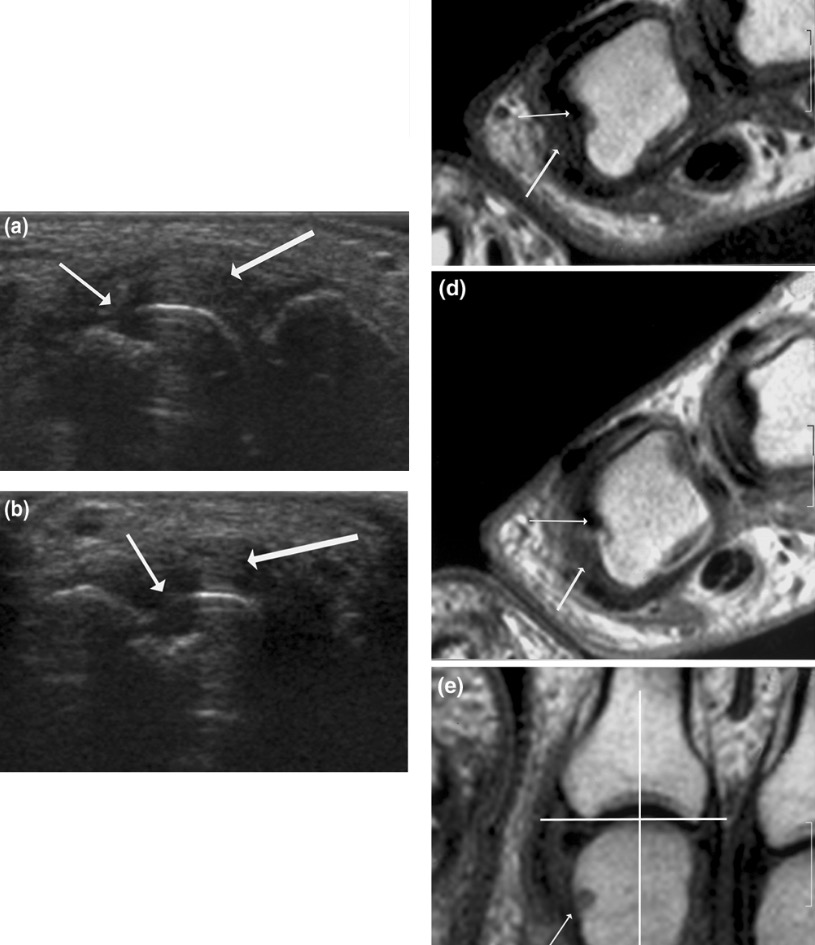
Imagiologia

Tratamento e Prognóstico

Tratamento

O objetivo é evitar deformidades e danos permanentes. Os doentes devem ser encaminhados para a reumatologia.

Terapêuticas não farmacológicas:

  • Fisioterapia e terapia ocupacional
  • Cessação tabágica

Gestão das exacerbações agudas:

  • Anti-inflamatórios não esteroides (AINEs)
  • Glucocorticoides:
    • Podem ser usados como ponte para a terapêutica antirreumática modificadora de prognóstico ( DMARD DMARD Disease-modifying antirheumatic drugs are antiinflammatory medications used to manage rheumatoid arthritis. The medications slow, but do not cure, the progression of the disease. The medications are classified as either synthetic or biologic agents and each has unique mechanisms of action and side effects. Disease-Modifying Antirheumatic Drugs (DMARDs)) ou em agudizações.
    • Opções: sistémicos ou injeções intra-articulares

Terapêutica farmacológica de longo prazo:

  • DMARDs DMARDs Disease-modifying antirheumatic drugs are antiinflammatory medications used to manage rheumatoid arthritis. The medications slow, but do not cure, the progression of the disease. The medications are classified as either synthetic or biologic agents and each has unique mechanisms of action and side effects. Disease-Modifying Antirheumatic Drugs (DMARDs):
    • Devem ser iniciados em todos os doentes após o diagnóstico
    • O metotrexato é normalmente a 1ª linha.
    • Alternativas: sulfassalazina, hidroxicloroquina, azatioprina, leflunomida
  • Inibidores do TNF-alfa:
  • Outras opções de tratamento com biológicos:
    • Inibidores da IL-6 ( tocilizumab Tocilizumab Immunosuppressants)
    • Anticorpo monoclonal anti-CD20 ( rituximab Rituximab A murine-derived monoclonal antibody and antineoplastic agent that binds specifically to the cd20 antigen and is used in the treatment of leukemia; lymphoma and rheumatoid arthritis. Immunosuppressants)
    • Antagonistas seletivos da coativação das células T ( abatacept Abatacept A fusion protein immunoconjugate of the extracellular domain of ctla4 and the fc domain of human igg1. It functions as a t-cell co-stimulation blocker that inhibits tnf-alpha and prevents the activation of T-lymphocytes. It is used in the treatment of rheumatoid arthritis. Immunosuppressants)

Cirurgia:

  • Indicada se danos graves e limitação da função
  • Pode ser considerada se a terapêutica farmacológica não for eficaz
  • Opções:
    • Substituição articular
    • Fusão de articulações
    • Sinovectomia

Considerações adicionais:

  • Durante o tratamento com glucocorticoides os doentes devem ser monitorizados no que toca à:
    • Osteoporose
    • Diabetes Diabetes Diabetes mellitus (DM) is a metabolic disease characterized by hyperglycemia and dysfunction of the regulation of glucose metabolism by insulin. Type 1 DM is diagnosed mostly in children and young adults as the result of autoimmune destruction of β cells in the pancreas and the resulting lack of insulin. Type 2 DM has a significant association with obesity and is characterized by insulin resistance. Diabetes Mellitus
    • Hipertensão arterial
  • Para prevenir as complicações infeciosas inerentes aos imunossupressores os doentes devem ser apropriadamente vacinados.
  • Todos os doentes devem ser rastreados para tuberculose e hepatite.
  • Os doentes necessitam de monitorização laboratorial contínua da toxicidade dos fármacos:
    • Hemograma
    • Função hepática
    • Creatinina
  • Realizar imagem da coluna cervical antes de procedimentos cirúrgicos:
    • Avaliar a presença de subluxação cervical (na maioria das vezes na articulação atlantoaxial).
    • A entubação pode ser fatal em indivíduos com instabilidade cervical.

Prognóstico

  • A AR AR Aortic regurgitation (AR) is a cardiac condition characterized by the backflow of blood from the aorta to the left ventricle during diastole. Aortic regurgitation is associated with an abnormal aortic valve and/or aortic root stemming from multiple causes, commonly rheumatic heart disease as well as congenital and degenerative valvular disorders. Aortic Regurgitation é uma doença crónica e progressiva:
    • A maioria dos doentes sofre agudizações da doença.
    • 10% serão severamente afetados, apesar da implementação de um tratamento adequado.
  • Associado a um aumento do risco de:
    • Doenças cardiovasculares
    • Infeção
    • Doença respiratória
    • Hemorragia gastrointestinal
    • Linfoma (especialmente se síndrome de Felty)
  • Mortalidade 1.5-3 vezes superior à da população em geral
  • Fatores de risco para um mau prognóstico:
    • Manifestações extra-articulares
    • Idade avançada
    • Mulheres
    • Caucasianos
    • Erosões precoces na imagem
    • Tabagismo
    • Níveis aumentados de marcadores inflamatórios e/ou títulos aumentados de anticorpos
    • ≥ 20 articulações afetadas

Diagnóstico Diferencial

  • Osteoartrose (OA): forma de “desgaste” das articulações devido à destruição das cartilagens e alterações do osso subcondral. Os doentes desenvolvem dor progressiva nas articulações, rigidez durante < 30 minutos e diminuição da amplitude dos movimentos. As articulações PIP, DIP e CMC são frequentemente afectadas. O diagnóstico é clínico e apoiado por achados imagiológicos articulares. Os marcadores inflamatórios, o FR e o anti-CCP são negativos. O tratamento inclui analgésicos, injeções intra-articulares de esteroides e cirurgia se doença avançada.
  • Gota: causada pela hiperuricemia, que leva a artrite consequente da precipitação de cristais de urato monossódico nas articulações. A gota é frequentemente monoarticular e geralmente cursa com dor, desconforto, tumefação, eritema e calor Calor Inflammation da 1ª articulação MTP. O diagnóstico é confirmado pela identificação de cristais em forma de agulha, com birrefringência negativa, no líquido sinovial. A abordagem terapêutica inclui a utilização de AINEs, colchicina, corticosteroides e a redução da concentração de ácido úrico plasmático com fármacos, como o alopurinol.
  • Pseudogota: deposição intra-articular de pirofosfato de cálcio, de etiologia pouco clara. Os doentes apresentam crises de inflamação aguda nas articulações, que cursam com edema Edema Edema is a condition in which excess serous fluid accumulates in the body cavity or interstitial space of connective tissues. Edema is a symptom observed in several medical conditions. It can be categorized into 2 types, namely, peripheral (in the extremities) and internal (in an organ or body cavity). Edema, calor Calor Inflammation e dor. A pseudogota geralmente afeta as grandes articulações, como a do joelho. O diagnóstico é confirmado pela identificação de cristais romboides, com birrefringência positiva, no líquido sinovial. O tratamento inclui AINEs, corticosteroides e colchicina.
  • Artrite psoriática: espondiloartropatia que ocorre em doentes com psoríase. A artrite psoriática é inflamatória, frequentemente assimétrica e envolve tanto articulações pequenas como grandes, incluindo as articulações DIP e a sacroilíaca. Os sintomas podem também incluir entesopatia e dactilite. O diagnóstico é clínico e deve-se suspeitar do mesmo em doentes com psoríase. O tratamento inclui DMARDs DMARDs Disease-modifying antirheumatic drugs are antiinflammatory medications used to manage rheumatoid arthritis. The medications slow, but do not cure, the progression of the disease. The medications are classified as either synthetic or biologic agents and each has unique mechanisms of action and side effects. Disease-Modifying Antirheumatic Drugs (DMARDs) e agentes biológicos.
  • Artrite reativa: espondiloartropatia frequentemente precipitada por infeções gastrointestinais ou geniturinárias. Os doentes podem apresentar artrite assimétrica, tipicamente nas extremidades inferiores. A artrite reativa pode associar-se a febre, tendinite, entesite, úlceras mucocutâneas e conjuntivite. O diagnóstico é clínico e o tratamento inclui AINEs, DMARDs DMARDs Disease-modifying antirheumatic drugs are antiinflammatory medications used to manage rheumatoid arthritis. The medications slow, but do not cure, the progression of the disease. The medications are classified as either synthetic or biologic agents and each has unique mechanisms of action and side effects. Disease-Modifying Antirheumatic Drugs (DMARDs) e abordagem de possíveis infeções.

Referências

  1. Firestein, G.S., and Guma, M. (2025). Pathogenesis of rheumatoid arthritis. In Romain, P.L. (Ed.), Uptodate. Retrieved August 14, 2025, from https://www.uptodate.com/contents/pathogenesis-of-rheumatoid-arthritis
  2. England, B. R. (2025). Articular manifestations of rheumatoid arthritis. UpToDate. Retrieved August 14, 2025, from https://www.uptodate.com/contents/articular-manifestations-of-rheumatoid-arthritis
  3. Matteson, E.L., and Davis, J.M. (2025). Overview of the systemic and nonarticular manifestations of rheumatoid arthritis. In Romain, P.L. (Ed.), Uptodate. Retrieved August 14, 2025, from https://www.uptodate.com/contents/overview-of-the-systemic-and-nonarticular-manifestations-of-rheumatoid-arthritis
  4. Cohen, S., & Mikuls, T. R. (2025). Initial pharmacologic management of rheumatoid arthritis in adults. UpToDate. Retrieved August 14, 2025, from https://www.uptodate.com/contents/initial-pharmacologic-management-of-rheumatoid-arthritis-in-adults
  5. Kontzias, A. (2024). Rheumatoid arthritis (RA). [online] MSD Manual Professional Version. Retrieved August 14, 2025, from https://www.merckmanuals.com/professional/musculoskeletal-and-connective-tissue-disorders/joint-disorders/rheumatoid-arthritis-ra
  6. Smith, H.R., and Brown, A. (2023). Rheumatoid arthritis (RA). In Diamond. H.S. (Ed.), Medscape. Retrieved August 14, 2025, from https://emedicine.medscape.com/article/331715-overview
  7. Chauhan, K., Jandu, J.S., Goyal, A., Bansal, P., and Al-Dhahir, M.A. (2023). Rheumatoid arthritis. [online] StatPearls. Retrieved August 14, 2025, from https://www.ncbi.nlm.nih.gov/books/NBK441999/

Crie sua conta gratuita ou faça login para continuar lendo!

Cadastre-se agora e tenha acesso grátis ao Lecturio, com páginas de conceitos, vídeos de medicina e questões para sua educação médica.

Aprende mais com a Lecturio:

Multiple devices displaying human anatomy and health education content.

Complementa o teu estudo da faculdade com o companheiro de estudo tudo-em-um da Lecturio, através de métodos de ensino baseados em evidência.

Estuda onde quiseres

Two iPhones display medical education apps, one showing anatomy, the other Bookmatcher.

A Lecturio Medical complementa o teu estudo através de métodos de ensino baseados em evidência, vídeos de palestras, perguntas e muito mais – tudo combinado num só lugar e fácil de usar.

User Reviews

Have a holly, jolly study session 🎁 Save 50% on all plans now >>

Que tengas una sesión de estudio alegre y navideña 🎁 Ahorra 50% en todos los planes >>

Details