



Agentes Alquilantes e Platinas

Os agentes alquilantes são fármacos antineoplásicos independentes do ciclo celular que atuam sobretudo pela ligação de grupos alquilo a várias partes do DNA DNA A deoxyribonucleotide polymer that is the primary genetic material of all cells. Eukaryotic and prokaryotic organisms normally contain DNA in a double-stranded state, yet several important biological processes transiently involve single-stranded regions. DNA, which consists of a polysugar-phosphate backbone possessing projections of purines (adenine and guanine) and pyrimidines (thymine and cytosine), forms a double helix that is held together by hydrogen bonds between these purines and pyrimidines (adenine to thymine and guanine to cytosine). DNA Types and Structure. Isto resulta na formação de ligações cruzadas no DNA DNA A deoxyribonucleotide polymer that is the primary genetic material of all cells. Eukaryotic and prokaryotic organisms normally contain DNA in a double-stranded state, yet several important biological processes transiently involve single-stranded regions. DNA, which consists of a polysugar-phosphate backbone possessing projections of purines (adenine and guanine) and pyrimidines (thymine and cytosine), forms a double helix that is held together by hydrogen bonds between these purines and pyrimidines (adenine to thymine and guanine to cytosine). DNA Types and Structure, levando à inibição da replicação e a danos no DNA DNA A deoxyribonucleotide polymer that is the primary genetic material of all cells. Eukaryotic and prokaryotic organisms normally contain DNA in a double-stranded state, yet several important biological processes transiently involve single-stranded regions. DNA, which consists of a polysugar-phosphate backbone possessing projections of purines (adenine and guanine) and pyrimidines (thymine and cytosine), forms a double helix that is held together by hydrogen bonds between these purines and pyrimidines (adenine to thymine and guanine to cytosine). DNA Types and Structure. O efeito geral é a morte das células cancerígenas. Os subgrupos destes fármacos são as mostardas nitrogenadas, as nitrosureias, os alquilsulfonatos, os triazenos, as etileniminas e as metilmelaminas. Os complexos de coordenação de platina pertencem ao grupo dos agentes alquilantes por causarem o mesmo efeito, no entanto, o seu mecanismo de ação é através da formação de adutos metálicos covalentes com o DNA DNA A deoxyribonucleotide polymer that is the primary genetic material of all cells. Eukaryotic and prokaryotic organisms normally contain DNA in a double-stranded state, yet several important biological processes transiently involve single-stranded regions. DNA, which consists of a polysugar-phosphate backbone possessing projections of purines (adenine and guanine) and pyrimidines (thymine and cytosine), forms a double helix that is held together by hydrogen bonds between these purines and pyrimidines (adenine to thymine and guanine to cytosine). DNA Types and Structure. As reações adversas mais MAIS Androgen Insensitivity Syndrome comuns são a mielossupressão e a toxicidade para sistemas orgânicos como os rins, o fígado e os pulmões.

Last updated: Dec 15, 2025

Editorial responsibility: Stanley Oiseth, Lindsay Jones, Evelin Maza

Descrição Geral

Agentes alquilantes

Os agentes alquilantes são fármacos antineoplásicos que ligam um grupo alquilo ao DNA DNA A deoxyribonucleotide polymer that is the primary genetic material of all cells. Eukaryotic and prokaryotic organisms normally contain DNA in a double-stranded state, yet several important biological processes transiently involve single-stranded regions. DNA, which consists of a polysugar-phosphate backbone possessing projections of purines (adenine and guanine) and pyrimidines (thymine and cytosine), forms a double helix that is held together by hydrogen bonds between these purines and pyrimidines (adenine to thymine and guanine to cytosine). DNA Types and Structure, resultando na morte das células cancerígenas.
  • Têm um efeito citotóxico nas células através da adição de um grupo alquilo a vários constituintes celulares:
    • Principal local do grupo alquilo: posição N7 da guanina
    • Com o processo de alquilação, o código de DNA DNA A deoxyribonucleotide polymer that is the primary genetic material of all cells. Eukaryotic and prokaryotic organisms normally contain DNA in a double-stranded state, yet several important biological processes transiently involve single-stranded regions. DNA, which consists of a polysugar-phosphate backbone possessing projections of purines (adenine and guanine) and pyrimidines (thymine and cytosine), forms a double helix that is held together by hydrogen bonds between these purines and pyrimidines (adenine to thymine and guanine to cytosine). DNA Types and Structure é mal interpretado → quebra no DNA DNA A deoxyribonucleotide polymer that is the primary genetic material of all cells. Eukaryotic and prokaryotic organisms normally contain DNA in a double-stranded state, yet several important biological processes transiently involve single-stranded regions. DNA, which consists of a polysugar-phosphate backbone possessing projections of purines (adenine and guanine) and pyrimidines (thymine and cytosine), forms a double helix that is held together by hydrogen bonds between these purines and pyrimidines (adenine to thymine and guanine to cytosine). DNA Types and Structure → inibição da síntese de DNA DNA A deoxyribonucleotide polymer that is the primary genetic material of all cells. Eukaryotic and prokaryotic organisms normally contain DNA in a double-stranded state, yet several important biological processes transiently involve single-stranded regions. DNA, which consists of a polysugar-phosphate backbone possessing projections of purines (adenine and guanine) and pyrimidines (thymine and cytosine), forms a double helix that is held together by hydrogen bonds between these purines and pyrimidines (adenine to thymine and guanine to cytosine). DNA Types and Structure, RNA RNA A polynucleotide consisting essentially of chains with a repeating backbone of phosphate and ribose units to which nitrogenous bases are attached. RNA is unique among biological macromolecules in that it can encode genetic information, serve as an abundant structural component of cells, and also possesses catalytic activity. RNA Types and Structure e de proteínas
    • Os agentes alquilantes não são específicos do ciclo celular, mas são mais MAIS Androgen Insensitivity Syndrome eficazes no final da fase G1 e na fase S.
  • Complexos de coordenação de platina:
    • Classificados como agentes alquilantes, embora a sua ação não seja a alquilação do DNA DNA A deoxyribonucleotide polymer that is the primary genetic material of all cells. Eukaryotic and prokaryotic organisms normally contain DNA in a double-stranded state, yet several important biological processes transiently involve single-stranded regions. DNA, which consists of a polysugar-phosphate backbone possessing projections of purines (adenine and guanine) and pyrimidines (thymine and cytosine), forms a double helix that is held together by hydrogen bonds between these purines and pyrimidines (adenine to thymine and guanine to cytosine). DNA Types and Structure
    • Estes agentes formam adutos metálicos covalentes com o DNA DNA A deoxyribonucleotide polymer that is the primary genetic material of all cells. Eukaryotic and prokaryotic organisms normally contain DNA in a double-stranded state, yet several important biological processes transiently involve single-stranded regions. DNA, which consists of a polysugar-phosphate backbone possessing projections of purines (adenine and guanine) and pyrimidines (thymine and cytosine), forms a double helix that is held together by hydrogen bonds between these purines and pyrimidines (adenine to thymine and guanine to cytosine). DNA Types and Structure, causando um efeito semelhante ao dos agentes alquilantes.
  • Os agentes alquilantes afetam todas as células do corpo, sobretudo as que se estão a dividir rapidamente.
    • As células cancerígenas são das que se dividem mais MAIS Androgen Insensitivity Syndrome rapidamente.
    • Outras células normais que sofrem divisão celular frequente também são afetadas, o que leva a efeitos adversos, como por exemplo:
      • Células hematopoiéticas → anemia Anemia Anemia is a condition in which individuals have low Hb levels, which can arise from various causes. Anemia is accompanied by a reduced number of RBCs and may manifest with fatigue, shortness of breath, pallor, and weakness. Subtypes are classified by the size of RBCs, chronicity, and etiology. Anemia: Overview and Types, pancitopenia
      • Células reprodutivas → amenorreia, ↓ espermatogénese
      • Células ciliadas → alopécia
      • Trato GI → mucosa intestinal danificada

Tipos de agentes alquilantes

  • Mostardas nitrogenadas
  • Nitrosureias
  • Alquilsulfonatos
  • Triazenos
  • Etileniminas e metilmelaminas
  • Complexos de coordenação de platina

Mostardas Nitrogenadas

Descrição geral

  • As mostardas nitrogenadas contêm grupos de cloroetilamina.
  • Fármacos desta classe:
    • Clorambucil
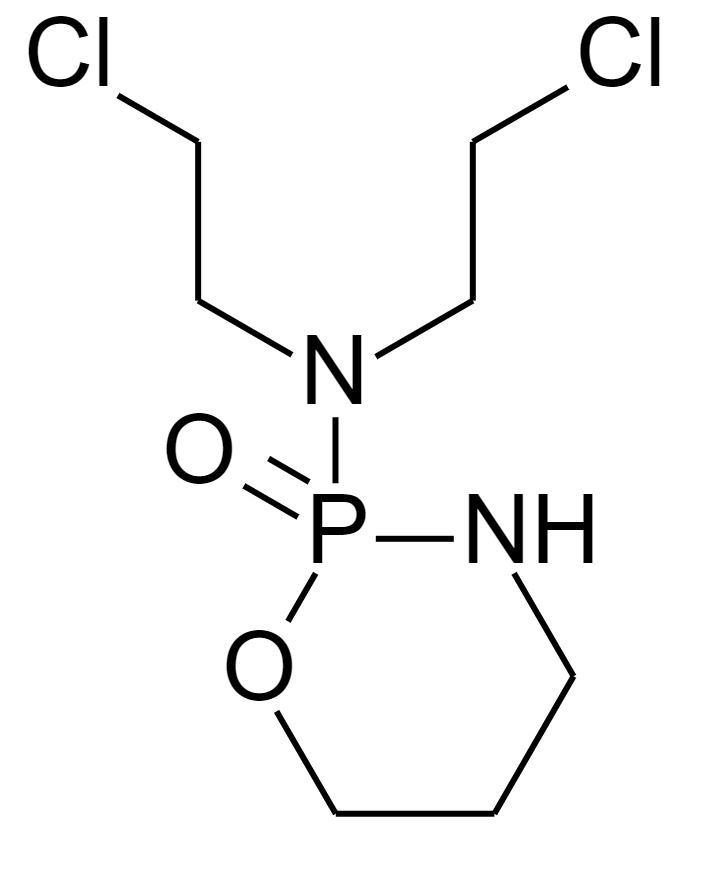
    • Ciclofosfamida
    • Ifosfamida
    • Melfalano
    • Bendamustina
  • Mecanismo de ação: forma ligações cruzadas no DNA DNA A deoxyribonucleotide polymer that is the primary genetic material of all cells. Eukaryotic and prokaryotic organisms normally contain DNA in a double-stranded state, yet several important biological processes transiently involve single-stranded regions. DNA, which consists of a polysugar-phosphate backbone possessing projections of purines (adenine and guanine) and pyrimidines (thymine and cytosine), forms a double helix that is held together by hydrogen bonds between these purines and pyrimidines (adenine to thymine and guanine to cytosine). DNA Types and Structure, levando à inibição da sua síntese e função.

Clorambucil

  • Farmacocinética:
    • Rápida absorção GI (↓ com alimentos)
    • 99% ligado a proteínas
    • Metabolismo hepático em mostarda de ácido fenilacético
    • Semivida: aproximadamente 1,5 horas
    • Excreção: urina
  • Indicações (aprovadas):
    • Leucemia linfocítica crónica (LLC)
    • Linfoma de Hodgkin ( LH LH A major gonadotropin secreted by the adenohypophysis. Luteinizing hormone regulates steroid production by the interstitial cells of the testis and the ovary. The preovulatory luteinizing hormone surge in females induces ovulation, and subsequent luteinization of the follicle. Luteinizing hormone consists of two noncovalently linked subunits, alpha and beta. Within a species, the alpha subunit is common in the three pituitary glycoprotein hormones (TSH, LH, and FSH), but the beta subunit is unique and confers its biological specificity. Menstrual Cycle)
    • Linfoma não Hodgkin (LNH)
  • Efeitos adversos:
    • Mielossupressão
    • Imunossupressão
    • Náuseas, vómitos
    • Hepatotoxicidade
    • Toxicidade pulmonar
    • Neoplasia maligna secundária
    • Infertilidade
    • Teratogenicidade
    • Crises convulsivas

Ciclofosfamida

  • Farmacocinética:
    • Oral, IV
    • Boa absorção oral
    • 20% ligada a proteínas
    • Metabolismo hepático
    • Semivida: 3-12 horas IV
    • Excreção: urina
  • Indicações (aprovadas):
    • Leucemia linfocítica aguda (LLA), Leucemia mieloide aguda (LMA)
    • LLC, Leucemia mieloide crónica (LMC)
    • LH LH A major gonadotropin secreted by the adenohypophysis. Luteinizing hormone regulates steroid production by the interstitial cells of the testis and the ovary. The preovulatory luteinizing hormone surge in females induces ovulation, and subsequent luteinization of the follicle. Luteinizing hormone consists of two noncovalently linked subunits, alpha and beta. Within a species, the alpha subunit is common in the three pituitary glycoprotein hormones (TSH, LH, and FSH), but the beta subunit is unique and confers its biological specificity. Menstrual Cycle
    • LNH
    • Mieloma múltiplo (MM)
    • Cancro da mama e ovário
    • Neuroblastoma Neuroblastoma Neuroblastoma is a malignancy that arises from the neural crest cell derivatives along the sympathetic chain (neuroblasts) and is most commonly located in the adrenal medulla. The tumor often presents in childhood with a flank mass that crosses the midline. Neuroblastoma, retinoblastoma Retinoblastoma Retinoblastoma is a rare tumor but the most common primary intraocular malignancy of childhood. It is believed that the condition arises from a neuronal progenitor cell. Retinoblastoma can be heritable or non-heritable. Retinoblastoma
    • Síndrome nefrótico
  • Efeitos adversos:
    • Náuseas, vómitos
    • Mielossupressão
    • Imunossupressão
    • Hepatotoxicidade
    • Toxicidade pulmonar
    • Neoplasia maligna secundária
    • Infertilidade
    • Teratogenicidade
    • Cardiotoxicidade
    • Toxicidade renal
    • Toxicidade para a bexiga (para ↓ a cistite hemorrágica: ↑ hidratação + mesna)
    • Alopécia
    • SIADH SIADH Syndrome of inappropriate antidiuretic hormone secretion (SIADH) is a disorder of impaired water excretion due to the inability to suppress the secretion of antidiuretic hormone (ADH). SIADH is characterized by impaired water excretion leading to dilutional hyponatremia, which is mainly asymptomatic but may cause neurologic symptoms. S Syndrome of Inappropriate Antidiuretic Hormone Secretion (SIADH) (síndrome de secreção inapropriada de ADH)
Estrutura química da ciclofosfamida

Estrutura química da ciclofosfamida

Imagem: “Cyclophosphamide structure” de Mysid. Licença: Domínio Público
Ifosfamida

  • Farmacocinética:
    • Ligação mínima às proteínas
    • Metabolismo hepático
    • Semivida: aproximadamente 15 horas (dose elevada)
    • Excreção: urina
  • Indicação (aprovada): Cancro testicular
  • Efeitos adversos:
    • Náuseas, vómitos
    • Mielossupressão
    • Imunossupressão
    • Hepatotoxicidade
    • Toxicidade pulmonar
    • Neoplasia maligna secundária
    • Infertilidade
    • Teratogenicidade
    • Toxicidade para o SNC
    • Cardiotoxicidade
    • Cistite hemorrágica (↓ pelo mesna)
    • Nefrotoxicidade

Melfalano

  • Farmacocinética:
    • A absorção oral é variável.
    • Até 60% ligado à albumina
    • Metabolismo hepático
    • Semivida:
      • Aproximadamente 75 minutos (IV)
      • 1,5 horas (oral)
    • Excreção:
      • Oral através das fezes
      • IV pela urina
  • Indicações (aprovadas):
    • MM
    • Cancro do ovário
  • Efeitos adversos:
    • Mielossupressão
    • Náuseas, vómitos e outros efeitos da toxicidade gastrointestinal
    • Hepatotoxicidade
    • Toxicidade pulmonar
    • Neoplasia maligna secundária
    • Extravasamento

Bendamustina

  • Causa quebras de cadeia simples ou dupla no DNA DNA A deoxyribonucleotide polymer that is the primary genetic material of all cells. Eukaryotic and prokaryotic organisms normally contain DNA in a double-stranded state, yet several important biological processes transiently involve single-stranded regions. DNA, which consists of a polysugar-phosphate backbone possessing projections of purines (adenine and guanine) and pyrimidines (thymine and cytosine), forms a double helix that is held together by hydrogen bonds between these purines and pyrimidines (adenine to thymine and guanine to cytosine). DNA Types and Structure
  • Farmacocinética:
    • IV
    • Até 96% ligada a proteínas
    • Metabolismo hepático
    • Excreção: fezes, urina
  • Indicações (aprovadas):
    • LLC
    • LNH
  • Efeitos adversos:
    • Mielossupressão
    • Náuseas, vómitos
    • Hepatotoxicidade
    • Extravasamento
    • Toxicidade dermatológica
    • Neoplasia maligna secundária
    • Síndrome de lise tumoral (SLT)

Contraindicações e interações medicamentosas

  • Contraindicações gerais:
    • A hipersensibilidade ao fármaco é uma contraindicação comum.
    • Devido aos seus efeitos tóxicos, estes fármacos não são aconselhados quando os efeitos adversos são graves.
    • Infeção ativa
    • Mielossupressão grave
    • Em alguns casos, insuficiência hepática ou renal graves
  • Interações medicamentosas gerais com vacinas:
    • ↓ Efeito terapêutico das vacinas inativadas e vivas
    • ↑ Efeito tóxico das vacinas vivas (devem ser evitadas)
  • Interações medicamentosas específicas:
    • Ciclofosfamida:
      • ↑ Toxicidade pulmonar da amiodarona
      • ↑ Cardiotoxicidade com a pentostatina
      • ↑ Efeitos cardiotóxicos das antraciclinas
    • Ifosfamida: ↑ efeito anticoagulante dos antagonistas da vitamina K
    • Melfalano: ↑ toxicidade pulmonar da carmustina

Nitrosureias

Descrição geral

  • As nitrosureias são agentes quimioterápicos que incluem um grupo nitroso e ureia.
  • Estes fármacos são transformados em metabolitos com propriedades alquilantes e carbamoilantes.
  • Altamente lipossolúveis: conseguem atravessar a barreira hematoencefálica (BHE), tornando esta classe de medicamentos útil no tratamento de neoplasias do SNC
  • Fármacos desta classe:
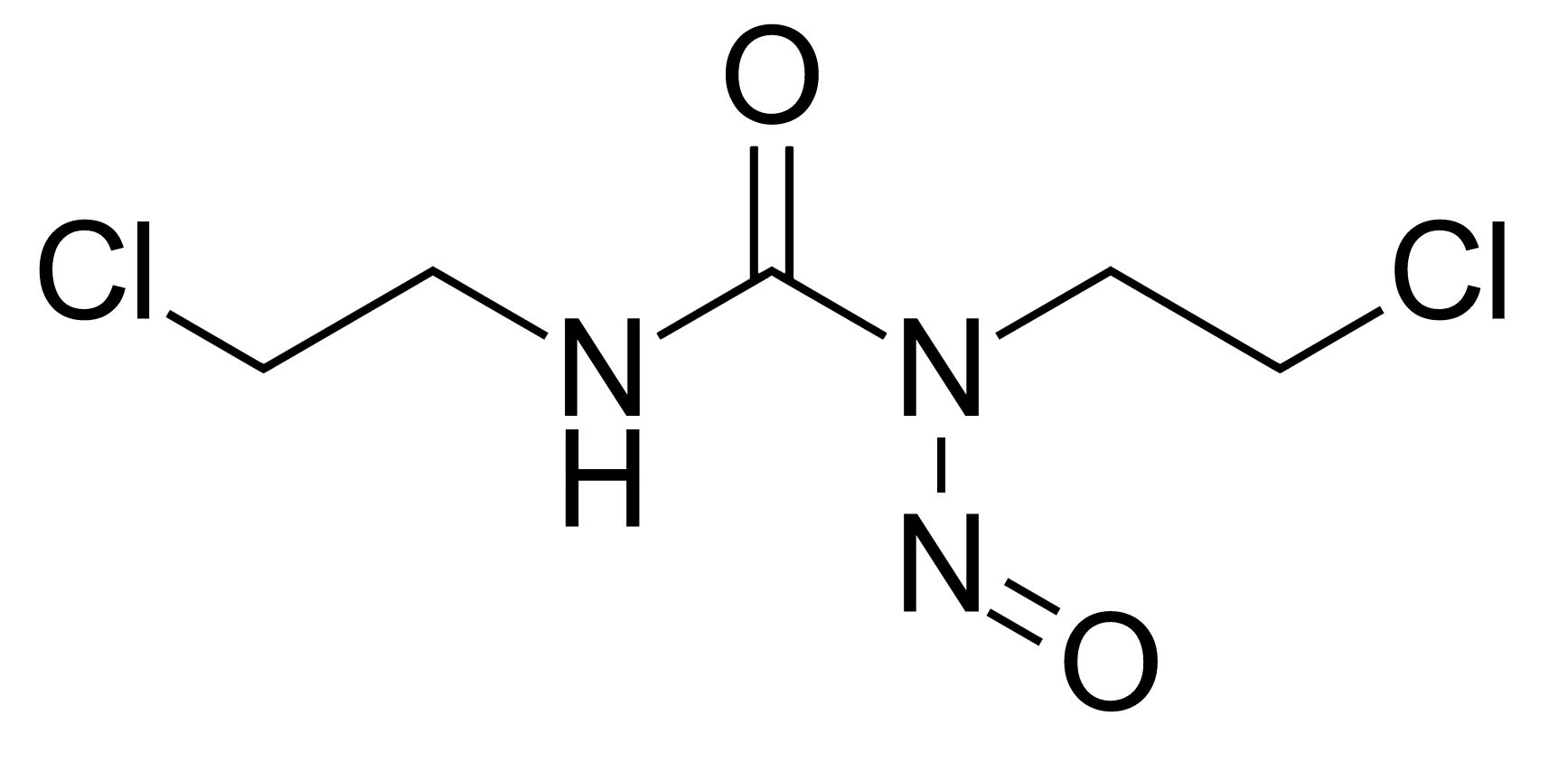
    • Carmustina
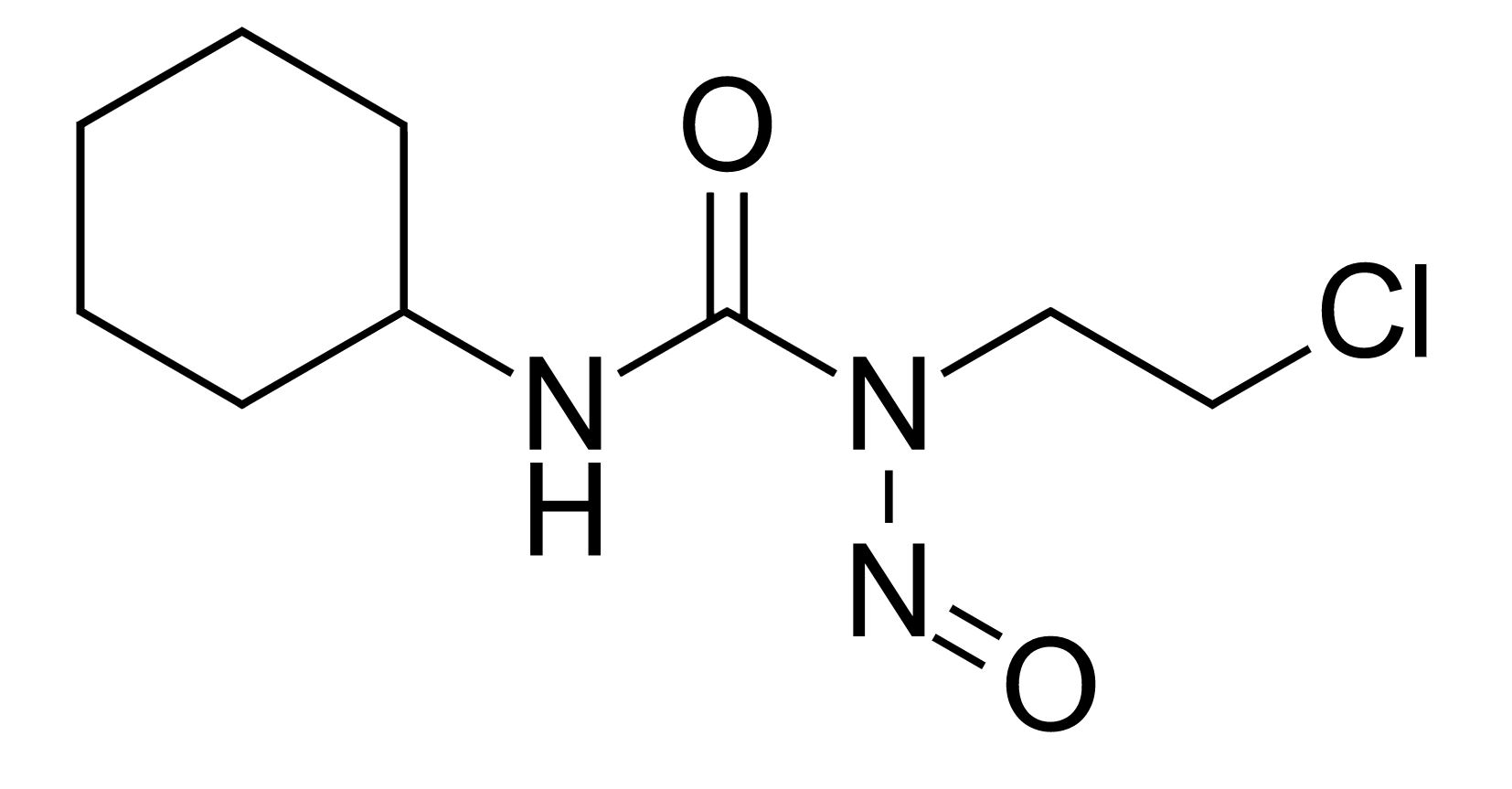
    • Lomustina
  • Mecanismo de ação: formam ligações cruzadas no DNA DNA A deoxyribonucleotide polymer that is the primary genetic material of all cells. Eukaryotic and prokaryotic organisms normally contain DNA in a double-stranded state, yet several important biological processes transiently involve single-stranded regions. DNA, which consists of a polysugar-phosphate backbone possessing projections of purines (adenine and guanine) and pyrimidines (thymine and cytosine), forms a double helix that is held together by hydrogen bonds between these purines and pyrimidines (adenine to thymine and guanine to cytosine). DNA Types and Structure
    • Alquilação na posição N7 e O6 da guanina no DNA DNA A deoxyribonucleotide polymer that is the primary genetic material of all cells. Eukaryotic and prokaryotic organisms normally contain DNA in a double-stranded state, yet several important biological processes transiently involve single-stranded regions. DNA, which consists of a polysugar-phosphate backbone possessing projections of purines (adenine and guanine) and pyrimidines (thymine and cytosine), forms a double helix that is held together by hydrogen bonds between these purines and pyrimidines (adenine to thymine and guanine to cytosine). DNA Types and Structure
    • Impede a replicação e transcrição do DNA DNA A deoxyribonucleotide polymer that is the primary genetic material of all cells. Eukaryotic and prokaryotic organisms normally contain DNA in a double-stranded state, yet several important biological processes transiently involve single-stranded regions. DNA, which consists of a polysugar-phosphate backbone possessing projections of purines (adenine and guanine) and pyrimidines (thymine and cytosine), forms a double helix that is held together by hydrogen bonds between these purines and pyrimidines (adenine to thymine and guanine to cytosine). DNA Types and Structure

Carmustina

  • Farmacocinética:
    • IV, implante
    • Atravessa a BHE, atingindo > 50% dos níveis plasmáticos
    • Metabolismo hepático
    • Excreção: urina
  • Indicações (aprovadas):
    • Tumores cerebrais
    • LNH
    • LH LH A major gonadotropin secreted by the adenohypophysis. Luteinizing hormone regulates steroid production by the interstitial cells of the testis and the ovary. The preovulatory luteinizing hormone surge in females induces ovulation, and subsequent luteinization of the follicle. Luteinizing hormone consists of two noncovalently linked subunits, alpha and beta. Within a species, the alpha subunit is common in the three pituitary glycoprotein hormones (TSH, LH, and FSH), but the beta subunit is unique and confers its biological specificity. Menstrual Cycle
    • MM
  • Efeitos adversos:
    • Mielossupressão
    • Cardiovasculares: arritmia, taquicardia
    • GIs: náuseas, vómitos, mucosite
    • Hepáticos: ↑ transaminases Transaminases A subclass of enzymes of the transferase class that catalyze the transfer of an amino group from a donor (generally an amino acid) to an acceptor (generally a 2-keto acid). Most of these enzymes are pyridoxyl phosphate proteins. Autoimmune Hepatitis, ↑ fosfatase alcalina ( FA FA Inhaled Anesthetics)
    • Renais: azotemia Azotemia A biochemical abnormality referring to an elevation of blood urea nitrogen and creatinine. Azotemia can be produced by kidney diseases or other extrarenal disorders. When azotemia becomes associated with a constellation of clinical signs, it is termed uremia. Acute Kidney Injury, insuficiência renal
    • Respiratórios: pneumonite intersticial
    • Neoplasia maligna secundária
Estrutura química da carmustina

Estrutura química da carmustina

Imagem: “Carmustine” de Fvasconcellos. Licença: Domínio Público
Lomustina

  • Farmacocinética:
    • Oral
    • Atravessa a BHE
    • Metabolismo hepático
    • Excreção: urina
  • Indicações (aprovadas):
    • Cancro cerebral
    • LH LH A major gonadotropin secreted by the adenohypophysis. Luteinizing hormone regulates steroid production by the interstitial cells of the testis and the ovary. The preovulatory luteinizing hormone surge in females induces ovulation, and subsequent luteinization of the follicle. Luteinizing hormone consists of two noncovalently linked subunits, alpha and beta. Within a species, the alpha subunit is common in the three pituitary glycoprotein hormones (TSH, LH, and FSH), but the beta subunit is unique and confers its biological specificity. Menstrual Cycle
  • Efeitos adversos:
    • Mielossupressão
    • GIs: náuseas, vómitos, mucosite
    • Hepáticos: ↑ transaminases Transaminases A subclass of enzymes of the transferase class that catalyze the transfer of an amino group from a donor (generally an amino acid) to an acceptor (generally a 2-keto acid). Most of these enzymes are pyridoxyl phosphate proteins. Autoimmune Hepatitis, ↑ FA FA Inhaled Anesthetics
    • Renais: azotemia Azotemia A biochemical abnormality referring to an elevation of blood urea nitrogen and creatinine. Azotemia can be produced by kidney diseases or other extrarenal disorders. When azotemia becomes associated with a constellation of clinical signs, it is termed uremia. Acute Kidney Injury, insuficiência renal
    • Respiratórios: fibrose pulmonar
    • Neoplasia maligna secundária
Estrutura química da lomustina

Estrutura química da lomustina

Imagem: “Lomustine” de Fvasconcellos. Licença: Domínio Público
Contraindicações e interações medicamentosas

  • Contraindicações gerais:
    • A hipersensibilidade ao fármaco é uma contraindicação comum.
    • Devido aos seus efeitos tóxicos, estes não estão aconselhados quando os efeitos adversos são graves.
  • Interações medicamentosas gerais com vacinas:
    • ↓ Efeito terapêutico das vacinas inativadas e vivas
    • ↑ Efeito tóxico das vacinas vivas (devem ser evitadas)

Alquilsulfonatos

Descrição geral

  • Os alquilsulfonatos são ésteres de alquilo de ácido sulfónico.
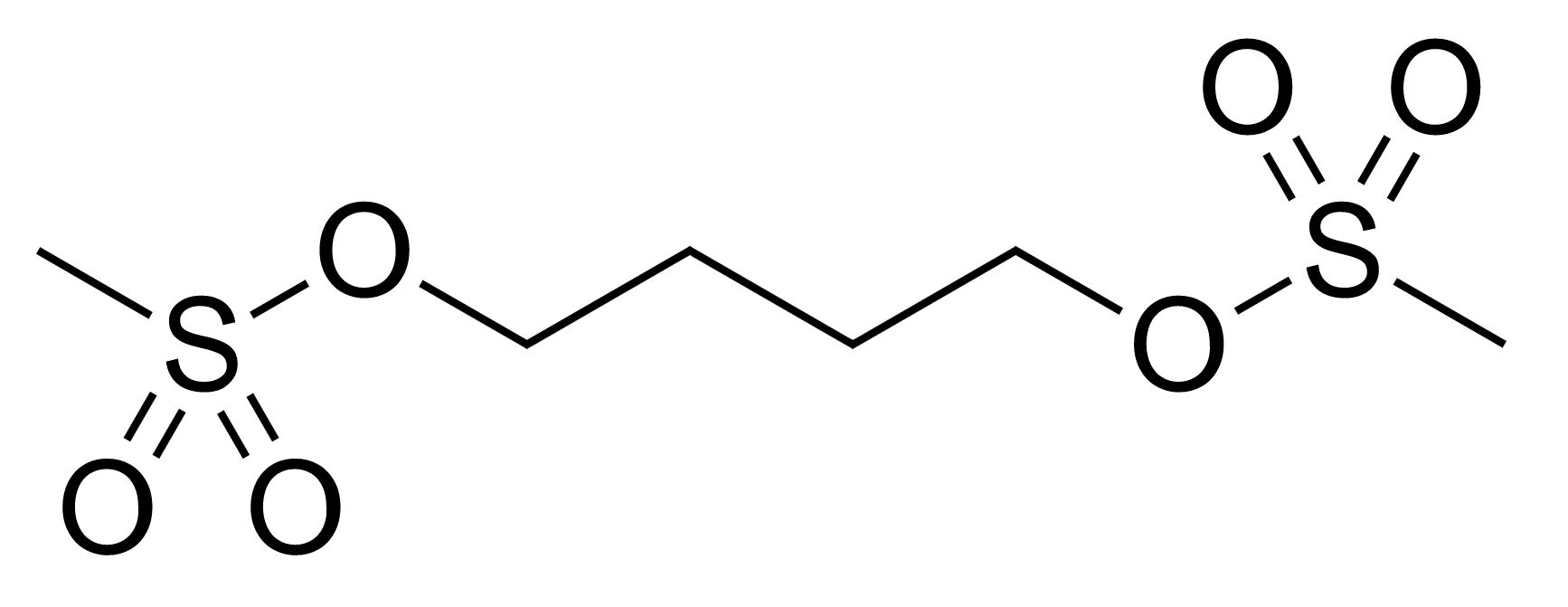
  • Fármaco desta classe: bussulfano
  • Mecanismo de ação: forma ligações cruzadas no DNA DNA A deoxyribonucleotide polymer that is the primary genetic material of all cells. Eukaryotic and prokaryotic organisms normally contain DNA in a double-stranded state, yet several important biological processes transiently involve single-stranded regions. DNA, which consists of a polysugar-phosphate backbone possessing projections of purines (adenine and guanine) and pyrimidines (thymine and cytosine), forms a double helix that is held together by hydrogen bonds between these purines and pyrimidines (adenine to thymine and guanine to cytosine). DNA Types and Structure
    • Alquilação na posição N7 da guanina
    • Inibição da síntese e função do DNA DNA A deoxyribonucleotide polymer that is the primary genetic material of all cells. Eukaryotic and prokaryotic organisms normally contain DNA in a double-stranded state, yet several important biological processes transiently involve single-stranded regions. DNA, which consists of a polysugar-phosphate backbone possessing projections of purines (adenine and guanine) and pyrimidines (thymine and cytosine), forms a double helix that is held together by hydrogen bonds between these purines and pyrimidines (adenine to thymine and guanine to cytosine). DNA Types and Structure

Bussulfano

  • Farmacocinética:
    • IV e oral
    • Absorção rápida
    • Atravessa a BHE
    • Metabolismo hepático
    • Semivida: 2,5 horas
    • Excreção: sobretudo pela urina
  • Indicações (aprovadas): LMC
  • Efeitos adversos:
    • Mielossupressão
    • Cardiovasculares: hipertensão, dor torácica, tamponamento cardíaco
    • GIs: náuseas, vómitos
    • Síndrome de obstrução sinusoidal hepática
    • Pulmonares: displasia broncopulmonar com fibrose pulmonar (“pulmão do bussulfano”: tosse, dispneia, ↓ capacidade pulmonar)
    • Neoplasia maligna secundária
    • Hiperpigmentação
    • Insuficiência da suprarrenal
  • Contraindicações:
    • Hipersensibilidade ao fármaco
    • Sem LMC confirmada
  • Interações medicamentosas:
    • ↓ Efeito terapêutico das vacinas inativadas e vivas
    • ↑ Efeito tóxico das vacinas vivas (devem ser evitadas)
    • Paracetamol paracetamol Acetaminophen is an over-the-counter nonopioid analgesic and antipyretic medication and the most commonly used analgesic worldwide. Despite the widespread use of acetaminophen, its mechanism of action is not entirely understood. Acetaminophen: ↓ depuração do bussulfano
    • Fenitoína: ↑ depuração de bussulfano
Estrutura química do bussulfano

Estrutura química do bussulfano

Imagem: “Busulfan” de Fvasconcellos. Licença: Domínio Público
Triazenos

Descrição geral

  • Os triazenos são heterociclos nitrogenados utilizados como agentes de quimioterapia, geralmente no tratamento de tumores cerebrais ou linfoma.
  • Fármacos desta classe:
    • Procarbazina
    • Dacarbazina
    • Temozolomida
  • Mecanismo de ação: inibição da síntese e função do DNA DNA A deoxyribonucleotide polymer that is the primary genetic material of all cells. Eukaryotic and prokaryotic organisms normally contain DNA in a double-stranded state, yet several important biological processes transiently involve single-stranded regions. DNA, which consists of a polysugar-phosphate backbone possessing projections of purines (adenine and guanine) and pyrimidines (thymine and cytosine), forms a double helix that is held together by hydrogen bonds between these purines and pyrimidines (adenine to thymine and guanine to cytosine). DNA Types and Structure por alquilação

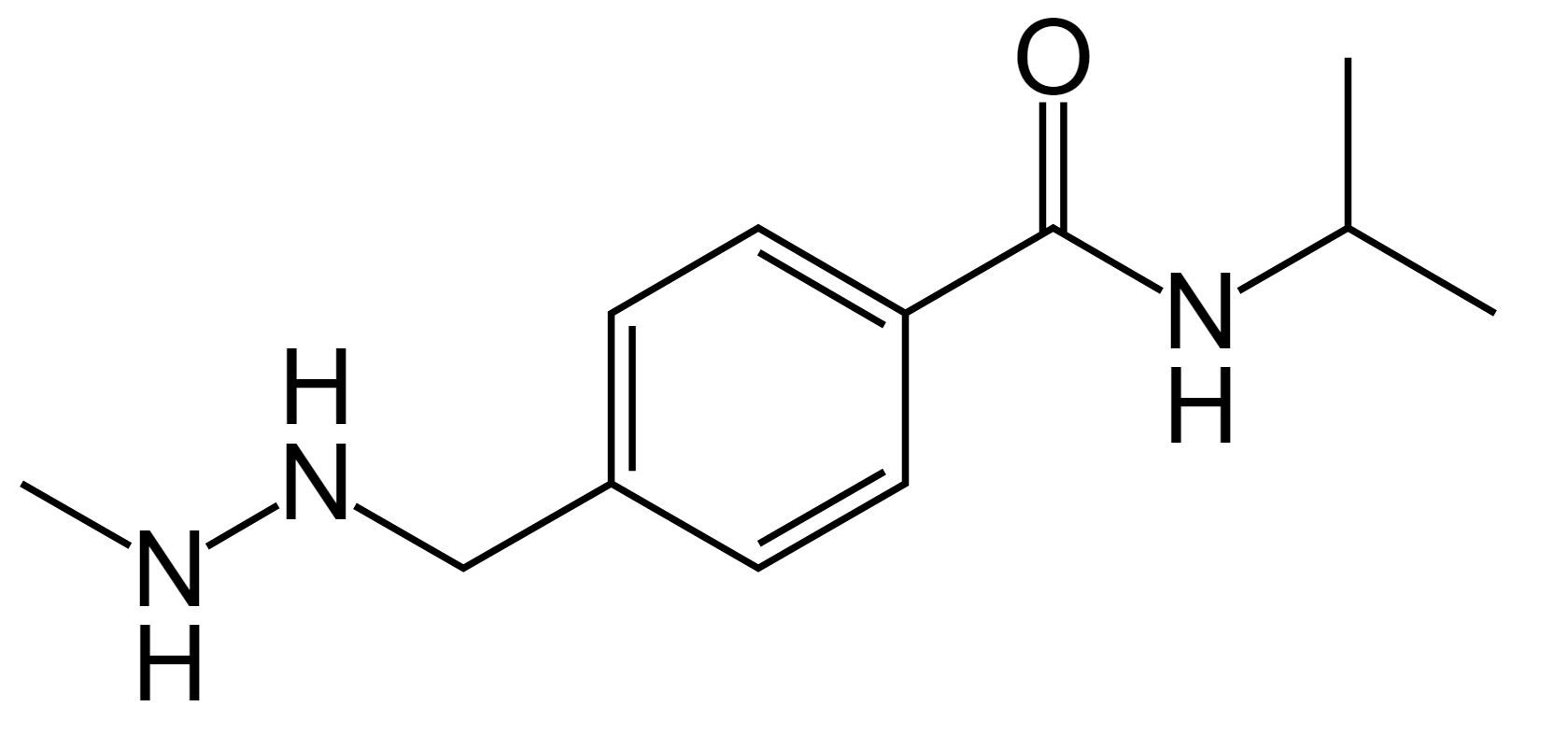
Procarbazina

  • Para além da alquilação, a procarbazina também inibe a transmetilação da metionina em tRNA tRNA The small RNA molecules, 73-80 nucleotides long, that function during translation (translation, genetic) to align amino acids at the ribosomes in a sequence determined by the mRNA (RNA, messenger). There are about 30 different transfer rnas. Each recognizes a specific codon set on the mRNA through its own anticodon and as aminoacyl trnas (RNA, transfer, amino Acyl), each carries a specific amino acid to the ribosome to add to the elongating peptide chains. RNA Types and Structure.
  • Farmacocinética:
    • Oral
    • Absorção rápida
    • Atravessa a BHE
    • Metabolismo hepático
    • Semivida: aproximadamente 1 hora
    • Excreção: urina
  • Indicação (aprovada): LH LH A major gonadotropin secreted by the adenohypophysis. Luteinizing hormone regulates steroid production by the interstitial cells of the testis and the ovary. The preovulatory luteinizing hormone surge in females induces ovulation, and subsequent luteinization of the follicle. Luteinizing hormone consists of two noncovalently linked subunits, alpha and beta. Within a species, the alpha subunit is common in the three pituitary glycoprotein hormones (TSH, LH, and FSH), but the beta subunit is unique and confers its biological specificity. Menstrual Cycle
  • Efeitos adversos:
    • Mielossupressão
    • Toxicidade para o SNC (confusão, neuropatias)
    • Toxicidade pulmonar
    • Hepatotoxicidade
    • Náuseas, vómitos
    • Reação do tipo dissulfiram
    • Hemólise
    • Hemorragia
    • Neoplasia maligna secundária
    • Infertilidade
  • Contraindicações:
    • Hipersensibilidade ao fármaco
    • Mielossupressão grave
    • Ingestão de álcool (efeito dissulfiram)
  • Interações medicamentosas:
    • ↓ Efeito terapêutico das vacinas inativadas e vivas
    • ↑ Efeito tóxico das vacinas vivas (devem ser evitadas)
    • Evitar os seguintes fármacos, já que o metabolito da procarbazina é um inibidor fraco da monoamina oxidase Oxidase Neisseria (IMAO) (pode levar a hipertensão aguda):
      • IMAOs
      • Agentes simpaticomiméticos
      • Anti-histamínicos
      • Antidepressivos tricíclicos (ADTs)
      • Alimentos com alto teor de tiramina
Estrutura química da procarbazina

Estrutura química da procarbazina

Imagem: “Procarbazine” de Fvasconcellos. Licença: Domínio Público
Dacarbazina

  • A alquilação (metilação) leva a quebras da cadeia dupla de DNA DNA A deoxyribonucleotide polymer that is the primary genetic material of all cells. Eukaryotic and prokaryotic organisms normally contain DNA in a double-stranded state, yet several important biological processes transiently involve single-stranded regions. DNA, which consists of a polysugar-phosphate backbone possessing projections of purines (adenine and guanine) and pyrimidines (thymine and cytosine), forms a double helix that is held together by hydrogen bonds between these purines and pyrimidines (adenine to thymine and guanine to cytosine). DNA Types and Structure.
  • Farmacocinética:
    • IV
    • Metabolismo hepático
    • Excreção: urina
  • Indicações (aprovadas):
    • LH LH A major gonadotropin secreted by the adenohypophysis. Luteinizing hormone regulates steroid production by the interstitial cells of the testis and the ovary. The preovulatory luteinizing hormone surge in females induces ovulation, and subsequent luteinization of the follicle. Luteinizing hormone consists of two noncovalently linked subunits, alpha and beta. Within a species, the alpha subunit is common in the three pituitary glycoprotein hormones (TSH, LH, and FSH), but the beta subunit is unique and confers its biological specificity. Menstrual Cycle
    • Melanoma Melanoma Melanoma is a malignant tumor arising from melanocytes, the melanin-producing cells of the epidermis. These tumors are most common in fair-skinned individuals with a history of excessive sun exposure and sunburns. Melanoma metastático
  • Efeitos adversos:
    • Mielossupressão
    • Hepatotoxicidade
    • Neoplasia maligna secundária
    • Teratogenicidade
    • Alopécia
    • Náuseas, vómitos
  • Contraindicações: hipersensibilidade ao fármaco
  • Interações medicamentosas:
    • ↓ Efeito terapêutico das vacinas inativadas e vivas
    • ↑ Efeito tóxico das vacinas vivas (devem ser evitadas)

Temozolomida

  • A temozolomida é menos eficaz contra tumores que expressam o gene Gene A category of nucleic acid sequences that function as units of heredity and which code for the basic instructions for the development, reproduction, and maintenance of organisms. Basic Terms of Genetics MGMT (codifica uma proteína alquiltransferase que permite reparar os locais de alquilação/metilação).
  • Por outro lado, o silenciamento do gene Gene A category of nucleic acid sequences that function as units of heredity and which code for the basic instructions for the development, reproduction, and maintenance of organisms. Basic Terms of Genetics MGMT torna a temozolomida ativa contra as células tumorais.
  • É também um IMAO fraco.
  • Farmacocinética:
    • IV, oral
    • Metabolismo: hidrólise
    • Semivida: 1,8 horas
    • Excreção: urina
  • Indicações (aprovadas):
    • Astrocitoma anaplásico
    • Glioblastoma multiforme Glioblastoma multiforme Glioblastoma multiforme is a high-grade astrocytoma, an aggressive brain tumor arising from astrocytes, with an unknown cause and a poorly understood link to risk factors. There are two main types: primary, a more aggressive form seen more commonly in older patients, and secondary, developing from lower-grade astrocytomas and seen more commonly in younger patients. Glioblastoma Multiforme (GBM)
  • Efeitos adversos:
    • Mielossupressão
    • Hepatotoxicidade
    • Neoplasia maligna secundária
    • Pneumonia Pneumonia Pneumonia or pulmonary inflammation is an acute or chronic inflammation of lung tissue. Causes include infection with bacteria, viruses, or fungi. In more rare cases, pneumonia can also be caused through toxic triggers through inhalation of toxic substances, immunological processes, or in the course of radiotherapy. Pneumonia por Pneumocystis (Pneumocistose): Oferecer profilaxia.
    • Hepatotoxicidade
    • Nefrotoxicidade
  • Contraindicações:
    • Hipersensibilidade
    • Mielossupressão grave
  • Interações medicamentosas:
    • ↓ Efeito terapêutico das vacinas inativadas e vivas
    • ↑ Efeito tóxico das vacinas vivas
    • Evitar os seguintes fármacos (dada a atividade IMAO fraca):
      • Fármacos simpaticomiméticos
      • ADTs
      • Antidepressivos

Etileniminas e Metilmelaminas

Descrição geral

  • Fármacos desta classe:
    • Tiotepa
    • Altretamina
  • Mecanismo de ação: formam ligações cruzadas no DNA DNA A deoxyribonucleotide polymer that is the primary genetic material of all cells. Eukaryotic and prokaryotic organisms normally contain DNA in a double-stranded state, yet several important biological processes transiently involve single-stranded regions. DNA, which consists of a polysugar-phosphate backbone possessing projections of purines (adenine and guanine) and pyrimidines (thymine and cytosine), forms a double helix that is held together by hydrogen bonds between these purines and pyrimidines (adenine to thymine and guanine to cytosine). DNA Types and Structure por reações de alquilação
    • Inibição da síntese e função do DNA DNA A deoxyribonucleotide polymer that is the primary genetic material of all cells. Eukaryotic and prokaryotic organisms normally contain DNA in a double-stranded state, yet several important biological processes transiently involve single-stranded regions. DNA, which consists of a polysugar-phosphate backbone possessing projections of purines (adenine and guanine) and pyrimidines (thymine and cytosine), forms a double helix that is held together by hydrogen bonds between these purines and pyrimidines (adenine to thymine and guanine to cytosine). DNA Types and Structure
    • Local principal do grupo alquilo: posição N7 da guanina

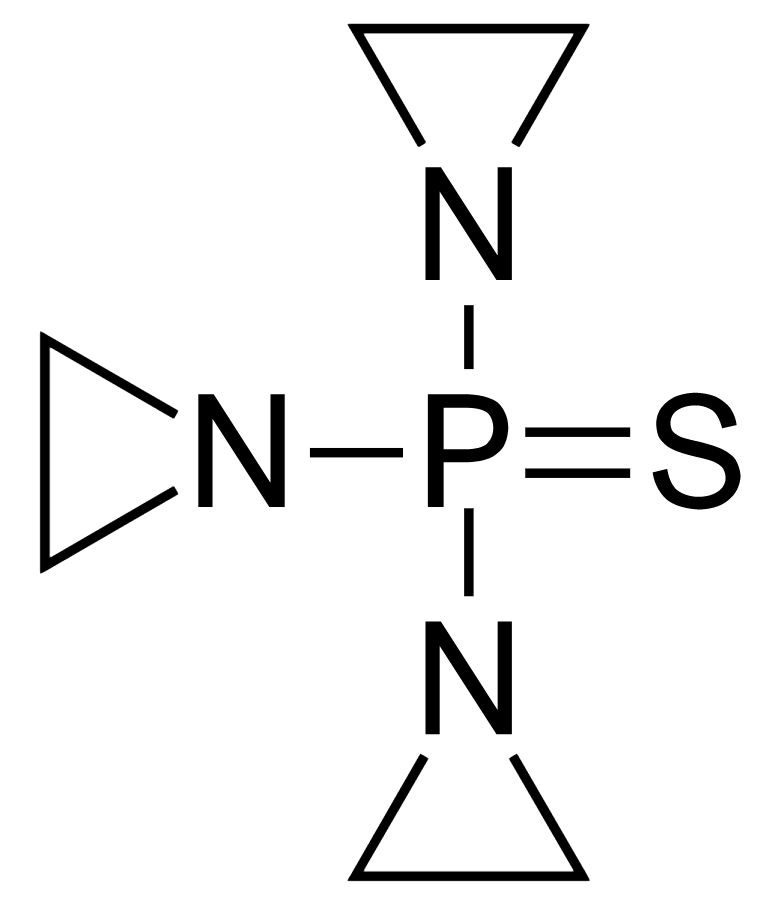
Tiotepa

  • Contém 3 grupos etilenimina
  • Farmacocinética:
    • IV, intratecal
    • Metabolismo: hepático através do sistema citocromo P450
    • Excreção: urina
  • Indicações (aprovadas):
    • Beta talassemia
    • Off-label: esquema de indução antes do transplante de células hematopoiéticas, metástases leptomeníngeas
  • Efeitos adversos:
    • Mielossupressão
    • Náuseas e vómitos
    • Hepatotoxicidade
    • Toxicidade para o SNC (por exemplo, cefaleias, confusão, encefalopatia)
    • Toxicidade dermatológica (por exemplo, prurido, alteração da coloração, bolhas)
    • Síndrome de obstrução sinusoidal hepática
    • Neoplasia maligna secundária
  • Contraindicações: hipersensibilidade ao fármaco
  • Interações medicamentosas:
    • ↓ Efeito terapêutico das vacinas inativadas e vivas
    • ↑ Efeito tóxico das vacinas vivas (devem ser evitadas)
Estrutura química da tiotepa

Estrutura química da tiotepa

Imagem: “ThioTEPA” de Fvasconcellos. Licença: Domínio Público
Altretamina

  • Estrutura semelhante à trietilenomelamina
  • Farmacocinética:
    • Oral
    • Metabolismo hepático
    • Semivida: 4-10 horas
    • Excreção: urina
  • Indicação (aprovada): Cancro do ovário
  • Efeitos adversos:
    • Mielossupressão
    • GIs: náuseas, vómitos
    • Toxicidade para o SNC e neuropatia periférica
  • Contraindicações:
    • Hipersensibilidade ao fármaco
    • Toxicidade neurológica grave
    • Mielossupressão
  • Interações medicamentosas:
    • ↓ Efeito terapêutico das vacinas inativadas e vivas
    • ↑ Efeito tóxico das vacinas vivas (devem ser evitadas)
    • A ingestão de IMAOs pode causar hipotensão ortostática.

Complexos de Coordenação de Platina

Descrição geral

  • Fármacos n~so específicos do ciclo celular com ampla atividade anticancerígena
  • Fármacos desta classe:
    • Cisplatina
    • Carboplatina
    • Oxaliplatina
  • Mecanismo de ação:
    • Ligam-se covalentemente ao DNA DNA A deoxyribonucleotide polymer that is the primary genetic material of all cells. Eukaryotic and prokaryotic organisms normally contain DNA in a double-stranded state, yet several important biological processes transiently involve single-stranded regions. DNA, which consists of a polysugar-phosphate backbone possessing projections of purines (adenine and guanine) and pyrimidines (thymine and cytosine), forms a double helix that is held together by hydrogen bonds between these purines and pyrimidines (adenine to thymine and guanine to cytosine). DNA Types and Structure (formando ligações cruzadas intra e inter-cadeia), com efeitos citotóxicos semelhantes aos dos agentes alquilantes.
    • Inibe a replicação do DNA DNA A deoxyribonucleotide polymer that is the primary genetic material of all cells. Eukaryotic and prokaryotic organisms normally contain DNA in a double-stranded state, yet several important biological processes transiently involve single-stranded regions. DNA, which consists of a polysugar-phosphate backbone possessing projections of purines (adenine and guanine) and pyrimidines (thymine and cytosine), forms a double helix that is held together by hydrogen bonds between these purines and pyrimidines (adenine to thymine and guanine to cytosine). DNA Types and Structure

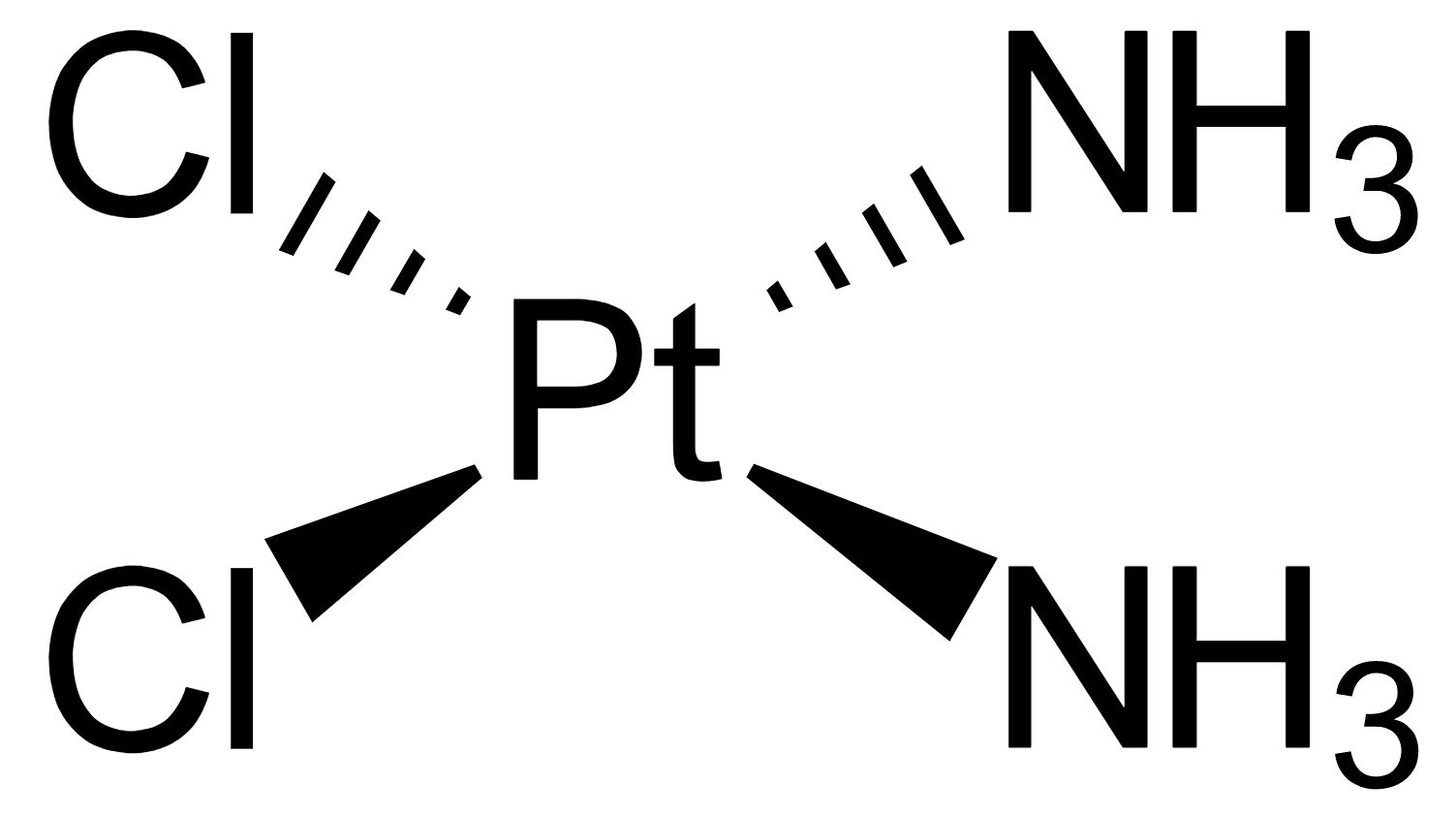
Cisplatina

  • Farmacocinética:
    • IV
    • 90% de ligação a proteínas
    • Semivida: 20-30 minutos em adultos
    • Excreção: renal
  • Indicações (aprovadas):
    • Cancro da bexiga
    • Cancro do ovário
    • Cancro testicular
  • Efeitos adversos:
    • Mielossupressão
    • Náuseas, vómitos
    • Neuropatia periférica
    • Nefrotoxicidade (aconselhada pré-hidratação para ↓ risco de lesão renal)
    • Neoplasia maligna secundária
    • ↑ Enzimas hepáticas
    • Ototoxicidade
    • SLT
    • Pode exacerbar a miastenia gravis (MG)
  • Contraindicações: hipersensibilidade ao fármaco
  • Interações medicamentosas:
    • ↓ Efeito terapêutico das vacinas inativadas e vivas
    • ↑ Efeito tóxico das vacinas vivas
    • Diuréticos de ansa: ↑ nefrotoxicidade da cisplatina
Estrutura química da cisplatina

Estrutura química da cisplatina

Imagem: “Cisplatin-stereo” de Benrr101. Licença: Domínio Público
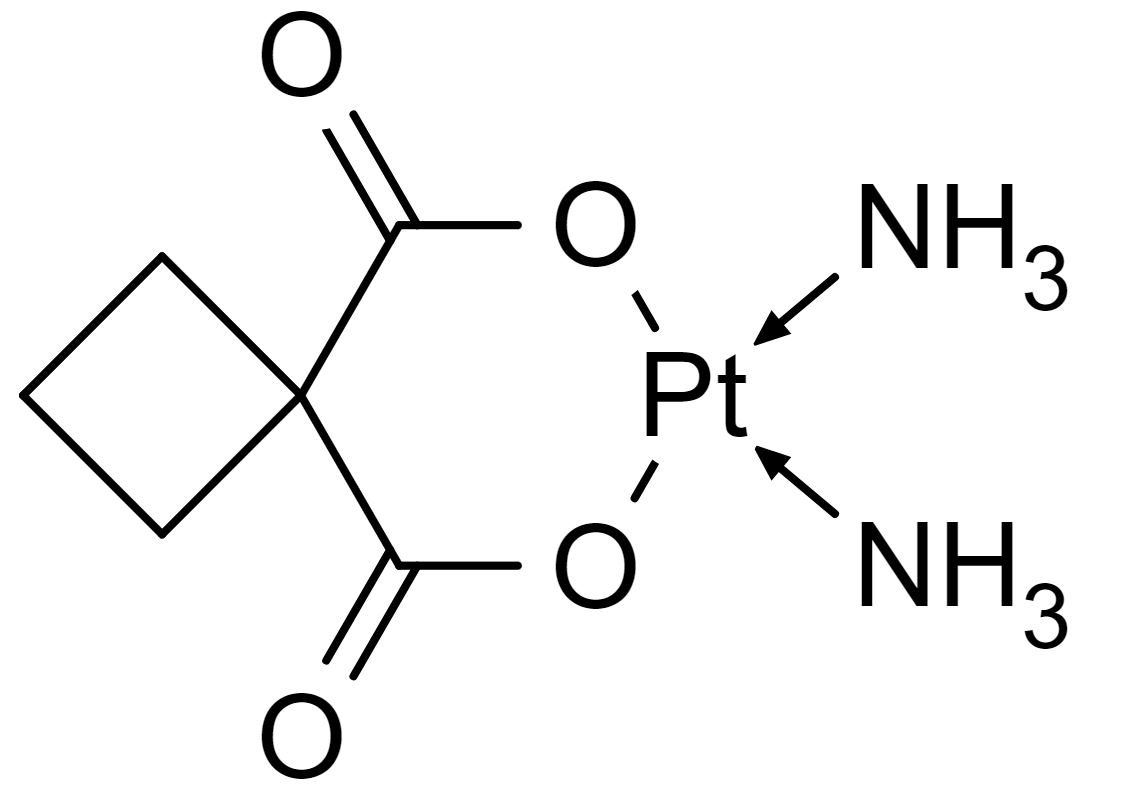
Carboplatina

  • Análogo da platina de 2ª geração, com menor toxicidade GI e renal que a cisplatina.
  • Farmacocinética:
    • IV
    • Metabolismo hepático mínimo
    • Semivida: 3-6 horas (função renal normal)
    • Excreção: urina (aproximadamente 70% como carboplatina)
  • Indicação (aprovada): Cancro do ovário
  • Efeitos adversos:
    • Mielossupressão
    • Náuseas, vómitos
    • Neuropatia periférica
    • Nefrotoxicidade
    • Neoplasia maligna secundária
    • ↑ Enzimas hepáticas
    • Ototoxicidade
    • Perda de visão (doses elevadas)
  • Contraindicações:
    • Hipersensibilidade ao fármaco
    • Mielossupressão grave
    • Insuficiência renal pré-existente
    • Hemorragia
  • Interações medicamentosas:
    • ↓ Efeito terapêutico das vacinas inativadas e vivas
    • ↑ Efeito tóxico das vacinas vivas
Estrutura química da carboplatina

Estrutura química da carboplatina

Imagem: “Carboplatin-skeletal” de catclock. Licença: Domínio Público
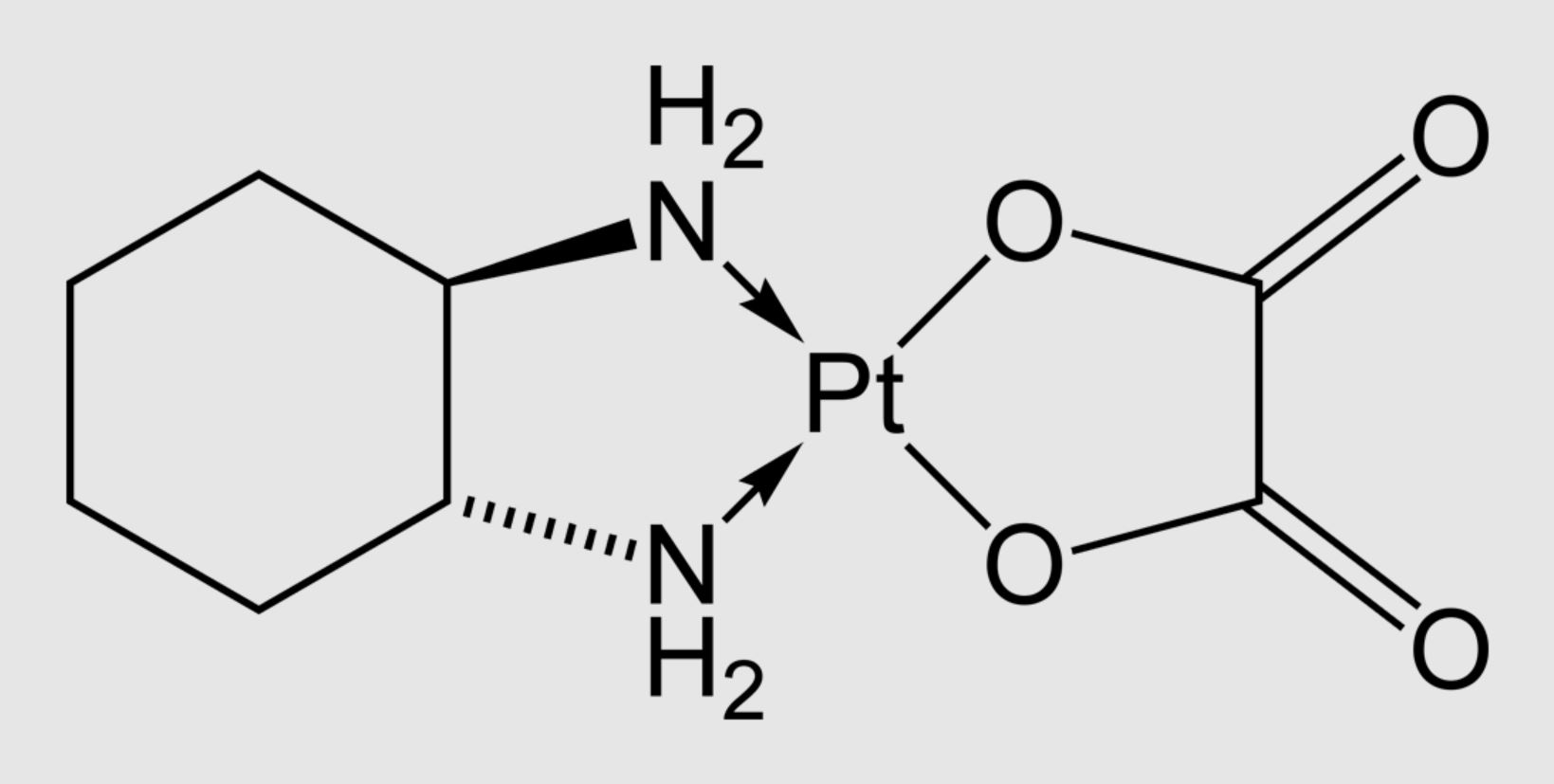
Oxaliplatina

  • Análogo da platina de 3ª geração
  • Farmacocinética:
    • IV
    • > 90% de ligação a proteínas
    • Metabolismo enzimático
    • Excreção: urina
  • Indicações: Cancro colorretal (CCR)
  • Efeitos adversos:
    • Mielossupressão
    • Náuseas, vómitos
    • Nefrotoxicidade
    • Neuropatia
    • Cardiotoxicidade
    • Hepatotoxicidade
    • Hemorragia
    • Toxicidade pulmonar
    • Rabdomiólise
  • Contraindicações:
    • Hipersensibilidade ao fármaco
    • Neuropatia periférica preexistente com função prejudicada
Estrutura química da oxaliplatina

Estrutura química da oxaliplatina

Imagem: “Oxaliplatin-2D-skeletal” de Benjah-bmm27. Licença: Domínio Público
Comparação com Outros Agentes Quimioterápicos

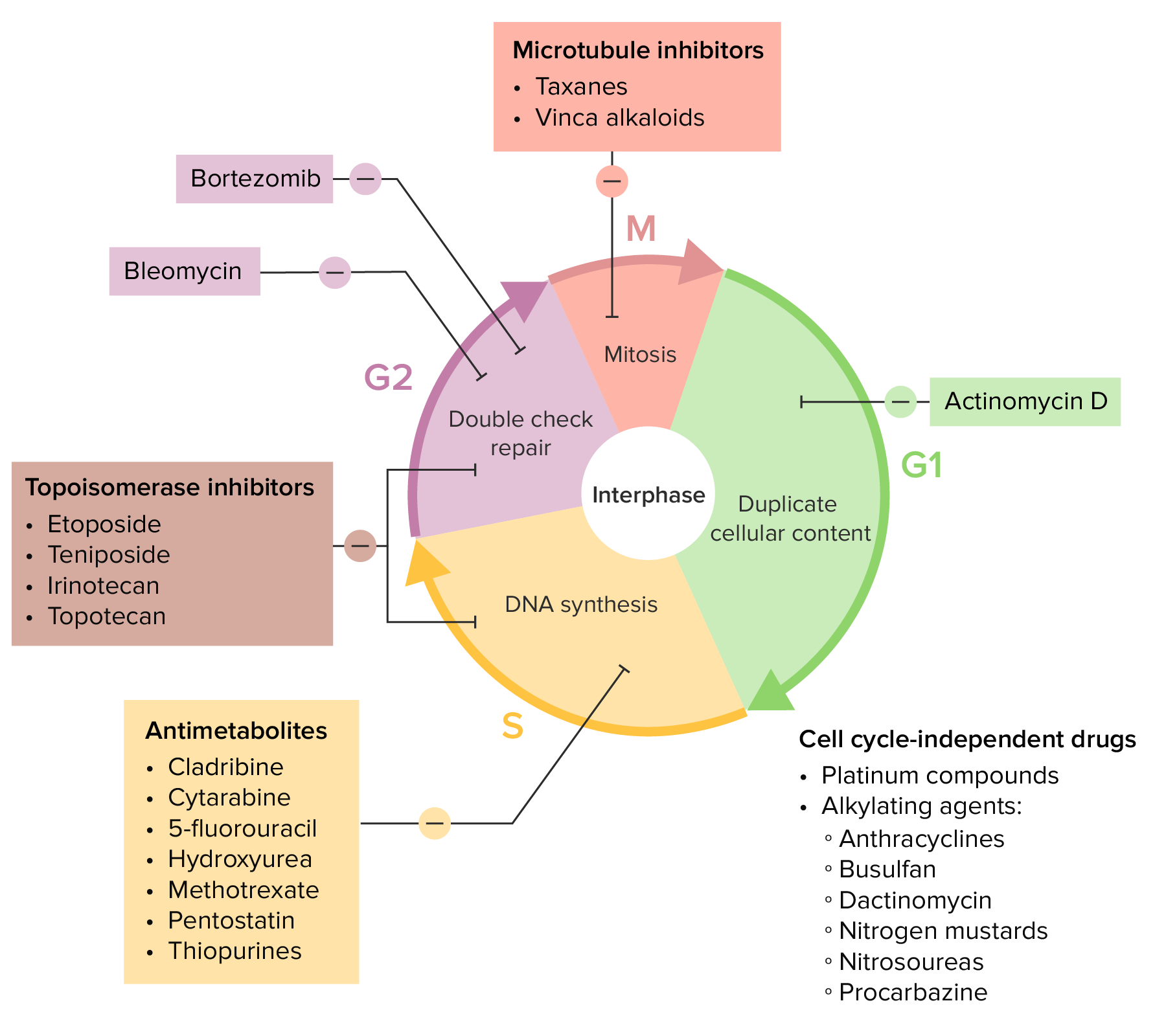
Comparação de quimioterapia

Vários fármacos de quimioterapia e os seus efeitos no ciclo celular

Imagem de Lecturio.
Tabela: Comparação entre os fármacos de quimioterapia independentes do ciclo celular
Classe do fármaco Mecanismo
Antibióticos antitumorais:
  • Dactinomicina
  • Mitomicina
Intercalação entre bases Bases Usually a hydroxide of lithium, sodium, potassium, rubidium or cesium, but also the carbonates of these metals, ammonia, and the amines. Acid-Base Balance levando ao bloqueio da síntese de DNA DNA A deoxyribonucleotide polymer that is the primary genetic material of all cells. Eukaryotic and prokaryotic organisms normally contain DNA in a double-stranded state, yet several important biological processes transiently involve single-stranded regions. DNA, which consists of a polysugar-phosphate backbone possessing projections of purines (adenine and guanine) and pyrimidines (thymine and cytosine), forms a double helix that is held together by hydrogen bonds between these purines and pyrimidines (adenine to thymine and guanine to cytosine). DNA Types and Structure ou RNA RNA A polynucleotide consisting essentially of chains with a repeating backbone of phosphate and ribose units to which nitrogenous bases are attached. RNA is unique among biological macromolecules in that it can encode genetic information, serve as an abundant structural component of cells, and also possesses catalytic activity. RNA Types and Structure e prevenção da replicação do DNA DNA A deoxyribonucleotide polymer that is the primary genetic material of all cells. Eukaryotic and prokaryotic organisms normally contain DNA in a double-stranded state, yet several important biological processes transiently involve single-stranded regions. DNA, which consists of a polysugar-phosphate backbone possessing projections of purines (adenine and guanine) and pyrimidines (thymine and cytosine), forms a double helix that is held together by hydrogen bonds between these purines and pyrimidines (adenine to thymine and guanine to cytosine). DNA Types and Structure
Antraciclinas
  • Inibição da topoisomerase II Topoisomerase II DNA topoisomerases that catalyze ATP-dependent breakage of both strands of DNA, passage of the unbroken strands through the breaks, and rejoining of the broken strands. These enzymes bring about relaxation of the supercoiled DNA and resolution of a knotted circular DNA duplex. Fluoroquinolones
  • Intercalação no DNA DNA A deoxyribonucleotide polymer that is the primary genetic material of all cells. Eukaryotic and prokaryotic organisms normally contain DNA in a double-stranded state, yet several important biological processes transiently involve single-stranded regions. DNA, which consists of a polysugar-phosphate backbone possessing projections of purines (adenine and guanine) and pyrimidines (thymine and cytosine), forms a double helix that is held together by hydrogen bonds between these purines and pyrimidines (adenine to thymine and guanine to cytosine). DNA Types and Structure, levando à inibição da síntese de DNA DNA A deoxyribonucleotide polymer that is the primary genetic material of all cells. Eukaryotic and prokaryotic organisms normally contain DNA in a double-stranded state, yet several important biological processes transiently involve single-stranded regions. DNA, which consists of a polysugar-phosphate backbone possessing projections of purines (adenine and guanine) and pyrimidines (thymine and cytosine), forms a double helix that is held together by hydrogen bonds between these purines and pyrimidines (adenine to thymine and guanine to cytosine). DNA Types and Structure e de RNA RNA A polynucleotide consisting essentially of chains with a repeating backbone of phosphate and ribose units to which nitrogenous bases are attached. RNA is unique among biological macromolecules in that it can encode genetic information, serve as an abundant structural component of cells, and also possesses catalytic activity. RNA Types and Structure
  • Promoção da formação de espécies reativas de oxigénio
Agentes alquilantes
  • ↓ Síntese de DNA DNA A deoxyribonucleotide polymer that is the primary genetic material of all cells. Eukaryotic and prokaryotic organisms normally contain DNA in a double-stranded state, yet several important biological processes transiently involve single-stranded regions. DNA, which consists of a polysugar-phosphate backbone possessing projections of purines (adenine and guanine) and pyrimidines (thymine and cytosine), forms a double helix that is held together by hydrogen bonds between these purines and pyrimidines (adenine to thymine and guanine to cytosine). DNA Types and Structure devido à sua alquilação
  • ↓ Replicação de DNA DNA A deoxyribonucleotide polymer that is the primary genetic material of all cells. Eukaryotic and prokaryotic organisms normally contain DNA in a double-stranded state, yet several important biological processes transiently involve single-stranded regions. DNA, which consists of a polysugar-phosphate backbone possessing projections of purines (adenine and guanine) and pyrimidines (thymine and cytosine), forms a double helix that is held together by hydrogen bonds between these purines and pyrimidines (adenine to thymine and guanine to cytosine). DNA Types and Structure e a síntese proteica

Referências

  1. Chu, E. (2021). Cancer chemotherapy. In Katzung, BG., & Vanderah, TW (Eds.), Basic & Clinical Pharmacology, 15e. McGraw Hill. https://accessmedicine.mhmedical.com/content.aspx?bookid=2988&sectionid=250603422
  2. Gold, JM, & Raja, A. (2023). Cisplatin. StatPearls. Treasure Island (FL): StatPearls Publishing. Retrieved October 22, 2025, from https://www.ncbi.nlm.nih.gov/books/NBK547695/
  3. Katzung, B, & Trevor, A. (2020). Basic and Clinical Pharmacology, 15e. McGraw-Hill Education. https://accessmedicine.mhmedical.com/content.aspx?bookid=2988&sectionid=250593594
  4. Ogino, MH, & Tadi, P. (2023). Cyclophosphamide. StatPearl. Treasure Island (FL): StatPearls Publishing. Retrieved October 22, 2025, from https://www.ncbi.nlm.nih.gov/books/NBK553087/
  5. Patel, R, & Tadi, P. (2024). Busulfan. StatPearls. Treasure Island (FL): StatPearls Publishing. Retrieved October 22, 2025, from https://www.ncbi.nlm.nih.gov/books/NBK555986/
  6. Bindra, S., Bose, K., Thekkantavida, A. C., Parambi, D. G. T., Alsahli, T. G., Pant, M., Pappachen, L. K., Kim, H., & Mathew, B. (2024). FDA-approved drugs containing dimethylamine pharmacophore: A review of the last 50 years. RSC Advances, 14(38), 27657–27696. https://doi.org/10.1039/D4RA04730C
  7. Bendamustine. (2025). Bendamustine. UpToDate. Retrieved October 22, 2025, from https://www.uptodate.com/contents/bendamustine-drug-information
  8. Busulfan. (2025). UpToDate. Retrieved October 22, 2025, from https://www.uptodate.com/contents/busulfan-drug-information
  9. Carboplatin. (2025). UpToDate. Retrieved October 22, 2025, from https://www.uptodate.com/contents/carboplatin-drug-information
  10. Cisplatin. (2025). UpToDate. Retrieved October 22, 2025, from https://www.uptodate.com/contents/cisplatin-drug-information
  11. Cyclophosphamide. (2025). UpToDate. Retrieved October 22, 2025, from https://www.uptodate.com/contents/cyclophosphamide-drug-information
  12. Oxaliplatin. (2025). UpToDate. Retrieved October 22, 2025, from https://www.uptodate.com/contents/oxaliplatin-drug-information
  13. Thiotepa. (2025). UpToDate. Retrieved October 22, 2025, from https://www.uptodate.com/contents/thiotepa-drug-information
  14. Wellstein, A, Giaccone, G, Atkins, MB, & Sausville, EA. (2017). Cytotoxic drugs. In Brunton, LL, Hilal-Dandan, R, & Knollmann, BC (Eds.), Goodman & Gilman’s: The Pharmacological Basis of Therapeutics, 13e. McGraw Hill. https://accessmedicine.mhmedical.com/content.aspx?bookid=2189&sectionid=172486857

Crie sua conta gratuita ou faça login para continuar lendo!

Cadastre-se agora e tenha acesso grátis ao Lecturio, com páginas de conceitos, vídeos de medicina e questões para sua educação médica.

Aprende mais com a Lecturio:

Multiple devices displaying human anatomy and health education content.

Complementa o teu estudo da faculdade com o companheiro de estudo tudo-em-um da Lecturio, através de métodos de ensino baseados em evidência.

Estuda onde quiseres

Two iPhones display medical education apps, one showing anatomy, the other Bookmatcher.

A Lecturio Medical complementa o teu estudo através de métodos de ensino baseados em evidência, vídeos de palestras, perguntas e muito mais – tudo combinado num só lugar e fácil de usar.

User Reviews

Have a holly, jolly study session 🎁 Save 50% on all plans now >>

Que tengas una sesión de estudio alegre y navideña 🎁 Ahorra 50% en todos los planes >>

Details