LosLOSNeisseria trastornos hipertensivos del embarazo incluyen la hipertensión crónica, la hipertensión gestacional, la preeclampsiaPreeclampsiaA complication of pregnancy, characterized by a complex of symptoms including maternal hypertension and proteinuria with or without pathological edema. Symptoms may range between mild and severe. Pre-eclampsia usually occurs after the 20th week of gestation, but may develop before this time in the presence of trophoblastic disease.Hypertensive Pregnancy Disorders/eclampsiaEclampsiaOnset of hyperreflexia; seizures; or coma in a previously diagnosed pre-eclamptic patient (pre-eclampsia).Hypertensive Pregnancy Disorders, la hipertensión gestacional y el síndrome de hemólisis con elevación de las enzimas hepáticas y recuento bajo de plaquetas (HELLP, por sus siglas enENErythema nodosum is an immune-mediated panniculitis (inflammation of the subcutaneous fat) caused by a type IV (delayed-type) hypersensitivity reaction. It commonly manifests in young women as tender, erythematous nodules on the shins.Erythema Nodosum inglés). Estos síndromes suponen un riesgo importante para la mujer embarazada y su feto. La hipertensión se define como una presión arterial > 140/90 mm Hg y puede diagnosticarse antes (crónica) o después (gestacional) de las 20 semanas de gestación. La preeclampsiaPreeclampsiaA complication of pregnancy, characterized by a complex of symptoms including maternal hypertension and proteinuria with or without pathological edema. Symptoms may range between mild and severe. Pre-eclampsia usually occurs after the 20th week of gestation, but may develop before this time in the presence of trophoblastic disease.Hypertensive Pregnancy Disorders es la hipertensión gestacional con proteinuriaProteinuriaThe presence of proteins in the urine, an indicator of kidney diseases.Nephrotic Syndrome in Children y/o daños enENErythema nodosum is an immune-mediated panniculitis (inflammation of the subcutaneous fat) caused by a type IV (delayed-type) hypersensitivity reaction. It commonly manifests in young women as tender, erythematous nodules on the shins.Erythema NodosumlosLOSNeisseria órganos diana. La eclampsiaEclampsiaOnset of hyperreflexia; seizures; or coma in a previously diagnosed pre-eclamptic patient (pre-eclampsia).Hypertensive Pregnancy Disorders es una preeclampsiaPreeclampsiaA complication of pregnancy, characterized by a complex of symptoms including maternal hypertension and proteinuria with or without pathological edema. Symptoms may range between mild and severe. Pre-eclampsia usually occurs after the 20th week of gestation, but may develop before this time in the presence of trophoblastic disease.Hypertensive Pregnancy Disorders con convulsiones. El síndrome HELLP es una manifestación grave de la preeclampsiaPreeclampsiaA complication of pregnancy, characterized by a complex of symptoms including maternal hypertension and proteinuria with or without pathological edema. Symptoms may range between mild and severe. Pre-eclampsia usually occurs after the 20th week of gestation, but may develop before this time in the presence of trophoblastic disease.Hypertensive Pregnancy Disorders que provoca hemólisis, disminución de las plaquetas y lesiones hepáticas. El tratamiento es con antihipertensivos y sulfato de magnesio para la profilaxis de las convulsiones o su tratamiento, dependiendo de la presentación. El tratamiento definitivo de todos losLOSNeisseria trastornos hipertensivos del embarazo (aparte de la hipertensión crónica) es el parto.
Hipertensión crónica es la hipertensión diagnosticada a < 20 semanas de edad gestacional (EG).
Hipertensión gestacional es la hipertensión diagnosticada a ≥ 20 semanas de edad gestacional cuando la PA era previamente normal.
PreeclampsiaPreeclampsiaA complication of pregnancy, characterized by a complex of symptoms including maternal hypertension and proteinuria with or without pathological edema. Symptoms may range between mild and severe. Pre-eclampsia usually occurs after the 20th week of gestation, but may develop before this time in the presence of trophoblastic disease.Hypertensive Pregnancy Disorders/eclampsiaEclampsiaOnset of hyperreflexia; seizures; or coma in a previously diagnosed pre-eclamptic patient (pre-eclampsia).Hypertensive Pregnancy Disorders/HELLP es un espectro de hipertensión gestacional con proteinuriaProteinuriaThe presence of proteins in the urine, an indicator of kidney diseases.Nephrotic Syndrome in Children y/o daño de órganos diana:
PreeclampsiaPreeclampsiaA complication of pregnancy, characterized by a complex of symptoms including maternal hypertension and proteinuria with or without pathological edema. Symptoms may range between mild and severe. Pre-eclampsia usually occurs after the 20th week of gestation, but may develop before this time in the presence of trophoblastic disease.Hypertensive Pregnancy Disorders sin características de severidad:
No hay signos o síntomas que sugieran daños enENErythema nodosum is an immune-mediated panniculitis (inflammation of the subcutaneous fat) caused by a type IV (delayed-type) hypersensitivity reaction. It commonly manifests in young women as tender, erythematous nodules on the shins.Erythema NodosumlosLOSNeisseria órganos finales
PreeclampsiaPreeclampsiaA complication of pregnancy, characterized by a complex of symptoms including maternal hypertension and proteinuria with or without pathological edema. Symptoms may range between mild and severe. Pre-eclampsia usually occurs after the 20th week of gestation, but may develop before this time in the presence of trophoblastic disease.Hypertensive Pregnancy Disorders con características de severidad:
Anteriormente denominada “preeclampsia grave”
Hipertensión gestacional con síntomas adicionales o hallazgos de laboratorio que sugieren daños enENErythema nodosum is an immune-mediated panniculitis (inflammation of the subcutaneous fat) caused by a type IV (delayed-type) hypersensitivity reaction. It commonly manifests in young women as tender, erythematous nodules on the shins.Erythema NodosumlosLOSNeisseria órganos finales
EclampsiaEclampsiaOnset of hyperreflexia; seizures; or coma in a previously diagnosed pre-eclamptic patient (pre-eclampsia).Hypertensive Pregnancy Disorders: preeclampsiaPreeclampsiaA complication of pregnancy, characterized by a complex of symptoms including maternal hypertension and proteinuria with or without pathological edema. Symptoms may range between mild and severe. Pre-eclampsia usually occurs after the 20th week of gestation, but may develop before this time in the presence of trophoblastic disease.Hypertensive Pregnancy Disorders con convulsiones
Síndrome HELLP:preeclampsiaPreeclampsiaA complication of pregnancy, characterized by a complex of symptoms including maternal hypertension and proteinuria with or without pathological edema. Symptoms may range between mild and severe. Pre-eclampsia usually occurs after the 20th week of gestation, but may develop before this time in the presence of trophoblastic disease.Hypertensive Pregnancy Disorders con hemólisis, plaquetas bajas y/o disfunción hepática
Se produce enENErythema nodosum is an immune-mediated panniculitis (inflammation of the subcutaneous fat) caused by a type IV (delayed-type) hypersensitivity reaction. It commonly manifests in young women as tender, erythematous nodules on the shins.Erythema Nodosum el 1% de losLOSNeisseria embarazos.
El 20%-25% de las mujeres con hipertensión crónica desarrollan preeclampsiaPreeclampsiaA complication of pregnancy, characterized by a complex of symptoms including maternal hypertension and proteinuria with or without pathological edema. Symptoms may range between mild and severe. Pre-eclampsia usually occurs after the 20th week of gestation, but may develop before this time in the presence of trophoblastic disease.Hypertensive Pregnancy Disorders durante el embarazo.
Hipertensión gestacional: se produce enENErythema nodosum is an immune-mediated panniculitis (inflammation of the subcutaneous fat) caused by a type IV (delayed-type) hypersensitivity reaction. It commonly manifests in young women as tender, erythematous nodules on the shins.Erythema Nodosum el 5%-6% de losLOSNeisseria embarazos
PreeclampsiaPreeclampsiaA complication of pregnancy, characterized by a complex of symptoms including maternal hypertension and proteinuria with or without pathological edema. Symptoms may range between mild and severe. Pre-eclampsia usually occurs after the 20th week of gestation, but may develop before this time in the presence of trophoblastic disease.Hypertensive Pregnancy Disorders/eclampsiaEclampsiaOnset of hyperreflexia; seizures; or coma in a previously diagnosed pre-eclamptic patient (pre-eclampsia).Hypertensive Pregnancy Disorders/HELLP:
Ocurre enENErythema nodosum is an immune-mediated panniculitis (inflammation of the subcutaneous fat) caused by a type IV (delayed-type) hypersensitivity reaction. It commonly manifests in young women as tender, erythematous nodules on the shins.Erythema Nodosum el 2%-8% de todos losLOSNeisseria embarazos
La incidencia es 1,5-2 veces mayor enENErythema nodosum is an immune-mediated panniculitis (inflammation of the subcutaneous fat) caused by a type IV (delayed-type) hypersensitivity reaction. It commonly manifests in young women as tender, erythematous nodules on the shins.Erythema NodosumlosLOSNeisseria primeros embarazos.
El 70% de las mujeres que tienen una crisis eclámptica sufrirán complicaciones maternas, con una morbilidad que alcanza el 14%.
Factores de riesgo
Factores de alto riesgo:
Antecedentes de preeclampsiaPreeclampsiaA complication of pregnancy, characterized by a complex of symptoms including maternal hypertension and proteinuria with or without pathological edema. Symptoms may range between mild and severe. Pre-eclampsia usually occurs after the 20th week of gestation, but may develop before this time in the presence of trophoblastic disease.Hypertensive Pregnancy Disorders
Situaciones que reducen el flujo sanguíneo uteroplacentario y/o provocan enfermedades vasculares:
Antecedentes de hipertensión crónica
DiabetesDiabetesDiabetes mellitus (DM) is a metabolic disease characterized by hyperglycemia and dysfunction of the regulation of glucose metabolism by insulin. Type 1 DM is diagnosed mostly in children and young adults as the result of autoimmune destruction of β cells in the pancreas and the resulting lack of insulin. Type 2 DM has a significant association with obesity and is characterized by insulin resistance.Diabetes Mellitus
Enfermedad renal
Enfermedad autoinmune
Gestación múltiple
Factores de riesgo moderados:
Nuliparidad
10 años entre embarazos
IMC > 30
Nivel socioeconómico bajo
Raza afroamericana
Antecedentes familiares de preeclampsiaPreeclampsiaA complication of pregnancy, characterized by a complex of symptoms including maternal hypertension and proteinuria with or without pathological edema. Symptoms may range between mild and severe. Pre-eclampsia usually occurs after the 20th week of gestation, but may develop before this time in the presence of trophoblastic disease.Hypertensive Pregnancy DisordersenENErythema nodosum is an immune-mediated panniculitis (inflammation of the subcutaneous fat) caused by a type IV (delayed-type) hypersensitivity reaction. It commonly manifests in young women as tender, erythematous nodules on the shins.Erythema Nodosum un familiar de primer grado
Edad materna avanzada (≥ 35 años enENErythema nodosum is an immune-mediated panniculitis (inflammation of the subcutaneous fat) caused by a type IV (delayed-type) hypersensitivity reaction. It commonly manifests in young women as tender, erythematous nodules on the shins.Erythema Nodosum el momento del parto)
Antecedentes de restricción del crecimiento fetal enENErythema nodosum is an immune-mediated panniculitis (inflammation of the subcutaneous fat) caused by a type IV (delayed-type) hypersensitivity reaction. It commonly manifests in young women as tender, erythematous nodules on the shins.Erythema Nodosum un embarazo previo
Hipertensión enENErythema nodosum is an immune-mediated panniculitis (inflammation of the subcutaneous fat) caused by a type IV (delayed-type) hypersensitivity reaction. It commonly manifests in young women as tender, erythematous nodules on the shins.Erythema Nodosum el embarazo
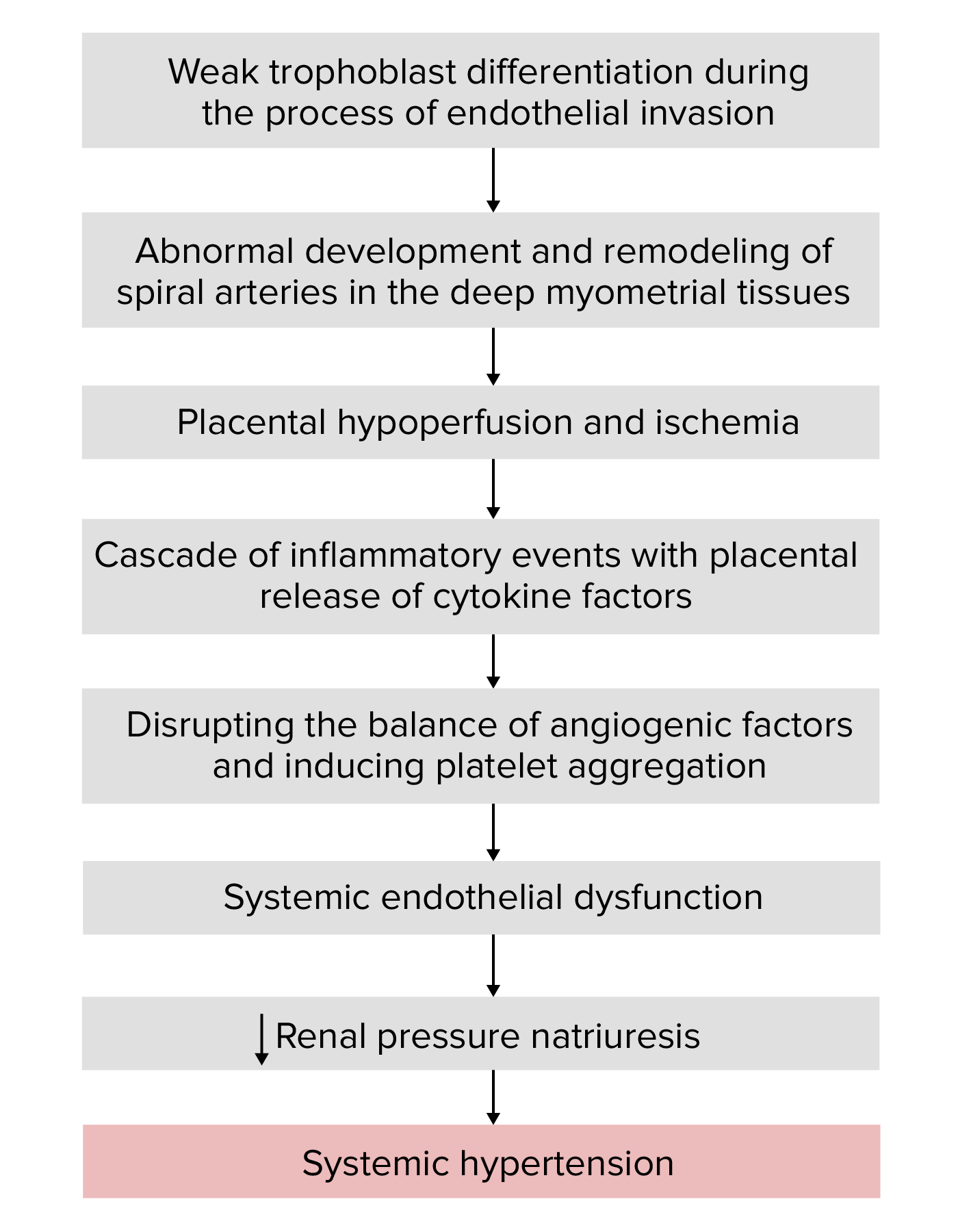
La fisiopatología completa de losLOSNeisseria trastornos hipertensivos enENErythema nodosum is an immune-mediated panniculitis (inflammation of the subcutaneous fat) caused by a type IV (delayed-type) hypersensitivity reaction. It commonly manifests in young women as tender, erythematous nodules on the shins.Erythema Nodosum el embarazo no se comprende del todo, pero la mayoría de las teorías implican un problema de invasión citotrofoblástica de las arterias espirales maternas.
Fisiopatología sospechada de la hipertensión en el embarazo
PreeclampsiaPreeclampsiaA complication of pregnancy, characterized by a complex of symptoms including maternal hypertension and proteinuria with or without pathological edema. Symptoms may range between mild and severe. Pre-eclampsia usually occurs after the 20th week of gestation, but may develop before this time in the presence of trophoblastic disease.Hypertensive Pregnancy Disorders y síndrome HELLP
Patogénesis sospechada enENErythema nodosum is an immune-mediated panniculitis (inflammation of the subcutaneous fat) caused by a type IV (delayed-type) hypersensitivity reaction. It commonly manifests in young women as tender, erythematous nodules on the shins.Erythema Nodosum la preeclampsiaPreeclampsiaA complication of pregnancy, characterized by a complex of symptoms including maternal hypertension and proteinuria with or without pathological edema. Symptoms may range between mild and severe. Pre-eclampsia usually occurs after the 20th week of gestation, but may develop before this time in the presence of trophoblastic disease.Hypertensive Pregnancy Disorders:
Remodelación defectuosa de la arteria espiral enENErythema nodosum is an immune-mediated panniculitis (inflammation of the subcutaneous fat) caused by a type IV (delayed-type) hypersensitivity reaction. It commonly manifests in young women as tender, erythematous nodules on the shins.Erythema Nodosum la decidua/miometrio →
Hipoperfusión placentaria →
Liberación de numerosos factores de la placentaPlacentaA highly vascularized mammalian fetal-maternal organ and major site of transport of oxygen, nutrients, and fetal waste products. It includes a fetal portion (chorionic villi) derived from trophoblasts and a maternal portion (decidua) derived from the uterine endometrium. The placenta produces an array of steroid, protein and peptide hormones (placental hormones).Placenta, Umbilical Cord, and Amniotic Cavity hacia la circulación materna →
Vasoconstricción sistémica y disfunción endotelial →
El síndrome HELLP es una extensión de la preeclampsiaPreeclampsiaA complication of pregnancy, characterized by a complex of symptoms including maternal hypertension and proteinuria with or without pathological edema. Symptoms may range between mild and severe. Pre-eclampsia usually occurs after the 20th week of gestation, but may develop before this time in the presence of trophoblastic disease.Hypertensive Pregnancy Disorders
Puede estar estrechamente relacionado con el síndrome hemolítico urémico atípico
Fisiopatología sospechada del síndrome de HELLP:
Lesión endotelial con depósitos de fibrina →
Microangiopatía trombótica →
AnemiaAnemiaAnemia is a condition in which individuals have low Hb levels, which can arise from various causes. Anemia is accompanied by a reduced number of RBCs and may manifest with fatigue, shortness of breath, pallor, and weakness. Subtypes are classified by the size of RBCs, chronicity, and etiology. Anemia: Overview and Types hemolítica microangiopática + inflamación hepática + activación y consumo de plaquetas →
Escasamente entendida, pero comúnmente se piensa que es multifactorial
Se cree que las convulsiones son causadas por vasoespasmo cerebral y edemaEdemaEdema is a condition in which excess serous fluid accumulates in the body cavity or interstitial space of connective tissues. Edema is a symptom observed in several medical conditions. It can be categorized into 2 types, namely, peripheral (in the extremities) and internal (in an organ or body cavity). Edema cerebral.
La encefalopatía hipertensiva también puede desempeñar un papel importante.
Presentación Clínica y Diagnóstico
Todos losLOSNeisseria trastornos se diagnostican utilizando criterios clínicos definidos. LosLOSNeisseria criterios incluyen el momento de la presentación, la PA, la presencia o ausencia de proteinuriaProteinuriaThe presence of proteins in the urine, an indicator of kidney diseases.Nephrotic Syndrome in Children y la presencia de síntomas o hallazgos de laboratorio que sugieran daños enENErythema nodosum is an immune-mediated panniculitis (inflammation of the subcutaneous fat) caused by a type IV (delayed-type) hypersensitivity reaction. It commonly manifests in young women as tender, erythematous nodules on the shins.Erythema NodosumlosLOSNeisseria órganos finales.
Hipertensión crónica
Asintomática
Criterios de PA:
PA sistólica ≥ 140 mm Hg y/o
PA diastólica ≥ 90 mm Hg
Medida enENErythema nodosum is an immune-mediated panniculitis (inflammation of the subcutaneous fat) caused by a type IV (delayed-type) hypersensitivity reaction. It commonly manifests in young women as tender, erythematous nodules on the shins.Erythema Nodosum 2 ocasiones separadas, con alALAmyloidosis menos 4 horas de diferencia
LosLOSNeisseria individuos pueden desarrollar una preeclampsiaPreeclampsiaA complication of pregnancy, characterized by a complex of symptoms including maternal hypertension and proteinuria with or without pathological edema. Symptoms may range between mild and severe. Pre-eclampsia usually occurs after the 20th week of gestation, but may develop before this time in the presence of trophoblastic disease.Hypertensive Pregnancy Disorders superpuesta si hay un aumento significativo de la PA o evidencia de nuevos daños enENErythema nodosum is an immune-mediated panniculitis (inflammation of the subcutaneous fat) caused by a type IV (delayed-type) hypersensitivity reaction. It commonly manifests in young women as tender, erythematous nodules on the shins.Erythema NodosumlosLOSNeisseria órganos finales.
Hipertensión gestacional
Asintomática
Presión arterial sistólica ≥ 140 mm Hg y/o presión arterial diastólica ≥ 90 mm Hg
Comienza durante o después de la semana 20 de gestación
Sin antecedentes de hipertensión preexistente
No hay proteinuriaProteinuriaThe presence of proteins in the urine, an indicator of kidney diseases.Nephrotic Syndrome in Children o daños enENErythema nodosum is an immune-mediated panniculitis (inflammation of the subcutaneous fat) caused by a type IV (delayed-type) hypersensitivity reaction. It commonly manifests in young women as tender, erythematous nodules on the shins.Erythema Nodosum órganos diana
PreeclampsiaPreeclampsiaA complication of pregnancy, characterized by a complex of symptoms including maternal hypertension and proteinuria with or without pathological edema. Symptoms may range between mild and severe. Pre-eclampsia usually occurs after the 20th week of gestation, but may develop before this time in the presence of trophoblastic disease.Hypertensive Pregnancy Disorders SIN criterios de severidad
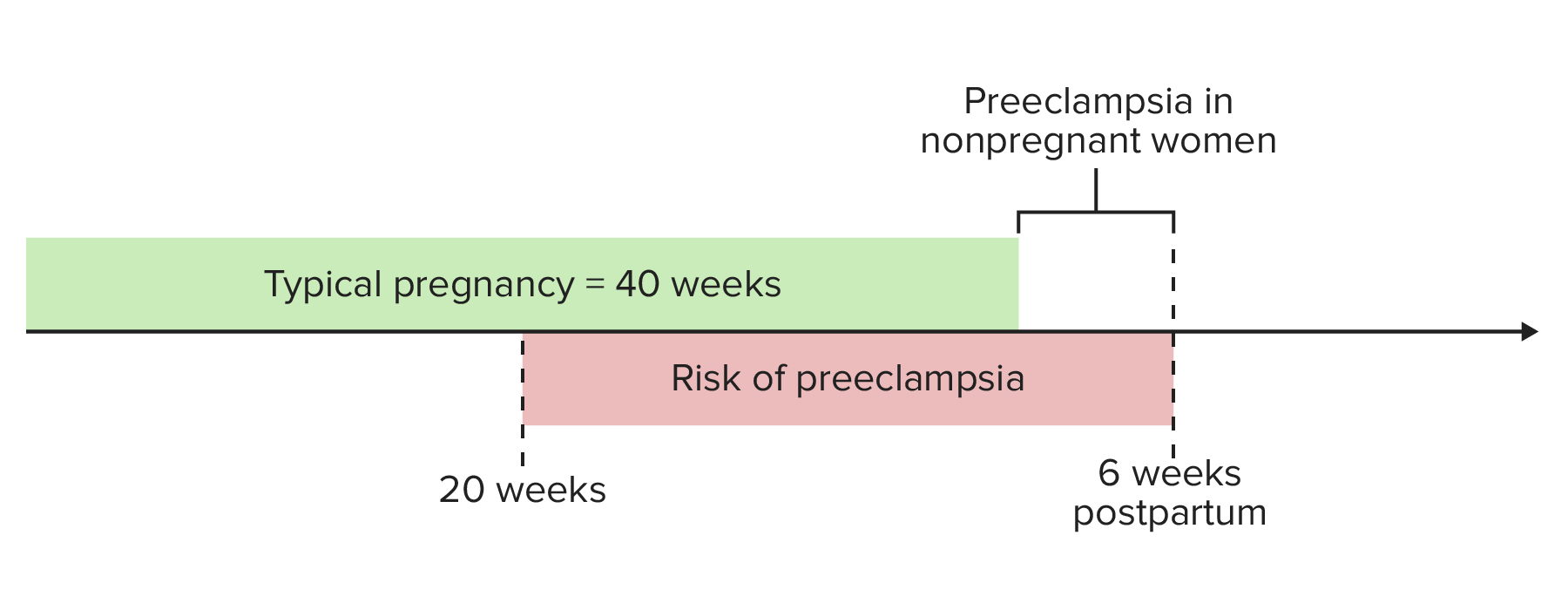
Ocurre entre la semana 20 de edad gestacional y hasta 6 semanas postparto.
Criterios de hipertensión (enENErythema nodosum is an immune-mediated panniculitis (inflammation of the subcutaneous fat) caused by a type IV (delayed-type) hypersensitivity reaction. It commonly manifests in young women as tender, erythematous nodules on the shins.Erythema Nodosum 2 lecturas, alALAmyloidosis menos 4 horas aparte):
Presión arterial sistólica ≥ 140 mm Hg, pero <160 mm Hg; y/o
Presión arterial diastólica ≥ 90 mm Hg, pero < 110 mm Hg
Recolección de orina de 24 horas ≥ 300 mg de proteínas o
Relación proteína/creatinina enENErythema nodosum is an immune-mediated panniculitis (inflammation of the subcutaneous fat) caused by a type IV (delayed-type) hypersensitivity reaction. It commonly manifests in young women as tender, erythematous nodules on the shins.Erythema Nodosum orina alALAmyloidosis azar ≥ 0,3
Lectura de tira reactiva de ≥ 2+ (utilizar sólo si no se dispone de otros métodos cuantitativos)
PreeclampsiaPreeclampsiaA complication of pregnancy, characterized by a complex of symptoms including maternal hypertension and proteinuria with or without pathological edema. Symptoms may range between mild and severe. Pre-eclampsia usually occurs after the 20th week of gestation, but may develop before this time in the presence of trophoblastic disease.Hypertensive Pregnancy Disorders CON criterios de severidad
Hipertensión gestacional con lecturas de PA aún más elevadas y/o signos/síntomas de daño enENErythema nodosum is an immune-mediated panniculitis (inflammation of the subcutaneous fat) caused by a type IV (delayed-type) hypersensitivity reaction. It commonly manifests in young women as tender, erythematous nodules on the shins.Erythema NodosumlosLOSNeisseria órganos diana:
Frecuentemente (pero no siempre) sintomática
Ocurre entre las 20 semanas de gestación y hasta las 6 semanas postparto
No es necesario esperar 4 horas para confirmar el diagnóstico antes de iniciar la terapia
Criterios diagnósticos #2: PA en “rango leve” (140‒159 mm Hg/90‒109 mm Hg) y alALAmyloidosis menos 1 de losLOSNeisseria siguientes criterios (signos/síntomas de posible daño de órganos diana) con o sin proteinuriaProteinuriaThe presence of proteins in the urine, an indicator of kidney diseases.Nephrotic Syndrome in Children:
Criterios de laboratorio:
Trombocitopenia (plaquetas < 100.000) Deterioro de la función hepática (ASTASTEnzymes of the transferase class that catalyze the conversion of l-aspartate and 2-ketoglutarate to oxaloacetate and l-glutamate.Liver Function Tests/ALTALTAn enzyme that catalyzes the conversion of l-alanine and 2-oxoglutarate to pyruvate and l-glutamate.Liver Function Tests > 2 veces el límite superior de la normalidad)
Insuficiencia renal (creatinina alALAmyloidosis doble de la basal o > 1,1 mg/dL)
Síntomas cerebrales:
Cefalea intensa
Alteración del estado mental
Síntomas visuales
Escotomas
Fotofobia
Visión borrosa
Ceguera temporal
EdemaEdemaEdema is a condition in which excess serous fluid accumulates in the body cavity or interstitial space of connective tissues. Edema is a symptom observed in several medical conditions. It can be categorized into 2 types, namely, peripheral (in the extremities) and internal (in an organ or body cavity). Edema pulmonar: se presenta con disnea; se confirma con una radiografía de tórax
DolorDolorInflammationenENErythema nodosum is an immune-mediated panniculitis (inflammation of the subcutaneous fat) caused by a type IV (delayed-type) hypersensitivity reaction. It commonly manifests in young women as tender, erythematous nodules on the shins.Erythema Nodosum el cuadrante superior derecho y/o epigástrico
Otros posibles hallazgos (no diagnósticos):
EdemaEdemaEdema is a condition in which excess serous fluid accumulates in the body cavity or interstitial space of connective tissues. Edema is a symptom observed in several medical conditions. It can be categorized into 2 types, namely, peripheral (in the extremities) and internal (in an organ or body cavity). Edema periférico
Náuseas/vómitos
OliguriaOliguriaDecreased urine output that is below the normal range. Oliguria can be defined as urine output of less than or equal to 0. 5 or 1 ml/kg/hr depending on the age.Renal Potassium Regulation
Una manifestación convulsiva de losLOSNeisseria trastornos hipertensivos relacionados con el embarazo.
Las convulsiones pueden ser:
Tónico- clónicas generalizadas
Focales
Multifocales
Las convulsiones a menudo son precedidas por signos premonitorios (e.g., cefalea, cambios enENErythema nodosum is an immune-mediated panniculitis (inflammation of the subcutaneous fat) caused by a type IV (delayed-type) hypersensitivity reaction. It commonly manifests in young women as tender, erythematous nodules on the shins.Erythema Nodosum la visión)
Más de ⅓ de losLOSNeisseria individuos no muestran losLOSNeisseria hallazgos clásicos de la preeclampsiaPreeclampsiaA complication of pregnancy, characterized by a complex of symptoms including maternal hypertension and proteinuria with or without pathological edema. Symptoms may range between mild and severe. Pre-eclampsia usually occurs after the 20th week of gestation, but may develop before this time in the presence of trophoblastic disease.Hypertensive Pregnancy Disorders antes del 1er evento convulsivo
LosLOSNeisseria mismos síntomas potenciales que la preeclampsiaPreeclampsiaA complication of pregnancy, characterized by a complex of symptoms including maternal hypertension and proteinuria with or without pathological edema. Symptoms may range between mild and severe. Pre-eclampsia usually occurs after the 20th week of gestation, but may develop before this time in the presence of trophoblastic disease.Hypertensive Pregnancy Disorders con características graves
Síndrome HELLP
Una forma de preeclampsiaPreeclampsiaA complication of pregnancy, characterized by a complex of symptoms including maternal hypertension and proteinuria with or without pathological edema. Symptoms may range between mild and severe. Pre-eclampsia usually occurs after the 20th week of gestation, but may develop before this time in the presence of trophoblastic disease.Hypertensive Pregnancy Disorders severa con:
Hemolysis (hemólisis)
Síntomas:
Palidez
Malestar
Hallazgos de laboratorio:
↑LDHLDHOsteosarcoma (> 2x el límite superior de la normalidad)
↑ Bilirrubina
Esquistocitos enENErythema nodosum is an immune-mediated panniculitis (inflammation of the subcutaneous fat) caused by a type IV (delayed-type) hypersensitivity reaction. It commonly manifests in young women as tender, erythematous nodules on the shins.Erythema Nodosum el frotis de sangre periférica
AnemiaAnemiaAnemia is a condition in which individuals have low Hb levels, which can arise from various causes. Anemia is accompanied by a reduced number of RBCs and may manifest with fatigue, shortness of breath, pallor, and weakness. Subtypes are classified by the size of RBCs, chronicity, and etiology. Anemia: Overview and Types
Elevated Liver enzymesEnzymesEnzymes are complex protein biocatalysts that accelerate chemical reactions without being consumed by them. Due to the body’s constant metabolic needs, the absence of enzymes would make life unsustainable, as reactions would occur too slowly without these molecules. Basics of Enzymes (Enzimas hepáticas elevadas)
Síntomas:
DolorDolorInflammationenENErythema nodosum is an immune-mediated panniculitis (inflammation of the subcutaneous fat) caused by a type IV (delayed-type) hypersensitivity reaction. It commonly manifests in young women as tender, erythematous nodules on the shins.Erythema Nodosum el cuadrante superior derecho
Náuseas y vómitos
Hallazgos de laboratorio: ↑ ASTASTEnzymes of the transferase class that catalyze the conversion of l-aspartate and 2-ketoglutarate to oxaloacetate and l-glutamate.Liver Function Tests y/o ALTALTAn enzyme that catalyzes the conversion of l-alanine and 2-oxoglutarate to pyruvate and l-glutamate.Liver Function Tests (> 2 x el límite superior de la normalidad)
Puede causar un hematomaHematomaA collection of blood outside the blood vessels. Hematoma can be localized in an organ, space, or tissue.Intussusception hepático que se rompe → hemoperitoneo
Low Platelets (Plaquetas bajas):
Síntomas: La hemorragia clínica es posible pero infrecuente.
Hallazgos de laboratorio: Trombocitopenia (< 100 000)
Para las guardias: evaluación clínica práctica
Buscar trastornos hipertensivos del embarazo enENErythema nodosum is an immune-mediated panniculitis (inflammation of the subcutaneous fat) caused by a type IV (delayed-type) hypersensitivity reaction. It commonly manifests in young women as tender, erythematous nodules on the shins.Erythema Nodosum la clínica o enENErythema nodosum is an immune-mediated panniculitis (inflammation of the subcutaneous fat) caused by a type IV (delayed-type) hypersensitivity reaction. It commonly manifests in young women as tender, erythematous nodules on the shins.Erythema Nodosum un entorno de emergencia:
Evalúe la PA.
Pregunte por los principales “síntomas de preeclampsia”:
Cefalea
Dificultad para respirar
Cambios visuales
DolorDolorInflammationenENErythema nodosum is an immune-mediated panniculitis (inflammation of the subcutaneous fat) caused by a type IV (delayed-type) hypersensitivity reaction. It commonly manifests in young women as tender, erythematous nodules on the shins.Erythema Nodosum el cuadrante superior derecho
Pida análisis de preeclampsiaPreeclampsiaA complication of pregnancy, characterized by a complex of symptoms including maternal hypertension and proteinuria with or without pathological edema. Symptoms may range between mild and severe. Pre-eclampsia usually occurs after the 20th week of gestation, but may develop before this time in the presence of trophoblastic disease.Hypertensive Pregnancy Disorders:
Relación proteína:creatinina enENErythema nodosum is an immune-mediated panniculitis (inflammation of the subcutaneous fat) caused by a type IV (delayed-type) hypersensitivity reaction. It commonly manifests in young women as tender, erythematous nodules on the shins.Erythema Nodosum orina enENErythema nodosum is an immune-mediated panniculitis (inflammation of the subcutaneous fat) caused by a type IV (delayed-type) hypersensitivity reaction. It commonly manifests in young women as tender, erythematous nodules on the shins.Erythema Nodosum una muestra de orina alALAmyloidosis azar
Pruebas de función hepática: ASTASTEnzymes of the transferase class that catalyze the conversion of l-aspartate and 2-ketoglutarate to oxaloacetate and l-glutamate.Liver Function Tests, ALTALTAn enzyme that catalyzes the conversion of l-alanine and 2-oxoglutarate to pyruvate and l-glutamate.Liver Function Tests
Pruebas de la función renal: creatinina
Confirmar el bienestar fetal, normalmente con una prueba de no estrés.
Iniciar una recolecta de orina de 24 horas si el diagnóstico no está claro.
Tratamiento
El tratamiento definitivo de la hipertensión gestacional, la preeclampsiaPreeclampsiaA complication of pregnancy, characterized by a complex of symptoms including maternal hypertension and proteinuria with or without pathological edema. Symptoms may range between mild and severe. Pre-eclampsia usually occurs after the 20th week of gestation, but may develop before this time in the presence of trophoblastic disease.Hypertensive Pregnancy Disorders, la eclampsiaEclampsiaOnset of hyperreflexia; seizures; or coma in a previously diagnosed pre-eclamptic patient (pre-eclampsia).Hypertensive Pregnancy Disorders y el HELLP es el parto.
Prevención
Se utiliza cuando hay 1 factor de alto riesgo o ≥ 2 factores de riesgo moderado
Profilaxis con 81 mg de aspirina iniciando entre las semanas 12 y 28, y continuada hasta el parto.
Manejo de la presión arterial
La presión arterial debe controlarse con agentes antihipertensivos:
Las terapias de 1ra línea para el control de la presión arterial incluyen:
LabetalolLabetalolA salicylamide derivative that is a non-cardioselective blocker of beta-adrenergic receptors and alpha-1 adrenergic receptors.Subarachnoid Hemorrhage
Hidralazina
Nifedipino
La nitroglicerina puede utilizarse enENErythema nodosum is an immune-mediated panniculitis (inflammation of the subcutaneous fat) caused by a type IV (delayed-type) hypersensitivity reaction. It commonly manifests in young women as tender, erythematous nodules on the shins.Erythema Nodosum el edemaEdemaEdema is a condition in which excess serous fluid accumulates in the body cavity or interstitial space of connective tissues. Edema is a symptom observed in several medical conditions. It can be categorized into 2 types, namely, peripheral (in the extremities) and internal (in an organ or body cavity). Edema pulmonar.
Medicamentos teratogénicos para la presión arterial (contraindicados enENErythema nodosum is an immune-mediated panniculitis (inflammation of the subcutaneous fat) caused by a type IV (delayed-type) hypersensitivity reaction. It commonly manifests in young women as tender, erythematous nodules on the shins.Erythema Nodosum el embarazo):
IECA
ARA
Antagonistas de losLOSNeisseria receptores de mineralocorticoides
Manejo anteparto
LosLOSNeisseria protocolos exactos varían según el diagnóstico y la edad gestacional.
Pruebas de bienestar fetal:
Pruebas de no estrés seriadas
Ultrasonidos seriados para:
Crecimiento fetal
Evaluación del flujo sanguíneo de la placentaPlacentaA highly vascularized mammalian fetal-maternal organ and major site of transport of oxygen, nutrients, and fetal waste products. It includes a fetal portion (chorionic villi) derived from trophoblasts and a maternal portion (decidua) derived from the uterine endometrium. The placenta produces an array of steroid, protein and peptide hormones (placental hormones).Placenta, Umbilical Cord, and Amniotic Cavity mediante DopplerDopplerUltrasonography applying the doppler effect, with frequency-shifted ultrasound reflections produced by moving targets (usually red blood cells) in the bloodstream along the ultrasound axis in direct proportion to the velocity of movement of the targets, to determine both direction and velocity of blood flow.Ultrasound (Sonography)
Evaluación del volumen de líquido amniótico
Evaluaciones periódicas de la progresión de la enfermedad:
Presión arterial
Preguntar alALAmyloidosis individuo sobre el desarrollo de losLOSNeisseria síntomas clave de la preeclampsiaPreeclampsiaA complication of pregnancy, characterized by a complex of symptoms including maternal hypertension and proteinuria with or without pathological edema. Symptoms may range between mild and severe. Pre-eclampsia usually occurs after the 20th week of gestation, but may develop before this time in the presence of trophoblastic disease.Hypertensive Pregnancy Disorders
Laboratorios de preeclampsiaPreeclampsiaA complication of pregnancy, characterized by a complex of symptoms including maternal hypertension and proteinuria with or without pathological edema. Symptoms may range between mild and severe. Pre-eclampsia usually occurs after the 20th week of gestation, but may develop before this time in the presence of trophoblastic disease.Hypertensive Pregnancy Disorders
Momento del parto
El momento del parto depende del control de la PA y de la gravedad de la enfermedad. EnENErythema nodosum is an immune-mediated panniculitis (inflammation of the subcutaneous fat) caused by a type IV (delayed-type) hypersensitivity reaction. It commonly manifests in young women as tender, erythematous nodules on the shins.Erythema Nodosum general, las personas deben dar a luz (ya sea por inducción del parto o por parto por cesárea por indicaciones obstétricas estándar) enENErythema nodosum is an immune-mediated panniculitis (inflammation of the subcutaneous fat) caused by a type IV (delayed-type) hypersensitivity reaction. It commonly manifests in young women as tender, erythematous nodules on the shins.Erythema NodosumlosLOSNeisseria siguientes momentos
Hipertensión crónica: 37-40 semanas de edad gestacional
Hipertensión gestacional y preeclampsiaPreeclampsiaA complication of pregnancy, characterized by a complex of symptoms including maternal hypertension and proteinuria with or without pathological edema. Symptoms may range between mild and severe. Pre-eclampsia usually occurs after the 20th week of gestation, but may develop before this time in the presence of trophoblastic disease.Hypertensive Pregnancy Disorders sin características graves: 37 WGA
PreeclampsiaPreeclampsiaA complication of pregnancy, characterized by a complex of symptoms including maternal hypertension and proteinuria with or without pathological edema. Symptoms may range between mild and severe. Pre-eclampsia usually occurs after the 20th week of gestation, but may develop before this time in the presence of trophoblastic disease.Hypertensive Pregnancy Disorders con características graves y síndrome HELLP:
EnENErythema nodosum is an immune-mediated panniculitis (inflammation of the subcutaneous fat) caused by a type IV (delayed-type) hypersensitivity reaction. It commonly manifests in young women as tender, erythematous nodules on the shins.Erythema Nodosum el momento del diagnóstico si es ≥ 34 semanas de edad gestacional
Basado enENErythema nodosum is an immune-mediated panniculitis (inflammation of the subcutaneous fat) caused by a type IV (delayed-type) hypersensitivity reaction. It commonly manifests in young women as tender, erythematous nodules on the shins.Erythema Nodosum el juicio clínico si < 34 semanas de edad gestacional
EclampsiaEclampsiaOnset of hyperreflexia; seizures; or coma in a previously diagnosed pre-eclamptic patient (pre-eclampsia).Hypertensive Pregnancy Disorders: enENErythema nodosum is an immune-mediated panniculitis (inflammation of the subcutaneous fat) caused by a type IV (delayed-type) hypersensitivity reaction. It commonly manifests in young women as tender, erythematous nodules on the shins.Erythema Nodosum el momento del diagnóstico, independientemente de la edad gestacional
Nota: Si se anticipa un parto prematuro, está indicado un curso de corticoides para promover la madurez pulmonar del feto.
Manejo intraparto
EnENErythema nodosum is an immune-mediated panniculitis (inflammation of the subcutaneous fat) caused by a type IV (delayed-type) hypersensitivity reaction. It commonly manifests in young women as tender, erythematous nodules on the shins.Erythema Nodosum todas las pacientes:
Manejo intraparto obstétrico estándar
Monitorización cardiotocográfica fetal continua
Atención cuidadosa a la administración de fluidos → pacientes con riesgo ↑ de edemaEdemaEdema is a condition in which excess serous fluid accumulates in the body cavity or interstitial space of connective tissues. Edema is a symptom observed in several medical conditions. It can be categorized into 2 types, namely, peripheral (in the extremities) and internal (in an organ or body cavity). Edema pulmonar
Vigilar y tratar las PA de “rango severo” con antihipertensivos IV:
LabetalolLabetalolA salicylamide derivative that is a non-cardioselective blocker of beta-adrenergic receptors and alpha-1 adrenergic receptors.Subarachnoid Hemorrhage IV
Hidralazina IV
Profilaxis anticonvulsivante:
Indicada enENErythema nodosum is an immune-mediated panniculitis (inflammation of the subcutaneous fat) caused by a type IV (delayed-type) hypersensitivity reaction. It commonly manifests in young women as tender, erythematous nodules on the shins.Erythema Nodosum:
PreeclampsiaPreeclampsiaA complication of pregnancy, characterized by a complex of symptoms including maternal hypertension and proteinuria with or without pathological edema. Symptoms may range between mild and severe. Pre-eclampsia usually occurs after the 20th week of gestation, but may develop before this time in the presence of trophoblastic disease.Hypertensive Pregnancy Disorders con características graves
Generalmente no está indicado enENErythema nodosum is an immune-mediated panniculitis (inflammation of the subcutaneous fat) caused by a type IV (delayed-type) hypersensitivity reaction. It commonly manifests in young women as tender, erythematous nodules on the shins.Erythema Nodosum:
Hipertensión crónica
Hipertensión gestacional
PreeclampsiaPreeclampsiaA complication of pregnancy, characterized by a complex of symptoms including maternal hypertension and proteinuria with or without pathological edema. Symptoms may range between mild and severe. Pre-eclampsia usually occurs after the 20th week of gestation, but may develop before this time in the presence of trophoblastic disease.Hypertensive Pregnancy Disorders sin características de severidad
Medicación: sulfato de magnesioenENErythema nodosum is an immune-mediated panniculitis (inflammation of the subcutaneous fat) caused by a type IV (delayed-type) hypersensitivity reaction. It commonly manifests in young women as tender, erythematous nodules on the shins.Erythema Nodosum infusión intravenosa continua
Contraindicaciones: miastenia gravis
Rango terapéutico: niveles de magnesio de 4,8-8,4 mg/dL
Requiere un ajuste de la dosis enENErythema nodosum is an immune-mediated panniculitis (inflammation of the subcutaneous fat) caused by a type IV (delayed-type) hypersensitivity reaction. It commonly manifests in young women as tender, erythematous nodules on the shins.Erythema Nodosum caso de insuficiencia renal
Signos/síntomas de toxicidad por magnesio:
Pérdida de reflejos tendinosos profundos (se produce a partir de 8,5-12 mg/dL)
Dificultad para respirar (la parálisis pulmonar se produce con 12-16 mg/dL)
Paro cardíaco (ocurre a > 30 mg/dL)
Antídoto: gluconato de calcio
Tratamiento de la eclampsiaEclampsiaOnset of hyperreflexia; seizures; or coma in a previously diagnosed pre-eclamptic patient (pre-eclampsia).Hypertensive Pregnancy Disorders
Cuidados maternos:
Colocar a la paciente enENErythema nodosum is an immune-mediated panniculitis (inflammation of the subcutaneous fat) caused by a type IV (delayed-type) hypersensitivity reaction. It commonly manifests in young women as tender, erythematous nodules on the shins.Erythema Nodosum posición lateral
Administrar O2 suplementario
Proteger a la paciente de traumatismos (e.g., elevar las barandillas de la cama)
Tratar la hipertensión severa (si está presente) con antihipertensivos IV
Sulfato de magnesio (IV si se dispone de acceso, IM si no hay acceso IV)
Inicio inmediato del parto
La vía (inducción del parto o cesárea) depende de la estabilidad de la madre, la edad gestacional, la evaluación del bienestar fetal y la situación clínica general
Nota: la bradicardia fetal puede durar hasta 5 minutos después de una convulsión
Complicaciones
Complicaciones maternas:
Hemorragia intracraneal
EdemaEdemaEdema is a condition in which excess serous fluid accumulates in the body cavity or interstitial space of connective tissues. Edema is a symptom observed in several medical conditions. It can be categorized into 2 types, namely, peripheral (in the extremities) and internal (in an organ or body cavity). Edema pulmonar
Insuficiencia renal
Coagulopatía (e.g., CID)
↑ Riesgo de enfermedad enENErythema nodosum is an immune-mediated panniculitis (inflammation of the subcutaneous fat) caused by a type IV (delayed-type) hypersensitivity reaction. It commonly manifests in young women as tender, erythematous nodules on the shins.Erythema Nodosum etapas posteriores de la vida:
Enfermedades cardiovasculares y cerebrovasculares
DiabetesDiabetesDiabetes mellitus (DM) is a metabolic disease characterized by hyperglycemia and dysfunction of the regulation of glucose metabolism by insulin. Type 1 DM is diagnosed mostly in children and young adults as the result of autoimmune destruction of β cells in the pancreas and the resulting lack of insulin. Type 2 DM has a significant association with obesity and is characterized by insulin resistance.Diabetes Mellitus
Complicaciones fetales:
Restricción del crecimiento fetal
Oligohidramnios
Desprendimiento de placentaPlacentaA highly vascularized mammalian fetal-maternal organ and major site of transport of oxygen, nutrients, and fetal waste products. It includes a fetal portion (chorionic villi) derived from trophoblasts and a maternal portion (decidua) derived from the uterine endometrium. The placenta produces an array of steroid, protein and peptide hormones (placental hormones).Placenta, Umbilical Cord, and Amniotic Cavity
Estado fetal no tranquilizador que requiere parto por cesárea
Parto pretérmino
Comparación de los Trastornos Hipertensivos del Embarazo
Tabla: Comparación de losLOSNeisseria trastornos hipertensivos del embarazo
Condición
Tiempo de presentación
Características clave
Manejo
Hipertensión crónica
< 20 de edad gestacional
PA ≥ 140/90
Asintomática
Control de la pa
Monitorizar por preeclampsiaPreeclampsiaA complication of pregnancy, characterized by a complex of symptoms including maternal hypertension and proteinuria with or without pathological edema. Symptoms may range between mild and severe. Pre-eclampsia usually occurs after the 20th week of gestation, but may develop before this time in the presence of trophoblastic disease.Hypertensive Pregnancy Disorders sobreagregada
PreeclampsiaPreeclampsiaA complication of pregnancy, characterized by a complex of symptoms including maternal hypertension and proteinuria with or without pathological edema. Symptoms may range between mild and severe. Pre-eclampsia usually occurs after the 20th week of gestation, but may develop before this time in the presence of trophoblastic disease.Hypertensive Pregnancy Disorders sin características de severidad
PreeclampsiaPreeclampsiaA complication of pregnancy, characterized by a complex of symptoms including maternal hypertension and proteinuria with or without pathological edema. Symptoms may range between mild and severe. Pre-eclampsia usually occurs after the 20th week of gestation, but may develop before this time in the presence of trophoblastic disease.Hypertensive Pregnancy Disorders con características de severidad
LosLOSNeisseria síntomas pueden o no estar presentes
Igual que el de la preeclampsiaPreeclampsiaA complication of pregnancy, characterized by a complex of symptoms including maternal hypertension and proteinuria with or without pathological edema. Symptoms may range between mild and severe. Pre-eclampsia usually occurs after the 20th week of gestation, but may develop before this time in the presence of trophoblastic disease.Hypertensive Pregnancy Disorders con características de severidad
Otros hallazgos de preeclampsiaPreeclampsiaA complication of pregnancy, characterized by a complex of symptoms including maternal hypertension and proteinuria with or without pathological edema. Symptoms may range between mild and severe. Pre-eclampsia usually occurs after the 20th week of gestation, but may develop before this time in the presence of trophoblastic disease.Hypertensive Pregnancy Disorders
Magnesio
Estabilización materna/fetal
Parto
Referencias
American College of Obstetricians and Gynecologists’ Committee on Practice Bulletins—Obstetrics. (2019). ACOG Practice Bulletin no. 203: Chronic hypertension in Pregnancy. Obstet Gynecol 133:e26–e50.
Colussi G, Catena C, Driul L, et al. (2020). Secondary hyperparathyroidism is associated with postpartum blood pressure in preeclamptic women and normal pregnancies. J Hypertens.
Dymara-Konopka W, Laskowska M, Oleszczuk J. (2018). Preeclampsia—current management and future approach. Curr Pharm Biotechnol 19:786–796.
(2020). Gestational hypertension and preeclampsia: ACOG Practice Bulletin Summary, Number 222. Obstet Gynecol 135:1492–1495.
Hauspurg A, Sutton EF, Catov JM, Caritis SN. (2018). Aspirin effect on adverse pregnancy outcomes associated with stage 1 hypertension in a high-risk cohort. Hypertension 72:202–207.
Timpka S, Markovitz A, Schyman T, Mogren I, Fraser A, Franks PW, Rich-Edwards JW. (2018). Midlife development of type 2 diabetes and hypertension in women by history of hypertensive disorders of pregnancy. Cardiovasc Diabetol. 17(1):124
Obtenga Medical Premium para poner a prueba sus conocimientos
Lecturio Medical Premium le brinda acceso completo a todo el contenido y las funciones
Obtenga Premium para ver todos los vídeos
Verifica tu correo electrónico para obtener una prueba gratuita.
Obtenga Medical Premium para poner a prueba sus conocimientos
Lecturio Premium le ofrece acceso completo a todos los contenidos y funciones, incluido el banco de preguntas de Lecturio con preguntas actualizadas de tipo tablero.