Domina Conceptos Médicos

Estudia para la escuela de medicina y tus examenes con Lecturio.

Síndrome de Edwards (Trisomía 18)

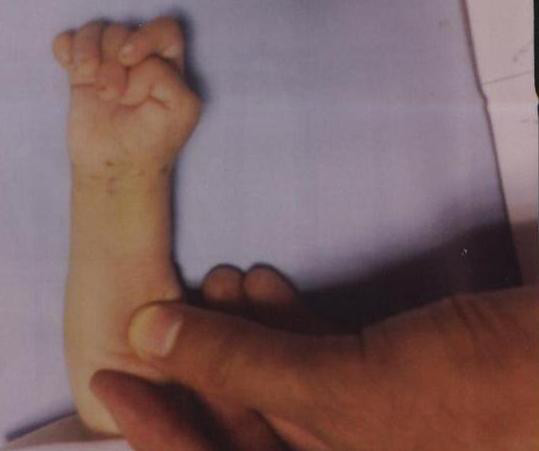
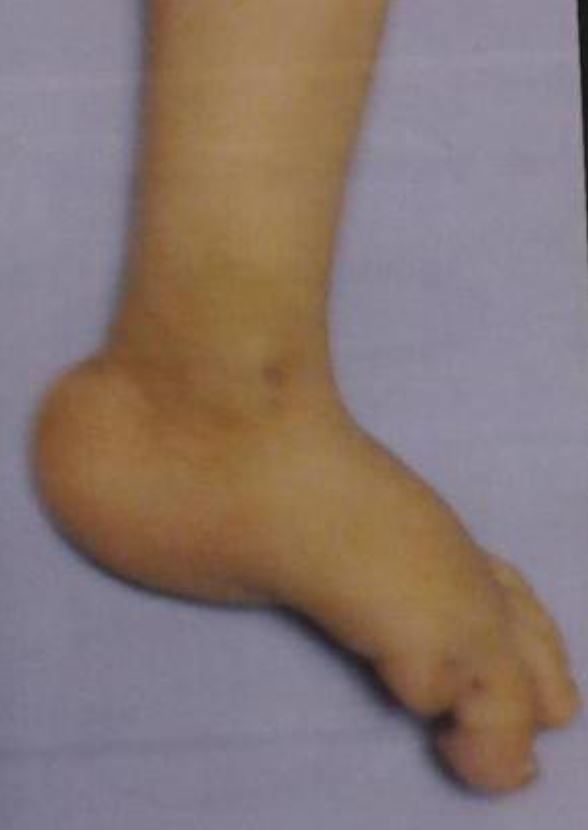
El síndrome de Edwards, o trisomía 18, es un síndrome genético causado por la presencia de un cromosoma 18 adicional. El cromosoma extra proviene de 3 copias completas del cromosoma 18 o de un segmento adicional del cromosoma 18. Siendo la 2da trisomía más común, el síndrome de Edwards se observa en EN Erythema nodosum is an immune-mediated panniculitis (inflammation of the subcutaneous fat) caused by a type IV (delayed-type) hypersensitivity reaction. It commonly manifests in young women as tender, erythematous nodules on the shins. Erythema Nodosum 1 de cada 5 500 nacidos vivos y aumenta con la edad materna. Muchos casos se detectan prenatalmente con el tamizaje materno y los LOS Neisseria hallazgos en EN Erythema nodosum is an immune-mediated panniculitis (inflammation of the subcutaneous fat) caused by a type IV (delayed-type) hypersensitivity reaction. It commonly manifests in young women as tender, erythematous nodules on the shins. Erythema Nodosum ultrasonido. Entre las anomalías se encuentran la restricción del crecimiento intrauterino (RCIU), los LOS Neisseria dedos superpuestos, los LOS Neisseria rasgos craneofaciales típicos, los LOS Neisseria pies en EN Erythema nodosum is an immune-mediated panniculitis (inflammation of the subcutaneous fat) caused by a type IV (delayed-type) hypersensitivity reaction. It commonly manifests in young women as tender, erythematous nodules on the shins. Erythema Nodosum forma de balancín y los LOS Neisseria defectos cardíacos congénitos. La trisomía 18 suele provocar la pérdida del feto. En EN Erythema nodosum is an immune-mediated panniculitis (inflammation of the subcutaneous fat) caused by a type IV (delayed-type) hypersensitivity reaction. It commonly manifests in young women as tender, erythematous nodules on the shins. Erythema Nodosum los LOS Neisseria embarazos a término, la mayoría de las muertes se producen durante los LOS Neisseria 1os 6 meses de vida. Se recomienda el parto en EN Erythema nodosum is an immune-mediated panniculitis (inflammation of the subcutaneous fat) caused by a type IV (delayed-type) hypersensitivity reaction. It commonly manifests in young women as tender, erythematous nodules on the shins. Erythema Nodosum un centro especializado para los LOS Neisseria embarazos a término y la intervención se basa en EN Erythema nodosum is an immune-mediated panniculitis (inflammation of the subcutaneous fat) caused by a type IV (delayed-type) hypersensitivity reaction. It commonly manifests in young women as tender, erythematous nodules on the shins. Erythema Nodosum las anomalías asociadas.

Last updated: Dec 15, 2025

Editorial responsibility: Stanley Oiseth, Lindsay Jones, Evelin Maza

Descripción General

Definición

El síndrome de Edwards, o trisomía 18, se define como la presencia de 3 copias del cromosoma 18.
Epidemiología

  • 2da trisomía más frecuente (1 de cada 6 000 nacidos vivos)
  • Afecta más a las niñas que a los LOS Neisseria niños, con una tasa de aproximadamente 3:1.
  • Tasa de mortalidad in utero: 66–80%
  • Si el embarazo llega a término, la tasa de mortalidad es del 50% en EN Erythema nodosum is an immune-mediated panniculitis (inflammation of the subcutaneous fat) caused by a type IV (delayed-type) hypersensitivity reaction. It commonly manifests in young women as tender, erythematous nodules on the shins. Erythema Nodosum las 2 primeras semanas de vida (la mayoría en EN Erythema nodosum is an immune-mediated panniculitis (inflammation of the subcutaneous fat) caused by a type IV (delayed-type) hypersensitivity reaction. It commonly manifests in young women as tender, erythematous nodules on the shins. Erythema Nodosum el primer año de vida).
  • La incidencia aumenta con la edad materna avanzada (la edad paterna puede tener un papel contribuyente menor).

Etiología

  • En EN Erythema nodosum is an immune-mediated panniculitis (inflammation of the subcutaneous fat) caused by a type IV (delayed-type) hypersensitivity reaction. It commonly manifests in young women as tender, erythematous nodules on the shins. Erythema Nodosum el 90% de los LOS Neisseria casos de trisomía 18, la presencia de 3 copias del cromosoma 18 se debe a la no disyunción.
  • Tipos:
    • Trisomía 18 por no disyunción
    • Translocación del cromosoma 18
    • Mosaicismo de la trisomía 18

Fisiopatología

Genética

  • Los LOS Neisseria cromosomas contienen material genético.
  • Células humanas:
    • 46 cromosomas: 23 pares con 1 homólogo de la madre/óvulo y 1 del padre/esperma
    • Cromosomas 1–22: autosomas
    • Cromosoma 23: 2 cromosomas sexuales
      • Mujer: X, X
      • Hombre: X, Y
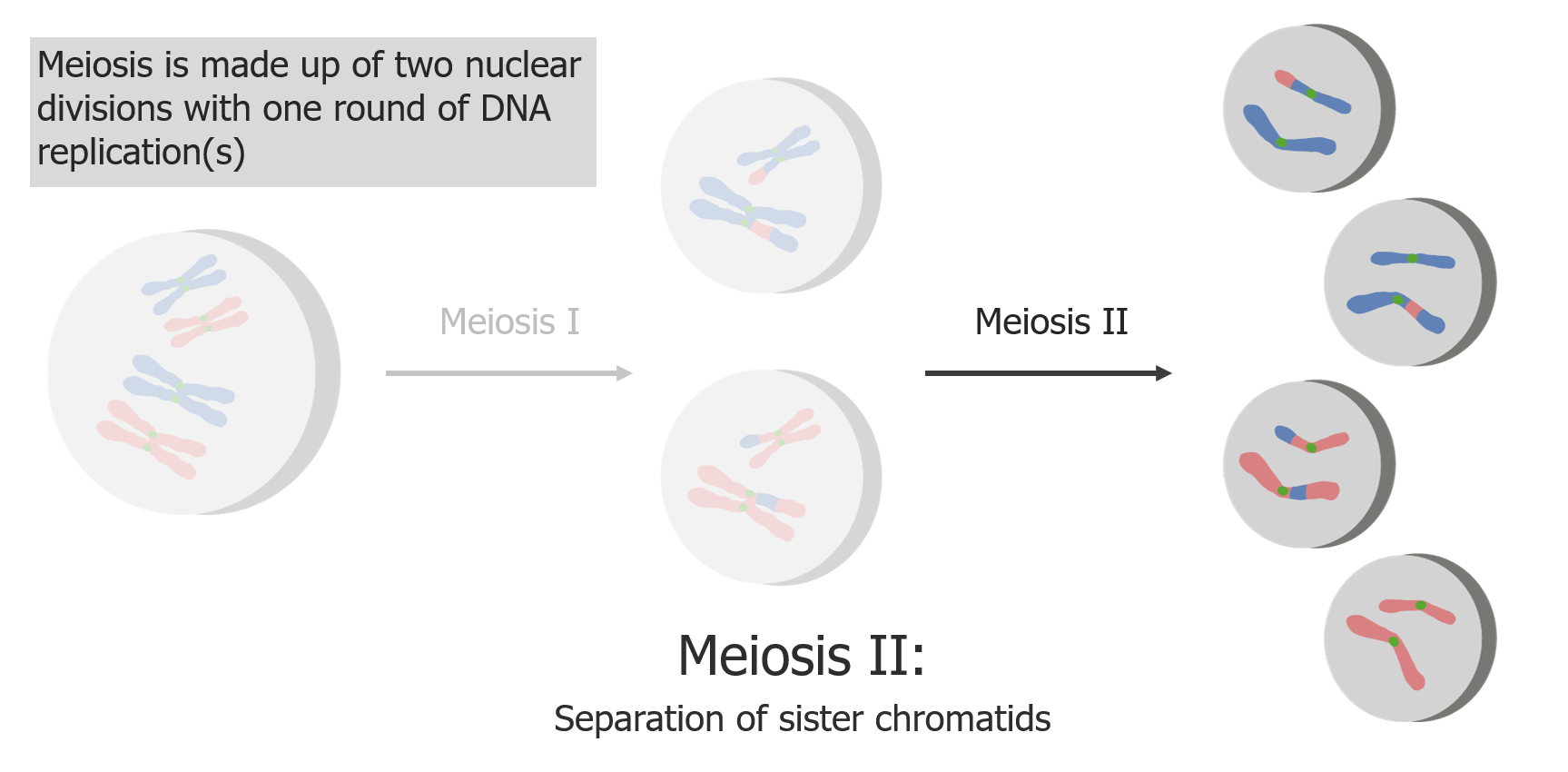
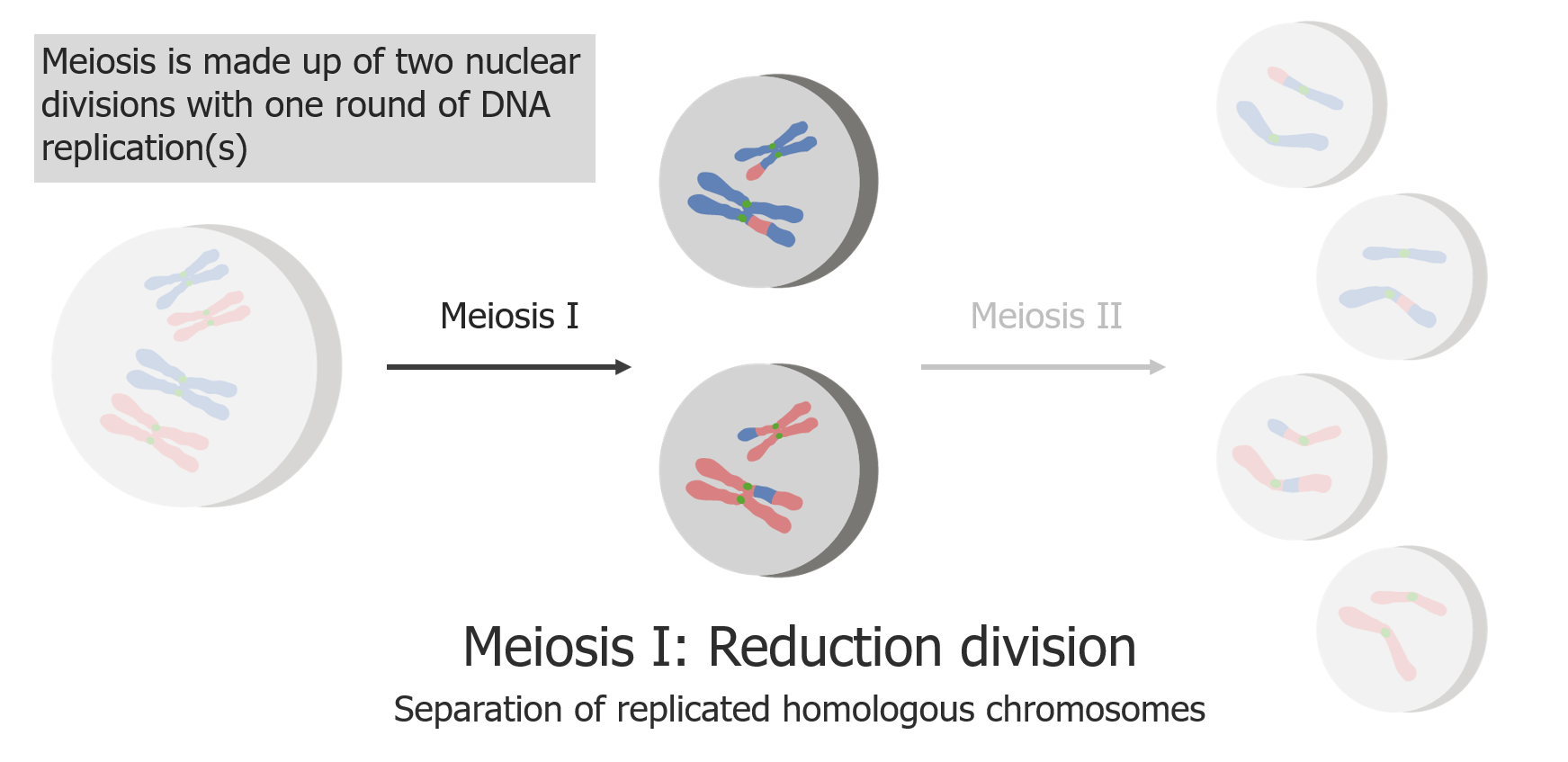
  • La meiosis Meiosis The creation of eukaryotic gametes involves a DNA replication phase followed by 2 cellular division stages: meiosis I and meiosis II. Meiosis I separates homologous chromosomes into separate cells (1n, 2c), while meiosis II separates sister chromatids into gametes (1n, 1c). Meiosis:
    • A la replicación del ADN le sigue la división celular reproductiva (las células separan los LOS Neisseria cromosomas antes de la reproducción de 46 → 23 cromosomas).
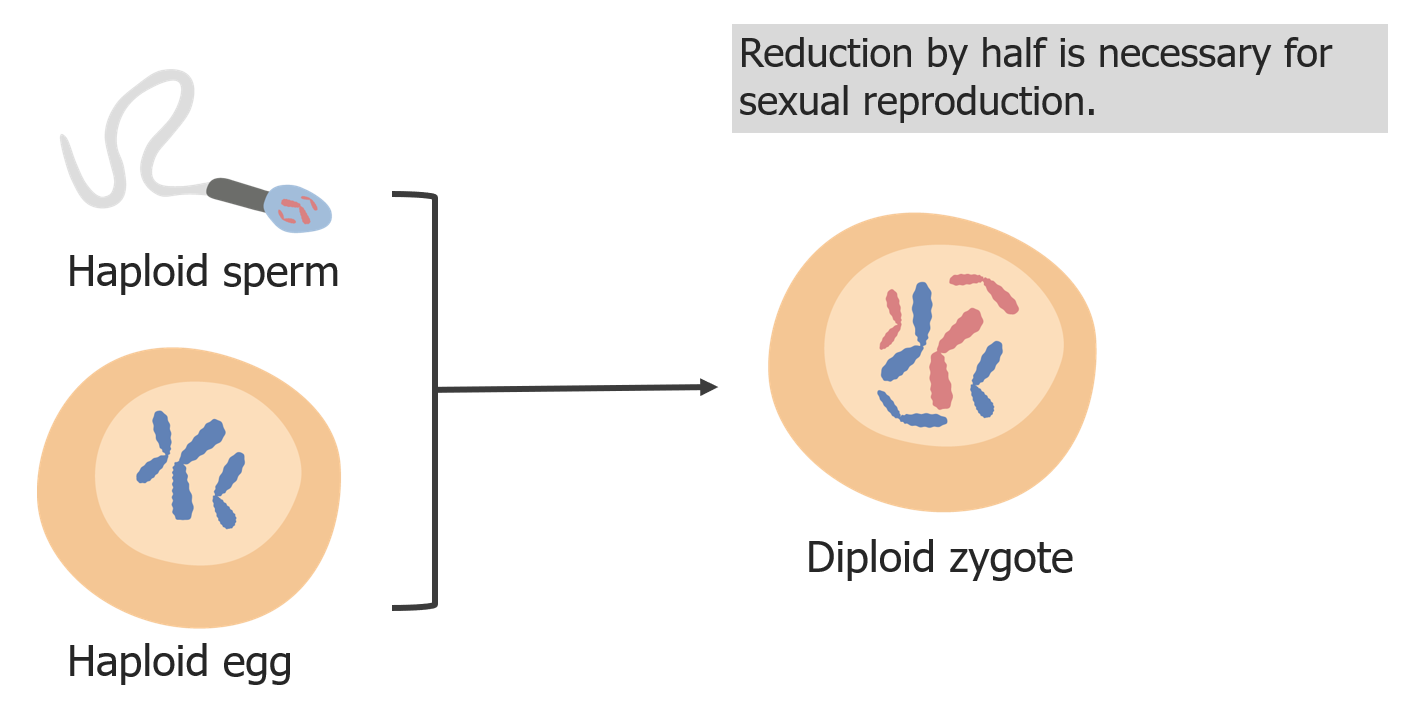
    • Las células diploides (2 juegos de cromosomas) se dividen en EN Erythema nodosum is an immune-mediated panniculitis (inflammation of the subcutaneous fat) caused by a type IV (delayed-type) hypersensitivity reaction. It commonly manifests in young women as tender, erythematous nodules on the shins. Erythema Nodosum un óvulo o un espermatozoide y se convierten en EN Erythema nodosum is an immune-mediated panniculitis (inflammation of the subcutaneous fat) caused by a type IV (delayed-type) hypersensitivity reaction. It commonly manifests in young women as tender, erythematous nodules on the shins. Erythema Nodosum una célula haploide (1 juego de cromosomas).
  • En EN Erythema nodosum is an immune-mediated panniculitis (inflammation of the subcutaneous fat) caused by a type IV (delayed-type) hypersensitivity reaction. It commonly manifests in young women as tender, erythematous nodules on the shins. Erythema Nodosum la fecundación, se forma un cigoto diploide cuando se unen un óvulo y un espermatozoide haploides.

No disyunción

  • Mecanismo más común
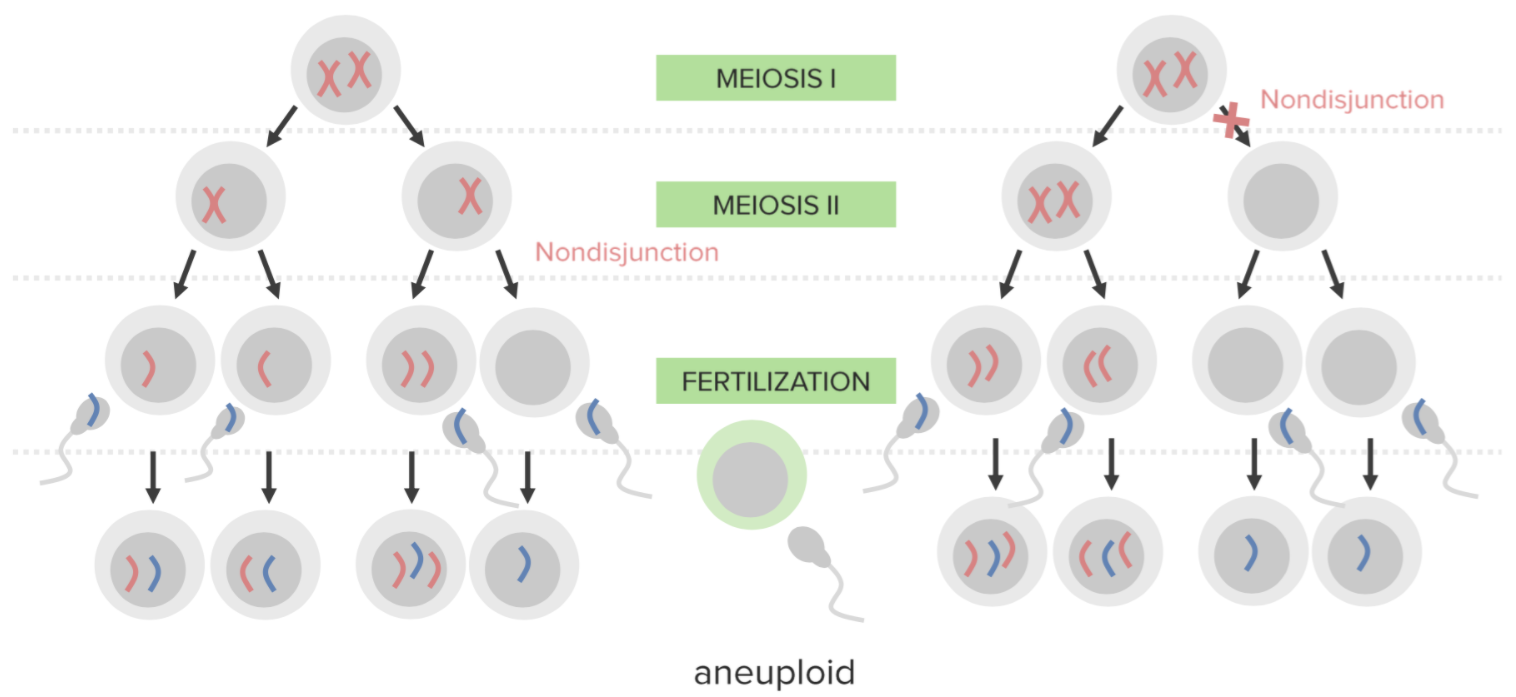
  • En EN Erythema nodosum is an immune-mediated panniculitis (inflammation of the subcutaneous fat) caused by a type IV (delayed-type) hypersensitivity reaction. It commonly manifests in young women as tender, erythematous nodules on the shins. Erythema Nodosum la no disyunción:
    • Fallo en EN Erythema nodosum is an immune-mediated panniculitis (inflammation of the subcutaneous fat) caused by a type IV (delayed-type) hypersensitivity reaction. It commonly manifests in young women as tender, erythematous nodules on the shins. Erythema Nodosum la separación adecuada de 2 cromosomas homólogos o cromátidas hermanas
    • Una célula diploide con un par PAR The PAR is the attributable risk for an entire population. It represents the fraction of cases that would not occur in a population if the exposure was eliminated. Measures of Risk de cromosomas se divide → 1 gameto termina con 2 cromosomas mientras que la otra célula no tiene ninguno (no es viable)
    • Da lugar a aneuploidia (estado de desequilibrio cromosómico)
  • Trisomía 18:
    • El cromosoma 18 está presente 3 veces (o tiene 3 copias).
    • Ocurrencia:
      • El óvulo con un par PAR The PAR is the attributable risk for an entire population. It represents the fraction of cases that would not occur in a population if the exposure was eliminated. Measures of Risk de cromosomas 18 es fecundado por una célula haploide normal (2 del óvulo y 1 del espermatozoide = 3).
      • El espermatozoide con un par PAR The PAR is the attributable risk for an entire population. It represents the fraction of cases that would not occur in a population if the exposure was eliminated. Measures of Risk de cromosomas 18 fecunda una célula haploide normal (2 del espermatozoide y 1 del óvulo = 3).

Translocación

  • La translocación se produce cuando una parte del cromosoma se une o intercambia con un segmento de otro cromosoma.
  • Trisomía 18 por translocación o trisomía 18 parcial:
    • 2% de los LOS Neisseria casos
    • Un fragmento del cromosoma 18 se une a otro cromosoma.
    • Los LOS Neisseria síntomas suelen ser menos graves, ya que solo un segmento del brazo largo o corto del cromosoma 18 está presente en EN Erythema nodosum is an immune-mediated panniculitis (inflammation of the subcutaneous fat) caused by a type IV (delayed-type) hypersensitivity reaction. It commonly manifests in young women as tender, erythematous nodules on the shins. Erythema Nodosum las 3 copias.
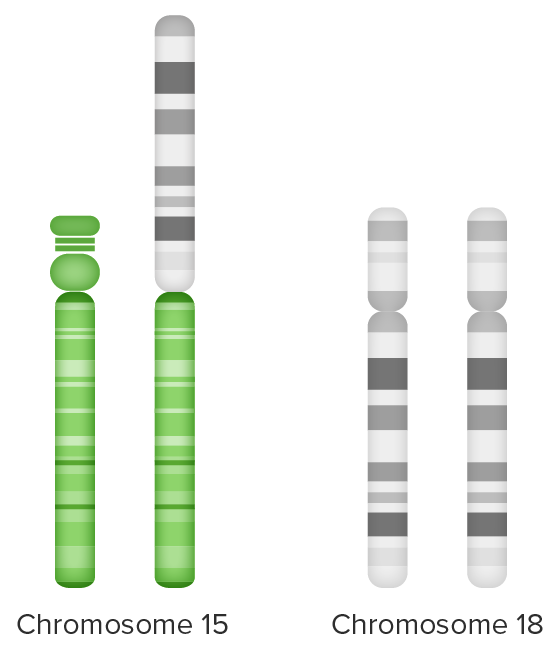
Translocación desequilibrada

Translocación desequilibrada:
Material extra del cromosoma 18 (brazo largo) unido al cromosoma 15 (a la izquierda) y
trisomía parcial 18 de 2 juegos de cromosomas 18 + brazo extra largo del cromosoma 18 (a la derecha)
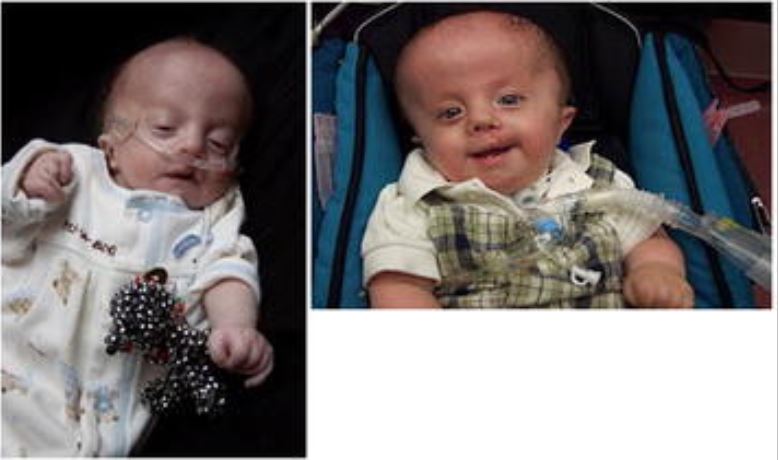
Imagen por Lecturio.

Mosaicismo

  • Ocurrencia < 5%
  • El cromosoma 18 adicional no lo llevan todas las células.
  • Manifestaciones clínicas menos graves

Related videos

Presentación Clínica

  • Principales hallazgos:
    • Retraso del crecimiento intrauterino (RCIU) con polihidramnios en EN Erythema nodosum is an immune-mediated panniculitis (inflammation of the subcutaneous fat) caused by a type IV (delayed-type) hypersensitivity reaction. It commonly manifests in young women as tender, erythematous nodules on the shins. Erythema Nodosum el ultrasonido
    • Occipucio prominente
    • Micrognatia
    • Microcefalia
    • Orejas puntiagudas y de implantación baja
    • Labio y paladar hendido
    • Esternón corto
    • Riñón en EN Erythema nodosum is an immune-mediated panniculitis (inflammation of the subcutaneous fat) caused by a type IV (delayed-type) hypersensitivity reaction. It commonly manifests in young women as tender, erythematous nodules on the shins. Erythema Nodosum herradura
    • Pies de balancín y dedos apretados y superpuestos
  • Malformaciones cardíacas en EN Erythema nodosum is an immune-mediated panniculitis (inflammation of the subcutaneous fat) caused by a type IV (delayed-type) hypersensitivity reaction. It commonly manifests in young women as tender, erythematous nodules on the shins. Erythema Nodosum > 50% de los LOS Neisseria pacientes:
    • La más común: la comunicación interventricular (CIV)
    • Conducto arterioso persistente
    • Estenosis pulmonar
    • Comunicación interauricular
  • Afectación GI en EN Erythema nodosum is an immune-mediated panniculitis (inflammation of the subcutaneous fat) caused by a type IV (delayed-type) hypersensitivity reaction. It commonly manifests in young women as tender, erythematous nodules on the shins. Erythema Nodosum aproximadamente el 75% de los LOS Neisseria casos:
    • Divertículo de Meckel y malrotación
    • El onfalocele es frecuente en EN Erythema nodosum is an immune-mediated panniculitis (inflammation of the subcutaneous fat) caused by a type IV (delayed-type) hypersensitivity reaction. It commonly manifests in young women as tender, erythematous nodules on the shins. Erythema Nodosum la etapa prenatal.
  • Discapacidad intelectual grave en EN Erythema nodosum is an immune-mediated panniculitis (inflammation of the subcutaneous fat) caused by a type IV (delayed-type) hypersensitivity reaction. It commonly manifests in young women as tender, erythematous nodules on the shins. Erythema Nodosum los LOS Neisseria supervivientes

Diagnóstico y Pronóstico

Tamizaje materno

  • Prueba combinada del 1er trimestre:
    • 11va–14ta semana de gestación
    • Prueba sérica materna
      • ↓ ꞵ-hCG
      • ↓ Proteína A plasmática asociada al AL Amyloidosis embarazo
    • Translucencia nucal fetal
      • En EN Erythema nodosum is an immune-mediated panniculitis (inflammation of the subcutaneous fat) caused by a type IV (delayed-type) hypersensitivity reaction. It commonly manifests in young women as tender, erythematous nodules on the shins. Erythema Nodosum el ultrasonido: Aumento de área hipoecoica en EN Erythema nodosum is an immune-mediated panniculitis (inflammation of the subcutaneous fat) caused by a type IV (delayed-type) hypersensitivity reaction. It commonly manifests in young women as tender, erythematous nodules on the shins. Erythema Nodosum el cuello posterior
      • 11va–13ra semana de gestación
  • Prueba triple del 2do trimestre (triple screening Screening Preoperative Care):
    • De la 15ta–20ma semana de gestación; idealmente hasta la 18va semana
    • ↓ 𝛼-fetoproteína, β-hCG, estriol Estriol A hydroxylated metabolite of estradiol or estrogen that has a hydroxyl group at C3, 16-alpha, and 17-beta position. Estriol is a major urinary estrogen. During pregnancy, a large amount of estriol is produced by the placenta. Isomers with inversion of the hydroxyl group or groups are called epiestriol. Noncontraceptive Estrogen and Progestins libre
  • Prueba cuádruple del 2do trimestre (tamiz cuádruple):
    • De la 15ta–21ra semana de gestación; idealmente hasta la 18va semana
    • La mejor opción si la madre se presenta para la evaluación prenatal en EN Erythema nodosum is an immune-mediated panniculitis (inflammation of the subcutaneous fat) caused by a type IV (delayed-type) hypersensitivity reaction. It commonly manifests in young women as tender, erythematous nodules on the shins. Erythema Nodosum el 2do trimestre
    • Hallazgos
      • Inhibina A sin cambios
      • ↓  Estriol Estriol A hydroxylated metabolite of estradiol or estrogen that has a hydroxyl group at C3, 16-alpha, and 17-beta position. Estriol is a major urinary estrogen. During pregnancy, a large amount of estriol is produced by the placenta. Isomers with inversion of the hydroxyl group or groups are called epiestriol. Noncontraceptive Estrogen and Progestins libre, 𝛼-fetoproteina y β-hCG
  • Prueba integrada completa:
    • Combinación de la proteína plasmática A asociada al AL Amyloidosis embarazo del 1er trimestre y la prueba cuádruple del 2do trimestre
    • Translucencia nucal fetal por ultrasonido
  • Prueba integrada en EN Erythema nodosum is an immune-mediated panniculitis (inflammation of the subcutaneous fat) caused by a type IV (delayed-type) hypersensitivity reaction. It commonly manifests in young women as tender, erythematous nodules on the shins. Erythema Nodosum suero: prueba integrada completa sin translucencia nucal fetal por ultrasonido
  • Proyección secuencial:
    • Tamizaje del 1er trimestre: Se informa a la paciente de los LOS Neisseria resultados.
    • Si se encuentra aumentado, se recomienda consejería y pruebas diagnósticas (e.g. pruebas de vellosidades coriónicas)
  • Prueba de ADN libre en EN Erythema nodosum is an immune-mediated panniculitis (inflammation of the subcutaneous fat) caused by a type IV (delayed-type) hypersensitivity reaction. It commonly manifests in young women as tender, erythematous nodules on the shins. Erythema Nodosum las células:
    • Procedimiento fetal no invasivo
    • En EN Erythema nodosum is an immune-mediated panniculitis (inflammation of the subcutaneous fat) caused by a type IV (delayed-type) hypersensitivity reaction. It commonly manifests in young women as tender, erythematous nodules on the shins. Erythema Nodosum cualquier momento después de la 10ma semana de gestación
    • El ADN fetal se aísla de la sangre materna y se evalúa para detectar anomalías cromosómicas.
    • Más precisa y específica que una prueba de detección tradicional
    • Pruebas de sexo fetal
    • Actualmente se considera la prueba de detección de primera línea debido a su alta sensibilidad y especificidad para la trisomía 18.
Tabla: Tamizaje materno del primer y segundo trimestre
1er trimestre 2do trimestre
NT PAPP-A hCG AFP AFP The first alpha-globulins to appear in mammalian sera during fetal development and the dominant serum proteins in early embryonic life. Hepatocellular Carcinoma (HCC) and Liver Metastases Estriol Estriol A hydroxylated metabolite of estradiol or estrogen that has a hydroxyl group at C3, 16-alpha, and 17-beta position. Estriol is a major urinary estrogen. During pregnancy, a large amount of estriol is produced by the placenta. Isomers with inversion of the hydroxyl group or groups are called epiestriol. Noncontraceptive Estrogen and Progestins hCG Inhibina A
Trisomía 13 ↓↓ Sin cambios Sin cambios Sin cambios Sin cambios
Trisomía 18 ↓↓ ↓↓ ↓↓ Sin cambios
Trisomía 21 ↑↑ ↓↓
NT: translucencia nucal
PAPP-A: proteína plasmática A asociada al embarazo
hCG: gonadotropina coriónica humana
AFP: ?-fetoproteína

Pruebas diagnósticas

  • Pruebas invasivas de diagnóstico:
    • Indicaciones:
      • Prueba de tamizaje positiva
      • Embarazo anterior con un niño con trisomía
      • Translocación o aberración cromosómica conocida en EN Erythema nodosum is an immune-mediated panniculitis (inflammation of the subcutaneous fat) caused by a type IV (delayed-type) hypersensitivity reaction. It commonly manifests in young women as tender, erythematous nodules on the shins. Erythema Nodosum el progenitor
    • Los LOS Neisseria riesgos incluyen hemorragias, infecciones, lesiones fetales y pérdida del feto (poco frecuente)
    • Procedimientos:
      • Muestra de vellosidades coriónicas: muestra de la placenta Placenta A highly vascularized mammalian fetal-maternal organ and major site of transport of oxygen, nutrients, and fetal waste products. It includes a fetal portion (chorionic villi) derived from trophoblasts and a maternal portion (decidua) derived from the uterine endometrium. The placenta produces an array of steroid, protein and peptide hormones (placental hormones). Placenta, Umbilical Cord, and Amniotic Cavity para su análisis (10ma–13ra semana de gestación)
      • Amniocentesis Amniocentesis Percutaneous transabdominal puncture of the uterus during pregnancy to obtain amniotic fluid. It is commonly used for fetal karyotype determination in order to diagnose abnormal fetal conditions. Polyhydramnios: muestra del líquido amniótico para su análisis (15ta–20ma semana de gestación)
      • Toma de sangre umbilical percutánea: muestra de sangre del cordón umbilical para su análisis (18va–22da semana de gestación); tasa de pérdida fetal del 2%.
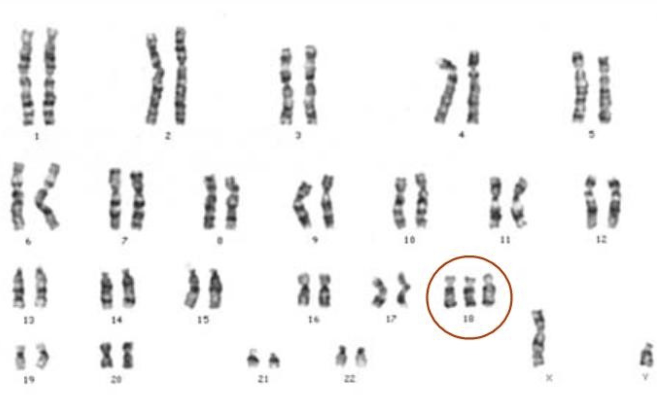
  • Cariotipo fetal: una prueba de confirmación prenatal y postnatal
Trisomy 18

Cariotipo de una persona afectada por el síndrome de Edward:
Se observan tres copias del cromosoma 18

Imagen: “Trisomia 18” por Serra Amoros. Licencia: CC BY 4.0

Tratamiento y Pronóstico

Tratamiento

  • Parto en EN Erythema nodosum is an immune-mediated panniculitis (inflammation of the subcutaneous fat) caused by a type IV (delayed-type) hypersensitivity reaction. It commonly manifests in young women as tender, erythematous nodules on the shins. Erythema Nodosum un centro especializado con un neonatólogo
  • Tratamiento de soporte:
    • Intervención: depende del tipo de anomalías
    • Cuidados paliativos
  • Asesoramiento genético y estudios cromosómicos para los LOS Neisseria padres (especialmente si se planean futuros embarazos y cuando la trisomía se debe a una translocación o mosaicismo)
  • Recursos de apoyo (e.g., Support Organization for Trisomy Trisomy The possession of a third chromosome of any one type in an otherwise diploid cell. Types of Mutations (Organización de Apoyo a la Trisomía, o SOFT por sus siglas en EN Erythema nodosum is an immune-mediated panniculitis (inflammation of the subcutaneous fat) caused by a type IV (delayed-type) hypersensitivity reaction. It commonly manifests in young women as tender, erythematous nodules on the shins. Erythema Nodosum inglés)

Pronóstico

  • La mayoría de los LOS Neisseria bebés fallecerán in utero.
  • De los LOS Neisseria bebés que nacen vivos, el 50% fallecerá en EN Erythema nodosum is an immune-mediated panniculitis (inflammation of the subcutaneous fat) caused by a type IV (delayed-type) hypersensitivity reaction. It commonly manifests in young women as tender, erythematous nodules on the shins. Erythema Nodosum las primeras 2 semanas de vida, y el 80%–90% fallecerá en EN Erythema nodosum is an immune-mediated panniculitis (inflammation of the subcutaneous fat) caused by a type IV (delayed-type) hypersensitivity reaction. It commonly manifests in young women as tender, erythematous nodules on the shins. Erythema Nodosum los LOS Neisseria primeros 6 meses de vida.
  • El fallecimiento suele deberse a la apnea central, insuficiencia cardíaca congestiva o convulsiones.
  • Se ha HA Hemolytic anemia (HA) is the term given to a large group of anemias that are caused by the premature destruction/hemolysis of circulating red blood cells (RBCs). Hemolysis can occur within (intravascular hemolysis) or outside the blood vessels (extravascular hemolysis). Hemolytic Anemia reportado que, con atención individualizada, un pequeño número de niños con trisomía 18 sobreviven hasta la infancia.

Diagnóstico Diferencial

  • Síndrome de Patau (trisomía 13): presencia de 3 copias del cromosoma 13. Muchos hallazgos clínicos de la trisomía 18 y 13 se solapan, pero el labio y/o paladar hendido, el coloboma Coloboma Congenital anomaly in which some of the structures of the eye are absent due to incomplete fusion of the fetal intraocular fissure during gestation. Esophageal Atresia and Tracheoesophageal Fistula del iris, los LOS Neisseria defectos del cuero cabelludo y la polidactilia se observan con más frecuencia en EN Erythema nodosum is an immune-mediated panniculitis (inflammation of the subcutaneous fat) caused by a type IV (delayed-type) hypersensitivity reaction. It commonly manifests in young women as tender, erythematous nodules on the shins. Erythema Nodosum la trisomía 13. Tanto la trisomía 18 como la 13 tienen un mal pronóstico.
  • Síndrome de trombocitopenia-ausencia de radios: un síndrome de microdeleción que causa trombocitopenia, defectos cardíacos congénitos y ausencia de radios bilaterales en EN Erythema nodosum is an immune-mediated panniculitis (inflammation of the subcutaneous fat) caused by a type IV (delayed-type) hypersensitivity reaction. It commonly manifests in young women as tender, erythematous nodules on the shins. Erythema Nodosum los LOS Neisseria antebrazos. Pueden producirse hemorragias en EN Erythema nodosum is an immune-mediated panniculitis (inflammation of the subcutaneous fat) caused by a type IV (delayed-type) hypersensitivity reaction. It commonly manifests in young women as tender, erythematous nodules on the shins. Erythema Nodosum el cerebro y en EN Erythema nodosum is an immune-mediated panniculitis (inflammation of the subcutaneous fat) caused by a type IV (delayed-type) hypersensitivity reaction. It commonly manifests in young women as tender, erythematous nodules on the shins. Erythema Nodosum otros órganos. En EN Erythema nodosum is an immune-mediated panniculitis (inflammation of the subcutaneous fat) caused by a type IV (delayed-type) hypersensitivity reaction. It commonly manifests in young women as tender, erythematous nodules on the shins. Erythema Nodosum los LOS Neisseria pacientes sin problemas hemorrágicos cabe esperar una capacidad intelectual normal. Los LOS Neisseria niños con trisomía 18 pueden presentar ausencia de radios y trombocitopenia.
  • Secuencia de deformación de la acinesia fetal (también conocida como síndrome de Peña-Shokeir tipo 1): Las características de la secuencia de deformación de la acinesia fetal incluyen acinesia fetal, hipoplasia pulmonar, RCIU, anomalías faciales, otras anomalías del desarrollo y contracturas articulares múltiples (artrogriposis), incluyendo dedos superpuestos. Aproximadamente el 30% de los LOS Neisseria individuos afectados nacen muertos. Los LOS Neisseria bebés que nacen vivos tienen un tiempo de supervivencia limitado debido a las complicaciones de la hipoplasia pulmonar.
  • Colobomas, defectos cardíacos, atresia Atresia Hypoplastic Left Heart Syndrome (HLHS) de coanas, restricción del crecimiento/retraso del desarrollo, anomalías genitourinarias y anomalías del oído (CHARGE): En EN Erythema nodosum is an immune-mediated panniculitis (inflammation of the subcutaneous fat) caused by a type IV (delayed-type) hypersensitivity reaction. It commonly manifests in young women as tender, erythematous nodules on the shins. Erythema Nodosum más del 50% de los LOS Neisseria casos, está implicada una mutación genética en EN Erythema nodosum is an immune-mediated panniculitis (inflammation of the subcutaneous fat) caused by a type IV (delayed-type) hypersensitivity reaction. It commonly manifests in young women as tender, erythematous nodules on the shins. Erythema Nodosum el gen CHD7. No se recomienda ningún tratamiento específico, ya que el tratamiento es individualizado en EN Erythema nodosum is an immune-mediated panniculitis (inflammation of the subcutaneous fat) caused by a type IV (delayed-type) hypersensitivity reaction. It commonly manifests in young women as tender, erythematous nodules on the shins. Erythema Nodosum función del grado de anomalías mayores y menores.

Referencias

  1. Cereda, A., Carey, J. C. (2012). The trisomy 18 syndrome. Orphanet journal of rare diseases. 7(81). https://doi.org/10.1186/1750-1172-7-81
  2. Giersch, A.B.S. (2025, February). Congenital cytogenetic abnormalities. In Lockwood, C.J., et al. UpToDate. Retrieved April 1, 2025, from https://www.uptodate.com/contents/congenital-cytogenetic-abnormalities
  3. Jones, K. L., et al. (2013). Smith’s Recognizable Patterns of Human Malformation. Seventh edition, Elsevier Saunders.
  4. Meeks, N. J. L., et al. (2018). Genetics & Dysmorphology. In Hay William Jr., W., et al. Current Diagnosis & Treatment: Pediatrics. 24th ed., McGraw-Hill Education. https://accessmedicine.mhmedical.com/content.aspx?bookid=2815&sectionid=244267515
  5. Genetic and Rare Diseases Information Center (GARD). (2025). Fetal Akinesia Deformation Sequence. https://rarediseases.info.nih.gov/diseases/9634/fetal-akinesia-deformation-sequence
  6. National Organization for Rare Disorders (NORD). (2024, April). Trisomy 18. https://rarediseases.org/rare-diseases/trisomy-18-syndrome/
  7. Goel, N., Morris, J. K., Tucker, D., de Walle, H. E. K., Bakker, M. K., Kancherla, V., … & Nembhard, W. N. (2019). Trisomy 13 and 18—Prevalence and mortality—A multi-registry population-based analysis. American Journal of Medical Genetics Part A, 179(12), 2382-2392. https://stacks.cdc.gov/view/cdc/83093
  8. Palomaki, G. E., Messerlian, G. M., & Halliday, J. V. (2024). Prenatal screening for common fetal aneuploidies: Cell-free DNA test. UpToDate. https://www.uptodate.com/contents/prenatal-screening-for-common-fetal-aneuploidies-cell-free-dna-test
  9. Cleveland Clinic. (2021). Edwards Syndrome (Trisomy 18). https://my.clevelandclinic.org/health/diseases/22172-edwards-syndrome

¡Crea tu cuenta gratis o inicia una sesión para seguir leyendo!

Regístrate ahora y obtén acceso gratuito a Lecturio con páginas de concepto, videos médicos y cuestionarios para tu educación médica.

User Reviews

Que tengas una sesión de estudio alegre y navideña 🎁 Ahorra 50% en todos los planes >>

Details