
Las salmonelas son bacilos gramnegativos de la familia Enterobacteriaceae Enterobacteriaceae A family of gram-negative, facultatively anaerobic, rod-shaped bacteria that do not form endospores. Its organisms are distributed worldwide with some being saprophytes and others being plant and animal parasites. Many species are of considerable economic importance due to their pathogenic effects on agriculture and livestock. Cephalosporins. Las salmonelas son microbios flagelados, no fermentadores de lactosa y productores de sulfuro de hidrógeno. Salmonella Salmonella Salmonellae are gram-negative bacilli of the family Enterobacteriaceae. Salmonellae are flagellated, non-lactose-fermenting, and hydrogen sulfide-producing microbes. Salmonella enterica, the most common disease-causing species in humans, is further classified based on serotype as typhoidal (S. typhi and paratyphi) and nontyphoidal (S. enteritidis and typhimurium). Salmonella entérica, la especie causante de enfermedades más común en EN Erythema nodosum is an immune-mediated panniculitis (inflammation of the subcutaneous fat) caused by a type IV (delayed-type) hypersensitivity reaction. It commonly manifests in young women as tender, erythematous nodules on the shins. Erythema Nodosum humanos, se clasifica además según el serotipo como tifoidea (S. typhi y paratyphi) y no tifoidea ( S. enteritidis S. enteritidis A serotype of Salmonella enterica which is an etiologic agent of gastroenteritis in man and other animals. Salmonella y typhimurium). La transmisión se produce por vía fecal-oral y por consumo de agua y alimentos contaminados. Las bacterias penetran en EN Erythema nodosum is an immune-mediated panniculitis (inflammation of the subcutaneous fat) caused by a type IV (delayed-type) hypersensitivity reaction. It commonly manifests in young women as tender, erythematous nodules on the shins. Erythema Nodosum las células intestinales a través de las microcélulas de las placas de Peyer y provocan síntomas abdominales. Los LOS Neisseria patógenos también pueden interrumpir el transporte de sodio y cloruro en EN Erythema nodosum is an immune-mediated panniculitis (inflammation of the subcutaneous fat) caused by a type IV (delayed-type) hypersensitivity reaction. It commonly manifests in young women as tender, erythematous nodules on the shins. Erythema Nodosum el intestino (causando diarrea) e invadir el torrente sanguíneo (causando sepsis Sepsis Systemic inflammatory response syndrome with a proven or suspected infectious etiology. When sepsis is associated with organ dysfunction distant from the site of infection, it is called severe sepsis. When sepsis is accompanied by hypotension despite adequate fluid infusion, it is called septic shock. Sepsis and Septic Shock e infección no intestinal). Las principales presentaciones clínicas incluyen fiebre tifoidea o entérica, enterocolitis Enterocolitis Inflammation of the mucosa of both the small intestine and the large intestine. Etiology includes ischemia, infections, allergic, and immune responses. Yersinia spp./Yersiniosis transmitida por alimentos y bacteriemia. El tratamiento antibiótico se considera en EN Erythema nodosum is an immune-mediated panniculitis (inflammation of the subcutaneous fat) caused by a type IV (delayed-type) hypersensitivity reaction. It commonly manifests in young women as tender, erythematous nodules on the shins. Erythema Nodosum enfermedades graves y estados de portador crónico.
Last updated: Dec 15, 2025
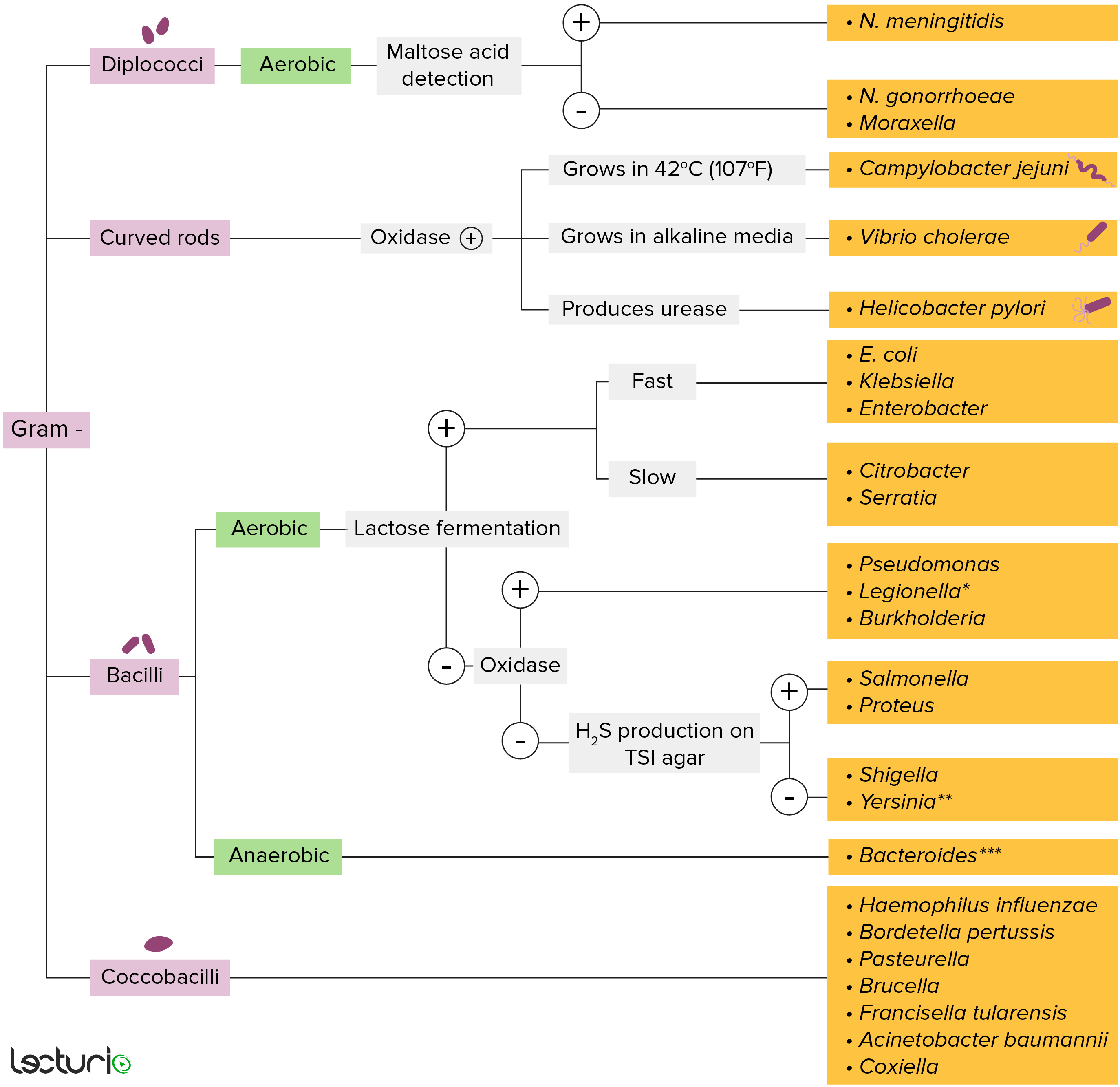
Bacterias gram-negativas:
La mayoría de las bacterias se pueden clasificar de acuerdo con un procedimiento de laboratorio llamado tinción de Gram.
Las bacterias con paredes celulares que tienen una capa delgada de peptidoglicano no retienen la tinción de cristal violeta utilizada en la tinción de Gram. Sin embargo, estas bacterias retienen la contratinción de safranina y, por lo tanto, se tiñen de color rojo rosado, lo que las convierte en gram negativas. Estas bacterias pueden clasificarse además según su morfología (diplococos, bastoncillos curvos, bacilos y cocobacilos) y su capacidad para crecer en presencia de oxígeno (aeróbicos frente a anaeróbicos). Las bacterias se pueden identificar de manera más estrecha cultivándolas en medios específicos (agar triple azúcar hierro (TSI, por sus siglas en inglés)) donde se pueden identificar sus enzimas (ureasa, oxidasa) y se puede probar su capacidad para fermentar lactosa.
* Se tiñe mal en la tinción de Gram
** Baston pleomórfico/cocobacilo
*** Requiere medios de transporte especiales
Salmonella enterica Salmonella enterica A subgenus of Salmonella containing several medically important serotypes. The habitat for the majority of strains is warm-blooded animals. Salmonella es la especie principal y tiene los LOS Neisseria siguientes serotipos:
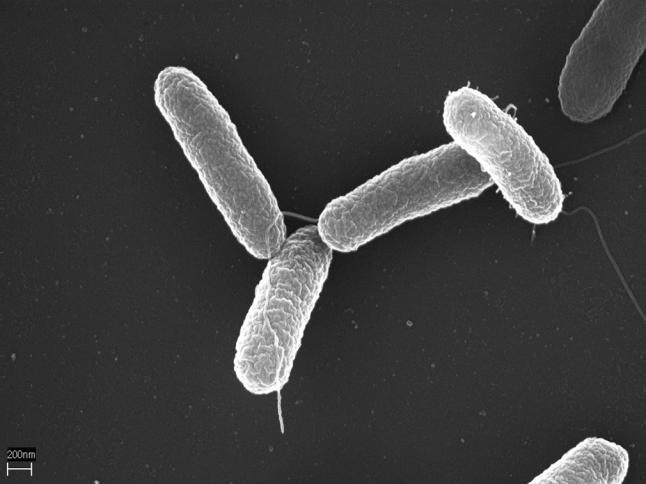
Salmonella enterica serotipo typhimurium: una de las causas de enfermedades transmitidas por alimentos
Imagen: “A Novel Data-Mining Approach Systematically Links Genes to Traits” por Volker Brinkmann. Licencia: CC BY 4.0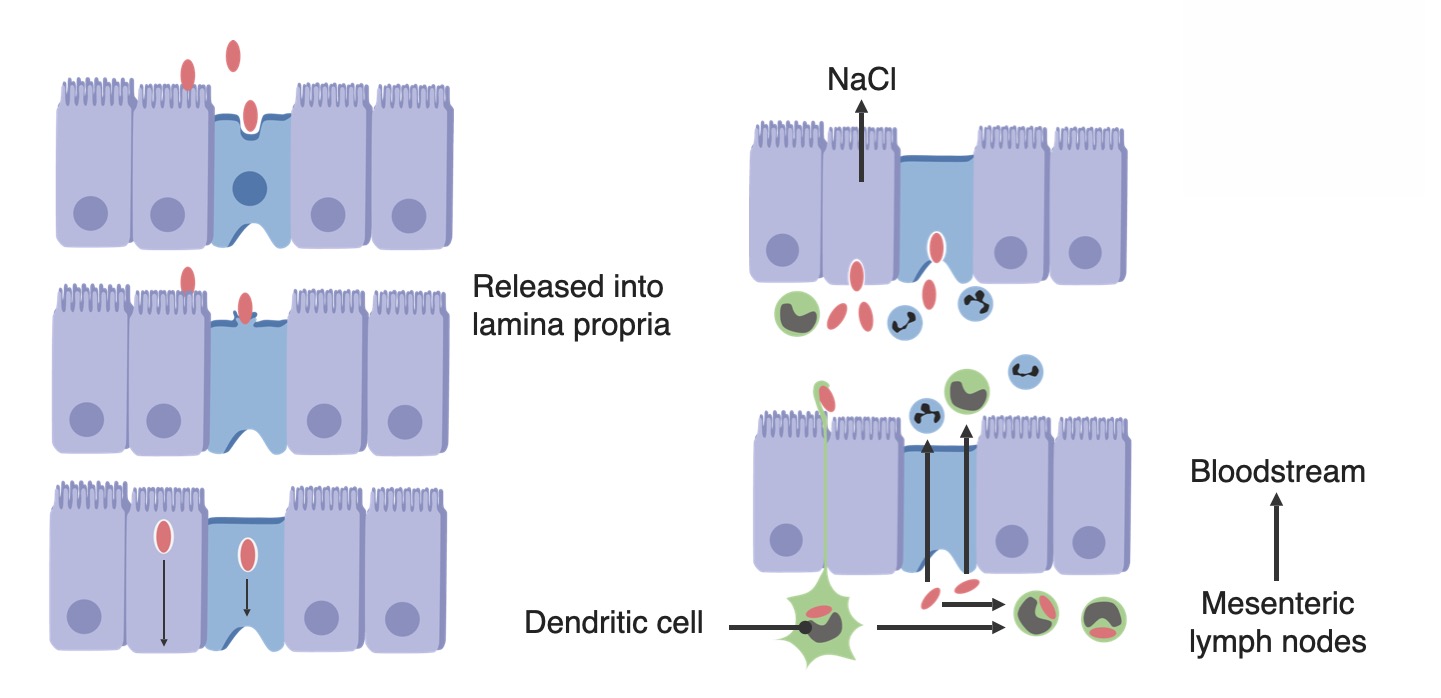
Patogenia de la Salmonella:
En el intestino delgado, l Salmonella spp. (manchas ovaladas de color rosa) penetran la barrera de la mucosa y entran en las células M (micropliegues) (azul) y las células epiteliales (púrpura) mediante endocitosis mediada por bacterias.
Los microbios se liberan profundamente en la lámina propia. Se induce un desequilibrio de cloruro de sodio (NaCl), lo que provoca diarrea. Se provoca una respuesta inflamatoria, reclutando células mononucleares (e.g., células dendríticas) y linfocitos. Con una mayor invasión, las bacterias continúan replicándose y propagándose en el torrente sanguíneo.
Fiebre tifoidea o fiebre entérica:
Estado de portador crónico:
Enterocolitis Enterocolitis Inflammation of the mucosa of both the small intestine and the large intestine. Etiology includes ischemia, infections, allergic, and immune responses. Yersinia spp./Yersiniosis/ gastroenteritis Gastroenteritis Gastroenteritis is inflammation of the stomach and intestines, commonly caused by infections from bacteria, viruses, or parasites. Transmission may be foodborne, fecal-oral, or through animal contact. Common clinical features include abdominal pain, diarrhea, vomiting, fever, and dehydration. Gastroenteritis:
Bacteriemia:
Tanto la Salmonella Salmonella Salmonellae are gram-negative bacilli of the family Enterobacteriaceae. Salmonellae are flagellated, non-lactose-fermenting, and hydrogen sulfide-producing microbes. Salmonella enterica, the most common disease-causing species in humans, is further classified based on serotype as typhoidal (S. typhi and paratyphi) and nontyphoidal (S. enteritidis and typhimurium). Salmonella como la Shigella Shigella Shigella is a genus of gram-negative, non-lactose-fermenting facultative intracellular bacilli. Infection spreads most commonly via person-to-person contact or through contaminated food and water. Humans are the only known reservoir. Shigella pueden invadir el tracto gastrointestinal y causar diarrea.
| Shigela | Salmonela | |
|---|---|---|
| Tinción de Gram/estructura | Bacilos gramnegativos | Bacilos gramnegativos |
| Fermentación de lactosa | Microbios no fermentadores | Microbios no fermentadores |
| Oxidasa | Negativa | Negativa |
| Producción de H2S | No | Sí |
| Motilidad | No | Sí (con flagelos) |
| Factores virulentos | Endotoxina, toxina Shiga | Endotoxina, antígeno capsular Vi |
| Reservorio | Humanos | Humanos (S. typhi), animales |
| Dosis para producir la enfermedad | Inóculo pequeño (estable en EN Erythema nodosum is an immune-mediated panniculitis (inflammation of the subcutaneous fat) caused by a type IV (delayed-type) hypersensitivity reaction. It commonly manifests in young women as tender, erythematous nodules on the shins. Erythema Nodosum ácido) | Gran dosis (inactivado por ácidos) |
| Propagación de infecciones | De célula a célula (sin diseminación hematógena) | Puede diseminarse hematógenamente |