Domina Conceptos Médicos

Estudia para la escuela de medicina y tus examenes con Lecturio.

Politraumatismo

El politraumatismo se produce cuando ocurren 2 o más lesiones traumáticas en al menos 2 áreas del cuerpo. Es necesario un abordaje terapéutico sistemático para los pacientes que han sufrido un traumatismo para maximizar los resultados y reducir el riesgo de lesiones ocultas. La evaluación del politraumatismo comienza con una evaluación primaria seguida del esquema "ABCDE" ( en EN Erythema nodosum is an immune-mediated panniculitis (inflammation of the subcutaneous fat) caused by a type IV (delayed-type) hypersensitivity reaction. It commonly manifests in young women as tender, erythematous nodules on the shins. Erythema Nodosum inglés), que implica asegurar la vía aérea (A) y evaluar la respiración (B), la circulación (C), el reconocimiento de déficits neurológicos o discapacidad (D) y exposición al AL Amyloidosis control ambiental (E). Una vez que se completa la evaluación primaria, se realiza una evaluación secundaria para obtener los LOS Neisseria antecedentes pertinentes y la naturaleza del traumatismo basado en EN Erythema nodosum is an immune-mediated panniculitis (inflammation of the subcutaneous fat) caused by a type IV (delayed-type) hypersensitivity reaction. It commonly manifests in young women as tender, erythematous nodules on the shins. Erythema Nodosum un examen completo y estudios diagnósticos. El abordaje ABCDE es crucial para la estabilización general, el tratamiento y la identificación de cualquier lesión oculta.

Last updated: Dec 15, 2025

Editorial responsibility: Stanley Oiseth, Lindsay Jones, Evelin Maza

Descripción General

Definición

El traumatismo múltiple o politraumatismo se define como 2 o más lesiones graves en EN Erythema nodosum is an immune-mediated panniculitis (inflammation of the subcutaneous fat) caused by a type IV (delayed-type) hypersensitivity reaction. It commonly manifests in young women as tender, erythematous nodules on the shins. Erythema Nodosum al AL Amyloidosis menos 2 áreas del cuerpo (con al AL Amyloidosis menos 1 lesión potencialmente mortal).

Epidemiología

Un traumatismo es una de las principales causas de mortalidad y morbilidad a nivel mundial.

  • A nivel mundial, los LOS Neisseria traumatismos causados ​​por accidentes de tráfico son la principal causa de muerte entre niños y jóvenes de 5 a 29 años.
  • El homicidio es la principal causa de muerte de niños negros no hispanos en EN Erythema nodosum is an immune-mediated panniculitis (inflammation of the subcutaneous fat) caused by a type IV (delayed-type) hypersensitivity reaction. It commonly manifests in young women as tender, erythematous nodules on the shins. Erythema Nodosum la adolescencia.

La hemorragia es la causa de mortalidad prevenible más frecuente en EN Erythema nodosum is an immune-mediated panniculitis (inflammation of the subcutaneous fat) caused by a type IV (delayed-type) hypersensitivity reaction. It commonly manifests in young women as tender, erythematous nodules on the shins. Erythema Nodosum los LOS Neisseria traumatismos.

Factores asociados con malos pronósticos en EN Erythema nodosum is an immune-mediated panniculitis (inflammation of the subcutaneous fat) caused by a type IV (delayed-type) hypersensitivity reaction. It commonly manifests in young women as tender, erythematous nodules on the shins. Erythema Nodosum los LOS Neisseria traumatismos:

  • Vejez
  • Obesidad
  • Comorbilidades importantes

Evaluación Primaria

La evaluación primaria es la evaluación inicial que se utiliza para identificar y tratar las lesiones potencialmente mortales en un paciente con traumatismos. La valoración consta de 5 evaluaciones realizadas en forma escalonada (“ABCDE”, en EN Erythema nodosum is an immune-mediated panniculitis (inflammation of the subcutaneous fat) caused by a type IV (delayed-type) hypersensitivity reaction. It commonly manifests in young women as tender, erythematous nodules on the shins. Erythema Nodosum inglés): airway (vía aérea), breathing (respiración), circulation (circulación), disability (discapacidad) y exposure (exposición).
Vía aérea

  • Objetivo:
    • Establecer la permeabilidad de la vía aérea
    • Evaluar la capacidad del paciente para proteger la vía aérea
    • Proteger la vía aérea:
      • Vía aérea orofaríngea para prevenir la obstrucción por la lengua en EN Erythema nodosum is an immune-mediated panniculitis (inflammation of the subcutaneous fat) caused by a type IV (delayed-type) hypersensitivity reaction. It commonly manifests in young women as tender, erythematous nodules on the shins. Erythema Nodosum pacientes inconscientes que respiran
      • Intubación si es necesario
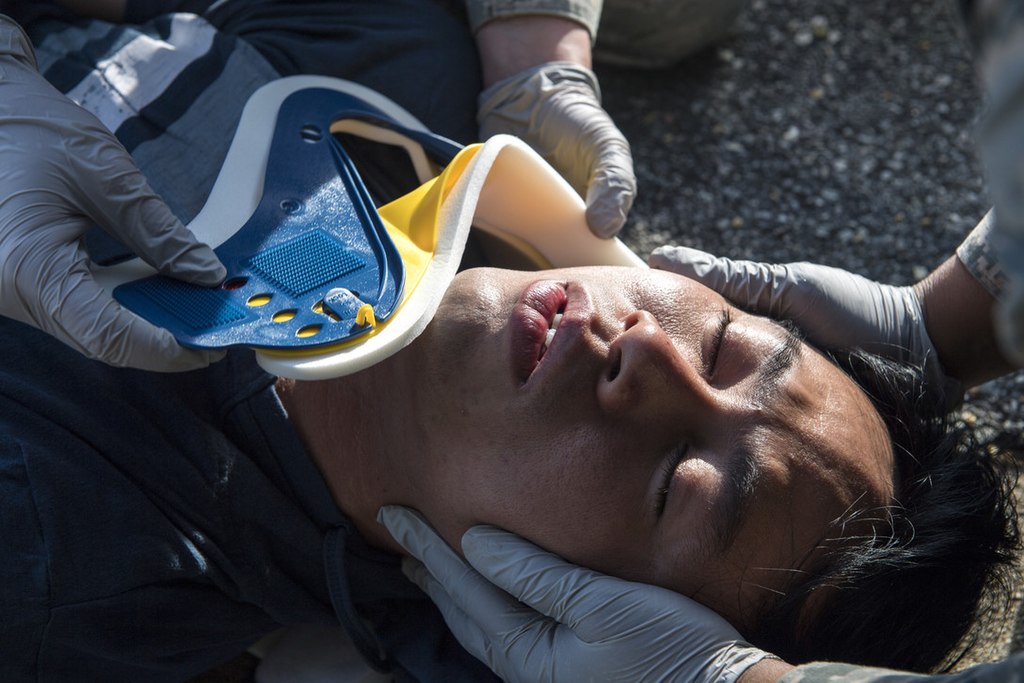
    • Inmovilización de la columna vertebral utilizando una tabla y un collarín cervical rígido
  • Causas de compromiso de la vía aérea:
    • Lesión traumática
    • Por la lengua del individuo afectado
    • Cuerpo extraño (e.g., deglutir un objeto externo)
    • Vómito, sangre y secreciones
    • Edema Edema Edema is a condition in which excess serous fluid accumulates in the body cavity or interstitial space of connective tissues. Edema is a symptom observed in several medical conditions. It can be categorized into 2 types, namely, peripheral (in the extremities) and internal (in an organ or body cavity). Edema localizado debido a infección o anafilaxia
  • Evaluación de la vía aérea:
  • Si los LOS Neisseria pacientes afectados pueden hablar normalmente → la vía aérea está intacta
  • Signos de una vía aérea desprotegida:
    • Movimientos torácicos y abdominales paradójicos
    • Cianosis
    • Sonidos respiratorios anormales (e.g., ronquidos, estridor, gorgoteo, sibilancias espiratorias)
    • Presencia de enfisema subcutáneo
    • Glasgow Coma Coma Coma is defined as a deep state of unarousable unresponsiveness, characterized by a score of 3 points on the GCS. A comatose state can be caused by a multitude of conditions, making the precise epidemiology and prognosis of coma difficult to determine. Coma Scale Scale Dermatologic Examination ( GCS GCS A scale that assesses the response to stimuli in patients with craniocerebral injuries. The parameters are eye opening, motor response, and verbal response. Coma) < 9
  • Manejo de la vía aérea:
    • Ventilación adecuada con oxígeno al AL Amyloidosis 100% mediante bolsa y mascarilla
    • Pulsioximetría para monitorizar los LOS Neisseria niveles de oxígeno
    • Maniobras especiales:
      • Elevación del mentón, tracción mandibular
      • Se pueden utilizar las vías aéreas oral (sonda orofaríngea) o nasal (sonda nasofaríngea) para mantener temporalmente la vía aérea permeable
  • Si estas maniobras fallan, establecer una vía aérea definitiva:
    • Intubación endotraqueal (orotraqueal):
      • Inserción de un tubo en EN Erythema nodosum is an immune-mediated panniculitis (inflammation of the subcutaneous fat) caused by a type IV (delayed-type) hypersensitivity reaction. It commonly manifests in young women as tender, erythematous nodules on the shins. Erythema Nodosum la tráquea a través de la boca (con menor frecuencia a través de la nariz)
      • Procedimiento de 1ra línea
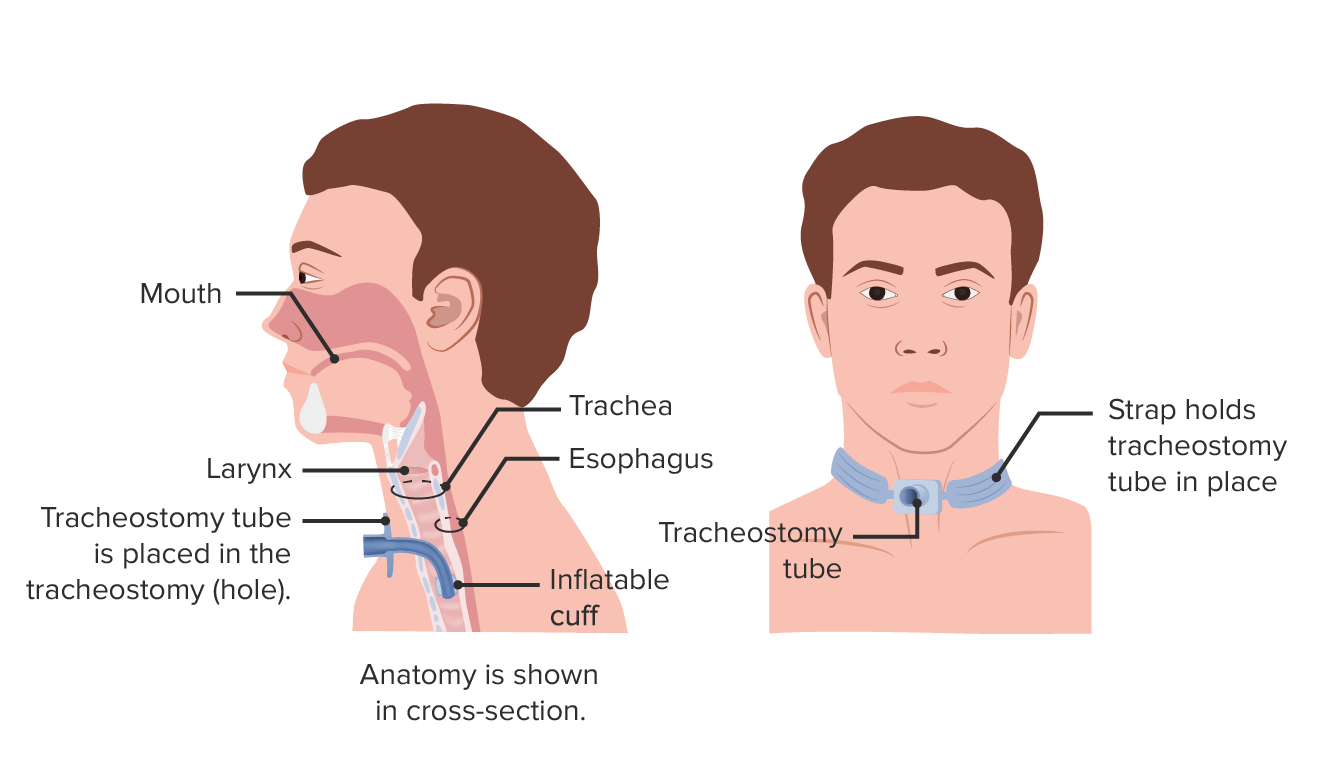
    • Cricotirotomía:
      • Incisión de la membrana entre el cartílago tiroides y el cartílago cricoides
      • En EN Erythema nodosum is an immune-mediated panniculitis (inflammation of the subcutaneous fat) caused by a type IV (delayed-type) hypersensitivity reaction. It commonly manifests in young women as tender, erythematous nodules on the shins. Erythema Nodosum lesiones traumáticas graves, si falla la intubación o si la vía aérea está gravemente inflamada (anafilaxia)
      • Más fácil de realizar que la traqueostomía
      • Procedimiento temporal
    • Traqueostomía:
      • Incisión en EN Erythema nodosum is an immune-mediated panniculitis (inflammation of the subcutaneous fat) caused by a type IV (delayed-type) hypersensitivity reaction. It commonly manifests in young women as tender, erythematous nodules on the shins. Erythema Nodosum la tráquea e inserción de un tubo traqueal
      • Preferida en EN Erythema nodosum is an immune-mediated panniculitis (inflammation of the subcutaneous fat) caused by a type IV (delayed-type) hypersensitivity reaction. It commonly manifests in young women as tender, erythematous nodules on the shins. Erythema Nodosum pacientes pediátricos (< 8 años de edad), ya que el cricoides es más pequeño
Accesorio de collarín para pacientes multitraumatizados

Aplicación de la tabla y el collarín cervical por parte de los servicios médicos de emergencia en el campo:
Si el paciente afectado llega en un vehículo personal, se coloca el collarín C durante la parte de la vía aérea (A) de la evaluación primaria.
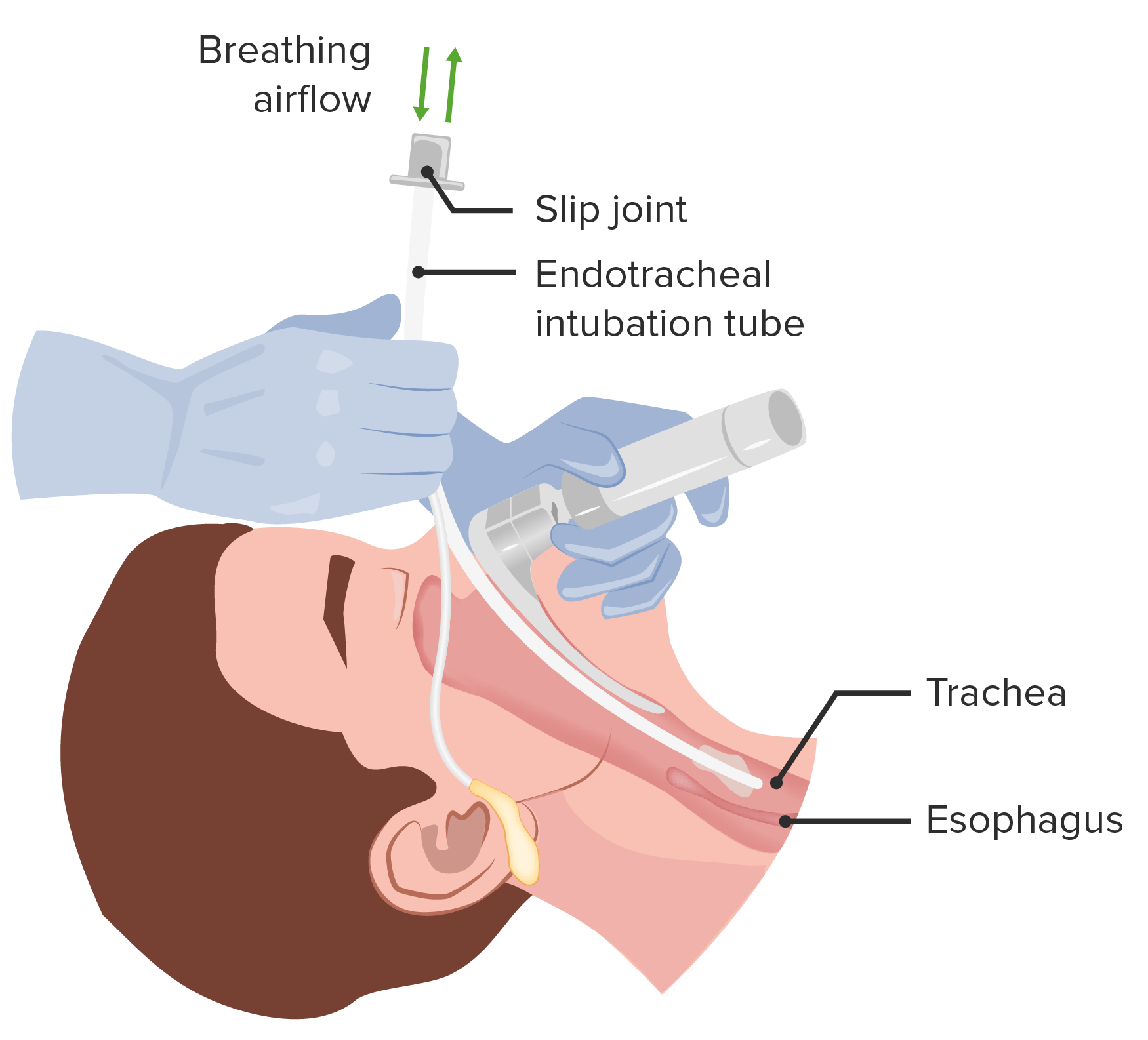
Imagen: “Neck collar attachment for multitrauma patient” por Senior Airman Janiqua P. Robinson Licencia: CC0 1.0

Respiración

  • Objetivo:
    • Detectar signos de dificultad respiratoria
    • Mantener suficiente oxigenación y ventilación
    • Si se presentan problemas respiratorios en EN Erythema nodosum is an immune-mediated panniculitis (inflammation of the subcutaneous fat) caused by a type IV (delayed-type) hypersensitivity reaction. It commonly manifests in young women as tender, erythematous nodules on the shins. Erythema Nodosum este paso, puede ser necesario realizar procedimientos adicionales (drenaje pleural) para corregir el problema.
  • Evaluación de la respiración:
    • Escuchar los LOS Neisseria sonidos de la respiración.
    • Determinar la frecuencia respiratoria: 12–20 respiraciones/minutos es normal.
    • Si la frecuencia respiratoria es ↓ o ↑, considerar el soporte de la vía aérea
    • El 40% de los LOS Neisseria pacientes que han tenido un paro cardíaco pueden presentar respiración agónica (serie de jadeos ruidosos).
  • Signos de dificultad respiratoria:
    • Inspección:
      • Cianosis central
      • Distensión venosa yugular
      • ↑ Esfuerzo para respirar (e.g., uso de músculos accesorios)
    • Percusión:
      • Hiperresonancia (neumotórax)
      • Matidez (hemotórax)
    • Palpación:
      • Desplazamiento traqueal
      • Enfisema subcutáneo
      • Segmentos inestables
    • Auscultación: ↓ entrada de aire durante la auscultación
    • Saturación de oxígeno: < 90%
    • ↓ CO 2 al AL Amyloidosis final de la espiración (capnografía)
  • Manejo de la respiración:
    • Depende de la causa
    • Regrese a la evaluación A (vía aérea) para establecer una vía aérea definitiva si existe dificultad respiratoria.
    • El drenaje pleural con tubo (pequeña incisión en EN Erythema nodosum is an immune-mediated panniculitis (inflammation of the subcutaneous fat) caused by a type IV (delayed-type) hypersensitivity reaction. It commonly manifests in young women as tender, erythematous nodules on the shins. Erythema Nodosum la pared torácica e inserción de un tubo torácico) es necesario en EN Erythema nodosum is an immune-mediated panniculitis (inflammation of the subcutaneous fat) caused by a type IV (delayed-type) hypersensitivity reaction. It commonly manifests in young women as tender, erythematous nodules on the shins. Erythema Nodosum:
      • Neumotórax a tensión, neumotórax abierto
      • Tórax inestable
      • Hemotórax masivo
    • La pericardiocentesis Pericardiocentesis Puncture and aspiration of fluid from the pericardium. Cardiac Surgery (inserción de una aguja y un pequeño catéter en EN Erythema nodosum is an immune-mediated panniculitis (inflammation of the subcutaneous fat) caused by a type IV (delayed-type) hypersensitivity reaction. It commonly manifests in young women as tender, erythematous nodules on the shins. Erythema Nodosum el saco pericárdico para drenar el exceso de líquido) es necesaria para el taponamiento cardíaco.

Circulación

  • Objetivo:
    • Determinar la eficacia del gasto cardíaco
    • Asegurar una perfusión tisular adecuada
    • Tratar la hemorragia externa
  • Causas de circulación inadecuada:
    • Shock Shock Shock is a life-threatening condition associated with impaired circulation that results in tissue hypoxia. The different types of shock are based on the underlying cause: distributive (↑ cardiac output (CO), ↓ systemic vascular resistance (SVR)), cardiogenic (↓ CO, ↑ SVR), hypovolemic (↓ CO, ↑ SVR), obstructive (↓ CO), and mixed. Types of Shock (incluyendo shock Shock Shock is a life-threatening condition associated with impaired circulation that results in tissue hypoxia. The different types of shock are based on the underlying cause: distributive (↑ cardiac output (CO), ↓ systemic vascular resistance (SVR)), cardiogenic (↓ CO, ↑ SVR), hypovolemic (↓ CO, ↑ SVR), obstructive (↓ CO), and mixed. Types of Shock hipovolémico, séptico o anafiláctico)
    • Lesión traumática de las arterias (síndrome compartimental, laceraciones arteriales, lesión por aplastamiento)
    • Arritmias cardíacas
    • Insuficiencia cardiaca
    • Embolia pulmonar
  • Evaluación de la circulación:
    • Pacientes que no respiran (apneicos): RCP
    • Pacientes que están respirando:
      • Evaluación de la presión arterial: indica la eficacia del gasto cardíaco, se considera ↓ si la presión arterial sistólica < 90 mm Hg
      • Evaluación de la piel (la piel fría y húmeda es sugestiva de hipovolemia).
      • Comprobar el tiempo de llenado capilar (anormal si > 2 segundos).
      • Controlar la diuresis (< 0,5 mL/kg/h se considera oliguria Oliguria Decreased urine output that is below the normal range. Oliguria can be defined as urine output of less than or equal to 0. 5 or 1 ml/kg/hr depending on the age. Renal Potassium Regulation).
      • Comprobar la frecuencia cardíaca (↑ frecuencia cardíaca (> 100/minuto) podría significar shock Shock Shock is a life-threatening condition associated with impaired circulation that results in tissue hypoxia. The different types of shock are based on the underlying cause: distributive (↑ cardiac output (CO), ↓ systemic vascular resistance (SVR)), cardiogenic (↓ CO, ↑ SVR), hypovolemic (↓ CO, ↑ SVR), obstructive (↓ CO), and mixed. Types of Shock).
  • Manejo de la circulación:
    • Presión directa para controlar cualquier hemorragia externa
    • Se colocan 2 vías intravenosas de gran calibre en EN Erythema nodosum is an immune-mediated panniculitis (inflammation of the subcutaneous fat) caused by a type IV (delayed-type) hypersensitivity reaction. It commonly manifests in young women as tender, erythematous nodules on the shins. Erythema Nodosum todos los LOS Neisseria pacientes afectados. Si no es factible, las alternativas incluyen:
      • Acceso central a las venas femoral, yugular y subclavia
      • Acceso intraóseo
      • Catéteres percutáneos y de corte venoso en EN Erythema nodosum is an immune-mediated panniculitis (inflammation of the subcutaneous fat) caused by a type IV (delayed-type) hypersensitivity reaction. It commonly manifests in young women as tender, erythematous nodules on the shins. Erythema Nodosum la vena safena del miembro inferior (menos frecuente)
    • Activar un protocolo de transfusión masiva cuando corresponda.
    • Los LOS Neisseria signos de shock Shock Shock is a life-threatening condition associated with impaired circulation that results in tissue hypoxia. The different types of shock are based on the underlying cause: distributive (↑ cardiac output (CO), ↓ systemic vascular resistance (SVR)), cardiogenic (↓ CO, ↑ SVR), hypovolemic (↓ CO, ↑ SVR), obstructive (↓ CO), and mixed. Types of Shock (piel pálida, fría y húmeda, hipotensión) pueden no aparecer inicialmente hasta que el paciente afectado pierda hasta el 30% de la sangre.
    • Comprobar la necesidad de revertir la anticoagulación.

Discapacidad

Evaluación de la discapacidad:

  • Examinación de las pupilas: la dilatación de las pupilas sugiere una masa cerebral ipsolateral o acumulación de sangre que causa compresión del 3er par PAR The PAR is the attributable risk for an entire population. It represents the fraction of cases that would not occur in a population if the exposure was eliminated. Measures of Risk craneal.
  • Examen motor Motor Neurons which send impulses peripherally to activate muscles or secretory cells. Nervous System: Histology y sensorial
  • Evaluación del nivel de conciencia y el estado mental mediante GCS GCS A scale that assesses the response to stimuli in patients with craniocerebral injuries. The parameters are eye opening, motor response, and verbal response. Coma:
    • El paciente afectado recibe una puntuación por la mejor respuesta en EN Erythema nodosum is an immune-mediated panniculitis (inflammation of the subcutaneous fat) caused by a type IV (delayed-type) hypersensitivity reaction. It commonly manifests in young women as tender, erythematous nodules on the shins. Erythema Nodosum cada área.
    • Las puntuaciones de cada área son combinadas para alcanzar una puntuación total de 3–15.
    • ↑ Número → mejor el pronóstico
    • Una puntuación ≤ 9 indica coma Coma Coma is defined as a deep state of unarousable unresponsiveness, characterized by a score of 3 points on the GCS. A comatose state can be caused by a multitude of conditions, making the precise epidemiology and prognosis of coma difficult to determine. Coma y la necesidad de intubación endotraqueal.
  • Las lesiones neurológicas potencialmente mortales incluyen:
    • Lesión craneal penetrante
    • Hemorragia intracraneal
    • Lesión axonal difusa
    • Lesión alta de la médula espinal
Tabla: Glasgow Coma Coma Coma is defined as a deep state of unarousable unresponsiveness, characterized by a score of 3 points on the GCS. A comatose state can be caused by a multitude of conditions, making the precise epidemiology and prognosis of coma difficult to determine. Coma Scale Scale Dermatologic Examination
Característica Respuesta Puntuación
Apertura ocular Apertura espontánea 4
Apertura a las órdenes verbales 3
Apertura al AL Amyloidosis dolor Dolor Inflammation 2
Sin apertura ocular 1
Respuesta verbal Orientada y apropiada 5
Desorientada pero conversa 4
Palabras sin sentido 3
Quejidos 2
Silencio 1
Respuesta motora Sigue órdenes 6
Localiza el dolor Dolor Inflammation 5
Se retira del dolor Dolor Inflammation 4
Postura flexora 3
Postura extensora 2
Flacidez 1

Exposición

El objetivo de este paso es evaluar y tratar los LOS Neisseria efectos ambientales negativos:

  • Desvista completamente al AL Amyloidosis paciente y realice un examen físico completo.
  • Mantenga al AL Amyloidosis paciente abrigado, ya que la hipotermia puede desencadenar coagulopatías.

Evaluación Secundaria

Técnica

El objetivo de la evaluación secundaria es examinar rápida y minuciosamente al AL Amyloidosis paciente afectado de la cabeza a los LOS Neisseria pies e identificar todas las lesiones potencialmente significativas.

  • Se realiza después de que se completan la evaluación primaria y la estabilización inicial
  • Se realiza después de que se hayan identificado y estabilizado todas las lesiones potencialmente mortales
  • Se deben reunir los LOS Neisseria antecedentes, incluido el tipo de lesión (contusa o penetrante) y los LOS Neisseria datos médicos pasados.
  • Examinar al AL Amyloidosis paciente afectado de la cabeza a los LOS Neisseria pies, incluidos todos los LOS Neisseria orificios (oídos, nariz, boca, vagina Vagina The vagina is the female genital canal, extending from the vulva externally to the cervix uteri internally. The structures have sexual, reproductive, and urinary functions and a rich blood supply, mainly arising from the internal iliac artery. Vagina, Vulva, and Pelvic Floor: Anatomy, recto):
    • Signos vitales
    • Cabeza y cuello:
      • Buscar hematoma Hematoma A collection of blood outside the blood vessels. Hematoma can be localized in an organ, space, or tissue. Intussusception en EN Erythema nodosum is an immune-mediated panniculitis (inflammation of the subcutaneous fat) caused by a type IV (delayed-type) hypersensitivity reaction. It commonly manifests in young women as tender, erythematous nodules on the shins. Erythema Nodosum el cuero cabelludo, depresión del cráneo, laceración.
      • Palpar huesos faciales.
      • Revisar la nariz en EN Erythema nodosum is an immune-mediated panniculitis (inflammation of the subcutaneous fat) caused by a type IV (delayed-type) hypersensitivity reaction. It commonly manifests in young women as tender, erythematous nodules on the shins. Erythema Nodosum busca de hematoma Hematoma A collection of blood outside the blood vessels. Hematoma can be localized in an organ, space, or tissue. Intussusception septal.
      • Revisar los LOS Neisseria oídos en EN Erythema nodosum is an immune-mediated panniculitis (inflammation of the subcutaneous fat) caused by a type IV (delayed-type) hypersensitivity reaction. It commonly manifests in young women as tender, erythematous nodules on the shins. Erythema Nodosum busca de hemotímpano o equimosis retroauricular (signo de Battle).
      • Examen ocular
      • Inmovilizar al AL Amyloidosis paciente y palpar el cuello.
    • Tórax:
      • Comprobar si existe crepitación, zonas sensibles, hematomas.
      • Comprobar el esfuerzo respiratorio.
    • Abdomen:
      • Comprobar si existe distensión y equimosis.
      • Auscultar los LOS Neisseria ruidos intestinales.
    • Extremidades:
      • Comprobar la sensibilidad y el rango de movimiento.
      • Comprobar si existe inestabilidad pélvica.
    • Piel:
      • Revisar de pies a cabeza (especialmente la espalda, el perineo y los LOS Neisseria pliegues axilares y glúteos).
      • Buscar laceraciones, hematomas y abrasiones.
    • Examen neurológico: repetir la GCS GCS A scale that assesses the response to stimuli in patients with craniocerebral injuries. The parameters are eye opening, motor response, and verbal response. Coma.
  • Solicitar imagenología y otras pruebas según sean necesarias:
    • Radiografía simple
    • La evaluación enfocada con ultrasonido en EN Erythema nodosum is an immune-mediated panniculitis (inflammation of the subcutaneous fat) caused by a type IV (delayed-type) hypersensitivity reaction. It commonly manifests in young women as tender, erythematous nodules on the shins. Erythema Nodosum traumatismos (FAST, por sus siglas en EN Erythema nodosum is an immune-mediated panniculitis (inflammation of the subcutaneous fat) caused by a type IV (delayed-type) hypersensitivity reaction. It commonly manifests in young women as tender, erythematous nodules on the shins. Erythema Nodosum inglés) es un componente esencial del estudio de la circulación primaria y se utiliza principalmente para detectar:
    • TC de emergencia
  • ¡Se debe volver a realizar la evaluación inicial con frecuencia para una nueva valoración!

Mnemotecnia

Para obtener los antecedentes importantes, podemos obtenerlos utilizando la mnemotecnia “AMPLE” ( en EN Erythema nodosum is an immune-mediated panniculitis (inflammation of the subcutaneous fat) caused by a type IV (delayed-type) hypersensitivity reaction. It commonly manifests in young women as tender, erythematous nodules on the shins. Erythema Nodosum inglés es):

  • A Allergy Allergy An abnormal adaptive immune response that may or may not involve antigen-specific IgE Type I Hypersensitivity Reaction (alergia)
  • M – Medication (medicamentos)
  • P – Previous medical history/illness (antecedentes médicos previos/enfermedad)
  • L – Last meal (última comida)
  • E – Events related to the injury (eventos relacionados con la lesión)

Evitar lesiones ocultas

Los LOS Neisseria antecedentes pertinentes, el examen físico completo y los LOS Neisseria estudios diagnósticos apropiados ayudan a evitar lesiones ocultas como:

  • Traumatismo abdominal cerrado:
    • Lesión de víscera hueca
    • Daño pancreatoduodenal
    • Rotura diafragmática
  • Traumatismo abdominal penetrante: lesiones perineales (incluye daño rectal y ureteral)
  • Traumatismo torácico:
    • Taponamiento pericárdico
    • Perforación o ruptura esofágica
    • Lesiones aórticas
  • Traumatismo de las extremidades:
    • Fracturas
    • Lesiones vasculares
    • Síndrome compartimental

Mecanismos y Lesiones Asociadas

Las siguientes tablas resumen los LOS Neisseria diferentes mecanismos de traumatismo y sus lesiones específicas asociadas.

Colisiones de vehículos motorizados

Tabla: Colisiones de vehículos motorizados y lesiones asociadas
Mecanismo de lesión Lesiones potencialmente asociadas
Colisión frontal Frontal The bone that forms the frontal aspect of the skull. Its flat part forms the forehead, articulating inferiorly with the nasal bone and the cheek bone on each side of the face. Skull: Anatomy
  • Lesiones faciales
  • Lesiones en EN Erythema nodosum is an immune-mediated panniculitis (inflammation of the subcutaneous fat) caused by a type IV (delayed-type) hypersensitivity reaction. It commonly manifests in young women as tender, erythematous nodules on the shins. Erythema Nodosum extremidades inferiores
  • Lesiones aórticas
Colisión trasera
  • Lesiones por hiperextensión de la columna cervical
  • Fracturas de la columna cervical
  • Síndrome centromedular
Expulsión del vehículo Lesiones de la columna vertebral
Daños contra el parabrisas
  • Lesiones craneales cerradas (lesiones por golpe y contragolpe)
  • Fracturas faciales
  • Fracturas de cráneo
  • Fracturas de la columna cervical
Daños contra el volante Lesiones torácicas
Involucramiento/daños contra el tablero
  • Lesiones pélvicas y acetabulares
  • Luxación de cadera

Lesiones de peatón versus automóvil

Tabla: Peatón versus automóvil y sus lesiones asociadas
Mecanismo de lesión Lesiones potencialmente asociadas
Baja velocidad (automóvil en EN Erythema nodosum is an immune-mediated panniculitis (inflammation of the subcutaneous fat) caused by a type IV (delayed-type) hypersensitivity reaction. It commonly manifests in young women as tender, erythematous nodules on the shins. Erythema Nodosum proceso de frenado)
  • Fracturas de tibia Tibia The second longest bone of the skeleton. It is located on the medial side of the lower leg, articulating with the fibula laterally, the talus distally, and the femur proximally. Knee Joint: Anatomy y peroné
  • Lesiones de rodilla
Alta velocidad Triada de Waddle ( en EN Erythema nodosum is an immune-mediated panniculitis (inflammation of the subcutaneous fat) caused by a type IV (delayed-type) hypersensitivity reaction. It commonly manifests in young women as tender, erythematous nodules on the shins. Erythema Nodosum peatones pediátricos):
  • Fracturas de tibia Tibia The second longest bone of the skeleton. It is located on the medial side of the lower leg, articulating with the fibula laterally, the talus distally, and the femur proximally. Knee Joint: Anatomy/peroné o fémur
  • Lesiones toracoabdominales ipsilaterales
  • Lesiones craneofaciales contralaterales

Accidentes de bicicleta

Tabla: Accidentes de bicicleta y sus lesiones asociadas
Mecanismo de lesión Lesiones potencialmente asociadas
Relacionadas con automóviles
  • Lesiones craneales cerradas
  • Lesiones del “manubrio” (laceraciones de bazo/hígado, lesiones intraabdominales adicionales)
No relacionadas con automóviles
  • Lesiones en EN Erythema nodosum is an immune-mediated panniculitis (inflammation of the subcutaneous fat) caused by a type IV (delayed-type) hypersensitivity reaction. It commonly manifests in young women as tender, erythematous nodules on the shins. Erythema Nodosum las extremidades
  • Lesiones del “manubrio”

Caídas

Tabla: Caídas y sus lesiones asociadas
Mecanismo de lesión Lesiones potencialmente asociadas
Impacto vertical
  • Fracturas de calcáneo y extremidades inferiores
  • Fracturas pélvicas
  • Lesiones craneales cerradas
  • Fracturas vertebrales lumbares
  • Lesiones vasculares renales
Impacto horizontal
  • Fracturas craneofaciales
  • Fracturas de mano y muñeca
  • Lesiones viscerales abdominales y torácicas
  • Lesiones aórticas

Relevancia Clínica

  • Evaluación ABC: es el abordaje terapéutico principal utilizado para pacientes gravemente enfermos. La evaluación ABC es un 1er paso esencial para realizar en EN Erythema nodosum is an immune-mediated panniculitis (inflammation of the subcutaneous fat) caused by a type IV (delayed-type) hypersensitivity reaction. It commonly manifests in young women as tender, erythematous nodules on the shins. Erythema Nodosum muchas situaciones, incluido el tratamiento de pacientes que no responden, aquellos que han experimentado un paro cardíaco y también aquellos que han experimentado un traumatismo y están en EN Erythema nodosum is an immune-mediated panniculitis (inflammation of the subcutaneous fat) caused by a type IV (delayed-type) hypersensitivity reaction. It commonly manifests in young women as tender, erythematous nodules on the shins. Erythema Nodosum estado crítico. En EN Erythema nodosum is an immune-mediated panniculitis (inflammation of the subcutaneous fat) caused by a type IV (delayed-type) hypersensitivity reaction. It commonly manifests in young women as tender, erythematous nodules on the shins. Erythema Nodosum tales casos, la evaluación ABC se incluye en EN Erythema nodosum is an immune-mediated panniculitis (inflammation of the subcutaneous fat) caused by a type IV (delayed-type) hypersensitivity reaction. It commonly manifests in young women as tender, erythematous nodules on the shins. Erythema Nodosum la evaluación primaria, la valoración inicial y el tratamiento de las lesiones.
  • Hematoma Hematoma A collection of blood outside the blood vessels. Hematoma can be localized in an organ, space, or tissue. Intussusception epidural: colección de sangre que se expande rápidamente entre el hueso y la duramadre debido a la ruptura de las arterias meníngeas medias. El hematoma Hematoma A collection of blood outside the blood vessels. Hematoma can be localized in an organ, space, or tissue. Intussusception epidural se caracteriza por un intervalo lúcido, parálisis de los LOS Neisseria pares craneales y alteración del estado mental. Una TC muestra una acumulación de sangre hiperdensa biconvexa ( en EN Erythema nodosum is an immune-mediated panniculitis (inflammation of the subcutaneous fat) caused by a type IV (delayed-type) hypersensitivity reaction. It commonly manifests in young women as tender, erythematous nodules on the shins. Erythema Nodosum forma de lente) que no cruza las líneas de sutura. El hematoma Hematoma A collection of blood outside the blood vessels. Hematoma can be localized in an organ, space, or tissue. Intussusception epidural es una afección potencialmente mortal que requiere descompresión quirúrgica.
  • Hematoma Hematoma A collection of blood outside the blood vessels. Hematoma can be localized in an organ, space, or tissue. Intussusception subdural: acumulación de sangre entre la duramadre y la aracnoides debido a la ruptura de las venas emisarias. Una TC muestra una colección de sangre en EN Erythema nodosum is an immune-mediated panniculitis (inflammation of the subcutaneous fat) caused by a type IV (delayed-type) hypersensitivity reaction. It commonly manifests in young women as tender, erythematous nodules on the shins. Erythema Nodosum forma de media luna que cruza las líneas de sutura. Un hematoma Hematoma A collection of blood outside the blood vessels. Hematoma can be localized in an organ, space, or tissue. Intussusception subdural puede ser tanto agudo como crónico y puede requerir atención inmediata, generalmente cirugía.
  • Hemorragia subaracnoidea: un tipo de accidente cerebrovascular causado por una hemorragia en el espacio subaracnoideo craneal o espinal que rodea el cerebro. La hemorragia subaracnoidea puede ocurrir espontáneamente o después de un traumatismo. Una “cefalea en EN Erythema nodosum is an immune-mediated panniculitis (inflammation of the subcutaneous fat) caused by a type IV (delayed-type) hypersensitivity reaction. It commonly manifests in young women as tender, erythematous nodules on the shins. Erythema Nodosum trueno” repentina y violenta es el síntoma principal de la hemorragia subaracnoidea. La hemorragia intracerebral es causada principalmente por la ruptura de un aneurisma y requiere de reparación quirúrgica del aneurisma.
  • Disección aórtica: ocurre cuando se desarrolla una fisura en EN Erythema nodosum is an immune-mediated panniculitis (inflammation of the subcutaneous fat) caused by a type IV (delayed-type) hypersensitivity reaction. It commonly manifests in young women as tender, erythematous nodules on the shins. Erythema Nodosum la capa interna (túnica íntima) de la pared aórtica que hace HACE Altitude Sickness que la sangre ingrese a la túnica media. La disección aórtica se caracteriza por un dolor Dolor Inflammation intenso y desgarrante y es una emergencia médica grave que necesita un diagnóstico y tratamiento urgente. Los LOS Neisseria factores de riesgo incluyen hipertensión, enfermedades genéticas y traumatismos.
  • Síndrome centromedular: generalmente ocurre con lesiones por hiperextensión, especialmente en EN Erythema nodosum is an immune-mediated panniculitis (inflammation of the subcutaneous fat) caused by a type IV (delayed-type) hypersensitivity reaction. It commonly manifests in young women as tender, erythematous nodules on the shins. Erythema Nodosum pacientes mayores con cambios degenerativos preexistentes de la columna cervical. El síndrome centromedular afecta los LOS Neisseria tractos corticoespinales y las fibras decusantes del tracto espinotalámico lateral y se caracteriza por una mayor debilidad en EN Erythema nodosum is an immune-mediated panniculitis (inflammation of the subcutaneous fat) caused by a type IV (delayed-type) hypersensitivity reaction. It commonly manifests in young women as tender, erythematous nodules on the shins. Erythema Nodosum las extremidades superiores en EN Erythema nodosum is an immune-mediated panniculitis (inflammation of the subcutaneous fat) caused by a type IV (delayed-type) hypersensitivity reaction. It commonly manifests in young women as tender, erythematous nodules on the shins. Erythema Nodosum comparación con las inferiores, disfunción vesical y pérdida sensorial.
  • Traumatismo craneoencefálico: se puede dividir en EN Erythema nodosum is an immune-mediated panniculitis (inflammation of the subcutaneous fat) caused by a type IV (delayed-type) hypersensitivity reaction. It commonly manifests in young women as tender, erythematous nodules on the shins. Erythema Nodosum fracturas, lesiones cerebrales traumáticas, hematomas (tanto extraaxiales como parenquimatosas) y lesiones axonales difusas. El reconocimiento rápido, la estabilización y la imagenología diagnóstica dirigida, conducen a un tratamiento adecuado, que puede ser conservador o quirúrgico.

Referencias

  1. Advanced trauma life support (ATLS®): the 9th edition. J Trauma Acute Care Surg. (2013). 74, 1363–1366.
  2. Dziubiński, D., Abramczyk, U., Ciechanowicz, D., Kozłowski, J., Pakulski, C., Żyluk, A. (2019). An analysis of causes of trauma, spectrum of injuries and treatment outcomes in patients treated at Multitrauma Centre of the University Teaching Hospital No. 1 in Szczecin in 2015. Comparison of results from years 2015 and 2007. Pol Przegl Chir. 91, 29–35.
  3. Harvey, L.A., Close, J.C. (2012). Traumatic brain injury in older adults: characteristics, causes and consequences. Injury. 43, 1821–1826. 
  4. Paz, M.S., Mendez, M.D. (2023). Waddell Triad. In: StatPearls [Internet]. Treasure Island (FL): StatPearls Publishing. Retrieved on November 12, 2025, from https://www.ncbi.nlm.nih.gov/books/NBK537094/
  5. Raja, A., Zane, R. (2025). Initial management of trauma in adults. Retrieved on November 12, 2025, from https://www.uptodate.com/contents/initial-management-of-trauma-in-adults
  6. Thim, T., Krarup, N.H., Grove, E.L., Rohde, C.V., Løfgren, B. (2012). Initial assessment and treatment with the Airway, Breathing, Circulation, Disability, Exposure (ABCDE) approach. International Journal of General Medicine, 5, 117–121.
  7. Zemaitis, M.R., Planas, J.H., Waseem, M. (2023). Trauma Secondary Survey. In: StatPearls [Internet]. Treasure Island (FL): StatPearls Publishing. Retrieved on November 12, 2025, from https://www.ncbi.nlm.nih.gov/books/NBK441902/

¡Crea tu cuenta gratis o inicia una sesión para seguir leyendo!

Regístrate ahora y obtén acceso gratuito a Lecturio con páginas de concepto, videos médicos y cuestionarios para tu educación médica.

User Reviews

Que tengas una sesión de estudio alegre y navideña 🎁 Ahorra 50% en todos los planes >>

Details