
Domina Conceptos Médicos

Estudia para la escuela de medicina y tus examenes con Lecturio.

Leucemia Linfocítica Crónica

La leucemia linfocítica crónica es una neoplasia hematológica caracterizada por un exceso de producción de linfocitos B monoclonales completamente diferenciados en EN Erythema nodosum is an immune-mediated panniculitis (inflammation of the subcutaneous fat) caused by a type IV (delayed-type) hypersensitivity reaction. It commonly manifests in young women as tender, erythematous nodules on the shins. Erythema Nodosum la sangre periférica. Cuando la afectación es principalmente ganglionar, la afección se denomina linfoma linfocítico pequeño. La enfermedad suele presentarse en EN Erythema nodosum is an immune-mediated panniculitis (inflammation of the subcutaneous fat) caused by a type IV (delayed-type) hypersensitivity reaction. It commonly manifests in young women as tender, erythematous nodules on the shins. Erythema Nodosum adultos mayores, con una edad media de 70 años. La presentación clínica suele ser asintomática y el diagnóstico se realiza cuando se observa una linfocitosis anormal en EN Erythema nodosum is an immune-mediated panniculitis (inflammation of the subcutaneous fat) caused by a type IV (delayed-type) hypersensitivity reaction. It commonly manifests in young women as tender, erythematous nodules on the shins. Erythema Nodosum las pruebas de laboratorio. También se pueden observar citopenias. Las células B son linfocitos funcionalmente incompetentes; por lo tanto, a veces pueden observarse infecciones recurrentes en EN Erythema nodosum is an immune-mediated panniculitis (inflammation of the subcutaneous fat) caused by a type IV (delayed-type) hypersensitivity reaction. It commonly manifests in young women as tender, erythematous nodules on the shins. Erythema Nodosum esta malignidad. El tratamiento puede variar desde el monitoreo y seguimiento para las primeras etapas hasta la quimioterapia para las etapas posteriores. La supervivencia media es de alrededor de 10 años.

Last updated: Dec 15, 2025

Editorial responsibility: Stanley Oiseth, Lindsay Jones, Evelin Maza

Descripción General

Definición

La leucemia linfocítica crónica es una neoplasia linfoproliferativa caracterizada por la acumulación de linfocitos con deterioro funcional, a menudo de origen monoclonal.

Terminología:

La leucemia linfocítica crónica es idéntica al AL Amyloidosis linfoma linfocítico pequeño, los LOS Neisseria cuales se consideran manifestaciones de neoplasia de células B.

  • El término leucemia linfocítica crónica se utiliza cuando la enfermedad se manifiesta principalmente en EN Erythema nodosum is an immune-mediated panniculitis (inflammation of the subcutaneous fat) caused by a type IV (delayed-type) hypersensitivity reaction. It commonly manifests in young women as tender, erythematous nodules on the shins. Erythema Nodosum la sangre.
  • El término linfoma linfocítico pequeño se utiliza cuando la afectación es principalmente ganglionar.

Epidemiología

  • Tipo más común de leucemia en EN Erythema nodosum is an immune-mediated panniculitis (inflammation of the subcutaneous fat) caused by a type IV (delayed-type) hypersensitivity reaction. It commonly manifests in young women as tender, erythematous nodules on the shins. Erythema Nodosum adultos en EN Erythema nodosum is an immune-mediated panniculitis (inflammation of the subcutaneous fat) caused by a type IV (delayed-type) hypersensitivity reaction. It commonly manifests in young women as tender, erythematous nodules on the shins. Erythema Nodosum el hemisferio occidental
    • 90% de los LOS Neisseria casos se presenta como leucemia linfocítica crónica
    • 10% de los LOS Neisseria casos se presenta como linfoma linfocítico pequeño
  • Incidencia: aproximadamente 4–6 casos por 100 000 habitantes/año en EN Erythema nodosum is an immune-mediated panniculitis (inflammation of the subcutaneous fat) caused by a type IV (delayed-type) hypersensitivity reaction. It commonly manifests in young women as tender, erythematous nodules on the shins. Erythema Nodosum los LOS Neisseria Estados Unidos
  • 1,5 veces más prevalente en EN Erythema nodosum is an immune-mediated panniculitis (inflammation of the subcutaneous fat) caused by a type IV (delayed-type) hypersensitivity reaction. It commonly manifests in young women as tender, erythematous nodules on the shins. Erythema Nodosum hombres que en EN Erythema nodosum is an immune-mediated panniculitis (inflammation of the subcutaneous fat) caused by a type IV (delayed-type) hypersensitivity reaction. It commonly manifests in young women as tender, erythematous nodules on the shins. Erythema Nodosum mujeres
  • La incidencia aumenta con la edad, con una edad media de presentación de 70 años.

Etiología

  • Los LOS Neisseria factores de riesgo incluyen:
    • Antecedentes familiares: los LOS Neisseria familiares de 1er grado de personas con leucemia linfocítica crónica tienen riesgo de desarrollar linfocitosis monoclonal de células B → un pequeño porcentaje llega a desarrollar leucemia linfocítica crónica.
    • Edad: aumento de la incidencia a partir de los LOS Neisseria 30 años
  • Sin vínculo claro con factores ambientales u ocupacionales

Fisiopatología

Hematopoyesis

La creación de nuevas células sanguíneas (hematopoyesis) comienza con una célula madre hematopoyética, que se incita a dividirse y diferenciarse con estímulos químicos apropiados (factores de crecimiento hematopoyéticos).
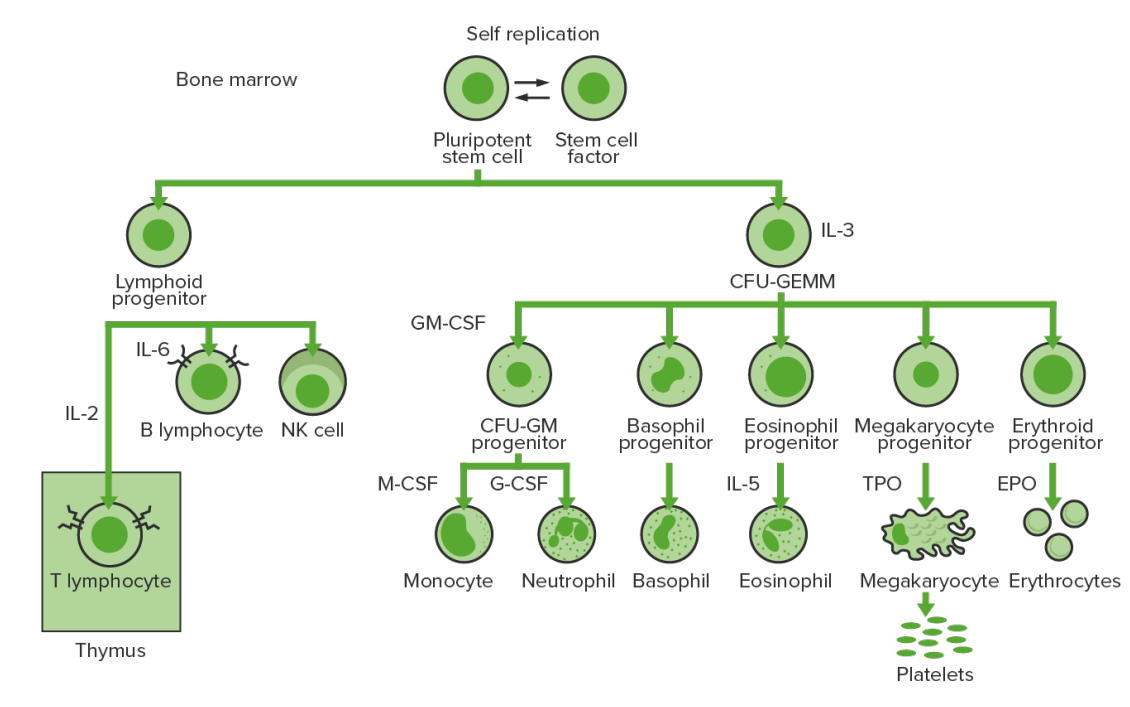
  • Células madre mieloides: eventualmente se diferencian en EN Erythema nodosum is an immune-mediated panniculitis (inflammation of the subcutaneous fat) caused by a type IV (delayed-type) hypersensitivity reaction. It commonly manifests in young women as tender, erythematous nodules on the shins. Erythema Nodosum plaquetas, eritrocitos, granulocitos (neutrófilos, basófilos, eosinófilos) y monocitos
  • Células madre linfoides: dan lugar a los LOS Neisseria linfocitos
    • Interleuquina-6: factor estimulador de células B
    • Interleuquina-2: estimula la proliferación y diferenciación de células T
Hematopoyesis de la médula ósea

Hematopoyesis de la médula ósea:
Proliferación y diferenciación de los elementos formes de la sangre:
En la leucemia mieloide crónica, existe una proliferación sostenida de células en la línea granulocítica (mieloblastos → neutrófilos, basófilos, eosinófilos). Se ven tanto células maduras como en proceso de maduración; por lo tanto, hay células que son solo parcialmente efectivas en la respuesta inmune.
CFU-GEMM: unidad formadora de colonias de granulocitos, eritrocitos, monocitos, megacariocitos
CFU-GM: unidad formadora de colonias de granulocitos y macrófagos
GM-CSF: factor estimulante de colonias de granulocitos y macrófagos
M-CSF: factor estimulante de colonias de macrófagos
G-CSF: factor estimulante de colonias de granulocitos
NK: células asesinas naturales
TPO: trombopoyetina
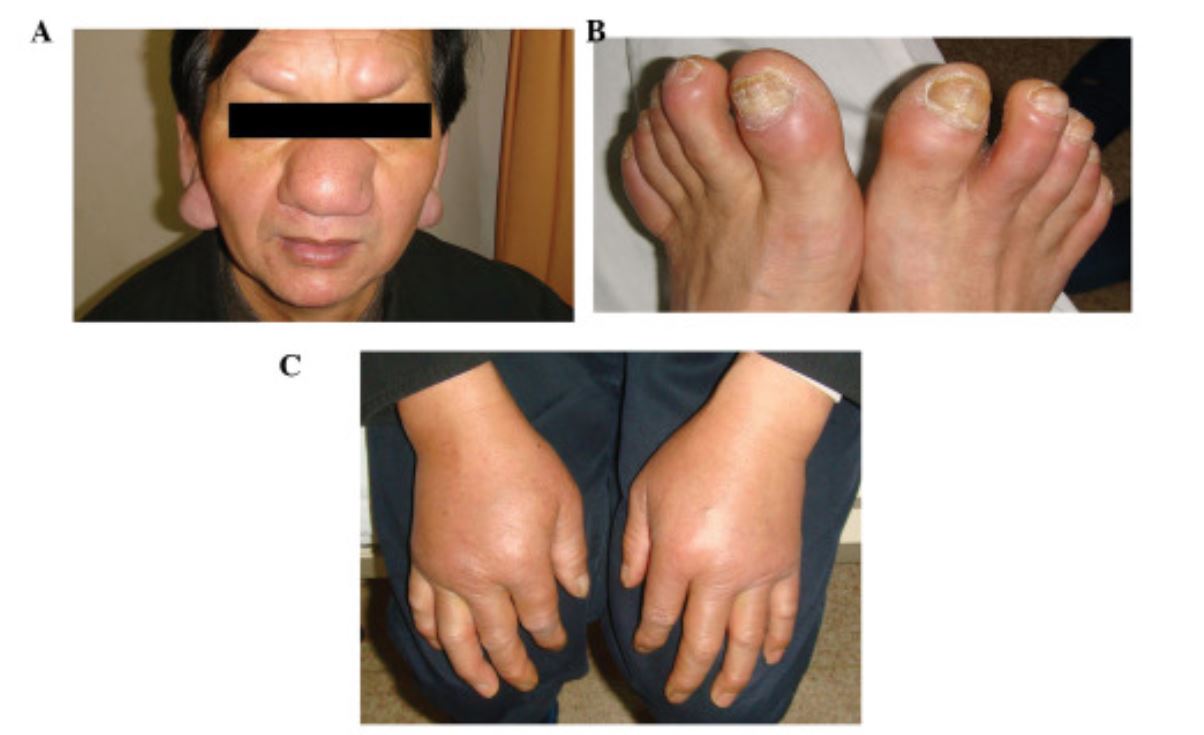
Imagen por Lecturio. Licencia: CC BY-NC-SA 4.0

Patogénesis

  • Linfocitosis monoclonal de células B:
    • Definida como < 5 000 linfocitos B/μL en EN Erythema nodosum is an immune-mediated panniculitis (inflammation of the subcutaneous fat) caused by a type IV (delayed-type) hypersensitivity reaction. It commonly manifests in young women as tender, erythematous nodules on the shins. Erythema Nodosum sangre periférica
    • Esta proliferación asintomática de células B monoclonales precede a la leucemia linfocítica crónica/linfoma linfocítico pequeño.
      • También observada en EN Erythema nodosum is an immune-mediated panniculitis (inflammation of the subcutaneous fat) caused by a type IV (delayed-type) hypersensitivity reaction. It commonly manifests in young women as tender, erythematous nodules on the shins. Erythema Nodosum pacientes por lo demás sanos (notablemente aumentada en EN Erythema nodosum is an immune-mediated panniculitis (inflammation of the subcutaneous fat) caused by a type IV (delayed-type) hypersensitivity reaction. It commonly manifests in young women as tender, erythematous nodules on the shins. Erythema Nodosum aquellos > 60 años de edad)
      • Sin linfadenopatía, organomegalia, citopenias ni afectación extramedular
    • Etiología desconocida pero se cree que tiene una etiología multifactorial, incluido el microambiente de la médula ósea y las modificaciones genéticas y epigenéticas.
  • Linfocitosis monoclonal de células B a leucemia linfocítica crónica/linfoma linfocítico pequeño:
    • Linfocitos B: ≥ 5 000/μL
    • Es probable que otras alteraciones en EN Erythema nodosum is an immune-mediated panniculitis (inflammation of the subcutaneous fat) caused by a type IV (delayed-type) hypersensitivity reaction. It commonly manifests in young women as tender, erythematous nodules on the shins. Erythema Nodosum la composición genética contribuyan a la evolución a leucemia linfocítica crónica/linfoma linfocítico pequeño.
    • Inicialmente asintomático
    • A medida que el desarrollo de las células B se detiene entre las células pre-B y las células B maduras en EN Erythema nodosum is an immune-mediated panniculitis (inflammation of the subcutaneous fat) caused by a type IV (delayed-type) hypersensitivity reaction. It commonly manifests in young women as tender, erythematous nodules on the shins. Erythema Nodosum la médula ósea:
      • Las células se vuelven inmunológicamente disfuncionales.
      • Alrededor del 1% por año progresa a leucemia linfocítica crónica.
    • Manifestaciones observadas:
      • Linfadenopatía
      • Hepatoesplenomegalia
      • Citopenias de otras líneas celulares (eritrocitos y plaquetas)
      • Hipogammaglobulinemia y neutropenia Neutropenia Neutrophils are an important component of the immune system and play a significant role in the eradication of infections. Low numbers of circulating neutrophils, referred to as neutropenia, predispose the body to recurrent infections or sepsis, though patients can also be asymptomatic. Neutropenia, resultando en EN Erythema nodosum is an immune-mediated panniculitis (inflammation of the subcutaneous fat) caused by a type IV (delayed-type) hypersensitivity reaction. It commonly manifests in young women as tender, erythematous nodules on the shins. Erythema Nodosum aumento del riesgo de infecciones
  • La leucemia linfocítica crónica/linfoma linfocítico pequeño pueden transformarse en EN Erythema nodosum is an immune-mediated panniculitis (inflammation of the subcutaneous fat) caused by a type IV (delayed-type) hypersensitivity reaction. It commonly manifests in young women as tender, erythematous nodules on the shins. Erythema Nodosum formas más agresivas y más resistentes (i.e., evolucionan histológicamente a linfoma difuso de células B grandes a través de la transformación de Richter).

Presentación Clínica

Antecedentes

  • 20%–50% son asintomáticos en EN Erythema nodosum is an immune-mediated panniculitis (inflammation of the subcutaneous fat) caused by a type IV (delayed-type) hypersensitivity reaction. It commonly manifests in young women as tender, erythematous nodules on the shins. Erythema Nodosum la presentación clínica.
    • Linfocitosis observada incidentalmente en EN Erythema nodosum is an immune-mediated panniculitis (inflammation of the subcutaneous fat) caused by a type IV (delayed-type) hypersensitivity reaction. It commonly manifests in young women as tender, erythematous nodules on the shins. Erythema Nodosum el examen de laboratorio de rutina.
    • Se informa de antecedentes de inflamación indolora de los LOS Neisseria ganglios linfáticos.
  • Inicio insidioso de los LOS Neisseria síntomas “B”:
    • Pérdida de peso
    • Fatiga
    • Fiebre y sudores nocturnos sin evidencia de infección
  • Infecciones oportunistas recurrentes

Examen físico

  • Linfadenopatía indolora en EN Erythema nodosum is an immune-mediated panniculitis (inflammation of the subcutaneous fat) caused by a type IV (delayed-type) hypersensitivity reaction. It commonly manifests in young women as tender, erythematous nodules on the shins. Erythema Nodosum el 50%–90% de los LOS Neisseria pacientes (hallazgo más común):
    • Puede ser generalizada o localizada
    • El tamaño es variable Variable Variables represent information about something that can change. The design of the measurement scales, or of the methods for obtaining information, will determine the data gathered and the characteristics of that data. As a result, a variable can be qualitative or quantitative, and may be further classified into subgroups. Types of Variables.
    • Localizaciones más comunes:
      • Cervical
      • Supraclavicular
      • Axilar
    • Características:
      • Firme
      • Redonda
      • Discreta
      • No dolorosa
      • Móvil a la palpación
  • Esplenomegalia: agrandamiento palpable en EN Erythema nodosum is an immune-mediated panniculitis (inflammation of the subcutaneous fat) caused by a type IV (delayed-type) hypersensitivity reaction. It commonly manifests in young women as tender, erythematous nodules on the shins. Erythema Nodosum 25%–55% de los LOS Neisseria casos
  • Hepatomegalia: agrandamiento palpable en EN Erythema nodosum is an immune-mediated panniculitis (inflammation of the subcutaneous fat) caused by a type IV (delayed-type) hypersensitivity reaction. It commonly manifests in young women as tender, erythematous nodules on the shins. Erythema Nodosum 15%–25% de los LOS Neisseria casos
  • Infiltración cutánea (“leucemia cutis”)
    • Afecta principalmente a la cara (las lesiones pueden ser máculas, pápulas, úlceras)
    • Se observa en EN Erythema nodosum is an immune-mediated panniculitis (inflammation of the subcutaneous fat) caused by a type IV (delayed-type) hypersensitivity reaction. It commonly manifests in young women as tender, erythematous nodules on the shins. Erythema Nodosum < 5% de los LOS Neisseria casos
    • Mal pronóstico si existe transformación de Richter concomitante
Aspecto de un paciente con una rara leucemia linfocítica crónica

Leucemia linfocítica crónica poco frecuente con infiltración de los oídos, cejas y nariz (A) y los dedos de los pies (B). Edema bilateral sin fóvea en el dorso de las manos (C).

Imagen: “Cutaneous manifestations in a patient with chronic lymphocytic leukemia involving the head, neck and distal extremities” por Lu C, Li L, Qiao Q, Liu G, Fang L. Licencia: CC BY 3.0
Diagnóstico

Diagnóstico

  • Hemograma:
    • Linfocitosis: linfocitos ≥ 5 000/μL y puede llegar a 100 000 (≥ 3 meses)
    • Anemia Anemia Anemia is a condition in which individuals have low Hb levels, which can arise from various causes. Anemia is accompanied by a reduced number of RBCs and may manifest with fatigue, shortness of breath, pallor, and weakness. Subtypes are classified by the size of RBCs, chronicity, and etiology. Anemia: Overview and Types
    • Trombocitopenia
    • Neutropenia Neutropenia Neutrophils are an important component of the immune system and play a significant role in the eradication of infections. Low numbers of circulating neutrophils, referred to as neutropenia, predispose the body to recurrent infections or sepsis, though patients can also be asymptomatic. Neutropenia
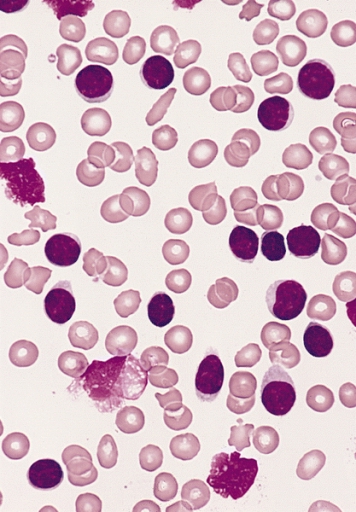
  • Frotis de sangre periférica:
    • Linfocitosis
    • Células difuminadas (linfocitos manchados) presentes
    • Linfocitos monomórficos pequeños con cromatina “agrietada”/“tierra agrietada”
  • Citometría de flujo (pruebas de análisis inmunofenotípico):
    • Anticuerpos específicos para proteínas en EN Erythema nodosum is an immune-mediated panniculitis (inflammation of the subcutaneous fat) caused by a type IV (delayed-type) hypersensitivity reaction. It commonly manifests in young women as tender, erythematous nodules on the shins. Erythema Nodosum la superficie de las células B (como CD5, CD19, CD20 y CD23)
    • Cadenas ligeras de inmunoglobulina kappa y lambda
  • Inmunoglobulinas:
    • Hipogammaglobulinemia observada en EN Erythema nodosum is an immune-mediated panniculitis (inflammation of the subcutaneous fat) caused by a type IV (delayed-type) hypersensitivity reaction. It commonly manifests in young women as tender, erythematous nodules on the shins. Erythema Nodosum el 25% de los LOS Neisseria pacientes
    • Generalmente, con 3 clases de inmunoglobulinas disminuidas ( IgM IgM A class of immunoglobulin bearing mu chains (immunoglobulin mu-chains). Igm can fix complement. The name comes from its high molecular weight and originally being called a macroglobulin. Immunoglobulins: Types and Functions, IgG IgG The major immunoglobulin isotype class in normal human serum. There are several isotype subclasses of igg, for example, igg1, igg2a, and igg2b. Hypersensitivity Pneumonitis, IgA IgA Represents 15-20% of the human serum immunoglobulins, mostly as the 4-chain polymer in humans or dimer in other mammals. Secretory iga is the main immunoglobulin in secretions. Immunoglobulins: Types and Functions)
  • Otros hallazgos de laboratorio:
    • ↑ Lactato deshidrogenasa ( LDH LDH Osteosarcoma)
    • ↑ β₂-microglobulina
    • ↑ Aspartato aminotransferasa ( AST AST Enzymes of the transferase class that catalyze the conversion of l-aspartate and 2-ketoglutarate to oxaloacetate and l-glutamate. Liver Function Tests), alanina aminotransferasa ( ALT ALT An enzyme that catalyzes the conversion of l-alanine and 2-oxoglutarate to pyruvate and l-glutamate. Liver Function Tests)
    • ↑ Ácido úrico
  • Aspiración y biopsia de médula ósea:
    • No se requiere para el diagnóstico de leucemia linfocítica crónica
    • Celularidad normal a aumentada
    • Linfocitos > 30% de todas las células nucleadas
  • Biopsia de ganglio linfático:
    • Se realiza si hay agrandamiento de los LOS Neisseria ganglios linfáticos
    • El ganglio afectado se borra de forma difusa.
    • Linfocitos pequeños con núcleos irregulares y cromatina condensada
    • Pseudofolículos o centros de proliferación (grupo predominantemente de parainmunoblastos y prolinfocitos): patognomónicos de leucemia linfocítica crónica/linfoma linfocítico pequeño
  • Análisis de hibridación fluorescente in situ: detecta anomalías/mutaciones genéticas asociadas con leucemia linfocítica crónica
Frotis de sangre de un adulto con linfocitosis marcada

Frotis de sangre de un hombre adulto con linfocitosis marcada:
Los linfocitos predominantes tienen un citoplasma pálido muy escaso, núcleos redondos a ligeramente ovalados y nucléolos no evidentes y están presentes 3 “células manchadas” dañadas, características de la mayoría de los casos de leucemia linfocítica crónica.

Imagen: “B-cell chronic lymphocytic leukemia (B-CLL)” por The Armed Forces Institute of Pathology (AFIP). Licencia: Dominio Público

Imagenología

  • Ultrasonido abdominal: hepatoesplenomegalia
  • Tomografía computarizada (TC): si se sospecha agrandamiento de los LOS Neisseria ganglios abdominales o pélvicos según la evidencia de las complicaciones, como ictericia u obstrucción ureteral

Estadificación

Sistema de estadificación de Binet

Basado en EN Erythema nodosum is an immune-mediated panniculitis (inflammation of the subcutaneous fat) caused by a type IV (delayed-type) hypersensitivity reaction. It commonly manifests in young women as tender, erythematous nodules on the shins. Erythema Nodosum la participación de 5 posibles áreas portadoras linfoides (el agrandamiento de los LOS Neisseria ganglios linfáticos es ≥ 1 cm):

  • Ganglios linfáticos cervicales
  • Ganglios linfáticos axilares
  • Ganglios linfáticos inguinofemorales
  • Bazo
  • Hígado
Tabla: Sistema de estadificación de Binet
Estadio Descripción Supervivencia
A (bajo riesgo) ≤ 2 áreas linfoides agrandadas Igual que los LOS Neisseria controles acorde a la edad
B (riesgo intermedio) ≥ 3 áreas linfoides agrandadas 84 meses
C (alto riesgo) Presencia de anemia Anemia Anemia is a condition in which individuals have low Hb levels, which can arise from various causes. Anemia is accompanied by a reduced number of RBCs and may manifest with fatigue, shortness of breath, pallor, and weakness. Subtypes are classified by the size of RBCs, chronicity, and etiology. Anemia: Overview and Types ( Hb Hb The oxygen-carrying proteins of erythrocytes. They are found in all vertebrates and some invertebrates. The number of globin subunits in the hemoglobin quaternary structure differs between species. Structures range from monomeric to a variety of multimeric arrangements. Gas Exchange < 10 g/dL) o trombocitopenia (plaquetas < 100 000/µL) 24 meses

Sistema de estadificación de Rai

Clasifica 3 etapas diferentes, con base en EN Erythema nodosum is an immune-mediated panniculitis (inflammation of the subcutaneous fat) caused by a type IV (delayed-type) hypersensitivity reaction. It commonly manifests in young women as tender, erythematous nodules on the shins. Erythema Nodosum:

  • Hallazgos del examen físico
  • Hemograma
Tabla: Sistema de estadificación de Rai
Riesgo Estadio Descripción Supervivencia
Bajo 0 Linfocitosis en EN Erythema nodosum is an immune-mediated panniculitis (inflammation of the subcutaneous fat) caused by a type IV (delayed-type) hypersensitivity reaction. It commonly manifests in young women as tender, erythematous nodules on the shins. Erythema Nodosum sangre o médula ósea > 150 meses
Intermedio I Linfocitosis + ganglios linfáticos agrandados 101 meses
II Linfocitosis + agrandamiento del hígado o el bazo con o sin linfadenopatía 71 meses
Alto III Linfocitosis + anemia Anemia Anemia is a condition in which individuals have low Hb levels, which can arise from various causes. Anemia is accompanied by a reduced number of RBCs and may manifest with fatigue, shortness of breath, pallor, and weakness. Subtypes are classified by the size of RBCs, chronicity, and etiology. Anemia: Overview and Types (hemoglobina <11 g/dl) con o sin agrandamiento del hígado, bazo o ganglios linfáticos 19 meses
IV Linfocitosis + trombocitopenia (recuento de plaquetas <100 000/µL) con o sin anemia Anemia Anemia is a condition in which individuals have low Hb levels, which can arise from various causes. Anemia is accompanied by a reduced number of RBCs and may manifest with fatigue, shortness of breath, pallor, and weakness. Subtypes are classified by the size of RBCs, chronicity, and etiology. Anemia: Overview and Types o agrandamiento del hígado, bazo o ganglios linfáticos

Otras variables

  • Otros factores considerados que afectan los LOS Neisseria resultados clínicos:
    • Tiempo de duplicación de linfocitos (< 12 meses = enfermedad agresiva)
    • Niveles de β₂-microglobulina (niveles más altos = peor pronóstico)
    • Anomalías genéticas como:
      • Mutaciones del(17p) (peor pronóstico con quimioinmunoterapia)
      • Mutaciones TP53 (peor pronóstico con quimioinmunoterapia)
      • Región variable Variable Variables represent information about something that can change. The design of the measurement scales, or of the methods for obtaining information, will determine the data gathered and the characteristics of that data. As a result, a variable can be qualitative or quantitative, and may be further classified into subgroups. Types of Variables de cadena pesada de inmunoglobulina no mutada (supervivencia más corta)
  • La mutación del(17p), la mutación TP53 y el estado de la mutación de la región variable Variable Variables represent information about something that can change. The design of the measurement scales, or of the methods for obtaining information, will determine the data gathered and the characteristics of that data. As a result, a variable can be qualitative or quantitative, and may be further classified into subgroups. Types of Variables de cadena pesada de inmunoglobulina afectan la elección del tratamiento (i.e., respuesta positiva a la terapia dirigida).

Tratamiento y Pronóstico

Principios del tratamiento

  • El trasplante alogénico de células hematopoyéticas es la única cura conocida.
  • No todos los LOS Neisseria pacientes con leucemia linfocítica crónica requieren tratamiento, ya que la estadificación ha HA Hemolytic anemia (HA) is the term given to a large group of anemias that are caused by the premature destruction/hemolysis of circulating red blood cells (RBCs). Hemolysis can occur within (intravascular hemolysis) or outside the blood vessels (extravascular hemolysis). Hemolytic Anemia demostrado que algunos pacientes tienen una supervivencia similar a la de la población general.
    • Mantener el esquema de vacunación al AL Amyloidosis día
    • Seguimiento hacia los LOS Neisseria pacientes para conocer las complicaciones más comunes relacionadas con la enfermedad:
      • Infecciones
      • Anemia Anemia Anemia is a condition in which individuals have low Hb levels, which can arise from various causes. Anemia is accompanied by a reduced number of RBCs and may manifest with fatigue, shortness of breath, pallor, and weakness. Subtypes are classified by the size of RBCs, chronicity, and etiology. Anemia: Overview and Types
      • Trombocitopenia
      • Síndrome de lisis tumoral

Observación

  • Recomendada para pacientes con linfoma linfocítico pequeño con sitio ganglionar único y leucemia linfocítica crónica asintomática en EN Erythema nodosum is an immune-mediated panniculitis (inflammation of the subcutaneous fat) caused by a type IV (delayed-type) hypersensitivity reaction. It commonly manifests in young women as tender, erythematous nodules on the shins. Erythema Nodosum etapas tempranas:
    • Binet etapa A o B
    • Estadio Rai < III
  • Examen clínico y hemograma cada 3 meses durante 1 año:
    • Decidir si el paciente tiene una enfermedad agresiva según los LOS Neisseria hallazgos.
    • Aquellos con enfermedad clínicamente estable pueden tener intervalos más largos entre los LOS Neisseria exámenes.
  • Algunos pacientes requerirían tratamiento en EN Erythema nodosum is an immune-mediated panniculitis (inflammation of the subcutaneous fat) caused by a type IV (delayed-type) hypersensitivity reaction. It commonly manifests in young women as tender, erythematous nodules on the shins. Erythema Nodosum unos pocos años, pero otros pueden permanecer sin síntomas y no requerir tratamiento durante muchos años.

Tratamiento

  • Recomendado para pacientes con enfermedad sintomática o activa:
    • Etapa avanzada (Binet etapa C, Rai etapa III o IV)
    • Linfocitosis progresiva (tiempo de duplicación de linfocitos < 6 meses)
    • Insuficiencia medular progresiva (i.e., empeoramiento de la anemia Anemia Anemia is a condition in which individuals have low Hb levels, which can arise from various causes. Anemia is accompanied by a reduced number of RBCs and may manifest with fatigue, shortness of breath, pallor, and weakness. Subtypes are classified by the size of RBCs, chronicity, and etiology. Anemia: Overview and Types, trombocitopenia)
    • Esplenomegalia masiva o en EN Erythema nodosum is an immune-mediated panniculitis (inflammation of the subcutaneous fat) caused by a type IV (delayed-type) hypersensitivity reaction. It commonly manifests in young women as tender, erythematous nodules on the shins. Erythema Nodosum aumento
    • Linfadenopatía sintomática o agrandada (e.g., síntomas laríngeos compresivos)
    • Síntomas “B”:
      • Pérdida de peso involuntaria > 10% en EN Erythema nodosum is an immune-mediated panniculitis (inflammation of the subcutaneous fat) caused by a type IV (delayed-type) hypersensitivity reaction. It commonly manifests in young women as tender, erythematous nodules on the shins. Erythema Nodosum 6 meses
      • Síntomas (e.g., fatiga) que afectan el trabajo o las actividades de la vida diaria
      • Fiebre prolongada o sudores nocturnos sin evidencia de infección
  • Opciones de tratamiento:
    • No existe un régimen de tratamiento estándar de 1ra línea
    • Se consideran diferentes factores en EN Erythema nodosum is an immune-mediated panniculitis (inflammation of the subcutaneous fat) caused by a type IV (delayed-type) hypersensitivity reaction. It commonly manifests in young women as tender, erythematous nodules on the shins. Erythema Nodosum la elección de las terapias (i.e., el estado funcional del paciente, las mutaciones asociadas, los LOS Neisseria objetivos de la atención).
    • Con el estado región variable Variable Variables represent information about something that can change. The design of the measurement scales, or of the methods for obtaining information, will determine the data gathered and the characteristics of that data. As a result, a variable can be qualitative or quantitative, and may be further classified into subgroups. Types of Variables de cadena pesada de inmunoglobulina no mutado, mutación genética del(17p) o TP53, las terapias dirigidas logran mejores resultados:
    • Con el estado de región variable Variable Variables represent information about something that can change. The design of the measurement scales, or of the methods for obtaining information, will determine the data gathered and the characteristics of that data. As a result, a variable can be qualitative or quantitative, and may be further classified into subgroups. Types of Variables de cadena pesada de inmunoglobulina mutado, la terapia dirigida es una opción, pero la quimioinmunoterapia también se considera para pacientes seleccionados:
      • Fludarabina, ciclofosfamida, rituximab Rituximab A murine-derived monoclonal antibody and antineoplastic agent that binds specifically to the cd20 antigen and is used in the treatment of leukemia; lymphoma and rheumatoid arthritis. Immunosuppressants
      • Régimen a base de clorambucilo
      • Bendamustina y rituximab Rituximab A murine-derived monoclonal antibody and antineoplastic agent that binds specifically to the cd20 antigen and is used in the treatment of leukemia; lymphoma and rheumatoid arthritis. Immunosuppressants
    • Si la leucemia linfocítica crónica recidivó, se debe considerar el trasplante alogénico de células madre hematopoyéticas (para pacientes seleccionados)

Transformación de Richter

  • La transformación de Richter es el desarrollo de linfoma difuso de células B grandes en EN Erythema nodosum is an immune-mediated panniculitis (inflammation of the subcutaneous fat) caused by a type IV (delayed-type) hypersensitivity reaction. It commonly manifests in young women as tender, erythematous nodules on the shins. Erythema Nodosum pacientes con leucemia linfocítica crónica/linfoma linfocítico pequeño.
  • Se observa en EN Erythema nodosum is an immune-mediated panniculitis (inflammation of the subcutaneous fat) caused by a type IV (delayed-type) hypersensitivity reaction. It commonly manifests in young women as tender, erythematous nodules on the shins. Erythema Nodosum el 2%–9% de los LOS Neisseria pacientes con leucemia linfocítica crónica
  • Tiempo medio hasta la transformación: 23 meses después del diagnóstico
  • Manifestada por:
    • Aumento significativo de linfadenopatía en EN Erythema nodosum is an immune-mediated panniculitis (inflammation of the subcutaneous fat) caused by a type IV (delayed-type) hypersensitivity reaction. It commonly manifests in young women as tender, erythematous nodules on the shins. Erythema Nodosum 1 o más sitios
    • Esplenomegalia
    • Aumento de los LOS Neisseria síntomas constitucionales
  • Hallazgos de laboratorio:
    • LDH LDH Osteosarcoma elevada en EN Erythema nodosum is an immune-mediated panniculitis (inflammation of the subcutaneous fat) caused by a type IV (delayed-type) hypersensitivity reaction. It commonly manifests in young women as tender, erythematous nodules on the shins. Erythema Nodosum > 50% de pacientes con transformación de Richter
    • Anemia Anemia Anemia is a condition in which individuals have low Hb levels, which can arise from various causes. Anemia is accompanied by a reduced number of RBCs and may manifest with fatigue, shortness of breath, pallor, and weakness. Subtypes are classified by the size of RBCs, chronicity, and etiology. Anemia: Overview and Types, con Hb Hb The oxygen-carrying proteins of erythrocytes. They are found in all vertebrates and some invertebrates. The number of globin subunits in the hemoglobin quaternary structure differs between species. Structures range from monomeric to a variety of multimeric arrangements. Gas Exchange < 11 g/dL
    • Trombocitopenia, con recuento plaquetario < 100 000
  • Rápidamente progresiva, con supervivencia de aproximadamente 5–8 meses después de la transformación
  • El diagnóstico se realiza mediante una biopsia de un ganglio linfático agrandado u otros sitios de riesgo.
  • Tratamiento: régimen de quimioterapia y rituximab Rituximab A murine-derived monoclonal antibody and antineoplastic agent that binds specifically to the cd20 antigen and is used in the treatment of leukemia; lymphoma and rheumatoid arthritis. Immunosuppressants (similar al AL Amyloidosis del linfoma agresivo).

Pronóstico

  • Supervivencia media: aproximadamente 10 años
  • En EN Erythema nodosum is an immune-mediated panniculitis (inflammation of the subcutaneous fat) caused by a type IV (delayed-type) hypersensitivity reaction. It commonly manifests in young women as tender, erythematous nodules on the shins. Erythema Nodosum < 30% de los LOS Neisseria pacientes se observa un curso clínico benigno de hasta por 20 años, con una causa de muerte que no está relacionada con la leucemia linfocítica crónica.
  • Aquellos con enfermedad agresiva experimentan un rápido declive y mueren por complicaciones relacionadas con la leucemia linfocítica crónica.
  • Los LOS Neisseria pacientes que están en EN Erythema nodosum is an immune-mediated panniculitis (inflammation of the subcutaneous fat) caused by a type IV (delayed-type) hypersensitivity reaction. It commonly manifests in young women as tender, erythematous nodules on the shins. Erythema Nodosum tratamiento pueden tener una respuesta parcial o completa, pero eventualmente se produce una recaída.

Diagnóstico Diferencial

  • Leucemia de células pilosas: leucemia crónica de células B rara caracterizada por la acumulación de linfocitos B maduros pequeños que tienen proyecciones similares a pelos visibles en EN Erythema nodosum is an immune-mediated panniculitis (inflammation of the subcutaneous fat) caused by a type IV (delayed-type) hypersensitivity reaction. It commonly manifests in young women as tender, erythematous nodules on the shins. Erythema Nodosum el microscopio. Las células anormales se acumulan en EN Erythema nodosum is an immune-mediated panniculitis (inflammation of the subcutaneous fat) caused by a type IV (delayed-type) hypersensitivity reaction. It commonly manifests in young women as tender, erythematous nodules on the shins. Erythema Nodosum la sangre periférica, médula ósea (causando fibrosis Fibrosis Any pathological condition where fibrous connective tissue invades any organ, usually as a consequence of inflammation or other injury. Bronchiolitis Obliterans) y bazo. La afección también se observa en EN Erythema nodosum is an immune-mediated panniculitis (inflammation of the subcutaneous fat) caused by a type IV (delayed-type) hypersensitivity reaction. It commonly manifests in young women as tender, erythematous nodules on the shins. Erythema Nodosum los LOS Neisseria ancianos. En EN Erythema nodosum is an immune-mediated panniculitis (inflammation of the subcutaneous fat) caused by a type IV (delayed-type) hypersensitivity reaction. It commonly manifests in young women as tender, erythematous nodules on the shins. Erythema Nodosum alrededor del 20% de los LOS Neisseria casos se observa linfocitosis con citopenias. Si bien la leucemia linfocítica crónica y la leucemia de células pilosas comparten características de esplenomegalia y citopenias, la afectación de los LOS Neisseria ganglios linfáticos no es común en EN Erythema nodosum is an immune-mediated panniculitis (inflammation of the subcutaneous fat) caused by a type IV (delayed-type) hypersensitivity reaction. It commonly manifests in young women as tender, erythematous nodules on the shins. Erythema Nodosum la leucemia de células pilosas.
  • Linfoma folicular o linfoma nodular: un subtipo común de linfoma no Hodgkin. La afección se presenta con linfadenopatía periférica indolora. Tanto la leucemia linfocítica crónica como el linfoma folicular tienen células tumorales pequeñas, pero el linfoma folicular tiene un patrón de crecimiento nodular notable. A veces, la leucemia linfocítica crónica tiene centros de proliferación prominentes que pueden parecerse al AL Amyloidosis linfoma folicular. La expresión de CD5 en EN Erythema nodosum is an immune-mediated panniculitis (inflammation of the subcutaneous fat) caused by a type IV (delayed-type) hypersensitivity reaction. It commonly manifests in young women as tender, erythematous nodules on the shins. Erythema Nodosum la leucemia linfocítica crónica no es una característica del linfoma folicular.
  • Linfoma de células del manto o linfoma linfocítico intermedio: tipo de neoplasia de células B maduras. Las células malignas del linfoma de células del manto a veces tienen similitudes con la leucemia linfocítica crónica y tienen irregularidades nucleares. También hay expresión de CD5 y CD20. Sin embargo, a diferencia de la leucemia linfocítica crónica, el linfoma de células del manto se tiñe con ciclina D1 positiva (que es negativa en EN Erythema nodosum is an immune-mediated panniculitis (inflammation of the subcutaneous fat) caused by a type IV (delayed-type) hypersensitivity reaction. It commonly manifests in young women as tender, erythematous nodules on the shins. Erythema Nodosum la leucemia linfocítica crónica).
  • Linfocitosis transitoria: infecciones como la mononucleosis Mononucleosis Infectious mononucleosis (IM), also known as “the kissing disease,” is a highly contagious viral infection caused by the Epstein-Barr virus. Its common name is derived from its main method of transmission: the spread of infected saliva via kissing. Clinical manifestations of IM include fever, tonsillar pharyngitis, and lymphadenopathy. Mononucleosis infecciosa o la toxoplasmosis Toxoplasmosis Toxoplasmosis is an infectious disease caused by Toxoplasma gondii, an obligate intracellular protozoan parasite. Felines are the definitive host, but transmission to humans can occur through contact with cat feces or the consumption of contaminated foods. The clinical presentation and complications depend on the host’s immune status. Toxoplasma/Toxoplasmosis pueden causar una linfocitosis importante. Sin embargo, en EN Erythema nodosum is an immune-mediated panniculitis (inflammation of the subcutaneous fat) caused by a type IV (delayed-type) hypersensitivity reaction. It commonly manifests in young women as tender, erythematous nodules on the shins. Erythema Nodosum las infecciones, la elevación de los LOS Neisseria linfocitos es temporal, a menudo no más de unas pocas semanas. Los LOS Neisseria linfocitos no son clonales y no infiltran la médula ósea.

Referencias

  1. Brown, J.R. (2021). Richter transformation in chronic lymphocytic leukemia/small lymphocytic lymphoma. UpToDate. Retrieved April 26, 2021, from https://www.uptodate.com/contents/richter-transformation-in-chronic-lymphocytic-leukemia-small-lymphocytic-lymphoma
  2. Freeman, A.S., et al. (2020). Classification of the hematopoietic neoplasms. UpToDate. Retrieved April 25, 2021, from https://www.uptodate.com/contents/classification-of-the-hematopoietic-neoplasms
  3. Mukkamalla, S., Taneja, A., Malipeddi D. (2021). Chronic lymphocytic leukemia. StatPearls. https://www.ncbi.nlm.nih.gov/books/NBK470433/
  4. Rai, K.R., Stilgenbauer, S. (2021). Overview of the treatment of chronic lymphocytic leukemia. UpToDate. Retrieved April 26, 2021, from https://www.uptodate.com/contents/overview-of-the-treatment-of-chronic-lymphocytic-leukemia
  5. Rai, K.R., Stilgenbuaer, S. (2021). Staging and prognosis of chronic lymphocytic leukemia. UpToDate. Retrieved June 3, 2021, from https://www.uptodate.com/contents/staging-and-prognosis-of-chronic-lymphocytic-leukemia
  6. Rai, K., Stilgenbauer, S., Aster, J. (2021). Clinical features and diagnosis of chronic lymphocytic leukemia/small lymphocytic lymphoma. UpToDate. Retrieved April 26, 2021, from https://www.uptodate.com/contents/clinical-features-and-diagnosis-of-chronic-lymphocytic-leukemia-small-lymphocytic-lymphoma
  7. Rai, K., Stilgenbauer, S. (2021). Pathobiology of chronic lymphocytic leukemia. UpToDate. Retrieved June 1, 2021, from https://www.uptodate.com/contents/pathobiology-of-chronic-lymphocytic-leukemia

¡Crea tu cuenta gratis o inicia una sesión para seguir leyendo!

Regístrate ahora y obtén acceso gratuito a Lecturio con páginas de concepto, videos médicos y cuestionarios para tu educación médica.

User Reviews

Que tengas una sesión de estudio alegre y navideña 🎁 Ahorra 50% en todos los planes >>

Details