Domina Conceptos Médicos

Estudia para la escuela de medicina y tus examenes con Lecturio.

Inhibidores de la Anhidrasa Carbónica

Los LOS Neisseria inhibidores de la anhidrasa carbónica bloquean las enzimas de la anhidrasa carbónica en EN Erythema nodosum is an immune-mediated panniculitis (inflammation of the subcutaneous fat) caused by a type IV (delayed-type) hypersensitivity reaction. It commonly manifests in young women as tender, erythematous nodules on the shins. Erythema Nodosum el túbulo contorneado proximal, inhibiendo la reabsorción de bicarbonato de sodio (NaHCO3), lo que provoca diuresis y acidosis Acidosis A pathologic condition of acid accumulation or depletion of base in the body. The two main types are respiratory acidosis and metabolic acidosis, due to metabolic acid build up. Respiratory Acidosis metabólica. Los LOS Neisseria inhibidores de la anhidrasa carbónica también bloquean la anhidrasa carbónica presente en EN Erythema nodosum is an immune-mediated panniculitis (inflammation of the subcutaneous fat) caused by a type IV (delayed-type) hypersensitivity reaction. It commonly manifests in young women as tender, erythematous nodules on the shins. Erythema Nodosum los LOS Neisseria ojos y en EN Erythema nodosum is an immune-mediated panniculitis (inflammation of the subcutaneous fat) caused by a type IV (delayed-type) hypersensitivity reaction. It commonly manifests in young women as tender, erythematous nodules on the shins. Erythema Nodosum las células gliales, lo que provoca una disminución en EN Erythema nodosum is an immune-mediated panniculitis (inflammation of the subcutaneous fat) caused by a type IV (delayed-type) hypersensitivity reaction. It commonly manifests in young women as tender, erythematous nodules on the shins. Erythema Nodosum la producción de humor Humor Defense Mechanisms acuoso y de líquido cefalorraquídeo (LCR) respectivamente. La acetazolamida es el prototipo de los LOS Neisseria inhibidores de la anhidrasa carbónica. Los LOS Neisseria inhibidores de la anhidrasa carbónica se utilizan principalmente para el tratamiento de la enfermedad de las alturas, edema Edema Edema is a condition in which excess serous fluid accumulates in the body cavity or interstitial space of connective tissues. Edema is a symptom observed in several medical conditions. It can be categorized into 2 types, namely, peripheral (in the extremities) and internal (in an organ or body cavity). Edema en EN Erythema nodosum is an immune-mediated panniculitis (inflammation of the subcutaneous fat) caused by a type IV (delayed-type) hypersensitivity reaction. It commonly manifests in young women as tender, erythematous nodules on the shins. Erythema Nodosum pacientes con alcalosis metabólica, glaucoma Glaucoma Glaucoma is an optic neuropathy characterized by typical visual field defects and optic nerve atrophy seen as optic disc cupping on examination. The acute form of glaucoma is a medical emergency. Glaucoma is often, but not always, caused by increased intraocular pressure (IOP). Glaucoma y, a veces, como tratamiento adyuvante para ciertos tipos de epilepsias y pacientes con aumento de la presión intracraneal. Los LOS Neisseria inhibidores de la anhidrasa carbónica no se utilizan para el tratamiento de la hipertensión.

Last updated: Dec 15, 2025

Editorial responsibility: Stanley Oiseth, Lindsay Jones, Evelin Maza

Estructura Química y Farmacodinamia

Definición

Los LOS Neisseria inhibidores de la anhidrasa carbónica son diuréticos que bloquean las enzimas de la anhidrasa carbónica.

  • Los LOS Neisseria medicamentos de esta clase incluyen:
    • Acetazolamida (el prototipo de inhibidor de la anhidrasa carbónica)
    • Metazolamida
  • Las enzimas de la anhidrasa carbónica se encuentran en EN Erythema nodosum is an immune-mediated panniculitis (inflammation of the subcutaneous fat) caused by a type IV (delayed-type) hypersensitivity reaction. It commonly manifests in young women as tender, erythematous nodules on the shins. Erythema Nodosum:
    • Túbulos contorneados proximales de los LOS Neisseria riñones: participan en EN Erythema nodosum is an immune-mediated panniculitis (inflammation of the subcutaneous fat) caused by a type IV (delayed-type) hypersensitivity reaction. It commonly manifests in young women as tender, erythematous nodules on the shins. Erythema Nodosum la reabsorción de HCO3
    • Ojos: participan en EN Erythema nodosum is an immune-mediated panniculitis (inflammation of the subcutaneous fat) caused by a type IV (delayed-type) hypersensitivity reaction. It commonly manifests in young women as tender, erythematous nodules on the shins. Erythema Nodosum la producción del humor Humor Defense Mechanisms acuoso
    • Células gliales del cerebro: participan en EN Erythema nodosum is an immune-mediated panniculitis (inflammation of the subcutaneous fat) caused by a type IV (delayed-type) hypersensitivity reaction. It commonly manifests in young women as tender, erythematous nodules on the shins. Erythema Nodosum la producción del LCR

Estructura química

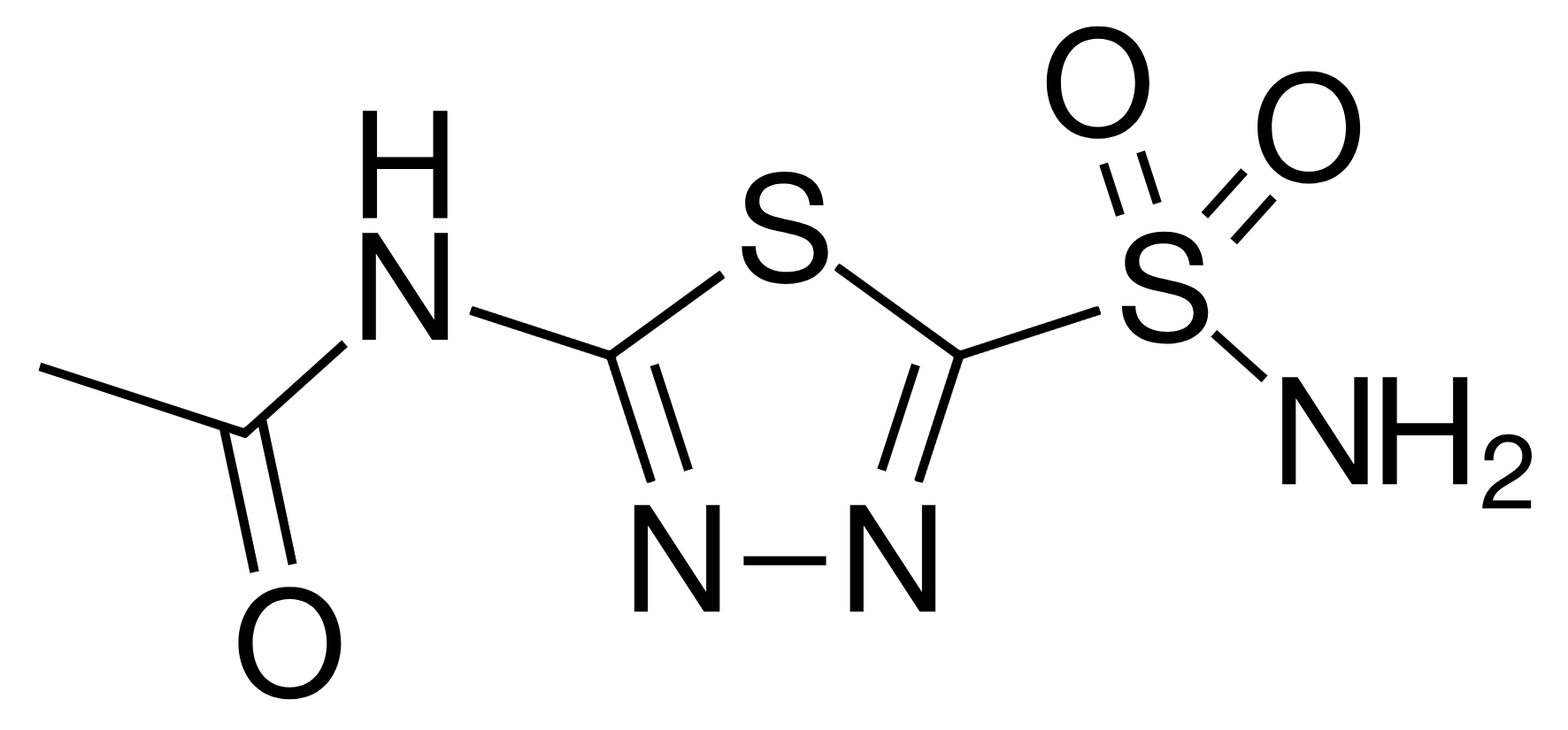
La acetazolamida es una sulfonamida.

Estructura química de la acetazolamida

Estructura química de la acetazolamida

Imagen: “Acetazolamida” por Ayacop. Licencia: Dominio Público

Visión General: Reabsorción de HCO3 en EN Erythema nodosum is an immune-mediated panniculitis (inflammation of the subcutaneous fat) caused by a type IV (delayed-type) hypersensitivity reaction. It commonly manifests in young women as tender, erythematous nodules on the shins. Erythema Nodosum el túbulo proximal

El bicarbonato no puede ser reabsorbido directamente por los LOS Neisseria riñones; primero debe ser convertido en EN Erythema nodosum is an immune-mediated panniculitis (inflammation of the subcutaneous fat) caused by a type IV (delayed-type) hypersensitivity reaction. It commonly manifests in young women as tender, erythematous nodules on the shins. Erythema Nodosum CO2 en EN Erythema nodosum is an immune-mediated panniculitis (inflammation of the subcutaneous fat) caused by a type IV (delayed-type) hypersensitivity reaction. It commonly manifests in young women as tender, erythematous nodules on the shins. Erythema Nodosum el lumen y luego reconvertido en EN Erythema nodosum is an immune-mediated panniculitis (inflammation of the subcutaneous fat) caused by a type IV (delayed-type) hypersensitivity reaction. It commonly manifests in young women as tender, erythematous nodules on the shins. Erythema Nodosum HCO3 una vez dentro de la célula. Esta reacción se produce a través de los LOS Neisseria siguientes procesos:
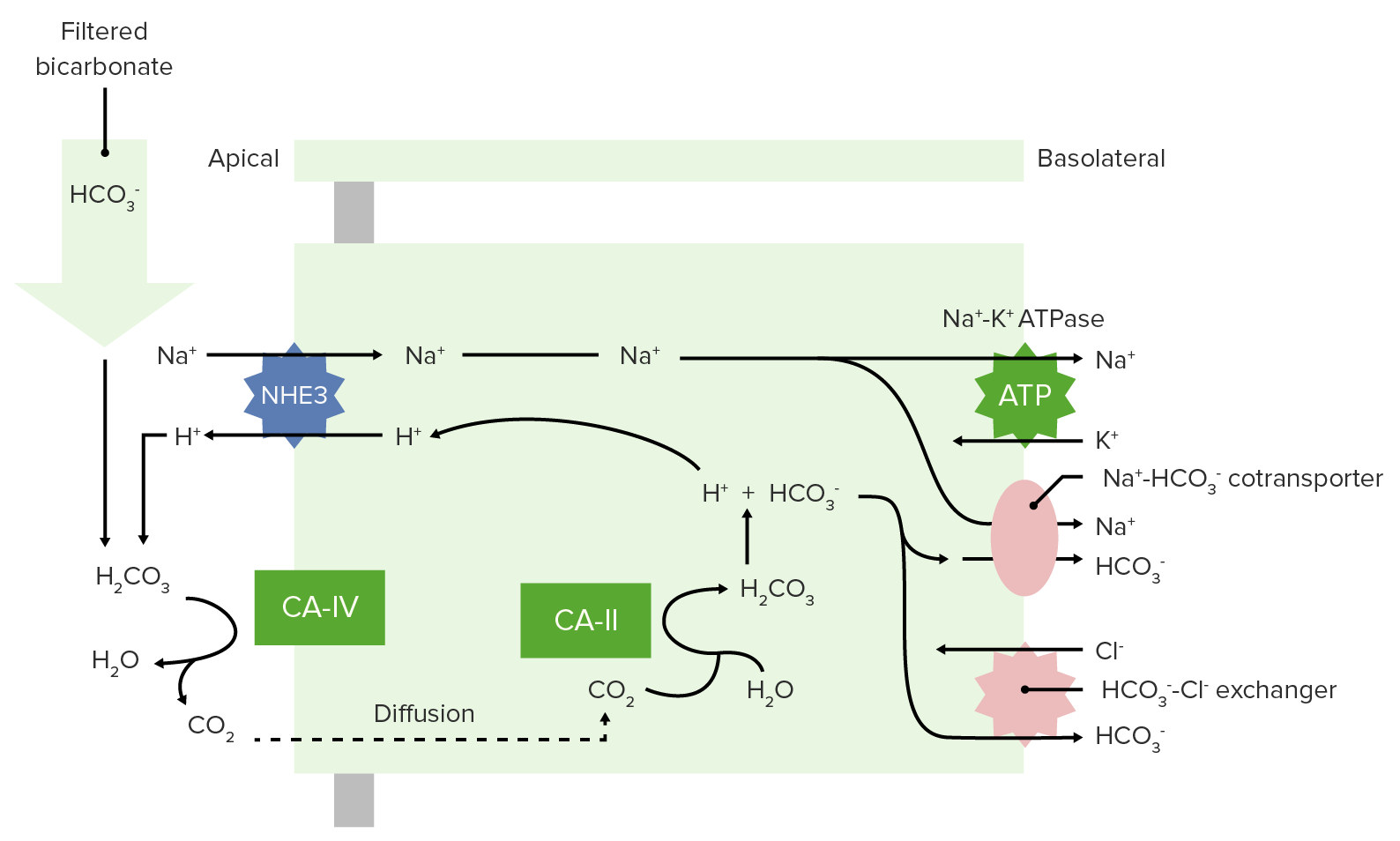
  • El antiportador de Na+-H+ 3 reabsorbe Na+ y secreta H+.
  • El H+ secretado se combina con el HCO3 para formar H2CO3 en EN Erythema nodosum is an immune-mediated panniculitis (inflammation of the subcutaneous fat) caused by a type IV (delayed-type) hypersensitivity reaction. It commonly manifests in young women as tender, erythematous nodules on the shins. Erythema Nodosum el lumen tubular.
  • El H2CO3 es convertido en EN Erythema nodosum is an immune-mediated panniculitis (inflammation of the subcutaneous fat) caused by a type IV (delayed-type) hypersensitivity reaction. It commonly manifests in young women as tender, erythematous nodules on the shins. Erythema Nodosum H2O y CO2 por la anhidrasa carbónica-IV en EN Erythema nodosum is an immune-mediated panniculitis (inflammation of the subcutaneous fat) caused by a type IV (delayed-type) hypersensitivity reaction. It commonly manifests in young women as tender, erythematous nodules on the shins. Erythema Nodosum la región apical.
  • El CO2 se difunde libremente a través de la membrana apical de vuelta a la célula.
  • La anhidrasa carbónica intracelular II convierte el CO2 y el H2O en EN Erythema nodosum is an immune-mediated panniculitis (inflammation of the subcutaneous fat) caused by a type IV (delayed-type) hypersensitivity reaction. It commonly manifests in young women as tender, erythematous nodules on the shins. Erythema Nodosum H2CO3.
  • El H2CO3 se disocia entonces en EN Erythema nodosum is an immune-mediated panniculitis (inflammation of the subcutaneous fat) caused by a type IV (delayed-type) hypersensitivity reaction. It commonly manifests in young women as tender, erythematous nodules on the shins. Erythema Nodosum H+ y HCO3:
    • El H+ se recicla mediante su secreción a través del antiportador de Na+-H+ 3.
    • El HCO3 se absorbe a través de la membrana basolateral vía:
      • Cotransportador Na+-HCO3
      • Intercambiador cloruro–HCO3
  • Efectos netos de todo el proceso:
    • Excreción de H+
    • Absorción de HCO3
  • Eficiencia: el 80% del HCO3 filtrado se reabsorbe en EN Erythema nodosum is an immune-mediated panniculitis (inflammation of the subcutaneous fat) caused by a type IV (delayed-type) hypersensitivity reaction. It commonly manifests in young women as tender, erythematous nodules on the shins. Erythema Nodosum el túbulo contorneado proximal en EN Erythema nodosum is an immune-mediated panniculitis (inflammation of the subcutaneous fat) caused by a type IV (delayed-type) hypersensitivity reaction. It commonly manifests in young women as tender, erythematous nodules on the shins. Erythema Nodosum condiciones normales.
Reabsorción de bicarbonato en el túbulo proximal

Reabsorción de bicarbonato en el túbulo proximal
NHE3: Intercambiador de Na+-H+ 3
CA-IV: anhidrasa carbónica IV
CA-II: anhidrasa carbónica II


Imagen por Lecturio. Licencia: CC BY-NC-SA 4.0

Mecanismo de acción de los LOS Neisseria inhibidores de la anhidrasa carbónica

  • Inhiben de manera no competitiva las anhidrasas carbónicas (CA-IV y CA-II) que catalizan la reacción carbónica: H2CO3 ⇄ HCO3 + H+ ⇄ CO2 + H2O
  • La anhidrasa carbónica cataliza dos procesos:
    • Deshidratación de H2CO3 en EN Erythema nodosum is an immune-mediated panniculitis (inflammation of the subcutaneous fat) caused by a type IV (delayed-type) hypersensitivity reaction. It commonly manifests in young women as tender, erythematous nodules on the shins. Erythema Nodosum el lumen apical del túbulo contorneado proximal
    • Hidratación del CO2 en EN Erythema nodosum is an immune-mediated panniculitis (inflammation of the subcutaneous fat) caused by a type IV (delayed-type) hypersensitivity reaction. It commonly manifests in young women as tender, erythematous nodules on the shins. Erythema Nodosum las células epiteliales del túbulo contorneado proximal
  • Inhibición de la anhidrasa carbónica:
    • Mantiene el HCO3 en EN Erythema nodosum is an immune-mediated panniculitis (inflammation of the subcutaneous fat) caused by a type IV (delayed-type) hypersensitivity reaction. It commonly manifests in young women as tender, erythematous nodules on the shins. Erythema Nodosum los LOS Neisseria túbulos renales (a dosis máximas seguras, los LOS Neisseria inhibidores de la anhidrasa carbónica inhiben alrededor del 45% de la reabsorción total de HCO3)
    • Evita la secreción de HCO3 en EN Erythema nodosum is an immune-mediated panniculitis (inflammation of the subcutaneous fat) caused by a type IV (delayed-type) hypersensitivity reaction. It commonly manifests in young women as tender, erythematous nodules on the shins. Erythema Nodosum el humor Humor Defense Mechanisms acuoso de los LOS Neisseria ojos
    • Evita la secreción de HCO3 en EN Erythema nodosum is an immune-mediated panniculitis (inflammation of the subcutaneous fat) caused by a type IV (delayed-type) hypersensitivity reaction. It commonly manifests in young women as tender, erythematous nodules on the shins. Erythema Nodosum el LCR del cerebro

Efectos fisiológicos

El uso de los LOS Neisseria inhibidores de la anhidrasa carbónica causa:

  • ↑ Excreción de HCO3 que conduce a:
    • Acidosis Acidosis A pathologic condition of acid accumulation or depletion of base in the body. The two main types are respiratory acidosis and metabolic acidosis, due to metabolic acid build up. Respiratory Acidosis metabólica hiperclorémica
    • Alcalinización de la orina
  • ↑ Excreción de Na+ → el agua sigue al AL Amyloidosis Na+ → diuresis:
    • Debido a la reducción de la actividad del intercambiador Na+/H+
    • Después de varios días, la reabsorción compensatoria de Na+ aumenta en EN Erythema nodosum is an immune-mediated panniculitis (inflammation of the subcutaneous fat) caused by a type IV (delayed-type) hypersensitivity reaction. It commonly manifests in young women as tender, erythematous nodules on the shins. Erythema Nodosum otras partes de la nefrona → la diuresis se ralentiza significativamente
  • ↓ Presión intraocular (PIO) debido a ↓ producción de humor Humor Defense Mechanisms acuoso
  • ↓ Presión intracraneal (PIC) debido a ↓ producción de LCR

Farmacocinética

Tabla: Farmacocinética de los LOS Neisseria inhibidores de la anhidrasa carbónica
Medicamento Absorción Distribución Metabolismo Excreción
Acetazolamida
  • Se absorbe rápidamente
  • Biodisponibilidad: > 90%
  • Inicio de acción:
    • Oral: 1‒2 horas
    • Intravenosa: 2‒10 minutos
  • Unión a proteínas: 95%
  • Vd: 0,3 L/kg
No se metaboliza
  • En EN Erythema nodosum is an immune-mediated panniculitis (inflammation of the subcutaneous fat) caused by a type IV (delayed-type) hypersensitivity reaction. It commonly manifests in young women as tender, erythematous nodules on the shins. Erythema Nodosum la orina, como medicamento inalterado
  • Vida media: 2,5‒9 horas
Metazolamida
  • Absorción más lenta en EN Erythema nodosum is an immune-mediated panniculitis (inflammation of the subcutaneous fat) caused by a type IV (delayed-type) hypersensitivity reaction. It commonly manifests in young women as tender, erythematous nodules on the shins. Erythema Nodosum comparación con la acetazolamida
  • Pico de acción: 6‒8 horas
  • Unión a proteínas: 55%
  • Vd: 17‒23 L
Lento, dentro del tracto gastrointestinal
  • Orina (25% como medicamento inalterado)
  • Vida media: 14 horas
Vd: volumen de distribución

Indicaciones

  • Pacientes con edema Edema Edema is a condition in which excess serous fluid accumulates in the body cavity or interstitial space of connective tissues. Edema is a symptom observed in several medical conditions. It can be categorized into 2 types, namely, peripheral (in the extremities) and internal (in an organ or body cavity). Edema que tienen alcalosis metabólica
  • Enfermedad de las alturas:
    • La hipoxia hipobárica conduce a una alcalosis respiratoria, provocando que los LOS Neisseria riñones compensen con una excreción ↑ de HCO3 y/o una excreción ↓ de H+
    • La acetazolamida provoca una excreción ↑ de HCO3, mejorando el estado ácido-base
    • El aumento de la carga ácida permite que el cuerpo realice respiraciones más rápidas y profundas para aportar suficiente O2 sin elevar el pH pH The quantitative measurement of the acidity or basicity of a solution. Acid-Base Balance sérico.
  • Glaucoma Glaucoma Glaucoma is an optic neuropathy characterized by typical visual field defects and optic nerve atrophy seen as optic disc cupping on examination. The acute form of glaucoma is a medical emergency. Glaucoma is often, but not always, caused by increased intraocular pressure (IOP). Glaucoma
  • Epilepsia centroencefalica (terapia adyuvante, actúa a través de un mecanismo desconocido)
  • Usos adicionales distintos al AL Amyloidosis de la ficha técnica:
    • Hipertensión intracraneal idiopática e hidrocefalia de presión normal
    • Enfermedad pulmonar obstructiva crónica estable e hipercápnica (utilizada como estimulante respiratorio)
    • Alcalosis metabólica
    • Prevención de cálculos renales de cistina

Efectos Secundarios y Contraindicaciones

Efectos secundarios

  • Alteraciones electrolíticas y de la glucosa:
    • Acidosis Acidosis A pathologic condition of acid accumulation or depletion of base in the body. The two main types are respiratory acidosis and metabolic acidosis, due to metabolic acid build up. Respiratory Acidosis metabólica
    • Hipopotasemia
    • Hiponatremia
    • Hiperglucemia o hipoglucemia
  • Miopía/visión borrosa
  • Síntomas del sistema nervioso central (SNC):
    • Mareo
    • Cefalea
    • Somnolencia/fatiga
    • Parestesias

Contraindicaciones

  • Alergias a las sulfamidas
  • Enfermedad hepática y/o renal grave
  • Insuficiencia corticosuprarrenal
  • Hiponatremia
  • Hipopotasemia

Precauciones

Los LOS Neisseria inhibidores de la anhidrasa carbónica deben utilizarse con precaución en EN Erythema nodosum is an immune-mediated panniculitis (inflammation of the subcutaneous fat) caused by a type IV (delayed-type) hypersensitivity reaction. It commonly manifests in young women as tender, erythematous nodules on the shins. Erythema Nodosum las siguientes poblaciones:

  • Pacientes con acidosis Acidosis A pathologic condition of acid accumulation or depletion of base in the body. The two main types are respiratory acidosis and metabolic acidosis, due to metabolic acid build up. Respiratory Acidosis respiratoria
  • Pacientes que deben mantener una buena agudeza mental (e.g., operadores de máquinas)
  • Diabetes Diabetes Diabetes mellitus (DM) is a metabolic disease characterized by hyperglycemia and dysfunction of the regulation of glucose metabolism by insulin. Type 1 DM is diagnosed mostly in children and young adults as the result of autoimmune destruction of β cells in the pancreas and the resulting lack of insulin. Type 2 DM has a significant association with obesity and is characterized by insulin resistance. Diabetes Mellitus (puede alterar el control de la glucosa)
  • Enfermedad hepática o renal de leve a moderada
  • Pacientes de edad avanzada (pueden ser más sensibles a los LOS Neisseria efectos secundarios)
  • Embarazo y lactancia (evidencia limitada)

Comparación de Medicamentos

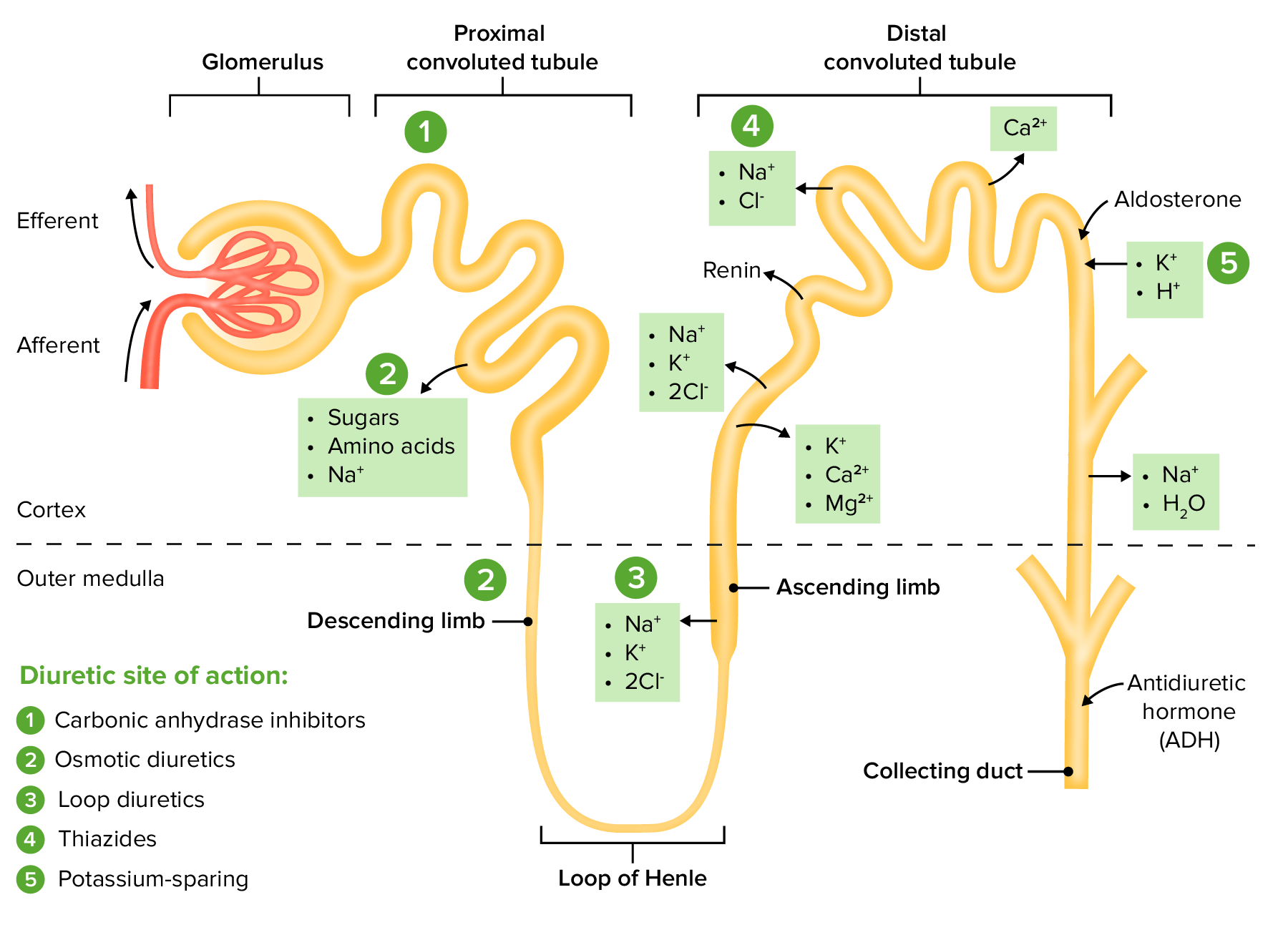
Algunos de los LOS Neisseria otros diuréticos más comunes son los LOS Neisseria diuréticos tiazídicos (e.g., hidroclorotiazida), diuréticos de asa ASA Anterior Cord Syndrome (e.g., furosemida), diuréticos ahorradores de K+ (e.g., espironolactona) y diuréticos osmóticos (e.g., manitol).

Tabla: Comparación de los LOS Neisseria diuréticos
Medicamento Mecanismo Efecto fisiológico Indicación
Diurético tiazídico: Hidroclorotiazida ↓ Reabsorción de NaCl en EN Erythema nodosum is an immune-mediated panniculitis (inflammation of the subcutaneous fat) caused by a type IV (delayed-type) hypersensitivity reaction. It commonly manifests in young women as tender, erythematous nodules on the shins. Erythema Nodosum el TCD a través de la inhibición del cotransportador de Na+/Cl
  • ↓ Presión arterial
  • Edema Edema Edema is a condition in which excess serous fluid accumulates in the body cavity or interstitial space of connective tissues. Edema is a symptom observed in several medical conditions. It can be categorized into 2 types, namely, peripheral (in the extremities) and internal (in an organ or body cavity). Edema
  • Hipertensión
  • Edema Edema Edema is a condition in which excess serous fluid accumulates in the body cavity or interstitial space of connective tissues. Edema is a symptom observed in several medical conditions. It can be categorized into 2 types, namely, peripheral (in the extremities) and internal (in an organ or body cavity). Edema
Diurético de asa ASA Anterior Cord Syndrome: Furosemida Inhibe el cotransportador luminal de Na+/K+/Cl en EN Erythema nodosum is an immune-mediated panniculitis (inflammation of the subcutaneous fat) caused by a type IV (delayed-type) hypersensitivity reaction. It commonly manifests in young women as tender, erythematous nodules on the shins. Erythema Nodosum la rama ascendente gruesa del asa ASA Anterior Cord Syndrome de Henle
  • Edema Edema Edema is a condition in which excess serous fluid accumulates in the body cavity or interstitial space of connective tissues. Edema is a symptom observed in several medical conditions. It can be categorized into 2 types, namely, peripheral (in the extremities) and internal (in an organ or body cavity). Edema
  • ↓ Presión arterial
  • Edema Edema Edema is a condition in which excess serous fluid accumulates in the body cavity or interstitial space of connective tissues. Edema is a symptom observed in several medical conditions. It can be categorized into 2 types, namely, peripheral (in the extremities) and internal (in an organ or body cavity). Edema/ascitis
  • Insuficiencia cardíaca
  • Hipertensión
Diurético ahorrador de potasio: Espironolactona
  • ↓ Reabsorción de Na a través de los LOS Neisseria canales ENaC ENaC Sodium channels found on salt-reabsorbing epithelial cells that line the distal nephron; the distal colon; salivary ducts; sweat glands; and the lung. They are amiloride-sensitive and play a critical role in the control of sodium balance, blood volume, and blood pressure. Liddle Syndrome en EN Erythema nodosum is an immune-mediated panniculitis (inflammation of the subcutaneous fat) caused by a type IV (delayed-type) hypersensitivity reaction. It commonly manifests in young women as tender, erythematous nodules on the shins. Erythema Nodosum el túbulo colector
  • Inhibición de los LOS Neisseria receptores de aldosterona en EN Erythema nodosum is an immune-mediated panniculitis (inflammation of the subcutaneous fat) caused by a type IV (delayed-type) hypersensitivity reaction. It commonly manifests in young women as tender, erythematous nodules on the shins. Erythema Nodosum el túbulo colector
  • ↓ Presión arterial
  • Edema Edema Edema is a condition in which excess serous fluid accumulates in the body cavity or interstitial space of connective tissues. Edema is a symptom observed in several medical conditions. It can be categorized into 2 types, namely, peripheral (in the extremities) and internal (in an organ or body cavity). Edema
  • No causa ↑ en EN Erythema nodosum is an immune-mediated panniculitis (inflammation of the subcutaneous fat) caused by a type IV (delayed-type) hypersensitivity reaction. It commonly manifests in young women as tender, erythematous nodules on the shins. Erythema Nodosum la excreción de K+
  • Efectos antiandrogénicos
  • Insuficiencia cardíaca
  • Edema Edema Edema is a condition in which excess serous fluid accumulates in the body cavity or interstitial space of connective tissues. Edema is a symptom observed in several medical conditions. It can be categorized into 2 types, namely, peripheral (in the extremities) and internal (in an organ or body cavity). Edema/ascitis
  • Hipertensión
  • Hirsutismo en EN Erythema nodosum is an immune-mediated panniculitis (inflammation of the subcutaneous fat) caused by a type IV (delayed-type) hypersensitivity reaction. It commonly manifests in young women as tender, erythematous nodules on the shins. Erythema Nodosum las mujeres
  • Hiperaldosteronismo primario
Inhibidor de la anhidrasa carbónica: Acetazolamida Inhibe tanto la hidratación del CO2 en EN Erythema nodosum is an immune-mediated panniculitis (inflammation of the subcutaneous fat) caused by a type IV (delayed-type) hypersensitivity reaction. It commonly manifests in young women as tender, erythematous nodules on the shins. Erythema Nodosum las células epiteliales del TCP como la deshidratación del H2CO3 en EN Erythema nodosum is an immune-mediated panniculitis (inflammation of the subcutaneous fat) caused by a type IV (delayed-type) hypersensitivity reaction. It commonly manifests in young women as tender, erythematous nodules on the shins. Erythema Nodosum el lumen del TCP; provocando una excreción ↑ de HCO3 y Na+
  • ↑ Excreción urinaria de HCO3 acidosis Acidosis A pathologic condition of acid accumulation or depletion of base in the body. The two main types are respiratory acidosis and metabolic acidosis, due to metabolic acid build up. Respiratory Acidosis metabólica
  • ↓ Presión intraocular
  • Edema Edema Edema is a condition in which excess serous fluid accumulates in the body cavity or interstitial space of connective tissues. Edema is a symptom observed in several medical conditions. It can be categorized into 2 types, namely, peripheral (in the extremities) and internal (in an organ or body cavity). Edema en EN Erythema nodosum is an immune-mediated panniculitis (inflammation of the subcutaneous fat) caused by a type IV (delayed-type) hypersensitivity reaction. It commonly manifests in young women as tender, erythematous nodules on the shins. Erythema Nodosum pacientes con alcalosis metabólica
  • Enfermedad de las alturas
  • ↑ Presión intraocular
  • Uso distinto al AL Amyloidosis de la ficha técnica: hidrocefalia de presión normal
Diuréticos osmóticos: Manitol ↑ Presión osmótica en EN Erythema nodosum is an immune-mediated panniculitis (inflammation of the subcutaneous fat) caused by a type IV (delayed-type) hypersensitivity reaction. It commonly manifests in young women as tender, erythematous nodules on the shins. Erythema Nodosum el filtrado glomerular → ↑ líquido tubular e impide la reabsorción de agua
  • ↓ Agua libre
  • ↓ Volumen sanguíneo cerebral
  • Aumento de la presión intracraneal
  • Aumento de la presión intraocular
TCP: túbulo contorneado proximal
TCD: túbulo contorneado distal
Diuréticos

Los sitios de acción, dentro de la nefrona, para las clases de medicamentos diuréticos

Imagen por Lecturio. Licencia: CC BY-NC-SA 4.0

Referencias

  1. UpToDate Lexicomp Drug Topic Pages: Acetazolamide; methazolamide. Retrieved June 17, 2021, from
    1. https://www.uptodate.com/contents/acetazolamide-drug-information
    2. https://www.uptodate.com/contents/methazolamide-drug-information
  2. Ives, H.E. (2012). Agentes diuréticos. In Katzung, B.G., Masters, S.B., Trevor, A.J. (Eds.) Basic and Clinical Pharmacology, 12th Ed. pp. 256‒258.
  3. Kassamali, R., Sica, D.A. (2011). Acetazolamide: A forgotten diuretic agent. Cardiol Rev. 19(6), 276‒278. https://pubmed.ncbi.nlm.nih.gov/21983315/
  4. Van Berkel, M.A., Elefritz, J.L. (2018). Evaluating off-label uses of acetazolamide. Am J Health Syst Pharm. 75(8), 524‒531. https://pubmed.ncbi.nlm.nih.gov/29626002/
  5. Smith, S.V., Friedman, D.I. (2017). The idiopathic intracranial hypertension treatment trial: A review of the outcomes. Headache. 57(8). 1303–1310. https://pubmed.ncbi.nlm.nih.gov/28758206/
  6. Stuart, M.C., Kouimtzi, M., Hill, S.R. (Eds.). (2009). WHO Model Formulary 2008. World Health Organization. p. 439.
  7. World Health Organization. (2019). World Health Organization model list of essential medicines: 21st list 2019. Geneva: World Health Organization.
  8. Low, E.V., et al. (2012). Identifying the lowest effective dose of acetazolamide for the prophylaxis of acute mountain sickness: Systematic review and meta-analysis. BMJ. 345, e6779. https://pubmed.ncbi.nlm.nih.gov/23081689/
  9. Saito, H., et al. (2011). Adverse effects of intravenous acetazolamide administration for evaluation of cerebrovascular reactivity using brain perfusion single-photon emission computed tomography in patients with major cerebral artery steno-occlusive diseases. Neurol Med Chir (Tokyo). 51(7), 479‒483. https://pubmed.ncbi.nlm.nih.gov/21785240/
  10. Coote, J.H. (1991). Pharmacological control of altitude sickness. Trends Pharmacol Sci. 12(12), 450‒455. https://pubmed.ncbi.nlm.nih.gov/1792688/
  11. Katayama, F., Miura, H., Takanashi, S. (2002). Long-term effectiveness and side effects of acetazolamide as an adjunct to other anticonvulsants in the treatment of refractory epilepsies. Brain Dev. 24(3), 150‒154. https://pubmed.ncbi.nlm.nih.gov/11934510/
  12. Zaidi, F.H., Kinnear, P.E. (2004). Acetazolamide, alternate carbonic anhydrase inhibitors, and hypoglycemic agents: Comparing enzymatic with diuresis induced metabolic acidosis following intraocular surgery in diabetes. Br J Ophthalmol. 88(5), 714‒715. https://pubmed.ncbi.nlm.nih.gov/15090429/
  13. Moviat, M., et al. (2006). Acetazolamide-mediated decrease in strong ion difference accounts for the correction of metabolic alkalosis in critically ill patients. Crit Care. 10(1), R14. https://pubmed.ncbi.nlm.nih.gov/16420662/
  14. Platt, D., Griggs, R.C. (2012). Use of acetazolamide in sulfonamide-allergic patients with neurologic channelopathies. Arch Neurol. 69(4), 527‒529. https://pubmed.ncbi.nlm.nih.gov/22158718/

¡Crea tu cuenta gratis o inicia una sesión para seguir leyendo!

Regístrate ahora y obtén acceso gratuito a Lecturio con páginas de concepto, videos médicos y cuestionarios para tu educación médica.

User Reviews

Que tengas una sesión de estudio alegre y navideña 🎁 Ahorra 50% en todos los planes >>

Details