Domina Conceptos Médicos

Estudia para la escuela de medicina y tus examenes con Lecturio.

Malassezia

Malassezia Malassezia Malassezia is a lipophilic yeast commonly found on the skin surfaces of many animals, including humans. In the presence of certain environments or triggers, this fungus can cause pathologic diseases ranging from superficial skin conditions (tinea versicolor and dermatitis) to invasive disease (e.g., Malassezia folliculitis, catheter-associated fungemia, meningitis, and urinary tract infections). Malassezia Fungi es una levadura lipofílica que se encuentra habitualmente en EN Erythema nodosum is an immune-mediated panniculitis (inflammation of the subcutaneous fat) caused by a type IV (delayed-type) hypersensitivity reaction. It commonly manifests in young women as tender, erythematous nodules on the shins. Erythema Nodosum la superficie de la piel de muchos animales, e inclusive humanos. En EN Erythema nodosum is an immune-mediated panniculitis (inflammation of the subcutaneous fat) caused by a type IV (delayed-type) hypersensitivity reaction. It commonly manifests in young women as tender, erythematous nodules on the shins. Erythema Nodosum presencia de determinadas condiciones ambientales o desencadenantes, este hongo puede causar enfermedades patológicas que van desde condiciones cutáneas superficiales (tiña versicolor y dermatitis Dermatitis Any inflammation of the skin. Atopic Dermatitis (Eczema)) hasta enfermedades invasivas (e.g., foliculitis por Malassezia Malassezia Malassezia is a lipophilic yeast commonly found on the skin surfaces of many animals, including humans. In the presence of certain environments or triggers, this fungus can cause pathologic diseases ranging from superficial skin conditions (tinea versicolor and dermatitis) to invasive disease (e.g., Malassezia folliculitis, catheter-associated fungemia, meningitis, and urinary tract infections). Malassezia Fungi, fungemia Fungemia The presence of fungi circulating in the blood. Opportunistic fungal sepsis is seen most often in immunosuppressed patients with severe neutropenia or in postoperative patients with intravenous catheters and usually follows prolonged antibiotic therapy. Chronic Granulomatous Disease asociada a catéter, meningitis Meningitis Meningitis is inflammation of the meninges, the protective membranes of the brain, and spinal cord. The causes of meningitis are varied, with the most common being bacterial or viral infection. The classic presentation of meningitis is a triad of fever, altered mental status, and nuchal rigidity. Meningitis e infecciones del tracto urinario). Los LOS Neisseria pacientes con tiña versicolor desarrollan una erupción hipopigmentada o hiperpigmentada asintomática o ligeramente pruriginosa en EN Erythema nodosum is an immune-mediated panniculitis (inflammation of the subcutaneous fat) caused by a type IV (delayed-type) hypersensitivity reaction. It commonly manifests in young women as tender, erythematous nodules on the shins. Erythema Nodosum el tórax, la espalda, el abdomen o la cara. La dermatitis Dermatitis Any inflammation of the skin. Atopic Dermatitis (Eczema) seborreica se presenta con una erupción eritematosa y pruriginosa con escamas grasientas y costras amarillas, que afecta con mayor frecuencia a zonas de la cara, la parte superior del tronco o a las regiones intertriginosas. La presentación de la foliculitis por Malassezia Malassezia Malassezia is a lipophilic yeast commonly found on the skin surfaces of many animals, including humans. In the presence of certain environments or triggers, this fungus can cause pathologic diseases ranging from superficial skin conditions (tinea versicolor and dermatitis) to invasive disease (e.g., Malassezia folliculitis, catheter-associated fungemia, meningitis, and urinary tract infections). Malassezia Fungi es similar a la de la foliculitis bacteriana, con pápulas o pústulas pruriginosas y monomorfas en EN Erythema nodosum is an immune-mediated panniculitis (inflammation of the subcutaneous fat) caused by a type IV (delayed-type) hypersensitivity reaction. It commonly manifests in young women as tender, erythematous nodules on the shins. Erythema Nodosum un patrón folicular. El diagnóstico de las condiciones cutáneas superficiales se realiza principalmente mediante el examen físico, pero también puede confirmarse mediante la microscopía de raspados cutáneos. El tratamiento implica el uso de agentes antifúngicos tópicos y orales.

Last updated: Dec 15, 2025
Editorial responsibility: Stanley Oiseth, Lindsay Jones, Evelin Maza

Características Generales y Epidemiología

Características generales de Malassezia Malassezia Malassezia is a lipophilic yeast commonly found on the skin surfaces of many animals, including humans. In the presence of certain environments or triggers, this fungus can cause pathologic diseases ranging from superficial skin conditions (tinea versicolor and dermatitis) to invasive disease (e.g., Malassezia folliculitis, catheter-associated fungemia, meningitis, and urinary tract infections). Malassezia Fungi

  • Antes conocido como Pityrosporum Pityrosporum Malassezia is a lipophilic yeast commonly found on the skin surfaces of many animals, including humans. In the presence of certain environments or triggers, this fungus can cause pathologic diseases ranging from superficial skin conditions (tinea versicolor and dermatitis) to invasive disease (e.g., Malassezia folliculitis, catheter-associated fungemia, meningitis, and urinary tract infections). Malassezia Fungi
  • Taxonomía:
    • Familia: Malasseziaceae Malasseziaceae Malassezia Fungi
    • Género: Malassezia Malassezia Malassezia is a lipophilic yeast commonly found on the skin surfaces of many animals, including humans. In the presence of certain environments or triggers, this fungus can cause pathologic diseases ranging from superficial skin conditions (tinea versicolor and dermatitis) to invasive disease (e.g., Malassezia folliculitis, catheter-associated fungemia, meningitis, and urinary tract infections). Malassezia Fungi
  • Dimórfico:
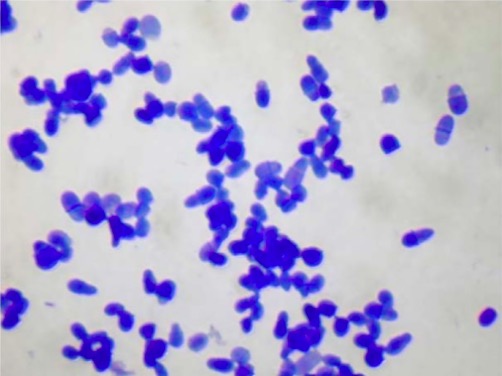
    • Levadura: esférica u ovalada
    • Forma micelial: hifas cortas
  • Las colonias son de color crema o amarillentas.
  • Lipofílico
  • La mayoría de las especies son dependientes de los LOS Neisseria lípidos.
  • No es un dermatofito
  • Se reproducen por gemación unipolar Unipolar Nervous System: Histology

Especies clínicamente relevantes

Hay numerosas especies reconocidas:

  • M. furfur M. furfur Malassezia Fungi (más común)
  • M. globosa M. globosa Malassezia Fungi (común)
  • M. caprae
  • M. cuniculi
  • M. dermatis
  • M. equina
  • M. japonica
  • M. nana
  • M. obtusa
  • M. pachydermatis
  • M. psittaci
  • M. restricta
  • M. slooffiae
  • M. sympodialis
  • M. yamatoensis

Enfermedades asociadas

  • Tiña (pitiriasis) versicolor
  • Dermatitis Dermatitis Any inflammation of the skin. Atopic Dermatitis (Eczema) seborreica
  • Foliculitis por Malassezia Malassezia Malassezia is a lipophilic yeast commonly found on the skin surfaces of many animals, including humans. In the presence of certain environments or triggers, this fungus can cause pathologic diseases ranging from superficial skin conditions (tinea versicolor and dermatitis) to invasive disease (e.g., Malassezia folliculitis, catheter-associated fungemia, meningitis, and urinary tract infections). Malassezia Fungi
  • Fungemia Fungemia The presence of fungi circulating in the blood. Opportunistic fungal sepsis is seen most often in immunosuppressed patients with severe neutropenia or in postoperative patients with intravenous catheters and usually follows prolonged antibiotic therapy. Chronic Granulomatous Disease asociada a catéter
  • Meningitis Meningitis Meningitis is inflammation of the meninges, the protective membranes of the brain, and spinal cord. The causes of meningitis are varied, with the most common being bacterial or viral infection. The classic presentation of meningitis is a triad of fever, altered mental status, and nuchal rigidity. Meningitis
  • Artritis séptica
  • Peritonitis Peritonitis Inflammation of the peritoneum lining the abdominal cavity as the result of infectious, autoimmune, or chemical processes. Primary peritonitis is due to infection of the peritoneal cavity via hematogenous or lymphatic spread and without intra-abdominal source. Secondary peritonitis arises from the abdominal cavity itself through rupture or abscess of intra-abdominal organs. Penetrating Abdominal Injury
  • Infecciones del tracto urinario

Epidemiología

Tiña versicolor:

  • Mayor incidencia en EN Erythema nodosum is an immune-mediated panniculitis (inflammation of the subcutaneous fat) caused by a type IV (delayed-type) hypersensitivity reaction. It commonly manifests in young women as tender, erythematous nodules on the shins. Erythema Nodosum climas tropicales y en EN Erythema nodosum is an immune-mediated panniculitis (inflammation of the subcutaneous fat) caused by a type IV (delayed-type) hypersensitivity reaction. It commonly manifests in young women as tender, erythematous nodules on the shins. Erythema Nodosum meses de verano
  • Más frecuente en EN Erythema nodosum is an immune-mediated panniculitis (inflammation of the subcutaneous fat) caused by a type IV (delayed-type) hypersensitivity reaction. It commonly manifests in young women as tender, erythematous nodules on the shins. Erythema Nodosum adultos (20–50 años)

Foliculitis por Malassezia Malassezia Malassezia is a lipophilic yeast commonly found on the skin surfaces of many animals, including humans. In the presence of certain environments or triggers, this fungus can cause pathologic diseases ranging from superficial skin conditions (tinea versicolor and dermatitis) to invasive disease (e.g., Malassezia folliculitis, catheter-associated fungemia, meningitis, and urinary tract infections). Malassezia Fungi:

  • Común en EN Erythema nodosum is an immune-mediated panniculitis (inflammation of the subcutaneous fat) caused by a type IV (delayed-type) hypersensitivity reaction. It commonly manifests in young women as tender, erythematous nodules on the shins. Erythema Nodosum ambientes cálidos y húmedos
  • Más común en EN Erythema nodosum is an immune-mediated panniculitis (inflammation of the subcutaneous fat) caused by a type IV (delayed-type) hypersensitivity reaction. It commonly manifests in young women as tender, erythematous nodules on the shins. Erythema Nodosum adolescentes y adultos jóvenes (13–45 años)

Patogénesis

Reservorios

Malassezia Malassezia Malassezia is a lipophilic yeast commonly found on the skin surfaces of many animals, including humans. In the presence of certain environments or triggers, this fungus can cause pathologic diseases ranging from superficial skin conditions (tinea versicolor and dermatitis) to invasive disease (e.g., Malassezia folliculitis, catheter-associated fungemia, meningitis, and urinary tract infections). Malassezia Fungi forma parte de la flora cutánea normal de los LOS Neisseria humanos y los LOS Neisseria animales.

Factores de riesgo del huésped

Entre los LOS Neisseria factores de riesgo que predisponen a la enfermedad se encuentran:

  • Predisposición genética
  • Ambientes cálidos y húmedos
  • Inmunosupresión:
    • Uso de esteroides
    • Diabetes Diabetes Diabetes mellitus (DM) is a metabolic disease characterized by hyperglycemia and dysfunction of the regulation of glucose metabolism by insulin. Type 1 DM is diagnosed mostly in children and young adults as the result of autoimmune destruction of β cells in the pancreas and the resulting lack of insulin. Type 2 DM has a significant association with obesity and is characterized by insulin resistance. Diabetes Mellitus
    • Malignidad hematológica
    • Trasplante de órganos
  • Malnutrición
  • Producción excesiva de sebo
  • Hiperhidrosis
  • Neonatos (infecciones asociadas a catéter)

Fisiopatología

Tiña versicolor:

  • Conversión de Malassezia Malassezia Malassezia is a lipophilic yeast commonly found on the skin surfaces of many animals, including humans. In the presence of certain environments or triggers, this fungus can cause pathologic diseases ranging from superficial skin conditions (tinea versicolor and dermatitis) to invasive disease (e.g., Malassezia folliculitis, catheter-associated fungemia, meningitis, and urinary tract infections). Malassezia Fungi en EN Erythema nodosum is an immune-mediated panniculitis (inflammation of the subcutaneous fat) caused by a type IV (delayed-type) hypersensitivity reaction. It commonly manifests in young women as tender, erythematous nodules on the shins. Erythema Nodosum forma de micelio patógeno → sobrecrecimiento en EN Erythema nodosum is an immune-mediated panniculitis (inflammation of the subcutaneous fat) caused by a type IV (delayed-type) hypersensitivity reaction. It commonly manifests in young women as tender, erythematous nodules on the shins. Erythema Nodosum el estrato córneo → degradación de lípidos → producción de ácido azelaico → inhibición de la tirosinasa y daño de los LOS Neisseria melanocitos → hipopigmentación y descamación
  • Respuesta inflamatoria → hiperpigmentación y/o decoloración rosada

Dermatitis Dermatitis Any inflammation of the skin. Atopic Dermatitis (Eczema) seborreica:

  • El mecanismo fisiopatológico exacto sigue siendo desconocido.
  • Malassezia Malassezia Malassezia is a lipophilic yeast commonly found on the skin surfaces of many animals, including humans. In the presence of certain environments or triggers, this fungus can cause pathologic diseases ranging from superficial skin conditions (tinea versicolor and dermatitis) to invasive disease (e.g., Malassezia folliculitis, catheter-associated fungemia, meningitis, and urinary tract infections). Malassezia Fungi escinde los LOS Neisseria ácidos grasos del sebo → libera ácidos grasos libres inflamatorios
  • Producción aberrante de queratinocitos → estrato córneo anormal → estimulación de una respuesta inflamatoria → erupción cutánea
  • Otros factores pueden ser el estrés oxidativo y los LOS Neisseria radicales de oxígeno que dañan las células.

Foliculitis por Malassezia Malassezia Malassezia is a lipophilic yeast commonly found on the skin surfaces of many animals, including humans. In the presence of certain environments or triggers, this fungus can cause pathologic diseases ranging from superficial skin conditions (tinea versicolor and dermatitis) to invasive disease (e.g., Malassezia folliculitis, catheter-associated fungemia, meningitis, and urinary tract infections). Malassezia Fungi:

  • Obstrucción de un folículo piloso → se genera un entorno sebáceo para el crecimiento de la levadura
  • Degradación de lípidos → ácidos grasos inflamatorios → respuesta inflamatoria

Presentación Clínica y Diagnóstico

Tiña versicolor

Síntomas:

  • Generalmente asintomática, pero puede aparecer prurito leve
  • Erupción evolutiva
  • Las zonas afectadas no se oscurecen (a menudo se observa durante los LOS Neisseria meses de verano).

Examen físico:

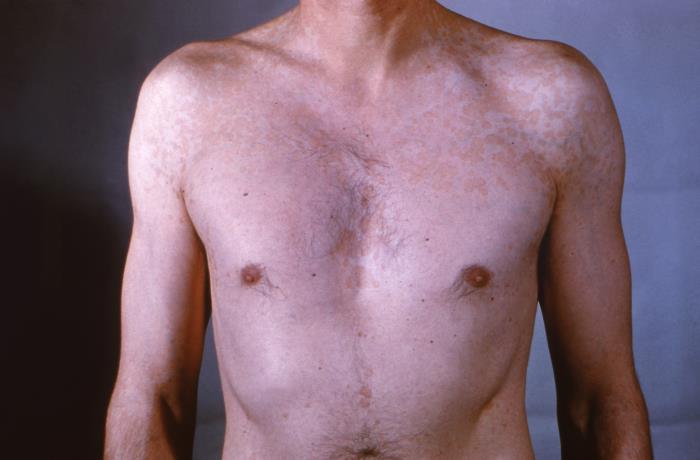
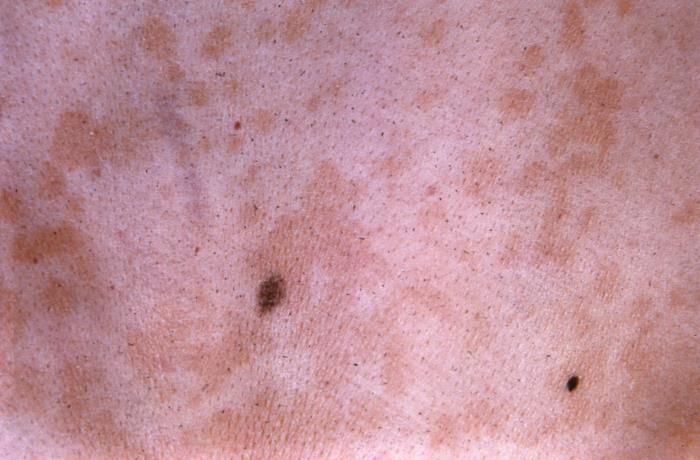
  • Apariencia de la erupción:
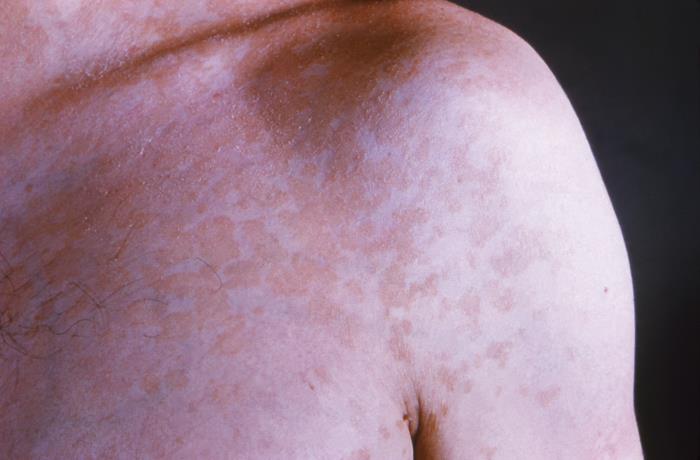
    • Numerosas lesiones ovaladas o redondas bien delimitadas
    • Máculas, placas o parches
    • Descamativas
    • Hipopigmentadas, hiperpigmentadas o rosadas
  • Distribución:
    • Tórax
    • Espalda
    • Abdomen
    • Cara
    • Cuello

Dermatitis Dermatitis Any inflammation of the skin. Atopic Dermatitis (Eczema) seborreica

  • Prurito de moderado a severo
  • Descripción:
    • Pápulas y placas eritematosas
    • Escamas gruesas y grasientas
    • Costras amarillentas
  • Distribución:
    • Cuero cabelludo
    • Cejas
    • Zona del bigote/barba
    • Pliegues nasolabiales
    • Parte superior del tórax y espalda
    • Zonas intertriginosas
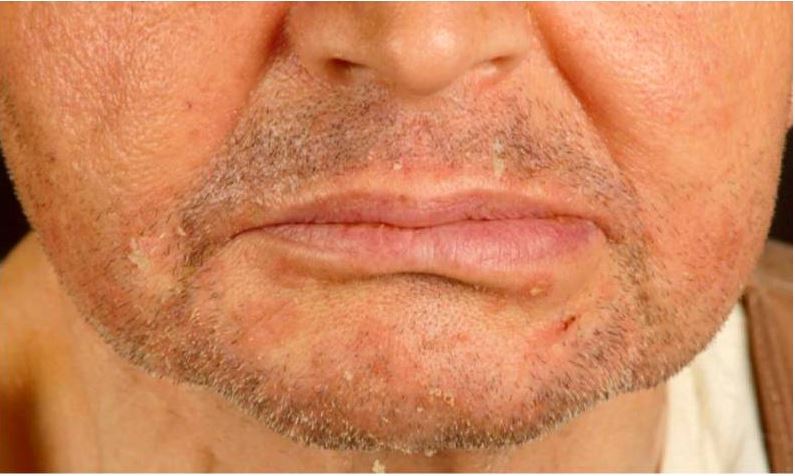
Dermatitis seborreica en un receptor de un trasplante renal

Dermatitis seborreica en un receptor de trasplante renal:
Obsérvense las pápulas eritematosas escamosas en el mentón y en los pliegues nasolabiales.

Imagen: “Inflammatory Cutaneous Diseases in Renal Transplant Recipients” por International Journal of Molecular Sciences. Licencia: CC BY 4.0

Foliculitis por Malassezia Malassezia Malassezia is a lipophilic yeast commonly found on the skin surfaces of many animals, including humans. In the presence of certain environments or triggers, this fungus can cause pathologic diseases ranging from superficial skin conditions (tinea versicolor and dermatitis) to invasive disease (e.g., Malassezia folliculitis, catheter-associated fungemia, meningitis, and urinary tract infections). Malassezia Fungi

Esta afección puede parecer similar al AL Amyloidosis acné vulgar o a la foliculitis bacteriana:

  • Pápulas o pústulas eritematosas monomorfas
  • Patrón folicular
  • Prurito
  • Distribución:
    • Espalda
    • Parte superior de los LOS Neisseria brazos
    • Tórax
    • Cuello
    • Frente
    • Mentón
    • Lados de la cara

Diagnóstico

El diagnóstico suele hacerse clínicamente con base en EN Erythema nodosum is an immune-mediated panniculitis (inflammation of the subcutaneous fat) caused by a type IV (delayed-type) hypersensitivity reaction. It commonly manifests in young women as tender, erythematous nodules on the shins. Erythema Nodosum los LOS Neisseria antecedentes y el examen físico. Evaluaciones adicionales pueden incluir:

  • Visualización con la lámpara de Wood:
    • Fluorescencia amarilla a amarillo-verdosa
    • Solamente se observa en EN Erythema nodosum is an immune-mediated panniculitis (inflammation of the subcutaneous fat) caused by a type IV (delayed-type) hypersensitivity reaction. It commonly manifests in young women as tender, erythematous nodules on the shins. Erythema Nodosum 1/3 de los LOS Neisseria casos
  • Microscópica
    • Raspado de la piel con preparación de KOH
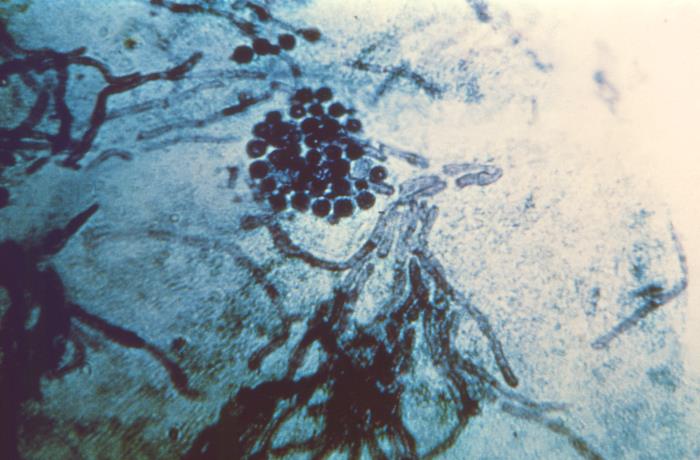
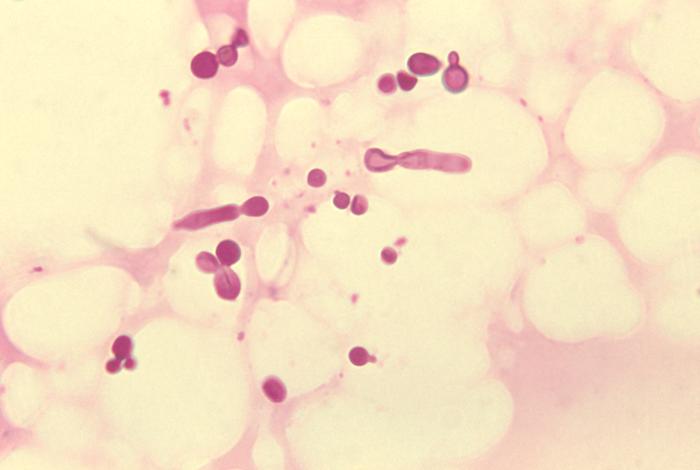
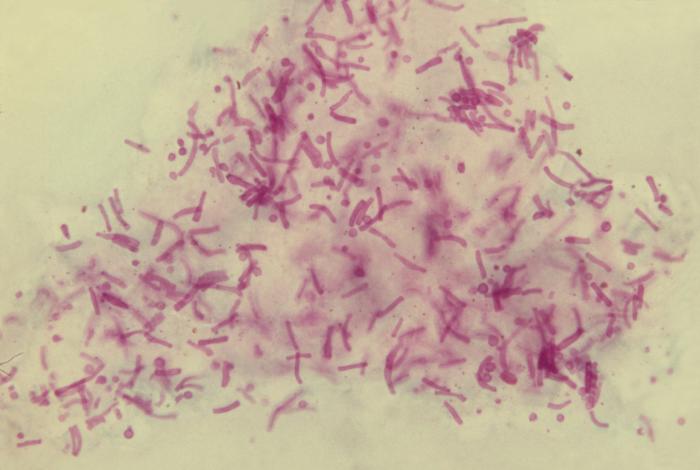
    • Aspecto de “espaguetis y albóndigas” de las hifas y esporas
  • Se pueden obtener cultivos para las enfermedades invasivas (e.g., meningitis Meningitis Meningitis is inflammation of the meninges, the protective membranes of the brain, and spinal cord. The causes of meningitis are varied, with the most common being bacterial or viral infection. The classic presentation of meningitis is a triad of fever, altered mental status, and nuchal rigidity. Meningitis, artritis séptica).
Malassezia furfur organismos fúngicos

Malassezia furfur organismos fúngicos:
Microfotografía de una muestra de tejido de escamas de la piel que revela la presencia de numerosos organismos fúngicos de M. furfur. Obsérvese el aspecto de espaguetis y albóndigas debido a la presencia tanto de levaduras como de hifas.

Imagen: “2916” por CDC/Dr. Lucille K. Georg. Licencia: Dominio Público
Tratamiento y Prevención

Tratamiento

  • Antifúngicos tópicos:
    • Champú de sulfuro de selenio
    • Champú de piritionato de zinc Zinc A metallic element of atomic number 30 and atomic weight 65. 38. It is a necessary trace element in the diet, forming an essential part of many enzymes, and playing an important role in protein synthesis and in cell division. Zinc deficiency is associated with anemia, short stature, hypogonadism, impaired wound healing, and geophagia. It is known by the symbol zn. Trace Elements
    • Crema o champú de ketoconazol
    • Miconazol
    • Terbinafina
  • Antifúngicos orales (para infecciones generalizadas, recurrentes, invasivas o refractarias):
    • Fluconazol
    • Itraconazol
    • Voriconazol
    • Anfotericina B (enfermedades graves e invasivas)

Prevención

Las recurrencias de la tiña versicolor y la dermatitis Dermatitis Any inflammation of the skin. Atopic Dermatitis (Eczema) seborreica pueden prevenirse mediante profilaxis antifúngica tópica.

Diagnóstico Diferencial

  • Dermatitis Dermatitis Any inflammation of the skin. Atopic Dermatitis (Eczema) atópica: condición cutánea crónica, recidivante e inflamatoria. Los LOS Neisseria pacientes presentan parches pruriginosos, eritematosos, engrosados y escamosos que frecuentemente afectan a las regiones flexoras. Esta distribución y aspecto diferencian la dermatitis Dermatitis Any inflammation of the skin. Atopic Dermatitis (Eczema) atópica de la tiña versicolor y la dermatitis Dermatitis Any inflammation of the skin. Atopic Dermatitis (Eczema) seborreica. El diagnóstico es clínico. El tratamiento se centra en EN Erythema nodosum is an immune-mediated panniculitis (inflammation of the subcutaneous fat) caused by a type IV (delayed-type) hypersensitivity reaction. It commonly manifests in young women as tender, erythematous nodules on the shins. Erythema Nodosum evitar los LOS Neisseria posibles desencadenantes, los LOS Neisseria esteroides tópicos y la terapia inmunosupresora.
  • Pitiriasis alba: trastorno cutáneo común que suele afectar a niños y adolescentes. La pitiriasis alba suele considerarse una manifestación de la dermatitis Dermatitis Any inflammation of the skin. Atopic Dermatitis (Eczema) atópica. Normalmente, los LOS Neisseria pacientes presentan eritema y escamas, seguidos de máculas y parches redondos e hipopigmentados, que suelen aparecer en EN Erythema nodosum is an immune-mediated panniculitis (inflammation of the subcutaneous fat) caused by a type IV (delayed-type) hypersensitivity reaction. It commonly manifests in young women as tender, erythematous nodules on the shins. Erythema Nodosum la cara, la parte superior del tronco o en EN Erythema nodosum is an immune-mediated panniculitis (inflammation of the subcutaneous fat) caused by a type IV (delayed-type) hypersensitivity reaction. It commonly manifests in young women as tender, erythematous nodules on the shins. Erythema Nodosum las extremidades superiores. El diagnóstico es clínico. La pitiriasis alba se considera autolimitada, pero puede tardar meses o años en EN Erythema nodosum is an immune-mediated panniculitis (inflammation of the subcutaneous fat) caused by a type IV (delayed-type) hypersensitivity reaction. It commonly manifests in young women as tender, erythematous nodules on the shins. Erythema Nodosum resolverse. Pueden utilizarse esteroides tópicos, emolientes e inhibidores de la calcineurina para acelerar la resolución.
  • Vitiligo Vitiligo Vitiligo is the most common depigmenting disorder and is caused by the destruction of melanocytes. Patients present with hypo- or depigmented macules or patches which often occur on the face, hands, knees, and/or genitalia. Vitiligo: trastorno de despigmentación que provoca la destrucción de los LOS Neisseria melanocitos. La etiología del vitíligo es desconocida, pero los LOS Neisseria factores genéticos y autoinmunes pueden desempeñar un papel importante. Los LOS Neisseria pacientes presentan máculas o parches hipopigmentados o despigmentados que suelen aparecer en EN Erythema nodosum is an immune-mediated panniculitis (inflammation of the subcutaneous fat) caused by a type IV (delayed-type) hypersensitivity reaction. It commonly manifests in young women as tender, erythematous nodules on the shins. Erythema Nodosum la cara, las manos, las rodillas y/o los LOS Neisseria genitales. El diagnóstico es clínico. El tratamiento puede incluir corticosteroides tópicos, inhibidores tópicos de la calcineurina, inmunosupresores y fototerapia.
  • Pitiriasis rosada: trastorno cutáneo agudo y autolimitado de etiología desconocida. La pitiriasis rosada se presenta con una única “placa heráldica” ovoide. Esta presentación va VA Ventilation: Mechanics of Breathing seguida de placas difusas, pruriginosas y ovaladas con escamas finas en EN Erythema nodosum is an immune-mediated panniculitis (inflammation of the subcutaneous fat) caused by a type IV (delayed-type) hypersensitivity reaction. It commonly manifests in young women as tender, erythematous nodules on the shins. Erythema Nodosum una distribución en EN Erythema nodosum is an immune-mediated panniculitis (inflammation of the subcutaneous fat) caused by a type IV (delayed-type) hypersensitivity reaction. It commonly manifests in young women as tender, erythematous nodules on the shins. Erythema Nodosum árbol de Navidad en EN Erythema nodosum is an immune-mediated panniculitis (inflammation of the subcutaneous fat) caused by a type IV (delayed-type) hypersensitivity reaction. It commonly manifests in young women as tender, erythematous nodules on the shins. Erythema Nodosum el tronco. El diagnóstico es clínico. No requiere tratamiento, pero el prurito puede tratarse con emolientes, corticosteroides tópicos y antihistamínicos.
  • Psoriasis Psoriasis Psoriasis is a common T-cell-mediated inflammatory skin condition. The etiology is unknown, but is thought to be due to genetic inheritance and environmental triggers. There are 4 major subtypes, with the most common form being chronic plaque psoriasis. Psoriasis en EN Erythema nodosum is an immune-mediated panniculitis (inflammation of the subcutaneous fat) caused by a type IV (delayed-type) hypersensitivity reaction. It commonly manifests in young women as tender, erythematous nodules on the shins. Erythema Nodosum gotas (guttata): variante de la psoriasis Psoriasis Psoriasis is a common T-cell-mediated inflammatory skin condition. The etiology is unknown, but is thought to be due to genetic inheritance and environmental triggers. There are 4 major subtypes, with the most common form being chronic plaque psoriasis. Psoriasis, que es una enfermedad cutánea inflamatoria inmunomediada. Esta forma de psoriasis Psoriasis Psoriasis is a common T-cell-mediated inflammatory skin condition. The etiology is unknown, but is thought to be due to genetic inheritance and environmental triggers. There are 4 major subtypes, with the most common form being chronic plaque psoriasis. Psoriasis se presenta con pequeñas pápulas de color salmón que tienen un aspecto de gota de rocío en EN Erythema nodosum is an immune-mediated panniculitis (inflammation of the subcutaneous fat) caused by a type IV (delayed-type) hypersensitivity reaction. It commonly manifests in young women as tender, erythematous nodules on the shins. Erythema Nodosum la piel. El tronco y las extremidades suelen estar afectados. El diagnóstico es clínico y el tratamiento incluye corticosteroides tópicos, calcitriol Calcitriol The physiologically active form of vitamin d. It is formed primarily in the kidney by enzymatic hydroxylation of 25-hydroxycholecalciferol (calcifediol). Its production is stimulated by low blood calcium levels and parathyroid hormone. Calcitriol increases intestinal absorption of calcium and phosphorus, and in concert with parathyroid hormone increases bone resorption. Parathyroid Glands: Anatomy y fototerapia.
  • Tiña corporis: infección fúngica superficial de la piel que puede afectar a la cara, el tronco y las extremidades. Las lesiones de la tiña corporis se caracterizan por la descamación periférica, aclaramiento central y eritema. El diagnóstico suele ser clínico, aunque un examen con KOH mostraría hifas fúngicas. El tratamiento incluye medicamentos antifúngicos tópicos u orales.
  • Acné vulgar: trastorno común de las unidades pilosebáceas en EN Erythema nodosum is an immune-mediated panniculitis (inflammation of the subcutaneous fat) caused by a type IV (delayed-type) hypersensitivity reaction. It commonly manifests in young women as tender, erythematous nodules on the shins. Erythema Nodosum adolescentes y adultos jóvenes. El acné vulgar es causado por hiperqueratinización folicular, producción excesiva de sebo, colonización folicular por Cutibacterium acnes Cutibacterium acnes A bacteria isolated from normal skin, intestinal contents, wounds, blood, pus, and soft tissue abscesses. It is a common contaminant of clinical specimens, presumably from the skin of patients or attendants. Acne Vulgaris e inflamación. El acné puede presentarse como comedones Comedones Acne Vulgaris abiertos o cerrados, pápulas, pústulas, nódulos o quistes. El diagnóstico se basa en EN Erythema nodosum is an immune-mediated panniculitis (inflammation of the subcutaneous fat) caused by a type IV (delayed-type) hypersensitivity reaction. It commonly manifests in young women as tender, erythematous nodules on the shins. Erythema Nodosum el examen clínico. El tratamiento depende de la gravedad, pero incluye técnicas de cuidado de la piel, terapias tópicas, antibióticos y retinoides.

Referencias

  1. Goldstein, B., Goldstein, A. (2025). Tinea versicolor (pityriasis versicolor). UpToDate. Retrieved June 26, 2025, from https://www.uptodate.com/contents/tinea-versicolor-pityriasis-versicolor
  2. Sasseville, D. (2025). Seborrheic dermatitis in adolescents and adults. In Corona, R. (Ed.), UpToDate. Retrieved June 26, 2025, from https://www.uptodate.com/contents/seborrheic-dermatitis-in-adolescents-and-adults
  3. Spelman, D. (2023). Invasive Malassezia infections. In Bond, S. (Ed.), UpToDate. Retrieved June 26, 2025, from https://www.uptodate.com/contents/invasive-malassezia-infections
  4. Jackson, J. D. (2025). Infectious folliculitis. In Ofori, A. O. (Ed.), UpToDate. Retrieved June 26, 2025, from https://www.uptodate.com/contents/infectious-folliculitis
  5. Aaron, D. M. (2023). Tinea versicolor. MSD Manual Professional Version. Retrieved June 26, 2025, from https://www.msdmanuals.com/professional/dermatologic-disorders/fungal-skin-infections/tinea-versicolor
  6. Vest, B. E., Krauland, K. (2023). Malassezia furfur. StatPearls. Retrieved June 26, 2025, from https://www.ncbi.nlm.nih.gov/books/NBK553091/
  7. American Academy of Dermatology. (2021). Tinea versicolor. Retrieved June 26, 2025, from https://www.aad.org/public/diseases/a-z/tinea-versicolor-overview
  8. Mayo Clinic. (2024). Tinea versicolor. Retrieved June 26, 2025, from https://www.mayoclinic.org/diseases-conditions/tinea-versicolor/symptoms-causes/syc-20378385
  9. Pinney, S. S., Rashid, R. M., Rapini, R. P. (2024). Malassezia (Pityrosporum) folliculitis. In James, W. D. (Ed.), Medscape. Retrieved June 26, 2025, from https://emedicine.medscape.com/article/1091037-overview
  10. Sayed, C., del Mar Melendez-Gonzalez, M., Burkhart, C.N. (2025). Tinea versicolor. In Elston, D. M. (Ed.), Medscape. Retrieved June 26, 2025, from https://emedicine.medscape.com/article/1091575-overview

¡Crea tu cuenta gratis o inicia una sesión para seguir leyendo!

Regístrate ahora y obtén acceso gratuito a Lecturio con páginas de concepto, videos médicos y cuestionarios para tu educación médica.

User Reviews

Details