Domina Conceptos Médicos

Estudia para la escuela de medicina y tus examenes con Lecturio.

Hemofilia

Las hemofilias son un grupo de trastornos hereditarios, o a veces adquiridos, de la hemostasia secundaria debido a deficiencia de factores de coagulación específicos. La hemofilia A es una deficiencia del factor VIII Factor VIII Factor VIII of blood coagulation. Antihemophilic factor that is part of the factor viii/von Willebrand factor complex. Factor VIII is produced in the liver and acts in the intrinsic pathway of blood coagulation. It serves as a cofactor in factor X activation and this action is markedly enhanced by small amounts of thrombin. Hemostasis, la hemofilia B una deficiencia del factor IX Factor IX Storage-stable blood coagulation factor acting in the intrinsic pathway of blood coagulation. Its activated form, ixa, forms a complex with factor VIII and calcium on platelet factor 3 to activate factor X to Xa. Hemostasis, y la hemofilia C una deficiencia del factor XI. Los LOS Neisseria pacientes presentan eventos hemorrágicos que pueden ser espontáneos o estar asociados a un traumatismo menor o mayor. El tratamiento se centra principalmente en EN Erythema nodosum is an immune-mediated panniculitis (inflammation of the subcutaneous fat) caused by a type IV (delayed-type) hypersensitivity reaction. It commonly manifests in young women as tender, erythematous nodules on the shins. Erythema Nodosum tratar los LOS Neisseria eventos hemorrágicos agudos y en EN Erythema nodosum is an immune-mediated panniculitis (inflammation of the subcutaneous fat) caused by a type IV (delayed-type) hypersensitivity reaction. It commonly manifests in young women as tender, erythematous nodules on the shins. Erythema Nodosum la prevención de los LOS Neisseria eventos hemorrágicos mediante la sustitución de los LOS Neisseria factores deficientes.

Last updated: Dec 15, 2025

Editorial responsibility: Stanley Oiseth, Lindsay Jones, Evelin Maza

Descripción General

Definición

Las hemofilias son un grupo de trastornos de la hemostasia secundaria debidos a la deficiencia de factores de coagulación específicos.

Epidemiología

En EN Erythema nodosum is an immune-mediated panniculitis (inflammation of the subcutaneous fat) caused by a type IV (delayed-type) hypersensitivity reaction. It commonly manifests in young women as tender, erythematous nodules on the shins. Erythema Nodosum Estados Unidos nacen unos 400 niños al AL Amyloidosis año con hemofilia.

Se han descrito 3 tipos diferentes:

  • Hemofilia A:
    • Casi siempre afecta a los LOS Neisseria hombres (recesivo ligado a X)
    • 1 de cada 5 000 hombres
    • La más común: representa el 80% de todos los LOS Neisseria casos
  • Hemofilia B:
    • Casi siempre afecta a los LOS Neisseria hombres (recesivo ligado a X)
    • 1 de cada 30 000 hombres
    • Clínicamente indistinguible de la hemofilia A
  • Hemofilia C:
    • Afecta a hombres y mujeres por igual
    • Puede ser autosómica recesiva o autosómica dominante según la mutación específica
    • 1 de cada 1 millón de hombres y mujeres

Etiología

Mutación genética que resulta en EN Erythema nodosum is an immune-mediated panniculitis (inflammation of the subcutaneous fat) caused by a type IV (delayed-type) hypersensitivity reaction. It commonly manifests in young women as tender, erythematous nodules on the shins. Erythema Nodosum una deficiencia de factores de coagulación:

  • Hemofilia A:
    • Factor VIII Factor VIII Factor VIII of blood coagulation. Antihemophilic factor that is part of the factor viii/von Willebrand factor complex. Factor VIII is produced in the liver and acts in the intrinsic pathway of blood coagulation. It serves as a cofactor in factor X activation and this action is markedly enhanced by small amounts of thrombin. Hemostasis: mutaciones recesivas ligadas a X en EN Erythema nodosum is an immune-mediated panniculitis (inflammation of the subcutaneous fat) caused by a type IV (delayed-type) hypersensitivity reaction. It commonly manifests in young women as tender, erythematous nodules on the shins. Erythema Nodosum el gen F8
    • Situado en EN Erythema nodosum is an immune-mediated panniculitis (inflammation of the subcutaneous fat) caused by a type IV (delayed-type) hypersensitivity reaction. It commonly manifests in young women as tender, erythematous nodules on the shins. Erythema Nodosum el cromosoma X
  • Hemofilia B (enfermedad de Christmas):
    • Factor IX Factor IX Storage-stable blood coagulation factor acting in the intrinsic pathway of blood coagulation. Its activated form, ixa, forms a complex with factor VIII and calcium on platelet factor 3 to activate factor X to Xa. Hemostasis: mutaciones recesivas ligadas a X en EN Erythema nodosum is an immune-mediated panniculitis (inflammation of the subcutaneous fat) caused by a type IV (delayed-type) hypersensitivity reaction. It commonly manifests in young women as tender, erythematous nodules on the shins. Erythema Nodosum el gen F9
    • Situado en EN Erythema nodosum is an immune-mediated panniculitis (inflammation of the subcutaneous fat) caused by a type IV (delayed-type) hypersensitivity reaction. It commonly manifests in young women as tender, erythematous nodules on the shins. Erythema Nodosum el cromosoma X
  • Hemofilia C:
    • Factor XI: mutaciones en EN Erythema nodosum is an immune-mediated panniculitis (inflammation of the subcutaneous fat) caused by a type IV (delayed-type) hypersensitivity reaction. It commonly manifests in young women as tender, erythematous nodules on the shins. Erythema Nodosum el gen F11
    • Situado en EN Erythema nodosum is an immune-mediated panniculitis (inflammation of the subcutaneous fat) caused by a type IV (delayed-type) hypersensitivity reaction. It commonly manifests in young women as tender, erythematous nodules on the shins. Erythema Nodosum el cromosoma 4

Hemofilia adquirida:

  • El paciente desarrolla autoanticuerpos inmuno-mediados contra las proteínas de la coagulación (más comúnmente el factor VIII Factor VIII Factor VIII of blood coagulation. Antihemophilic factor that is part of the factor viii/von Willebrand factor complex. Factor VIII is produced in the liver and acts in the intrinsic pathway of blood coagulation. It serves as a cofactor in factor X activation and this action is markedly enhanced by small amounts of thrombin. Hemostasis).
  • Idiopática en EN Erythema nodosum is an immune-mediated panniculitis (inflammation of the subcutaneous fat) caused by a type IV (delayed-type) hypersensitivity reaction. It commonly manifests in young women as tender, erythematous nodules on the shins. Erythema Nodosum un 50%.
  • Puede ser secundaria a trastornos autoinmunes como el lupus, la artritis reumatoide, la esclerosis múltiple, el síndrome de Sjögren y la enfermedad inflamatoria intestinal
  • Otras condiciones predisponentes son los LOS Neisseria traumatismos mayores y el embarazo.

Fisiopatología

Genética

  • Mutaciones del gen F8 en EN Erythema nodosum is an immune-mediated panniculitis (inflammation of the subcutaneous fat) caused by a type IV (delayed-type) hypersensitivity reaction. It commonly manifests in young women as tender, erythematous nodules on the shins. Erythema Nodosum el cromosoma X:
    • 40%–45% de los LOS Neisseria casos graves de hemofilia A están causados por una inversión importante de la sección del intrón 22 en EN Erythema nodosum is an immune-mediated panniculitis (inflammation of the subcutaneous fat) caused by a type IV (delayed-type) hypersensitivity reaction. It commonly manifests in young women as tender, erythematous nodules on the shins. Erythema Nodosum el brazo largo del cromosoma X.
    • 1%–5% de los LOS Neisseria casos graves de hemofilia A están causados por una inversión importante de la sección del intrón 1 en EN Erythema nodosum is an immune-mediated panniculitis (inflammation of the subcutaneous fat) caused by a type IV (delayed-type) hypersensitivity reaction. It commonly manifests in young women as tender, erythematous nodules on the shins. Erythema Nodosum el brazo largo del cromosoma X.
    • Las mutaciones puntuales y las pequeñas deleciones/inserciones están presentes en EN Erythema nodosum is an immune-mediated panniculitis (inflammation of the subcutaneous fat) caused by a type IV (delayed-type) hypersensitivity reaction. It commonly manifests in young women as tender, erythematous nodules on the shins. Erythema Nodosum aproximadamente el 60% de los LOS Neisseria casos de hemofilia A, pero no predomina ninguna mutación o deleción específica.
  • Mutaciones del gen F9 en EN Erythema nodosum is an immune-mediated panniculitis (inflammation of the subcutaneous fat) caused by a type IV (delayed-type) hypersensitivity reaction. It commonly manifests in young women as tender, erythematous nodules on the shins. Erythema Nodosum el cromosoma X:
    • Altamente heterogéneo: incluye deleciones, duplicaciones, inserciones, variantes del sitio de empalme, variantes erróneas y variantes sin sentido
    • 40%–45% de los LOS Neisseria casos graves de hemofilia B están causados por variantes de sentido erróneo.
  • Mutaciones del gen F11 en EN Erythema nodosum is an immune-mediated panniculitis (inflammation of the subcutaneous fat) caused by a type IV (delayed-type) hypersensitivity reaction. It commonly manifests in young women as tender, erythematous nodules on the shins. Erythema Nodosum el cromosoma 4:
    • Se han notificado más de > 200 variantes patogénicas distintas en EN Erythema nodosum is an immune-mediated panniculitis (inflammation of the subcutaneous fat) caused by a type IV (delayed-type) hypersensitivity reaction. It commonly manifests in young women as tender, erythematous nodules on the shins. Erythema Nodosum el gen F11.
    • La mutación de sentido erróneo Phe283Leu en EN Erythema nodosum is an immune-mediated panniculitis (inflammation of the subcutaneous fat) caused by a type IV (delayed-type) hypersensitivity reaction. It commonly manifests in young women as tender, erythematous nodules on the shins. Erythema Nodosum el exón 9 es responsable de una mayor prevalencia entre las personas de ascendencia judía asquenazí.
Localización del gen F8

Localización del gen F8 para el factor VIII de coagulación: Xq28, que da lugar a la hemofilia A

Imagen: “F8 gene location” por Genome Decoration Page/NCBI. Licencia: Dominio Público
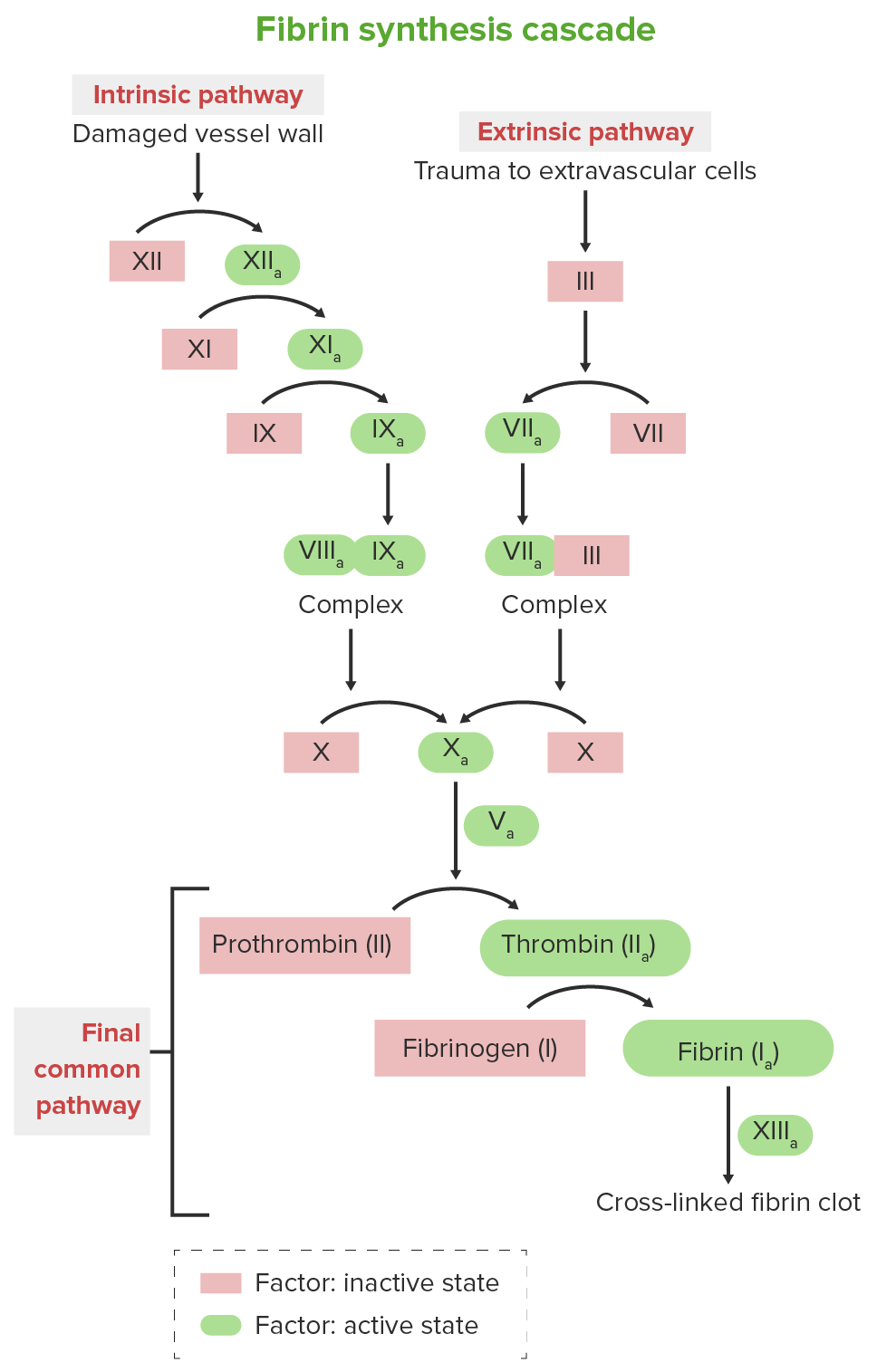
Cascada de coagulación

  • Produce un coágulo de fibrina estable en EN Erythema nodosum is an immune-mediated panniculitis (inflammation of the subcutaneous fat) caused by a type IV (delayed-type) hypersensitivity reaction. It commonly manifests in young women as tender, erythematous nodules on the shins. Erythema Nodosum el lugar de la lesión
  • Existen dos vías de coagulación: intrínseca y extrínseca
  • Las dos vías convergen en EN Erythema nodosum is an immune-mediated panniculitis (inflammation of the subcutaneous fat) caused by a type IV (delayed-type) hypersensitivity reaction. It commonly manifests in young women as tender, erythematous nodules on the shins. Erythema Nodosum una vía común; el resultado final es la formación de un coágulo de fibrina.
  • Los LOS Neisseria factores Ⅷ, Ⅸ y XI son componentes de la vía intrínseca.
  • Las deficiencias de los LOS Neisseria factores provocan una disfunción de la hemostasia:
    • Reducción de la activación de la protrombina a trombina → reducción de los LOS Neisseria niveles de trombina
    • Disminución de la formación de coágulos de fibrina → retraso en EN Erythema nodosum is an immune-mediated panniculitis (inflammation of the subcutaneous fat) caused by a type IV (delayed-type) hypersensitivity reaction. It commonly manifests in young women as tender, erythematous nodules on the shins. Erythema Nodosum la hemostasia
  • La gravedad de la enfermedad es proporcional a la gravedad de la carencia:
Cascada de la coagulación

Cascada de la coagulación

Imagen por Lecturio.

Presentación Clínica

Manifestaciones

La presentación se basa principalmente en EN Erythema nodosum is an immune-mediated panniculitis (inflammation of the subcutaneous fat) caused by a type IV (delayed-type) hypersensitivity reaction. It commonly manifests in young women as tender, erythematous nodules on the shins. Erythema Nodosum la gravedad de la deficiencia del factor.

Deficiencia leve a moderada:

  • Se presenta después de un traumatismo o una intervención quirúrgica
  • Edad media de inicio > 10 meses, cuando el niño empieza a gatear o caminar
  • Hemorragia desproporcionada con respecto a la respuesta tisular esperada dado el nivel de traumatismo
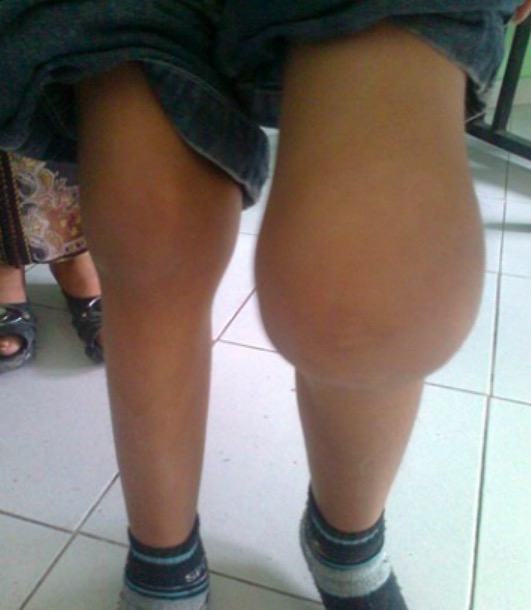
  • Hemartrosis (sangrado en EN Erythema nodosum is an immune-mediated panniculitis (inflammation of the subcutaneous fat) caused by a type IV (delayed-type) hypersensitivity reaction. It commonly manifests in young women as tender, erythematous nodules on the shins. Erythema Nodosum las articulaciones):
    • El derrame articular puede provocar dolor Dolor Inflammation y ↓ amplitud de movimiento.
    • Los LOS Neisseria derrames repetitivos pueden causar una destrucción temprana de la articulación.
  • Hematoma Hematoma A collection of blood outside the blood vessels. Hematoma can be localized in an organ, space, or tissue. Intussusception (sangrado en EN Erythema nodosum is an immune-mediated panniculitis (inflammation of the subcutaneous fat) caused by a type IV (delayed-type) hypersensitivity reaction. It commonly manifests in young women as tender, erythematous nodules on the shins. Erythema Nodosum el músculo):
    • Con o sin contusiones excesivas
    • Puede provocar un síndrome compartimental

Deficiencia más severa:

  • Se presenta primero en EN Erythema nodosum is an immune-mediated panniculitis (inflammation of the subcutaneous fat) caused by a type IV (delayed-type) hypersensitivity reaction. It commonly manifests in young women as tender, erythematous nodules on the shins. Erythema Nodosum la infancia temprana:
    • Al AL Amyloidosis nacer: hemorragia intracraneal o cefalohematoma por deformación craneal debido a un traumatismo vaginal normal en EN Erythema nodosum is an immune-mediated panniculitis (inflammation of the subcutaneous fat) caused by a type IV (delayed-type) hypersensitivity reaction. It commonly manifests in young women as tender, erythematous nodules on the shins. Erythema Nodosum el parto
    • 1–10 días: sangrado prolongado después de la circuncisión
    • 1–4 semanas: sangrado del muñón umbilical
  • Puede presentar una hemorragia espontánea a cualquier edad
  • Hemorragias nasales y encías sangrantes después de cepillarse los LOS Neisseria dientes
  • Sistema nervioso central (SNC) (hemorragia intracraneal):
    • Puede presentarse con alteración del estado mental, letargo, vómitos
    • Requiere atención médica inmediata
  • Gastrointestinal (sangrado en EN Erythema nodosum is an immune-mediated panniculitis (inflammation of the subcutaneous fat) caused by a type IV (delayed-type) hypersensitivity reaction. It commonly manifests in young women as tender, erythematous nodules on the shins. Erythema Nodosum el tracto gastrointestinal):
    • Puede presentarse con hematemesis Hematemesis Vomiting of blood that is either fresh bright red, or older ‘coffee-ground’ in character. It generally indicates bleeding of the upper gastrointestinal tract. Mallory-Weiss Syndrome (Mallory-Weiss Tear), heces sanguinolentas si el sangrado es abundante
    • Puede presentarse con síntomas/signos de anemia Anemia Anemia is a condition in which individuals have low Hb levels, which can arise from various causes. Anemia is accompanied by a reduced number of RBCs and may manifest with fatigue, shortness of breath, pallor, and weakness. Subtypes are classified by the size of RBCs, chronicity, and etiology. Anemia: Overview and Types, heces negras si hay hemorragia oculta
  • Genitourinario (hemorragia en EN Erythema nodosum is an immune-mediated panniculitis (inflammation of the subcutaneous fat) caused by a type IV (delayed-type) hypersensitivity reaction. It commonly manifests in young women as tender, erythematous nodules on the shins. Erythema Nodosum las vías urinarias):
    • Puede presentarse con hematuria Hematuria Presence of blood in the urine. Renal Cell Carcinoma si hay hemorragia grave
    • Puede presentar síntomas/signos de anemia Anemia Anemia is a condition in which individuals have low Hb levels, which can arise from various causes. Anemia is accompanied by a reduced number of RBCs and may manifest with fatigue, shortness of breath, pallor, and weakness. Subtypes are classified by the size of RBCs, chronicity, and etiology. Anemia: Overview and Types si hay una hemorragia oculta

Complicaciones a largo plazo

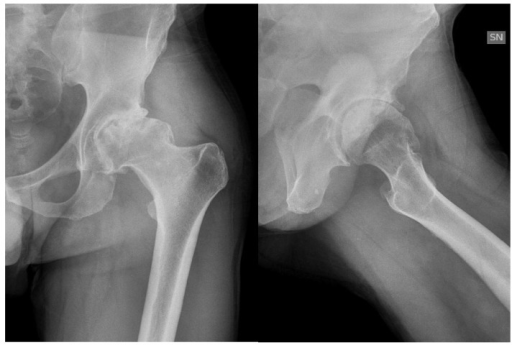
  • Artropatía hemofílica:
    • Los LOS Neisseria componentes de la sangre son cáusticos para el sinovio.
    • Causa una destrucción progresiva de la articulación, pérdida de la amplitud de movimiento
  • Infecciones asociadas a la transfusión de productos sanguíneos:
    • Raro con las precauciones de detección adecuadas, que se instituyeron en EN Erythema nodosum is an immune-mediated panniculitis (inflammation of the subcutaneous fat) caused by a type IV (delayed-type) hypersensitivity reaction. It commonly manifests in young women as tender, erythematous nodules on the shins. Erythema Nodosum 1985
    • Muchos adultos supervivientes que recibieron transfusiones antes de eso están infectados con patógenos transmitidos por la sangre
  • Desarrollo de autoanticuerpos del factor VIII Factor VIII Factor VIII of blood coagulation. Antihemophilic factor that is part of the factor viii/von Willebrand factor complex. Factor VIII is produced in the liver and acts in the intrinsic pathway of blood coagulation. It serves as a cofactor in factor X activation and this action is markedly enhanced by small amounts of thrombin. Hemostasis (inhibidores del factor VIII Factor VIII Factor VIII of blood coagulation. Antihemophilic factor that is part of the factor viii/von Willebrand factor complex. Factor VIII is produced in the liver and acts in the intrinsic pathway of blood coagulation. It serves as a cofactor in factor X activation and this action is markedly enhanced by small amounts of thrombin. Hemostasis) tras transfusiones repetitivas:
    • Los LOS Neisseria pacientes desarrollan una “alergia” a un tratamiento que podría salvarles la vida → mayor susceptibilidad a complicaciones hemorrágicas graves
    • Puede provocar indirectamente un retraso en EN Erythema nodosum is an immune-mediated panniculitis (inflammation of the subcutaneous fat) caused by a type IV (delayed-type) hypersensitivity reaction. It commonly manifests in young women as tender, erythematous nodules on the shins. Erythema Nodosum el crecimiento y en EN Erythema nodosum is an immune-mediated panniculitis (inflammation of the subcutaneous fat) caused by a type IV (delayed-type) hypersensitivity reaction. It commonly manifests in young women as tender, erythematous nodules on the shins. Erythema Nodosum el desarrollo sexual

Diagnóstico

El diagnóstico de la hemofilia se hace HACE Altitude Sickness sobre la base de la sospecha clínica (generalmente debido a un evento hemorrágico) seguida de la demostración de niveles deficientes de un factor (< 40%).

Antecedentes

  • Los LOS Neisseria antecedentes familiares pueden estar presentes en EN Erythema nodosum is an immune-mediated panniculitis (inflammation of the subcutaneous fat) caused by a type IV (delayed-type) hypersensitivity reaction. It commonly manifests in young women as tender, erythematous nodules on the shins. Erythema Nodosum los LOS Neisseria ancestros masculinos.
  • Los LOS Neisseria antecedentes familiares negativos no excluyen el diagnóstico.
  • Informes de hematomas, hemorragias espontáneas o hemorragias desproporcionadas con respecto a un determinado traumatismo
  • Informes de hemartrosis, hematuria Hematuria Presence of blood in the urine. Renal Cell Carcinoma, hematemesis Hematemesis Vomiting of blood that is either fresh bright red, or older ‘coffee-ground’ in character. It generally indicates bleeding of the upper gastrointestinal tract. Mallory-Weiss Syndrome (Mallory-Weiss Tear), etc ETC The electron transport chain (ETC) sends electrons through a series of proteins, which generate an electrochemical proton gradient that produces energy in the form of adenosine triphosphate (ATP). Electron Transport Chain (ETC).

Examen físico

  • Equimosis
  • Hemartrosis
  • Hematomas

Exámenes de laboratorio

  • Hemograma
    • Hemoglobina/hematocrito normal o disminuido, dependiendo de la hemorragia oculta o macroscópica
    • Recuento normal de plaquetas
  • Estudios de coagulación:
    • Tiempo de sangrado normal
    • Tiempo de protrombina (PT, por sus siglas en EN Erythema nodosum is an immune-mediated panniculitis (inflammation of the subcutaneous fat) caused by a type IV (delayed-type) hypersensitivity reaction. It commonly manifests in young women as tender, erythematous nodules on the shins. Erythema Nodosum inglés) normal
    • Elevación del tiempo parcial de tromboplastina activada (aPTT, por sus siglas en EN Erythema nodosum is an immune-mediated panniculitis (inflammation of the subcutaneous fat) caused by a type IV (delayed-type) hypersensitivity reaction. It commonly manifests in young women as tender, erythematous nodules on the shins. Erythema Nodosum inglés): vía intrínseca
    • Niveles séricos bajos de factor VIII Factor VIII Factor VIII of blood coagulation. Antihemophilic factor that is part of the factor viii/von Willebrand factor complex. Factor VIII is produced in the liver and acts in the intrinsic pathway of blood coagulation. It serves as a cofactor in factor X activation and this action is markedly enhanced by small amounts of thrombin. Hemostasis, IX u XI (el factor será < 40% del rango normal)
    • Comprobar el factor de Von Willebrand (FVW) si los LOS Neisseria niveles de factor VIII Factor VIII Factor VIII of blood coagulation. Antihemophilic factor that is part of the factor viii/von Willebrand factor complex. Factor VIII is produced in the liver and acts in the intrinsic pathway of blood coagulation. It serves as a cofactor in factor X activation and this action is markedly enhanced by small amounts of thrombin. Hemostasis son bajos para descartar la enfermedad de Von Willebrand
  • Pruebas genéticas:
    • Las pruebas genéticas no son necesarias para diagnosticar la hemofilia.
    • Generalmente, se reserva para los LOS Neisseria familiares de primer grado de la mujer a efectos de planificación familiar/asesoramiento genético
  • Imagenología:
    • Tomografía computarizada (TC) del cerebro: evaluación de la hemorragia intracraneal
    • TC de abdomen: evaluación de hemorragia retroperitoneal Retroperitoneal Peritoneum: Anatomy/ hematoma Hematoma A collection of blood outside the blood vessels. Hematoma can be localized in an organ, space, or tissue. Intussusception
    • Ultrasonido de abdomen: evaluación de hemorragia retroperitoneal Retroperitoneal Peritoneum: Anatomy/ hematoma Hematoma A collection of blood outside the blood vessels. Hematoma can be localized in an organ, space, or tissue. Intussusception
    • Ultrasonido de la articulación: evaluación articular de inflamación/hemartrosis

Tratamiento

Consideraciones generales

  • Asesoramiento genético
  • Planificación quirúrgica y/u obstétrica cuidadosa
  • Evitar los LOS Neisseria deportes de contacto.
  • Evitar los LOS Neisseria medicamentos que dificultan la función plaquetaria (aspirina, antiinflamatorios no esteroideos (AINE)).
  • Tratamiento del dolor Dolor Inflammation en EN Erythema nodosum is an immune-mediated panniculitis (inflammation of the subcutaneous fat) caused by a type IV (delayed-type) hypersensitivity reaction. It commonly manifests in young women as tender, erythematous nodules on the shins. Erythema Nodosum casos seleccionados

Corrección profiláctica crónica de la deficiencia en EN Erythema nodosum is an immune-mediated panniculitis (inflammation of the subcutaneous fat) caused by a type IV (delayed-type) hypersensitivity reaction. It commonly manifests in young women as tender, erythematous nodules on the shins. Erythema Nodosum pacientes con deficiencia grave

  • Infusiones crónicas del factor deficiente para mantener los LOS Neisseria niveles por encima del rango crítico:
    • 2–3 transfusiones/semana (aunque existen fórmulas de acción más prolongada)
    • El objetivo es mantener los LOS Neisseria niveles en EN Erythema nodosum is an immune-mediated panniculitis (inflammation of the subcutaneous fat) caused by a type IV (delayed-type) hypersensitivity reaction. It commonly manifests in young women as tender, erythematous nodules on the shins. Erythema Nodosum > 1%.
    • Concentrado de factor VIII Factor VIII Factor VIII of blood coagulation. Antihemophilic factor that is part of the factor viii/von Willebrand factor complex. Factor VIII is produced in the liver and acts in the intrinsic pathway of blood coagulation. It serves as a cofactor in factor X activation and this action is markedly enhanced by small amounts of thrombin. Hemostasis recombinante para la hemofilia A
    • Concentrado de factor IX Factor IX Storage-stable blood coagulation factor acting in the intrinsic pathway of blood coagulation. Its activated form, ixa, forms a complex with factor VIII and calcium on platelet factor 3 to activate factor X to Xa. Hemostasis recombinante para la hemofilia B
    • Concentrado de factor XI o plasma Plasma The residual portion of blood that is left after removal of blood cells by centrifugation without prior blood coagulation. Transfusion Products fresco congelado (PFC) para la hemofilia C
  • Desmopresina para la hemofilia A leve: La desmopresina aumenta la liberación endotelial del factor VIII Factor VIII Factor VIII of blood coagulation. Antihemophilic factor that is part of the factor viii/von Willebrand factor complex. Factor VIII is produced in the liver and acts in the intrinsic pathway of blood coagulation. It serves as a cofactor in factor X activation and this action is markedly enhanced by small amounts of thrombin. Hemostasis, pero no del factor IX Factor IX Storage-stable blood coagulation factor acting in the intrinsic pathway of blood coagulation. Its activated form, ixa, forms a complex with factor VIII and calcium on platelet factor 3 to activate factor X to Xa. Hemostasis, y del FVW.
  • Agentes antifibrinolíticos: ácido épsilon-amino caproico o ácido tranexámico para controlar las hemorragias locales (hemorragias en EN Erythema nodosum is an immune-mediated panniculitis (inflammation of the subcutaneous fat) caused by a type IV (delayed-type) hypersensitivity reaction. It commonly manifests in young women as tender, erythematous nodules on the shins. Erythema Nodosum las encías o en EN Erythema nodosum is an immune-mediated panniculitis (inflammation of the subcutaneous fat) caused by a type IV (delayed-type) hypersensitivity reaction. It commonly manifests in young women as tender, erythematous nodules on the shins. Erythema Nodosum el tracto gastrointestinal y durante la cirugía oral)
  • Anticuerpo monoclonal emicizumab Emicizumab Hemophilia aprobado por la Administración de Alimentos y Medicamentos (FDA, por sus siglas en EN Erythema nodosum is an immune-mediated panniculitis (inflammation of the subcutaneous fat) caused by a type IV (delayed-type) hypersensitivity reaction. It commonly manifests in young women as tender, erythematous nodules on the shins. Erythema Nodosum inglés) para la profilaxis de las hemorragias en EN Erythema nodosum is an immune-mediated panniculitis (inflammation of the subcutaneous fat) caused by a type IV (delayed-type) hypersensitivity reaction. It commonly manifests in young women as tender, erythematous nodules on the shins. Erythema Nodosum la hemofilia A:
    • No se asocia con el desarrollo de inhibidores del factor VIII Factor VIII Factor VIII of blood coagulation. Antihemophilic factor that is part of the factor viii/von Willebrand factor complex. Factor VIII is produced in the liver and acts in the intrinsic pathway of blood coagulation. It serves as a cofactor in factor X activation and this action is markedly enhanced by small amounts of thrombin. Hemostasis
    • Cobertura limitada por parte de terceros pagadores, costo y disponibilidad limitada restringen el uso.

Episodios de hemorragia aguda

  • Transfusión inmediata del factor deficiente:
    • Concentrado de factor VIII Factor VIII Factor VIII of blood coagulation. Antihemophilic factor that is part of the factor viii/von Willebrand factor complex. Factor VIII is produced in the liver and acts in the intrinsic pathway of blood coagulation. It serves as a cofactor in factor X activation and this action is markedly enhanced by small amounts of thrombin. Hemostasis recombinante para la hemofilia A
    • Concentrado de factor IX Factor IX Storage-stable blood coagulation factor acting in the intrinsic pathway of blood coagulation. Its activated form, ixa, forms a complex with factor VIII and calcium on platelet factor 3 to activate factor X to Xa. Hemostasis recombinante para la hemofilia B
    • Concentrado de factor XI o PFC para la hemofilia C
  • Transfusión conjunta con eritrocitos empaquetados en EN Erythema nodosum is an immune-mediated panniculitis (inflammation of the subcutaneous fat) caused by a type IV (delayed-type) hypersensitivity reaction. It commonly manifests in young women as tender, erythematous nodules on the shins. Erythema Nodosum contexto de inestabilidad hemodinámica

Evaluación/intervención quirúrgica

  • Hemorragia intracraneal
  • Síndrome compartimental
  • Desbridamiento/reducción/evacuación de hematomas
  • Artrocentesis, reemplazo articular

Pronóstico

  • La hemofilia grave tiene como pronóstico una esperanza de vida limitada.
  • Disponibilidad de concentrados de factores → mejora significativa de la esperanza de vida y de la calidad de vida
  • La esperanza de vida de los LOS Neisseria pacientes con hemofilia nacidos después de 1985 es de unos 65 años.
  • La causa más común de muerte es insuficiencia hepática.
  • Las complicaciones de la infección por VIH y hepatitis C Hepatitis C Hepatitis C is an infection of the liver caused by the hepatitis C virus (HCV). The infection can be transmitted through infectious blood or body fluids and may be transmitted during childbirth or through IV drug use or sexual intercourse. Hepatitis C virus can cause both acute and chronic hepatitis, ranging from a mild to a serious, lifelong illness including liver cirrhosis and hepatocellular carcinoma (HCC). Hepatitis C Virus siguen siendo la causa más importante de muerte en EN Erythema nodosum is an immune-mediated panniculitis (inflammation of the subcutaneous fat) caused by a type IV (delayed-type) hypersensitivity reaction. It commonly manifests in young women as tender, erythematous nodules on the shins. Erythema Nodosum los LOS Neisseria pacientes nacidos antes de 1985.

Diagnóstico Diferencial

  • Insuficiencia hepática: el hígado es el lugar donde se sintetizan los LOS Neisseria factores de coagulación; por lo tanto, un hígado disfuncional provocaría una deficiencia en EN Erythema nodosum is an immune-mediated panniculitis (inflammation of the subcutaneous fat) caused by a type IV (delayed-type) hypersensitivity reaction. It commonly manifests in young women as tender, erythematous nodules on the shins. Erythema Nodosum los LOS Neisseria factores de coagulación. La insuficiencia se diagnosticaría clínicamente en EN Erythema nodosum is an immune-mediated panniculitis (inflammation of the subcutaneous fat) caused by a type IV (delayed-type) hypersensitivity reaction. It commonly manifests in young women as tender, erythematous nodules on the shins. Erythema Nodosum el contexto de la enfermedad hepática con la confirmación de la naturaleza de la diátesis hemorrágica a través de los LOS Neisseria análisis de laboratorio. El tratamiento está dirigido a controlar las hemorragias, sustituir los LOS Neisseria factores de coagulación deficientes y abordar la causa subyacente de la enfermedad hepática.
  • Deficiencia de vitamina K: la vitamina K es necesaria para la activación de los LOS Neisseria factores de coagulación II, VII, IX y X; por lo tanto, una deficiencia llevaría a la inactivación de estos factores y presentaría complicaciones hemorrágicas. El diagnóstico se realiza mediante pruebas de laboratorio que demuestran niveles bajos de vitamina K y una deficiencia posterior de los LOS Neisseria factores de coagulación asociados. El tratamiento está dirigido a controlar las hemorragias y a corregir la deficiencia de vitamina K y/o los LOS Neisseria factores de coagulación deficientes.
  • Coagulación intravascular diseminada (CID): la coagulación intravascular diseminada, un desequilibrio entre los LOS Neisseria factores protrombóticos y antitrombóticos nativos, es una complicación de muchas enfermedades. Un acontecimiento incitante provoca una trombosis generalizada (agotando las reservas de factores de coagulación disponibles) seguida de una hemorragia incontrolada. Tiene una alta morbilidad y mortalidad, por lo que requiere intervención de cuidados críticos. El tratamiento está dirigido al AL Amyloidosis control de la hemorragia, la reanimación para mantener la estabilidad hemodinámica y el abordaje del acontecimiento desencadenante.
  • Púrpura trombocitopénica trombótica (PTT): trastorno debido a una deficiencia de la metaloproteinasa responsable de la descomposición del FVW, que puede ser congénita o adquirida: la púrpura trombocitopénica trombótica entra en EN Erythema nodosum is an immune-mediated panniculitis (inflammation of the subcutaneous fat) caused by a type IV (delayed-type) hypersensitivity reaction. It commonly manifests in young women as tender, erythematous nodules on the shins. Erythema Nodosum el diagnóstico diferencial con la púrpura trombocitopénica idiopática (PTI) y la CID, que se presentan con trombocitopenia. La púrpura trombótica trombocitopénica es más aguda que la hemofilia y requiere plasmaféresis urgente.
  • Púrpura de Henoch-Schönlein: una vasculitis Vasculitis Inflammation of any one of the blood vessels, including the arteries; veins; and rest of the vasculature system in the body. Systemic Lupus Erythematosus autoinmune de pequeños vasos: la púrpura de Henoch-Schönlein se presenta típicamente como una tétrada de dolor Dolor Inflammation abdominal, artralgia, erupción purpúrica y hematuria Hematuria Presence of blood in the urine. Renal Cell Carcinoma. El trastorno se diagnostica clínicamente y se trata sintomáticamente.
  • Enfermedad de Von Willebrand: trastorno hemorrágico hereditario autosómico que puede presentarse con hemorragias leves o moderadas a cualquier edad: el diagnóstico se realiza mediante la demostración de la deficiencia de FVW en EN Erythema nodosum is an immune-mediated panniculitis (inflammation of the subcutaneous fat) caused by a type IV (delayed-type) hypersensitivity reaction. It commonly manifests in young women as tender, erythematous nodules on the shins. Erythema Nodosum los LOS Neisseria análisis de laboratorio. El tratamiento es con control de la hemorragia, administración de desmopresina y agentes antifibrinolíticos.

Referencias

  1. Hoots W, Shapiro A. (2020). Hemophilia A and B: Routine management including prophylaxis. Retrieved March 6, 2021, from https://www.uptodate.com/contents/hemophilia-a-and-b-routine-management-including-prophylaxis
  2. Hoots W, Shapiro A, Heiman M. (2021). Genetics of hemophilia A and B. Retrieved March 6, 2021, from https://www.uptodate.com/contents/genetics-of-hemophilia-a-and-b
  3. Bérubé C. (2021). Factor XI (eleven) deficiency. Retrieved March 6, 2021, from https://www.uptodate.com/contents/factor-xi-eleven-deficiency
  4. Kasper D, Fauci A, Hauser S, Longo DL, Jameson J, Loscalzo J. (2012). Harrison’s Principles of Internal Medicine (18th ed.). New York: McGraw Hill Education, pp. 2180–2186.
  5. Duga S, Salomon O. (2013). Congenital factor XI deficiency: An update. Seminars in Thrombosis Hemostasis 39(6):621–631.

¡Crea tu cuenta gratis o inicia una sesión para seguir leyendo!

Regístrate ahora y obtén acceso gratuito a Lecturio con páginas de concepto, videos médicos y cuestionarios para tu educación médica.

User Reviews

Details