Domina Conceptos Médicos

Estudia para la escuela de medicina y tus examenes con Lecturio.

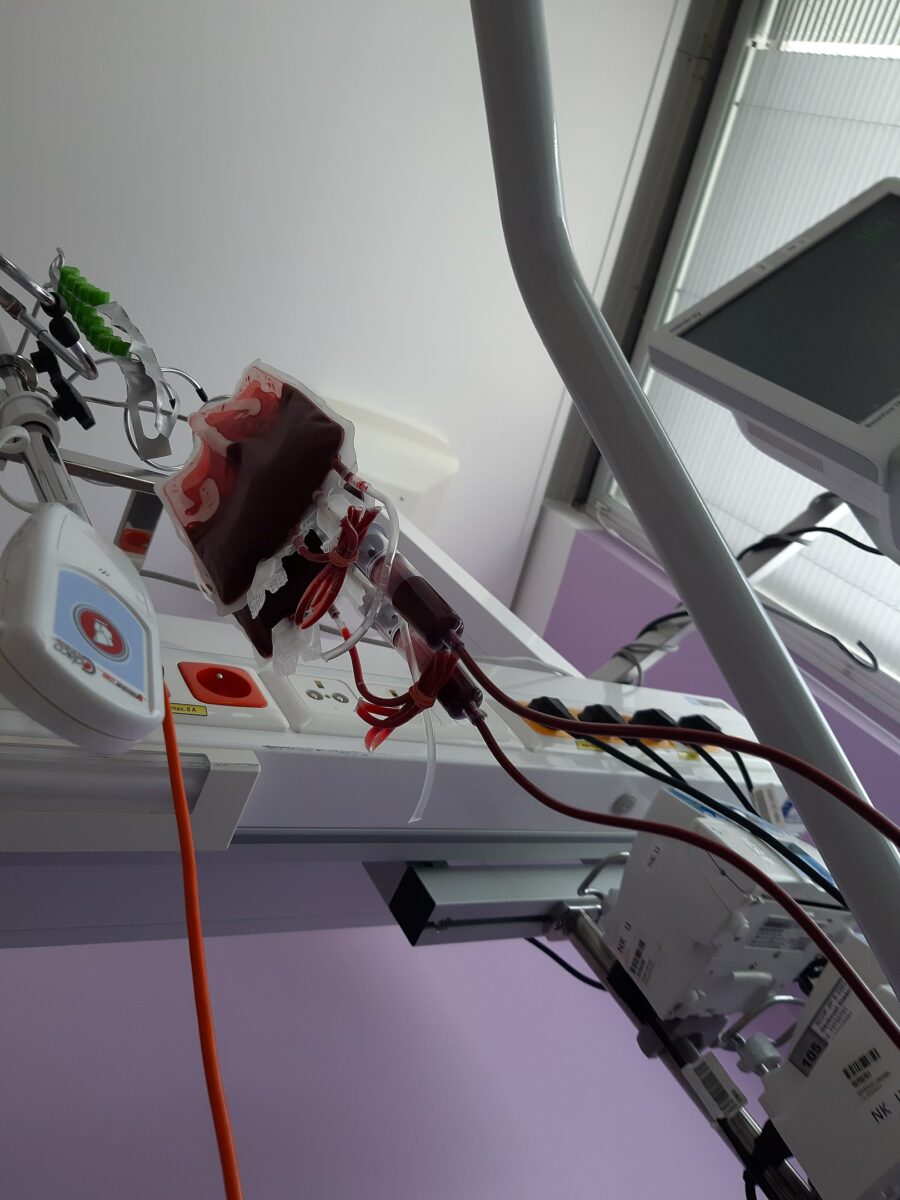
Hemoderivados

Aunque la sangre entera fresca era el único producto disponible en EN Erythema nodosum is an immune-mediated panniculitis (inflammation of the subcutaneous fat) caused by a type IV (delayed-type) hypersensitivity reaction. It commonly manifests in young women as tender, erythematous nodules on the shins. Erythema Nodosum los LOS Neisseria primeros años de la transfusión, la llegada de las técnicas de fraccionamiento de la sangre entera ha HA Hemolytic anemia (HA) is the term given to a large group of anemias that are caused by the premature destruction/hemolysis of circulating red blood cells (RBCs). Hemolysis can occur within (intravascular hemolysis) or outside the blood vessels (extravascular hemolysis). Hemolytic Anemia permitido un uso más eficiente de los LOS Neisseria distintos componentes sanguíneos. Los LOS Neisseria hemoderivados fraccionados, preparados en EN Erythema nodosum is an immune-mediated panniculitis (inflammation of the subcutaneous fat) caused by a type IV (delayed-type) hypersensitivity reaction. It commonly manifests in young women as tender, erythematous nodules on the shins. Erythema Nodosum los LOS Neisseria centros de transfusión de sangre, incluyen eritrocitos, plaquetas, plasma Plasma The residual portion of blood that is left after removal of blood cells by centrifugation without prior blood coagulation. Transfusion Products fresco congelado (PFC) y crioprecipitado. Estos productos se transfunden para diferentes indicaciones y cada uno aborda diferentes patologías.

Last updated: Dec 15, 2025
Editorial responsibility: Stanley Oiseth, Lindsay Jones, Evelin Maza

Introducción

  • La 1ra transfusión de sangre humana tuvo lugar en EN Erythema nodosum is an immune-mediated panniculitis (inflammation of the subcutaneous fat) caused by a type IV (delayed-type) hypersensitivity reaction. It commonly manifests in young women as tender, erythematous nodules on the shins. Erythema Nodosum 1795.
  • Las transfusiones de sangre son un procedimiento médico muy común.
  • Cada año se transfunden 21 millones de componentes sanguíneos en EN Erythema nodosum is an immune-mediated panniculitis (inflammation of the subcutaneous fat) caused by a type IV (delayed-type) hypersensitivity reaction. It commonly manifests in young women as tender, erythematous nodules on the shins. Erythema Nodosum Estados Unidos.
  • La sangre y sus derivados son, como mínimo, sometidos a pruebas de detección de:
    • Hepatitis B Hepatitis B Hepatitis B virus (HBV) is a partially double-stranded DNA virus, which belongs to the Orthohepadnavirus genus and the Hepadnaviridae family. Most individuals with acute HBV infection are asymptomatic or have mild, self-limiting symptoms. Chronic infection can be asymptomatic or create hepatic inflammation, leading to liver cirrhosis and hepatocellular carcinoma (HCC). Hepatitis B Virus
    • Hepatitis C Hepatitis C Hepatitis C is an infection of the liver caused by the hepatitis C virus (HCV). The infection can be transmitted through infectious blood or body fluids and may be transmitted during childbirth or through IV drug use or sexual intercourse. Hepatitis C virus can cause both acute and chronic hepatitis, ranging from a mild to a serious, lifelong illness including liver cirrhosis and hepatocellular carcinoma (HCC). Hepatitis C Virus
    • VIH
    • Sífilis
    • Contaminantes bacterianos
    • Virus Virus Viruses are infectious, obligate intracellular parasites composed of a nucleic acid core surrounded by a protein capsid. Viruses can be either naked (non-enveloped) or enveloped. The classification of viruses is complex and based on many factors, including type and structure of the nucleoid and capsid, the presence of an envelope, the replication cycle, and the host range. Virology del Zika Zika Zika virus belongs to the genus Flavivirus and is primarily transmitted by Aedes aegypti mosquitoes, but can also be transmitted sexually and transplacentally. Although most infected patients are asymptomatic, some may present with low-grade fever, pruritic rash, and conjunctivitis. Zika Virus Infection
  • Las donaciones son tipificadas y examinadas para el ABO y factor Rhesus (Rh).
  • Tipos de hemoderivados utilizados:
    • Sangre entera
    • Eritrocitos empaquetados
    • Plaquetas
    • Plasma Plasma The residual portion of blood that is left after removal of blood cells by centrifugation without prior blood coagulation. Transfusion Products
    • Crioprecipitado
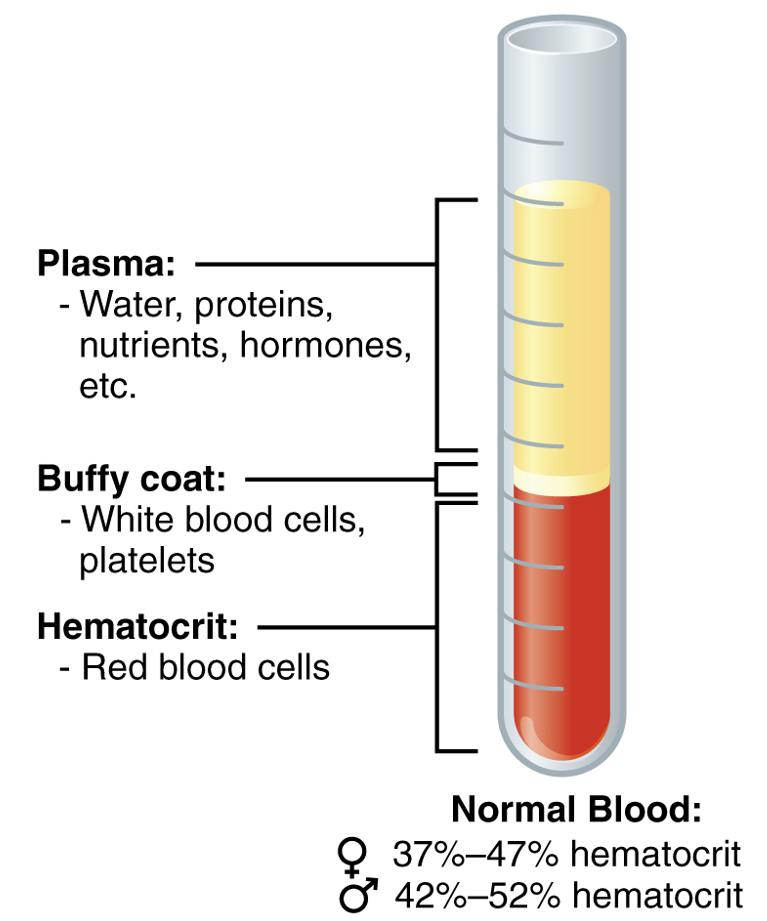
Composición de la Sangre

Un tubo centrifugado que muestra los componentes de la sangre entera (plasma, eritrocitos, plaquetas y leucocitos)

Imagen: “The cellular elements of blood include a vast number of erythrocytes and comparatively fewer leukocytes and platelets” por OpenStax College. Licencia: CC BY 4.0
Tabla: Compatibilidad del grupo sanguíneo para dar y recibir sangre
Tipo de sangre Puede donar a individuos con grupo sanguíneo: Puede recibir de donantes con grupo sanguíneo:
A+ A+, AB+ A+, A–, O+, O
A– A+, A-, AB+, AB– A-, O–
B+ B+, AB+ B+, B–, O+, O–
B- B+, B–, AB+, AB– B–, O–
O+ A+, B+, O+, AB+ O+, O–
O– A todos O–
AB+ AB+ De todos
AB– AB+, AB- AB–, A–, B–, O–

Hemoderivados

Eritrocitos empaquetados

  • Creados por la extracción de la mayor parte del plasma Plasma The residual portion of blood that is left after removal of blood cells by centrifugation without prior blood coagulation. Transfusion Products de una unidad de sangre entera:
    • Cada unidad contiene:
      • 200 mL de eritrocitos
      • 70 mL de plasma Plasma The residual portion of blood that is left after removal of blood cells by centrifugation without prior blood coagulation. Transfusion Products
      • 100 mL de aditivos (citrato como anticoagulante, fosfato, dextrosa)
      • Hematocrito de 65%–80%
      • Volumen de 250–300 mL
      • Se puede almacenar hasta 42 días
    • 1 unidad debería:
      • ↑ Hemoglobina por 1 g/dL
      • ↑ Hematocrito en EN Erythema nodosum is an immune-mediated panniculitis (inflammation of the subcutaneous fat) caused by a type IV (delayed-type) hypersensitivity reaction. It commonly manifests in young women as tender, erythematous nodules on the shins. Erythema Nodosum un 3%
  • Procesamiento adicional de los LOS Neisseria eritrocitos:
    • Leucorreducción:
      • Filtrado para eliminar el 85%–90% de leucocitos
      • ↓ Riesgo de reacciones eadversas en EN Erythema nodosum is an immune-mediated panniculitis (inflammation of the subcutaneous fat) caused by a type IV (delayed-type) hypersensitivity reaction. It commonly manifests in young women as tender, erythematous nodules on the shins. Erythema Nodosum el paciente durante la transfusión
    • Irradiado:
      • Se prepara exponiendo la unidad a 2 500 cGy de radiación
      • Inactiva los LOS Neisseria linfocitos T del donante
      • ↓ Riesgo de reacción de injerto contra huésped en EN Erythema nodosum is an immune-mediated panniculitis (inflammation of the subcutaneous fat) caused by a type IV (delayed-type) hypersensitivity reaction. It commonly manifests in young women as tender, erythematous nodules on the shins. Erythema Nodosum el receptor Receptor Receptors are proteins located either on the surface of or within a cell that can bind to signaling molecules known as ligands (e.g., hormones) and cause some type of response within the cell. Receptors
    • Lavado:
      • El lavado de eritrocitos con NaCl al AL Amyloidosis 0,9% elimina la mayor parte del plasma Plasma The residual portion of blood that is left after removal of blood cells by centrifugation without prior blood coagulation. Transfusion Products de los LOS Neisseria eritrocitos empaquetados
      • Se utiliza para personas con antecedentes de alergia severa a la transfusión

Plaquetas

  • Las plaquetas (trombocitos) son pequeños fragmentos celulares incoloros derivados de los LOS Neisseria megacariocitos (células precursoras)
  • Participan en EN Erythema nodosum is an immune-mediated panniculitis (inflammation of the subcutaneous fat) caused by a type IV (delayed-type) hypersensitivity reaction. It commonly manifests in young women as tender, erythematous nodules on the shins. Erythema Nodosum la formación de coágulos
  • Concentrado plaquetario:
    • Separadas de una unidad de sangre donada
    • Se concentran de 4–6 unidades para permitir un número adecuado de plaquetas por transfusión.
    • Ventajas:
      • ↓ Costo
      • Facilidad de extracción
    • Desventajas:
      • Cada receptor Receptor Receptors are proteins located either on the surface of or within a cell that can bind to signaling molecules known as ligands (e.g., hormones) and cause some type of response within the cell. Receptors está expuesto a múltiples donantes.
      • ↑ Riesgo de reacciones alérgicas e infecciones
  • Aféresis plaquetaria:
    • Las plaquetas se extraen selectivamente de la sangre obtenida de un individuo, que se devuelve al AL Amyloidosis donante.
    • Una unidad de plaquetas por aféresis equivale a ≥ 6 unidades de plaquetas de sangre entera.

Plasma Plasma The residual portion of blood that is left after removal of blood cells by centrifugation without prior blood coagulation. Transfusion Products

  • El plasma se “concentra” en EN Erythema nodosum is an immune-mediated panniculitis (inflammation of the subcutaneous fat) caused by a type IV (delayed-type) hypersensitivity reaction. It commonly manifests in young women as tender, erythematous nodules on the shins. Erythema Nodosum contenedores (separados de los LOS Neisseria eritrocitos) y luego se fracciona.
  • Componente líquido amarillo de la sangre
  • Mantiene en EN Erythema nodosum is an immune-mediated panniculitis (inflammation of the subcutaneous fat) caused by a type IV (delayed-type) hypersensitivity reaction. It commonly manifests in young women as tender, erythematous nodules on the shins. Erythema Nodosum suspensión las proteínas y otros componentes de la sangre entera:
    • Albúmina
    • Factores de coagulación de la sangre
    • Inmunoglobulina
    • Globulinas
    • Fibrinógeno
  • PFC:
    • Congelado < 8 horas después de la recogida
    • Contiene todos los LOS Neisseria factores de coagulación y proteínas
    • Dosis: 12–15 mL/kg, pero varía en EN Erythema nodosum is an immune-mediated panniculitis (inflammation of the subcutaneous fat) caused by a type IV (delayed-type) hypersensitivity reaction. It commonly manifests in young women as tender, erythematous nodules on the shins. Erythema Nodosum función de la indicación
  • Plasma Plasma The residual portion of blood that is left after removal of blood cells by centrifugation without prior blood coagulation. Transfusion Products congelado < 24 horas después de la flebotomía: contiene ↓ niveles de factor VIII Factor VIII Factor VIII of blood coagulation. Antihemophilic factor that is part of the factor viii/von Willebrand factor complex. Factor VIII is produced in the liver and acts in the intrinsic pathway of blood coagulation. It serves as a cofactor in factor X activation and this action is markedly enhanced by small amounts of thrombin. Hemostasis y proteína C
  • Plasma Plasma The residual portion of blood that is left after removal of blood cells by centrifugation without prior blood coagulation. Transfusion Products descongelado:
    • Se puede conservar en EN Erythema nodosum is an immune-mediated panniculitis (inflammation of the subcutaneous fat) caused by a type IV (delayed-type) hypersensitivity reaction. It commonly manifests in young women as tender, erythematous nodules on the shins. Erythema Nodosum el refrigerador hasta 5 días
    • ↓ Niveles de factor V Factor V Heat- and storage-labile plasma glycoprotein which accelerates the conversion of prothrombin to thrombin in blood coagulation. Factor V accomplishes this by forming a complex with factor Xa, phospholipid, and calcium (prothrombinase complex). Hemostasis y factor VIII Factor VIII Factor VIII of blood coagulation. Antihemophilic factor that is part of the factor viii/von Willebrand factor complex. Factor VIII is produced in the liver and acts in the intrinsic pathway of blood coagulation. It serves as a cofactor in factor X activation and this action is markedly enhanced by small amounts of thrombin. Hemostasis
  • Plasma Plasma The residual portion of blood that is left after removal of blood cells by centrifugation without prior blood coagulation. Transfusion Products líquido: plasma Plasma The residual portion of blood that is left after removal of blood cells by centrifugation without prior blood coagulation. Transfusion Products que nunca ha HA Hemolytic anemia (HA) is the term given to a large group of anemias that are caused by the premature destruction/hemolysis of circulating red blood cells (RBCs). Hemolysis can occur within (intravascular hemolysis) or outside the blood vessels (extravascular hemolysis). Hemolytic Anemia sido congelado
  • Disolvente/detergente: tratado con agentes inactivadores de virus Virus Viruses are infectious, obligate intracellular parasites composed of a nucleic acid core surrounded by a protein capsid. Viruses can be either naked (non-enveloped) or enveloped. The classification of viruses is complex and based on many factors, including type and structure of the nucleoid and capsid, the presence of an envelope, the replication cycle, and the host range. Virology antes de la congelación
  • Crioprecipitado reducido:
    • Se ha HA Hemolytic anemia (HA) is the term given to a large group of anemias that are caused by the premature destruction/hemolysis of circulating red blood cells (RBCs). Hemolysis can occur within (intravascular hemolysis) or outside the blood vessels (extravascular hemolysis). Hemolytic Anemia retirado el crioprecipitado.
    • Sigue conteniendo todos los LOS Neisseria factores de coagulación dependientes de la vitamina K
  • Plasma Plasma The residual portion of blood that is left after removal of blood cells by centrifugation without prior blood coagulation. Transfusion Products convaleciente: preparado a partir de individuos que se han recuperado de una infección por un patógeno específico.

Crioprecipitado

  • Derivado del plasma Plasma The residual portion of blood that is left after removal of blood cells by centrifugation without prior blood coagulation. Transfusion Products que se congela ≤ 8 horas después de su obtención (PFC)
    • El plasma Plasma The residual portion of blood that is left after removal of blood cells by centrifugation without prior blood coagulation. Transfusion Products se descongela a una temperatura de entre 1 y 6°C y posteriormente se centrifuga.
    • La fracción que precipita fuera de la solución se recoge y se vuelve a congelar a –18°C.
    • Este proceso crea 1 unidad de crioprecipitado.
  • Una bolsa de transfusión contiene entre 5 y 10 unidades de crioprecipitado.
  • Cada unidad contiene:
    • Fibrinógeno: 150–300 mg de fibrinógeno; vida media: 100–150 horas
    • Factor VIII Factor VIII Factor VIII of blood coagulation. Antihemophilic factor that is part of the factor viii/von Willebrand factor complex. Factor VIII is produced in the liver and acts in the intrinsic pathway of blood coagulation. It serves as a cofactor in factor X activation and this action is markedly enhanced by small amounts of thrombin. Hemostasis: > 80 UI (rango, 80–150); vida media: 12 horas
    • Factor XIII: 50–75 unidades; vida media: 150–300 horas
    • Factor von Willebrand: 100–150 unidades; vida media: 24 horas
    • Fibronectina: en EN Erythema nodosum is an immune-mediated panniculitis (inflammation of the subcutaneous fat) caused by a type IV (delayed-type) hypersensitivity reaction. It commonly manifests in young women as tender, erythematous nodules on the shins. Erythema Nodosum concentraciones variables

Desglose de los LOS Neisseria componentes sanguíneos

Tabla: Desglose de los LOS Neisseria componentes sanguíneos
Componentes sanguíneos Subcomponentes sanguíneos Tipo Lugar de producción Tareas principales
Plasma Plasma The residual portion of blood that is left after removal of blood cells by centrifugation without prior blood coagulation. Transfusion Products 43%–63% Agua 92% Líquido Se absorbe en EN Erythema nodosum is an immune-mediated panniculitis (inflammation of the subcutaneous fat) caused by a type IV (delayed-type) hypersensitivity reaction. It commonly manifests in young women as tender, erythematous nodules on the shins. Erythema Nodosum el tracto gastrointestinal o se obtiene durante el metabolismo Medio de transporte
Proteínas plasmáticas 7% Albúmina 54%–60% Hígado
  • Mantiene la concentración osmótica
  • Transporta moléculas lipídicas
Globulinas 35%–38% Alfa globulinas: hígado Transportar y mantener la concentración osmótica
Beta globulinas: hígado Transportar y mantener la concentración osmótica
Gammaglobulinas (inmunoglobulinas): células plasmáticas Respuesta inmune
Fibrinógeno 4%–7% Hígado Coagulación de la sangre durante la hemostasia
Proteínas reguladoras < 1%
  • Hormonas
  • Enzimas
Varias localizaciones Regular Regular Insulin diversas funciones corporales
Otras sustancias disueltas 1%.
  • Nutrientes
  • Gases
  • Residuos
  • Absorbidas en EN Erythema nodosum is an immune-mediated panniculitis (inflammation of the subcutaneous fat) caused by a type IV (delayed-type) hypersensitivity reaction. It commonly manifests in young women as tender, erythematous nodules on the shins. Erythema Nodosum el tracto gastrointestinal
  • Reemplazo de células en EN Erythema nodosum is an immune-mediated panniculitis (inflammation of the subcutaneous fat) caused by a type IV (delayed-type) hypersensitivity reaction. It commonly manifests in young women as tender, erythematous nodules on the shins. Erythema Nodosum las vías respiratorias
  • Elaboradas en EN Erythema nodosum is an immune-mediated panniculitis (inflammation of the subcutaneous fat) caused by a type IV (delayed-type) hypersensitivity reaction. It commonly manifests in young women as tender, erythematous nodules on the shins. Erythema Nodosum células
Muchas funciones diferentes
Elementos formes 37%–54% Eritrocitos 99% Eritrocitos Médula roja Transporta gases, O2 y algo de CO2
  • Leucocitos < 1%
  • Leucocitos granulares
  • Neutrófilos
  • Eosinófilos
  • Basófilos
Médula roja Respuesta inmune inespecífica
  • Leucocitos agranulares
  • Linfocitos
  • Monocitos
Linfocitos: médula ósea y tejido linfoide Linfocitos: respuesta inmune específica
Monocitos: médula roja Monocitos: respuesta inmune inespecífica
Plaquetas < 1% Megacariocitos: médula roja Hemostasia

Indicaciones para la Transfusión de Hemoderivados

Indicaciones para la transfusión de eritrocitos

  • Individuos con Hb Hb The oxygen-carrying proteins of erythrocytes. They are found in all vertebrates and some invertebrates. The number of globin subunits in the hemoglobin quaternary structure differs between species. Structures range from monomeric to a variety of multimeric arrangements. Gas Exchange ≤ 7 g/dL que son sintomáticos:
    • Mareo
    • Debilidad
    • Dificultad para respirar
    • Dolor Dolor Inflammation torácico
    • Síncope
    • Hipotensión
  • Individuos postoperatorios:
    • Individuos hemodinámicamente estables: Hb Hb The oxygen-carrying proteins of erythrocytes. They are found in all vertebrates and some invertebrates. The number of globin subunits in the hemoglobin quaternary structure differs between species. Structures range from monomeric to a variety of multimeric arrangements. Gas Exchange ≤ 8 g/dL
    • Presencia de síntomas de suministro inadecuado de oxígeno:
      • Dolor Dolor Inflammation torácico de origen cardíaco
      • Hipotensión ortostática
      • Taquicardia que no responde a la reanimación con líquidos
  • Individuos en EN Erythema nodosum is an immune-mediated panniculitis (inflammation of the subcutaneous fat) caused by a type IV (delayed-type) hypersensitivity reaction. It commonly manifests in young women as tender, erythematous nodules on the shins. Erythema Nodosum estado crítico:
    • Hb Hb The oxygen-carrying proteins of erythrocytes. They are found in all vertebrates and some invertebrates. The number of globin subunits in the hemoglobin quaternary structure differs between species. Structures range from monomeric to a variety of multimeric arrangements. Gas Exchange ≤ 7 g/dL
    • Evidencia de hipoxia tisular:
      • Saturación venosa central de oxígeno: < 70%
      • Saturación venosa mixta de oxígeno: < 65%
      • Concentración de lactato: > 4 mmol/L
  • En EN Erythema nodosum is an immune-mediated panniculitis (inflammation of the subcutaneous fat) caused by a type IV (delayed-type) hypersensitivity reaction. It commonly manifests in young women as tender, erythematous nodules on the shins. Erythema Nodosum individuos con síndrome coronario agudo, la Hb Hb The oxygen-carrying proteins of erythrocytes. They are found in all vertebrates and some invertebrates. The number of globin subunits in the hemoglobin quaternary structure differs between species. Structures range from monomeric to a variety of multimeric arrangements. Gas Exchange debe mantenerse en EN Erythema nodosum is an immune-mediated panniculitis (inflammation of the subcutaneous fat) caused by a type IV (delayed-type) hypersensitivity reaction. It commonly manifests in young women as tender, erythematous nodules on the shins. Erythema Nodosum > 8–9 g/dL.
  • En EN Erythema nodosum is an immune-mediated panniculitis (inflammation of the subcutaneous fat) caused by a type IV (delayed-type) hypersensitivity reaction. It commonly manifests in young women as tender, erythematous nodules on the shins. Erythema Nodosum individuos con lesión cerebral traumática, la Hb Hb The oxygen-carrying proteins of erythrocytes. They are found in all vertebrates and some invertebrates. The number of globin subunits in the hemoglobin quaternary structure differs between species. Structures range from monomeric to a variety of multimeric arrangements. Gas Exchange objetivo debe ser de 7–9 g/dL.
  • Estas indicaciones no aplican a personas con hemorragia activa.

Indicaciones para la transfusión de productos plasmáticos

  • Índice internacional normalizado (INR, por sus siglas en EN Erythema nodosum is an immune-mediated panniculitis (inflammation of the subcutaneous fat) caused by a type IV (delayed-type) hypersensitivity reaction. It commonly manifests in young women as tender, erythematous nodules on the shins. Erythema Nodosum inglés) > 1,6 y:
    • Deficiencia heredada de factor anticoagulante II, V, X u XI
    • De forma profiláctica en EN Erythema nodosum is an immune-mediated panniculitis (inflammation of the subcutaneous fat) caused by a type IV (delayed-type) hypersensitivity reaction. It commonly manifests in young women as tender, erythematous nodules on the shins. Erythema Nodosum personas con tratamiento anticoagulante antes de un procedimiento
    • Hemorragia activa
  • Reversión urgente de la anticoagulación por warfarina
  • CID aguda
  • Hemorragia microvascular durante transfusión masiva (regla 1:1:1):
    • 1 unidad de plasma Plasma The residual portion of blood that is left after removal of blood cells by centrifugation without prior blood coagulation. Transfusion Products
    • 1 unidad de plaquetas
    • 1 unidad de eritrocitos
  • Angioedema Angioedema Angioedema is a localized, self-limited (but potentially life-threatening), nonpitting, asymmetrical edema occurring in the deep layers of the skin and mucosal tissue. The common underlying pathophysiology involves inflammatory mediators triggering significant vasodilation and increased capillary permeability. Angioedema hereditario: cuando no se dispone de un inhibidor de la esterasa C1
  • Microangiopatía trombótica: en EN Erythema nodosum is an immune-mediated panniculitis (inflammation of the subcutaneous fat) caused by a type IV (delayed-type) hypersensitivity reaction. It commonly manifests in young women as tender, erythematous nodules on the shins. Erythema Nodosum combinación con el intercambio de plasma Plasma The residual portion of blood that is left after removal of blood cells by centrifugation without prior blood coagulation. Transfusion Products

Indicaciones para la transfusión de plaquetas

  • Plaquetas:
    • < 50 000/μL: cirugía mayor o procedimiento invasivo, sin hemorragia activa
    • < 100 000/μL: cirugía ocular o neurocirugía, sin hemorragia activa
    • < 20 000/μL: preparación para la inserción de una vía central o punción lumbar
    • < 80 000/μL: preparación para anestesia epidural
    • < 10 000/μL: de forma profiláctica incluso en EN Erythema nodosum is an immune-mediated panniculitis (inflammation of the subcutaneous fat) caused by a type IV (delayed-type) hypersensitivity reaction. It commonly manifests in young women as tender, erythematous nodules on the shins. Erythema Nodosum individuos asintomáticos

Indicaciones para la transfusión de crioprecipitado

  • Hemorragia después de una cirugía cardíaca
  • Hemorragia o transfusión masiva
  • Hemorragia quirúrgica
  • CID
  • Trastornos del fibrinógeno asociados a un fibrinógeno bajo o disfuncional
  • Hemorragia urémica
  • Hemorragia en EN Erythema nodosum is an immune-mediated panniculitis (inflammation of the subcutaneous fat) caused by a type IV (delayed-type) hypersensitivity reaction. It commonly manifests in young women as tender, erythematous nodules on the shins. Erythema Nodosum individuos con enfermedad hepática
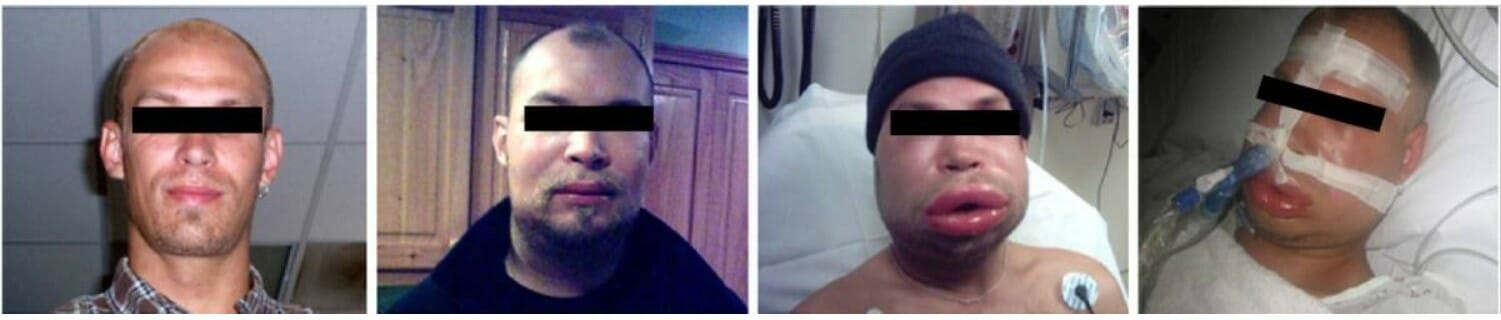
Hereditary angioedema (HAE)

Individuos experimentando episodios agudos de angioedema hereditario

Imagen: “F1: HAE patient experiencing HAE attacks” por Bygum A. et al. Licencia: CC BY 2.0

Referencias

  1. Sharma, S., Sharma, P., Tyler, L.N. (2011). Transfusion of blood and blood products: indications and complications. Am Fam Physician 83:719–724. https://pubmed.ncbi.nlm.nih.gov/21404983/
  2. Silbergleid, A.J. (2025). Clinical use of plasma components. UpToDate. Retrieved June 9, 2025, from https://www.uptodate.com/contents/clinical-use-of-plasma-components
  3. Tobian, A. (2025). Cryoprecipitate and fibrinogen concentrate. In S. Kleinman (Ed.), UpToDate. Wolters Kluwer. Retrieved June 9, 2025, from https://www.uptodate.com/contents/cryoprecipitate-and-fibrinogen-concentrate 
  4. Yaddanapudi, S., Yaddanapudi, L.N. (2014). Indications for blood and blood product transfusion. Indian J Anaesth 58:538–542. https://pubmed.ncbi.nlm.nih.gov/25535414/
  5. Yuan, S., Goldfinger, D. (2025). Platelet transfusion: indications, ordering, and associated risks. UpToDate. Retrieved June 9, 2025, from https://www.uptodate.com/contents/platelet-transfusion-indications-ordering-and-associated-risks
  6. Thiagarajam, P. (2025). Platelet disorders: overview of platelet disorders. Emedicine. Retrieved June 9, 2025, from https://emedicine.medscape.com/article/201722-overview

¡Crea tu cuenta gratis o inicia una sesión para seguir leyendo!

Regístrate ahora y obtén acceso gratuito a Lecturio con páginas de concepto, videos médicos y cuestionarios para tu educación médica.

User Reviews

Que tengas una sesión de estudio alegre y navideña 🎁 Ahorra 50% en todos los planes >>

Details