Domina Conceptos Médicos

Estudia para la escuela de medicina y tus examenes con Lecturio.

Gangrena Gaseosa

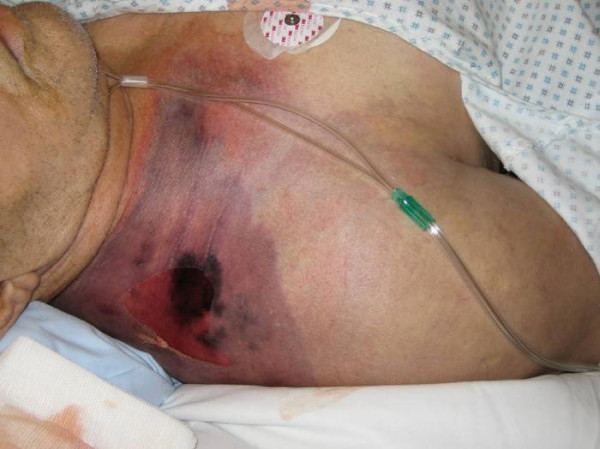
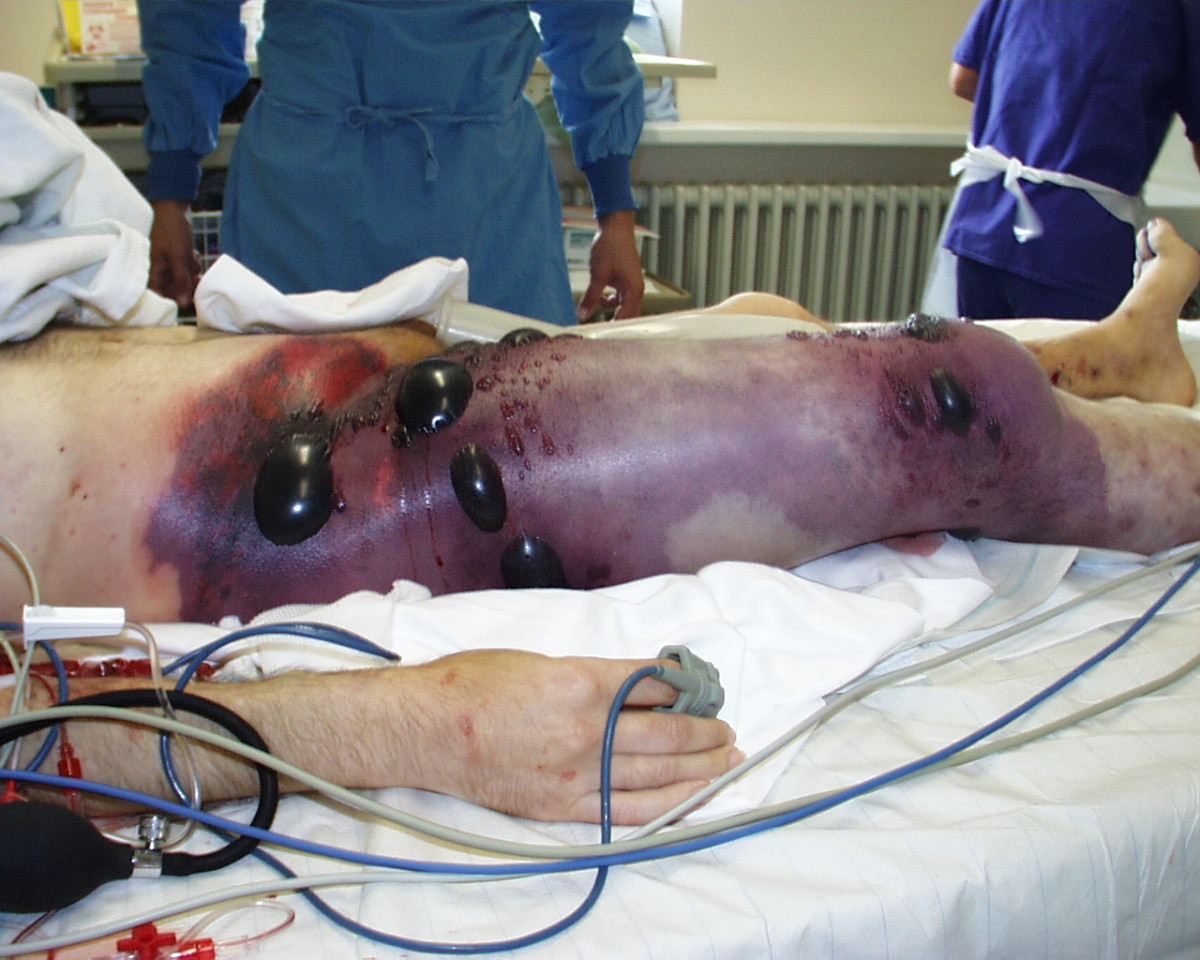
La gangrena gaseosa, también conocida como mionecrosis por clostridios, es una infección potencialmente mortal de músculos y tejidos blandos que generalmente se desarrolla tras una inoculación traumática con Clostridium perfringens Clostridium perfringens The most common etiologic agent of gas gangrene. It is differentiable into several distinct types based on the distribution of twelve different toxins. Gas Gangrene ( C. perfringens C. perfringens The most common etiologic agent of gas gangrene. It is differentiable into several distinct types based on the distribution of twelve different toxins. Gas Gangrene), aunque también puede desarrollarse espontáneamente en EN Erythema nodosum is an immune-mediated panniculitis (inflammation of the subcutaneous fat) caused by a type IV (delayed-type) hypersensitivity reaction. It commonly manifests in young women as tender, erythematous nodules on the shins. Erythema Nodosum asociación con otras especies de Clostridium. El dolor Dolor Inflammation muscular repentino e intenso suele aparecer poco después de la lesión. También se producen cambios en EN Erythema nodosum is an immune-mediated panniculitis (inflammation of the subcutaneous fat) caused by a type IV (delayed-type) hypersensitivity reaction. It commonly manifests in young women as tender, erythematous nodules on the shins. Erythema Nodosum el color de la piel (de rojo/púrpura a negro), sensibilidad, formación de bullas y crepitación, que progresan rápidamente. La mayoría de las veces, el diagnóstico se establece clínicamente. Una vez que se sospecha el diagnóstico, se debe iniciar una terapia antibiótica intravenosa y se debe realizar un desbridamiento quirúrgico de emergencia.

Last updated: Dec 15, 2025

Editorial responsibility: Stanley Oiseth, Lindsay Jones, Evelin Maza

Descripción General

Definición

La gangrena gaseosa (mionecrosis por clostridios) es una infección de los LOS Neisseria músculos y tejidos blandos que progresa rápidamente y que suele ser causada por especies de Clostridium.

Epidemiología

  • Las tierras cultivadas tienen especies de Clostridium ampliamente distribuidas en EN Erythema nodosum is an immune-mediated panniculitis (inflammation of the subcutaneous fat) caused by a type IV (delayed-type) hypersensitivity reaction. It commonly manifests in young women as tender, erythematous nodules on the shins. Erythema Nodosum el suelo.
  • Incidencia de la gangrena gaseosa en EN Erythema nodosum is an immune-mediated panniculitis (inflammation of the subcutaneous fat) caused by a type IV (delayed-type) hypersensitivity reaction. It commonly manifests in young women as tender, erythematous nodules on the shins. Erythema Nodosum EE. UU.: aproximadamente 1 000 casos/año
  • Se sospecha que los LOS Neisseria casos a nivel mundial son mucho más numerosos que los LOS Neisseria de Estados Unidos, pero están subreportados debido a la falta de atención sanitaria.

Etiología

  • Clostridium perfringens Clostridium perfringens The most common etiologic agent of gas gangrene. It is differentiable into several distinct types based on the distribution of twelve different toxins. Gas Gangrene ( C. perfringens C. perfringens The most common etiologic agent of gas gangrene. It is differentiable into several distinct types based on the distribution of twelve different toxins. Gas Gangrene) constituye el > 80% de las infecciones por gangrena gaseosa.
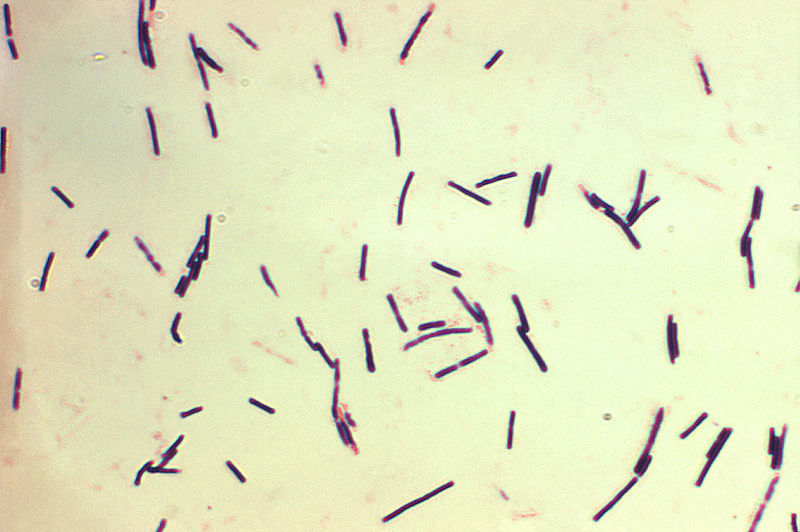
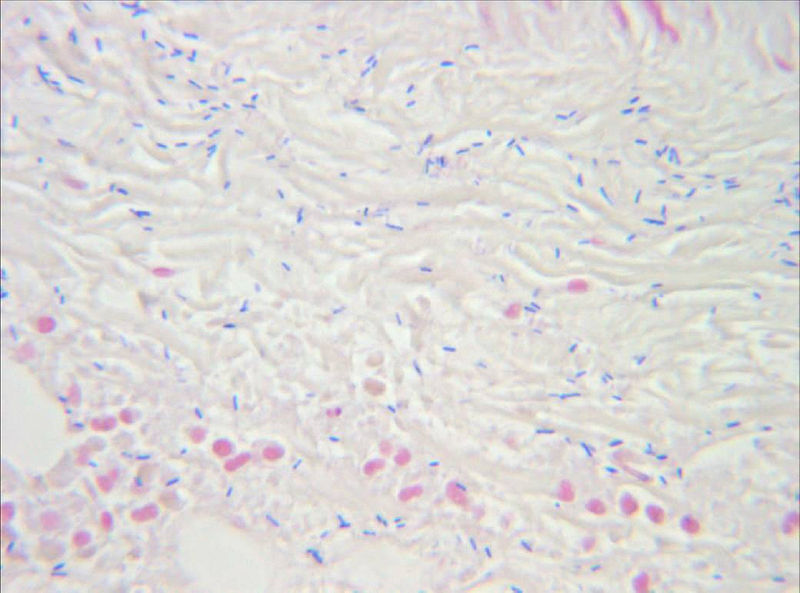
  • C. perfringens C. perfringens The most common etiologic agent of gas gangrene. It is differentiable into several distinct types based on the distribution of twelve different toxins. Gas Gangrene es un bacilo anaerobio gram-positivo.
  • Otros patógenos son C. septicum C. septicum A species of gram-positive bacteria in the family clostridiaceae. Infections have a strong association with malignancies and also with gas gangrene. Gas Gangrene y C. histolyticum C. histolyticum A species of gram-positive, strongly proteolytic bacteria in the family clostridiaceae. It contains several forms of collagenase whose action can lead to gas gangrene in humans and horses. Gas Gangrene.
  • 2 presentaciones principales:
    • Traumática (70%; patógeno principal, C. perfringens C. perfringens The most common etiologic agent of gas gangrene. It is differentiable into several distinct types based on the distribution of twelve different toxins. Gas Gangrene):
      • Heridas de bala o de arma blanca
      • Fracturas compuestas o lesiones por aplastamiento
      • Cirugía intestinal y biliar
      • Aborto/ placenta Placenta A highly vascularized mammalian fetal-maternal organ and major site of transport of oxygen, nutrients, and fetal waste products. It includes a fetal portion (chorionic villi) derived from trophoblasts and a maternal portion (decidua) derived from the uterine endometrium. The placenta produces an array of steroid, protein and peptide hormones (placental hormones). Placenta, Umbilical Cord, and Amniotic Cavity retenida/rotura de membranas prolongada
      • Muerte fetal intrauterina
      • Inyección intramuscular
      • Inyección de heroína en EN Erythema nodosum is an immune-mediated panniculitis (inflammation of the subcutaneous fat) caused by a type IV (delayed-type) hypersensitivity reaction. It commonly manifests in young women as tender, erythematous nodules on the shins. Erythema Nodosum alquitrán negro
    • Espontánea: principal patógeno C. septicum C. septicum A species of gram-positive bacteria in the family clostridiaceae. Infections have a strong association with malignancies and also with gas gangrene. Gas Gangrene
  • Un estado inmunocomprometido (e.g., diabetes Diabetes Diabetes mellitus (DM) is a metabolic disease characterized by hyperglycemia and dysfunction of the regulation of glucose metabolism by insulin. Type 1 DM is diagnosed mostly in children and young adults as the result of autoimmune destruction of β cells in the pancreas and the resulting lack of insulin. Type 2 DM has a significant association with obesity and is characterized by insulin resistance. Diabetes Mellitus mellitus) es un factor de riesgo importante.

Fisiopatología y Presentación Clínica

Gangrena gaseosa traumática

  • Los LOS Neisseria microorganismos se introducen en EN Erythema nodosum is an immune-mediated panniculitis (inflammation of the subcutaneous fat) caused by a type IV (delayed-type) hypersensitivity reaction. It commonly manifests in young women as tender, erythematous nodules on the shins. Erythema Nodosum los LOS Neisseria tejidos (a través de heridas abiertas, durante cirugía).
  • No todas las contaminaciones dan lugar a infecciones.
  • La infección generalmente se produce cuando la irrigación sanguínea está comprometida o el tejido está desvitalizado.
  • Condiciones necesarias para que C. perfringens C. perfringens The most common etiologic agent of gas gangrene. It is differentiable into several distinct types based on the distribution of twelve different toxins. Gas Gangrene se propague:
    • Ambiente anaeróbico
    • pH pH The quantitative measurement of the acidity or basicity of a solution. Acid-Base Balance ácido
  • Se desarrolla una grave necrosis Necrosis The death of cells in an organ or tissue due to disease, injury or failure of the blood supply. Ischemic Cell Damage progresiva del tejido debido a las exotoxinas producidas por C. perfringens C. perfringens The most common etiologic agent of gas gangrene. It is differentiable into several distinct types based on the distribution of twelve different toxins. Gas Gangrene:
    • Toxina alfa:
      • Toxina hemolítica; esencial para las manifestaciones de la enfermedad y la mortalidad
      • Tiene actividad de fosfolipasa C y esfingomielinasa
      • Degrada los LOS Neisseria tejidos y las membranas celulares
      • Provoca trombosis de los LOS Neisseria vasos pequeños e isquemia tisular
      • La isquemia crea un entorno anaeróbico → mayor propagación de C. perfringens C. perfringens The most common etiologic agent of gas gangrene. It is differentiable into several distinct types based on the distribution of twelve different toxins. Gas Gangrene
      • También deprime el gasto cardíaco y contribuye al AL Amyloidosis shock Shock Shock is a life-threatening condition associated with impaired circulation that results in tissue hypoxia. The different types of shock are based on the underlying cause: distributive (↑ cardiac output (CO), ↓ systemic vascular resistance (SVR)), cardiogenic (↓ CO, ↑ SVR), hypovolemic (↓ CO, ↑ SVR), obstructive (↓ CO), and mixed. Types of Shock sistémico
    • Toxina teta (perfringolisina O):
      • Citolisina formadora de poros
      • Citotóxica para las células vasculares e inmunitarias
      • No es esencial para la mortalidad
  • Característica importante: ausencia de leucocitos polimorfonucleares en EN Erythema nodosum is an immune-mediated panniculitis (inflammation of the subcutaneous fat) caused by a type IV (delayed-type) hypersensitivity reaction. It commonly manifests in young women as tender, erythematous nodules on the shins. Erythema Nodosum los LOS Neisseria tejidos afectados

Gangrena gaseosa espontánea

  • Siembra hematógena del músculo con bacterias
  • Puntos de entrada:
    • Tracto gastrointestinal (comúnmente por adenocarcinomas de colon Colon The large intestines constitute the last portion of the digestive system. The large intestine consists of the cecum, appendix, colon (with ascending, transverse, descending, and sigmoid segments), rectum, and anal canal. The primary function of the colon is to remove water and compact the stool prior to expulsion from the body via the rectum and anal canal. Colon, Cecum, and Appendix: Anatomy)
    • Aloinjertos musculoesqueléticos
  • C. septicum C. septicum A species of gram-positive bacteria in the family clostridiaceae. Infections have a strong association with malignancies and also with gas gangrene. Gas Gangrene no necesita condiciones anaeróbicas y puede crecer en EN Erythema nodosum is an immune-mediated panniculitis (inflammation of the subcutaneous fat) caused by a type IV (delayed-type) hypersensitivity reaction. It commonly manifests in young women as tender, erythematous nodules on the shins. Erythema Nodosum tejidos normales.
  • La progresión de la enfermedad se debe a la producción de múltiples exotoxinas.

Presentación clínica

Signos y síntomas localizados:

  • Periodo de incubación típico < 24 horas
  • Aparición repentina de un dolor Dolor Inflammation intenso
  • Cambios en EN Erythema nodosum is an immune-mediated panniculitis (inflammation of the subcutaneous fat) caused by a type IV (delayed-type) hypersensitivity reaction. It commonly manifests in young women as tender, erythematous nodules on the shins. Erythema Nodosum el color de la piel: palidez → apariencia de bronce → púrpura a púrpura rojizo → decoloración negra
  • Piel tensa y sensible
  • Desarrollo de ampollas y bullas: pueden ser de líquido claro o estar llenas de sangre
  • Secreción con olor fétido
  • Crepitación (gas en EN Erythema nodosum is an immune-mediated panniculitis (inflammation of the subcutaneous fat) caused by a type IV (delayed-type) hypersensitivity reaction. It commonly manifests in young women as tender, erythematous nodules on the shins. Erythema Nodosum los LOS Neisseria tejidos): muy sensible y específica

Síntomas sistémicos:

  • Taquicardia
  • Hipotensión
  • Fiebre
  • Fallo multiorgánico
  • Insuficiencia renal aguda: ↑ creatinina
  • Daño hepático: ictericia y necrosis Necrosis The death of cells in an organ or tissue due to disease, injury or failure of the blood supply. Ischemic Cell Damage hepática
  • Hemólisis intravascular

Diagnóstico

Examen físico

  • La mayoría de las veces, un examen físico es suficiente para establecer el diagnóstico.
  • Dolor Dolor Inflammation intenso en EN Erythema nodosum is an immune-mediated panniculitis (inflammation of the subcutaneous fat) caused by a type IV (delayed-type) hypersensitivity reaction. It commonly manifests in young women as tender, erythematous nodules on the shins. Erythema Nodosum la zona afectada
  • Decoloración de la piel y ampollas
  • Crepitación a la palpación
  • Toxicidad sistémica:
    • Fiebre
    • Taquicardia/hipotensión
    • Cambio en EN Erythema nodosum is an immune-mediated panniculitis (inflammation of the subcutaneous fat) caused by a type IV (delayed-type) hypersensitivity reaction. It commonly manifests in young women as tender, erythematous nodules on the shins. Erythema Nodosum el estado mental

Estudios de laboratorio

  • Histopatología: la tinción de Gram revela bacilos gram-positivos o gram-variables en EN Erythema nodosum is an immune-mediated panniculitis (inflammation of the subcutaneous fat) caused by a type IV (delayed-type) hypersensitivity reaction. It commonly manifests in young women as tender, erythematous nodules on the shins. Erythema Nodosum el lugar de la lesión (diagnóstico definitivo).
  • Cultivos de heridas: doble zona de hemólisis en EN Erythema nodosum is an immune-mediated panniculitis (inflammation of the subcutaneous fat) caused by a type IV (delayed-type) hypersensitivity reaction. It commonly manifests in young women as tender, erythematous nodules on the shins. Erythema Nodosum agar sangre con crecimiento de C. perfringens C. perfringens The most common etiologic agent of gas gangrene. It is differentiable into several distinct types based on the distribution of twelve different toxins. Gas Gangrene
  • Hemocultivos: positivos en EN Erythema nodosum is an immune-mediated panniculitis (inflammation of the subcutaneous fat) caused by a type IV (delayed-type) hypersensitivity reaction. It commonly manifests in young women as tender, erythematous nodules on the shins. Erythema Nodosum ~15% de los LOS Neisseria casos
  • Los LOS Neisseria estudios de laboratorio adicionales pueden detectar:
    • Hemólisis ( anemia Anemia Anemia is a condition in which individuals have low Hb levels, which can arise from various causes. Anemia is accompanied by a reduced number of RBCs and may manifest with fatigue, shortness of breath, pallor, and weakness. Subtypes are classified by the size of RBCs, chronicity, and etiology. Anemia: Overview and Types, ↑ lactato deshidrogenasa, ↑ bilirrubina indirecta)
    • Leucocitosis
    • Acidosis Acidosis A pathologic condition of acid accumulation or depletion of base in the body. The two main types are respiratory acidosis and metabolic acidosis, due to metabolic acid build up. Respiratory Acidosis láctica
    • Creatinina elevada (insuficiencia renal)

Imagenología

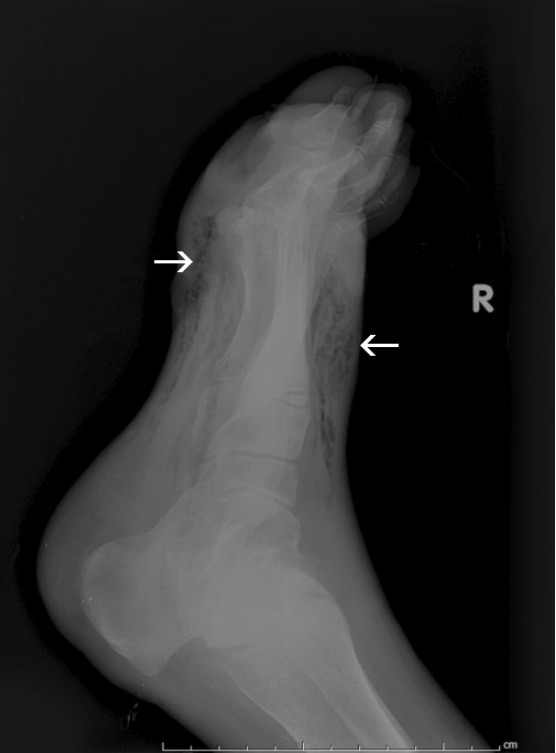
  • Radiografía:
    • Gas en EN Erythema nodosum is an immune-mediated panniculitis (inflammation of the subcutaneous fat) caused by a type IV (delayed-type) hypersensitivity reaction. It commonly manifests in young women as tender, erythematous nodules on the shins. Erythema Nodosum tejidos profundos
    • Rápido y fácil de obtener
  • Tomografía computarizada (TC) o resonancia magnética (RM):
    • Imagenología más detallada que la radiografía simple
    • Tarda más en EN Erythema nodosum is an immune-mediated panniculitis (inflammation of the subcutaneous fat) caused by a type IV (delayed-type) hypersensitivity reaction. It commonly manifests in young women as tender, erythematous nodules on the shins. Erythema Nodosum obtenerse y puede retrasar el tratamiento
Gas en los tejidos blandos consistente con gangrena

La radiografía revela el gas en los tejidos blandos consistente con gangrena gaseosa.

Imagen: “Figure 3” por Cooney and Cooney. Licencia: CC BY 2.0

Tratamiento

Médico

  • Terapia de soporte:
    • Reanimación con fluidos intravenosos
    • Corrección de electrolitos
    • Transfusión de sangre
    • Oxigenoterapia hiperbárica
    • Toxoide tetánico si está indicado ( en EN Erythema nodosum is an immune-mediated panniculitis (inflammation of the subcutaneous fat) caused by a type IV (delayed-type) hypersensitivity reaction. It commonly manifests in young women as tender, erythematous nodules on the shins. Erythema Nodosum caso de gangrena gaseosa traumática)
  • Antibióticos:
    • Deben iniciarse antibióticos intravenosos de amplio espectro.
    • Terapia antibiótica intravenosa:
      • Penicilina 10–24 millones de U/día más clindamicina 600 mg, o
      • Clindamicina y metronidazol para pacientes alérgicos a la penicilina

Quirúrgico

  • Es necesario realizar un desbridamiento quirúrgico agresivo lo antes posible.
  • Normalmente se requieren múltiples desbridamientos.
  • Puede ser necesaria la amputación en EN Erythema nodosum is an immune-mediated panniculitis (inflammation of the subcutaneous fat) caused by a type IV (delayed-type) hypersensitivity reaction. It commonly manifests in young women as tender, erythematous nodules on the shins. Erythema Nodosum caso de afectación de las extremidades.
  • Las extremidades deben ser monitorizadas para detectar síndrome compartimental y pueden requerir una fasciotomía.

Pronóstico

  • La tasa de mortalidad puede alcanzar 20%–30% con los LOS Neisseria mejores cuidados.
  • Tasa de mortalidad del 100% si no se trata
  • Las infecciones espontáneas pueden tener tasas de mortalidad de hasta el 67%.
  • Las infecciones que afectan a los LOS Neisseria tejidos blandos abdominales o a la pared torácica tienen una mayor mortalidad que las infecciones de las extremidades.
  • Predictores de mortalidad:
    • Shock Shock Shock is a life-threatening condition associated with impaired circulation that results in tissue hypoxia. The different types of shock are based on the underlying cause: distributive (↑ cardiac output (CO), ↓ systemic vascular resistance (SVR)), cardiogenic (↓ CO, ↑ SVR), hypovolemic (↓ CO, ↑ SVR), obstructive (↓ CO), and mixed. Types of Shock en EN Erythema nodosum is an immune-mediated panniculitis (inflammation of the subcutaneous fat) caused by a type IV (delayed-type) hypersensitivity reaction. It commonly manifests in young women as tender, erythematous nodules on the shins. Erythema Nodosum el momento de la presentación
    • Presencia de malignidad
    • Estado de inmunocompromiso

Diagnóstico Diferencial

  • Fascitis necrosante: infección potencialmente mortal que afecta la fascia Fascia Layers of connective tissue of variable thickness. The superficial fascia is found immediately below the skin; the deep fascia invests muscles, nerves, and other organs. Cellulitis y tejido subcutáneo, que provoca necrosis Necrosis The death of cells in an organ or tissue due to disease, injury or failure of the blood supply. Ischemic Cell Damage y destrucción del tejido. Los LOS Neisseria pacientes presentan un dolor Dolor Inflammation desproporcionado con respecto a los LOS Neisseria síntomas que presentan y un eritema que progresa rápidamente después de una lesión. Progresa rápidamente hacia un shock Shock Shock is a life-threatening condition associated with impaired circulation that results in tissue hypoxia. The different types of shock are based on the underlying cause: distributive (↑ cardiac output (CO), ↓ systemic vascular resistance (SVR)), cardiogenic (↓ CO, ↑ SVR), hypovolemic (↓ CO, ↑ SVR), obstructive (↓ CO), and mixed. Types of Shock séptico. Por lo tanto, se debe realizar un desbridamiento quirúrgico agresivo, antibióticos parenterales y monitorización continua.
  • Síndrome de la piel escaldada estafilocócica: trastorno cutáneo ampolloso causado por una infección local debida generalmente a Staphylococcus aureus (S. aureus). Se presenta con fiebre y eritema difuso y sensible, ampollas intraepidérmicas y desprendimiento de la capa superficial de la piel, dejando un aspecto rojo “escaldado”. El tratamiento es con hospitalización y antibióticos intravenosos.
  • Celulitis: infección bacteriana de la piel, común y dolorosa, que afecta a las capas más profundas de la dermis Dermis A layer of vascularized connective tissue underneath the epidermis. The surface of the dermis contains innervated papillae. Embedded in or beneath the dermis are sweat glands; hair follicles; and sebaceous glands. Skin: Structure and Functions y el tejido subcutáneo. Se presenta con áreas eritematosas y edematosas que son sensibles al AL Amyloidosis tacto. Causada más comúnmente por S. aureus S. aureus Potentially pathogenic bacteria found in nasal membranes, skin, hair follicles, and perineum of warm-blooded animals. They may cause a wide range of infections and intoxications. Staphylococcus y Streptococcus Streptococcus Streptococcus is one of the two medically important genera of gram-positive cocci, the other being Staphylococcus. Streptococci are identified as different species on blood agar on the basis of their hemolytic pattern and sensitivity to optochin and bacitracin. There are many pathogenic species of streptococci, including S. pyogenes, S. agalactiae, S. pneumoniae, and the viridans streptococci. Streptococcus pyogenes (S. pyogenes). El diagnóstico es generalmente clínico y el tratamiento es con antibióticos según los LOS Neisseria supuestos microorganismos.
  • Penfigoide bulloso y pénfigo vulgar: trastornos autoinmunes que provocan ampollas llenas de líquido con una elevación redondeada de la piel. Los LOS Neisseria pacientes con penfigoide ampolloso generalmente presentan ampollas y bullas cutáneas tensas, mientras que los LOS Neisseria pacientes con pénfigo vulgar presentan bullas cutáneas flácidas y erosiones en EN Erythema nodosum is an immune-mediated panniculitis (inflammation of the subcutaneous fat) caused by a type IV (delayed-type) hypersensitivity reaction. It commonly manifests in young women as tender, erythematous nodules on the shins. Erythema Nodosum la mucosa. Ambas afecciones requieren tratamiento con esteroides.

Referencias

  1. Qureshi, S. (2023). Clostridial Gas Gangrene. Emedicine. Retrieved on August 9, 2025, from https://emedicine.medscape.com/article/214992-overview
  2. Bush, L. M., Vazquez-Pertejo, M. T., & Tesini, B. L. (2023). Clostridial soft-tissue infections. In MSD Manual Professional Version. Retrieved August 9, 2025, from https://www.msdmanuals.com/professional/infectious-diseases/anaerobic-bacteria/clostridial-soft-tissue-infections
  3. Méndez MB, Goñi A, Ramirez W, & Grau RR. (2012). Sugar inhibits the production of the toxins that trigger clostridial gas gangrene. Microb Pathog 52(1):85-91. 
  4. Mandell, D., & Bennett. Gas Gangrene and Other Clostridium-Associated Diseases. Principles and Practice of Infectious Diseases. Eighth edition.
  5. Stevens DL, Bisno AL, Chambers HF, Dellinger EP, Goldstein EJ, Gorbach SL, et al. (2014). Practice guidelines for the diagnosis and management of skin and soft tissue infections: 2014 update by the infectious diseases society of america. Clin Infect Dis 59(2):e10-52. 
  6. Stevens, D., & Bryant, A. (2024). Clostridial myonecrosis. UptoDate. Retrieved on August 9, 2025, from https://www.uptodate.com/contents/clostridial-myonecrosis

¡Crea tu cuenta gratis o inicia una sesión para seguir leyendo!

Regístrate ahora y obtén acceso gratuito a Lecturio con páginas de concepto, videos médicos y cuestionarios para tu educación médica.

User Reviews

Details