Domina Conceptos Médicos

Estudia para la escuela de medicina y tus examenes con Lecturio.

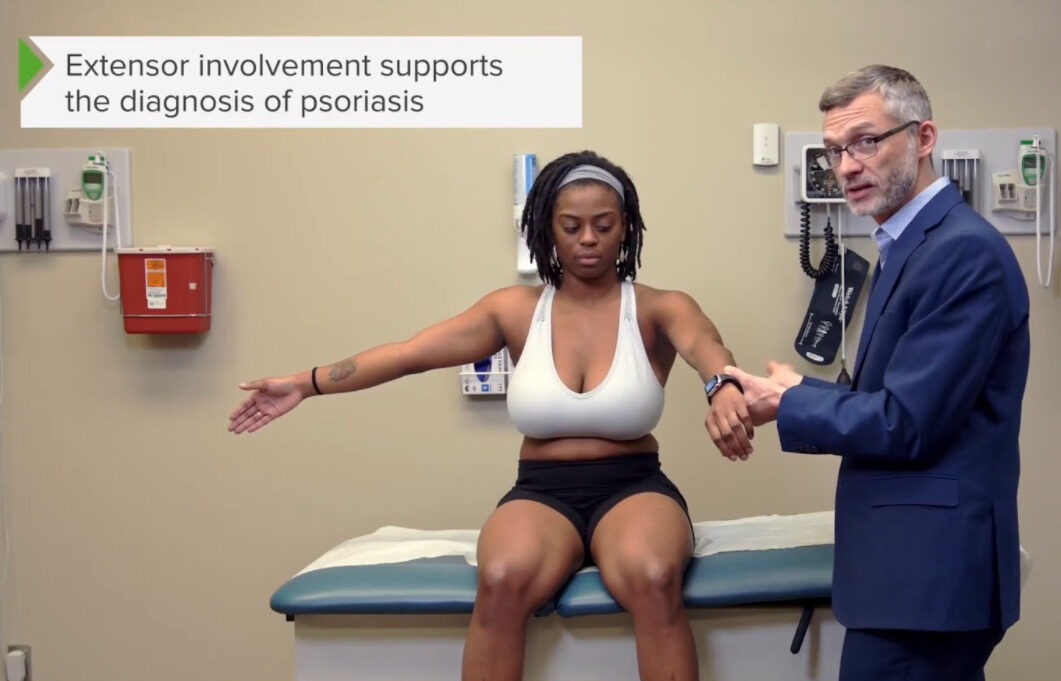
Examen Dermatológico

El examen de la piel es una parte fundamental del examen físico estándar. Este examen consiste en EN Erythema nodosum is an immune-mediated panniculitis (inflammation of the subcutaneous fat) caused by a type IV (delayed-type) hypersensitivity reaction. It commonly manifests in young women as tender, erythematous nodules on the shins. Erythema Nodosum una inspección minuciosa de la piel de todo el cuerpo. La evaluación se centra en EN Erythema nodosum is an immune-mediated panniculitis (inflammation of the subcutaneous fat) caused by a type IV (delayed-type) hypersensitivity reaction. It commonly manifests in young women as tender, erythematous nodules on the shins. Erythema Nodosum identificar signos anormales en EN Erythema nodosum is an immune-mediated panniculitis (inflammation of the subcutaneous fat) caused by a type IV (delayed-type) hypersensitivity reaction. It commonly manifests in young women as tender, erythematous nodules on the shins. Erythema Nodosum la piel, como el cuero cabelludo, los LOS Neisseria orificios, las uñas y las superficies mucosas. Los LOS Neisseria hallazgos dermatológicos pueden representar procesos localizados o pueden ser un signo de enfermedad sistémica.

Last updated: Dec 15, 2025

Editorial responsibility: Stanley Oiseth, Lindsay Jones, Evelin Maza

Terminología

Lesiones cutáneas primarias y secundarias

Las lesiones cutáneas primarias ocurren como resultado directo de un proceso patológico, mientras que las lesiones cutáneas secundarias son aquellas que resultan de la manipulación de la piel.

Tabla: Lesiones cutáneas primarias
Lesión cutánea primaria Descripción
Mácula
  • Lesión cutánea plana no palpable de ≤ 1 cm de tamaño
  • Difiere en EN Erythema nodosum is an immune-mediated panniculitis (inflammation of the subcutaneous fat) caused by a type IV (delayed-type) hypersensitivity reaction. It commonly manifests in young women as tender, erythematous nodules on the shins. Erythema Nodosum color de la piel circundante
Pápula Lesión cutánea pequeña palpable ≤ 1 cm de diámetro
Placa Lesión palpable, elevada > 1 cm
Nódulo
  • Lesión elevada
  • > 1 cm de diámetro y profundidad
Vesícula Ampolla pequeña que contiene líquido ≤ 1 cm de diámetro
Bulla Bulla Blister filled with fluid, > 1 cm diameter Generalized and Localized Rashes Ampolla grande que contiene líquido > 1 cm de diámetro
Pústula Vesícula llena de pus
Tabla: Lesiones cutáneas secundarias
Lesiones cutáneas secundarias Descripción
Escama
  • Estrato córneo engrosado
  • Delgada, escamosa, seca y blanca
Costra Exudados secos, como pus o sangre
Fisura
  • Grieta lineal a través de la epidermis Epidermis The external, nonvascular layer of the skin. It is made up, from within outward, of five layers of epithelium: (1) basal layer (stratum basale epidermidis); (2) spinous layer (stratum spinosum epidermidis); (3) granular layer (stratum granulosum epidermidis); (4) clear layer (stratum lucidum epidermidis); and (5) horny layer (stratum corneum epidermidis). Skin: Structure and Functions que se extiende hasta la dermis Dermis A layer of vascularized connective tissue underneath the epidermis. The surface of the dermis contains innervated papillae. Embedded in or beneath the dermis are sweat glands; hair follicles; and sebaceous glands. Skin: Structure and Functions
  • Pérdida de continuidad de la piel
Úlcera
  • Rompe la continuidad del epitelio
  • Ocurre debido a la pérdida de epidermis Epidermis The external, nonvascular layer of the skin. It is made up, from within outward, of five layers of epithelium: (1) basal layer (stratum basale epidermidis); (2) spinous layer (stratum spinosum epidermidis); (3) granular layer (stratum granulosum epidermidis); (4) clear layer (stratum lucidum epidermidis); and (5) horny layer (stratum corneum epidermidis). Skin: Structure and Functions y dermis Dermis A layer of vascularized connective tissue underneath the epidermis. The surface of the dermis contains innervated papillae. Embedded in or beneath the dermis are sweat glands; hair follicles; and sebaceous glands. Skin: Structure and Functions
Erosión
  • Lesión deprimida circunscrita por pérdida de epidermis Epidermis The external, nonvascular layer of the skin. It is made up, from within outward, of five layers of epithelium: (1) basal layer (stratum basale epidermidis); (2) spinous layer (stratum spinosum epidermidis); (3) granular layer (stratum granulosum epidermidis); (4) clear layer (stratum lucidum epidermidis); and (5) horny layer (stratum corneum epidermidis). Skin: Structure and Functions
  • Cura sin dejar cicatrices
Necrosis Necrosis The death of cells in an organ or tissue due to disease, injury or failure of the blood supply. Ischemic Cell Damage Tejido de piel muerta
Atrofia
  • Adelgazamiento de la piel
  • La piel se vuelve brillante y arrugada
Cicatriz Reemplazo de la piel con tejido fibroso y conectivo como resultado de la destrucción
Liquenificación
  • Engrosamiento de la piel
  • Apariencia coriácea

Lesiones cutáneas especiales

  • Comedones Comedones Acne Vulgaris: folículos pilosos dilatados con detritos como queratina, sebo y bacterias (puntos negros)
  • Madriguera: túnel marcado por líneas elevadas, lo que sugiere una infección por escabiosis
  • Alopecia Alopecia Alopecia is the loss of hair in areas anywhere on the body where hair normally grows. Alopecia may be defined as scarring or non-scarring, localized or diffuse, congenital or acquired, reversible or permanent, or confined to the scalp or universal; however, alopecia is usually classified using the 1st 3 factors. Alopecia: caída del cabello
  • Telangiectasia Telangiectasia Permanent dilation of preexisting blood vessels creating small focal red lesions, most commonly in the skin or mucous membranes. It is characterized by the prominence of skin blood vessels, such as vascular spiders. Chronic Venous Insufficiency: vasos sanguíneos superficiales y pequeños
  • Petequias: hematoma Hematoma A collection of blood outside the blood vessels. Hematoma can be localized in an organ, space, or tissue. Intussusception < 3 mm
  • Púrpura: hematoma Hematoma A collection of blood outside the blood vessels. Hematoma can be localized in an organ, space, or tissue. Intussusception entre 3 mm y 10 mm
  • Equimosis: hematoma Hematoma A collection of blood outside the blood vessels. Hematoma can be localized in an organ, space, or tissue. Intussusception > 1 cm

Examen Clínico

Pasos iniciales

  • Obtenga el consentimiento informado:
    • Explique la necesidad del examen
    • Describa los LOS Neisseria pasos del examen
    • Asegúrese de que la persona comprenda bien el examen y esté de acuerdo con continuar
  • Pídale a la persona que se desvista hasta quedar en EN Erythema nodosum is an immune-mediated panniculitis (inflammation of the subcutaneous fat) caused by a type IV (delayed-type) hypersensitivity reaction. It commonly manifests in young women as tender, erythematous nodules on the shins. Erythema Nodosum ropa interior; tenga un acompañante presente.

Componentes

  • Examen de piel y superficies mucosas:
    • Inspección
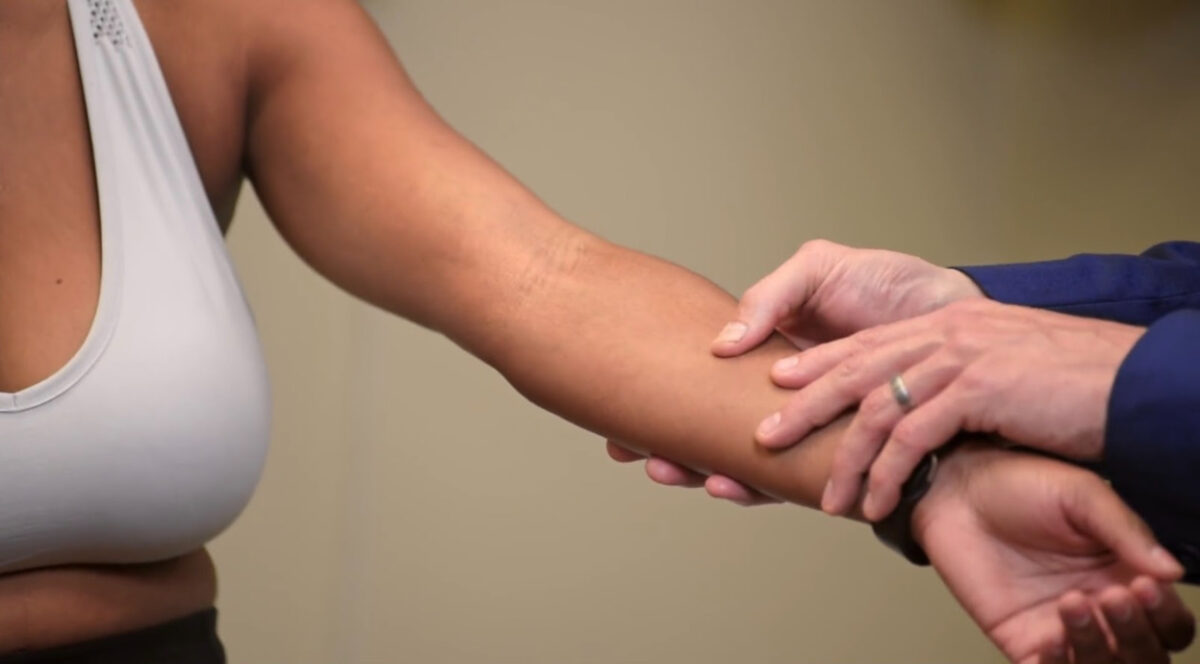
    • Palpación
    • Pruebas especiales
  • Examen del cabello:
    • Inspección
    • Prueba del tirón de cabello
  • Examen de las uñas:
    • Inspección
    • Palpación

Examen de la Piel y las Superficies Mucosas

Todas las superficies cutáneas y mucosas deben examinarse con buena luz. Use guantes, especialmente si la piel está lesionada.
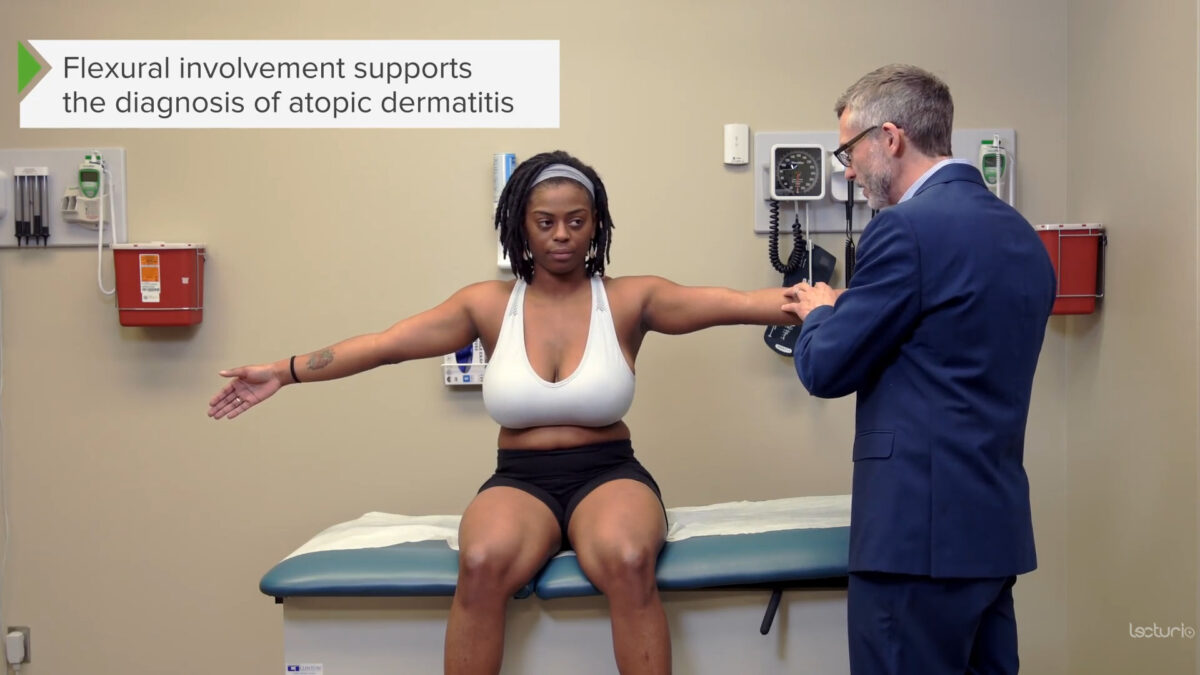
Inspección

  • Apariencia:
    • Sitio de la lesión
    • Número de lesiones
    • Tamaño de la lesión
    • Configuración
      • Lineal
      • Anular (circular con claro central)
      • Agrupadas
    • Morfología
    • Color
    • Presencia de escamas o costras
  • Distribución:
    • Difusa o localizada
    • Simétrica o asimétrica
    • Por dermatoma
    • Agrupados o en EN Erythema nodosum is an immune-mediated panniculitis (inflammation of the subcutaneous fat) caused by a type IV (delayed-type) hypersensitivity reaction. It commonly manifests in young women as tender, erythematous nodules on the shins. Erythema Nodosum conjunto
    • Afectación de la mucosa
    • Sitios atípicos (e.g., palmas y plantas)

Palpación

  • Lesional:
    • Sensibilidad
    • Calor Calor Inflammation
    • Consistencia
      • Dura
      • Firme
      • Fluctuante
    • Elevadas
    • Planas
    • Cambios de textura
    • Induración
    • Blanqueamiento con digitopresión
  • Examen de los LOS Neisseria ganglios linfáticos regionales

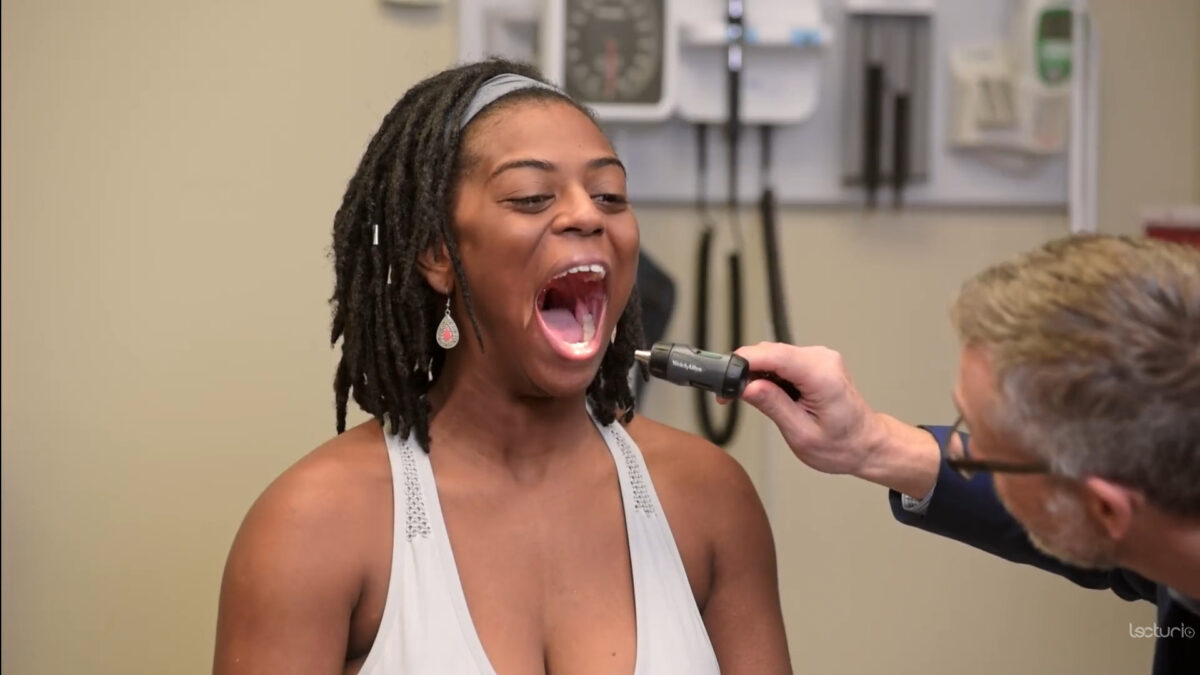
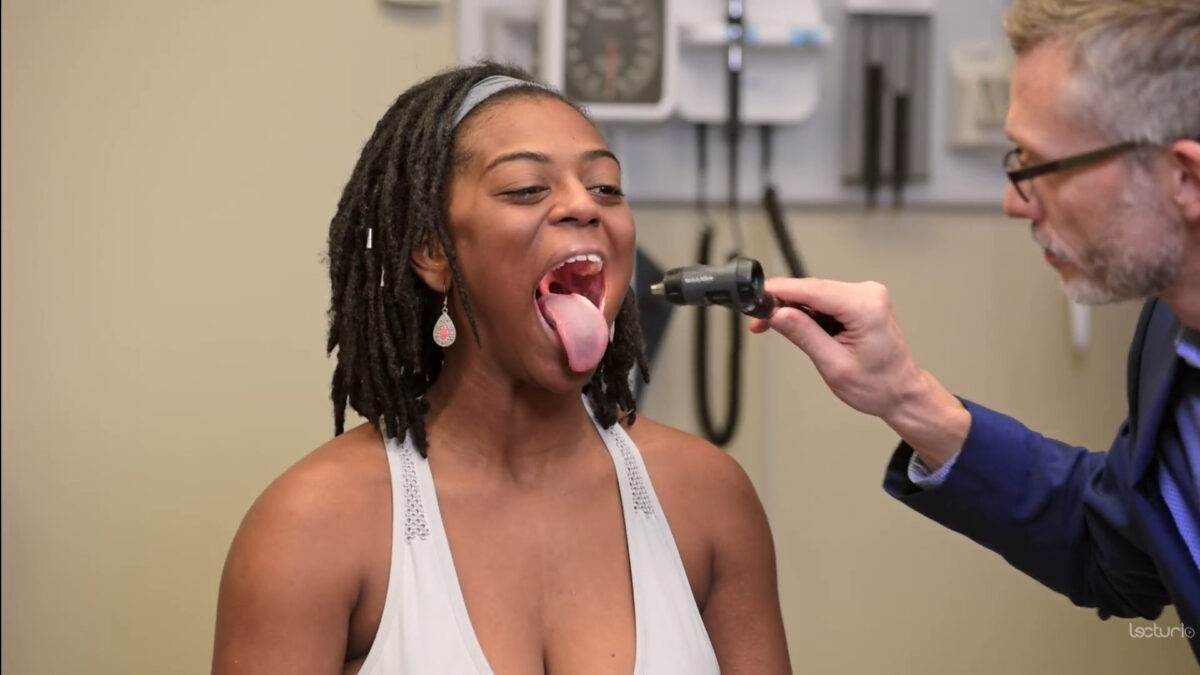
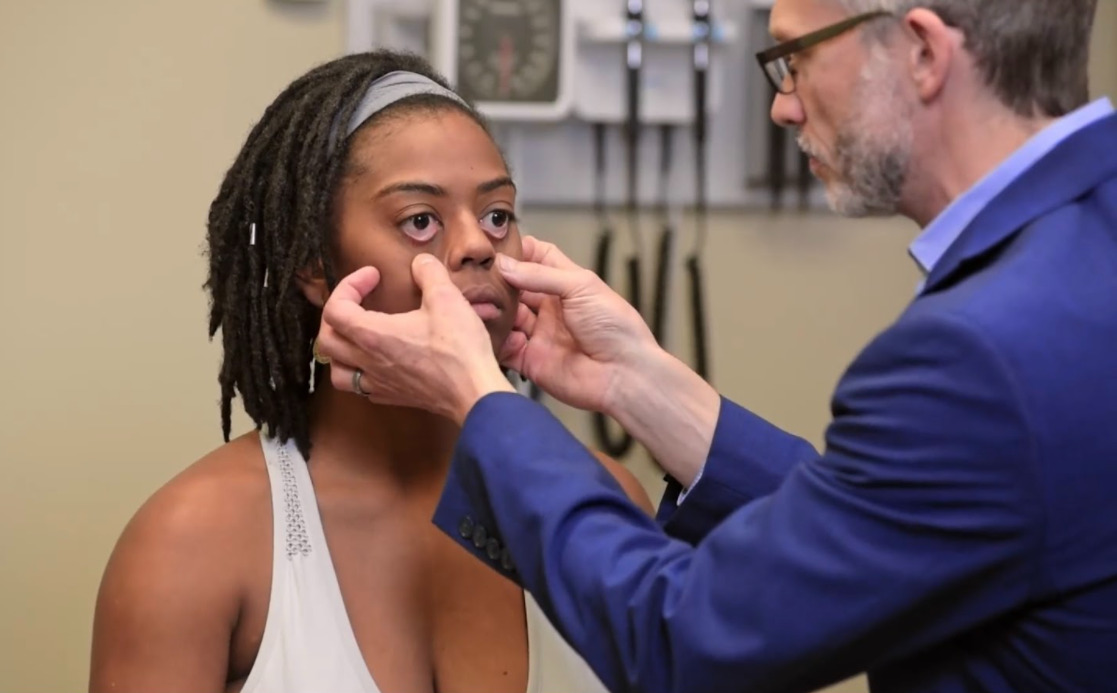
Examen de superficies mucosas

  • Cavidad bucal: superficie bucal, paladar y lengua
  • Conjuntiva
  • Si los LOS Neisseria antecedentes sexuales son positivos, examine el sistema genital.

Pruebas especiales

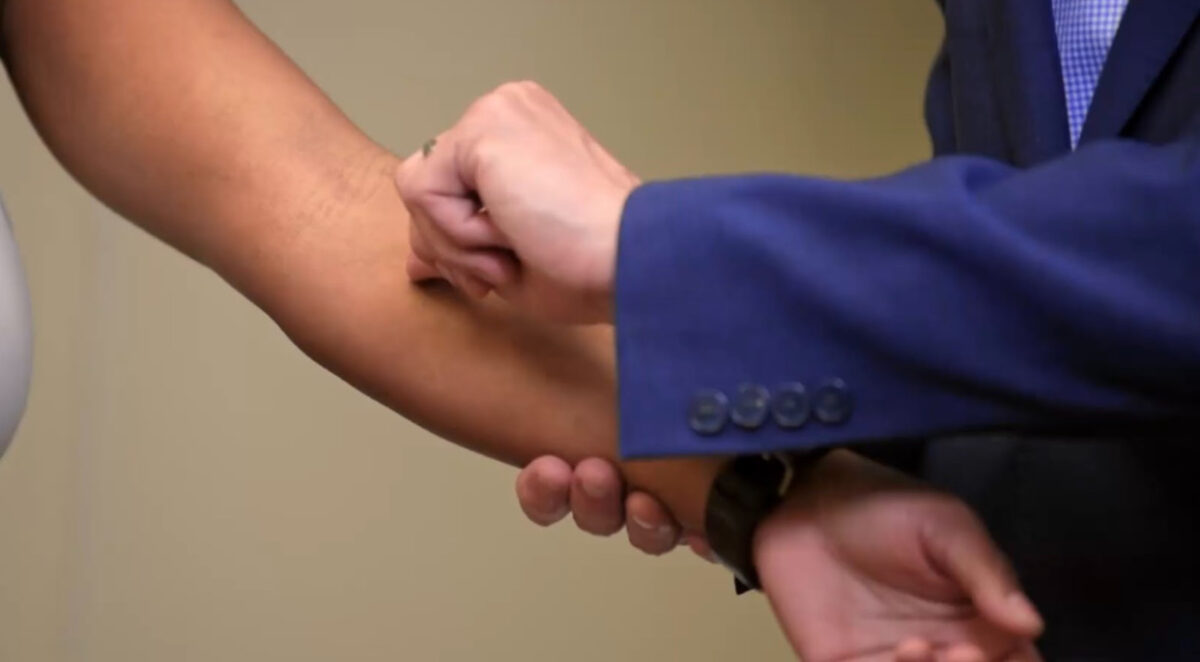
  • Signo de Nikolsky:
    • Se realiza frotando la superficie de la piel
    • Si es positivo, la capa superior delgada de la piel se desprende, dejando una piel sensible y rosada.
    • El signo positivo indica una afección con ampollas (e.g., pénfigo vulgar).
  • Dermografismo:
    • Implica acariciar la superficie de la piel, lo que resulta en EN Erythema nodosum is an immune-mediated panniculitis (inflammation of the subcutaneous fat) caused by a type IV (delayed-type) hypersensitivity reaction. It commonly manifests in young women as tender, erythematous nodules on the shins. Erythema Nodosum urticaria Urticaria Urticaria is raised, well-circumscribed areas (wheals) of edema (swelling) and erythema (redness) involving the dermis and epidermis with associated pruritus (itch). Urticaria is not a single disease but rather is a reaction pattern representing cutaneous mast cell degranulation. Urticaria (Hives)
    • Suele ser positivo en EN Erythema nodosum is an immune-mediated panniculitis (inflammation of the subcutaneous fat) caused by a type IV (delayed-type) hypersensitivity reaction. It commonly manifests in young women as tender, erythematous nodules on the shins. Erythema Nodosum afecciones como la urticaria Urticaria Urticaria is raised, well-circumscribed areas (wheals) of edema (swelling) and erythema (redness) involving the dermis and epidermis with associated pruritus (itch). Urticaria is not a single disease but rather is a reaction pattern representing cutaneous mast cell degranulation. Urticaria (Hives)

Examen del Cabello

Evalúe el cabello cuidadosamente, buscando cualquier cambio con respecto a la línea de base del individuo.
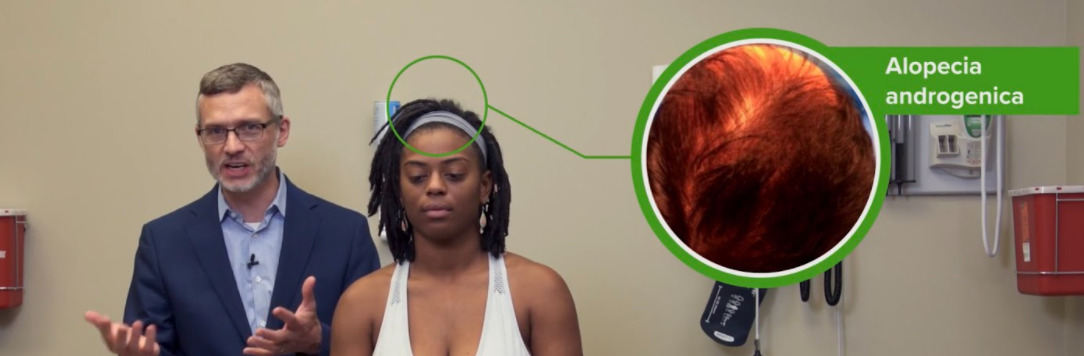
  • Textura
  • Color
  • Cantidad
  • Distribución
  • Parches/lesiones cutáneas del cuero cabelludo
  • Alopecia Alopecia Alopecia is the loss of hair in areas anywhere on the body where hair normally grows. Alopecia may be defined as scarring or non-scarring, localized or diffuse, congenital or acquired, reversible or permanent, or confined to the scalp or universal; however, alopecia is usually classified using the 1st 3 factors. Alopecia
    • Difusa
    • En EN Erythema nodosum is an immune-mediated panniculitis (inflammation of the subcutaneous fat) caused by a type IV (delayed-type) hypersensitivity reaction. It commonly manifests in young women as tender, erythematous nodules on the shins. Erythema Nodosum parches
    • En EN Erythema nodosum is an immune-mediated panniculitis (inflammation of the subcutaneous fat) caused by a type IV (delayed-type) hypersensitivity reaction. It commonly manifests in young women as tender, erythematous nodules on the shins. Erythema Nodosum patrón de adelgazamiento
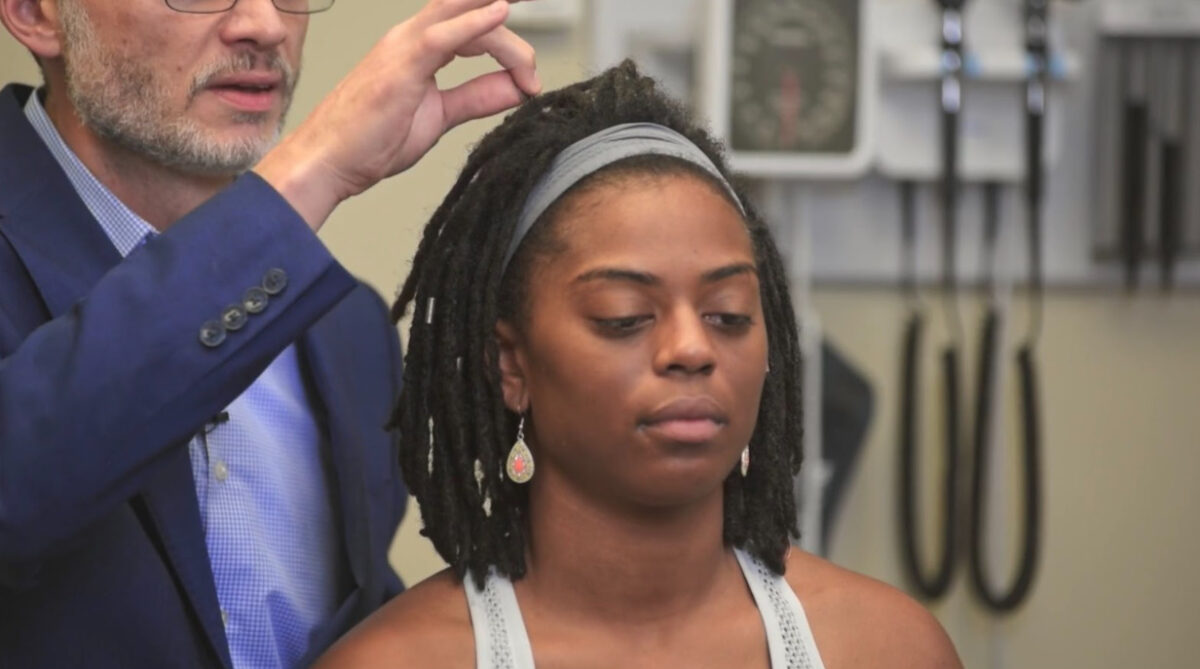
  • Prueba del tirón de cabello
    • Se realiza para demostrar la gravedad de la alopecia Alopecia Alopecia is the loss of hair in areas anywhere on the body where hair normally grows. Alopecia may be defined as scarring or non-scarring, localized or diffuse, congenital or acquired, reversible or permanent, or confined to the scalp or universal; however, alopecia is usually classified using the 1st 3 factors. Alopecia
    • Agarre alrededor de 60 mechones de cabello, tire suavemente; > de 3–5 mechones de cabello que salen indica una pérdida activa del cabello.
Tabla: Afecciones habituales asociadas a la alopecia Alopecia Alopecia is the loss of hair in areas anywhere on the body where hair normally grows. Alopecia may be defined as scarring or non-scarring, localized or diffuse, congenital or acquired, reversible or permanent, or confined to the scalp or universal; however, alopecia is usually classified using the 1st 3 factors. Alopecia
Enfermedad Descripción
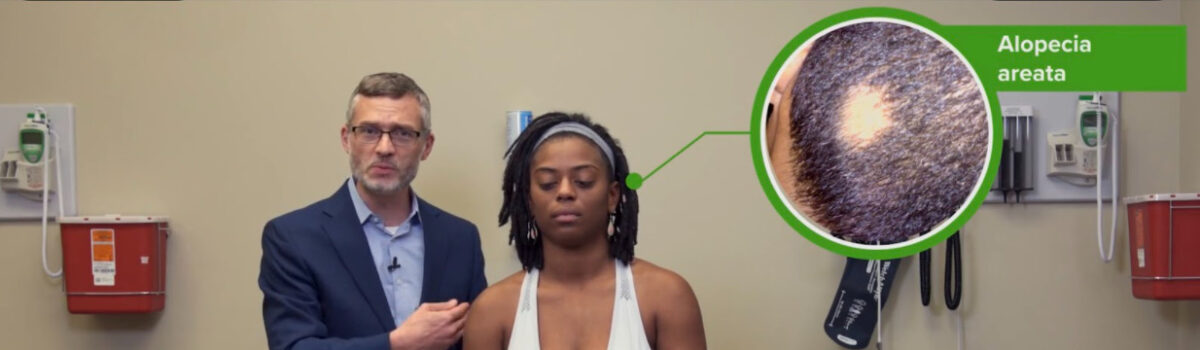
Alopecia areata Alopecia Areata Loss of scalp and body hair involving microscopically inflammatory patchy areas. Alopecia
  • Trastorno autoinmune que afecta tanto a hombres como a mujeres
  • Áreas circulares de caída total del cabello
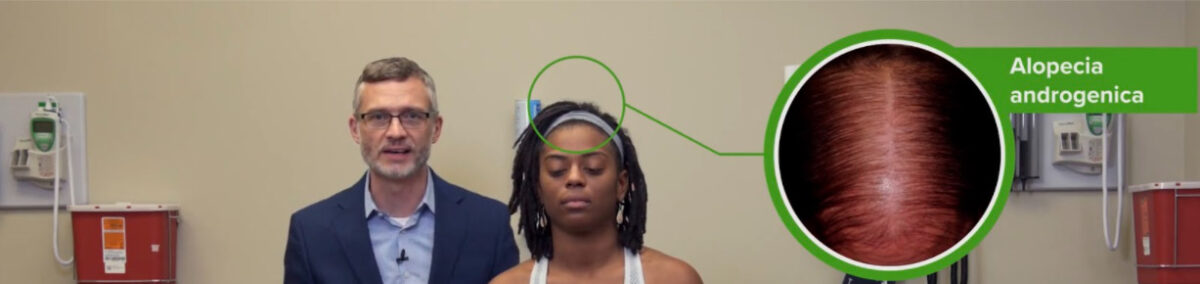
Alopecia Alopecia Alopecia is the loss of hair in areas anywhere on the body where hair normally grows. Alopecia may be defined as scarring or non-scarring, localized or diffuse, congenital or acquired, reversible or permanent, or confined to the scalp or universal; however, alopecia is usually classified using the 1st 3 factors. Alopecia androgénica
  • Calvicie de patrón masculino o femenino
  • Debido a una combinación de factores genéticos y hormonales
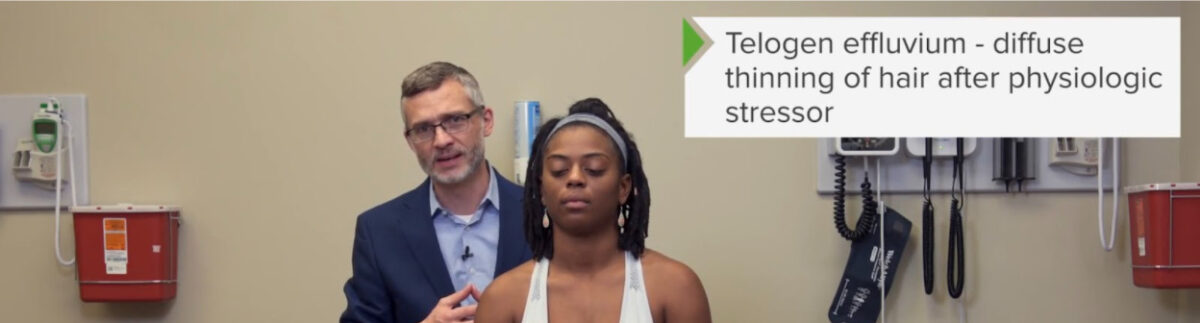
Efluvio telógeno
  • Pérdida temporal del cabello debido a la caída excesiva del cabello en EN Erythema nodosum is an immune-mediated panniculitis (inflammation of the subcutaneous fat) caused by a type IV (delayed-type) hypersensitivity reaction. It commonly manifests in young women as tender, erythematous nodules on the shins. Erythema Nodosum reposo después de eventos estresantes agudos
  • Forma de caída difusa del cabello que no deja cicatrices

Examen de las Uñas

Inspeccione y palpe las uñas con cuidado, buscando cualquier cambio.

  • Descoloramiento
  • Simetría
  • Forma anormal
  • Anormalidades en EN Erythema nodosum is an immune-mediated panniculitis (inflammation of the subcutaneous fat) caused by a type IV (delayed-type) hypersensitivity reaction. It commonly manifests in young women as tender, erythematous nodules on the shins. Erythema Nodosum la superficie de la placa de la uña
  • Pérdida completa de uñas
  • Separación de la uña distal (onicolisis)
  • Lesiones alrededor de las uñas
Tabla: Hallazgos comunes en EN Erythema nodosum is an immune-mediated panniculitis (inflammation of the subcutaneous fat) caused by a type IV (delayed-type) hypersensitivity reaction. It commonly manifests in young women as tender, erythematous nodules on the shins. Erythema Nodosum las uñas
Hallazgos clínicos Descripción Posible etiología subyacente
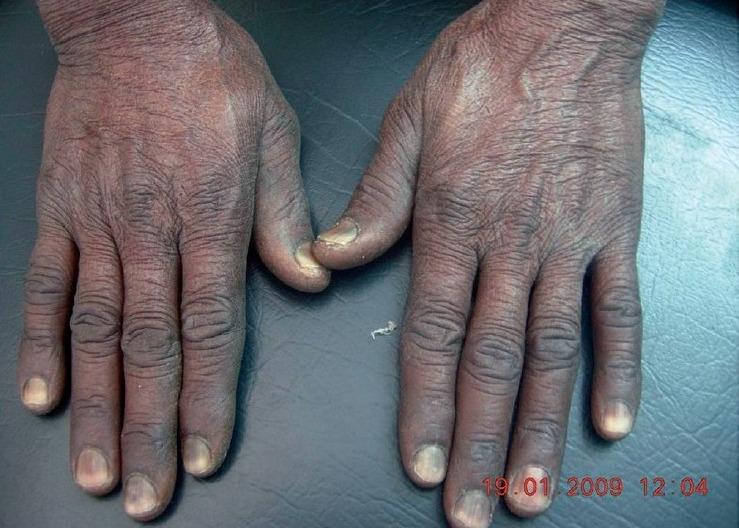
Dedos en EN Erythema nodosum is an immune-mediated panniculitis (inflammation of the subcutaneous fat) caused by a type IV (delayed-type) hypersensitivity reaction. It commonly manifests in young women as tender, erythematous nodules on the shins. Erythema Nodosum palillo de tambor Pérdida de ángulo entre el pliegue ungueal y la placa ungueal
  • Cardíaca: insuficiencia cardíaca crónica
  • Enfermedad inflamatoria intestinal
  • Enfermedades del hígado
  • Fibrosis Fibrosis Any pathological condition where fibrous connective tissue invades any organ, usually as a consequence of inflammation or other injury. Bronchiolitis Obliterans pulmonar
Onicolisis Separación distal de la uña
  • Psoriasis Psoriasis Psoriasis is a common T-cell-mediated inflammatory skin condition. The etiology is unknown, but is thought to be due to genetic inheritance and environmental triggers. There are 4 major subtypes, with the most common form being chronic plaque psoriasis. Psoriasis
  • Infección por hongos
  • Traumatismo
Depresiones en EN Erythema nodosum is an immune-mediated panniculitis (inflammation of the subcutaneous fat) caused by a type IV (delayed-type) hypersensitivity reaction. It commonly manifests in young women as tender, erythematous nodules on the shins. Erythema Nodosum las uñas
  • Psoriasis Psoriasis Psoriasis is a common T-cell-mediated inflammatory skin condition. The etiology is unknown, but is thought to be due to genetic inheritance and environmental triggers. There are 4 major subtypes, with the most common form being chronic plaque psoriasis. Psoriasis
  • Eczema Eczema Atopic dermatitis, also known as eczema, is a chronic, relapsing, pruritic, inflammatory skin disease that occurs more frequently in children, although adults can also be affected. The condition is often associated with elevated serum levels of IgE and a personal or family history of atopy. Skin dryness, erythema, oozing, crusting, and lichenification are present. Atopic Dermatitis (Eczema)
Coiloniquia Depresión en EN Erythema nodosum is an immune-mediated panniculitis (inflammation of the subcutaneous fat) caused by a type IV (delayed-type) hypersensitivity reaction. It commonly manifests in young women as tender, erythematous nodules on the shins. Erythema Nodosum forma de cuchara Anemia Anemia Anemia is a condition in which individuals have low Hb levels, which can arise from various causes. Anemia is accompanied by a reduced number of RBCs and may manifest with fatigue, shortness of breath, pallor, and weakness. Subtypes are classified by the size of RBCs, chronicity, and etiology. Anemia: Overview and Types por deficiencia de hierro
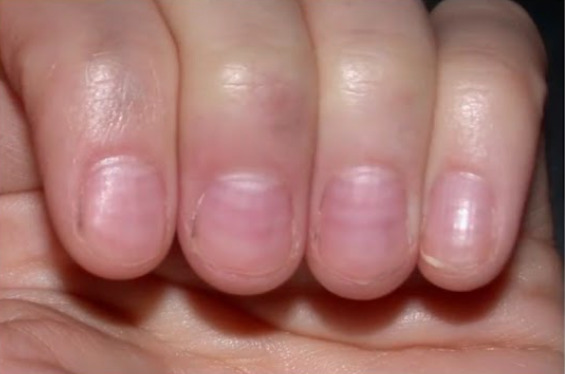
Líneas de Mees Rayas blancas
  • Intoxicación por metales pesados
  • Insuficiencia renal
  • Quimioterapia
Uñas quebradizas Hipotiroidismo
Síndrome de la uña amarilla
  • Enfermedad pulmonar
  • Artritis reumatoide
Uñas de felpa Banda proximal roja/marrón en EN Erythema nodosum is an immune-mediated panniculitis (inflammation of the subcutaneous fat) caused by a type IV (delayed-type) hypersensitivity reaction. It commonly manifests in young women as tender, erythematous nodules on the shins. Erythema Nodosum la placa de la uña
  • Insuficiencia cardíaca
  • Enfermedades hepáticas
Uñas mitad y mitad Nefropatía
Líneas de Muehrcke Líneas blancas dobles Hipoalbuminemia

Relevancia Clínica

Tabla: Afecciones dermatológicas frecuentes
Psoriasis Psoriasis Psoriasis is a common T-cell-mediated inflammatory skin condition. The etiology is unknown, but is thought to be due to genetic inheritance and environmental triggers. There are 4 major subtypes, with the most common form being chronic plaque psoriasis. Psoriasis Dermatitis Dermatitis Any inflammation of the skin. Atopic Dermatitis (Eczema) atópica Acné común Infecciones por hongos
Apariencia
  • Placas de color salmón
  • Escamas gruesas y plateadas
  • Pruriginosa
  • Liquenificada (engrosamiento de la piel)
  • Placas rosadas con escamas
  • Intensamente pruriginosa
  • Pruriginosa
  • Placas eritematosas
  • Borde con escamas
Distribución Simétrica, superficies extensoras Superficies flexoras Cara, cuello, tórax y espalda
Hallazgos asociados Signo de Auspitz: hemorragia puntiforme con eliminación de escamas Antecedentes de atopia ( asma ASMA Autoimmune Hepatitis y alergias estacionales) Cicatrización/hiperpigmentación Confirmado por preparación de KOH

Referencias

  1. Cole, J.M., Gray-Miceli, D. (2002). Necessary elements of a dermatologic history and physical evaluation. Dermatology Nursing. 14(6). Retrieved October 23, 2021, from https://www.medscape.com/viewarticle/447729
  2. DermNet NZ. (2008). Principles of dermatological practice—examination of the skin. Retrieved October 23, 2021, from https://www.dermnetnz.org/cme/principles/examination-of-the-skin/
  3. Armstrong, C.A. (2021). Approach to the clinical dermatologic diagnosis. UpToDate. Retrieved October 23, 2021, from https://www.uptodate.com/contents/approach-to-the-clinical-dermatologic-diagnosis
  4. Stanford Medicine. (n.a.) The hand examination. Retrieved October 23, 2021, from https://stanfordmedicine25.stanford.edu/the25/hand.html

¡Crea tu cuenta gratis o inicia una sesión para seguir leyendo!

Regístrate ahora y obtén acceso gratuito a Lecturio con páginas de concepto, videos médicos y cuestionarios para tu educación médica.

User Reviews

Que tengas una sesión de estudio alegre y navideña 🎁 Ahorra 50% en todos los planes >>

Details