
Domina Conceptos Médicos

Estudia para la escuela de medicina y tus examenes con Lecturio.

Escherichia Coli Diarreogénica

Las Escherichia coli Escherichia coli The gram-negative bacterium Escherichia coli is a key component of the human gut microbiota. Most strains of E. coli are avirulent, but occasionally they escape the GI tract, infecting the urinary tract and other sites. Less common strains of E. coli are able to cause disease within the GI tract, most commonly presenting as abdominal pain and diarrhea. Escherichia coli diarreogénicas son una cepa de bacterias patógenas que puede causar infecciones intestinales. La transmisión se produce principalmente por el consumo de alimentos o agua contaminados, el contacto con personas o animales infectados y el baño en EN Erythema nodosum is an immune-mediated panniculitis (inflammation of the subcutaneous fat) caused by a type IV (delayed-type) hypersensitivity reaction. It commonly manifests in young women as tender, erythematous nodules on the shins. Erythema Nodosum aguas no tratadas. La patogénesis varía en EN Erythema nodosum is an immune-mediated panniculitis (inflammation of the subcutaneous fat) caused by a type IV (delayed-type) hypersensitivity reaction. It commonly manifests in young women as tender, erythematous nodules on the shins. Erythema Nodosum función de la cepa, pero puede incluir la producción de toxinas, la invasión de la superficie de la mucosa y la adhesión con alteración de la estructura de los LOS Neisseria enterocitos. La enfermedad no invasiva suele presentarse con diarrea acuosa, mientras que las infecciones invasivas provocan diarrea sanguinolenta. El diagnóstico puede establecerse con la reacción en EN Erythema nodosum is an immune-mediated panniculitis (inflammation of the subcutaneous fat) caused by a type IV (delayed-type) hypersensitivity reaction. It commonly manifests in young women as tender, erythematous nodules on the shins. Erythema Nodosum cadena de la polimerasa. El tratamiento suele consistir en EN Erythema nodosum is an immune-mediated panniculitis (inflammation of the subcutaneous fat) caused by a type IV (delayed-type) hypersensitivity reaction. It commonly manifests in young women as tender, erythematous nodules on the shins. Erythema Nodosum terapia de soporte (líquidos y electrolitos). Los LOS Neisseria antibióticos se reservan para las infecciones graves o persistentes y están contraindicados con E. coli enterohemorrágica por el riesgo de síndrome urémico hemolítico.

Last updated: Dec 15, 2025
Editorial responsibility: Stanley Oiseth, Lindsay Jones, Evelin Maza

Descripción General

Microbiología

  • La Escherichia coli Escherichia coli The gram-negative bacterium Escherichia coli is a key component of the human gut microbiota. Most strains of E. coli are avirulent, but occasionally they escape the GI tract, infecting the urinary tract and other sites. Less common strains of E. coli are able to cause disease within the GI tract, most commonly presenting as abdominal pain and diarrhea. Escherichia coli es una bacteria Bacteria Bacteria are prokaryotic single-celled microorganisms that are metabolically active and divide by binary fission. Some of these organisms play a significant role in the pathogenesis of diseases. Bacteriology (bacilo) gramnegativa.
  • Familia: Enterobacteriaceae Enterobacteriaceae A family of gram-negative, facultatively anaerobic, rod-shaped bacteria that do not form endospores. Its organisms are distributed worldwide with some being saprophytes and others being plant and animal parasites. Many species are of considerable economic importance due to their pathogenic effects on agriculture and livestock. Cephalosporins
  • Características:
    • Fermenta la lactosa
    • Anaerobia facultativa
    • Oxidasa negativa
    • Catalasa-positiva
  • La mayoría de las cepas son inofensivas y:
    • Ayudan a la síntesis de las vitaminas K y B12
    • Protegen contra la colonización de organismos patógenos
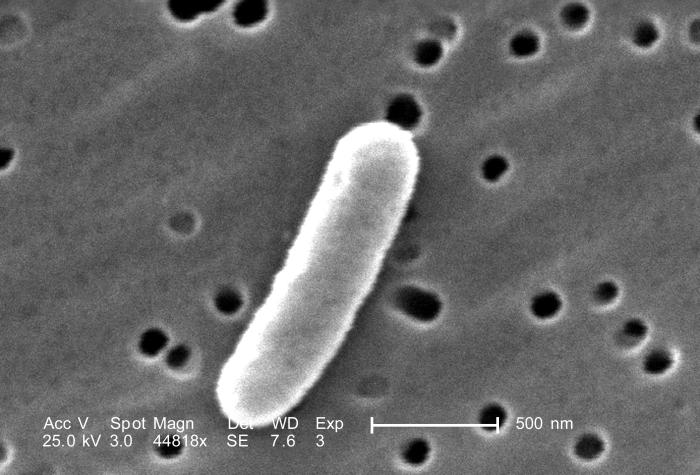
Imagen de microscopio electrónico de barrido de Escherichia coli enterotoxigénica

Imagen de microscopio electrónico de barrido de Escherichia coli enterotoxigénica

Imagen: “Under an extremely high magnification of 44, 818X, twice that of PHIL 10574 and 10575, this scanning electron microscopic (SEM) image revealed some of the morphologic details displayed by a single Gram-negative, rod-shaped, Escherichia coli bacterium.” por Janice Haney Carr. Licencia: Dominio Público

Cepas patógenas de E. coli

Las cepas diarreagénicas de E. coli pueden clasificarse en 5 “patotipos” clave, cada uno de los LOS Neisseria cuales tiene factores de virulencia y mecanismos patológicos únicos:

  • E. coli enterotoxigénica
  • E. coli enteropatogénica
  • E. coli enteroagregativa
  • E. coli enteroinvasiva
  • E. coli enterohemorrágica

Transmisión

  • Vía fecal-oral
  • Carne o productos contaminados
  • Agua contaminada
Tabla: Comparación de las cepas de E. coli
Patógeno ¿Invasiva? ¿Toxina? Tipo de diarrea
E. coli enterotoxigénica No
  • Enterotoxina termolábil
  • Enterotoxina termoestable
  • No inflamatoria
  • Acuosa
E. coli enteropatogénica No No
  • Inflamatoria leve
  • Acuosa
E. coli enteroagregativa No
  • Algunos tienen enterotoxina termoestable.
  • Alfa-hemolisina
  • Inflamatoria leve
  • Acuosa
E. coli enteroinvasiva
  • Enterotoxinas
  • Citotoxinas
  • Inflamatoria
  • Sanguinolenta
E. coli enterohemorrágica Toxina Shiga
  • Inflamatoria
  • Sanguinolenta

E. coli Enterotoxigénica

Epidemiología

  • La causa más común de la diarrea del viajero
  • > 200 millones de casos/año

Fisiopatología

La E. coli enterotoxigénica es un patógeno no invasivo. Utiliza las adhesinas en EN Erythema nodosum is an immune-mediated panniculitis (inflammation of the subcutaneous fat) caused by a type IV (delayed-type) hypersensitivity reaction. It commonly manifests in young women as tender, erythematous nodules on the shins. Erythema Nodosum sus fimbrias para unirse a los LOS Neisseria enterocitos del intestino delgado y produce las siguientes enterotoxinas:
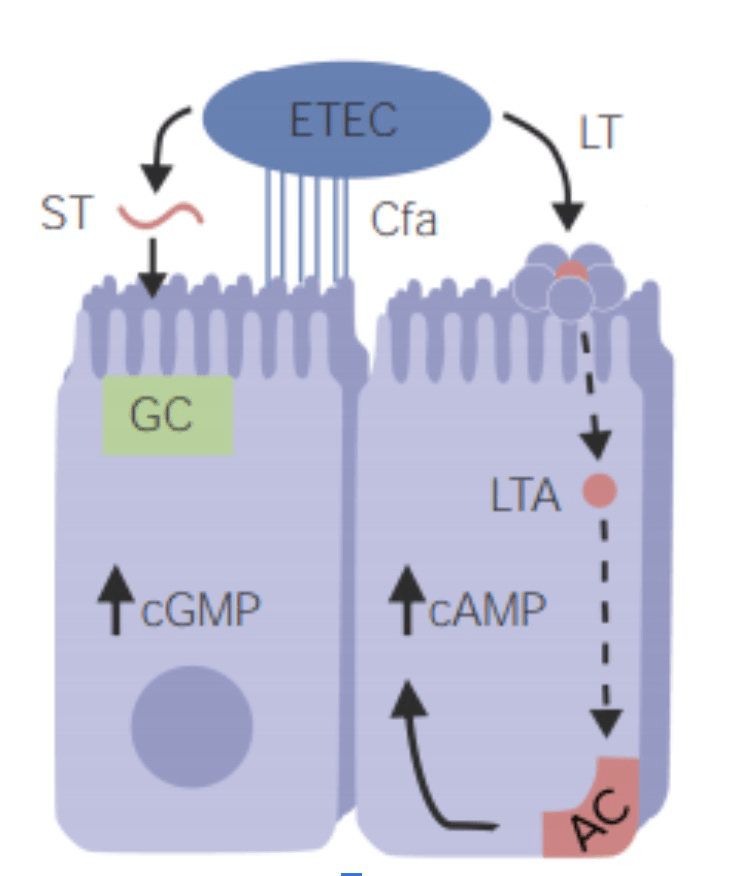
  • Enterotoxina termoestable:
    • Activa la guanilato ciclasa → ↑ guanosina monofosfato cíclico intracelular
    • ↑ Secreción de cloruro y ↓ absorción de NaCl → eflujo de agua hacia la luz intestinal → diarrea acuosa.
  • Enterotoxina termolábil:
    • Activa la adenilato ciclasa → ↑ adenosina monofosfato cíclico intracelular
    • ↑ Secreción de cloruro y ↓ absorción de NaCl → salida de agua hacia la luz intestinal → diarrea acuosa.
    • Similar a la toxina del cólera (menos grave)
ETEC Pathogenesis

Patogénesis de la Escherichia coli enterotoxigénica (ETEC, por sus siglas en inglés):
La E. coli enterotoxigénica se adhiere a los enterocitos a través del antígeno del factor de colonización (CFA, por sus siglas en inglés); adhesina fimbrial. La enterotoxina termoestable (ST) provoca la acumulación de guanosina monofosfato cíclico (cGMP, por sus siglas en inglés) en las células y la secreción de líquido y electrolitos en la luz intestinal. La enterotoxina termolábil (LT) actúa como la toxina del cólera, que aumenta el monofosfato de adenosina cíclico (cAMP, por sus siglas en inglés) mediante la activación de la adenil ciclasa (AC). El efecto general es la hipersecreción de agua y cloruro y la inhibición de la reabsorción de sodio. Las enterotoxinas no invasivas permanecen en la luz intestinal y no invaden las células epiteliales.br>GC: guanilil ciclasa
LTA: Una subunidad de la enterotoxina termolábil

Imagen por Lecturio.

Presentación Clínica

  • Evolución de la enfermedad:
    • Periodo de incubación: 1–3 días
    • Duración de los LOS Neisseria síntomas: 1–5 días
  • Características clínicas:
    • Diarrea secretora aguda:
      • Acuosa
      • Ocasionalmente, severa
    • Cólicos abdominales
    • Náuseas ( los LOS Neisseria vómitos son menos frecuentes)

Diagnóstico

Esta enfermedad es autolimitada, por lo que no suele ser necesario un estudio diagnóstico. Sin embargo, la E. coli enterotoxigénica puede diagnosticarse mediante la identificación de los LOS Neisseria genes Genes A category of nucleic acid sequences that function as units of heredity and which code for the basic instructions for the development, reproduction, and maintenance of organisms. DNA Types and Structure enterotoxina termolábil o enterotoxina termoestable en EN Erythema nodosum is an immune-mediated panniculitis (inflammation of the subcutaneous fat) caused by a type IV (delayed-type) hypersensitivity reaction. It commonly manifests in young women as tender, erythematous nodules on the shins. Erythema Nodosum la reacción en EN Erythema nodosum is an immune-mediated panniculitis (inflammation of the subcutaneous fat) caused by a type IV (delayed-type) hypersensitivity reaction. It commonly manifests in young women as tender, erythematous nodules on the shins. Erythema Nodosum cadena de la polimerasa para los LOS Neisseria individuos con enfermedad grave.
Tratamiento

  • Terapia de soporte:
    • Rehidratación y reposición de electrolitos
    • Agentes antimotilidad (e.g., loperamida)
  • En EN Erythema nodosum is an immune-mediated panniculitis (inflammation of the subcutaneous fat) caused by a type IV (delayed-type) hypersensitivity reaction. It commonly manifests in young women as tender, erythematous nodules on the shins. Erythema Nodosum la mayoría de los LOS Neisseria casos no se requieren antibióticos debido a la naturaleza autolimitada de la enfermedad.

E. coli Enteropatogénica

Epidemiología

  • Una causa común de diarrea en EN Erythema nodosum is an immune-mediated panniculitis (inflammation of the subcutaneous fat) caused by a type IV (delayed-type) hypersensitivity reaction. It commonly manifests in young women as tender, erythematous nodules on the shins. Erythema Nodosum lactantes o niños pequeños (< 2 años de edad)
  • Más común en EN Erythema nodosum is an immune-mediated panniculitis (inflammation of the subcutaneous fat) caused by a type IV (delayed-type) hypersensitivity reaction. It commonly manifests in young women as tender, erythematous nodules on the shins. Erythema Nodosum zonas con recursos limitados

Fisiopatología

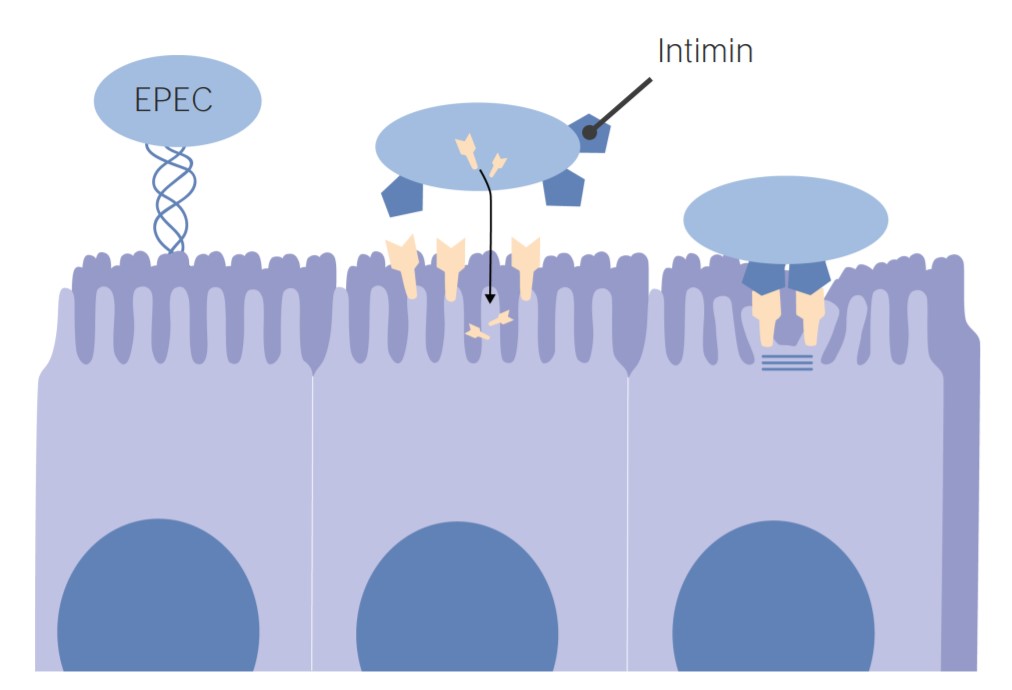
  • Pilus formadores de haces: necesarios para adherirse a las células intestinales
  • Adhesina intimina:
    • Proteína de la membrana externa
    • También se utiliza en EN Erythema nodosum is an immune-mediated panniculitis (inflammation of the subcutaneous fat) caused by a type IV (delayed-type) hypersensitivity reaction. It commonly manifests in young women as tender, erythematous nodules on the shins. Erythema Nodosum la adhesión a los LOS Neisseria enterocitos
  • Fijación → deformación celular
  • Resulta en EN Erythema nodosum is an immune-mediated panniculitis (inflammation of the subcutaneous fat) caused by a type IV (delayed-type) hypersensitivity reaction. It commonly manifests in young women as tender, erythematous nodules on the shins. Erythema Nodosum:
    • Desplazamiento de las microvellosidades
    • ↑ Permeabilidad de la unión estrecha
    • Alteración de la secreción y absorción de agua y electrolitos
Patogénesis de EPEC

Patogénesis de Escherichia coli enteropatógena:
La E. coli enteropatogénica utiliza la adhesina intimina para adherirse a las células intestinales. La unión provoca la deformación de las células (degeneración del borde en cepillo y pérdida de microvellosidades). Se cree que el efecto característico de la fijación y el borrado es la causa principal de la diarrea.

Imagen por Lecturio.

Presentación Clínica

  • Diarrea acuosa
  • Náuseas y vómitos
  • Fiebre de bajo grado
  • La desnutrición es una complicación potencial de la diarrea persistente.

Diagnóstico

La E. coli enteropatogénica puede diagnosticarse mediante la identificación de genes Genes A category of nucleic acid sequences that function as units of heredity and which code for the basic instructions for the development, reproduction, and maintenance of organisms. DNA Types and Structure específicos utilizando la reacción en EN Erythema nodosum is an immune-mediated panniculitis (inflammation of the subcutaneous fat) caused by a type IV (delayed-type) hypersensitivity reaction. It commonly manifests in young women as tender, erythematous nodules on the shins. Erythema Nodosum cadena de la polimerasa.

Tratamiento

  • Terapia de soporte
  • La mayoría de los LOS Neisseria individuos no requieren terapia antibiótica.

E. coli Enteroagregativa

Epidemiología

La E. coli enteroagregativa se asocia con mayor frecuencia a la diarrea persistente en EN Erythema nodosum is an immune-mediated panniculitis (inflammation of the subcutaneous fat) caused by a type IV (delayed-type) hypersensitivity reaction. It commonly manifests in young women as tender, erythematous nodules on the shins. Erythema Nodosum:

  • Niños
  • Individuos inmunocomprometidos (e.g., aquellos con VIH/SIDA)

Fisiopatología

  • Las fimbrias de adherencia agregada ayudan a las bacterias a adherirse a la mucosa intestinal.
  • Agregación de bacterias → forma una biopelícula
  • Toxinas producidas:
    • Alfa-hemolisina
    • Algunos poseen ST, similar a E. coli enterotoxigénica

Presentación Clínica

Diagnóstico

El diagnóstico de la E. coli enteroagregativa puede realizarse mediante la identificación de genes Genes A category of nucleic acid sequences that function as units of heredity and which code for the basic instructions for the development, reproduction, and maintenance of organisms. DNA Types and Structure específicos utilizando la reacción en EN Erythema nodosum is an immune-mediated panniculitis (inflammation of the subcutaneous fat) caused by a type IV (delayed-type) hypersensitivity reaction. It commonly manifests in young women as tender, erythematous nodules on the shins. Erythema Nodosum cadena de la polimerasa.

Tratamiento

  • Terapia de soporte
  • La terapia con antibióticos (e.g., fluoroquinolonas) puede estar indicada para la enfermedad persistente.

E. coli Enteroinvasiva

Fisiopatología

  • La fisiopatología está estrechamente relacionada con la de la Shigella Shigella Shigella is a genus of gram-negative, non-lactose-fermenting facultative intracellular bacilli. Infection spreads most commonly via person-to-person contact or through contaminated food and water. Humans are the only known reservoir. Shigella.
  • Las bacterias penetran a través de la pared epitelial del intestino.
  • Multiplicación intracelular → propagación a las células epiteliales adyacentes
  • Además, produce:
    • Enterotoxinas
    • Citotoxinas
  • Respuesta inflamatoria → necrosis Necrosis The death of cells in an organ or tissue due to disease, injury or failure of the blood supply. Ischemic Cell Damage (puede producir ulceración) → disentería

Presentación Clínica

La E. coli enteroinvasiva se presenta de forma muy similar a la shigelosis y puede ser grave.

  • Diarrea acuosa y/o con sangre (con o sin mucosidad)
  • Fiebre
  • Malestar
  • Cólicos abdominales
  • Náuseas y vómitos

Diagnóstico

El diagnóstico de la E. coli enteroinvasiva puede realizarse mediante la identificación de genes Genes A category of nucleic acid sequences that function as units of heredity and which code for the basic instructions for the development, reproduction, and maintenance of organisms. DNA Types and Structure específicos utilizando la reacción en EN Erythema nodosum is an immune-mediated panniculitis (inflammation of the subcutaneous fat) caused by a type IV (delayed-type) hypersensitivity reaction. It commonly manifests in young women as tender, erythematous nodules on the shins. Erythema Nodosum cadena de la polimerasa.

Tratamiento

  • Terapia de soporte
  • Los LOS Neisseria agentes antimotilidad están contraindicados.
  • Los LOS Neisseria antibióticos (e.g., fluoroquinolonas, macrólidos) pueden utilizarse en EN Erythema nodosum is an immune-mediated panniculitis (inflammation of the subcutaneous fat) caused by a type IV (delayed-type) hypersensitivity reaction. It commonly manifests in young women as tender, erythematous nodules on the shins. Erythema Nodosum casos graves.

E. coli Enterohemorrágica

Fisiopatología

La E. coli enterohemorrágica da lugar a manifestaciones clínicas a través de la producción de toxina shiga:

  • Efecto localizado: inhibe la síntesis proteica de los LOS Neisseria enterocitos → muerte de los LOS Neisseria enterocitos → inflamación
  • Efecto sistémico: lesión endotelial vascular en EN Erythema nodosum is an immune-mediated panniculitis (inflammation of the subcutaneous fat) caused by a type IV (delayed-type) hypersensitivity reaction. It commonly manifests in young women as tender, erythematous nodules on the shins. Erythema Nodosum los LOS Neisseria glomérulos → microtrombos y disfunción renal (síndrome urémico hemolítico)

Presentación Clínica

  • Periodo de incubación: 2–10 días
  • Colitis Colitis Inflammation of the colon section of the large intestine, usually with symptoms such as diarrhea (often with blood and mucus), abdominal pain, and fever. Pseudomembranous Colitis hemorrágica:
  • El serotipo O157:H7 se asocia comúnmente con el síndrome urémico hemolítico:
    • Anemia Anemia Anemia is a condition in which individuals have low Hb levels, which can arise from various causes. Anemia is accompanied by a reduced number of RBCs and may manifest with fatigue, shortness of breath, pallor, and weakness. Subtypes are classified by the size of RBCs, chronicity, and etiology. Anemia: Overview and Types hemolítica microangiopática
    • Trombocitopenia
    • Insuficiencia renal aguda

Diagnóstico

El diagnóstico de E. coli enterohemorrágica se realiza mediante la identificación:

  • Toxina Shiga mediante inmunoensayo enzimático
  • El gen que codifica la toxina shiga mediante la reacción en EN Erythema nodosum is an immune-mediated panniculitis (inflammation of the subcutaneous fat) caused by a type IV (delayed-type) hypersensitivity reaction. It commonly manifests in young women as tender, erythematous nodules on the shins. Erythema Nodosum cadena de la polimerasa

Tratamiento

  • Terapia de soporte
  • Los LOS Neisseria agentes antimotilidad están contraindicados.
  • Los LOS Neisseria antibióticos están contraindicados por ↑ riesgo de síndrome urémico hemolítico.

Diagnóstico Diferencial

  • Gastroenteritis Gastroenteritis Gastroenteritis is inflammation of the stomach and intestines, commonly caused by infections from bacteria, viruses, or parasites. Transmission may be foodborne, fecal-oral, or through animal contact. Common clinical features include abdominal pain, diarrhea, vomiting, fever, and dehydration. Gastroenteritis vírica: inflamación del estómago y los LOS Neisseria intestinos, causada por diversos virus Virus Viruses are infectious, obligate intracellular parasites composed of a nucleic acid core surrounded by a protein capsid. Viruses can be either naked (non-enveloped) or enveloped. The classification of viruses is complex and based on many factors, including type and structure of the nucleoid and capsid, the presence of an envelope, the replication cycle, and the host range. Virology. Las características clínicas comunes incluyen dolor Dolor Inflammation abdominal, diarrea, vómitos, fiebre y deshidratación. La mayoría de los LOS Neisseria casos de gastroenteritis Gastroenteritis Gastroenteritis is inflammation of the stomach and intestines, commonly caused by infections from bacteria, viruses, or parasites. Transmission may be foodborne, fecal-oral, or through animal contact. Common clinical features include abdominal pain, diarrhea, vomiting, fever, and dehydration. Gastroenteritis son autolimitados; por lo tanto, el diagnóstico es generalmente clínico y el único tratamiento necesario es la terapia de soporte.
  • Shigelosis: causada por la especie Shigella Shigella Shigella is a genus of gram-negative, non-lactose-fermenting facultative intracellular bacilli. Infection spreads most commonly via person-to-person contact or through contaminated food and water. Humans are the only known reservoir. Shigella. S. dysenteriae S. dysenteriae A species of gram-negative, facultatively anaerobic, rod-shaped bacteria that is extremely pathogenic and causes severe dysentery. Infection with this organism often leads to ulceration of the intestinal epithelium. Shigella produce la toxina shiga. Las personas pueden experimentar fiebre, cólicos abdominales y diarrea inflamatoria (con moco, pus y sangre). El síndrome urémico hemolítico es una complicación potencial. El diagnóstico se confirma con un cultivo de heces. El tratamiento incluye terapia de soporte y antibióticos (para la enfermedad moderada o grave).
  • Giardiasis Giardiasis An infection of the small intestine caused by the flagellated protozoan giardia. It is spread via contaminated food and water and by direct person-to-person contact. Giardia/Giardiasis: causada por Giardia Giardia A genus of flagellate intestinal eukaryotes parasitic in various vertebrates, including humans. Characteristics include the presence of four pairs of flagella arising from a complicated system of axonemes and cysts that are ellipsoidal to ovoidal in shape. Nitroimidazoles lamblia, un protozoario flagelado que puede infectar el tracto intestinal. El síntoma distintivo de la giardiasis Giardiasis An infection of the small intestine caused by the flagellated protozoan giardia. It is spread via contaminated food and water and by direct person-to-person contact. Giardia/Giardiasis es la diarrea maloliente (esteatorrea). Las personas que desarrollan infecciones crónicas pueden sufrir pérdida de peso, retraso en EN Erythema nodosum is an immune-mediated panniculitis (inflammation of the subcutaneous fat) caused by a type IV (delayed-type) hypersensitivity reaction. It commonly manifests in young women as tender, erythematous nodules on the shins. Erythema Nodosum el desarrollo y deficiencias vitamínicas como resultado de la malabsorción. El diagnóstico se realiza mediante la detección de los LOS Neisseria organismos, antígenos o ADN de Giardia Giardia A genus of flagellate intestinal eukaryotes parasitic in various vertebrates, including humans. Characteristics include the presence of four pairs of flagella arising from a complicated system of axonemes and cysts that are ellipsoidal to ovoidal in shape. Nitroimidazoles en EN Erythema nodosum is an immune-mediated panniculitis (inflammation of the subcutaneous fat) caused by a type IV (delayed-type) hypersensitivity reaction. It commonly manifests in young women as tender, erythematous nodules on the shins. Erythema Nodosum las heces. El tratamiento incluye terapia de soporte y terapia antimicrobiana.
  • Colitis Colitis Inflammation of the colon section of the large intestine, usually with symptoms such as diarrhea (often with blood and mucus), abdominal pain, and fever. Pseudomembranous Colitis pseudomembranosa: infección causada por Clostridioides difficile. Esta especie se encuentra habitualmente en EN Erythema nodosum is an immune-mediated panniculitis (inflammation of the subcutaneous fat) caused by a type IV (delayed-type) hypersensitivity reaction. It commonly manifests in young women as tender, erythematous nodules on the shins. Erythema Nodosum el microbioma intestinal normal, pero la patogénesis se produce cuando hay una sobreabundancia de C. difficile. Los LOS Neisseria síntomas comunes incluyen diarrea maloliente y sin sangre, dolor Dolor Inflammation abdominal y náuseas con vómitos. El diagnóstico se realiza con la reacción en EN Erythema nodosum is an immune-mediated panniculitis (inflammation of the subcutaneous fat) caused by a type IV (delayed-type) hypersensitivity reaction. It commonly manifests in young women as tender, erythematous nodules on the shins. Erythema Nodosum cadena de la polimerasa ( PCR PCR Polymerase chain reaction (PCR) is a technique that amplifies DNA fragments exponentially for analysis. The process is highly specific, allowing for the targeting of specific genomic sequences, even with minuscule sample amounts. The PCR cycles multiple times through 3 phases: denaturation of the template DNA, annealing of a specific primer to the individual DNA strands, and synthesis/elongation of new DNA molecules. Polymerase Chain Reaction (PCR), en EN Erythema nodosum is an immune-mediated panniculitis (inflammation of the subcutaneous fat) caused by a type IV (delayed-type) hypersensitivity reaction. It commonly manifests in young women as tender, erythematous nodules on the shins. Erythema Nodosum inglés) en EN Erythema nodosum is an immune-mediated panniculitis (inflammation of the subcutaneous fat) caused by a type IV (delayed-type) hypersensitivity reaction. It commonly manifests in young women as tender, erythematous nodules on the shins. Erythema Nodosum heces o con ensayos enzimáticos. El tratamiento suele consistir en EN Erythema nodosum is an immune-mediated panniculitis (inflammation of the subcutaneous fat) caused by a type IV (delayed-type) hypersensitivity reaction. It commonly manifests in young women as tender, erythematous nodules on the shins. Erythema Nodosum la interrupción del antibiótico infractor y el inicio de fidaxomicina o vancomicina por vía oral.
  • Isquemia colónica: hipoperfusión en EN Erythema nodosum is an immune-mediated panniculitis (inflammation of the subcutaneous fat) caused by a type IV (delayed-type) hypersensitivity reaction. It commonly manifests in young women as tender, erythematous nodules on the shins. Erythema Nodosum zonas del colon Colon The large intestines constitute the last portion of the digestive system. The large intestine consists of the cecum, appendix, colon (with ascending, transverse, descending, and sigmoid segments), rectum, and anal canal. The primary function of the colon is to remove water and compact the stool prior to expulsion from the body via the rectum and anal canal. Colon, Cecum, and Appendix: Anatomy (a menudo en EN Erythema nodosum is an immune-mediated panniculitis (inflammation of the subcutaneous fat) caused by a type IV (delayed-type) hypersensitivity reaction. It commonly manifests in young women as tender, erythematous nodules on the shins. Erythema Nodosum regiones sin fuentes secundarias de sangre arterial). Esta hipoperfusión puede deberse a una trombosis, una embolia o una hipotensión. La fase aguda de la isquemia colónica se caracteriza por una tríada clásica de dolor Dolor Inflammation abdominal intenso, vómitos y diarrea que puede ser sanguinolenta. Los LOS Neisseria individuos pueden tener atecedentes de enfermedades cardiovasculares. El diagnóstico se realiza generalmente con estudios de laboratorio y TC con angiografía. El tratamiento incluye la reposición de líquidos, antibióticos, anticoagulación sistémica y comúnmente, cirugía.
  • Diverticulitis Diverticulitis Inflammation of a diverticulum or diverticula. Diverticular Disease: inflamación de los LOS Neisseria divertículos (pequeñas regiones salientes del colon Colon The large intestines constitute the last portion of the digestive system. The large intestine consists of the cecum, appendix, colon (with ascending, transverse, descending, and sigmoid segments), rectum, and anal canal. The primary function of the colon is to remove water and compact the stool prior to expulsion from the body via the rectum and anal canal. Colon, Cecum, and Appendix: Anatomy) a menudo debida a la obstrucción con materia fecal. La diverticulitis Diverticulitis Inflammation of a diverticulum or diverticula. Diverticular Disease se presenta con dolor Dolor Inflammation abdominal (más frecuentemente en EN Erythema nodosum is an immune-mediated panniculitis (inflammation of the subcutaneous fat) caused by a type IV (delayed-type) hypersensitivity reaction. It commonly manifests in young women as tender, erythematous nodules on the shins. Erythema Nodosum el cuadrante inferior izquierdo), náuseas y diarrea que puede ser sanguinolenta. El diagnóstico definitivo suele hacerse con una TC. El tratamiento consiste en EN Erythema nodosum is an immune-mediated panniculitis (inflammation of the subcutaneous fat) caused by a type IV (delayed-type) hypersensitivity reaction. It commonly manifests in young women as tender, erythematous nodules on the shins. Erythema Nodosum reposo intestinal, líquidos intravenosos y antibióticos.

Referencias

  1. Nataro, J. P. (2024). Pathogenic Escherichia coli associated with diarrhea. UpToDate. Retrieved November 13, 2025, from https://www.uptodate.com/contents/pathogenic-escherichia-coli-associated-with-diarrhea
  2. Holtz, L. R., & Tarr, P. I. (2024). Shiga toxin-producing Escherichia coli: Treatment and prevention. In S. B. Calderwood, & S. L. Kaplan (Eds.), UpToDate. Retrieved November 13, 2025, from https://www.uptodate.com/contents/shiga-toxin-producing-escherichia-coli-treatment-and-prevention
  3. Mueller, M., Tainter, C. R. (2023). Escherichia coli. StatPearls. Retrieved November 13, 2025, from https://www.ncbi.nlm.nih.gov/books/NBK564298/
  4. Centers for Disease Control and Prevention. (2024). Kinds of E. coli. https://www.cdc.gov/ecoli/about/kinds-of-ecoli.html
  5. Nguyen, Y., Sperandio, V. (2012). Enterohemorrhagic E. coli (EHEC) pathogenesis. Frontiers in Cellular and Infection Microbiology 2:90. Retrieved November 13, 2025, from https://www.ncbi.nlm.nih.gov/pmc/articles/PMC3417627/
  6. Gomes, T. A. T., et al. (2016). Diarrheagenic Escherichia coli. Brazilian Journal of Microbiology 47:3–30. Retrieved November 13, 2025, from https://www.ncbi.nlm.nih.gov/pmc/articles/PMC5156508/
  7. Bush, L. M. (2024). Escherichia coli infections. MSD Manual Professional Version. Retrieved November 13, 2025, from https://www.msdmanuals.com/professional/infectious-diseases/gram-negative-bacilli/escherichia-coli-infections
  8. Bush, L. M., Vazquez-Pertejo, M. T. (2024). Infection by Escherichia coli O157:H7 and other enterohemorrhagic E. coli (EHEC). MSD Manual Professional Version. Retrieved November 13, 2025, from https://www.msdmanuals.com/professional/infectious-diseases/gram-negative-bacilli/infection-by-escherichia-coli-o157-h7-and-other-enterohemorrhagic-e-coli-ehec

¡Crea tu cuenta gratis o inicia una sesión para seguir leyendo!

Regístrate ahora y obtén acceso gratuito a Lecturio con páginas de concepto, videos médicos y cuestionarios para tu educación médica.

User Reviews

Que tengas una sesión de estudio alegre y navideña 🎁 Ahorra 50% en todos los planes >>

Details