
Domina Conceptos Médicos

Estudia para la escuela de medicina y tus examenes con Lecturio.

Encefalitis

La encefalitis es una inflamación del parénquima cerebral causada por una infección, generalmente viral. La encefalitis puede presentarse con síntomas leves como cefalea, fiebre, fatiga, dolores musculares y articulares o con síntomas graves como convulsiones, alteración en EN Erythema nodosum is an immune-mediated panniculitis (inflammation of the subcutaneous fat) caused by a type IV (delayed-type) hypersensitivity reaction. It commonly manifests in young women as tender, erythematous nodules on the shins. Erythema Nodosum el estado de la conciencia y parálisis. El diagnóstico se basa en EN Erythema nodosum is an immune-mediated panniculitis (inflammation of the subcutaneous fat) caused by a type IV (delayed-type) hypersensitivity reaction. It commonly manifests in young women as tender, erythematous nodules on the shins. Erythema Nodosum la sospecha clínica y una vez que se sospecha, se justifica el tratamiento empírico inmediato para evitar secuelas neurológicas catastróficas y a largo plazo. La encefalitis se trata con tratamiento de soporte y terapia antiviral Antiviral Antivirals for Hepatitis B. Los LOS Neisseria defectos neurológicos focales son comunes después de la encefalitis, por lo que suele ser necesaria la fisioterapia.

Last updated: Dec 15, 2025

Editorial responsibility: Stanley Oiseth, Lindsay Jones, Evelin Maza

Descripción General

Definición

La encefalitis es una inflamación del parénquima cerebral causada por una infección que suele ser viral y que se presenta como una disfunción neuropsicológica difusa o focal.

Epidemiología

  • La incidencia real es desconocida
  • Las causas más comunes son de etiología viral infecciosa.
  • El HSV HSV Herpes simplex virus (HSV) is a double-stranded DNA virus belonging to the family Herpesviridae. Herpes simplex virus commonly causes recurrent infections involving the skin and mucosal surfaces, including the mouth, lips, eyes, and genitals. Herpes Simplex Virus 1 and 2 es la causa más común de encefalitis esporádica en EN Erythema nodosum is an immune-mediated panniculitis (inflammation of the subcutaneous fat) caused by a type IV (delayed-type) hypersensitivity reaction. It commonly manifests in young women as tender, erythematous nodules on the shins. Erythema Nodosum el mundo occidental.
  • Los LOS Neisseria arbovirus son las causas más comunes de encefalitis episódica en EN Erythema nodosum is an immune-mediated panniculitis (inflammation of the subcutaneous fat) caused by a type IV (delayed-type) hypersensitivity reaction. It commonly manifests in young women as tender, erythematous nodules on the shins. Erythema Nodosum los LOS Neisseria Estados Unidos (se requieren insectos como vectores).
  • El virus Virus Viruses are infectious, obligate intracellular parasites composed of a nucleic acid core surrounded by a protein capsid. Viruses can be either naked (non-enveloped) or enveloped. The classification of viruses is complex and based on many factors, including type and structure of the nucleoid and capsid, the presence of an envelope, the replication cycle, and the host range. Virology del Nilo Occidental es la causa más común de encefalitis demostrada en EN Erythema nodosum is an immune-mediated panniculitis (inflammation of the subcutaneous fat) caused by a type IV (delayed-type) hypersensitivity reaction. It commonly manifests in young women as tender, erythematous nodules on the shins. Erythema Nodosum Estados Unidos.
  • La encefalitis japonesa es la más común en EN Erythema nodosum is an immune-mediated panniculitis (inflammation of the subcutaneous fat) caused by a type IV (delayed-type) hypersensitivity reaction. It commonly manifests in young women as tender, erythematous nodules on the shins. Erythema Nodosum los LOS Neisseria países asiáticos.
  • Los LOS Neisseria grupos de edad en EN Erythema nodosum is an immune-mediated panniculitis (inflammation of the subcutaneous fat) caused by a type IV (delayed-type) hypersensitivity reaction. It commonly manifests in young women as tender, erythematous nodules on the shins. Erythema Nodosum los LOS Neisseria extremos de la vida son los LOS Neisseria de mayor riesgo y experimentan una enfermedad grave.
  • Alta tasa de mortalidad: alrededor del 10%
  • En EN Erythema nodosum is an immune-mediated panniculitis (inflammation of the subcutaneous fat) caused by a type IV (delayed-type) hypersensitivity reaction. It commonly manifests in young women as tender, erythematous nodules on the shins. Erythema Nodosum la mayoría de los LOS Neisseria supervivientes se observan discapacidades cognitivas y neurológicas.

Clasificación

Hay 2 tipos principales de encefalitis:

  • Primaria:
    • La infección se produce directamente en EN Erythema nodosum is an immune-mediated panniculitis (inflammation of the subcutaneous fat) caused by a type IV (delayed-type) hypersensitivity reaction. It commonly manifests in young women as tender, erythematous nodules on the shins. Erythema Nodosum el tejido cerebral.
    • La infección también puede ser la reactivación de un virus Virus Viruses are infectious, obligate intracellular parasites composed of a nucleic acid core surrounded by a protein capsid. Viruses can be either naked (non-enveloped) or enveloped. The classification of viruses is complex and based on many factors, including type and structure of the nucleoid and capsid, the presence of an envelope, the replication cycle, and the host range. Virology latente de una infección anterior.
  • Postinfecciosa:
    • También conocida como encefalomielitis aguda diseminada
    • La infección se produce en EN Erythema nodosum is an immune-mediated panniculitis (inflammation of the subcutaneous fat) caused by a type IV (delayed-type) hypersensitivity reaction. It commonly manifests in young women as tender, erythematous nodules on the shins. Erythema Nodosum otra parte del cuerpo.
    • Las neuronas están intactas, pero hay evidencia de inflamación perivascular y desmielinización.
    • Esta enfermedad probablemente es inmunomediada

Etiología

La encefalitis viral es la forma más común de encefalitis. Las encefalitis bacterianas, fúngicas y parasitarias son extremadamente raras.

Causas virales:

  • HSV-1 y HSV-2
  • Arbovirus (transmitidos por mosquitos):
    • Virus Virus Viruses are infectious, obligate intracellular parasites composed of a nucleic acid core surrounded by a protein capsid. Viruses can be either naked (non-enveloped) or enveloped. The classification of viruses is complex and based on many factors, including type and structure of the nucleoid and capsid, the presence of an envelope, the replication cycle, and the host range. Virology equino oriental
    • Virus Virus Viruses are infectious, obligate intracellular parasites composed of a nucleic acid core surrounded by a protein capsid. Viruses can be either naked (non-enveloped) or enveloped. The classification of viruses is complex and based on many factors, including type and structure of the nucleoid and capsid, the presence of an envelope, the replication cycle, and the host range. Virology equino occidental
    • Virus Virus Viruses are infectious, obligate intracellular parasites composed of a nucleic acid core surrounded by a protein capsid. Viruses can be either naked (non-enveloped) or enveloped. The classification of viruses is complex and based on many factors, including type and structure of the nucleoid and capsid, the presence of an envelope, the replication cycle, and the host range. Virology equino venezolano
    • El virus Virus Viruses are infectious, obligate intracellular parasites composed of a nucleic acid core surrounded by a protein capsid. Viruses can be either naked (non-enveloped) or enveloped. The classification of viruses is complex and based on many factors, including type and structure of the nucleoid and capsid, the presence of an envelope, the replication cycle, and the host range. Virology de San Luis
    • Virus Virus Viruses are infectious, obligate intracellular parasites composed of a nucleic acid core surrounded by a protein capsid. Viruses can be either naked (non-enveloped) or enveloped. The classification of viruses is complex and based on many factors, including type and structure of the nucleoid and capsid, the presence of an envelope, the replication cycle, and the host range. Virology del Nilo Occidental
  • Virus Virus Viruses are infectious, obligate intracellular parasites composed of a nucleic acid core surrounded by a protein capsid. Viruses can be either naked (non-enveloped) or enveloped. The classification of viruses is complex and based on many factors, including type and structure of the nucleoid and capsid, the presence of an envelope, the replication cycle, and the host range. Virology de la varicela zóster (VZV)
  • Virus Virus Viruses are infectious, obligate intracellular parasites composed of a nucleic acid core surrounded by a protein capsid. Viruses can be either naked (non-enveloped) or enveloped. The classification of viruses is complex and based on many factors, including type and structure of the nucleoid and capsid, the presence of an envelope, the replication cycle, and the host range. Virology de Epstein–Barr
  • Virus Virus Viruses are infectious, obligate intracellular parasites composed of a nucleic acid core surrounded by a protein capsid. Viruses can be either naked (non-enveloped) or enveloped. The classification of viruses is complex and based on many factors, including type and structure of the nucleoid and capsid, the presence of an envelope, the replication cycle, and the host range. Virology de la rabia
  • Virus Virus Viruses are infectious, obligate intracellular parasites composed of a nucleic acid core surrounded by a protein capsid. Viruses can be either naked (non-enveloped) or enveloped. The classification of viruses is complex and based on many factors, including type and structure of the nucleoid and capsid, the presence of an envelope, the replication cycle, and the host range. Virology de la encefalitis japonesa
  • Virus Virus Viruses are infectious, obligate intracellular parasites composed of a nucleic acid core surrounded by a protein capsid. Viruses can be either naked (non-enveloped) or enveloped. The classification of viruses is complex and based on many factors, including type and structure of the nucleoid and capsid, the presence of an envelope, the replication cycle, and the host range. Virology Chikungunya Chikungunya Chikungunya virus belongs to the Alphavirus genus and causes a viral infection characterized by fever and joint pain. Symptoms usually appear within 1 week of infection. Additional manifestations of chikungunya virus may include muscle pain, headache, maculopapular rash, and lymphadenopathy. Chikungunya Virus

Otras causas:

  • Sífilis
  • Mycoplasma Mycoplasma Mycoplasma is a species of pleomorphic bacteria that lack a cell wall, which makes them difficult to target with conventional antibiotics and causes them to not gram stain well. Mycoplasma bacteria commonly target the respiratory and urogenital epithelium. Mycoplasma pneumoniae (M. pneumoniae), the causative agent of atypical or “walking” pneumonia. Mycoplasma spp.
  • Toxoplasma Toxoplasma Toxoplasmosis is an infectious disease caused by Toxoplasma gondii, an obligate intracellular protozoan parasite. Felines are the definitive host, but transmission to humans can occur through contact with cat feces or the consumption of contaminated foods. The clinical presentation and complications depend on the host’s immune status. Toxoplasma/Toxoplasmosis gondii
  • Autoinmunes

Factores de riesgo:

  • Sistema inmunológico débil o inmunocomprometido
  • Grupos de edad en EN Erythema nodosum is an immune-mediated panniculitis (inflammation of the subcutaneous fat) caused by a type IV (delayed-type) hypersensitivity reaction. It commonly manifests in young women as tender, erythematous nodules on the shins. Erythema Nodosum los LOS Neisseria extremos de la vida: lactantes y adultos mayores
  • Residencia en EN Erythema nodosum is an immune-mediated panniculitis (inflammation of the subcutaneous fat) caused by a type IV (delayed-type) hypersensitivity reaction. It commonly manifests in young women as tender, erythematous nodules on the shins. Erythema Nodosum zonas infestadas de mosquitos y garrapatas

Fisiopatología y Presentación Clínica

Fisiopatología

Transmisión:

  • Inhalación de gotas respiratorias de una persona infectada
  • Alimentos o bebidas contaminados
  • Picaduras de insectos, especialmente en EN Erythema nodosum is an immune-mediated panniculitis (inflammation of the subcutaneous fat) caused by a type IV (delayed-type) hypersensitivity reaction. It commonly manifests in young women as tender, erythematous nodules on the shins. Erythema Nodosum zonas infestadas de mosquitos y garrapatas
  • Reactivación del virus Virus Viruses are infectious, obligate intracellular parasites composed of a nucleic acid core surrounded by a protein capsid. Viruses can be either naked (non-enveloped) or enveloped. The classification of viruses is complex and based on many factors, including type and structure of the nucleoid and capsid, the presence of an envelope, the replication cycle, and the host range. Virology latente en EN Erythema nodosum is an immune-mediated panniculitis (inflammation of the subcutaneous fat) caused by a type IV (delayed-type) hypersensitivity reaction. It commonly manifests in young women as tender, erythematous nodules on the shins. Erythema Nodosum los LOS Neisseria ganglios del nervio trigémino ( HSV HSV Herpes simplex virus (HSV) is a double-stranded DNA virus belonging to the family Herpesviridae. Herpes simplex virus commonly causes recurrent infections involving the skin and mucosal surfaces, including the mouth, lips, eyes, and genitals. Herpes Simplex Virus 1 and 2)

Patogénesis:

  • El virus Virus Viruses are infectious, obligate intracellular parasites composed of a nucleic acid core surrounded by a protein capsid. Viruses can be either naked (non-enveloped) or enveloped. The classification of viruses is complex and based on many factors, including type and structure of the nucleoid and capsid, the presence of an envelope, the replication cycle, and the host range. Virology se multiplica fuera del sistema nervioso central (SNC) y se une a receptores específicos de las membranas celulares.
  • El virus Virus Viruses are infectious, obligate intracellular parasites composed of a nucleic acid core surrounded by a protein capsid. Viruses can be either naked (non-enveloped) or enveloped. The classification of viruses is complex and based on many factors, including type and structure of the nucleoid and capsid, the presence of an envelope, the replication cycle, and the host range. Virology se disemina al AL Amyloidosis SNC por vía hematógena o por diseminación neuronal retrógrada.
  • Una vez en EN Erythema nodosum is an immune-mediated panniculitis (inflammation of the subcutaneous fat) caused by a type IV (delayed-type) hypersensitivity reaction. It commonly manifests in young women as tender, erythematous nodules on the shins. Erythema Nodosum el interior de las neuronas, el virus Virus Viruses are infectious, obligate intracellular parasites composed of a nucleic acid core surrounded by a protein capsid. Viruses can be either naked (non-enveloped) or enveloped. The classification of viruses is complex and based on many factors, including type and structure of the nucleoid and capsid, the presence of an envelope, the replication cycle, and the host range. Virology altera el funcionamiento normal y provoca congestión perivascular, hemorragia y una respuesta inflamatoria difusa.
  • Algunos virus Virus Viruses are infectious, obligate intracellular parasites composed of a nucleic acid core surrounded by a protein capsid. Viruses can be either naked (non-enveloped) or enveloped. The classification of viruses is complex and based on many factors, including type and structure of the nucleoid and capsid, the presence of an envelope, the replication cycle, and the host range. Virology muestran un tropismo regional (e.g., él ( HSV HSV Herpes simplex virus (HSV) is a double-stranded DNA virus belonging to the family Herpesviridae. Herpes simplex virus commonly causes recurrent infections involving the skin and mucosal surfaces, including the mouth, lips, eyes, and genitals. Herpes Simplex Virus 1 and 2, por sus siglas en EN Erythema nodosum is an immune-mediated panniculitis (inflammation of the subcutaneous fat) caused by a type IV (delayed-type) hypersensitivity reaction. It commonly manifests in young women as tender, erythematous nodules on the shins. Erythema Nodosum inglés) tiene predilección por los LOS Neisseria lóbulos temporales medial e inferior).
  • La encefalitis primaria afecta directamente a la sustancia gris; la encefalitis postinfecciosa provoca una desmielinización generalizada.

Presentación clínica

Adultos/niños mayores:

  • Somnolencia
  • Fiebre
  • Cefalea
  • Convulsiones
  • Dolores musculares y articulares
  • Fatiga
  • Confusión
  • Problemas en EN Erythema nodosum is an immune-mediated panniculitis (inflammation of the subcutaneous fat) caused by a type IV (delayed-type) hypersensitivity reaction. It commonly manifests in young women as tender, erythematous nodules on the shins. Erythema Nodosum el habla o de audición
  • Parálisis de la cara o de ciertas partes del cuerpo
  • Reflejos tendinosos profundos exagerados

Lactantes:

  • Abultamiento de la fontanela
  • Náuseas y vómitos
  • Rigidez corporal
  • Irritabilidad
  • Rechazo a la alimentación

Rasgos distintivos (apuntan a una determinada etiología):
  • Parotiditis en EN Erythema nodosum is an immune-mediated panniculitis (inflammation of the subcutaneous fat) caused by a type IV (delayed-type) hypersensitivity reaction. It commonly manifests in young women as tender, erythematous nodules on the shins. Erythema Nodosum el caso de las paperas
  • Erupción vesicular agrupada en EN Erythema nodosum is an immune-mediated panniculitis (inflammation of the subcutaneous fat) caused by a type IV (delayed-type) hypersensitivity reaction. It commonly manifests in young women as tender, erythematous nodules on the shins. Erythema Nodosum un dermatoma en EN Erythema nodosum is an immune-mediated panniculitis (inflammation of the subcutaneous fat) caused by a type IV (delayed-type) hypersensitivity reaction. It commonly manifests in young women as tender, erythematous nodules on the shins. Erythema Nodosum el caso del VZV
  • Características comunes en EN Erythema nodosum is an immune-mediated panniculitis (inflammation of the subcutaneous fat) caused by a type IV (delayed-type) hypersensitivity reaction. It commonly manifests in young women as tender, erythematous nodules on the shins. Erythema Nodosum el virus Virus Viruses are infectious, obligate intracellular parasites composed of a nucleic acid core surrounded by a protein capsid. Viruses can be either naked (non-enveloped) or enveloped. The classification of viruses is complex and based on many factors, including type and structure of the nucleoid and capsid, the presence of an envelope, the replication cycle, and the host range. Virology del Nilo Occidental:
  • Características comunes en EN Erythema nodosum is an immune-mediated panniculitis (inflammation of the subcutaneous fat) caused by a type IV (delayed-type) hypersensitivity reaction. It commonly manifests in young women as tender, erythematous nodules on the shins. Erythema Nodosum la rabia:
    • Hidrofobia
    • Espasmos faríngeos
    • Mioclonía
    • Hiperactividad
  • Características comunes en EN Erythema nodosum is an immune-mediated panniculitis (inflammation of the subcutaneous fat) caused by a type IV (delayed-type) hypersensitivity reaction. It commonly manifests in young women as tender, erythematous nodules on the shins. Erythema Nodosum el virus Virus Viruses are infectious, obligate intracellular parasites composed of a nucleic acid core surrounded by a protein capsid. Viruses can be either naked (non-enveloped) or enveloped. The classification of viruses is complex and based on many factors, including type and structure of the nucleoid and capsid, the presence of an envelope, the replication cycle, and the host range. Virology de San Luis:
    • Temblores en EN Erythema nodosum is an immune-mediated panniculitis (inflammation of the subcutaneous fat) caused by a type IV (delayed-type) hypersensitivity reaction. It commonly manifests in young women as tender, erythematous nodules on the shins. Erythema Nodosum los LOS Neisseria párpados
    • Temblores en EN Erythema nodosum is an immune-mediated panniculitis (inflammation of the subcutaneous fat) caused by a type IV (delayed-type) hypersensitivity reaction. It commonly manifests in young women as tender, erythematous nodules on the shins. Erythema Nodosum la lengua
    • Temblores en EN Erythema nodosum is an immune-mediated panniculitis (inflammation of the subcutaneous fat) caused by a type IV (delayed-type) hypersensitivity reaction. It commonly manifests in young women as tender, erythematous nodules on the shins. Erythema Nodosum los LOS Neisseria labios
    • Temblores en EN Erythema nodosum is an immune-mediated panniculitis (inflammation of the subcutaneous fat) caused by a type IV (delayed-type) hypersensitivity reaction. It commonly manifests in young women as tender, erythematous nodules on the shins. Erythema Nodosum las extremidades
  • Meningoencefalitis (cuando las meninges Meninges The brain and the spinal cord are enveloped by 3 overlapping layers of connective tissue called the meninges. The layers are, from the most external layer to the most internal layer, the dura mater, arachnoid mater, and pia mater. Between these layers are 3 potential spaces called the epidural, subdural, and subarachnoid spaces. Meninges: Anatomy también están inflamadas):
    • Rigidez nucal
    • Fotofobia

Diagnóstico

Antecedentes

  • Exposición geográfica
  • Mordedura por un artrópodo
  • Mordedura por un animal
  • Antecedentes conocidos de infección por HSV HSV Herpes simplex virus (HSV) is a double-stranded DNA virus belonging to the family Herpesviridae. Herpes simplex virus commonly causes recurrent infections involving the skin and mucosal surfaces, including the mouth, lips, eyes, and genitals. Herpes Simplex Virus 1 and 2

Imagenología

  • Tomografía computarizada (TC): principalmente útil para descartar tumores
  • Resonancia magnética (RM):
    • Examen de elección
    • La encefalitis por HSV HSV Herpes simplex virus (HSV) is a double-stranded DNA virus belonging to the family Herpesviridae. Herpes simplex virus commonly causes recurrent infections involving the skin and mucosal surfaces, including the mouth, lips, eyes, and genitals. Herpes Simplex Virus 1 and 2 suele manifestarse en EN Erythema nodosum is an immune-mediated panniculitis (inflammation of the subcutaneous fat) caused by a type IV (delayed-type) hypersensitivity reaction. It commonly manifests in young women as tender, erythematous nodules on the shins. Erythema Nodosum los LOS Neisseria lóbulos temporales.
    • Encefalitis del Nilo Occidental: afecta los LOS Neisseria ganglios basales, el tálamo, cerebelo, tronco encefálico y las estructuras temporales
    • La hidrocefalia sugiere etiologías no virales.
    • Encefalitis postinfecciosa: lesiones multifocales de la sustancia blanca
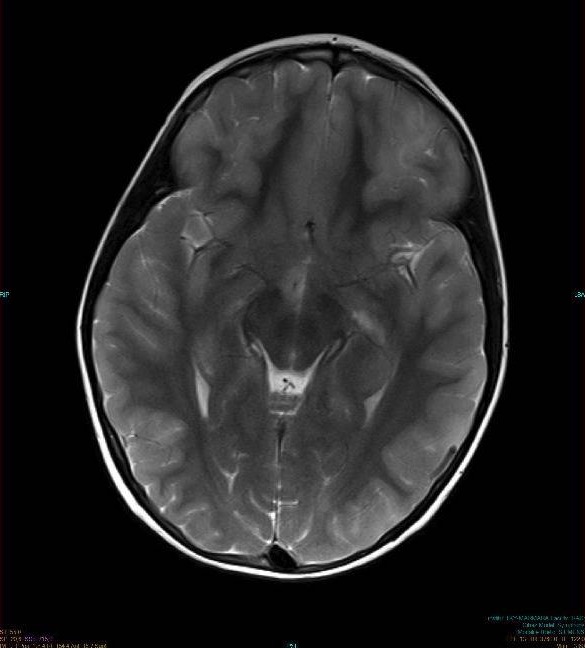
Realce de contraste en la cara posterior de la corteza insular bilateral, el hipotálamo derecho y la corteza frontal inferior izquierda consistente con encefalitis

RM que muestra encefalitis viral de Epstein–Barr:
El realce del contraste en la cara posterior de la corteza insular bilateral, el hipotálamo derecho y la corteza frontal inferior izquierda muestra características consistentes con la encefalitis.
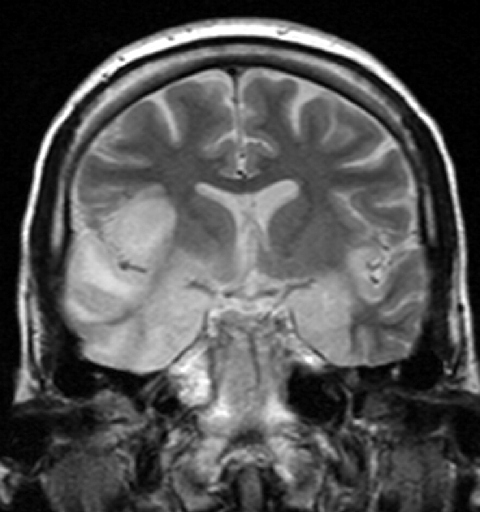
Imagen: “Contrast enhancement” por Division of Pediatric Infectious Diseases, Department of Pediatrics, Marmara University School of Medicine, 34890 Istanbul, Turkey. Licencia: CC BY 4.0, recortado por Lecturio.
Encefalitis por VHS

RM que muestra un aumento de la intensidad de la señal en el lóbulo temporal de un caso confirmado de encefalitis por HSV-1.

Imagen: “Hsv encephalitis” por Dr. Laughlin Dawes. Licencia: CC BY 3.0

Análisis del líquido cefalorraquídeo (LCR) por punción lumbar

  • Puede ser normal
  • Recuento celular (linfocitos elevados; leucocitos < 250/mm³ )
  • Proteínas (elevación leve; < 150 mg/dL)
  • Glucosa (normal o moderadamente reducida)
  • Cultivo de LCR: el cultivo viral no es fiable
  • Pruebas de reacción en EN Erythema nodosum is an immune-mediated panniculitis (inflammation of the subcutaneous fat) caused by a type IV (delayed-type) hypersensitivity reaction. It commonly manifests in young women as tender, erythematous nodules on the shins. Erythema Nodosum cadena de la polimerasa ( PCR PCR Polymerase chain reaction (PCR) is a technique that amplifies DNA fragments exponentially for analysis. The process is highly specific, allowing for the targeting of specific genomic sequences, even with minuscule sample amounts. The PCR cycles multiple times through 3 phases: denaturation of the template DNA, annealing of a specific primer to the individual DNA strands, and synthesis/elongation of new DNA molecules. Polymerase Chain Reaction (PCR), por sus siglas en EN Erythema nodosum is an immune-mediated panniculitis (inflammation of the subcutaneous fat) caused by a type IV (delayed-type) hypersensitivity reaction. It commonly manifests in young women as tender, erythematous nodules on the shins. Erythema Nodosum inglés) del LCR (sustituidas en EN Erythema nodosum is an immune-mediated panniculitis (inflammation of the subcutaneous fat) caused by a type IV (delayed-type) hypersensitivity reaction. It commonly manifests in young women as tender, erythematous nodules on the shins. Erythema Nodosum gran medida por el cultivo):
    • HSV-1, HSV-2
    • Enterovirus Enterovirus A genus of the family picornaviridae whose members preferentially inhabit the intestinal tract of a variety of hosts. The genus contains many species. Newly described members of human enteroviruses are assigned continuous numbers with the species designated ‘human enterovirus’. Coxsackievirus
    • VZV
    • CMV

EEG EEG Seizures

El electroencefalograma ( EEG EEG Seizures) es anormal en EN Erythema nodosum is an immune-mediated panniculitis (inflammation of the subcutaneous fat) caused by a type IV (delayed-type) hypersensitivity reaction. It commonly manifests in young women as tender, erythematous nodules on the shins. Erythema Nodosum la encefalitis aguda.

Análisis de sangre

  • Recuento de leucocitos con diferencial
  • Se puede realizar un hemocultivo para descartar una causa bacteriana ( en EN Erythema nodosum is an immune-mediated panniculitis (inflammation of the subcutaneous fat) caused by a type IV (delayed-type) hypersensitivity reaction. It commonly manifests in young women as tender, erythematous nodules on the shins. Erythema Nodosum casos de meningoencefalitis).
  • Los LOS Neisseria exámenes adicionales se consideran basándose en EN Erythema nodosum is an immune-mediated panniculitis (inflammation of the subcutaneous fat) caused by a type IV (delayed-type) hypersensitivity reaction. It commonly manifests in young women as tender, erythematous nodules on the shins. Erythema Nodosum la presentación clínica y el antecedente de exposición:

Tratamiento

La respuesta inmediata a la encefalitis es crucial porque puede evolucionar rápidamente y causar complicaciones.

Tratamiento

  • Terapia de soporte:
    • Monitoreo respiratorio y cardiovascular cuidadoso
    • Administración de fluidos intravenosos para mantener la hidratación y proporcionar soporte hemodinámico
    • Medicación antiinflamatoria: corticosteroides (su beneficio no ha HA Hemolytic anemia (HA) is the term given to a large group of anemias that are caused by the premature destruction/hemolysis of circulating red blood cells (RBCs). Hemolysis can occur within (intravascular hemolysis) or outside the blood vessels (extravascular hemolysis). Hemolytic Anemia sido comprobado)
    • Manitol para reducir la presión intracraneal (su beneficio no ha HA Hemolytic anemia (HA) is the term given to a large group of anemias that are caused by the premature destruction/hemolysis of circulating red blood cells (RBCs). Hemolysis can occur within (intravascular hemolysis) or outside the blood vessels (extravascular hemolysis). Hemolytic Anemia sido comprobado en EN Erythema nodosum is an immune-mediated panniculitis (inflammation of the subcutaneous fat) caused by a type IV (delayed-type) hypersensitivity reaction. It commonly manifests in young women as tender, erythematous nodules on the shins. Erythema Nodosum la encefalitis viral)
    • Anticonvulsivos: fenitoína
  • Terapia antiviral Antiviral Antivirals for Hepatitis B:
    • Aciclovir:
      • Tratamiento empírico para la sospecha de encefalitis por HSV HSV Herpes simplex virus (HSV) is a double-stranded DNA virus belonging to the family Herpesviridae. Herpes simplex virus commonly causes recurrent infections involving the skin and mucosal surfaces, including the mouth, lips, eyes, and genitals. Herpes Simplex Virus 1 and 2
      • Debe iniciarse inmediatamente para disminuir la morbilidad y la mortalidad
    • Ganciclovir Ganciclovir An acyclovir analog that is a potent inhibitor of the herpesvirus family including cytomegalovirus. Ganciclovir is used to treat complications from aids-associated cytomegalovirus infections. Antivirals for Herpes Virus
    • Foscarnet Foscarnet An antiviral agent used in the treatment of cytomegalovirus retinitis. Foscarnet also shows activity against human herpesviruses and HIV. Antivirals for Herpes Virus
  • Terapia post-encefalitis:
    • Fisioterapia para mejorar la fuerza y la movilidad
    • Terapia ocupacional para ayudar en EN Erythema nodosum is an immune-mediated panniculitis (inflammation of the subcutaneous fat) caused by a type IV (delayed-type) hypersensitivity reaction. It commonly manifests in young women as tender, erythematous nodules on the shins. Erythema Nodosum las actividades diarias
    • Terapia del lenguaje
    • Psicoterapia para mejorar la salud conductual causada por las secuelas

Complicaciones

  • Las complicaciones son comunes en EN Erythema nodosum is an immune-mediated panniculitis (inflammation of the subcutaneous fat) caused by a type IV (delayed-type) hypersensitivity reaction. It commonly manifests in young women as tender, erythematous nodules on the shins. Erythema Nodosum los LOS Neisseria supervivientes y dependen de:
    • Edad de la persona afectada
    • Duración de la enfermedad
    • Estado inmunitario del individuo
    • Etiología de la infección
  • Complicaciones que pueden surgir:
    • Pérdida de memoria
    • Debilidad muscular y deterioro de la coordinación
    • Cambios en EN Erythema nodosum is an immune-mediated panniculitis (inflammation of the subcutaneous fat) caused by a type IV (delayed-type) hypersensitivity reaction. It commonly manifests in young women as tender, erythematous nodules on the shins. Erythema Nodosum la personalidad
    • Parálisis
    • Pérdida de visión o audición
    • Deterioro del habla
    • Epilepsia
    • Dificultad para respirar
    • Coma Coma Coma is defined as a deep state of unarousable unresponsiveness, characterized by a score of 3 points on the GCS. A comatose state can be caused by a multitude of conditions, making the precise epidemiology and prognosis of coma difficult to determine. Coma

Diagnóstico Diferencial

  • Meningitis Meningitis Meningitis is inflammation of the meninges, the protective membranes of the brain, and spinal cord. The causes of meningitis are varied, with the most common being bacterial or viral infection. The classic presentation of meningitis is a triad of fever, altered mental status, and nuchal rigidity. Meningitis: inflamación de las meninges Meninges The brain and the spinal cord are enveloped by 3 overlapping layers of connective tissue called the meninges. The layers are, from the most external layer to the most internal layer, the dura mater, arachnoid mater, and pia mater. Between these layers are 3 potential spaces called the epidural, subdural, and subarachnoid spaces. Meninges: Anatomy causada generalmente por una infección bacteriana o vírica: clínicamente, la meningitis Meningitis Meningitis is inflammation of the meninges, the protective membranes of the brain, and spinal cord. The causes of meningitis are varied, with the most common being bacterial or viral infection. The classic presentation of meningitis is a triad of fever, altered mental status, and nuchal rigidity. Meningitis se presenta con cefalea, fiebre y rigidez nucal. El diagnóstico se realiza por la presentación clínica, el análisis del LCR y los LOS Neisseria análisis de sangre. El tratamiento (antimicrobiano) depende de la etiología, pero el tratamiento de soporte es similar para todos los LOS Neisseria casos de meningitis Meningitis Meningitis is inflammation of the meninges, the protective membranes of the brain, and spinal cord. The causes of meningitis are varied, with the most common being bacterial or viral infection. The classic presentation of meningitis is a triad of fever, altered mental status, and nuchal rigidity. Meningitis.
  • Hemorragia subaracnoidea: hemorragia dentro del espacio subaracnoideo que se produce de forma espontánea o tras un traumatismo craneal: la hemorragia subaracnoidea se presenta con dolor Dolor Inflammation de cuello y hombros, entumecimiento de todo el cuerpo, convulsiones, confusión e irritabilidad, diplopía y cefalea repentina. El diagnóstico se efectúa mediante los LOS Neisseria antecedentes, los LOS Neisseria signos y síntomas, imagenología, y angiografía cerebral. La hemorragia subaracnoidea se trata quirúrgicamente. Se recomiendan los LOS Neisseria agentes antihipertensivos.
  • Empiema subdural: acumulación de pus entre la duramadre y la aracnoides. El empiema subdural se presenta con fiebre, cefalea, letargo, déficits neurológicos focales y convulsiones. El diagnóstico se realiza mediante imagenología, siendo la más común la RM con contraste. El tratamiento es quirúrgico y con antibióticos.
  • Absceso cerebral: acumulación de pus en EN Erythema nodosum is an immune-mediated panniculitis (inflammation of the subcutaneous fat) caused by a type IV (delayed-type) hypersensitivity reaction. It commonly manifests in young women as tender, erythematous nodules on the shins. Erythema Nodosum respuesta a una infección o traumatismo que se presenta clínicamente con fiebre, cefalea, convulsiones, náuseas y vómitos: el diagnóstico se realiza mediante la evaluación de los LOS Neisseria signos y síntomas, los LOS Neisseria análisis de sangre e imagenología. El tratamiento incluye terapia con antibióticos y cirugía para drenar el absceso.
  • Accidente cerebrovascular: es el daño en EN Erythema nodosum is an immune-mediated panniculitis (inflammation of the subcutaneous fat) caused by a type IV (delayed-type) hypersensitivity reaction. It commonly manifests in young women as tender, erythematous nodules on the shins. Erythema Nodosum el cerebro debido a la interrupción de la irrigación sanguínea: el accidente cerebrovascular se presenta con dificultad para caminar, parálisis facial, visión borrosa, dificultad para hablar y parestesia. El diagnóstico se realiza por los LOS Neisseria antecedentes e imagenología. El tratamiento depende del tipo de accidente cerebrovascular.
  • Hipoglucemia: condición en EN Erythema nodosum is an immune-mediated panniculitis (inflammation of the subcutaneous fat) caused by a type IV (delayed-type) hypersensitivity reaction. It commonly manifests in young women as tender, erythematous nodules on the shins. Erythema Nodosum la que los LOS Neisseria niveles de glucosa en EN Erythema nodosum is an immune-mediated panniculitis (inflammation of the subcutaneous fat) caused by a type IV (delayed-type) hypersensitivity reaction. It commonly manifests in young women as tender, erythematous nodules on the shins. Erythema Nodosum sangre son más bajos de lo normal: la hipoglucemia es una afección de emergencia que se presenta con taquicardia, temblores, diaforesis, confusión, visión borrosa y convulsiones. El diagnóstico se basa en EN Erythema nodosum is an immune-mediated panniculitis (inflammation of the subcutaneous fat) caused by a type IV (delayed-type) hypersensitivity reaction. It commonly manifests in young women as tender, erythematous nodules on the shins. Erythema Nodosum los LOS Neisseria signos y síntomas y en EN Erythema nodosum is an immune-mediated panniculitis (inflammation of the subcutaneous fat) caused by a type IV (delayed-type) hypersensitivity reaction. It commonly manifests in young women as tender, erythematous nodules on the shins. Erythema Nodosum los LOS Neisseria niveles de glucosa en EN Erythema nodosum is an immune-mediated panniculitis (inflammation of the subcutaneous fat) caused by a type IV (delayed-type) hypersensitivity reaction. It commonly manifests in young women as tender, erythematous nodules on the shins. Erythema Nodosum sangre. El tratamiento depende de la gravedad del caso. La hipoglucemia grave se trata con glucosa intravenosa y/o una inyección de glucagón.
  • Delirium Delirium Delirium is a medical condition characterized by acute disturbances in attention and awareness. Symptoms may fluctuate during the course of a day and involve memory deficits and disorientation. Delirium tremens: forma grave del síndrome de abstinencia de etanol que se presenta clínicamente con confusión global, agitación, alucinaciones, fiebre y diaforesis: el diagnóstico depende de los LOS Neisseria antecedentes y los LOS Neisseria signos y síntomas. El tratamiento es con terapia de soporte, benzodiacepinas y tiamina.

Referencias

  1. Venkatesan A. (2015). Epidemiology and outcomes of acute encephalitis. Current Opinions in Neurology. https://journals.lww.com/co-neurology/Abstract/2015/06000/Epidemiology_and_outcomes_of_acute_encephalitis.12.aspx
  2. Healthline. (2017). Encephalitis. Retrieved April 26, 2021, from https://www.healthline.com/health/encephalitis#complications
  3. Mayo Clinic (2020). Encephalitis. https://www.mayoclinic.org/diseases-conditions/encephalitis/symptoms-causes/syc-20356136
  4. Howes DS, Lazoff M. (2018). Encephalitis. Medscape. https://emedicine.medscape.com/article/791896-overview#a4
  5. Johns Hopkins Medicine. (n.d.). Encephalitis. Retrieved April 26, 2021, from https://www.hopkinsmedicine.org/health/conditions-and-diseases/encephalitis
  6. Gluckman SJ. (2019). Viral encephalitis in adults. UpToDate. Retrieved April 25, 2021, from https://www.uptodate.com/contents/viral-encephalitis-in-adults

¡Crea tu cuenta gratis o inicia una sesión para seguir leyendo!

Regístrate ahora y obtén acceso gratuito a Lecturio con páginas de concepto, videos médicos y cuestionarios para tu educación médica.

User Reviews

Que tengas una sesión de estudio alegre y navideña 🎁 Ahorra 50% en todos los planes >>

Details