Domina Conceptos Médicos

Estudia para la escuela de medicina y tus examenes con Lecturio.

Dibothriocephalus/Difilobotriasis

La difilobotriasis es una infección parasitaria intestinal causada por varios cestodos de los LOS Neisseria géneros Dibothriocephalus y Adenocephalus, anteriormente clasificados como Diphyllobothrium Diphyllobothrium Diphyllobothriasis represents an intestinal parasitic infection caused by the cestode Diphyllobothrium. Diphyllobothriasis is acquired by ingestion of late larvae in undercooked or raw fish. The clinical presentation of diphyllobothriasis varies from asymptomatic, nonspecific symptoms to intestinal obstruction, and/or vitamin B12 deficiency. Dibothriocephalus/Diphyllobothriasis, (también conocido como “tenia de los LOS Neisseria peces” o “tenia ancha”). La difilobotriasis se adquiere por la ingesta de larvas infecciosas en EN Erythema nodosum is an immune-mediated panniculitis (inflammation of the subcutaneous fat) caused by a type IV (delayed-type) hypersensitivity reaction. It commonly manifests in young women as tender, erythematous nodules on the shins. Erythema Nodosum pescado poco cocido o crudo (p. ej., salmón, trucha). La presentación clínica de la difilobotriasis varía desde pacientes asintomáticos, síntomas inespecíficos, hasta obstrucción intestinal y/o deficiencia de vitamina B12. El diagnóstico se establece mediante la identificación de huevos o proglótides en EN Erythema nodosum is an immune-mediated panniculitis (inflammation of the subcutaneous fat) caused by a type IV (delayed-type) hypersensitivity reaction. It commonly manifests in young women as tender, erythematous nodules on the shins. Erythema Nodosum las heces. El tratamiento incluye terapia antihelmíntica y si es necesario, suplemento de vitamina B12.

Last updated: Dec 15, 2025

Editorial responsibility: Stanley Oiseth, Lindsay Jones, Evelin Maza

Características Generales y Epidemiología

Características generales

La difilobotriasis es una infección parasitaria causada por cestodos (tenia) de los LOS Neisseria géneros Dibothriocephalus y Adenocephalus.
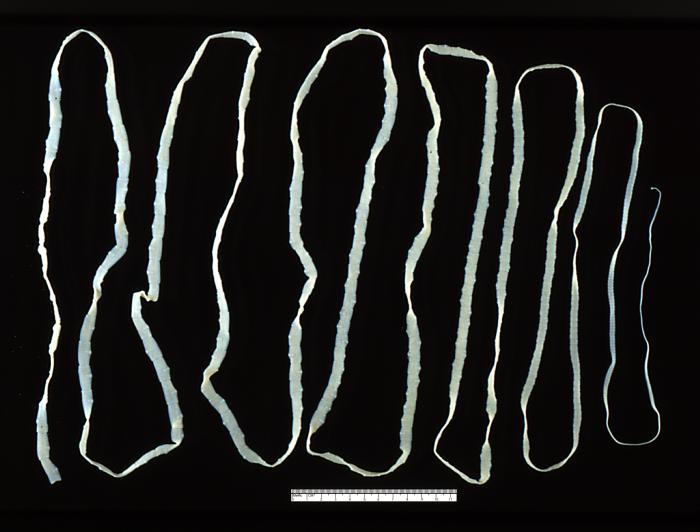
  • Es el parásito más grande del ser humano (longitud de hasta 10 metros)
  • Morfología adulta:
    • Escólex
      • Sin ganchos
      • Un par PAR The PAR is the attributable risk for an entire population. It represents the fraction of cases that would not occur in a population if the exposure was eliminated. Measures of Risk de hendiduras de fijación (botrios)
    • Cuello
    • Estróbilo con hasta 3 000–4 000 proglótides
      • Segmentado
      • Contiene un conjunto de órganos reproductores
  • Huevos:
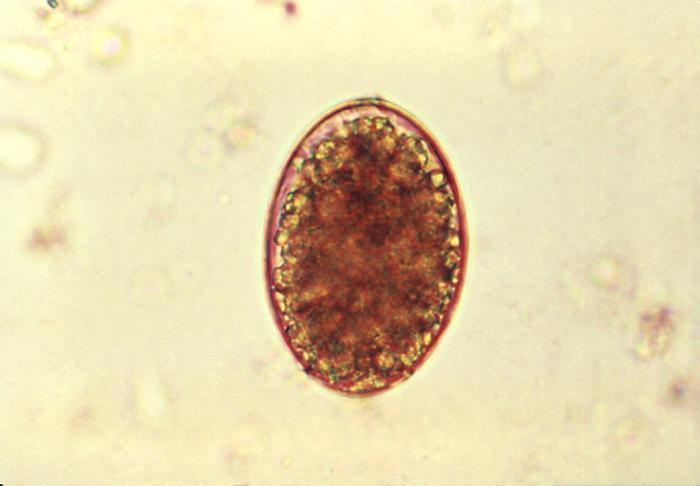
    • Elipsoidales u ovalados
    • Opérculo (estructura en EN Erythema nodosum is an immune-mediated panniculitis (inflammation of the subcutaneous fat) caused by a type IV (delayed-type) hypersensitivity reaction. It commonly manifests in young women as tender, erythematous nodules on the shins. Erythema Nodosum forma de tapa) en EN Erythema nodosum is an immune-mediated panniculitis (inflammation of the subcutaneous fat) caused by a type IV (delayed-type) hypersensitivity reaction. It commonly manifests in young women as tender, erythematous nodules on the shins. Erythema Nodosum 1 extremo
    • Maduran en EN Erythema nodosum is an immune-mediated panniculitis (inflammation of the subcutaneous fat) caused by a type IV (delayed-type) hypersensitivity reaction. It commonly manifests in young women as tender, erythematous nodules on the shins. Erythema Nodosum el agua dentro de 3 semanas
  • Se alimentan a través de absorción

Especies clínicamente relevantes

  • Dibothriocephalus latus (anteriormente Diphyllobothrium Diphyllobothrium Diphyllobothriasis represents an intestinal parasitic infection caused by the cestode Diphyllobothrium. Diphyllobothriasis is acquired by ingestion of late larvae in undercooked or raw fish. The clinical presentation of diphyllobothriasis varies from asymptomatic, nonspecific symptoms to intestinal obstruction, and/or vitamin B12 deficiency. Dibothriocephalus/Diphyllobothriasis latum, el más común)
  • Dibothriocephalus nihonkaiense (anteriormente Diphylobothrium nihonkaiense)
  • Dibothriocephalus dendriticus (anteriormente Diphyllobothrium Diphyllobothrium Diphyllobothriasis represents an intestinal parasitic infection caused by the cestode Diphyllobothrium. Diphyllobothriasis is acquired by ingestion of late larvae in undercooked or raw fish. The clinical presentation of diphyllobothriasis varies from asymptomatic, nonspecific symptoms to intestinal obstruction, and/or vitamin B12 deficiency. Dibothriocephalus/Diphyllobothriasis dendriticum)
  • Adenocephalus pacificus (anteriormente Diphyllobothrium Diphyllobothrium Diphyllobothriasis represents an intestinal parasitic infection caused by the cestode Diphyllobothrium. Diphyllobothriasis is acquired by ingestion of late larvae in undercooked or raw fish. The clinical presentation of diphyllobothriasis varies from asymptomatic, nonspecific symptoms to intestinal obstruction, and/or vitamin B12 deficiency. Dibothriocephalus/Diphyllobothriasis pacificum)

Epidemiología

  • Aproximadamente 20 millones de personas están infectadas a nivel mundial.
  • Tradicionalmente se encuentra en EN Erythema nodosum is an immune-mediated panniculitis (inflammation of the subcutaneous fat) caused by a type IV (delayed-type) hypersensitivity reaction. It commonly manifests in young women as tender, erythematous nodules on the shins. Erythema Nodosum zonas donde el consumo de pescado crudo es habitual:
    • Europa del Norte
    • América del Norte
    • Japón
    • América del Sur (raro)
  • No se ha HA Hemolytic anemia (HA) is the term given to a large group of anemias that are caused by the premature destruction/hemolysis of circulating red blood cells (RBCs). Hemolysis can occur within (intravascular hemolysis) or outside the blood vessels (extravascular hemolysis). Hemolytic Anemia reportado alguna predilección sobre la edad o sexo
  • No hay predilección racial

Patogénesis

Huéspedes

Huéspedes definitivos:

  • Humanos
  • Mamíferos
  • Aves

Huéspedes intermediarios:

  • Peces de agua dulce (más comunes)
  • Peces marinos
  • Crustáceos

Transmisión

La difilobotriasis se transmite por el consumo de pescado crudo o poco cocido.
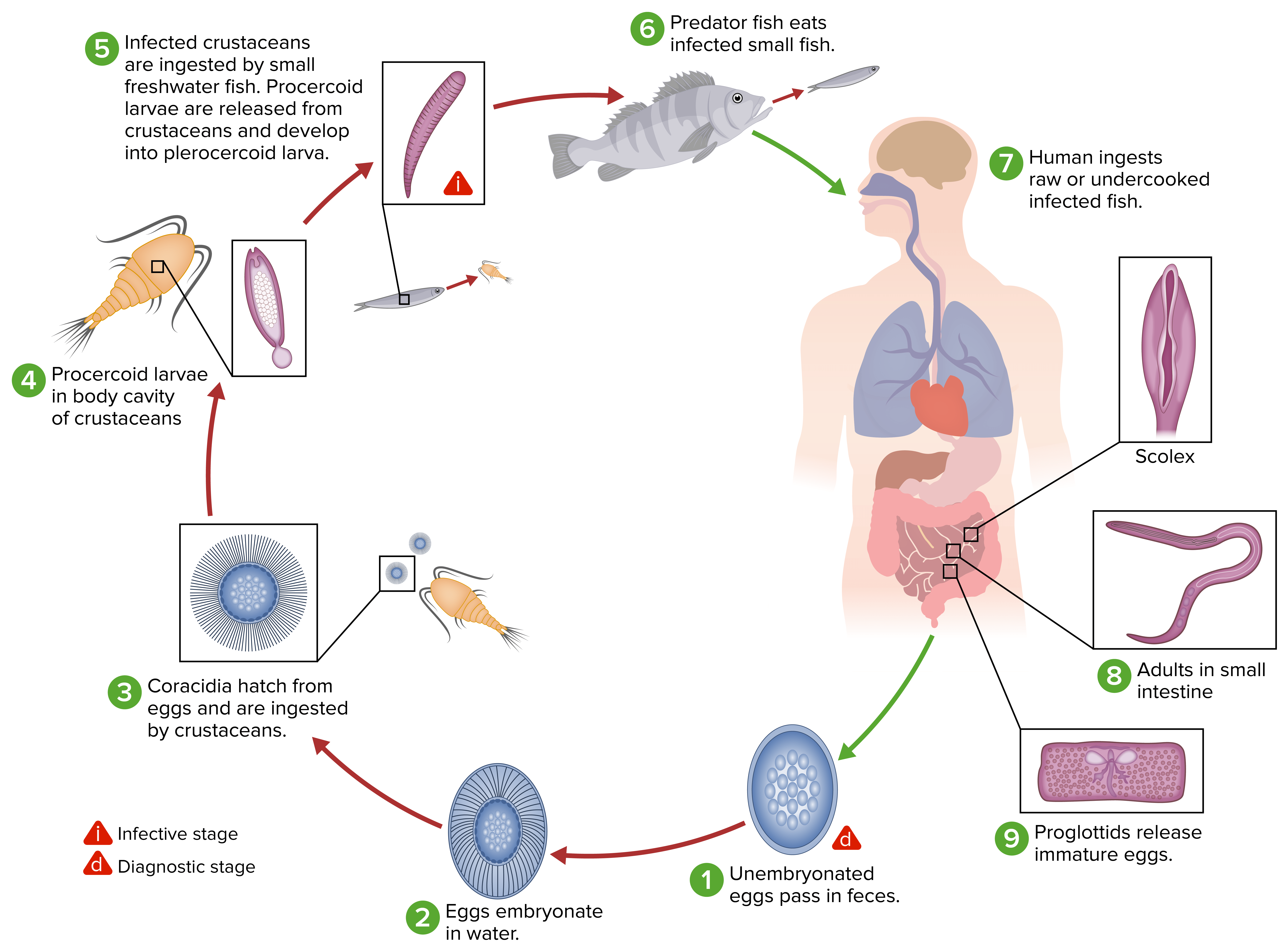
Ciclo de vida

  • Los LOS Neisseria huevos inmaduros se eliminan a través de las heces de un huésped definitivo.
  • Los LOS Neisseria huevos maduran → oncoesferas → se convierten en EN Erythema nodosum is an immune-mediated panniculitis (inflammation of the subcutaneous fat) caused by a type IV (delayed-type) hypersensitivity reaction. It commonly manifests in young women as tender, erythematous nodules on the shins. Erythema Nodosum coracidios → ingeridos por crustáceos (1ros huéspedes intermediarios)
  • Se convierten en EN Erythema nodosum is an immune-mediated panniculitis (inflammation of the subcutaneous fat) caused by a type IV (delayed-type) hypersensitivity reaction. It commonly manifests in young women as tender, erythematous nodules on the shins. Erythema Nodosum larvas procercoides
  • Crustáceos ingeridos por un pez (2do huésped intermediario) → las larvas procercoides se convierten en EN Erythema nodosum is an immune-mediated panniculitis (inflammation of the subcutaneous fat) caused by a type IV (delayed-type) hypersensitivity reaction. It commonly manifests in young women as tender, erythematous nodules on the shins. Erythema Nodosum larvas plerocercoides (fase infecciosa)
  • El 2do huésped intermediario puede ser ingerido por depredadores más grandes → las larvas plerocercoides migran a los LOS Neisseria músculos
  • Los LOS Neisseria humanos (huéspedes definitivos) consumen pescado infectado, crudo o poco cocido → se convierten en EN Erythema nodosum is an immune-mediated panniculitis (inflammation of the subcutaneous fat) caused by a type IV (delayed-type) hypersensitivity reaction. It commonly manifests in young women as tender, erythematous nodules on the shins. Erythema Nodosum gusanos adultos en EN Erythema nodosum is an immune-mediated panniculitis (inflammation of the subcutaneous fat) caused by a type IV (delayed-type) hypersensitivity reaction. It commonly manifests in young women as tender, erythematous nodules on the shins. Erythema Nodosum el intestino delgado → producen huevos
  • Los LOS Neisseria huevos inmaduros son excretados en EN Erythema nodosum is an immune-mediated panniculitis (inflammation of the subcutaneous fat) caused by a type IV (delayed-type) hypersensitivity reaction. It commonly manifests in young women as tender, erythematous nodules on the shins. Erythema Nodosum las heces → el ciclo continúa
Diphyllobothriasis

El ciclo vital de las especies de Dibothriocephalus, los agentes causantes de la difilobotriasis

Imagen por Lecturio.

Presentación Clínica

Signos y síntomas generales

  • La mayoría de los LOS Neisseria pacientes son asintomáticos.
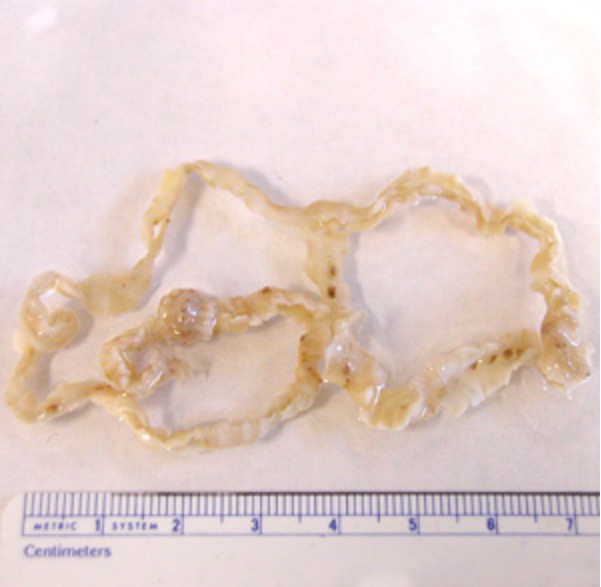
  • Puede producirse excreción de las proglótides en EN Erythema nodosum is an immune-mediated panniculitis (inflammation of the subcutaneous fat) caused by a type IV (delayed-type) hypersensitivity reaction. It commonly manifests in young women as tender, erythematous nodules on the shins. Erythema Nodosum las heces.
  • Síntomas inespecíficos:

Complicaciones

Los LOS Neisseria siguientes síntomas pueden ser causados por infecciones más graves o por una migración aberrante de las tenias:

  • Deficiencia de vitamina B12D. latus tiene una gran afinidad por la vitamina B12
    • Anemia Anemia Anemia is a condition in which individuals have low Hb levels, which can arise from various causes. Anemia is accompanied by a reduced number of RBCs and may manifest with fatigue, shortness of breath, pallor, and weakness. Subtypes are classified by the size of RBCs, chronicity, and etiology. Anemia: Overview and Types
    • Parestesias
    • Debilidad
    • Hiporreflexia
    • Ataxia Ataxia Impairment of the ability to perform smoothly coordinated voluntary movements. This condition may affect the limbs, trunk, eyes, pharynx, larynx, and other structures. Ataxia may result from impaired sensory or motor function. Sensory ataxia may result from posterior column injury or peripheral nerve diseases. Motor ataxia may be associated with cerebellar diseases; cerebral cortex diseases; thalamic diseases; basal ganglia diseases; injury to the red nucleus; and other conditions. Ataxia-telangiectasia
    • Encefalopatía
  • Obstrucción intestinal → se produce si los LOS Neisseria gusanos se enredan entre sí
  • Enfermedad biliar → migración de proglótides
    • Colecistitis
    • Colangitis

Diagnóstico y Tratamiento

Diagnóstico

  • El examen coprológico puede revelar huevos operculados o proglótides.
  • Las pruebas de laboratorio son en EN Erythema nodosum is an immune-mediated panniculitis (inflammation of the subcutaneous fat) caused by a type IV (delayed-type) hypersensitivity reaction. It commonly manifests in young women as tender, erythematous nodules on the shins. Erythema Nodosum gran medida inespecíficas, pero pueden revelar:
    • Eosinofilia
    • Anemia Anemia Anemia is a condition in which individuals have low Hb levels, which can arise from various causes. Anemia is accompanied by a reduced number of RBCs and may manifest with fatigue, shortness of breath, pallor, and weakness. Subtypes are classified by the size of RBCs, chronicity, and etiology. Anemia: Overview and Types megaloblástica
    • ↓ Vitamina B12

Tratamiento

  • Terapia antihelmíntica:
  • Corrección de la deficiencia de vitamina B12

Prevención

  • Cocinar bien el pescado.
  • Si existe el consumo de sashimi o sushi, se debe congelar el pescado para matar las larvas de la tenia.
  • Medidas de saneamiento del agua

Comparación de las Especies de Tenias

Tabla: Características y enfermedades de las diferentes especies de tenias
Organismo Dibothriocephalus latus Taenia Taenia Taenia belong to the Cestoda class of helminths. Humans are infected with these tapeworms by eating undercooked beef (T. saginata) or pork (T. solium and T. asiatica). Taeniasis is often asymptomatic, but the ingestion of larvae can cause abdominal discomfort, nausea, and constipation or diarrhea. Taenia/Taeniasis saginata Echinococcus Echinococcus Echinococcosis is a parasitic disease caused by Echinococcus tapeworms. Infection most often occurs from the ingestion of Echinococcus eggs in food or water contaminated with dog feces. Signs and symptoms are caused by hydatid cyst development in visceral organs and depend on the species. Echinococcus/Echinococcosis granulosus
Características
  • Aproximadamente 10 metros de longitud
  • Sin ganchos
  • Botrios presentes
  • > 3 000 proglótides
  • < 5 metros de largo
  • Sin ganchos
  • Sin cuello
  • Aproximadamente 1 000 proglótides
  • 2–7 mm de longitud
  • Ganchos presentes
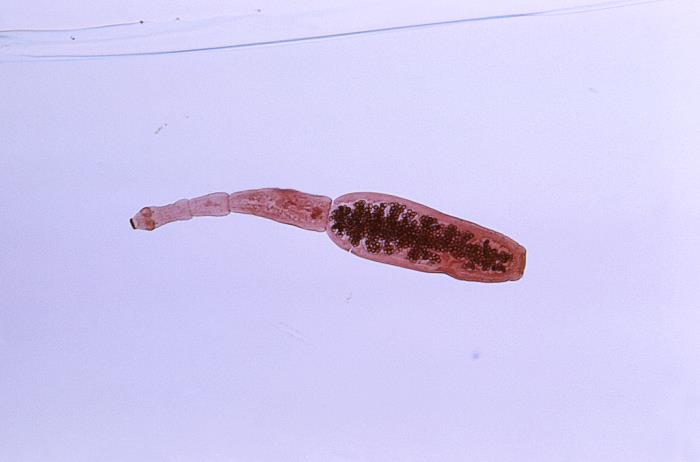
  • 3–6 proglótides
Transmisión Consumo de pescado crudo infectado Consumo de carne cruda infectada Fecal-oral (ingestión de agua o alimentos contaminados)
Enfermedad Difilobotriasis Teniasis Equinococosis quística
Cuadro Clínico
  • Molestias abdominales
  • Pérdida de peso
  • Deficiencia de vitamina B12
  • Obstrucción intestinal
  • Generalmente asintomático
  • Síntomas gastrointestinales leves
Depende de la ubicación y el tamaño de los LOS Neisseria quistes hidatídicos
Diagnóstico Huevos o proglótides en EN Erythema nodosum is an immune-mediated panniculitis (inflammation of the subcutaneous fat) caused by a type IV (delayed-type) hypersensitivity reaction. It commonly manifests in young women as tender, erythematous nodules on the shins. Erythema Nodosum las heces Huevos o proglótides en EN Erythema nodosum is an immune-mediated panniculitis (inflammation of the subcutaneous fat) caused by a type IV (delayed-type) hypersensitivity reaction. It commonly manifests in young women as tender, erythematous nodules on the shins. Erythema Nodosum las heces
  • Imagenología
  • Serología
Tratamiento
  • Albendazol
  • Drenaje percutáneo
  • Excisión quirúrgica
Prevención
  • Congelar el pescado.
  • Cocinar bien el pescado.
  • Medidas de saneamiento del agua
Cocinar bien la carne.
  • Higiene personal
  • Evitar el contacto con perros callejeros.
  • Evitar los LOS Neisseria alimentos potencialmente contaminados.
  • Mejorar el saneamiento del agua.

Diagnóstico Diferencial

  • Ascariasis Ascariasis Ascariasis is most often caused by A. lumbricoides. If symptomatic, characteristics typically follow 2 phases, which correlate with the migration of the parasite through the body. The early phase may include cough, dyspnea, and wheezing. The late phase typically includes abdominal discomfort, bloating, nausea, and intermittent diarrhea. Ascaris/Ascariasis: infección causada por el parásito Ascaris Ascaris Ascaris is a genus of parasitic nematodes. The infection, ascariasis, is most often caused by A. lumbricoides. Transmission occurs primarily via ingestion of water or food contaminated with Ascaris eggs. Most patients with ascariasis are asymptomatic. Ascaris/Ascariasis lumbricoides. La transmisión se produce por la ingesta de agua o alimentos contaminados con huevos de Ascaris Ascaris Ascaris is a genus of parasitic nematodes. The infection, ascariasis, is most often caused by A. lumbricoides. Transmission occurs primarily via ingestion of water or food contaminated with Ascaris eggs. Most patients with ascariasis are asymptomatic. Ascaris/Ascariasis. Los LOS Neisseria pacientes pueden ser asintomáticos o experimentar tos TOS Thoracic outlet syndrome (TOS) is a broad term used for a spectrum of syndromes related to the general region of the thoracic outlet, which involves the compression or irritation of elements of the brachial plexus, subclavian artery, or subclavian vein. Thoracic Outlet Syndrome y hemoptisis. Una gran carga de gusanos puede causar obstrucción intestinal y afectar el crecimiento de los LOS Neisseria niños. El examen coprológico puede mostrar la presencia de gusanos o huevos. El tratamiento es con terapia antihelmíntica.
  • Anemia Anemia Anemia is a condition in which individuals have low Hb levels, which can arise from various causes. Anemia is accompanied by a reduced number of RBCs and may manifest with fatigue, shortness of breath, pallor, and weakness. Subtypes are classified by the size of RBCs, chronicity, and etiology. Anemia: Overview and Types perniciosa: causa deficiencia de vitamina B12 y anemia Anemia Anemia is a condition in which individuals have low Hb levels, which can arise from various causes. Anemia is accompanied by a reduced number of RBCs and may manifest with fatigue, shortness of breath, pallor, and weakness. Subtypes are classified by the size of RBCs, chronicity, and etiology. Anemia: Overview and Types megaloblástica debido a una deficiencia del factor intrínseco, que es necesario para la absorción de la vitamina B12. Los LOS Neisseria pacientes pueden presentar fatiga, deterioro cognitivo, neuropatía, ataxia Ataxia Impairment of the ability to perform smoothly coordinated voluntary movements. This condition may affect the limbs, trunk, eyes, pharynx, larynx, and other structures. Ataxia may result from impaired sensory or motor function. Sensory ataxia may result from posterior column injury or peripheral nerve diseases. Motor ataxia may be associated with cerebellar diseases; cerebral cortex diseases; thalamic diseases; basal ganglia diseases; injury to the red nucleus; and other conditions. Ataxia-telangiectasia y glositis. Niveles bajos de vitamina B12, los LOS Neisseria anticuerpos contra el factor intrínseco y la prueba de Schilling pueden utilizarse para el diagnóstico. El tratamiento incluye reposición de la vitamina B12.
  • Sobrecrecimiento bacteriano del intestino delgado: Los LOS Neisseria microbios aerobios y anaerobios normalmente presentes en EN Erythema nodosum is an immune-mediated panniculitis (inflammation of the subcutaneous fat) caused by a type IV (delayed-type) hypersensitivity reaction. It commonly manifests in young women as tender, erythematous nodules on the shins. Erythema Nodosum el colon Colon The large intestines constitute the last portion of the digestive system. The large intestine consists of the cecum, appendix, colon (with ascending, transverse, descending, and sigmoid segments), rectum, and anal canal. The primary function of the colon is to remove water and compact the stool prior to expulsion from the body via the rectum and anal canal. Colon, Cecum, and Appendix: Anatomy crecen en EN Erythema nodosum is an immune-mediated panniculitis (inflammation of the subcutaneous fat) caused by a type IV (delayed-type) hypersensitivity reaction. It commonly manifests in young women as tender, erythematous nodules on the shins. Erythema Nodosum exceso en EN Erythema nodosum is an immune-mediated panniculitis (inflammation of the subcutaneous fat) caused by a type IV (delayed-type) hypersensitivity reaction. It commonly manifests in young women as tender, erythematous nodules on the shins. Erythema Nodosum el intestino delgado. Aproximadamente el 90% de los LOS Neisseria casos se deben a trastornos de la motilidad y a pancreatitis Pancreatitis Inflammation of the pancreas. Pancreatitis is classified as acute unless there are computed tomographic or endoscopic retrograde cholangiopancreatographic findings of chronic pancreatitis. The two most common forms of acute pancreatitis are alcoholic pancreatitis and gallstone pancreatitis. Acute Pancreatitis crónica. La presentación clínica incluye distensión, flatulencia, diarrea acuosa y malestar abdominal; puede producirse una deficiencia de vitamina B12. El diagnóstico puede hacerse con pruebas de alcoholemia. El pilar del tratamiento son los LOS Neisseria antibióticos y la corrección de las deficiencias nutricionales.
  • Enfermedad inflamatoria intestinal: se caracteriza por una inflamación crónica del tracto gastrointestinal debida a una respuesta inmunitaria mediada por células en EN Erythema nodosum is an immune-mediated panniculitis (inflammation of the subcutaneous fat) caused by a type IV (delayed-type) hypersensitivity reaction. It commonly manifests in young women as tender, erythematous nodules on the shins. Erythema Nodosum la mucosa gastrointestinal. La enfermedad de Crohn y la colitis Colitis Inflammation of the colon section of the large intestine, usually with symptoms such as diarrhea (often with blood and mucus), abdominal pain, and fever. Pseudomembranous Colitis ulcerosa son enfermedades inflamatorias del intestino. Los LOS Neisseria síntomas incluyen diarrea, dolor Dolor Inflammation abdominal, pérdida de peso y manifestaciones extraintestinales. El diagnóstico incluye imagenología, endoscopia y biopsia. El tratamiento incluye esteroides, aminosalicilatos, inmunomoduladores y agentes biológicos.

Referencias

  1. Hochberg NS, Hamer DH. Anisakidosis: Perils of the deep. Clin Infect Dis 2010;51:806–12.
  2. Scholz T, Garcia HH, Kuchta R, Wicht B. Update on the human broad tapeworm (genus diphyllobothrium), including clinical relevance. Clin Microbiol Rev. 2009 Jan. 22 (1):146–60. http://reference.medscape.com/medline/abstract/19136438
  3. Vindigni SM, Hahn H, Zhang Q. Intermittent obstructive symptoms in a patient with diphyllobothriasis. Gastrointest Endosc. 2017 Dec. 86 (6):1185–1186. http://reference.medscape.com/medline/abstract/28602516
  4. Maithel S, Duong AK, Zhang J, Nguyen DL. An unusual cause of vitamin B12 and iron deficiency. Cleve Clin J Med. 2015 Jul. 82 (7):406–8. http://reference.medscape.com/medline/abstract/26185938
  5. Kuchta R, Serrano-Martínez ME, Scholz T. Pacific Broad Tapeworm Adenocephalus pacificus as a Causative Agent of Globally Reemerging Diphyllobothriosis. Emerg Infect Dis. 2015 Oct. 21 (10):1697–703. http://reference.medscape.com/medline/abstract/26402440
  6. Arizono N, Yamada M, Nakamura-Uchiyama F, Ohnishi K. Diphyllobothriasis associated with eating raw Pacific salmon. Emerg Infect Dis. 2009 Jun. 15 (6):866–70. http://reference.medscape.com/medline/abstract/19523283
  7. Haburchak, D.R. (2021). Diphyllobothriasis. In Chandrasekar, P.H. (Ed.), Medscape. Retrieved January 26, 2025, from https://emedicine.medscape.com/article/216089-overview
  8. Leder, K., and Weller, P.F. (2024). Tapeworm infections. In Baron, E.L. (Ed.), UpToDate. Retrieved January 26, 2025, from https://www.uptodate.com/contents/tapeworm-infections
  9. Durrani, M.I., Basit, H., and Blazar, E. (2023). Diphyllobothrium latum. [online] StatPearls. Retrieved January 26, 2025, from https://www.ncbi.nlm.nih.gov/books/NBK540971/
  10. Pearson, R.D. (2023). Diphyllobothriasis (fish tapeworm infection). [online] MSD Manual Professional Version. Retrieved January 26, 2025, from https://www.msdmanuals.com/professional/infectious-diseases/cestodes-tapeworms/diphyllobothriasis-fish-tapeworm-infectionphyllobothriasis-fish-tapeworm-infection
  11. Centers for Disease Control and Prevention (2019). Diphyllobothriasis. Retrieved January 26, 2025, from https://www.cdc.gov/dpdx/diphyllobothriasis/index.html
  12. Centers for Disease Control and Prevention. (n.d.). Diphyllobothriasis. DPDx – Laboratory Identification of Parasites of Public Health Concern. U.S. Department of Health & Human Services. Retrieved January 26, 2025, from https://www.cdc.gov/dpdx/diphyllobothriasis/index.html
  13. Scholz, T., Kuchta, R., & Brabec, J. (2024). Possible new focus of diphyllobothriasis, Central Europe. Emerging Infectious Diseases, 30(12), 2698–2700. https://doi.org/10.3201/eid3012.241330

¡Crea tu cuenta gratis o inicia una sesión para seguir leyendo!

Regístrate ahora y obtén acceso gratuito a Lecturio con páginas de concepto, videos médicos y cuestionarios para tu educación médica.

User Reviews

Que tengas una sesión de estudio alegre y navideña 🎁 Ahorra 50% en todos los planes >>

Details