Domina Conceptos Médicos

Estudia para la escuela de medicina y tus examenes con Lecturio.

Dacriocistitis

La dacriocistitis es la inflamación del saco lagrimal debido a la obstrucción del conducto nasolagrimal y la subsecuente estasis de lágrimas. La afección puede tener un inicio agudo o crónico. La dacriocistitis aguda se presenta en EN Erythema nodosum is an immune-mediated panniculitis (inflammation of the subcutaneous fat) caused by a type IV (delayed-type) hypersensitivity reaction. It commonly manifests in young women as tender, erythematous nodules on the shins. Erythema Nodosum horas o días con enrojecimiento, inflamación, sensibilidad y lagrimeo excesivo. El tipo crónico tiene un curso gradual, manifestándose a menudo con epífora. Por su etiología, la dacriocistitis puede ser congénita o adquirida. La obstrucción del conducto nasolagrimal afecta al AL Amyloidosis 6% de los LOS Neisseria recién nacidos. Los LOS Neisseria casos adquiridos se producen debido a traumatismos, enfermedades sistémicas o tumores. El diagnóstico se realiza clínicamente. En EN Erythema nodosum is an immune-mediated panniculitis (inflammation of the subcutaneous fat) caused by a type IV (delayed-type) hypersensitivity reaction. It commonly manifests in young women as tender, erythematous nodules on the shins. Erythema Nodosum algunos casos, los LOS Neisseria estudios de laboratorio y de imagen ayudan a determinar las estructuras anormales y la enfermedad subyacente. El tratamiento inicial incluye medidas conservadoras como el masaje de Crigler, compresas calientes y antibióticos, si están indicados. Si estos fallan, se intentan las opciones quirúrgicas.

Last updated: Dec 15, 2025

Editorial responsibility: Stanley Oiseth, Lindsay Jones, Evelin Maza

Descripción General

Definición

La dacriocistitis es una inflamación del saco lagrimal debido a la obstrucción del conducto nasolagrimal (CNL) y la subsecuente estasis de lágrimas.
Anatomía y fisiología

  • Glándulas lagrimales
    • Localización: cara lateral superior de la órbita (fosa lagrimal)
    • Función: producen lágrimas que protegen y lubrican la parte externa del ojo
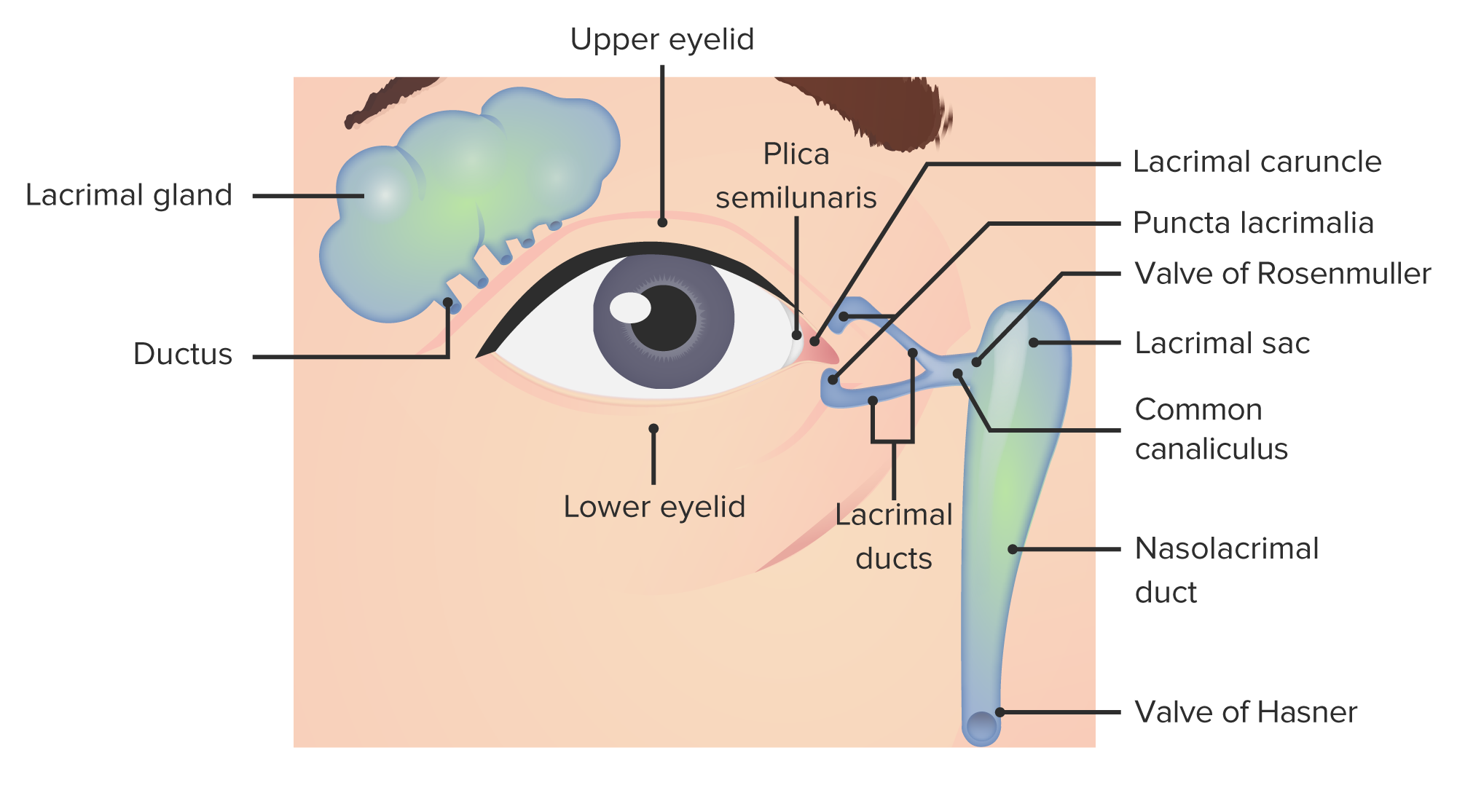
  • Sistema de drenaje de lagrimal
    • Canalículos lagrimales
    • Válvula de Rosenmuller: pliegue mucoso entre los LOS Neisseria canalículos y el saco lagrimal
    • Saco lagrimal: porción dilatada del CNL
    • CNL: drena en EN Erythema nodosum is an immune-mediated panniculitis (inflammation of the subcutaneous fat) caused by a type IV (delayed-type) hypersensitivity reaction. It commonly manifests in young women as tender, erythematous nodules on the shins. Erythema Nodosum el meato nasal inferior
    • Válvula de Hasner: pliegue mucoso que cubre parcialmente el CNL y que se abre en EN Erythema nodosum is an immune-mediated panniculitis (inflammation of the subcutaneous fat) caused by a type IV (delayed-type) hypersensitivity reaction. It commonly manifests in young women as tender, erythematous nodules on the shins. Erythema Nodosum el meato nasal
  • Fisiología
    • Las lágrimas liberadas lubrican el ojo → entran en EN Erythema nodosum is an immune-mediated panniculitis (inflammation of the subcutaneous fat) caused by a type IV (delayed-type) hypersensitivity reaction. It commonly manifests in young women as tender, erythematous nodules on the shins. Erythema Nodosum los LOS Neisseria canalículos lagrimales (a través de la Puncta lacrimalis ) en EN Erythema nodosum is an immune-mediated panniculitis (inflammation of the subcutaneous fat) caused by a type IV (delayed-type) hypersensitivity reaction. It commonly manifests in young women as tender, erythematous nodules on the shins. Erythema Nodosum la esquina medial del ojo → canalículo común → saco lagrimal → drena en EN Erythema nodosum is an immune-mediated panniculitis (inflammation of the subcutaneous fat) caused by a type IV (delayed-type) hypersensitivity reaction. It commonly manifests in young women as tender, erythematous nodules on the shins. Erythema Nodosum el CNL
Anatomía del aparato lagrimal

Anatomía del aparato lagrimal

Imagen por Lecturio.

Epidemiología

  • Distribución bimodal:
    • Después del nacimiento (casos congénitos)
    • En EN Erythema nodosum is an immune-mediated panniculitis (inflammation of the subcutaneous fat) caused by a type IV (delayed-type) hypersensitivity reaction. It commonly manifests in young women as tender, erythematous nodules on the shins. Erythema Nodosum adultos > 40 años de edad
  • Obstrucción congénita del CNL: afecta al AL Amyloidosis 6% de los LOS Neisseria recién nacidos
  • Mujeres > hombres
  • Los LOS Neisseria individuos blancos se ven más comúnmente afectados

Related videos

Tipos de Dacriocistitis

Basado en EN Erythema nodosum is an immune-mediated panniculitis (inflammation of the subcutaneous fat) caused by a type IV (delayed-type) hypersensitivity reaction. It commonly manifests in young women as tender, erythematous nodules on the shins. Erythema Nodosum la etiología

La obstrucción del sistema nasolagrimal es la principal etiología.
  • Obstrucción congénita del CNL
    • Causa más común: obstrucción membranosa en EN Erythema nodosum is an immune-mediated panniculitis (inflammation of the subcutaneous fat) caused by a type IV (delayed-type) hypersensitivity reaction. It commonly manifests in young women as tender, erythematous nodules on the shins. Erythema Nodosum la válvula de Hasner debido a una canalización incompleta del aparato nasolagrimal
  • Dacriocistocele congénito
    • Obstrucción en EN Erythema nodosum is an immune-mediated panniculitis (inflammation of the subcutaneous fat) caused by a type IV (delayed-type) hypersensitivity reaction. It commonly manifests in young women as tender, erythematous nodules on the shins. Erythema Nodosum las porciones proximal y distal del sistema de los LOS Neisseria conductos nasolagrimales
    • Proximal: bloqueo en EN Erythema nodosum is an immune-mediated panniculitis (inflammation of the subcutaneous fat) caused by a type IV (delayed-type) hypersensitivity reaction. It commonly manifests in young women as tender, erythematous nodules on the shins. Erythema Nodosum el canalículo común o en EN Erythema nodosum is an immune-mediated panniculitis (inflammation of the subcutaneous fat) caused by a type IV (delayed-type) hypersensitivity reaction. It commonly manifests in young women as tender, erythematous nodules on the shins. Erythema Nodosum la válvula de Rosenmuller
    • Distal: bloqueo generalmente en EN Erythema nodosum is an immune-mediated panniculitis (inflammation of the subcutaneous fat) caused by a type IV (delayed-type) hypersensitivity reaction. It commonly manifests in young women as tender, erythematous nodules on the shins. Erythema Nodosum la válvula de Hasner
    • Se observa como una hinchazón inferior al AL Amyloidosis canto medial, pero puede presentarse como dificultad respiratoria (por obstrucción nasal) en EN Erythema nodosum is an immune-mediated panniculitis (inflammation of the subcutaneous fat) caused by a type IV (delayed-type) hypersensitivity reaction. It commonly manifests in young women as tender, erythematous nodules on the shins. Erythema Nodosum recién nacidos.
  • Adquirida
    • Patología nasal: desviación del tabique, pólipo nasal, hipertrofia del cornete inferior
    • Tumores: tumores primarios del saco lagrimal y papilomas benignos o malignos
    • Traumatismos: fractura nasal y cirugía
    • Dacriolito: cálculo dentro del saco lagrimal
    • Enfermedad inflamatoria: sarcoidosis Sarcoidosis Sarcoidosis is a multisystem inflammatory disease that causes noncaseating granulomas. The exact etiology is unknown. Sarcoidosis usually affects the lungs and thoracic lymph nodes, but it can also affect almost every system in the body, including the skin, heart, and eyes, most commonly. Sarcoidosis, granulomatosis con poliangeitis
    • Sinusitis Sinusitis Sinusitis refers to inflammation of the mucosal lining of the paranasal sinuses. The condition usually occurs concurrently with inflammation of the nasal mucosa (rhinitis), a condition known as rhinosinusitis. Acute sinusitis is due to an upper respiratory infection caused by a viral, bacterial, or fungal agent. Sinusitis: maxilar y etmoidal
    • Medicamentos: timolol Timolol A beta-adrenergic antagonist that is similar in action to propranolol; the levo-isomer is more active. Timolol has been proposed as an anti-hypertensive, anti-arrhythmic, anti-angina, and anti-glaucoma agent. It is also used in the treatment of migraine disorders and tremor. Class 2 Antiarrhythmic Drugs (Beta Blockers), pilocarpina, dorzolamida, idoxuridina y trifluridina

Basado en EN Erythema nodosum is an immune-mediated panniculitis (inflammation of the subcutaneous fat) caused by a type IV (delayed-type) hypersensitivity reaction. It commonly manifests in young women as tender, erythematous nodules on the shins. Erythema Nodosum el inicio

  • Dacriocistitis aguda
    • Inflamación aguda del saco lagrimal que surge de la obstrucción del sistema lagrimal
    • La obstrucción conduce al AL Amyloidosis estancamiento de las lágrimas, proporcionando un entorno para el crecimiento bacteriano.
    • Organismos comunes en EN Erythema nodosum is an immune-mediated panniculitis (inflammation of the subcutaneous fat) caused by a type IV (delayed-type) hypersensitivity reaction. It commonly manifests in young women as tender, erythematous nodules on the shins. Erythema Nodosum infección local o abscesos:
      • Staphylococcus epidermidis Staphylococcus epidermidis A species of staphylococcus that is a spherical, non-motile, gram-positive, chemoorganotrophic, facultative anaerobe. Mainly found on the skin and mucous membrane of warm-blooded animals, it can be primary pathogen or secondary invader. Staphylococcus y S. aureus S. aureus Potentially pathogenic bacteria found in nasal membranes, skin, hair follicles, and perineum of warm-blooded animals. They may cause a wide range of infections and intoxications. Staphylococcus
      • Estreptococos del grupo viridans
      • Pseudomonas aeruginosa Pseudomonas aeruginosa A species of gram-negative, aerobic, rod-shaped bacteria commonly isolated from clinical specimens (wound, burn, and urinary tract infections). It is also found widely distributed in soil and water. P. Aeruginosa is a major agent of nosocomial infection. Pseudomonas
  • Dacriocistitis crónica
    • Inicio insidioso
    • Obstrucción crónica por:
      • Infecciones recurrentes
      • Dacriolitos
      • Enfermedades sistémicas
      • Tumores

Presentación Clínica

  • Dacriocistitis aguda: Los LOS Neisseria síntomas se presentan en EN Erythema nodosum is an immune-mediated panniculitis (inflammation of the subcutaneous fat) caused by a type IV (delayed-type) hypersensitivity reaction. It commonly manifests in young women as tender, erythematous nodules on the shins. Erythema Nodosum horas o días.
    • Enrojecimiento
    • Inflamación en EN Erythema nodosum is an immune-mediated panniculitis (inflammation of the subcutaneous fat) caused by a type IV (delayed-type) hypersensitivity reaction. It commonly manifests in young women as tender, erythematous nodules on the shins. Erythema Nodosum el canto medial y en EN Erythema nodosum is an immune-mediated panniculitis (inflammation of the subcutaneous fat) caused by a type IV (delayed-type) hypersensitivity reaction. It commonly manifests in young women as tender, erythematous nodules on the shins. Erythema Nodosum la zona inferomedial de la órbita
    • Sensibilidad por debajo del canto medial del ojo
    • Secreción purulenta del punto lagrimal
    • Materia: desechos y células epiteliales superficiales del ojo
    • Epífora: lagrimeo excesivo
  • Los LOS Neisseria síntomas de la dacriocistitis crónica incluyen:
    • Epífora: síntoma más común
    • Agudeza visual fluctuante: el aumento de la película lagrimal refracta la luz de forma anormal.
    • Mucocele Mucocele A retention cyst of the salivary gland, lacrimal sac, paranasal sinuses, appendix, or gallbladder. Dacryocystitis:
      • También llamado dacriocele o dacriocistocele
      • Masa palpable (formada a partir de líquido atrapado) en EN Erythema nodosum is an immune-mediated panniculitis (inflammation of the subcutaneous fat) caused by a type IV (delayed-type) hypersensitivity reaction. It commonly manifests in young women as tender, erythematous nodules on the shins. Erythema Nodosum el canto medial
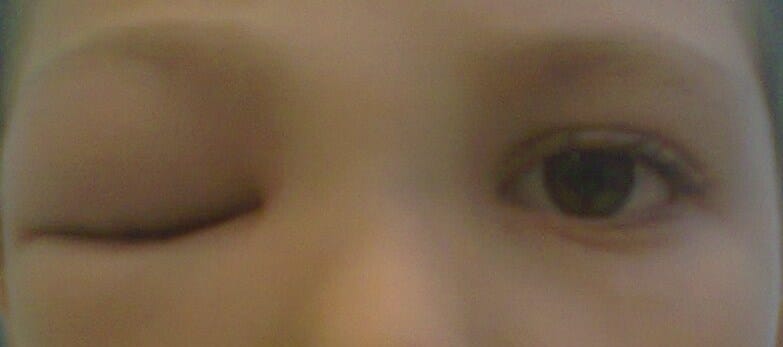
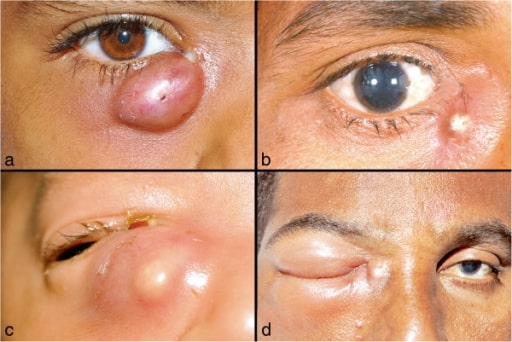
Presentación clínica de la dacriocistitis

Imágenes del absceso lagrimal:
a. y b. Absceso lagrimal derecho localizado, con secreción en el canto medial;
c. un neonato con absceso lagrimal derecho;
d. Absceso lagrimal con celulitis orbitaria
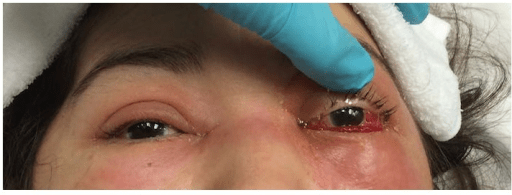
Imagen: “Dacryocystitis” por Dacryology Service, Ophthalmic Plastics Surgery, L,V, Prasad Eye Institute, Banjara Hills, Hyderabad 500034, India. Licencia: CC BY 2.0

Complicaciones

  • Complicaciones que involucran otras estructuras oculares:
    • Celulitis preseptal:
      • Inflamación infecciosa de las estructuras anteriores al AL Amyloidosis tabique orbitario (piel y tejido subcutáneo)
      • Se presenta con dolor Dolor Inflammation, fiebre, inflamación, enrojecimiento y secreción
    • Celulitis orbitaria:
      • Inflamación infecciosa de las estructuras posteriores al AL Amyloidosis tabique orbitario (grasa orbitaria, músculos, hueso)
      • Se presenta con dolor Dolor Inflammation, fiebre, enrojecimiento, secreción, inflamación, proptosis Proptosis Retinoblastoma, diplopía y movimientos oculares anormales
  • Complicaciones más allá del ojo:
    • Meningitis Meningitis Meningitis is inflammation of the meninges, the protective membranes of the brain, and spinal cord. The causes of meningitis are varied, with the most common being bacterial or viral infection. The classic presentation of meningitis is a triad of fever, altered mental status, and nuchal rigidity. Meningitis: inflamación de las meninges Meninges The brain and the spinal cord are enveloped by 3 overlapping layers of connective tissue called the meninges. The layers are, from the most external layer to the most internal layer, the dura mater, arachnoid mater, and pia mater. Between these layers are 3 potential spaces called the epidural, subdural, and subarachnoid spaces. Meninges: Anatomy
    • Sepsis Sepsis Systemic inflammatory response syndrome with a proven or suspected infectious etiology. When sepsis is associated with organ dysfunction distant from the site of infection, it is called severe sepsis. When sepsis is accompanied by hypotension despite adequate fluid infusion, it is called septic shock. Sepsis and Septic Shock: infección asociada a una disfunción orgánica potencialmente mortal
    • Trombosis del seno cavernoso: propagación retrógrada de la infección a través de venas oftálmicas sin válvulas que provoca trombosis en EN Erythema nodosum is an immune-mediated panniculitis (inflammation of the subcutaneous fat) caused by a type IV (delayed-type) hypersensitivity reaction. It commonly manifests in young women as tender, erythematous nodules on the shins. Erythema Nodosum el seno cavernoso.

Diagnóstico

  • Clínico: basado en EN Erythema nodosum is an immune-mediated panniculitis (inflammation of the subcutaneous fat) caused by a type IV (delayed-type) hypersensitivity reaction. It commonly manifests in young women as tender, erythematous nodules on the shins. Erythema Nodosum los LOS Neisseria signos y síntomas
  • Estudios de laboratorio:
    • Cultivo de la secreción del saco lagrimal: orienta el tratamiento antibiótico
    • Se obtiene si se consideran las enfermedades sistémicas como etiología
  • Prueba de desaparición del colorante de fluoresceína:
    • Se coloca un tinte de fluoresceína en EN Erythema nodosum is an immune-mediated panniculitis (inflammation of the subcutaneous fat) caused by a type IV (delayed-type) hypersensitivity reaction. It commonly manifests in young women as tender, erythematous nodules on the shins. Erythema Nodosum el ojo del paciente y luego de 5 minutos se realiza una evaluación (con el filtro azul cobalto de la lámpara de hendidura).
    • Persistencia del colorante y eliminación asimétrica del mismo: Se confirma la obstrucción del CNL
  • Estudios de imagen:
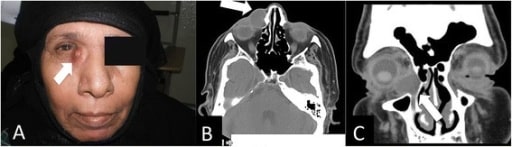
    • Tomografía computarizada (TC):
      • Para evaluar las estructuras en EN Erythema nodosum is an immune-mediated panniculitis (inflammation of the subcutaneous fat) caused by a type IV (delayed-type) hypersensitivity reaction. It commonly manifests in young women as tender, erythematous nodules on the shins. Erythema Nodosum casos de traumatismos/fracturas
      • Para evaluar la afección de la masa o del tumor Tumor Inflammation
      • Para determinar la extensión de la infección/absceso
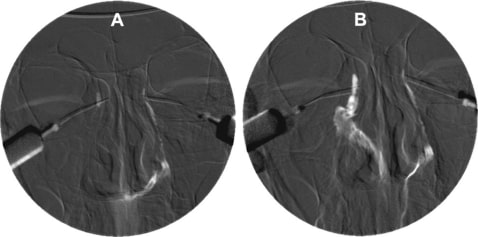
    • Dacriocistografía:
      • Ayuda a evaluar las anomalías anatómicas del conducto
  • Endoscopia nasal:
    • Evalúa la patología intranasal como la desviación septal, el estrechamiento del meato inferior y la hipertrofia del cornete inferior

Tratamiento

  • Dacriocistitis aguda por obstrucción congénita del CNL
    • Sondeo del CNL: contraindicado en EN Erythema nodosum is an immune-mediated panniculitis (inflammation of the subcutaneous fat) caused by a type IV (delayed-type) hypersensitivity reaction. It commonly manifests in young women as tender, erythematous nodules on the shins. Erythema Nodosum dacriocistitis aguda
    • Masaje de Crigler:
      • Presione el dedo índice hacia abajo sobre el saco lagrimal y deslice el dedo hacia abajo contra el lado óseo de la nariz.
      • 10 movimientos realizados 3 veces al AL Amyloidosis día
      • Realizar hasta que el niño tenga 1 año de edad
      • El 90% de las obstrucciones del CNL se resuelven a los LOS Neisseria 612 meses de edad.
    • Compresas calientes (10 minutos, 4 veces al AL Amyloidosis día)
  • Dacriocistitis aguda con infección
    • Infección localizada:
      • Medidas conservadoras (masaje, compresas calientes)
      • Antibióticos orales (cobertura para organismos gram positivos)
    • Casos complicados con propagación de la infección: Antibióticos intravenosos (cobertura para organismos gram positivos y gram negativos)
  • Dacriocistitis crónica
    • Sondeo del CNL:
      • Exitoso en EN Erythema nodosum is an immune-mediated panniculitis (inflammation of the subcutaneous fat) caused by a type IV (delayed-type) hypersensitivity reaction. It commonly manifests in young women as tender, erythematous nodules on the shins. Erythema Nodosum el 70% de los LOS Neisseria casos
      • Realizado de forma ambulatoria
    • Otras opciones falla el sondeo:
      • Colocación de stent nasolagrimal
      • Dacrioplastia con balón
      • Intubación nasolagrimal
    • Dacriocistorrinostomía externa (EXT-DCR) o dacriocistorrinostomía endonasal (EN-DCR):
      • Se realiza cuando las medidas terapéuticas previas fallan
      • Ante una obstrucción completa del CNL

Diagnóstico Diferencial

  • Conjuntivitis: inflamación de la conjuntiva, el revestimiento externo del ojo. La etiología puede ser infecciosa o no infecciosa. Los LOS Neisseria pacientes presentan enrojecimiento y secreción en EN Erythema nodosum is an immune-mediated panniculitis (inflammation of the subcutaneous fat) caused by a type IV (delayed-type) hypersensitivity reaction. It commonly manifests in young women as tender, erythematous nodules on the shins. Erythema Nodosum uno o ambos ojos. La conjuntivitis bacteriana suele presentar una secreción purulenta, mientras que las causas víricas presentan una secreción acuosa.
  • Hordeolum Hordeolum A hordeolum is an acute infection affecting the meibomian, Zeiss, or Moll glands of the eyelid. Stasis of the gland secretions predisposes to bacterial infection. Staphylococcus aureus is the most common pathogen. Hordeolum (Stye) (orzuelo): absceso que afecta al AL Amyloidosis folículo de las pestañas o a la glándula del párpado. El orzuelo suele presentarse como un margen del párpado localmente doloroso, eritematoso e inflamado. La mayoría de las lesiones se resuelven espontáneamente, pero las compresas calientes suaves facilitan el drenaje. Si el absceso no se resuelve, se realiza una incisión y el drenaje por parte de un oftalmólogo.
  • Chalazión: una masa firme y no sensible en EN Erythema nodosum is an immune-mediated panniculitis (inflammation of the subcutaneous fat) caused by a type IV (delayed-type) hypersensitivity reaction. It commonly manifests in young women as tender, erythematous nodules on the shins. Erythema Nodosum el párpado resultante de la obstrucción de las glándulas de Zeiss o de Meibomio. La afección suele tratarse de forma conservadora con compresas calientes. La persistencia de la lesión requiere la incisión y el legrado o la inyección de glucocorticoides por parte de un oftalmólogo.

Referencias

  1. Denniston, A., Murray, P. (2014). Oxford Handbook of Ophthalmology, Third edition. Oxford University Press, Oxford.
  2. Gilliland, G., Law, S., Ing, E. (2024). Dacryocystitis. Medscape. Retrieved July 14, 2025, from https://emedicine.medscape.com/article/1210688-overview#a4
  3. Paysse, E., Coats, D., Olitsky, S., Armsby, C. (2023). Congenital nasolacrimal duct obstruction (dacryostenosis) and dacryocystocele. UpToDate. Retrieved July 14, 2025, from https://www.uptodate.com/contents/congenital-nasolacrimal-duct-obstruction-dacryostenosis-and-dacryocystocele
  4. Revere, K. (2018). Nasolacrimal Duct Obstruction: The Right Way to Teach Parents. Medscape. Retrieved July 14, 2025, from https://www.medscape.com/viewarticle/902470
  5. Snell, R. (2012). Clinical anatomy by regions (9th ed.). Lippincott, William and Wilkins, Philadelphia, USA.
  6. Taylor, R., Ashurst, J. (2023). Dacryocystitis. StatPearls. Retrieved July 14, 2025, from https://www.ncbi.nlm.nih.gov/books/NBK470565/

¡Crea tu cuenta gratis o inicia una sesión para seguir leyendo!

Regístrate ahora y obtén acceso gratuito a Lecturio con páginas de concepto, videos médicos y cuestionarios para tu educación médica.

User Reviews

Que tengas una sesión de estudio alegre y navideña 🎁 Ahorra 50% en todos los planes >>

Details