Domina Conceptos Médicos

Estudia para la escuela de medicina y tus examenes con Lecturio.

Clostridios

Las especies de Clostridia Clostridia Clostridia species comprise a group of spore-forming, obligate anaerobic, gram-positive bacilli. Major pathogenic species include Clostridium perfringens (C. perfringens), which is associated with gas gangrene; Clostridioides difficile, which is associated with pseudomembranous colitis; C. tetani, which causes tetanus; and C. botulinum, which causes botulism. Clostridia comprenden un grupo de bacilos gram-positivos, anaerobios obligados, formadores de esporas. Las principales especies patógenas incluyen Clostridium perfringens Clostridium perfringens The most common etiologic agent of gas gangrene. It is differentiable into several distinct types based on the distribution of twelve different toxins. Gas Gangrene ( C. perfringens C. perfringens The most common etiologic agent of gas gangrene. It is differentiable into several distinct types based on the distribution of twelve different toxins. Gas Gangrene), que se asocia con gangrena gaseosa; Clostridioides difficile, que se asocia con colitis Colitis Inflammation of the colon section of the large intestine, usually with symptoms such as diarrhea (often with blood and mucus), abdominal pain, and fever. Pseudomembranous Colitis pseudomembranosa; C. tetani C. tetani The cause of tetanus in humans and domestic animals. It is a common inhabitant of human and horse intestines as well as soil. Two components make up its potent exotoxin activity, a neurotoxin and a hemolytic toxin. Clostridia, que causa el tétanos; y C. botulinum C. botulinum A species of anaerobic, gram-positive, rod-shaped bacteria in the family clostridiaceae that produces proteins with characteristic neurotoxicity. It is the etiologic agent of botulism in humans, wild fowl, horses; and cattle. Seven subtypes (sometimes called antigenic types, or strains) exist, each producing a different botulinum toxin (botulinum toxins). The organism and its spores are widely distributed in nature. Clostridia, que causa el botulismo. Clostridium perfringens Clostridium perfringens The most common etiologic agent of gas gangrene. It is differentiable into several distinct types based on the distribution of twelve different toxins. Gas Gangrene ( C. perfringens C. perfringens The most common etiologic agent of gas gangrene. It is differentiable into several distinct types based on the distribution of twelve different toxins. Gas Gangrene), Clostridioides difficile, C. tetani C. tetani The cause of tetanus in humans and domestic animals. It is a common inhabitant of human and horse intestines as well as soil. Two components make up its potent exotoxin activity, a neurotoxin and a hemolytic toxin. Clostridia, y C. botulinum C. botulinum A species of anaerobic, gram-positive, rod-shaped bacteria in the family clostridiaceae that produces proteins with characteristic neurotoxicity. It is the etiologic agent of botulism in humans, wild fowl, horses; and cattle. Seven subtypes (sometimes called antigenic types, or strains) exist, each producing a different botulinum toxin (botulinum toxins). The organism and its spores are widely distributed in nature. Clostridia tienen una invasividad de amplio espectro y manifestaciones clínicas que se resumen a continuación. Tenga en EN Erythema nodosum is an immune-mediated panniculitis (inflammation of the subcutaneous fat) caused by a type IV (delayed-type) hypersensitivity reaction. It commonly manifests in young women as tender, erythematous nodules on the shins. Erythema Nodosum cuenta que Clostridium difficile Clostridium difficile A common inhabitant of the colon flora in human infants and sometimes in adults. The type species clostridioides difficile is formerly known as Clostridium difficile. It is a causative agent for clostridioides infections and is associated with pseudomembranous enterocolitis in patients receiving antibiotic therapy. Clostridia ha HA Hemolytic anemia (HA) is the term given to a large group of anemias that are caused by the premature destruction/hemolysis of circulating red blood cells (RBCs). Hemolysis can occur within (intravascular hemolysis) or outside the blood vessels (extravascular hemolysis). Hemolytic Anemia sido reclasificado como Clostridioides difficile. Sin embargo, es probable que los LOS Neisseria exámenes no tengan el género actualizado durante varios años.

Last updated: Jan 16, 2024
Editorial responsibility: Stanley Oiseth, Lindsay Jones, Evelin Maza

Clasificación

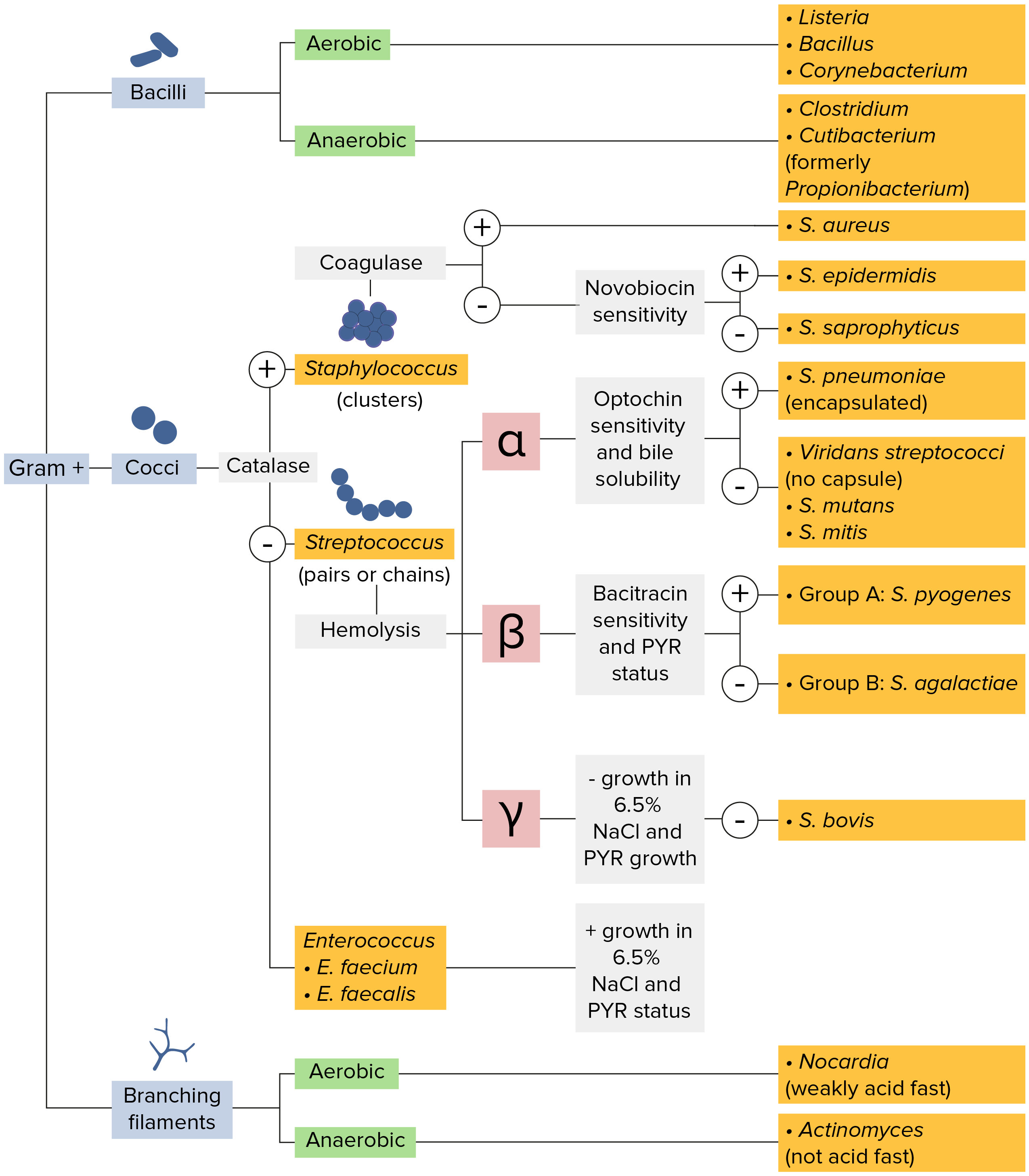
Diagrama de flujo de microbiología clasificación de bacterias grampositivas

Bacterias gram-positivas:
La mayoría de las bacterias se pueden clasificar de acuerdo con un procedimiento de laboratorio llamado tinción de Gram.
Las bacterias con paredes celulares que tienen una capa gruesa de peptidoglicano retienen la tinción cristal violeta utilizada en la tinción de Gram, pero no se ven afectadas por la contratinción de safranina. Estas bacterias aparecen como azul púrpura en la tinción, lo que indica que son gram-positivas. Las bacterias pueden clasificarse además según su morfología (filamentos ramificados, bacilos y cocos en grupos o cadenas) y su capacidad para crecer en presencia de oxígeno (aeróbicos versus anaeróbicos). Los cocos también pueden identificarse con mayor profundidad. Los estafilococos pueden reducirse en función de la presencia de la enzima coagulasa y de su sensibilidad al antibiótico novobiocina. Los estreptococos se cultivan en agar sangre y se clasifican según la forma de hemólisis que emplean (α, β o γ). Los estreptococos se reducen aún más en función de su respuesta a la prueba de pirrolidonil-β-naftilamida, su sensibilidad a antimicrobianos específicos (optoquina y bacitracina) y su capacidad para crecer en medios de cloruro de sodio (NaCl).
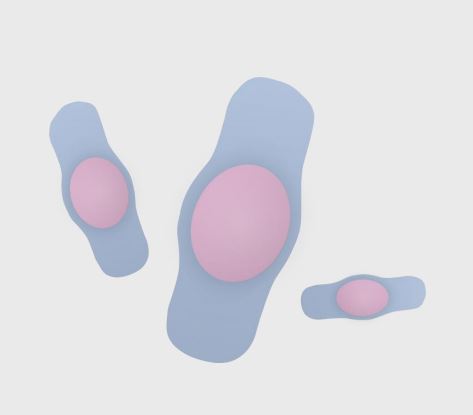
Imagen por Lecturio. Licencia: CC BY-NC-SA 4.0

Características Generales

Características básicas de las especies de Clostridium

  • Bacilos gram-positivos
  • Organismos formadores de esporas
  • Anaerobios obligados
  • Hábitat:
    • Suelo, agua dulce, sedimentos marinos
    • Tracto intestinal de humanos y animales
    • Flora cérvico-vaginal
    • Las esporas pueden estar en EN Erythema nodosum is an immune-mediated panniculitis (inflammation of the subcutaneous fat) caused by a type IV (delayed-type) hypersensitivity reaction. It commonly manifests in young women as tender, erythematous nodules on the shins. Erythema Nodosum el aire.
  • Patogénesis:
    • La infección puede ser exógena (del exterior) o endógena.
    • Causan enfermedad por exotoxinas o producción de enterotoxinas
Dibujos animados de clostridios

Dibujo que muestra la estructura general de la bacteria gram-positiva Clostridia

Imagen por Lecturio.

Especies patógenas

  • C. perfringens C. perfringens The most common etiologic agent of gas gangrene. It is differentiable into several distinct types based on the distribution of twelve different toxins. Gas Gangrene (20%–40% de todos los LOS Neisseria aislamientos)
  • Clostridioides difficile
  • C. tetani C. tetani The cause of tetanus in humans and domestic animals. It is a common inhabitant of human and horse intestines as well as soil. Two components make up its potent exotoxin activity, a neurotoxin and a hemolytic toxin. Clostridia
  • C. botulinum C. botulinum A species of anaerobic, gram-positive, rod-shaped bacteria in the family clostridiaceae that produces proteins with characteristic neurotoxicity. It is the etiologic agent of botulism in humans, wild fowl, horses; and cattle. Seven subtypes (sometimes called antigenic types, or strains) exist, each producing a different botulinum toxin (botulinum toxins). The organism and its spores are widely distributed in nature. Clostridia
Tabla: Comparación y contraste de especies de Clostridia Clostridia Clostridia species comprise a group of spore-forming, obligate anaerobic, gram-positive bacilli. Major pathogenic species include Clostridium perfringens (C. perfringens), which is associated with gas gangrene; Clostridioides difficile, which is associated with pseudomembranous colitis; C. tetani, which causes tetanus; and C. botulinum, which causes botulism. Clostridia
C. botulinum C. botulinum A species of anaerobic, gram-positive, rod-shaped bacteria in the family clostridiaceae that produces proteins with characteristic neurotoxicity. It is the etiologic agent of botulism in humans, wild fowl, horses; and cattle. Seven subtypes (sometimes called antigenic types, or strains) exist, each producing a different botulinum toxin (botulinum toxins). The organism and its spores are widely distributed in nature. Clostridia Clostridioides difficile C.perfringens C. tetani C. tetani The cause of tetanus in humans and domestic animals. It is a common inhabitant of human and horse intestines as well as soil. Two components make up its potent exotoxin activity, a neurotoxin and a hemolytic toxin. Clostridia
Hábitat
  • Tierra
  • Sedimentos marinos
  • Flora intestinal
  • Tierra
  • Flora intestinal
  • Tierra
  • Flora intestinal
Virulencia
  • Toxina botulínica
  • Enterotoxina A
  • Toxina B
  • Toxina alfa
  • Enterotoxina
  • Toxina tetánica (tetanoespasmina)
Transmisión Ingestión de:
  • Esporas
  • Toxina preformada
A través de esporas:
  • Infección nosocomial (mal lavado de manos)
  • Flora intestinal oportunista
A través de esporas:
  • Heridas traumáticas
  • Ingestión de alimentos
A través de esporas:
  • Heridas traumáticas
  • Contaminación del cordón umbilical durante el parto
Presentación clínica
  • Parálisis flácida
  • Botulismo
  • Lactantes: síndrome del bebé flácido
  • Diarrea nosocomial
  • Colitis Colitis Inflammation of the colon section of the large intestine, usually with symptoms such as diarrhea (often with blood and mucus), abdominal pain, and fever. Pseudomembranous Colitis pseudomembranosa
  • Intoxicación alimentaria
  • Celulitis localizada
  • Mionecrosis por Clostridium
  • Parálisis espástica
  • Trismo
  • Risa sardónica
  • Opistótonos
  • Tétanos neonatal

Related videos

Clostridium botulinum

Epidemiología

  • Botulismo transmitido por alimentos:
    • En EN Erythema nodosum is an immune-mediated panniculitis (inflammation of the subcutaneous fat) caused by a type IV (delayed-type) hypersensitivity reaction. It commonly manifests in young women as tender, erythematous nodules on the shins. Erythema Nodosum Estados Unidos, es más común en EN Erythema nodosum is an immune-mediated panniculitis (inflammation of the subcutaneous fat) caused by a type IV (delayed-type) hypersensitivity reaction. It commonly manifests in young women as tender, erythematous nodules on the shins. Erythema Nodosum los LOS Neisseria nativos de Alaska (a través de la ingestión de pescado añejo)
    • La tasa nacional general es de 0,0068 por 100 000
  • Botulismo infantil:
    • Ingestión de esporas:
      • De miel cruda
      • Del polvo ambiental
    • La incidencia más alta se presenta en EN Erythema nodosum is an immune-mediated panniculitis (inflammation of the subcutaneous fat) caused by a type IV (delayed-type) hypersensitivity reaction. It commonly manifests in young women as tender, erythematous nodules on the shins. Erythema Nodosum Utah, Pensilvania y California
  • Botulismo por heridas: en EN Erythema nodosum is an immune-mediated panniculitis (inflammation of the subcutaneous fat) caused by a type IV (delayed-type) hypersensitivity reaction. It commonly manifests in young women as tender, erythematous nodules on the shins. Erythema Nodosum usuarios de drogas inyectables

Transmisión

  • Los LOS Neisseria adultos ingieren la toxina preformada de los LOS Neisseria alimentos:
    • Asociado con un enlatado inadecuado
    • A veces de bebidas fermentadas (e.g., alcohol ilegal)
  • Los LOS Neisseria bebés ingieren las esporas: luego se produce la toxina in vivo
  • Botulismo por heridas:
    • Contaminación de heridas con esporas
    • Germinación y producción de toxinas in vivo

Patogénesis

  • El botulismo es una enfermedad neuroparalítica potencialmente mortal.
  • Neurotoxina botulínica:
    • Proteasa que escinde las proteínas solubles del receptor Receptor Receptors are proteins located either on the surface of or within a cell that can bind to signaling molecules known as ligands (e.g., hormones) and cause some type of response within the cell. Receptors de la proteína de unión del factor sensible a la N-etilmaleimida
    • Inhibe la liberación de acetilcolina ( ACh ACh A neurotransmitter found at neuromuscular junctions, autonomic ganglia, parasympathetic effector junctions, a subset of sympathetic effector junctions, and at many sites in the central nervous system. Receptors and Neurotransmitters of the CNS) estimulante
    • Provoca depleción de ACh ACh A neurotransmitter found at neuromuscular junctions, autonomic ganglia, parasympathetic effector junctions, a subset of sympathetic effector junctions, and at many sites in the central nervous system. Receptors and Neurotransmitters of the CNS en EN Erythema nodosum is an immune-mediated panniculitis (inflammation of the subcutaneous fat) caused by a type IV (delayed-type) hypersensitivity reaction. It commonly manifests in young women as tender, erythematous nodules on the shins. Erythema Nodosum las uniones neuromusculares
    • Provoca parálisis flácida
Mecanismo fisiopatológico causado por Clostridium botulinum

Mecanismo fisiopatológico causado por Clostridium botulinum
La introducción del patógeno con su toxina provoca hiperexcitación, ya que parte de la toxina impide que la placa motora terminal libere sus neurotransmisores en la sinapsis

Imagen por Lecturio.

Presentación clínica

Adultos:

Lactantes (síndrome del bebé flácido):
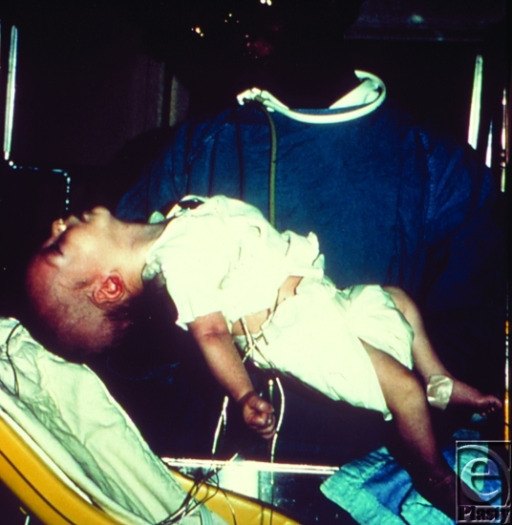
  • Hipotonía
  • Dificultades para la alimentación
  • Llanto débil
  • Babeo
  • Irritabilidad

Lactante de seis semanas con botulismo
Marcada pérdida de tono muscular, especialmente en la región de la cabeza y el cuello
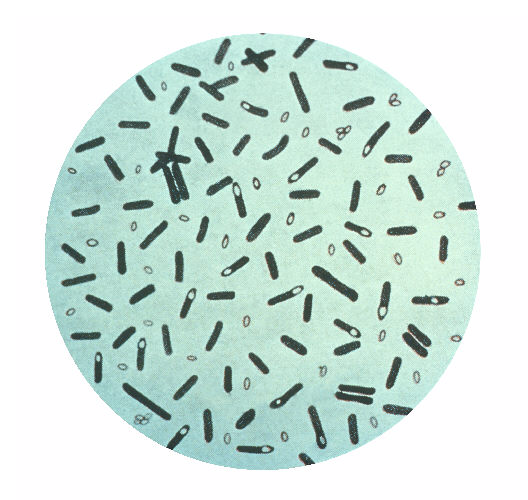
Imagen: “PMC3223485_eplasty11e47_fig5” por Chopra K, Conde-Green A, Folstein MK, Knepp EK, Christy MR and Singh DP. Licencia: CC BY 2.0.

Identificación

  • Identificación de toxinas a partir de:
    • Suero
    • Heces
    • Vómito
    • Comida
  • Prueba de ensayo inmunoabsorbente ligado a enzimas ( ELISA ELISA An immunoassay utilizing an antibody labeled with an enzyme marker such as horseradish peroxidase. While either the enzyme or the antibody is bound to an immunosorbent substrate, they both retain their biologic activity; the change in enzyme activity as a result of the enzyme-antibody-antigen reaction is proportional to the concentration of the antigen and can be measured spectrophotometrically or with the naked eye. Many variations of the method have been developed. St. Louis Encephalitis Virus, por sus siglas en EN Erythema nodosum is an immune-mediated panniculitis (inflammation of the subcutaneous fat) caused by a type IV (delayed-type) hypersensitivity reaction. It commonly manifests in young women as tender, erythematous nodules on the shins. Erythema Nodosum inglés)
  • Bioensayo en EN Erythema nodosum is an immune-mediated panniculitis (inflammation of the subcutaneous fat) caused by a type IV (delayed-type) hypersensitivity reaction. It commonly manifests in young women as tender, erythematous nodules on the shins. Erythema Nodosum ratón
  • Reacción en EN Erythema nodosum is an immune-mediated panniculitis (inflammation of the subcutaneous fat) caused by a type IV (delayed-type) hypersensitivity reaction. It commonly manifests in young women as tender, erythematous nodules on the shins. Erythema Nodosum cadena de la polimerasa ( PCR PCR Polymerase chain reaction (PCR) is a technique that amplifies DNA fragments exponentially for analysis. The process is highly specific, allowing for the targeting of specific genomic sequences, even with minuscule sample amounts. The PCR cycles multiple times through 3 phases: denaturation of the template DNA, annealing of a specific primer to the individual DNA strands, and synthesis/elongation of new DNA molecules. Polymerase Chain Reaction (PCR), por sus siglas en EN Erythema nodosum is an immune-mediated panniculitis (inflammation of the subcutaneous fat) caused by a type IV (delayed-type) hypersensitivity reaction. It commonly manifests in young women as tender, erythematous nodules on the shins. Erythema Nodosum inglés) cuantitativa: detecta genes Genes A category of nucleic acid sequences that function as units of heredity and which code for the basic instructions for the development, reproduction, and maintenance of organisms. DNA Types and Structure de toxinas en EN Erythema nodosum is an immune-mediated panniculitis (inflammation of the subcutaneous fat) caused by a type IV (delayed-type) hypersensitivity reaction. It commonly manifests in young women as tender, erythematous nodules on the shins. Erythema Nodosum el organismo

Related videos

Clostridium (Clostridioides) difficile

Epidemiología

  • Causa más común de colitis Colitis Inflammation of the colon section of the large intestine, usually with symptoms such as diarrhea (often with blood and mucus), abdominal pain, and fever. Pseudomembranous Colitis inducida por antibióticos (especialmente asociada con clindamicina)
  • Prevalencia:
    • En EN Erythema nodosum is an immune-mediated panniculitis (inflammation of the subcutaneous fat) caused by a type IV (delayed-type) hypersensitivity reaction. It commonly manifests in young women as tender, erythematous nodules on the shins. Erythema Nodosum adultos sanos: 3%
    • En EN Erythema nodosum is an immune-mediated panniculitis (inflammation of the subcutaneous fat) caused by a type IV (delayed-type) hypersensitivity reaction. It commonly manifests in young women as tender, erythematous nodules on the shins. Erythema Nodosum adultos hospitalizados/institucionalizados: 8%–10%
  • Las nuevas exposiciones tienen más probabilidades de resultar en EN Erythema nodosum is an immune-mediated panniculitis (inflammation of the subcutaneous fat) caused by a type IV (delayed-type) hypersensitivity reaction. It commonly manifests in young women as tender, erythematous nodules on the shins. Erythema Nodosum una enfermedad sintomática

Transmisión

  • Transmisión fecal-oral de esporas
  • Esporas transmitidas de persona a persona (mal lavado de manos)

Patogénesis

  • Produce 2 potentes exotoxinas
  • Inactiva las enzimas homólogas de Ras RAS Renal artery stenosis (RAS) is the narrowing of one or both renal arteries, usually caused by atherosclerotic disease or by fibromuscular dysplasia. If the stenosis is severe enough, the stenosis causes decreased renal blood flow, which activates the renin-angiotensin-aldosterone system (RAAS) and leads to renovascular hypertension (RVH). Renal Artery Stenosis (Rho) guanosina trifosfato (GTP):
    • Enterotoxina A:
      • Se dirige a las enzimas del borde en EN Erythema nodosum is an immune-mediated panniculitis (inflammation of the subcutaneous fat) caused by a type IV (delayed-type) hypersensitivity reaction. It commonly manifests in young women as tender, erythematous nodules on the shins. Erythema Nodosum cepillo
      • Altera la secreción de líquidos
      • Causa diarrea acuosa
    • Toxina B (10 veces más potente):
      • Despolimeriza la actina
      • Altera el citoesqueleto de los LOS Neisseria enterocitos
      • Causa colitis Colitis Inflammation of the colon section of the large intestine, usually with symptoms such as diarrhea (often with blood and mucus), abdominal pain, and fever. Pseudomembranous Colitis pseudomembranosa
  • Ácido dipicolínico en EN Erythema nodosum is an immune-mediated panniculitis (inflammation of the subcutaneous fat) caused by a type IV (delayed-type) hypersensitivity reaction. It commonly manifests in young women as tender, erythematous nodules on the shins. Erythema Nodosum el núcleo de la espora: altamente resistente al AL Amyloidosis calor Calor Inflammation y a los LOS Neisseria productos químicos

Presentación clínica

Colitis Colitis Inflammation of the colon section of the large intestine, usually with symptoms such as diarrhea (often with blood and mucus), abdominal pain, and fever. Pseudomembranous Colitis pseudomembranosa:
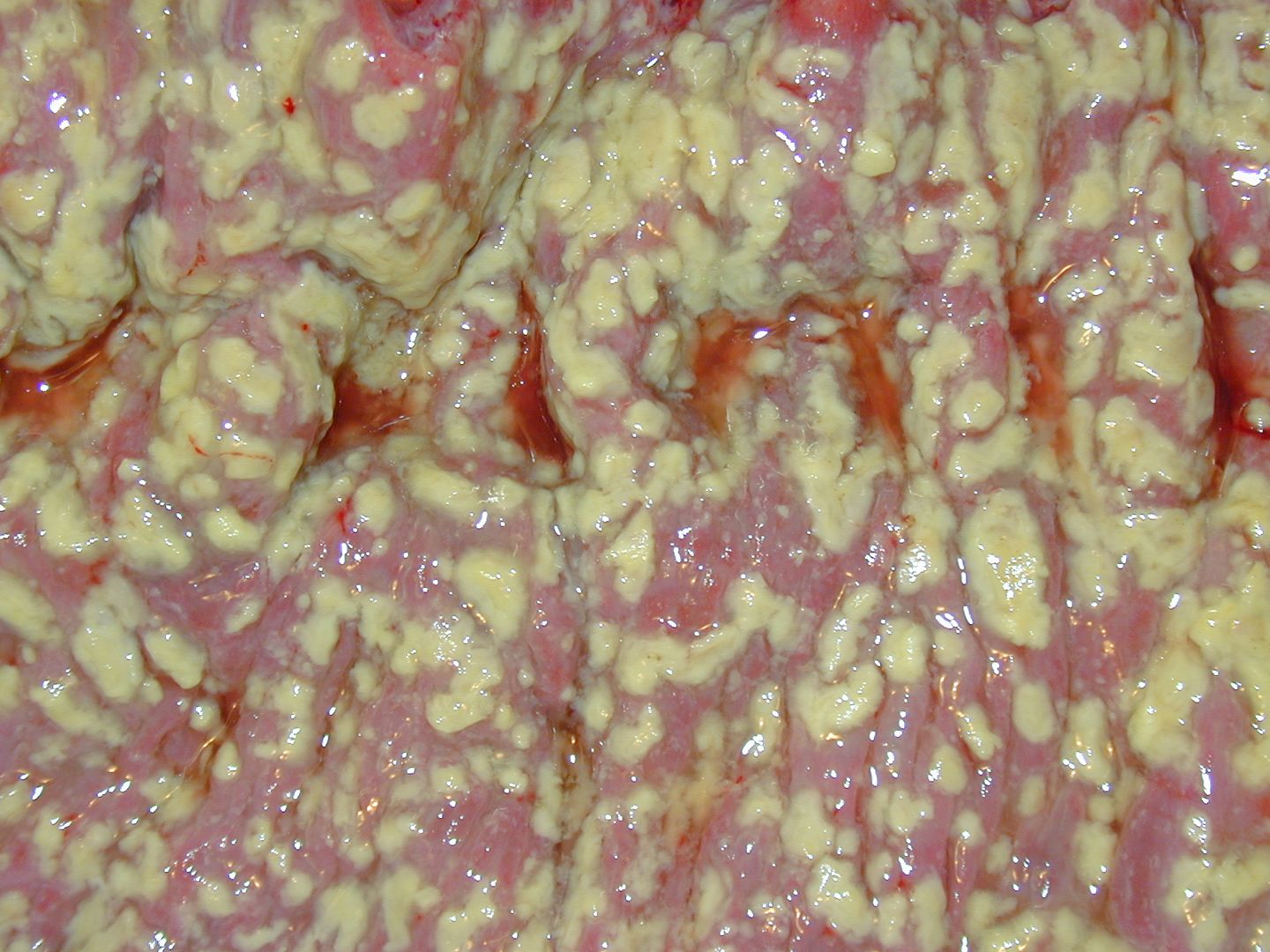
  • Dolor Dolor Inflammation abdominal
  • Diarrea acuosa profusa (ocasionalmente puede ser sanguinolenta)
  • Leucocitosis
  • Asociada con el uso reciente de antibióticos
colitis pseudomembranosa

Muestra patológica que muestra colitis pseudomembranosa

Imagen: “Pseudomembranous colitis” por el patólogo de turno. Licencia: Dominio Público

Identificación

  • Detección de antígenos tóxicos en EN Erythema nodosum is an immune-mediated panniculitis (inflammation of the subcutaneous fat) caused by a type IV (delayed-type) hypersensitivity reaction. It commonly manifests in young women as tender, erythematous nodules on the shins. Erythema Nodosum heces
  • PCR PCR Polymerase chain reaction (PCR) is a technique that amplifies DNA fragments exponentially for analysis. The process is highly specific, allowing for the targeting of specific genomic sequences, even with minuscule sample amounts. The PCR cycles multiple times through 3 phases: denaturation of the template DNA, annealing of a specific primer to the individual DNA strands, and synthesis/elongation of new DNA molecules. Polymerase Chain Reaction (PCR) para el ácido desoxirribonucleico (ADN) de Clostridioides difficile

Clostridium perfringens

Epidemiología

  • Intoxicación alimentaria:
    • 2da causa más común de enfermedades transmitidas por alimentos
    • Se estiman 1 millón de casos cada año en EN Erythema nodosum is an immune-mediated panniculitis (inflammation of the subcutaneous fat) caused by a type IV (delayed-type) hypersensitivity reaction. It commonly manifests in young women as tender, erythematous nodules on the shins. Erythema Nodosum Estados Unidos
  • Infecciones de tejidos blandos:
    • 30%–80% de las heridas abiertas están contaminadas con especies de Clostridium.
    • 80% de los LOS Neisseria casos de gangrena gaseosa traumática
    • Generalmente, la gangrena gaseosa espontánea es causada por otra especie: C. septicum C. septicum A species of gram-positive bacteria in the family clostridiaceae. Infections have a strong association with malignancies and also with gas gangrene. Gas Gangrene.

Transmisión

  • Esporas en EN Erythema nodosum is an immune-mediated panniculitis (inflammation of the subcutaneous fat) caused by a type IV (delayed-type) hypersensitivity reaction. It commonly manifests in young women as tender, erythematous nodules on the shins. Erythema Nodosum la tierra: contaminación de heridas
  • Esporas en EN Erythema nodosum is an immune-mediated panniculitis (inflammation of the subcutaneous fat) caused by a type IV (delayed-type) hypersensitivity reaction. It commonly manifests in young women as tender, erythematous nodules on the shins. Erythema Nodosum carnes recalentadas: intoxicación alimentaria

Patogénesis

Mionecrosis (gangrena gaseosa):

  • Toxina alfa:
    • Toxina hemolítica; esencial para las manifestaciones de la enfermedad y la mortalidad
    • Tiene actividad de fosfolipasa C y esfingomielinasa
    • Degrada los LOS Neisseria tejidos y las membranas celulares
    • Provoca trombosis de vasos pequeños e isquemia tisular
    • La isquemia crea un entorno anaeróbico → mayor propagación de C. perfringens C. perfringens The most common etiologic agent of gas gangrene. It is differentiable into several distinct types based on the distribution of twelve different toxins. Gas Gangrene
    • También deprime el gasto cardíaco y contribuye al AL Amyloidosis shock Shock Shock is a life-threatening condition associated with impaired circulation that results in tissue hypoxia. The different types of shock are based on the underlying cause: distributive (↑ cardiac output (CO), ↓ systemic vascular resistance (SVR)), cardiogenic (↓ CO, ↑ SVR), hypovolemic (↓ CO, ↑ SVR), obstructive (↓ CO), and mixed. Types of Shock sistémico
  • Toxina theta (perfringolisina O):
    • Citolisina formadora de poros
    • Citotóxica para las células vasculares e inmunitarias
    • No es esencial para la mortalidad

Intoxicación alimentaria:

  • Causada por cepas tipo A
  • Las esporas sobreviven a las temperaturas de cocción y se propagan en EN Erythema nodosum is an immune-mediated panniculitis (inflammation of the subcutaneous fat) caused by a type IV (delayed-type) hypersensitivity reaction. It commonly manifests in young women as tender, erythematous nodules on the shins. Erythema Nodosum alimentos almacenados incorrectamente.
  • Enterotoxina:
    • Interrumpe el transporte de iones en EN Erythema nodosum is an immune-mediated panniculitis (inflammation of the subcutaneous fat) caused by a type IV (delayed-type) hypersensitivity reaction. It commonly manifests in young women as tender, erythematous nodules on the shins. Erythema Nodosum el íleon
    • Provoca diarrea acuosa

Presentación clínica

  • Enfermedad transmitida por alimentos:
    • Diarrea acuosa de inicio insidioso con cólicos abdominales
    • Los LOS Neisseria vómitos y la fiebre son poco comunes.
    • 12–24 horas después del consumo de alimentos
    • Autolimitada, se resuelve en EN Erythema nodosum is an immune-mediated panniculitis (inflammation of the subcutaneous fat) caused by a type IV (delayed-type) hypersensitivity reaction. It commonly manifests in young women as tender, erythematous nodules on the shins. Erythema Nodosum 1–3 días
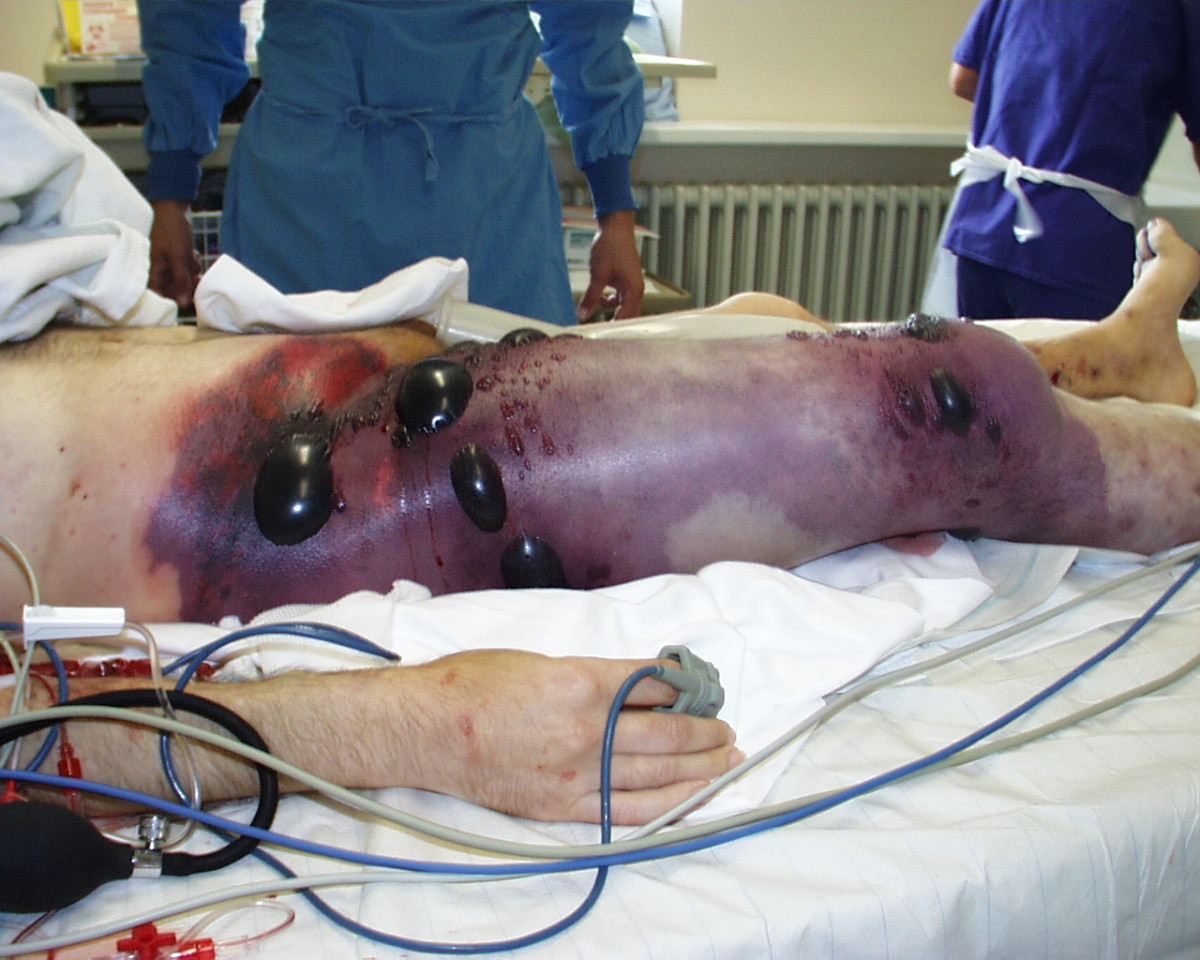
  • Mionecrosis:
    • Dolor Dolor Inflammation severo
    • Crepitación tisular (por formación de gas)
    • Edema Edema Edema is a condition in which excess serous fluid accumulates in the body cavity or interstitial space of connective tissues. Edema is a symptom observed in several medical conditions. It can be categorized into 2 types, namely, peripheral (in the extremities) and internal (in an organ or body cavity). Edema, ampollas y bullas
    • Decoloración violácea de la piel
    • Fiebre, cambios del estado mental
Gangrena gaseosa

Gangrena gaseosa de la pierna derecha y la pelvis

Imagen: “Gas gangrene” de Engelbert Schröpfer, Stephan Rauthe and Thomas Meyer. Licencia: CC BY 2.0.
Identificación

  • Tinción de Gram y cultivo de los LOS Neisseria tejidos/líquido de la ampolla
  • Hemocultivos
  • Coprocultivos para la enfermedad transmitida por alimentos
  • Características distintivas de crecimiento:
    • Agar yema de huevo: forma una zona turbia
    • Catalasa negativa
    • Oxidasa negativa
    • Zona de doble hemólisis en EN Erythema nodosum is an immune-mediated panniculitis (inflammation of the subcutaneous fat) caused by a type IV (delayed-type) hypersensitivity reaction. It commonly manifests in young women as tender, erythematous nodules on the shins. Erythema Nodosum agar sangre
    • Inmóvil
    • Encapsulado

Clostridium tetani

Epidemiología

  • Causa tétanos: un trastorno del sistema nervioso
  • Muy raro en EN Erythema nodosum is an immune-mediated panniculitis (inflammation of the subcutaneous fat) caused by a type IV (delayed-type) hypersensitivity reaction. It commonly manifests in young women as tender, erythematous nodules on the shins. Erythema Nodosum países ricos en EN Erythema nodosum is an immune-mediated panniculitis (inflammation of the subcutaneous fat) caused by a type IV (delayed-type) hypersensitivity reaction. It commonly manifests in young women as tender, erythematous nodules on the shins. Erythema Nodosum recursos debido a la vacunación generalizada
  • Sigue siendo endémica en EN Erythema nodosum is an immune-mediated panniculitis (inflammation of the subcutaneous fat) caused by a type IV (delayed-type) hypersensitivity reaction. It commonly manifests in young women as tender, erythematous nodules on the shins. Erythema Nodosum países de recursos limitados

Transmisión

  • A través de esporas
  • Asociado con heridas punzantes en EN Erythema nodosum is an immune-mediated panniculitis (inflammation of the subcutaneous fat) caused by a type IV (delayed-type) hypersensitivity reaction. It commonly manifests in young women as tender, erythematous nodules on the shins. Erythema Nodosum la piel:
    • Clavos oxidados
    • Alambre de púas
    • Trabajadores de construcción
  • No crecerá en EN Erythema nodosum is an immune-mediated panniculitis (inflammation of the subcutaneous fat) caused by a type IV (delayed-type) hypersensitivity reaction. It commonly manifests in young women as tender, erythematous nodules on the shins. Erythema Nodosum tejidos sanos
  • Factores predisponentes:
    • Isquemia localizada
    • Tejido desvitalizado
    • Cuerpo extraño
    • Coinfección con otras bacterias

Patogénesis

  • Periodo promedio de incubación: 8 días
  • Transporte retrógrado de toxina al AL Amyloidosis sistema nervioso central (SNC)
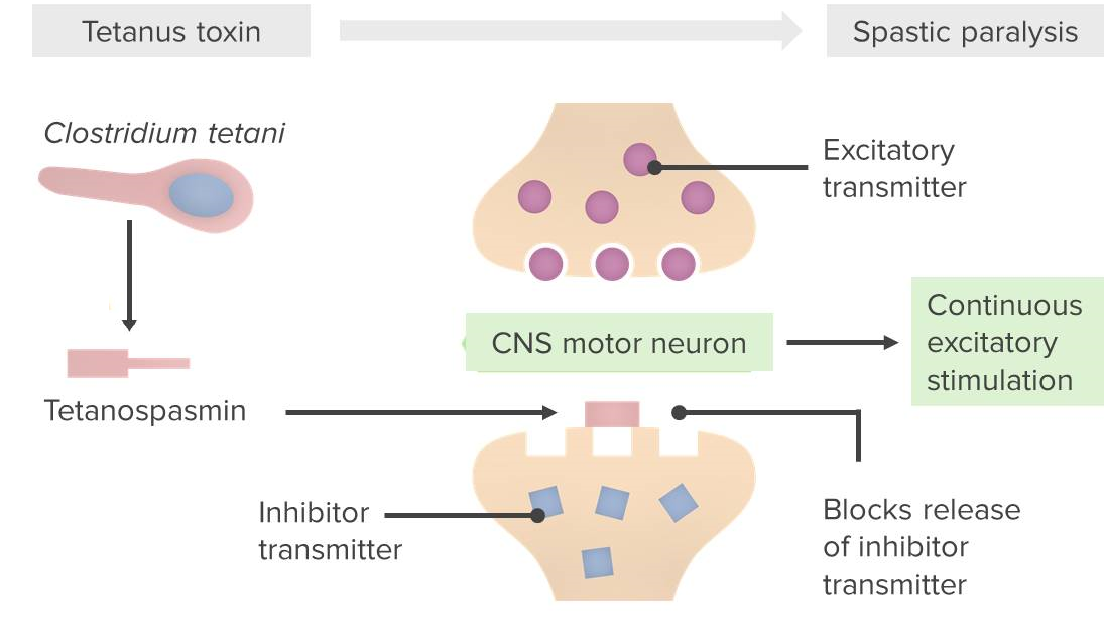
  • Toxina tetánica o tetanoespasmina (toxina A/B):
    • Proteasa que escinde la proteína soluble del receptor Receptor Receptors are proteins located either on the surface of or within a cell that can bind to signaling molecules known as ligands (e.g., hormones) and cause some type of response within the cell. Receptors de la proteína de unión del factor sensible a la N-etilmaleimida
    • Bloquea la exocitosis de neurotransmisores inhibitorios (ácido gamma-aminobutírico ( GABA GABA The most common inhibitory neurotransmitter in the central nervous system. Receptors and Neurotransmitters of the CNS, por sus siglas en EN Erythema nodosum is an immune-mediated panniculitis (inflammation of the subcutaneous fat) caused by a type IV (delayed-type) hypersensitivity reaction. It commonly manifests in young women as tender, erythematous nodules on the shins. Erythema Nodosum inglés) y glicina) de las células de Renshaw en EN Erythema nodosum is an immune-mediated panniculitis (inflammation of the subcutaneous fat) caused by a type IV (delayed-type) hypersensitivity reaction. It commonly manifests in young women as tender, erythematous nodules on the shins. Erythema Nodosum la médula espinal
    • Provoca la acumulación de ACh ACh A neurotransmitter found at neuromuscular junctions, autonomic ganglia, parasympathetic effector junctions, a subset of sympathetic effector junctions, and at many sites in the central nervous system. Receptors and Neurotransmitters of the CNS
    • Provoca parálisis espástica
Mecanismo fisiopatológico causado por Clostridium tetani

Mecanismo fisiopatológico causado por Clostridium tetani
La tetanoespasmina bloquea la unión de los neurotransmisores (GABA/glicina) a sus receptores en la membrana postsináptica; por lo tanto, a la neurotransmisión inhibitoria

Imagen por Lecturio.

Presentación clínica

  • Generalizada:
    • Parálisis espástica
    • Risa sardónica
    • Trismo
    • Opistótono
  • Local:
    • Solo 1 extremidad o parte del cuerpo involucrada
    • A menudo progresa a ser generalizada
  • Cefálica:
    • Compromiso predominante de los LOS Neisseria pares craneales
    • Puede progresar a ser generalizada
  • Neonatal:
    • Resulta de la contaminación del cordón umbilical en EN Erythema nodosum is an immune-mediated panniculitis (inflammation of the subcutaneous fat) caused by a type IV (delayed-type) hypersensitivity reaction. It commonly manifests in young women as tender, erythematous nodules on the shins. Erythema Nodosum el momento del parto
    • Rara en EN Erythema nodosum is an immune-mediated panniculitis (inflammation of the subcutaneous fat) caused by a type IV (delayed-type) hypersensitivity reaction. It commonly manifests in young women as tender, erythematous nodules on the shins. Erythema Nodosum los LOS Neisseria países desarrollados
Risus sardonicus en paciente con tétanos generalizado

Risa sardónica en un paciente con tétanos generalizado

Imagen: “PMC4946959_cureus-0008-000000000644-i01” por Zunga PM, Tarfarosh SF, Farooq O, Dar IH, Rashid S y Yaseen U. Licencia: CC BY 3.0.

Identificación

  • Crece en EN Erythema nodosum is an immune-mediated panniculitis (inflammation of the subcutaneous fat) caused by a type IV (delayed-type) hypersensitivity reaction. It commonly manifests in young women as tender, erythematous nodules on the shins. Erythema Nodosum pH pH The quantitative measurement of the acidity or basicity of a solution. Acid-Base Balance neutro o alcalino
  • En EN Erythema nodosum is an immune-mediated panniculitis (inflammation of the subcutaneous fat) caused by a type IV (delayed-type) hypersensitivity reaction. It commonly manifests in young women as tender, erythematous nodules on the shins. Erythema Nodosum diferentes medios anaerobios:
    • Tioglicolato
    • Hidrolizado de caseína
    • Agar sangre

Prevención

  • Vacuna toxoide
  • Para heridas limpias, administre la vacuna:
  • Para heridas contaminadas:
    • Administre la vacuna si la última dosis fue hace HACE Altitude Sickness > 5 años.
    • Administre inmunoglobulina antitetánica humana si < 3 dosis de vacuna toxoide.

Referencias

  1. Bryant, A. E., & Stevens, D. L. (2022). Gas gangrene and other clostridial infections. In J. Loscalzo, A. S. Fauci, D. L. Kasper, S. Hauser, D. Longo, & J. L. Jameson (Eds.), Harrison’s principles of internal medicine (21st ed., Vol. 1-2, Chapter 154). McGraw Hill.
  2. Bring, M. (2023). Botulism. https://www.who.int/news-room/fact-sheets/detail/botulism
  3. Lamont, J. T., Kelly, C. P., & Bakken, J. S. (2025). Clostridioides difficile infection in adults: Clinical manifestations and diagnosis. UpToDate. Retrieved June 26, 2025, from https://www.uptodate.com/contents/clostridioides-difficile-infection-in-adults-clinical-manifestations-and-diagnosis
  4. LaRocque, R., & Harris, J. B. (2025). Causes of acute infectious diarrhea and other foodborne illnesses in resource-abundant settings. UpToDate. Retrieved June 26, 2025, from https://www.uptodate.com/contents/causes-of-acute-infectious-diarrhea-and-other-foodborne-illnesses-in-resource-abundant-settings
  5. Pegram P.S., & Stone S.M. (2025). Botulism. UpToDate. Retrieved June 26, 2025, from https://www.uptodate.com/contents/botulism
  6. Sexton D.J., & Thwaites L. (2025). Tetanus. UpToDate. Retrieved June 26, 2025, from https://www.uptodate.com/contents/tetanus
  7. Stevens D.L, & Bryant A. (2025). Clostridial myonecrosis. UpToDate. Retrieved June 26, 2025, from https://www.uptodate.com/contents/clostridial-myonecrosis

¡Crea tu cuenta gratis o inicia una sesión para seguir leyendo!

Regístrate ahora y obtén acceso gratuito a Lecturio con páginas de concepto, videos médicos y cuestionarios para tu educación médica.

User Reviews

¡Flash Sale Doble! ⚡ Ahorra 30% en todos planes y cursos acreditados!

Details