Domina Conceptos Médicos

Estudia para la escuela de medicina y tus examenes con Lecturio.

Cáncer de Tiroides

El cáncer de tiroides es un trastorno neoplásico que surge de las células de la glándula tiroidea: las células foliculares tiroideas (carcinomas papilares, foliculares y anaplásicos) y las células C productoras de calcitonina (carcinomas medulares). Los LOS Neisseria cánceres más raros derivan de los LOS Neisseria linfocitos (linfoma) y/o de elementos estromales y vasculares (sarcoma). Las mutaciones conductoras que afectan a la vía de los LOS Neisseria receptores tirosina quinasa (como RET y BRAF) y antecedentes familiares de cáncer o síndromes relacionados aumentan el riesgo. La exposición a la radiación ionizante y la deficiencia de yodo también se consideran factores de riesgo. Los LOS Neisseria principales tipos pueden presentarse como nódulos tiroideos o ganglios linfáticos cervicales agrandados. El enfoque diagnóstico incluye la hormona estimulante de la tiroides, el ultrasonido y la biopsia. Las opciones de tratamiento son la extirpación quirúrgica de la glándula tiroidea, con la adición de terapia con yodo radiactivo y terapia sistémica, dependiendo del tipo y la extensión de la neoplasia tiroidea.

Last updated: Mar 14, 2022

Editorial responsibility: Stanley Oiseth, Lindsay Jones, Evelin Maza

Descripción General

Definición

El cáncer de tiroides un trastorno neoplásico que surge de las células de la glándula tiroidea, incluidas las células foliculares tiroideas (tirocitos), las células C productoras de calcitonina, los LOS Neisseria linfocitos y/o los LOS Neisseria elementos estromales y vasculares.
Epidemiología

  • En EN Erythema nodosum is an immune-mediated panniculitis (inflammation of the subcutaneous fat) caused by a type IV (delayed-type) hypersensitivity reaction. It commonly manifests in young women as tender, erythematous nodules on the shins. Erythema Nodosum Estados Unidos:
    • El cáncer de tiroides representa el 1% de los LOS Neisseria casos anuales de cáncer diagnosticados por primera vez.
    • La incidencia ha HA Hemolytic anemia (HA) is the term given to a large group of anemias that are caused by the premature destruction/hemolysis of circulating red blood cells (RBCs). Hemolysis can occur within (intravascular hemolysis) or outside the blood vessels (extravascular hemolysis). Hemolytic Anemia aumentado en EN Erythema nodosum is an immune-mediated panniculitis (inflammation of the subcutaneous fat) caused by a type IV (delayed-type) hypersensitivity reaction. It commonly manifests in young women as tender, erythematous nodules on the shins. Erythema Nodosum los LOS Neisseria últimos 30 años, pero la mortalidad no ha HA Hemolytic anemia (HA) is the term given to a large group of anemias that are caused by the premature destruction/hemolysis of circulating red blood cells (RBCs). Hemolysis can occur within (intravascular hemolysis) or outside the blood vessels (extravascular hemolysis). Hemolytic Anemia cambiado.
  • La incidencia máxima depende del tipo de cáncer
  • Ligero predominio femenino

Etiología

  • Factores genéticos:
    • Mutaciones conductoras:
      • Conjunto de mutaciones genéticas encontradas en EN Erythema nodosum is an immune-mediated panniculitis (inflammation of the subcutaneous fat) caused by a type IV (delayed-type) hypersensitivity reaction. It commonly manifests in young women as tender, erythematous nodules on the shins. Erythema Nodosum diferentes tipos de cáncer de tiroides (e.g., carcinoma papilar: mutaciones de BRAF y RET)
      • La mayoría están implicadas en EN Erythema nodosum is an immune-mediated panniculitis (inflammation of the subcutaneous fat) caused by a type IV (delayed-type) hypersensitivity reaction. It commonly manifests in young women as tender, erythematous nodules on the shins. Erythema Nodosum la vía de los LOS Neisseria receptores tirosina quinasa.
    • Antecedentes familiares:
      • Antecedentes familiares de cáncer de tiroides ( en EN Erythema nodosum is an immune-mediated panniculitis (inflammation of the subcutaneous fat) caused by a type IV (delayed-type) hypersensitivity reaction. It commonly manifests in young women as tender, erythematous nodules on the shins. Erythema Nodosum un familiar de 1er grado)
      • Antecedentes familiares de síndrome de cáncer de tiroides (poliposis familiar, síndrome de Cowden, MEN2)
  • Factores ambientales:
    • Radiación ionizante:
      • Conduce a mutaciones del ADN, especialmente durante las 2 primeras décadas de vida
      • Se observa en EN Erythema nodosum is an immune-mediated panniculitis (inflammation of the subcutaneous fat) caused by a type IV (delayed-type) hypersensitivity reaction. It commonly manifests in young women as tender, erythematous nodules on the shins. Erythema Nodosum personas expuestas a la radiación de las bombas atómicas de Hiroshima y Nagasaki y del accidente de la central nuclear de Chernóbil
    • Deficiencia de yodo: mayor frecuencia de carcinoma folicular

Fisiopatología

Orígenes y lesiones precursoras

  • La mayoría de los LOS Neisseria cánceres de tiroides se derivan de:
    • Células foliculares tiroideas (carcinomas papilares, foliculares, anaplásicos)
    • Células C parafoliculares (carcinoma medular)
  • Los LOS Neisseria tipos raros surgen de:
    • Tejido linfoide (linfoma)
    • Estroma o tejido conectivo (sarcoma)
  • Lesiones precursoras reconocidas:
    • Microcarcinoma papilar → carcinoma papilar
    • Neoplasia tiroidea no invasiva con características nucleares de tipo papilar → variante folicular invasiva encapsulada del carcinoma papilar
    • Adenoma folicular no funcional → carcinoma folicular

Patogénesis

  • Carcinoma papilar de tiroides:
    • Reordenamientos que implican a RET y NTRK1 (observados en EN Erythema nodosum is an immune-mediated panniculitis (inflammation of the subcutaneous fat) caused by a type IV (delayed-type) hypersensitivity reaction. It commonly manifests in young women as tender, erythematous nodules on the shins. Erythema Nodosum aproximadamente el 5%):
      • Forman genes Genes A category of nucleic acid sequences that function as units of heredity and which code for the basic instructions for the development, reproduction, and maintenance of organisms. DNA Types and Structure de fusión que codifican receptores tirosina quinasa constitutivamente activos
      • Conducen al AL Amyloidosis desarrollo de malignidad
    • Mutaciones de ganancia de función en EN Erythema nodosum is an immune-mediated panniculitis (inflammation of the subcutaneous fat) caused by a type IV (delayed-type) hypersensitivity reaction. It commonly manifests in young women as tender, erythematous nodules on the shins. Erythema Nodosum BRAF:
      • BRAF codifica una serina-treonina quinasa
      • BRAF V600E: mutación más común
      • Se observa en EN Erythema nodosum is an immune-mediated panniculitis (inflammation of the subcutaneous fat) caused by a type IV (delayed-type) hypersensitivity reaction. It commonly manifests in young women as tender, erythematous nodules on the shins. Erythema Nodosum los LOS Neisseria carcinomas papilares con recidiva, crecimiento invasivo y extensión extratiroidea
      • No se encuentra en EN Erythema nodosum is an immune-mediated panniculitis (inflammation of the subcutaneous fat) caused by a type IV (delayed-type) hypersensitivity reaction. It commonly manifests in young women as tender, erythematous nodules on the shins. Erythema Nodosum el carcinoma folicular de tiroides
      • También se encuentra en EN Erythema nodosum is an immune-mediated panniculitis (inflammation of the subcutaneous fat) caused by a type IV (delayed-type) hypersensitivity reaction. It commonly manifests in young women as tender, erythematous nodules on the shins. Erythema Nodosum otros cánceres (e.g., melanoma Melanoma Melanoma is a malignant tumor arising from melanocytes, the melanin-producing cells of the epidermis. These tumors are most common in fair-skinned individuals with a history of excessive sun exposure and sunburns. Melanoma, cáncer de colon Colon The large intestines constitute the last portion of the digestive system. The large intestine consists of the cecum, appendix, colon (with ascending, transverse, descending, and sigmoid segments), rectum, and anal canal. The primary function of the colon is to remove water and compact the stool prior to expulsion from the body via the rectum and anal canal. Colon, Cecum, and Appendix: Anatomy)
  • Carcinoma folicular de tiroides:
    • Mutaciones de ganancia de función en EN Erythema nodosum is an immune-mediated panniculitis (inflammation of the subcutaneous fat) caused by a type IV (delayed-type) hypersensitivity reaction. It commonly manifests in young women as tender, erythematous nodules on the shins. Erythema Nodosum RAS RAS Renal artery stenosis (RAS) is the narrowing of one or both renal arteries, usually caused by atherosclerotic disease or by fibromuscular dysplasia. If the stenosis is severe enough, the stenosis causes decreased renal blood flow, which activates the renin-angiotensin-aldosterone system (RAAS) and leads to renovascular hypertension (RVH). Renal Artery Stenosis:
      • Los LOS Neisseria marcadores de diferenciación tiroidea (como la tiroglobulina y la peroxidasa tiroidea) se expresan, dando lugar al AL Amyloidosis crecimiento folicular.
      • Se encuentra hasta en EN Erythema nodosum is an immune-mediated panniculitis (inflammation of the subcutaneous fat) caused by a type IV (delayed-type) hypersensitivity reaction. It commonly manifests in young women as tender, erythematous nodules on the shins. Erythema Nodosum el 40% de los LOS Neisseria adenomas foliculares y hasta en EN Erythema nodosum is an immune-mediated panniculitis (inflammation of the subcutaneous fat) caused by a type IV (delayed-type) hypersensitivity reaction. It commonly manifests in young women as tender, erythematous nodules on the shins. Erythema Nodosum el 50% de los LOS Neisseria carcinomas foliculares
    • Gen de fusión PAX8-PPARG:
      • La translocación resulta en EN Erythema nodosum is an immune-mediated panniculitis (inflammation of the subcutaneous fat) caused by a type IV (delayed-type) hypersensitivity reaction. It commonly manifests in young women as tender, erythematous nodules on the shins. Erythema Nodosum la fusión de PAX8 (un factor de transcripción tiroideo) y el receptor Receptor Receptors are proteins located either on the surface of or within a cell that can bind to signaling molecules known as ligands (e.g., hormones) and cause some type of response within the cell. Receptors gamma 1 activado por el proliferador de peroxisomas (PPARG, por sus siglas en EN Erythema nodosum is an immune-mediated panniculitis (inflammation of the subcutaneous fat) caused by a type IV (delayed-type) hypersensitivity reaction. It commonly manifests in young women as tender, erythematous nodules on the shins. Erythema Nodosum inglés).
      • Efecto: inhibición de la diferenciación celular y ↑ del crecimiento celular.
    • Mutaciones de ganancia de función de PIK3CA
  • Carcinoma anaplásico (no diferenciado) y poco diferenciado:
    • Pueden surgir de la desdiferenciación del carcinoma papilar o folicular de tiroides (más carga mutacional)
    • Mutación TP53 → reducción de la apoptosis Apoptosis A regulated cell death mechanism characterized by distinctive morphologic changes in the nucleus and cytoplasm, including the endonucleolytic cleavage of genomic DNA, at regularly spaced, internucleosomal sites, I.e., DNA fragmentation. It is genetically-programmed and serves as a balance to mitosis in regulating the size of animal tissues and in mediating pathologic processes associated with tumor growth. Ischemic Cell Damage de las células
    • Las mutaciones TERT (codifica la telomerasa) y CTNNB1 parecen tener un comportamiento canceroso agresivo.
  • Carcinoma medular de tiroides:
    • La mayoría son esporádicos
    • El 25% son familiares (asociados al AL Amyloidosis síndrome MEN2: herencia autosómica dominante) que implica al AL Amyloidosis protooncogén RET

Presentación Clínica

Características generales

  • Inicialmente, se presenta de forma asintomática o como un nódulo tiroideo no doloroso en EN Erythema nodosum is an immune-mediated panniculitis (inflammation of the subcutaneous fat) caused by a type IV (delayed-type) hypersensitivity reaction. It commonly manifests in young women as tender, erythematous nodules on the shins. Erythema Nodosum el cuello:
    • Puede estar en EN Erythema nodosum is an immune-mediated panniculitis (inflammation of the subcutaneous fat) caused by a type IV (delayed-type) hypersensitivity reaction. It commonly manifests in young women as tender, erythematous nodules on the shins. Erythema Nodosum la tiroides o en EN Erythema nodosum is an immune-mediated panniculitis (inflammation of the subcutaneous fat) caused by a type IV (delayed-type) hypersensitivity reaction. It commonly manifests in young women as tender, erythematous nodules on the shins. Erythema Nodosum un ganglio linfático cervical
    • Progresa a una lesión sensible o dolorosa a medida que la enfermedad avanza
  • Suele ser eutiroideo, pero pueden aparecer síntomas de hipotiroidismo/hipertiroidismo.
  • Síntomas asociados a la invasión local:
    • Fijación de la tráquea
    • Daño al AL Amyloidosis nervio laríngeo recurrente → disfonía
    • Invasión de nervios simpáticos cervicales → Síndrome de Horner
    • Compresión esofágica → disfagia y odinofagia
  • Metástasis:
    • Metástasis pulmonar → tos TOS Thoracic outlet syndrome (TOS) is a broad term used for a spectrum of syndromes related to the general region of the thoracic outlet, which involves the compression or irritation of elements of the brachial plexus, subclavian artery, or subclavian vein. Thoracic Outlet Syndrome, disnea
    • Metástasis cerebral → déficits neurológicos, convulsiones
    • Metástasis ósea → dolor Dolor Inflammation óseo, fracturas patológicas
    • Hígado → enzimas hepáticas anormales
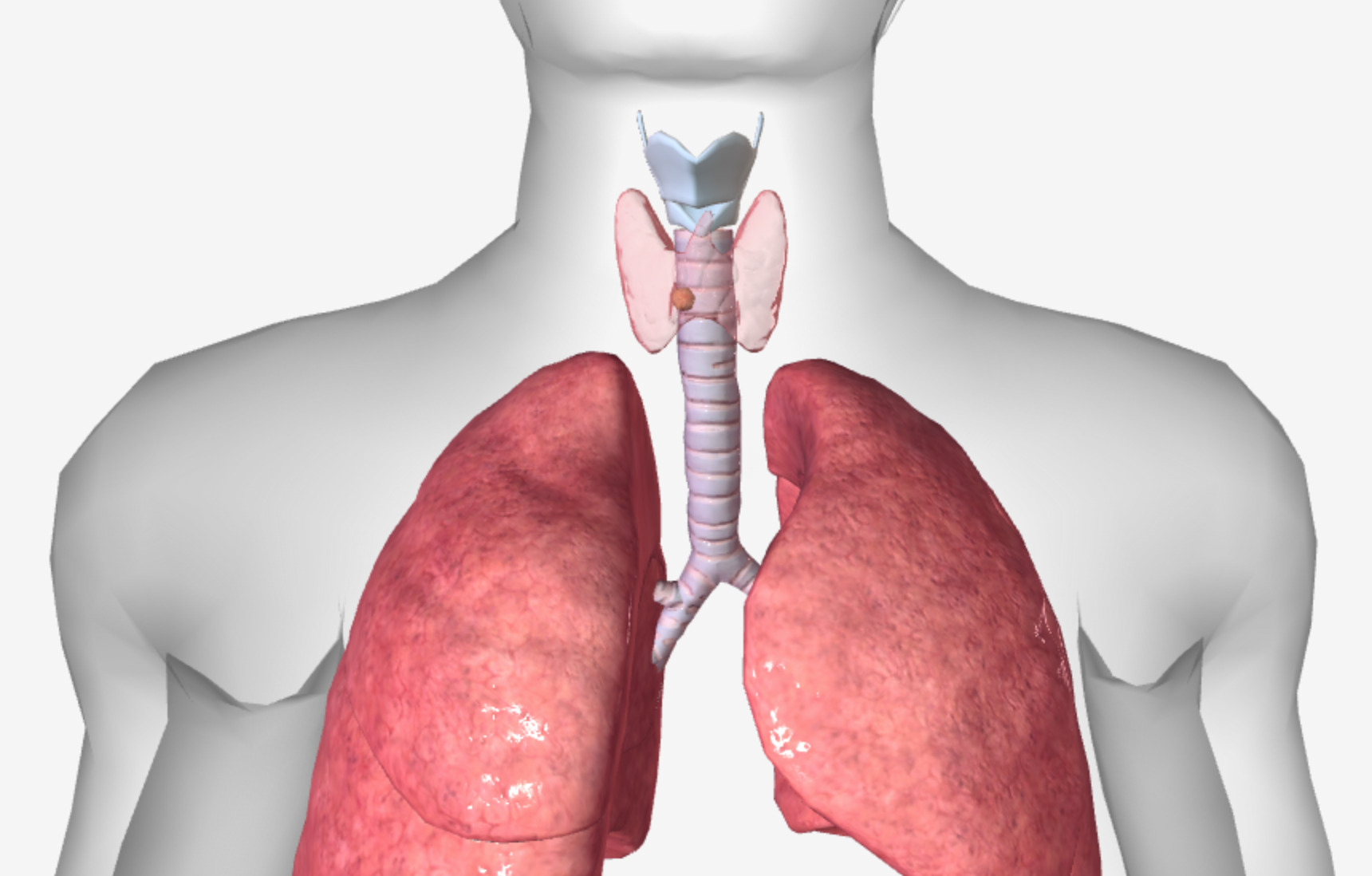
Cáncer de tiroides

Cáncer de tiroides:
La malignidad se presenta como un nódulo tiroideo solitario.


Imagen por BioDigital, editada por Lecturio
Tabla: Características específicas de los LOS Neisseria principales tipos de cáncer de tiroides
Tipo Incidencia Características clínicas
Diferenciado (originado en EN Erythema nodosum is an immune-mediated panniculitis (inflammation of the subcutaneous fat) caused by a type IV (delayed-type) hypersensitivity reaction. It commonly manifests in young women as tender, erythematous nodules on the shins. Erythema Nodosum los LOS Neisseria tirocitos)
Carcinoma papilar
  • Aproximadamente el 85% de los LOS Neisseria casos
  • Más común en EN Erythema nodosum is an immune-mediated panniculitis (inflammation of the subcutaneous fat) caused by a type IV (delayed-type) hypersensitivity reaction. It commonly manifests in young women as tender, erythematous nodules on the shins. Erythema Nodosum mujeres jóvenes
  • Edad pico: 30–50 años
  • Se presentan como nódulos asintomáticos o metástasis en EN Erythema nodosum is an immune-mediated panniculitis (inflammation of the subcutaneous fat) caused by a type IV (delayed-type) hypersensitivity reaction. It commonly manifests in young women as tender, erythematous nodules on the shins. Erythema Nodosum los LOS Neisseria ganglios linfáticos cervicales
  • Enfermedad avanzada: disfonía, tos TOS Thoracic outlet syndrome (TOS) is a broad term used for a spectrum of syndromes related to the general region of the thoracic outlet, which involves the compression or irritation of elements of the brachial plexus, subclavian artery, or subclavian vein. Thoracic Outlet Syndrome, disnea
  • Asociado a la poliposis adenomatosa familiar, síndrome de Cowden
  • Menos agresivo; muy buen pronóstico si se detecta a tiempo
Carcinoma folicular
  • 5–15% de los LOS Neisseria casos
  • Mujeres > hombres
  • Edad pico: 40–60 años
  • Se observa en EN Erythema nodosum is an immune-mediated panniculitis (inflammation of the subcutaneous fat) caused by a type IV (delayed-type) hypersensitivity reaction. It commonly manifests in young women as tender, erythematous nodules on the shins. Erythema Nodosum zonas con deficiencia de yodo
  • Nódulo tiroideo no doloroso y de crecimiento lento
  • Nódulos fríos en EN Erythema nodosum is an immune-mediated panniculitis (inflammation of the subcutaneous fat) caused by a type IV (delayed-type) hypersensitivity reaction. It commonly manifests in young women as tender, erythematous nodules on the shins. Erythema Nodosum la gammagrafía
  • Suele extenderse por vía hematógena a los LOS Neisseria pulmones o a los LOS Neisseria huesos
  • Normalmente, los LOS Neisseria ganglios linfáticos regionales no están afectados.
  • Asociado al AL Amyloidosis síndrome de Cowden
  • Buen pronóstico si se detecta a tiempo
No diferenciado (originado en EN Erythema nodosum is an immune-mediated panniculitis (inflammation of the subcutaneous fat) caused by a type IV (delayed-type) hypersensitivity reaction. It commonly manifests in young women as tender, erythematous nodules on the shins. Erythema Nodosum los LOS Neisseria tirocitos)
Carcinoma anaplásico
  • <5% de los LOS Neisseria casos
  • Más común en EN Erythema nodosum is an immune-mediated panniculitis (inflammation of the subcutaneous fat) caused by a type IV (delayed-type) hypersensitivity reaction. It commonly manifests in young women as tender, erythematous nodules on the shins. Erythema Nodosum las mujeres
  • Edad promedio: 65 años
  • Un-cuarto de los LOS Neisseria pacientes tienen antecedentes o coexistencia de carcinoma diferenciado.
  • Crecimiento rápido → compresión local
  • La mayoría ya se ha HA Hemolytic anemia (HA) is the term given to a large group of anemias that are caused by the premature destruction/hemolysis of circulating red blood cells (RBCs). Hemolysis can occur within (intravascular hemolysis) or outside the blood vessels (extravascular hemolysis). Hemolytic Anemia extendido más allá de la tiroides al AL Amyloidosis ser detectados
  • Se propaga por vía linfática y hematógena
  • Mal pronóstico
Con origen en EN Erythema nodosum is an immune-mediated panniculitis (inflammation of the subcutaneous fat) caused by a type IV (delayed-type) hypersensitivity reaction. It commonly manifests in young women as tender, erythematous nodules on the shins. Erythema Nodosum las células C parafoliculares
Carcinoma medular
  • 5% de los LOS Neisseria casos
  • MEN2: Los LOS Neisseria casos ocurren en EN Erythema nodosum is an immune-mediated panniculitis (inflammation of the subcutaneous fat) caused by a type IV (delayed-type) hypersensitivity reaction. It commonly manifests in young women as tender, erythematous nodules on the shins. Erythema Nodosum pacientes jóvenes.
  • Los LOS Neisseria casos esporádicos y familiares alcanzan su pico a los LOS Neisseria 40–60 años.
  • Puede presentarse como una masa en EN Erythema nodosum is an immune-mediated panniculitis (inflammation of the subcutaneous fat) caused by a type IV (delayed-type) hypersensitivity reaction. It commonly manifests in young women as tender, erythematous nodules on the shins. Erythema Nodosum el cuello o en EN Erythema nodosum is an immune-mediated panniculitis (inflammation of the subcutaneous fat) caused by a type IV (delayed-type) hypersensitivity reaction. It commonly manifests in young women as tender, erythematous nodules on the shins. Erythema Nodosum los LOS Neisseria ganglios linfáticos
  • También puede manifestarse con:
    • Diarrea, enrojecimiento (calcitonina y péptido intestinal vasoactivo ( VIP VIP A highly basic, 28 amino acid neuropeptide released from intestinal mucosa. It has a wide range of biological actions affecting the cardiovascular, gastrointestinal, and respiratory systems and is neuroprotective. It binds special receptors. Gastrointestinal Neural and Hormonal Signaling, por sus siglas en EN Erythema nodosum is an immune-mediated panniculitis (inflammation of the subcutaneous fat) caused by a type IV (delayed-type) hypersensitivity reaction. It commonly manifests in young women as tender, erythematous nodules on the shins. Erythema Nodosum inglés) secretado por el tumor Tumor Inflammation, prostaglandina y serotonina)
    • Síndrome de Cushing debido a la adrenocorticotropina (ACTH, por sus siglas en EN Erythema nodosum is an immune-mediated panniculitis (inflammation of the subcutaneous fat) caused by a type IV (delayed-type) hypersensitivity reaction. It commonly manifests in young women as tender, erythematous nodules on the shins. Erythema Nodosum inglés)
  • Otro biomarcador: antígeno carcinoembrionario ( CEA CEA A glycoprotein that is secreted into the luminal surface of the epithelia in the gastrointestinal tract. It is found in the feces and pancreaticobiliary secretions and is used to monitor the response to colon cancer treatment. Serum Tumor Markers, por sus siglas en EN Erythema nodosum is an immune-mediated panniculitis (inflammation of the subcutaneous fat) caused by a type IV (delayed-type) hypersensitivity reaction. It commonly manifests in young women as tender, erythematous nodules on the shins. Erythema Nodosum inglés)
  • Asociado al AL Amyloidosis síndrome MEN2
  • Tipo familiar: más agresivo

Enfermedades malignas raras

  • Carcinoma de células de Hürthle:
    • Presentación similar a la del carcinoma folicular (nódulo tiroideo), pero también difiere en EN Erythema nodosum is an immune-mediated panniculitis (inflammation of the subcutaneous fat) caused by a type IV (delayed-type) hypersensitivity reaction. It commonly manifests in young women as tender, erythematous nodules on the shins. Erythema Nodosum su tendencia a la diseminación a través de los LOS Neisseria ganglios linfáticos
    • Histología: + oncocitos (células eosinófilas con abundante citoplasma)
  • Linfoma:
    • La mayoría son linfomas de linfocitos B.
    • Asociados a la tiroiditis de Hashimoto
  • Sarcoma: tumor Tumor Inflammation agresivo, con mala respuesta a la quimioterapia
  • Metástasis de cánceres renales, de mama, melanoma Melanoma Melanoma is a malignant tumor arising from melanocytes, the melanin-producing cells of the epidermis. These tumors are most common in fair-skinned individuals with a history of excessive sun exposure and sunburns. Melanoma y de colon Colon The large intestines constitute the last portion of the digestive system. The large intestine consists of the cecum, appendix, colon (with ascending, transverse, descending, and sigmoid segments), rectum, and anal canal. The primary function of the colon is to remove water and compact the stool prior to expulsion from the body via the rectum and anal canal. Colon, Cecum, and Appendix: Anatomy

Diagnóstico

Evaluación inicial

  • Las pruebas se realizan según los LOS Neisseria signos y síntomas que se presentan.
  • Por lo general, el enfoque diagnóstico se basa en EN Erythema nodosum is an immune-mediated panniculitis (inflammation of the subcutaneous fat) caused by a type IV (delayed-type) hypersensitivity reaction. It commonly manifests in young women as tender, erythematous nodules on the shins. Erythema Nodosum el estudio detallado para los LOS Neisseria nódulos tiroideos.
  • Hormona estimulante de la tiroides (TSH, por sus siglas en EN Erythema nodosum is an immune-mediated panniculitis (inflammation of the subcutaneous fat) caused by a type IV (delayed-type) hypersensitivity reaction. It commonly manifests in young women as tender, erythematous nodules on the shins. Erythema Nodosum inglés): TSH normal/↑ o ↓ TSH
    • ↓ TSH: Evaluar si hay hipertiroidismo y determinar si se trata de un nódulo funcional (caliente), no funcional (frío) o indeterminado en EN Erythema nodosum is an immune-mediated panniculitis (inflammation of the subcutaneous fat) caused by a type IV (delayed-type) hypersensitivity reaction. It commonly manifests in young women as tender, erythematous nodules on the shins. Erythema Nodosum la gammagrafía tiroidea.
    • Tanto en EN Erythema nodosum is an immune-mediated panniculitis (inflammation of the subcutaneous fat) caused by a type IV (delayed-type) hypersensitivity reaction. It commonly manifests in young women as tender, erythematous nodules on the shins. Erythema Nodosum la TSH normal/↑ como en EN Erythema nodosum is an immune-mediated panniculitis (inflammation of the subcutaneous fat) caused by a type IV (delayed-type) hypersensitivity reaction. It commonly manifests in young women as tender, erythematous nodules on the shins. Erythema Nodosum la ↓TSH: correlacionar con el ultrasonido
  • Ultrasonido de tiroides:
    • Hallazgos sospechosos en EN Erythema nodosum is an immune-mediated panniculitis (inflammation of the subcutaneous fat) caused by a type IV (delayed-type) hypersensitivity reaction. It commonly manifests in young women as tender, erythematous nodules on the shins. Erythema Nodosum los LOS Neisseria nódulos:
      • Composición: nódulo sólido
      • Ecogenicidad: hipoecoica
      • Forma: más alto que ancho
      • Focos ecogénicos: microcalcificaciones o calcificaciones en EN Erythema nodosum is an immune-mediated panniculitis (inflammation of the subcutaneous fat) caused by a type IV (delayed-type) hypersensitivity reaction. It commonly manifests in young women as tender, erythematous nodules on the shins. Erythema Nodosum los LOS Neisseria bordes con extrusión de tejido blando
      • Margen: bordes irregulares y/o con extensión extratiroidea
    • Otros hallazgos sospechosos en EN Erythema nodosum is an immune-mediated panniculitis (inflammation of the subcutaneous fat) caused by a type IV (delayed-type) hypersensitivity reaction. It commonly manifests in young women as tender, erythematous nodules on the shins. Erythema Nodosum el ultrasonido:
      • Ubicación subcapsular adyacente al AL Amyloidosis nervio laríngeo recurrente o a la tráquea
      • Ganglios linfáticos cervicales anormales
      • Vascularidad central
      • Crecimiento documentado

Biopsia por aspiración con aguja fina

  • Nódulos ≥ 1 cm y:
    • TSH elevada/normal + hallazgos sospechosos en EN Erythema nodosum is an immune-mediated panniculitis (inflammation of the subcutaneous fat) caused by a type IV (delayed-type) hypersensitivity reaction. It commonly manifests in young women as tender, erythematous nodules on the shins. Erythema Nodosum el ultrasonido
    • TSH baja + hallazgos sospechosos en EN Erythema nodosum is an immune-mediated panniculitis (inflammation of the subcutaneous fat) caused by a type IV (delayed-type) hypersensitivity reaction. It commonly manifests in young women as tender, erythematous nodules on the shins. Erythema Nodosum el ultrasonido + nódulos fríos o indeterminados
  • Nódulos grandes, ≥ 1,5 cm
  • Nódulo tiroideo de cualquier tamaño con factores de riesgo:
    • Pacientes jóvenes
    • Antecedentes familiares de cáncer de tiroides
    • Poliposis adenomatosa familiar u otros síndromes asociados
    • Antecedentes de radiación
  • Ganglios linfáticos sospechosos en EN Erythema nodosum is an immune-mediated panniculitis (inflammation of the subcutaneous fat) caused by a type IV (delayed-type) hypersensitivity reaction. It commonly manifests in young women as tender, erythematous nodules on the shins. Erythema Nodosum la biopsia
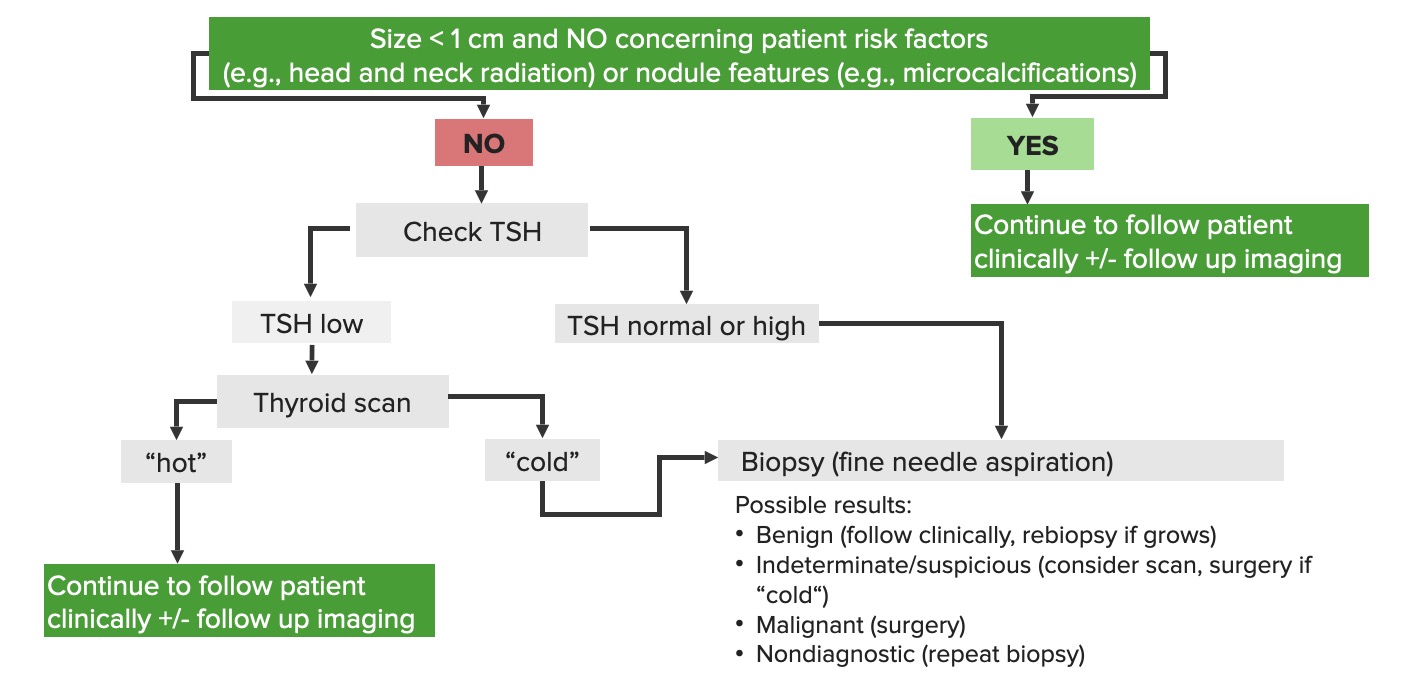
Algoritmo de diagnóstico de los nódulos tiroideos

Diagrama esquemático del enfoque diagnóstico de los nódulos tiroideos

Imagen por Lecturio.
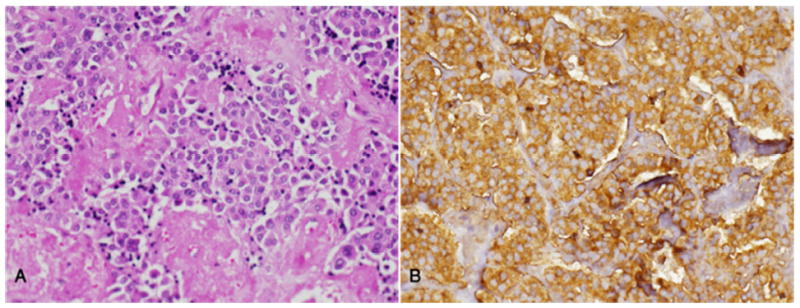
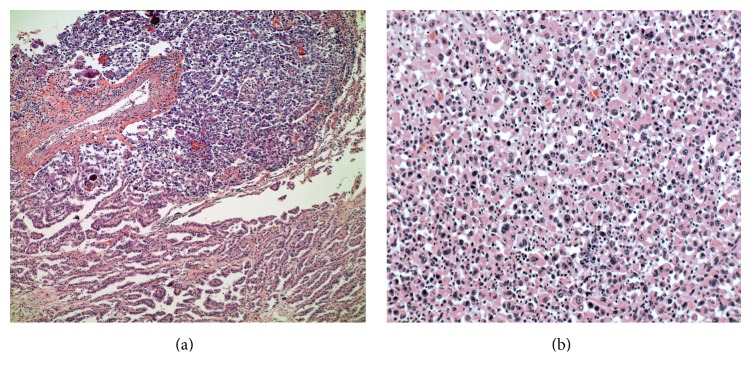
Tabla: Histopatología de los LOS Neisseria carcinomas de tiroides
Tipo Características histopatológicas
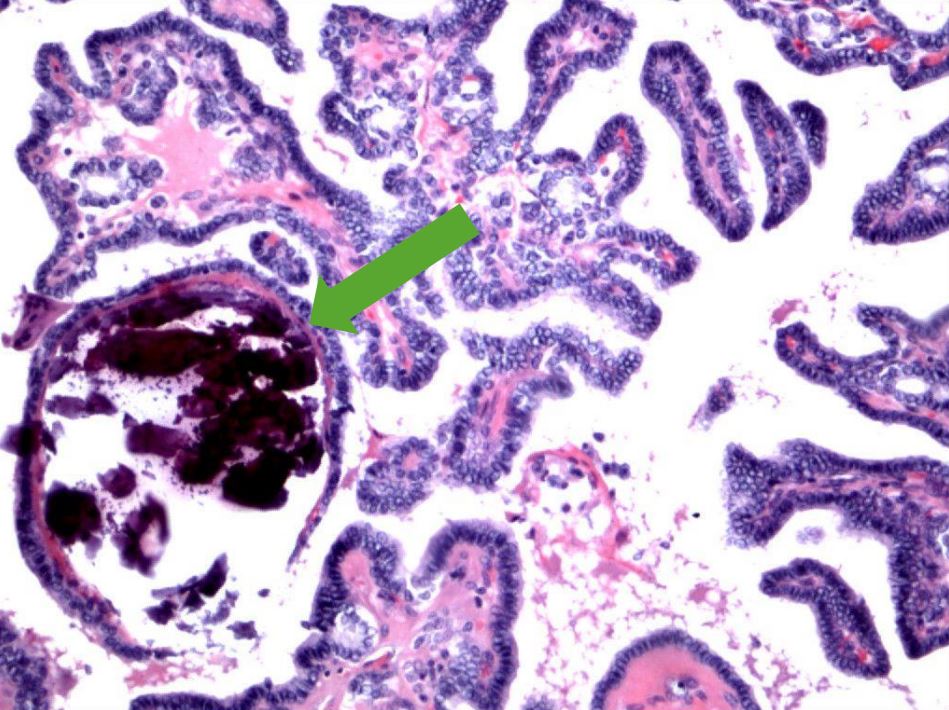
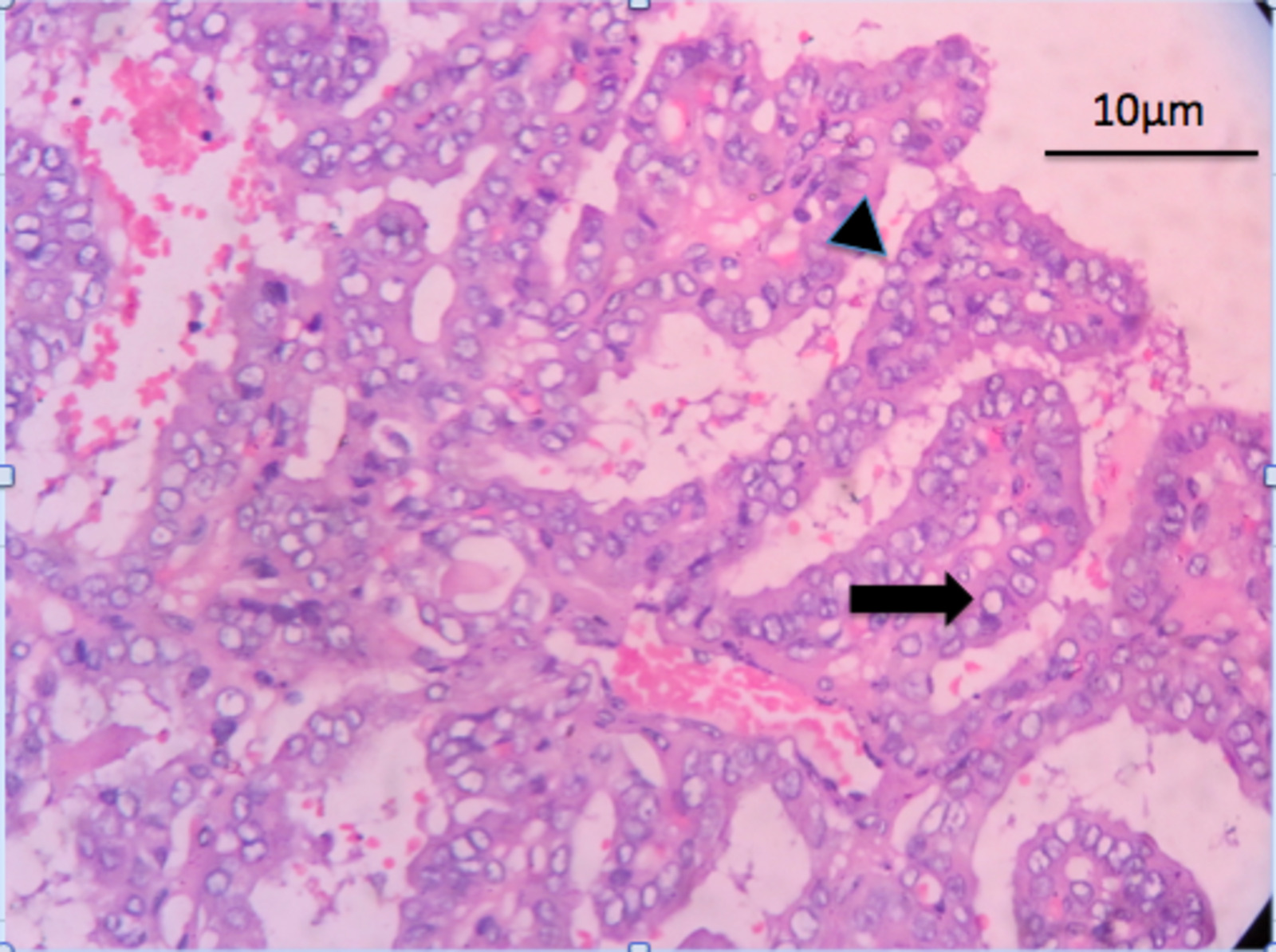
Carcinoma papilar
  • Puede ser solitario o multifocal Multifocal Retinoblastoma
  • Hallazgos microscópicos:
    • Papilas ramificadas (núcleos fibrovasculares densos), con células cúbicas uniformes
    • Cromatina finamente dispersa que produce un aspecto ópticamente claro/vacío o de vidrio esmerilado, núcleos en forma de “ojo de la Huérfana Annie”
    • Cuerpos de psamoma (estructura redonda calcificada dentro de las papilas)
    • Las invaginaciones de la membrana nuclear se observan como “pseudoinclusiones” o surcos.
    • Invasión linfática por el tumor Tumor Inflammation
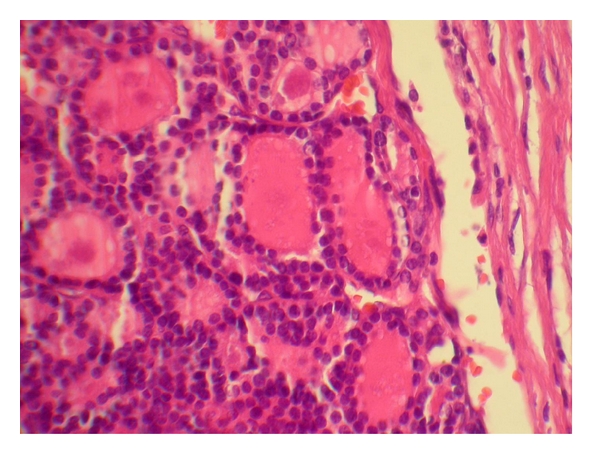
Carcinoma folicular
  • A menudo, nódulos individuales
  • Hallazgos microscópicos:
    • Células uniformes forman pequeños folículos con o sin coloide.
    • Invasión capsular
    • Carcinomas invasivos: + infiltración del parénquima tiroideo y de los LOS Neisseria tejidos extratiroideos
  • Variante de células de Hürthle: con oncocitos (citoplasma eosinófilo granular abundante)
Carcinoma medular
  • Puede ser una lesión solitaria (esporádica) o múltiple y bilateral (familiar)
  • Hallazgos microscópicos:
    • Células poligonales a fusiformes que forman nidos, trabéculas o folículos
    • El estroma puede contener depósitos amiloides (de polipéptidos de calcitonina).
Carcinoma anaplásico
  • Los LOS Neisseria hallazgos microscópicos pueden tener diferentes patrones:
    • Células gigantes
    • Células fusiformes sarcomatoides (parecen sarcomas)
    • Mezcla de células gigantes y fusiformes
  • Cuando surgen de cánceres bien diferenciados, pueden verse focos de diferenciación papilar o folicular.
  • Marcadores: (+) citoqueratina; normalmente (–) para tiroglobulina (un marcador de diferenciación)

Pruebas posteriores al AL Amyloidosis diagnóstico

Tras el diagnóstico, deben realizarse más pruebas:

  • Pruebas de laboratorio:
    • Tiroglobulina sérica (carcinoma diferenciado de tiroides)
    • Calcitonina y antígeno carcinoembrionario ( CEA CEA A glycoprotein that is secreted into the luminal surface of the epithelia in the gastrointestinal tract. It is found in the feces and pancreaticobiliary secretions and is used to monitor the response to colon cancer treatment. Serum Tumor Markers, por sus siglas en EN Erythema nodosum is an immune-mediated panniculitis (inflammation of the subcutaneous fat) caused by a type IV (delayed-type) hypersensitivity reaction. It commonly manifests in young women as tender, erythematous nodules on the shins. Erythema Nodosum inglés) (carcinoma medular de tiroides)
  • Análisis de ADN para la mutación de RET en EN Erythema nodosum is an immune-mediated panniculitis (inflammation of the subcutaneous fat) caused by a type IV (delayed-type) hypersensitivity reaction. It commonly manifests in young women as tender, erythematous nodules on the shins. Erythema Nodosum la línea germinal:
    • Para el carcinoma medular de tiroides
    • RET + o desconocido:
      • Calcio sérico: estudio de hiperparatiroidismo (componente de MEN2A)
      • Metanefrinas fraccionadas en EN Erythema nodosum is an immune-mediated panniculitis (inflammation of the subcutaneous fat) caused by a type IV (delayed-type) hypersensitivity reaction. It commonly manifests in young women as tender, erythematous nodules on the shins. Erythema Nodosum plasma Plasma The residual portion of blood that is left after removal of blood cells by centrifugation without prior blood coagulation. Transfusion Products: estudio de feocromocitoma (componente de MEN2A y B)
    • Si el paciente índice es positivo, debe ofrecerse prueba de tamizaje a familiares
  • Imagenología:
    • Ultrasonido de cuello:
      • Búsqueda de compromiso de los LOS Neisseria ganglios linfáticos cervicales
      • Indica la necesidad y la extensión de la disección de cuello
    • Evaluación de otros síntomas y metástasis a distancia:
      • Radiografía de tórax
      • RM
      • TC
      • Gammagrafía ósea

Tratamiento y Pronóstico

Carcinoma diferenciado de tiroides

  • Incluye carcinomas papilares y foliculares de tiroides
  • Cirugía:
    • Lobectomía tiroidea:
      • Tumor Tumor Inflammation < 1 cm sin ganglios linfáticos ni extensión extratiroidea
      • Es una opción para un tumor Tumor Inflammation de 1–4 cm sin extensión extratiroidea o a los LOS Neisseria ganglios linfáticos (sin otros factores de riesgo y/o decisión del paciente)
      • Microcarcinoma papilar multifocal Multifocal Retinoblastoma (< 5 focos)
      • No hay antecedentes de irradiación de la cabeza o cuello
      • No hay antecedentes familiares de cáncer de tiroides
      • No hay anomalías en EN Erythema nodosum is an immune-mediated panniculitis (inflammation of the subcutaneous fat) caused by a type IV (delayed-type) hypersensitivity reaction. It commonly manifests in young women as tender, erythematous nodules on the shins. Erythema Nodosum el lóbulo contralateral
    • Tiroidectomía total (disección del cuello según la indicación):
      • Tumor Tumor Inflammation de 1–4 cm sin extensión extratiroidea ni a los LOS Neisseria ganglios linfáticos
      • Tumor Tumor Inflammation ≥ 4 cm con metástasis o extensión extratiroidea
      • Microcarcinoma papilar multifocal Multifocal Retinoblastoma (> 5 focos)
      • Tumor Tumor Inflammation de cualquier tamaño, con antecedentes de radiación en EN Erythema nodosum is an immune-mediated panniculitis (inflammation of the subcutaneous fat) caused by a type IV (delayed-type) hypersensitivity reaction. It commonly manifests in young women as tender, erythematous nodules on the shins. Erythema Nodosum cabeza y cuello, antecedentes familiares significativos de cáncer de tiroides
      • Hallazgos anormales en EN Erythema nodosum is an immune-mediated panniculitis (inflammation of the subcutaneous fat) caused by a type IV (delayed-type) hypersensitivity reaction. It commonly manifests in young women as tender, erythematous nodules on the shins. Erythema Nodosum el ultrasonido del lóbulo contralateral
  • Complicaciones quirúrgicas:
    • Hipoparatiroidismo (extirpación de la glándula paratiroides) → ↓ calcio
    • Lesión del nervio laríngeo recurrente
    • Hemorragia
  • Evaluación postoperatoria:
    • Factores con riesgo intermedio a alto de persistencia y recurrencia del cáncer:
      • Invasión microscópica o macroscópica
      • Nódulo linfático cervical o metástasis a distancia
      • Histología agresiva o invasión vascular
      • Resección incompleta con evidencia de enfermedad residual
      • Microcarcinoma papilar multifocal Multifocal Retinoblastoma con extensión y mutación BRAF V600E
      • Tiroglobulina postoperatoria elevada ( Tg Tg Thyroid Hormones)
    • Tg Tg Thyroid Hormones en EN Erythema nodosum is an immune-mediated panniculitis (inflammation of the subcutaneous fat) caused by a type IV (delayed-type) hypersensitivity reaction. It commonly manifests in young women as tender, erythematous nodules on the shins. Erythema Nodosum suero:
      • Obtener ≥ 4 semanas después (se espera que sea muy bajo después de la tiroidectomía +/– ablación con radioyodo)
      • Bajo riesgo de recurrencia si los LOS Neisseria niveles de Tg Tg Thyroid Hormones son indetectables
      • Valores elevados: Evaluar con ultrasonido de cuello para determinar si la cirugía fue completa.
      • Nivel ↑: Considerar también metástasis y recidiva.
  • Terapia con yodo radiactivo:
    • Ablación del tejido tiroideo restante (residual y metastásico)
    • Administrada a pacientes con riesgo intermedio o alto de enfermedad persistente y recurrente
  • Levotiroxina:
    • Terapia de reemplazo de la tiroides y de supresión de hormona tiroidea
    • Supresión de la TSH:
      • Necesario porque la TSH es un factor de crecimiento para las células tiroideas
      • La TSH objetivo depende de la extensión de la enfermedad y del riesgo de recurrencia.
      • Si la enfermedad es de alto riesgo: Objetivo de TSH < 0,1 mU/L
  • Otros tratamientos:
    • Radioterapia externa: para tumores inoperables o metástasis óseas dolorosas
    • Terapia con inhibidores de quinasas
    • Quimioterapia (e.g., doxorrubicina)
  • Vigilancia (la frecuencia depende de los LOS Neisseria hallazgos/resultados):
    • Examen físico
    • Tg Tg Thyroid Hormones en EN Erythema nodosum is an immune-mediated panniculitis (inflammation of the subcutaneous fat) caused by a type IV (delayed-type) hypersensitivity reaction. It commonly manifests in young women as tender, erythematous nodules on the shins. Erythema Nodosum suero
    • TSH en EN Erythema nodosum is an immune-mediated panniculitis (inflammation of the subcutaneous fat) caused by a type IV (delayed-type) hypersensitivity reaction. It commonly manifests in young women as tender, erythematous nodules on the shins. Erythema Nodosum suero y pruebas de función tiroidea
    • Ultrasonido de cuello y otras pruebas radiológicas (gammagrafía tiroidea de cuerpo entero, TC según se indique)

Carcinoma anaplásico de tiroides

  • Cirugía:
    • A menudo no se realiza, ya que la enfermedad está avanzada en EN Erythema nodosum is an immune-mediated panniculitis (inflammation of the subcutaneous fat) caused by a type IV (delayed-type) hypersensitivity reaction. It commonly manifests in young women as tender, erythematous nodules on the shins. Erythema Nodosum el momento del diagnóstico
    • En EN Erythema nodosum is an immune-mediated panniculitis (inflammation of the subcutaneous fat) caused by a type IV (delayed-type) hypersensitivity reaction. It commonly manifests in young women as tender, erythematous nodules on the shins. Erythema Nodosum caso de tumor Tumor Inflammation localizado o localmente avanzado operable: tiroidectomía total con disección de cuello y combinar con otros métodos
  • Radioterapia: tratamiento primario o adyuvante (postoperatorio) para la enfermedad inoperable
  • Inhibidores de la quinasa y/o quimioterapia
  • Cuidados paliativos: componente importante, ya que la progresión de la enfermedad es rápida
  • La terapia con yodo radiactivo no tiene utilidad
  • Levotiroxina:
    • Para reemplazo tiroideo ( en EN Erythema nodosum is an immune-mediated panniculitis (inflammation of the subcutaneous fat) caused by a type IV (delayed-type) hypersensitivity reaction. It commonly manifests in young women as tender, erythematous nodules on the shins. Erythema Nodosum aquellos que han sido sometidos a una tiroidectomía)
    • No se requiere la supresión de la TSH.
  • Vigilancia:
    • Monitorear con TC (cuello, tórax, abdomen y pelvis Pelvis The pelvis consists of the bony pelvic girdle, the muscular and ligamentous pelvic floor, and the pelvic cavity, which contains viscera, vessels, and multiple nerves and muscles. The pelvic girdle, composed of 2 “hip” bones and the sacrum, is a ring-like bony structure of the axial skeleton that links the vertebral column with the lower extremities. Pelvis: Anatomy) cada 3 meses durante los LOS Neisseria 2 primeros años (si hay respuesta inicial al AL Amyloidosis tratamiento).
    • La PET PET An imaging technique that combines a positron-emission tomography (PET) scanner and a ct X ray scanner. This establishes a precise anatomic localization in the same session. Nuclear Imaging detecta casos no evidentes en EN Erythema nodosum is an immune-mediated panniculitis (inflammation of the subcutaneous fat) caused by a type IV (delayed-type) hypersensitivity reaction. It commonly manifests in young women as tender, erythematous nodules on the shins. Erythema Nodosum la TC.

Carcinoma medular de tiroides

  • Cirugía:
    • Tiroidectomía total (con disección de cuello)
    • En EN Erythema nodosum is an immune-mediated panniculitis (inflammation of the subcutaneous fat) caused by a type IV (delayed-type) hypersensitivity reaction. It commonly manifests in young women as tender, erythematous nodules on the shins. Erythema Nodosum MEN2 (hiperparatiroidismo y/o feocromocitoma): Se debe realizar una cirugía adicional (e.g., adrenalectomía) según esté indicado.
  • Inhibidores de la quinasa y/o quimioterapia: para el cáncer medular de tiroides progresivo y metastásico
  • La terapia con yodo radiactivo no tiene utilidad
  • Levotiroxina:
    • Terapia de reemplazo de la tiroides (no es necesaria la supresión de TSH, ya que las células C no responden a TSH)
    • No reduce el riesgo de recidiva
  • Evaluación postoperatoria:
    • Calcitonina sérica y CEA CEA A glycoprotein that is secreted into the luminal surface of the epithelia in the gastrointestinal tract. It is found in the feces and pancreaticobiliary secretions and is used to monitor the response to colon cancer treatment. Serum Tumor Markers: Los LOS Neisseria resultados normales después de la cirugía indican un muy buen pronóstico.
    • Niveles ↑: marcador de enfermedad residual o recurrente.
  • Vigilancia (la frecuencia depende de los LOS Neisseria hallazgos/resultados):
    • Examen físico
    • Calcitonina sérica y CEA CEA A glycoprotein that is secreted into the luminal surface of the epithelia in the gastrointestinal tract. It is found in the feces and pancreaticobiliary secretions and is used to monitor the response to colon cancer treatment. Serum Tumor Markers
    • Ultrasonido del cuello (otras pruebas radiológicas según se indique)

Pronóstico

  • Depende del tipo de cáncer y de la extensión de la enfermedad
  • De 2010 a 2016 en EN Erythema nodosum is an immune-mediated panniculitis (inflammation of the subcutaneous fat) caused by a type IV (delayed-type) hypersensitivity reaction. It commonly manifests in young women as tender, erythematous nodules on the shins. Erythema Nodosum Estados Unidos (tasa de supervivencia a los LOS Neisseria 5 años):
    • Papilar:
      • Total: casi el 100%.
      • Metástasis a distancia: 76%
    • Folicular:
      • Total: 98%
      • Metástasis a distancia: 64%
    • Medular:
      • Total: 89%.
      • Metástasis a distancia: 38%
    • Anaplásico:
      • Total: 7%.
      • Metástasis a distancia: 3%

Relevancia Clínica

  • Nódulos tiroideos: crecimiento desordenado de las células tiroideas que produce una masa en EN Erythema nodosum is an immune-mediated panniculitis (inflammation of the subcutaneous fat) caused by a type IV (delayed-type) hypersensitivity reaction. It commonly manifests in young women as tender, erythematous nodules on the shins. Erythema Nodosum la glándula tiroidea: Los LOS Neisseria nódulos, en EN Erythema nodosum is an immune-mediated panniculitis (inflammation of the subcutaneous fat) caused by a type IV (delayed-type) hypersensitivity reaction. It commonly manifests in young women as tender, erythematous nodules on the shins. Erythema Nodosum su mayoría benignos, se detectan en EN Erythema nodosum is an immune-mediated panniculitis (inflammation of the subcutaneous fat) caused by a type IV (delayed-type) hypersensitivity reaction. It commonly manifests in young women as tender, erythematous nodules on the shins. Erythema Nodosum la exploración o se encuentran incidentalmente en EN Erythema nodosum is an immune-mediated panniculitis (inflammation of the subcutaneous fat) caused by a type IV (delayed-type) hypersensitivity reaction. It commonly manifests in young women as tender, erythematous nodules on the shins. Erythema Nodosum imágenes radiológicas. Los LOS Neisseria estudios incluyen TSH y ultrasonido, seguidos de captación de yodo radiactivo/gammagrafía de tiroides si hay hipertiroidismo. Se recomienda la biopsia en EN Erythema nodosum is an immune-mediated panniculitis (inflammation of the subcutaneous fat) caused by a type IV (delayed-type) hypersensitivity reaction. It commonly manifests in young women as tender, erythematous nodules on the shins. Erythema Nodosum aquellas personas con hallazgos sospechosos en EN Erythema nodosum is an immune-mediated panniculitis (inflammation of the subcutaneous fat) caused by a type IV (delayed-type) hypersensitivity reaction. It commonly manifests in young women as tender, erythematous nodules on the shins. Erythema Nodosum el ultrasonido, nódulos fríos en EN Erythema nodosum is an immune-mediated panniculitis (inflammation of the subcutaneous fat) caused by a type IV (delayed-type) hypersensitivity reaction. It commonly manifests in young women as tender, erythematous nodules on the shins. Erythema Nodosum la gammagrafía tiroidea, nódulos de gran tamaño (generalmente, > 1,5 cm) y factores de riesgo de malignidad. El tratamiento depende de los LOS Neisseria hallazgos patológicos.
  • Tiroiditis de Hashimoto: también llamada tiroiditis linfocítica crónica: la tiroiditis de Hashimoto es la causa más común de hipotiroidismo en EN Erythema nodosum is an immune-mediated panniculitis (inflammation of the subcutaneous fat) caused by a type IV (delayed-type) hypersensitivity reaction. It commonly manifests in young women as tender, erythematous nodules on the shins. Erythema Nodosum las regiones con niveles adecuados de yodo. Se trata de un trastorno autoinmune que conduce a la destrucción de las células tiroideas y a la insuficiencia tiroidea. Puede presentarse como un bocio indoloro ( en EN Erythema nodosum is an immune-mediated panniculitis (inflammation of the subcutaneous fat) caused by a type IV (delayed-type) hypersensitivity reaction. It commonly manifests in young women as tender, erythematous nodules on the shins. Erythema Nodosum etapas posteriores, la glándula es atrófica). Las pruebas de laboratorio muestran una TSH elevada, tiroxina libre (T4) baja y anticuerpos positivos contra la tiroglobulina y la peroxidasa tiroidea. El tratamiento es la terapia de reemplazo tiroideo de por vida.
  • Hipotiroidismo: enfermedad caracterizada por una deficiencia de hormonas tiroideas: La deficiencia de yodo y la tiroiditis de Hashimoto son las 2 principales etiologías. Las características clínicas reflejan los LOS Neisseria efectos de la disminución de la función de los LOS Neisseria órganos y de la tasa metabólica. Las pruebas de laboratorio muestran una TSH elevada y una T4 libre baja. El tratamiento es con levotiroxina.
  • Hipertiroidismo: entidad causada por la sobreproducción y liberación sostenida de las hormonas tiroideas T3 y T4. La enfermedad de Graves es la causa más común de hipertiroidismo. Las manifestaciones se deben principalmente al AL Amyloidosis aumento de la tasa metabólica y a la hiperactividad del sistema nervioso simpático. Las pruebas de laboratorio muestran una TSH baja y una T4 libre elevada. El tratamiento depende de la enfermedad subyacente.
  • Bocio: agrandamiento anormal de la glándula tiroides que se produce en EN Erythema nodosum is an immune-mediated panniculitis (inflammation of the subcutaneous fat) caused by a type IV (delayed-type) hypersensitivity reaction. It commonly manifests in young women as tender, erythematous nodules on the shins. Erythema Nodosum contextos de hipotiroidismo, hipertiroidismo o eutiroidismo: La presentación del bocio puede ser un agrandamiento difuso o multinodular de la glándula tiroides. Las pruebas de diagnóstico incluyen pruebas de función tiroidea y anticuerpos tiroideos. La imagenología es útil si se presentan características preocupantes. Las opciones de tratamiento son la observación, medicamentos, la cirugía y la ablación con yodo radiactivo, dependiendo de los LOS Neisseria hallazgos.
  • Síndrome MEN2: El MEN2 es una enfermedad autosómica dominante en EN Erythema nodosum is an immune-mediated panniculitis (inflammation of the subcutaneous fat) caused by a type IV (delayed-type) hypersensitivity reaction. It commonly manifests in young women as tender, erythematous nodules on the shins. Erythema Nodosum la que está implicado el protooncogén RET. Existen dos síndromes: el MEN2A consiste en EN Erythema nodosum is an immune-mediated panniculitis (inflammation of the subcutaneous fat) caused by a type IV (delayed-type) hypersensitivity reaction. It commonly manifests in young women as tender, erythematous nodules on the shins. Erythema Nodosum carcinoma medular de tiroides, feocromocitoma e hiperparatiroidismo; el MEN2B consiste en EN Erythema nodosum is an immune-mediated panniculitis (inflammation of the subcutaneous fat) caused by a type IV (delayed-type) hypersensitivity reaction. It commonly manifests in young women as tender, erythematous nodules on the shins. Erythema Nodosum carcinoma medular de tiroides, feocromocitoma, cuerpo marfanoide, neuromas mucosos y ganglioneuromatosis intestinal.

Referencias

  1. American Cancer Society. (2023, August 15). Thyroid cancer survival rates, by type and stage. https://www.cancer.org/cancer/types/thyroid-cancer/detection-diagnosis-staging/survival-rates.html
  2. Jameson J, Mandel SJ, Weetman AP. (2018). Thyroid nodular disease and thyroid cancer. In: Jameson J, et al. (Eds.), Harrison’s Principles of Internal Medicine, 20th ed. McGraw-Hill.
  3. Maitra A. (2021). The endocrine system. In Kumar V, Abbas A, Aster J (Eds.), Robbins & Cotran Pathologic Basis of Disease, 10th ed. Elsevier.
  4. Malchoff C. (2019). Oncogenes and tumor suppressor genes in thyroid nodules and nonmedullary thyroid cancer. UpToDate. Retrieved February 21, 2021, from https://www.uptodate.com/contents/oncogenes-and-tumor-suppressor-genes-in-thyroid-nodules-and-nonmedullary-thyroid-cancer
  5. Sharma P. (2020). Thyroid cancer. Medscape. Retrieved February 23, 2021, from https://emedicine.medscape.com/article/851968-overview
  6. Tuttle R. (2020). Papillary thyroid cancer: clinical features and prognosis. UpToDate. Retrieved February 23, 2021, from https://www.uptodate.com/contents/papillary-thyroid-cancer-clinical-features-and-prognosis
  7. Tuttle R. (2020). Medullary thyroid cancer: Surgical treatment and prognosis. UpToDate. Retrieved February 24, 2021, from https://www.uptodate.com/contents/medullary-thyroid-cancer-surgical-treatment-and-prognosis
  8. Tuttle R. (2020). Differentiated thyroid cancer: overview of management. UpToDate. Retrieved February 24, 2021, from https://www.uptodate.com/contents/differentiated-thyroid-cancer-overview-of-management

¡Crea tu cuenta gratis o inicia una sesión para seguir leyendo!

Regístrate ahora y obtén acceso gratuito a Lecturio con páginas de concepto, videos médicos y cuestionarios para tu educación médica.

User Reviews

Que tengas una sesión de estudio alegre y navideña 🎁 Ahorra 50% en todos los planes >>

Details