
Domina Conceptos Médicos

Estudia para la escuela de medicina y tus examenes con Lecturio.

Amenorrea Secundaria

La amenorrea secundaria se define como la ausencia de menstruación durante 3 meses en EN Erythema nodosum is an immune-mediated panniculitis (inflammation of the subcutaneous fat) caused by a type IV (delayed-type) hypersensitivity reaction. It commonly manifests in young women as tender, erythematous nodules on the shins. Erythema Nodosum una mujer con ciclos menstruales previamente regulares o durante 6 meses en EN Erythema nodosum is an immune-mediated panniculitis (inflammation of the subcutaneous fat) caused by a type IV (delayed-type) hypersensitivity reaction. It commonly manifests in young women as tender, erythematous nodules on the shins. Erythema Nodosum una mujer con ciclos irregulares previos. Las etiologías implican alteraciones del eje hipotalámico-pituitario-ovárico u obstrucciones adquiridas en EN Erythema nodosum is an immune-mediated panniculitis (inflammation of the subcutaneous fat) caused by a type IV (delayed-type) hypersensitivity reaction. It commonly manifests in young women as tender, erythematous nodules on the shins. Erythema Nodosum el útero o en EN Erythema nodosum is an immune-mediated panniculitis (inflammation of the subcutaneous fat) caused by a type IV (delayed-type) hypersensitivity reaction. It commonly manifests in young women as tender, erythematous nodules on the shins. Erythema Nodosum el tracto de salida. La causa más común de amenorrea secundaria es el embarazo. Las etiologías patológicas más comunes incluyen amenorrea hipotalámica funcional, síndrome de ovario poliquístico, hiperprolactinemia, insuficiencia ovárica prematura y síndrome de Asherman. El diagnóstico se realiza con una toma de antecedentes y un examen físico completos, la medición de los LOS Neisseria niveles hormonales, una prueba de embarazo y un ultrasonido pélvico por imagenología. Una provocación con progestina y/o una combinación de estrógeno y progestina puede ayudar a identificar mejor la ubicación de la anomalía. El tratamiento depende de la etiología subyacente, la presentación clínica y los LOS Neisseria deseos de la paciente con respecto a la fertilidad. El tratamiento puede incluir opciones de tratamiento médico, quirúrgico y de estilo de vida.

Last updated: Dec 15, 2025

Editorial responsibility: Stanley Oiseth, Lindsay Jones, Evelin Maza

Descripción General

Definición

La amenorrea secundaria se define como:

  • Ausencia de menstruación durante 3 meses en EN Erythema nodosum is an immune-mediated panniculitis (inflammation of the subcutaneous fat) caused by a type IV (delayed-type) hypersensitivity reaction. It commonly manifests in young women as tender, erythematous nodules on the shins. Erythema Nodosum una mujer con ciclos menstruales previamente regulares
  • Ausencia de menstruación durante 6 meses en EN Erythema nodosum is an immune-mediated panniculitis (inflammation of the subcutaneous fat) caused by a type IV (delayed-type) hypersensitivity reaction. It commonly manifests in young women as tender, erythematous nodules on the shins. Erythema Nodosum una mujer con ciclos menstruales irregulares previos
  • Ausencia de menstruaciones durante 3 ciclos (para mujeres con ciclos más largos)

Fisiología normal

Las hormonas del eje hipotalámico-pituitario-ovárico y toda la anatomía relevante deben estar presentes y funcionando para que la menstruación ocurra con regularidad.
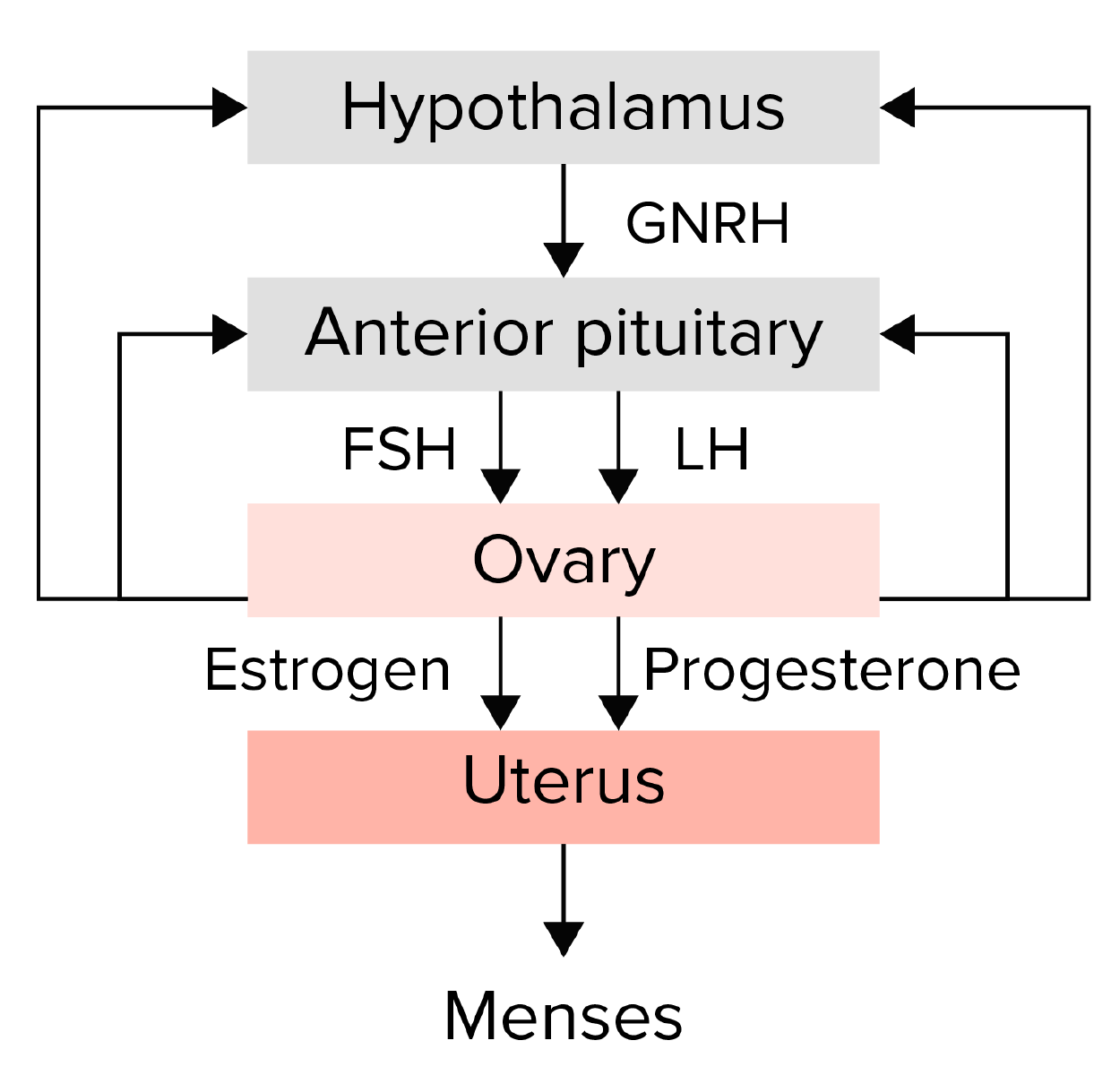
Summary of hypothalamic–pituitary–ovarian axis

Resumen del eje hipotalámico-pituitario-ovárico:

El hipotálamo secreta la hormona liberadora de gonadotropina (GnRH), que estimula la hipófisis anterior para que libere las gonadotropinas, la hormona estimulante del folículo (FSH) y la hormona luteinizante (LH). Luego, las gonadotropinas estimulan al ovario para que produzca estrógeno y progesterona, lo que a su vez conduce al crecimiento y la maduración del endometrio. Cualquier interrupción en esta vía podría provocar amenorrea.
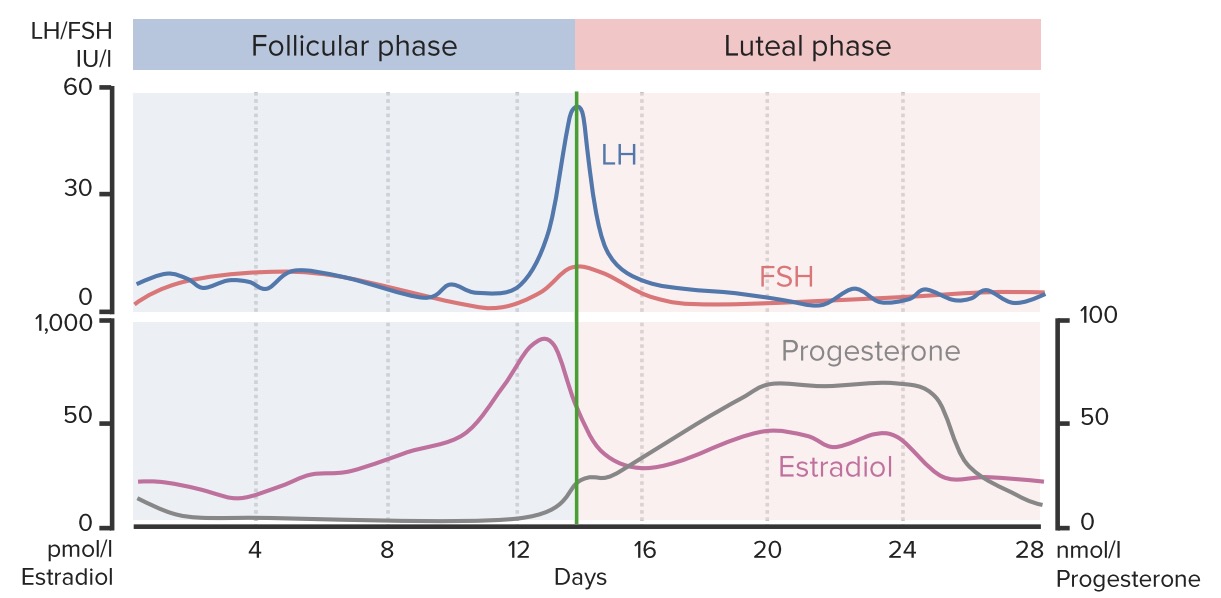

Imagen por Lecturio.
  • Eje hipotalámico-pituitario-ovárico:
    • Hipotálamo → hormona liberadora de gonadotropina (GnRH)
    • Pituitaria → hormona estimulante del folículo ( FSH FSH A major gonadotropin secreted by the adenohypophysis. Follicle-stimulating hormone stimulates gametogenesis and the supporting cells such as the ovarian granulosa cells, the testicular sertoli cells, and leydig cells. Fsh consists of two noncovalently linked subunits, alpha and beta. Within a species, the alpha subunit is common in the three pituitary glycoprotein hormones (TSH, LH, and FSH), but the beta subunit is unique and confers its biological specificity. Menstrual Cycle) y hormona luteinizante ( LH LH A major gonadotropin secreted by the adenohypophysis. Luteinizing hormone regulates steroid production by the interstitial cells of the testis and the ovary. The preovulatory luteinizing hormone surge in females induces ovulation, and subsequent luteinization of the follicle. Luteinizing hormone consists of two noncovalently linked subunits, alpha and beta. Within a species, the alpha subunit is common in the three pituitary glycoprotein hormones (TSH, LH, and FSH), but the beta subunit is unique and confers its biological specificity. Menstrual Cycle)
    • Ovario → estrógeno y progesterona
    • En EN Erythema nodosum is an immune-mediated panniculitis (inflammation of the subcutaneous fat) caused by a type IV (delayed-type) hypersensitivity reaction. It commonly manifests in young women as tender, erythematous nodules on the shins. Erythema Nodosum general: GnRH → FSH FSH A major gonadotropin secreted by the adenohypophysis. Follicle-stimulating hormone stimulates gametogenesis and the supporting cells such as the ovarian granulosa cells, the testicular sertoli cells, and leydig cells. Fsh consists of two noncovalently linked subunits, alpha and beta. Within a species, the alpha subunit is common in the three pituitary glycoprotein hormones (TSH, LH, and FSH), but the beta subunit is unique and confers its biological specificity. Menstrual Cycle y LH LH A major gonadotropin secreted by the adenohypophysis. Luteinizing hormone regulates steroid production by the interstitial cells of the testis and the ovary. The preovulatory luteinizing hormone surge in females induces ovulation, and subsequent luteinization of the follicle. Luteinizing hormone consists of two noncovalently linked subunits, alpha and beta. Within a species, the alpha subunit is common in the three pituitary glycoprotein hormones (TSH, LH, and FSH), but the beta subunit is unique and confers its biological specificity. Menstrual Cycle → estrógeno y progesterona
  • Fase folicular/proliferativa:
    • El pulso de GnRH estimula la liberación de FSH FSH A major gonadotropin secreted by the adenohypophysis. Follicle-stimulating hormone stimulates gametogenesis and the supporting cells such as the ovarian granulosa cells, the testicular sertoli cells, and leydig cells. Fsh consists of two noncovalently linked subunits, alpha and beta. Within a species, the alpha subunit is common in the three pituitary glycoprotein hormones (TSH, LH, and FSH), but the beta subunit is unique and confers its biological specificity. Menstrual Cycle.
    • La FSH FSH A major gonadotropin secreted by the adenohypophysis. Follicle-stimulating hormone stimulates gametogenesis and the supporting cells such as the ovarian granulosa cells, the testicular sertoli cells, and leydig cells. Fsh consists of two noncovalently linked subunits, alpha and beta. Within a species, the alpha subunit is common in the three pituitary glycoprotein hormones (TSH, LH, and FSH), but the beta subunit is unique and confers its biological specificity. Menstrual Cycle estimula el desarrollo folicular dentro de los LOS Neisseria ovarios.
    • Los LOS Neisseria folículos en EN Erythema nodosum is an immune-mediated panniculitis (inflammation of the subcutaneous fat) caused by a type IV (delayed-type) hypersensitivity reaction. It commonly manifests in young women as tender, erythematous nodules on the shins. Erythema Nodosum desarrollo producen estrógeno, específicamente estradiol Estradiol The 17-beta-isomer of estradiol, an aromatized C18 steroid with hydroxyl group at 3-beta- and 17-beta-position. Estradiol-17-beta is the most potent form of mammalian estrogenic steroids. Noncontraceptive Estrogen and Progestins.
    • Estrógeno:
      • Estimula la proliferación endometrial
      • Inhibe la secreción de FSH FSH A major gonadotropin secreted by the adenohypophysis. Follicle-stimulating hormone stimulates gametogenesis and the supporting cells such as the ovarian granulosa cells, the testicular sertoli cells, and leydig cells. Fsh consists of two noncovalently linked subunits, alpha and beta. Within a species, the alpha subunit is common in the three pituitary glycoprotein hormones (TSH, LH, and FSH), but the beta subunit is unique and confers its biological specificity. Menstrual Cycle (inhibición por retroalimentación)
  • Ovulación: provocada por un aumento de LH LH A major gonadotropin secreted by the adenohypophysis. Luteinizing hormone regulates steroid production by the interstitial cells of the testis and the ovary. The preovulatory luteinizing hormone surge in females induces ovulation, and subsequent luteinization of the follicle. Luteinizing hormone consists of two noncovalently linked subunits, alpha and beta. Within a species, the alpha subunit is common in the three pituitary glycoprotein hormones (TSH, LH, and FSH), but the beta subunit is unique and confers its biological specificity. Menstrual Cycle
  • Fase lútea/secretora:
    • El folículo ovulado ahora se llama cuerpo lúteo.
    • El cuerpo lúteo produce tanto estradiol Estradiol The 17-beta-isomer of estradiol, an aromatized C18 steroid with hydroxyl group at 3-beta- and 17-beta-position. Estradiol-17-beta is the most potent form of mammalian estrogenic steroids. Noncontraceptive Estrogen and Progestins como progesterona.
    • Progesterona:
      • Estabiliza el endometrio
      • Hace HACE Altitude Sickness que el endometrio madure y se convierta en EN Erythema nodosum is an immune-mediated panniculitis (inflammation of the subcutaneous fat) caused by a type IV (delayed-type) hypersensitivity reaction. It commonly manifests in young women as tender, erythematous nodules on the shins. Erythema Nodosum endometrio secretor capaz de sostener un embarazo.
      • Consejo de estudio: progesterona = “hormona progestacional” → producida solo después de la ovulación, cuando la gestación es posible
    • El estradiol Estradiol The 17-beta-isomer of estradiol, an aromatized C18 steroid with hydroxyl group at 3-beta- and 17-beta-position. Estradiol-17-beta is the most potent form of mammalian estrogenic steroids. Noncontraceptive Estrogen and Progestins y la progesterona se secretan durante 14 días después de la ovulación (tiempo suficiente para que se implante un embrión fertilizado).
    • Si está embarazada: el cuerpo lúteo continúa produciendo progesterona hasta que la placenta Placenta A highly vascularized mammalian fetal-maternal organ and major site of transport of oxygen, nutrients, and fetal waste products. It includes a fetal portion (chorionic villi) derived from trophoblasts and a maternal portion (decidua) derived from the uterine endometrium. The placenta produces an array of steroid, protein and peptide hormones (placental hormones). Placenta, Umbilical Cord, and Amniotic Cavity puede hacerse cargo.
    • Si no está embarazada: el cuerpo lúteo se involuciona → los LOS Neisseria niveles de estradiol Estradiol The 17-beta-isomer of estradiol, an aromatized C18 steroid with hydroxyl group at 3-beta- and 17-beta-position. Estradiol-17-beta is the most potent form of mammalian estrogenic steroids. Noncontraceptive Estrogen and Progestins y progesterona caen
  • Fase menstrual:
    • La pérdida de hormonas estabilizadoras (particularmente progesterona) desencadena la ruptura del endometrio → menstruación
    • Punto clave: la abstinencia de progesterona desencadena sangrado.
      • Sin ovulación → sin progesterona
      • Sin progesterona → sin menstruaciones regulares (aunque aún puede ocurrir sangrado uterino anormal)
      • Muchas causas de amenorrea secundaria implican la interrupción de la ovulación.
ciclo ovárico

Cambios hormonales a lo largo del ciclo menstrual:
Este gráfico muestra las concentraciones cambiantes de FSH, LH, estradiol y progesterona a lo largo del ciclo menstrual. Observe el aumento repentino de estradiol, LH y FSH alrededor del día 14 (línea verde) durante la ovulación y el aumento de progesterona durante la fase lútea antes de la fertilización y la implantación del óvulo. Las interrupciones en la ovulación pueden provocar amenorrea.

Imagen por Lecturio.

Etiología y Fisiopatología

Causas obstétricas

El embarazo es la causa más común de amenorrea secundaria. ¡Siempre descarta esto primero!

Causas hipotalámicas y pituitarias

  • Fisiopatología:
    • Si la GnRH no se libera o es disfuncional, hay:
      • No se libera FSH FSH A major gonadotropin secreted by the adenohypophysis. Follicle-stimulating hormone stimulates gametogenesis and the supporting cells such as the ovarian granulosa cells, the testicular sertoli cells, and leydig cells. Fsh consists of two noncovalently linked subunits, alpha and beta. Within a species, the alpha subunit is common in the three pituitary glycoprotein hormones (TSH, LH, and FSH), but the beta subunit is unique and confers its biological specificity. Menstrual Cycle/ LH LH A major gonadotropin secreted by the adenohypophysis. Luteinizing hormone regulates steroid production by the interstitial cells of the testis and the ovary. The preovulatory luteinizing hormone surge in females induces ovulation, and subsequent luteinization of the follicle. Luteinizing hormone consists of two noncovalently linked subunits, alpha and beta. Within a species, the alpha subunit is common in the three pituitary glycoprotein hormones (TSH, LH, and FSH), but the beta subunit is unique and confers its biological specificity. Menstrual Cycle de la hipófisis
      • Sin estimulación ovárica
      • Sin producción de estrógenos
      • Sin proliferación endometrial
      • Sin menstruación
  • Amenorrea hipotalámica funcional:
    • La causa más común de amenorrea secundaria no relacionada con el embarazo
    • La forma en EN Erythema nodosum is an immune-mediated panniculitis (inflammation of the subcutaneous fat) caused by a type IV (delayed-type) hypersensitivity reaction. It commonly manifests in young women as tender, erythematous nodules on the shins. Erythema Nodosum que el cuerpo impide la reproducción en EN Erythema nodosum is an immune-mediated panniculitis (inflammation of the subcutaneous fat) caused by a type IV (delayed-type) hypersensitivity reaction. It commonly manifests in young women as tender, erythematous nodules on the shins. Erythema Nodosum momentos de estrés físico o psicológico severo:
      • Estrés (↑ cortisol Cortisol Glucocorticoids)
      • Falta de nutrición o pérdida de peso (trastornos alimentarios o hambruna)
      • Sobreejercicio (común en EN Erythema nodosum is an immune-mediated panniculitis (inflammation of the subcutaneous fat) caused by a type IV (delayed-type) hypersensitivity reaction. It commonly manifests in young women as tender, erythematous nodules on the shins. Erythema Nodosum atletas femeninas)
    • Triada de atletas femeninas:
      • Disfunción menstrual
      • ↓ Energía (con o sin trastorno alimentario)
      • ↓ Densidad ósea
  • Hiperprolactinemia:
    • ↑ Prolactina → ↓ GnRH
    • Muchos medicamentos pueden ↑ la prolactina:
      • Antipsicóticos
      • Antidepresivos tricíclicos
      • Metoclopramida
    • A menudo causado por adenomas hipofisarios
    • Un mecanismo similar puede resultar del hipotiroidismo primario y central: ↑ hormona liberadora de tiroides → ↑ liberación de prolactina
  • Enfermedad sistémica:
    • Una enfermedad grave puede ↓ GnRH.
    • Los LOS Neisseria ejemplos comunes incluyen:
      • Diabetes Diabetes Diabetes mellitus (DM) is a metabolic disease characterized by hyperglycemia and dysfunction of the regulation of glucose metabolism by insulin. Type 1 DM is diagnosed mostly in children and young adults as the result of autoimmune destruction of β cells in the pancreas and the resulting lack of insulin. Type 2 DM has a significant association with obesity and is characterized by insulin resistance. Diabetes Mellitus mellitus tipo 1
      • Enfermedad celíaca
      • Enfermedad inflamatoria intestinal (EII)
  • Enfermedades infiltrativas:
    • Sarcoidosis Sarcoidosis Sarcoidosis is a multisystem inflammatory disease that causes noncaseating granulomas. The exact etiology is unknown. Sarcoidosis usually affects the lungs and thoracic lymph nodes, but it can also affect almost every system in the body, including the skin, heart, and eyes, most commonly. Sarcoidosis
    • Hemocromatosis
  • Neoplasia/masa selar:
    • Craneofaringioma
    • Linfoma
    • Histiocitosis de células de Langerhans
  • Síndrome de la silla turca vacía
  • Síndrome de Sheehan:
    • Hemorragia postparto severa → infarto hipofisario isquémico → hipopituitarismo
    • Puede causar amenorrea, ↓ prolactina, hipotiroidismo e insuficiencia suprarrenal

Causas ováricas

  • Fisiopatología:
    • Los LOS Neisseria ovarios o los LOS Neisseria ovocitos son anormales.
    • Sin ovocitos sanos → sin estrógeno ni progesterona → sin estimulación endometrial → sin menstruación
    • FSH FSH A major gonadotropin secreted by the adenohypophysis. Follicle-stimulating hormone stimulates gametogenesis and the supporting cells such as the ovarian granulosa cells, the testicular sertoli cells, and leydig cells. Fsh consists of two noncovalently linked subunits, alpha and beta. Within a species, the alpha subunit is common in the three pituitary glycoprotein hormones (TSH, LH, and FSH), but the beta subunit is unique and confers its biological specificity. Menstrual Cycle porque los LOS Neisseria ovarios no responden adecuadamente
  • Insuficiencia ovárica prematura:
    • Pérdida de la función ovárica antes de los LOS Neisseria 40 años con oligoamenorrea, niveles bajos de estradiol Estradiol The 17-beta-isomer of estradiol, an aromatized C18 steroid with hydroxyl group at 3-beta- and 17-beta-position. Estradiol-17-beta is the most potent form of mammalian estrogenic steroids. Noncontraceptive Estrogen and Progestins y niveles elevados de FSH FSH A major gonadotropin secreted by the adenohypophysis. Follicle-stimulating hormone stimulates gametogenesis and the supporting cells such as the ovarian granulosa cells, the testicular sertoli cells, and leydig cells. Fsh consists of two noncovalently linked subunits, alpha and beta. Within a species, the alpha subunit is common in the three pituitary glycoprotein hormones (TSH, LH, and FSH), but the beta subunit is unique and confers its biological specificity. Menstrual Cycle
    • Causas del punto de interés:
      • Premutación de FMR1 (gen que causa el síndrome de X frágil)
      • Síndrome de Turner
      • Quimioterapia o radiación
      • Idiopática

Otras causas de disfunción ovulatoria o anovulación crónica

  • Fisiopatología:
    • Interferencia hormonal en EN Erythema nodosum is an immune-mediated panniculitis (inflammation of the subcutaneous fat) caused by a type IV (delayed-type) hypersensitivity reaction. It commonly manifests in young women as tender, erythematous nodules on the shins. Erythema Nodosum el eje hipotalámico-pituitario-ovárico
    • El desarrollo folicular es anormal → los LOS Neisseria ovocitos no son ovulatorios → no se produce progesterona → no hay menstruación
    • El mecanismo completo a menudo se comprende de manera incompleta.
    • Puede incluir:
      • ↑ Andrógenos
      • Alteraciones en EN Erythema nodosum is an immune-mediated panniculitis (inflammation of the subcutaneous fat) caused by a type IV (delayed-type) hypersensitivity reaction. It commonly manifests in young women as tender, erythematous nodules on the shins. Erythema Nodosum FSH FSH A major gonadotropin secreted by the adenohypophysis. Follicle-stimulating hormone stimulates gametogenesis and the supporting cells such as the ovarian granulosa cells, the testicular sertoli cells, and leydig cells. Fsh consists of two noncovalently linked subunits, alpha and beta. Within a species, the alpha subunit is common in the three pituitary glycoprotein hormones (TSH, LH, and FSH), but the beta subunit is unique and confers its biological specificity. Menstrual Cycle o LH LH A major gonadotropin secreted by the adenohypophysis. Luteinizing hormone regulates steroid production by the interstitial cells of the testis and the ovary. The preovulatory luteinizing hormone surge in females induces ovulation, and subsequent luteinization of the follicle. Luteinizing hormone consists of two noncovalently linked subunits, alpha and beta. Within a species, the alpha subunit is common in the three pituitary glycoprotein hormones (TSH, LH, and FSH), but the beta subunit is unique and confers its biological specificity. Menstrual Cycle
      • Exceso de exposición a estrógenos → inhibición de la retroalimentación en EN Erythema nodosum is an immune-mediated panniculitis (inflammation of the subcutaneous fat) caused by a type IV (delayed-type) hypersensitivity reaction. It commonly manifests in young women as tender, erythematous nodules on the shins. Erythema Nodosum la hipófisis → ↓ FSH FSH A major gonadotropin secreted by the adenohypophysis. Follicle-stimulating hormone stimulates gametogenesis and the supporting cells such as the ovarian granulosa cells, the testicular sertoli cells, and leydig cells. Fsh consists of two noncovalently linked subunits, alpha and beta. Within a species, the alpha subunit is common in the three pituitary glycoprotein hormones (TSH, LH, and FSH), but the beta subunit is unique and confers its biological specificity. Menstrual Cycle
      • ↑ Hormona adrenocorticotrópica (ACTH), cortisol Cortisol Glucocorticoids u otros glucocorticoides (endógenos o exógenos)
  • Síndrome de ovario poliquístico (SOP):
    • Oligomenorrea/amenorrea más ↑ andrógenos
    • Los LOS Neisseria ovarios de apariencia poliquística pueden o no estar presentes.
    • Una afección de anovulación crónica.
    • Asociado con el síndrome metabólico:
      • Resistencia a la insulina
      • Hiperlipidemia
      • Hipertensión
      • Asociado a la obesidad
  • Hiperplasia suprarrenal congénita no clásica:
    • Deficiencia congénita de 21-hidroxilasa → ↑ niveles de andrógenos
    • Clínicamente indistinguible del SOP, excepto en EN Erythema nodosum is an immune-mediated panniculitis (inflammation of the subcutaneous fat) caused by a type IV (delayed-type) hypersensitivity reaction. It commonly manifests in young women as tender, erythematous nodules on the shins. Erythema Nodosum la evaluación de laboratorio
  • Tumores secretores de andrógenos (ováricos o suprarrenales)
  • Tumores secretores de estrógeno (ovárico)
  • Hipertiroidismo
  • Síndrome de Cushing: ↑ cortisol Cortisol Glucocorticoids o glucocorticoides (endógenos o exógenos) → alteración del eje hipotalámico-pituitario-ovárico (↓ FSH FSH A major gonadotropin secreted by the adenohypophysis. Follicle-stimulating hormone stimulates gametogenesis and the supporting cells such as the ovarian granulosa cells, the testicular sertoli cells, and leydig cells. Fsh consists of two noncovalently linked subunits, alpha and beta. Within a species, the alpha subunit is common in the three pituitary glycoprotein hormones (TSH, LH, and FSH), but the beta subunit is unique and confers its biological specificity. Menstrual Cycle)
  • Insuficiencia suprarrenal: ↓ producción de cortisol Cortisol Glucocorticoids → ↑ ACTH → altera el eje hipotalámico-pituitario-ovárico (↓ FSH FSH A major gonadotropin secreted by the adenohypophysis. Follicle-stimulating hormone stimulates gametogenesis and the supporting cells such as the ovarian granulosa cells, the testicular sertoli cells, and leydig cells. Fsh consists of two noncovalently linked subunits, alpha and beta. Within a species, the alpha subunit is common in the three pituitary glycoprotein hormones (TSH, LH, and FSH), but the beta subunit is unique and confers its biological specificity. Menstrual Cycle)

Causas anatómicas

  • Fisiopatología:
    • Obstrucción física del tracto de salida
    • Por definición, hay antecedentes de menstruaciones anteriores → anatomía uterina y vaginal normal al AL Amyloidosis nacer
    • Cualquier defecto es adquirido.
  • Síndrome de Asherman:
    • Adherencias uterinas
    • Puede resultar de:
      • Cirugías uterinas (e.g., dilatación y curetaje)
      • Infecciones (e.g., enfermedad pélvica inflamatoria)
  • Estenosis cervical:
    • Cicatrización después de procedimientos cervicales realizados para tratar la displasia cervical
    • Más probable después de múltiples procedimientos

Resumen de las causas más comunes

Las causas más comunes de amenorrea secundaria y su frecuencia
Causa de amenorrea secundaria Frecuencia aproximada
Amenorrea hipotalámica funcional 35%
SOP 30%
Hiperprolactinemia 13%
Insuficiencia ovárica prematura 10%
síndrome de Asherman 5%
Otro 7%

Presentación Clínica

Una mujer en EN Erythema nodosum is an immune-mediated panniculitis (inflammation of the subcutaneous fat) caused by a type IV (delayed-type) hypersensitivity reaction. It commonly manifests in young women as tender, erythematous nodules on the shins. Erythema Nodosum edad reproductiva con ausencia de menstruación por:

  • 3 meses con antecedentes de ciclos menstruales previamente regulares
  • 6 meses con antecedentes de ciclos menstruales irregulares previos
  • 3 longitudes de ciclo (para mujeres con longitudes de ciclo más largas)

Las características clínicas dependen de la etiología subyacente, pero pueden incluir:

  • Signos de embarazo:
    • Fatiga
    • Náuseas
    • Agrandamiento del útero
  • Signos de amenorrea hipotalámica funcional:
    • Bajo peso o pérdida de peso reciente
    • Antecedente de trastorno alimentario
    • Atleta femenina o antecedentes de ejercicio excesivo
    • Fractura osteoporótica
  • Signos de hiperprolactinemia:
    • Galactorrea
    • Congestión mamaria
  • Signos de hipotiroidismo
    • Fatiga
    • Estreñimiento
    • Adelgazamiento del cabello, la piel o las uñas
    • Sensación frío
  • Signos de hiperandrogenismo (considere SOP, hiperplasia adrenal congénita y tumores secretores de andrógenos):
    • Hirsutismo (crecimiento de vello facial y corporal)
    • Acné cístico
    • Pérdida de cabello de patrón masculino
    • Virilización (ocurre solo cuando los LOS Neisseria andrógenos son ↑↑)
  • Signos de menopausia/insuficiencia ovárica prematura:
    • Sofocos
    • Sudoración nocturna
    • Cambios de humor Humor Defense Mechanisms
    • Sequedad vaginal
    • Disminución de la libido

Diagnóstico

Estudios de laboratorio

Pruebas iniciales:

  • Prueba de embarazo en EN Erythema nodosum is an immune-mediated panniculitis (inflammation of the subcutaneous fat) caused by a type IV (delayed-type) hypersensitivity reaction. It commonly manifests in young women as tender, erythematous nodules on the shins. Erythema Nodosum orina positiva o hCG cualitativa → embarazada
  • ↑ Prolactina → hiperprolactinemia
  • Pruebas de función tiroidea:
    • TSH ↓ o normal con ↓ tiroxina (T4) → hipotiroidismo central
    • ↑ TSH con ↓ T4 → hipotiroidismo primario
    • ↓ TSH con ↑T4 → hipertiroidismo
  • FSH FSH A major gonadotropin secreted by the adenohypophysis. Follicle-stimulating hormone stimulates gametogenesis and the supporting cells such as the ovarian granulosa cells, the testicular sertoli cells, and leydig cells. Fsh consists of two noncovalently linked subunits, alpha and beta. Within a species, the alpha subunit is common in the three pituitary glycoprotein hormones (TSH, LH, and FSH), but the beta subunit is unique and confers its biological specificity. Menstrual Cycle y estrógenos:
    • FSH FSH A major gonadotropin secreted by the adenohypophysis. Follicle-stimulating hormone stimulates gametogenesis and the supporting cells such as the ovarian granulosa cells, the testicular sertoli cells, and leydig cells. Fsh consists of two noncovalently linked subunits, alpha and beta. Within a species, the alpha subunit is common in the three pituitary glycoprotein hormones (TSH, LH, and FSH), but the beta subunit is unique and confers its biological specificity. Menstrual Cycle y ↓ estradiol Estradiol The 17-beta-isomer of estradiol, an aromatized C18 steroid with hydroxyl group at 3-beta- and 17-beta-position. Estradiol-17-beta is the most potent form of mammalian estrogenic steroids. Noncontraceptive Estrogen and Progestins: insuficiencia ovárica prematura
    • FSH FSH A major gonadotropin secreted by the adenohypophysis. Follicle-stimulating hormone stimulates gametogenesis and the supporting cells such as the ovarian granulosa cells, the testicular sertoli cells, and leydig cells. Fsh consists of two noncovalently linked subunits, alpha and beta. Within a species, the alpha subunit is common in the three pituitary glycoprotein hormones (TSH, LH, and FSH), but the beta subunit is unique and confers its biological specificity. Menstrual Cycle y ↓ estradiol Estradiol The 17-beta-isomer of estradiol, an aromatized C18 steroid with hydroxyl group at 3-beta- and 17-beta-position. Estradiol-17-beta is the most potent form of mammalian estrogenic steroids. Noncontraceptive Estrogen and Progestins: hipogonadismo hipotalámico → amenorrea hipotalámica funcional, enfermedad sistémica, enfermedad infiltrativa, tumores cerebrales
    • FSH FSH A major gonadotropin secreted by the adenohypophysis. Follicle-stimulating hormone stimulates gametogenesis and the supporting cells such as the ovarian granulosa cells, the testicular sertoli cells, and leydig cells. Fsh consists of two noncovalently linked subunits, alpha and beta. Within a species, the alpha subunit is common in the three pituitary glycoprotein hormones (TSH, LH, and FSH), but the beta subunit is unique and confers its biological specificity. Menstrual Cycle y ↑ estradiol Estradiol The 17-beta-isomer of estradiol, an aromatized C18 steroid with hydroxyl group at 3-beta- and 17-beta-position. Estradiol-17-beta is the most potent form of mammalian estrogenic steroids. Noncontraceptive Estrogen and Progestins: el estrógeno suprime la FSH FSH A major gonadotropin secreted by the adenohypophysis. Follicle-stimulating hormone stimulates gametogenesis and the supporting cells such as the ovarian granulosa cells, the testicular sertoli cells, and leydig cells. Fsh consists of two noncovalently linked subunits, alpha and beta. Within a species, the alpha subunit is common in the three pituitary glycoprotein hormones (TSH, LH, and FSH), but the beta subunit is unique and confers its biological specificity. Menstrual Cycle → observe la testosterona
  • Testosterona:
    • ↑ Testosterona y ↑ estradiol Estradiol The 17-beta-isomer of estradiol, an aromatized C18 steroid with hydroxyl group at 3-beta- and 17-beta-position. Estradiol-17-beta is the most potent form of mammalian estrogenic steroids. Noncontraceptive Estrogen and Progestins: SOP
    • ↓ Testosterona y ↑ estradiol Estradiol The 17-beta-isomer of estradiol, an aromatized C18 steroid with hydroxyl group at 3-beta- and 17-beta-position. Estradiol-17-beta is the most potent form of mammalian estrogenic steroids. Noncontraceptive Estrogen and Progestins: tumor Tumor Inflammation ovárico secretor de estrógenos
    • ↑ Testosterona y ↓ estradiol Estradiol The 17-beta-isomer of estradiol, an aromatized C18 steroid with hydroxyl group at 3-beta- and 17-beta-position. Estradiol-17-beta is the most potent form of mammalian estrogenic steroids. Noncontraceptive Estrogen and Progestins: tumor Tumor Inflammation de ovario secretor de testosterona

Si hay signos de ↑ andrógenos, pero la testosterona es normal:
  • Sulfato de dehidroepiandrosterona (DHEA-S):
    • Un andrógeno suprarrenal que puede causar irregularidades menstruales cuando ↑
    • Puede ser ↑ en EN Erythema nodosum is an immune-mediated panniculitis (inflammation of the subcutaneous fat) caused by a type IV (delayed-type) hypersensitivity reaction. It commonly manifests in young women as tender, erythematous nodules on the shins. Erythema Nodosum tumores suprarrenales
  • 17-hidroxiprogesterona:
    • El sustrato para la 21-hidroxilasa
    • en EN Erythema nodosum is an immune-mediated panniculitis (inflammation of the subcutaneous fat) caused by a type IV (delayed-type) hypersensitivity reaction. It commonly manifests in young women as tender, erythematous nodules on the shins. Erythema Nodosum hiperplasia suprarrenal adrenal congénita no clásica
  • SOP:
    • Prueba de tolerancia a la glucosa de 2 horas
    • Panel de lípidos en EN Erythema nodosum is an immune-mediated panniculitis (inflammation of the subcutaneous fat) caused by a type IV (delayed-type) hypersensitivity reaction. It commonly manifests in young women as tender, erythematous nodules on the shins. Erythema Nodosum ayunas

Imagenología

  • Ultrasonido pélvico:
    • SOP: ovarios de apariencia poliquística y endometrio engrosado (debido a la exposición al AL Amyloidosis estrógeno sin progesterona posovulatoria)
    • Insuficiencia ovárica prematura: endometrio delgado (debido a la falta de exposición al AL Amyloidosis estrógeno)
    • Tumores ováricos secretores de hormonas: masa ovárica sólida
  • RM cerebral:
    • Si se sospecha una causa hipotalámica (o hipofisaria) distinta de la amenorrea hipotalámica funcional o enfermedad sistémica
    • Hiperprolactinemia: probablemente secundaria a un adenoma hipofisario
    • Enfermedades infiltrativas
    • Masas o tumores
  • Exploración DXA:
    • Evaluar la densidad mineral ósea en EN Erythema nodosum is an immune-mediated panniculitis (inflammation of the subcutaneous fat) caused by a type IV (delayed-type) hypersensitivity reaction. It commonly manifests in young women as tender, erythematous nodules on the shins. Erythema Nodosum pacientes con hipogonadismo hipotalámico
    • Especialmente importante en EN Erythema nodosum is an immune-mediated panniculitis (inflammation of the subcutaneous fat) caused by a type IV (delayed-type) hypersensitivity reaction. It commonly manifests in young women as tender, erythematous nodules on the shins. Erythema Nodosum los LOS Neisseria trastornos alimentarios y en EN Erythema nodosum is an immune-mediated panniculitis (inflammation of the subcutaneous fat) caused by a type IV (delayed-type) hypersensitivity reaction. It commonly manifests in young women as tender, erythematous nodules on the shins. Erythema Nodosum atletas con riesgo de la tríada de la atleta femenina

Desafío de progestina

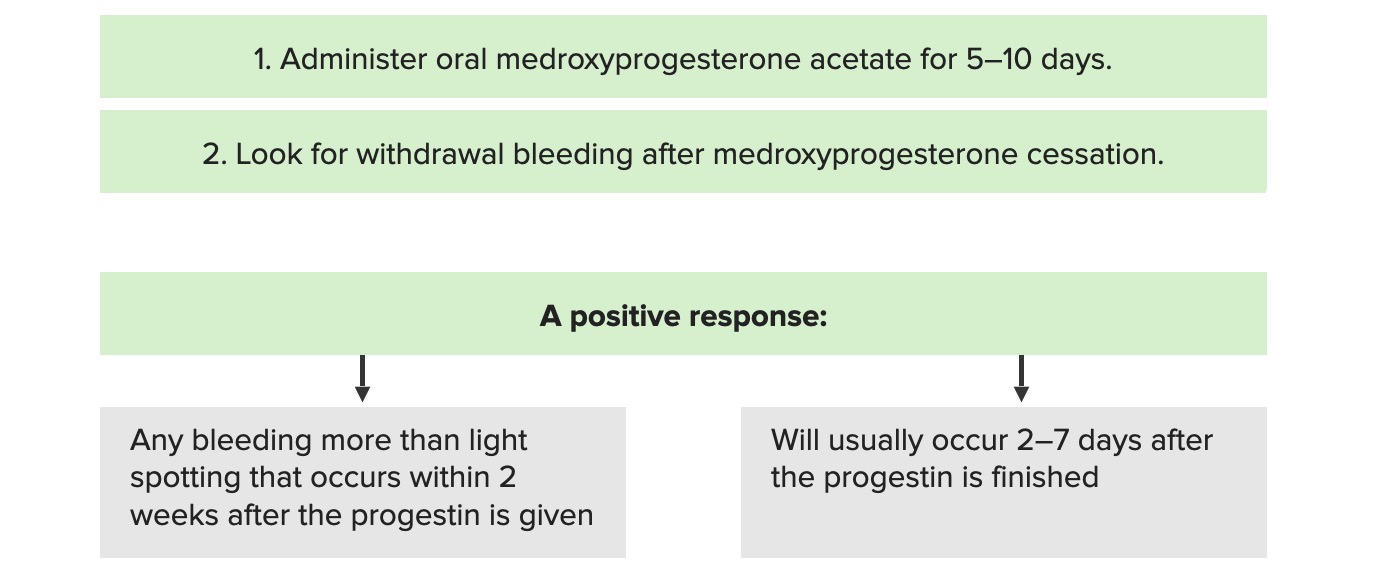
  • Evalúe si hay sangrado después de un curso de 10 días de una progestina.
  • Si se produce sangrado por deprivación:
    • Prueba que la paciente puede menstruar con una exposición adecuada a las hormonas
    • Sugiere anovulación → estrógeno sin progesterona
    • Considere SOP u otras afecciones con estrógeno sin oposición.
  • Si no se presenta sangrado por deprivación:
    • Sospeche de un problema del eje hipotalámico-pituitario-ovárico o de una obstrucción del tracto de salida.
    • Haz un desafío de estrógeno-progestina.
Algoritmo de prueba de provocación de progesterona

Prueba de provocación de progesterona

Imagen por Lecturio.

Desafío estrógeno-progestina

  • Administre estrógeno para estimular el endometrio, seguido de un curso corto de progestina → evalúe si hay sangrado
  • Si se produce sangrado por deprivación:
    • Demuestra que el paciente puede menstruar con la exposición hormonal adecuada
    • Sugiere que no hay producción de hormonas ováricas → no hay estrógeno ni progesterona
    • Considere las causas hipotalámicas y la insuficiencia ovárica prematura.
  • Si no se presenta sangrado por deprivación:
    • Demuestra que el problema está en EN Erythema nodosum is an immune-mediated panniculitis (inflammation of the subcutaneous fat) caused by a type IV (delayed-type) hypersensitivity reaction. It commonly manifests in young women as tender, erythematous nodules on the shins. Erythema Nodosum el útero o en EN Erythema nodosum is an immune-mediated panniculitis (inflammation of the subcutaneous fat) caused by a type IV (delayed-type) hypersensitivity reaction. It commonly manifests in young women as tender, erythematous nodules on the shins. Erythema Nodosum el tracto de salida
    • Considere adherencias intrauterinas (síndrome de Asherman) o estenosis cervical

Tratamiento

El tratamiento depende de la etiología.

Tratar otras afecciones médicas:

  • Atención obstétrica, si está embarazada
  • Tratamiento del hipotiroidismo o hipertiroidismo
  • Enfermedad sistémica

Gestión del estilo de vida:

  • Amenorrea hipotalámica funcional:
    • Aumento de peso (hasta un IMC > 19)
    • ↓ Intensidad del ejercicio
    • Psicoterapia
    • Tratamiento del estrés
  • SOP: pérdida de peso, si tiene sobrepeso

Tratamiento médico:

  • Asegúrese de que el paciente tenga exposición al AL Amyloidosis estrógeno y la progesterona a través de:
    • Reanudación de la ovulación normal
    • Píldoras anticonceptivas orales
    • Terapia de reemplazo hormonal
  • Hiperprolactinemia:
    • Agonistas de la dopamina → ↓ prolactina → restaurar la función eje hipotalámico-pituitario-ovárico
    • Opciones: cabergolina, bromocriptina
  • Hiperandrogenismo/SOP:
    • Píldoras anticonceptivas orales
    • Espironolactona
    • Agentes sensibilizantes a la insulina (metformina)

Tratamiento quirúrgico:

  • Corregir obstrucciones anatómicas.
  • Tumores especiales.

Tratamiento de fertilidad, si lo desea:

  • Inducción de la ovulación
  • Fertilización in vitro

Referencias

  1. Welt CK, Barbieri RL. (2023). Epidemiology and causes of secondary amenorrhea. In Martin KA (Ed.), UpToDate. Retrieved August 19, 2025, from https://www.uptodate.com/contents/epidemiology-and-causes-of-secondary-amenorrhea
  2. Welt CK, Barbieri RL. (2024). Evaluation and management of secondary amenorrhea. In Martin KA (Ed.), UpToDate. Retrieved August 19, 2025, from https://www.uptodate.com/contents/evaluation-and-management-of-secondary-amenorrhea
  3. Welt CK, Barbieri RL. (2025). Clinical manifestations of polycystic ovary syndrome in adults. In Martin KA (Ed.), UpToDate. Retrieved August 19, 2025, from https://www.uptodate.com/contents/clinical-manifestations-of-polycystic-ovary-syndrome-in-adults
  4. Schorge JO, Schaffer JI, et al. (2008). Williams Gynecology (pp. 365-382).
  5. Pinkerton JV. (2023). Amenorrhea. Merck Manual Professional Version. Retrieved August 19, 2025, from https://www.merckmanuals.com/professional/gynecology-and-obstetrics/menstrual-abnormalities/amenorrhea
  6. Tough DeSapri KA. (2024). Amenorrhea. In Lucidi RS (Ed.), Medscape. Retrieved August 19, 2025, from https://emedicine.medscape.com/article/252928-overview

¡Crea tu cuenta gratis o inicia una sesión para seguir leyendo!

Regístrate ahora y obtén acceso gratuito a Lecturio con páginas de concepto, videos médicos y cuestionarios para tu educación médica.

User Reviews

Que tengas una sesión de estudio alegre y navideña 🎁 Ahorra 50% en todos los planes >>

Details