Domina Conceptos Médicos

Estudia para la escuela de medicina y tus examenes con Lecturio.

Absceso Perianal y Perirrectal

Los LOS Neisseria abscesos perianales y perirrectales son acumulaciones de pus en EN Erythema nodosum is an immune-mediated panniculitis (inflammation of the subcutaneous fat) caused by a type IV (delayed-type) hypersensitivity reaction. It commonly manifests in young women as tender, erythematous nodules on the shins. Erythema Nodosum el espacio cerrado cerca de los LOS Neisseria tejidos perirrectales. Estas infecciones se originan por la obstrucción de las glándulas de las criptas anales. Los LOS Neisseria pacientes presentan dolor Dolor Inflammation severo en EN Erythema nodosum is an immune-mediated panniculitis (inflammation of the subcutaneous fat) caused by a type IV (delayed-type) hypersensitivity reaction. It commonly manifests in young women as tender, erythematous nodules on the shins. Erythema Nodosum el área anal o rectal. Encontrar una masa fluctuante y sensible en EN Erythema nodosum is an immune-mediated panniculitis (inflammation of the subcutaneous fat) caused by a type IV (delayed-type) hypersensitivity reaction. It commonly manifests in young women as tender, erythematous nodules on the shins. Erythema Nodosum el examen físico puede proporcionar el diagnóstico. El tratamiento requiere incisión quirúrgica y drenaje rápidos, que pueden ir seguidos de un ciclo de antibióticos en EN Erythema nodosum is an immune-mediated panniculitis (inflammation of the subcutaneous fat) caused by a type IV (delayed-type) hypersensitivity reaction. It commonly manifests in young women as tender, erythematous nodules on the shins. Erythema Nodosum algunos casos. Sin tratamiento, estos abscesos pueden conducir a la formación de fístulas.

Last updated: Dec 15, 2025

Editorial responsibility: Stanley Oiseth, Lindsay Jones, Evelin Maza

Epidemiología y Etiología

Epidemiología

  • Aproximadamente 100 000 casos nuevos por año en EN Erythema nodosum is an immune-mediated panniculitis (inflammation of the subcutaneous fat) caused by a type IV (delayed-type) hypersensitivity reaction. It commonly manifests in young women as tender, erythematous nodules on the shins. Erythema Nodosum los LOS Neisseria Estados Unidos
  • Edad:
    • Suele presentarse entre los LOS Neisseria 20 y 60 años de edad
    • Media: 40 años
  • Dos veces más común en EN Erythema nodosum is an immune-mediated panniculitis (inflammation of the subcutaneous fat) caused by a type IV (delayed-type) hypersensitivity reaction. It commonly manifests in young women as tender, erythematous nodules on the shins. Erythema Nodosum hombres que en EN Erythema nodosum is an immune-mediated panniculitis (inflammation of the subcutaneous fat) caused by a type IV (delayed-type) hypersensitivity reaction. It commonly manifests in young women as tender, erythematous nodules on the shins. Erythema Nodosum mujeres
  • El 30% de los LOS Neisseria pacientes refieren antecedentes de absceso anorrectal.

Etiología

Las glándulas anales, que se encuentran en EN Erythema nodosum is an immune-mediated panniculitis (inflammation of the subcutaneous fat) caused by a type IV (delayed-type) hypersensitivity reaction. It commonly manifests in young women as tender, erythematous nodules on the shins. Erythema Nodosum el plano interesfinteriano, drenan en EN Erythema nodosum is an immune-mediated panniculitis (inflammation of the subcutaneous fat) caused by a type IV (delayed-type) hypersensitivity reaction. It commonly manifests in young women as tender, erythematous nodules on the shins. Erythema Nodosum criptas que se encuentran a lo largo de la circunferencia de la línea dentada/pectínea. La infección de una cripta glandular obstruida puede ocurrir debido a:

  • Obstrucción inespecífica (aproximadamente el 90% de los LOS Neisseria casos)
  • Enfermedad inflamatoria intestinal (especialmente enfermedad de Crohn)
  • Trauma
  • Malignidad
  • Extensión de otra infección:

Bacterias comunes:

  • Escherichia coli Escherichia coli The gram-negative bacterium Escherichia coli is a key component of the human gut microbiota. Most strains of E. coli are avirulent, but occasionally they escape the GI tract, infecting the urinary tract and other sites. Less common strains of E. coli are able to cause disease within the GI tract, most commonly presenting as abdominal pain and diarrhea. Escherichia coli
  • Staphylococcus aureus Staphylococcus aureus Potentially pathogenic bacteria found in nasal membranes, skin, hair follicles, and perineum of warm-blooded animals. They may cause a wide range of infections and intoxications. Brain Abscess
  • Streptococcus Streptococcus Streptococcus is one of the two medically important genera of gram-positive cocci, the other being Staphylococcus. Streptococci are identified as different species on blood agar on the basis of their hemolytic pattern and sensitivity to optochin and bacitracin. There are many pathogenic species of streptococci, including S. pyogenes, S. agalactiae, S. pneumoniae, and the viridans streptococci. Streptococcus
  • Enterococcus Enterococcus Enterococcus is a genus of oval-shaped gram-positive cocci that are arranged in pairs or short chains. Distinguishing factors include optochin resistance and the presence of pyrrolidonyl arylamidase (PYR) and Lancefield D antigen. Enterococcus is part of the normal flora of the human GI tract. Enterococcus
  • Proteus Proteus Proteus spp. are gram-negative, facultatively anaerobic bacilli. Different types of infection result from Proteus, but the urinary tract is the most common site. The majority of cases are caused by Proteus mirabilis (P. mirabilis). The bacteria are part of the normal intestinal flora and are also found in the environment. Proteus
  • Prevotella Prevotella A genus of gram-negative, anaerobic, nonsporeforming, nonmotile rods. Organisms of this genus had originally been classified as members of the bacteroides genus but overwhelming biochemical and chemical findings in 1990 indicated the need to separate them from other bacteroides species, and hence, this new genus was established. Dog and Cat Bites
  • Peptostreptococcus Peptostreptococcus A genus of gram-positive, anaerobic, coccoid bacteria that is part of the normal flora of humans. Its organisms are opportunistic pathogens causing bacteremias and soft tissue infections. Perianal and Perirectal Abscess
  • Porphyromonas Porphyromonas A genus of gram-negative, anaerobic, nonsporeforming, nonmotile rods or coccobacilli. Organisms in this genus had originally been classified as members of the bacteroides genus but overwhelming biochemical and chemical findings indicated the need to separate them from other bacteroides species, and hence, this new genus was created. Dog and Cat Bites
  • Fusobacteria Fusobacteria A genus of gram-negative, anaerobic, rod-shaped bacteria found in cavities of humans and other animals. No endospores are formed. Some species are pathogenic and occur in various purulent or gangrenous infections. Perianal and Perirectal Abscess
  • Bacteroides Bacteroides Bacteroides is a genus of opportunistic, anaerobic, gram-negative bacilli. Bacteroides fragilis is the most common species involved in human disease and is part of the normal flora of the large intestine. Bacteroides
  • Clostridium

Factores de riesgo

  • Inmunosupresión:
    • Diabetes Diabetes Diabetes mellitus (DM) is a metabolic disease characterized by hyperglycemia and dysfunction of the regulation of glucose metabolism by insulin. Type 1 DM is diagnosed mostly in children and young adults as the result of autoimmune destruction of β cells in the pancreas and the resulting lack of insulin. Type 2 DM has a significant association with obesity and is characterized by insulin resistance. Diabetes Mellitus
    • Quimioterapia
    • Virus Virus Viruses are infectious, obligate intracellular parasites composed of a nucleic acid core surrounded by a protein capsid. Viruses can be either naked (non-enveloped) or enveloped. The classification of viruses is complex and based on many factors, including type and structure of the nucleoid and capsid, the presence of an envelope, the replication cycle, and the host range. Virology de inmunodeficiencia humana (VIH)
  • Tabaquismo
  • Prolapso rectal

Clasificación y Fisiopatología

Clasificación


La clasificación de los LOS Neisseria abscesos anorrectales se basa en EN Erythema nodosum is an immune-mediated panniculitis (inflammation of the subcutaneous fat) caused by a type IV (delayed-type) hypersensitivity reaction. It commonly manifests in young women as tender, erythematous nodules on the shins. Erythema Nodosum su ubicación.
  • Absceso perianal (más común):
    • El ano está rodeado por el espacio perianal, que se extiende y continúa con la grasa de los LOS Neisseria glúteos.
    • Como la piel perianal puede ser atravesada, el absceso se ve VE Ventilation: Mechanics of Breathing como una masa dolorosa y fluctuante en EN Erythema nodosum is an immune-mediated panniculitis (inflammation of the subcutaneous fat) caused by a type IV (delayed-type) hypersensitivity reaction. It commonly manifests in young women as tender, erythematous nodules on the shins. Erythema Nodosum el borde del ano.
  • Isquiorrectal (isquioanal):
    • El espacio isquiorrectal se encuentra lateral y posterior al AL Amyloidosis ano e inferior al AL Amyloidosis elevador del ano.
    • Lateral a este espacio está el isquion, y medial al AL Amyloidosis espacio está el esfínter anal externo.
    • La infección del espacio isquiorrectal se observa como una masa dolorosa y fluctuante en EN Erythema nodosum is an immune-mediated panniculitis (inflammation of the subcutaneous fat) caused by a type IV (delayed-type) hypersensitivity reaction. It commonly manifests in young women as tender, erythematous nodules on the shins. Erythema Nodosum los LOS Neisseria glúteos.
  • Interesfinteriano
    • El espacio interesfinteriano separa los LOS Neisseria esfínteres anal interno y externo.
    • El absceso puede ser difícil de diagnosticar, pero la masa puede verse sobresaliendo en EN Erythema nodosum is an immune-mediated panniculitis (inflammation of the subcutaneous fat) caused by a type IV (delayed-type) hypersensitivity reaction. It commonly manifests in young women as tender, erythematous nodules on the shins. Erythema Nodosum el lumen.
  • Supraelevador
    • El espacio supralevador está por encima del elevador del ano.
    • Los LOS Neisseria abscesos pueden ser de:
      • Una infección criptoglandular local
      • Una enfermedad inflamatoria (e.g., enfermedad de Crohn)
      • Una extensión hacia abajo de un absceso intraperitoneal Intraperitoneal Peritoneum: Anatomy
    • Los LOS Neisseria individuos afectados presentan dolor Dolor Inflammation perianal y fiebre.
    • Generalmente no se encuentran hallazgos externos; por lo tanto, es necesario el diagnóstico por imágenes.
  • En EN Erythema nodosum is an immune-mediated panniculitis (inflammation of the subcutaneous fat) caused by a type IV (delayed-type) hypersensitivity reaction. It commonly manifests in young women as tender, erythematous nodules on the shins. Erythema Nodosum herradura:
    • Absceso perirrectal complejo con una “forma de U” característica
    • El absceso se extiende semicircunferencialmente, formándose con mayor frecuencia en EN Erythema nodosum is an immune-mediated panniculitis (inflammation of the subcutaneous fat) caused by a type IV (delayed-type) hypersensitivity reaction. It commonly manifests in young women as tender, erythematous nodules on the shins. Erythema Nodosum la parte posterior del canal anal

Fisiopatología

  • La obstrucción de una glándula de la cripta anal permite el crecimiento bacteriano → absceso
  • El absceso puede extenderse a lo largo de planos a:
    • Espacios interesfinterianos, isquiorrectales o supraelevadores → absceso perirrectal
    • Piel perianal → absceso perianal

Presentación Clínica y Diagnóstico

Síntomas

Los LOS Neisseria síntomas de un absceso perirrectal o perianal pueden variar según su ubicación, pero pueden incluir:
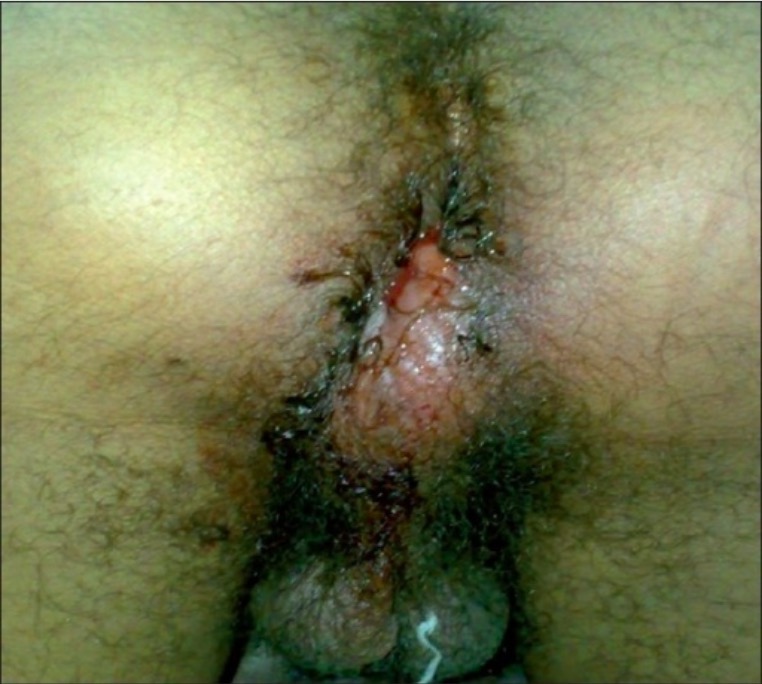
  • Síntomas anales o rectales:
    • Dolor Dolor Inflammation:
      • Severo
      • Constante
      • Sordo, agudo, doloroso o palpitante
      • Puede ser exacerbado por las deposiciones o por sentarse
    • Estreñimiento o diarrea
    • Drenaje purulento
    • Sangrado rectal
  • Retención urinaria ocasional
  • Síntomas constitucionales:
    • Fiebre (21%)
    • Escalofríos
    • Malestar
    • Fatiga

Examen físico

  • Se puede observar inflamación y eritema perianal.
  • Según la localización, el examen externo o tacto rectal puede revelar:
    • Inflamación
    • Sensibilidad
    • Fluctuación
  • El drenaje espontáneo puede ser sanguinolento o purulento.

Diagnóstico

El diagnóstico de un absceso perianal o isquiorrectal usualmente se realiza clínicamente. Sin embargo, la tomografía computarizada (TC), la resonancia magnética (RM) o el ultrasonido pueden ser útiles para identificar:

  • Un absceso profundo
  • Una posible fuente de infección intraabdominal

Tratamiento y Complicaciones

Tratamiento

Drenaje quirúrgico:

  • Estándar de cuidado
  • Todos los LOS Neisseria abscesos anorrectales deben drenarse rápidamente.
  • Un absceso perianal simple se puede drenar en EN Erythema nodosum is an immune-mediated panniculitis (inflammation of the subcutaneous fat) caused by a type IV (delayed-type) hypersensitivity reaction. It commonly manifests in young women as tender, erythematous nodules on the shins. Erythema Nodosum un consultorio o en EN Erythema nodosum is an immune-mediated panniculitis (inflammation of the subcutaneous fat) caused by a type IV (delayed-type) hypersensitivity reaction. It commonly manifests in young women as tender, erythematous nodules on the shins. Erythema Nodosum el servicio de urgencias.
  • Los LOS Neisseria abscesos perirrectales complejos requieren drenaje en EN Erythema nodosum is an immune-mediated panniculitis (inflammation of the subcutaneous fat) caused by a type IV (delayed-type) hypersensitivity reaction. It commonly manifests in young women as tender, erythematous nodules on the shins. Erythema Nodosum un quirófano.

Terapia con antibióticos:

  • Opciones:
    • Amoxicilina–clavulánico
    • Ciprofloxacina más metronidazol
  • Indicaciones (de acuerdo a la American Society of Colon Colon The large intestines constitute the last portion of the digestive system. The large intestine consists of the cecum, appendix, colon (with ascending, transverse, descending, and sigmoid segments), rectum, and anal canal. The primary function of the colon is to remove water and compact the stool prior to expulsion from the body via the rectum and anal canal. Colon, Cecum, and Appendix: Anatomy and Rectal Surgeons (ASCRS, por sus siglas en EN Erythema nodosum is an immune-mediated panniculitis (inflammation of the subcutaneous fat) caused by a type IV (delayed-type) hypersensitivity reaction. It commonly manifests in young women as tender, erythematous nodules on the shins. Erythema Nodosum inglés):
    • Celulitis extensa
    • Signos de sepsis Sepsis Systemic inflammatory response syndrome with a proven or suspected infectious etiology. When sepsis is associated with organ dysfunction distant from the site of infection, it is called severe sepsis. When sepsis is accompanied by hypotension despite adequate fluid infusion, it is called septic shock. Sepsis and Septic Shock
    • Enfermedad cardíaca valvular
    • Inmunosupresión
    • Diabetes Diabetes Diabetes mellitus (DM) is a metabolic disease characterized by hyperglycemia and dysfunction of the regulation of glucose metabolism by insulin. Type 1 DM is diagnosed mostly in children and young adults as the result of autoimmune destruction of β cells in the pancreas and the resulting lack of insulin. Type 2 DM has a significant association with obesity and is characterized by insulin resistance. Diabetes Mellitus

Cuidados postoperatorios:

  • Mantener limpio el sitio de la incisión.
  • Analgésicos
  • Ablandadores de heces
  • Baños de asiento

Complicaciones

  • Sepsis Sepsis Systemic inflammatory response syndrome with a proven or suspected infectious etiology. When sepsis is associated with organ dysfunction distant from the site of infection, it is called severe sepsis. When sepsis is accompanied by hypotension despite adequate fluid infusion, it is called septic shock. Sepsis and Septic Shock
  • Absceso recurrente
  • Formación de fístula
  • Retención urinaria
  • Estreñimiento o incontinencia
  • Gangrena de Fournier:
    • Fascitis necrosante de los LOS Neisseria genitales externos, perineal o zona perianal
    • Asociada a una alta tasa de mortalidad

Diagnóstico Diferencial

  • Fisura anal: un desgarro superficial en EN Erythema nodosum is an immune-mediated panniculitis (inflammation of the subcutaneous fat) caused by a type IV (delayed-type) hypersensitivity reaction. It commonly manifests in young women as tender, erythematous nodules on the shins. Erythema Nodosum el anodermo asociado con estreñimiento, trauma o enfermedad inflamatoria intestinal: los LOS Neisseria pacientes presentan dolor Dolor Inflammation rectal durante las deposiciones, paso de sangre de color rojo brillante y espasmo anal. El diagnóstico es clínico. El tratamiento suele ser conservador e incluye aumentar la ingesta de líquidos y fibra, baños de asiento tibios y ablandadores de heces. La nifedipina tópica o la nitroglicerina ayudan con los LOS Neisseria espasmos anales y los LOS Neisseria anestésicos locales controlan el dolor Dolor Inflammation.
  • Fístula anal: comunicaciones anormales entre la luz anorrectal y otra estructura corporal, a menudo a la piel: la fístula anal puede ocurrir debido a la extensión de un absceso anal. Los LOS Neisseria síntomas incluyen dolor Dolor Inflammation y secreción anormal. El diagnóstico es clínico. El tratamiento es principalmente quirúrgico (fistulotomía), pero puede incluir antibióticos si hay infección.
  • Hemorroides: vasos dilatados del plexo hemorroidal en EN Erythema nodosum is an immune-mediated panniculitis (inflammation of the subcutaneous fat) caused by a type IV (delayed-type) hypersensitivity reaction. It commonly manifests in young women as tender, erythematous nodules on the shins. Erythema Nodosum el canal anal, comúnmente causadas por estreñimiento: Dependiendo de la ubicación de las venas, las hemorroides pueden ser internas o externas. Las hemorroides externas son dolorosas, mientras que las hemorroides internas son indoloras. Ambos tipos pueden sangrar y aparecer como una masa rectal blanda en EN Erythema nodosum is an immune-mediated panniculitis (inflammation of the subcutaneous fat) caused by a type IV (delayed-type) hypersensitivity reaction. It commonly manifests in young women as tender, erythematous nodules on the shins. Erythema Nodosum el examen. El diagnóstico es clínico. El tratamiento incluye ablandadores de heces, hidrocortisona tópica y baños de asiento. Las opciones de tratamiento adicionales son la ligadura con banda elástica o la extirpación quirúrgica.
  • Quiste pilonidal: puede presentarse como un absceso: al AL Amyloidosis igual que los LOS Neisseria abscesos perianales, los LOS Neisseria quistes pilonidales se presentan con eritema, sensibilidad e inflamación. Sin embargo, los LOS Neisseria abscesos pilonidales ocurren en EN Erythema nodosum is an immune-mediated panniculitis (inflammation of the subcutaneous fat) caused by a type IV (delayed-type) hypersensitivity reaction. It commonly manifests in young women as tender, erythematous nodules on the shins. Erythema Nodosum el área interglútea superior y dorsal al AL Amyloidosis ano. Estos quistes se diagnostican mediante examen físico y se tratan mediante incisión quirúrgica y drenaje.
  • Carcinoma anal: enfermedad neoplásica en EN Erythema nodosum is an immune-mediated panniculitis (inflammation of the subcutaneous fat) caused by a type IV (delayed-type) hypersensitivity reaction. It commonly manifests in young women as tender, erythematous nodules on the shins. Erythema Nodosum la que se forman y crecen células cancerosas en EN Erythema nodosum is an immune-mediated panniculitis (inflammation of the subcutaneous fat) caused by a type IV (delayed-type) hypersensitivity reaction. It commonly manifests in young women as tender, erythematous nodules on the shins. Erythema Nodosum el ano: los LOS Neisseria factores de riesgo incluyen edad avanzada, infecciones como el virus Virus Viruses are infectious, obligate intracellular parasites composed of a nucleic acid core surrounded by a protein capsid. Viruses can be either naked (non-enveloped) or enveloped. The classification of viruses is complex and based on many factors, including type and structure of the nucleoid and capsid, the presence of an envelope, the replication cycle, and the host range. Virology del papiloma humano (VPH), múltiples parejas sexuales y sexo anal. Los LOS Neisseria síntomas incluyen sangrado del ano, dolor Dolor Inflammation anal, masa anal o prurito. El carcinoma anal se diagnostica mediante biopsia. El tratamiento puede incluir cirugía, radiación o quimioterapia.

Referencias

  1. Bleday R (2024). Perianal and perirectal abscesses. UpToDate. Retrieved on August 6, 2025, from https://www.uptodate.com/contents/perianal-and-perirectal-abscess
  2. Kumar V, Abbas AK, Aster JC. (2015). Robbins & Cotran Pathologic Basis of Disease. Philadelphia: Elsevier Saunders.
  3. Sigmon DF, Emmanuel B, Tuma F. (2023). Perianal abscess. StatPearls. Retrieved on August 6, 2025, from https://www.ncbi.nlm.nih.gov/books/NBK459167/
  4. Turner SV, Singh J. (2023). Perirectal abscess. StatPearls. Retrieved on August 6, 2025, from https://www.ncbi.nlm.nih.gov/books/NBK507895/
  5. Whiteford MH (2007). Perianal abscess/fistula disease. Clinics in Colon and Rectal Surgery 20(2):102–109. https://doi.org/10.1055/s-2007-977488
  6. Ansari P (2025). Anorectal abscess. MSD Manual Professional Version. Retrieved on August 6, 2025, from https://www.msdmanuals.com/professional/gastrointestinal-disorders/anorectal-disorders/anorectal-abscess
  7. Jameson J, & Fauci AS, & Kasper DL, & Hauser SL, & Longo DL, & Loscalzo J(Eds.), Harrison’s Principles of Internal Medicine, 20e. McGraw-Hill. https://accessmedicine-mhmedical-com.aucmed.idm.oclc.org/content.aspx?bookid=2129&sectionid=192282719
  8. Kwaan MR, & Stewart Sr DB, & Dunn K (2019). Colon, rectum, and anus. Brunicardi F, & Andersen DK, & Billiar TR, & Dunn DL, & Kao LS, & Hunter JG, & Matthews JB, & Pollock RE(Eds.), Schwartz’s Principles of Surgery, 11e. McGraw-Hill. https://accessmedicine.mhmedical.com/content.aspx?bookid=2576&sectionid=21621459

¡Crea tu cuenta gratis o inicia una sesión para seguir leyendo!

Regístrate ahora y obtén acceso gratuito a Lecturio con páginas de concepto, videos médicos y cuestionarios para tu educación médica.

User Reviews

Que tengas una sesión de estudio alegre y navideña 🎁 Ahorra 50% en todos los planes >>

Details