


Retinoblastoma

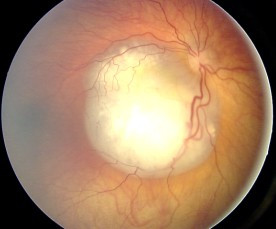
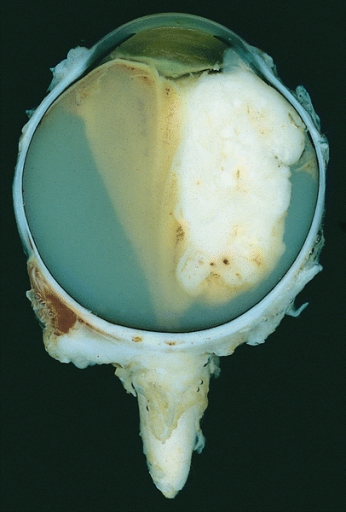
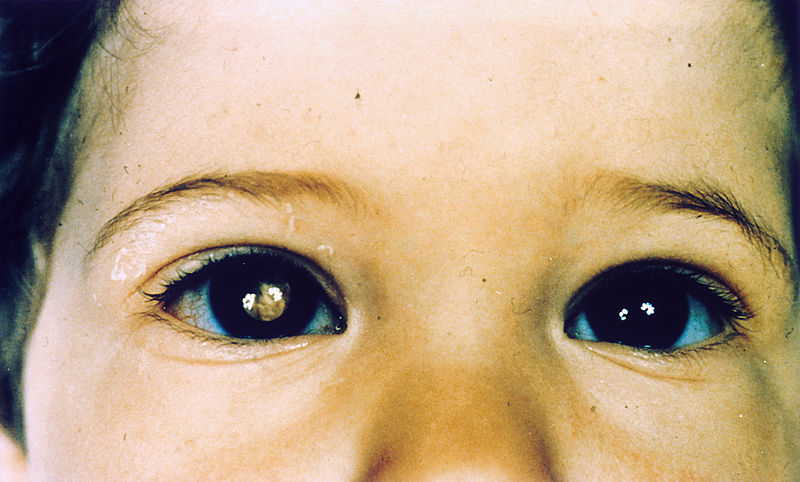
O retinoblastoma Retinoblastoma Retinoblastoma is a rare tumor but the most common primary intraocular malignancy of childhood. It is believed that the condition arises from a neuronal progenitor cell. Retinoblastoma can be heritable or non-heritable. Retinoblastoma embora seja um tumor Tumor Inflammation raro, é o tumor Tumor Inflammation maligno primário do globo ocular mais MAIS Androgen Insensitivity Syndrome frequente em crianças. Pensa-se que a doença surge a partir de uma célula neuronal progenitora. O retinoblastoma Retinoblastoma Retinoblastoma is a rare tumor but the most common primary intraocular malignancy of childhood. It is believed that the condition arises from a neuronal progenitor cell. Retinoblastoma can be heritable or non-heritable. Retinoblastoma pode ser hereditário ou não hereditário. A doença manifesta-se tipicamente pela presença de leucocória unilateral ou bilateral (reflexo branco anormal no olho) numa criança com menos de 2 anos. O retinoblastoma Retinoblastoma Retinoblastoma is a rare tumor but the most common primary intraocular malignancy of childhood. It is believed that the condition arises from a neuronal progenitor cell. Retinoblastoma can be heritable or non-heritable. Retinoblastoma é uma doença potencialmente mortal se não for tratada, mas um diagnóstico precoce está associado a elevadas taxas de sobrevivência em países desenvolvidos.

Last updated: Dec 15, 2025
Editorial responsibility: Stanley Oiseth, Lindsay Jones, Evelin Maza

Epidemiologia

  • Tumor Tumor Inflammation maligno primário do globo ocular mais MAIS Androgen Insensitivity Syndrome frequente em crianças.
  • Incidência: 1 em cada 15.000 de nados vivos nos Estados Unidos
  • Não existem diferenças na incidência consoante o sexo.
  • Representa cerca de 4% de todos os tumores malignos em crianças com < 15 anos
  • Cerca de 95% das crianças afetadas são diagnosticadas antes dos 5 anos.
  • A idade média de diagnóstico é entre os 1820 meses.
  • Cerca de 40% dos casos de retinoblastoma Retinoblastoma Retinoblastoma is a rare tumor but the most common primary intraocular malignancy of childhood. It is believed that the condition arises from a neuronal progenitor cell. Retinoblastoma can be heritable or non-heritable. Retinoblastoma são hereditários.
  • Sobrevivência
    • Em países desenvolvidos > 95%
    • Em países em vias de desenvolvimento: < 30%

Fisiopatologia

  • Os retinoblastomas são causados por uma mutação genética no gene Gene A category of nucleic acid sequences that function as units of heredity and which code for the basic instructions for the development, reproduction, and maintenance of organisms. Basic Terms of Genetics do retinoblastoma Retinoblastoma Retinoblastoma is a rare tumor but the most common primary intraocular malignancy of childhood. It is believed that the condition arises from a neuronal progenitor cell. Retinoblastoma can be heritable or non-heritable. Retinoblastoma(RB1 ou RB RB Chlamydia) em 98% dos casos.
    • RB1 é um regulador negativo fundamental para a progressão do ciclo celular G1/S e encontra-se diretamente ou indiretamente inativo na maioria das neoplasias humanas.
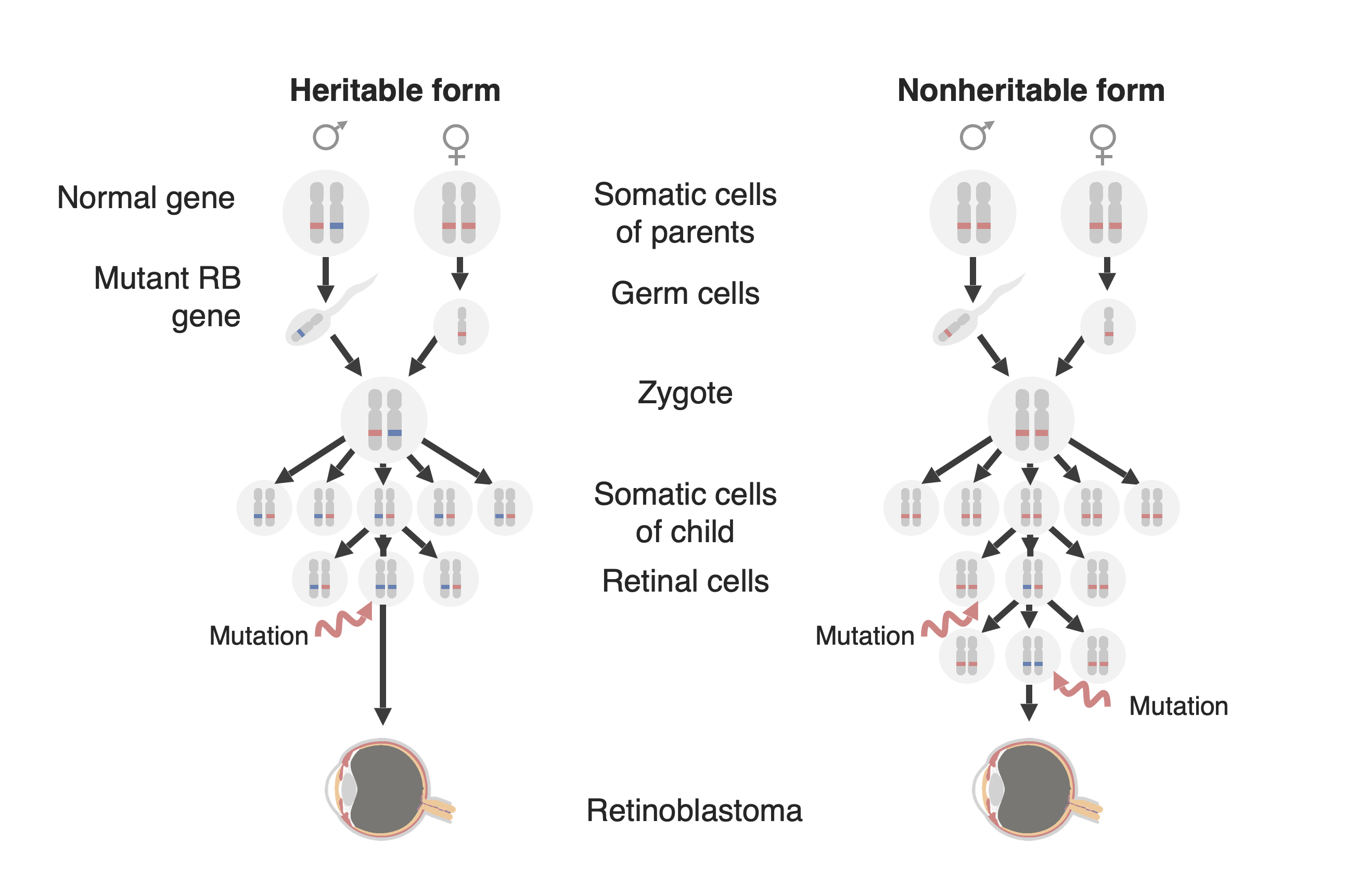
  • Forma não hereditária: (60% dos casos)
    • Ocorrem duas mutações somáticas espontâneas nas células progenitoras do gene Gene A category of nucleic acid sequences that function as units of heredity and which code for the basic instructions for the development, reproduction, and maintenance of organisms. Basic Terms of Genetics RB1, dando origem ao retinoblastoma Retinoblastoma Retinoblastoma is a rare tumor but the most common primary intraocular malignancy of childhood. It is believed that the condition arises from a neuronal progenitor cell. Retinoblastoma can be heritable or non-heritable. Retinoblastoma.
    • Normalmente é unilateral e unifocal Unifocal Retinoblastoma
    • Apresenta-se entre os 2 e os 5 anos
  • Forma familiar ou hereditária: (40% dos casos)
    • A criança herda dos pais PAIS Androgen Insensitivity Syndrome um alelo não-funcional do gene Gene A category of nucleic acid sequences that function as units of heredity and which code for the basic instructions for the development, reproduction, and maintenance of organisms. Basic Terms of Genetics RB1, que está presente em todas as células somáticas.
    • É apenas necessária mais MAIS Androgen Insensitivity Syndrome 1 mutação (esporádica) do segundo alelo numa célula progenitora neuronal para formação de um retinoblastoma Retinoblastoma Retinoblastoma is a rare tumor but the most common primary intraocular malignancy of childhood. It is believed that the condition arises from a neuronal progenitor cell. Retinoblastoma can be heritable or non-heritable. Retinoblastoma.
    • Tende a ser bilateral e/ou multifocal Multifocal Retinoblastoma
    • Apresenta-se antes da idade de 1 ano.
Formas de retinoblastoma - hereditárias e não hereditárias

Diagrama das duas formas de desenvolvimento de retinoblastoma: à esquerda a forma familiar ou forma hereditária e à direita a forma esporádica ou forma não hereditária. Na forma hereditária, um gene RB1 mutado (em azul) é transmitido à criança e apenas é necessária uma mutação adicional no alelo normal (em vermelho) para o desenvolvimento do tumor. Na forma não hereditária, a mutação do gene RB1 pode surgir na linhagem germinativa (não mostrada nesta figura) comportando-se como a forma hereditária ou, uma célula precursora da retina pode adquirir uma mutação RB1 em ambos os alelos e desenvolver-se um retinoblastoma.

Imagem de Lecturio.
Apresentação Clínica

  • Sinais cardinais:
    • Leucocória
    • Estrabismo
  • Sinais e sintomas menos comuns:
    • Diminuição da visão
    • Inflamação ocular
    • Hemorragia vítrea
    • Glaucoma Glaucoma Glaucoma is an optic neuropathy characterized by typical visual field defects and optic nerve atrophy seen as optic disc cupping on examination. The acute form of glaucoma is a medical emergency. Glaucoma is often, but not always, caused by increased intraocular pressure (IOP). Glaucoma
    • Anisocoria Anisocoria Unequal pupil size, which may represent a benign physiologic variant or a manifestation of disease. Pathologic anisocoria reflects an abnormality in the musculature of the iris (iris diseases) or in the parasympathetic or sympathetic pathways that innervate the pupil. Physiologic anisocoria refers to an asymmetry of pupil diameter, usually less than 2mm, that is not associated with disease. Pupil: Physiology and Abnormalities
    • Proptose
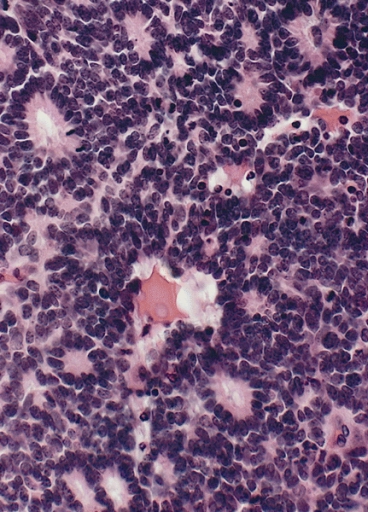
  • Histologia:
    • Raramente é necessário para confirmação do diagnóstico
    • A biópsia está contraindicada pelo risco de disseminação das células tumorais.
    • São observados três padrões de crescimento: exofítico (subretinal), endofítico (dentro da cavidade vítrea) e difuso (raro, cresce para dentro da retina Retina The ten-layered nervous tissue membrane of the eye. It is continuous with the optic nerve and receives images of external objects and transmits visual impulses to the brain. Its outer surface is in contact with the choroid and the inner surface with the vitreous body. The outermost layer is pigmented, whereas the inner nine layers are transparent. Eye: Anatomy).

Diagnóstico

  • Referenciação urgente ao oftalmologista
  • Fundoscopia sob anestesia, com ecografia
  • Ressonância magnética (RM) do cérebro e órbitas
  • Não há necessidade de exames complementares para estadiamento (i.e, mielograma, punção lombar e/ou cintigrafia óssea) → metástases raramente presentes ao momento do diagnóstico
  • Testes Testes Gonadal Hormones genéticos estão recomendados.

Tratamento e Prognóstico

Tratamento

O tratamento depende do estadiamento e existem várias opções terapêuticas disponíveis que permitem a preservação do globo ocular

  • Tumores sem atingimento da fóvea, pequenos e não complicados: crioterapia ou fotocoagulação a laser
  • Estadios mais MAIS Androgen Insensitivity Syndrome avançados: quimioterapia local e sistêmica, braquiterapia
  • Complicações anatómicas ou funcionais pelo tumor Tumor Inflammation: enucleação
  • Doença metástática:
    • Raramente (2%3%) presente no momento do diagnóstico
    • Transplante de células estaminais autólogas após terapia intensiva
  • É necessária uma vigilância ao longo da vida para que possam ser detetadas eventuais neoplasias secundárias!

Prognóstico

  • Sobrevivência: > 95% em países desenvolvidos; < 30% em países em desenvolvimento.
  • Em relação ao prognóstico visual, este depende da extensão do tumor Tumor Inflammation: 50% dos doentes atingem uma acuidade visual de pelo menos 20/40.

Diagnóstico Diferencial

O diagnóstico diferencial inclui qualquer condição que possa causar leucocória.

  • Vascularização fetal persistente: incapacidade de involução do sistema vítreo embrionário primário e do sistema vascular hialoide durante a gravidez. Prognóstico visual desfavorável
  • Retinopatia da prematuridade (ROP): doença ocular que afeta principalmente os bebés prematuros podendo resultar em cegueira. A doença é causada por um processo de formação de neovasos anormais, após a libertação de fatores de crescimento pelos vasos periféricos da retina Retina The ten-layered nervous tissue membrane of the eye. It is continuous with the optic nerve and receives images of external objects and transmits visual impulses to the brain. Its outer surface is in contact with the choroid and the inner surface with the vitreous body. The outermost layer is pigmented, whereas the inner nine layers are transparent. Eye: Anatomy que não foram completamente desenvolvidos. Os vasos sangram facilmente e causam cicatrizes. A maioria dos casos de ROP são leves.
  • Catarata: uma condição congénita ou adquirida em que a lente do olho se torna progressivamente opaca, resultando numa visão desfocada.
  • Doença de Coats: uma doença idiopática caracterizada por telangiectasias Telangiectasias Ataxia-telangiectasia retinianas com quebra da barreira hemato-retiniana. Afeta mais MAIS Androgen Insensitivity Syndrome frequentemente crianças. Pode levar ao descolamento da retina Retina The ten-layered nervous tissue membrane of the eye. It is continuous with the optic nerve and receives images of external objects and transmits visual impulses to the brain. Its outer surface is in contact with the choroid and the inner surface with the vitreous body. The outermost layer is pigmented, whereas the inner nine layers are transparent. Eye: Anatomy e a cegueira.
  • Hemorragia vítrea (VH): presença de sangue no interior da cavidade vítrea. A maioria dos casos de HV resulta de uma das seguintes situações: trauma ocular, descolamento de vítreo posterior associado ao descolamento da retina Retina The ten-layered nervous tissue membrane of the eye. It is continuous with the optic nerve and receives images of external objects and transmits visual impulses to the brain. Its outer surface is in contact with the choroid and the inner surface with the vitreous body. The outermost layer is pigmented, whereas the inner nine layers are transparent. Eye: Anatomy e a retinopatia diabética proliferativa.
  • Toxocaríase ocular (larva migrans ocular): é uma infeção rara causada por vermes redondos, Toxocara canis Toxocara canis A species of parasitic nematode found in the intestine of dogs. Lesions in the brain, liver, eye, kidney, and lung are caused by migrating larvae. In humans, these larvae do not follow normal patterns and may produce visceral larva migrans (larva migrans, visceral). Toxocariasis, e Toxocara Toxocara A genus of ascarid nematodes commonly parasitic in the intestines of cats and dogs. Toxocariasis catis. Manifesta-se por uveíte posterior e podem estar presentes sintomas como visão reduzida, fotofobia, miodesopsia e leucocória.
  • Vitreoretinopatia exsudativa familiar: grupo de doenças hereditárias raras caracterizadas por um processo de angiogénese anormal da retina Retina The ten-layered nervous tissue membrane of the eye. It is continuous with the optic nerve and receives images of external objects and transmits visual impulses to the brain. Its outer surface is in contact with the choroid and the inner surface with the vitreous body. The outermost layer is pigmented, whereas the inner nine layers are transparent. Eye: Anatomy e que resulta numa vascularização incompleta da retina Retina The ten-layered nervous tissue membrane of the eye. It is continuous with the optic nerve and receives images of external objects and transmits visual impulses to the brain. Its outer surface is in contact with the choroid and the inner surface with the vitreous body. The outermost layer is pigmented, whereas the inner nine layers are transparent. Eye: Anatomy periférica. Pode levar a neovascularização secundária, com progressão para a cegueira.
  • Coloboma Coloboma Congenital anomaly in which some of the structures of the eye are absent due to incomplete fusion of the fetal intraocular fissure during gestation. Esophageal Atresia and Tracheoesophageal Fistula: anomalia do desenvolvimento devido a um deficiente encerramento da fissura ótica (coroide), pelo que o problema pode envolver qualquer estrutura ocular inferior, desde o disco ótico até a íris. Um disco ótico grande e um coloboma Coloboma Congenital anomaly in which some of the structures of the eye are absent due to incomplete fusion of the fetal intraocular fissure during gestation. Esophageal Atresia and Tracheoesophageal Fistula coriorretiniano podem cursar com leucocória.
  • Hamartoma Hamartoma A focal malformation resembling a neoplasm, composed of an overgrowth of mature cells and tissues that normally occur in the affected area. Colorectal Cancer astrocítico de retina Retina The ten-layered nervous tissue membrane of the eye. It is continuous with the optic nerve and receives images of external objects and transmits visual impulses to the brain. Its outer surface is in contact with the choroid and the inner surface with the vitreous body. The outermost layer is pigmented, whereas the inner nine layers are transparent. Eye: Anatomy: tumor Tumor Inflammation geralmente indolente que surge em cerca de metade dos doentes com esclerose tuberosa. A doença também está associada à neurofibromatose.

Referências

  1. Kaufman PL, Kim J, Berry JL. (2024). Retinoblastoma: Clinical presentation, evaluation, and diagnosis. UpToDate. Retrieved August 9, 2025, from https://www.uptodate.com/contents/retinoblastoma-clinical-presentation-evaluation-and-diagnosis#H3
  2. Kaufman PL, Kim J, Berry JL. (2024). Retinoblastoma: Treatment and outcome. UpToDate. Retrieved August 9, 2025, from https://www.uptodate.com/contents/retinoblastoma-treatment-and-outcome?topicRef=6275&source=see_link
  3. Lazar, A.L. (2020). In Kumar, V., Abbas, A. K., Aster, J.C., (Eds.), Robbins & Cotran Pathologic Basis of Disease. (10 ed., pp. 1324, 290-294). Elsevier, Inc.
  4. Berry JL, Polski A, Cavenee WK, Dryja TP, Murphree AL, Gallie BL. The RB1 Story: Characterization and Cloning of the First Tumor Suppressor Gene. Genes (Basel). 2019 Nov 1;10(11):879. doi: 10.3390/genes10110879.
  5. Hurwitz RL, Hurwitz M. (2017). Retinoblastoma. National Organization for Rare Disorders (NORD). Retrieved August 9, 2025, from https://rarediseases.org/rare-diseases/retinoblastoma/
  6. Demirci H, Shields CL, Meadows AT, Shields JA. Long-term visual outcome following chemoreduction for retinoblastoma. Arch Ophthalmol. 2005;123(11):1525. 
  7. Shields, C.L., Schoenberg, E.,  Kocher, K., et al. (2013), Lesions simulating retinoblastoma (pseudoretinoblastoma) in 604 cases: results based on age at presentation. Ophthalmology. 2013;120(2):311-316.
  8. National Cancer Institute. (2025). Retinoblastoma Treatment (PDQ®)–Health Professional Version. National Cancer Institute. Retrieved August 9, 2025, from https://www.cancer.gov/types/retinoblastoma/hp/retinoblastoma-treatment-pdq

Crie sua conta gratuita ou faça login para continuar lendo!

Cadastre-se agora e tenha acesso grátis ao Lecturio, com páginas de conceitos, vídeos de medicina e questões para sua educação médica.

Aprende mais com a Lecturio:

Multiple devices displaying human anatomy and health education content.

Complementa o teu estudo da faculdade com o companheiro de estudo tudo-em-um da Lecturio, através de métodos de ensino baseados em evidência.

Estuda onde quiseres

Two iPhones display medical education apps, one showing anatomy, the other Bookmatcher.

A Lecturio Medical complementa o teu estudo através de métodos de ensino baseados em evidência, vídeos de palestras, perguntas e muito mais – tudo combinado num só lugar e fácil de usar.

User Reviews

Have a holly, jolly study session 🎁 Save 50% on all plans now >>

Que tengas una sesión de estudio alegre y navideña 🎁 Ahorra 50% en todos los planes >>

Details