



Imunoterapia no Cancro

A imunoterapia contra neoplasias é uma terapêutica médica de rápido avanço, que aproveita o sistema imunológico para conter ou eliminar as células cancerígenas. Atualmente, as imunoterapias têm sido incorporadas aos regimes de tratamento estabelecidos para diferentes tipos de neoplasias. Existem várias abordagens terapêuticas, incluindo o uso de citocinas, vacinas, vírus oncolíticos, manipulação de células T ou imunoterapia celular adotiva, ou anticorpos contra moléculas do checkpoint imunológico. Estas terapêuticas oferecem novas opções em neoplasias avançadas, incluindo no melanoma Melanoma Melanoma is a malignant tumor arising from melanocytes, the melanin-producing cells of the epidermis. These tumors are most common in fair-skinned individuals with a history of excessive sun exposure and sunburns. Melanoma, no carcinoma de células renais, no adenocarcinoma da próstata, na neoplasia do pulmão, no carcinoma urotelial, no linfoma de Hodgkin e na LLA de células B refratária. Por envolverem o sistema imunológico, estes agentes apresentam efeitos adversos e toxicidades graves e potencialmente fulminantes.

Last updated: Dec 15, 2025

Editorial responsibility: Stanley Oiseth, Lindsay Jones, Evelin Maza

Imunologia Tumoral

Sistema imunológico

O sistema imunológico fornece defesa (imunidade) contra agentes patogénicos invasores que variam de vírus a parasitas, e os seus componentes estão interconectados pelo sangue e pela circulação linfática.

As 2 linhas de defesa (que se sobrepõem):

  • A imunidade inata (que é inespecífica) envolve:
    • Células dendríticas
    • Células natural killer (NK, pela sigla em inglês)
    • Macrófagos
    • Neutrófilos
    • Eosinófilos
    • Basófilos
    • Mastócitos
  • Imunidade adaptativa (com base no reconhecimento de antigénios específicos):
    • Imunidade mediada por células: resposta adaptativa das células/tecidos envolvendo as células T (que incluem células T auxiliares CD4+ e células T citotóxicas CD8+)
    • Imunidade humoral: resposta adaptativa nos fluidos (“ humor Humor Defense Mechanisms”) envolvendo células B e imunoglobulinas

Reconhecimento tumoral

Ocorrem por dia mais MAIS Androgen Insensitivity Syndrome de 20.000 eventos que danificam o DNA DNA A deoxyribonucleotide polymer that is the primary genetic material of all cells. Eukaryotic and prokaryotic organisms normally contain DNA in a double-stranded state, yet several important biological processes transiently involve single-stranded regions. DNA, which consists of a polysugar-phosphate backbone possessing projections of purines (adenine and guanine) and pyrimidines (thymine and cytosine), forms a double helix that is held together by hydrogen bonds between these purines and pyrimidines (adenine to thymine and guanine to cytosine). DNA Types and Structure, os quais são reparados por vias específicas, não causando nenhum efeito duradouro.
  • As células não reparadas têm o potencial de possuirem alterações malignas.
  • Podem ocorrer mais MAIS Androgen Insensitivity Syndrome de 11.000 mutações genómicas e podem ser expressos muitos outros antigénios novos.
    • Antigénios associados a tumores (TAAs, pela sigla em inglês): proteínas que podem ser expressas em células tumorais ou normais, às quais o sistema imunológico é tolerante. Estes antigénios podem incluir:
      • Produtos de proto-oncogenes Proto-Oncogenes Normal cellular genes homologous to viral oncogenes. The products of proto-oncogenes are important regulators of biological processes and appear to be involved in the events that serve to maintain the ordered procession through the cell cycle. Proto-oncogenes have names of the form c-onc. Cancer Immunotherapy mutados e de genes Genes A category of nucleic acid sequences that function as units of heredity and which code for the basic instructions for the development, reproduction, and maintenance of organisms. DNA Types and Structure supressores tumorais (e.g., mutações p53)
      • Oncogenes Oncogenes Genes whose gain-of-function alterations lead to neoplastic cell transformation. They include, for example, genes for activators or stimulators of cell proliferation such as growth factors, growth factor receptors, protein kinases, signal transducers, nuclear phosphoproteins, and transcription factors. A prefix of ‘v-‘ before oncogene symbols indicates oncogenes captured and transmitted by retroviruses; the prefix ‘c-‘ before the gene symbol of an oncogene indicates it is the cellular homolog (proto-oncogenes) of a v-oncogene. Carcinogenesis superexpressos (e.g., HER2 HER2 A cell surface protein-tyrosine kinase receptor that is overexpressed in a variety of adenocarcinomas. It has extensive homology to and heterodimerizes with the EGF receptor, the ERBB-3 receptor, and the ERBB-4 receptor. Activation of the erbB-2 receptor occurs through heterodimer formation with a ligand-bound erbB receptor family member. Targeted and Other Nontraditional Antineoplastic Therapy/ Neu Neu A cell surface protein-tyrosine kinase receptor that is overexpressed in a variety of adenocarcinomas. It has extensive homology to and heterodimerizes with the EGF receptor, the ERBB-3 receptor, and the ERBB-4 receptor. Activation of the erbB-2 receptor occurs through heterodimer formation with a ligand-bound erbB receptor family member. Targeted and Other Nontraditional Antineoplastic Therapy)
      • Proteínas não-oncogénicas superexpressas ou expressas de forma aberrante (e.g., gp100 no melanoma Melanoma Melanoma is a malignant tumor arising from melanocytes, the melanin-producing cells of the epidermis. These tumors are most common in fair-skinned individuals with a history of excessive sun exposure and sunburns. Melanoma)
      • Antigénios tumorais produzidos por vírus oncogénicos
      • Antigénios oncofetais (substâncias produzidas por tumores e pelos tecidos fetais)
      • Glicolípidos e glicoproteínas alterados
      • Antigénios de diferenciação específicos do tipo de célula (e.g., antigénio específico da próstata)
    • Antigénios específicos de tumor Tumor Inflammation (TSAs, pela sigla em inglês): restritos a células cancerígenas (não encontrados em células saudáveis)
  • Os linfócitos T conseguem distinguir antigénios próprios de não próprios (vigilância imunológica).
    • Esta resposta requer sinais coestimulatórios adicionais:
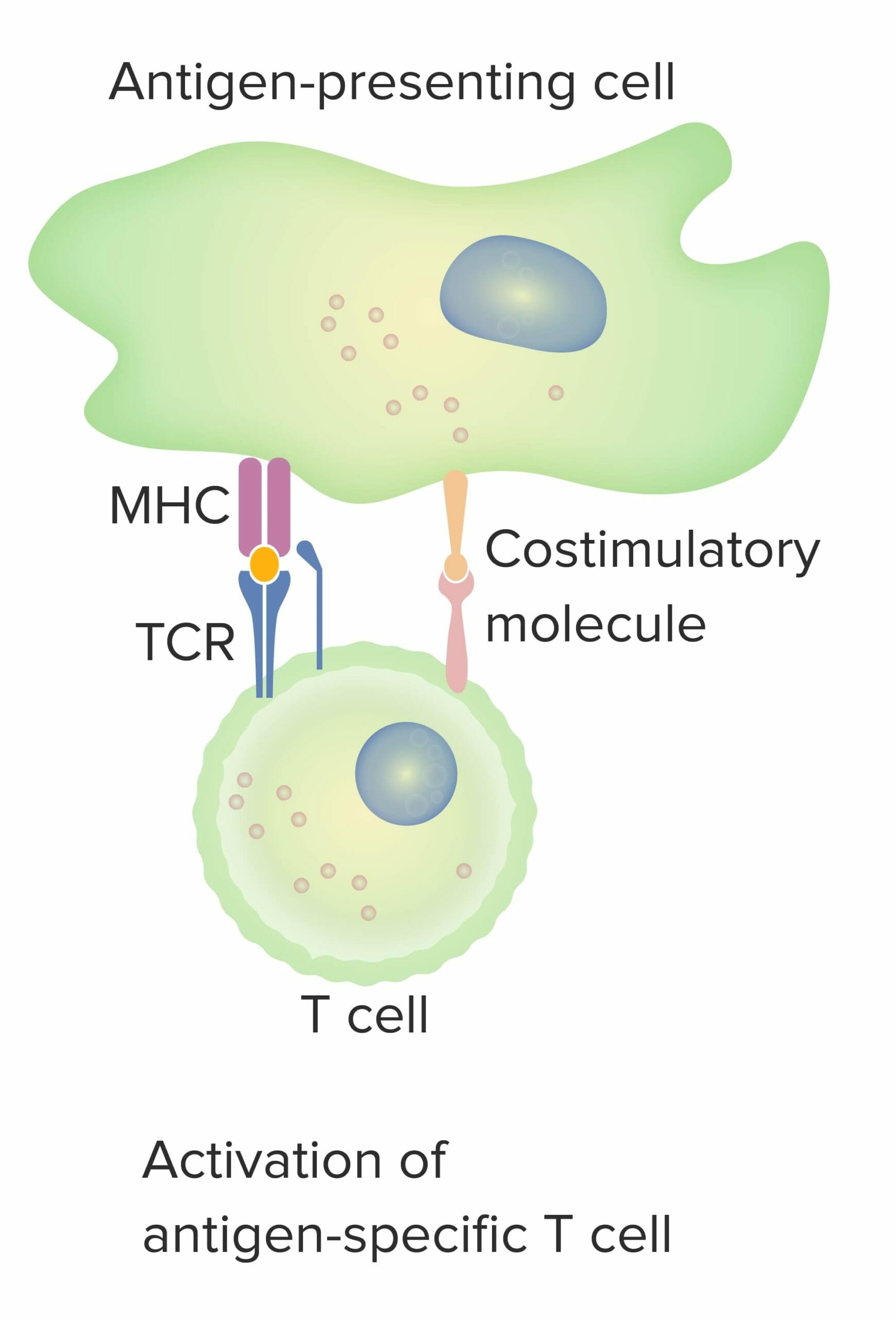
      • (1) O recetor de células T ( TCR TCR Molecules on the surface of T-lymphocytes that recognize and combine with antigens. The receptors are non-covalently associated with a complex of several polypeptides collectively called CD3 antigens. Recognition of foreign antigen and the major histocompatibility complex is accomplished by a single heterodimeric antigen-receptor structure, composed of either alpha-beta or gamma-delta chains. Adaptive Cell-mediated Immunity, pela sigla em inglês) reconhece o seu antigénio associado, conforme apresentado pela célula apresentadora de antigénio (e.g., célula dendrítica).
      • (2) Coestimulação: melhor caracterizada pela proteína B7 (CD80/86) na célula apresentadora de antigénio, que interage com o CD28 CD28 Costimulatory t-lymphocyte receptors that have specificity for CD80 antigen and CD86 antigen. Activation of this receptor results in increased t-cell proliferation, cytokine production and promotion of t-cell survival. T cells: Types and Functions da célula T
    • Esta combinação do recetor CD28-B7, ou “sinapse imunológica”, estimula as células T.
    • São possíveis outras combinações recetor-ligante entre células T ativadas e outras células.
  • Regulação da resposta:
    • A estimulação da resposta ocorre através das ações de moléculas agonistas (e.g., OX40).
    • As células T reguladoras (Tregs) balanceiam a resposta das células T.
    • A inibição do sinal coestimulatório (e, portanto, a redução da atividade das células T) é realizada através de moléculas de checkpoint imunológico ( IC IC Inhaled Anesthetics, pela sigla em inglês), tais como:
      • Morte celular programada-1 ( PD-1 PD-1 An inhibitory t-lymphocyte receptor that has specificity for CD274 antigen and programmed cell death 1 ligand 2 protein. Signaling by the receptor limits T cell proliferation and interferon gamma synthesis. The receptor also may play an essential role in the regulatory pathway that induces peripheral tolerance. T cells: Types and Functions, pela sigla em inglês)
      • Proteína 4 associada a linfócitos T citotóxicos (CTLA-4, pela sigla em inglês)
    • A remoção desta inibição (imunoterapia de bloqueio de checkpoint) aumenta a resposta imune contra o tumor Tumor Inflammation.
O modelo de 2 sinais de dependência de células T na coestimulação

Modelo de 2 sinais representativos da dependência da coestimulação pelas células T:
Quando tanto o sinal 1 (recetor de células T (TCR, pela sigla em inglês) liga-se ao antigénio associado, apresentado pela molécula do MHC na célula apresentadora de antigénio) como o sinal 2 (interação da molécula coestimuladora entre a célula apresentadora de antigénio e a célula T) estão presentes, a célula T madura é totalmente ativada.
A mancha laranja indica a ligação adequada entre o antigénio e o TCR.

Image by Lecturio.

Imunoedição no cancro

A imunoedição é um processo que consiste na supressão imunológica do tumor Tumor Inflammation, mas pode levar à progressão do mesmo. A imunoedição ocorre em 3 fases principais:
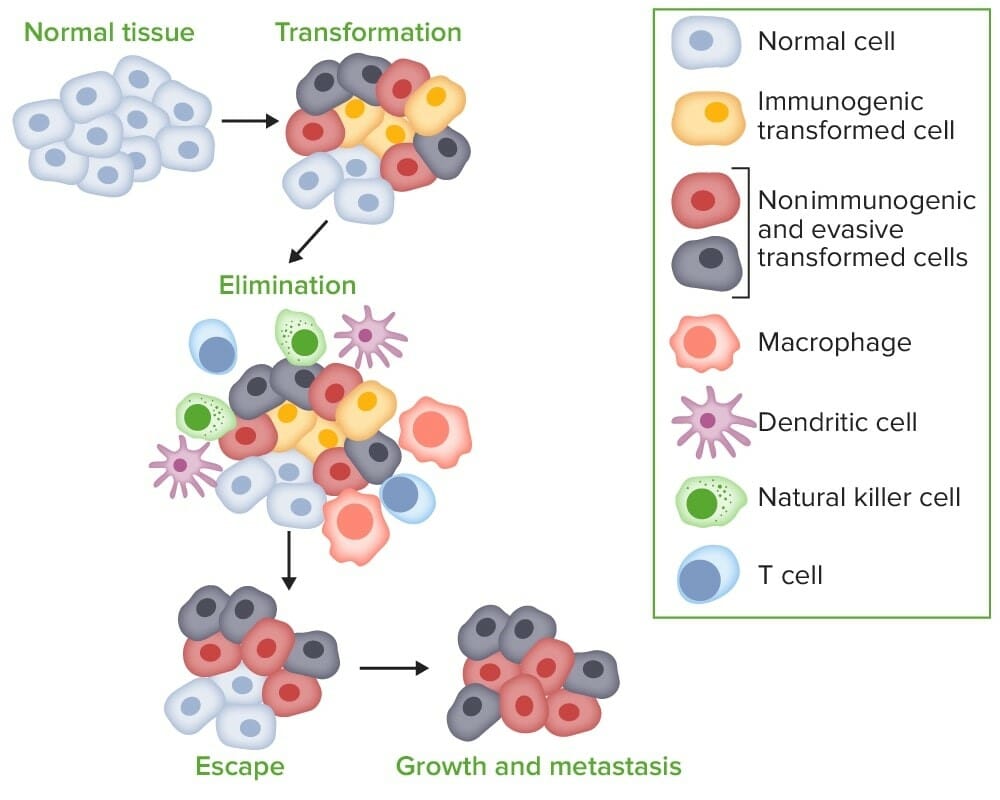
  • Eliminação:
    • Dano inicial e destruição das células tumorais pela imunidade inata e adaptativa
    • A conclusão desta fase significa que não existe crescimento do cancro.
  • Equilíbrio:
    • Ocorre quando as células tumorais sobrevivem à tentativa inicial de eliminação
    • Estas células não são capazes de progredir, mantendo-se em estado de dormência pelo sistema imune adaptativo.
    • Nesta fase, a imunogenicidade do tumor Tumor Inflammation é editada, sendo que as células T continuam a atacar seletivamente as células tumorais altamente imunogénicas.
    • Este ataque deixa espaço a que outras células com menos imunogenicidade desenvolvam, potencialmente, resistência à resposta imune.
  • Escape Escape With constant immune mechanisms holding unstable tumor cells in equilibrium, tumor-cell variants may emerge. These cancer cells may express fewer antigens on their surfaces or lose their MHC class I expression.Variants may also protect themselves from T-cell attack via expression of IC molecules on their surfaces, like normal cells.Creation of an immunosuppressive state in the microenvironment is another way to grow without immunologic interference. Cancer Immunotherapy:
    • Com mecanismos imunológicos constantes a manter as células tumorais instáveis em equilíbrio, podem surgir variantes das células tumorais.
    • Estas células neoplásicas podem expressar menos antigénio nas suas superfícies ou perder a sua expressão de MHC classe I.
    • As variantes também podem proteger-se do ataque de células T através da expressão de moléculas IC IC Inhaled Anesthetics nas suas superfícies, tal TAL Renal Sodium and Water Regulation como são expressas nas células normais.
    • A criação de um estado imunossupressor no microambiente é outra forma de crescer sem interferência imunológica.
Carcinogênese por evasão imune

Carcinogénese por evasão imune:
Quando as células tumorais se transformam a partir de células normais, os sistemas imunológicos inato e adaptativo detetam e eliminam as células transformadas, antes mesmo que a doença seja clinicamente aparente (eliminação). O processo entra em equilíbrio, porque as variantes de células tumorais podem não ser completamente eliminadas. No entanto, o sistema imunológico tenta controlar o crescimento de células tumorais exercendo pressão seletiva sobre as células tumorais altamente imunogénicas. A imunogenicidade das células tumorais é editada, deixando-as crescer e escapar à imunovigilância célular pela imunogenicidade reduzida, o que leva à progressão para a fase de escape, onde as células menos imunogénicas crescem progressivamente e se tornam num cancro clinicamente aparente.

Image by Lecturio.

Imunoterapia no cancro

A imunoterapia contra o cancro estimula o sistema imunológico a responder a uma malignidade, ativando diferentes aspetos do sistema imunológico para atacar as células cancerígenas.

  • O sistema imunológico é manipulado através do:
    • Fortalecimento das respostas imunes do hospedeiro contra tumores
    • Fornecimento de componentes modificados do sistema imunológico
    • Contrariando os sinais produzidos pelas células neoplásicas que suprimem as respostas imunes
  • Objetivos da imunoterapia:
    • Usar a especificidade e a memória de longo prazo da resposta imune adaptativa.
    • Alcançar uma regressão tumoral durável.
    • Curar a doença.
    • Melhorar a sobrevida global.
  • Opções terapêuticas:
    • Alguns agentes atuam em diferentes componentes do sistema imunológico:
      • Citocinas
      • Células T e outros tipos de células
      • Moléculas de checkpoint
    • Outros agentes usam a resposta produzida por vírus ou bactérias no sistema imunológico.

Terapêutica

Citocinas e vacinas

  • Interleucina-2 (IL-2)
    • Tem efeitos pleiotrópicos em células T citotóxicas e Tregs
    • Doses altas:
      • Promovem a atividade de células T efetoras CD8+ e de células natural killer (NK)
      • Promovem a diferenciação de células CD4+ em subclasses T helper tipo 1 ( Th1 Th1 A subset of helper-inducer T-lymphocytes which synthesize and secrete interleukin-2; interferon-gamma; and interleukin-12. Due to their ability to kill antigen-presenting cells and their lymphokine-mediated effector activity, th1 cells are associated with vigorous delayed-type hypersensitivity reactions. T cells: Types and Functions) e Th2 Th2 A subset of helper-inducer T-lymphocytes which synthesize and secrete the interleukins il-4; il-5; il-6; and il-10. These cytokines influence b-cell development and antibody production as well as augmenting humoral responses. T cells: Types and Functions
    • Doses baixas:
      • ↑ Expansão de Tregs
      • Inibe a formação de células Th17 Th17 A subset of helper-effector T-lymphocytes which synthesize and secrete interleukins il-17; il-17f; and il-22. These cytokines are involved in host defenses and tissue inflammation in autoimmune diseases. T cells: Types and Functions envolvidas na autoimunidade
    • Usada no melanoma Melanoma Melanoma is a malignant tumor arising from melanocytes, the melanin-producing cells of the epidermis. These tumors are most common in fair-skinned individuals with a history of excessive sun exposure and sunburns. Melanoma e no carcinoma de células renais (CCR)
  • Interferão alfa-2b ( IFN IFN Interferon (IFN) is a cytokine with antiviral properties (it interferes with viral infections) and various roles in immunoregulation. The different types are type I IFN (IFN-ɑ and IFN-β), type II IFN (IFN-ɣ), and type III IFN (IFN-ƛ). Interferons⍺-2b):
    • Melhora os efeitos mediados por Th1 Th1 A subset of helper-inducer T-lymphocytes which synthesize and secrete interleukin-2; interferon-gamma; and interleukin-12. Due to their ability to kill antigen-presenting cells and their lymphokine-mediated effector activity, th1 cells are associated with vigorous delayed-type hypersensitivity reactions. T cells: Types and Functions
    • Efeitos citolíticos e antiproliferativos
    • Usado como tratamento adjuvante no melanoma Melanoma Melanoma is a malignant tumor arising from melanocytes, the melanin-producing cells of the epidermis. These tumors are most common in fair-skinned individuals with a history of excessive sun exposure and sunburns. Melanoma de alto risco
  • Lenalidomida e pomalidomida:
    • Atividade imunomoduladora (↓ fator de necrose tumoral-⍺, ↑ células natural killer e IL-2) e antiangiogénica
    • Induz paragem do ciclo celular e morte → inibição do crescimento da célula tumoral
  • Vacinas (terapêuticas):
    • Sipuleucel-T Sipuleucel-T An approved vaccine-based therapy for advanced (castration-resistant hormone-refractory) prostate cancer. First, there is an autologous dendritic cell preparation targeting prostatic acid phosphatase (PAP). Blood mononuclear cells are obtained via leukapheresis. Antigen-presenting cells are isolated and then activated in vitro by PAP fused to granulocyte macrophage colony-stimulating factor (GM-CSF). The reinfusion of the product produces T-cell activity against tumors expressing PAP. Cancer Immunotherapy ( provenge Provenge An approved vaccine-based therapy for advanced (castration-resistant hormone-refractory) prostate cancer. First, there is an autologous dendritic cell preparation targeting prostatic acid phosphatase (PAP). Blood mononuclear cells are obtained via leukapheresis. Antigen-presenting cells are isolated and then activated in vitro by PAP fused to granulocyte macrophage colony-stimulating factor (GM-CSF). The reinfusion of the product produces T-cell activity against tumors expressing PAP. Cancer Immunotherapy):
      • Atualmente, terapia baseada em vacinas, aprovada para neoplasias da próstata avançadas (refratárias a hormonas e resistentes à castração)
      • Preparação de células dendríticas autólogas tendo como alvo a fosfatase ácida prostática (PAP, pela sigla em inglês)
      • As células mononucleares do sangue são obtidas através de leucaferese.
      • Isolam-se células apresentadoras de antigénio e posteriormente são ativadas in vitro pela PAP fundida com o fator estimulador de colónias de macrófagos granulocítico ( GM-CSF GM-CSF An acidic glycoprotein of mw 23 kda with internal disulfide bonds. The protein is produced in response to a number of inflammatory mediators by mesenchymal cells present in the hemopoietic environment and at peripheral sites of inflammation. GM-CSF is able to stimulate the production of neutrophilic granulocytes, macrophages, and mixed granulocyte-macrophage colonies from bone marrow cells and can stimulate the formation of eosinophil colonies from fetal liver progenitor cells. GM-CSF can also stimulate some functional activities in mature granulocytes and macrophages. White Myeloid Cells: Histology, pela sigla em inglês).
      • A reinfusão do produto produz atividade de células T contra tumores que expressam PAP.
    • Bacille Calmette-Guérin ( BCG BCG An active immunizing agent and a viable avirulent attenuated strain of Mycobacterium bovis, which confers immunity to mycobacterial infections. It is used also in immunotherapy of neoplasms due to its stimulation of antibodies and non-specific immunity. Cancer Immunotherapy, pela sigla em inglês)
      • Derivado de uma estirpe atenuada de Mycobacterium bovis Mycobacterium bovis The bovine variety of the tubercle Bacillus. It is called also Mycobacterium tuberculosis var. Bovis. Mycobacterium
      • Aprovado para o tratamento intravesical da neoplasia da bexiga em estádio inicial
      • Ativa uma reação imune contra o tumor Tumor Inflammation

Vírus oncolíticos

  • Classe emergente de terapêuticas contra o cancro usando vírus para infetar e destruir células tumorais
  • Os vírus são geneticamente modificados para lisar preferencialmente células cancerígenas e poupar as células normais.
  • Talimogene laherparepvec Talimogene laherparepvec The 1st approved oncolytic immunotherapy. aA genetically engineered Herpes simplex virus that is modified to express GM-CSF. It is used in unresectable melanoma and can be combined with ICs. Cancer Immunotherapy ( T-VEC T-VEC The 1st approved oncolytic immunotherapy. aA genetically engineered Herpes simplex virus that is modified to express GM-CSF. It is used in unresectable melanoma and can be combined with ICs. Cancer Immunotherapy, pela sigla em inglês)
    • A 1ª imunoterapia oncolítica aprovada
    • Vírus herpes simplex Herpes Simplex A group of acute infections caused by herpes simplex virus type 1 or type 2 that is characterized by the development of one or more small fluid-filled vesicles with a raised erythematous base on the skin or mucous membrane. It occurs as a primary infection or recurs due to a reactivation of a latent infection. Congenital TORCH Infections geneticamente modificado, modificado para expressar GM-CSF GM-CSF An acidic glycoprotein of mw 23 kda with internal disulfide bonds. The protein is produced in response to a number of inflammatory mediators by mesenchymal cells present in the hemopoietic environment and at peripheral sites of inflammation. GM-CSF is able to stimulate the production of neutrophilic granulocytes, macrophages, and mixed granulocyte-macrophage colonies from bone marrow cells and can stimulate the formation of eosinophil colonies from fetal liver progenitor cells. GM-CSF can also stimulate some functional activities in mature granulocytes and macrophages. White Myeloid Cells: Histology
    • Usado no melanoma Melanoma Melanoma is a malignant tumor arising from melanocytes, the melanin-producing cells of the epidermis. These tumors are most common in fair-skinned individuals with a history of excessive sun exposure and sunburns. Melanoma irressecável
    • Pode ser combinado com ICs

Imunoterapia celular adotiva

Estas terapias são desenvolvidas com base na manipulação das células do indivíduo através da expansão in vitro de células T tumor-específicas, que são reinfundidas através de um transplante autólogo.

Técnicas de manipulação de células T (e outros tipos de células imunes):
  • Células T com recetores de antigénio quiméricos (CAR, pela sigla em inglês):
    • As células T são equipadas com CAR, um recetor sintético que se liga às células neoplásicas.
    • Estas células T têm como alvo as proteínas das células B leucémicas.
    • Quando as células B malignas são reconhecidas, as células são destruídas através da libertação de citocinas, perforinas e granzimas.
    • Os efeitos adversos desta terapêutica incluem:
      • Síndrome de libertação marcada de citocinas (tempestade de citocinas)
      • Neurotoxicidade
  • Linfócitos infiltrantes tumorais (TILs, pela sigla em inglês):
    • A população celular de TILs é obtida diretamente do tumor Tumor Inflammation ressecado.
    • A expansão das células é facilitada pela cocultura com IL-2.
    • Antes da infusão, o indivíduo afetado recebe quimioterapia ou radiação para reduzir as Tregs.
    • Quando reintroduzidos, os TILs (principalmente células CD8+) reconhecem e atacam os antigénios tumorais.
  • TCRs monoclonais de mobilização imunológica contra o cancro (ImmTACs, pela sigla em inglês):
    • Terapêutica com TCRs artificais
    • Em alguns casos, as células T podem não reconhecer as células tumorais ou não ser suficientemente ativadas ou expandidas.
    • Estas células T podem ser equipadas com um novo TCR TCR Molecules on the surface of T-lymphocytes that recognize and combine with antigens. The receptors are non-covalently associated with a complex of several polypeptides collectively called CD3 antigens. Recognition of foreign antigen and the major histocompatibility complex is accomplished by a single heterodimeric antigen-receptor structure, composed of either alpha-beta or gamma-delta chains. Adaptive Cell-mediated Immunity para as direcionar a antigénios específicos da neoplasia.
    • Um exemplo é o medicamento experimental, tebentafusp, um TCR TCR Molecules on the surface of T-lymphocytes that recognize and combine with antigens. The receptors are non-covalently associated with a complex of several polypeptides collectively called CD3 antigens. Recognition of foreign antigen and the major histocompatibility complex is accomplished by a single heterodimeric antigen-receptor structure, composed of either alpha-beta or gamma-delta chains. Adaptive Cell-mediated Immunity solúvel que tem como alvo a gp100, um antigénio do melanoma Melanoma Melanoma is a malignant tumor arising from melanocytes, the melanin-producing cells of the epidermis. These tumors are most common in fair-skinned individuals with a history of excessive sun exposure and sunburns. Melanoma uveal.
  • Acopladores de células T biespecíficos (BiTEs, pela sigla em inglês):
    • Anticorpos biespecíficos (BsAbs, pela sigla em inglês) que recrutam células T para as células malignas
    • Têm como alvo o CD3 CD3 Complex of at least five membrane-bound polypeptides in mature T-lymphocytes that are non-covalently associated with one another and with the T-cell receptor. The CD3 complex includes the gamma, delta, epsilon, zeta, and eta chains (subunits). When antigen binds to the T-cell receptor, the CD3 complex transduces the activating signals to the cytoplasm of the T-cell. The CD3 gamma and delta chains (subunits) are separate from and not related to the gamma/delta chains of the T-cell receptor. T cells: Types and Functions e antigénios específicos do tumor Tumor Inflammation, levando à citotoxicidade das células T contra o tumor Tumor Inflammation
    • Blinatumomab: BiTE aprovado
  • Terapia com células NK:
    • Ao contrário das células T, as células NK não são adaptadas a um antigénio específico.
    • As células NK podem ser aprimoradas com CARs para atingir efetivamente as células malignas.
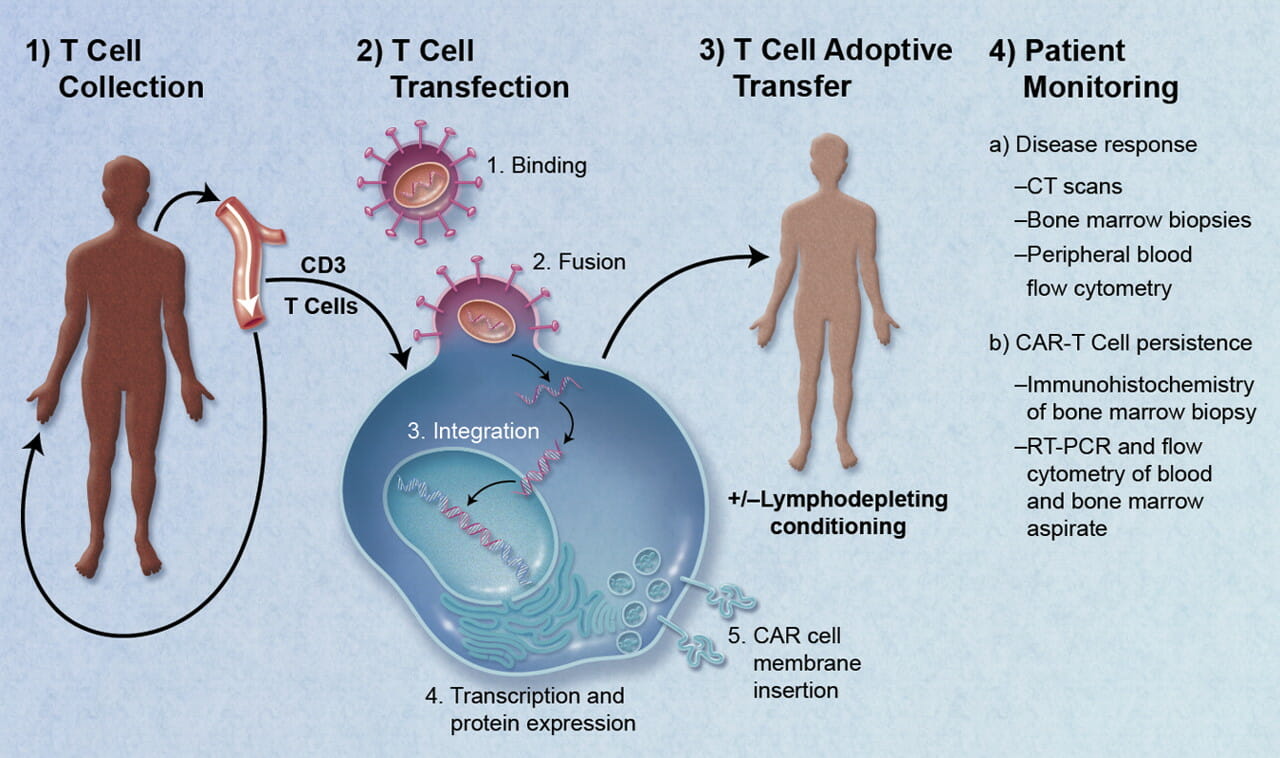
Imunoterapia adaptativa celular

Imunoterapia adaptativa celular:
1) As células T são colhidas.
2) As células T são projetadas para expressarem recetores de antigénio quiméricos (CARs, pela sigla em inglês), seguidos de expansão in vitro.
3) Estas células são então infundidas no mesmo indivíduo. As mesmas entram em circulação, reconhecendo e destruindo as células malignas.
4) Segue-se a monitorização subsequente da resposta à doença.

Imagem: “CAR-Engineered T-Cell Adoptive Transfer” por Caron A. Jacobson and Jerome Ritz. Licença: Public Domain

Inibidores de checkpoint

  • PD-1 PD-1 An inhibitory t-lymphocyte receptor that has specificity for CD274 antigen and programmed cell death 1 ligand 2 protein. Signaling by the receptor limits T cell proliferation and interferon gamma synthesis. The receptor also may play an essential role in the regulatory pathway that induces peripheral tolerance. T cells: Types and Functions:
    • Proteína transmembranar (molécula de checkpoint), em células T, que se liga:
      • Ligante de morte celular programada 1 (PD-L1, pela sigla em inglês): encontrado em vários tecidos, incluindo células tumorais
      • PD-L2: encontrado em células hematopoiéticas
    • Interação PD-1 PD-1 An inhibitory t-lymphocyte receptor that has specificity for CD274 antigen and programmed cell death 1 ligand 2 protein. Signaling by the receptor limits T cell proliferation and interferon gamma synthesis. The receptor also may play an essential role in the regulatory pathway that induces peripheral tolerance. T cells: Types and Functions–PD-L1/2:
      • Inibe a apoptose de células tumorais e promove a exaustão de células T efetoras periféricas
      • Aumenta a conversão de células T-efetoras em Tregs
      • O bloqueio desta interação produz efeito terapêutico → ↑ Atividade das células T contra células tumorais
  • Inibidores da interação PD-1 PD-1 An inhibitory t-lymphocyte receptor that has specificity for CD274 antigen and programmed cell death 1 ligand 2 protein. Signaling by the receptor limits T cell proliferation and interferon gamma synthesis. The receptor also may play an essential role in the regulatory pathway that induces peripheral tolerance. T cells: Types and Functions–PD-L1:
    • Anticorpos que inibem PD-1 PD-1 An inhibitory t-lymphocyte receptor that has specificity for CD274 antigen and programmed cell death 1 ligand 2 protein. Signaling by the receptor limits T cell proliferation and interferon gamma synthesis. The receptor also may play an essential role in the regulatory pathway that induces peripheral tolerance. T cells: Types and Functions:
      • Pembrolizumab Pembrolizumab Squamous Cell Carcinoma (SCC)
      • Nivolumab Nivolumab A genetically engineered, fully humanized immunoglobulin g4 monoclonal antibody that binds to the pd-1 receptor, activating an immune response to tumor cells. It is used as monotherapy or in combination with ipilimumab for the treatment of advanced malignant melanoma. It is also used in the treatment of advanced or recurring non-small cell lung cancer; renal cell carcinoma; and Hodgkin’s lymphoma. Melanoma
      • Dostarlimab
    • Anticorpos que inibem PD-L1:
      • Atezolizumab (1º inibidor de PD-L1 aprovado)
      • Durvalumab
      • Avelumab
  • CTLA-4:
    • Molécula de checkpoint com um papel importante na regulação negativa da resposta imune
    • Encontrado na superfície dos linfócitos T CD4+ e CD8+, onde possui alta afinidade pelos recetores coestimuladores CD80 e CD86, nas células apresentadoras de antigénios
    • ↓ Proliferação de células T e a produção de IL-2
    • A inibição leva ao aumento da resposta imune e à redução do tumor Tumor Inflammation.
  • Anticorpos que inibem o CTLA-4: ipilimumab (1º anticorpo de checkpoint aprovado para uso)
  • Efeitos adversos notáveis de inibidores de checkpoint:
    • Síndrome de libertação de citocinas:
      • Semelhante à terapia com células T CAR
      • Manifesta-se com febre, associada ou não a disfunção de múltiplos órgãos
      • Corticosteroides ou outros imunomoduladores podem melhorar as manifestações tóxicas imunomediadas.
    • Fadiga
    • Reações relacionadas com a infusão
    • Toxicidade dermatológica
    • Infeções oportunistas
    • Colite
    • Toxicidades endócrinas (e.g., hipertiroidismo ou hipotiroidismo, insuficiência suprarrenal, diabetes Diabetes Diabetes mellitus (DM) is a metabolic disease characterized by hyperglycemia and dysfunction of the regulation of glucose metabolism by insulin. Type 1 DM is diagnosed mostly in children and young adults as the result of autoimmune destruction of β cells in the pancreas and the resulting lack of insulin. Type 2 DM has a significant association with obesity and is characterized by insulin resistance. Diabetes Mellitus mellitus)
    • Neutropenia Neutropenia Neutrophils are an important component of the immune system and play a significant role in the eradication of infections. Low numbers of circulating neutrophils, referred to as neutropenia, predispose the body to recurrent infections or sepsis, though patients can also be asymptomatic. Neutropenia, trombocitopenia
Inibidores de checkpoint imunológico

Inibidores do checkpoint imunológico:
Topo: As células apresentadoras de antigénios processam antigénios associados a tumores (TAAs, pela sigla em inglês) e complexam-nos em moléculas de MHC.
As células apresentadoras de antigénios migram para os gânglios linfáticos (em áreas dominadas por células T) e apresentam TAAs às células T virgens.
A ativação da célula T requer 2 sinais. O 1ª é mediado pela ligação do TAA a um recetor de células T (TCR, pela sigla em inglês). O segundo sinal pode ser da ligação do CD28 da célula T ao coestimulador CD80/CD86, que ativa a célula T.
No entanto, quando o CTLA-4 da célula T interage com as mesmas moléculas CD80/CD86 das células apresentadoras de antigénio, o efeito é inibitório (anergia das células T ou ausência de ativação das células T).
Portanto, o CTLA-4 e o CD28 competem pela ligação às proteínas CD80/CD86. A ação bloqueadora anti-CTLA-4 do ipilimumab restaura a sinalização do pró-ativador CD28, resultando em respostas antitumorais de linfócitos T.
Parte inferior: Em tecidos periféricos, a célula T ativada pode ser desativada pela ligação de morte celular programada-1 (PD-1, pela sigla em inglês) da célula T ao ligante de morte celular programada 1 (PD-L1, pela sigla em inglês) (ou PD-L2) expresso nas células tumorais. A ação bloqueadora anti-PD-1 ou anti-PD-L1 por anticorpos monoclonais (e.g., nivolumab, pembrolizumab, atezolizumab) restaura a atividade antitumoral efetiva dos linfócitos T.

Imagem: “Figure 1 Effect of ICIs on T lymphocytes” por Franzin, R. et al. Licença: CC BY 4.0

Comparação das Terapêuticas

Comparação de agentes que melhoram o sistema imunológico (uso de citocinas, organismos para infetar células tumorais e manipulação de células imunes)
Grupo terapêutico Agentes Indicações
Citocinas imunoestimuladoras IL-2
  • Melanoma Melanoma Melanoma is a malignant tumor arising from melanocytes, the melanin-producing cells of the epidermis. These tumors are most common in fair-skinned individuals with a history of excessive sun exposure and sunburns. Melanoma
  • CCR
IFNα-2b
  • Melanoma Melanoma Melanoma is a malignant tumor arising from melanocytes, the melanin-producing cells of the epidermis. These tumors are most common in fair-skinned individuals with a history of excessive sun exposure and sunburns. Melanoma
  • Sarcoma de Kaposi Kaposi A multicentric, malignant neoplastic vascular proliferation characterized by the development of bluish-red cutaneous nodules, usually on the lower extremities, most often on the toes or feet, and slowly increasing in size and number and spreading to more proximal areas. The tumors have endothelium-lined channels and vascular spaces admixed with variably sized aggregates of spindle-shaped cells, and often remain confined to the skin and subcutaneous tissue, but widespread visceral involvement may occur. Hhv-8 is the suspected cause. There is also a high incidence in AIDS patients. AIDS-defining Conditions relacionado com a SIDA
  • Linfoma folicular
  • Leucemia de células cabeludas
  • Verrugas genitais
Vacinas Sipuleucel-T Sipuleucel-T An approved vaccine-based therapy for advanced (castration-resistant hormone-refractory) prostate cancer. First, there is an autologous dendritic cell preparation targeting prostatic acid phosphatase (PAP). Blood mononuclear cells are obtained via leukapheresis. Antigen-presenting cells are isolated and then activated in vitro by PAP fused to granulocyte macrophage colony-stimulating factor (GM-CSF). The reinfusion of the product produces T-cell activity against tumors expressing PAP. Cancer Immunotherapy Adenocarcinoma da próstata resistente à castração
Bacille Calmette-Guérin ( BCG BCG An active immunizing agent and a viable avirulent attenuated strain of Mycobacterium bovis, which confers immunity to mycobacterial infections. It is used also in immunotherapy of neoplasms due to its stimulation of antibodies and non-specific immunity. Cancer Immunotherapy) Neoplasia da bexiga
Agentes imunomoduladores
  • Lenalidomida
  • Pomalidomida
Mieloma múltiplo
Vírus oncolíticos T-VEC T-VEC The 1st approved oncolytic immunotherapy. aA genetically engineered Herpes simplex virus that is modified to express GM-CSF. It is used in unresectable melanoma and can be combined with ICs. Cancer Immunotherapy Melanoma Melanoma Melanoma is a malignant tumor arising from melanocytes, the melanin-producing cells of the epidermis. These tumors are most common in fair-skinned individuals with a history of excessive sun exposure and sunburns. Melanoma
Terapia com células T CAR Os agentes estão disponíveis no programa REMS da FDA (somente para uso autólogo).
  • Leucemia Linfocítica Aguda (LLA)
  • Linfoma folicular
  • Linfoma de grandes células B
  • Linfoma de células do manto
  • Mieloma múltiplo
BiTE (terapia direcionada ao CD3 CD3 Complex of at least five membrane-bound polypeptides in mature T-lymphocytes that are non-covalently associated with one another and with the T-cell receptor. The CD3 complex includes the gamma, delta, epsilon, zeta, and eta chains (subunits). When antigen binds to the T-cell receptor, the CD3 complex transduces the activating signals to the cytoplasm of the T-cell. The CD3 gamma and delta chains (subunits) are separate from and not related to the gamma/delta chains of the T-cell receptor. T cells: Types and Functions) Blinatumomab Leucemia Linfocítica Aguda (LLA)
SIDA: síndrome da imunodeficiência adquirida
FDA: Food and Drug Administration
IL-2: interleucina-2
IFNα-2b: interferão-alfa 2b
CCR: cancro de células renais
REMS: Risk Evaluation and Mitigation Strategy
T-VEC: talimogene laherparepvec
Comparação de inibidores de checkpoint imunológico
Grupo terapêutico Agentes Indicações
Anti-PD-1 Pembrolizumab Pembrolizumab Squamous Cell Carcinoma (SCC)
  • Cancro da mama
  • Cancro cutâneo de células escamosas
  • Cancro cervical
  • Cancro do endométrio
  • Cancro do esófago
  • Cancro gástrico
  • Cancro da cabeça e do pescoço
  • HCC HCC Hepatocellular carcinoma (HCC) typically arises in a chronically diseased or cirrhotic liver and is the most common primary liver cancer. Diagnosis may include ultrasound, CT, MRI, biopsy (if inconclusive imaging), and/or biomarkers. Hepatocellular Carcinoma (HCC) and Liver Metastases
  • Linfoma de Hodgkin
  • Melanoma Melanoma Melanoma is a malignant tumor arising from melanocytes, the melanin-producing cells of the epidermis. These tumors are most common in fair-skinned individuals with a history of excessive sun exposure and sunburns. Melanoma
  • Cancro de células de Merkel
  • MSI-H ou neoplasia dMMR
  • CCR
  • Cancro urotelial
Nivolumab Nivolumab A genetically engineered, fully humanized immunoglobulin g4 monoclonal antibody that binds to the pd-1 receptor, activating an immune response to tumor cells. It is used as monotherapy or in combination with ipilimumab for the treatment of advanced malignant melanoma. It is also used in the treatment of advanced or recurring non-small cell lung cancer; renal cell carcinoma; and Hodgkin’s lymphoma. Melanoma
  • Cancro colorretal
  • Melanoma Melanoma Melanoma is a malignant tumor arising from melanocytes, the melanin-producing cells of the epidermis. These tumors are most common in fair-skinned individuals with a history of excessive sun exposure and sunburns. Melanoma
  • Cancro do esófago
  • Cancro gástrico
  • Cancro da cabeça e do pescoço
  • Linfoma de Hodgkin
  • CHC
  • Mesotelioma
  • CCR
  • Cancro urotelial
Dostarlimab
  • Cancro do endométrio
  • Neoplasia dMMR (tumores sólidos)
Anti-PD-L1 Atezolizumab
  • CHC
  • Melanoma Melanoma Melanoma is a malignant tumor arising from melanocytes, the melanin-producing cells of the epidermis. These tumors are most common in fair-skinned individuals with a history of excessive sun exposure and sunburns. Melanoma
  • CPNPC
  • CPPC
  • Cancro urotelial
Avelumab
  • Cancro de células de Merkel
  • CCR
  • Cancro urotelial
Durvalumab
  • CPNPC
  • CPPC
Anti–CTLA-4 Anti–CTLA-4 Cancer Immunotherapy Ipilimumab
  • Carcinoma colorretal
  • HCC HCC Hepatocellular carcinoma (HCC) typically arises in a chronically diseased or cirrhotic liver and is the most common primary liver cancer. Diagnosis may include ultrasound, CT, MRI, biopsy (if inconclusive imaging), and/or biomarkers. Hepatocellular Carcinoma (HCC) and Liver Metastases
  • Mesotelioma pleural maligno
  • CPNPC
  • CCR
dMMR, pela sigla em inglês: défice da reparação de mismatch
CHC: carcinoma hepatocelular
MSI-H, pela sigla em inglês: instabilidade de microssatélites – alta
CPNPC: cancro do pulmão de não pequenas células
CCR: cancro de células renais
CPPC: cancro do pulmão de pequenas células

Referências

  1. Chen, G., Bodogai, M., Tamehiro, N., Shen, C., Dou, J. (2018). Cancer immunotherapy: theory and application. Journal of Immunology Research 2018:7502161. https://doi.org/10.1155/2018/7502161
  2. Disis, M. (2014). Mechanism of action of immunotherapy. Seminars in Oncology 41(Suppl 5):S3-S13. 41. 10.1053/j.seminoncol.2014.09.004 
  3. Greenberg, P. (2021) Adoptive cell therapy: CAR T, TCR, TIL, NK. Cancer Research Institute. Retrieved January 8, 2022, from https://www.cancerresearch.org/en-us/immunotherapy/treatment-types/adoptive-cell-therapy#tcr
  4. Levinson, W., Chin-Hong P., Joyce E.A., Nussbaum J., Schwartz, B. (Eds.), (2022). Tumor immunity. Chapter 67 of Review of Medical Microbiology & Immunology: A Guide to Clinical Infectious Diseases, 17th ed. McGraw Hill. https://accessmedicine.mhmedical.com/content.aspx?bookid=3123&sectionid=262002060
  5. Oiseth S.J.,  Aziz M.S. (2017). Cancer immunotherapy: a brief review of the history, possibilities, and challenges ahead. Journal of Cancer Metastasis and Treatment. https://oaepublishstorage.blob.core.windows.net/82580177-5632-4585-bf24-c54aa1afe386/2275.pdf
  6. Postow, M. (2021) Toxicities associated with checkpoint inhibitor immunotherapy. UpToDate. Retrieved January 9, 2022, from https://www.uptodate.com/contents/toxicities-associated-with-checkpoint-inhibitor-immunotherapy
  7. Shoushtari,  A.N. (2021). Principles of cancer immunotherapy. UpToDate. Retrieved January 7, 2022, from https://www.uptodate.com/contents/principles-of-cancer-immunotherapy
  8. Tian, Z., Liu, M., Zhang, Y., et al. (2021). Bispecific T cell engagers: an emerging therapy for management of hematologic malignancies. Journal of Hematology and Oncology 14:75. https://doi.org/10.1186/s13045-021-01084-4
  9. Vesely, M.D., Schreiber, R.D. (2013). Cancer immunoediting: antigens, mechanisms, and implications to cancer immunotherapy. Annals of the New York Academy of Sciences 1284(1):1–5. https://doi.org/10.1111/nyas.12105

Crie sua conta gratuita ou faça login para continuar lendo!

Cadastre-se agora e tenha acesso grátis ao Lecturio, com páginas de conceitos, vídeos de medicina e questões para sua educação médica.

Aprende mais com a Lecturio:

Multiple devices displaying human anatomy and health education content.

Complementa o teu estudo da faculdade com o companheiro de estudo tudo-em-um da Lecturio, através de métodos de ensino baseados em evidência.

Estuda onde quiseres

Two iPhones display medical education apps, one showing anatomy, the other Bookmatcher.

A Lecturio Medical complementa o teu estudo através de métodos de ensino baseados em evidência, vídeos de palestras, perguntas e muito mais – tudo combinado num só lugar e fácil de usar.

User Reviews

Have a holly, jolly study session 🎁 Save 50% on all plans now >>

Que tengas una sesión de estudio alegre y navideña 🎁 Ahorra 50% en todos los planes >>

Details