


Erliquiose e Anaplasmose

A erliquiose e anaplasmose são infeções bacterianas transmitidas por carraças. As espécies causadoras mais MAIS Androgen Insensitivity Syndrome comuns incluem Ehrlichia chaffeensis Ehrlichia chaffeensis A species of gram-negative bacteria that is the causative agent of human ehrlichiosis. This organism was first discovered at fort chaffee, arkansas, when blood samples from suspected human ehrlichiosis patients were studied. Ehrlichiosis and Anaplasmosis e Anaplasma phagocytophilum Anaplasma phagocytophilum A species of gram-negative bacteria in the genus anaplasma, family anaplasmataceae, formerly called ehrlichia phagocytophila or ehrlichia equi. This organism is tick-borne (ixodes) and causes disease in horses and sheep. In humans, it causes human granulocytic ehrlichiosis. Ehrlichiosis and Anaplasmosis, que infetam e multiplicam-se no interior monócitos e granulócitos, respetivamente. A apresentação clínica pode variar muito, mas inclui frequentemente febre, mal-estar, cefaleias, mialgias e artralgias. Em alguns pacientes surge uma erupção maculopapular Maculopapular Dermatologic Examination ou petequial. Também podem surgir sintomas gastrointestinais, neurológicos e respiratórios. O diagnóstico é estabelecido com base na suspeita clínica, associada a testes Testes Gonadal Hormones confirmatórios de PCR PCR Polymerase chain reaction (PCR) is a technique that amplifies DNA fragments exponentially for analysis. The process is highly specific, allowing for the targeting of specific genomic sequences, even with minuscule sample amounts. The PCR cycles multiple times through 3 phases: denaturation of the template DNA, annealing of a specific primer to the individual DNA strands, and synthesis/elongation of new DNA molecules. Polymerase Chain Reaction (PCR) ou de anticorpos. O tratamento é com doxiciclina.

Last updated: Dec 15, 2025
Editorial responsibility: Stanley Oiseth, Lindsay Jones, Evelin Maza

Características Gerais

Características básicas de Ehrlichia e Anaplasma

  • Gram negativos
  • Bactérias intracelulares obrigatórias
  • Cocobacilos
  • Crescimento em vacúolos com membrana nos leucócitos, particularmente:
    • Monócitos
    • Granulócitos
  • Microscopia de luz:
    • São difíceis de visualizar organismos individuais.
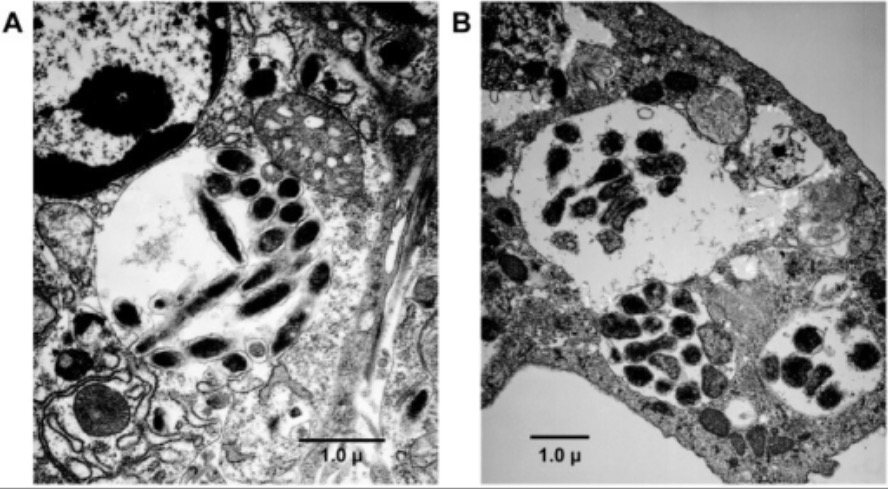
    • São frequentemente visualizadas como mórulas (microcolónia de organismos num vacúolo)
    • Coloração:
      • Wright
      • Giemsa
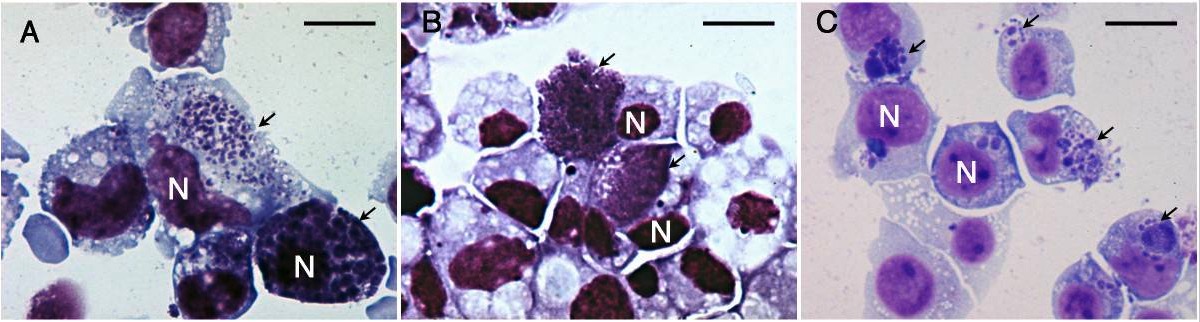
Anaplasma com coloração Giemsa

Imagens microscópicas de células infetadas com anaplasmose com coloração de Giemsa:
Os núcleos celulares estão marcados com “N” e as setas apontam para Anaplasma morulae.

Imagem: “Giemsa stained cells infected with Ap.” por University of Minnesota, Department of Entomology, Saint Paul, Minnesota 55108, USA. Licença: CC BY 2.0

Espécies clinicamente relevantes

As espécies mais MAIS Androgen Insensitivity Syndrome relevantes são:

  • Ehrlichia chaffeensis Ehrlichia chaffeensis A species of gram-negative bacteria that is the causative agent of human ehrlichiosis. This organism was first discovered at fort chaffee, arkansas, when blood samples from suspected human ehrlichiosis patients were studied. Ehrlichiosis and Anaplasmosis erliquiose monocítica humana
  • Anaplasma phagocytophilum Anaplasma phagocytophilum A species of gram-negative bacteria in the genus anaplasma, family anaplasmataceae, formerly called ehrlichia phagocytophila or ehrlichia equi. This organism is tick-borne (ixodes) and causes disease in horses and sheep. In humans, it causes human granulocytic ehrlichiosis. Ehrlichiosis and Anaplasmosis → anaplasmose granulocítica humana

Causas raras de erliquiose em humanos:

  • E. ewingii
  • E. muris eauclairensis

Epidemiologia e Fatores de Risco

Epidemiologia

  • Incidência nos Estados Unidos:
    • Erliquiose monocítica humana: 3,2 casos por milhão por ano
    • Anaplasmose granulocítica humana: 6,3 casos por milhão por ano
  • Áreas endémicas nos Estados Unidos:
    • Erliquiose monocítica humana:
      • Sudeste
      • Centro-sul
      • Médio-Atlântico
    • Anaplasmose granulocítica humana:
  • Áreas endémicas fora dos Estados Unidos:
    • Europa
    • Sudeste asiático
    • América do Sul
  • A incidência é maior nos homens que nas mulheres.
  • Ocorre geralmente entre Abril e Setembro

Fatores de risco

Para erliquiose/anaplasmose

  • Viajar ou viver em áreas endémicas
  • Ter animais de estimação
  • Participar em atividades ao ar AR Aortic regurgitation (AR) is a cardiac condition characterized by the backflow of blood from the aorta to the left ventricle during diastole. Aortic regurgitation is associated with an abnormal aortic valve and/or aortic root stemming from multiple causes, commonly rheumatic heart disease as well as congenital and degenerative valvular disorders. Aortic Regurgitation livre em áreas florestais:
    • Acampar
    • Fazer caminhadas
    • Caçar

Para doença grave:

  • Imunossupressão:
    • Infeção por VIH
    • Quimioterapia
    • Transplante de órgão
  • Idosos e crianças pequenas

Patogénese

Transmissão

  • Carraças como vetores:
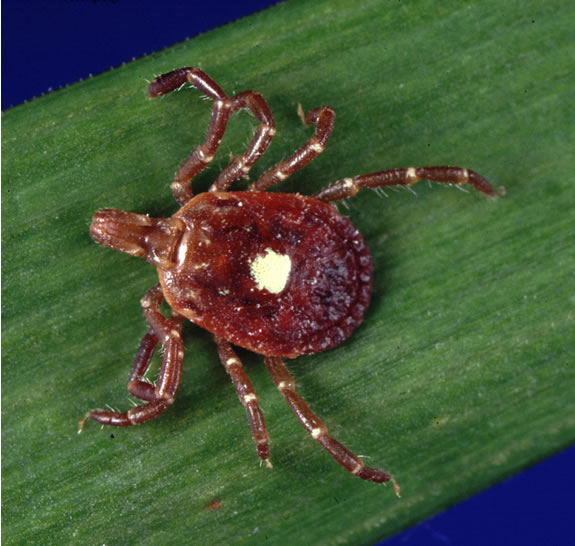
    • E. chaffeensis é transmitido por Amblyomma americanum (conhecida em inglês como “Lone Star tick”).
    • A. phagocytophilum é transmitido por carraças Ixodes .
  • Iatrogénico (raro):
    • Transfusão de sangue
    • Transplante de órgãos sólidos

Reservatórios

Uma grande variedade de animais selvagens e domésticos podem servir como reservatórios. Os mais MAIS Androgen Insensitivity Syndrome comuns são:

  • Veado-de-cauda-branca(E. chaffeensis)
  • Rato-de-pés-brancos(A. phagocytophilum)

Fatores de virulência

  • Proteínas da superfície:
    • Permitem a ligação às células do hospedeiro, permitindo entrada no organismo do hospedeiro
    • A variação antigénica ajuda a evitar o sistema imunitário do hospedeiro.
  • Proteínas bacterianas:
    • Permitem translocação para uma célula hospedeira
    • Modificação do citoesqueleto da célula para permitir a entrada da bactéria
    • Permitem a formação de vacúolos com bactérias no interior, para evitar a fusão pelos lisossomas
    • Alteração da expressão génica no núcleo da célula hospedeira

Fisiopatologia

Erliquiose monocítica humana :

  • E. chaffeensis entra em contacto com a pele durante a picada da carraça.
  • Infeta monócitos e macrófagos
  • Dissemina-se através dos vasos linfáticos ou sanguíneos para:
    • Medula óssea
    • Fígado
    • Gânglios linfáticos
    • Baço
  • A apresentação clínica deve-se aos efeitos da resposta inflamatória do hospedeiro.

Anaplasmose granulocítica humana:

  • A. fagocytophilum entra em contacto com a pele durante a picada da carraça → recrutamento de neutrófilos
  • A. phagocytophilum entra nos neutrófilos:
    • Modifica a morte intracelular
    • Induz a ativação dos neutrófilos e a libertação de citocinas → contribui para a lesão tecidual e consequentes manifestações clínicas
  • A infeção dissemina-se pela via hematogénica.

Apresentação Clínica

Sinais e sintomas

O período de incubação é tipicamente de 1-2 semanas, e a apresentação clínica pode variar.

Características tanto da erliquiose monocítica humana como da anaplasmose granulocítica humana:

  • Sintomas inespecíficos:
    • Febre
    • Mal-estar
    • Cefaleias
    • Mialgias
    • Artralgias
  • Sintomas gastrointestinais (GI):
    • Dor abdominal
    • Náuseas
    • Vómitos
    • Diarreia
  • Sintomas respiratórios:
    • Tosse
    • Dispneia

Descobertas mais MAIS Androgen Insensitivity Syndrome frequentemente observadas na erliquiose monocítica humana:

Complicações

  • Convulsões
  • SDRA
  • Miocardite e insuficiência cardíaca
  • Derrame pericárdico e tamponamento
  • Insuficiência renal
  • Coagulopatias
  • Choque séptico
  • Linfohistiocitose hemofagocítica (complicação rara e grave da anaplasmose granulocítica humana)
  • Infeções oportunistas

Diagnóstico e Tratamento

Diagnóstico

Estudos definitivos:

  • Teste de fluorescência indireta para anticorpos (FIA)
  • Teste de ELISA ELISA An immunoassay utilizing an antibody labeled with an enzyme marker such as horseradish peroxidase. While either the enzyme or the antibody is bound to an immunosorbent substrate, they both retain their biologic activity; the change in enzyme activity as a result of the enzyme-antibody-antigen reaction is proportional to the concentration of the antigen and can be measured spectrophotometrically or with the naked eye. Many variations of the method have been developed. St. Louis Encephalitis Virus para anticorpos
  • PCR PCR Polymerase chain reaction (PCR) is a technique that amplifies DNA fragments exponentially for analysis. The process is highly specific, allowing for the targeting of specific genomic sequences, even with minuscule sample amounts. The PCR cycles multiple times through 3 phases: denaturation of the template DNA, annealing of a specific primer to the individual DNA strands, and synthesis/elongation of new DNA molecules. Polymerase Chain Reaction (PCR) para detetar o DNA DNA A deoxyribonucleotide polymer that is the primary genetic material of all cells. Eukaryotic and prokaryotic organisms normally contain DNA in a double-stranded state, yet several important biological processes transiently involve single-stranded regions. DNA, which consists of a polysugar-phosphate backbone possessing projections of purines (adenine and guanine) and pyrimidines (thymine and cytosine), forms a double helix that is held together by hydrogen bonds between these purines and pyrimidines (adenine to thymine and guanine to cytosine). DNA Types and Structure do microorganismo
  • Exame de esfregaço de sangue periférico ou exame da camada leucocitária após centrifugação de amostra sanguínea: As mórulas intracitoplasmáticas são observadas nos leucócitos do sangue periférico.

Estudo laboratorial adicional:

  • Trombocitopenia
  • Leucopenia
  • Anemia Anemia Anemia is a condition in which individuals have low Hb levels, which can arise from various causes. Anemia is accompanied by a reduced number of RBCs and may manifest with fatigue, shortness of breath, pallor, and weakness. Subtypes are classified by the size of RBCs, chronicity, and etiology. Anemia: Overview and Types
  • AST AST Enzymes of the transferase class that catalyze the conversion of l-aspartate and 2-ketoglutarate to oxaloacetate and l-glutamate. Liver Function Tests e ALT ALT An enzyme that catalyzes the conversion of l-alanine and 2-oxoglutarate to pyruvate and l-glutamate. Liver Function Tests
  • ↑ Fosfatase alcalina
  • ↑ Lactato desidrogenase
  • ↑ Creatinina
Agentes granocíticos e monocíticos de erliquiose

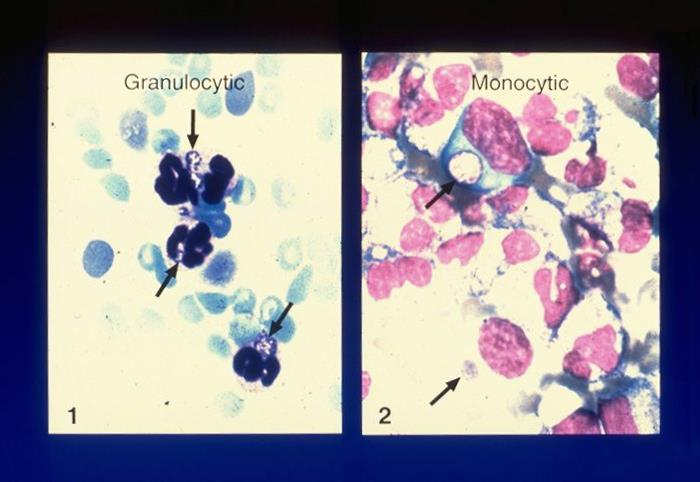
Exame do esfregaço de sangue periférico para erliquiose e anaplasmose:
Estes esfregaços de sangue apresentam mórulas intracelulares de A. phagocytophilum (1) e E. chaffeensis (2).

Imagem: “Etiologic agents of ehrlichioses” por CDC/NCID. Licença: Public Domain

Tratamento

O antibiótico de eleição é a doxiciclina.

  • O tratamento deve ser iniciado em pacientes com suspeita de erliquiose monocítica humana ou anaplasmose granulocítica humana, enquanto os estiverem pendentes os resultados do estudo laboratorial.
  • Se os pacientes não melhorarem com o tratamento, devem ser avaliados para uma infeção concomitante por Babesia Babesia Babesiosis is an infection caused by a protozoa belonging to the genus, Babesia. The most common Babesia seen in the United States is B. microti, which is transmitted by the Ixodes tick. The protozoa thrive and replicate within host erythrocytes. Lysis of erythrocytes and the body’s immune response result in clinical symptoms. Babesia/Babesiosis.

Prevenção

É fundamental evitar picadas de carraças para prevenir estas doenças.

  • Uso de roupa de proteção apropriada
  • Usar repelentes de carraças
  • Inspeção de carraças após atividade ao ar AR Aortic regurgitation (AR) is a cardiac condition characterized by the backflow of blood from the aorta to the left ventricle during diastole. Aortic regurgitation is associated with an abnormal aortic valve and/or aortic root stemming from multiple causes, commonly rheumatic heart disease as well as congenital and degenerative valvular disorders. Aortic Regurgitation livre
  • Remoção de carraças para reduzir o risco de infeção
  • Desparatisação de carraças em animais domésticos
  • Não está recomenda profilaxia com doxiciclina após uma picada de carraça.

Comparação de Bactérias Gram-negativas Transmitidas por Carraças

Tabela: Comparação de várias bactérias gram-negativas clinicamente relevantes, transmitidas por carraças
Microorganismo Ehrlichia chaffeensis Ehrlichia chaffeensis A species of gram-negative bacteria that is the causative agent of human ehrlichiosis. This organism was first discovered at fort chaffee, arkansas, when blood samples from suspected human ehrlichiosis patients were studied. Ehrlichiosis and Anaplasmosis Anaplasma phagocytophilum Anaplasma phagocytophilum A species of gram-negative bacteria in the genus anaplasma, family anaplasmataceae, formerly called ehrlichia phagocytophila or ehrlichia equi. This organism is tick-borne (ixodes) and causes disease in horses and sheep. In humans, it causes human granulocytic ehrlichiosis. Ehrlichiosis and Anaplasmosis Rickettsia rickettsii Rickettsia rickettsii A species of gram-negative, aerobic bacteria that is the etiologic agent of rocky mountain spotted fever. Its cells are slightly smaller and more uniform in size than those of rickettsia prowazekii. Rickettsia Borrelia burgdorferi Borrelia burgdorferi A specific species of bacteria, part of the borrelia burgdorferi group, whose common name is lyme disease spirochete. Borrelia
Doença Erliquiose monocítica humana Anaplasmose granulocítica humana Febre maculosa das Montanhas Rochosas Doença de Lyme
Microscopia
  • Intracelular obrigatório
  • Cocobacilo
  • Intracelular obrigatório
  • Cocobacilo
  • Intracelular obrigatório
  • Pleomórfico
  • Coloração Gram fraca
  • Microaerofílico
  • Espiroqueta
  • Difícil de visualizar com a coloração Gram
Vetor Carraça Amblyomma americanum(conhecida em inglês como “Lone Star tick”). Carraça Ixodes Carraça Dermacentor Dermacentor A widely distributed genus of ticks, in the family ixodidae, including a number that infest humans and other mammals. Several are vectors of diseases such as tularemia; rocky mountain spotted fever; colorado tick fever; and anaplasmosis. Rickettsia Carraça Ixodes
Reservatório Veado-de-cauda-branca Rato-de-pés-brancos Carraça Dermacentor Dermacentor A widely distributed genus of ticks, in the family ixodidae, including a number that infest humans and other mammals. Several are vectors of diseases such as tularemia; rocky mountain spotted fever; colorado tick fever; and anaplasmosis. Rickettsia
  • Roedores
  • Veado
Distribuição geográfica nos Estados Unidos Estados do sudeste e centro-sul Estados do nordeste e região superior do centro-oeste Estados do sudeste e centro-sul Estados do nordeste e centro-oeste
Diagnóstico
  • PCR PCR Polymerase chain reaction (PCR) is a technique that amplifies DNA fragments exponentially for analysis. The process is highly specific, allowing for the targeting of specific genomic sequences, even with minuscule sample amounts. The PCR cycles multiple times through 3 phases: denaturation of the template DNA, annealing of a specific primer to the individual DNA strands, and synthesis/elongation of new DNA molecules. Polymerase Chain Reaction (PCR)
  • ELISA ELISA An immunoassay utilizing an antibody labeled with an enzyme marker such as horseradish peroxidase. While either the enzyme or the antibody is bound to an immunosorbent substrate, they both retain their biologic activity; the change in enzyme activity as a result of the enzyme-antibody-antigen reaction is proportional to the concentration of the antigen and can be measured spectrophotometrically or with the naked eye. Many variations of the method have been developed. St. Louis Encephalitis Virus
  • Imunofluorescência indireta para anticorpos (IFI)
  • Esfregaço de sangue
  • PCR PCR Polymerase chain reaction (PCR) is a technique that amplifies DNA fragments exponentially for analysis. The process is highly specific, allowing for the targeting of specific genomic sequences, even with minuscule sample amounts. The PCR cycles multiple times through 3 phases: denaturation of the template DNA, annealing of a specific primer to the individual DNA strands, and synthesis/elongation of new DNA molecules. Polymerase Chain Reaction (PCR)
  • ELISA ELISA An immunoassay utilizing an antibody labeled with an enzyme marker such as horseradish peroxidase. While either the enzyme or the antibody is bound to an immunosorbent substrate, they both retain their biologic activity; the change in enzyme activity as a result of the enzyme-antibody-antigen reaction is proportional to the concentration of the antigen and can be measured spectrophotometrically or with the naked eye. Many variations of the method have been developed. St. Louis Encephalitis Virus
  • IFI
  • Esfregaço de sangue
  • Clínica
  • Biópsia de pele
  • IFI
  • PCR PCR Polymerase chain reaction (PCR) is a technique that amplifies DNA fragments exponentially for analysis. The process is highly specific, allowing for the targeting of specific genomic sequences, even with minuscule sample amounts. The PCR cycles multiple times through 3 phases: denaturation of the template DNA, annealing of a specific primer to the individual DNA strands, and synthesis/elongation of new DNA molecules. Polymerase Chain Reaction (PCR)
  • Clínica
  • ELISA ELISA An immunoassay utilizing an antibody labeled with an enzyme marker such as horseradish peroxidase. While either the enzyme or the antibody is bound to an immunosorbent substrate, they both retain their biologic activity; the change in enzyme activity as a result of the enzyme-antibody-antigen reaction is proportional to the concentration of the antigen and can be measured spectrophotometrically or with the naked eye. Many variations of the method have been developed. St. Louis Encephalitis Virus
  • Western blot
Tratamento Doxiciclina
  • Doxiciclina
  • Amoxicilina
  • Ceftriaxone Ceftriaxone A broad-spectrum cephalosporin antibiotic and cefotaxime derivative with a very long half-life and high penetrability to meninges, eyes and inner ears. Cephalosporins

IFI: Imunifluorescência indireta para anticorpos

Diagnóstico Diferencial

  • Babesiose: uma infeção transmitida por carraças, causada por Babesia Babesia Babesiosis is an infection caused by a protozoa belonging to the genus, Babesia. The most common Babesia seen in the United States is B. microti, which is transmitted by the Ixodes tick. The protozoa thrive and replicate within host erythrocytes. Lysis of erythrocytes and the body’s immune response result in clinical symptoms. Babesia/Babesiosis. Os pacientes podem ser assintomáticos ou desenvolver febre, fadiga, mal-estar e artralgias. Os pacientes asplénicos, imunocomprometidos e idosos têm risco de desenvolver doença grave, com anemia Anemia Anemia is a condition in which individuals have low Hb levels, which can arise from various causes. Anemia is accompanied by a reduced number of RBCs and may manifest with fatigue, shortness of breath, pallor, and weakness. Subtypes are classified by the size of RBCs, chronicity, and etiology. Anemia: Overview and Types hemolítica, trombocitopenia, hepatoesplenomegalia, insuficiência renal e morte. O diagnóstico é confirmado com esfregaço de sangue periférico, testes Testes Gonadal Hormones serológicos e PCR PCR Polymerase chain reaction (PCR) is a technique that amplifies DNA fragments exponentially for analysis. The process is highly specific, allowing for the targeting of specific genomic sequences, even with minuscule sample amounts. The PCR cycles multiple times through 3 phases: denaturation of the template DNA, annealing of a specific primer to the individual DNA strands, and synthesis/elongation of new DNA molecules. Polymerase Chain Reaction (PCR). O tratamento inclui antibioterapia, como a atovaquona e a azitromicina.
  • Febre maculosa das Montanhas Rochosas: doença causada por Rickettsia rickettsii Rickettsia rickettsii A species of gram-negative, aerobic bacteria that is the etiologic agent of rocky mountain spotted fever. Its cells are slightly smaller and more uniform in size than those of rickettsia prowazekii. Rickettsia, e apresenta-se com febre, fadiga, cefaleias e erupção cutânea após picada de carraça. No entanto, esta doença está associada à caraça Dermacentor Dermacentor A widely distributed genus of ticks, in the family ixodidae, including a number that infest humans and other mammals. Several are vectors of diseases such as tularemia; rocky mountain spotted fever; colorado tick fever; and anaplasmosis. Rickettsia, e a erupção cutânea apresenta-se com mais MAIS Androgen Insensitivity Syndrome frequentemente do que na erliquiose monocítica humana ou na anaplasmose granulocítica humana O diagnóstico é baseado nas características clínicas, biópsia da erupção cutânea e testes Testes Gonadal Hormones serológicos. O tratamento inclui antibioterapia, nomeadamente doxiciclina.
  • Hepatite vírica: inflamação hepática causada por infeção com algum vírus da hepatite. Os pacientes podem apresentar uma fase pródromica vírica com febre, anorexia Anorexia The lack or loss of appetite accompanied by an aversion to food and the inability to eat. It is the defining characteristic of the disorder anorexia nervosa. Anorexia Nervosa e náusea. Também podem surgir: dor abdominal no quadrante superior direito, icterícia e elevação das transaminases Transaminases A subclass of enzymes of the transferase class that catalyze the transfer of an amino group from a donor (generally an amino acid) to an acceptor (generally a 2-keto acid). Most of these enzymes are pyridoxyl phosphate proteins. Autoimmune Hepatitis. O diagnóstico é baseado em testes Testes Gonadal Hormones serológicos virais, que diferenciam a hepatite da erliquiose monocítica humana ou da anaplasmose granulocítica humana. O tratamento da hepatite aguda é de suporte.
  • Mononucleose: doença causada pelo vírus Epstein-Barr, caracterizada por febre, fadiga, linfadenopatias e faringite. Estas 2 últimas características são menos frequentemente observadas na erliquiose monocítica humana ou na anaplasmose granulocítica humana. O diagnóstico é baseado nas características clínicas e testes Testes Gonadal Hormones laboratoriais, como o teste de anticorpos heterófilos ou serologia. O tratamento é de suporte.
  • Doença de Lyme: uma infeção causada por B. burgdorferi, transmitida pela carraça Ixodes. A apresentação depende do estadio da doença e pode incluir a erupção característica de eritema migrans. Em fases posteriores da doença, são comuns as manifestações neurológicas, cardíacas, oculares e articulares. O diagnóstico depende dos achados clínicos e da exposição a picadas de carraça, apoiado por testes Testes Gonadal Hormones serológicos. O tratamento inclui antibioterapia.
  • Brucelose: uma infeção causada por Brucella Brucella Brucellosis (also known as undulant fever, Mediterranean fever, or Malta fever) is a zoonotic infection that spreads predominantly through ingestion of unpasteurized dairy products or direct contact with infected animal products. Clinical manifestations include fever, arthralgias, malaise, lymphadenopathy, and hepatosplenomegaly. Brucella/Brucellosis, que se propaga principalmente após a ingestão de produtos lácteos não pasteurizados ou contacto direto com produtos animais infetados. As manifestações clínicas incluem febre, artralgias, mal-estar, linfadenopatias e hepatoesplenomegalia. O diagnóstico é baseado nas manifestações clínicas, histórico de exposição a carraças, serologias e culturas. O tratamento envolve uma combinação de antibióticos, incluindo doxiciclina, rifampicina e aminoglicosídeos.

Referências

  1. Summary of notifiable diseases–United States, 2010. (2010). Centers for Disease Control and Prevention (CDC). MMWR Morb Mortal Wkly Rep. 2012;59(53):1. https://pubmed.ncbi.nlm.nih.gov/22647710/
  2. Snowden, J., Bartman, M., Kong, E.L., and Simonsen, K.A. (2024). Ehrlichiosis. [online] StatPearls. Retrieved October 13, 2025, from https://www.ncbi.nlm.nih.gov/books/NBK441966/
  3. Guzman, N., Naga, S., Yarrarapu, S., and Beidas, S.O. (2023). Anaplasma phagocytophilum. [online] StatPearls. Retrieved October 13, 2025, from https://www.ncbi.nlm.nih.gov/books/NBK513341/
  4. Petri, W.A. (2024). Ehrlichiosis and anaplasmosis. [online] MSD Manual Professional Version. Retrieved October 13, 2025, from https://www.msdmanuals.com/professional/infectious-diseases/rickettsiae-and-related-organisms/ehrlichiosis-and-anaplasmosis
  5. Abuhammour, W. (2024). Ehrlichiosis. In Bronze, M.S. (Ed.), Medscape. Retrieved October 13, 2025, from https://emedicine.medscape.com/article/235839-overview
  6. Sexton, D.J., and McClain, M.T. (2024). Human ehrlichiosis and anaplasmosis. In Mitty, J. (Ed.), UpToDate. Retrieved October 13, 2025, from https://www.uptodate.com/contents/human-ehrlichiosis-and-anaplasmosis
  7. Dumler, J. S. (2023). Biology of Anaplasmataceae. UpToDate. Retrieved October 13, 2025, from https://www.uptodate.com/contents/biology-of-anaplasmataceae

Crie sua conta gratuita ou faça login para continuar lendo!

Cadastre-se agora e tenha acesso grátis ao Lecturio, com páginas de conceitos, vídeos de medicina e questões para sua educação médica.

Aprende mais com a Lecturio:

Multiple devices displaying human anatomy and health education content.

Complementa o teu estudo da faculdade com o companheiro de estudo tudo-em-um da Lecturio, através de métodos de ensino baseados em evidência.

Estuda onde quiseres

Two iPhones display medical education apps, one showing anatomy, the other Bookmatcher.

A Lecturio Medical complementa o teu estudo através de métodos de ensino baseados em evidência, vídeos de palestras, perguntas e muito mais – tudo combinado num só lugar e fácil de usar.

User Reviews

Have a holly, jolly study session 🎁 Save 50% on all plans now >>

Que tengas una sesión de estudio alegre y navideña 🎁 Ahorra 50% en todos los planes >>

Details