



O CMV é um vírus ubíquo de DNA DNA A deoxyribonucleotide polymer that is the primary genetic material of all cells. Eukaryotic and prokaryotic organisms normally contain DNA in a double-stranded state, yet several important biological processes transiently involve single-stranded regions. DNA, which consists of a polysugar-phosphate backbone possessing projections of purines (adenine and guanine) and pyrimidines (thymine and cytosine), forms a double helix that is held together by hydrogen bonds between these purines and pyrimidines (adenine to thymine and guanine to cytosine). DNA Types and Structure de cadeia dupla, pertencente à família Herpesviridae Herpesviridae A family of enveloped, linear, double-stranded DNA viruses infecting a wide variety of animals. Subfamilies, based on biological characteristics, include: alphaherpesvirinae; betaherpesvirinae; and gammaherpesvirinae. Herpes Simplex Virus 1 and 2. As infeções por CMV podem ser transmitidas através de fluidos corporais, como o sangue, saliva Saliva The clear, viscous fluid secreted by the salivary glands and mucous glands of the mouth. It contains mucins, water, organic salts, and ptyalin. Salivary Glands: Anatomy, urina, sémen e leite materno. A infeção inicial é frequentemente assintomática no hospedeiro imunocompetente, ou pode apresentar sintomas de mononucleose. Após a infeção primária, o vírus torna-se latente. A reativação pode ocorrer em indivíduos imunodeprimidos, levando a condições como esofagite por CMV, colite, hepatite, retinite, encefalite e pneumonia Pneumonia Pneumonia or pulmonary inflammation is an acute or chronic inflammation of lung tissue. Causes include infection with bacteria, viruses, or fungi. In more rare cases, pneumonia can also be caused through toxic triggers through inhalation of toxic substances, immunological processes, or in the course of radiotherapy. Pneumonia.
Last updated: Dec 15, 2025
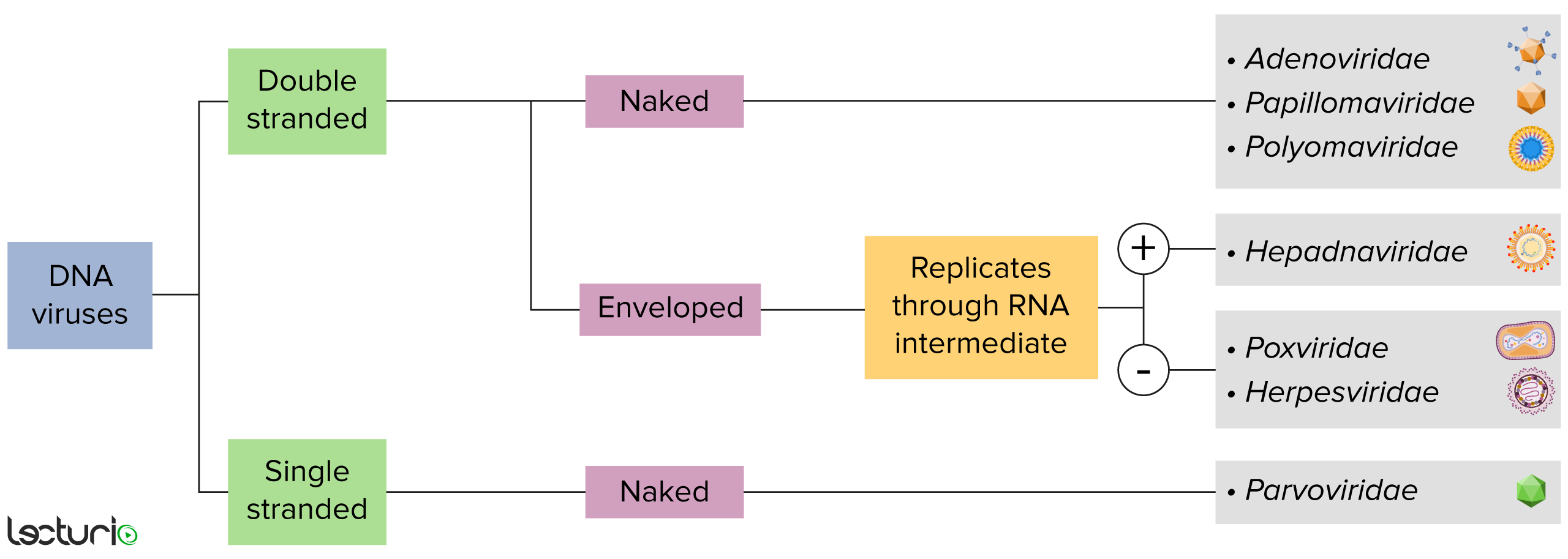
Identificação de vírus de DNA:
Os vírus podem ser classificados de várias formas. Contudo, a maioria dos vírus possui um genoma formado por DNA ou RNA. Os vírus com genoma de DNA podem ainda ser caracterizados como de cadeia simples ou dupla. Os vírus com envelope são revestidos por uma camada fina de membrana celular, que geralmente é retirada da célula hospedeira. Os vírus sem envelope são apelidados de vírus “nus”. Alguns vírus com envelope traduzem DNA em RNA antes de serem incorporados no genoma da célula hospedeira.
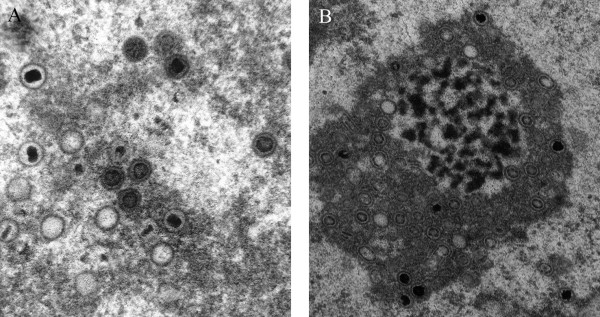
Imagens de micrografia eletrónica de transmissão de CMV:
R: Partículas de CMV humanas bem definidas e não deformadas.
B: Diversos tipos de textura de fundo e partículas deformadas no núcleo da célula
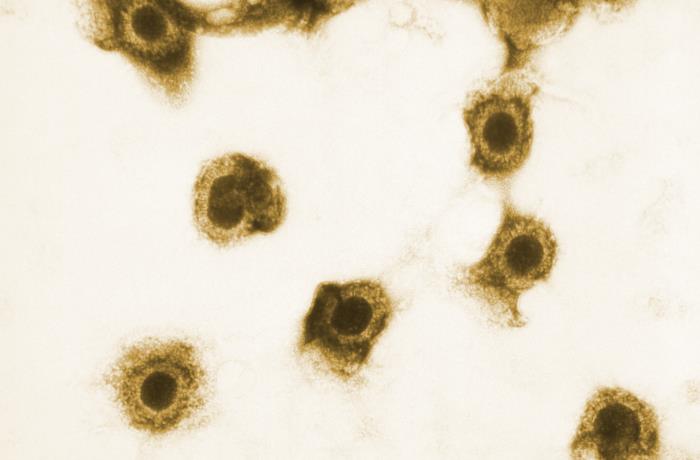
Imagem microscópica eletrónica de transmissão com diversos viriões de CMV
Imagem: “Transmission electron microscopic image showing a number of cytomegalovirus (CMV) virions” pelo CDC. Licença: Domínio PúblicoA estirpe de CMV associada à infeção humana é encontrada apenas em humanos.
Pacientes imunodeprimidos apresentam maior risco de morbilidade e mortalidade por CMV.
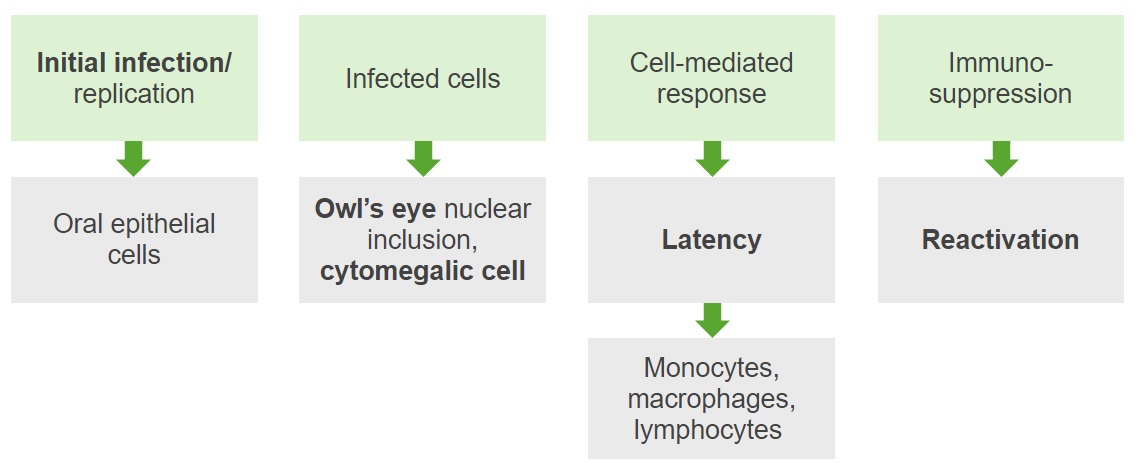
Patogénese do CMV
Imagem por Lecturio. Licença: CC BY-NC-SA 4.0As células infetadas com CMV:
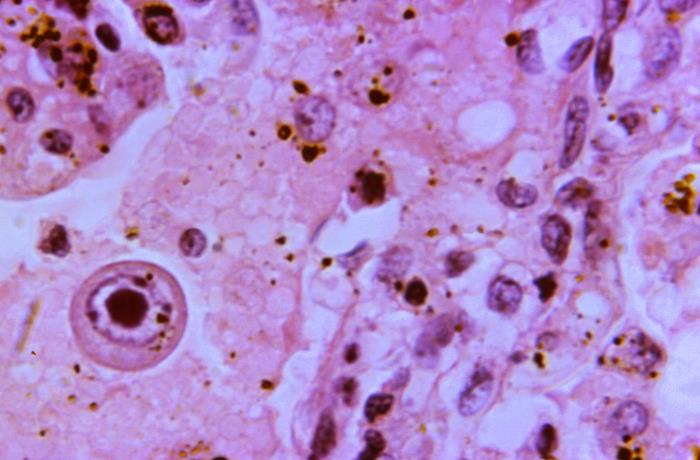
Fotomicrografia de uma seção de tecido pulmonar revelando a presença de uma grande célula de inclusão citomegálica, também conhecidade como célula de inclusão de “olho de coruja”, num caso de CMV.
Imagem: “This photomicrograph of a section of lung tissue, harvested from an infant, revealed the presence of a large cytomegalic inclusion cell” pelo CDC. Licença: Domínio Público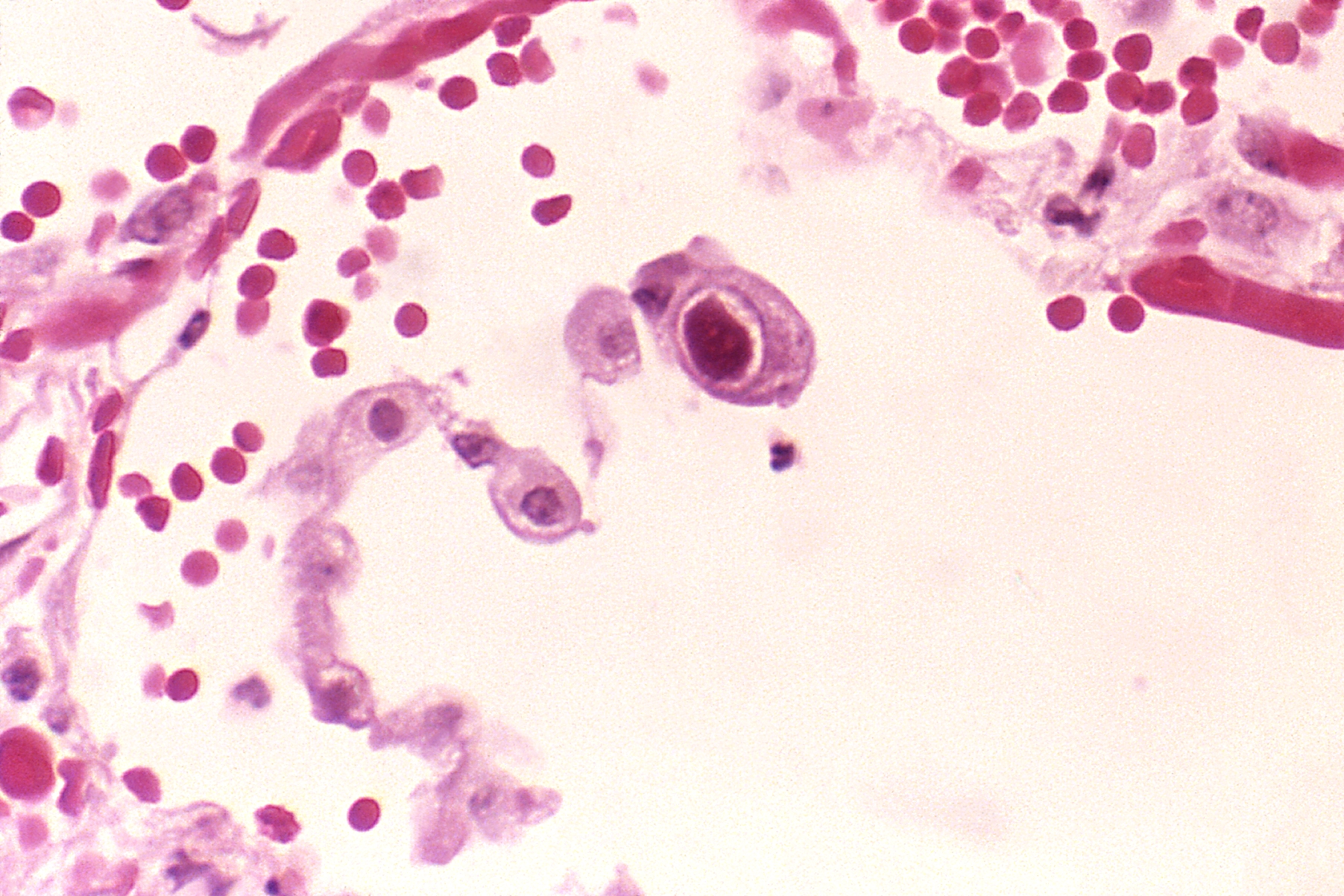
Fotomicrografia de uma amostra de tecido pulmonar de um paciente com síndrome da imunodeficiência adquirida (SIDA) com infeção ativa por citomegalovírus:
A histopatologia revelou a presença de uma célula aumentada, que continha a característica inclusão intranuclear “olho de coruja”, consistente com infeção por citomegalovírus.
O espectro de apresentações clínicas com CMV é diverso e depende do estado imune do hospedeiro.
A maioria dos pacientes imunocompetentes será assintomática. Na minoria sintomática, a apresentação mais MAIS Androgen Insensitivity Syndrome comum é uma síndrome semelhante à mononucleose infeciosa ( EBV EBV Epstein-barr virus (EBV) is a linear, double-stranded DNA virus belonging to the herpesviridae family. This highly prevalent virus is mostly transmitted through contact with oropharyngeal secretions from an infected individual. The virus can infect epithelial cells and B lymphocytes, where it can undergo lytic replication or latency. Epstein-Barr Virus).
O CMV congénito é uma das infeções perinatais TORCH (toxoplasmosis (toxoplasmose), other agents (outros agentes), rubella (rubéola), cytomegalovirus (CMV), and herpes simplex (vírus herpes simplex Herpes Simplex A group of acute infections caused by herpes simplex virus type 1 or type 2 that is characterized by the development of one or more small fluid-filled vesicles with a raised erythematous base on the skin or mucous membrane. It occurs as a primary infection or recurs due to a reactivation of a latent infection. Congenital TORCH Infections).
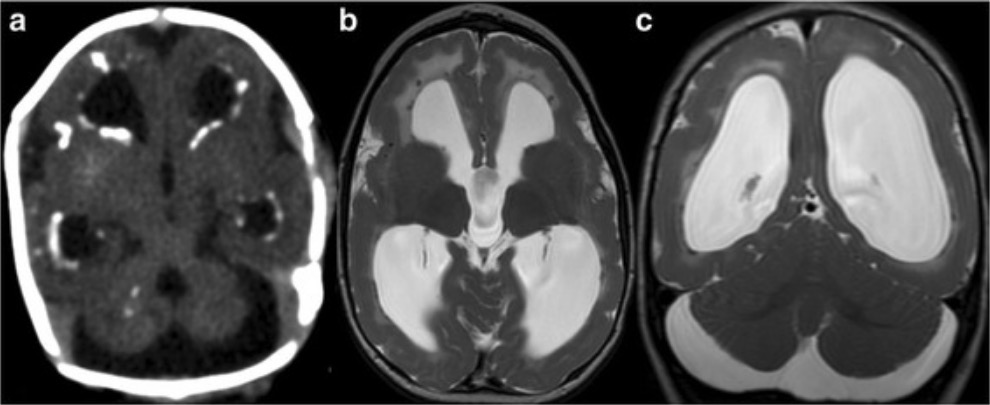
RMN de uma criança com citomegalovírus congénito que demonstra calcificações periventriculares, ventriculomegalia e hipoplasia cerebelar
Imagem: “Axial computed tomography (CT) image” por Departamento de Neurologia, Escola de Medicina da Universidade Johns Hopkins, Baltimore, MD EUA. Licença: CC BY 4.0As infeções oportunistas são raras em hospedeiros imunocompetentes e geralmente são o resultado da reativação de uma infeção latente. Nota: As infeções exteriores aos gânglios linfáticos, baço e fígado são consideradas condições definidoras de SIDA.
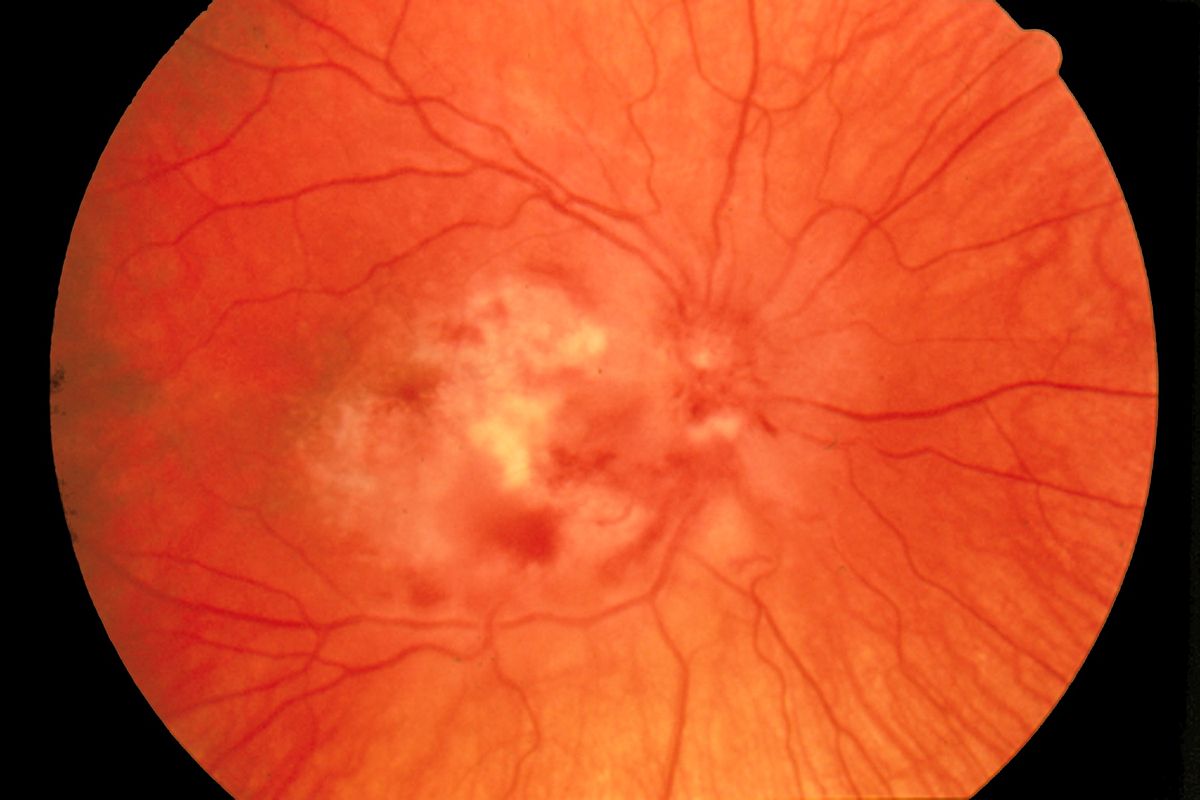
Imagem de fundoscopia de retinite por CMV
Imagem: “Fundus photograph-CMV retinitis” por National Eye Institute. Licença: Domínio PúblicoA tabela abaixo compara os 9 herpesvírus considerados endémicos em humanos; existem 115 espécies diferentes de herpesvírus no total, agrupadas em 3 famílias:
| HHV | Nome comum | Principais células-alvo | Local de latência | Apresentação clínica* |
|---|---|---|---|---|
|
1 (grupo alfa) |
HSV-1 | Células mucoepiteliais | Gânglios da raiz dorsal |
|
|
2 (grupo alfa) |
HSV-2 |
|
||
|
3 (grupo alfa) |
VZV |
|
||
|
4 (grupo gama) |
EBV EBV Epstein-barr virus (EBV) is a linear, double-stranded DNA virus belonging to the herpesviridae family. This highly prevalent virus is mostly transmitted through contact with oropharyngeal secretions from an infected individual. The virus can infect epithelial cells and B lymphocytes, where it can undergo lytic replication or latency. Epstein-Barr Virus |
|
Células B de memória |
|
|
5 (grupo beta) |
CMV |
|
Células progenitoras hematopoiéticas da medula óssea |
|
|
6A, 6B (grupo beta) |
HHV-6 HHV-6 Human herpesvirus (HHV)-6 and HHV-7 are similar double-stranded DNA viruses belonging to the Herpesviridae family. Human herpesviruses are ubiquitous and infections are commonly contracted during childhood. Human Herpesvirus 6 and 7 | células T | Monócitos | Roséola |
|
7 (grupo beta) |
HHV-7 HHV-7 Human herpesvirus (HHV)-6 and HHV-7 are similar double-stranded DNA viruses belonging to the Herpesviridae family. Human herpesviruses are ubiquitous and infections are commonly contracted during childhood. Human Herpesvirus 6 and 7 | células T | ||
|
8 (grupo gama) |
Herpesvírus associado ao sarcoma de Kaposi Kaposi A multicentric, malignant neoplastic vascular proliferation characterized by the development of bluish-red cutaneous nodules, usually on the lower extremities, most often on the toes or feet, and slowly increasing in size and number and spreading to more proximal areas. The tumors have endothelium-lined channels and vascular spaces admixed with variably sized aggregates of spindle-shaped cells, and often remain confined to the skin and subcutaneous tissue, but widespread visceral involvement may occur. Hhv-8 is the suspected cause. There is also a high incidence in AIDS patients. AIDS-defining Conditions |
|
células B | Sarcoma de Kaposi Kaposi A multicentric, malignant neoplastic vascular proliferation characterized by the development of bluish-red cutaneous nodules, usually on the lower extremities, most often on the toes or feet, and slowly increasing in size and number and spreading to more proximal areas. The tumors have endothelium-lined channels and vascular spaces admixed with variably sized aggregates of spindle-shaped cells, and often remain confined to the skin and subcutaneous tissue, but widespread visceral involvement may occur. Hhv-8 is the suspected cause. There is also a high incidence in AIDS patients. AIDS-defining Conditions |