



Antivirais Contra o Vírus Herpes

Aciclovir, cidofovir Cidofovir An acyclic nucleoside phosphonate that acts as a competitive inhibitor of viral DNA polymerases. It is used in the treatment of retinitis caused by cytomegalovirus infections and may also be useful for treating herpesvirus infections. Antivirals for Herpes Virus e foscarnet Foscarnet An antiviral agent used in the treatment of cytomegalovirus retinitis. Foscarnet also shows activity against human herpesviruses and HIV. Antivirals for Herpes Virus são agentes antivirais contra vírus herpes humanos (HHVs, pela singla em inglês). Os vírus herpes humanos são vírus de DNA DNA A deoxyribonucleotide polymer that is the primary genetic material of all cells. Eukaryotic and prokaryotic organisms normally contain DNA in a double-stranded state, yet several important biological processes transiently involve single-stranded regions. DNA, which consists of a polysugar-phosphate backbone possessing projections of purines (adenine and guanine) and pyrimidines (thymine and cytosine), forms a double helix that is held together by hydrogen bonds between these purines and pyrimidines (adenine to thymine and guanine to cytosine). DNA Types and Structure da família Herpesviridae Herpesviridae A family of enveloped, linear, double-stranded DNA viruses infecting a wide variety of animals. Subfamilies, based on biological characteristics, include: alphaherpesvirinae; betaherpesvirinae; and gammaherpesvirinae. Herpes Simplex Virus 1 and 2. O vírus herpes simplex Herpes Simplex A group of acute infections caused by herpes simplex virus type 1 or type 2 that is characterized by the development of one or more small fluid-filled vesicles with a raised erythematous base on the skin or mucous membrane. It occurs as a primary infection or recurs due to a reactivation of a latent infection. Congenital TORCH Infections (VHS), vírus varicela-zoster (VZV), citomegalovírus (CMV), vírus Epstein-Barr ( EBV EBV Epstein-barr virus (EBV) is a linear, double-stranded DNA virus belonging to the herpesviridae family. This highly prevalent virus is mostly transmitted through contact with oropharyngeal secretions from an infected individual. The virus can infect epithelial cells and B lymphocytes, where it can undergo lytic replication or latency. Epstein-Barr Virus) e HHV-8 pertencem à família Herpesviridae Herpesviridae A family of enveloped, linear, double-stranded DNA viruses infecting a wide variety of animals. Subfamilies, based on biological characteristics, include: alphaherpesvirinae; betaherpesvirinae; and gammaherpesvirinae. Herpes Simplex Virus 1 and 2. Os antivirais atuam através da inibição da DNA DNA A deoxyribonucleotide polymer that is the primary genetic material of all cells. Eukaryotic and prokaryotic organisms normally contain DNA in a double-stranded state, yet several important biological processes transiently involve single-stranded regions. DNA, which consists of a polysugar-phosphate backbone possessing projections of purines (adenine and guanine) and pyrimidines (thymine and cytosine), forms a double helix that is held together by hydrogen bonds between these purines and pyrimidines (adenine to thymine and guanine to cytosine). DNA Types and Structure polimerase. O aciclovir (protótipo de análogo de nucleosídeo) é fosforilado em trifosfato por atuação da quinase viral, que é incorporado no DNA DNA A deoxyribonucleotide polymer that is the primary genetic material of all cells. Eukaryotic and prokaryotic organisms normally contain DNA in a double-stranded state, yet several important biological processes transiently involve single-stranded regions. DNA, which consists of a polysugar-phosphate backbone possessing projections of purines (adenine and guanine) and pyrimidines (thymine and cytosine), forms a double helix that is held together by hydrogen bonds between these purines and pyrimidines (adenine to thymine and guanine to cytosine). DNA Types and Structure viral. O cidofovir Cidofovir An acyclic nucleoside phosphonate that acts as a competitive inhibitor of viral DNA polymerases. It is used in the treatment of retinitis caused by cytomegalovirus infections and may also be useful for treating herpesvirus infections. Antivirals for Herpes Virus é fosforilado pela quinase celular do hospedeiro e não viral, conferindo-lhe atividade contra vírus mutantes. O antiviral Antiviral Antivirals for Hepatitis B foscarnet Foscarnet An antiviral agent used in the treatment of cytomegalovirus retinitis. Foscarnet also shows activity against human herpesviruses and HIV. Antivirals for Herpes Virus (análogo de pirofosfato) não requer fosforilação. A nefrotoxicidade é um efeito adverso comum em todos. O aciclovir também pode causar nefropatia cristalina obstrutiva e o foscarnet Foscarnet An antiviral agent used in the treatment of cytomegalovirus retinitis. Foscarnet also shows activity against human herpesviruses and HIV. Antivirals for Herpes Virus pode desenvolver distúrbios hidroeletrolíticos e convulsões. O efeito nefrotóxico do cidofovir Cidofovir An acyclic nucleoside phosphonate that acts as a competitive inhibitor of viral DNA polymerases. It is used in the treatment of retinitis caused by cytomegalovirus infections and may also be useful for treating herpesvirus infections. Antivirals for Herpes Virus pode ser atenuado com a administração de soro fisiológico e probenecid Probenecid The prototypical uricosuric agent. It inhibits the renal excretion of organic anions and reduces tubular reabsorption of urate. Probenecid has also been used to treat patients with renal impairment, and, because it reduces the renal tubular excretion of other drugs, has been used as an adjunct to antibacterial therapy. Gout Drugs.

Last updated: Dec 15, 2025
Editorial responsibility: Stanley Oiseth, Lindsay Jones, Evelin Maza

Descrição Geral

Herpesvírus humano (HHVs, pela sigla em inglês)

  • Vírus de DNA DNA A deoxyribonucleotide polymer that is the primary genetic material of all cells. Eukaryotic and prokaryotic organisms normally contain DNA in a double-stranded state, yet several important biological processes transiently involve single-stranded regions. DNA, which consists of a polysugar-phosphate backbone possessing projections of purines (adenine and guanine) and pyrimidines (thymine and cytosine), forms a double helix that is held together by hydrogen bonds between these purines and pyrimidines (adenine to thymine and guanine to cytosine). DNA Types and Structure (processo de infeção semelhante):
    • Os vírus entram no núcleo da célula hospedeira.
    • O DNA DNA A deoxyribonucleotide polymer that is the primary genetic material of all cells. Eukaryotic and prokaryotic organisms normally contain DNA in a double-stranded state, yet several important biological processes transiently involve single-stranded regions. DNA, which consists of a polysugar-phosphate backbone possessing projections of purines (adenine and guanine) and pyrimidines (thymine and cytosine), forms a double helix that is held together by hydrogen bonds between these purines and pyrimidines (adenine to thymine and guanine to cytosine). DNA Types and Structure viral é transcrito em mRNA mRNA RNA sequences that serve as templates for protein synthesis. Bacterial mRNAs are generally primary transcripts in that they do not require post-transcriptional processing. Eukaryotic mRNA is synthesized in the nucleus and must be exported to the cytoplasm for translation. Most eukaryotic mRNAs have a sequence of polyadenylic acid at the 3′ end, referred to as the poly(a) tail. The function of this tail is not known for certain, but it may play a role in the export of mature mRNA from the nucleus as well as in helping stabilize some mRNA molecules by retarding their degradation in the cytoplasm. RNA Types and Structure via polimerase da célula hospedeira.
    • Subsequentemente, o mRNA mRNA RNA sequences that serve as templates for protein synthesis. Bacterial mRNAs are generally primary transcripts in that they do not require post-transcriptional processing. Eukaryotic mRNA is synthesized in the nucleus and must be exported to the cytoplasm for translation. Most eukaryotic mRNAs have a sequence of polyadenylic acid at the 3′ end, referred to as the poly(a) tail. The function of this tail is not known for certain, but it may play a role in the export of mature mRNA from the nucleus as well as in helping stabilize some mRNA molecules by retarding their degradation in the cytoplasm. RNA Types and Structure é traduzido em proteínas específicas do vírus.
  • Família Herpesviridae Herpesviridae A family of enveloped, linear, double-stranded DNA viruses infecting a wide variety of animals. Subfamilies, based on biological characteristics, include: alphaherpesvirinae; betaherpesvirinae; and gammaherpesvirinae. Herpes Simplex Virus 1 and 2:
    • Subfamília: Alphaherpesvirinae Alphaherpesvirinae A subfamily of herpesviridae characterized by a short replication cycle. The genera include: simplexvirus; varicellovirus; marek’s disease-like viruses; and iltovirus. Antivirals for Herpes Virus:
      • Vírus Herpes simplex Herpes Simplex A group of acute infections caused by herpes simplex virus type 1 or type 2 that is characterized by the development of one or more small fluid-filled vesicles with a raised erythematous base on the skin or mucous membrane. It occurs as a primary infection or recurs due to a reactivation of a latent infection. Congenital TORCH Infections (VHS)-1 e VHS-2 (lesões mucocutâneas e genitais)
      • Vírus Varicela-zoster (VZV, pela sigla em inglês) (varicela)
    • Subfamília: Betaherpesvirinae Betaherpesvirinae A subfamily of herpesviridae characterized by a relatively long replication cycle. Genera include: cytomegalovirus; muromegalovirus; and roseolovirus. Cytomegalovirus:
      • Citomegalovírus (CMV)
      • HHV-6 HHV-6 Human herpesvirus (HHV)-6 and HHV-7 are similar double-stranded DNA viruses belonging to the Herpesviridae family. Human herpesviruses are ubiquitous and infections are commonly contracted during childhood. Human Herpesvirus 6 and 7 e HHV-7 HHV-7 Human herpesvirus (HHV)-6 and HHV-7 are similar double-stranded DNA viruses belonging to the Herpesviridae family. Human herpesviruses are ubiquitous and infections are commonly contracted during childhood. Human Herpesvirus 6 and 7 (roséola)
    • Subfamília: Gammaherpesvirinae Gammaherpesvirinae A subfamily of herpesviridae characterized by variable reproductive cycles. The genera include: lymphocryptovirus and rhadinovirus. Epstein-Barr Virus :
      • Vírus Epstein-Barr ( EBV EBV Epstein-barr virus (EBV) is a linear, double-stranded DNA virus belonging to the herpesviridae family. This highly prevalent virus is mostly transmitted through contact with oropharyngeal secretions from an infected individual. The virus can infect epithelial cells and B lymphocytes, where it can undergo lytic replication or latency. Epstein-Barr Virus, pela sigla em inglês) (linfoma de Burkitt e mononucleose infeciosa)
      • HHV-4
      • HHV-8 (sarcoma de Kaposi Kaposi A multicentric, malignant neoplastic vascular proliferation characterized by the development of bluish-red cutaneous nodules, usually on the lower extremities, most often on the toes or feet, and slowly increasing in size and number and spreading to more proximal areas. The tumors have endothelium-lined channels and vascular spaces admixed with variably sized aggregates of spindle-shaped cells, and often remain confined to the skin and subcutaneous tissue, but widespread visceral involvement may occur. Hhv-8 is the suspected cause. There is also a high incidence in AIDS patients. AIDS-defining Conditions)

Agentes contra o vírus herpes

  • Têm como alvo a síntese do ácido nucleico viral, inibindo a DNA DNA A deoxyribonucleotide polymer that is the primary genetic material of all cells. Eukaryotic and prokaryotic organisms normally contain DNA in a double-stranded state, yet several important biological processes transiently involve single-stranded regions. DNA, which consists of a polysugar-phosphate backbone possessing projections of purines (adenine and guanine) and pyrimidines (thymine and cytosine), forms a double helix that is held together by hydrogen bonds between these purines and pyrimidines (adenine to thymine and guanine to cytosine). DNA Types and Structure polimerase
  • Grupos de fármacos:
    • Análogos de nucleosídeos:
    • Análogo nucleótido de citidina: cidofovir Cidofovir An acyclic nucleoside phosphonate that acts as a competitive inhibitor of viral DNA polymerases. It is used in the treatment of retinitis caused by cytomegalovirus infections and may also be useful for treating herpesvirus infections. Antivirals for Herpes Virus
    • Análogo de pirofosfato: foscarnet Foscarnet An antiviral agent used in the treatment of cytomegalovirus retinitis. Foscarnet also shows activity against human herpesviruses and HIV. Antivirals for Herpes Virus
Antivirais para Herpesvírus

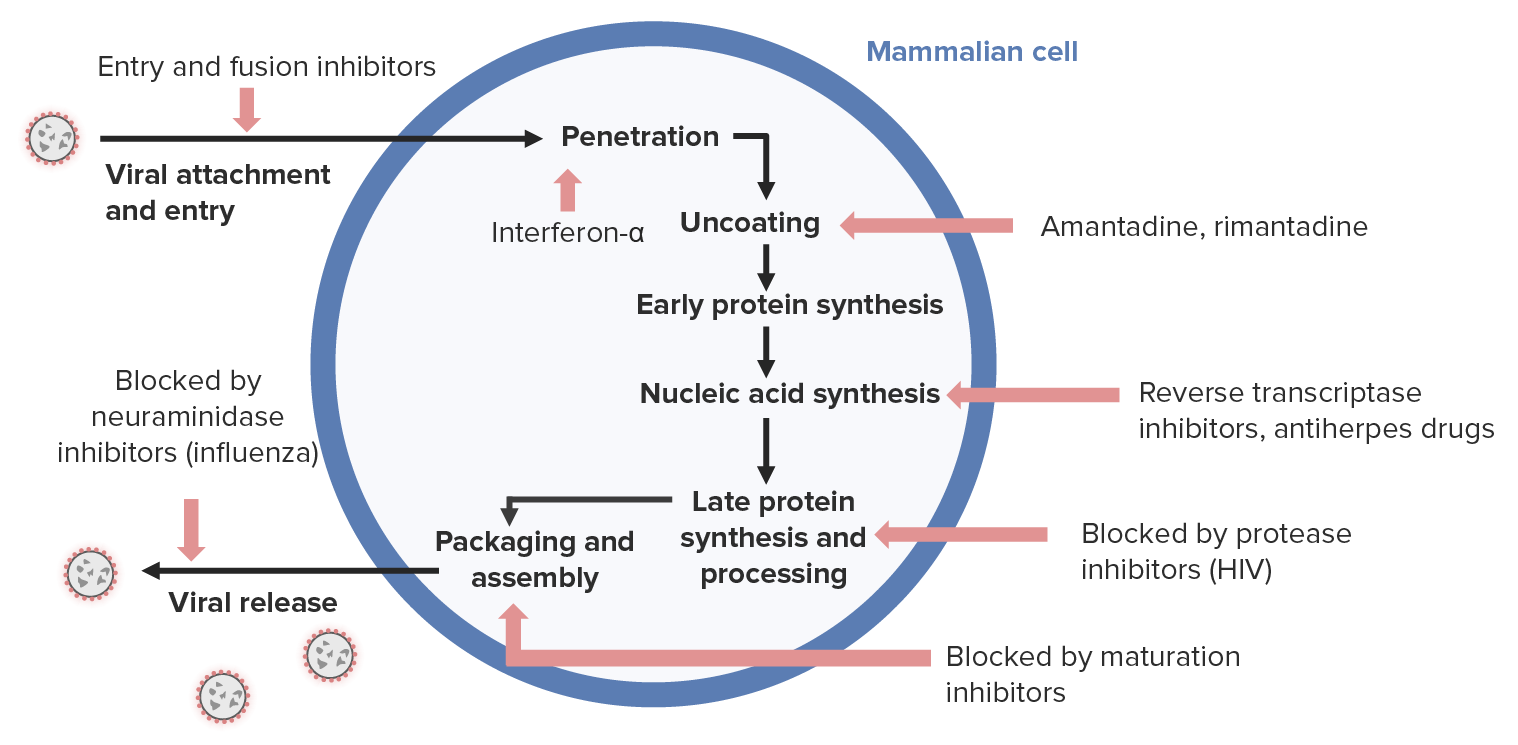
Mecanismo dos fármacos antivirais:
Os antivirais contra o vírus herpes (lado direito) atuam através da inibição da síntese de ácidos nucleicos.
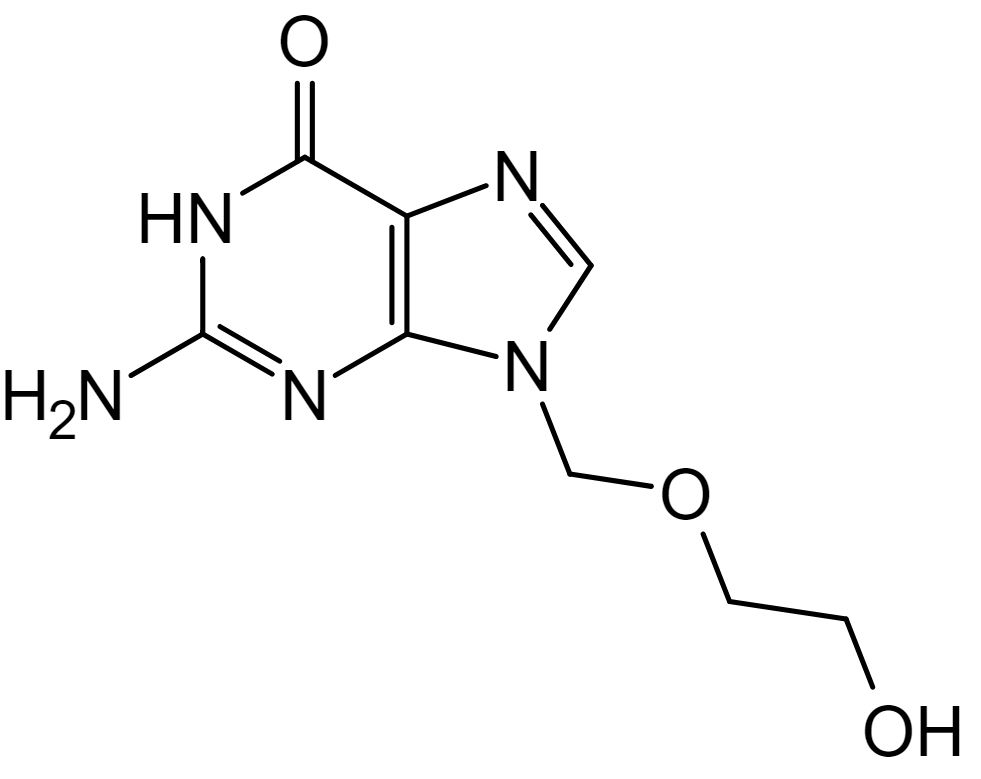
Imagem por Lecturio.

Análogos de Nucleosídeos

Estrutura química

  • Aciclovir: análogo de nucleosídeo da guanosina acíclico (o fármaco protótipo do grupo)
  • Valaciclovir: pró-fármaco de éster L-valil do aciclovir
  • Penciclovir Penciclovir Antivirals for Herpes Virus, fanciclovir e ganciclovir Ganciclovir An acyclovir analog that is a potent inhibitor of the herpesvirus family including cytomegalovirus. Ganciclovir is used to treat complications from aids-associated cytomegalovirus infections. Antivirals for Herpes Virus são antivirais relacionados.

Farmacodinâmica

Aciclovir:

  • A fosforilação sequencial da quinase viral (p. ex., dependente da timidina quinase (TK)) e da quinase hospedeira converte o fármaco num monofosfato e posteriormente numa porção trifosfato.
  • Como a etapa inicial requer quinase viral, são apenas afetadas as células infetadas.
  • As etapas permitem que o fármaco se torne um inibidor de trifosfato da DNA DNA A deoxyribonucleotide polymer that is the primary genetic material of all cells. Eukaryotic and prokaryotic organisms normally contain DNA in a double-stranded state, yet several important biological processes transiently involve single-stranded regions. DNA, which consists of a polysugar-phosphate backbone possessing projections of purines (adenine and guanine) and pyrimidines (thymine and cytosine), forms a double helix that is held together by hydrogen bonds between these purines and pyrimidines (adenine to thymine and guanine to cytosine). DNA Types and Structure polimerase.
  • Inibe a síntese de DNA DNA A deoxyribonucleotide polymer that is the primary genetic material of all cells. Eukaryotic and prokaryotic organisms normally contain DNA in a double-stranded state, yet several important biological processes transiently involve single-stranded regions. DNA, which consists of a polysugar-phosphate backbone possessing projections of purines (adenine and guanine) and pyrimidines (thymine and cytosine), forms a double helix that is held together by hydrogen bonds between these purines and pyrimidines (adenine to thymine and guanine to cytosine). DNA Types and Structure viral:
    • O trifosfato compete com o trifosfato de desoxiguanosina (dGTP, pela sigla em inglês) pela DNA DNA A deoxyribonucleotide polymer that is the primary genetic material of all cells. Eukaryotic and prokaryotic organisms normally contain DNA in a double-stranded state, yet several important biological processes transiently involve single-stranded regions. DNA, which consists of a polysugar-phosphate backbone possessing projections of purines (adenine and guanine) and pyrimidines (thymine and cytosine), forms a double helix that is held together by hydrogen bonds between these purines and pyrimidines (adenine to thymine and guanine to cytosine). DNA Types and Structure polimerase viral.
    • O trifosfato incorpora-se no DNA DNA A deoxyribonucleotide polymer that is the primary genetic material of all cells. Eukaryotic and prokaryotic organisms normally contain DNA in a double-stranded state, yet several important biological processes transiently involve single-stranded regions. DNA, which consists of a polysugar-phosphate backbone possessing projections of purines (adenine and guanine) and pyrimidines (thymine and cytosine), forms a double helix that is held together by hydrogen bonds between these purines and pyrimidines (adenine to thymine and guanine to cytosine). DNA Types and Structure viral.
    • A terminação da cadeia ocorre devido à ausência de um grupo 3′-hidroxilo, impedindo a ligação de nucleosídeos.
  • Mecanismo de resistência:
    • Alteração na DNA DNA A deoxyribonucleotide polymer that is the primary genetic material of all cells. Eukaryotic and prokaryotic organisms normally contain DNA in a double-stranded state, yet several important biological processes transiently involve single-stranded regions. DNA, which consists of a polysugar-phosphate backbone possessing projections of purines (adenine and guanine) and pyrimidines (thymine and cytosine), forms a double helix that is held together by hydrogen bonds between these purines and pyrimidines (adenine to thymine and guanine to cytosine). DNA Types and Structure polimerase do vírus
    • Ausência ou comprometimento da TK (causado por mutações virais)
Pharmacodynamics

Mecanismo de ação do aciclovir:
1) O aciclovir sofre fosforilação sequencial, que é facilitada pela herpesvirus timidina cinase (TK, pela sigla em inglês) e pelas cinases do hospedeiro. Como a TK viral é necessária para a fosforilação do aciclovir, apenas as células infetadas pelo vírus são afetadas pelo fármaco.
2) As enzimas do hospedeiro convertem o monofosfato a aciclovir trifosfato, que subsequentemente compete com a desoxiguanosina trifosfato (dGTP) pela DNA polimerase viral.
3) O aciclovir é adicionado à cadeia em crescimento durante a replicação viral em vez da guanosina trifosfato (GTP), o que interrompe a replicação viral impedindo a elongação da molécula de DNA.

Imagem por Lecturio.

Farmacocinética

  • Absorção:
    • Aciclovir:
      • Disponibilidade oral, IV e tópica
      • Baixa biodisponibilidade oral (10%–30% )
    • Valaciclovir: maior biodisponibilidade
    • Penciclovir Penciclovir Antivirals for Herpes Virus: tópico
  • Distribuição:
    • Elevada taxa de distribuição (incluindo LCR)
    • Boa penetração nos tecidos e fluidos
    • São necessárias múltiplas doses por dia devido à sua semi-vida curta
  • Metabolismo: minimamente metabolizado (> 80% excretado inalterado)
  • Excreção:
    • Renal por filtração glomerular e secreção tubular
    • É necessário um ajuste da dose na insuficiência renal.
    • A semi-vida de eliminação varia entre 2 a 4 horas.

Indicações

Aciclovir (e outros agentes relacionados):

  • VHS
  • VZV
  • Prevenção do vírus herpes em indivíduos imunodeprimidos
  • Uso off-label: Paralisia de Bell e prevenção de CMV em indivíduos com transplante de células-tronco hematopoiéticas de baixo risco

Efeitos adversos e contraindicações

Aciclovir:

  • Efeitos adversos significativos:
    • Lesão renal aguda:
      • Uropatia obstrutiva (formação de cristais de aciclovir)
      • Nefrite intersticial
      • Acidose tubular renal
    • Nefrotoxicidade:
      • Confusão, agitação e alucinação
      • Mioclonias e tremores
    • Púrpura trombocitopénica trombótica (PTT) e síndrome hemolítica-urémica (SHU)
  • Contraindicações: hipersensibilidade ao aciclovir

Comparação entre análogos de nucleosídeos

Tabela: Comparação entre análogos de nucleosídeos contra o herpesvírus
Agente Características e mecanismo de ação Farmacocinética Indicação aprovada Efeitos adversos
Aciclovir
  • Análogo de nucleosídeo
  • Inibidor da polimerase
Baixa biodisponibilidade oral
  • Vírus do herpes simplex Herpes Simplex A group of acute infections caused by herpes simplex virus type 1 or type 2 that is characterized by the development of one or more small fluid-filled vesicles with a raised erythematous base on the skin or mucous membrane. It occurs as a primary infection or recurs due to a reactivation of a latent infection. Congenital TORCH Infections (VHS)-1
  • VHS-2
  • Vírus varicela zoster (VZV, pela sigla em inglês)
  • Lesão renal aguda
  • Neurotoxicidade
  • Microangiopatia trombótica
Valaciclovir
  • Análogo de nucleosídeo
  • Pró-fármaco de aciclovir
  • Inibidor da polimerase
Boa biodisponibilidade oral
Penciclovir Penciclovir Antivirals for Herpes Virus
  • Análogo de nucleosídeo
  • Inibidor da polimerase com um grupo 3′-hidroxilo (não é um terminador de cadeia obrigatório)
Formulação tópica VHS (herpes labial) Reações adversas ligeiras
Famciclovir Famciclovir An aminopurine derivative and prodrug of penciclovir which is a competitive inhibitor of herpes simplex 2 DNA polymerase. It is used to treat herpes simplex virus infection. Antivirals for Herpes Virus Melhor biodisponibilidade oral do que o penciclovir Penciclovir Antivirals for Herpes Virus
  • HSV HSV Herpes simplex virus (HSV) is a double-stranded DNA virus belonging to the family Herpesviridae. Herpes simplex virus commonly causes recurrent infections involving the skin and mucosal surfaces, including the mouth, lips, eyes, and genitals. Herpes Simplex Virus 1 and 2
  • Herpes zoster Herpes Zoster Varicella-zoster virus (VZV) is a linear, double-stranded DNA virus in the Herpesviridae family. Shingles (also known as herpes zoster) is more common in adults and occurs due to the reactivation of VZV. Varicella-Zoster Virus/Chickenpox ou zona
  • Cefaleia
  • Náuseas, diarreia
Ganciclovir Ganciclovir An acyclovir analog that is a potent inhibitor of the herpesvirus family including cytomegalovirus. Ganciclovir is used to treat complications from aids-associated cytomegalovirus infections. Antivirals for Herpes Virus
  • Análogo de nucleosídeo
  • Fosforilação catalisada pela proteína quinase fosfotransferase do vírus UL97
  • Inibidor da polimerase
  • IV
  • Baixa biodisponibilidade oral
Infeções por citomegalovírus (CMV)
  • Toxicidade hematológica (↓ plaquetas, leucopenia)
  • Nefrotoxicidade
  • Foram relatados casos de defeitos congénitos, ↓ espermatogénese e carcinogénico em estudos com animais
Valganciclovir
  • Análogo de nucleosídeo
  • Fosforilação catalisada pela proteína quinase fosfotransferase do vírus UL97
  • Pró-fármaco de ganciclovir Ganciclovir An acyclovir analog that is a potent inhibitor of the herpesvirus family including cytomegalovirus. Ganciclovir is used to treat complications from aids-associated cytomegalovirus infections. Antivirals for Herpes Virus
  • Inibidor da polimerase
Melhor biodisponibilidade oral do que o ganciclovir Ganciclovir An acyclovir analog that is a potent inhibitor of the herpesvirus family including cytomegalovirus. Ganciclovir is used to treat complications from aids-associated cytomegalovirus infections. Antivirals for Herpes Virus

Cidofovir

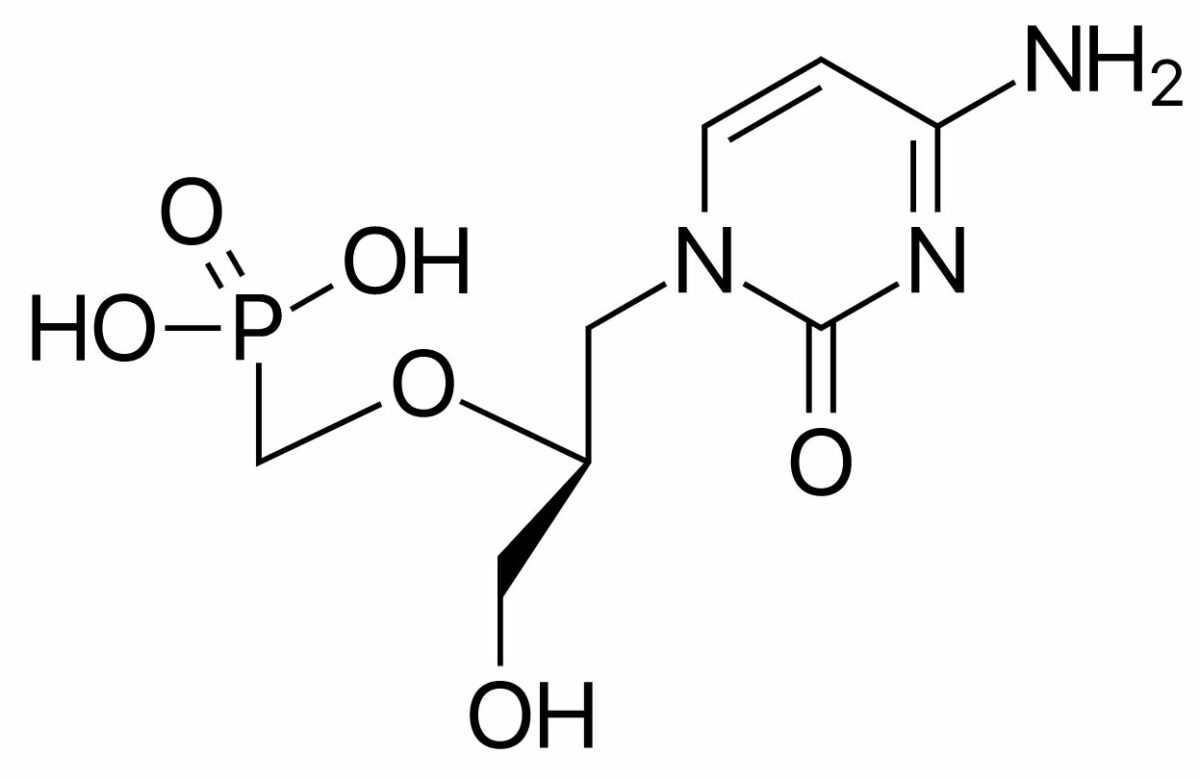
Estrutura química

O cidofovir Cidofovir An acyclic nucleoside phosphonate that acts as a competitive inhibitor of viral DNA polymerases. It is used in the treatment of retinitis caused by cytomegalovirus infections and may also be useful for treating herpesvirus infections. Antivirals for Herpes Virus é um análogo de nucleótido de citidina.
Farmacodinâmica

  • Tem como alvo a replicação viral, inibindo a DNA DNA A deoxyribonucleotide polymer that is the primary genetic material of all cells. Eukaryotic and prokaryotic organisms normally contain DNA in a double-stranded state, yet several important biological processes transiently involve single-stranded regions. DNA, which consists of a polysugar-phosphate backbone possessing projections of purines (adenine and guanine) and pyrimidines (thymine and cytosine), forms a double helix that is held together by hydrogen bonds between these purines and pyrimidines (adenine to thymine and guanine to cytosine). DNA Types and Structure polimerase viral:
    • Ao contrário dos análogos de nucleosídeos, o cidofovir Cidofovir An acyclic nucleoside phosphonate that acts as a competitive inhibitor of viral DNA polymerases. It is used in the treatment of retinitis caused by cytomegalovirus infections and may also be useful for treating herpesvirus infections. Antivirals for Herpes Virus é fosforilado por enzimas celulares (quinase hospedeira), não virais.
    • Compete com o trifosfato de desoxicitidina (dCTP) pela DNA DNA A deoxyribonucleotide polymer that is the primary genetic material of all cells. Eukaryotic and prokaryotic organisms normally contain DNA in a double-stranded state, yet several important biological processes transiently involve single-stranded regions. DNA, which consists of a polysugar-phosphate backbone possessing projections of purines (adenine and guanine) and pyrimidines (thymine and cytosine), forms a double helix that is held together by hydrogen bonds between these purines and pyrimidines (adenine to thymine and guanine to cytosine). DNA Types and Structure polimerase viral, para incorporação no DNA DNA A deoxyribonucleotide polymer that is the primary genetic material of all cells. Eukaryotic and prokaryotic organisms normally contain DNA in a double-stranded state, yet several important biological processes transiently involve single-stranded regions. DNA, which consists of a polysugar-phosphate backbone possessing projections of purines (adenine and guanine) and pyrimidines (thymine and cytosine), forms a double helix that is held together by hydrogen bonds between these purines and pyrimidines (adenine to thymine and guanine to cytosine). DNA Types and Structure viral.
    • Quando o fármaco é incorporado ocorre a interrupção do prolongamento adicional na cadeia.
  • O cidofovir Cidofovir An acyclic nucleoside phosphonate that acts as a competitive inhibitor of viral DNA polymerases. It is used in the treatment of retinitis caused by cytomegalovirus infections and may also be useful for treating herpesvirus infections. Antivirals for Herpes Virus tem atividade contra vírus com ausência ou comprometimento da TK, porque as enzimas virais não são necessárias.
  • Mecanismo de resistência: mutação na DNA DNA A deoxyribonucleotide polymer that is the primary genetic material of all cells. Eukaryotic and prokaryotic organisms normally contain DNA in a double-stranded state, yet several important biological processes transiently involve single-stranded regions. DNA, which consists of a polysugar-phosphate backbone possessing projections of purines (adenine and guanine) and pyrimidines (thymine and cytosine), forms a double helix that is held together by hydrogen bonds between these purines and pyrimidines (adenine to thymine and guanine to cytosine). DNA Types and Structure polimerase viral

Farmacocinética

  • Absorção:
    • Administração IV
    • Baixa biodisponibilidade oral
  • Distribuição:
    • Baixa penetração no LCR
    • O metabolito ativo (difosfato de cidofovir Cidofovir An acyclic nucleoside phosphonate that acts as a competitive inhibitor of viral DNA polymerases. It is used in the treatment of retinitis caused by cytomegalovirus infections and may also be useful for treating herpesvirus infections. Antivirals for Herpes Virus) é eliminado lentamente → longa semi-vida intracelular
  • Metabolismo: A maior parte do fármaco é excretado de forma inalterada na urina.
  • Excreção:
    • Renal
    • Filtração glomerular e secreção tubular

Indicações

  • Retinite por CMV (na SIDA)
  • Atividade contra:
    • Herpesvírus
    • Adenovírus
    • Poliomavírus (nefropatia por vírus BK)
    • Papilomavírus (por exemplo, verrugas, molusco contagioso)
    • Poxvírus
  • Ativo contra vírus mutantes resistentes ao aciclovir e ganciclovir Ganciclovir An acyclovir analog that is a potent inhibitor of the herpesvirus family including cytomegalovirus. Ganciclovir is used to treat complications from aids-associated cytomegalovirus infections. Antivirals for Herpes Virus:
    • HSV HSV Herpes simplex virus (HSV) is a double-stranded DNA virus belonging to the family Herpesviridae. Herpes simplex virus commonly causes recurrent infections involving the skin and mucosal surfaces, including the mouth, lips, eyes, and genitals. Herpes Simplex Virus 1 and 2 TK-negativo
    • CMV negativo para fosfotransferase UL97

Efeitos adversos e contraindicações

  • Efeitos adversos:
    • Nefrotoxicidade:
      • Efeito adverso mais MAIS Androgen Insensitivity Syndrome importante
      • Diminui quando administrado com solução salina IV e probenecid Probenecid The prototypical uricosuric agent. It inhibits the renal excretion of organic anions and reduces tubular reabsorption of urate. Probenecid has also been used to treat patients with renal impairment, and, because it reduces the renal tubular excretion of other drugs, has been used as an adjunct to antibacterial therapy. Gout Drugs (bloqueia a secreção tubular renal ativa)
    • Náuseas, vómitos
    • Neutropenia Neutropenia Neutrophils are an important component of the immune system and play a significant role in the eradication of infections. Low numbers of circulating neutrophils, referred to as neutropenia, predispose the body to recurrent infections or sepsis, though patients can also be asymptomatic. Neutropenia
    • Irite aguda e hipotonia ocular
    • Em estudos com animais: hipospermia, carcinogénico e teratogénico
  • Contraindicações:
    • Proteinúria ≥ 2+ ou proteína na urina ≥ 100 mg/dL
    • Creatinina sérica basal > 1,5 mg/dL

Foscarnet

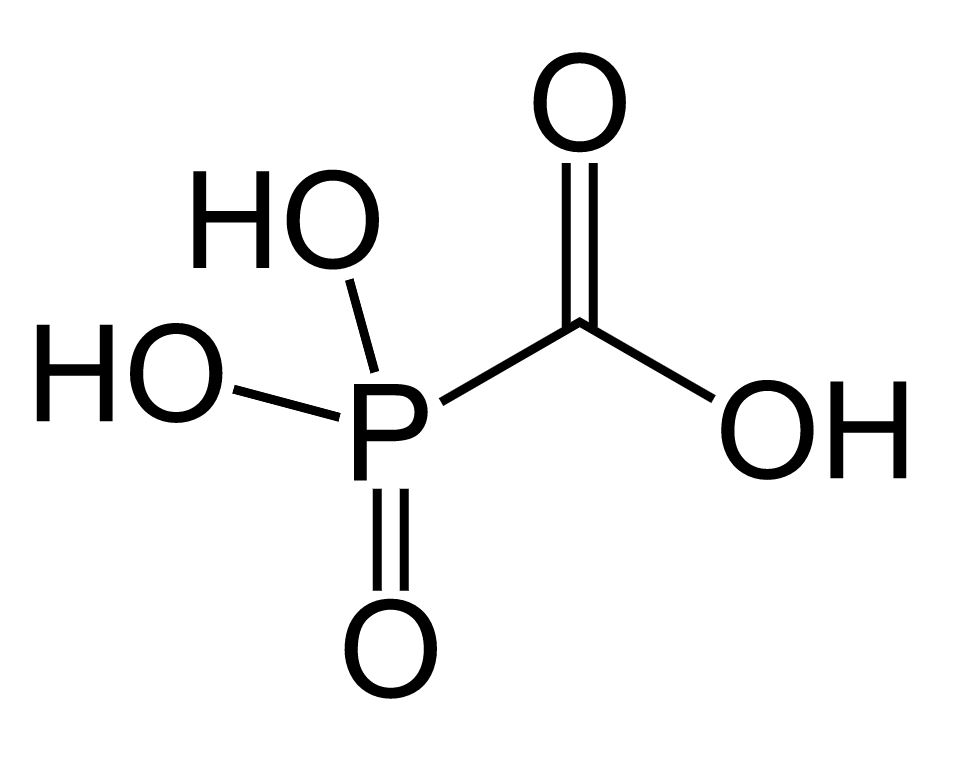
Estrutura química

Foscarnet Foscarnet An antiviral agent used in the treatment of cytomegalovirus retinitis. Foscarnet also shows activity against human herpesviruses and HIV. Antivirals for Herpes Virus é um análogo de pirofosfato.
Farmacodinâmica

  • Inibe a síntese do ácido nucleico viral:
    • Impede a fosforilação intracelular, necessária para a atividade antiviral Antiviral Antivirals for Hepatitis B
    • Liga-se reversivelmente ao local de ligação do pirofosfato da DNA DNA A deoxyribonucleotide polymer that is the primary genetic material of all cells. Eukaryotic and prokaryotic organisms normally contain DNA in a double-stranded state, yet several important biological processes transiently involve single-stranded regions. DNA, which consists of a polysugar-phosphate backbone possessing projections of purines (adenine and guanine) and pyrimidines (thymine and cytosine), forms a double helix that is held together by hydrogen bonds between these purines and pyrimidines (adenine to thymine and guanine to cytosine). DNA Types and Structure polimerase viral (ou transcriptase reversa)
    • Inibe a clivagem do pirofosfato pelos desoxinucleotídeos trifosfato → interrompe o alongamento da cadeia de DNA DNA A deoxyribonucleotide polymer that is the primary genetic material of all cells. Eukaryotic and prokaryotic organisms normally contain DNA in a double-stranded state, yet several important biological processes transiently involve single-stranded regions. DNA, which consists of a polysugar-phosphate backbone possessing projections of purines (adenine and guanine) and pyrimidines (thymine and cytosine), forms a double helix that is held together by hydrogen bonds between these purines and pyrimidines (adenine to thymine and guanine to cytosine). DNA Types and Structure
  • Mecanismo de resistência: mutações pontuais na DNA DNA A deoxyribonucleotide polymer that is the primary genetic material of all cells. Eukaryotic and prokaryotic organisms normally contain DNA in a double-stranded state, yet several important biological processes transiently involve single-stranded regions. DNA, which consists of a polysugar-phosphate backbone possessing projections of purines (adenine and guanine) and pyrimidines (thymine and cytosine), forms a double helix that is held together by hydrogen bonds between these purines and pyrimidines (adenine to thymine and guanine to cytosine). DNA Types and Structure polimerase viral

Farmacocinética

  • Absorção:
    • Biodisponibilidade oral baixa
    • Formulação IV
  • Distribuição:
    • Níveis vítreos semelhantes ao plasma Plasma The residual portion of blood that is left after removal of blood cells by centrifugation without prior blood coagulation. Transfusion Products
    • Os níveis do LCR aproximam-se de 66% do plasma Plasma The residual portion of blood that is left after removal of blood cells by centrifugation without prior blood coagulation. Transfusion Products.
  • Metabolismo: minimamente metabolizado
  • Excreção:
    • Secreção tubular e filtração glomerular
    • Aproximadamente 20% do foscarnet Foscarnet An antiviral agent used in the treatment of cytomegalovirus retinitis. Foscarnet also shows activity against human herpesviruses and HIV. Antivirals for Herpes Virus pode ser absorvido pelo osso.
    • Excreção diminuída nos indivíduos com doença renal

Indicações

  • Infeções por CMV resistentes ao ganciclovir Ganciclovir An acyclovir analog that is a potent inhibitor of the herpesvirus family including cytomegalovirus. Ganciclovir is used to treat complications from aids-associated cytomegalovirus infections. Antivirals for Herpes Virus (SIDA ou recetores de transplante)
  • Infeções mucocutâneas por VHS resistentes ao aciclovir

Efeitos adversos e contraindicações

  • Efeitos adversos:
    • Nefrotoxicidade (atenuada com administração de solução salina IV)
    • Hipocalcemia, hipomagnesemia e hipocaliemia
    • Formação de úlceras genitais
    • Neurológicas:
      • Convulsões
      • Parestesias
      • Irritabilidade
      • Cefaleia
      • Alucinações
    • Prolongamento do intervalo QT
  • Contraindicações: hipersensibilidade ao foscarnet Foscarnet An antiviral agent used in the treatment of cytomegalovirus retinitis. Foscarnet also shows activity against human herpesviruses and HIV. Antivirals for Herpes Virus

Agentes Não Sistémicos

Docosanol

  • Álcool alifático saturado de 22 carbonos
  • Inibe a fusão entre a membrana plasmática da célula hospedeira e o envelope Envelope Bilayer lipid membrane acquired by viral particles during viral morphogenesis. Although the lipids of the viral envelope are host derived, various virus-encoded integral membrane proteins, i.e. Viral envelope proteins are incorporated there. Virology do VHS → impede a entrada do vírus nas células
  • Creme tópico de docosanol 10%:
    • Venda livre
    • Reduz o tempo de cicatrização se aplicado dentro de 12 horas desde o início dos sintomas prodrómicos

Trifluridina

  • Trifluorotimidina
  • Mecanismo de ação:
    • Inibição da síntese do DNA DNA A deoxyribonucleotide polymer that is the primary genetic material of all cells. Eukaryotic and prokaryotic organisms normally contain DNA in a double-stranded state, yet several important biological processes transiently involve single-stranded regions. DNA, which consists of a polysugar-phosphate backbone possessing projections of purines (adenine and guanine) and pyrimidines (thymine and cytosine), forms a double helix that is held together by hydrogen bonds between these purines and pyrimidines (adenine to thymine and guanine to cytosine). DNA Types and Structure viral (VHS-1, VHS-2, CMV)
    • Sofre fosforilação intracelular por enzimas da célula hospedeira → compete com o trifosfato de timidina pela DNA DNA A deoxyribonucleotide polymer that is the primary genetic material of all cells. Eukaryotic and prokaryotic organisms normally contain DNA in a double-stranded state, yet several important biological processes transiently involve single-stranded regions. DNA, which consists of a polysugar-phosphate backbone possessing projections of purines (adenine and guanine) and pyrimidines (thymine and cytosine), forms a double helix that is held together by hydrogen bonds between these purines and pyrimidines (adenine to thymine and guanine to cytosine). DNA Types and Structure polimerase do vírus
  • 1% solução:
    • Tratamento da queratoconjuntivite e queratite epitelial recorrente por VHS-1 ou VHS-2
    • Uso off-label: aplicação tópica em infeções por VHS resistentes ao aciclovir

Comparação de Fármacos

Tabela: Comparação de fármacos
Agente antiviral Antiviral Antivirals for Hepatitis B Mecanismo de ação Indicações Efeitos adversos principais
Aciclovir (análogo de nucleosídeo) Inibidor da polimerase que requer fosforilação pela enzima quinase viral
  • VHS-1
  • VHS-2
  • VZV
Lesão renal aguda (nefropatia obstrutiva)
Cidofovir Cidofovir An acyclic nucleoside phosphonate that acts as a competitive inhibitor of viral DNA polymerases. It is used in the treatment of retinitis caused by cytomegalovirus infections and may also be useful for treating herpesvirus infections. Antivirals for Herpes Virus (análogo de nucleótido) Inibidor da polimerase que requer fosforilação pela quinase hospedeira (e não quinase viral) Aprovado no tratamento de retinite por CMV com atividade contra outros vírus* Nefrotoxicidade (risco diminuído com administração de solução salina IV e probenecid Probenecid The prototypical uricosuric agent. It inhibits the renal excretion of organic anions and reduces tubular reabsorption of urate. Probenecid has also been used to treat patients with renal impairment, and, because it reduces the renal tubular excretion of other drugs, has been used as an adjunct to antibacterial therapy. Gout Drugs)
Foscarnet Foscarnet An antiviral agent used in the treatment of cytomegalovirus retinitis. Foscarnet also shows activity against human herpesviruses and HIV. Antivirals for Herpes Virus (análogo de pirofosfato) Inibidor da polimerase que não requer fosforilação CMV e VHS resistentes
  • Nefrotoxicidade
  • Distúrbios hidroeletrolíticos
  • Convulsões
*Herpesvírus, adenovírus, poliomavírus, papilomavírus, poxvírus, HSV TK-negativo, CMV UL97 fosfotransferase-negativo

Referências

  1. Acosta, E.P. (2017). Antiviral agents (nonretroviral). In Brunton L.L., & Hilal-Dandan R., & Knollmann B.C.(Eds.), Goodman & Gilman’s: The Pharmacological Basis of Therapeutics, 13e. McGraw-Hill. https://accessmedicine.mhmedical.com/content.aspx?bookid=2189&sectionid=172486085
  2. National Institute of Diabetes and Digestive and Kidney Diseases. (2016). Acyclovir. LiverTox: Clinical and Research Information on Drug-Induced Liver Injury. https://www.ncbi.nlm.nih.gov/books/NBK548548/
  3. Rodriguez, M., Zachary, K.C. (2024). Foscarnet: An Overview. UpToDate. Retrieved November 11, 2025, from https://www.uptodate.com/contents/foscarnet-an-overview
  4. Rodriguez, M., Zachary, K. (2025). Cidofovir: an overview. UpToDate. Retrieved November 11, 2025, from https://www.uptodate.com/contents/cidofovir-an-overview
  5. Ryan, K. J. (Ed.). (2017). Sherris Medical Microbiology. Seventh edition, McGraw-Hill.
  6. Safrin, S. (2021). Antiviral agents. In Katzung B.G., & Vanderah T.W.(Eds.), Basic & Clinical Pharmacology, 15e. McGraw-Hill. https://accessmedicine.mhmedical.com/content.aspx?bookid=2988&sectionid=250602382
  7. Salvaggio, M., Gnann, J. (2017). Drugs for Herpesvirus Infections. In Cohen, J., Powderly, W., Opal, S.(Eds), Infectious Diseases (Fourth Edition, pp.1309-1317), Elsevier. https://doi.org/10.1016/B978-0-7020-6285-8.00153-2
  8. Zachary, K. (2025). Famciclovir: an overview. UpToDate. Retrieved November 11, 2025, from https://www.uptodate.com/contents/famciclovir-an-overview
  9. Zachary, K. (2024). Ganciclovir and valganciclovir: an overview. UpToDate. Retrieved November 11, 2025, from https://www.uptodate.com/contents/ganciclovir-and-valganciclovir-an-overview

Crie sua conta gratuita ou faça login para continuar lendo!

Cadastre-se agora e tenha acesso grátis ao Lecturio, com páginas de conceitos, vídeos de medicina e questões para sua educação médica.

Aprende mais com a Lecturio:

Multiple devices displaying human anatomy and health education content.

Complementa o teu estudo da faculdade com o companheiro de estudo tudo-em-um da Lecturio, através de métodos de ensino baseados em evidência.

Estuda onde quiseres

Two iPhones display medical education apps, one showing anatomy, the other Bookmatcher.

A Lecturio Medical complementa o teu estudo através de métodos de ensino baseados em evidência, vídeos de palestras, perguntas e muito mais – tudo combinado num só lugar e fácil de usar.

User Reviews

Have a holly, jolly study session 🎁 Save 50% on all plans now >>

Que tengas una sesión de estudio alegre y navideña 🎁 Ahorra 50% en todos los planes >>

Details