
Treponema Treponema Treponema is a gram-negative, microaerophilic spirochete. Owing to its very thin structure, it is not easily seen on Gram stain, but can be visualized using dark-field microscopy. This spirochete contains endoflagella, which allow for a characteristic corkscrew movement. Treponema es una espiroqueta microaerófila gram-negativa. Debido a su estructura muy delgada, no se ve VE Ventilation: Mechanics of Breathing fácilmente en EN Erythema nodosum is an immune-mediated panniculitis (inflammation of the subcutaneous fat) caused by a type IV (delayed-type) hypersensitivity reaction. It commonly manifests in young women as tender, erythematous nodules on the shins. Erythema Nodosum la tinción de Gram, pero se puede visualizar mediante microscopía de campo oscuro. Esta espiroqueta contiene endoflagelos, que permiten un movimiento característico de sacacorchos. Las bacterias pueden evitar el reconocimiento inmunológico y la fagocitosis formando una capa protectora con fibronectina. Los LOS Neisseria seres humanos son el único reservorio y la transmisión es a través del contacto de persona a persona. La especie más común involucrada en EN Erythema nodosum is an immune-mediated panniculitis (inflammation of the subcutaneous fat) caused by a type IV (delayed-type) hypersensitivity reaction. It commonly manifests in young women as tender, erythematous nodules on the shins. Erythema Nodosum enfermedad humana es Treponema pallidum Treponema pallidum The causative agent of venereal and non-venereal syphilis as well as yaws. Treponema subespecie pallidum, que es el agente causal de la sífilis. Otras especies clínicamente relevantes incluyen T. pallidum pertenue T. pallidum pertenue Treponema, T. pallidum endemicum T. pallidum endemicum Treponema y T. carateum T. carateum Treponema. Estos son los LOS Neisseria organismos causantes de pian, bejel Bejel Yaws, bejel, and pinta are endemic, nonvenereal treponematoses. The causative organisms are Treponema pallidum pertenue (yaws), T. pallidum endemicum (bejel), and T. carateum (pinta). These treponematoses are generally transmitted by direct skin-to-skin contact with infected skin lesions. Yaws, Bejel, and Pinta y pinta Pinta An infectious disease of the skin caused by treponema carateum that occurs only in the Western hemisphere. Age of onset is between 10 and 20 years of age. This condition is characterized by marked changes in the skin color and is believed to be transmitted by direct person-to-person contact. Yaws, Bejel, and Pinta, respectivamente.
Last updated: Dec 15, 2025
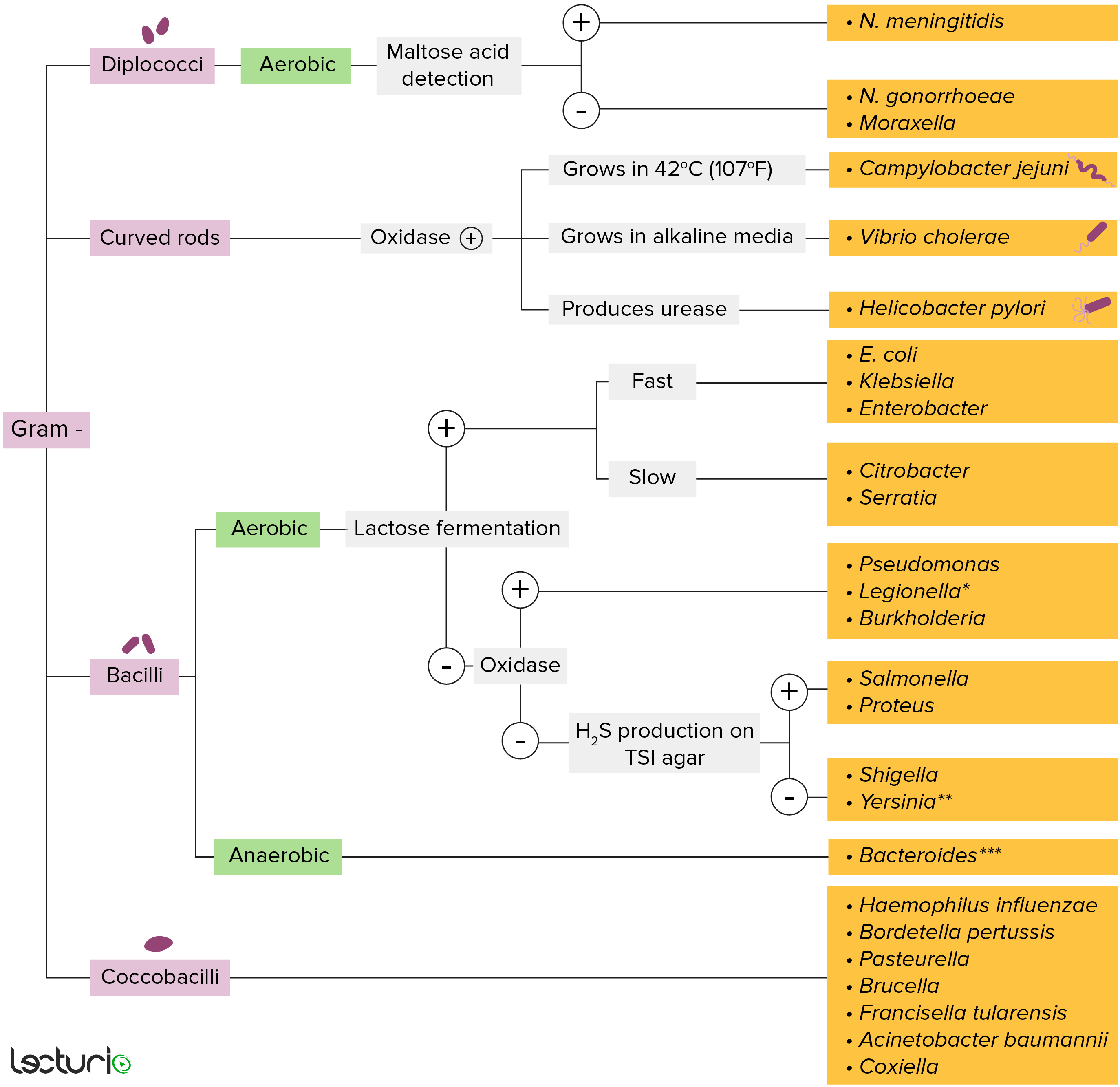
Bacterias gram-negativas:
La mayoría de las bacterias se pueden clasificar de acuerdo con un procedimiento de laboratorio llamado tinción de Gram.
Las bacterias con paredes celulares que tienen una capa delgada de peptidoglicano no retienen la tinción de cristal violeta utilizada en la tinción de Gram. Sin embargo, estas bacterias retienen la contratinción de safranina y, por lo tanto, aparecen de color rojo/rosado en la tinción, lo que las convierte en gram-negativas. Estas bacterias pueden clasificarse además según su morfología (diplococos, bastones curvos, bacilos y cocobacilos) y su capacidad para crecer en presencia de oxígeno (aeróbicos frente a anaeróbicos). Las bacterias se pueden identificar de manera más estrecha cultivándolas en medios específicos (agar de hierro y triple azúcar (TSI, por sus siglas en inglés)) donde se pueden identificar sus enzimas (ureasa, oxidasa) y se puede probar su capacidad para fermentar lactosa.
* Se tiñe con deficiencia en la tinción de Gram.
** Bastón pleomórfico/cocobacilo
*** Requiere medios de transporte especiales.
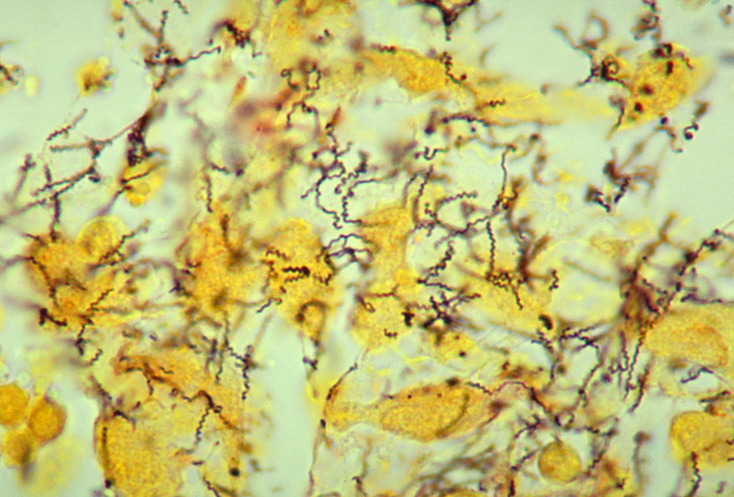
Espiroquetas de Treponema pallidum en una muestra usando una tinción de plata de Steiner modificada
Imagen: “Treponema pallidum 01” por el Dr. Edwin P. Ewing, Jr. Licencia: Dominio Público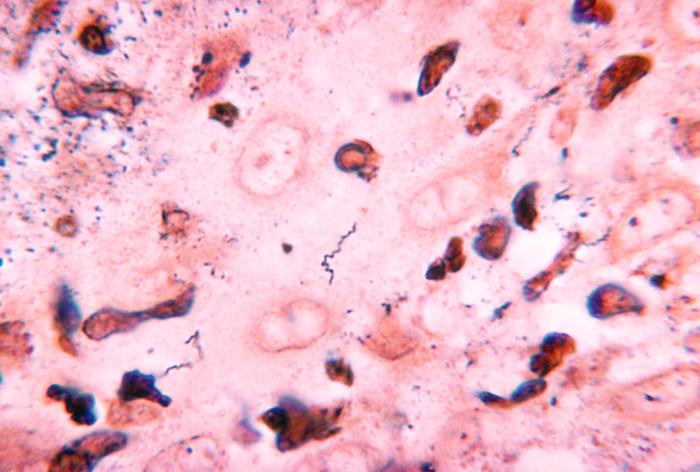
Una muestra de tejido que enseña numerosas Treponema carateum delgadas y en forma de espiral.
Imagen: “2900” por CDC. Licencia: Dominio Público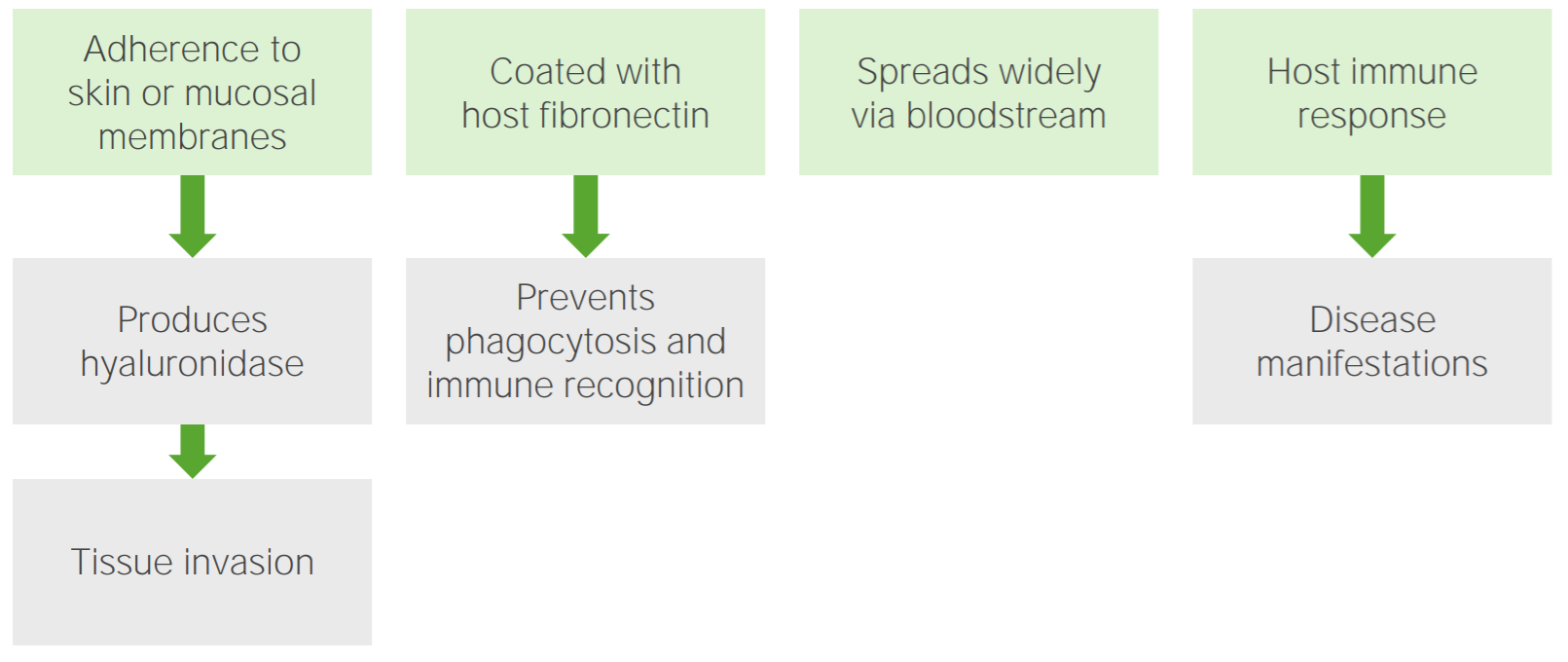
Patogénesis de las infecciones por Treponema
El patógeno se adhiere a la piel o a las membranas mucosas, lo que lleva a la producción de hialuronidasa que permite la invasión de tejidos. El patógeno se recubre a sí mismo con la fibronectina del huésped, lo que evita su fagocitosis y reconocimiento por parte del sistema inmunitario. En consecuencia, el patógeno se disemina a través del torrente sanguíneo. En última instancia, se produce una respuesta inmunitaria del huésped, que provoca manifestaciones de la enfermedad.
La enfermedad treponémica más común causada por T. pallidum pallidum:
| Estadío | Sífilis primaria | Sífilis secundaria | Sífilis terciaria | Sífilis congénita |
|---|---|---|---|---|
| Transmisión | Contacto sexual | Contacto de la piel con erupción diseminada | Los LOS Neisseria pacientes no son contagiosos en EN Erythema nodosum is an immune-mediated panniculitis (inflammation of the subcutaneous fat) caused by a type IV (delayed-type) hypersensitivity reaction. It commonly manifests in young women as tender, erythematous nodules on the shins. Erythema Nodosum esta etapa. | Placentario, durante el primer trimestre |
| Síntomas | Enfermedad localizada:
|
Enfermedad sistémica:
|
Enfermedad sistémica:
|
|
| Diagnóstico |
|
|||
| Tratamiento |
|
|||
| Prevención |
|
Las madres son examinadas y tratadas durante el embarazo. | ||
CN, por sus siglas en inglés: nervio craneal
VDRL, por sus siglas en inglés: prueba de enfermedades venéreas de laboratorios de investigación
RPR: prueba rápida de reagina plasmática
FTA-ABS, por sus siglas en inglés: prueba de absorción de anticuerpos treponémicos fluorescentes
MHA-TP, por sus siglas en inglés: prueba de microhemaglutinación
PCR: reacción en cadena de la polimerasa
LCR: líquido cefalorraquídeo
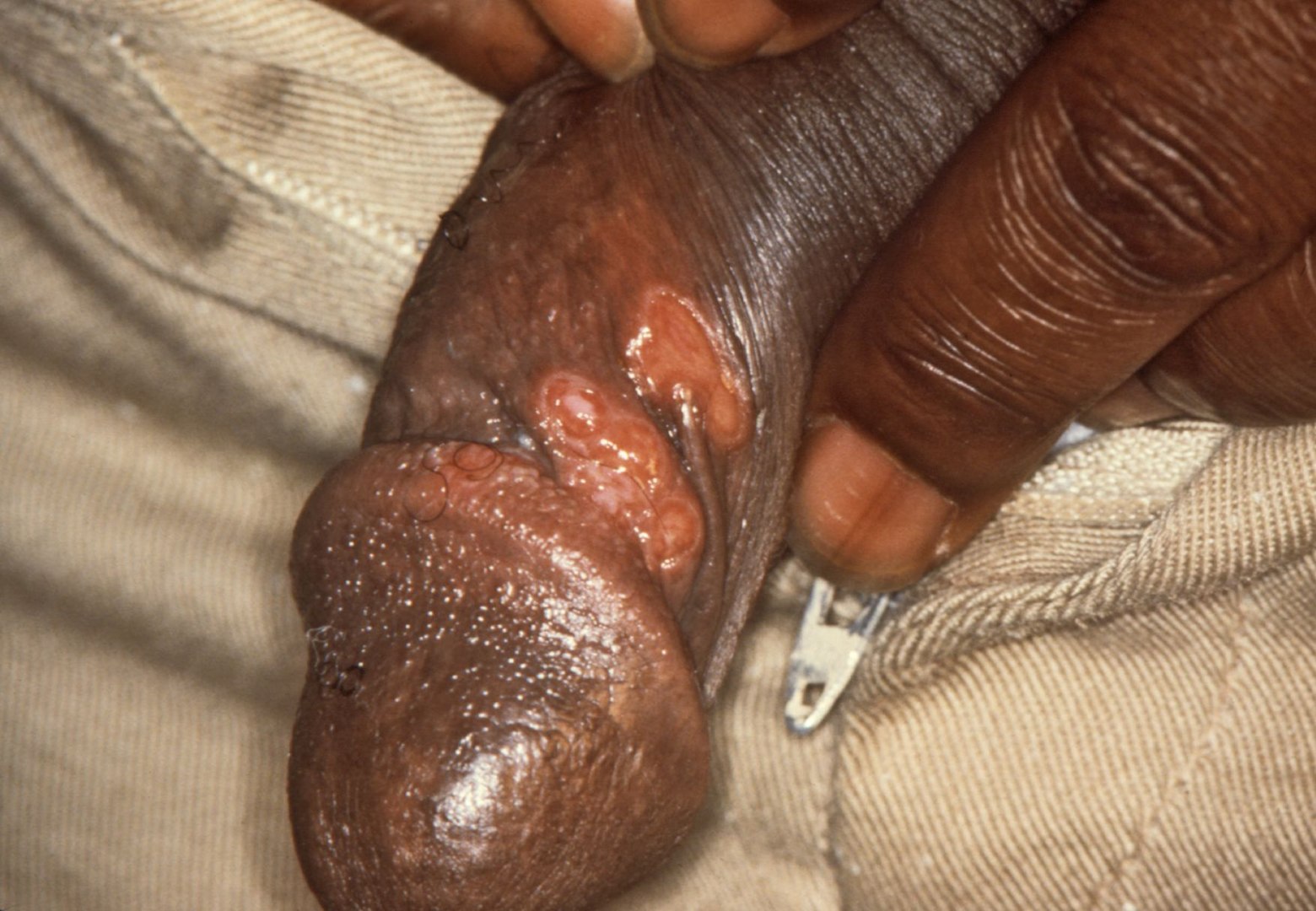
Chancro primario e indoloro de la sífilis (infección por Treponema pallidum pallidum)
Imagen: “Chancres on the penile shaft due to a primary syphilitic infection caused by Treponema pallidum 6803 lores” por M. Rein. Licencia: Dominio PúblicoLas especies menos comunes de Treponema Treponema Treponema is a gram-negative, microaerophilic spirochete. Owing to its very thin structure, it is not easily seen on Gram stain, but can be visualized using dark-field microscopy. This spirochete contains endoflagella, which allow for a characteristic corkscrew movement. Treponema y sus enfermedades están resumidas a continuación:
| Enfermedad | Pian | Bejel Bejel Yaws, bejel, and pinta are endemic, nonvenereal treponematoses. The causative organisms are Treponema pallidum pertenue (yaws), T. pallidum endemicum (bejel), and T. carateum (pinta). These treponematoses are generally transmitted by direct skin-to-skin contact with infected skin lesions. Yaws, Bejel, and Pinta (sífilis endémica) | Pinta Pinta An infectious disease of the skin caused by treponema carateum that occurs only in the Western hemisphere. Age of onset is between 10 and 20 years of age. This condition is characterized by marked changes in the skin color and is believed to be transmitted by direct person-to-person contact. Yaws, Bejel, and Pinta |
|---|---|---|---|
| Especies asociadas | T. pallidum pertenue T. pallidum pertenue Treponema | T. pallidum endemicum T. pallidum endemicum Treponema | T. carateum T. carateum Treponema |
| Transmisión |
|
|
|
| Ubicaciones predominantes | Regiones tropicales:
|
Regiones desérticas:
|
Regiones tropicales: América Central y del Sur |
| Grupo demográfico primario | Niños | Niños | Adultos |
| Manifestaciones clínicas | Fase primaria: lesión de papiloma amarilla e indolora
en
EN
Erythema nodosum is an immune-mediated panniculitis (inflammation of the subcutaneous fat) caused by a type IV (delayed-type) hypersensitivity reaction. It commonly manifests in young women as tender, erythematous nodules on the shins.
Erythema Nodosum las extremidades inferiores Fase secundaria:
|
Fase primaria: pequeña pápula primaria
en
EN
Erythema nodosum is an immune-mediated panniculitis (inflammation of the subcutaneous fat) caused by a type IV (delayed-type) hypersensitivity reaction. It commonly manifests in young women as tender, erythematous nodules on the shins.
Erythema Nodosum la mucosa oral Fase secundaria:
|
Fase primaria:
Fase terciaria:
|
| Diagnóstico | Dado que estas especies treponémicas son morfológicamente indistinguibles, el diagnóstico se basa
en
EN
Erythema nodosum is an immune-mediated panniculitis (inflammation of the subcutaneous fat) caused by a type IV (delayed-type) hypersensitivity reaction. It commonly manifests in young women as tender, erythematous nodules on the shins.
Erythema Nodosum:
|
||
| Tratamiento |
|
||
VDRL, por sus siglas en inglés: prueba de enfermedades venéreas de laboratorios de investigación
FTA-ABS, por sus siglas en inglés: prueba de absorción de anticuerpos treponémicos fluorescentes
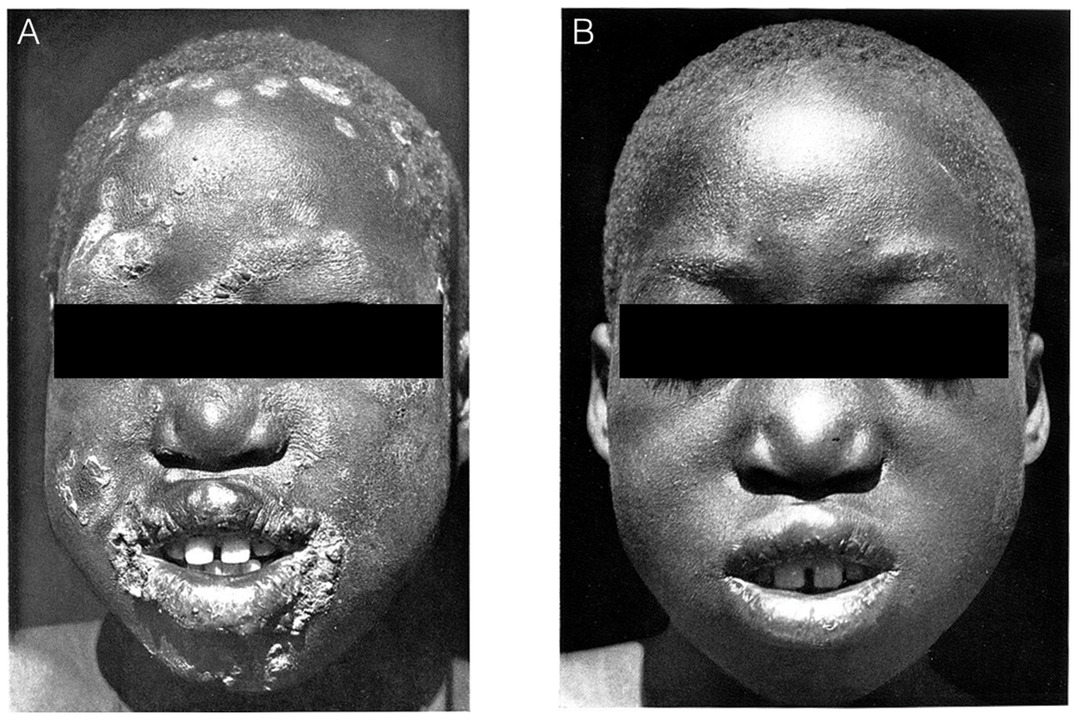
Manifestación cutánea de pian
(A) Paciente con lesiones en la cara por Treponema pallidum pertenue
(B) Resolución de las lesiones tras tratamiento con penicilina
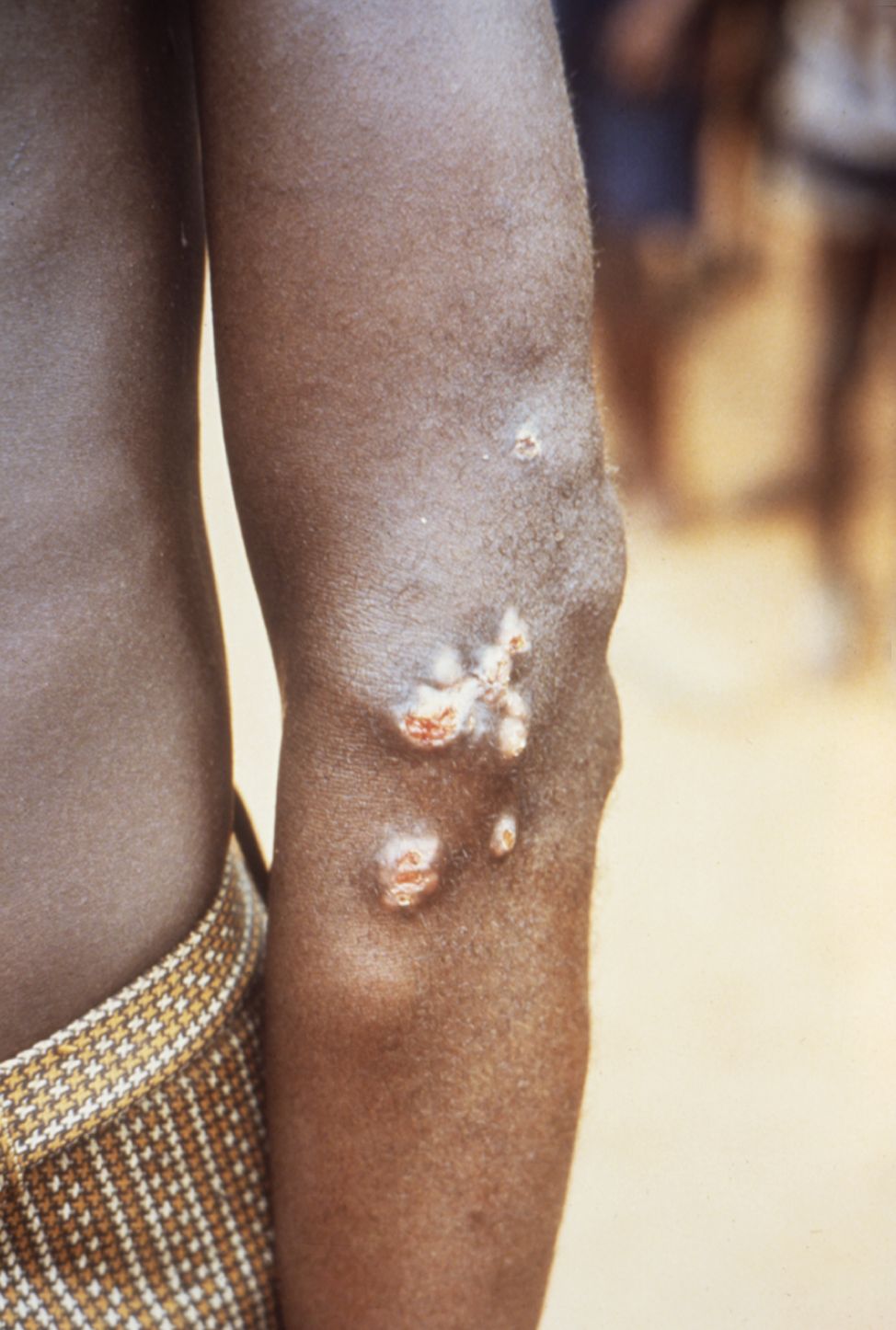
Manifestación cutánea de pian
Lesiones cutáneas yuxtaarticulares y nódulos en el codo como resultado de una infección por Treponema pallidum pertenue
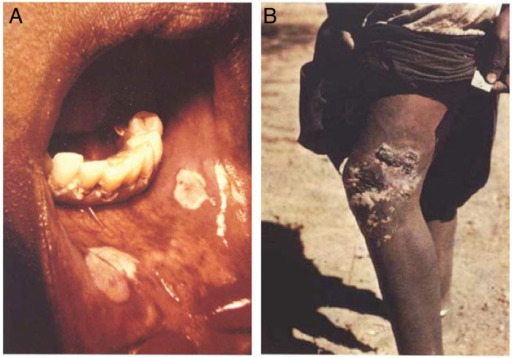
Lesiones mucocutáneas de bejel (sífilis endémica)
A: una lesión oral de bejel primario resultante de una infección por Treponema pallidum endemicum
B: lesión cutánea crónica de bejel secundario
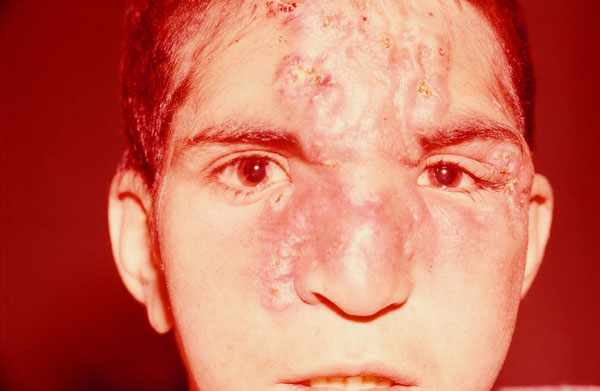
Lesiones gomatosas de bejel en etapa tardía (infección por Treponema pallidum endemicum)
Imagen: “Infiltration of skin due to endemic syphilis” por Alireza Abdolrasouli, Adam Croucher, Yahya Hemmati, and David Mabey. Licencia: Dominio Público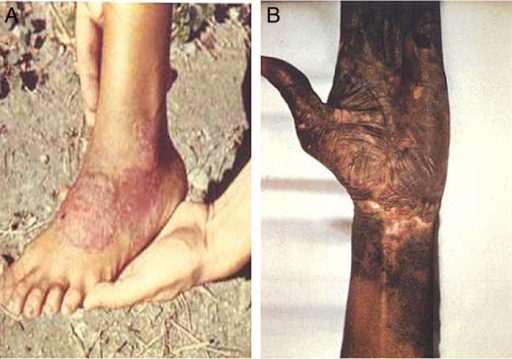
Lesiones cutáneas de pinta (infección por Treponema carateum)
(A) Placa eritematosa de pinta temprana
(B) Decoloración de la piel de la pinta tardía
Las espiroquetas son gram-negativas, en EN Erythema nodosum is an immune-mediated panniculitis (inflammation of the subcutaneous fat) caused by a type IV (delayed-type) hypersensitivity reaction. It commonly manifests in young women as tender, erythematous nodules on the shins. Erythema Nodosum forma de espiral y móviles. La siguiente tabla compara brevemente algunas espiroquetas clínicamente relevantes:
| Organismo | Treponema pallidum Treponema pallidum The causative agent of venereal and non-venereal syphilis as well as yaws. Treponema pallidum | Otras subespecies de T. pallidum | Treponema carateum Treponema carateum Treponema | Borrelia Borrelia Borrelia are gram-negative microaerophilic spirochetes. Owing to their small size, they are not easily seen on Gram stain but can be visualized using dark-field microscopy, Giemsa, or Wright stain. Spirochetes are motile and move in a characteristic spinning fashion due to axial filaments in the periplasmic space. Borrelia burgdorfi | Borrelia Borrelia Borrelia are gram-negative microaerophilic spirochetes. Owing to their small size, they are not easily seen on Gram stain but can be visualized using dark-field microscopy, Giemsa, or Wright stain. Spirochetes are motile and move in a characteristic spinning fashion due to axial filaments in the periplasmic space. Borrelia recurrente | Leptospira interrogans Leptospira interrogans A genus of question mark-shaped bacteria spirochetes which is found in freshwater that is contaminated by animal urine. It causes leptospirosis. Leptospira/Leptospirosis |
|---|---|---|---|---|---|---|
| Microscopía |
|
|
|
|
|
|
| Virulencia |
|
|
|
|
Variación antigénica |
|
| Reservorio | Humanos | Humanos | Humanos |
|
Humanos |
|
| Transmisión | Contacto sexual | Contacto persona a persona | Contacto persona a persona | Garrapata Ixodes | Piojo | Contacto directo con tejidos o fluidos animales |
| Clínico | Sífilis |
|
Pinta Pinta An infectious disease of the skin caused by treponema carateum that occurs only in the Western hemisphere. Age of onset is between 10 and 20 years of age. This condition is characterized by marked changes in the skin color and is believed to be transmitted by direct person-to-person contact. Yaws, Bejel, and Pinta | Enfermedad de Lyme | Fiebre recurrente |
|
| Diagnóstico |
|
Análisis de frotis de sangre |
|
|||
| Tratamiento |
|
|
|
|
|
|
OSP, por sus siglas en inglés: proteína de superficie externa
LPS: lipopolisacárido
Microaero: microaerofílico
VDRL, por sus siglas en inglés: prueba de enfermedades venéreas de laboratorio de investigación
FTA-ABS, por sus siglas en inglés: absorción de anticuerpos treponémicos fluorescentes
ELISA, por sus siglas en inglés: ensayo inmunoabsorbente ligado a enzimas
PCR: reacción en cadena de la polimerasa
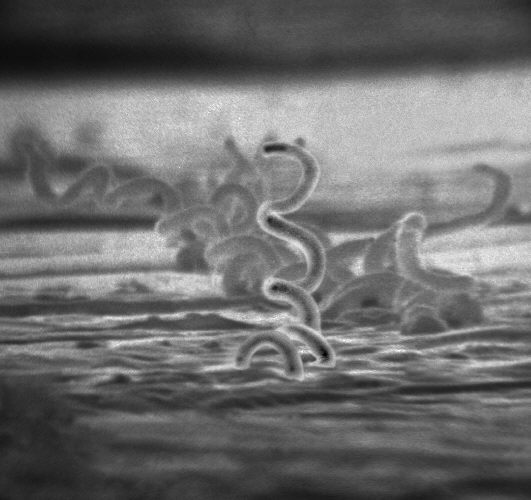
Comparación visual de espiroquetas en micrografía electrónica: espirales gruesas de Treponema
Imagen: “Treponema pallidum” por el Dr. David Cox. Licencia: Dominio Público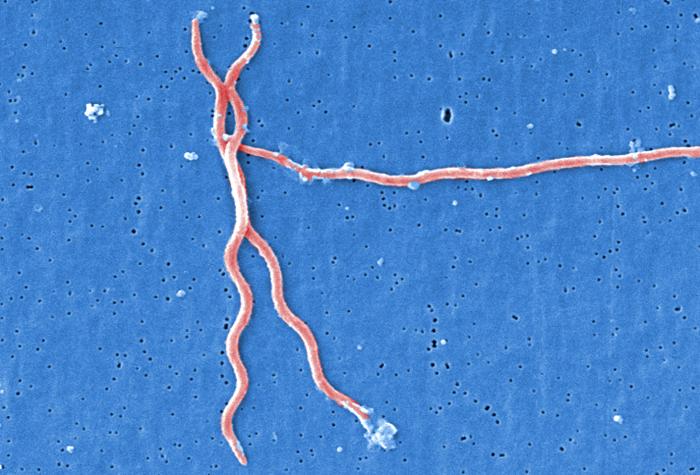
Comparación visual de espiroquetas en micrografía electrónica: Borrelia, que son más grandes que Treponema
Imagen: “Lyme disease parasite Borrelia burgdorfer” por Claudia Molins. Licencia: Dominio Público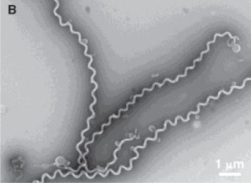
Comparación visual de espiroquetas en micrografía electrónica: extremos ganchudos de Leptospira
Imagen: “A filtration-based technique for simultaneous SEM and TEM sample preparation for the rapid detection of pathogens” por Beniac DR, Siemens CG, Wright CJ, Booth TF. Licencia: CC BY 3.0 , editado por Lecturio.