
Domina Conceptos Médicos

Estudia para la escuela de medicina y tus examenes con Lecturio.

Síndrome de Guillain-Barré

El síndrome de Guillain-Barré, el cual alguna vez se pensó que era un proceso de una sola enfermedad, es una familia de polineuropatías inmunomediadas que ocurren después de infecciones (e.g., con Campylobacter jejuni Campylobacter jejuni A species of bacteria that resemble small tightly coiled spirals. Its organisms are known to cause abortion in sheep and fever and enteritis in man and may be associated with enteric diseases of calves, lambs, and other animals. Campylobacter). El síndrome de Guillain-Barré típico se caracteriza por una parálisis neuromuscular monofásica aguda, simétrica y de progresión ascendente. Si la parálisis alcanza los LOS Neisseria músculos respiratorios, el síndrome de Guillain-Barré puede progresar a insuficiencia respiratoria, lo que requiere una hospitalización prolongada. El tratamiento es principalmente de soporte y puede requerir plasmaféresis o inmunoglobulina IV.

Last updated: Dec 15, 2025
Editorial responsibility: Stanley Oiseth, Lindsay Jones, Evelin Maza

Descripción General

Definición

  • El síndrome de Guillain-Barré es una polineuropatía inmunomediada del sistema nervioso periférico. Esta condición puede ocurrir después de una infección.
  • Infecciones causales conocidas:
    • Campylobacter jejuni Campylobacter jejuni A species of bacteria that resemble small tightly coiled spirals. Its organisms are known to cause abortion in sheep and fever and enteritis in man and may be associated with enteric diseases of calves, lambs, and other animals. Campylobacter (agente más comúnmente identificado)
    • Citomegalovirus
    • Mycoplasma pneumoniae Mycoplasma pneumoniae Short filamentous organism of the genus mycoplasma, which binds firmly to the cells of the respiratory epithelium. It is one of the etiologic agents of non-viral primary atypical pneumonia in man. Mycoplasma
    • Virus Virus Viruses are infectious, obligate intracellular parasites composed of a nucleic acid core surrounded by a protein capsid. Viruses can be either naked (non-enveloped) or enveloped. The classification of viruses is complex and based on many factors, including type and structure of the nucleoid and capsid, the presence of an envelope, the replication cycle, and the host range. Virology de Epstein Barr
    • Virus Virus Viruses are infectious, obligate intracellular parasites composed of a nucleic acid core surrounded by a protein capsid. Viruses can be either naked (non-enveloped) or enveloped. The classification of viruses is complex and based on many factors, including type and structure of the nucleoid and capsid, the presence of an envelope, the replication cycle, and the host range. Virology del Zika Zika Zika virus belongs to the genus Flavivirus and is primarily transmitted by Aedes aegypti mosquitoes, but can also be transmitted sexually and transplacentally. Although most infected patients are asymptomatic, some may present with low-grade fever, pruritic rash, and conjunctivitis. Zika Virus Infection
    • Vacunas (e.g., vacuna contra la gripe)
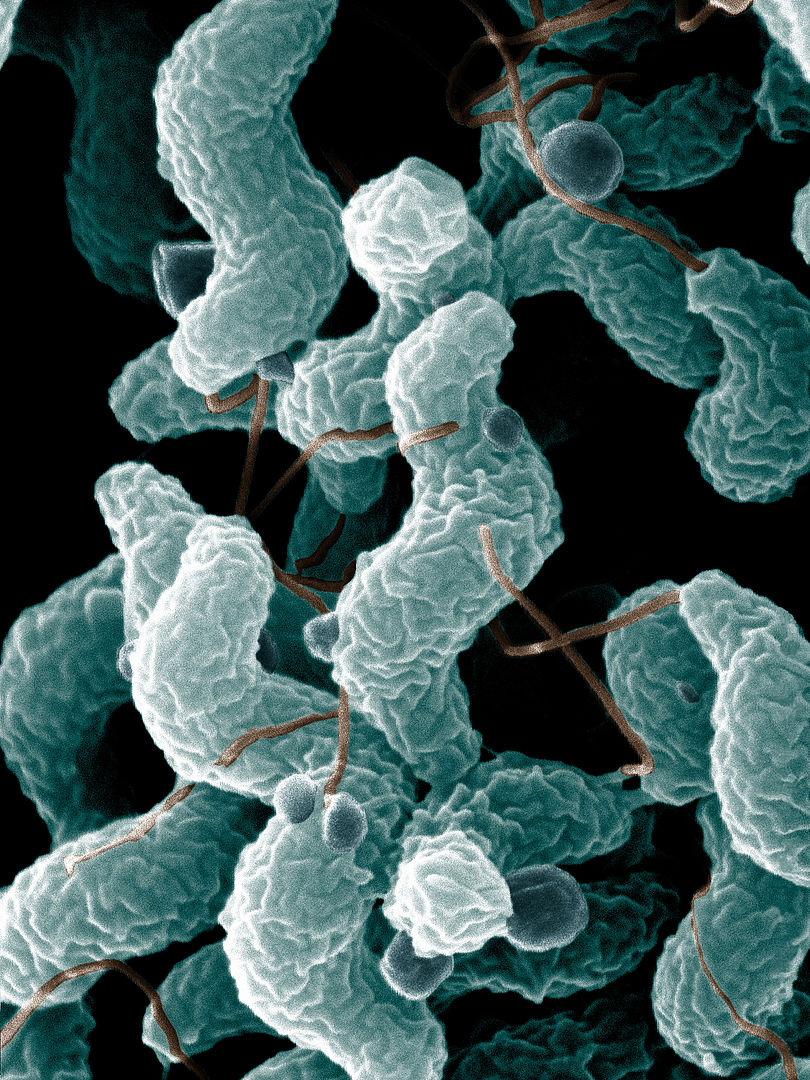
ARS Campylobacter jejuni

Campylobacter jejuni
Esta micrografía electrónica de barrido muestra el organismo en forma de S con un único flagelo polar.

Imagen: “ARS Campylobacter jejuni” por De Wood, Pooley. Licencia: Dominio Público

Epidemiología

  • Incidencia: 1–2 casos por cada 100 000 personas-año
  • Causa más frecuente de parálisis flácida aguda
  • Mayor prevalencia en EN Erythema nodosum is an immune-mediated panniculitis (inflammation of the subcutaneous fat) caused by a type IV (delayed-type) hypersensitivity reaction. It commonly manifests in young women as tender, erythematous nodules on the shins. Erythema Nodosum hombres que mujeres
  • La incidencia aumenta con la edad.

Fisiopatología

  • Mimetismo molecular:
    • La infección desencadena una respuesta inmunitaria normal.
    • Antígenos infecciosos no identificados crean autoanticuerpos que atacan gangliósidos de la vaina de mielina axonal.
    • Se forma un complejo de ataque a la membrana en EN Erythema nodosum is an immune-mediated panniculitis (inflammation of the subcutaneous fat) caused by a type IV (delayed-type) hypersensitivity reaction. It commonly manifests in young women as tender, erythematous nodules on the shins. Erythema Nodosum la superficie de las células de Schwann.
    • Los LOS Neisseria macrófagos se dirigen a la mielina.
    • Se produce polineuropatía desmielinizante inflamatoria.
  • Neuropatía axonal motora:
    • Se forman anticuerpos que se unen a los LOS Neisseria nodos en EN Erythema nodosum is an immune-mediated panniculitis (inflammation of the subcutaneous fat) caused by a type IV (delayed-type) hypersensitivity reaction. It commonly manifests in young women as tender, erythematous nodules on the shins. Erythema Nodosum los LOS Neisseria axones mielinizados.
    • Dependiendo del nodo, pueden ser atacados los LOS Neisseria canales de sodio activados por voltaje o la mielina paranodal.
    • Esto da como resultado una falla en EN Erythema nodosum is an immune-mediated panniculitis (inflammation of the subcutaneous fat) caused by a type IV (delayed-type) hypersensitivity reaction. It commonly manifests in young women as tender, erythematous nodules on the shins. Erythema Nodosum la conducción nerviosa y la subsiguiente debilidad muscular.

Presentación Clínica

Los LOS Neisseria síntomas clínicos varían según el subtipo de síndrome de Guillain-Barré. Las personas pueden tener antecedentes de síntomas respiratorios o gastrointestinales de 1–4 semanas previas a la aparición del síndrome de Guillain-Barré.
Polineuropatía desmielinizante inflamatoria aguda

  • Forma más común de síndrome de Guillain-Barré
  • Parestesia y debilidad simétrica
  • Parálisis flácida ascendente que típicamente comienza en EN Erythema nodosum is an immune-mediated panniculitis (inflammation of the subcutaneous fat) caused by a type IV (delayed-type) hypersensitivity reaction. It commonly manifests in young women as tender, erythematous nodules on the shins. Erythema Nodosum las extremidades inferiores.
  • También suele aparecer disautonomía ( en EN Erythema nodosum is an immune-mediated panniculitis (inflammation of the subcutaneous fat) caused by a type IV (delayed-type) hypersensitivity reaction. It commonly manifests in young women as tender, erythematous nodules on the shins. Erythema Nodosum el 70% de los LOS Neisseria casos), provocando:
    • Diarrea/estreñimiento
    • Bradicardia/taquicardia
    • Retención urinaria
    • Síndrome de Horner
  • Reflejos tendinosos profundos disminuidos o ausentes de las extremidades afectadas
  • La progresión suele producirse en EN Erythema nodosum is an immune-mediated panniculitis (inflammation of the subcutaneous fat) caused by a type IV (delayed-type) hypersensitivity reaction. It commonly manifests in young women as tender, erythematous nodules on the shins. Erythema Nodosum el transcurso de 2 semanas y más del 90 % de los LOS Neisseria pacientes alcanza el nadir (el punto más bajo de la enfermedad) a las 4 semanas.
    • Si la progresión se produce entre 4–8 semanas, se considera polirradiculoneuropatía desmielinizante inflamatoria subaguda (SIDP).
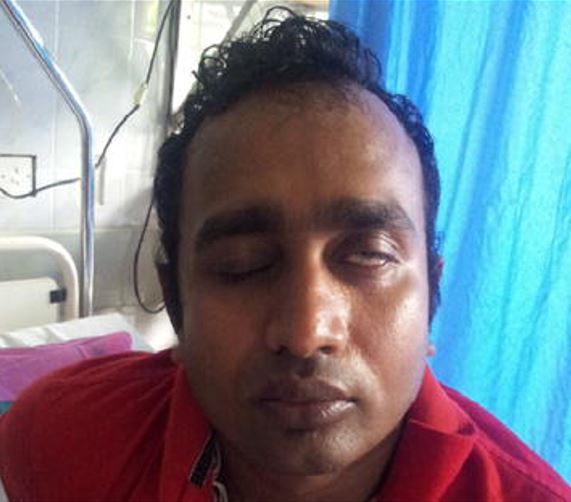
  • Parálisis del nervio craneal: parálisis facial
Parálisis de Bell (parálisis del nervio facial) en un caso de GBS

Síntomas clínicos del síndrome de Guillain-Barré:
Parálisis de Bell (parálisis del nervio facial) en una persona con síndrome de Guillain-Barré después de una infección aguda por dengue

Imagen:  “Second day of illness” por Ralapanawa DM, Kularatne SA, Jayalath WA. Licencia: CC BY 4.0

Neuropatía axonal motora aguda

  • Más comúnmente asociado con la infección por C. jejuni
  • Reflejos tendinosos profundos comúnmente respetados
  • Nervios sensoriales no afectados
  • Otros síntomas similares a la polineuropatía desmielinizante inflamatoria aguda

Neuropatía axonal motora y sensorial aguda

  • Similar a la neuropatía axonal motora aguda, pero más grave
  • Fibras sensoriales y motoras afectadas.
  • Marcada degeneración axonal

Variante de Miller Fisher

  • Una de las principales formas de síndrome de Guillain-Barré
  • Síntomas característicos:
    • Oftalmoplejía
    • Ataxia Ataxia Impairment of the ability to perform smoothly coordinated voluntary movements. This condition may affect the limbs, trunk, eyes, pharynx, larynx, and other structures. Ataxia may result from impaired sensory or motor function. Sensory ataxia may result from posterior column injury or peripheral nerve diseases. Motor ataxia may be associated with cerebellar diseases; cerebral cortex diseases; thalamic diseases; basal ganglia diseases; injury to the red nucleus; and other conditions. Ataxia-telangiectasia
    • Arreflexia
    • Solo ¼ de los LOS Neisseria casos involucran debilidad motora de las extremidades

Encefalitis de Bickerstaff

  • Encefalitis del tronco encefálico
  • Los LOS Neisseria síntomas incluyen:
    • Encefalopatía
    • Hiperreflexia
    • Oftalmoplejía
    • Ataxia Ataxia Impairment of the ability to perform smoothly coordinated voluntary movements. This condition may affect the limbs, trunk, eyes, pharynx, larynx, and other structures. Ataxia may result from impaired sensory or motor function. Sensory ataxia may result from posterior column injury or peripheral nerve diseases. Motor ataxia may be associated with cerebellar diseases; cerebral cortex diseases; thalamic diseases; basal ganglia diseases; injury to the red nucleus; and other conditions. Ataxia-telangiectasia

Debilidad faringocervicobraquial

  • Debilidad de los LOS Neisseria músculos orofaríngeos, cuello y hombros
  • Disfunción de la deglución
  • Debilidad facial
  • Fuerza y reflejos de las extremidades inferiores conservados

Paraparesia

  • Variante leve
  • Debilidad aislada de las extremidades inferiores.
  • Rara en EN Erythema nodosum is an immune-mediated panniculitis (inflammation of the subcutaneous fat) caused by a type IV (delayed-type) hypersensitivity reaction. It commonly manifests in young women as tender, erythematous nodules on the shins. Erythema Nodosum extremidades superiores
  • Reflejos del brazo reducidos o ausentes
  • Estudios electrodiagnósticos de extremidades superiores anormales en EN Erythema nodosum is an immune-mediated panniculitis (inflammation of the subcutaneous fat) caused by a type IV (delayed-type) hypersensitivity reaction. It commonly manifests in young women as tender, erythematous nodules on the shins. Erythema Nodosum 90%

Diagnóstico

Abordaje general

  • El diagnóstico inicial se basa en EN Erythema nodosum is an immune-mediated panniculitis (inflammation of the subcutaneous fat) caused by a type IV (delayed-type) hypersensitivity reaction. It commonly manifests in young women as tender, erythematous nodules on the shins. Erythema Nodosum la presentación clínica y los LOS Neisseria antecedentes.
  • Características de baja probabilidad para síndrome de Guillain-Barré:
    • Debilidad con patrón asimétrico
    • Disfunción vesical/intestinal al AL Amyloidosis inicio
    • Fiebre al AL Amyloidosis inicio
    • Disfunción respiratoria sin debilidad de las extremidades al AL Amyloidosis inicio
    • Hiperreflexia

Estudios adicionales

  • Estudio confirmatorios:
    • Análisis de LCR: a menudo muestra proteínas elevadas sin leucocitos
    • Estudios de conducción nerviosa:
      • Sirven para distinguir la neuropatía axonal de la desmielinizante
      • Disminución de la velocidad de conducción
      • Amplitud reducida en EN Erythema nodosum is an immune-mediated panniculitis (inflammation of the subcutaneous fat) caused by a type IV (delayed-type) hypersensitivity reaction. It commonly manifests in young women as tender, erythematous nodules on the shins. Erythema Nodosum los LOS Neisseria potenciales de acción muscular compuestos
    • Electromiografía:
      • Sirve para distinguir de patologías de la unión neuromuscular
      • Hallazgos comunes en EN Erythema nodosum is an immune-mediated panniculitis (inflammation of the subcutaneous fat) caused by a type IV (delayed-type) hypersensitivity reaction. It commonly manifests in young women as tender, erythematous nodules on the shins. Erythema Nodosum la electromiografía incluyen bloqueo de conducción motora y dispersión temporal.
    • Anticuerpos séricos de tipo IgG IgG The major immunoglobulin isotype class in normal human serum. There are several isotype subclasses of igg, for example, igg1, igg2a, and igg2b. Hypersensitivity Pneumonitis contra GQ1b: 90% de sensibilidad para el síndrome de Miller Fisher
  • Resonancia Magnética:
    • No es una herramienta diagnóstica de rutina
    • Puede excluir accidentes cerebrovasculares, lesiones de la médula espinal, malignidad, etc ETC The electron transport chain (ETC) sends electrons through a series of proteins, which generate an electrochemical proton gradient that produces energy in the form of adenosine triphosphate (ATP). Electron Transport Chain (ETC).

Tratamiento

Criterios de ingreso a la UCI

  • Insuficiencia respiratoria que requiera intubación y ventilación mecánica
  • Compromiso de la vía aérea:
    • Se presenta con disminución del reflejo de la tos TOS Thoracic outlet syndrome (TOS) is a broad term used for a spectrum of syndromes related to the general region of the thoracic outlet, which involves the compression or irritation of elements of the brachial plexus, subclavian artery, or subclavian vein. Thoracic Outlet Syndrome o disfunción de la deglución
    • Intubación y ventilación mecánica
  • Disfunción cardiovascular autonómica:
    • Hipotensión
    • Bloqueos auriculoventriculares y asistolia

Terapia inmunomoduladora

  • Se inicia cuando las personas no puedan caminar de forma independiente o muestran síntomas graves o debilidad progresiva rápida.
  • 2 opciones principales:
    • Inmunoglobulina intravenosa: proporciona anticuerpos que modulan la respuesta inmune
    • Intercambio de plasma Plasma The residual portion of blood that is left after removal of blood cells by centrifugation without prior blood coagulation. Transfusion Products: elimina los LOS Neisseria anticuerpos circulantes que atacan la mielina
    • Ambos igualmente efectivos, con riesgos similares de complicaciones
    • El tratamiento puede repetirse; sin embargo, el intercambio de plasma Plasma The residual portion of blood that is left after removal of blood cells by centrifugation without prior blood coagulation. Transfusion Products no debe ser posterior a la inmunoglobulina intravenosa, ya que eliminaría la inmunoglobulina.

Monitoreo

  • Vigilar siempre la insuficiencia respiratoria.
  • Puede haber cambios en EN Erythema nodosum is an immune-mediated panniculitis (inflammation of the subcutaneous fat) caused by a type IV (delayed-type) hypersensitivity reaction. It commonly manifests in young women as tender, erythematous nodules on the shins. Erythema Nodosum la presión arterial y arritmias de nueva aparición.
  • Para prevenir la embolia pulmonar en EN Erythema nodosum is an immune-mediated panniculitis (inflammation of the subcutaneous fat) caused by a type IV (delayed-type) hypersensitivity reaction. It commonly manifests in young women as tender, erythematous nodules on the shins. Erythema Nodosum personas con movilidad limitada
  • La angustia psicológica debe tratarse precozmente con suficiente educación del paciente.
  • La rehabilitación física centrada en EN Erythema nodosum is an immune-mediated panniculitis (inflammation of the subcutaneous fat) caused by a type IV (delayed-type) hypersensitivity reaction. It commonly manifests in young women as tender, erythematous nodules on the shins. Erythema Nodosum mejorar la función física, la fatiga y el dolor Dolor Inflammation es necesaria para evitar problemas residuales a largo plazo del síndrome de Guillain-Barré.

Pronóstico

  • La mayoría muestra una recuperación significativa dentro del 1 año después del inicio.
  • La recurrencia es rara; sin embargo, aquellos que tenían síndrome de Guillain-Barré tienen más probabilidades que la población general de volver a tener el síndrome.
  • La mortalidad (estimada de 3%–10% ) es principalmente secundaria a complicaciones cardiovasculares/respiratorias.

Diagnóstico Diferencial

  • Miastenia gravis: trastorno neuromuscular autoinmune caracterizado por debilidad y fatigabilidad de los LOS Neisseria músculos esqueléticos causadas por disfunción/destrucción de los LOS Neisseria receptores de acetilcolina en EN Erythema nodosum is an immune-mediated panniculitis (inflammation of the subcutaneous fat) caused by a type IV (delayed-type) hypersensitivity reaction. It commonly manifests in young women as tender, erythematous nodules on the shins. Erythema Nodosum la unión neuromuscular. Miastenia gravis se presenta con fatiga, ptosis Ptosis Cranial Nerve Palsies, diplopía, disfagia, dificultad respiratoria y debilidad progresiva en EN Erythema nodosum is an immune-mediated panniculitis (inflammation of the subcutaneous fat) caused by a type IV (delayed-type) hypersensitivity reaction. It commonly manifests in young women as tender, erythematous nodules on the shins. Erythema Nodosum las extremidades que conduce a dificultad en EN Erythema nodosum is an immune-mediated panniculitis (inflammation of the subcutaneous fat) caused by a type IV (delayed-type) hypersensitivity reaction. It commonly manifests in young women as tender, erythematous nodules on the shins. Erythema Nodosum el movimiento. El diagnóstico se establece sobre la base de la presentación clínica, detección de anticuerpos y estudios electrofisiológicos. El tratamiento tiene como objetivo aumentar la actividad de la acetilcolina en EN Erythema nodosum is an immune-mediated panniculitis (inflammation of the subcutaneous fat) caused by a type IV (delayed-type) hypersensitivity reaction. It commonly manifests in young women as tender, erythematous nodules on the shins. Erythema Nodosum la unión neuromuscular y la supresión de anticuerpos. La enfermedad puede asociarse con timomas e hiperplasia tímica, y en EN Erythema nodosum is an immune-mediated panniculitis (inflammation of the subcutaneous fat) caused by a type IV (delayed-type) hypersensitivity reaction. It commonly manifests in young women as tender, erythematous nodules on the shins. Erythema Nodosum ocasiones está indicada la timectomía. La enfermedad puede progresar a una crisis colinérgica potencialmente mortal con insuficiencia respiratoria, pero esto se puede prevenir con el tratamiento adecuado. El pronóstico generalmente es bueno con tratamiento y algunas personas pueden lograr remisión a largo plazo.
  • Rabia: enfermedad infecciosa causada por un virus Virus Viruses are infectious, obligate intracellular parasites composed of a nucleic acid core surrounded by a protein capsid. Viruses can be either naked (non-enveloped) or enveloped. The classification of viruses is complex and based on many factors, including type and structure of the nucleoid and capsid, the presence of an envelope, the replication cycle, and the host range. Virology ARN monocatenario de sentido negativo. Este virus Virus Viruses are infectious, obligate intracellular parasites composed of a nucleic acid core surrounded by a protein capsid. Viruses can be either naked (non-enveloped) or enveloped. The classification of viruses is complex and based on many factors, including type and structure of the nucleoid and capsid, the presence of an envelope, the replication cycle, and the host range. Virology con forma de bala pertenece a la familia Rhabdoviridae Rhabdoviridae A family of bullet-shaped viruses of the order mononegavirales, infecting vertebrates, arthropods, protozoa, and plants. Genera include vesiculovirus; lyssavirus; ephemerovirus; novirhabdovirus; cytorhabdovirus; and nucleorhabdovirus. Rabies Virus y al AL Amyloidosis género Lyssavirus Lyssavirus A genus of the family rhabdoviridae that includes rabies virus and other rabies-like viruses. Rabies Virus. La rabia es una enfermedad prevenible que con mayor frecuencia se transmite a los LOS Neisseria humanos a través de la mordedura de un animal infectado (e.g., Murciélagos, mapaches, zorrillos y zorros). Esta enfermedad potencialmente mortal afecta el SNC y produce manifestaciones neurológicas graves. Hay 5 etapas de la enfermedad en EN Erythema nodosum is an immune-mediated panniculitis (inflammation of the subcutaneous fat) caused by a type IV (delayed-type) hypersensitivity reaction. It commonly manifests in young women as tender, erythematous nodules on the shins. Erythema Nodosum humanos: incubación, pródromo, período neurológico agudo, coma Coma Coma is defined as a deep state of unarousable unresponsiveness, characterized by a score of 3 points on the GCS. A comatose state can be caused by a multitude of conditions, making the precise epidemiology and prognosis of coma difficult to determine. Coma y muerte. El diagnóstico se realiza con la detección de anticuerpos, antígenos o ARN viral en EN Erythema nodosum is an immune-mediated panniculitis (inflammation of the subcutaneous fat) caused by a type IV (delayed-type) hypersensitivity reaction. It commonly manifests in young women as tender, erythematous nodules on the shins. Erythema Nodosum una muestra de biopsia de tejido, suero, LCR y saliva Saliva The clear, viscous fluid secreted by the salivary glands and mucous glands of the mouth. It contains mucins, water, organic salts, and ptyalin. Salivary Glands: Anatomy. No existe un tratamiento eficaz para la enfermedad sintomática, por lo que la prevención con inmunoglobulina antirrábica humana y vacunación es el pilar del tratamiento.
  • Leucoencefalopatía multifocal Multifocal Retinoblastoma progresiva: enfermedad desmielinizante del SNC causada por el virus Virus Viruses are infectious, obligate intracellular parasites composed of a nucleic acid core surrounded by a protein capsid. Viruses can be either naked (non-enveloped) or enveloped. The classification of viruses is complex and based on many factors, including type and structure of the nucleoid and capsid, the presence of an envelope, the replication cycle, and the host range. Virology del poliomavirus JC, que causa la enfermedad solo en EN Erythema nodosum is an immune-mediated panniculitis (inflammation of the subcutaneous fat) caused by a type IV (delayed-type) hypersensitivity reaction. It commonly manifests in young women as tender, erythematous nodules on the shins. Erythema Nodosum personas inmunocomprometidas. La presentación es con alteraciones cognitivas, ataxia Ataxia Impairment of the ability to perform smoothly coordinated voluntary movements. This condition may affect the limbs, trunk, eyes, pharynx, larynx, and other structures. Ataxia may result from impaired sensory or motor function. Sensory ataxia may result from posterior column injury or peripheral nerve diseases. Motor ataxia may be associated with cerebellar diseases; cerebral cortex diseases; thalamic diseases; basal ganglia diseases; injury to the red nucleus; and other conditions. Ataxia-telangiectasia, afasia u otros síntomas dependiendo de la ubicación de la lesión. La leucoencefalopatía multifocal Multifocal Retinoblastoma progresiva se diagnostica mediante imagenología cerebral, TC o RM, que muestran lesiones en EN Erythema nodosum is an immune-mediated panniculitis (inflammation of the subcutaneous fat) caused by a type IV (delayed-type) hypersensitivity reaction. It commonly manifests in young women as tender, erythematous nodules on the shins. Erythema Nodosum la sustancia blanca sin realce y con análisis de LCR con prueba de PCR PCR Polymerase chain reaction (PCR) is a technique that amplifies DNA fragments exponentially for analysis. The process is highly specific, allowing for the targeting of specific genomic sequences, even with minuscule sample amounts. The PCR cycles multiple times through 3 phases: denaturation of the template DNA, annealing of a specific primer to the individual DNA strands, and synthesis/elongation of new DNA molecules. Polymerase Chain Reaction (PCR) positiva para el virus Virus Viruses are infectious, obligate intracellular parasites composed of a nucleic acid core surrounded by a protein capsid. Viruses can be either naked (non-enveloped) or enveloped. The classification of viruses is complex and based on many factors, including type and structure of the nucleoid and capsid, the presence of an envelope, the replication cycle, and the host range. Virology. El tratamiento es de soporte y tiene como objetivo revertir la causa de la inmunosupresión.
  • Botulismo: raro síndrome neuroparalítico causado por Clostridium botulinum Clostridium botulinum A species of anaerobic, gram-positive, rod-shaped bacteria in the family clostridiaceae that produces proteins with characteristic neurotoxicity. It is the etiologic agent of botulism in humans, wild fowl, horses; and cattle. Seven subtypes (sometimes called antigenic types, or strains) exist, each producing a different botulinum toxin (botulinum toxins). The organism and its spores are widely distributed in nature. Clostridia, el cual libera una neurotoxina mortal (toxina botulínica) que provoca diversos grados de parálisis muscular y distintos síndromes clínicos. Los LOS Neisseria 2 tipos más comunes son el botulismo infantil y el transmitido por los LOS Neisseria alimentos. El botulismo se presenta con parálisis flácida descendente simétrica, visión borrosa e insuficiencia respiratoria y se caracteriza por mantenerse el sensorio intacto, frecuencia cardíaca y presión arterial normales, ausencia de fiebre y ausencia de déficits sensoriales. El diagnóstico se basa en EN Erythema nodosum is an immune-mediated panniculitis (inflammation of the subcutaneous fat) caused by a type IV (delayed-type) hypersensitivity reaction. It commonly manifests in young women as tender, erythematous nodules on the shins. Erythema Nodosum criterios clínicos y puede confirmarse mediante el aislamiento de bacterias o toxinas de las heces, muestras de heridas o fuentes de alimentos. El enfoque para el tratamiento de un caso de botulismo debe incluir el tratamiento oportuno de la insuficiencia respiratoria, la administración de antitoxina y tratamiento de soporte para la parálisis.

Referencias

  1. Yuki, N., Hartung, H. P. (2012). Guillain-Barré syndrome. N Engl J Med 366:2294–2304. https://doi.org/10.1056/NEJMra1114525
  2. Leonhard, S.E., Mandarakas, M.R., Gondim, F.A.A. et al. (2019). Diagnosis and management of Guillain–Barré syndrome in ten steps. Nat Rev Neurol 15:671–683. https://doi.org/10.1038/s41582-019-0250-9
  3. Willison, H. J., Jacobs, B. C., van Doorn, P. A. (2016). Guillain-Barré syndrome. Lancet 388:717–727. https://doi.org/10.1016/S0140-6736(16)00339-1
  4. Nguyen, T.P., Taylor, R.S. (2021). Guillain Barre syndrome. StatPearls [Internet]. https://www.ncbi.nlm.nih.gov/books/NBK532254/
  5. Muley, S. A. (2024). Guillain-Barré syndrome in adults: Treatment and prognosis. UpToDate. Retrieved November 12, 2024, from https://www.uptodate.com/contents/guillain-barre-syndrome-in-adults-treatment-and-prognosis
  6. Chandrashekhar, S., & Dimachkie, M. M. (2023). Guillain-Barré syndrome in adults: Pathogenesis, clinical features, and diagnosis. UpToDate. Retrieved November 12, 2024, from https://www.uptodate.com/contents/guillain-barre-syndrome-in-adults-pathogenesis-clinical-features-and-diagnosis

¡Crea tu cuenta gratis o inicia una sesión para seguir leyendo!

Regístrate ahora y obtén acceso gratuito a Lecturio con páginas de concepto, videos médicos y cuestionarios para tu educación médica.

User Reviews

Que tengas una sesión de estudio alegre y navideña 🎁 Ahorra 50% en todos los planes >>

Details