Domina Conceptos Médicos

Estudia para la escuela de medicina y tus examenes con Lecturio.

Síndrome de CHARGE

El síndrome de CHARGE es una afección genética rara de herencia autosómica dominante en EN Erythema nodosum is an immune-mediated panniculitis (inflammation of the subcutaneous fat) caused by a type IV (delayed-type) hypersensitivity reaction. It commonly manifests in young women as tender, erythematous nodules on the shins. Erythema Nodosum la que se ven afectados casi todos los LOS Neisseria sistemas corporales. El acrónimo CHARGE representa el conjunto de características clínicas que se observan en EN Erythema nodosum is an immune-mediated panniculitis (inflammation of the subcutaneous fat) caused by a type IV (delayed-type) hypersensitivity reaction. It commonly manifests in young women as tender, erythematous nodules on the shins. Erythema Nodosum esta afección: Coloboma, Defectos cardíacos (Heart defects, en EN Erythema nodosum is an immune-mediated panniculitis (inflammation of the subcutaneous fat) caused by a type IV (delayed-type) hypersensitivity reaction. It commonly manifests in young women as tender, erythematous nodules on the shins. Erythema Nodosum inglés), Atresia de coanas, Retraso del crecimiento, Anomalías Genitales y Anomalías del oído (E ar AR Aortic regurgitation (AR) is a cardiac condition characterized by the backflow of blood from the aorta to the left ventricle during diastole. Aortic regurgitation is associated with an abnormal aortic valve and/or aortic root stemming from multiple causes, commonly rheumatic heart disease as well as congenital and degenerative valvular disorders. Aortic Regurgitation abnormalities, en EN Erythema nodosum is an immune-mediated panniculitis (inflammation of the subcutaneous fat) caused by a type IV (delayed-type) hypersensitivity reaction. It commonly manifests in young women as tender, erythematous nodules on the shins. Erythema Nodosum inglés). Las pruebas genéticas confirman el diagnóstico. El tratamiento es sintomático y las prioridades son el tratamiento de las vías respiratorias, los LOS Neisseria defectos cardíacos y la capacidad de alimentación en EN Erythema nodosum is an immune-mediated panniculitis (inflammation of the subcutaneous fat) caused by a type IV (delayed-type) hypersensitivity reaction. It commonly manifests in young women as tender, erythematous nodules on the shins. Erythema Nodosum los LOS Neisseria primeros años de vida. No existe una terapia curativa definitiva.

Last updated: Dec 15, 2025

Editorial responsibility: Stanley Oiseth, Lindsay Jones, Evelin Maza

Epidemiología y Genética

Epidemiología

  • Incidencia: 1 de cada 10 000 recién nacidos
  • La mortalidad es mayor durante el periodo neonatal.

Genética

  • Lo más habitual es que se deba a una mutación de pérdida de la función en EN Erythema nodosum is an immune-mediated panniculitis (inflammation of the subcutaneous fat) caused by a type IV (delayed-type) hypersensitivity reaction. It commonly manifests in young women as tender, erythematous nodules on the shins. Erythema Nodosum el gen CHD7
    • Produce la proteína CHD7, implicada en EN Erythema nodosum is an immune-mediated panniculitis (inflammation of the subcutaneous fat) caused by a type IV (delayed-type) hypersensitivity reaction. It commonly manifests in young women as tender, erythematous nodules on the shins. Erythema Nodosum la remodelación de la cromatina
    • La remodelación de la cromatina controla la expresión de los LOS Neisseria genes Genes A category of nucleic acid sequences that function as units of heredity and which code for the basic instructions for the development, reproduction, and maintenance of organisms. DNA Types and Structure.
    • La proteína CHD7 defectuosa se descompone prematuramente.
    • Da lugar a una remodelación de la cromatina alterada y a una expresión génica deficiente
    • La diferenciación de la cresta neural en EN Erythema nodosum is an immune-mediated panniculitis (inflammation of the subcutaneous fat) caused by a type IV (delayed-type) hypersensitivity reaction. It commonly manifests in young women as tender, erythematous nodules on the shins. Erythema Nodosum diversas estructuras de todo el cuerpo está alterada.
  • Patrón de herencia: autosómico dominante
  • Puede ser familiar, pero más a menudo resulta de mutaciones de novo (idiopáticas)
  • La edad paterna avanzada puede ser un factor de riesgo

Related videos

Presentación Clínica

Síntomas característicos

CHARGE es un acrónimo para describir la presentación clínica de este síndrome:
  • C de Coloboma Coloboma Congenital anomaly in which some of the structures of the eye are absent due to incomplete fusion of the fetal intraocular fissure during gestation. Esophageal Atresia and Tracheoesophageal Fistula (agujero en EN Erythema nodosum is an immune-mediated panniculitis (inflammation of the subcutaneous fat) caused by a type IV (delayed-type) hypersensitivity reaction. It commonly manifests in young women as tender, erythematous nodules on the shins. Erythema Nodosum la coroides, retina Retina The ten-layered nervous tissue membrane of the eye. It is continuous with the optic nerve and receives images of external objects and transmits visual impulses to the brain. Its outer surface is in contact with the choroid and the inner surface with the vitreous body. The outermost layer is pigmented, whereas the inner nine layers are transparent. Eye: Anatomy, iris y/o disco óptico)
    • Unilateral o bilateral
    • Deterioro de la visión según la localización y el tamaño
    • También puede presentarse con microftalmia
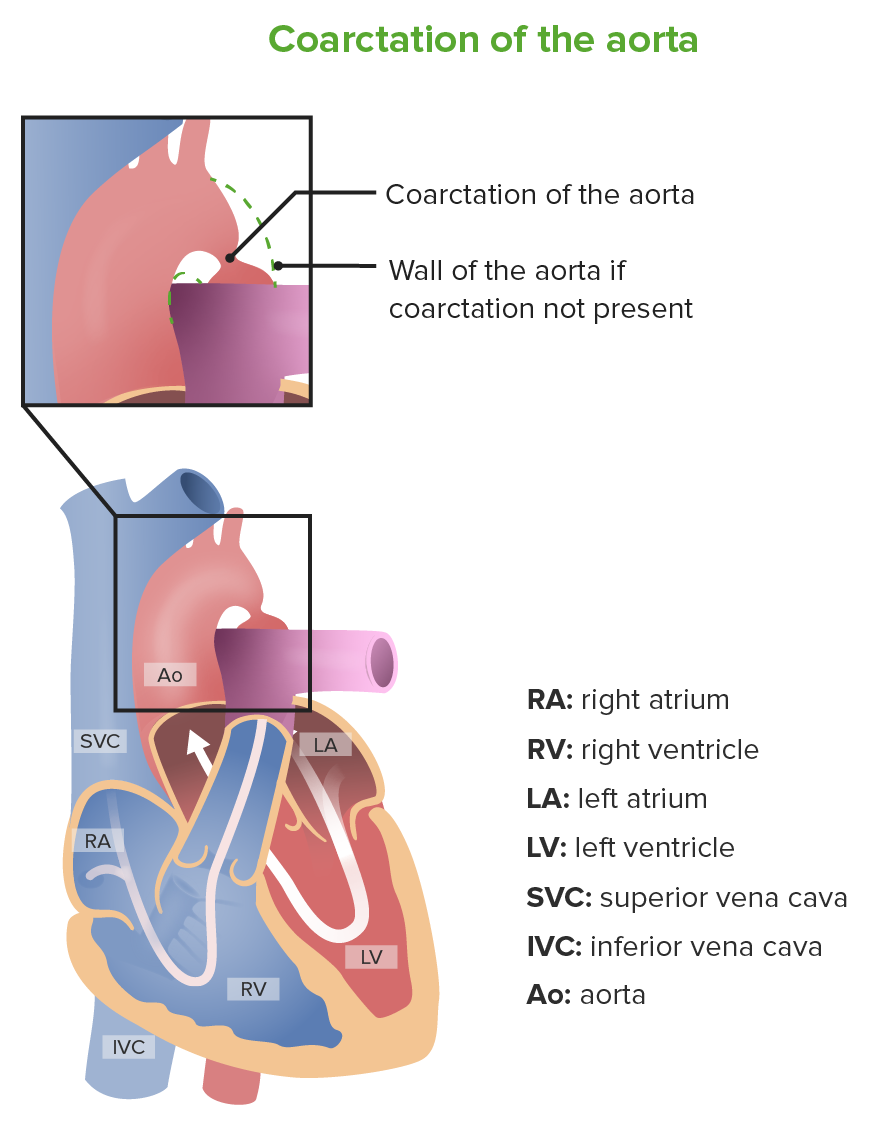
  • H para defectos cardíacos (Heart defects, en EN Erythema nodosum is an immune-mediated panniculitis (inflammation of the subcutaneous fat) caused by a type IV (delayed-type) hypersensitivity reaction. It commonly manifests in young women as tender, erythematous nodules on the shins. Erythema Nodosum inglés) (60%–70% de los LOS Neisseria casos)
  • A de Atresia Atresia Hypoplastic Left Heart Syndrome (HLHS) de coanas
    • El tejido óseo y/o membranoso bloquea la parte posterior del conducto nasal.
    • Se observa incapacidad para pasar la sonda nasogástrica.
  • R de Retraso del crecimiento (60%–70% de los LOS Neisseria casos)
    • Se nota en EN Erythema nodosum is an immune-mediated panniculitis (inflammation of the subcutaneous fat) caused by a type IV (delayed-type) hypersensitivity reaction. It commonly manifests in young women as tender, erythematous nodules on the shins. Erythema Nodosum los LOS Neisseria primeros 6 meses de vida
    • Puede observarse en EN Erythema nodosum is an immune-mediated panniculitis (inflammation of the subcutaneous fat) caused by a type IV (delayed-type) hypersensitivity reaction. It commonly manifests in young women as tender, erythematous nodules on the shins. Erythema Nodosum el útero
    • Baja estatura
    • Debido a la deficiencia de la hormona del crecimiento (GH, por sus siglas en EN Erythema nodosum is an immune-mediated panniculitis (inflammation of the subcutaneous fat) caused by a type IV (delayed-type) hypersensitivity reaction. It commonly manifests in young women as tender, erythematous nodules on the shins. Erythema Nodosum inglés) y una deficiencia de la gonadotropina
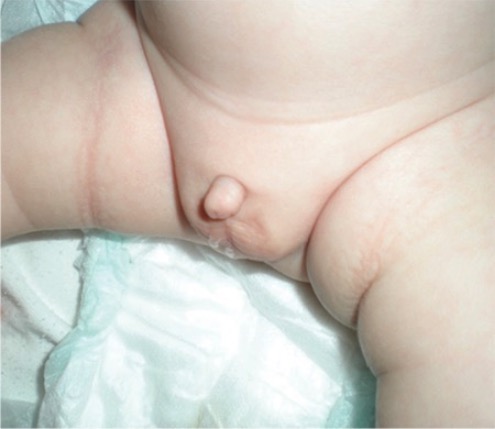
  • G de anomalías Genitales
    • Hipogonadismo hipogonadotrópico
    • Micropene, criptorquidia
    • Displasia labial
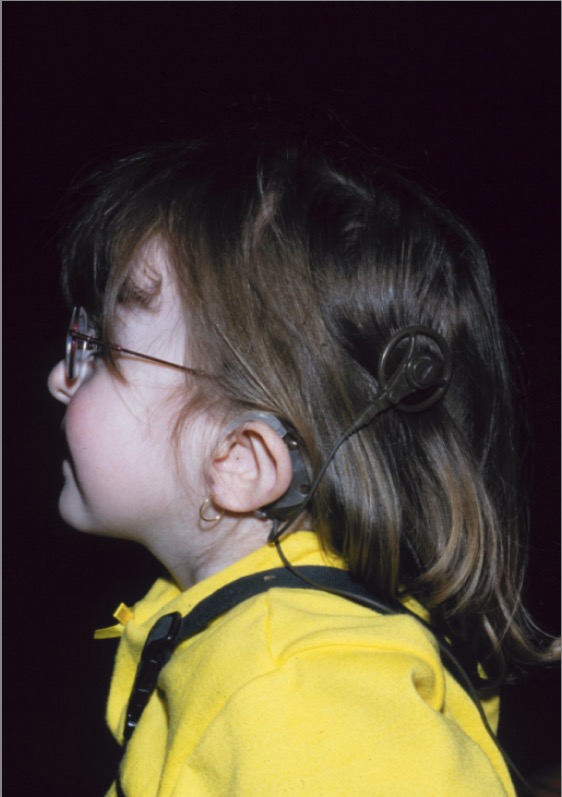
  • E de anomalías del oído (Ear abnormalities, en EN Erythema nodosum is an immune-mediated panniculitis (inflammation of the subcutaneous fat) caused by a type IV (delayed-type) hypersensitivity reaction. It commonly manifests in young women as tender, erythematous nodules on the shins. Erythema Nodosum inglés) (100% de los LOS Neisseria casos)
    • Los LOS Neisseria canales semicirculares hipoplásicos son patognomónicos.
    • El oído externo es pequeño, de implantación baja y de forma cuadrada con hélices salientes.
    • Defectos en EN Erythema nodosum is an immune-mediated panniculitis (inflammation of the subcutaneous fat) caused by a type IV (delayed-type) hypersensitivity reaction. It commonly manifests in young women as tender, erythematous nodules on the shins. Erythema Nodosum el desarrollo del oído medio e interno → discapacidades auditivas

Afecciones asociadas

  • Rasgos dismórficos faciales adicionales: cara cuadrada, parálisis del nervio facial, aplanamiento malar, micrognatia, hendidura orofacial
  • Anomalías esqueléticas como escoliosis, polidactilia, oligodactilia o pie equino varo
  • Fístula traqueoesofágica
  • Dificultades de alimentación y deglución/subnutrición
  • Anomalías neurológicas
  • Discapacidad intelectual y retraso en EN Erythema nodosum is an immune-mediated panniculitis (inflammation of the subcutaneous fat) caused by a type IV (delayed-type) hypersensitivity reaction. It commonly manifests in young women as tender, erythematous nodules on the shins. Erythema Nodosum el desarrollo
  • Anomalías renales

Diagnóstico

Criterios diagnósticos

El diagnóstico del síndrome de CHARGE puede establecerse si se dan 2 criterios principales más cualquier número de criterios menores.
  • 4 criterios principales (4 Cs):
    1. Coloboma Coloboma Congenital anomaly in which some of the structures of the eye are absent due to incomplete fusion of the fetal intraocular fissure during gestation. Esophageal Atresia and Tracheoesophageal Fistula
    2. Atresia Atresia Hypoplastic Left Heart Syndrome (HLHS) de coanas o paladar hendido
    3. Anomalías características del oído externo, medio o interno, incluyendo canales semicirculares hipoplásicos
    4. Variante de CHD7 (patógena)
  • 7 criterios menores:
    1. Disfunción de los LOS Neisseria nervios craneales, incluida la pérdida de audición
    2. Disfagia/dificultades de alimentación
    3. Anomalías estructurales del cerebro
    4. Retraso en EN Erythema nodosum is an immune-mediated panniculitis (inflammation of the subcutaneous fat) caused by a type IV (delayed-type) hypersensitivity reaction. It commonly manifests in young women as tender, erythematous nodules on the shins. Erythema Nodosum el desarrollo/discapacidad intelectual/autismo
    5. Disfunción hipotálamo-hipófisis (incluyendo deficiencias hormonales) y anomalías genitales
    6. Malformaciones cardíacas o esofágicas
    7. Anomalías renales/esqueléticas/de las extremidades

Pruebas de laboratorio

  • Hemograma
  • Pruebas de función renal
  • Análisis hormonal (↓ hormona de crecimiento, ↓ gonadotropinas)
  • Estudios inmunológicos

Estudios de imagenología

  • Ultrasonido:
    • Ultrasonido craneal: se realiza durante el periodo neonatal para excluir malformaciones cerebrales importantes
    • Ultrasonido abdominal: para excluir anomalías renales
  • Ecocardiografía: anomalías valvulares y defectos estructurales del corazón
  • Trago de bario: dismotilidad esofágica
  • Radiografías de tórax: para detectar anomalías cardiopulmonares
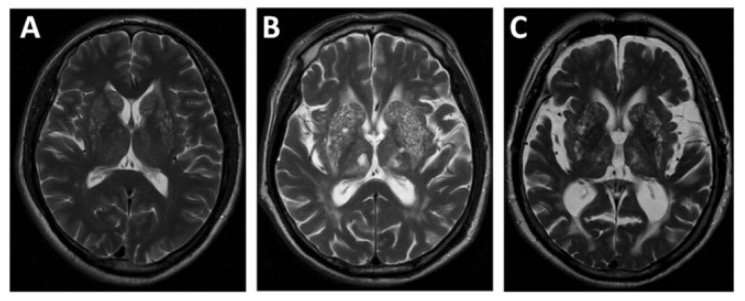
  • Tomografía computarizada (TC) y resonancia magnética (RM): anomalías del cerebro anterior, atrofia cerebral, defectos del cerebro medio
Ganglios basales severos

Resonancia magnética que muestra atrofia cerebral por etapas: leve (A) moderada (B) a grave (C)

Imagen: “EPVS” por Department of Neurology, Beijing Chaoyang Hospital, Capital Medical University, Beijing, China. Licencia: CC BY 4.0

Otras pruebas

  • Electroencefalograma ( EEG EEG Seizures)
  • Electrocardiograma ( ECG ECG An electrocardiogram (ECG) is a graphic representation of the electrical activity of the heart plotted against time. Adhesive electrodes are affixed to the skin surface allowing measurement of cardiac impulses from many angles. The ECG provides 3-dimensional information about the conduction system of the heart, the myocardium, and other cardiac structures. Electrocardiogram (ECG))
  • Audiometría
  • Examen oftalmológico
  • Evaluaciones psicológicas y educativas

Tratamiento y Pronóstico

Tratamiento

Existen varias opciones de tratamiento de soporte y correctivo. El tratamiento se adapta a los LOS Neisseria síntomas y a las anomalías presentes.

  • Tratamiento médico:
    • Suplemento de oxígeno para la cardiopatía cianótica
    • Alimentación nasogástrica para las dificultades de deglución
    • Lágrimas artificiales en EN Erythema nodosum is an immune-mediated panniculitis (inflammation of the subcutaneous fat) caused by a type IV (delayed-type) hypersensitivity reaction. It commonly manifests in young women as tender, erythematous nodules on the shins. Erythema Nodosum la parálisis facial para evitar la cicatrización de la córnea
    • Aparatos auditivos/implantes cocleares
    • Equipos médicos duraderos, como aparatos ortopédicos o sillas de ruedas para ayudar a la movilidad
    • Terapia de andrógenos administrada en EN Erythema nodosum is an immune-mediated panniculitis (inflammation of the subcutaneous fat) caused by a type IV (delayed-type) hypersensitivity reaction. It commonly manifests in young women as tender, erythematous nodules on the shins. Erythema Nodosum algunos casos para el crecimiento del pene
    • Fisioterapia para ayudar a la movilidad
    • Terapia de lenguaje según sea necesario
  • Tratamiento quirúrgico:
    • Traqueostomía (colocación de un tubo en EN Erythema nodosum is an immune-mediated panniculitis (inflammation of the subcutaneous fat) caused by a type IV (delayed-type) hypersensitivity reaction. It commonly manifests in young women as tender, erythematous nodules on the shins. Erythema Nodosum la tráquea para estabilizar el paso del aire)
    • Gastrostomía (colocación de un tubo en EN Erythema nodosum is an immune-mediated panniculitis (inflammation of the subcutaneous fat) caused by a type IV (delayed-type) hypersensitivity reaction. It commonly manifests in young women as tender, erythematous nodules on the shins. Erythema Nodosum el estómago para la alimentación)
    • Miringotomía (colocación de un tubo en EN Erythema nodosum is an immune-mediated panniculitis (inflammation of the subcutaneous fat) caused by a type IV (delayed-type) hypersensitivity reaction. It commonly manifests in young women as tender, erythematous nodules on the shins. Erythema Nodosum la membrana timpánica para la otitis media)

Pronóstico

  • La mortalidad es mayor en EN Erythema nodosum is an immune-mediated panniculitis (inflammation of the subcutaneous fat) caused by a type IV (delayed-type) hypersensitivity reaction. It commonly manifests in young women as tender, erythematous nodules on the shins. Erythema Nodosum el periodo neonatal y en EN Erythema nodosum is an immune-mediated panniculitis (inflammation of the subcutaneous fat) caused by a type IV (delayed-type) hypersensitivity reaction. It commonly manifests in young women as tender, erythematous nodules on the shins. Erythema Nodosum la primera infancia debido a:
  • El tratamiento es necesario para la supervivencia, pero no existen tratamientos curativos.

Diagnóstico Diferencial

  • Asociación VACTERL: un trastorno que afecta a múltiples sistemas corporales en EN Erythema nodosum is an immune-mediated panniculitis (inflammation of the subcutaneous fat) caused by a type IV (delayed-type) hypersensitivity reaction. It commonly manifests in young women as tender, erythematous nodules on the shins. Erythema Nodosum el desarrollo fetal. VACTERL es el acrónimo para el conjunto de características clínicas que se observan en EN Erythema nodosum is an immune-mediated panniculitis (inflammation of the subcutaneous fat) caused by a type IV (delayed-type) hypersensitivity reaction. It commonly manifests in young women as tender, erythematous nodules on the shins. Erythema Nodosum esta enfermedad: Defectos Vertebrales, Atresia anal, defectos Cardíacos, fístula Traqueoesofágica, anomalías Renales y anomalías de las extremidades (Limbs, en EN Erythema nodosum is an immune-mediated panniculitis (inflammation of the subcutaneous fat) caused by a type IV (delayed-type) hypersensitivity reaction. It commonly manifests in young women as tender, erythematous nodules on the shins. Erythema Nodosum inglés). El trastorno parece producirse de forma esporádica, sin un patrón hereditario claro. La cognición no se ve VE Ventilation: Mechanics of Breathing afectada. El trastorno es un diagnóstico de exclusión en EN Erythema nodosum is an immune-mediated panniculitis (inflammation of the subcutaneous fat) caused by a type IV (delayed-type) hypersensitivity reaction. It commonly manifests in young women as tender, erythematous nodules on the shins. Erythema Nodosum el marco de la presencia de al AL Amyloidosis menos 3 de las características clínicas anteriores. El tratamiento es conservador y quirúrgico en EN Erythema nodosum is an immune-mediated panniculitis (inflammation of the subcutaneous fat) caused by a type IV (delayed-type) hypersensitivity reaction. It commonly manifests in young women as tender, erythematous nodules on the shins. Erythema Nodosum función de los LOS Neisseria síntomas y las anomalías.
  • Síndrome de Kallmann: enfermedad genética que provoca hipogonadismo hipogonadotrópico y alteración del sentido del olfato. Las mutaciones en EN Erythema nodosum is an immune-mediated panniculitis (inflammation of the subcutaneous fat) caused by a type IV (delayed-type) hypersensitivity reaction. It commonly manifests in young women as tender, erythematous nodules on the shins. Erythema Nodosum el mismo gen (CHD7) implicado en EN Erythema nodosum is an immune-mediated panniculitis (inflammation of the subcutaneous fat) caused by a type IV (delayed-type) hypersensitivity reaction. It commonly manifests in young women as tender, erythematous nodules on the shins. Erythema Nodosum el síndrome de CHARGE se han visto en EN Erythema nodosum is an immune-mediated panniculitis (inflammation of the subcutaneous fat) caused by a type IV (delayed-type) hypersensitivity reaction. It commonly manifests in young women as tender, erythematous nodules on the shins. Erythema Nodosum aquellos con síndrome de Kallmann. Dado el solapamiento, los LOS Neisseria individuos con sospecha de síndrome de Kallmann pueden tener características similares a las del síndrome de CHARGE, aunque mucho más leves, y deben someterse a un tamizaje adicional. Las pruebas genéticas con secuenciación de genes Genes A category of nucleic acid sequences that function as units of heredity and which code for the basic instructions for the development, reproduction, and maintenance of organisms. DNA Types and Structure ayudan al AL Amyloidosis diagnóstico y a la diferenciación.

Referencias

  1. Van Ravenswaaij-Arts, C. & Martin, Donna M.(2017). New insights and advances in CHARGE syndrome: Diagnosis, etiologies, treatments, and research discoveries. Am J Med Genet C Semin Med Genet. 175(4): 397–406. Published online 2017 Nov 24. doi: 10.1002/ajmg.c.31592
  2. CHARGE Syndrome. Online Mendelian Inheritance in Man (OMIM). Retrieved January 14, 2025, from https://www.omim.org/entry/214800#creationDate
  3. Jongmans, M.C., et al.  (2006). CHARGE syndrome: the phenotypic spectrum of mutations in the CHD7 gene. J Med Genet. 43(4): 306–314.Published online 2005 Oct 14. doi: 10.1136/jmg.2005.036061
  4. Dijk, D. R., Bocca, G., & van Ravenswaaij-Arts, C. M. (2019). Growth in CHARGE syndrome: optimizing care with a multidisciplinary approach. J Multidiscip Healthc.12: 607–620. Published online 2019 Aug 1. doi: 10.2147/JMDH.S175713
  5. Jongmans M.C., van Ravenswaaij-Arts C.M., Pitteloud N., et al. (2009). CHD7 mutations in patients initially diagnosed with Kallmann syndrome–the clinical overlap with CHARGE syndrome. Clinical Genetics. 75(1):65-71. DOI: 10.1111/j.1399-0004.2008.01107.x.
  6. Blake, K. M., Prasad, C. (2015). Orphanet: CHARGE syndrome.  Retrieved December 9, 2020, from https://www.orpha.net/consor/cgi-bin/OC_Exp.php?lng=en&Expert=138
  7. Usman, N., & Sur, M. (2023). CHARGE Syndrome. In StatPearls. National Library of Medicine. https://www.ncbi.nlm.nih.gov/books/NBK559199/

¡Crea tu cuenta gratis o inicia una sesión para seguir leyendo!

Regístrate ahora y obtén acceso gratuito a Lecturio con páginas de concepto, videos médicos y cuestionarios para tu educación médica.

User Reviews

Que tengas una sesión de estudio alegre y navideña 🎁 Ahorra 50% en todos los planes >>

Details