Domina Conceptos Médicos

Estudia para la escuela de medicina y tus examenes con Lecturio.

Rickettsia

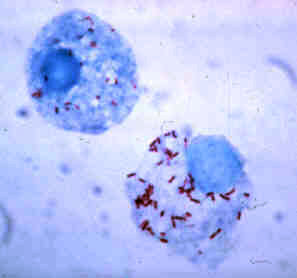
Rickettsiae son una colección diversa de bacterias gram-negativas intracelulares obligadas que tienen un tropismo por las células endoteliales vasculares. Los LOS Neisseria vectores de transmisión varían según la especie, pero incluyen garrapatas, pulgas, ácaros y piojos. Los LOS Neisseria patógenos clínicamente más relevantes son R. rickettsii, que causa la fiebre maculosa de las Montañas Rocosas; R. prowazekii, que causa el tifus epidémico (transmitido por piojos); R. typhi, que causa el tifus endémico; y R. akari, que causa la rickettsiosis vesiculosa. Todas estas enfermedades son una forma de vasculitis Vasculitis Inflammation of any one of the blood vessels, including the arteries; veins; and rest of the vasculature system in the body. Systemic Lupus Erythematosus inflamatoria y comúnmente se presentan con fiebre, cefalea y erupción cutánea. El tratamiento es con doxiciclina.

Last updated: Dec 15, 2025
Editorial responsibility: Stanley Oiseth, Lindsay Jones, Evelin Maza

Características Generales

Características generales

  • Organismos intracelulares obligados
  • Pleomórficos (cocos, bacilos, hilos)
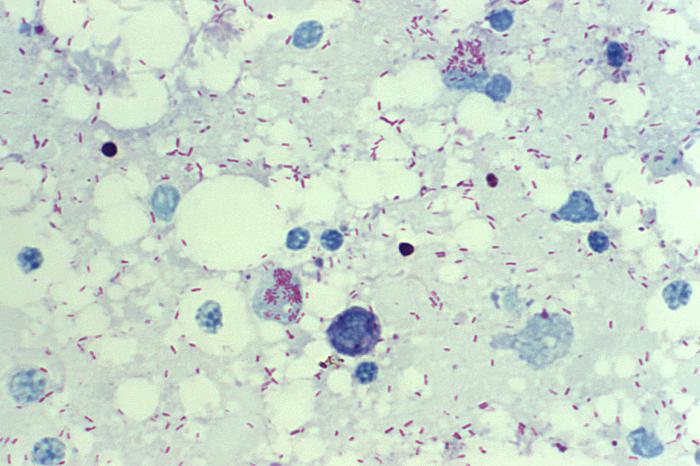
  • Débilmente gramnegativo (mala tinción de Gram)
  • Se pueden visualizar con tinciones especiales como Giemsa y mediante técnicas de tinción directa de anticuerpos fluorescentes
  • Carecen de enzimas para el metabolismo de aminoácidos, azúcares, lípidos y nucleótidos
  • Dependen de las células huésped para sus necesidades nutricionales
  • Tienen la capacidad de adquirir ATP (adenosín trifosfato) del huésped
  • Tienen un tropismo por las células del endotelio vascular:
    • Causan lesión vascular directa
    • También producen prostaglandinas y activan factores de coagulación, lo que puede conducir a manifestaciones clínicas sistémicas
  • Especies clínicamente relevantes:
    • Grupo de fiebre maculosa:
      • R. rickettsii (hemisferio occidental)
      • R. akari (Estados Unidos, Rusia, Corea, Sudáfrica)
      • Otras múltiples especies (principalmente en EN Erythema nodosum is an immune-mediated panniculitis (inflammation of the subcutaneous fat) caused by a type IV (delayed-type) hypersensitivity reaction. It commonly manifests in young women as tender, erythematous nodules on the shins. Erythema Nodosum Asia ASIA Spinal Cord Injuries y África)
    • Grupo de tifus:
      • R. prowazekii
      • R. typhi

Transmisión y geografía

  • Transmitida por vectores artrópodos
  • En EN Erythema nodosum is an immune-mediated panniculitis (inflammation of the subcutaneous fat) caused by a type IV (delayed-type) hypersensitivity reaction. It commonly manifests in young women as tender, erythematous nodules on the shins. Erythema Nodosum la siguiente tabla se describe en EN Erythema nodosum is an immune-mediated panniculitis (inflammation of the subcutaneous fat) caused by a type IV (delayed-type) hypersensitivity reaction. It commonly manifests in young women as tender, erythematous nodules on the shins. Erythema Nodosum resumen las principales especies clínicamente relevantes.
Tabla: Resumen de las principales especies clínicamente relevantes
R. rickettsii R. prowazekii R. typhi R. akari
Vector Garrapatas duras (familia Ixodidae Ixodidae A family of hardbacked ticks, in the subclass Acari. Genera include Dermacentor and Ixodes among others. Rickettsia): Dermacentor Dermacentor A widely distributed genus of ticks, in the family ixodidae, including a number that infest humans and other mammals. Several are vectors of diseases such as tularemia; rocky mountain spotted fever; colorado tick fever; and anaplasmosis. Rickettsia (garrapata de perro), Amblyoma (garrapata de madera) Piojos humanos ( Pediculus humanus corporis Pediculus Humanus Corporis Epidemic Typhus):
  • Defecan en EN Erythema nodosum is an immune-mediated panniculitis (inflammation of the subcutaneous fat) caused by a type IV (delayed-type) hypersensitivity reaction. It commonly manifests in young women as tender, erythematous nodules on the shins. Erythema Nodosum la piel
  • El huésped rasca el área
  • Las bacterias entran en EN Erythema nodosum is an immune-mediated panniculitis (inflammation of the subcutaneous fat) caused by a type IV (delayed-type) hypersensitivity reaction. It commonly manifests in young women as tender, erythematous nodules on the shins. Erythema Nodosum la piel
Las ardillas voladoras orientales junto con sus piojos y pulgas mantienen un ciclo zoonótico.
Picaduras de pulgas de ratas y gatos Ácaros de ratones
Enfermedad Fiebre maculosa de las Montañas Rocosas (la enfermedad por rickettsia Rickettsia Rickettsiae are a diverse collection of obligate intracellular, gram-negative bacteria that have a tropism for vascular endothelial cells. The vectors for transmission vary by species but include ticks, fleas, mites, and lice. Rickettsia más grave) Tifus epidémico (transmitido por piojos) Tifus endémico Rickettsiosis vesiculosa (la enfermedad rickettsial menos grave)
Variaciones geográficas
  • América del Norte ( en EN Erythema nodosum is an immune-mediated panniculitis (inflammation of the subcutaneous fat) caused by a type IV (delayed-type) hypersensitivity reaction. It commonly manifests in young women as tender, erythematous nodules on the shins. Erythema Nodosum Estados Unidos, especialmente en EN Erythema nodosum is an immune-mediated panniculitis (inflammation of the subcutaneous fat) caused by a type IV (delayed-type) hypersensitivity reaction. It commonly manifests in young women as tender, erythematous nodules on the shins. Erythema Nodosum los LOS Neisseria estados del centro-sur y sureste)
  • América del Sur y Central
  • Poco común actualmente
  • En EN Erythema nodosum is an immune-mediated panniculitis (inflammation of the subcutaneous fat) caused by a type IV (delayed-type) hypersensitivity reaction. It commonly manifests in young women as tender, erythematous nodules on the shins. Erythema Nodosum algunas áreas de África, Asia ASIA Spinal Cord Injuries y América del Sur, especialmente donde hay guerras, desastres, campos de refugiados, etc ETC The electron transport chain (ETC) sends electrons through a series of proteins, which generate an electrochemical proton gradient that produces energy in the form of adenosine triphosphate (ATP). Electron Transport Chain (ETC).
  • A nivel mundial
  • Estados del sureste/Golfo de México
  • Estados Unidos (a menudo, la ciudad de Nueva York)
  • Rusia
  • Corea
  • Sudáfrica

Related videos

Relevancia Clínica (R. rickettsii)

Fiebre maculosa de las Montañas Rocosas

Epidemiología:

  • Más común en EN Erythema nodosum is an immune-mediated panniculitis (inflammation of the subcutaneous fat) caused by a type IV (delayed-type) hypersensitivity reaction. It commonly manifests in young women as tender, erythematous nodules on the shins. Erythema Nodosum entornos rurales y suburbanos
  • Los LOS Neisseria factores de riesgo incluyen vivir cerca del bosque, caminar en EN Erythema nodosum is an immune-mediated panniculitis (inflammation of the subcutaneous fat) caused by a type IV (delayed-type) hypersensitivity reaction. It commonly manifests in young women as tender, erythematous nodules on the shins. Erythema Nodosum la hierba alta o estar expuesto a perros
  • Variación estacional: mayor incidencia en EN Erythema nodosum is an immune-mediated panniculitis (inflammation of the subcutaneous fat) caused by a type IV (delayed-type) hypersensitivity reaction. It commonly manifests in young women as tender, erythematous nodules on the shins. Erythema Nodosum primavera y principios de verano
  • Mayor incidencia en EN Erythema nodosum is an immune-mediated panniculitis (inflammation of the subcutaneous fat) caused by a type IV (delayed-type) hypersensitivity reaction. It commonly manifests in young women as tender, erythematous nodules on the shins. Erythema Nodosum personas de 40–64 años de edad
  • Mayor incidencia en EN Erythema nodosum is an immune-mediated panniculitis (inflammation of the subcutaneous fat) caused by a type IV (delayed-type) hypersensitivity reaction. It commonly manifests in young women as tender, erythematous nodules on the shins. Erythema Nodosum nativos americanos
  • Mayor gravedad/letalidad:
    • Sexo masculino
    • Edad adulta
    • Deficiencia de glucosa-6-fosfato deshidrogenasa
    • Abuso crónico de alcohol
    • Origen afroamericano

Fisiopatología:

  • Virulencia:
    • Los LOS Neisseria factores no se comprenden del todo.
    • La dosis de inoculación puede influir.
  • Inoculación de una garrapata que se alimenta
  • Los LOS Neisseria lipopolisacáridos, las proteínas de la membrana externa de las rickettsias y las proteínas expuestas en EN Erythema nodosum is an immune-mediated panniculitis (inflammation of the subcutaneous fat) caused by a type IV (delayed-type) hypersensitivity reaction. It commonly manifests in young women as tender, erythematous nodules on the shins. Erythema Nodosum la superficie actúan como adhesinas para las células endoteliales.
  • Las bacterias entran a las células por endocitosis.
  • Una vez en EN Erythema nodosum is an immune-mediated panniculitis (inflammation of the subcutaneous fat) caused by a type IV (delayed-type) hypersensitivity reaction. It commonly manifests in young women as tender, erythematous nodules on the shins. Erythema Nodosum el citosol, expresan proteínas que conducen a la polimerización de los LOS Neisseria filamentos de actina
  • Este proceso permite el paso a las células vecinas a través de filopodios derivados de la membrana huésped.
  • Propagación posterior a través del torrente sanguíneo y el sistema linfático
  • Daño/ necrosis Necrosis The death of cells in an organ or tissue due to disease, injury or failure of the blood supply. Ischemic Cell Damage de las células endoteliales
  • Acumulación de macrófagos/linfocitos → vasculitis Vasculitis Inflammation of any one of the blood vessels, including the arteries; veins; and rest of the vasculature system in the body. Systemic Lupus Erythematosus linfocítica

Presentación clínica:

  • Período de incubación: 2–14 días
  • Síntomas prodrómicos:
    • Fiebre, cefalea, mialgia/artralgia: imita una infección viral
    • Náuseas/vómitos
    • Dolor Dolor Inflammation abdominal, común en EN Erythema nodosum is an immune-mediated panniculitis (inflammation of the subcutaneous fat) caused by a type IV (delayed-type) hypersensitivity reaction. It commonly manifests in young women as tender, erythematous nodules on the shins. Erythema Nodosum niños
  • Erupción: presente de forma variable Variable Variables represent information about something that can change. The design of the measurement scales, or of the methods for obtaining information, will determine the data gathered and the characteristics of that data. As a result, a variable can be qualitative or quantitative, and may be further classified into subgroups. Types of Variables
    • Aparece en EN Erythema nodosum is an immune-mediated panniculitis (inflammation of the subcutaneous fat) caused by a type IV (delayed-type) hypersensitivity reaction. It commonly manifests in young women as tender, erythematous nodules on the shins. Erythema Nodosum los LOS Neisseria días 3–5 en EN Erythema nodosum is an immune-mediated panniculitis (inflammation of the subcutaneous fat) caused by a type IV (delayed-type) hypersensitivity reaction. It commonly manifests in young women as tender, erythematous nodules on the shins. Erythema Nodosum el 50 % de los LOS Neisseria casos y es posible que nunca aparezca en EN Erythema nodosum is an immune-mediated panniculitis (inflammation of the subcutaneous fat) caused by a type IV (delayed-type) hypersensitivity reaction. It commonly manifests in young women as tender, erythematous nodules on the shins. Erythema Nodosum aproximadamente el 10% de los LOS Neisseria pacientes
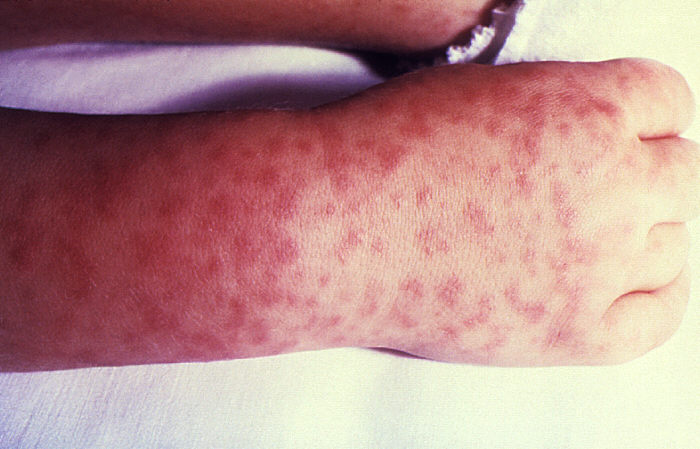
    • Por lo general, comienza en EN Erythema nodosum is an immune-mediated panniculitis (inflammation of the subcutaneous fat) caused by a type IV (delayed-type) hypersensitivity reaction. It commonly manifests in young women as tender, erythematous nodules on the shins. Erythema Nodosum las muñecas/tobillos y se extiende centralmente; la erupción no respeta las palmas de las manos ni las plantas de los LOS Neisseria pies, pero a menudo nunca se desarrolla en EN Erythema nodosum is an immune-mediated panniculitis (inflammation of the subcutaneous fat) caused by a type IV (delayed-type) hypersensitivity reaction. It commonly manifests in young women as tender, erythematous nodules on the shins. Erythema Nodosum estas áreas (18%–64% de los LOS Neisseria casos)
    • Erupción macular eritematosa que palidece y se vuelve petequial con el tiempo
  • Complicaciones:
    • Encefalitis
    • Edema Edema Edema is a condition in which excess serous fluid accumulates in the body cavity or interstitial space of connective tissues. Edema is a symptom observed in several medical conditions. It can be categorized into 2 types, namely, peripheral (in the extremities) and internal (in an organ or body cavity). Edema pulmonar
    • Síndrome de dificultad respiratoria aguda
    • Arritmias cardíacas
    • Coagulopatía
    • Hemorragia gastrointestinal
    • Necrosis Necrosis The death of cells in an organ or tissue due to disease, injury or failure of the blood supply. Ischemic Cell Damage cutánea
  • El tratamiento preferido es la doxiciclina.

Pronóstico:

  • Era anterior a los LOS Neisseria antibióticos: 20%–25% mortalidad (rango: 20%–80%)
  • Actualmente de 3%–5%, principalmente debido a retrasos en EN Erythema nodosum is an immune-mediated panniculitis (inflammation of the subcutaneous fat) caused by a type IV (delayed-type) hypersensitivity reaction. It commonly manifests in young women as tender, erythematous nodules on the shins. Erythema Nodosum el diagnóstico y el tratamiento

Identificación:

  • Biopsia de piel (sacabocados de 3 mm): prueba de inmunofluorescencia/tinción de inmunoperoxidasa (70% sensible, 100 % específico)
  • El cultivo es difícil, peligroso y se reserva principalmente para fines de investigación.
  • Serología: no es útil para el diagnóstico, ya que establece el diagnóstico solo post-factum
  • Las pruebas de reacción en EN Erythema nodosum is an immune-mediated panniculitis (inflammation of the subcutaneous fat) caused by a type IV (delayed-type) hypersensitivity reaction. It commonly manifests in young women as tender, erythematous nodules on the shins. Erythema Nodosum cadena de la polimerasa ( PCR PCR Polymerase chain reaction (PCR) is a technique that amplifies DNA fragments exponentially for analysis. The process is highly specific, allowing for the targeting of specific genomic sequences, even with minuscule sample amounts. The PCR cycles multiple times through 3 phases: denaturation of the template DNA, annealing of a specific primer to the individual DNA strands, and synthesis/elongation of new DNA molecules. Polymerase Chain Reaction (PCR), por sus siglas en EN Erythema nodosum is an immune-mediated panniculitis (inflammation of the subcutaneous fat) caused by a type IV (delayed-type) hypersensitivity reaction. It commonly manifests in young women as tender, erythematous nodules on the shins. Erythema Nodosum inglés) de muestras de sangre no son útiles (baja sensibilidad)
Erupción manchada característica de la fiebre maculosa de las Montañas Rocosas

Erupción característica de la fiebre maculosa de las Montañas Rocosas: mano y muñeca de un niño afectado

Imagen:Rocky Mountain spotted fever PHIL 1962 lores” por CDC. Licencia: Dominio Público

Relevancia Clínica (R. prowazekii, R. typhi, R. akari)

Tifus epidémico (transmitido por piojos) (R. prowazekii)

El tifus epidémico (transmitido por piojos) es ahora una enfermedad rara.

Patogénesis:

  • Lesión directa a las células endoteliales seguida de respuesta inmunitaria
  • Resulta en EN Erythema nodosum is an immune-mediated panniculitis (inflammation of the subcutaneous fat) caused by a type IV (delayed-type) hypersensitivity reaction. It commonly manifests in young women as tender, erythematous nodules on the shins. Erythema Nodosum permeabilidad vascular, edema Edema Edema is a condition in which excess serous fluid accumulates in the body cavity or interstitial space of connective tissues. Edema is a symptom observed in several medical conditions. It can be categorized into 2 types, namely, peripheral (in the extremities) and internal (in an organ or body cavity). Edema, activación de la coagulación e inflamación
  • Vasculitis Vasculitis Inflammation of any one of the blood vessels, including the arteries; veins; and rest of the vasculature system in the body. Systemic Lupus Erythematosus linfocítica, trombosis, hemorragia microscópica

Presentación clínica:

  • Fiebre, tos TOS Thoracic outlet syndrome (TOS) is a broad term used for a spectrum of syndromes related to the general region of the thoracic outlet, which involves the compression or irritation of elements of the brachial plexus, subclavian artery, or subclavian vein. Thoracic Outlet Syndrome, cefalea, malestar general, náuseas, mialgias
  • Puede confundirse con fiebre tifoidea en EN Erythema nodosum is an immune-mediated panniculitis (inflammation of the subcutaneous fat) caused by a type IV (delayed-type) hypersensitivity reaction. It commonly manifests in young women as tender, erythematous nodules on the shins. Erythema Nodosum zonas tropicales
  • Erupción:
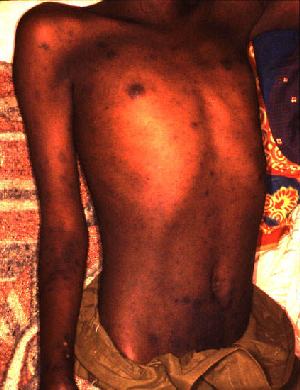
    • Macular o maculopapular Maculopapular Dermatologic Examination, petequial y confluente sin tratamiento; comienza en EN Erythema nodosum is an immune-mediated panniculitis (inflammation of the subcutaneous fat) caused by a type IV (delayed-type) hypersensitivity reaction. It commonly manifests in young women as tender, erythematous nodules on the shins. Erythema Nodosum el tronco y se extiende a las extremidades
    • Comienza varios días después del inicio de los LOS Neisseria síntomas; a menudo no está presente
  • Los LOS Neisseria síntomas neurológicos (confusión, coma Coma Coma is defined as a deep state of unarousable unresponsiveness, characterized by a score of 3 points on the GCS. A comatose state can be caused by a multitude of conditions, making the precise epidemiology and prognosis of coma difficult to determine. Coma, convulsiones) son comunes.
  • Afectación pulmonar en EN Erythema nodosum is an immune-mediated panniculitis (inflammation of the subcutaneous fat) caused by a type IV (delayed-type) hypersensitivity reaction. It commonly manifests in young women as tender, erythematous nodules on the shins. Erythema Nodosum el 35% de los LOS Neisseria pacientes (neumonía intersticial, edema Edema Edema is a condition in which excess serous fluid accumulates in the body cavity or interstitial space of connective tissues. Edema is a symptom observed in several medical conditions. It can be categorized into 2 types, namely, peripheral (in the extremities) and internal (in an organ or body cavity). Edema, derrames pleurales)

Enfermedad de Brill-Zinsser:

  • Recurrencia de los LOS Neisseria síntomas del tifus años después de la infección inicial
  • Generalmente, enfermedad leve asociada con fiebre, cefalea, malestar general y erupción cutánea
  • Diagnóstico:
    • Biopsia de piel (sacabocados de 3 mm): tinción inmunohistoquímica
    • También se pueden analizar piojos encontrados en EN Erythema nodosum is an immune-mediated panniculitis (inflammation of the subcutaneous fat) caused by a type IV (delayed-type) hypersensitivity reaction. It commonly manifests in young women as tender, erythematous nodules on the shins. Erythema Nodosum el paciente
  • Tratamiento: doxiciclina
  • Pronóstico: la enfermedad no tratada es fatal en EN Erythema nodosum is an immune-mediated panniculitis (inflammation of the subcutaneous fat) caused by a type IV (delayed-type) hypersensitivity reaction. It commonly manifests in young women as tender, erythematous nodules on the shins. Erythema Nodosum el 7%–40% de los LOS Neisseria casos.
  • Prevención:
    • Control de piojos del cuerpo lavando la ropa y las sábanas con agua caliente o lavando la ropa en EN Erythema nodosum is an immune-mediated panniculitis (inflammation of the subcutaneous fat) caused by a type IV (delayed-type) hypersensitivity reaction. It commonly manifests in young women as tender, erythematous nodules on the shins. Erythema Nodosum seco.
    • Usar permetrina u otros insecticidas según sea necesario.
Erupción en un paciente con tifus epidémico

Erupción en un paciente con tifus epidémico

Imagen:Epidemic typhus Burundi” por D. Raoult, V. Roux, JB Ndihokubwayo, G. Bise, D. Baudon, G. Martet y R. Birtles. Licencia: Dominio Público
Tifus endémico (murino) (R. typhi)

  • Distribución a nivel mundial
  • Más frecuente en EN Erythema nodosum is an immune-mediated panniculitis (inflammation of the subcutaneous fat) caused by a type IV (delayed-type) hypersensitivity reaction. It commonly manifests in young women as tender, erythematous nodules on the shins. Erythema Nodosum áreas con acumulación de ratas
  • En EN Erythema nodosum is an immune-mediated panniculitis (inflammation of the subcutaneous fat) caused by a type IV (delayed-type) hypersensitivity reaction. It commonly manifests in young women as tender, erythematous nodules on the shins. Erythema Nodosum regiones templadas, es más común a fines del verano y principios del otoño
  • Vasculitis Vasculitis Inflammation of any one of the blood vessels, including the arteries; veins; and rest of the vasculature system in the body. Systemic Lupus Erythematosus inflamatoria
  • Los LOS Neisseria síntomas son generalmente leves, la letalidad es baja
  • Fiebre, cefalea, mialgias y erupción
  • En EN Erythema nodosum is an immune-mediated panniculitis (inflammation of the subcutaneous fat) caused by a type IV (delayed-type) hypersensitivity reaction. It commonly manifests in young women as tender, erythematous nodules on the shins. Erythema Nodosum casos severos, puede presentarse con disfunción neurológica, renal, cardíaca, pulmonar o hepática
  • Tratamiento: doxiciclina
  • Pronóstico: enfermedad grave asociada a la vejez, comorbilidades; la tasa de letalidad es del 1%

Rickettsiosis vesiculosa (R. akari)

  • Los LOS Neisseria ratones sirven como reservorios naturales.
  • Los LOS Neisseria ácaros de los LOS Neisseria ratones rara vez pican a los LOS Neisseria humanos, a menos que se reduzca la población de ratones.
  • Período de incubación: 10–14 días
  • Lesión inicial: una pequeña pápula que forma una vesícula y luego una escara
  • Síntomas constitucionales: fiebre, malestar y cefalea
  • Erupción:
    • Generalizada
    • Maculopapular Maculopapular Dermatologic Examination que se vuelve papulovesicular, seguido de costra escara
    • Las lesiones forman costras que desaparecen sin dejar cicatrices.
  • Diagnóstico: síntomas y signos clínicos, datos epidemiológicos y sueros de convalecientes
  • Tratamiento y pronóstico: doxiciclina; sin tratamiento, la fiebre dura de 6–10 días
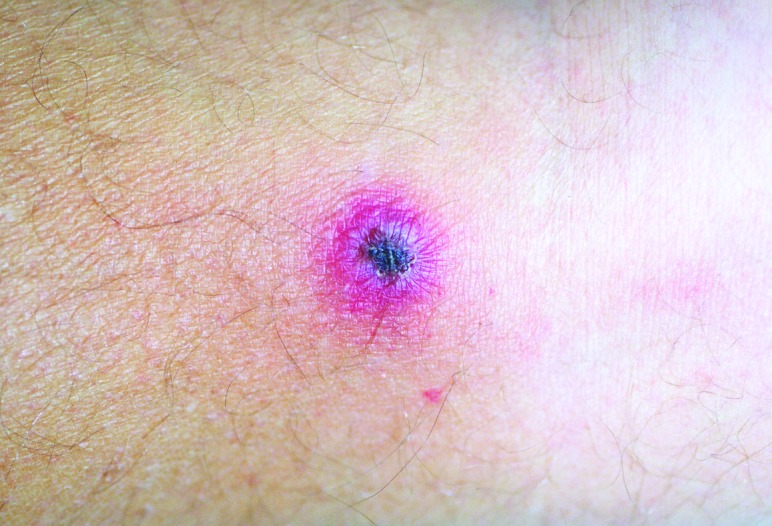
Escara negra indolora con costra de Rickettsialpox

Escara indolora, negra y costrosa de la rickettsiosis vesiculosa, que se desarrolla como el último estadio de la erupción típica (máculas → pápulas → vesículas → costras/escaras que cicatrizan sin dejar cicatrices).

Imagen:Rickettsialpox lesion” por Krusell A, Comer JA, Sexton DJ. Licencia: Dominio Público

Referencias

  1. Sexton D.J., McClain M.T. (2025). Biology of Rickettsia rickettsii infection. Retrieved June 26, 2025, from https://www.uptodate.com/contents/biology-of-rickettsia-rickettsii-infection
  2. McClain, M. T. (2024). Epidemiology, clinical manifestations, and diagnosis of Rocky Mountain spotted fever. UpToDate. Retrieved June 26, 2025, from https://www.uptodate.com/contents/epidemiology-clinical-manifestations-and-diagnosis-of-rocky-mountain-spotted-fever
  3. Sexton D.J., McClain M.T. (2025). Epidemic typhus. Retrieved June 26, 2025, from https://www.uptodate.com/contents/epidemic-typhus
  4. Sexton D.J., McClain M.T. (2025). Murine typhus. Retrieved June 26, 2025, from https://www.uptodate.com/contents/murine-typhus
  5. Sexton D.J., McClain M.T. (2025). Rickettsialpox. Retrieved June 26, 2025, from https://www.uptodate.com/contents/rickettsialpox
  6. Petri, W.A. (2024). Overview of rickettsial and related infections. Merck Manuals Professional Edition. Retrieved June 26, 2025, from https://www.merckmanuals.com/professional/infectious-diseases/rickettsiae-and-related-organisms/overview-of-rickettsial-and-related-infections
  7. Riedel, S., Hobden, J.A. (2019). Rickettsia and Related Gener. In Riedel, S, Morse, S.A., Mietzner, T., Miller, S. (Eds.), Jawetz, Melnick, & Adelberg’s Medical Microbiology (28th ed, pp. 357-363).
  8. Centers for Disease Control and Prevention. (2024, May 15). About Rocky Mountain spotted fever. Retrieved June 26, 2025, from https://www.cdc.gov/rocky-mountain-spotted-fever/about/index.html
  9. Walker, D.H., Dumler, J.S., Blanton, L.S., Marrie, T. (2018). Diseases Caused by Rickettsiae, Mycoplasmas, and Chlamydia. In Jameson, J.L., et al. (Ed.), Harrison’s Principles of Internal Medicine (20th ed. Vol 1, pp. 1303–1309).

¡Crea tu cuenta gratis o inicia una sesión para seguir leyendo!

Regístrate ahora y obtén acceso gratuito a Lecturio con páginas de concepto, videos médicos y cuestionarios para tu educación médica.

User Reviews

Que tengas una sesión de estudio alegre y navideña 🎁 Ahorra 50% en todos los planes >>

Details