Domina Conceptos Médicos

Estudia para la escuela de medicina y tus examenes con Lecturio.

Retinoblastoma

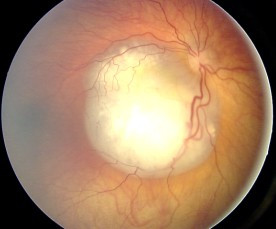
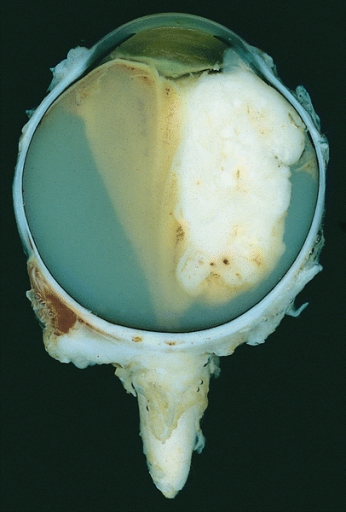
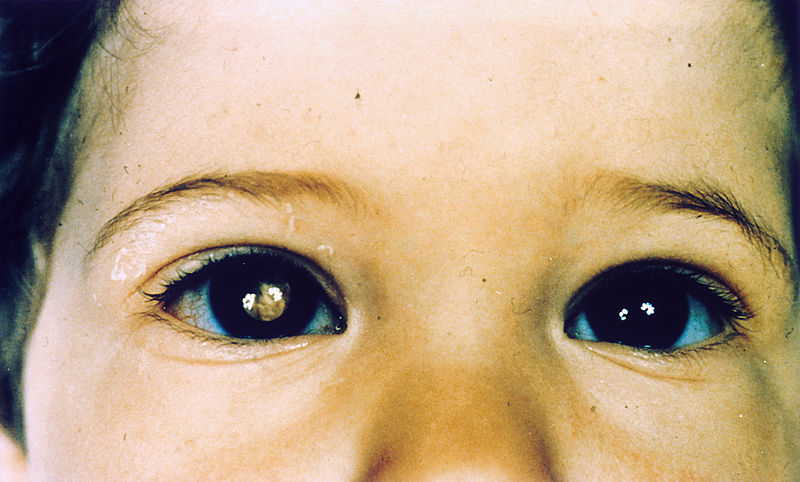
El retinoblastoma Retinoblastoma Retinoblastoma is a rare tumor but the most common primary intraocular malignancy of childhood. It is believed that the condition arises from a neuronal progenitor cell. Retinoblastoma can be heritable or non-heritable. Retinoblastoma es un tumor Tumor Inflammation raro, pero es la neoplasia maligna intraocular primaria más común de la infancia. Se cree que la afección surge de una célula progenitora neuronal. El retinoblastoma Retinoblastoma Retinoblastoma is a rare tumor but the most common primary intraocular malignancy of childhood. It is believed that the condition arises from a neuronal progenitor cell. Retinoblastoma can be heritable or non-heritable. Retinoblastoma puede ser hereditario o no hereditario. La afección generalmente se presenta como leucocoria unilateral o bilateral (reflejo blanco anormal en EN Erythema nodosum is an immune-mediated panniculitis (inflammation of the subcutaneous fat) caused by a type IV (delayed-type) hypersensitivity reaction. It commonly manifests in young women as tender, erythematous nodules on the shins. Erythema Nodosum el ojo) en EN Erythema nodosum is an immune-mediated panniculitis (inflammation of the subcutaneous fat) caused by a type IV (delayed-type) hypersensitivity reaction. It commonly manifests in young women as tender, erythematous nodules on the shins. Erythema Nodosum un niño menor de 2 años. El retinoblastoma Retinoblastoma Retinoblastoma is a rare tumor but the most common primary intraocular malignancy of childhood. It is believed that the condition arises from a neuronal progenitor cell. Retinoblastoma can be heritable or non-heritable. Retinoblastoma es fatal si no es tratado, pero el reconocimiento temprano representa una alta tasa de supervivencia en EN Erythema nodosum is an immune-mediated panniculitis (inflammation of the subcutaneous fat) caused by a type IV (delayed-type) hypersensitivity reaction. It commonly manifests in young women as tender, erythematous nodules on the shins. Erythema Nodosum países ricos en EN Erythema nodosum is an immune-mediated panniculitis (inflammation of the subcutaneous fat) caused by a type IV (delayed-type) hypersensitivity reaction. It commonly manifests in young women as tender, erythematous nodules on the shins. Erythema Nodosum recursos.

Last updated: Dec 15, 2025
Editorial responsibility: Stanley Oiseth, Lindsay Jones, Evelin Maza

Epidemiología

  • Neoplasia maligna intraocular primaria más común de la infancia
  • Incidencia: 1 en EN Erythema nodosum is an immune-mediated panniculitis (inflammation of the subcutaneous fat) caused by a type IV (delayed-type) hypersensitivity reaction. It commonly manifests in young women as tender, erythematous nodules on the shins. Erythema Nodosum 15 000 nacidos vivos en EN Erythema nodosum is an immune-mediated panniculitis (inflammation of the subcutaneous fat) caused by a type IV (delayed-type) hypersensitivity reaction. It commonly manifests in young women as tender, erythematous nodules on the shins. Erythema Nodosum los LOS Neisseria Estados Unidos
  • Las niñas y los LOS Neisseria niños se ven afectados por igual.
  • Representa alrededor del 4% de los LOS Neisseria tumores malignos en EN Erythema nodosum is an immune-mediated panniculitis (inflammation of the subcutaneous fat) caused by a type IV (delayed-type) hypersensitivity reaction. It commonly manifests in young women as tender, erythematous nodules on the shins. Erythema Nodosum niños < 15 años de edad
  • Aproximadamente el 95% de los LOS Neisseria niños afectados son diagnosticados antes de los LOS Neisseria 5 años.
  • La edad media de diagnóstico es de 18–20 meses.
  • Aproximadamente el 25%–30% de los LOS Neisseria casos son hereditarios.
  • Supervivencia
    • En EN Erythema nodosum is an immune-mediated panniculitis (inflammation of the subcutaneous fat) caused by a type IV (delayed-type) hypersensitivity reaction. It commonly manifests in young women as tender, erythematous nodules on the shins. Erythema Nodosum países ricos en EN Erythema nodosum is an immune-mediated panniculitis (inflammation of the subcutaneous fat) caused by a type IV (delayed-type) hypersensitivity reaction. It commonly manifests in young women as tender, erythematous nodules on the shins. Erythema Nodosum recursos: > 95%
    • En EN Erythema nodosum is an immune-mediated panniculitis (inflammation of the subcutaneous fat) caused by a type IV (delayed-type) hypersensitivity reaction. It commonly manifests in young women as tender, erythematous nodules on the shins. Erythema Nodosum países de recursos limitados/ en EN Erythema nodosum is an immune-mediated panniculitis (inflammation of the subcutaneous fat) caused by a type IV (delayed-type) hypersensitivity reaction. It commonly manifests in young women as tender, erythematous nodules on the shins. Erythema Nodosum desarrollo: < 30%

Fisiopatología

  • El retinoblastoma Retinoblastoma Retinoblastoma is a rare tumor but the most common primary intraocular malignancy of childhood. It is believed that the condition arises from a neuronal progenitor cell. Retinoblastoma can be heritable or non-heritable. Retinoblastoma es causado por una mutación genética del gen del retinoblastoma Retinoblastoma Retinoblastoma is a rare tumor but the most common primary intraocular malignancy of childhood. It is believed that the condition arises from a neuronal progenitor cell. Retinoblastoma can be heritable or non-heritable. Retinoblastoma (RB1 o RB RB Chlamydia) en EN Erythema nodosum is an immune-mediated panniculitis (inflammation of the subcutaneous fat) caused by a type IV (delayed-type) hypersensitivity reaction. It commonly manifests in young women as tender, erythematous nodules on the shins. Erythema Nodosum el 98% de los LOS Neisseria casos.
    • RB1 es un regulador negativo clave de la transición del ciclo celular G1/S y se inactiva directa o indirectamente en EN Erythema nodosum is an immune-mediated panniculitis (inflammation of the subcutaneous fat) caused by a type IV (delayed-type) hypersensitivity reaction. It commonly manifests in young women as tender, erythematous nodules on the shins. Erythema Nodosum la mayoría de los LOS Neisseria tumores malignos humanos.
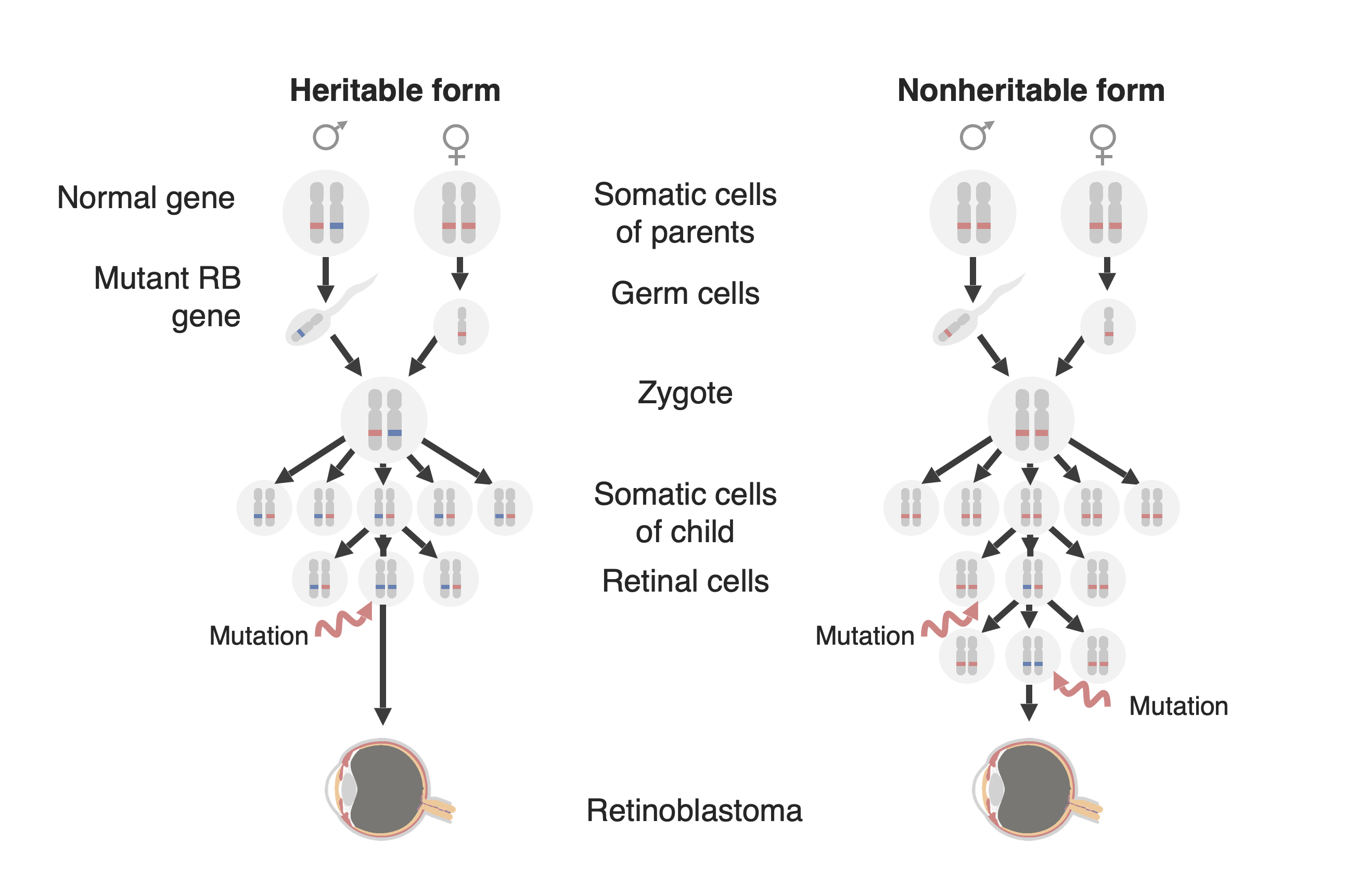
  • Forma no hereditaria: (70%–75% de los LOS Neisseria casos)
    • Dos mutaciones somáticas espontáneas ocurren en EN Erythema nodosum is an immune-mediated panniculitis (inflammation of the subcutaneous fat) caused by a type IV (delayed-type) hypersensitivity reaction. It commonly manifests in young women as tender, erythematous nodules on the shins. Erythema Nodosum las células progenitoras del gen RB1, lo que conduce al AL Amyloidosis desarrollo de retinoblastoma Retinoblastoma Retinoblastoma is a rare tumor but the most common primary intraocular malignancy of childhood. It is believed that the condition arises from a neuronal progenitor cell. Retinoblastoma can be heritable or non-heritable. Retinoblastoma.
    • Tiende a ser unilateral y unifocal Unifocal Retinoblastoma.
    • Se presenta a una edad media de ~24 meses (rango hasta 5 años)
  • Forma familiar o hereditaria: (25%–30% de los LOS Neisseria casos)
    • El niño hereda un alelo no funcional del gen RB1, que está presente en EN Erythema nodosum is an immune-mediated panniculitis (inflammation of the subcutaneous fat) caused by a type IV (delayed-type) hypersensitivity reaction. It commonly manifests in young women as tender, erythematous nodules on the shins. Erythema Nodosum todas las células somáticas.
    • Solo se necesita 1 mutación más (esporádica) del segundo alelo en EN Erythema nodosum is an immune-mediated panniculitis (inflammation of the subcutaneous fat) caused by a type IV (delayed-type) hypersensitivity reaction. It commonly manifests in young women as tender, erythematous nodules on the shins. Erythema Nodosum una célula progenitora neuronal para formar un retinoblastoma Retinoblastoma Retinoblastoma is a rare tumor but the most common primary intraocular malignancy of childhood. It is believed that the condition arises from a neuronal progenitor cell. Retinoblastoma can be heritable or non-heritable. Retinoblastoma.
    • Tiende a ser bilateral y/o multifocal Multifocal Retinoblastoma
    • Se presenta antes de 1 año
Formas de retinoblastoma: hereditarias y no hereditarias

Diagrama de las dos formas de desarrollo del retinoblastoma: una forma familiar (ahora llamada “forma hereditaria”, a la izquierda y una ”forma esporádica” (ahora llamada ”forma no hereditaria”) a la derecha. En la forma hereditaria, se transmite al niño un gen RB1 mutado (en azul), y solo se necesita una mutación adicional en el alelo normal emparejado (en rojo) para desarrollar el tumor. En la forma no hereditaria, el gen RB1 puede mutar de novo en la línea germinal de la descendencia (no se muestra en esta figura) para luego comportarse como en la forma hereditaria, o una célula precursora de la retina puede adquirir una mutación RB1 en ambos alelos creando así un tumor de retinoblastoma.

Imagen por Lecturio.
Presentación Clínica

  • Signos cardinales:
    • Leucocoria
    • Estrabismo
  • Signos y síntomas menos comunes:
    • Disminución de la visión
    • Inflamación ocular
    • Hemorragia vítrea
    • Glaucoma Glaucoma Glaucoma is an optic neuropathy characterized by typical visual field defects and optic nerve atrophy seen as optic disc cupping on examination. The acute form of glaucoma is a medical emergency. Glaucoma is often, but not always, caused by increased intraocular pressure (IOP). Glaucoma
    • Anisocoria Anisocoria Unequal pupil size, which may represent a benign physiologic variant or a manifestation of disease. Pathologic anisocoria reflects an abnormality in the musculature of the iris (iris diseases) or in the parasympathetic or sympathetic pathways that innervate the pupil. Physiologic anisocoria refers to an asymmetry of pupil diameter, usually less than 2mm, that is not associated with disease. Pupil: Physiology and Abnormalities
    • Proptosis Proptosis Retinoblastoma
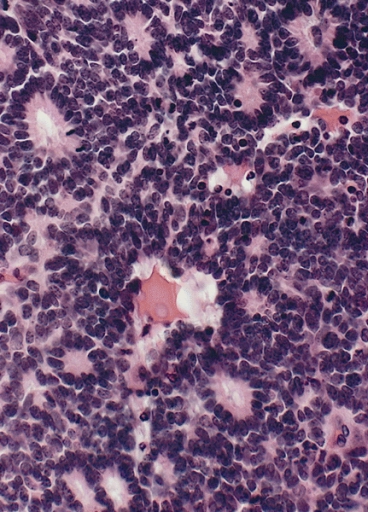
  • Histología:
    • Rara vez se necesita para confirmar el diagnóstico.
    • Una biopsia está contraindicada debido al AL Amyloidosis riesgo de siembra de tumores.
    • Se observan tres patrones de crecimiento: exofítico (debajo de la retina Retina The ten-layered nervous tissue membrane of the eye. It is continuous with the optic nerve and receives images of external objects and transmits visual impulses to the brain. Its outer surface is in contact with the choroid and the inner surface with the vitreous body. The outermost layer is pigmented, whereas the inner nine layers are transparent. Eye: Anatomy), endófito (hacia el vítreo) e infiltrante difuso (raro, crece dentro de la retina Retina The ten-layered nervous tissue membrane of the eye. It is continuous with the optic nerve and receives images of external objects and transmits visual impulses to the brain. Its outer surface is in contact with the choroid and the inner surface with the vitreous body. The outermost layer is pigmented, whereas the inner nine layers are transparent. Eye: Anatomy).

Diagnóstico

  • Referencia urgente al AL Amyloidosis oftalmólogo
  • Exploración oftalmoscópica bajo anestesia, con ultrasonido
  • Imágenes por resonancia magnética del cerebro y las órbitas
  • No se necesitan estudios formales de estadificación (es decir, examen de médula ósea, punción lumbar y/o gammagrafía ósea con radionúclidos) → las metástasis rara vez están presentes al AL Amyloidosis momento del diagnóstico
  • Se recomiendan pruebas genéticas.

Tratamiento y Pronóstico

Tratamiento

El tratamiento depende de la etapa, con múltiples terapias “preservadoras de la visión” disponibles:

  • Tumores extrafoveales pequeños y no complicados: crioterapia o fotocoagulación con láser
  • Estadíos más avanzados: quimioterapia local y sistémica, placas radiactivas
  • Alteración anatómica o funcional por tumor Tumor Inflammation: enucleación
  • Enfermedad metastásica:
    • Raramente (2%3%) presente en EN Erythema nodosum is an immune-mediated panniculitis (inflammation of the subcutaneous fat) caused by a type IV (delayed-type) hypersensitivity reaction. It commonly manifests in young women as tender, erythematous nodules on the shins. Erythema Nodosum el momento del diagnóstico
    • Trasplante autólogo de células madre tras terapia multimodal intensiva
  • ¡Es necesario un seguimiento de por vida para detectar neoplasias malignas secundarias!

Pronóstico

  • Supervivencia: > 95% en EN Erythema nodosum is an immune-mediated panniculitis (inflammation of the subcutaneous fat) caused by a type IV (delayed-type) hypersensitivity reaction. It commonly manifests in young women as tender, erythematous nodules on the shins. Erythema Nodosum países ricos en EN Erythema nodosum is an immune-mediated panniculitis (inflammation of the subcutaneous fat) caused by a type IV (delayed-type) hypersensitivity reaction. It commonly manifests in young women as tender, erythematous nodules on the shins. Erythema Nodosum recursos; < 30% en EN Erythema nodosum is an immune-mediated panniculitis (inflammation of the subcutaneous fat) caused by a type IV (delayed-type) hypersensitivity reaction. It commonly manifests in young women as tender, erythematous nodules on the shins. Erythema Nodosum países con recursos muy limitados
  • El pronóstico de la visión depende de la extensión del tumor Tumor Inflammation: el 50% de los LOS Neisseria pacientes alcanzan una agudeza visual final de 20/40 o mejor.

Diagnóstico Diferencial

El diagnóstico diferencial incluye cualquier afección que pueda causar leucocoria.

  • Vasculatura fetal persistente: fracaso del vítreo primario embrionario y del sistema vascular hialoides para involucionar durante la gestación. El pronóstico visual es malo.
  • Retinopatía del prematuro: es un trastorno ocular potencialmente cegador que afecta principalmente a los LOS Neisseria bebés prematuros. El trastorno es causado por la neovascularización con vasos anormales y frágiles debido a los LOS Neisseria factores de crecimiento liberados por los LOS Neisseria vasos retinianos periféricos desarrollados de forma incompleta. Los LOS Neisseria vasos sangran con facilidad y causan cicatrices. La mayoría de los LOS Neisseria casos de retinopatía del prematuro son leves.
  • Catarata: es una afección congénita o adquirida en EN Erythema nodosum is an immune-mediated panniculitis (inflammation of the subcutaneous fat) caused by a type IV (delayed-type) hypersensitivity reaction. It commonly manifests in young women as tender, erythematous nodules on the shins. Erythema Nodosum la que el cristalino del ojo se vuelve progresivamente opaco, lo que resulta en EN Erythema nodosum is an immune-mediated panniculitis (inflammation of the subcutaneous fat) caused by a type IV (delayed-type) hypersensitivity reaction. It commonly manifests in young women as tender, erythematous nodules on the shins. Erythema Nodosum una visión borrosa.
  • Enfermedad de Coats: es un trastorno idiopático caracterizado por telangiectasia Telangiectasia Permanent dilation of preexisting blood vessels creating small focal red lesions, most commonly in the skin or mucous membranes. It is characterized by the prominence of skin blood vessels, such as vascular spiders. Chronic Venous Insufficiency retiniana con ruptura de la barrera hematorretiniana. Afecta más comúnmente a los LOS Neisseria niños. Puede causar desprendimiento de retina Retina The ten-layered nervous tissue membrane of the eye. It is continuous with the optic nerve and receives images of external objects and transmits visual impulses to the brain. Its outer surface is in contact with the choroid and the inner surface with the vitreous body. The outermost layer is pigmented, whereas the inner nine layers are transparent. Eye: Anatomy y ceguera.
  • Hemorragia vítrea: es la presencia de sangre dentro de la cavidad vítrea. Tres afecciones causan la mayoría de los LOS Neisseria casos de hemorragia vítrea: trauma ocular, desprendimiento de vítreo posterior asociado con desprendimiento de retina Retina The ten-layered nervous tissue membrane of the eye. It is continuous with the optic nerve and receives images of external objects and transmits visual impulses to the brain. Its outer surface is in contact with the choroid and the inner surface with the vitreous body. The outermost layer is pigmented, whereas the inner nine layers are transparent. Eye: Anatomy y retinopatía diabética proliferativa.
  • Toxocariasis Toxocariasis Toxocariasis is caused by the nematodes Toxocara canis and T. cati. These species frequently infect dogs and cats and are most commonly transmitted to humans via accidental ingestion of eggs through the fecal-oral route. Toxocara are not able to complete their life cycle in humans, but they do migrate to organs (including the liver, lungs, heart, brain, and eyes), where they cause inflammation and tissue damage. Toxocariasis ocular (larva migrans ocular): es una infección rara causada por ascárides, Toxocara canis Toxocara canis A species of parasitic nematode found in the intestine of dogs. Lesions in the brain, liver, eye, kidney, and lung are caused by migrating larvae. In humans, these larvae do not follow normal patterns and may produce visceral larva migrans (larva migrans, visceral). Toxocariasis y Toxocara cati Toxocara Cati Toxocariasis. Se presenta con uveítis posterior y se asocia con visión reducida, fotofobia, particulas flotantes y leucocoria.
  • Vitreorretinopatía exudativa familiar: son un grupo de enfermedades hereditarias raras con angiogénesis retiniana anormal que causa vascularización incompleta de la retina Retina The ten-layered nervous tissue membrane of the eye. It is continuous with the optic nerve and receives images of external objects and transmits visual impulses to the brain. Its outer surface is in contact with the choroid and the inner surface with the vitreous body. The outermost layer is pigmented, whereas the inner nine layers are transparent. Eye: Anatomy periférica. Puede conducir a una neovascularización secundaria con progresión a la ceguera.
  • Coloboma Coloboma Congenital anomaly in which some of the structures of the eye are absent due to incomplete fusion of the fetal intraocular fissure during gestation. Esophageal Atresia and Tracheoesophageal Fistula: es un trastorno del desarrollo debido a la falta de fusión de la fisura óptica (coroides), por lo que puede haber un defecto presente en EN Erythema nodosum is an immune-mediated panniculitis (inflammation of the subcutaneous fat) caused by a type IV (delayed-type) hypersensitivity reaction. It commonly manifests in young women as tender, erythematous nodules on the shins. Erythema Nodosum cualquier parte de la porción inferior del ojo, desde el disco óptico hasta el iris. Un disco óptico grande y un coloboma Coloboma Congenital anomaly in which some of the structures of the eye are absent due to incomplete fusion of the fetal intraocular fissure during gestation. Esophageal Atresia and Tracheoesophageal Fistula coriorretiniano pueden causar leucocoria.
  • Hamartoma Hamartoma A focal malformation resembling a neoplasm, composed of an overgrowth of mature cells and tissues that normally occur in the affected area. Colorectal Cancer astrocítico retiniano: es un tumor Tumor Inflammation generalmente indoloro que ocurre en EN Erythema nodosum is an immune-mediated panniculitis (inflammation of the subcutaneous fat) caused by a type IV (delayed-type) hypersensitivity reaction. It commonly manifests in young women as tender, erythematous nodules on the shins. Erythema Nodosum aproximadamente la mitad de los LOS Neisseria pacientes con complejo de esclerosis tuberosa. La afección también se asocia con neurofibromatosis.

Referencias

  1. Kaufman PL, Kim J, Berry JL. (2024). Retinoblastoma: Clinical presentation, evaluation, and diagnosis. UpToDate. Retrieved August 9, 2025, from https://www.uptodate.com/contents/retinoblastoma-clinical-presentation-evaluation-and-diagnosis#H3
  2. Kaufman PL, Kim J, Berry JL. (2024). Retinoblastoma: Treatment and outcome. UpToDate. Retrieved August 9, 2025, from https://www.uptodate.com/contents/retinoblastoma-treatment-and-outcome?topicRef=6275&source=see_link
  3. Lazar, A.L. (2020). In Kumar, V., Abbas, A. K., Aster, J.C., (Eds.), Robbins & Cotran Pathologic Basis of Disease. (10 ed., pp. 1324, 290-294). Elsevier, Inc.
  4. Berry JL, Polski A, Cavenee WK, Dryja TP, Murphree AL, Gallie BL. The RB1 Story: Characterization and Cloning of the First Tumor Suppressor Gene. Genes (Basel). 2019 Nov 1;10(11):879. doi: 10.3390/genes10110879.
  5. Hurwitz RL, Hurwitz M. (2017). Retinoblastoma. National Organization for Rare Disorders (NORD). Retrieved August 9, 2025, from https://rarediseases.org/rare-diseases/retinoblastoma/
  6. Demirci H, Shields CL, Meadows AT, Shields JA. Long-term visual outcome following chemoreduction for retinoblastoma. Arch Ophthalmol. 2005;123(11):1525. 
  7. Shields, C.L., Schoenberg, E.,  Kocher, K., et al. (2013), Lesions simulating retinoblastoma (pseudoretinoblastoma) in 604 cases: results based on age at presentation. Ophthalmology. 2013;120(2):311-316.
  8. National Cancer Institute. (2025). Retinoblastoma Treatment (PDQ®)–Health Professional Version. National Cancer Institute. Retrieved August 9, 2025, from https://www.cancer.gov/types/retinoblastoma/hp/retinoblastoma-treatment-pdq

¡Crea tu cuenta gratis o inicia una sesión para seguir leyendo!

Regístrate ahora y obtén acceso gratuito a Lecturio con páginas de concepto, videos médicos y cuestionarios para tu educación médica.

User Reviews

Que tengas una sesión de estudio alegre y navideña 🎁 Ahorra 50% en todos los planes >>

Details