Domina Conceptos Médicos

Estudia para la escuela de medicina y tus examenes con Lecturio.

Púrpura Trombótica Trombocitopénica

La púrpura trombótica trombocitopénica (PTT) es una enfermedad potencialmente mortal debida a una deficiencia congénita o adquirida de ADAMTS-13, una metaloproteinasa que escinde los LOS Neisseria multímeros del factor Von Willebrand (FVW). Los LOS Neisseria grandes multímeros agregan entonces un exceso de plaquetas, lo que provoca una trombosis microvascular y un aumento del consumo de plaquetas. La presentación clínica puede consistir en EN Erythema nodosum is an immune-mediated panniculitis (inflammation of the subcutaneous fat) caused by a type IV (delayed-type) hypersensitivity reaction. It commonly manifests in young women as tender, erythematous nodules on the shins. Erythema Nodosum trombocitopenia, anemia Anemia Anemia is a condition in which individuals have low Hb levels, which can arise from various causes. Anemia is accompanied by a reduced number of RBCs and may manifest with fatigue, shortness of breath, pallor, and weakness. Subtypes are classified by the size of RBCs, chronicity, and etiology. Anemia: Overview and Types hemolítica, hematuria Hematuria Presence of blood in the urine. Renal Cell Carcinoma, síntomas gastrointestinales, síntomas neurológicos y afectación renal. El diagnóstico se establece sobre la base de una combinación de síntomas clínicos y pruebas de laboratorio. La púrpura trombótica trombocitopénica es una emergencia médica y casi siempre es mortal si no se inicia rápidamente el tratamiento adecuado. El tratamiento de emergencia incluye el intercambio de plasma Plasma The residual portion of blood that is left after removal of blood cells by centrifugation without prior blood coagulation. Transfusion Products y las terapias inmunosupresoras.

Last updated: Dec 15, 2025

Editorial responsibility: Stanley Oiseth, Lindsay Jones, Evelin Maza

Descripción General

Definición

La púrpura trombótica trombocitopénica es una microangiopatía trombótica causada por la deficiencia de ADAMTS-13, una proteasa que escinde el FVW.
Epidemiología

  • Incidencia anual: 3 casos por millón en EN Erythema nodosum is an immune-mediated panniculitis (inflammation of the subcutaneous fat) caused by a type IV (delayed-type) hypersensitivity reaction. It commonly manifests in young women as tender, erythematous nodules on the shins. Erythema Nodosum Estados Unidos (rara)
  • La proporción mujer/hombre es de 2:1.
  • Más común en EN Erythema nodosum is an immune-mediated panniculitis (inflammation of the subcutaneous fat) caused by a type IV (delayed-type) hypersensitivity reaction. It commonly manifests in young women as tender, erythematous nodules on the shins. Erythema Nodosum afroamericanos
  • Afecta predominantemente a los LOS Neisseria adultos:
    • Edad media: 41 años
    • Rango de edad: 9–78 años

Etiología

  • Deficiencia de la metaloproteinasa activa ADAMTS-13 (< 10% de actividad)
  • Congénita/hereditaria (rara):
    • También conocido como síndrome de Upshaw-Schulman
    • Condición autosómica recesiva (> 200 mutaciones patogénicas)
    • Es más probable que la PTT en EN Erythema nodosum is an immune-mediated panniculitis (inflammation of the subcutaneous fat) caused by a type IV (delayed-type) hypersensitivity reaction. It commonly manifests in young women as tender, erythematous nodules on the shins. Erythema Nodosum niños sea hereditaria.
    • Puede manifestarse por 1era vez en EN Erythema nodosum is an immune-mediated panniculitis (inflammation of the subcutaneous fat) caused by a type IV (delayed-type) hypersensitivity reaction. It commonly manifests in young women as tender, erythematous nodules on the shins. Erythema Nodosum mujeres jóvenes durante el embarazo
  • Adquirida:
    • Desarrollo de autoanticuerpos (inhibidores) contra ADAMTS-13
    • 30 veces más común que la PTT hereditaria
    • Condiciones predisponentes:
      • Cáncer
      • Embarazo
      • Trasplante de médula ósea
      • VIH
      • Medicamentos (aciclovir, antiagregantes plaquetarios ( clopidogrel Clopidogrel A ticlopidine analog and platelet purinergic p2y receptor antagonist that inhibits adenosine diphosphate-mediated platelet aggregation. It is used to prevent thromboembolism in patients with arterial occlusive diseases; myocardial infarction; stroke; or atrial fibrillation. Antiplatelet Drugs), quinina, anticonceptivos orales, quimioterápicos)

Fisiopatología

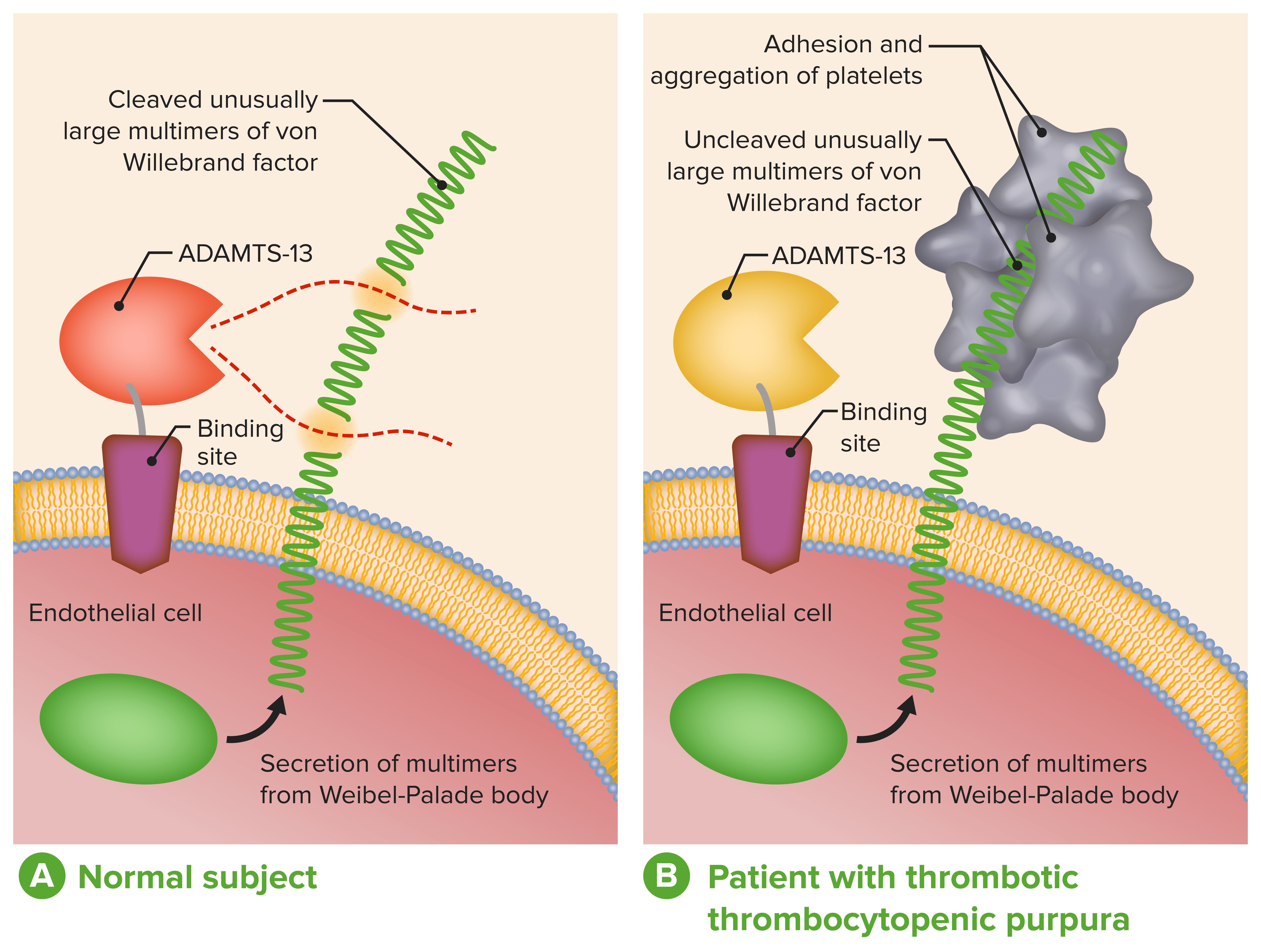
  • ADAMTS-13 es una proteasa que escinde grandes multímeros del FVW.
  • La acumulación de grandes multímeros provoca la activación de la agregación plaquetaria.
  • La activación y el reclutamiento de cantidades excesivas de plaquetas provocarán trombocitopenia.
  • El exceso de multímeros circulantes del FVW favorece la adhesión de plaquetas al AL Amyloidosis endotelio.
  • La agregación de las plaquetas conduce a trombosis y al AL Amyloidosis estrechamiento del vaso.
  • Estrechamiento de los LOS Neisseria vasos → fragmentación de los LOS Neisseria eritrocitos (esquistocitos)
  • Los LOS Neisseria eritrocitos fragmentados son eliminados por el bazo (hemólisis).
Thrombotic thrombocytopenic purpura

ADAMTS-13 en el diagnóstico y tratamiento de las microangiopatías trombóticas:
A: Función fisiológica normal de ADAMTS-13
B: La ausencia o la severa reducción de la actividad de ADAMTS-13 en pacientes con PTT impide el desdoblamiento oportuno de multímeros inusualmente grandes del FVW durante su secreción por las células endoteliales..

Imagen por Lecturio.

Presentación Clínica

PTT adquirida

La clásica pentada de PTT:

  • Solo está presente en EN Erythema nodosum is an immune-mediated panniculitis (inflammation of the subcutaneous fat) caused by a type IV (delayed-type) hypersensitivity reaction. It commonly manifests in young women as tender, erythematous nodules on the shins. Erythema Nodosum < 5% de los LOS Neisseria pacientes
  • Una pentada completa suele indicar una enfermedad tardía, no tratada y con alta mortalidad.
  • Los LOS Neisseria hallazgos incluyen:
    • Anemia Anemia Anemia is a condition in which individuals have low Hb levels, which can arise from various causes. Anemia is accompanied by a reduced number of RBCs and may manifest with fatigue, shortness of breath, pallor, and weakness. Subtypes are classified by the size of RBCs, chronicity, and etiology. Anemia: Overview and Types hemolítica microangiopática
    • Trombocitopenia
    • Fiebre
    • Insuficiencia renal aguda
    • Síntomas neurológicos graves

Manifestaciones sistémicas-orgánicas:

  • Sangrado:
    • Hematomas de fácil aparición
    • Púrpura, petequias
    • Las hemorragias importantes son raras.
  • Síntomas gastrointestinales:
  • Hallazgos neurológicos menores:
    • Cefalea
    • Confusión
    • Mareo
    • Alteraciones visuales
  • Hallazgos neurológicos mayores:
    • Coma Coma Coma is defined as a deep state of unarousable unresponsiveness, characterized by a score of 3 points on the GCS. A comatose state can be caused by a multitude of conditions, making the precise epidemiology and prognosis of coma difficult to determine. Coma
    • Accidente cerebrovascular
    • Convulsiones
    • Anomalías focales transitorias (alteración del habla, debilidad/entumecimiento)
  • Afectación renal:
    • Insuficiencia renal, edema Edema Edema is a condition in which excess serous fluid accumulates in the body cavity or interstitial space of connective tissues. Edema is a symptom observed in several medical conditions. It can be categorized into 2 types, namely, peripheral (in the extremities) and internal (in an organ or body cavity). Edema
    • La insuficiencia renal aguda anúrica es rara.
  • Síntomas cardíacos:
    • Arritmia
    • Insuficiencia cardíaca
    • Infarto de miocardio (IM)
    • Muerte súbita cardíaca
  • Constitucional:
    • Fiebre (rara)
    • Debilidad
    • No todos los LOS Neisseria pacientes están en EN Erythema nodosum is an immune-mediated panniculitis (inflammation of the subcutaneous fat) caused by a type IV (delayed-type) hypersensitivity reaction. It commonly manifests in young women as tender, erythematous nodules on the shins. Erythema Nodosum estado crítico (algunos presentan quejas vagas).
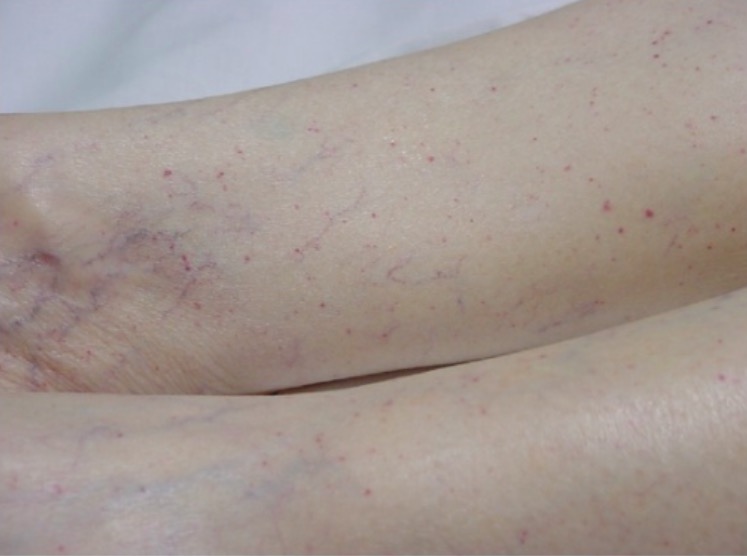
Erupción petequial típica de la PTT

Típica erupción petequial en las extremidades inferiores del paciente

Imagen: “Typical petechial rash” por Department of Emergency Medicine, University of Florida, Gainesville, FL 32610, USA. Licencia: CC BY 3.0

PTT congénita

A diferencia de la PTT adquirida, la PTT congénita no se presenta con episodios agudos.

Los LOS Neisseria síntomas suelen ser leves, vagos y continuos:

  • Letargo
  • Cefalea
  • Pérdida de concentración
  • Molestias abdominales

Las exacerbaciones graves y potencialmente mortales son más probables durante 2 períodos de la vida:
  • Neonatal:
    • Lo más crítico son los LOS Neisseria primeros días de vida.
    • Hemólisis severa
    • Hiperbilirrubinemia
    • Puede presentar posteriormente una trombocitopenia intermitente
    • Puede permanecer asintomática hasta la edad adulta
  • Embarazo:
    • Preeclampsia Preeclampsia A complication of pregnancy, characterized by a complex of symptoms including maternal hypertension and proteinuria with or without pathological edema. Symptoms may range between mild and severe. Pre-eclampsia usually occurs after the 20th week of gestation, but may develop before this time in the presence of trophoblastic disease. Hypertensive Pregnancy Disorders severa antes de las 20 semanas de gestación
    • Trombocitopenia
    • Hemólisis
    • Síntomas neurológicos transitorios
    • Lesión renal aguda
    • Muerte fetal

Diagnóstico

Antecedentes

  • Hemorragia o hematomas de fácil aparición
  • Dolor Dolor Inflammation/malestar abdominal
  • Fatiga, cefalea, letargo
  • Deterioros neurológicos transitorios
  • Trastornos del sistema inmunitario/malignidades
  • Antecedentes familiares de trastornos hemorrágicos

Examen físico

  • Puede no ser revelador
  • Piel: petequias, púrpura, hematomas
  • Edema Edema Edema is a condition in which excess serous fluid accumulates in the body cavity or interstitial space of connective tissues. Edema is a symptom observed in several medical conditions. It can be categorized into 2 types, namely, peripheral (in the extremities) and internal (in an organ or body cavity). Edema generalizado (insuficiencia renal)
  • Anomalías neurológicas focales
  • Estado mental anormal

Estudios de laboratorio

  • Hemograma
    • Trombocitopenia (plaquetas < 50 X109/L)
    • ↓ Hemoglobina (< 10 g/dL; hemólisis)
  • Estudios de coagulación:
    • Aumento del tiempo de sangrado
    • Tiempo de protrombina, tiempo parcial de tromboplastina activada, índice internacional normalizado y fibrinógeno normales
  • Función renal:
    • ↑ Creatinina
    • ↑ Nitrógeno de urea Urea A compound formed in the liver from ammonia produced by the deamination of amino acids. It is the principal end product of protein catabolism and constitutes about one half of the total urinary solids. Urea Cycle (BUN, por sus siglas en EN Erythema nodosum is an immune-mediated panniculitis (inflammation of the subcutaneous fat) caused by a type IV (delayed-type) hypersensitivity reaction. It commonly manifests in young women as tender, erythematous nodules on the shins. Erythema Nodosum inglés)
  • Pruebas de función hepática:
    • ↑ Bilirrubina no conjugada
    • ↓ Haptoglobina
    • ↑ Lactato deshidrogenasa ( LDH LDH Osteosarcoma)
  • Ensayos de actividad de ADAMTS-13:
    • < 10% de actividad
    • > 60% de actividad suele descartar el diagnóstico de PTT.
    • Se pueden medir los LOS Neisseria niveles de inhibidores.
    • Si no se detectan inhibidores, pruebas genéticas para la PTT hereditaria
  • Frotis de sangre:
    • Eritrocitos fragmentados (esquistocitos)
    • Trombocitopenia
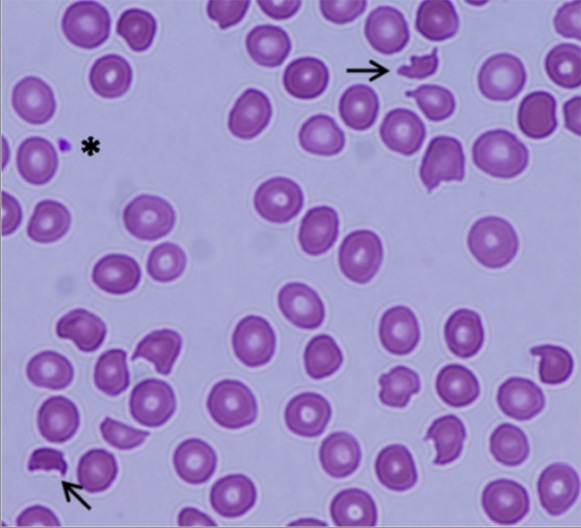
Película de sangre periférica que muestra esquistocitos

Púrpura trombótica trombocitopénica (PTT):
Frotis de sangre periférica que muestra esquistocitos (flechas) y una marcada disminución del número de plaquetas, lo que indica una anemia hemolítica microangiopática
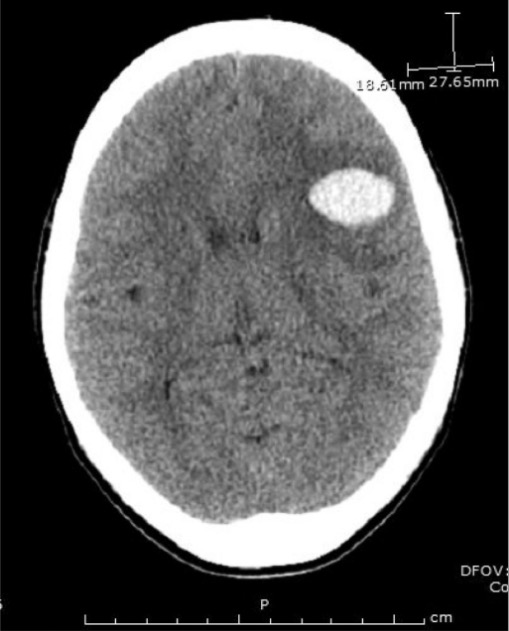
Imagen: “Peripheral blood film showing schistocytes” por Department of Medicine, Division of Hematology, Division of Hematopathology, Queen Elizabeth II Health Sciences Centre, Capital District Health, Authority and Dalhousie University, Halifax, Nova Scotia Canada. Licencia: CC BY 4.0

Imagenología

  • Tomografía computarizada (TC) o resonancia magnética (RM) del cerebro
  • Indicado para síntomas neurológicos
  • Descartar accidente cerebrovascular isquémico/hemorrágico.
TAC craneal de urgencia que demuestra la mayor de las dos hemorragias frontoparietales

TC craneal en un paciente que muestra la mayor de dos hemorragias frontoparietales

Imagen: “Emergent head CT demonstrating the larger of two frontoparietal hemorrhages” por Divisions of Infectious Disease, The George Washington University, School of Medicine and Health Sciences, Washington, DC, USA. Licencia: CC BY 3.0

Puntuación de PLASMIC

La puntuación PLASMIC predice la probabilidad de PTT en EN Erythema nodosum is an immune-mediated panniculitis (inflammation of the subcutaneous fat) caused by a type IV (delayed-type) hypersensitivity reaction. It commonly manifests in young women as tender, erythematous nodules on the shins. Erythema Nodosum presencia de esquistocitos en EN Erythema nodosum is an immune-mediated panniculitis (inflammation of the subcutaneous fat) caused by a type IV (delayed-type) hypersensitivity reaction. It commonly manifests in young women as tender, erythematous nodules on the shins. Erythema Nodosum el frotis de sangre.

Criterios PLASMIC (1 punto por cada uno):

  • Recuento de plaquetas < 30 000/μL
  • Hemólisis (definida por un recuento de reticulocitos > 2,5%, haptoglobina indetectable o bilirrubina indirecta > 2 mg/dL)
  • No hay cáncer activo
  • No hay trasplante de órganos sólidos ni de células madre
  • Volumen corpuscular medio (VCM) < 90 fL
  • Índice internacional normalizado (INR) < 1,5
  • Creatinina < 2,0 mg/dL

Puntuación:

  • 0–4 puntos: baja probabilidad de PTT
  • 5 puntos: probabilidad intermedia de PTT
  • 6–7 puntos: alta probabilidad de PTT

Tratamiento

  • El episodio/exacerbación de PTT debe tratarse de forma urgente.
  • Casi siempre es mortal si no se trata con prontitud
  • Con un tratamiento adecuado, la supervivencia es > 90%.
  • El pilar del tratamiento es el intercambio de plasma Plasma The residual portion of blood that is left after removal of blood cells by centrifugation without prior blood coagulation. Transfusion Products:
    • Repone el ADAMTS-13 funcional
    • Elimina los LOS Neisseria anticuerpos ofensivos
    • Se realiza diariamente hasta la recuperación
  • Infusión de plasma Plasma The residual portion of blood that is left after removal of blood cells by centrifugation without prior blood coagulation. Transfusion Products (medida provisional si no hay intercambio de plasma Plasma The residual portion of blood that is left after removal of blood cells by centrifugation without prior blood coagulation. Transfusion Products disponible)
  • Terapias adicionales:
    • Esteroides
    • Rituximab Rituximab A murine-derived monoclonal antibody and antineoplastic agent that binds specifically to the cd20 antigen and is used in the treatment of leukemia; lymphoma and rheumatoid arthritis. Immunosuppressants
    • Caplacizumab (anticuerpo anti-FVW)
    • Transfusión de plaquetas para la trombocitopenia

Diagnóstico Diferencial

  • Síndrome urémico hemolítico: una enfermedad que afecta principalmente a los LOS Neisseria niños o a los LOS Neisseria ancianos. La toxina Shiga provoca trombocitopenia grave, anemia Anemia Anemia is a condition in which individuals have low Hb levels, which can arise from various causes. Anemia is accompanied by a reduced number of RBCs and may manifest with fatigue, shortness of breath, pallor, and weakness. Subtypes are classified by the size of RBCs, chronicity, and etiology. Anemia: Overview and Types hemolítica y la consiguiente lesión renal. Los LOS Neisseria pacientes suelen tener un pródromo gastrointestinal antes de desarrollar trombocitopenia y anemia Anemia Anemia is a condition in which individuals have low Hb levels, which can arise from various causes. Anemia is accompanied by a reduced number of RBCs and may manifest with fatigue, shortness of breath, pallor, and weakness. Subtypes are classified by the size of RBCs, chronicity, and etiology. Anemia: Overview and Types. El síndrome urémico hemolítico tiene síntomas muy similares a la PTT; la diferencia es el pródromo gastrointestinal y el tratamiento (principalmente de soporte).
  • Púrpura trombocitopénica inmunomediada (anteriormente conocida como púrpura trombocitopénica idiopática): enfermedad que se desarrolla de forma secundaria a la destrucción inmunomediada de las plaquetas que da lugar a una trombocitopenia. Los LOS Neisseria anticuerpos de inmunoglobulina G ( IgG IgG The major immunoglobulin isotype class in normal human serum. There are several isotype subclasses of igg, for example, igg1, igg2a, and igg2b. Hypersensitivity Pneumonitis) marcan las plaquetas, que son luego eliminadas por el bazo. La púrpura trombocitopénica inmunomediada es un diagnóstico de exclusión y se trata con esteroides e inmunoglobulina intravenosa.
  • Enfermedad de Von Willebrand (EVW): el trastorno hemorrágico hereditario más común, la EVW está causada por una anomalía del FVW. Los LOS Neisseria hematomas y las hemorragias mucocutáneas son manifestaciones comunes. La mayoría de los LOS Neisseria individuos con EVW tienen un hemograma normal, y muchos tienen estudios de coagulación normales. Sin embargo, algunos individuos tienen un tiempo parcial de tromboplastina activada prolongado. El tratamiento suele ser con desmopresina.
  • Coagulación intravascular diseminada (CID): complicación de muchas enfermedades, la CID es un desequilibrio entre procoagulantes y anticoagulantes. Hay un consumo excesivo de plaquetas, factores de coagulación y fibrinógeno debido a la formación de trombos. La presentación incluye signos y síntomas de trombocitopenia. La enfermedad tiene una alta morbilidad y mortalidad y requiere una atención urgente, que implica la transfusión de productos sanguíneos y el tratamiento del proceso subyacente.
  • Púrpura de Henoch-Schönlein: vasculitis Vasculitis Inflammation of any one of the blood vessels, including the arteries; veins; and rest of the vasculature system in the body. Systemic Lupus Erythematosus autoinmune de pequeño vaso que se presenta típicamente como una tétrada de dolor Dolor Inflammation abdominal, hematuria Hematuria Presence of blood in the urine. Renal Cell Carcinoma, artritis y erupción purpúrica. El diagnóstico suele establecerse clínicamente y el tratamiento es principalmente de soporte, centrándose en EN Erythema nodosum is an immune-mediated panniculitis (inflammation of the subcutaneous fat) caused by a type IV (delayed-type) hypersensitivity reaction. It commonly manifests in young women as tender, erythematous nodules on the shins. Erythema Nodosum los LOS Neisseria síntomas.
  • Infecciones y medicamentos: muchas infecciones y medicamentos pueden causar trombocitopenia por varios mecanismos no inmunitarios. Algunos ejemplos son la supresión de la médula ósea, el hiperesplenismo y el consumo de plaquetas.

Referencias

  1. George, J., and Cuker, A. (2021), Acquired TTP: Initial treatment. In Leung, L. (Ed.), UpToDate. Retrieved March 06, 2021, from https://www.uptodate.com/contents/acquired-ttp-initial-treatment
  2. George, J., and Cuker, A. (2021), Acquired TTP: Clinical manifestations and diagnosis. In Leung, L. (Ed.), UpToDate. Retrieved March 06, 2021, from https://www.uptodate.com/contents/acquired-ttp-clinical-manifestations-and-diagnosis
  3. George, J., and Nester, C. (2021), Approach to the patient with suspected TTP, or other thrombotic microangiopathy (TMA). In Leung, L. (Ed.), UpToDate. Retrieved March 06, 2021, from https://www.uptodate.com/contents/approach-to-the-patient-with-suspected-ttp-hus-or-other-thrombotic-microangiopathy-tma
  4. Vesely SK, George JN, Lämmle B, et al. (2003). ADAMTS13 activity in thrombotic thrombocytopenic purpura-hemolytic uremic syndrome: relation to presenting features and clinical outcomes in a prospective cohort of 142 patients. Blood 2003; 102:60.
  5. Page EE, Kremer Hovinga JA, Terrell DR, et al. (2017). Thrombotic thrombocytopenic purpura: diagnostic criteria, clinical features, and long-term outcomes from 1995 through 2015. Blood Adv 2017; 1:590.
  6. Reese JA, Muthurajah DS, Kremer Hovinga JA, et al. (2013). Children and adults with thrombotic thrombocytopenic purpura associated with severe, acquired Adamts13 deficiency: comparison of incidence, demographic and clinical features. Pediatr Blood Cancer.

¡Crea tu cuenta gratis o inicia una sesión para seguir leyendo!

Regístrate ahora y obtén acceso gratuito a Lecturio con páginas de concepto, videos médicos y cuestionarios para tu educación médica.

User Reviews

Que tengas una sesión de estudio alegre y navideña 🎁 Ahorra 50% en todos los planes >>

Details