Domina Conceptos Médicos

Estudia para la escuela de medicina y tus examenes con Lecturio.

Púrpura Trombocitopénica Inmune

La púrpura trombocitopénica inmune (PTI), antes conocida como púrpura trombocitopénica idiopática, es una afección que se desarrolla de forma secundaria a la destrucción inmune de las plaquetas, lo que provoca trombocitopenia (recuento de plaquetas < 100 000/mm³). La púrpura trombocitopénica inmune puede ser primaria o secundaria debido a medicamentos o enfermedades subyacentes. El diagnóstico suele ser de exclusión. Muchos pacientes con PTI son asintomáticos. Cuando se presentan, los LOS Neisseria síntomas están relacionados principalmente con hemorragias (e.g., hematomas, petequias, epistaxis Epistaxis Bleeding from the nose. Granulomatosis with Polyangiitis), pero también es frecuente la fatiga. La gravedad de la trombocitopenia en EN Erythema nodosum is an immune-mediated panniculitis (inflammation of the subcutaneous fat) caused by a type IV (delayed-type) hypersensitivity reaction. It commonly manifests in young women as tender, erythematous nodules on the shins. Erythema Nodosum los LOS Neisseria pacientes con PTI es variable Variable Variables represent information about something that can change. The design of the measurement scales, or of the methods for obtaining information, will determine the data gathered and the characteristics of that data. As a result, a variable can be qualitative or quantitative, and may be further classified into subgroups. Types of Variables. Cuando el recuento de plaquetas desciende a < 20 000/mm³, aumenta el riesgo de hemorragias graves. El tratamiento puede incluir transfusiones de plaquetas, esteroides, inmunoglobulinas intravenosas y/o esplenectomía. Algunos casos remiten espontáneamente; otros tienen generalmente un buen pronóstico con una terapia adecuada.

Last updated: Dec 15, 2025

Editorial responsibility: Stanley Oiseth, Lindsay Jones, Evelin Maza

Descripción General

Definición

La púrpura trombocitopénica inmune es una trombocitopenia adquirida que resulta de autoanticuerpos dirigidos a antígenos plaquetarios.

Epidemiología

  • Prevalencia anual en EN Erythema nodosum is an immune-mediated panniculitis (inflammation of the subcutaneous fat) caused by a type IV (delayed-type) hypersensitivity reaction. It commonly manifests in young women as tender, erythematous nodules on the shins. Erythema Nodosum Estados Unidos:
    • 8 casos por cada 100 000 niños
    • 12 casos por cada 100 000 adultos
  • El 40% de los LOS Neisseria pacientes son menores de 10 años de edad.
  • La incidencia máxima en EN Erythema nodosum is an immune-mediated panniculitis (inflammation of the subcutaneous fat) caused by a type IV (delayed-type) hypersensitivity reaction. It commonly manifests in young women as tender, erythematous nodules on the shins. Erythema Nodosum los LOS Neisseria niños es de 2–4 años de edad.
  • La incidencia máxima en EN Erythema nodosum is an immune-mediated panniculitis (inflammation of the subcutaneous fat) caused by a type IV (delayed-type) hypersensitivity reaction. It commonly manifests in young women as tender, erythematous nodules on the shins. Erythema Nodosum los LOS Neisseria adultos es de 20–50 años de edad.
  • En EN Erythema nodosum is an immune-mediated panniculitis (inflammation of the subcutaneous fat) caused by a type IV (delayed-type) hypersensitivity reaction. It commonly manifests in young women as tender, erythematous nodules on the shins. Erythema Nodosum los LOS Neisseria adultos, las mujeres se ven más afectadas que los LOS Neisseria hombres.
  • Un-quinto a un-tercio de los LOS Neisseria casos son asintomáticos.

Etiología

  • Destrucción de las plaquetas circulantes mediada por anticuerpos
  • Anticuerpos contra la glicoproteína de superficie de las plaquetas (GP)IIb/IIIa
  • Un mecanismo adicional puede ser la destrucción autoinmune de los LOS Neisseria megacariocitos (progenitores de las plaquetas)
  • Primaria: trombocitopenia aislada (plaquetas < 100 000/mm³)
  • Secundaria (tras un suceso incitante):
    • Infecciones subyacentes (e.g., Helicobacter Helicobacter Helicobacter pylori is a gram-negative bacterium that causes gastric infection. It is the most well known and clinically significant species of Helicobacter. Transmission is believed to occur by ingestion of contaminated food or water; therefore, a higher prevalence of infection is seen in areas with poor sanitation. Helicobacter pylori ( H. pylori H. pylori A spiral bacterium active as a human gastric pathogen. It is a gram-negative, urease-positive, curved or slightly spiral organism initially isolated in 1982 from patients with lesions of gastritis or peptic ulcers in Western Australia. Helicobacter pylori was originally classified in the genus campylobacter, but RNA sequencing, cellular fatty acid profiles, growth patterns, and other taxonomic characteristics indicate that the micro-organism should be included in the genus Helicobacter. It has been officially transferred to Helicobacter gen. Helicobacter), virus Virus Viruses are infectious, obligate intracellular parasites composed of a nucleic acid core surrounded by a protein capsid. Viruses can be either naked (non-enveloped) or enveloped. The classification of viruses is complex and based on many factors, including type and structure of the nucleoid and capsid, the presence of an envelope, the replication cycle, and the host range. Virology de hepatitis C Hepatitis C Hepatitis C is an infection of the liver caused by the hepatitis C virus (HCV). The infection can be transmitted through infectious blood or body fluids and may be transmitted during childbirth or through IV drug use or sexual intercourse. Hepatitis C virus can cause both acute and chronic hepatitis, ranging from a mild to a serious, lifelong illness including liver cirrhosis and hepatocellular carcinoma (HCC). Hepatitis C Virus ( HCV HCV Hepatitis C is an infection of the liver caused by the hepatitis C virus (HCV). Hepatitis C virus is an RNA virus and a member of the genus Hepacivirus and the family Flaviviridae. The infection can be transmitted through infectious blood or body fluids and may be transmitted during childbirth or through IV drug use or sexual intercourse. Hepatitis C Virus, por sus siglas en EN Erythema nodosum is an immune-mediated panniculitis (inflammation of the subcutaneous fat) caused by a type IV (delayed-type) hypersensitivity reaction. It commonly manifests in young women as tender, erythematous nodules on the shins. Erythema Nodosum inglés), citomegalovirus, virus Virus Viruses are infectious, obligate intracellular parasites composed of a nucleic acid core surrounded by a protein capsid. Viruses can be either naked (non-enveloped) or enveloped. The classification of viruses is complex and based on many factors, including type and structure of the nucleoid and capsid, the presence of an envelope, the replication cycle, and the host range. Virology de la varicela zoster, virus Virus Viruses are infectious, obligate intracellular parasites composed of a nucleic acid core surrounded by a protein capsid. Viruses can be either naked (non-enveloped) or enveloped. The classification of viruses is complex and based on many factors, including type and structure of the nucleoid and capsid, the presence of an envelope, the replication cycle, and the host range. Virology de Epstein-Barr ( EBV EBV Epstein-barr virus (EBV) is a linear, double-stranded DNA virus belonging to the herpesviridae family. This highly prevalent virus is mostly transmitted through contact with oropharyngeal secretions from an infected individual. The virus can infect epithelial cells and B lymphocytes, where it can undergo lytic replication or latency. Epstein-Barr Virus, por sus siglas en EN Erythema nodosum is an immune-mediated panniculitis (inflammation of the subcutaneous fat) caused by a type IV (delayed-type) hypersensitivity reaction. It commonly manifests in young women as tender, erythematous nodules on the shins. Erythema Nodosum inglés), VIH)
    • Trastornos autoinmunes (e.g., lupus eritematoso sistémico (LES))
    • Trastornos linfoproliferativos
  • Inducida por medicamentos: quinina, sulfonamidas, heparina

Fisiopatología y Presentación Clínica

Fisiopatología

  • Los LOS Neisseria anti-GPIIb/IIIa son anticuerpos de inmunoglobulina G ( IgG IgG The major immunoglobulin isotype class in normal human serum. There are several isotype subclasses of igg, for example, igg1, igg2a, and igg2b. Hypersensitivity Pneumonitis) producidos por los LOS Neisseria linfocitos B.
  • La producción es impulsada por los LOS Neisseria linfocitos T colaboradores CD4+.
  • Los LOS Neisseria macrófagos esplénicos son las principales células presentadoras de antígenos.
  • Los LOS Neisseria anticuerpos anti-GPIIb/IIIa se unen a la glicoproteína de la superficie de las plaquetas.
  • Las plaquetas marcadas son secuestradas en EN Erythema nodosum is an immune-mediated panniculitis (inflammation of the subcutaneous fat) caused by a type IV (delayed-type) hypersensitivity reaction. It commonly manifests in young women as tender, erythematous nodules on the shins. Erythema Nodosum el bazo por los LOS Neisseria macrófagos esplénicos.
  • La morfología de las plaquetas en EN Erythema nodosum is an immune-mediated panniculitis (inflammation of the subcutaneous fat) caused by a type IV (delayed-type) hypersensitivity reaction. It commonly manifests in young women as tender, erythematous nodules on the shins. Erythema Nodosum la PTI es normal.
  • La trombopoyesis alterada en EN Erythema nodosum is an immune-mediated panniculitis (inflammation of the subcutaneous fat) caused by a type IV (delayed-type) hypersensitivity reaction. It commonly manifests in young women as tender, erythematous nodules on the shins. Erythema Nodosum la médula ósea no puede mantener un recuento normal de plaquetas circulantes

Presentación clínica

Inicio:

  • Aguda:
    • Presentación más común
    • Suele producirse tras una vacuna o una enfermedad vírica (hasta 6 meses)
    • Más común en EN Erythema nodosum is an immune-mediated panniculitis (inflammation of the subcutaneous fat) caused by a type IV (delayed-type) hypersensitivity reaction. It commonly manifests in young women as tender, erythematous nodules on the shins. Erythema Nodosum los LOS Neisseria niños
    • Normalmente, se resuelve en EN Erythema nodosum is an immune-mediated panniculitis (inflammation of the subcutaneous fat) caused by a type IV (delayed-type) hypersensitivity reaction. It commonly manifests in young women as tender, erythematous nodules on the shins. Erythema Nodosum 6 meses
    • Puede ser asintomática
  • Crónica:
    • Persiste > 12 meses
    • Insidiosa
    • Suele presentarse con un trastorno autoinmune o una enfermedad crónica
    • Más común en EN Erythema nodosum is an immune-mediated panniculitis (inflammation of the subcutaneous fat) caused by a type IV (delayed-type) hypersensitivity reaction. It commonly manifests in young women as tender, erythematous nodules on the shins. Erythema Nodosum adultos
    • Más común en EN Erythema nodosum is an immune-mediated panniculitis (inflammation of the subcutaneous fat) caused by a type IV (delayed-type) hypersensitivity reaction. It commonly manifests in young women as tender, erythematous nodules on the shins. Erythema Nodosum mujeres

Manifestaciones clínicas:

  • Asintomática:
    • Muchos pacientes son asintomáticos.
    • Los LOS Neisseria pacientes con recuentos de plaquetas > 50 000/mm³ rara vez presentan síntomas de hemorragia.
    • La fatiga puede ser el único síntoma que se presenta en EN Erythema nodosum is an immune-mediated panniculitis (inflammation of the subcutaneous fat) caused by a type IV (delayed-type) hypersensitivity reaction. It commonly manifests in young women as tender, erythematous nodules on the shins. Erythema Nodosum algunos casos.
  • Leve:
  • Moderada:
    • Recuento de plaquetas 10 000–30 000/mm³.
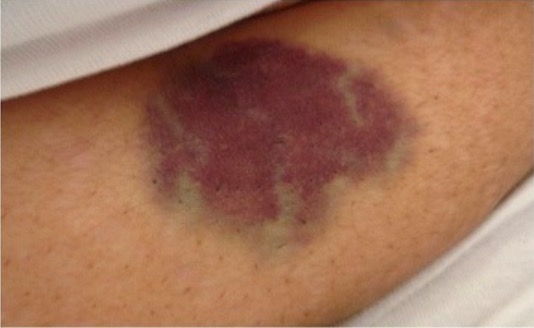
    • Hematomas de fácil aparición
    • Hemorragia espontánea
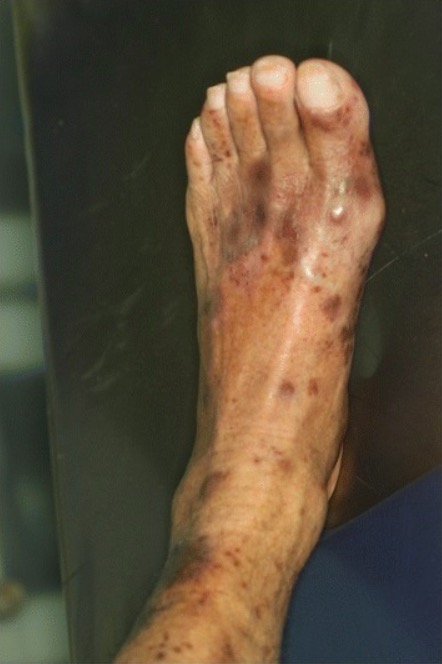
    • Púrpura (no palpable; generalmente áreas dependientes)
  • Grave:
    • Recuento de plaquetas inferior a 10 000/mm³.
    • Hemorragia intracraneal
    • Hemorragia digestiva
    • Posible shock Shock Shock is a life-threatening condition associated with impaired circulation that results in tissue hypoxia. The different types of shock are based on the underlying cause: distributive (↑ cardiac output (CO), ↓ systemic vascular resistance (SVR)), cardiogenic (↓ CO, ↑ SVR), hypovolemic (↓ CO, ↑ SVR), obstructive (↓ CO), and mixed. Types of Shock hemorrágico

Diagnóstico

Antecedentes

  • Infección reciente
  • Medicamentos
  • Condiciones crónicas subyacentes
  • Hematomas espontáneos, hemorragias con traumatismos menores y/o hemorragias nasales
  • Menstruación abundante
  • Fatiga inexplicable
  • Antecedentes familiares (para descartar otras causas de trombocitopenia)

Examen físico

  • Piel y membranas mucosas:
    • Petequias
    • Hematomas
    • Púrpura no palpable
    • Ampollas hemorrágicas en EN Erythema nodosum is an immune-mediated panniculitis (inflammation of the subcutaneous fat) caused by a type IV (delayed-type) hypersensitivity reaction. It commonly manifests in young women as tender, erythematous nodules on the shins. Erythema Nodosum las membranas mucosas (“púrpura húmeda”; un predictor de una hemorragia más grave)
  • A veces no hay hallazgos en EN Erythema nodosum is an immune-mediated panniculitis (inflammation of the subcutaneous fat) caused by a type IV (delayed-type) hypersensitivity reaction. It commonly manifests in young women as tender, erythematous nodules on the shins. Erythema Nodosum el examen físico
  • La esplenomegalia no es el síntoma de presentación de la PTI.

Estudios de laboratorio

  • Hematología:
    • Hemograma: trombocitopenia (plaquetas < 100 000 /mm³) sin otras anomalías
    • Tiempo de sangrado: prolongado
    • Tiempo de protrombina, tiempo parcial de tromboplastina activada, índice normalizado internacional (INR, por sus siglas en EN Erythema nodosum is an immune-mediated panniculitis (inflammation of the subcutaneous fat) caused by a type IV (delayed-type) hypersensitivity reaction. It commonly manifests in young women as tender, erythematous nodules on the shins. Erythema Nodosum inglés): normales
  • Serología:
    • VIH/ HCV HCV Hepatitis C is an infection of the liver caused by the hepatitis C virus (HCV). Hepatitis C virus is an RNA virus and a member of the genus Hepacivirus and the family Flaviviridae. The infection can be transmitted through infectious blood or body fluids and may be transmitted during childbirth or through IV drug use or sexual intercourse. Hepatitis C Virus para descartar trombocitopenia asociada a la enfermedad
    • H. pylori H. pylori A spiral bacterium active as a human gastric pathogen. It is a gram-negative, urease-positive, curved or slightly spiral organism initially isolated in 1982 from patients with lesions of gastritis or peptic ulcers in Western Australia. Helicobacter pylori was originally classified in the genus campylobacter, but RNA sequencing, cellular fatty acid profiles, growth patterns, and other taxonomic characteristics indicate that the micro-organism should be included in the genus Helicobacter. It has been officially transferred to Helicobacter gen. Helicobacter (asociado a la PTI)
    • Anticuerpos antinucleares (ANA, por sus siglas en EN Erythema nodosum is an immune-mediated panniculitis (inflammation of the subcutaneous fat) caused by a type IV (delayed-type) hypersensitivity reaction. It commonly manifests in young women as tender, erythematous nodules on the shins. Erythema Nodosum inglés) si se sospecha de LES
  • Frotis de sangre: plaquetas grandes (no es un hallazgo universal)
  • Aspirado de médula ósea:
    • No es necesario realizarlo de forma rutinaria para el diagnóstico de la PTI
    • Solo se hace HACE Altitude Sickness para descartar otros trastornos de la médula ósea
    • Muestra un número normal o aumentado de megacariocitos (morfología normal)

Tratamiento

Tratamiento

Indicaciones:

  • Plaquetas < 30 000/mm³.
  • Hemorragia activa

Hemorragia leve:

  • Transfusión de plaquetas
  • Glucocorticoides

Hemorragia grave (gastrointestinal/intracraneal; recuento de plaquetas: < 10 000/mm³):

  • Transfusión de plaquetas
  • Inmunoglobulina intravenosa
  • Inmunoglobulina anti-D/Rho(D):
    • Para los LOS Neisseria pacientes con tipo de sangre factor rhesus (Rh) +
    • Satura los LOS Neisseria macrófagos con eritrocitos recubiertos de anti-D
    • Se espera cierta hemólisis, pero retrasa la destrucción de las plaquetas.

Terapias adicionales para hemorragias activas/persistentes:

  • Reanimación con líquidos intravenosos/transfusión de sangre
  • Eliminar el traumatismo precipitante (si lo hay)
  • Detener el consumo de medicamentos precipitantes
  • Tratamiento antifibrinolítico (ácido tranexámico)
  • Factor VIIa recombinante
  • Agonistas del receptor Receptor Receptors are proteins located either on the surface of or within a cell that can bind to signaling molecules known as ligands (e.g., hormones) and cause some type of response within the cell. Receptors de la trombopoyetina
  • La esplenectomía de emergencia es el último recurso en EN Erythema nodosum is an immune-mediated panniculitis (inflammation of the subcutaneous fat) caused by a type IV (delayed-type) hypersensitivity reaction. It commonly manifests in young women as tender, erythematous nodules on the shins. Erythema Nodosum caso de fracaso del tratamiento médico.

Sin hemorragia y recuento de plaquetas > 30 000/mm³:

  • Vigilar, observar, educar
  • No es necesario el tratamiento

Evitar:

  • Medicamentos antiplaquetarios
  • Anticoagulantes
  • Traumatismos

Episodios recurrentes/refractarios:

  • Si es dependiente de esteroides: La esplenectomía es una opción razonable.
  • Los LOS Neisseria agonistas del receptor Receptor Receptors are proteins located either on the surface of or within a cell that can bind to signaling molecules known as ligands (e.g., hormones) and cause some type of response within the cell. Receptors de la trombopoyetina pueden considerarse si la esplenectomía está contraindicada.

PTI post-esplenectomía/refractaria a esteroides:

Pronóstico

  • El 80% de los LOS Neisseria niños tienen una remisión espontánea.
  • El 10% de los LOS Neisseria adultos tienen una remisión espontánea (generalmente en EN Erythema nodosum is an immune-mediated panniculitis (inflammation of the subcutaneous fat) caused by a type IV (delayed-type) hypersensitivity reaction. It commonly manifests in young women as tender, erythematous nodules on the shins. Erythema Nodosum los LOS Neisseria primeros 6 meses).
  • Un-tercio a dos-tercios de los LOS Neisseria pacientes alcanzarán recuentos de plaquetas estables y seguros con los LOS Neisseria tratamientos de primera línea.
  • La mortalidad es solo ligeramente superior a la de la población general.

Diagnóstico Diferencial

  • Enfermedad de Von Willebrand: es el trastorno hemorrágico hereditario más común causado por la anomalía del factor de Von Willebrand. Los LOS Neisseria hematomas y las hemorragias mucocutáneas son manifestaciones comunes de la enfermedad de Von Willebrand. La mayoría de los LOS Neisseria individuos con enfermedad de Von Willebrand tienen un hemograma normal y muchos tienen estudios de coagulación normales, pero algunos tienen un tiempo parcial de tromboplastina activada prolongado. El tratamiento suele ser con desmopresina.
  • Coagulación intravascular diseminada (CID): complicación de muchas enfermedades, la CID es un desequilibrio entre pro y anticoagulantes. La formación de trombos genera un consumo excesivo de plaquetas, factores de coagulación y fibrinógeno. La presentación incluye signos y síntomas de trombocitopenia. La morbilidad y la mortalidad son elevadas y la CID requiere una atención urgente que incluya la transfusión de hemoderivados y el tratamiento del proceso subyacente.
  • Púrpura trombocitopénica trombótica: trastorno congénito o adquirido debido a una deficiencia de la metaloproteinasa responsable de la descomposición del factor de Von Willebrand. La púrpura trombocitopénica trombótica entra en EN Erythema nodosum is an immune-mediated panniculitis (inflammation of the subcutaneous fat) caused by a type IV (delayed-type) hypersensitivity reaction. It commonly manifests in young women as tender, erythematous nodules on the shins. Erythema Nodosum los LOS Neisseria diagnósticos diferenciales con la PTI y la CID (todas se presentan con trombocitopenia). El diagnóstico es clínico y se apoya en EN Erythema nodosum is an immune-mediated panniculitis (inflammation of the subcutaneous fat) caused by a type IV (delayed-type) hypersensitivity reaction. It commonly manifests in young women as tender, erythematous nodules on the shins. Erythema Nodosum estudios sanguíneos y frotis de sangre. La púrpura trombocitopénica trombótica es más aguda que la PTI y requiere plasmaféresis urgente.
  • Púrpura de Henoch-Schönlein: una vasculitis Vasculitis Inflammation of any one of the blood vessels, including the arteries; veins; and rest of the vasculature system in the body. Systemic Lupus Erythematosus autoinmune de pequeños vasos que se presenta típicamente como una tétrada de dolor Dolor Inflammation abdominal, hematuria Hematuria Presence of blood in the urine. Renal Cell Carcinoma, artritis y erupción purpúrica. El diagnóstico suele establecerse clínicamente y el tratamiento suele ser de soporte y centrado en EN Erythema nodosum is an immune-mediated panniculitis (inflammation of the subcutaneous fat) caused by a type IV (delayed-type) hypersensitivity reaction. It commonly manifests in young women as tender, erythematous nodules on the shins. Erythema Nodosum los LOS Neisseria síntomas.
  • Infecciones y medicamentos: muchas infecciones y medicamentos pueden causar trombocitopenia por varios mecanismos no inmunes. Algunos ejemplos son la supresión de la médula ósea, el hiperesplenismo y el consumo de plaquetas.

Referencias

  1. Arnold, D., and Cunker, A. (2021). Immune thrombocytopenia (ITP) in adults: Clinical manifestations and diagnosis. In Leung, L. (Ed.), UpToDate. Retrieved March 03, 2021, from https://www.uptodate.com/contents/immune-thrombocytopenia-itp-in-adults-clinical-manifestations-and-diagnosis
  2. Arnold, D., and Cunker, A. (2021). Immune thrombocytopenia (ITP) in adults: Initial treatment and prognosis. In Leung, L. (Ed.), UpToDate. Retrieved March 03, 2021, from https://www.uptodate.com/contents/immune-thrombocytopenia-itp-in-adults-initial-treatment-and-prognosis
  3. Cines DB, Blanchette VS. Immune thrombocytopenic purpura. (2002). N Engl J Med 2002; 346:995. Retrieved March 03, 2021, from https://www.uptodate.com/contents/immune-thrombocytopenia-itp-in-adults-clinical-manifestations-and-diagnosis
  4. Rodeghiero F, Stasi R, Gernsheimer T, et al. (2009). Standardization of terminology, definitions and outcome criteria in immune thrombocytopenic purpura of adults and children: report from an international working group. https://www.uptodate.com/contents/immune-thrombocytopenia-itp-in-adults-clinical-manifestations-and-diagnosis/

¡Crea tu cuenta gratis o inicia una sesión para seguir leyendo!

Regístrate ahora y obtén acceso gratuito a Lecturio con páginas de concepto, videos médicos y cuestionarios para tu educación médica.

User Reviews

Que tengas una sesión de estudio alegre y navideña 🎁 Ahorra 50% en todos los planes >>

Details