Domina Conceptos Médicos

Estudia para la escuela de medicina y tus examenes con Lecturio.

Pierna: Anatomía

La parte inferior de la pierna, o simplemente “pierna” en EN Erythema nodosum is an immune-mediated panniculitis (inflammation of the subcutaneous fat) caused by a type IV (delayed-type) hypersensitivity reaction. It commonly manifests in young women as tender, erythematous nodules on the shins. Erythema Nodosum términos anatómicos, es la parte del miembro inferior entre la rodilla y la articulación del tobillo. La estructura ósea está compuesta por los LOS Neisseria huesos de la tibia Tibia The second longest bone of the skeleton. It is located on the medial side of the lower leg, articulating with the fibula laterally, the talus distally, and the femur proximally. Knee Joint: Anatomy y el peroné, que se articulan entre sí en EN Erythema nodosum is an immune-mediated panniculitis (inflammation of the subcutaneous fat) caused by a type IV (delayed-type) hypersensitivity reaction. It commonly manifests in young women as tender, erythematous nodules on the shins. Erythema Nodosum las articulaciones tibiofibulares proximal y distal. Los LOS Neisseria músculos de la pierna se agrupan en EN Erythema nodosum is an immune-mediated panniculitis (inflammation of the subcutaneous fat) caused by a type IV (delayed-type) hypersensitivity reaction. It commonly manifests in young women as tender, erythematous nodules on the shins. Erythema Nodosum los LOS Neisseria compartimentos anterior, lateral y posterior mediante extensiones de fascia Fascia Layers of connective tissue of variable thickness. The superficial fascia is found immediately below the skin; the deep fascia invests muscles, nerves, and other organs. Cellulitis, y ejercen su acción sobre el tobillo, el pie y los LOS Neisseria dedos.

Last updated: Dec 15, 2025

Editorial responsibility: Stanley Oiseth, Lindsay Jones, Evelin Maza

Huesos y Articulaciones

Tibia Tibia The second longest bone of the skeleton. It is located on the medial side of the lower leg, articulating with the fibula laterally, the talus distally, and the femur proximally. Knee Joint: Anatomy

  • Hueso medial de la pierna que soporta el peso
  • Se articula con el fémur y el peroné en EN Erythema nodosum is an immune-mediated panniculitis (inflammation of the subcutaneous fat) caused by a type IV (delayed-type) hypersensitivity reaction. It commonly manifests in young women as tender, erythematous nodules on the shins. Erythema Nodosum sentido proximal y con el astrágalo y el peroné en EN Erythema nodosum is an immune-mediated panniculitis (inflammation of the subcutaneous fat) caused by a type IV (delayed-type) hypersensitivity reaction. It commonly manifests in young women as tender, erythematous nodules on the shins. Erythema Nodosum sentido distal
  • Puntos de referencia importantes:
    • Los LOS Neisseria cóndilos tibiales:
      • Superficies proximales horizontales que se articulan con los LOS Neisseria cóndilos femorales
      • Separados por los LOS Neisseria tubérculos intercondilares lateral y medial
    • Tuberosidad tibial:
      • Zona triangular, superior-anterior, donde se unen los LOS Neisseria cóndilos
      • Lugar de fijación del tendón rotuliano
    • Diáfisis: superficies anterior, lateral y posterior
    • Maléolo medial:
      • Proyección distal
      • Se articula con el astrágalo como parte del tobillo

Peroné

  • Hueso delgado y lateral de la pierna
  • Se articula con la tibia Tibia The second longest bone of the skeleton. It is located on the medial side of the lower leg, articulating with the fibula laterally, the talus distally, and the femur proximally. Knee Joint: Anatomy en EN Erythema nodosum is an immune-mediated panniculitis (inflammation of the subcutaneous fat) caused by a type IV (delayed-type) hypersensitivity reaction. It commonly manifests in young women as tender, erythematous nodules on the shins. Erythema Nodosum sus extremos proximal y distal, y con el astrágalo en EN Erythema nodosum is an immune-mediated panniculitis (inflammation of the subcutaneous fat) caused by a type IV (delayed-type) hypersensitivity reaction. It commonly manifests in young women as tender, erythematous nodules on the shins. Erythema Nodosum su extremo distal
  • Puntos de referencia importantes:
    • La cabeza:
      • Sirve de lugar de unión para los LOS Neisseria ligamentos de la rodilla
      • Se articula con la tibia Tibia The second longest bone of the skeleton. It is located on the medial side of the lower leg, articulating with the fibula laterally, the talus distally, and the femur proximally. Knee Joint: Anatomy
    • Cuello:
      • Estrecho
      • El nervio peroneo común lo envuelve.
    • Diáfisis: superficies medial, lateral y posterior
    • Maléolo lateral:
      • Proyección distal
      • Se articula con el astrágalo como parte del tobillo
Pierna Vista Anterior y Posterior

Vistas anterior y posterior de la tibia, el peroné y las articulaciones tibiofibulares

Imagen por BioDigital, editado por Lecturio
Articulaciones

  • Articulación tibiofibular proximal:
    • Articulación del plano articular entre el cóndilo lateral de la tibia Tibia The second longest bone of the skeleton. It is located on the medial side of the lower leg, articulating with the fibula laterally, the talus distally, and the femur proximally. Knee Joint: Anatomy y la cabeza del peroné
    • Estabilizada por una cápsula resistente y múltiples ligamentos
  • Articulación tibiofibular distal:
    • Sindesmosis de los LOS Neisseria extremos distales del peroné y la tibia Tibia The second longest bone of the skeleton. It is located on the medial side of the lower leg, articulating with the fibula laterally, the talus distally, and the femur proximally. Knee Joint: Anatomy
    • Estabilizada por múltiples ligamentos y la membrana interósea
  • Membrana interósea:
    • Tejido fibroso proyectado hacia abajo y lateralmente
    • Conecta el borde medial del peroné con el borde lateral de la tibia Tibia The second longest bone of the skeleton. It is located on the medial side of the lower leg, articulating with the fibula laterally, the talus distally, and the femur proximally. Knee Joint: Anatomy
    • Estabiliza la pierna
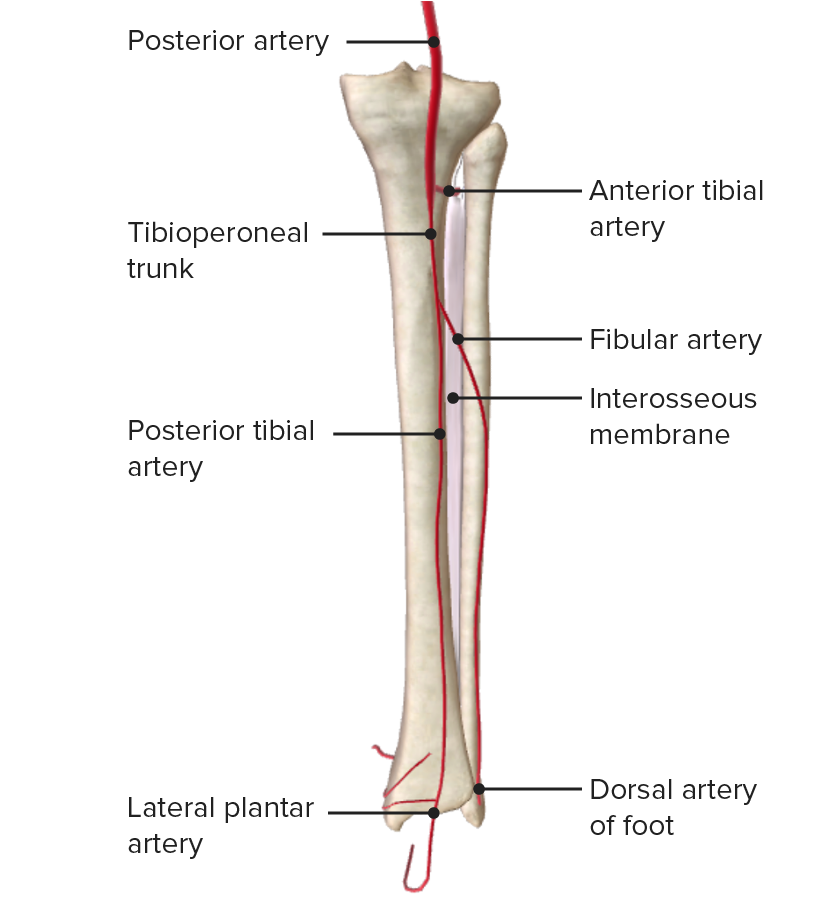
    • Contiene una abertura en EN Erythema nodosum is an immune-mediated panniculitis (inflammation of the subcutaneous fat) caused by a type IV (delayed-type) hypersensitivity reaction. It commonly manifests in young women as tender, erythematous nodules on the shins. Erythema Nodosum la región proximal que permite el paso de los LOS Neisseria vasos tibiales anteriores al AL Amyloidosis compartimento anterior de la pierna
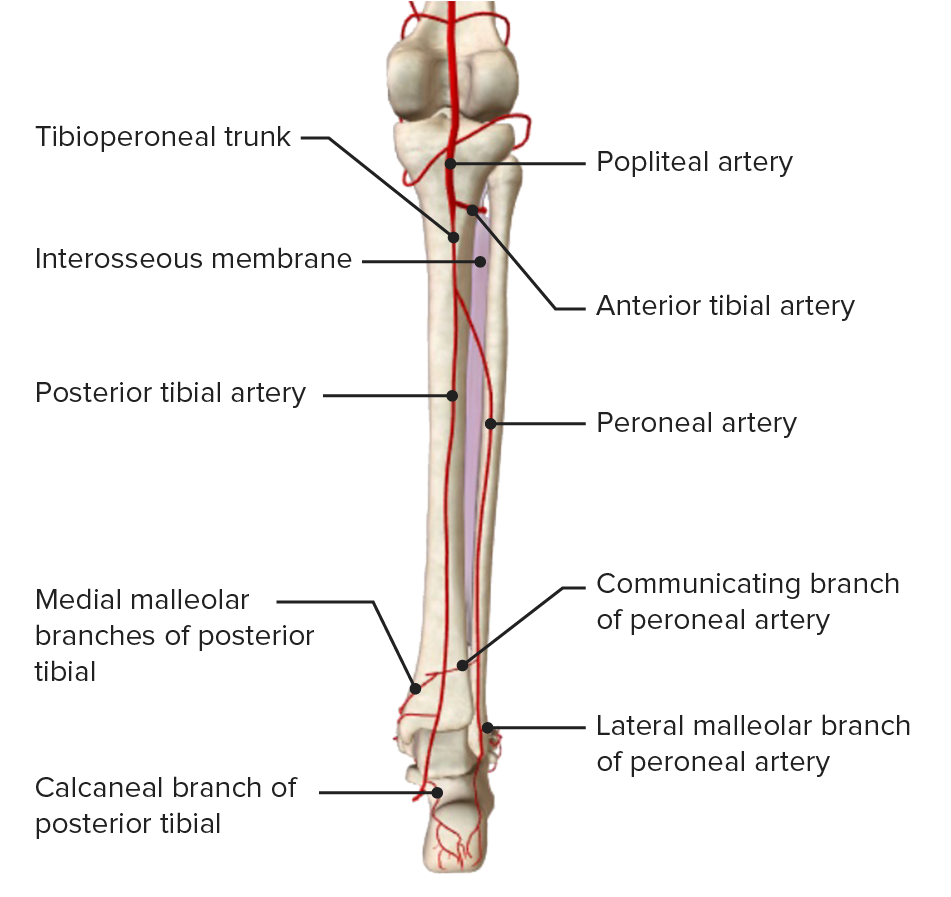
Vista posterior del suministro arterial de la pierna

Vista posterior de la pierna, mostrando la abertura en la membrana interósea y el paso de la arteria tibial anterior

Imagen por BioDigital, editado por Lecturio

Compartimentos Fasciales

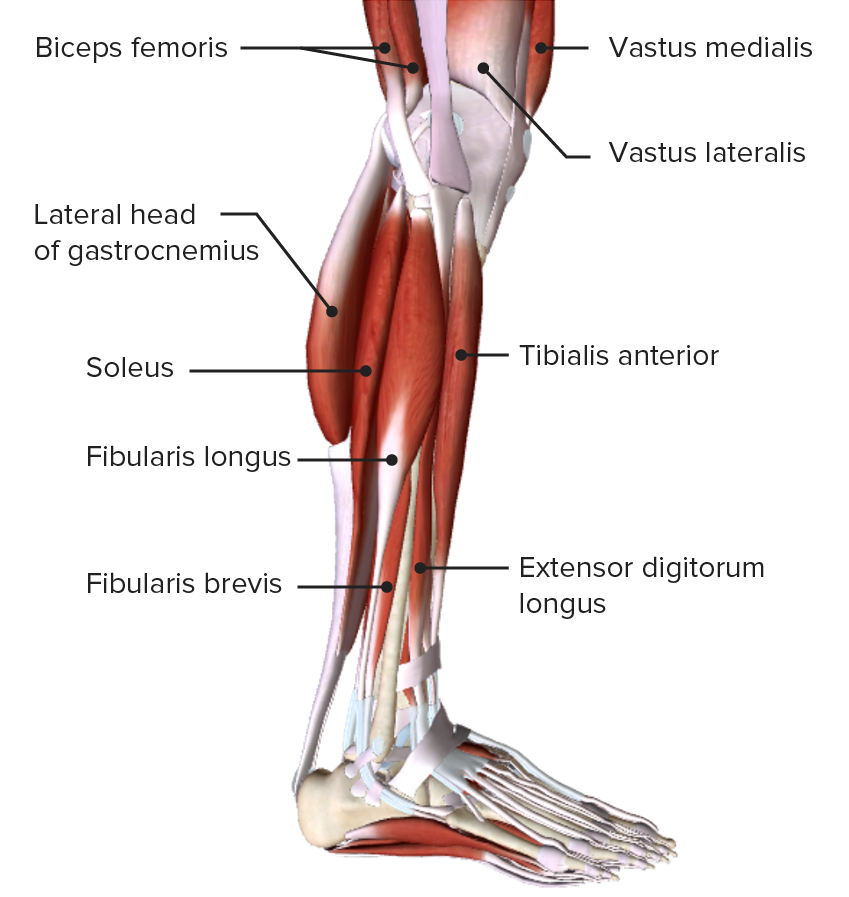
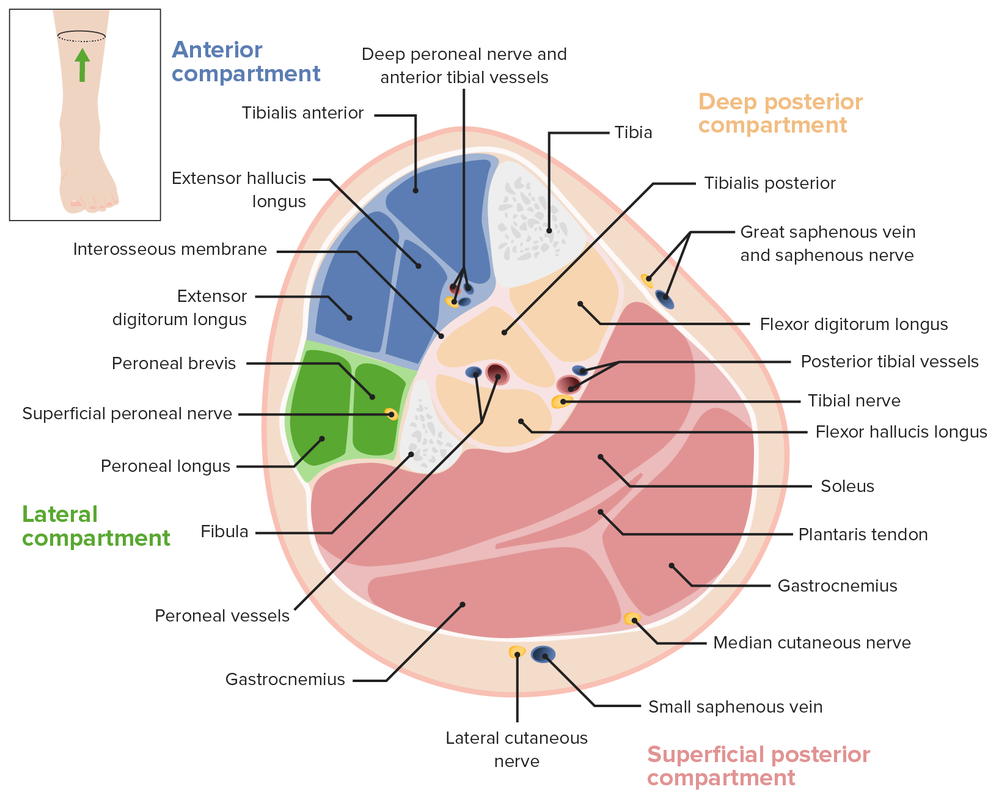
La pierna está dividida en EN Erythema nodosum is an immune-mediated panniculitis (inflammation of the subcutaneous fat) caused by a type IV (delayed-type) hypersensitivity reaction. It commonly manifests in young women as tender, erythematous nodules on the shins. Erythema Nodosum 4 compartimentos fasciales por la membrana interósea y los LOS Neisseria tabiques intermusculares anterior, posterior y transversal, como se indica a continuación:
  1. Compartimento anterior:
    • Separado del compartimento lateral por el tabique anterior
    • Separado del compartimento posterior profundo por la membrana interósea y la tibia Tibia The second longest bone of the skeleton. It is located on the medial side of the lower leg, articulating with the fibula laterally, the talus distally, and the femur proximally. Knee Joint: Anatomy
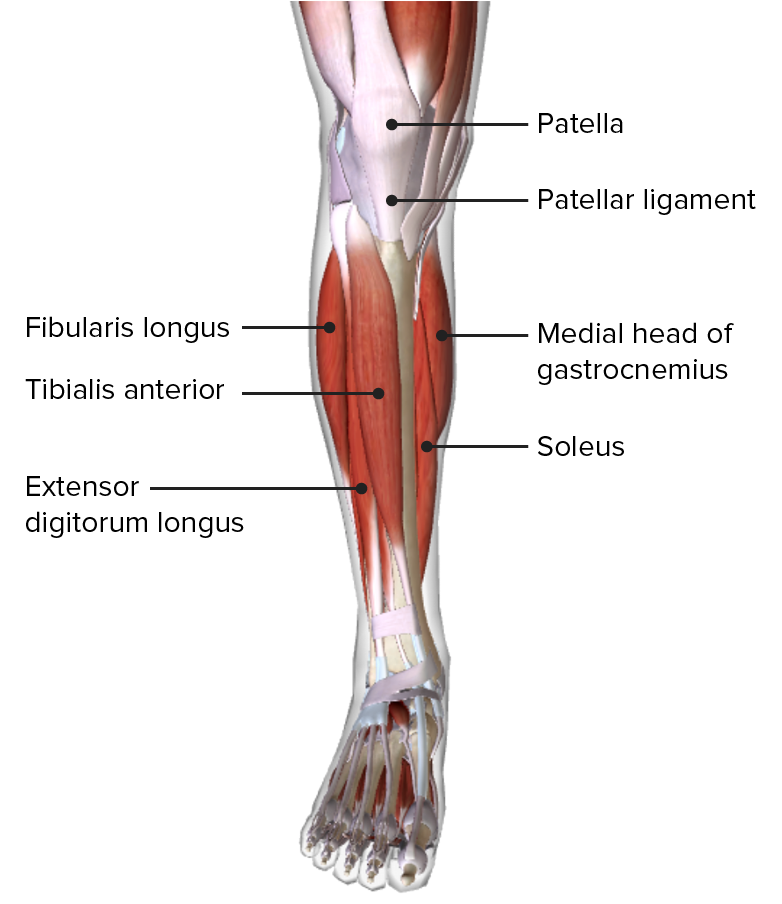
    • Contiene 4 músculos:
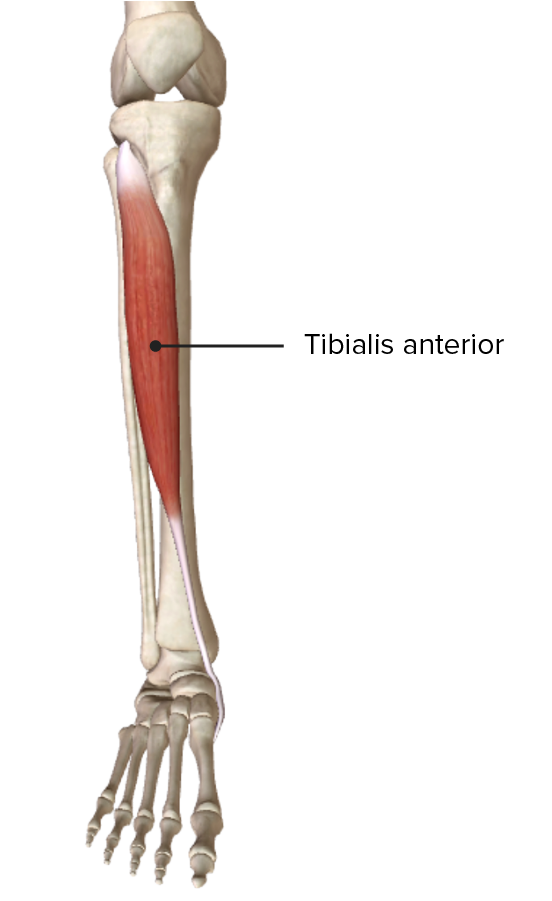
      • Tibial anterior
      • Extensor largo del hallux
      • Extensor largo de los LOS Neisseria dedos
      • Tercer peroneo
  2. Compartimento lateral:
    • Separado del compartimento anterior por el tabique anterior
    • Separado del compartimento posterior superficial por el tabique transversal
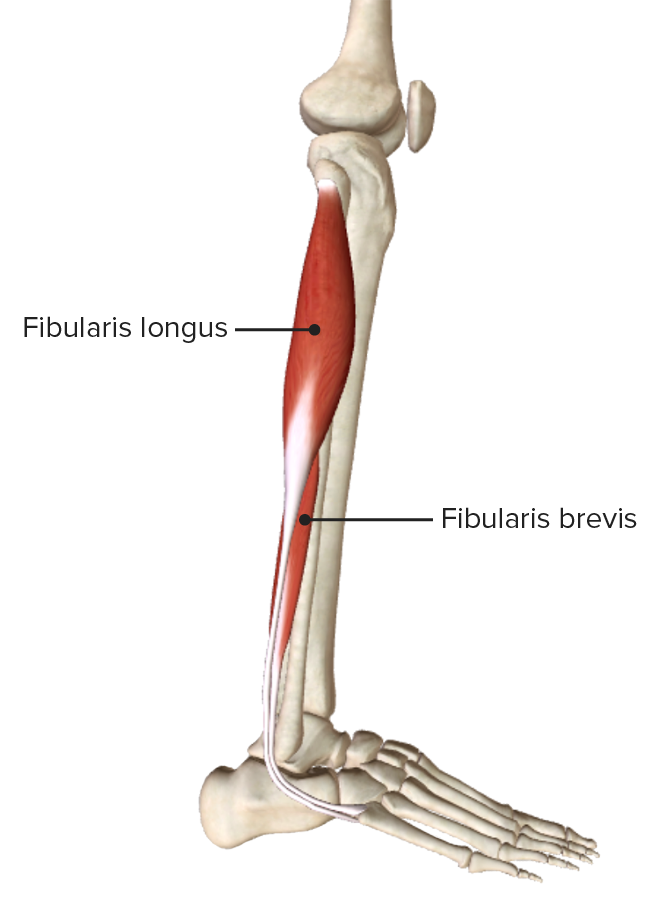
    • Contiene 2 músculos:
      • Peroneo corto
      • Peroneo largo
  3. Compartimento posterior superficial:
    • Separado del compartimento posterior profundo por el tabique posterior
    • Separado del compartimento lateral por el tabique transversal
    • Contiene 3 músculos:
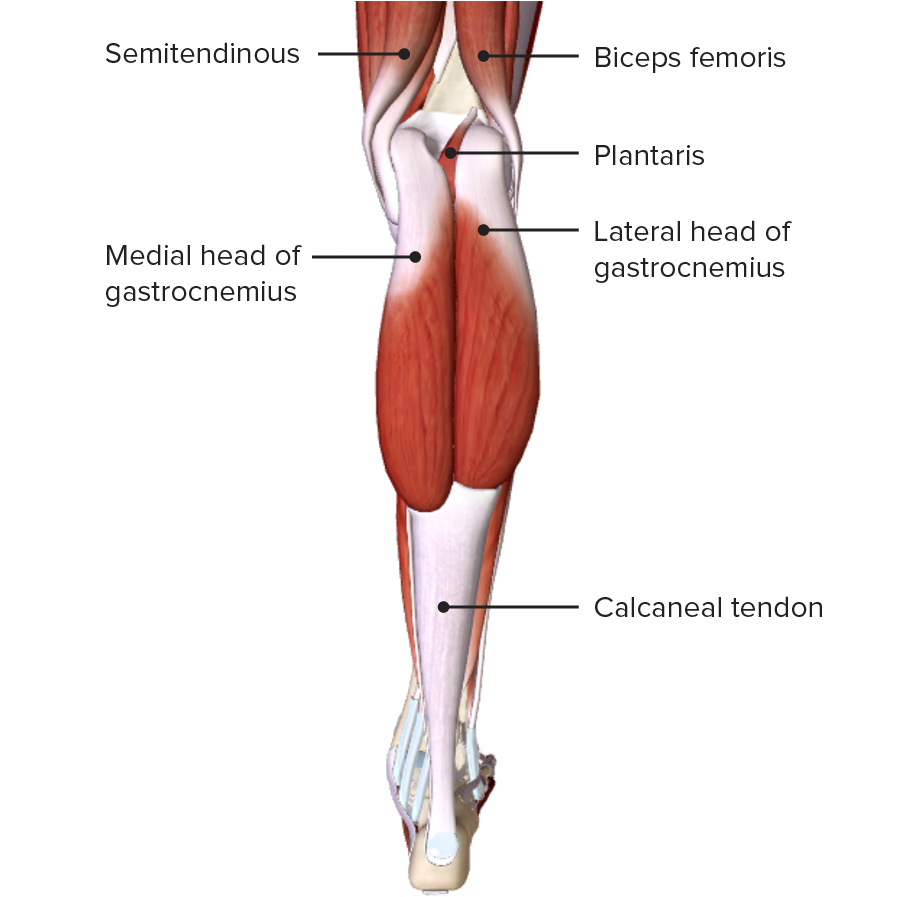
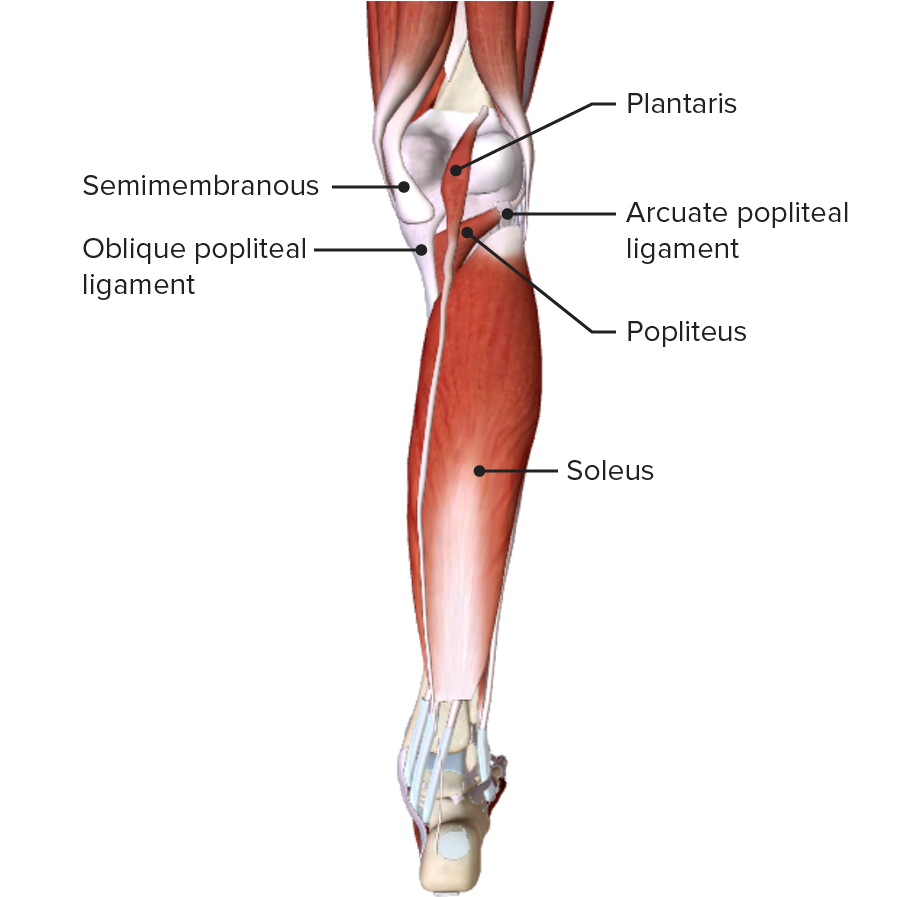
      • Sóleo
      • Gastrocnemio
      • Plantar
  4. Compartimento posterior profundo:
    • Separado del compartimento anterior por la membrana interósea y la tibia Tibia The second longest bone of the skeleton. It is located on the medial side of the lower leg, articulating with the fibula laterally, the talus distally, and the femur proximally. Knee Joint: Anatomy
    • Separado del compartimento posterior superficial por el tabique posterior
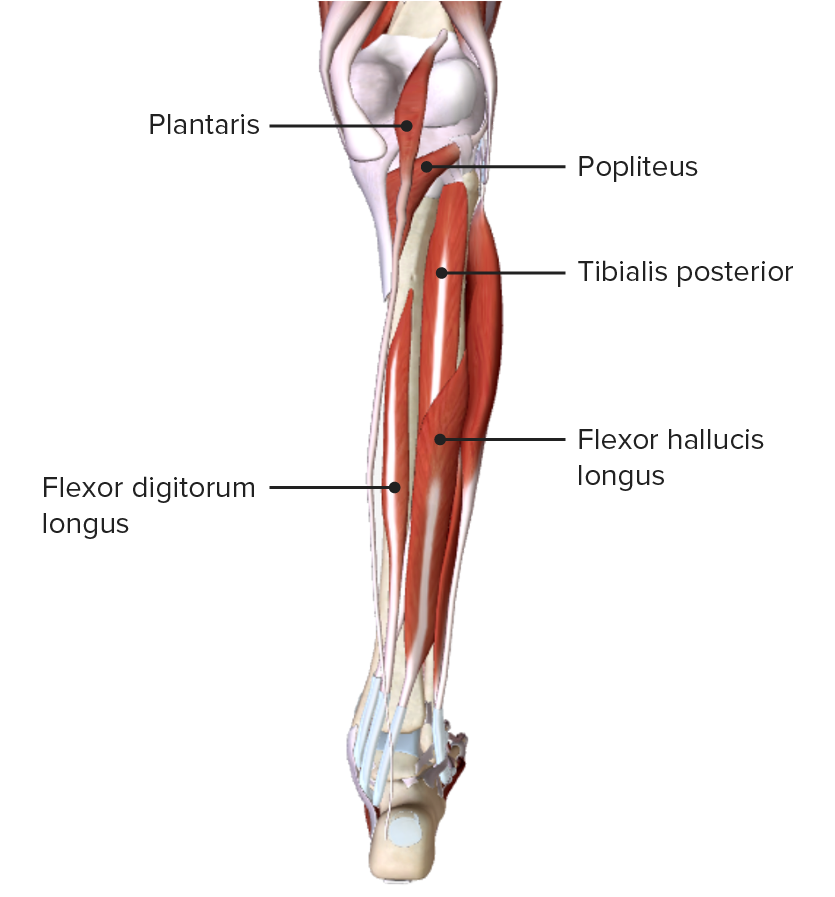
    • Contiene 4 músculos:
      • Poplíteo
      • Tibial posterior
      • Flexor largo de los LOS Neisseria dedos
      • Flexor largo del hallux
Corte transversal de la pierna

Corte transversal de la pierna, en el que se aprecian los compartimentos fasciales y la ubicación de los vasos principales

Imagen por Lecturio.

Related videos

Compartimento Anterior – Músculos Dorsiflexores

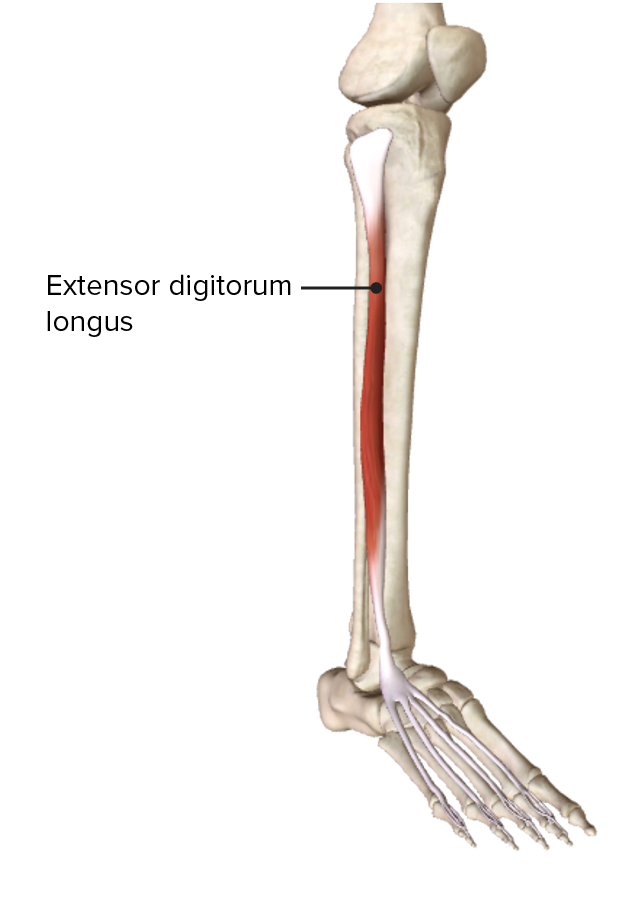
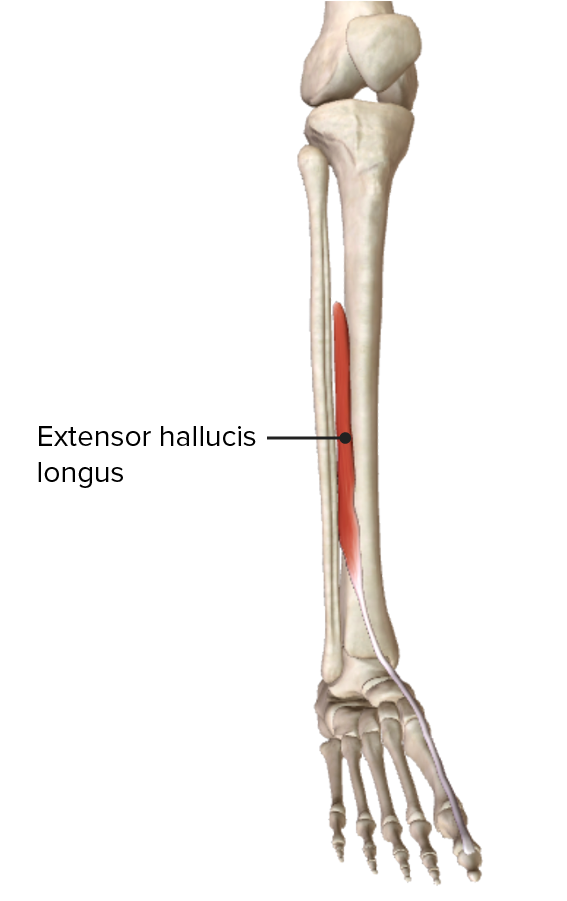
  • Hay 4 músculos en EN Erythema nodosum is an immune-mediated panniculitis (inflammation of the subcutaneous fat) caused by a type IV (delayed-type) hypersensitivity reaction. It commonly manifests in young women as tender, erythematous nodules on the shins. Erythema Nodosum el compartimento anterior responsables de la dorsiflexión o extensión del pie y/o de los LOS Neisseria dedos:
    • Tibial anterior: potente dorsiflexor del pie
    • Extensor largo de los LOS Neisseria dedos: extiende los LOS Neisseria 4 dedos laterales y el pie
    • Extensor largo del hallux: extiende el hallux y el pie
    • Tercer peroneo: eversión y dorsiflexión del pie
  • Inervación común: nervio peroneo profundo (ramas ventrales de L4-S2)
  • Irrigación común: arteria tibial anterior, rama de la arteria poplítea
Tabla: Compartimento anterior – músculos dorsiflexores
Músculo Origen Inserción Inervación Función
Tibial anterior Cóndilo lateral, superficie lateral de la tibia Tibia The second longest bone of the skeleton. It is located on the medial side of the lower leg, articulating with the fibula laterally, the talus distally, and the femur proximally. Knee Joint: Anatomy proximal y membrana interósea Cuneiforme medial y base del primer metatarsiano Nervios peroneos profundos (L4, L5, S1 S1 Heart Sounds)
  • Dorsiflexión del tobillo
  • Inversión del pie
Extensor largo de los LOS Neisseria dedos Cóndilo lateral de la tibia Tibia The second longest bone of the skeleton. It is located on the medial side of the lower leg, articulating with the fibula laterally, the talus distally, and the femur proximally. Knee Joint: Anatomy, superficie anterior del peroné y membrana interósea Falanges medias y distales de los LOS Neisseria dedos 2–5
  • Extiende los LOS Neisseria dedos 2–5
  • Dorsiflexión del tobillo
Extensor largo del hallux Superficie anterior y medial del peroné y membrana interósea Falange distal del hallux (dedo 1)
  • Extiende el hallux
  • Dorsiflexión del tobillo
Tercer peroneo Superficie anterior del peroné inferior y membrana interósea Base del 5to metatarsiano
  • Dorsiflexión del tobillo
  • Contribuye a la eversión

Compartimento Lateral – Músculos Eversores

  • También llamado compartimento peroneo de la pierna
  • Los LOS Neisseria músculos enumerados aquí son los LOS Neisseria principales responsables de la eversión del pie; también contribuyen a la flexión plantar y a la dorsiflexión.
    • Fibular o peroneo largo
    • Fibular o peroneo corto
  • Ambos tendones musculares pasan por detrás del maléolo lateral para entrar en EN Erythema nodosum is an immune-mediated panniculitis (inflammation of the subcutaneous fat) caused by a type IV (delayed-type) hypersensitivity reaction. It commonly manifests in young women as tender, erythematous nodules on the shins. Erythema Nodosum el pie, en EN Erythema nodosum is an immune-mediated panniculitis (inflammation of the subcutaneous fat) caused by a type IV (delayed-type) hypersensitivity reaction. It commonly manifests in young women as tender, erythematous nodules on the shins. Erythema Nodosum planos más profundos en EN Erythema nodosum is an immune-mediated panniculitis (inflammation of the subcutaneous fat) caused by a type IV (delayed-type) hypersensitivity reaction. It commonly manifests in young women as tender, erythematous nodules on the shins. Erythema Nodosum relación con el retináculo fibular (o peroneo).
  • Inervación común: principalmente por el nervio peroneo superficial
  • Irrigación común: ramas perforantes de la arteria tibial anterior
Tabla: Compartimento lateral – músculos eversores
Músculo Origen Inserción Inervación Función
Peroneo largo Cabeza y dos-tercios proximales del peroné lateral 1er metatarsiano y cuneiforme medial Nervios peroneos superficiales (L5, S1 S1 Heart Sounds)
Peroneo corto Cara lateral de la porción medial del peroné Base del 5to metatarsiano Eversión del pie; flexión plantar débil

Compartimento Posterior – Músculos Flexores

  • Los LOS Neisseria músculos del compartimento posterior son los LOS Neisseria principales responsables de la flexión plantar.
  • Los LOS Neisseria músculos flexores están divididos en EN Erythema nodosum is an immune-mediated panniculitis (inflammation of the subcutaneous fat) caused by a type IV (delayed-type) hypersensitivity reaction. It commonly manifests in young women as tender, erythematous nodules on the shins. Erythema Nodosum una capa superficial y una profunda por el tabique intermuscular transversal.
    • Los LOS Neisseria músculos de la capa superficial incluyen:
      • Tríceps sural: está formado por el sóleo y los LOS Neisseria gastrocnemios en EN Erythema nodosum is an immune-mediated panniculitis (inflammation of the subcutaneous fat) caused by a type IV (delayed-type) hypersensitivity reaction. It commonly manifests in young women as tender, erythematous nodules on the shins. Erythema Nodosum pares
      • Plantar
    • Los LOS Neisseria músculos de la capa profunda incluyen:
      • Poplíteo
      • Tibial posterior
      • Flexor largo de los LOS Neisseria dedos
      • Flexor largo del hallux
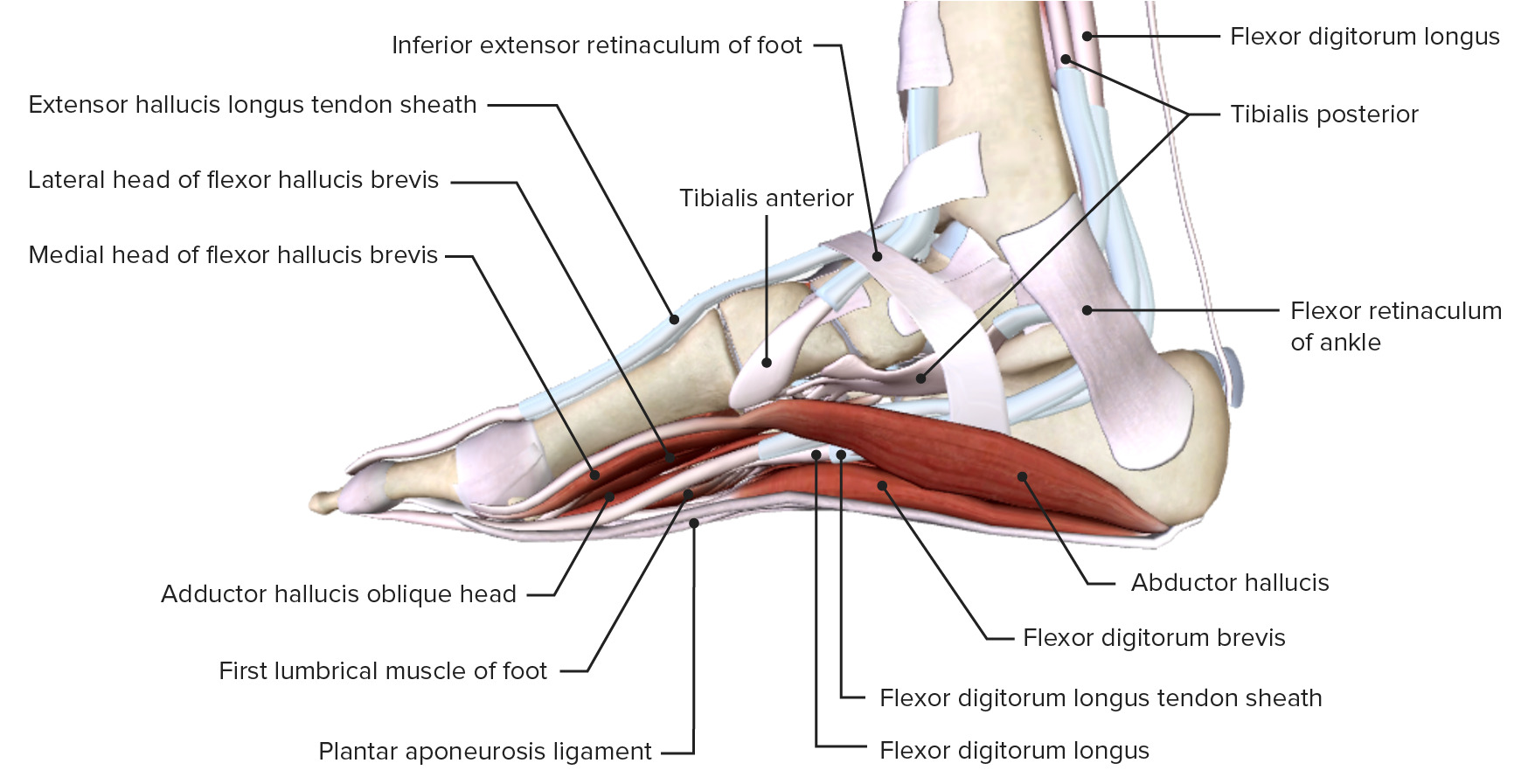
      • Los LOS Neisseria tendones musculares (excepto el poplíteo) pasan por detrás del maléolo medial (tibial posterior, flexor largo de los LOS Neisseria dedos y flexor largo del hallux, de medial a lateral).
  • Inervación común: nervio tibial
  • Irrigación común: arteria tibial posterior y vasos peroneos (capa profunda)

Capa superficial del compartimento posterior de la pierna

Músculo Origen Inserción Inervación Función
Gastrocnemio
  • Cabeza lateral: cóndilo lateral del fémur
  • Cabeza medial: cóndilo medial del fémur
Cara posterior del calcáneo a través del tendón del calcáneo Nervios tibiales ( S1 S1 Heart Sounds, S2 S2 Heart Sounds)
  • Flexión plantar del tobillo
  • Flexiona la rodilla
Sóleo Cara posterior del peroné y línea soleal de la tibia Tibia The second longest bone of the skeleton. It is located on the medial side of the lower leg, articulating with the fibula laterally, the talus distally, and the femur proximally. Knee Joint: Anatomy Flexión plantar del tobillo
Plantar Cresta supracondilar lateral inferior del fémur Flexión plantar débil

Capa profunda del compartimento posterior de la pierna

Músculo Origen Inserción Inervación Función
Poplíteo Cara lateral del cóndilo lateral del fémur y del menisco lateral Tibia Tibia The second longest bone of the skeleton. It is located on the medial side of the lower leg, articulating with the fibula laterally, the talus distally, and the femur proximally. Knee Joint: Anatomy posterior por encima de la línea del sóleo Nervios tibiales (L4, L5, S1 S1 Heart Sounds, S2 S2 Heart Sounds, S3 S3 Heart Sounds)
  • Flexión débil de la rodilla
  • Desbloquea la rodilla por rotación lateral del fémur sobre la tibia Tibia The second longest bone of the skeleton. It is located on the medial side of the lower leg, articulating with the fibula laterally, the talus distally, and the femur proximally. Knee Joint: Anatomy estable
Flexor largo de los LOS Neisseria dedos Superficie posterior de la tibia Tibia The second longest bone of the skeleton. It is located on the medial side of the lower leg, articulating with the fibula laterally, the talus distally, and the femur proximally. Knee Joint: Anatomy por debajo de la línea del sóleo Falanges distales de los LOS Neisseria dedos 2–5
  • Flexiona los LOS Neisseria dedos 2-5
  • Flexión plantar del tobillo
Flexor largo del hallux Dos-tercios inferiores del peroné posterior y membrana interósea Falange distal del hallux
  • Flexiona el hallux
  • Flexión plantar débil
Tibial posterior Membrana interósea y bordes posteriores de la tibia Tibia The second longest bone of the skeleton. It is located on the medial side of the lower leg, articulating with the fibula laterally, the talus distally, and the femur proximally. Knee Joint: Anatomy y el peroné Tuberosidad del hueso navicular Navicular Foot: Anatomy, 1ro–3er huesos cuneiformes y 2do–4to huesos metatarsianos
  • Flexión plantar
  • Aduce la parte inferior del tobillo

Irrigación Arterial

Arterias de la pierna

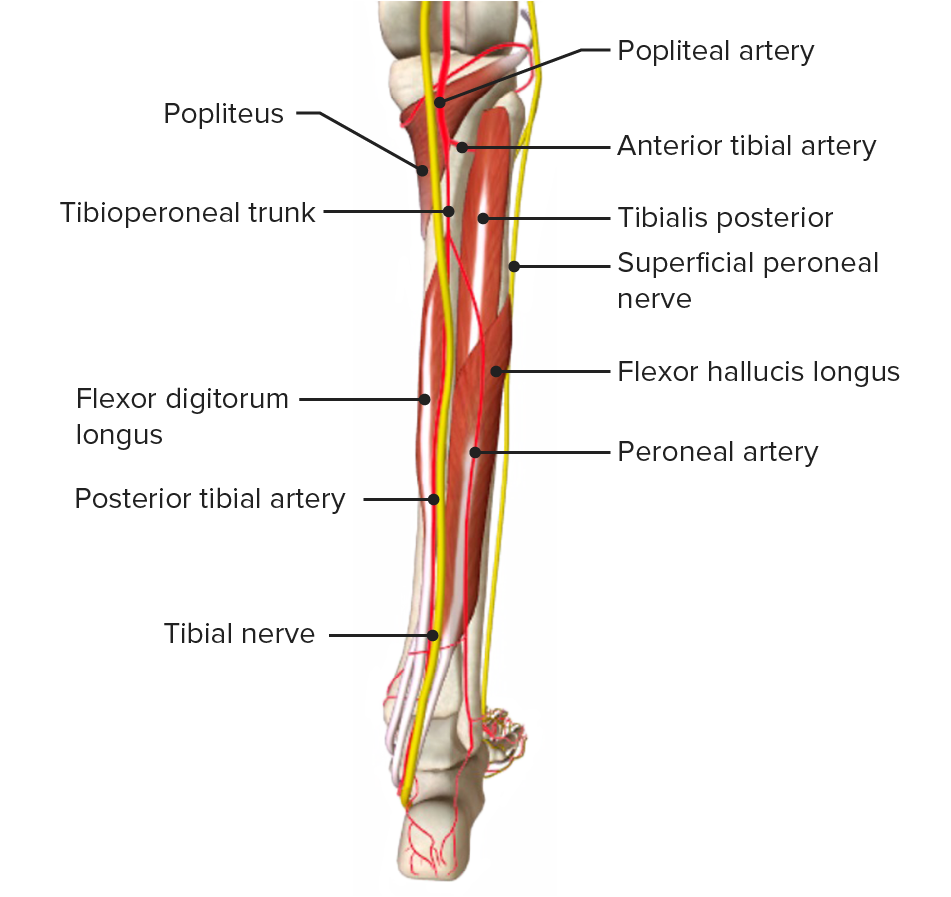
Una continuación de la arteria poplítea suministra sangre a la parte inferior de la pierna. La arteria se bifurca en EN Erythema nodosum is an immune-mediated panniculitis (inflammation of the subcutaneous fat) caused by a type IV (delayed-type) hypersensitivity reaction. It commonly manifests in young women as tender, erythematous nodules on the shins. Erythema Nodosum el margen inferior de la fosa poplítea y envía ramas al AL Amyloidosis compartimento anterior, a la arteria tibial anterior y a los LOS Neisseria compartimentos posterior y lateral, formando el tronco tibioperoneo.

Origen Trayectoria Ramas Estructuras que irriga
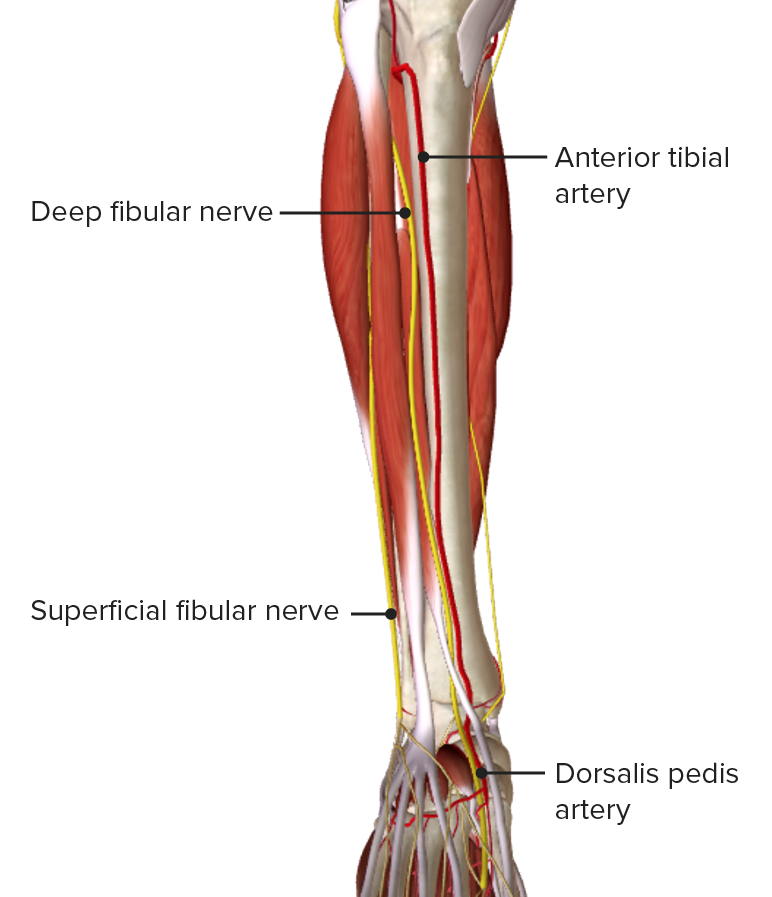
Arteria tibial anterior (acompañada del nervio peroneo profundo) División de la arteria poplítea en EN Erythema nodosum is an immune-mediated panniculitis (inflammation of the subcutaneous fat) caused by a type IV (delayed-type) hypersensitivity reaction. It commonly manifests in young women as tender, erythematous nodules on the shins. Erythema Nodosum arteria tibial anterior y tronco tibiofibular
  • Comienza en EN Erythema nodosum is an immune-mediated panniculitis (inflammation of the subcutaneous fat) caused by a type IV (delayed-type) hypersensitivity reaction. It commonly manifests in young women as tender, erythematous nodules on the shins. Erythema Nodosum la fosa poplítea
  • Entra en EN Erythema nodosum is an immune-mediated panniculitis (inflammation of the subcutaneous fat) caused by a type IV (delayed-type) hypersensitivity reaction. It commonly manifests in young women as tender, erythematous nodules on the shins. Erythema Nodosum el compartimento anterior a través de la apertura superior de la membrana interósea
  • Continúa como la arteria dorsal del pie
  • Ramas recurrentes a la anastomosis de la articulación de la rodilla
  • Ramas musculares
  • Ramas maleolares medial y lateral
Compartimento anterior de la pierna
Arteria tibial posterior (acompañada del nervio tibial) Rama terminal del tronco tibioperoneo
  • Comienza en EN Erythema nodosum is an immune-mediated panniculitis (inflammation of the subcutaneous fat) caused by a type IV (delayed-type) hypersensitivity reaction. It commonly manifests in young women as tender, erythematous nodules on the shins. Erythema Nodosum el borde inferior de la fosa poplítea
  • Se encuentra en EN Erythema nodosum is an immune-mediated panniculitis (inflammation of the subcutaneous fat) caused by a type IV (delayed-type) hypersensitivity reaction. It commonly manifests in young women as tender, erythematous nodules on the shins. Erythema Nodosum la profundidad del músculo sóleo
  • Pasa por debajo del maléolo medial
  • Se divide en EN Erythema nodosum is an immune-mediated panniculitis (inflammation of the subcutaneous fat) caused by a type IV (delayed-type) hypersensitivity reaction. It commonly manifests in young women as tender, erythematous nodules on the shins. Erythema Nodosum arterias plantares medial y lateral
  • Rama circunfleja a la rodilla
  • Ramas musculares
  • Ramas medial maleolar y calcánea
  • Compartimento posterior de la pierna
  • Cara plantar del pie
Arteria peronea Rama terminal del tronco tibioperoneo
  • Comienza en EN Erythema nodosum is an immune-mediated panniculitis (inflammation of the subcutaneous fat) caused by a type IV (delayed-type) hypersensitivity reaction. It commonly manifests in young women as tender, erythematous nodules on the shins. Erythema Nodosum el borde inferior de la fosa poplítea
  • Recorre el borde medial del peroné
  • Se divide en EN Erythema nodosum is an immune-mediated panniculitis (inflammation of the subcutaneous fat) caused by a type IV (delayed-type) hypersensitivity reaction. It commonly manifests in young women as tender, erythematous nodules on the shins. Erythema Nodosum ramas calcáneas
Ramas musculares Compartimento lateral y capa profunda del compartimento posterior de la pierna

Venas de la pierna

Existen 2 redes de drenaje venoso en EN Erythema nodosum is an immune-mediated panniculitis (inflammation of the subcutaneous fat) caused by a type IV (delayed-type) hypersensitivity reaction. It commonly manifests in young women as tender, erythematous nodules on the shins. Erythema Nodosum la pierna:

  • Las ramas venosas profundas se unen para formar la vena poplítea.
  • Las venas superficiales o safenas se encuentran en EN Erythema nodosum is an immune-mediated panniculitis (inflammation of the subcutaneous fat) caused by a type IV (delayed-type) hypersensitivity reaction. It commonly manifests in young women as tender, erythematous nodules on the shins. Erythema Nodosum el tejido subcutáneo.
Origen Trayectoria Tributarias Estructuras que drenan
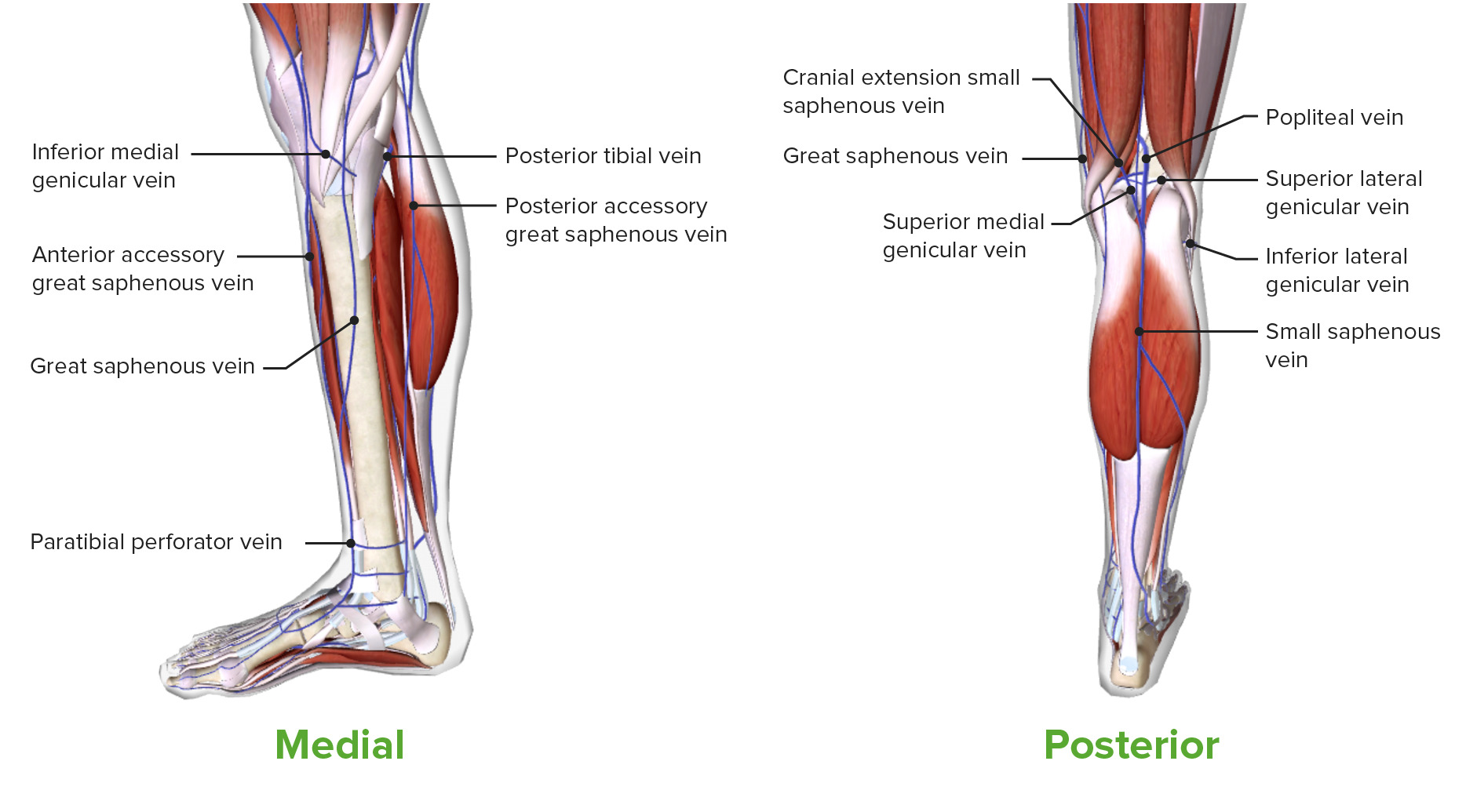
Vena safena mayor (acompañada del nervio safeno) Continuación del extremo medial del arco venoso dorsal del pie
  • En EN Erythema nodosum is an immune-mediated panniculitis (inflammation of the subcutaneous fat) caused by a type IV (delayed-type) hypersensitivity reaction. It commonly manifests in young women as tender, erythematous nodules on the shins. Erythema Nodosum el tobillo, pasa por delante del maléolo medial
  • Asciende por la cara medial de la pierna
  • Pasa por detrás de los LOS Neisseria cóndilos mediales del fémur y la tibia Tibia The second longest bone of the skeleton. It is located on the medial side of the lower leg, articulating with the fibula laterally, the talus distally, and the femur proximally. Knee Joint: Anatomy
  • Drena en EN Erythema nodosum is an immune-mediated panniculitis (inflammation of the subcutaneous fat) caused by a type IV (delayed-type) hypersensitivity reaction. It commonly manifests in young women as tender, erythematous nodules on the shins. Erythema Nodosum la unión safenofemoral
  • Vena safena corta
  • Vena pudenda externa superficial
  • Venas epigástricas superficiales
  • Vena ilíaca circunfleja superficial
  • Vena cutánea femoral lateral
Cara anteromedial de la pierna y cara plantar del pie
Vena safena menor (acompañada del nervio sural) Continuación del extremo lateral del arco venoso dorsal del pie
  • En EN Erythema nodosum is an immune-mediated panniculitis (inflammation of the subcutaneous fat) caused by a type IV (delayed-type) hypersensitivity reaction. It commonly manifests in young women as tender, erythematous nodules on the shins. Erythema Nodosum el tobillo, pasa por detrás del maléolo lateral
  • Asciende en EN Erythema nodosum is an immune-mediated panniculitis (inflammation of the subcutaneous fat) caused by a type IV (delayed-type) hypersensitivity reaction. It commonly manifests in young women as tender, erythematous nodules on the shins. Erythema Nodosum la línea media de la pierna posterior
  • Drena en EN Erythema nodosum is an immune-mediated panniculitis (inflammation of the subcutaneous fat) caused by a type IV (delayed-type) hypersensitivity reaction. It commonly manifests in young women as tender, erythematous nodules on the shins. Erythema Nodosum la unión safenopoplítea ( variable Variable Variables represent information about something that can change. The design of the measurement scales, or of the methods for obtaining information, will determine the data gathered and the characteristics of that data. As a result, a variable can be qualitative or quantitative, and may be further classified into subgroups. Types of Variables)
Cara posterior de la pierna
Vista medial y posterior de la pierna en la que se aprecia el drenaje venoso de la pierna

Vistas medial y posterior de la pierna, mostrando el drenaje venoso superficial

Imagen por BioDigital, editado por Lecturio
Venas profundas de la pierna:

  • Situadas en EN Erythema nodosum is an immune-mediated panniculitis (inflammation of the subcutaneous fat) caused by a type IV (delayed-type) hypersensitivity reaction. It commonly manifests in young women as tender, erythematous nodules on the shins. Erythema Nodosum la fascia Fascia Layers of connective tissue of variable thickness. The superficial fascia is found immediately below the skin; the deep fascia invests muscles, nerves, and other organs. Cellulitis profunda de la pierna
  • Acompañan a las arterias de la pierna del mismo nombre:
    • Venas tibiales anteriores
    • Venas tibiales posteriores
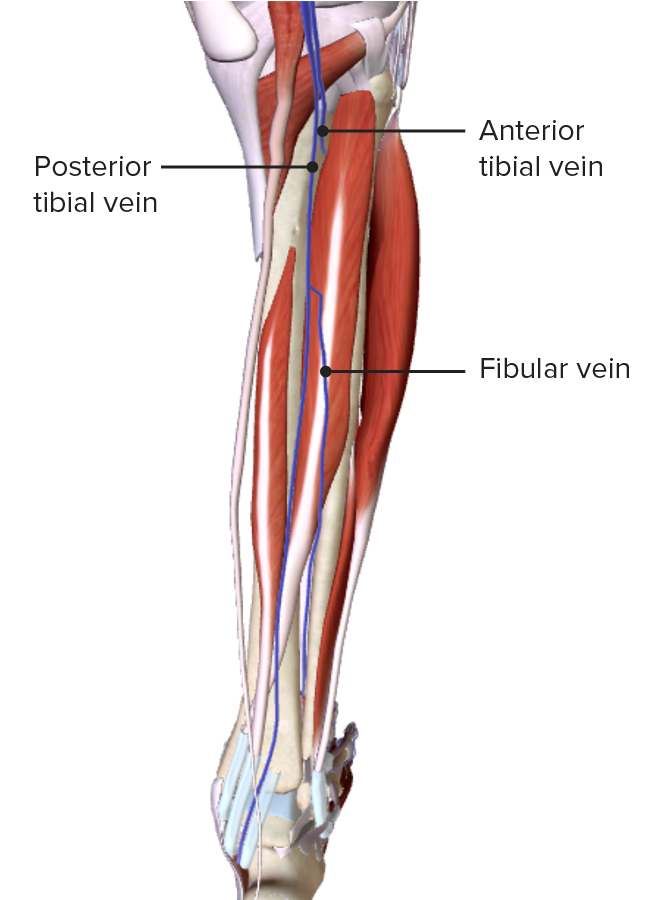
    • Venas peroneas
  • Convergen en EN Erythema nodosum is an immune-mediated panniculitis (inflammation of the subcutaneous fat) caused by a type IV (delayed-type) hypersensitivity reaction. It commonly manifests in young women as tender, erythematous nodules on the shins. Erythema Nodosum el borde inferior del músculo poplíteo para formar la vena poplítea
Venas profundas de la pierna

Vista posterior de la pierna, mostrando el drenaje venoso profundo

Imagen por BioDigital, editado por Lecturio
Inervación

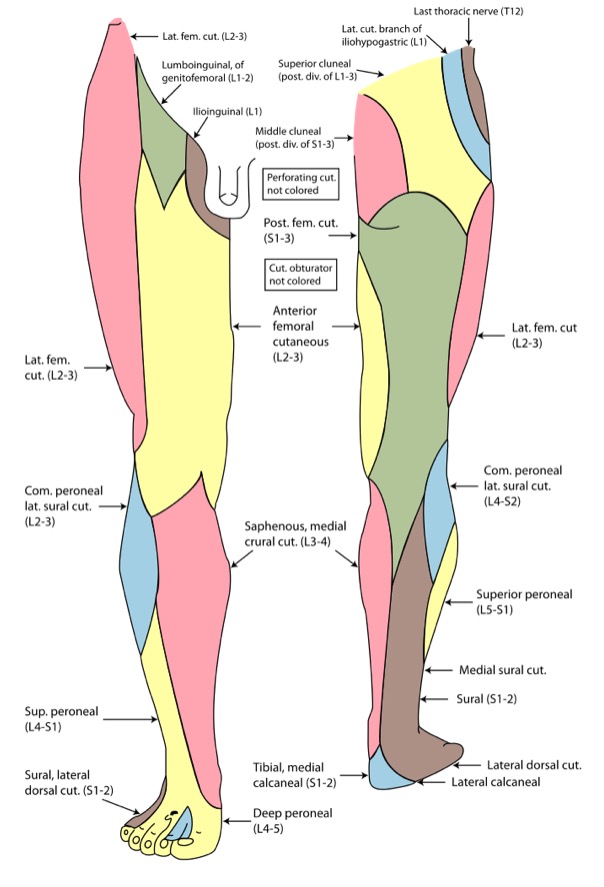
La inervación sensorial y motora de la extremidad inferior procede del plexo lumbosacro (L1-S4).
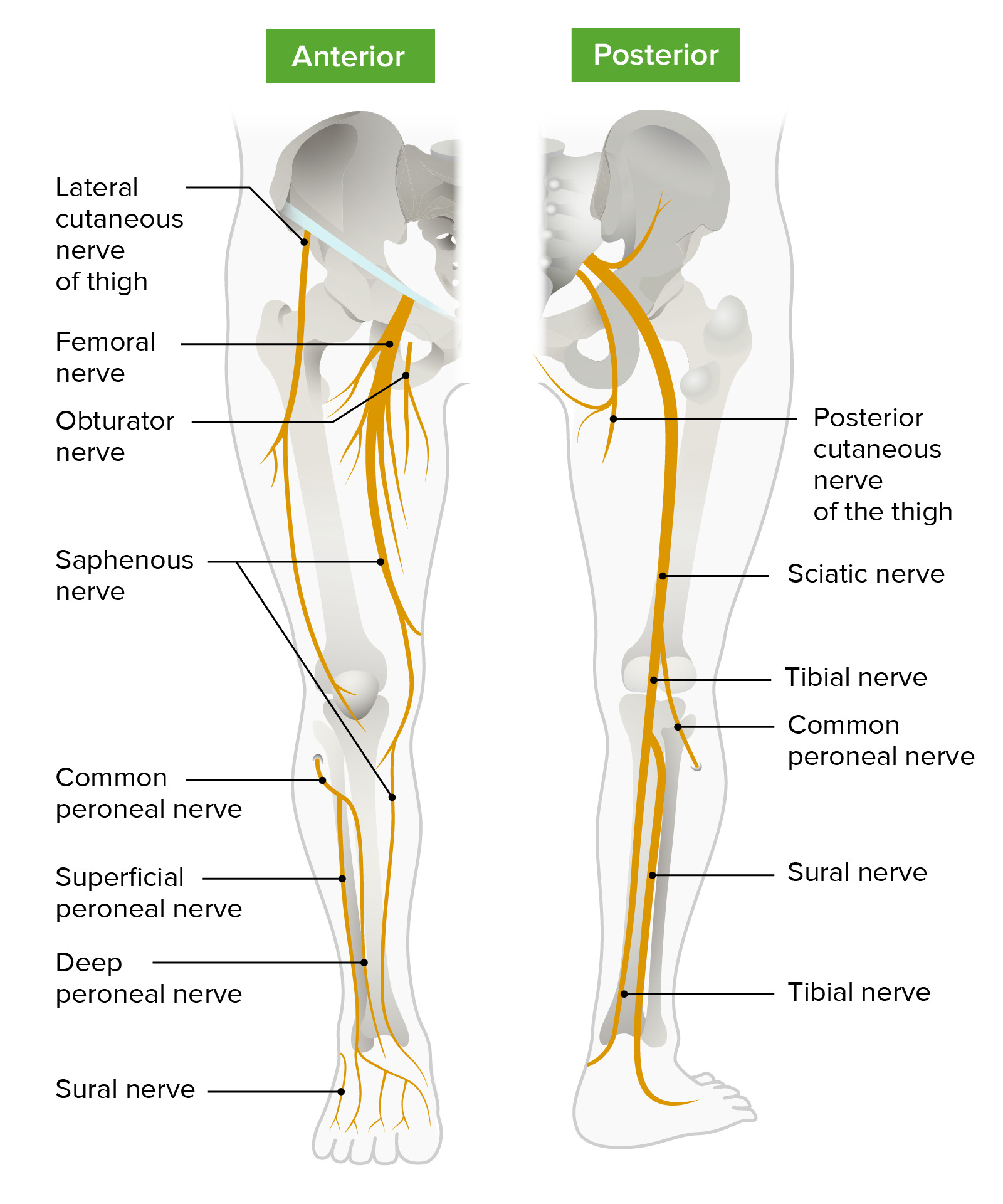
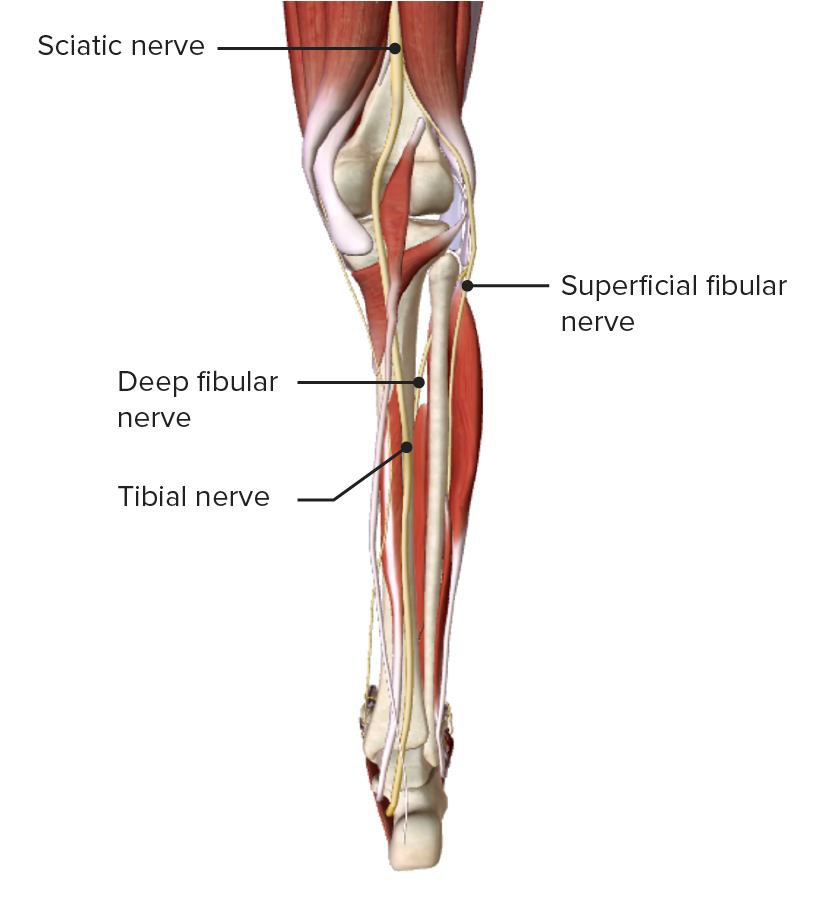
  • Nervio ciático: nervio más grande y largo del plexo lumbosacro; emite muchas ramas y se divide en EN Erythema nodosum is an immune-mediated panniculitis (inflammation of the subcutaneous fat) caused by a type IV (delayed-type) hypersensitivity reaction. It commonly manifests in young women as tender, erythematous nodules on the shins. Erythema Nodosum el nervio tibial y el nervio peroneo común
    • Nervio tibial: proporciona la función motora al AL Amyloidosis compartimento posterior de la pierna y múltiples ramas sensoriales a toda la pierna (nervios sural, calcáneo medial y plantar medial y lateral); pasa inferior y posterior al AL Amyloidosis maléolo medial del tobillo, a través del túnel tarsal.
      • Nervio sural: inervación sensorial a la piel sobre la cara posterolateral del tercio distal de la pierna y el borde lateral del pie
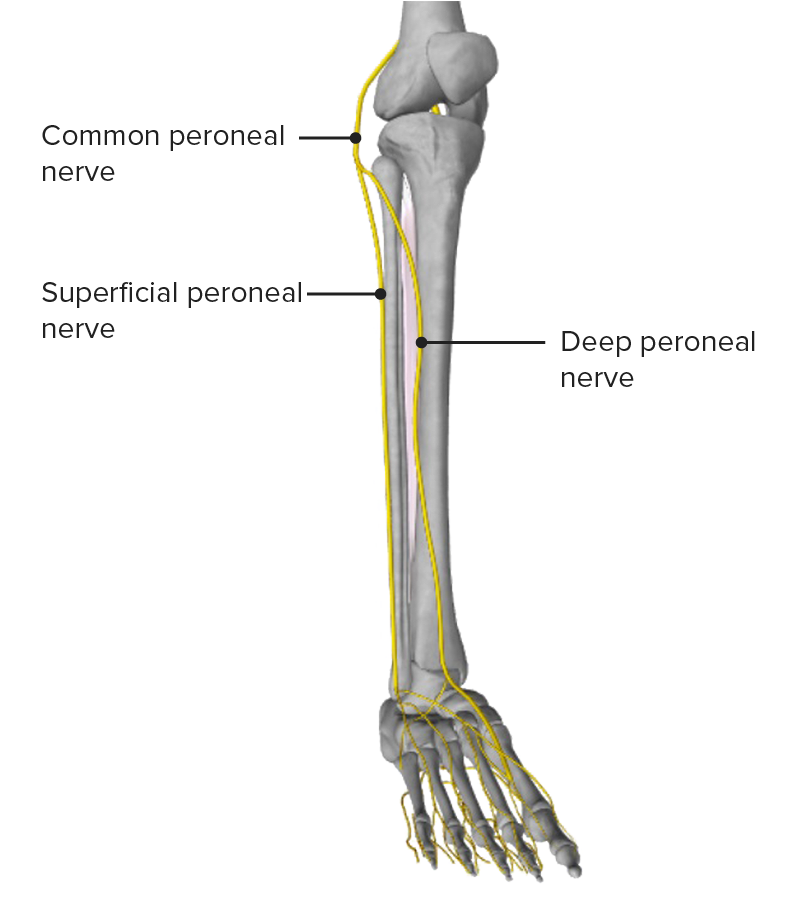
    • Nervio peroneo común (nervio fibular común): proporciona la función motora a la cabeza corta del bíceps femoral, luego se bifurca en EN Erythema nodosum is an immune-mediated panniculitis (inflammation of the subcutaneous fat) caused by a type IV (delayed-type) hypersensitivity reaction. It commonly manifests in young women as tender, erythematous nodules on the shins. Erythema Nodosum dos ramas:
      • Nervio peroneo (fibular) profundo: rama terminal del nervio peroneo común, proporciona función motora al AL Amyloidosis compartimento anterior e inervación sensorial al AL Amyloidosis 1er espacio interdigital del pie
      • Nervio peroneo (fibular) superficial: rama terminal del nervio peroneo común, proporciona función motora al AL Amyloidosis compartimento lateral e inervación sensorial a la cara anteroinferior de la pierna y al AL Amyloidosis dorso del pie
  • Nervio safeno: rama del nervio femoral, nace del triángulo femoral, función sensorial pura a la piel sobre la mitad medial de la pierna

Relevancia Clínica

Los LOS Neisseria siguientes son trastornos comunes asociados a la parte inferior de la pierna:

  • Fractura de tibia Tibia The second longest bone of the skeleton. It is located on the medial side of the lower leg, articulating with the fibula laterally, the talus distally, and the femur proximally. Knee Joint: Anatomy: es el tipo más común de fractura de hueso largo, generalmente causada por un traumatismo directo: Las fracturas tibiales pueden producirse en EN Erythema nodosum is an immune-mediated panniculitis (inflammation of the subcutaneous fat) caused by a type IV (delayed-type) hypersensitivity reaction. It commonly manifests in young women as tender, erythematous nodules on the shins. Erythema Nodosum cualquier punto de la tibia Tibia The second longest bone of the skeleton. It is located on the medial side of the lower leg, articulating with the fibula laterally, the talus distally, and the femur proximally. Knee Joint: Anatomy y a menudo se asocian a una fractura concomitante del peroné. Existe un alto riesgo de fractura abierta, lesión neurovascular, síndrome compartimental, mala cicatrización de la fractura e infección de la herida.
  • Enfermedad arterial periférica: trastorno debido a la aterosclerosis. La enfermedad arterial periférica se presenta inicialmente como claudicación intermitente y puede progresar a dolor Dolor Inflammation isquémico en EN Erythema nodosum is an immune-mediated panniculitis (inflammation of the subcutaneous fat) caused by a type IV (delayed-type) hypersensitivity reaction. It commonly manifests in young women as tender, erythematous nodules on the shins. Erythema Nodosum reposo y muy comúnmente se presenta en EN Erythema nodosum is an immune-mediated panniculitis (inflammation of the subcutaneous fat) caused by a type IV (delayed-type) hypersensitivity reaction. It commonly manifests in young women as tender, erythematous nodules on the shins. Erythema Nodosum las pantorrillas. La aterosclerosis subyacente produce una estenosis arterial y/o una oclusión de los LOS Neisseria vasos arteriales de las extremidades, lo que provoca una mala perfusión de los LOS Neisseria tejidos. Clínicamente, a medida que la enfermedad progresa, la hipoperfusión hace HACE Altitude Sickness que la extremidad afectada se vuelva pálida, fría y parestésica.
  • Trombosis venosa profunda: la flebotrombosis se produce cuando se forma un coágulo en EN Erythema nodosum is an immune-mediated panniculitis (inflammation of the subcutaneous fat) caused by a type IV (delayed-type) hypersensitivity reaction. It commonly manifests in young women as tender, erythematous nodules on the shins. Erythema Nodosum una vena en EN Erythema nodosum is an immune-mediated panniculitis (inflammation of the subcutaneous fat) caused by a type IV (delayed-type) hypersensitivity reaction. It commonly manifests in young women as tender, erythematous nodules on the shins. Erythema Nodosum ausencia de una reacción inflamatoria. Los LOS Neisseria lugares más comunes de trombosis venosa son las venas profundas de la pierna. La complicación más peligrosa es cuando parte del coágulo se desplaza a los LOS Neisseria pulmones, provocando una embolia pulmonar. El trombo se puede visualizar en EN Erythema nodosum is an immune-mediated panniculitis (inflammation of the subcutaneous fat) caused by a type IV (delayed-type) hypersensitivity reaction. It commonly manifests in young women as tender, erythematous nodules on the shins. Erythema Nodosum el ultrasonido. La anticoagulación es el tratamiento principal.
  • Insuficiencia venosa crónica: cuando la sangre venosa es incapaz de seguir el camino normal anterógrado de retorno al AL Amyloidosis corazón, refluye distalmente hacia la pierna, causando congestión venosa. Esta insuficiencia se presenta como edema Edema Edema is a condition in which excess serous fluid accumulates in the body cavity or interstitial space of connective tissues. Edema is a symptom observed in several medical conditions. It can be categorized into 2 types, namely, peripheral (in the extremities) and internal (in an organ or body cavity). Edema de las extremidades inferiores, cambios tróficos en EN Erythema nodosum is an immune-mediated panniculitis (inflammation of the subcutaneous fat) caused by a type IV (delayed-type) hypersensitivity reaction. It commonly manifests in young women as tender, erythematous nodules on the shins. Erythema Nodosum la piel y malestar.
  • Lesiones de los LOS Neisseria nervios periféricos: una lesión común del nervio peroneo (o fibular) puede presentarse como caída del pie (debilidad con la dorsiflexión) y adormecimiento de la pierna lateral/dorso del pie. La lesión del nervio peroneo común puede producirse en EN Erythema nodosum is an immune-mediated panniculitis (inflammation of the subcutaneous fat) caused by a type IV (delayed-type) hypersensitivity reaction. It commonly manifests in young women as tender, erythematous nodules on the shins. Erythema Nodosum el peroné proximal como consecuencia de una fractura del peroné o de la presión ejercida por una férula de yeso.
  • Síndrome del túnel tarsiano: es una neuropatía compresiva causada por la compresión del nervio tibial bajo el retináculo flexor en EN Erythema nodosum is an immune-mediated panniculitis (inflammation of the subcutaneous fat) caused by a type IV (delayed-type) hypersensitivity reaction. It commonly manifests in young women as tender, erythematous nodules on the shins. Erythema Nodosum la cara posteromedial del tobillo. El síndrome del túnel tarsiano suele ser secundario a un traumatismo, artritis reumatoide, cambios posquirúrgicos, quistes ganglionares y uso de calzado apretado, y se presenta como dolor Dolor Inflammation y parestesia en EN Erythema nodosum is an immune-mediated panniculitis (inflammation of the subcutaneous fat) caused by a type IV (delayed-type) hypersensitivity reaction. It commonly manifests in young women as tender, erythematous nodules on the shins. Erythema Nodosum la superficie medial-plantar del pie, especialmente al AL Amyloidosis caminar y estar de pie.

Referencias

  1. Drake, R. L., Vogl, A. W., Mitchell, A. W. M. (2014). Gray’s Anatomy for Students (3rd ed.). Philadelphia, PA: Churchill Livingstone.
  2. Moore, K. L., Dalley, A. F., & Agur, A. M. R. (2014). Clinically Oriented Anatomy (7th ed.). Philadelphia, PA: Lippincott Williams & Wilkins.
  3. Netter, F. (2019). Atlas of Human Anatomy (7th ed.). Philadelphia, PA: Saunders.

¡Crea tu cuenta gratis o inicia una sesión para seguir leyendo!

Regístrate ahora y obtén acceso gratuito a Lecturio con páginas de concepto, videos médicos y cuestionarios para tu educación médica.

User Reviews

Que tengas una sesión de estudio alegre y navideña 🎁 Ahorra 50% en todos los planes >>

Details