
Norovirus Norovirus Norovirus is a nonenveloped, single-stranded, positive-sense RNA virus belonging to the Caliciviridae family. Norovirus infections are transmitted via the fecal-oral route or by aerosols from vomiting. The virus is one of the most common causes of nonbacterial gastroenteritis epidemic worldwide. Symptoms include watery and nonbloody diarrhea, nausea, vomiting, and low-grade fever. Norovirus es un virus Virus Viruses are infectious, obligate intracellular parasites composed of a nucleic acid core surrounded by a protein capsid. Viruses can be either naked (non-enveloped) or enveloped. The classification of viruses is complex and based on many factors, including type and structure of the nucleoid and capsid, the presence of an envelope, the replication cycle, and the host range. Virology de ácido ribonucleico (ARN) de sentido positivo, monocatenario y no envuelto, que pertenece a la familia Caliciviridae Caliciviridae A family of RNA viruses infecting a broad range of animals. Most individual species are restricted to their natural hosts. They possess a characteristic six-pointed starlike shape whose surfaces have cup-shaped (chalice) indentions. Transmission is by contaminated food, water, fomites, and occasionally aerosolization of secretions. Genera include lagovirus; norwalk-like viruses; sapporo-like viruses; and vesivirus. Norovirus. Las infecciones por norovirus Norovirus Norovirus is a nonenveloped, single-stranded, positive-sense RNA virus belonging to the Caliciviridae family. Norovirus infections are transmitted via the fecal-oral route or by aerosols from vomiting. The virus is one of the most common causes of nonbacterial gastroenteritis epidemic worldwide. Symptoms include watery and nonbloody diarrhea, nausea, vomiting, and low-grade fever. Norovirus se transmiten por vía fecal-oral o por aerosoles a partir del vómito. El virus Virus Viruses are infectious, obligate intracellular parasites composed of a nucleic acid core surrounded by a protein capsid. Viruses can be either naked (non-enveloped) or enveloped. The classification of viruses is complex and based on many factors, including type and structure of the nucleoid and capsid, the presence of an envelope, the replication cycle, and the host range. Virology es una de las causas más comunes de la epidemia de gastroenteritis Gastroenteritis Gastroenteritis is inflammation of the stomach and intestines, commonly caused by infections from bacteria, viruses, or parasites. Transmission may be foodborne, fecal-oral, or through animal contact. Common clinical features include abdominal pain, diarrhea, vomiting, fever, and dehydration. Gastroenteritis no bacteriana a nivel mundial. Los LOS Neisseria síntomas incluyen diarrea acuosa no sanguinolenta, náuseas, vómitos y fiebre baja. Aunque la infección es autolimitada, puede ocurrir deshidratación severa. El diagnóstico suele ser presuntivo y la detección viral mediante reacción en EN Erythema nodosum is an immune-mediated panniculitis (inflammation of the subcutaneous fat) caused by a type IV (delayed-type) hypersensitivity reaction. It commonly manifests in young women as tender, erythematous nodules on the shins. Erythema Nodosum cadena de polimerasa ( PCR PCR Polymerase chain reaction (PCR) is a technique that amplifies DNA fragments exponentially for analysis. The process is highly specific, allowing for the targeting of specific genomic sequences, even with minuscule sample amounts. The PCR cycles multiple times through 3 phases: denaturation of the template DNA, annealing of a specific primer to the individual DNA strands, and synthesis/elongation of new DNA molecules. Polymerase Chain Reaction (PCR), por sus siglas en EN Erythema nodosum is an immune-mediated panniculitis (inflammation of the subcutaneous fat) caused by a type IV (delayed-type) hypersensitivity reaction. It commonly manifests in young women as tender, erythematous nodules on the shins. Erythema Nodosum inglés) o inmunoensayo enzimático se puede usar para pacientes con enfermedad grave o estado inmunocomprometido. El tratamiento es de soporte y puede incluir terapia de rehidratación.
Last updated: Dec 15, 2025
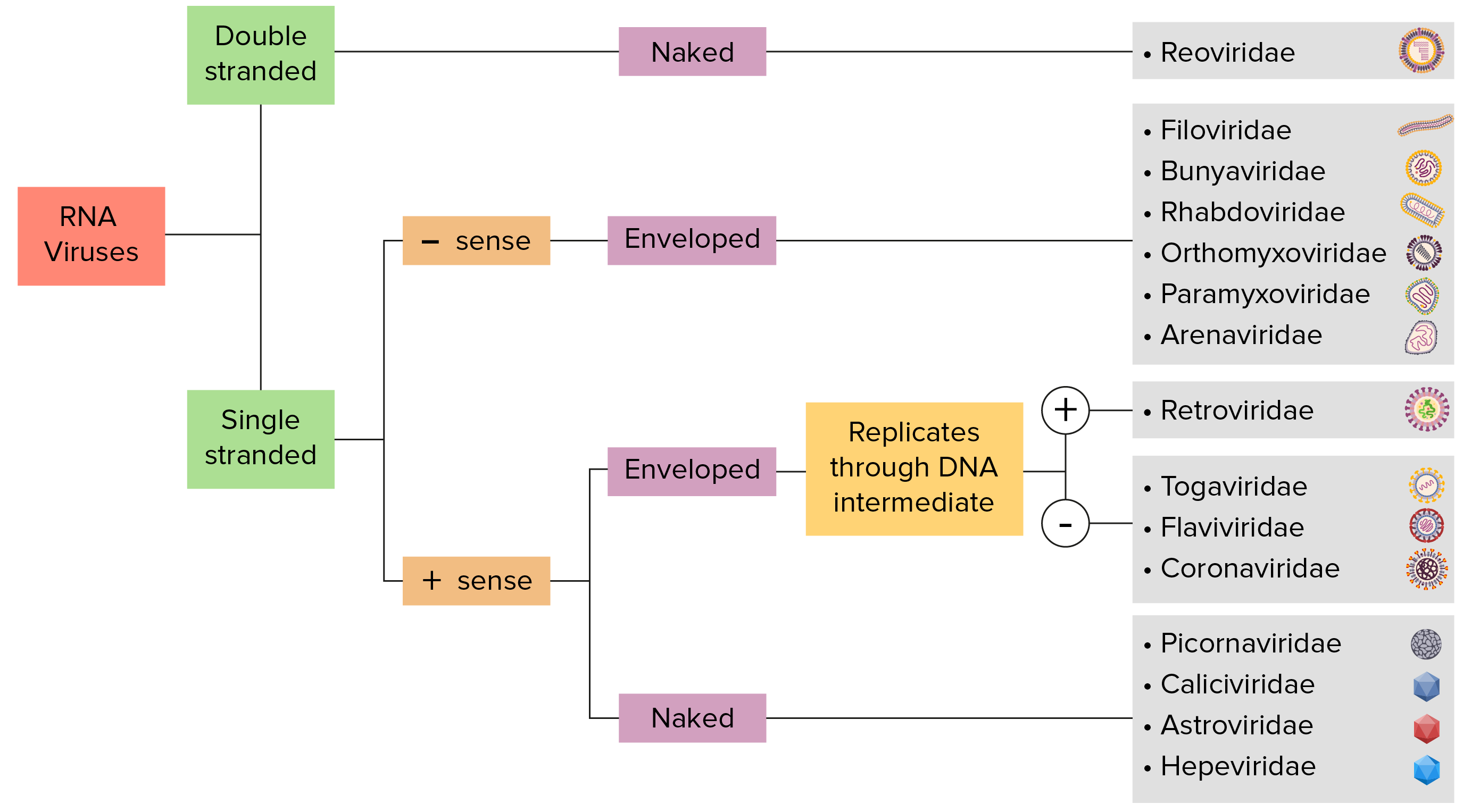
Identificación de los virus de ARN:
Los virus pueden clasificarse de muchas maneras. Sin embargo, la mayoría de los virus tienen un genoma formado por ácido desoxirribonucleico (ADN) o ARN. Los virus con genoma de ARN pueden caracterizarse además por tener ARN monocatenario o bicatenario. Los virus “envueltos” están cubiertos por una fina capa de membrana celular (normalmente tomada de la célula huésped). Si la envoltura está ausente, los virus se denominan “desnudos”. Los virus con genomas monocatenarios son de “sentido positivo” si el genoma se emplea directamente como ARN mensajero (ARNm), que se traduce en proteínas. Los virus monocatenarios de “sentido negativo” emplean la ARN polimerasa, una enzima viral, para transcribir su genoma en ARN mensajero.
También conocido como virus Virus Viruses are infectious, obligate intracellular parasites composed of a nucleic acid core surrounded by a protein capsid. Viruses can be either naked (non-enveloped) or enveloped. The classification of viruses is complex and based on many factors, including type and structure of the nucleoid and capsid, the presence of an envelope, the replication cycle, and the host range. Virology de Norwalk
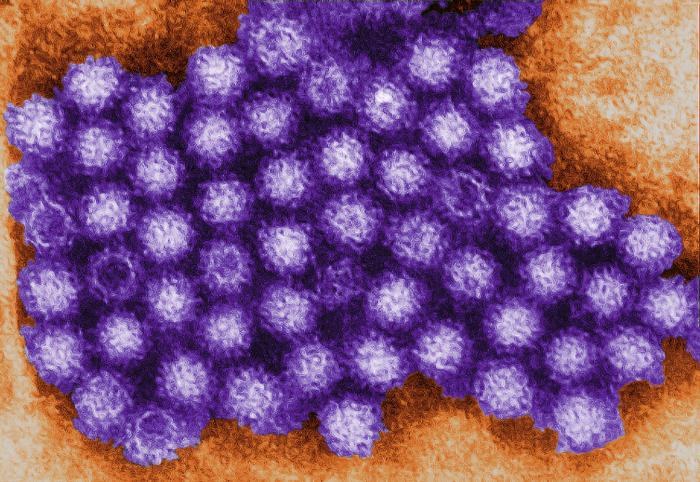
Imagen por microscopia electrónica de transmisión coloreada que muestra la morfología ultraestructural de los viriones de norovirus
Imagen: “This digitally-colorized, transmission electron microscopic (TEM) image, revealed some of the ultrastructural morphology displayed by a cluster of norovirus virions” por CDC. Licencia: Dominio Público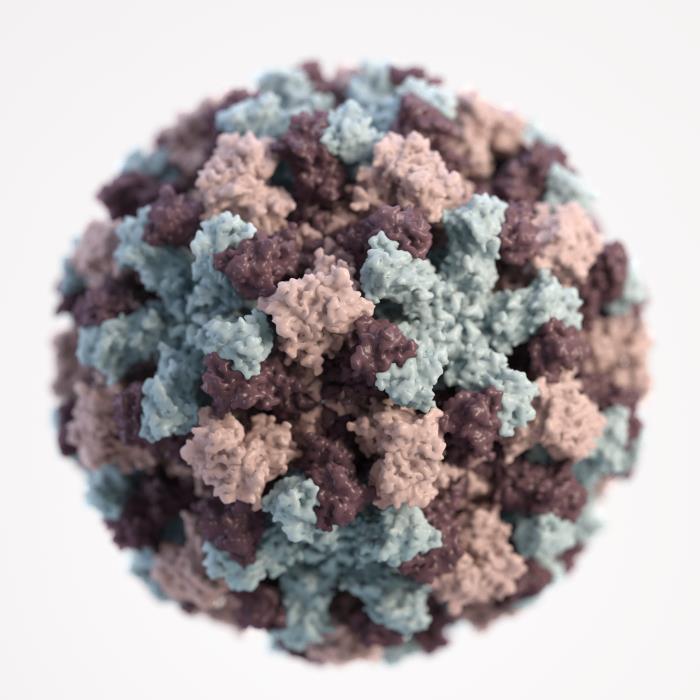
Una ilustración tridimensional de un virión de norovirus:
Diferentes colores representan diferentes regiones de la cápside proteica externa del virión.
La enfermedad humana es causada principalmente por los LOS Neisseria genogrupos GI y GII.
Norovirus Norovirus Norovirus is a nonenveloped, single-stranded, positive-sense RNA virus belonging to the Caliciviridae family. Norovirus infections are transmitted via the fecal-oral route or by aerosols from vomiting. The virus is one of the most common causes of nonbacterial gastroenteritis epidemic worldwide. Symptoms include watery and nonbloody diarrhea, nausea, vomiting, and low-grade fever. Norovirus es una de las principales causas de gastroenteritis Gastroenteritis Gastroenteritis is inflammation of the stomach and intestines, commonly caused by infections from bacteria, viruses, or parasites. Transmission may be foodborne, fecal-oral, or through animal contact. Common clinical features include abdominal pain, diarrhea, vomiting, fever, and dehydration. Gastroenteritis.
Los LOS Neisseria seres humanos son el único reservorio conocido para norovirus Norovirus Norovirus is a nonenveloped, single-stranded, positive-sense RNA virus belonging to the Caliciviridae family. Norovirus infections are transmitted via the fecal-oral route or by aerosols from vomiting. The virus is one of the most common causes of nonbacterial gastroenteritis epidemic worldwide. Symptoms include watery and nonbloody diarrhea, nausea, vomiting, and low-grade fever. Norovirus humano.
Esta enfermedad altamente virulenta es transmitida por:
Los LOS Neisseria siguientes grupos tienen tasas más altas de infección y/o complicaciones graves:
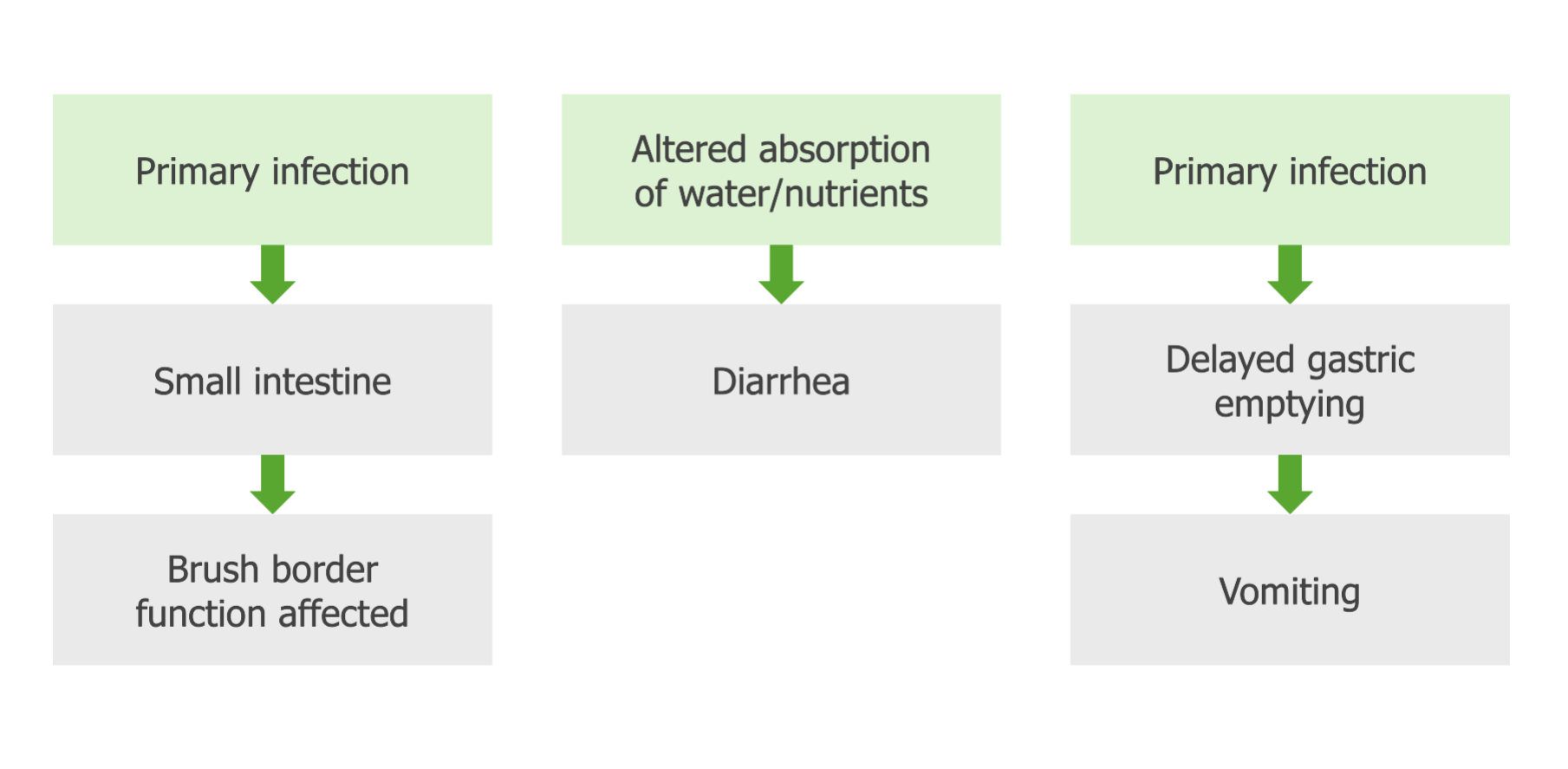
Patogénesis de la infección por norovirus
Imagen por Lecturio. Licencia: CC BY-NC-SA 4.0La gastroenteritis Gastroenteritis Gastroenteritis is inflammation of the stomach and intestines, commonly caused by infections from bacteria, viruses, or parasites. Transmission may be foodborne, fecal-oral, or through animal contact. Common clinical features include abdominal pain, diarrhea, vomiting, fever, and dehydration. Gastroenteritis por norovirus Norovirus Norovirus is a nonenveloped, single-stranded, positive-sense RNA virus belonging to the Caliciviridae family. Norovirus infections are transmitted via the fecal-oral route or by aerosols from vomiting. The virus is one of the most common causes of nonbacterial gastroenteritis epidemic worldwide. Symptoms include watery and nonbloody diarrhea, nausea, vomiting, and low-grade fever. Norovirus se asocia con los LOS Neisseria siguientes hallazgos reversibles:
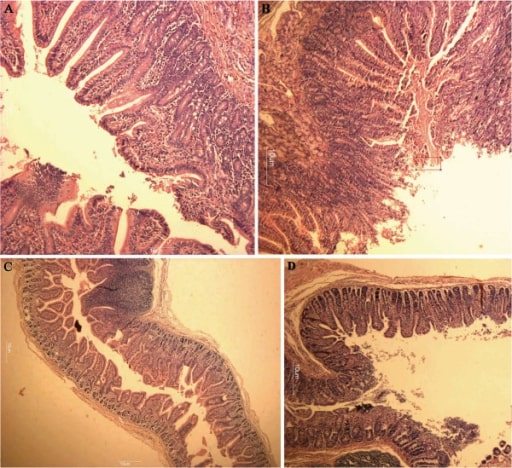
Tinción con hematoxilina y eosina:
A: Vellosidades largas del duodeno de apariencia normal
B: Vellosidades del duodeno que muestran leve atrofia por una infección por norovirus
C: Vellosidades largas de apariencia normal del yeyuno
D: Vellosidades del yeyuno que muestran una leve atrofia por una infección por norovirus
Cronología:
Los LOS Neisseria síntomas comunes incluyen:
Manifestaciones severas:
El diagnóstico suele ser presuntivo y las pruebas de diagnóstico no suelen ser necesarias. Sin embargo, se pueden realizar pruebas de confirmación para personas inmunocomprometidas o con síntomas graves:
La siguiente tabla compara 2 virus Virus Viruses are infectious, obligate intracellular parasites composed of a nucleic acid core surrounded by a protein capsid. Viruses can be either naked (non-enveloped) or enveloped. The classification of viruses is complex and based on many factors, including type and structure of the nucleoid and capsid, the presence of an envelope, the replication cycle, and the host range. Virology muy similares dentro de la familia Caliciviridae Caliciviridae A family of RNA viruses infecting a broad range of animals. Most individual species are restricted to their natural hosts. They possess a characteristic six-pointed starlike shape whose surfaces have cup-shaped (chalice) indentions. Transmission is by contaminated food, water, fomites, and occasionally aerosolization of secretions. Genera include lagovirus; norwalk-like viruses; sapporo-like viruses; and vesivirus. Norovirus:
| ORGANISMOS | ||
|---|---|---|
| Género | Norovirus Norovirus Norovirus is a nonenveloped, single-stranded, positive-sense RNA virus belonging to the Caliciviridae family. Norovirus infections are transmitted via the fecal-oral route or by aerosols from vomiting. The virus is one of the most common causes of nonbacterial gastroenteritis epidemic worldwide. Symptoms include watery and nonbloody diarrhea, nausea, vomiting, and low-grade fever. Norovirus | Sapovirus |
| Características |
|
|
| Transmisión | Vía fecal-oral | |
| Clínica | Gastroenteritis Gastroenteritis Gastroenteritis is inflammation of the stomach and intestines, commonly caused by infections from bacteria, viruses, or parasites. Transmission may be foodborne, fecal-oral, or through animal contact. Common clinical features include abdominal pain, diarrhea, vomiting, fever, and dehydration. Gastroenteritis | |
| Diagnóstico | PCR PCR Polymerase chain reaction (PCR) is a technique that amplifies DNA fragments exponentially for analysis. The process is highly specific, allowing for the targeting of specific genomic sequences, even with minuscule sample amounts. The PCR cycles multiple times through 3 phases: denaturation of the template DNA, annealing of a specific primer to the individual DNA strands, and synthesis/elongation of new DNA molecules. Polymerase Chain Reaction (PCR) | |
| Tratamiento |
|
|
| Prevención | Lavado de manos | |