Domina Conceptos Médicos

Estudia para la escuela de medicina y tus examenes con Lecturio.

Neurinoma del Acústico

El neurinoma del acústico, también denominado schwannoma Schwannoma Schwannomas (also known as neurilemmomas) are benign nerve sheath tumors in the peripheral nervous system (PNS), arising from Schwann cells that encase the peripheral nerves. Schwannomas are the most common tumors in the PNS. Schwannoma vestibular, es un tumor Tumor Inflammation benigno que surge de las células de Schwann del componente vestibular del nervio craneal VIII. El neurinoma del acústico se forma dentro del meato auditivo interno y se extiende hasta el ángulo pontocerebeloso. El schwannoma Schwannoma Schwannomas (also known as neurilemmomas) are benign nerve sheath tumors in the peripheral nervous system (PNS), arising from Schwann cells that encase the peripheral nerves. Schwannomas are the most common tumors in the PNS. Schwannoma vestibular es mayormente unilateral. Los LOS Neisseria schwannomas vestibulares bilaterales están asociados a la neurofibromatosis tipo II. Los LOS Neisseria síntomas surgen debido a la compresión de los LOS Neisseria nervios craneales V, VII, VIII y del cerebelo. La queja más común es la pérdida de audición unilateral, pero el neurinoma del acústico también puede presentarse con vértigo, disminución de la sensibilidad facial, parálisis de Bell y ataxia Ataxia Impairment of the ability to perform smoothly coordinated voluntary movements. This condition may affect the limbs, trunk, eyes, pharynx, larynx, and other structures. Ataxia may result from impaired sensory or motor function. Sensory ataxia may result from posterior column injury or peripheral nerve diseases. Motor ataxia may be associated with cerebellar diseases; cerebral cortex diseases; thalamic diseases; basal ganglia diseases; injury to the red nucleus; and other conditions. Ataxia-telangiectasia. El diagnóstico del schwannoma Schwannoma Schwannomas (also known as neurilemmomas) are benign nerve sheath tumors in the peripheral nervous system (PNS), arising from Schwann cells that encase the peripheral nerves. Schwannomas are the most common tumors in the PNS. Schwannoma vestibular se realiza mediante una RM del cerebro con contraste. El tratamiento depende del tamaño del tumor Tumor Inflammation y de la gravedad de los LOS Neisseria síntomas. Los LOS Neisseria tumores grandes con pérdida de audición grave se tratan con escisión quirúrgica o radioterapia, mientras que los LOS Neisseria tumores pequeños con síntomas leves pueden mantenerse en EN Erythema nodosum is an immune-mediated panniculitis (inflammation of the subcutaneous fat) caused by a type IV (delayed-type) hypersensitivity reaction. It commonly manifests in young women as tender, erythematous nodules on the shins. Erythema Nodosum observación con el tiempo.

Last updated: Dec 15, 2025

Editorial responsibility: Stanley Oiseth, Lindsay Jones, Evelin Maza

Descripción General

Definición

El neurinoma del acústico es un tumor Tumor Inflammation benigno de las células de Schwann que se encuentra con mayor frecuencia en EN Erythema nodosum is an immune-mediated panniculitis (inflammation of the subcutaneous fat) caused by a type IV (delayed-type) hypersensitivity reaction. It commonly manifests in young women as tender, erythematous nodules on the shins. Erythema Nodosum el nervio craneal VIII (nervio vestibulococlear).

Clasificación de los LOS Neisseria tumores del sistema nervioso

Tabla: Clasificación de los LOS Neisseria tumores del sistema nervioso
Categorías Tumores específicos
Tumores neuroepiteliales en EN Erythema nodosum is an immune-mediated panniculitis (inflammation of the subcutaneous fat) caused by a type IV (delayed-type) hypersensitivity reaction. It commonly manifests in young women as tender, erythematous nodules on the shins. Erythema Nodosum el SNC
  • Astrocitomas, incluido el glioblastoma multiforme Glioblastoma multiforme Glioblastoma multiforme is a high-grade astrocytoma, an aggressive brain tumor arising from astrocytes, with an unknown cause and a poorly understood link to risk factors. There are two main types: primary, a more aggressive form seen more commonly in older patients, and secondary, developing from lower-grade astrocytomas and seen more commonly in younger patients. Glioblastoma Multiforme
  • Oligodendroglioma Oligodendroglioma Oligodendrogliomas are malignant CNS tumors arising from neural glial cell precursors. Oligodendrogliomas often arise in the frontal lobes of the brain and have a generally favorable prognosis when compared to other gliomas. Oligodendrogliomas are the 3rd most common CNS tumor. The most frequent presenting symptom is a seizure. Oligodendroglioma
  • Ependimoma y tumores del plexo coroideo
  • Meduloblastomas (tumores embrionarios)
Tumores meníngeos
  • Meningiomas
  • Hemangioblastomas Hemangioblastomas A benign tumor of the nervous system that may occur sporadically or in association with von Hippel-Lindau disease. It accounts for approximately 2% of intracranial tumors, arising most frequently in the cerebellar hemispheres and vermis. Histologically, the tumors are composed of multiple capillary and sinusoidal channels lined with endothelial cells and clusters of lipid-laden pseudoxanthoma cells. Usually solitary, these tumors can be multiple and may also occur in the brain stem, spinal cord, retina, and supratentorial compartment. Cerebellar hemangioblastomas usually present in the third decade with intracranial hypertension, and ataxia. Von Hippel-Lindau Disease
Tumores de la región selar
  • Craneofaringioma
  • Adenoma hipofisario
  • Pinealoma/pinealoblastoma
Linfoma primario del SNC Linfoma primario del SNC
Metástasis al AL Amyloidosis cerebro (5 veces más común que los LOS Neisseria tumores cerebrales primarios) Más comúnmente surgen de:
  • Carcinomas de pulmón, mama y células renales
  • Melanoma Melanoma Melanoma is a malignant tumor arising from melanocytes, the melanin-producing cells of the epidermis. These tumors are most common in fair-skinned individuals with a history of excessive sun exposure and sunburns. Melanoma
Tumores periféricos
  • Schwannomas, incluido el neurinoma del acústico
  • Neuroblastoma Neuroblastoma Neuroblastoma is a malignancy that arises from the neural crest cell derivatives along the sympathetic chain (neuroblasts) and is most commonly located in the adrenal medulla. The tumor often presents in childhood with a flank mass that crosses the midline. Neuroblastoma

Epidemiología

  • Edad media de diagnóstico: 53 años
  • Tumor Tumor Inflammation más común del ángulo pontocerebeloso
  • Lo más habitual es que sea unilateral
  • Incidencia: 11 por cada 1 millón de personas en EN Erythema nodosum is an immune-mediated panniculitis (inflammation of the subcutaneous fat) caused by a type IV (delayed-type) hypersensitivity reaction. It commonly manifests in young women as tender, erythematous nodules on the shins. Erythema Nodosum Estados Unidos
  • No hay diferencias en EN Erythema nodosum is an immune-mediated panniculitis (inflammation of the subcutaneous fat) caused by a type IV (delayed-type) hypersensitivity reaction. It commonly manifests in young women as tender, erythematous nodules on the shins. Erythema Nodosum la incidencia por género
  • Mayor incidencia en EN Erythema nodosum is an immune-mediated panniculitis (inflammation of the subcutaneous fat) caused by a type IV (delayed-type) hypersensitivity reaction. It commonly manifests in young women as tender, erythematous nodules on the shins. Erythema Nodosum los LOS Neisseria asiáticos e isleños del pacífico

Etiología

  • Muchos casos no tienen una etiología conocida.
  • A veces se asocia con una mutación en EN Erythema nodosum is an immune-mediated panniculitis (inflammation of the subcutaneous fat) caused by a type IV (delayed-type) hypersensitivity reaction. It commonly manifests in young women as tender, erythematous nodules on the shins. Erythema Nodosum el brazo largo del cromosoma 22
    • El gen NF2 NF2 Neurofibromatosis type 2 is a neurocutaneous disorder that can arise from mutations in the NF2 gene located in chromosome 22 and may be inherited in an autosomal dominant fashion or occur from de novo mutations. The main clinical features are bilateral vestibular schwannomas, intracranial/spinal meningioma, and intramedullary and extramedullary spinal tumors. Neurofibromatosis Type 2 produce la schwannomina o merlina, un supresor de tumores.
    • Se ha HA Hemolytic anemia (HA) is the term given to a large group of anemias that are caused by the premature destruction/hemolysis of circulating red blood cells (RBCs). Hemolysis can occur within (intravascular hemolysis) or outside the blood vessels (extravascular hemolysis). Hemolytic Anemia encontrado un gen inactivado en EN Erythema nodosum is an immune-mediated panniculitis (inflammation of the subcutaneous fat) caused by a type IV (delayed-type) hypersensitivity reaction. It commonly manifests in young women as tender, erythematous nodules on the shins. Erythema Nodosum algunos neuromas acústicos.
  • Asociado a ruidos fuertes, radioterapia de cabeza y cuello y neurofibromatosis tipo 2

Presentación Clínica

Los LOS Neisseria síntomas del neurinoma del acústico se divide en EN Erythema nodosum is an immune-mediated panniculitis (inflammation of the subcutaneous fat) caused by a type IV (delayed-type) hypersensitivity reaction. It commonly manifests in young women as tender, erythematous nodules on the shins. Erythema Nodosum fase inicial y tardía.

Fase inicial

Expansión tumoral en EN Erythema nodosum is an immune-mediated panniculitis (inflammation of the subcutaneous fat) caused by a type IV (delayed-type) hypersensitivity reaction. It commonly manifests in young women as tender, erythematous nodules on the shins. Erythema Nodosum el meato auditivo interno que ejerce presión sobre el nervio vestibulococlear (NC VIII):

  • Compresión del nervio vestibular:
    • Mareo
    • Desequilibrio postural
  • Compresión del nervio coclear:
    • Hipoacusia neurosensorial unilateral (síntoma más frecuente)
    • Tinitus

Fase tardía

Compresión de estructuras adyacentes en EN Erythema nodosum is an immune-mediated panniculitis (inflammation of the subcutaneous fat) caused by a type IV (delayed-type) hypersensitivity reaction. It commonly manifests in young women as tender, erythematous nodules on the shins. Erythema Nodosum el ángulo pontocerebeloso:
  • Compresión del nervio facial:
    • Debilidad facial ipsilateral o parálisis facial completa (parálisis de Bell)
    • También se puede presentar con:
      • Xeroftalmía
      • Xerostomía
      • Lagrimeo episódico
  • Compresión del nervio trigémino:
    • Disminución de la sensibilidad facial ipsilateral o adormecimiento
    • Dolor Dolor Inflammation facial ipsilateral
  • Compresión cerebelosa ipsilateral:
    • Ataxia Ataxia Impairment of the ability to perform smoothly coordinated voluntary movements. This condition may affect the limbs, trunk, eyes, pharynx, larynx, and other structures. Ataxia may result from impaired sensory or motor function. Sensory ataxia may result from posterior column injury or peripheral nerve diseases. Motor ataxia may be associated with cerebellar diseases; cerebral cortex diseases; thalamic diseases; basal ganglia diseases; injury to the red nucleus; and other conditions. Ataxia-telangiectasia
    • Disdiadococinesia (deterioro de la realización de movimientos rápidos alternados)
    • Dismetría

Diagnóstico

Exploración de los LOS Neisseria nervios craneales

  • Nervio vestibulococlear: audiometría
    • Pérdida auditiva neurosensorial
    • Dificultad para percibir sonidos de alta frecuencia
  • Nervio facial:
    • Debilidad facial ipsilateral
    • Torsión facial ipsilateral
  • Nervio trigémino:
    • Disminución de la sensibilidad facial ipsilateral
    • Disminución del reflejo corneal ipsilateral

Imagenología

  • RM del cerebro con contraste:
    • Prueba imagenológica inicial de elección
    • Se realiza en EN Erythema nodosum is an immune-mediated panniculitis (inflammation of the subcutaneous fat) caused by a type IV (delayed-type) hypersensitivity reaction. It commonly manifests in young women as tender, erythematous nodules on the shins. Erythema Nodosum pacientes con resultados de audiometría anormales y alta sospecha de schwannoma Schwannoma Schwannomas (also known as neurilemmomas) are benign nerve sheath tumors in the peripheral nervous system (PNS), arising from Schwann cells that encase the peripheral nerves. Schwannomas are the most common tumors in the PNS. Schwannoma vestibular
    • Hallazgos:
      • Lesión circular realzada en EN Erythema nodosum is an immune-mediated panniculitis (inflammation of the subcutaneous fat) caused by a type IV (delayed-type) hypersensitivity reaction. It commonly manifests in young women as tender, erythematous nodules on the shins. Erythema Nodosum el meato auditivo interno
      • Expansión hacia el ángulo pontocerebeloso
      • A menudo se observa una degeneración quística y grasa.
  • TC del cerebro con contraste:
    • Se realiza en EN Erythema nodosum is an immune-mediated panniculitis (inflammation of the subcutaneous fat) caused by a type IV (delayed-type) hypersensitivity reaction. It commonly manifests in young women as tender, erythematous nodules on the shins. Erythema Nodosum pacientes no aptos para la RM (e.g., pacientes con un marcapasos o un implante metálico)
    • Hallazgos similares a los LOS Neisseria de la resonancia magnética

Histopatología

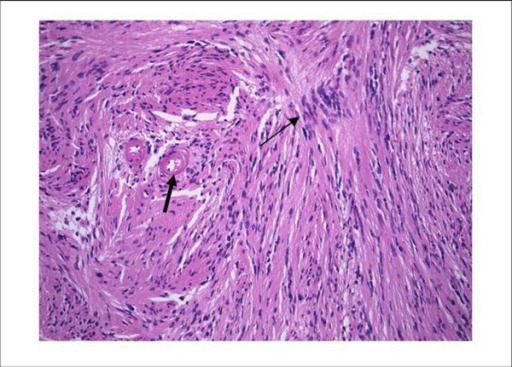
  • Fuertemente reactiva para S100 S100 A family of highly acidic calcium-binding proteins found in large concentration in the brain and believed to be glial in origin. They are also found in other organs in the body. They have in common the ef-hand motif (ef hand motifs) found on a number of calcium binding proteins. The name of this family derives from the property of being soluble in a 100% saturated ammonium sulfate solution. Acoustic Neuroma
  • Zonas hipercelulares con células fusiformes (denominadas Antoni A) alternando con estroma mixoide hipocelular (denominado Antoni B)

Tratamiento

Tumor Tumor Inflammation grande con severa pérdida de la audición

  • Extirpación quirúrgica:
    • La cirugía no puede restablecer la pérdida de la audición, pero sí puede prevenir una mayor pérdida.
    • Monitorización intraoperatoria de los LOS Neisseria nervios craneales para reducir el riesgo de lesiones nerviosas
    • Complicaciones:
      • Tinnitus Tinnitus A nonspecific symptom of hearing disorder characterized by the sensation of buzzing, ringing, clicking, pulsations, and other noises in the ear. Objective tinnitus refers to noises generated from within the ear or adjacent structures that can be heard by other individuals. The term subjective tinnitus is used when the sound is audible only to the affected individual. Tinnitus may occur as a manifestation of cochlear diseases; vestibulocochlear nerve diseases; intracranial hypertension; craniocerebral trauma; and other conditions. Cranial Nerve Palsies
      • Pérdida de la audición
      • Parálisis facial
      • Cambios en EN Erythema nodosum is an immune-mediated panniculitis (inflammation of the subcutaneous fat) caused by a type IV (delayed-type) hypersensitivity reaction. It commonly manifests in young women as tender, erythematous nodules on the shins. Erythema Nodosum el sentido del gusto
      • Cefaleas
  • Radioterapia:
    • Radiocirugía estereotáxica, terapia con haz de protones o radioterapia estereotáxica fraccionada
    • El objetivo de la radiación es controlar el tumor Tumor Inflammation, evitar que siga creciendo y, en EN Erythema nodosum is an immune-mediated panniculitis (inflammation of the subcutaneous fat) caused by a type IV (delayed-type) hypersensitivity reaction. It commonly manifests in young women as tender, erythematous nodules on the shins. Erythema Nodosum ocasiones, provocar una reducción del tamaño del tumor Tumor Inflammation.
    • Complicaciones:
      • Debilidad facial
      • Malignidad
      • Expansión tumoral
      • Formación de quiste

Tumor Tumor Inflammation pequeño con una pequeña pérdida de la audición

Monitorización en EN Erythema nodosum is an immune-mediated panniculitis (inflammation of the subcutaneous fat) caused by a type IV (delayed-type) hypersensitivity reaction. It commonly manifests in young women as tender, erythematous nodules on the shins. Erythema Nodosum serie:

  • RM cada 6–12 meses para evaluar la progresión del tumor Tumor Inflammation
  • Aparatos auditivos auxiliares para la pérdida de la audición (alrededor del 50% de los LOS Neisseria pacientes que están en EN Erythema nodosum is an immune-mediated panniculitis (inflammation of the subcutaneous fat) caused by a type IV (delayed-type) hypersensitivity reaction. It commonly manifests in young women as tender, erythematous nodules on the shins. Erythema Nodosum observación durante una década pierden la audición funcional)

Diagnóstico Diferencial

  • Meningioma Meningioma Meningiomas are slow-growing tumors that arise from the meninges of the brain and spinal cord. The vast majority are benign. These tumors commonly occur in individuals with a history of high doses of skull radiation, head trauma, and neurofibromatosis 2. Meningioma: tumor Tumor Inflammation benigno que surge de las meninges Meninges The brain and the spinal cord are enveloped by 3 overlapping layers of connective tissue called the meninges. The layers are, from the most external layer to the most internal layer, the dura mater, arachnoid mater, and pia mater. Between these layers are 3 potential spaces called the epidural, subdural, and subarachnoid spaces. Meninges: Anatomy del cerebro o de la médula espinal. Los LOS Neisseria factores de riesgo incluyen la exposición a la radiación. El meningioma Meningioma Meningiomas are slow-growing tumors that arise from the meninges of the brain and spinal cord. The vast majority are benign. These tumors commonly occur in individuals with a history of high doses of skull radiation, head trauma, and neurofibromatosis 2. Meningioma se presenta con cefalea, alteraciones de la visión y posibles convulsiones. La imagenología cerebral y la biopsia son las principales herramientas de diagnóstico. El meningioma Meningioma Meningiomas are slow-growing tumors that arise from the meninges of the brain and spinal cord. The vast majority are benign. These tumors commonly occur in individuals with a history of high doses of skull radiation, head trauma, and neurofibromatosis 2. Meningioma se trata con escisión quirúrgica o con radiación.
  • Neurofibromatosis tipo II: síndrome neurocutáneo autosómico dominante causado por la mutación del gen NF2 NF2 Neurofibromatosis type 2 is a neurocutaneous disorder that can arise from mutations in the NF2 gene located in chromosome 22 and may be inherited in an autosomal dominant fashion or occur from de novo mutations. The main clinical features are bilateral vestibular schwannomas, intracranial/spinal meningioma, and intramedullary and extramedullary spinal tumors. Neurofibromatosis Type 2 en EN Erythema nodosum is an immune-mediated panniculitis (inflammation of the subcutaneous fat) caused by a type IV (delayed-type) hypersensitivity reaction. It commonly manifests in young women as tender, erythematous nodules on the shins. Erythema Nodosum el cromosoma 22. El gen NF2 NF2 Neurofibromatosis type 2 is a neurocutaneous disorder that can arise from mutations in the NF2 gene located in chromosome 22 and may be inherited in an autosomal dominant fashion or occur from de novo mutations. The main clinical features are bilateral vestibular schwannomas, intracranial/spinal meningioma, and intramedullary and extramedullary spinal tumors. Neurofibromatosis Type 2 codifica la proteína merlina. Los LOS Neisseria síntomas dependen del tumor Tumor Inflammation y de su localización. Estos tumores incluyen cataratas bilaterales, neurinomas del acústico bilaterales, meningiomas, ependimomas y neurofibromas. El diagnóstico se realiza con la historia clínica del paciente, la exploración física, el diagnóstico por imagen y las pruebas genéticas. El tratamiento incluye la escisión quirúrgica o la radiación para los LOS Neisseria tumores y los LOS Neisseria auxiliares auditivos para cualquier pérdida de la audición funcional.
  • Enfermedad de Ménière: típicamente es un trastorno unilateral del oído interno que provoca una sensación periódica de giro, tinnitus Tinnitus A nonspecific symptom of hearing disorder characterized by the sensation of buzzing, ringing, clicking, pulsations, and other noises in the ear. Objective tinnitus refers to noises generated from within the ear or adjacent structures that can be heard by other individuals. The term subjective tinnitus is used when the sound is audible only to the affected individual. Tinnitus may occur as a manifestation of cochlear diseases; vestibulocochlear nerve diseases; intracranial hypertension; craniocerebral trauma; and other conditions. Cranial Nerve Palsies y plenitud en EN Erythema nodosum is an immune-mediated panniculitis (inflammation of the subcutaneous fat) caused by a type IV (delayed-type) hypersensitivity reaction. It commonly manifests in young women as tender, erythematous nodules on the shins. Erythema Nodosum el oído. Los LOS Neisseria síntomas parecen estar causados por la acumulación de líquido en EN Erythema nodosum is an immune-mediated panniculitis (inflammation of the subcutaneous fat) caused by a type IV (delayed-type) hypersensitivity reaction. It commonly manifests in young women as tender, erythematous nodules on the shins. Erythema Nodosum el laberinto del oído interno. La enfermedad se considera progresiva y puede causar pérdida de la audición. El diagnóstico se basa en EN Erythema nodosum is an immune-mediated panniculitis (inflammation of the subcutaneous fat) caused by a type IV (delayed-type) hypersensitivity reaction. It commonly manifests in young women as tender, erythematous nodules on the shins. Erythema Nodosum los LOS Neisseria síntomas clínicos y el examen auditivo. El tratamiento es con antieméticos y ansiolíticos (episodios agudos) e incluye fisioterapia, cambios dietéticos (dieta baja en EN Erythema nodosum is an immune-mediated panniculitis (inflammation of the subcutaneous fat) caused by a type IV (delayed-type) hypersensitivity reaction. It commonly manifests in young women as tender, erythematous nodules on the shins. Erythema Nodosum sal) y cuidados paliativos (manejo crónico). A diferencia del neurinoma del acústico, en EN Erythema nodosum is an immune-mediated panniculitis (inflammation of the subcutaneous fat) caused by a type IV (delayed-type) hypersensitivity reaction. It commonly manifests in young women as tender, erythematous nodules on the shins. Erythema Nodosum la enfermedad de Ménière no se observa ninguna masa en EN Erythema nodosum is an immune-mediated panniculitis (inflammation of the subcutaneous fat) caused by a type IV (delayed-type) hypersensitivity reaction. It commonly manifests in young women as tender, erythematous nodules on the shins. Erythema Nodosum la imagenología.

Referencias

  1. Park, J.K., Vernick, D.M. (2025). Vestibular schwannoma (acoustic neuroma). UpToDate. Retrieved March 24, 2025, from https://www.uptodate.com/contents/vestibular-schwannoma-acoustic-neuroma
  2. Martin, K.A. (n.d.). Patient education: Vestibular schwannoma (acoustic neuroma). UpToDate. Retrieved March 24, 2025, from https://www.uptodate.com/contents/vestibular-schwannoma-acoustic-neuroma-the-basics
  3. Kutz, J.W. (2024). Acoustic neuroma. Medscape. Retrieved March 24, 2025, from https://emedicine.medscape.com/article/882876-overview

¡Crea tu cuenta gratis o inicia una sesión para seguir leyendo!

Regístrate ahora y obtén acceso gratuito a Lecturio con páginas de concepto, videos médicos y cuestionarios para tu educación médica.

User Reviews

Que tengas una sesión de estudio alegre y navideña 🎁 Ahorra 50% en todos los planes >>

Details