Domina Conceptos Médicos

Estudia para la escuela de medicina y tus examenes con Lecturio.

Mpox (Viruela Símica)

La mpox (antes conocida como viruela símica) es una enfermedad zoonótica viral causada por el virus Virus Viruses are infectious, obligate intracellular parasites composed of a nucleic acid core surrounded by a protein capsid. Viruses can be either naked (non-enveloped) or enveloped. The classification of viruses is complex and based on many factors, including type and structure of the nucleoid and capsid, the presence of an envelope, the replication cycle, and the host range. Virology mpox de la familia Poxviridae Poxviridae A family of double-stranded DNA viruses infecting mammals (including humans), birds and insects. There are two subfamilies: chordopoxvirinae, poxviruses of vertebrates, and entomopoxvirinae, poxviruses of insects. Orthopoxvirus. La transmisión puede ser de animal a humano (por mordedura de animal o por contacto directo con fluidos corporales) o de humano a humano (por contacto estrecho con lesiones cutáneas, secreciones respiratorias u objetos contaminados). La presentación clínica es similar a la del virus Virus Viruses are infectious, obligate intracellular parasites composed of a nucleic acid core surrounded by a protein capsid. Viruses can be either naked (non-enveloped) or enveloped. The classification of viruses is complex and based on many factors, including type and structure of the nucleoid and capsid, the presence of an envelope, the replication cycle, and the host range. Virology de la viruela, que incluye síntomas prodrómicos como fiebre, cefalea, mialgia y linfadenopatía. La erupción comienza unos 5 días después del inicio de los LOS Neisseria síntomas; suele presentarse en EN Erythema nodosum is an immune-mediated panniculitis (inflammation of the subcutaneous fat) caused by a type IV (delayed-type) hypersensitivity reaction. It commonly manifests in young women as tender, erythematous nodules on the shins. Erythema Nodosum forma de máculas y más tarde evoluciona a pápulas, vesículas y pústulas. Estas lesiones se secan (costras) y se caen. El método de diagnóstico preferido es la reacción en EN Erythema nodosum is an immune-mediated panniculitis (inflammation of the subcutaneous fat) caused by a type IV (delayed-type) hypersensitivity reaction. It commonly manifests in young women as tender, erythematous nodules on the shins. Erythema Nodosum cadena de la polimerasa en EN Erythema nodosum is an immune-mediated panniculitis (inflammation of the subcutaneous fat) caused by a type IV (delayed-type) hypersensitivity reaction. It commonly manifests in young women as tender, erythematous nodules on the shins. Erythema Nodosum muestras clínicas (lesiones cutáneas). La enfermedad suele ser autolimitada y dura entre 2-4 semanas. Por lo general, se brinda tratamiento de soporte. Los LOS Neisseria agentes antivirales, como el tecovirimat Tecovirimat Orthopoxvirus, pueden administrarse a pacientes con enfermedad severa o en EN Erythema nodosum is an immune-mediated panniculitis (inflammation of the subcutaneous fat) caused by a type IV (delayed-type) hypersensitivity reaction. It commonly manifests in young women as tender, erythematous nodules on the shins. Erythema Nodosum riesgo de padecerla.

Last updated: Dec 15, 2025

Editorial responsibility: Stanley Oiseth, Lindsay Jones, Evelin Maza

Descripción General

La mpox (antes conocida como viruela símica) es una enfermedad zoonótica viral causada por el virus Virus Viruses are infectious, obligate intracellular parasites composed of a nucleic acid core surrounded by a protein capsid. Viruses can be either naked (non-enveloped) or enveloped. The classification of viruses is complex and based on many factors, including type and structure of the nucleoid and capsid, the presence of an envelope, the replication cycle, and the host range. Virology mpox. La mpox tiene un perfil clínico similar al AL Amyloidosis de la viruela, pero es menos mortal.

Virología

  • Pertenece al AL Amyloidosis género Orthopoxvirus Orthopoxvirus Orthopoxvirus is a genus of large, brick-shaped, double-stranded DNA viruses. Several clinically relevant species exist, including variola virus (the cause of smallpox), monkeypox virus, vaccinia virus, and cowpox virus. Transmission varies depending on the species but can be through contact with infected bodily secretions, skin lesions, or fomites. Orthopoxvirus de la familia Poxviridae Poxviridae A family of double-stranded DNA viruses infecting mammals (including humans), birds and insects. There are two subfamilies: chordopoxvirinae, poxviruses of vertebrates, and entomopoxvirinae, poxviruses of insects. Orthopoxvirus, que también incluye la viruela y el virus Virus Viruses are infectious, obligate intracellular parasites composed of a nucleic acid core surrounded by a protein capsid. Viruses can be either naked (non-enveloped) or enveloped. The classification of viruses is complex and based on many factors, including type and structure of the nucleoid and capsid, the presence of an envelope, the replication cycle, and the host range. Virology vaccinia Vaccinia The cutaneous and occasional systemic reactions associated with vaccination using smallpox (variola) vaccine. Orthopoxvirus
  • Virus Virus Viruses are infectious, obligate intracellular parasites composed of a nucleic acid core surrounded by a protein capsid. Viruses can be either naked (non-enveloped) or enveloped. The classification of viruses is complex and based on many factors, including type and structure of the nucleoid and capsid, the presence of an envelope, the replication cycle, and the host range. Virology de ADN bicatenario envuelto
  • Se han identificado 2 clados diferentes del virus Virus Viruses are infectious, obligate intracellular parasites composed of a nucleic acid core surrounded by a protein capsid. Viruses can be either naked (non-enveloped) or enveloped. The classification of viruses is complex and based on many factors, including type and structure of the nucleoid and capsid, the presence of an envelope, the replication cycle, and the host range. Virology en EN Erythema nodosum is an immune-mediated panniculitis (inflammation of the subcutaneous fat) caused by a type IV (delayed-type) hypersensitivity reaction. It commonly manifests in young women as tender, erythematous nodules on the shins. Erythema Nodosum varias regiones geográficas de África:
    • Una endémica de África Occidental
    • Una endémica de la cuenca del Congo
Virión de la viruela del mono

Imagen de microscopía electrónica de transmisión de un virión mpox:
Esta imagen de tinción negativa muestra una única partícula en forma de ladrillo cubierta de filamentos espiralados.

Imagen: “22663” por CDC/Cynthia S. Goldsmith. Licencia: CC0 1.0

Epidemiología

  • Se aisló por primera vez en EN Erythema nodosum is an immune-mediated panniculitis (inflammation of the subcutaneous fat) caused by a type IV (delayed-type) hypersensitivity reaction. It commonly manifests in young women as tender, erythematous nodules on the shins. Erythema Nodosum Dinamarca a finales de los LOS Neisseria años 50 durante una investigación en EN Erythema nodosum is an immune-mediated panniculitis (inflammation of the subcutaneous fat) caused by a type IV (delayed-type) hypersensitivity reaction. It commonly manifests in young women as tender, erythematous nodules on the shins. Erythema Nodosum monos de laboratorio
  • 1er caso humano registrado en EN Erythema nodosum is an immune-mediated panniculitis (inflammation of the subcutaneous fat) caused by a type IV (delayed-type) hypersensitivity reaction. It commonly manifests in young women as tender, erythematous nodules on the shins. Erythema Nodosum 1970
  • La mayoría de los LOS Neisseria casos se han producido en EN Erythema nodosum is an immune-mediated panniculitis (inflammation of the subcutaneous fat) caused by a type IV (delayed-type) hypersensitivity reaction. It commonly manifests in young women as tender, erythematous nodules on the shins. Erythema Nodosum África Central y Occidental.
  • Antes de 2022, los LOS Neisseria casos en EN Erythema nodosum is an immune-mediated panniculitis (inflammation of the subcutaneous fat) caused by a type IV (delayed-type) hypersensitivity reaction. It commonly manifests in young women as tender, erythematous nodules on the shins. Erythema Nodosum otros lugares estaban relacionados sobre todo con viajes internacionales desde regiones endémicas.
  • Brote mundial de 2022:
    • 1er informe en EN Erythema nodosum is an immune-mediated panniculitis (inflammation of the subcutaneous fat) caused by a type IV (delayed-type) hypersensitivity reaction. It commonly manifests in young women as tender, erythematous nodules on the shins. Erythema Nodosum mayo de 2022 en EN Erythema nodosum is an immune-mediated panniculitis (inflammation of the subcutaneous fat) caused by a type IV (delayed-type) hypersensitivity reaction. It commonly manifests in young women as tender, erythematous nodules on the shins. Erythema Nodosum Europa
    • El 23 de julio de 2022, la OMS declaró el brote como una emergencia de salud pública de importancia internacional.
    • Se han notificado > 54 000 casos del virus Virus Viruses are infectious, obligate intracellular parasites composed of a nucleic acid core surrounded by a protein capsid. Viruses can be either naked (non-enveloped) or enveloped. The classification of viruses is complex and based on many factors, including type and structure of the nucleoid and capsid, the presence of an envelope, the replication cycle, and the host range. Virology a nivel mundial, incluidas 15 muertes (hasta agosto de 2022).
    • La mayoría de los LOS Neisseria casos (94%) se han atribuido a la actividad sexual en EN Erythema nodosum is an immune-mediated panniculitis (inflammation of the subcutaneous fat) caused by a type IV (delayed-type) hypersensitivity reaction. It commonly manifests in young women as tender, erythematous nodules on the shins. Erythema Nodosum homosexuales, bisexuales y otros hombres que tienen relaciones sexuales con hombres (HSH).
    • Aproximadamente el 41% de las personas infectadas tenían infección por VIH.

Transmisión

  • Transmisión de animal a humano:
    • A través de la mordedura de un animal o de fluidos corporales infectados (sangre o lesiones cutáneas o mucosas)
    • La carne cocinada inadecuadamente constituye un posible riesgo.
    • Animales con infección por mpox:
      • Monos
      • Ardillas listadas africanas y ardillas arborícolas
      • Ratas de Gambia
      • Lirones
  • Transmisión de persona a persona:
    • Contacto directo a través de erupciones, costras, fluidos corporales
    • Secreciones respiratorias (se requieren horas prolongadas de contacto)
    • Transmisión indirecta a través de materiales infectados (ropa, sábanas o toallas) y fómites contaminados
    • Transplacentaria (mpox congénita)
  • Riesgos de infección:
    • Una persona infectada es potencialmente infecciosa desde el inicio de los LOS Neisseria síntomas (periodo prodrómico) hasta la formación de costras en EN Erythema nodosum is an immune-mediated panniculitis (inflammation of the subcutaneous fat) caused by a type IV (delayed-type) hypersensitivity reaction. It commonly manifests in young women as tender, erythematous nodules on the shins. Erythema Nodosum las lesiones cutáneas.
    • Dado el cese de vacunación contra la viruela, las personas < 50 años son más susceptibles a ser infectadas.
      • Aunque la vacuna contra la viruela proporciona protección (85% de protección cruzada) contra la enfermedad de la mpox, se desconoce su duración.
      • En EN Erythema nodosum is an immune-mediated panniculitis (inflammation of the subcutaneous fat) caused by a type IV (delayed-type) hypersensitivity reaction. It commonly manifests in young women as tender, erythematous nodules on the shins. Erythema Nodosum España, se notificó que el 32% de los LOS Neisseria pacientes habían recibido la vacuna de la viruela en EN Erythema nodosum is an immune-mediated panniculitis (inflammation of the subcutaneous fat) caused by a type IV (delayed-type) hypersensitivity reaction. It commonly manifests in young women as tender, erythematous nodules on the shins. Erythema Nodosum la infancia.
    • Las personas con inmunodeficiencias corren el riesgo de tener peores presentaciones.

Presentación Clínica

General

  • Periodo de incubación: 4-21 días
  • Duración: la enfermedad suele durar de 2-4 semanas

Periodo de invasión (0-5 días)

Los LOS Neisseria síntomas que aparecen durante este periodo pueden incluir:

  • Fiebre
  • Cefalea
  • Linfadenopatía
  • Dolor Dolor Inflammation de espalda
  • Mialgia
  • Fatiga/astenia
  • Síntomas respiratorios, incluyendo:
    • Dolor Dolor Inflammation de garganta
    • Tos TOS Thoracic outlet syndrome (TOS) is a broad term used for a spectrum of syndromes related to the general region of the thoracic outlet, which involves the compression or irritation of elements of the brachial plexus, subclavian artery, or subclavian vein. Thoracic Outlet Syndrome
    • Congestión nasal

Manifestaciones cutáneas

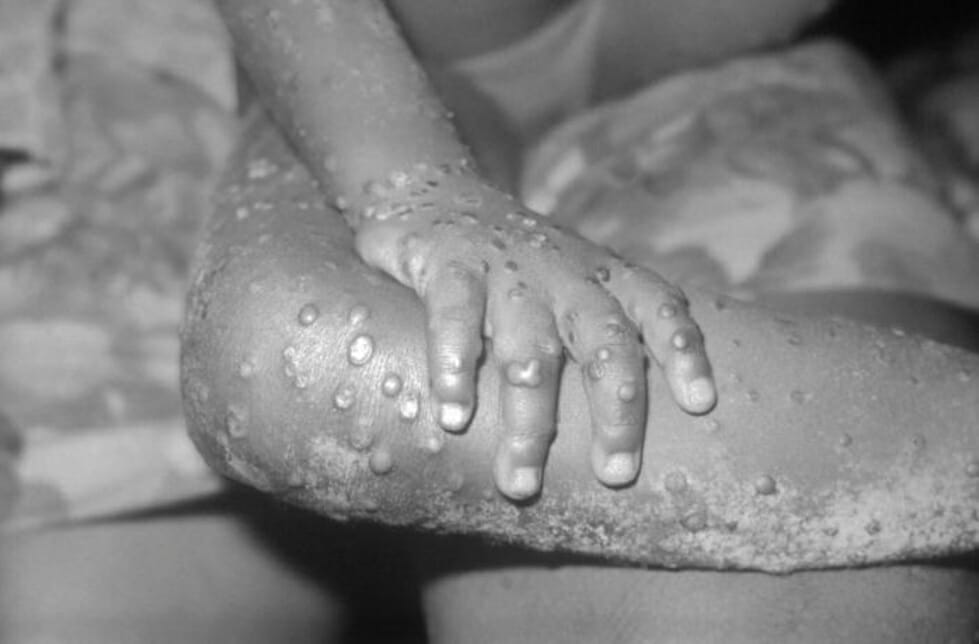
El curso de la enfermedad es seguido por el desarrollo de una erupción con las siguientes características:
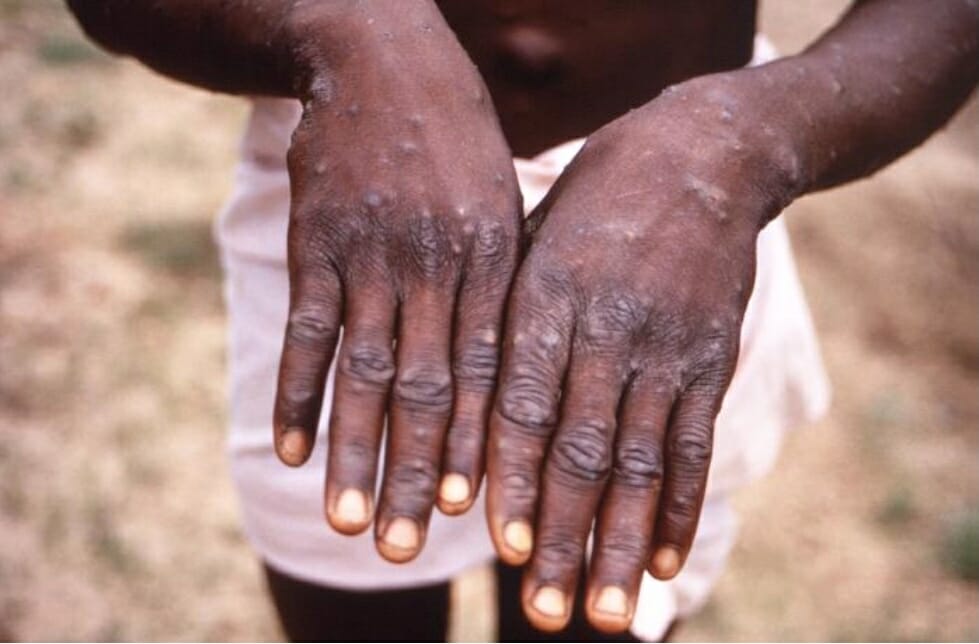
  • Aparece a los LOS Neisseria 2-5 días del inicio de la enfermedad
  • Progresión: Lesiones planas (máculas) → pápulas (lesiones elevadas y firmes) → vesículas (lesiones llenas de líquido) → pústulas (lesiones con pus).
  • Características de las lesiones:
    • Bien implantadas
    • Firmes
    • Bien delimitadas
    • A menudo umbilicadas
  • Sitios posibles:
    • Cara
    • Palmas y plantas
    • Membranas mucosas
    • Genitales
    • Nota: Algunos pacientes pueden tener lesiones en EN Erythema nodosum is an immune-mediated panniculitis (inflammation of the subcutaneous fat) caused by a type IV (delayed-type) hypersensitivity reaction. It commonly manifests in young women as tender, erythematous nodules on the shins. Erythema Nodosum una sola zona del cuerpo.
  • Distribución:
    • Típicamente más lesiones en EN Erythema nodosum is an immune-mediated panniculitis (inflammation of the subcutaneous fat) caused by a type IV (delayed-type) hypersensitivity reaction. It commonly manifests in young women as tender, erythematous nodules on the shins. Erythema Nodosum las extremidades y la cara
    • En EN Erythema nodosum is an immune-mediated panniculitis (inflammation of the subcutaneous fat) caused by a type IV (delayed-type) hypersensitivity reaction. It commonly manifests in young women as tender, erythematous nodules on the shins. Erythema Nodosum el brote de 2022 se evidenciaron con frecuencia lesiones en EN Erythema nodosum is an immune-mediated panniculitis (inflammation of the subcutaneous fat) caused by a type IV (delayed-type) hypersensitivity reaction. It commonly manifests in young women as tender, erythematous nodules on the shins. Erythema Nodosum genitales.
  • Desarrollo:
    • Las lesiones en EN Erythema nodosum is an immune-mediated panniculitis (inflammation of the subcutaneous fat) caused by a type IV (delayed-type) hypersensitivity reaction. It commonly manifests in young women as tender, erythematous nodules on the shins. Erythema Nodosum un mismo lugar suelen ser del mismo estadio (por ejemplo, pústulas en EN Erythema nodosum is an immune-mediated panniculitis (inflammation of the subcutaneous fat) caused by a type IV (delayed-type) hypersensitivity reaction. It commonly manifests in young women as tender, erythematous nodules on the shins. Erythema Nodosum la cara).
    • Brote de 2022:
      • La progresión de las lesiones puede ser rápida.
      • Pueden aparecer lesiones papulovesiculares y pustulosas en EN Erythema nodosum is an immune-mediated panniculitis (inflammation of the subcutaneous fat) caused by a type IV (delayed-type) hypersensitivity reaction. It commonly manifests in young women as tender, erythematous nodules on the shins. Erythema Nodosum el mismo lugar.
  • Síntomas asociados:
    • Las lesiones suelen ser dolorosas.
    • El prurito se produce en EN Erythema nodosum is an immune-mediated panniculitis (inflammation of the subcutaneous fat) caused by a type IV (delayed-type) hypersensitivity reaction. It commonly manifests in young women as tender, erythematous nodules on the shins. Erythema Nodosum la fase de cicatrización (costras).
  • La enfermedad suele ser autolimitada; las ampollas forman costras y se caen.

Presentaciones adicionales

Otros hallazgos en EN Erythema nodosum is an immune-mediated panniculitis (inflammation of the subcutaneous fat) caused by a type IV (delayed-type) hypersensitivity reaction. It commonly manifests in young women as tender, erythematous nodules on the shins. Erythema Nodosum el brote de 2022 incluyen:

  • Los LOS Neisseria individuos, en EN Erythema nodosum is an immune-mediated panniculitis (inflammation of the subcutaneous fat) caused by a type IV (delayed-type) hypersensitivity reaction. It commonly manifests in young women as tender, erythematous nodules on the shins. Erythema Nodosum particular los LOS Neisseria que practicaban sexo anal receptivo, presentaban:
  • Otros presentaron lesiones mucosas:
    • Faringitis
    • Epiglotitis
    • Lesiones orales o amigdalinas
    • Lesiones de la mucosa conjuntival

Complicaciones

  • Las complicaciones son raras; incluyen:
    • Formación de cicatrices
    • Infecciones bacterianas secundarias
    • Infección corneal → ceguera
    • Neumonía
    • Encefalitis
    • La muerte es muy rara (tasa de mortalidad: 1%-11%).
  • Factores de riesgo para complicaciones:
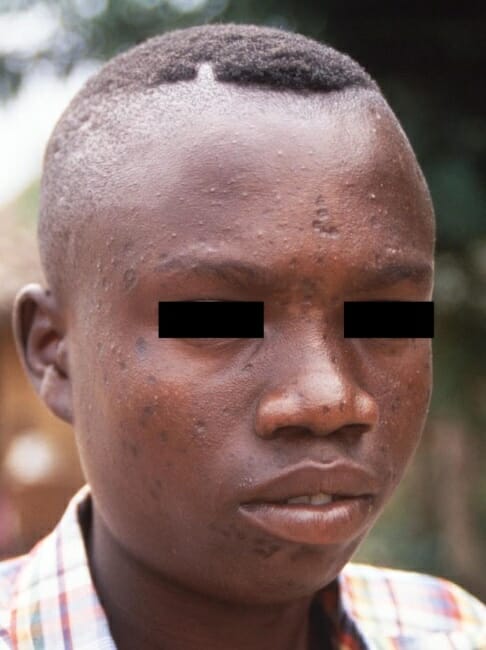
Cicatrices permanentes de viruela símica

La cara de un joven que se recuperó de un caso de mpox y llevaba cicatrices permanentes de marcas de viruela.

Imagen: “12777” por CDC/Brian W.J. Mahy, BSc, MA, PhD, ScD, DSc. Licencia: CC0 1.0
Diagnóstico

General

Los LOS Neisseria clínicos deben sospechar mpox en EN Erythema nodosum is an immune-mediated panniculitis (inflammation of the subcutaneous fat) caused by a type IV (delayed-type) hypersensitivity reaction. It commonly manifests in young women as tender, erythematous nodules on the shins. Erythema Nodosum los LOS Neisseria casos con factores clínicos y epidemiológicos:

  • Presentación clínica:
    • Erupción
    • Pródromos (por ejemplo, fiebre, linfadenopatía)
    • Síntomas atípicos (por ejemplo, proctitis Proctitis Inflammation of the mucous membrane of the rectum, the distal end of the large intestine. Chronic Granulomatous Disease)
  • Factores de riesgo epidemiológicos:
    • Antecedente de viajes (África Central u Occidental o países con brotes)
    • Contacto con:
      • Un individuo con infección conocida
      • Una comunidad que se conoce está en EN Erythema nodosum is an immune-mediated panniculitis (inflammation of the subcutaneous fat) caused by a type IV (delayed-type) hypersensitivity reaction. It commonly manifests in young women as tender, erythematous nodules on the shins. Erythema Nodosum riesgo de infección (incluidos los LOS Neisseria HSH)
      • Animales (o productos animales) que se sabe que están infectados

Estudios de laboratorio

  • Prueba de reacción en EN Erythema nodosum is an immune-mediated panniculitis (inflammation of the subcutaneous fat) caused by a type IV (delayed-type) hypersensitivity reaction. It commonly manifests in young women as tender, erythematous nodules on the shins. Erythema Nodosum cadena de la polimerasa ( PCR PCR Polymerase chain reaction (PCR) is a technique that amplifies DNA fragments exponentially for analysis. The process is highly specific, allowing for the targeting of specific genomic sequences, even with minuscule sample amounts. The PCR cycles multiple times through 3 phases: denaturation of the template DNA, annealing of a specific primer to the individual DNA strands, and synthesis/elongation of new DNA molecules. Polymerase Chain Reaction (PCR)) para ADN de orthopoxvirus Orthopoxvirus Orthopoxvirus is a genus of large, brick-shaped, double-stranded DNA viruses. Several clinically relevant species exist, including variola virus (the cause of smallpox), monkeypox virus, vaccinia virus, and cowpox virus. Transmission varies depending on the species but can be through contact with infected bodily secretions, skin lesions, or fomites. Orthopoxvirus:
    • Se toman hisopados de las lesiones cutáneas para identificar el ADN viral.
    • Pasar vigorosamente el hisopo por las lesiones
  • Prueba PCR PCR Polymerase chain reaction (PCR) is a technique that amplifies DNA fragments exponentially for analysis. The process is highly specific, allowing for the targeting of specific genomic sequences, even with minuscule sample amounts. The PCR cycles multiple times through 3 phases: denaturation of the template DNA, annealing of a specific primer to the individual DNA strands, and synthesis/elongation of new DNA molecules. Polymerase Chain Reaction (PCR) en EN Erythema nodosum is an immune-mediated panniculitis (inflammation of the subcutaneous fat) caused by a type IV (delayed-type) hypersensitivity reaction. It commonly manifests in young women as tender, erythematous nodules on the shins. Erythema Nodosum tiempo real del virus Virus Viruses are infectious, obligate intracellular parasites composed of a nucleic acid core surrounded by a protein capsid. Viruses can be either naked (non-enveloped) or enveloped. The classification of viruses is complex and based on many factors, including type and structure of the nucleoid and capsid, the presence of an envelope, the replication cycle, and the host range. Virology Mpox:
    • Originalmente, en EN Erythema nodosum is an immune-mediated panniculitis (inflammation of the subcutaneous fat) caused by a type IV (delayed-type) hypersensitivity reaction. It commonly manifests in young women as tender, erythematous nodules on the shins. Erythema Nodosum EE.UU., las pruebas PCR PCR Polymerase chain reaction (PCR) is a technique that amplifies DNA fragments exponentially for analysis. The process is highly specific, allowing for the targeting of specific genomic sequences, even with minuscule sample amounts. The PCR cycles multiple times through 3 phases: denaturation of the template DNA, annealing of a specific primer to the individual DNA strands, and synthesis/elongation of new DNA molecules. Polymerase Chain Reaction (PCR) para ADN de orthopoxvirus Orthopoxvirus Orthopoxvirus is a genus of large, brick-shaped, double-stranded DNA viruses. Several clinically relevant species exist, including variola virus (the cause of smallpox), monkeypox virus, vaccinia virus, and cowpox virus. Transmission varies depending on the species but can be through contact with infected bodily secretions, skin lesions, or fomites. Orthopoxvirus se realizan en EN Erythema nodosum is an immune-mediated panniculitis (inflammation of the subcutaneous fat) caused by a type IV (delayed-type) hypersensitivity reaction. It commonly manifests in young women as tender, erythematous nodules on the shins. Erythema Nodosum redes de respuesta de laboratorios, y la caracterización del virus Virus Viruses are infectious, obligate intracellular parasites composed of a nucleic acid core surrounded by a protein capsid. Viruses can be either naked (non-enveloped) or enveloped. The classification of viruses is complex and based on many factors, including type and structure of the nucleoid and capsid, the presence of an envelope, the replication cycle, and the host range. Virology mpox se realiza en EN Erythema nodosum is an immune-mediated panniculitis (inflammation of the subcutaneous fat) caused by a type IV (delayed-type) hypersensitivity reaction. It commonly manifests in young women as tender, erythematous nodules on the shins. Erythema Nodosum el CDC.
    • La Administración de Alimentos y Medicamentos de Estados Unidos emitió una autorización de uso de emergencia (septiembre de 2022) para la PCR PCR Polymerase chain reaction (PCR) is a technique that amplifies DNA fragments exponentially for analysis. The process is highly specific, allowing for the targeting of specific genomic sequences, even with minuscule sample amounts. The PCR cycles multiple times through 3 phases: denaturation of the template DNA, annealing of a specific primer to the individual DNA strands, and synthesis/elongation of new DNA molecules. Polymerase Chain Reaction (PCR) en EN Erythema nodosum is an immune-mediated panniculitis (inflammation of the subcutaneous fat) caused by a type IV (delayed-type) hypersensitivity reaction. It commonly manifests in young women as tender, erythematous nodules on the shins. Erythema Nodosum tiempo real cualitativa del virus Virus Viruses are infectious, obligate intracellular parasites composed of a nucleic acid core surrounded by a protein capsid. Viruses can be either naked (non-enveloped) or enveloped. The classification of viruses is complex and based on many factors, including type and structure of the nucleoid and capsid, the presence of an envelope, the replication cycle, and the host range. Virology de la viruela símica de Quest Diagnostics.
    • Detecta el ADN de ortopoxvirus no variólico y del virus Virus Viruses are infectious, obligate intracellular parasites composed of a nucleic acid core surrounded by a protein capsid. Viruses can be either naked (non-enveloped) or enveloped. The classification of viruses is complex and based on many factors, including type and structure of the nucleoid and capsid, the presence of an envelope, the replication cycle, and the host range. Virology mpox (clado de África Occidental) utilizando muestras de hisopado.
    • La recogida de muestras se sigue realizando en EN Erythema nodosum is an immune-mediated panniculitis (inflammation of the subcutaneous fat) caused by a type IV (delayed-type) hypersensitivity reaction. It commonly manifests in young women as tender, erythematous nodules on the shins. Erythema Nodosum centros sanitarios autorizados.
  • Serología ( IgM IgM A class of immunoglobulin bearing mu chains (immunoglobulin mu-chains). Igm can fix complement. The name comes from its high molecular weight and originally being called a macroglobulin. Immunoglobulins: Types and Functions antiortopoxvirus):
    • Positivo a partir de los LOS Neisseria días 4-56 tras la aparición de la erupción
    • Puede utilizarse para identificar la infección y apoyar el diagnóstico

Tratamiento

Tratamiento

Principios de tratamiento:

  • La Mpox es una enfermedad autolimitada, y la mayoría de los LOS Neisseria pacientes se recuperan sin ninguna intervención médica.
  • Los LOS Neisseria cuidados de soporte pueden adoptar la forma de:
  • Los LOS Neisseria antivirales están indicados para personas con (o factores de riesgo de) enfermedad severa.

Considerar tratamiento antiviral Antiviral Antivirals for Hepatitis B para:

  • Enfermedad severa:
    • Lesiones hemorrágicas
    • Lesiones confluentes
    • Encefalitis
    • Sepsis Sepsis Systemic inflammatory response syndrome with a proven or suspected infectious etiology. When sepsis is associated with organ dysfunction distant from the site of infection, it is called severe sepsis. When sepsis is accompanied by hypotension despite adequate fluid infusion, it is called septic shock. Sepsis and Septic Shock
    • Estado de salud que requiere hospitalización
  • Con riesgo de enfermedad severa:
    • Individuos inmunocomprometidos (por ejemplo, personas con infección por VIH, neoplasias, leucemia)
    • Niños, especialmente los LOS Neisseria menores de 8 años
    • Mujeres embarazadas o en EN Erythema nodosum is an immune-mediated panniculitis (inflammation of the subcutaneous fat) caused by a type IV (delayed-type) hypersensitivity reaction. It commonly manifests in young women as tender, erythematous nodules on the shins. Erythema Nodosum periodo de lactancia
    • Personas con dermatitis Dermatitis Any inflammation of the skin. Atopic Dermatitis (Eczema) atópica o enfermedad cutánea exfoliativa
    • Individuos con ≥ 1 complicación.

Tratamientos disponibles:

  • Tecovirimat Tecovirimat Orthopoxvirus (TPOXX):
    • Antiviral Antiviral Antivirals for Hepatitis B desarrollado contra la viruela
    • Potente inhibidor de la proteína del orthopoxvirus Orthopoxvirus Orthopoxvirus is a genus of large, brick-shaped, double-stranded DNA viruses. Several clinically relevant species exist, including variola virus (the cause of smallpox), monkeypox virus, vaccinia virus, and cowpox virus. Transmission varies depending on the species but can be through contact with infected bodily secretions, skin lesions, or fomites. Orthopoxvirus necesaria para su diseminación
    • Tratamiento de elección
    • Disponible en EN Erythema nodosum is an immune-mediated panniculitis (inflammation of the subcutaneous fat) caused by a type IV (delayed-type) hypersensitivity reaction. It commonly manifests in young women as tender, erythematous nodules on the shins. Erythema Nodosum preparaciones orales e intravenosas
  • Cidofovir Cidofovir An acyclic nucleoside phosphonate that acts as a competitive inhibitor of viral DNA polymerases. It is used in the treatment of retinitis caused by cytomegalovirus infections and may also be useful for treating herpesvirus infections. Antivirals for Herpes Virus:
    • Agente alternativo
    • Ha HA Hemolytic anemia (HA) is the term given to a large group of anemias that are caused by the premature destruction/hemolysis of circulating red blood cells (RBCs). Hemolysis can occur within (intravascular hemolysis) or outside the blood vessels (extravascular hemolysis). Hemolytic Anemia demostrado actividad in vitro contra el virus Virus Viruses are infectious, obligate intracellular parasites composed of a nucleic acid core surrounded by a protein capsid. Viruses can be either naked (non-enveloped) or enveloped. The classification of viruses is complex and based on many factors, including type and structure of the nucleoid and capsid, the presence of an envelope, the replication cycle, and the host range. Virology mpox y eficacia en EN Erythema nodosum is an immune-mediated panniculitis (inflammation of the subcutaneous fat) caused by a type IV (delayed-type) hypersensitivity reaction. It commonly manifests in young women as tender, erythematous nodules on the shins. Erythema Nodosum modelos animales.
  • Brincidofovir:
    • Medicamento precursor del cidofovir Cidofovir An acyclic nucleoside phosphonate that acts as a competitive inhibitor of viral DNA polymerases. It is used in the treatment of retinitis caused by cytomegalovirus infections and may also be useful for treating herpesvirus infections. Antivirals for Herpes Virus
    • Aprobado para el tratamiento de la viruela
  • Trifluridina (gotas oculares o pomadas):
    • Autorizado para queratitis herpética/queratoconjuntivitis
    • Puede utilizarse para el mpox con afectación ocular
  • Inmunoglobulina Vaccinia Vaccinia The cutaneous and occasional systemic reactions associated with vaccination using smallpox (variola) vaccine. Orthopoxvirus Intravenosa (VIGIV):
    • Se utiliza para las complicaciones de la vacunación contra la vaccinia Vaccinia The cutaneous and occasional systemic reactions associated with vaccination using smallpox (variola) vaccine. Orthopoxvirus
    • Los LOS Neisseria CDC autorizan el uso de VIGIV en EN Erythema nodosum is an immune-mediated panniculitis (inflammation of the subcutaneous fat) caused by a type IV (delayed-type) hypersensitivity reaction. It commonly manifests in young women as tender, erythematous nodules on the shins. Erythema Nodosum brotes debidos a orthopoxvirus Orthopoxvirus Orthopoxvirus is a genus of large, brick-shaped, double-stranded DNA viruses. Several clinically relevant species exist, including variola virus (the cause of smallpox), monkeypox virus, vaccinia virus, and cowpox virus. Transmission varies depending on the species but can be through contact with infected bodily secretions, skin lesions, or fomites. Orthopoxvirus

Prevención y aislamiento

Prevención:

  • Evitar:
    • Contacto con animales infectados
    • Contacto con personas expuestas y/o personas con erupciones cutáneas
    • Contacto con material contaminado y fómites (por ejemplo, ropa de cama, prendas de vestir, sábanas)
    • Contacto sexual con parejas anónimas
  • Lavado de manos frecuente
  • Utilizar métodos de limpieza húmedos (evite sacudir el polvo, barrer y aspirar)
  • El personal de salud debe utilizar medidas de seguridad adecuadas y llevar EPP:
    • Bata
    • Guantes
    • Protección ocular (las gafas o pantallas faciales deben cubrir la parte frontal Frontal The bone that forms the frontal aspect of the skull. Its flat part forms the forehead, articulating inferiorly with the nasal bone and the cheek bone on each side of the face. Skull: Anatomy y lateral de la cara)
    • Mascarilla con filtro N95 (o superior) para partículas, aprobada por el National Institute for Occupational Safety and Health (NIOSH).

Aislamiento:

  • Aquellos en EN Erythema nodosum is an immune-mediated panniculitis (inflammation of the subcutaneous fat) caused by a type IV (delayed-type) hypersensitivity reaction. It commonly manifests in young women as tender, erythematous nodules on the shins. Erythema Nodosum los LOS Neisseria que se sospeche mpox → instituir medidas de aislamiento hasta descartar mpox.
  • Aquellos con mpox confirmada → iniciar y mantener medidas de aislamiento hasta que todas las costras se desprendan y se haya desarrollado una nueva capa de piel.
  • Medidas:
    • Aislar hasta que desaparezcan todos los LOS Neisseria síntomas (normalmente entre 2-4 semanas después de la aparición de síntomas).
    • Aislar de miembros de la familia y de los LOS Neisseria animales domésticos:
      • Idealmente, en EN Erythema nodosum is an immune-mediated panniculitis (inflammation of the subcutaneous fat) caused by a type IV (delayed-type) hypersensitivity reaction. It commonly manifests in young women as tender, erythematous nodules on the shins. Erythema Nodosum una habitación separada
      • Evitar el contacto físico en EN Erythema nodosum is an immune-mediated panniculitis (inflammation of the subcutaneous fat) caused by a type IV (delayed-type) hypersensitivity reaction. It commonly manifests in young women as tender, erythematous nodules on the shins. Erythema Nodosum todo momento
    • No compartir objetos con personas o animales hasta que se hayan resuelto todos los LOS Neisseria signos y síntomas.
    • Utilizar una mascarilla bien ajustada y cubrir las lesiones (con guantes, gasas o ropa).
    • Desinfectar/blanquear los LOS Neisseria objetos potencialmente contaminados.
    • Se recomienda lavarse las manos con frecuencia (o utilizar un desinfectante a base de alcohol).
    • Evitar el uso de lentes de contacto (ya que puede propagar la infección a los LOS Neisseria ojos).
    • Evitar afeitarse en EN Erythema nodosum is an immune-mediated panniculitis (inflammation of the subcutaneous fat) caused by a type IV (delayed-type) hypersensitivity reaction. It commonly manifests in young women as tender, erythematous nodules on the shins. Erythema Nodosum las zonas afectadas (puede provocar autoinoculación).
    • Evitar el transporte público (incluso cuando busque atención médica).

Después de la recuperación:

  • Se recomiendan prácticas sexuales seguras (p. ej., uso de preservativos), pero la duración de la diseminación viral en EN Erythema nodosum is an immune-mediated panniculitis (inflammation of the subcutaneous fat) caused by a type IV (delayed-type) hypersensitivity reaction. It commonly manifests in young women as tender, erythematous nodules on the shins. Erythema Nodosum el semen sigue bajo investigación
  • Otros países recomiendan el uso de protección durante al AL Amyloidosis menos 8 a 12 semanas

Manejo de la exposición y los LOS Neisseria contactos

Toda persona en EN Erythema nodosum is an immune-mediated panniculitis (inflammation of the subcutaneous fat) caused by a type IV (delayed-type) hypersensitivity reaction. It commonly manifests in young women as tender, erythematous nodules on the shins. Erythema Nodosum contacto o que haya atendido a pacientes con mpox debe vigilarse para detectar síntomas:

  • ≤ 21 días a partir de la última fecha de exposición/contacto
  • Controlar la temperatura dos veces al AL Amyloidosis día.
  • Si aparece una erupción, autoaislarse inmediatamente y ponerse en EN Erythema nodosum is an immune-mediated panniculitis (inflammation of the subcutaneous fat) caused by a type IV (delayed-type) hypersensitivity reaction. It commonly manifests in young women as tender, erythematous nodules on the shins. Erythema Nodosum contacto con un médico.
    • Se necesitan evaluaciones y pruebas.
    • Siga las medidas de aislamiento hasta que los LOS Neisseria resultados estén disponibles y sean negativos.
  • Si se desarrollan otros síntomas (sin erupción cutánea), continúe aislando y observando durante 5 días (incluso si esto va VA Ventilation: Mechanics of Breathing más allá de los LOS Neisseria 21 días después de la exposición).
    • En EN Erythema nodosum is an immune-mediated panniculitis (inflammation of the subcutaneous fat) caused by a type IV (delayed-type) hypersensitivity reaction. It commonly manifests in young women as tender, erythematous nodules on the shins. Erythema Nodosum general, se esperaría una erupción en EN Erythema nodosum is an immune-mediated panniculitis (inflammation of the subcutaneous fat) caused by a type IV (delayed-type) hypersensitivity reaction. It commonly manifests in young women as tender, erythematous nodules on the shins. Erythema Nodosum el período de 5 días.
    • Examinar minuciosamente en EN Erythema nodosum is an immune-mediated panniculitis (inflammation of the subcutaneous fat) caused by a type IV (delayed-type) hypersensitivity reaction. It commonly manifests in young women as tender, erythematous nodules on the shins. Erythema Nodosum busca de lesiones cutáneas y orales.
    • Si transcurren 5 días sin que aparezcan nuevos síntomas o erupciones, puede suspenderse el aislamiento.

Vacunas

Las vacunas desarrolladas contra la viruela también pueden utilizarse contra la mpox.

  • JYNNEOS:
    • Producida a partir de la cepa Modified Vaccinia Vaccinia The cutaneous and occasional systemic reactions associated with vaccination using smallpox (variola) vaccine. Orthopoxvirus Ankara-Bavarian Nordic (MVA-BN), un orthopoxvirus Orthopoxvirus Orthopoxvirus is a genus of large, brick-shaped, double-stranded DNA viruses. Several clinically relevant species exist, including variola virus (the cause of smallpox), monkeypox virus, vaccinia virus, and cowpox virus. Transmission varies depending on the species but can be through contact with infected bodily secretions, skin lesions, or fomites. Orthopoxvirus altamente atenuado y no replicante.
    • Aprobada para la prevención de la viruela y la mpox en EN Erythema nodosum is an immune-mediated panniculitis (inflammation of the subcutaneous fat) caused by a type IV (delayed-type) hypersensitivity reaction. It commonly manifests in young women as tender, erythematous nodules on the shins. Erythema Nodosum EE.UU.
    • Vacuna preferida
  • ACAM2000:
    • Vacuna contra el virus Virus Viruses are infectious, obligate intracellular parasites composed of a nucleic acid core surrounded by a protein capsid. Viruses can be either naked (non-enveloped) or enveloped. The classification of viruses is complex and based on many factors, including type and structure of the nucleoid and capsid, the presence of an envelope, the replication cycle, and the host range. Virology vaccinia Vaccinia The cutaneous and occasional systemic reactions associated with vaccination using smallpox (variola) vaccine. Orthopoxvirus replicante ( virus Virus Viruses are infectious, obligate intracellular parasites composed of a nucleic acid core surrounded by a protein capsid. Viruses can be either naked (non-enveloped) or enveloped. The classification of viruses is complex and based on many factors, including type and structure of the nucleoid and capsid, the presence of an envelope, the replication cycle, and the host range. Virology vivo)
    • Puede utilizarse para la mpox mediante una solicitud a través de los LOS Neisseria CDC.
  • La profilaxis preexposición puede administrarse a:
    • Personas que trabajan con orthopoxvirus Orthopoxvirus Orthopoxvirus is a genus of large, brick-shaped, double-stranded DNA viruses. Several clinically relevant species exist, including variola virus (the cause of smallpox), monkeypox virus, vaccinia virus, and cowpox virus. Transmission varies depending on the species but can be through contact with infected bodily secretions, skin lesions, or fomites. Orthopoxvirus en EN Erythema nodosum is an immune-mediated panniculitis (inflammation of the subcutaneous fat) caused by a type IV (delayed-type) hypersensitivity reaction. It commonly manifests in young women as tender, erythematous nodules on the shins. Erythema Nodosum laboratorios o centros de investigación
    • Personal sanitario asignado a equipos de salud pública o de respuesta antiterrorista
  • Profilaxis postexposición:
    • Exposición conocida o presuntiva a una persona con mpox confirmada
    • Contacto sexual reciente (≤ 14 días) con una pareja diagnosticada de mpox.
    • Gays, bisexuales, HSH o transexuales que practicaron sexo en EN Erythema nodosum is an immune-mediated panniculitis (inflammation of the subcutaneous fat) caused by a type IV (delayed-type) hypersensitivity reaction. It commonly manifests in young women as tender, erythematous nodules on the shins. Erythema Nodosum las siguientes situaciones ( en EN Erythema nodosum is an immune-mediated panniculitis (inflammation of the subcutaneous fat) caused by a type IV (delayed-type) hypersensitivity reaction. It commonly manifests in young women as tender, erythematous nodules on the shins. Erythema Nodosum los LOS Neisseria últimos 14 días):
      • Sexo en EN Erythema nodosum is an immune-mediated panniculitis (inflammation of the subcutaneous fat) caused by a type IV (delayed-type) hypersensitivity reaction. It commonly manifests in young women as tender, erythematous nodules on the shins. Erythema Nodosum grupo o múltiples parejas
      • Local de sexo comercial
      • Actividad asociada a un acontecimiento o zona geográfica donde hay transmisión de mpox

Diagnóstico Diferencial

  • Viruela: infección causada por el virus Virus Viruses are infectious, obligate intracellular parasites composed of a nucleic acid core surrounded by a protein capsid. Viruses can be either naked (non-enveloped) or enveloped. The classification of viruses is complex and based on many factors, including type and structure of the nucleoid and capsid, the presence of an envelope, the replication cycle, and the host range. Virology de la viruela. La viruela se transmite a través de aerosoles respiratorios y del contacto con lesiones y fómites. La enfermedad se presenta con síntomas constitucionales y una erupción maculopapular Maculopapular Dermatologic Examination difusa y bien circunscrita, con propagación centrífuga que acaba cicatrizando. Además, esta infección se asocia a una elevada tasa de mortalidad. El diagnóstico se realiza mediante pruebas PCR PCR Polymerase chain reaction (PCR) is a technique that amplifies DNA fragments exponentially for analysis. The process is highly specific, allowing for the targeting of specific genomic sequences, even with minuscule sample amounts. The PCR cycles multiple times through 3 phases: denaturation of the template DNA, annealing of a specific primer to the individual DNA strands, and synthesis/elongation of new DNA molecules. Polymerase Chain Reaction (PCR), serología y microscopía electrónica. El tratamiento es de soporte, aunque puede utilizarse terapia antiviral Antiviral Antivirals for Hepatitis B en EN Erythema nodosum is an immune-mediated panniculitis (inflammation of the subcutaneous fat) caused by a type IV (delayed-type) hypersensitivity reaction. It commonly manifests in young women as tender, erythematous nodules on the shins. Erythema Nodosum determinadas poblaciones de pacientes.
  • Varicela: infección primaria causada por el virus Virus Viruses are infectious, obligate intracellular parasites composed of a nucleic acid core surrounded by a protein capsid. Viruses can be either naked (non-enveloped) or enveloped. The classification of viruses is complex and based on many factors, including type and structure of the nucleoid and capsid, the presence of an envelope, the replication cycle, and the host range. Virology varicela zóster. La presentación clínica típica incluye síntomas prodrómicos, un enantema oral y una erupción vesicular generalizada, intensamente pruriginosa. Las lesiones aparecen simultáneamente y estarán en EN Erythema nodosum is an immune-mediated panniculitis (inflammation of the subcutaneous fat) caused by a type IV (delayed-type) hypersensitivity reaction. It commonly manifests in young women as tender, erythematous nodules on the shins. Erythema Nodosum distintos estadios de evolución. El diagnóstico es fundamentalmente clínico. El tratamiento es de soporte, aunque puede utilizarse terapia antiviral Antiviral Antivirals for Hepatitis B en EN Erythema nodosum is an immune-mediated panniculitis (inflammation of the subcutaneous fat) caused by a type IV (delayed-type) hypersensitivity reaction. It commonly manifests in young women as tender, erythematous nodules on the shins. Erythema Nodosum determinadas poblaciones de pacientes.
  • Infección por herpes simple: El virus Virus Viruses are infectious, obligate intracellular parasites composed of a nucleic acid core surrounded by a protein capsid. Viruses can be either naked (non-enveloped) or enveloped. The classification of viruses is complex and based on many factors, including type and structure of the nucleoid and capsid, the presence of an envelope, the replication cycle, and the host range. Virology del herpes simple se presenta con lesiones orales y genitales, similares a las de la mpox. La presentación incluye hallazgos sistémicos como fiebre y mialgias. Las infecciones mucocutáneas típicas se caracterizan por la aparición aguda y localizada de grupos de vesículas pequeñas y dolorosas sobre una base eritematosa. El diagnóstico se realiza mediante los LOS Neisseria antecedentes, el despistaje PCR PCR Polymerase chain reaction (PCR) is a technique that amplifies DNA fragments exponentially for analysis. The process is highly specific, allowing for the targeting of specific genomic sequences, even with minuscule sample amounts. The PCR cycles multiple times through 3 phases: denaturation of the template DNA, annealing of a specific primer to the individual DNA strands, and synthesis/elongation of new DNA molecules. Polymerase Chain Reaction (PCR) y la serología. En EN Erythema nodosum is an immune-mediated panniculitis (inflammation of the subcutaneous fat) caused by a type IV (delayed-type) hypersensitivity reaction. It commonly manifests in young women as tender, erythematous nodules on the shins. Erythema Nodosum el tratamiento de la infección por HSV HSV Herpes simplex virus (HSV) is a double-stranded DNA virus belonging to the family Herpesviridae. Herpes simplex virus commonly causes recurrent infections involving the skin and mucosal surfaces, including the mouth, lips, eyes, and genitals. Herpes Simplex Virus 1 and 2 se utilizan agentes antivirales.

Referencias

  1. UK Health Security Agency, Public Health Wales, & Public Health Agency (Northern Ireland). (2024). Principles for control of non-HCID mpox in the UK: 4 nations consensus statement. Gov.UK. Retrieved October 20, 2025, from https://www.gov.uk/government/publications/principles-for-monkeypox-control-in-the-uk-4-nations-consensus-statement/principles-for-monkeypox-control-in-the-uk-4-nations-consensus-statement
  2. Isaacs, S. N., & Mitjà, O. (2025). Epidemiology, clinical manifestations, and diagnosis of mpox (formerly monkeypox). UpToDate. Retrieved October 20, 2025, from https://www.uptodate.com/contents/epidemiology-clinical-manifestations-and-diagnosis-of-mpox-formerly-monkeypox
  3. Centers for Disease Control and Prevention. (2025). About Monkeypox. Centers for Disease Control and Prevention. Retrieved October 20, 2025, from https://www.cdc.gov/monkeypox/about/?CDC_AAref_Val=https://www.cdc.gov/poxvirus/monkeypox/about/index.html
  4. World Health Organization. (2024). Monkeypox. Retrieved October 20, 2025, from https://www.who.int/news-room/fact-sheets/detail/monkeypox
  5. Mayo Clinic. (2025). Mpox (monkeypox): What is it and how can it be prevented? https://www.mayoclinic.org/diseases-conditions/infectious-diseases/expert-answers/monkeypox-faq/faq-20533608
  6. Thornhill, J. P., et al., SHARE-net Clinical Group. (2022). Monkeypox virus infection in humans across 16 countries—April–June 2022. New England Journal of Medicine, 387(8), 679–691. https://doi.org/10.1056/NEJMoa2207323
  7. Guarner, J., Del Rio, C., Malani, P. N. (2022). Monkeypox in 2022—What clinicians need to know. JAMA, 328(2), 139–140. https://doi.org/10.1001/jama.2022.10802

¡Crea tu cuenta gratis o inicia una sesión para seguir leyendo!

Regístrate ahora y obtén acceso gratuito a Lecturio con páginas de concepto, videos médicos y cuestionarios para tu educación médica.

User Reviews

Details