Domina Conceptos Médicos

Estudia para la escuela de medicina y tus examenes con Lecturio.

Mielofibrosis Primaria

La mielofibrosis primaria (MFP) es una neoplasia mieloproliferativa caracterizada por mieloproliferación crónica con depósito fibroblástico no clonal, lo que resulta en EN Erythema nodosum is an immune-mediated panniculitis (inflammation of the subcutaneous fat) caused by a type IV (delayed-type) hypersensitivity reaction. It commonly manifests in young women as tender, erythematous nodules on the shins. Erythema Nodosum fibrosis Fibrosis Any pathological condition where fibrous connective tissue invades any organ, usually as a consequence of inflammation or other injury. Bronchiolitis Obliterans de la médula ósea. La anomalía proviene de mutaciones genéticas de las células madre hematopoyéticas (que suelen implicar las mutaciones impulsoras JAK2, CALR o MPL). Los LOS Neisseria síntomas primarios son anemia Anemia Anemia is a condition in which individuals have low Hb levels, which can arise from various causes. Anemia is accompanied by a reduced number of RBCs and may manifest with fatigue, shortness of breath, pallor, and weakness. Subtypes are classified by the size of RBCs, chronicity, and etiology. Anemia: Overview and Types y hematopoyesis extramedular, que incluyen fatiga severa, pérdida de peso y hepatoesplenomegalia. Los LOS Neisseria hallazgos de laboratorio incluyen anemia Anemia Anemia is a condition in which individuals have low Hb levels, which can arise from various causes. Anemia is accompanied by a reduced number of RBCs and may manifest with fatigue, shortness of breath, pallor, and weakness. Subtypes are classified by the size of RBCs, chronicity, and etiology. Anemia: Overview and Types (y otras citopenias), y la biopsia de médula ósea revela fibrosis Fibrosis Any pathological condition where fibrous connective tissue invades any organ, usually as a consequence of inflammation or other injury. Bronchiolitis Obliterans extensa. El tratamiento consiste en EN Erythema nodosum is an immune-mediated panniculitis (inflammation of the subcutaneous fat) caused by a type IV (delayed-type) hypersensitivity reaction. It commonly manifests in young women as tender, erythematous nodules on the shins. Erythema Nodosum trasplante alogénico de células madre hematopoyéticas e intervenciones dirigidas a los LOS Neisseria síntomas.

Last updated: Dec 15, 2025

Editorial responsibility: Stanley Oiseth, Lindsay Jones, Evelin Maza

Descripción General

Definición

La mielofibrosis primaria (MFP) es una neoplasia mieloproliferativa crónica caracterizada por la proliferación de células mieloides, con proliferación de fibroblastos no clonales e hiperactividad, lo que resulta en EN Erythema nodosum is an immune-mediated panniculitis (inflammation of the subcutaneous fat) caused by a type IV (delayed-type) hypersensitivity reaction. It commonly manifests in young women as tender, erythematous nodules on the shins. Erythema Nodosum una fibrosis Fibrosis Any pathological condition where fibrous connective tissue invades any organ, usually as a consequence of inflammation or other injury. Bronchiolitis Obliterans medular obliterante. Otros nombres incluyen mielofibrosis idiopática crónica y metaplasia Metaplasia A condition in which there is a change of one adult cell type to another similar adult cell type. Cellular Adaptation mieloide agnogénica.

Epidemiología

  • 0,5–1,5 casos por cada 100 000 personas en EN Erythema nodosum is an immune-mediated panniculitis (inflammation of the subcutaneous fat) caused by a type IV (delayed-type) hypersensitivity reaction. It commonly manifests in young women as tender, erythematous nodules on the shins. Erythema Nodosum los LOS Neisseria Estados Unidos
  • Prevalencia: 4–6 por 100 000 habitantes
  • Mayor prevalencia en EN Erythema nodosum is an immune-mediated panniculitis (inflammation of the subcutaneous fat) caused by a type IV (delayed-type) hypersensitivity reaction. It commonly manifests in young women as tender, erythematous nodules on the shins. Erythema Nodosum judíos Ashkenazi
  • Hombres > mujeres
  • Generalmente, ocurre a partir > 50 años de edad con una mediana de edad de 65 años

Etiología

  • Generalmente desconocida
  • Vinculada a los LOS Neisseria siguientes factores de riesgo/exposiciones:
    • Dióxido de torio (material de contraste radiográfico a base de torio)
    • Plantas de fabricación de petróleo (tolueno y benceno)
    • Radiación ionizante
    • Bomba atómica en EN Erythema nodosum is an immune-mediated panniculitis (inflammation of the subcutaneous fat) caused by a type IV (delayed-type) hypersensitivity reaction. It commonly manifests in young women as tender, erythematous nodules on the shins. Erythema Nodosum Hiroshima
  • Alrededor del 90% de los LOS Neisseria casos tienen mutaciones que involucran JAK2, CALR o MPL.
  • Sin mutación JAK2, CALR o MPL (triple negativo): 8%–10% de los LOS Neisseria pacientes

Fisiopatología

Hematopoyesis

La hematopoyesis comienza con la célula madre hematopoyética, quien es incitada a dividirse y diferenciarse por estímulos químicos apropiados (factores de crecimiento hematopoyético)
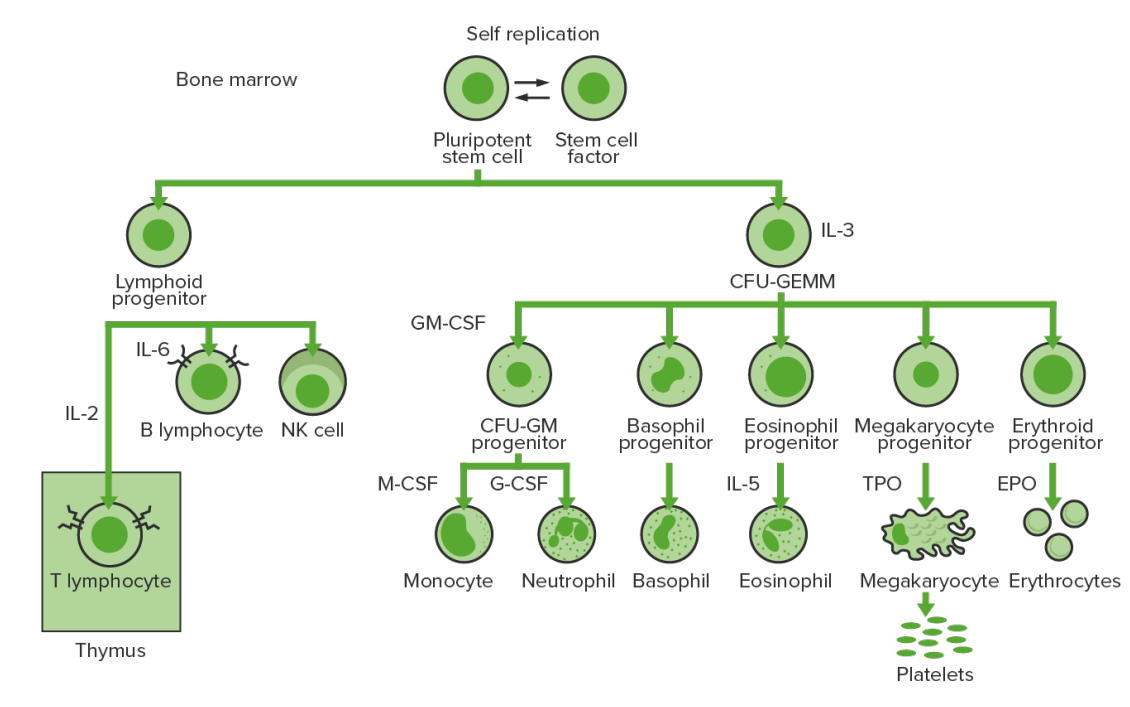
  • Célula madre linfoide: da lugar a los LOS Neisseria linfocitos
  • Célula madre mieloide: eventualmente se diferencia en EN Erythema nodosum is an immune-mediated panniculitis (inflammation of the subcutaneous fat) caused by a type IV (delayed-type) hypersensitivity reaction. It commonly manifests in young women as tender, erythematous nodules on the shins. Erythema Nodosum plaquetas, eritrocitos, granulocitos (neutrófilos, basófilos, eosinófilos) y monocitos:
    • IL-3 estimula la diferenciación de células madre hematopoyéticas multipotentes en EN Erythema nodosum is an immune-mediated panniculitis (inflammation of the subcutaneous fat) caused by a type IV (delayed-type) hypersensitivity reaction. It commonly manifests in young women as tender, erythematous nodules on the shins. Erythema Nodosum células progenitoras mieloides
    • Factor estimulante de colonias de granulocitos y macrófagos ( GM-CSF GM-CSF An acidic glycoprotein of mw 23 kda with internal disulfide bonds. The protein is produced in response to a number of inflammatory mediators by mesenchymal cells present in the hemopoietic environment and at peripheral sites of inflammation. GM-CSF is able to stimulate the production of neutrophilic granulocytes, macrophages, and mixed granulocyte-macrophage colonies from bone marrow cells and can stimulate the formation of eosinophil colonies from fetal liver progenitor cells. GM-CSF can also stimulate some functional activities in mature granulocytes and macrophages. White Myeloid Cells: Histology) → diferenciación de progenitores mieloides a granulocitos (neutrófilos) y monocitos
    • IL-5 → diferenciación a eosinófilos
    • Trombopoyetina (TPO) → diferenciación a trombocitos (plaquetas)
    • Eritropoyetina ( EPO EPO Glycoprotein hormone, secreted chiefly by the kidney in the adult and the liver in the fetus, that acts on erythroid stem cells of the bone marrow to stimulate proliferation and differentiation. Erythrocytes: Histology) → diferenciación a eritrocitos
Hematopoyesis de la médula ósea

Hematopoyesis de la médula ósea: proliferación y diferenciación de los elementos formes de la sangre.
CFU-GEMM: unidad formadora de colonias de granulocitos, eritrocitos, monocitos y megacariocitos
CFU-GM: unidad formadora de colonias de granulocitos y macrófagos
GM-CSF: factor estimulante de colonias de granulocitos y macrófagos
M-CSF: factor estimulante de colonias de macrófagos
G-CSF: factor estimulante de colonias de granulocitos
NK: asesina natural
TPO: trombopoyetina

Imagen por Lecturio. Licencia: CC BY-NC-SA 4.0

Mutaciones

Las mutaciones en EN Erythema nodosum is an immune-mediated panniculitis (inflammation of the subcutaneous fat) caused by a type IV (delayed-type) hypersensitivity reaction. It commonly manifests in young women as tender, erythematous nodules on the shins. Erythema Nodosum los LOS Neisseria genes Genes A category of nucleic acid sequences that function as units of heredity and which code for the basic instructions for the development, reproduction, and maintenance of organisms. DNA Types and Structure asociados con la hematopoyesis se observan en EN Erythema nodosum is an immune-mediated panniculitis (inflammation of the subcutaneous fat) caused by a type IV (delayed-type) hypersensitivity reaction. It commonly manifests in young women as tender, erythematous nodules on the shins. Erythema Nodosum una proporción significativa de casos de MFP.
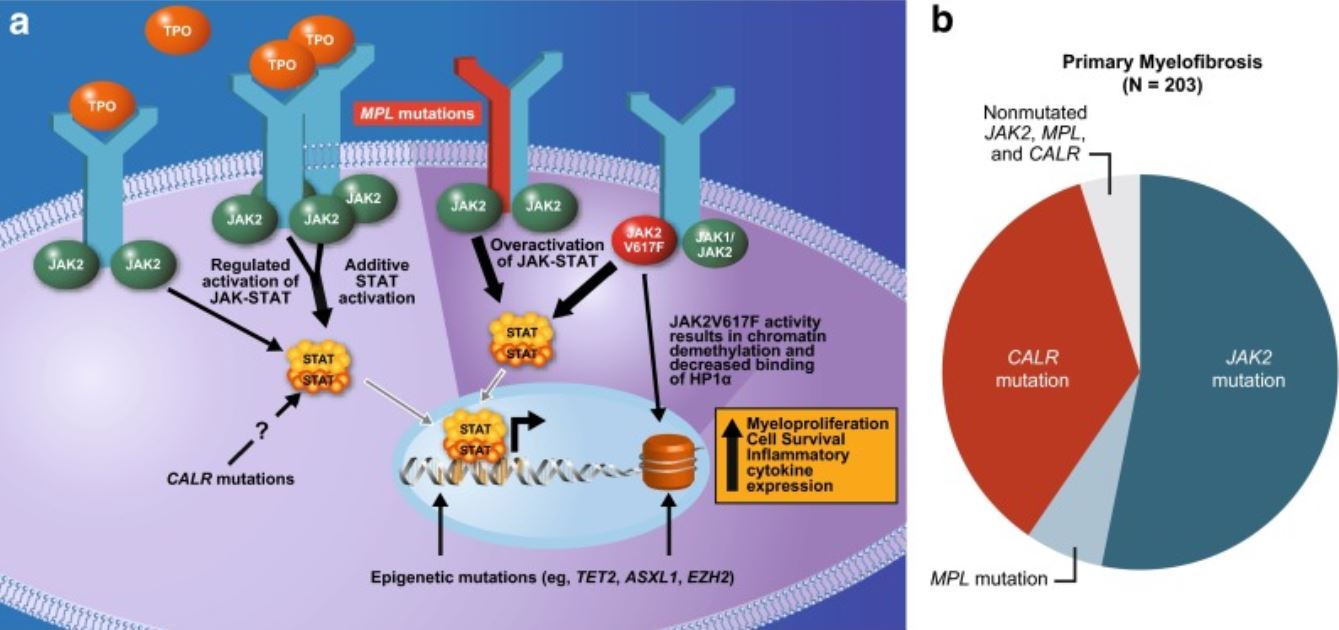
  • Mutación del gen JAK2:
    • Afecta a JAK2:
      • Una tirosina quinasa no receptora (codificada por el gen JAK2) en EN Erythema nodosum is an immune-mediated panniculitis (inflammation of the subcutaneous fat) caused by a type IV (delayed-type) hypersensitivity reaction. It commonly manifests in young women as tender, erythematous nodules on the shins. Erythema Nodosum el citoplasma involucrado en EN Erythema nodosum is an immune-mediated panniculitis (inflammation of the subcutaneous fat) caused by a type IV (delayed-type) hypersensitivity reaction. It commonly manifests in young women as tender, erythematous nodules on the shins. Erythema Nodosum la transducción de señales (vía de señalización de citoquinas JAK–transductor de señal del activador de transcripción (STAT))
      • Media la respuesta celular a factores de crecimiento y citoquinas
    • Efecto:
      • División y maduración rápidas de células hematopoyéticas, con un gran número convirtiéndose en EN Erythema nodosum is an immune-mediated panniculitis (inflammation of the subcutaneous fat) caused by a type IV (delayed-type) hypersensitivity reaction. It commonly manifests in young women as tender, erythematous nodules on the shins. Erythema Nodosum megacariocitos
      • Estimulación de megacariocitos para secretar factores de crecimiento de fibroblastos
  • Mutaciones del gen MPL:
    • MPL codifica para la proteína receptora de trombopoyetina.
    • Efecto: activación constitutiva del receptor Receptor Receptors are proteins located either on the surface of or within a cell that can bind to signaling molecules known as ligands (e.g., hormones) and cause some type of response within the cell. Receptors de trombopoyetina
  • Mutaciones del gen CALR:
    • Códigos CALR para calreticulina.
    • La calreticulina es una proteína de unión a Ca CA Condylomata acuminata are a clinical manifestation of genital HPV infection. Condylomata acuminata are described as raised, pearly, flesh-colored, papular, cauliflower-like lesions seen in the anogenital region that may cause itching, pain, or bleeding. Condylomata Acuminata (Genital Warts)2+ en EN Erythema nodosum is an immune-mediated panniculitis (inflammation of the subcutaneous fat) caused by a type IV (delayed-type) hypersensitivity reaction. It commonly manifests in young women as tender, erythematous nodules on the shins. Erythema Nodosum la vía JAK-STAT y es esencial en EN Erythema nodosum is an immune-mediated panniculitis (inflammation of the subcutaneous fat) caused by a type IV (delayed-type) hypersensitivity reaction. It commonly manifests in young women as tender, erythematous nodules on the shins. Erythema Nodosum la proliferación celular y la apoptosis Apoptosis A regulated cell death mechanism characterized by distinctive morphologic changes in the nucleus and cytoplasm, including the endonucleolytic cleavage of genomic DNA, at regularly spaced, internucleosomal sites, I.e., DNA fragmentation. It is genetically-programmed and serves as a balance to mitosis in regulating the size of animal tissues and in mediating pathologic processes associated with tumor growth. Ischemic Cell Damage.
    • Efecto: induce la activación del receptor Receptor Receptors are proteins located either on the surface of or within a cell that can bind to signaling molecules known as ligands (e.g., hormones) and cause some type of response within the cell. Receptors de trombopoyetina
Mutaciones subyacentes a la fisiopatología de la mielofibrosis

Mutaciones subyacentes a la fisiopatología de la mielofibrosis:
Comúnmente afecta la vía JAK-STAT
JAK2 (gen JAK2 implicado): tirosina quinasa no receptora que facilita que las señales extracelulares lleguen al núcleo y activen los genes.
MPL o receptor de trombopoyetina (gen MPL implicado): activación del receptor de trombopoyetina
La calreticulina (gen CALR implicado) es un regulador de STAT, y la mutación provoca la activación del receptor de trombopoyetina.
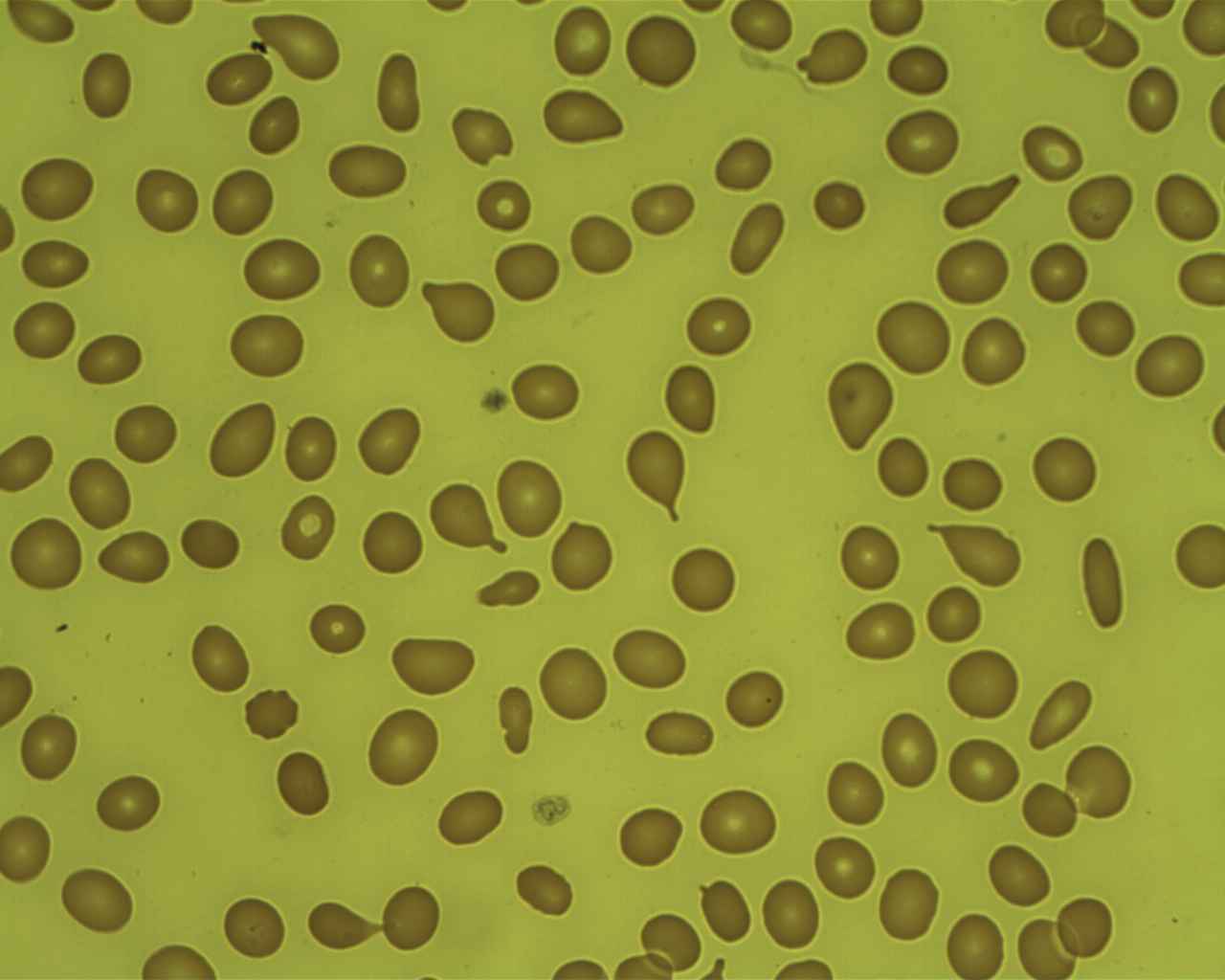
Imagen: “Overcoming treatment challenges in myelofibrosis and polycythemia vera: the role of ruxolitinib” por Bryan JC, Verstovsek S. Licencia: CC BY 4.0

Fibrosis Fibrosis Any pathological condition where fibrous connective tissue invades any organ, usually as a consequence of inflammation or other injury. Bronchiolitis Obliterans de la médula ósea

  • Con la hiperplasia megacariocítica atípica, hay una salida inapropiada de factores fibrogénicos, que incluyen:
    • Factor de crecimiento transformador β (TGF-β, por sus siglas en EN Erythema nodosum is an immune-mediated panniculitis (inflammation of the subcutaneous fat) caused by a type IV (delayed-type) hypersensitivity reaction. It commonly manifests in young women as tender, erythematous nodules on the shins. Erythema Nodosum inglés):
      • Principal citoquina derivada de megacariocitos
      • ↑ Depósito de colágeno y angiogénesis
      • Interactúa con la trombopoyetina.
    • Factor de crecimiento derivado de plaquetas (PDGF, por sus siglas en EN Erythema nodosum is an immune-mediated panniculitis (inflammation of the subcutaneous fat) caused by a type IV (delayed-type) hypersensitivity reaction. It commonly manifests in young women as tender, erythematous nodules on the shins. Erythema Nodosum inglés)
    • Factor de crecimiento epidérmico (EGF, por sus siglas en EN Erythema nodosum is an immune-mediated panniculitis (inflammation of the subcutaneous fat) caused by a type IV (delayed-type) hypersensitivity reaction. It commonly manifests in young women as tender, erythematous nodules on the shins. Erythema Nodosum inglés)
  • La fibrosis Fibrosis Any pathological condition where fibrous connective tissue invades any organ, usually as a consequence of inflammation or other injury. Bronchiolitis Obliterans de la médula ósea (depósito fibroblástico y estromal) progresa, sin dejar espacio para la hematopoyesis → hematopoyesis extramedular en EN Erythema nodosum is an immune-mediated panniculitis (inflammation of the subcutaneous fat) caused by a type IV (delayed-type) hypersensitivity reaction. It commonly manifests in young women as tender, erythematous nodules on the shins. Erythema Nodosum el bazo y el hígado

Presentación Clínica

  • Aproximadamente 15%–30% de los LOS Neisseria pacientes son asintomáticos.
  • Anemia Anemia Anemia is a condition in which individuals have low Hb levels, which can arise from various causes. Anemia is accompanied by a reduced number of RBCs and may manifest with fatigue, shortness of breath, pallor, and weakness. Subtypes are classified by the size of RBCs, chronicity, and etiology. Anemia: Overview and Types:
    • Fatiga (síntoma más común)
    • Dificultad para respirar
    • Palpitaciones
  • Estado hipermetabólico:
    • Pérdida de peso
    • Sudoración nocturna
    • Fiebre
  • Hematopoyesis extramedular:
    • Esplenomegalia:
      • Dolor Dolor Inflammation abdominal en EN Erythema nodosum is an immune-mediated panniculitis (inflammation of the subcutaneous fat) caused by a type IV (delayed-type) hypersensitivity reaction. It commonly manifests in young women as tender, erythematous nodules on the shins. Erythema Nodosum cuadrante superior izquierdo
      • Plenitud abdominal con saciedad temprana
      • Dolor Dolor Inflammation en EN Erythema nodosum is an immune-mediated panniculitis (inflammation of the subcutaneous fat) caused by a type IV (delayed-type) hypersensitivity reaction. It commonly manifests in young women as tender, erythematous nodules on the shins. Erythema Nodosum el hombro izquierdo: debido a la inflamación de los LOS Neisseria tejidos alrededor del bazo
    • Hepatomegalia (con complicaciones como hipertensión portal, ascitis)
  • Compromiso óseo y articular:
    • Puede causar dolor Dolor Inflammation severo en EN Erythema nodosum is an immune-mediated panniculitis (inflammation of the subcutaneous fat) caused by a type IV (delayed-type) hypersensitivity reaction. It commonly manifests in young women as tender, erythematous nodules on the shins. Erythema Nodosum los LOS Neisseria huesos y las articulaciones, especialmente en EN Erythema nodosum is an immune-mediated panniculitis (inflammation of the subcutaneous fat) caused by a type IV (delayed-type) hypersensitivity reaction. It commonly manifests in young women as tender, erythematous nodules on the shins. Erythema Nodosum las extremidades inferiores.
    • Osteosclerosis Osteosclerosis An abnormal hardening or increased density of bone tissue. Paget Disease of Bone:
      • Aumento difuso o irregular de la densidad ósea
      • Trabéculas óseas prominentes/gruesas
      • Hueso moteado en EN Erythema nodosum is an immune-mediated panniculitis (inflammation of the subcutaneous fat) caused by a type IV (delayed-type) hypersensitivity reaction. It commonly manifests in young women as tender, erythematous nodules on the shins. Erythema Nodosum rayos X en EN Erythema nodosum is an immune-mediated panniculitis (inflammation of the subcutaneous fat) caused by a type IV (delayed-type) hypersensitivity reaction. It commonly manifests in young women as tender, erythematous nodules on the shins. Erythema Nodosum hasta el 66% de los LOS Neisseria pacientes
    • Gota, por aumento de la producción de ácido úrico

Diagnóstico

Evaluación inicial

  • Detalles de los LOS Neisseria antecedentes clínicos y síntomas
  • Examen físico:
    • Fiebre
    • Agrandamiento del bazo (hallazgo físico distintivo de MFP)
    • Hepatomegalia
    • Sensibilidad ósea
    • Mayor calor Calor Inflammation sobre las tibias y las rodillas debido al AL Amyloidosis aumento del flujo sanguíneo cortical

Pruebas diagnósticas

  • Hemograma completo
    • Anemia Anemia Anemia is a condition in which individuals have low Hb levels, which can arise from various causes. Anemia is accompanied by a reduced number of RBCs and may manifest with fatigue, shortness of breath, pallor, and weakness. Subtypes are classified by the size of RBCs, chronicity, and etiology. Anemia: Overview and Types (50% de los LOS Neisseria pacientes tendrán hemoglobina < 10 g/dL)
    • Plaquetas:
      • Etapa temprana: ya sea trombocitosis o trombocitopenia
      • Etapa tardía: predominantemente trombocitopenia
    • Recuento de leucocitos:
      • Variable Variable Variables represent information about something that can change. The design of the measurement scales, or of the methods for obtaining information, will determine the data gathered and the characteristics of that data. As a result, a variable can be qualitative or quantitative, and may be further classified into subgroups. Types of Variables: leucocitosis o leucopenia
      • Refleja la variación en EN Erythema nodosum is an immune-mediated panniculitis (inflammation of the subcutaneous fat) caused by a type IV (delayed-type) hypersensitivity reaction. It commonly manifests in young women as tender, erythematous nodules on the shins. Erythema Nodosum los LOS Neisseria neutrófilos
  • Bioquímica:
    • LDH LDH Osteosarcoma: hematopoyesis ineficaz
    • ↑ Ácido úrico: por aumento de la renovación celular
    • ↑ Fosfatasa alcalina leucocitaria: compromiso hepático y óseo
    • ↑ Vitamina B12: aumento de neutrófilos
  • Frotis de sangre periférica:
    • Células en EN Erythema nodosum is an immune-mediated panniculitis (inflammation of the subcutaneous fat) caused by a type IV (delayed-type) hypersensitivity reaction. It commonly manifests in young women as tender, erythematous nodules on the shins. Erythema Nodosum forma de lágrima (dacrocitos): eritrocitos deformes debido al AL Amyloidosis daño causado por la producción de médula
    • Leucoeritroblastosis: liberación de células mieloides nucleadas (“leuco”) y eritrocitos (“eritro”) que son inmaduras (“blastos”)
    • Anisocitosis y poiquilocitosis
  • Aspirado de médula ósea: sin células sanguíneas
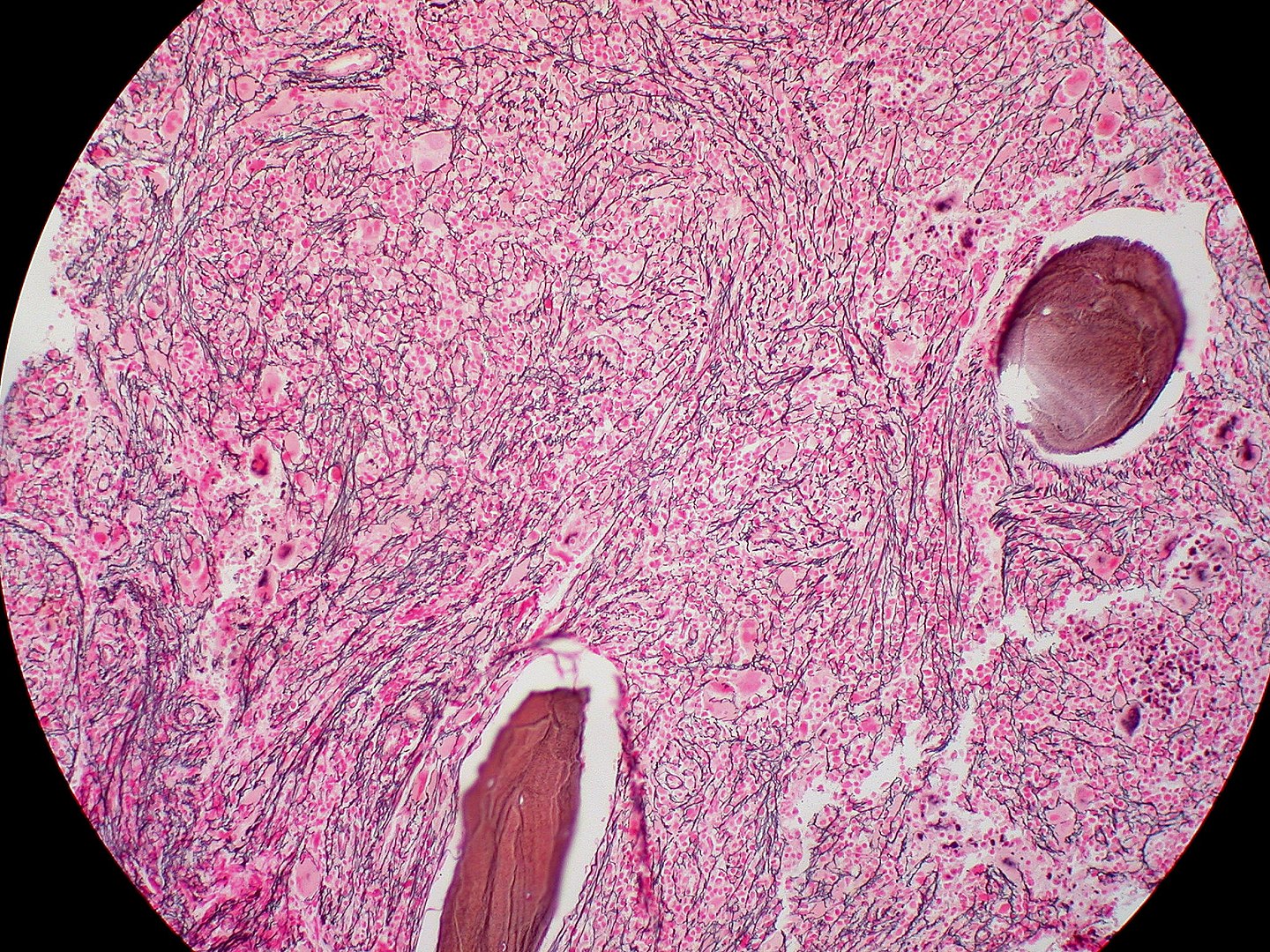
  • Biopsia de médula ósea:
    • Fibrosis Fibrosis Any pathological condition where fibrous connective tissue invades any organ, usually as a consequence of inflammation or other injury. Bronchiolitis Obliterans: característica distintiva de MFP, visto en EN Erythema nodosum is an immune-mediated panniculitis (inflammation of the subcutaneous fat) caused by a type IV (delayed-type) hypersensitivity reaction. It commonly manifests in young women as tender, erythematous nodules on the shins. Erythema Nodosum casi todos los LOS Neisseria pacientes
    • Hiperplasia megacariocítica (con morfología anormal)
    • Osteosclerosis Osteosclerosis An abnormal hardening or increased density of bone tissue. Paget Disease of Bone
  • Análisis citogenético:
    • Mutación JAK2 (la mayoría de los LOS Neisseria casos)
    • Mutación CALR
    • Mutación MPL
    • Triple negativo hasta en EN Erythema nodosum is an immune-mediated panniculitis (inflammation of the subcutaneous fat) caused by a type IV (delayed-type) hypersensitivity reaction. It commonly manifests in young women as tender, erythematous nodules on the shins. Erythema Nodosum un 10%

Mnemotécnia

Para recordar MFP en EN Erythema nodosum is an immune-mediated panniculitis (inflammation of the subcutaneous fat) caused by a type IV (delayed-type) hypersensitivity reaction. It commonly manifests in young women as tender, erythematous nodules on the shins. Erythema Nodosum resumen: La médula ósea está llorando (células de lágrima) porque está fibrosada y es un grifo seco.

Criterios diagnósticos de la OMS (5ª edición, 2022)

Mielofibrosis primaria prefibrótica/temprana (pre-PMF)

  • Criterios principales (se requieren los LOS Neisseria 3):
    • Proliferación megacariocítica ± atipia, sin fibrosis Fibrosis Any pathological condition where fibrous connective tissue invades any organ, usually as a consequence of inflammation or other injury. Bronchiolitis Obliterans de reticulina > grado 1; hipercelularidad medular con proliferación granulocítica y eritropoyesis reducida
    • No cumple los LOS Neisseria criterios de ninguno de los LOS Neisseria siguientes:
      • Policitemia vera
      • Trombocitemia esencial
      • LMC positiva para BCR-ABL1
      • Síndrome mielodisplásico
      • Otra neoplasia mieloide
    • Demostración de una mutación en EN Erythema nodosum is an immune-mediated panniculitis (inflammation of the subcutaneous fat) caused by a type IV (delayed-type) hypersensitivity reaction. It commonly manifests in young women as tender, erythematous nodules on the shins. Erythema Nodosum JAK2, CALR o MPL u otro marcador clonal o reactivo
  • Criterios menores (≥ 1 presente; confirmado en EN Erythema nodosum is an immune-mediated panniculitis (inflammation of the subcutaneous fat) caused by a type IV (delayed-type) hypersensitivity reaction. It commonly manifests in young women as tender, erythematous nodules on the shins. Erythema Nodosum ≥ 2 evaluaciones):
    • Anemia Anemia Anemia is a condition in which individuals have low Hb levels, which can arise from various causes. Anemia is accompanied by a reduced number of RBCs and may manifest with fatigue, shortness of breath, pallor, and weakness. Subtypes are classified by the size of RBCs, chronicity, and etiology. Anemia: Overview and Types no atribuible a una condición comórbida
    • Leucocitosis (≥ 11 × 10⁹/L)
    • Esplenomegalia palpable
    • LDH LDH Osteosarcoma por encima del límite superior de la normalidad

Mielofibrosis primaria manifiesta (fibrótica)

  • Criterios principales (se requieren los LOS Neisseria 3):
    • Proliferación megacariocítica ± atipia con fibrosis Fibrosis Any pathological condition where fibrous connective tissue invades any organ, usually as a consequence of inflammation or other injury. Bronchiolitis Obliterans de reticulina y/o colágeno grado 2-3
    • Misma lista de exclusiones que la anterior
    • Demostración de una mutación en EN Erythema nodosum is an immune-mediated panniculitis (inflammation of the subcutaneous fat) caused by a type IV (delayed-type) hypersensitivity reaction. It commonly manifests in young women as tender, erythematous nodules on the shins. Erythema Nodosum JAK2, CALR o MPL u otro marcador clonal o reactivo
  • Criterios menores (≥ 1 presente; confirmado en EN Erythema nodosum is an immune-mediated panniculitis (inflammation of the subcutaneous fat) caused by a type IV (delayed-type) hypersensitivity reaction. It commonly manifests in young women as tender, erythematous nodules on the shins. Erythema Nodosum ≥ 2 evaluaciones):
    • Anemia Anemia Anemia is a condition in which individuals have low Hb levels, which can arise from various causes. Anemia is accompanied by a reduced number of RBCs and may manifest with fatigue, shortness of breath, pallor, and weakness. Subtypes are classified by the size of RBCs, chronicity, and etiology. Anemia: Overview and Types no atribuible a una condición comórbida
    • Leucocitosis (≥ 11 × 10⁹/L)
    • Esplenomegalia palpable
    • LDH LDH Osteosarcoma por encima del límite superior de la normalidad
    • Leucoeritroblastosis

Comparación con otras neoplasias mieloproliferativas

Las neoplasias mieloproliferativas se pueden comparar con la siguiente clasificación de la OMS:

Tabla: Tipos clásicos de neoplasias mieloproliferativas
Enfermedad Mutaciones Puntos clave
LMC BCR-ABL1 (cromosoma Filadelfia) Proliferación de granulocitos maduros y en EN Erythema nodosum is an immune-mediated panniculitis (inflammation of the subcutaneous fat) caused by a type IV (delayed-type) hypersensitivity reaction. It commonly manifests in young women as tender, erythematous nodules on the shins. Erythema Nodosum proceso de maduración
Trombocitemia esencial JAK2, CALR o MPL Producción clonal excesiva de plaquetas
Policitemia vera JAK2 Masa de eritrocitos elevada
Mielofibrosis primaria JAK2, CALR o MPL Fibrosis Fibrosis Any pathological condition where fibrous connective tissue invades any organ, usually as a consequence of inflammation or other injury. Bronchiolitis Obliterans obliterante de la médula ósea

Otros tipos:

  • Leucemia neutrofílica crónica
  • Leucemia eosinofílica crónica, no especificada de otra manera
  • Neoplasia mieloproliferativa, inclasificable

Tratamiento

Tratamiento inicial

La evaluación del riesgo es importante para tomar decisiones de tratamiento.

  • Estratificación del riesgo:
    • Supervivencia reducida:
      • Tercera edad
      • Anemia Anemia Anemia is a condition in which individuals have low Hb levels, which can arise from various causes. Anemia is accompanied by a reduced number of RBCs and may manifest with fatigue, shortness of breath, pallor, and weakness. Subtypes are classified by the size of RBCs, chronicity, and etiology. Anemia: Overview and Types, trombocitopenia
      • Leucocitosis, + blastos
      • Fibrosis Fibrosis Any pathological condition where fibrous connective tissue invades any organ, usually as a consequence of inflammation or other injury. Bronchiolitis Obliterans de la médula ósea
      • Requiere transfusión
      • Fiebre, pérdida de peso, sudores nocturnos
    • Mutaciones:
      • Mutación CALR: mejor resultado
      • Triple negativo: peor resultado
    • Otras mutaciones genéticas de alto riesgo están asociadas con un mal pronóstico (i.e., ASXL1).
  • Más factores de riesgo como los LOS Neisseria enumerados anteriormente = mayor riesgo de MFP
  • Transformación a leucemia aguda:
    • Visto en EN Erythema nodosum is an immune-mediated panniculitis (inflammation of the subcutaneous fat) caused by a type IV (delayed-type) hypersensitivity reaction. It commonly manifests in young women as tender, erythematous nodules on the shins. Erythema Nodosum la minoría de los LOS Neisseria casos
    • Factores predictivos:
      • Blastos circulantes: ≥ 3%
      • Recuento de plaquetas: < 100 000/µL

Opciones de tratamiento

  • MFP de alto riesgo:
    • Trasplante alogénico de células madre hematopoyéticas si es elegible
    • Inscripción en EN Erythema nodosum is an immune-mediated panniculitis (inflammation of the subcutaneous fat) caused by a type IV (delayed-type) hypersensitivity reaction. It commonly manifests in young women as tender, erythematous nodules on the shins. Erythema Nodosum ensayos clínicos si no es elegible para trasplante
    • Agentes:
      • Inhibidores de la cinasa asociada a Janus: ruxolitinib Ruxolitinib Targeted and Other Nontraditional Antineoplastic Therapy, fedratinib, pacritinib (para pacientes con trombocitopenia grave) y momelotinib (para la anemia Anemia Anemia is a condition in which individuals have low Hb levels, which can arise from various causes. Anemia is accompanied by a reduced number of RBCs and may manifest with fatigue, shortness of breath, pallor, and weakness. Subtypes are classified by the size of RBCs, chronicity, and etiology. Anemia: Overview and Types sintomática)
      • Hidroxiurea: aliviar síntomas proliferativos
  • MFP de bajo riesgo:
    • Pacientes asintomáticos: observación y seguimiento
    • Pacientes sintomáticos: inhibidores de la quinasa asociada a Janus, hidroxiurea
  • Esplenectomía si es sintomática por esplenomegalia masiva
  • Transfusión sanguínea según sea necesario

Diagnóstico Diferencial

Otras neoplasias mieloproliferativas crónicas

  • Leucemia mieloide crónica (LMC): proliferación maligna de la línea celular granulocítica, con una diferenciación bastante normal. La leucemia mieloide crónica tiene el cromosoma Filadelfia, que contiene el gen de fusión BCR-ABL1 (que MFP no tiene). El efecto de la activación constitutiva de la tirosina quinasa conduce a una producción de granulocitos descontrolada. Los LOS Neisseria pacientes pueden tener síntomas constitucionales, dolor Dolor Inflammation esternal y esplenomegalia. Los LOS Neisseria estudios muestran leucocitos elevados, aumento de células inmaduras en EN Erythema nodosum is an immune-mediated panniculitis (inflammation of the subcutaneous fat) caused by a type IV (delayed-type) hypersensitivity reaction. It commonly manifests in young women as tender, erythematous nodules on the shins. Erythema Nodosum el frotis de sangre periférica y cromosoma Filadelfia demostrado por técnicas citogenéticas. El tratamiento incluye inhibidores de la tirosina quinasa, transplante alogénico de células hematopoyéticas y agentes paliativos.
  • Policitemia vera: condición también asociada con mutación en EN Erythema nodosum is an immune-mediated panniculitis (inflammation of the subcutaneous fat) caused by a type IV (delayed-type) hypersensitivity reaction. It commonly manifests in young women as tender, erythematous nodules on the shins. Erythema Nodosum el gen JAK2. Sin embargo, la policitemia vera se debe a la sobreproducción no regulada principalmente de eritrocitos a pesar de los LOS Neisseria bajos niveles de eritropoyetina. La mayoría de los LOS Neisseria pacientes presentan síntomas de hiperviscosidad. El tratamiento incluye flebotomía, aspirina en EN Erythema nodosum is an immune-mediated panniculitis (inflammation of the subcutaneous fat) caused by a type IV (delayed-type) hypersensitivity reaction. It commonly manifests in young women as tender, erythematous nodules on the shins. Erythema Nodosum dosis bajas y terapias mielosupresoras.
  • Trombocitemia esencial: proliferación de megacariocitos asociada a mutaciones genéticas ( en EN Erythema nodosum is an immune-mediated panniculitis (inflammation of the subcutaneous fat) caused by a type IV (delayed-type) hypersensitivity reaction. It commonly manifests in young women as tender, erythematous nodules on the shins. Erythema Nodosum JAK2 , CALR o MPL). Los LOS Neisseria megacariocitos son grandes y de apariencia madura. Las manifestaciones clínicas incluyen cefaleas, alteraciones visuales y eritromelalgia. Los LOS Neisseria recuentos excesivos de plaquetas provocan tanto trombosis como hemorragia. El objetivo del tratamiento es reducir el recuento de plaquetas (con medicamentos como la hidroxiurea) y disminuir el riesgo de trombosis (mediante anticoagulación sistémica y/o agentes antiplaquetarios). Mientras que trombocitemia esencial y MFP comparten mutaciones similares, MFP tiene fibrosis Fibrosis Any pathological condition where fibrous connective tissue invades any organ, usually as a consequence of inflammation or other injury. Bronchiolitis Obliterans de médula ósea y leucoeritroblastosis significativas en EN Erythema nodosum is an immune-mediated panniculitis (inflammation of the subcutaneous fat) caused by a type IV (delayed-type) hypersensitivity reaction. It commonly manifests in young women as tender, erythematous nodules on the shins. Erythema Nodosum el frotis de sangre periférica.
  • Leucemia neutrofílica crónica: trastorno raro con proliferación de granulocitos maduros en EN Erythema nodosum is an immune-mediated panniculitis (inflammation of the subcutaneous fat) caused by a type IV (delayed-type) hypersensitivity reaction. It commonly manifests in young women as tender, erythematous nodules on the shins. Erythema Nodosum la sangre y la médula. Puede ocurrir infiltración de órganos, lo que lleva a hepatoesplenomegalia. En EN Erythema nodosum is an immune-mediated panniculitis (inflammation of the subcutaneous fat) caused by a type IV (delayed-type) hypersensitivity reaction. It commonly manifests in young women as tender, erythematous nodules on the shins. Erythema Nodosum este trastorno se observa un aumento en EN Erythema nodosum is an immune-mediated panniculitis (inflammation of the subcutaneous fat) caused by a type IV (delayed-type) hypersensitivity reaction. It commonly manifests in young women as tender, erythematous nodules on the shins. Erythema Nodosum la puntuación de fosfatasa alcalina leucocitaria. La leucemia neutrofílica crónica generalmente no progresa a LMA. El tratamiento es menos claro, pero el ruxolitinib Ruxolitinib Targeted and Other Nontraditional Antineoplastic Therapy es una opción.
  • Leucemia eosinofílica crónica: trastorno mieloproliferativo crónico clonal raro caracterizado por una producción excesiva de eosinófilos en EN Erythema nodosum is an immune-mediated panniculitis (inflammation of the subcutaneous fat) caused by a type IV (delayed-type) hypersensitivity reaction. It commonly manifests in young women as tender, erythematous nodules on the shins. Erythema Nodosum la médula ósea que conduce a la proliferación eosinofílica en EN Erythema nodosum is an immune-mediated panniculitis (inflammation of the subcutaneous fat) caused by a type IV (delayed-type) hypersensitivity reaction. It commonly manifests in young women as tender, erythematous nodules on the shins. Erythema Nodosum la sangre y la infiltración de órganos (hepatomegalia/esplenomegalia). El tratamiento es de soporte y terapia con imatinib Imatinib A tyrosine kinase inhibitor and antineoplastic agent that inhibits the bcr-abl kinase created by chromosome rearrangements in chronic myeloid leukemia and acute lymphoblastic leukemia, as well as pdg-derived tyrosine kinases that are overexpressed in gastrointestinal stromal tumors. Targeted and Other Nontraditional Antineoplastic Therapy.

Otros trastornos que se asemejan a la mielofibrosis primaria

  • Mielofibrosis aguda: forma muy rara de LMA en EN Erythema nodosum is an immune-mediated panniculitis (inflammation of the subcutaneous fat) caused by a type IV (delayed-type) hypersensitivity reaction. It commonly manifests in young women as tender, erythematous nodules on the shins. Erythema Nodosum la que aparece rápidamente una fibrosis Fibrosis Any pathological condition where fibrous connective tissue invades any organ, usually as a consequence of inflammation or other injury. Bronchiolitis Obliterans grave de la médula ósea. Otros hallazgos incluyen eritrocitos en EN Erythema nodosum is an immune-mediated panniculitis (inflammation of the subcutaneous fat) caused by a type IV (delayed-type) hypersensitivity reaction. It commonly manifests in young women as tender, erythematous nodules on the shins. Erythema Nodosum forma de lágrima, pancitopenia y un frotis de sangre leucoeritroblástica. Los LOS Neisseria pacientes tienen fiebre y el bazo no suele ser palpable. El tratamiento es quimioterapia de inducción con o sin trasplante de células madre hematopoyéticas.
  • Mielofibrosis secundaria (post-trombocitemia esencial o post-policitemia vera): la fibrosis Fibrosis Any pathological condition where fibrous connective tissue invades any organ, usually as a consequence of inflammation or other injury. Bronchiolitis Obliterans de la médula ósea puede desarrollarse tanto en EN Erythema nodosum is an immune-mediated panniculitis (inflammation of the subcutaneous fat) caused by a type IV (delayed-type) hypersensitivity reaction. It commonly manifests in young women as tender, erythematous nodules on the shins. Erythema Nodosum policitemia vera como en EN Erythema nodosum is an immune-mediated panniculitis (inflammation of the subcutaneous fat) caused by a type IV (delayed-type) hypersensitivity reaction. It commonly manifests in young women as tender, erythematous nodules on the shins. Erythema Nodosum trombocitemia esencial. La mielofibrosis secundaria requiere un diagnóstico previo de trombocitemia esencial o policitemia vera. Las características clínicas y el tratamiento son generalmente similares a los LOS Neisseria de la MFP.

Referencias

  1. Tefferi, A. (2025). Clinical manifestations and diagnosis of primary myelofibrosis, In Larson, R. (Ed.), UpToDate. Retrieved on August 12, 2025, from https://www.uptodate.com/contents/clinical-manifestations-and-diagnosis-of-primary-myelofibrosis
  2. Tefferi, A. (2025). Myelofibrosis (MF): Management of primary MF and secondary MF. UpToDate. Retrieved August 12, 2025, from https://www.uptodate.com/contents/myelofibrosis-mf-management-of-primary-mf-and-secondary-mf
  3. Tefferi, A. (2024). Pathogenic mechanisms in primary myelofibrosis. In Larson, R. (Ed.), UpToDate. Retrieved on August 12, 2025, from https://www.uptodate.com/contents/pathogenetic-mechanisms-in-primary-myelofibrosis
  4. DeLario, M.R., Sheehan, A.M., Ataya, R., et al. (2012). Clinical, histopathologic, and genetic features of pediatric primary myelofibrosis—an entity different from adults. Am J Hematol 87:461–464. https://pubmed.ncbi.nlm.nih.gov/22389089/
  5. Emanuel, R.M., Dueck, A.C., Geyer, H.L., et al. (2012). Myeloproliferative neoplasm (MPN) symptom assessment form total symptom score: prospective international assessment of an abbreviated symptom burden scoring system among patients with MPNs. J Clin Oncol 30:4098–4103. https://pubmed.ncbi.nlm.nih.gov/23071245/
  6. Deeg, H.J., Bredeson, C., Farnia, S., et al. (2015). Hematopoietic Cell Transplantation as Curative Therapy for Patients with Myelofibrosis: Long-Term Success in all Age Groups. Biol Blood Marrow Transplant. 21(11),1883–1887. https://pubmed.ncbi.nlm.nih.gov/26371371/
  7. Van Etten, R. A., & Atallah, E. (2025). Chronic myeloid leukemia: Pathogenesis, clinical manifestations, and diagnosis. UpToDate. Retrieved August 12, 2025, from https://www.uptodate.com/contents/chronic-myeloid-leukemia-pathogenesis-clinical-manifestations-and-diagnosis
  8. Schiffer, C., Atallah, E. (2025). Overview of the treatment of chronic myeloid leukemia. In Larson, R. (Ed.), UpToDate. Retrieved on August 12, 2025, from https://www.uptodate.com/contents/overview-of-the-treatment-of-chronic-myeloid-leukemia
  9. Arber, D. A., Orazi, A., Hasserjian, R. P., Borowitz, M. J., Calvo, K. R., Kvasnicka, H. M., Wang, S. A., Bagg, A., Barbui, T., Branford, S., Bueso-Ramos, C. E., Cortes, J. E., Dal Cin, P., DiNardo, C. D., Dombret, H., Duncavage, E. J., Ebert, B. L., Estey, E. H., Facchetti, F., Foucar, K., … Tefferi, A. (2022). International Consensus Classification of Myeloid Neoplasms and Acute Leukemias: integrating morphologic, clinical, and genomic data. Blood140(11), 1200–1228. https://doi.org/10.1182/blood.2022015850
  10. Thiele, J., Kvasnicka, H. M., Gianelli, U., Arber, D. A., Tefferi, A., Vannucchi, A. M., Barbui, T., & Orazi, A. (2025). Evolution of WHO diagnostic criteria in “Classical Myeloproliferative Neoplasms” compared with the International Consensus Classification. Blood cancer journal15(1), 31. https://doi.org/10.1038/s41408-025-01235-7
  11. Zhou, F.-P., Wang, C.-C., Du, H.-P., Cao, S.-B., & Zhang, J. (2020). Primary myelofibrosis with concurrent CALR and MPL mutations: A case report. World Journal of Clinical Cases, 8(22), 5618–5624. https://doi.org/10.12998/wjcc.v8.i22.5618

¡Crea tu cuenta gratis o inicia una sesión para seguir leyendo!

Regístrate ahora y obtén acceso gratuito a Lecturio con páginas de concepto, videos médicos y cuestionarios para tu educación médica.

User Reviews

Que tengas una sesión de estudio alegre y navideña 🎁 Ahorra 50% en todos los planes >>

Details