Domina Conceptos Médicos

Estudia para la escuela de medicina y tus examenes con Lecturio.

Medicamentos para la Gota

Los LOS Neisseria medicamentos para la gota incluyen medicamentos antiinflamatorios y reductores de uratos. La colchicina es un medicamento antiinflamatorio que se puede utilizar para los LOS Neisseria episodios agudos de gota. Las clases de medicamentos reductores de uratos incluyen los LOS Neisseria inhibidores de la xantina oxidasa, los LOS Neisseria agentes uricosúricos y las uricasas. Estos medicamentos son beneficiosos para la prevención de las exacerbaciones de la gota y funcionan a través de una variedad de mecanismos. Los LOS Neisseria inhibidores de la xantina oxidasa son el tratamiento de reducción de uratos más utilizado; estos funcionan inhibiendo la enzima necesaria para la conversión de purinas en EN Erythema nodosum is an immune-mediated panniculitis (inflammation of the subcutaneous fat) caused by a type IV (delayed-type) hypersensitivity reaction. It commonly manifests in young women as tender, erythematous nodules on the shins. Erythema Nodosum ácido úrico. Los LOS Neisseria agentes uricosúricos reducen la reabsorción de ácido úrico por el túbulo proximal, lo que aumenta la excreción renal. Por último, las uricasas son enzimas recombinantes que metabolizan el ácido úrico a alantoína. Además de la gota, los LOS Neisseria tratamientos reductores de uratos también tienen otras indicaciones, como la prevención del síndrome de lisis tumoral y la nefrolitiasis por ácido úrico.

Last updated: Dec 15, 2025

Editorial responsibility: Stanley Oiseth, Lindsay Jones, Evelin Maza

Descripción General

Fisiopatología de la gota

  • La gota es una enfermedad metabólica asociada con:
    • ↑ Niveles séricos de ácido úrico (> 6,8 mg/dL)
    • Depósitos anormales de urato monosódico en EN Erythema nodosum is an immune-mediated panniculitis (inflammation of the subcutaneous fat) caused by a type IV (delayed-type) hypersensitivity reaction. It commonly manifests in young women as tender, erythematous nodules on the shins. Erythema Nodosum los LOS Neisseria tejidos
  • Ácido úrico:
    • Producido a partir de los LOS Neisseria compuestos de purina (sintetizados en EN Erythema nodosum is an immune-mediated panniculitis (inflammation of the subcutaneous fat) caused by a type IV (delayed-type) hypersensitivity reaction. It commonly manifests in young women as tender, erythematous nodules on the shins. Erythema Nodosum el cuerpo o provenientes de alimentos)
    • Se excreta principalmente a través de los LOS Neisseria riñones
  • La hiperuricemia se debe a la sobreproducción y/o subexcreción de ácido úrico → sobresaturación → depósito de cristales de urato monosódico en EN Erythema nodosum is an immune-mediated panniculitis (inflammation of the subcutaneous fat) caused by a type IV (delayed-type) hypersensitivity reaction. It commonly manifests in young women as tender, erythematous nodules on the shins. Erythema Nodosum los LOS Neisseria tejidos
  • Cristales de urato monosódico:
    • Pueden erosionar el hueso y dañar otros tejidos, como tendones y cartílagos
    • Causan artritis monoarticular recurrente y artritis deformante crónica
  • La relación precisa entre la hiperuricemia y la gota no está clara:
    • La mayoría (90%) de las personas con hiperuricemia no tienen gota.
    • Niveles séricos normales o bajos de ácido úrico no descartan la gota.
    • Todas las personas con gota tendrán hiperuricemia en EN Erythema nodosum is an immune-mediated panniculitis (inflammation of the subcutaneous fat) caused by a type IV (delayed-type) hypersensitivity reaction. It commonly manifests in young women as tender, erythematous nodules on the shins. Erythema Nodosum algún momento, aunque estos niveles pueden fluctuar.

Opciones de tratamiento

  • Terapias antiinflamatorias:
    • AINE
    • Glucocorticoides
    • Colchicina
  • Terapias de reducción de uratos:
    • ↓ Producción de ácido úrico: inhibidores de la xantina oxidasa
    • ↑ Excreción de ácido úrico: agentes uricosúricos
    • ↑ Metabolismo del ácido úrico: uricasas

Colchicina

Estructura química

La colchicina es un alcaloide extraído de Colchicum autumnale (azafrán de otoño).

Mecanismo de acción

  • Antiinflamatorio
  • Inhibe la polimerización de los LOS Neisseria microtúbulos cuando se une a la tubulina
  • Efectos:
    • Inhibe la mitosis Mitosis A type of cell nucleus division by means of which the two daughter nuclei normally receive identical complements of the number of chromosomes of the somatic cells of the species. Cell Cycle celular
    • Previene que los LOS Neisseria neutrófilos:
      • Migren
      • Se activen
      • Desgranulen

Farmacocinética

Absorción:

  • Absorción oral rápida
  • El consumo de alimentos no afecta la tasa de absorción.

Distribución:

  • Se concentra en EN Erythema nodosum is an immune-mediated panniculitis (inflammation of the subcutaneous fat) caused by a type IV (delayed-type) hypersensitivity reaction. It commonly manifests in young women as tender, erythematous nodules on the shins. Erythema Nodosum:
    • Leucocitos
    • Hígado
    • Riñones
    • Bazo
  • Unión a proteínas: aproximadamente del 40%

Metabolismo:

Excreción:

  • Orina
  • Bilis
  • Puede existir una recirculación enterohepática.

Indicaciones

Gota:

  • Tratamiento para los LOS Neisseria episodios agudos (utilizado principalmente por personas que no pueden tomar AINE)
  • Prevención para los LOS Neisseria episodios recurrentes

Otras indicaciones incluyen:

  • Enfermedad por depósito de pirofosfato de calcio (CPPD)
  • Pericarditis Pericarditis Pericarditis is an inflammation of the pericardium, often with fluid accumulation. It can be caused by infection (often viral), myocardial infarction, drugs, malignancies, metabolic disorders, autoimmune disorders, or trauma. Acute, subacute, and chronic forms exist. Pericarditis aguda
  • Síndrome de Behçet
  • Síndrome de Sweet
  • Fiebre mediterránea familiar:
    • ↓ Frecuencia de ataques
    • ↓ Riesgo de amiloidosis

Efectos adversos

  • Gastrointestinales:
    • Náuseas
    • Vómitos
    • Diarrea
    • Cólicos/ dolor Dolor Inflammation abdominal
    • Hepatotoxicidad
  • Hematológicos:
    • CID
    • Leucopenia
    • Granulocitopenia
    • Trombopenia
    • Anemia Anemia Anemia is a condition in which individuals have low Hb levels, which can arise from various causes. Anemia is accompanied by a reduced number of RBCs and may manifest with fatigue, shortness of breath, pallor, and weakness. Subtypes are classified by the size of RBCs, chronicity, and etiology. Anemia: Overview and Types aplásica
  • Neuromusculares: rabdomiólisis
  • Genitourinarios:
    • Azoospermia Azoospermia A condition of having no sperm present in the ejaculate (semen). Infertility
    • Oligospermia
  • Dermatológicos:
    • Alopecia Alopecia Alopecia is the loss of hair in areas anywhere on the body where hair normally grows. Alopecia may be defined as scarring or non-scarring, localized or diffuse, congenital or acquired, reversible or permanent, or confined to the scalp or universal; however, alopecia is usually classified using the 1st 3 factors. Alopecia
    • Erupción maculopapular Maculopapular Dermatologic Examination
  • Sistema nervioso: neuropatía periférica

Precauciones

Se debe tener precaución en EN Erythema nodosum is an immune-mediated panniculitis (inflammation of the subcutaneous fat) caused by a type IV (delayed-type) hypersensitivity reaction. It commonly manifests in young women as tender, erythematous nodules on the shins. Erythema Nodosum personas con:

  • Insuficiencia renal grave
  • Insuficiencia hepática grave
  • Supresión de la médula ósea

Interacciones medicamentosas

Los LOS Neisseria siguientes podrían provocar un aumento en EN Erythema nodosum is an immune-mediated panniculitis (inflammation of the subcutaneous fat) caused by a type IV (delayed-type) hypersensitivity reaction. It commonly manifests in young women as tender, erythematous nodules on the shins. Erythema Nodosum los LOS Neisseria niveles de colchicina:
Inhibidores de la Xantina Oxidasa

Estructura química

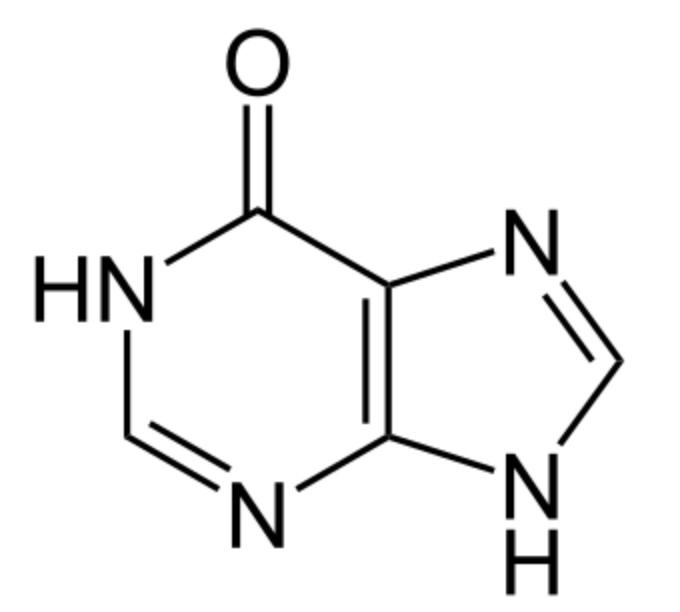
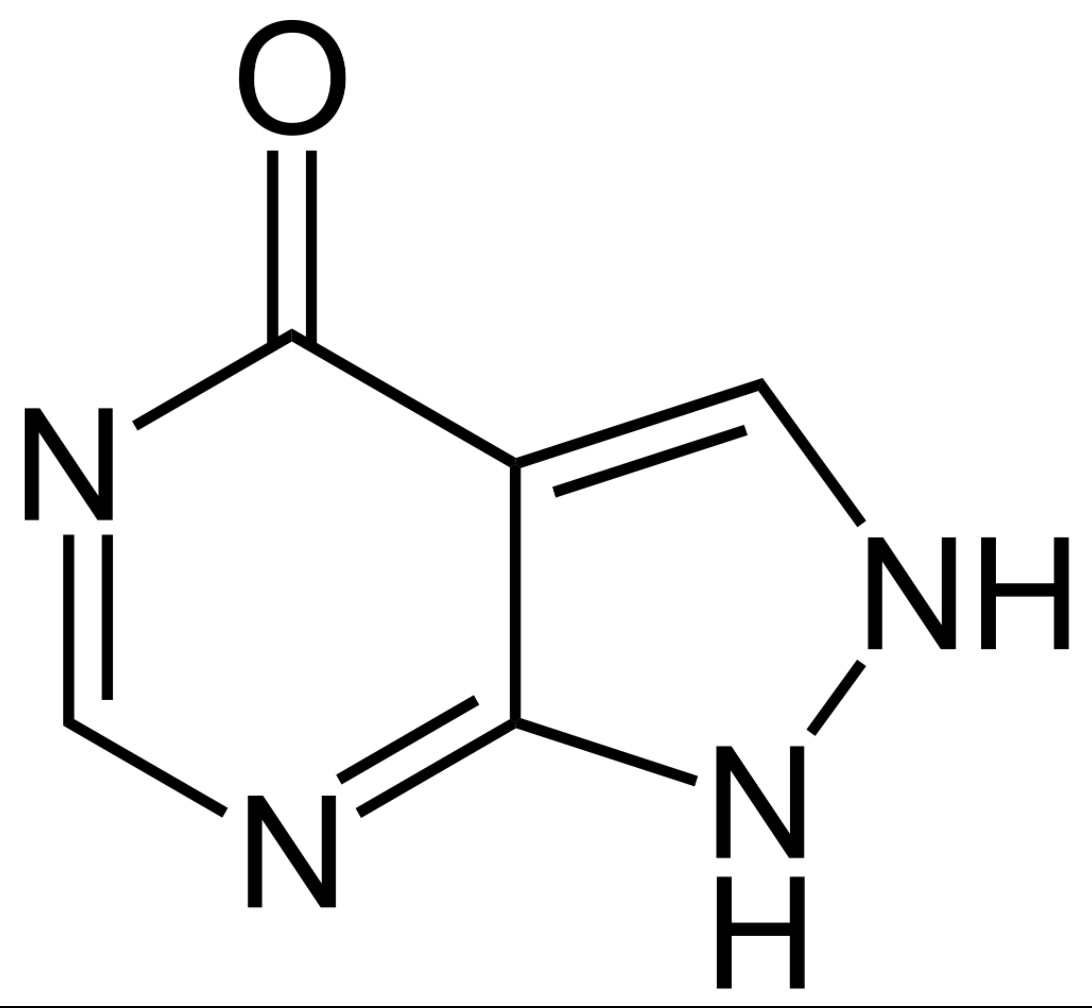
  • Alopurinol: análogo de purina (de la hipoxantina, un sustrato de la xantina oxidasa)
  • Febuxostat Febuxostat A thiazole derivative and inhibitor of xanthine oxidase that is used for the treatment of hyperuricemia in patients with chronic gout. Gout Drugs: no purinérgico

Mecanismo de acción

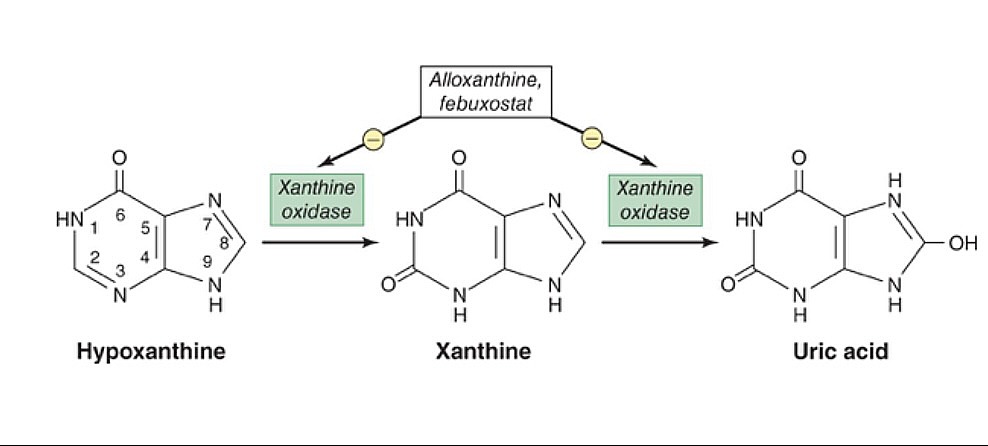
  • Función normal de la xantina oxidasa:
    • Convierte hipoxantina en EN Erythema nodosum is an immune-mediated panniculitis (inflammation of the subcutaneous fat) caused by a type IV (delayed-type) hypersensitivity reaction. It commonly manifests in young women as tender, erythematous nodules on the shins. Erythema Nodosum xantina
    • Luego convierte la xantina en EN Erythema nodosum is an immune-mediated panniculitis (inflammation of the subcutaneous fat) caused by a type IV (delayed-type) hypersensitivity reaction. It commonly manifests in young women as tender, erythematous nodules on the shins. Erythema Nodosum ácido úrico
  • Alopurinol:
    • Inhibidor competitivo de la xantina oxidasa
    • Su metabolito, el oxipurinol, es un inhibidor no competitivo.
  • Febuxostat Febuxostat A thiazole derivative and inhibitor of xanthine oxidase that is used for the treatment of hyperuricemia in patients with chronic gout. Gout Drugs:
    • Ocupa un canal en EN Erythema nodosum is an immune-mediated panniculitis (inflammation of the subcutaneous fat) caused by a type IV (delayed-type) hypersensitivity reaction. It commonly manifests in young women as tender, erythematous nodules on the shins. Erythema Nodosum la xantina oxidasa
    • Bloquea el acceso al AL Amyloidosis sitio activo → inhibe la función enzimática
  • En EN Erythema nodosum is an immune-mediated panniculitis (inflammation of the subcutaneous fat) caused by a type IV (delayed-type) hypersensitivity reaction. It commonly manifests in young women as tender, erythematous nodules on the shins. Erythema Nodosum general: ambos previenen la síntesis de ácido úrico → ↓ concentración plasmática de ácido úrico → previenen la hiperuricemia
Inhibidores de la xantina oxidasa que previenen la conversión en ácido úrico

Los inhibidores de la xantina oxidasa (alopurinol y febuxostat), previenen la conversión de la hipoxantina y la xantina en ácido úrico.

Imagen por Lecturio.

Farmacocinética

Tabla: Farmacocinética de los LOS Neisseria medicamentos xantina oxidasa
Medicamento Absorción Distribución Metabolismo Excreción
Alopurinol Buena absorción por vía oral Unión a proteínas insignificante
  • Hepático y xantina oxidasa
  • Metabolitos activos
Orina y heces
Febuxostat Febuxostat A thiazole derivative and inhibitor of xanthine oxidase that is used for the treatment of hyperuricemia in patients with chronic gout. Gout Drugs Altamente unido a proteínas
  • Hepático
  • Sistema del citocromo P450
  • Metabolitos activos

Indicaciones

Alopurinol:

  • Gota:
    • Medicamento de elección para la reducción de uratos
    • Puede iniciarse durante un episodio agudo con terapia antiinflamatoria concurrente
    • Utilizado para tratar:
      • Artritis gotosa
      • Tofos en EN Erythema nodosum is an immune-mediated panniculitis (inflammation of the subcutaneous fat) caused by a type IV (delayed-type) hypersensitivity reaction. It commonly manifests in young women as tender, erythematous nodules on the shins. Erythema Nodosum la piel
      • Nefropatía por ácido úrico
  • Hiperuricemia secundaria a neoplasia maligna y síndrome de lisis tumoral
  • Prevención de la nefrolitiasis por oxalato de calcio o ácido úrico

Febuxostat Febuxostat A thiazole derivative and inhibitor of xanthine oxidase that is used for the treatment of hyperuricemia in patients with chronic gout. Gout Drugs:

  • Gota:
    • Utilizado para aquellos pacientes que no puedan tolerar el alopurinol o que tienen insuficiencia renal significativa
    • Puede iniciarse durante un episodio agudo con terapia antiinflamatoria concurrente.
  • Hiperuricemia
  • Prevención del síndrome de lisis tumoral

Efectos adversos

Alopurinol:

  • Episodio agudo de gota (↓ ácido úrico sérico → movilización de cristales de ácido úrico de las articulaciones y tofos)
  • Hipersensibilidad:
    • Prurito
    • Fiebre
    • Erupción eritematosa o maculopapular Maculopapular Dermatologic Examination
    • Síndrome de Stevens-Johnson o necrólisis epidérmica tóxica
    • Erupción por medicamentos con eosinofilia y síntomas sistémicos
  • Gastrointestinales:
    • Náuseas
    • Dolor Dolor Inflammation abdominal
    • Anorexia Anorexia The lack or loss of appetite accompanied by an aversion to food and the inability to eat. It is the defining characteristic of the disorder anorexia nervosa. Anorexia Nervosa
    • Ageusia
    • Hepatotoxicidad
  • Hematológicos:
    • Neutropenia Neutropenia Neutrophils are an important component of the immune system and play a significant role in the eradication of infections. Low numbers of circulating neutrophils, referred to as neutropenia, predispose the body to recurrent infections or sepsis, though patients can also be asymptomatic. Neutropenia
    • Trombocitopenia
    • Anemia Anemia Anemia is a condition in which individuals have low Hb levels, which can arise from various causes. Anemia is accompanied by a reduced number of RBCs and may manifest with fatigue, shortness of breath, pallor, and weakness. Subtypes are classified by the size of RBCs, chronicity, and etiology. Anemia: Overview and Types aplásica

Febuxostat Febuxostat A thiazole derivative and inhibitor of xanthine oxidase that is used for the treatment of hyperuricemia in patients with chronic gout. Gout Drugs:

  • Episodio agudo de gota
  • Gastrointestinales:
    • Náuseas
    • Diarrea
    • ↑ Transaminasas
  • Dermatológicos: erupción
  • Neuromusculares:
    • Cefalea
    • Artralgia

Contraindicaciones

  • Alopurinol: individuos con alelo HLA-B5801 → ↑ riesgo de reacciones graves de hipersensibilidad
  • Febuxostat Febuxostat A thiazole derivative and inhibitor of xanthine oxidase that is used for the treatment of hyperuricemia in patients with chronic gout. Gout Drugs: individuos con enfermedad cardiovascular → ↑ riesgo de muerte cardíaca

Interacciones medicamentosas

Los LOS Neisseria inhibidores de la xantina oxidasa pueden aumentar la concentración de 6-mercaptopurina y azatioprina (que son metabolizadas por la xantina oxidasa).
Medicamentos Uricosúricos

Mecanismo de acción

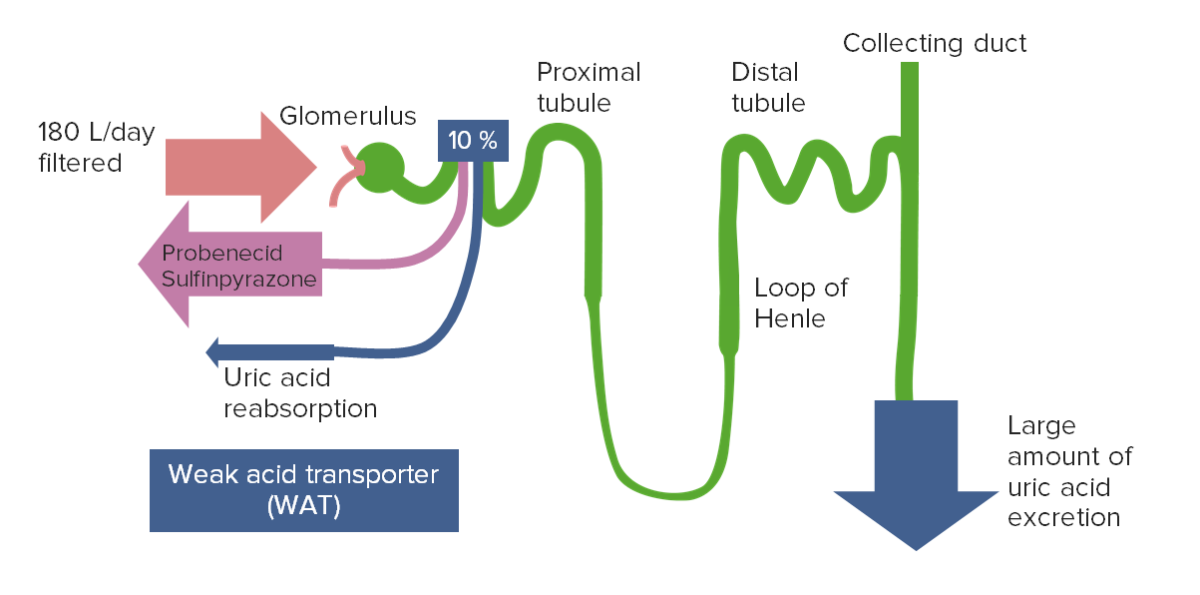
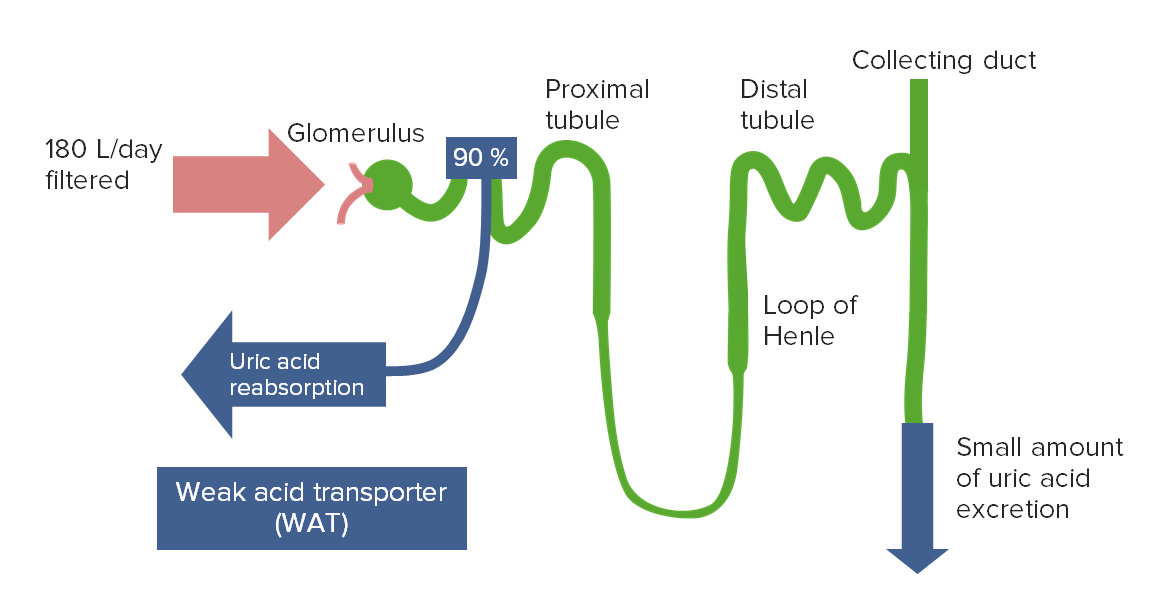
  • Fisiología normal:
    • El ácido úrico se filtra en EN Erythema nodosum is an immune-mediated panniculitis (inflammation of the subcutaneous fat) caused by a type IV (delayed-type) hypersensitivity reaction. It commonly manifests in young women as tender, erythematous nodules on the shins. Erythema Nodosum el glomérulo.
    • El 90% se reabsorbe en EN Erythema nodosum is an immune-mediated panniculitis (inflammation of the subcutaneous fat) caused by a type IV (delayed-type) hypersensitivity reaction. It commonly manifests in young women as tender, erythematous nodules on the shins. Erythema Nodosum el túbulo proximal.
    • Solo una pequeña cantidad se excreta en EN Erythema nodosum is an immune-mediated panniculitis (inflammation of the subcutaneous fat) caused by a type IV (delayed-type) hypersensitivity reaction. It commonly manifests in young women as tender, erythematous nodules on the shins. Erythema Nodosum la orina.
  • Medicamentos uricosúricos: ↑ excreción de ácido úrico en EN Erythema nodosum is an immune-mediated panniculitis (inflammation of the subcutaneous fat) caused by a type IV (delayed-type) hypersensitivity reaction. It commonly manifests in young women as tender, erythematous nodules on the shins. Erythema Nodosum la orina → ↓ ácido úrico en EN Erythema nodosum is an immune-mediated panniculitis (inflammation of the subcutaneous fat) caused by a type IV (delayed-type) hypersensitivity reaction. It commonly manifests in young women as tender, erythematous nodules on the shins. Erythema Nodosum suero
    • Probenecid Probenecid The prototypical uricosuric agent. It inhibits the renal excretion of organic anions and reduces tubular reabsorption of urate. Probenecid has also been used to treat patients with renal impairment, and, because it reduces the renal tubular excretion of other drugs, has been used as an adjunct to antibacterial therapy. Gout Drugs:
      • Inhibe competitivamente el transportador responsable de la reabsorción de ácido úrico
      • Se reabsorbe probenecid Probenecid The prototypical uricosuric agent. It inhibits the renal excretion of organic anions and reduces tubular reabsorption of urate. Probenecid has also been used to treat patients with renal impairment, and, because it reduces the renal tubular excretion of other drugs, has been used as an adjunct to antibacterial therapy. Gout Drugs, no el ácido úrico.
    • Lesinurad Lesinurad Gout Drugs: mecanismo de acción similar

Farmacocinética

Tabla: Farmacocinética de los LOS Neisseria medicamentos uricosúricos
Medicamentos Absorción Distribución Metabolismo Excreción
Probenecid Probenecid The prototypical uricosuric agent. It inhibits the renal excretion of organic anions and reduces tubular reabsorption of urate. Probenecid has also been used to treat patients with renal impairment, and, because it reduces the renal tubular excretion of other drugs, has been used as an adjunct to antibacterial therapy. Gout Drugs Rápida, buena absorción Alta unión a proteínas Hepático Orina
Lesinurad Lesinurad Gout Drugs Hepático, citocromo P450 Orina y heces

Indicaciones

Los LOS Neisseria agentes uricosúricos se utilizan con poca frecuencia para el tratamiento de la hiperuricemia y la gota crónica.

  • Se utiliza en EN Erythema nodosum is an immune-mediated panniculitis (inflammation of the subcutaneous fat) caused by a type IV (delayed-type) hypersensitivity reaction. It commonly manifests in young women as tender, erythematous nodules on the shins. Erythema Nodosum personas cuyas afecciones no han respondido adecuadamente a la monoterapia con inhibidores de la xantina oxidasa
  • Probenecid Probenecid The prototypical uricosuric agent. It inhibits the renal excretion of organic anions and reduces tubular reabsorption of urate. Probenecid has also been used to treat patients with renal impairment, and, because it reduces the renal tubular excretion of other drugs, has been used as an adjunct to antibacterial therapy. Gout Drugs:
    • Puede utilizarse como monoterapia
    • Puede ser ineficaz en EN Erythema nodosum is an immune-mediated panniculitis (inflammation of the subcutaneous fat) caused by a type IV (delayed-type) hypersensitivity reaction. It commonly manifests in young women as tender, erythematous nodules on the shins. Erythema Nodosum pacientes con enfermedad renal crónica de moderada a grave
  • Lesinurad Lesinurad Gout Drugs se usa en EN Erythema nodosum is an immune-mediated panniculitis (inflammation of the subcutaneous fat) caused by a type IV (delayed-type) hypersensitivity reaction. It commonly manifests in young women as tender, erythematous nodules on the shins. Erythema Nodosum combinación con un inhibidor de la xantina oxidasa.

Efectos adversos

Probenecid Probenecid The prototypical uricosuric agent. It inhibits the renal excretion of organic anions and reduces tubular reabsorption of urate. Probenecid has also been used to treat patients with renal impairment, and, because it reduces the renal tubular excretion of other drugs, has been used as an adjunct to antibacterial therapy. Gout Drugs:

  • Episodio agudo de gota (similar a los LOS Neisseria inhibidores de la xantina oxidasa)
  • Gastrointestinales:
    • Náuseas y vómitos
    • Anorexia Anorexia The lack or loss of appetite accompanied by an aversion to food and the inability to eat. It is the defining characteristic of the disorder anorexia nervosa. Anorexia Nervosa
    • Dispepsia
  • SNC:
    • Mareo
    • Cefalea
  • Genitourinarios:
    • Poliuria
    • Síndrome nefrótico
  • Hematológicos:
    • Anemia Anemia Anemia is a condition in which individuals have low Hb levels, which can arise from various causes. Anemia is accompanied by a reduced number of RBCs and may manifest with fatigue, shortness of breath, pallor, and weakness. Subtypes are classified by the size of RBCs, chronicity, and etiology. Anemia: Overview and Types hemolítica
    • Anemia Anemia Anemia is a condition in which individuals have low Hb levels, which can arise from various causes. Anemia is accompanied by a reduced number of RBCs and may manifest with fatigue, shortness of breath, pallor, and weakness. Subtypes are classified by the size of RBCs, chronicity, and etiology. Anemia: Overview and Types aplásica

Lesinurad Lesinurad Gout Drugs:

  • Episodio agudo de gota
  • SNC: cefalea
  • Gastrointestinal: enfermedad por reflujo gastroesofágico
  • Genitourinarios:
    • Insuficiencia renal aguda
    • Nefrolitiasis

Contraindicaciones

  • Insuficiencia renal grave
  • Trasplante de riñón
  • Probenecid Probenecid The prototypical uricosuric agent. It inhibits the renal excretion of organic anions and reduces tubular reabsorption of urate. Probenecid has also been used to treat patients with renal impairment, and, because it reduces the renal tubular excretion of other drugs, has been used as an adjunct to antibacterial therapy. Gout Drugs: nefrolitiasis por ácido úrico
  • Lesinurad Lesinurad Gout Drugs: síndrome de lisis tumoral

Interacciones medicamentosas

Las siguientes interacciones medicamentosas están asociadas con el probenecid Probenecid The prototypical uricosuric agent. It inhibits the renal excretion of organic anions and reduces tubular reabsorption of urate. Probenecid has also been used to treat patients with renal impairment, and, because it reduces the renal tubular excretion of other drugs, has been used as an adjunct to antibacterial therapy. Gout Drugs:

  • ↓ Excreción urinaria de:
    • Penicilina
    • Cefalosporinas
    • Metotrexato
  • Salicilatos → ↓ efecto del probenecid Probenecid The prototypical uricosuric agent. It inhibits the renal excretion of organic anions and reduces tubular reabsorption of urate. Probenecid has also been used to treat patients with renal impairment, and, because it reduces the renal tubular excretion of other drugs, has been used as an adjunct to antibacterial therapy. Gout Drugs

Uricasas

Medicamentos de esta clase

  • Pegloticasa
  • Rasburicasa

Estructura química

Estos medicamentos se clasifican como urato oxidasas recombinantes (uricasas).

Mecanismo de acción

Las uricasas metabolizan el ácido úrico a alantoína, que es:

  • Más soluble que el ácido úrico
  • Improbable que se precipite

Indicaciones

Pegloticasa:

  • Se utiliza para la gota avanzada o crónica que es refractaria a otras terapias
  • No se utiliza para la hiperuricemia asintomática
  • No debe utilizarse en EN Erythema nodosum is an immune-mediated panniculitis (inflammation of the subcutaneous fat) caused by a type IV (delayed-type) hypersensitivity reaction. It commonly manifests in young women as tender, erythematous nodules on the shins. Erythema Nodosum combinación con otros agentes reductores de uratos

Rasburicasa:

  • Se utiliza para tratar la hiperuricemia relacionada con neoplasias malignas y el síndrome de lisis tumoral
  • No está aprobada por la Food and Drug Administration (FDA) para el tratamiento de la gota

Efectos adversos

  • Gastrointestinales:
    • Náuseas y vómitos
    • Diarrea
    • Estreñimiento
  • Dermatológicos:
    • Erupción
    • Urticaria Urticaria Urticaria is raised, well-circumscribed areas (wheals) of edema (swelling) and erythema (redness) involving the dermis and epidermis with associated pruritus (itch). Urticaria is not a single disease but rather is a reaction pattern representing cutaneous mast cell degranulation. Urticaria (Hives)
  • Inmunológicos:
    • Desarrollo de anticuerpos a los LOS Neisseria medicamentos
    • Anafilaxia
  • Cardiovasculares:
    • Edema Edema Edema is a condition in which excess serous fluid accumulates in the body cavity or interstitial space of connective tissues. Edema is a symptom observed in several medical conditions. It can be categorized into 2 types, namely, peripheral (in the extremities) and internal (in an organ or body cavity). Edema periférico
    • Arritmia supraventricular

Contraindicaciones

Las uricasas no deben usarse en EN Erythema nodosum is an immune-mediated panniculitis (inflammation of the subcutaneous fat) caused by a type IV (delayed-type) hypersensitivity reaction. It commonly manifests in young women as tender, erythematous nodules on the shins. Erythema Nodosum personas con deficiencia de glucosa-6-fosfato deshidrogenasa ( G6PD G6PD Pentose Phosphate Pathway) (puede precipitar una hemólisis grave).

Referencias

  1. Cleveland Clinic. (2023). Gout: what is it, symptoms, causes, treatment. Retrieved July 27, 2025, from https://my.clevelandclinic.org/health/diseases/4755-gout
  2. Centers for Disease Control and Prevention. (2024). Gout. CDC. https://www.cdc.gov/arthritis/gout/
  3. Hilal-Dandan, R., et al. (2014). Goodman and Gilman’s Manual of Pharmacology and Therapeutics. Open WorldCat, http://accesspharmacy.mhmedical.com/book.aspx?bookid=1810.
  4. Rang, H.P., Dale, M.M. (Eds.). (2016). Rang and Dale’s Pharmacology, 8th ed. Elsevier, Churchill Livingstone.
  5. Johns Hopkins Arthritis Center. Gout treatment : medications and lifestyle adjustments to lower uric acid. Retrieved July 27, 2025, from https://www.hopkinsarthritis.org/arthritis-info/gout/gout-treatment/
  6. Perez-Ruiz, F. (2020). Pharmacologic urate-lowering therapy and treatment of tophi in patients with gout. UpToDate. Retrieved July 27, 2025, from https://www.uptodate.com/contents/pharmacologic-urate-lowering-therapy-and-treatment-of-tophi-in-patients-with-gout 
  7. Pérez-Ruiz, F. (2025). Gout: Pharmacologic urate-lowering therapy and treatment of tophi. UpToDate. Retrieved July 27, 2025, from https://www.uptodate.com/contents/gout-pharmacologic-urate-lowering-therapy-and-treatment-of-tophi 
  8. Sadiq, N.M., Robinson, K.J., Terrell, J.M. (2025). Colchicine. StatPearls. Retrieved July 27, 2025, from https://www.ncbi.nlm.nih.gov/books/NBK431102/
  9. Gerriets, V., Jialal, I. (2024). Febuxostat. StatPearls. Retrieved July 27, 2025, from https://www.ncbi.nlm.nih.gov/books/NBK544239/
  10. Qurie, A., Banal, P., Goyal, A., Musa, R. (2023). Allopurinol. StatPearls. Retrieved July 27, 2025, from https://www.ncbi.nlm.nih.gov/books/NBK499942/
  11. First, D.E., Ulrich, R.W., Prakash, S. (2012). Nonsteroidal anti-inflammatory drugs, disease-modifying antirheumatic drugs, nonopioid analgesics, and drugs used in gout. In Katzung, B.G., Masters, S.B., and Trevor, A.J. (Eds.), Basic & Clinical Pharmacology, 12th ed. McGraw-Hill, pp. 635–657. https://pharmacomedicale.org/images/cnpm/CNPM_2016/katzung-pharmacology.pdf

¡Crea tu cuenta gratis o inicia una sesión para seguir leyendo!

Regístrate ahora y obtén acceso gratuito a Lecturio con páginas de concepto, videos médicos y cuestionarios para tu educación médica.

User Reviews

Que tengas una sesión de estudio alegre y navideña 🎁 Ahorra 50% en todos los planes >>

Details