
Leptospira Leptospira Leptospira is a spiral or question mark-shaped, gram-negative spirochete with hook-shaped ends. The disease, leptospirosis, is a zoonosis, infecting animals. Rodents are the most important reservoir. Bacteria shed in the urine of rodents and other animals can be transmitted to humans via contaminated water. Leptospira/Leptospirosis es una espiroqueta gram-negativa en EN Erythema nodosum is an immune-mediated panniculitis (inflammation of the subcutaneous fat) caused by a type IV (delayed-type) hypersensitivity reaction. It commonly manifests in young women as tender, erythematous nodules on the shins. Erythema Nodosum forma de espiral o signo de interrogación con extremos en EN Erythema nodosum is an immune-mediated panniculitis (inflammation of the subcutaneous fat) caused by a type IV (delayed-type) hypersensitivity reaction. It commonly manifests in young women as tender, erythematous nodules on the shins. Erythema Nodosum forma de gancho. La enfermedad, la leptospirosis Leptospirosis Leptospira is a spiral or question mark-shaped, gram-negative spirochete with hook-shaped ends. The major clinical species is Leptospira interrogans, which causes a mild flu-like illness in a majority of cases. The manifestations are biphasic, with Leptospira found in the blood initially. Leptospira/Leptospirosis, es una zoonosis que infecta a los LOS Neisseria animales. Los LOS Neisseria roedores son el reservorio más importante. Las bacterias que se desprenden de la orina de roedores y otros animales pueden transmitirse a los LOS Neisseria humanos a través del agua contaminada. La principal especie clínica es Leptospira interrogans Leptospira interrogans A genus of question mark-shaped bacteria spirochetes which is found in freshwater that is contaminated by animal urine. It causes leptospirosis. Leptospira/Leptospirosis, que causa una enfermedad similar a la gripe leve en EN Erythema nodosum is an immune-mediated panniculitis (inflammation of the subcutaneous fat) caused by a type IV (delayed-type) hypersensitivity reaction. It commonly manifests in young women as tender, erythematous nodules on the shins. Erythema Nodosum la mayoría de los LOS Neisseria casos. Las manifestaciones son bifásicas, encontrando Leptospira Leptospira Leptospira is a spiral or question mark-shaped, gram-negative spirochete with hook-shaped ends. The disease, leptospirosis, is a zoonosis, infecting animals. Rodents are the most important reservoir. Bacteria shed in the urine of rodents and other animals can be transmitted to humans via contaminated water. Leptospira/Leptospirosis en EN Erythema nodosum is an immune-mediated panniculitis (inflammation of the subcutaneous fat) caused by a type IV (delayed-type) hypersensitivity reaction. It commonly manifests in young women as tender, erythematous nodules on the shins. Erythema Nodosum la sangre inicialmente. En EN Erythema nodosum is an immune-mediated panniculitis (inflammation of the subcutaneous fat) caused by a type IV (delayed-type) hypersensitivity reaction. It commonly manifests in young women as tender, erythematous nodules on the shins. Erythema Nodosum la fase inmune, las bacterias desaparecen del torrente sanguíneo y pueden detectarse en EN Erythema nodosum is an immune-mediated panniculitis (inflammation of the subcutaneous fat) caused by a type IV (delayed-type) hypersensitivity reaction. It commonly manifests in young women as tender, erythematous nodules on the shins. Erythema Nodosum la orina. En EN Erythema nodosum is an immune-mediated panniculitis (inflammation of the subcutaneous fat) caused by a type IV (delayed-type) hypersensitivity reaction. It commonly manifests in young women as tender, erythematous nodules on the shins. Erythema Nodosum aproximadamente el 10% de las infecciones se desarrolla leptospirosis Leptospirosis Leptospira is a spiral or question mark-shaped, gram-negative spirochete with hook-shaped ends. The major clinical species is Leptospira interrogans, which causes a mild flu-like illness in a majority of cases. The manifestations are biphasic, with Leptospira found in the blood initially. Leptospira/Leptospirosis icterohemorrágica, que se manifiesta como hemorragia, insuficiencia renal e ictericia. El cultivo bacteriano lleva semanas, por lo que se utilizan otras pruebas diagnósticas como serología y microscopía de campo oscuro. El tratamiento es principalmente con penicilina.
Last updated: Dec 15, 2025
Hay tipos patógenos (causantes de enfermedades) y saprófitos (de vida libre y, por lo general, no causan enfermedades). Los LOS Neisseria siguientes tipos son todos patógenos:
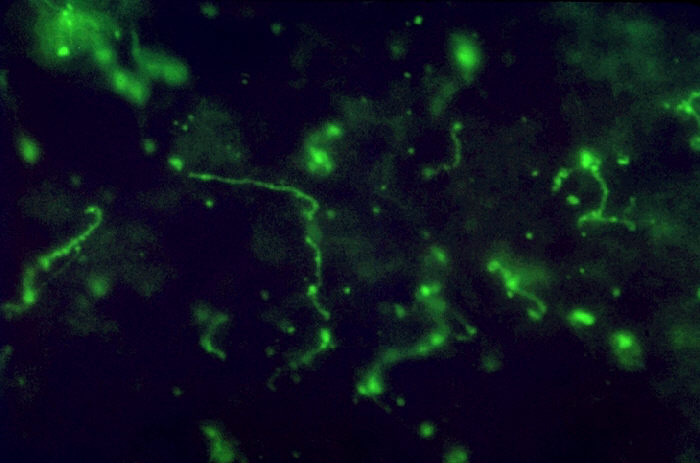
Visualización de Leptospira, la espiroqueta vista en un frotis de impresión de hígado (tinción de anticuerpos fluorescentes)
Imagen: “Leptospira bacteria in liver impression smear. FA stain“ por CDC/Mildred Galton. Licencia: Dominio Público.| Características | Leptospirosis Leptospirosis Leptospira is a spiral or question mark-shaped, gram-negative spirochete with hook-shaped ends. The major clinical species is Leptospira interrogans, which causes a mild flu-like illness in a majority of cases. The manifestations are biphasic, with Leptospira found in the blood initially. Leptospira/Leptospirosis | Síndrome de Weil ( leptospirosis Leptospirosis Leptospira is a spiral or question mark-shaped, gram-negative spirochete with hook-shaped ends. The major clinical species is Leptospira interrogans, which causes a mild flu-like illness in a majority of cases. The manifestations are biphasic, with Leptospira found in the blood initially. Leptospira/Leptospirosis icterohemorrágica) |
|---|---|---|
| Presentación | Infección similar a la gripe leve | Forma severa |
| Población en EN Erythema nodosum is an immune-mediated panniculitis (inflammation of the subcutaneous fat) caused by a type IV (delayed-type) hypersensitivity reaction. It commonly manifests in young women as tender, erythematous nodules on the shins. Erythema Nodosum riesgo | Prevalente entre los LOS Neisseria surfistas y en EN Erythema nodosum is an immune-mediated panniculitis (inflammation of the subcutaneous fat) caused by a type IV (delayed-type) hypersensitivity reaction. It commonly manifests in young women as tender, erythematous nodules on the shins. Erythema Nodosum los LOS Neisseria trópicos | Se desarrolla en EN Erythema nodosum is an immune-mediated panniculitis (inflammation of the subcutaneous fat) caused by a type IV (delayed-type) hypersensitivity reaction. It commonly manifests in young women as tender, erythematous nodules on the shins. Erythema Nodosum el 10% de los LOS Neisseria pacientes infectados |
| Signos y síntomas |
|
|
| Diagnóstico | La orina es un fluido corporal excelente para identificar los LOS Neisseria organismos. | |
| Tratamiento |
|
|
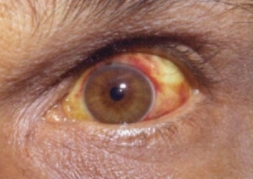
Imagen de los cambios oculares observados en la leptospirosis: se observa sufusión conjuntival e ictericia.
Imagen: “Conjunctival suffusion of the eyes due to leptospirosis” por Daniel Ostermayer. Licencia: CC BY 4.0.Serología:
Aislamiento de leptospiras (sangre, orina, tejido o líquido cefalorraquídeo (LCR)):
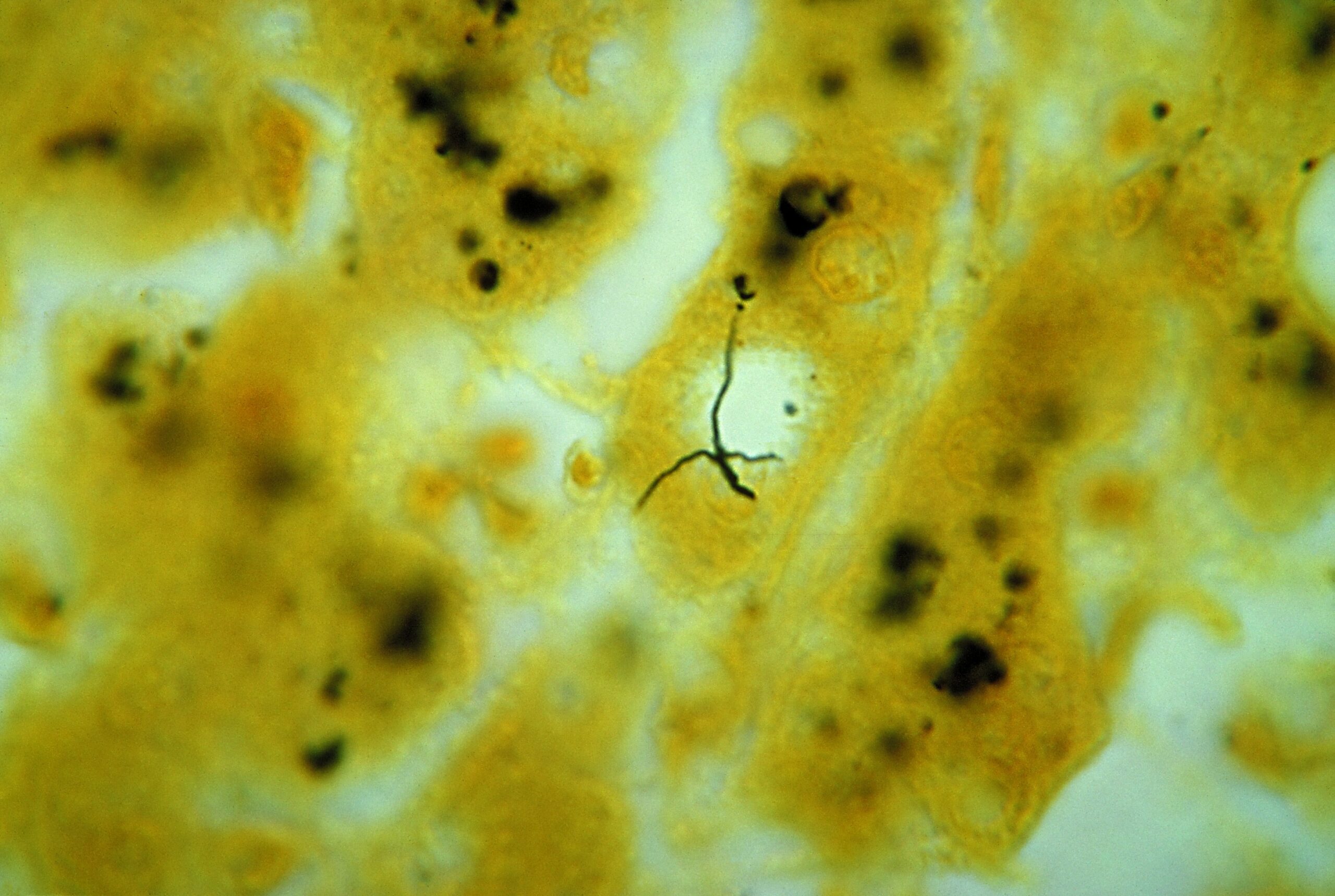
Bacterias Leptospira sp.:
microfotografía de una muestra de tejido hepático, con 2 bacterias Leptospira sp. teñidas de negro
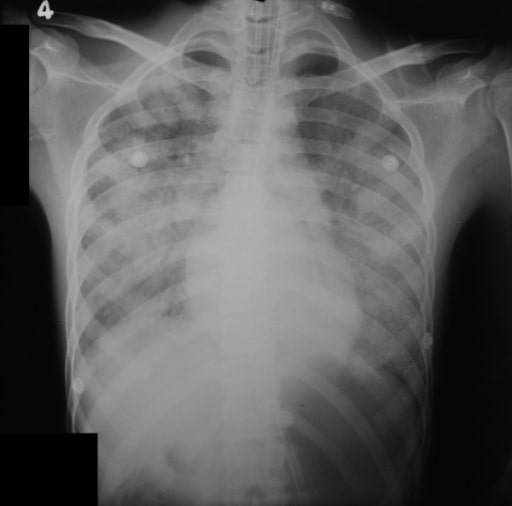
Radiografía de tórax de un paciente con leptospirosis severa:
La imagen muestra una radiografía de tórax con hemorragias pulmonares difusas.