Domina Conceptos Médicos

Estudia para la escuela de medicina y tus examenes con Lecturio.

Órbita y los Músculos Extraoculares: Anatomía

La órbita es la cavidad del cráneo en EN Erythema nodosum is an immune-mediated panniculitis (inflammation of the subcutaneous fat) caused by a type IV (delayed-type) hypersensitivity reaction. It commonly manifests in young women as tender, erythematous nodules on the shins. Erythema Nodosum la que se encuentran el ojo y sus apéndices. La órbita se compone de 7 huesos y tiene forma piramidal, con su vértice apuntando posteromedialmente. El contenido de la órbita comprende el ojo; la fascia Fascia Layers of connective tissue of variable thickness. The superficial fascia is found immediately below the skin; the deep fascia invests muscles, nerves, and other organs. Cellulitis orbitaria y retrobulbar; los LOS Neisseria músculos extraoculares; los LOS Neisseria nervios craneales II, III, IV, V y VI; los LOS Neisseria vasos sanguíneos; grasa; la glándula lagrimal con su saco y el conducto nasolagrimal; los LOS Neisseria párpados; los LOS Neisseria ligamentos palpebrales y suspensorios; el ganglio ciliar y los LOS Neisseria nervios ciliares cortos.

Last updated: Dec 15, 2025
Editorial responsibility: Stanley Oiseth, Lindsay Jones, Evelin Maza

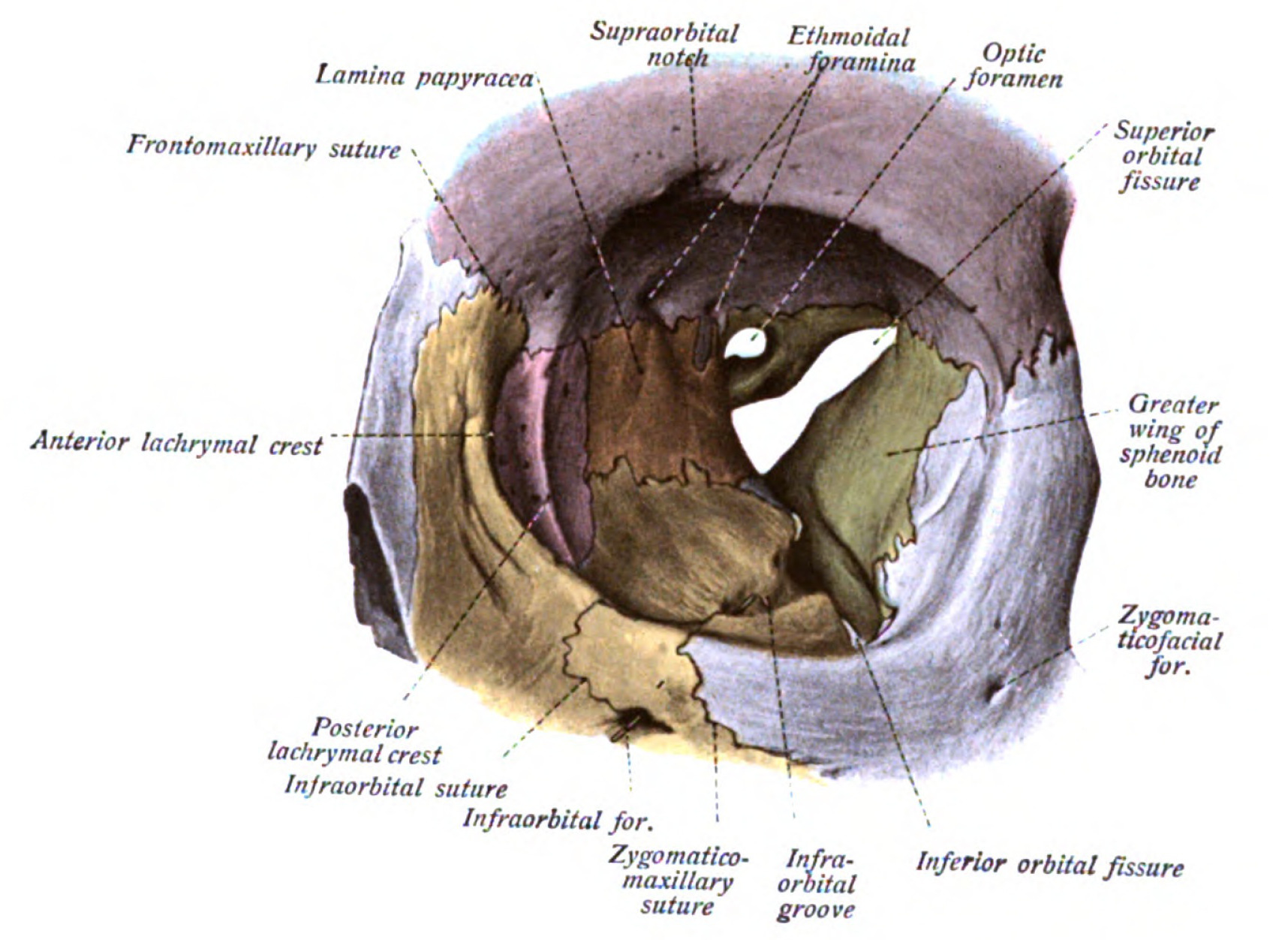
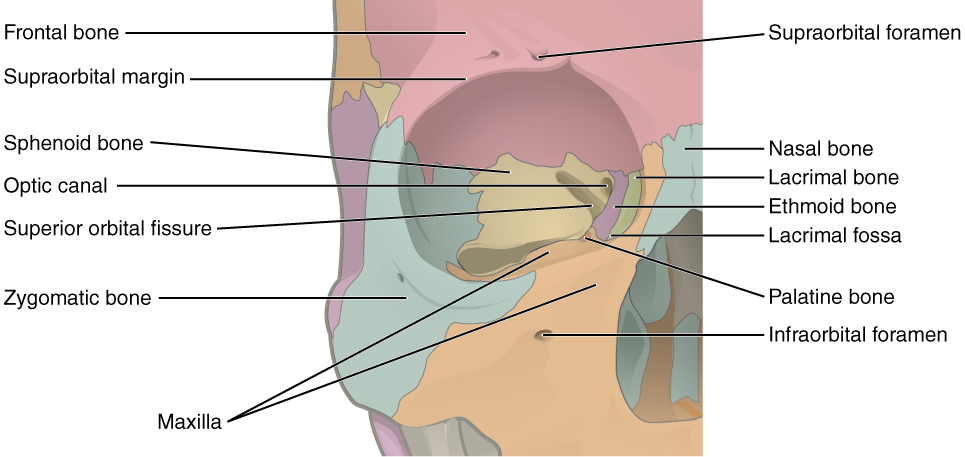
Huesos y Estructura de la Órbita

  • Tiene forma de caverna piramidal cuadrangular en EN Erythema nodosum is an immune-mediated panniculitis (inflammation of the subcutaneous fat) caused by a type IV (delayed-type) hypersensitivity reaction. It commonly manifests in young women as tender, erythematous nodules on the shins. Erythema Nodosum la parte superior de la cara, con una base superficial (reborde orbitario) y profunda, con un vértice posteromedial
    • Reborde orbitario:
      • Margen superior: hueso frontal Frontal The bone that forms the frontal aspect of the skull. Its flat part forms the forehead, articulating inferiorly with the nasal bone and the cheek bone on each side of the face. Skull: Anatomy
      • Margen medial: apófisis frontal Frontal The bone that forms the frontal aspect of the skull. Its flat part forms the forehead, articulating inferiorly with the nasal bone and the cheek bone on each side of the face. Skull: Anatomy del maxilar
      • Margen inferior: apófisis cigomática del maxilar y hueso cigomático
      • Margen lateral: apófisis cigomática del hueso frontal Frontal The bone that forms the frontal aspect of the skull. Its flat part forms the forehead, articulating inferiorly with the nasal bone and the cheek bone on each side of the face. Skull: Anatomy y apófisis frontal Frontal The bone that forms the frontal aspect of the skull. Its flat part forms the forehead, articulating inferiorly with the nasal bone and the cheek bone on each side of the face. Skull: Anatomy del hueso cigomático
    • Vértice: agujero óptico
  • Paredes: cubiertas de periostio (periorbita)
    • Superior (techo): porción orbital del frontal Frontal The bone that forms the frontal aspect of the skull. Its flat part forms the forehead, articulating inferiorly with the nasal bone and the cheek bone on each side of the face. Skull: Anatomy y ala menor del esfenoides
    • Medial: lámina orbitaria del hueso etmoides, cuerpo del hueso esfenoides, hueso frontal Frontal The bone that forms the frontal aspect of the skull. Its flat part forms the forehead, articulating inferiorly with the nasal bone and the cheek bone on each side of the face. Skull: Anatomy, hueso lagrimal y maxilar
    • Inferior (suelo): superficie orbital del maxilar, hueso cigomático y hueso palatino
    • Lateral: ala mayor del esfenoides, placa orbital del hueso frontal Frontal The bone that forms the frontal aspect of the skull. Its flat part forms the forehead, articulating inferiorly with the nasal bone and the cheek bone on each side of the face. Skull: Anatomy y apófisis frontal Frontal The bone that forms the frontal aspect of the skull. Its flat part forms the forehead, articulating inferiorly with the nasal bone and the cheek bone on each side of the face. Skull: Anatomy del hueso cigomático
  • Aberturas importantes: el agujero o canal óptico, los LOS Neisseria agujeros etmoidales anteriores y posteriores, las fisuras orbitarias superiores e inferiores, el surco infraorbitario y la escotadura supraorbitaria
Localización Contenido
Agujero o canal óptico Vértice, bordeado por el cuerpo y el ala menor del esfenoides
  • Nervio óptico (nervio craneal II)
  • Arteria oftálmica
Agujeros etmoidales
  • Unión entre las paredes orbitarias superior y medial
  • En EN Erythema nodosum is an immune-mediated panniculitis (inflammation of the subcutaneous fat) caused by a type IV (delayed-type) hypersensitivity reaction. It commonly manifests in young women as tender, erythematous nodules on the shins. Erythema Nodosum el hueso etmoides, lateral al AL Amyloidosis surco olfatorio
Venas, arterias y nervios etmoidales anteriores y posteriores
Fisura orbitaria superior Entre las alas ALAS An enzyme of the transferase class that catalyzes condensation of the succinyl group from succinyl coenzyme a with glycine to form delta-aminolevulinate. It is a pyridoxal phosphate protein and the reaction occurs in mitochondria as the first step of the heme biosynthetic pathway. The enzyme is a key regulatory enzyme in heme biosynthesis. In liver feedback is inhibited by heme. Heme Metabolism mayor y menor del hueso esfenoides Dentro del anillo tendinoso común:
  • Nervio nasociliar
  • Ramas superior e inferior del nervio oculomotor (nervio craneal III)
  • Nervio abducens (nervio craneal VI)
Fuera del anillo tendinoso común:
  • Nervio frontal Frontal The bone that forms the frontal aspect of the skull. Its flat part forms the forehead, articulating inferiorly with the nasal bone and the cheek bone on each side of the face. Skull: Anatomy (rama de la división oftálmica del NC V)
  • Nervio lagrimal
  • Nervio troclear (nervio craneal IV)
  • Vena oftálmica superior
Fisura orbitaria inferior
  • Borde lateral del suelo orbitario
  • Formado por el ala mayor del esfenoides superiormente y los LOS Neisseria huesos palatino y maxilar inferiormente
  • Vena oftálmica inferior
  • Arteria y vena infraorbitarias
  • Ramas de la división maxilar del nervio trigémino (nervio craneal V2)—nervios cigomáticos e infraorbitarios
  • Ramas orbitarias del ganglio pterigopalatino
Foramen infraorbitario Mitad del suelo orbitario (maxilar) Salida de la vena, la arteria y el nervio infraorbitarios
Escotadura o foramen supraorbitario Margen superior de la órbita (hueso frontal Frontal The bone that forms the frontal aspect of the skull. Its flat part forms the forehead, articulating inferiorly with the nasal bone and the cheek bone on each side of the face. Skull: Anatomy) Salida de la vena, arteria y nervio supraorbitarios

Mnemotecnia 1

Para ayudar a memorizar los LOS Neisseria huesos que componen la órbita, recuerda la mnemotecnia en EN Erythema nodosum is an immune-mediated panniculitis (inflammation of the subcutaneous fat) caused by a type IV (delayed-type) hypersensitivity reaction. It commonly manifests in young women as tender, erythematous nodules on the shins. Erythema Nodosum inglés: Many Friendly Zebras Enjoy Lazy Summer Picnics ( en EN Erythema nodosum is an immune-mediated panniculitis (inflammation of the subcutaneous fat) caused by a type IV (delayed-type) hypersensitivity reaction. It commonly manifests in young women as tender, erythematous nodules on the shins. Erythema Nodosum inglés) (muchas cebras amistosas disfrutan de los LOS Neisseria pícnics de verano)

  • M Many: M axilla Axilla The axilla is a pyramid-shaped space located between the upper thorax and the arm. The axilla has a base, an apex, and 4 walls (anterior, medial, lateral, posterior). The base of the pyramid is made up of the axillary skin. The apex is the axillary inlet, located between the 1st rib, superior border of the scapula, and clavicle. Axilla and Brachial Plexus: Anatomy (muchos: maxilar)
  • F – Friendly: Frontal bone Bone Bone is a compact type of hardened connective tissue composed of bone cells, membranes, an extracellular mineralized matrix, and central bone marrow. The 2 primary types of bone are compact and spongy. Bones: Structure and Types (amigable: hueso frontal Frontal The bone that forms the frontal aspect of the skull. Its flat part forms the forehead, articulating inferiorly with the nasal bone and the cheek bone on each side of the face. Skull: Anatomy)
  • Z – Zebras: Zygomatic bone Bone Bone is a compact type of hardened connective tissue composed of bone cells, membranes, an extracellular mineralized matrix, and central bone marrow. The 2 primary types of bone are compact and spongy. Bones: Structure and Types (cebras: hueso cigomático)
  • E – Enjoy: Ethmoid bone Bone Bone is a compact type of hardened connective tissue composed of bone cells, membranes, an extracellular mineralized matrix, and central bone marrow. The 2 primary types of bone are compact and spongy. Bones: Structure and Types (disfruta: hueso etmoides)
  • L – Lazy: Lacrimal bone Bone Bone is a compact type of hardened connective tissue composed of bone cells, membranes, an extracellular mineralized matrix, and central bone marrow. The 2 primary types of bone are compact and spongy. Bones: Structure and Types (vago: hueso lagrimal)
  • S – Summer: Sphenoid bone Bone Bone is a compact type of hardened connective tissue composed of bone cells, membranes, an extracellular mineralized matrix, and central bone marrow. The 2 primary types of bone are compact and spongy. Bones: Structure and Types (verano: hueso esfenoidal)
  • P – Picnics: Palatine bone Bone Bone is a compact type of hardened connective tissue composed of bone cells, membranes, an extracellular mineralized matrix, and central bone marrow. The 2 primary types of bone are compact and spongy. Bones: Structure and Types (picnics: hueso palatino)

Músculos Extraoculares

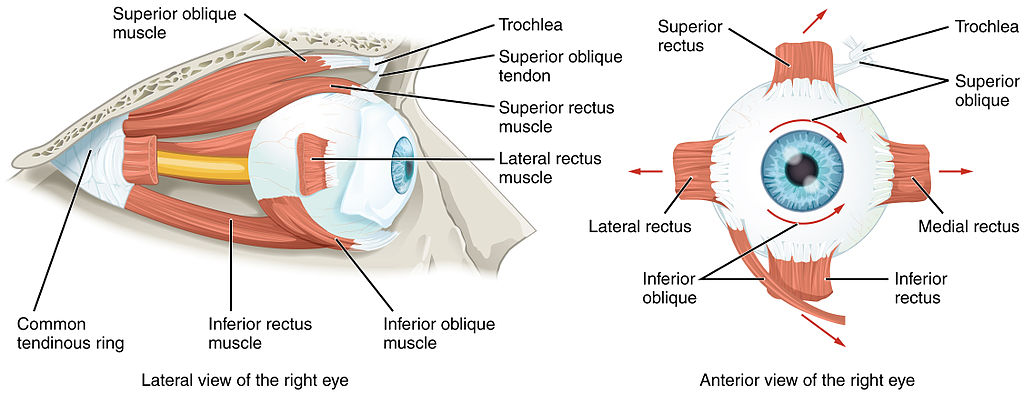
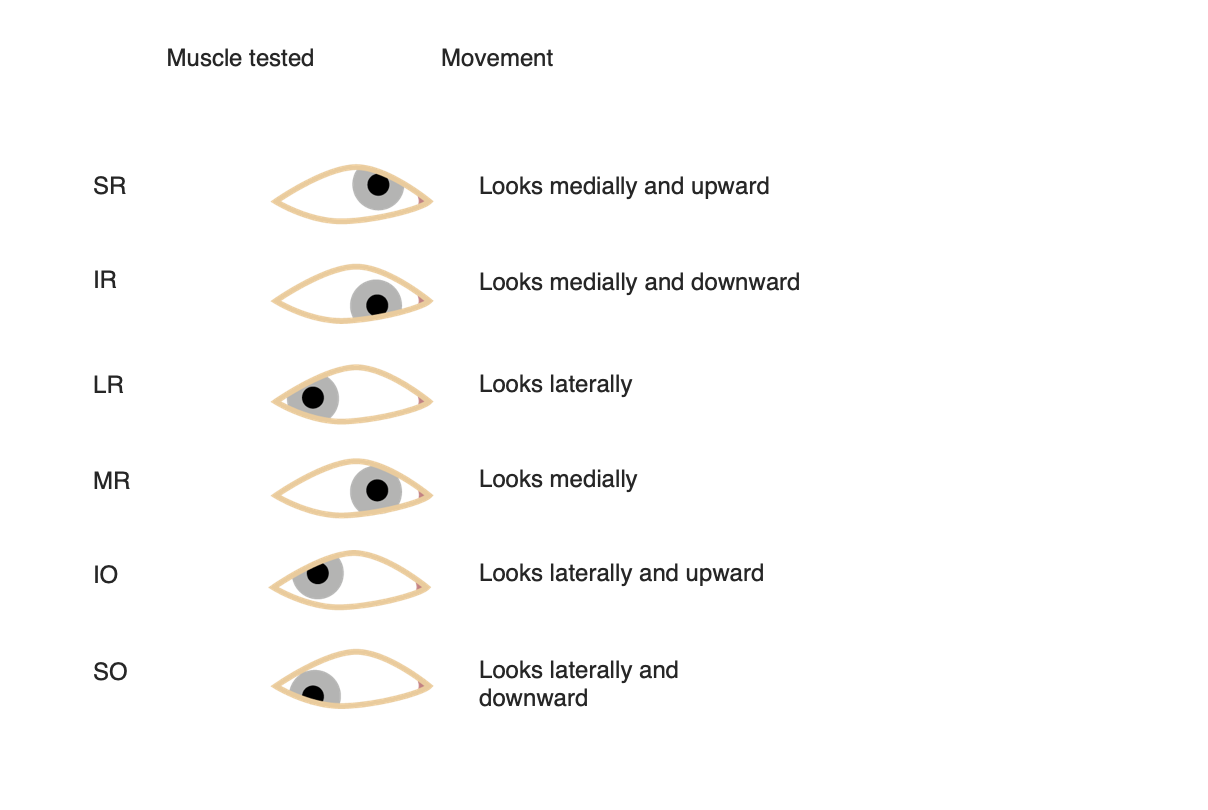
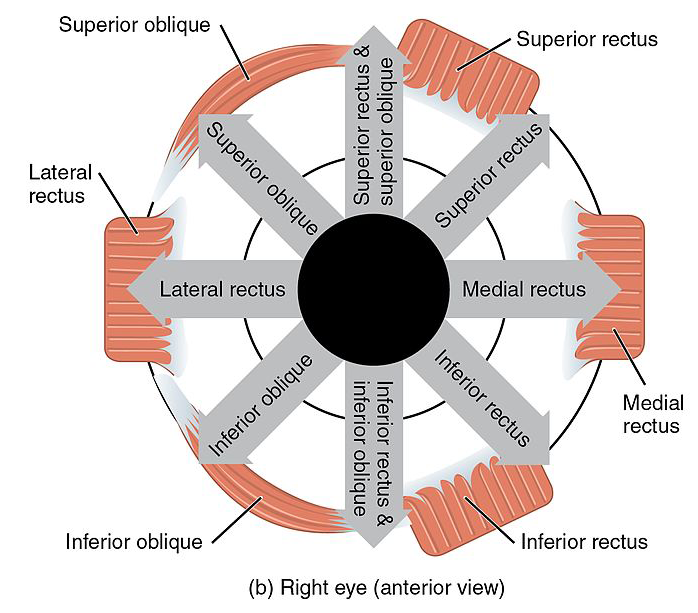
Músculo Origen Inserción Irrigación Inervación Función
Recto medial Anillo de Zinn (anillo tendinoso común) Superficie anterior y medial del ojo Rama muscular inferior de la arteria oftálmica Rama inferior del nervio oculomotor (nervio craneal III) Aducción
Recto lateral Superficie anterior y lateral del ojo Arteria lagrimal Nervio abducens (nervio craneal VI) Abducción
Recto inferior Superficie anterior e inferior del ojo Rama muscular inferior de la arteria oftálmica y la rama infraorbitaria de la arteria maxilar Rama inferior del nervio oculomotor (nervio craneal III) Depresión, extorsión y aducción. En EN Erythema nodosum is an immune-mediated panniculitis (inflammation of the subcutaneous fat) caused by a type IV (delayed-type) hypersensitivity reaction. It commonly manifests in young women as tender, erythematous nodules on the shins. Erythema Nodosum abducción: solo deprime
Recto superior Superficie anterior y superior del ojo Rama muscular superior de la arteria oftálmica Rama superior del nervio oculomotor (nervio craneal III) Elevación, intorsión y aducción. En EN Erythema nodosum is an immune-mediated panniculitis (inflammation of the subcutaneous fat) caused by a type IV (delayed-type) hypersensitivity reaction. It commonly manifests in young women as tender, erythematous nodules on the shins. Erythema Nodosum abducción: solo eleva
Oblicuo superior Ala menor del esfenoides, medial al AL Amyloidosis canal óptico Superficie posterior, superior y lateral del ojo Rama muscular superior de la arteria oftálmica Nervio troclear (nervio craneal IV) Intorsión, depresión y abducción
Oblicuo inferior Lateral al AL Amyloidosis surco lagrimal (maxilar) Superficie posterior, inferior y lateral del ojo Rama inferior de la arteria oftálmica y arteria infraorbitaria Rama inferior del nervio oculomotor (nervio craneal III) Extorsión, elevación y abducción
Elevador del párpado superior Ala menor del esfenoides, por encima del canal óptico Placa tarsal del párpado superior Rama supraorbitaria de la arteria oftálmica Rama superior del nervio oculomotor (nervio craneal III).
Las fibras simpáticas inervan las fibras musculares lisas de la superficie inferior de este músculo.
Retracción y elevación del párpado

Mnemotecnia 2

Para ayudar a memorizar la inervación de los LOS Neisseria músculos extraoculares, recuerda: LR6, SO4, 3

  • Lateral rectus innervated by the abducens nerve Abducens nerve The 6th cranial nerve which originates in the abducens nucleus of the pons and sends motor fibers to the lateral rectus muscles of the eye. Damage to the nerve or its nucleus disrupts horizontal eye movement control. The 12 Cranial Nerves: Overview and Functions (craneal nerve VI) (recto lateral inervado por el nervio abducens (nervio craneal VI))
  • Superior oblique innervated by the trochlear nerve Trochlear nerve The 4th cranial nerve. The trochlear nerve carries the motor innervation of the superior oblique muscles of the eye. The 12 Cranial Nerves: Overview and Functions (craneal nerve IV) (oblicuo superior inervado por el nervio troclear (nervio craneal IV))
  • The remaining extraocular muscles are innervated by the oculomotor nerve Oculomotor nerve The 3D cranial nerve. The oculomotor nerve sends motor fibers to the levator muscles of the eyelid and to the superior rectus, inferior rectus, and inferior oblique muscles of the eye. It also sends parasympathetic efferents (via the ciliary ganglion) to the muscles controlling pupillary constriction and accommodation. The motor fibers originate in the oculomotor nuclei of the midbrain. The 12 Cranial Nerves: Overview and Functions (craneal nerve III) ( los LOS Neisseria demás músculos extraoculares están inervados por el nervio oculomotor (nervio craneal III))

Mnemotecnia 3

Para ayudar a memorizar las acciones de los LOS Neisseria músculos, recuerda: RAD

Recti are Ad AD The term advance directive (AD) refers to treatment preferences and/or the designation of a surrogate decision-maker in the event that a person becomes unable to make medical decisions on their own behalf. Advance directives represent the ethical principle of autonomy and may take the form of a living will, health care proxy, durable power of attorney for health care, and/or a physician’s order for life-sustaining treatment. Advance Directivesductors, except the lateral rectus Lateral rectus Orbit and Extraocular Muscles: Anatomy ( los LOS Neisseria rectos son aductores, excepto el recto lateral)
Aparato Lagrimal

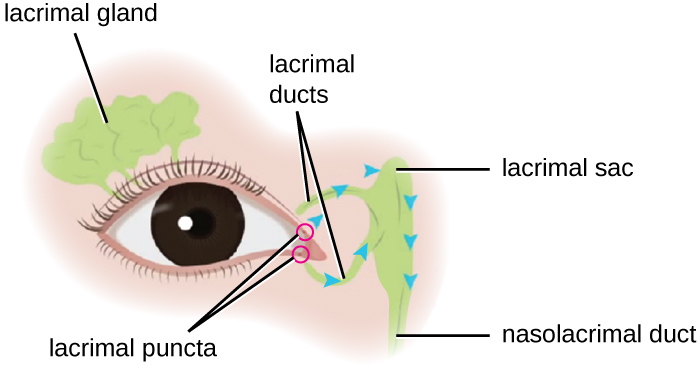
  • Glándula lagrimal:
    • Serosa; libera una capa acuosa de líquido lagrimal directamente sobre el globo ocular
    • Minimiza la fricción, protege y limpia el ojo (“película lagrimal”)
    • Situada en EN Erythema nodosum is an immune-mediated panniculitis (inflammation of the subcutaneous fat) caused by a type IV (delayed-type) hypersensitivity reaction. It commonly manifests in young women as tender, erythematous nodules on the shins. Erythema Nodosum la cara lateral superior de la órbita, drena a través de los LOS Neisseria conductos lagrimales al AL Amyloidosis fórnix conjuntival superior
    • Inervado por fibras parasimpáticas del nervio facial (VII) a través del ganglio pterigopalatino
  • Lágrimas:
    • Solución isotónica
    • Contiene enzimas bactericidas (lisozima y lactoferrina), inmunoglobulina A y lipocalina
  • Glándulas tarsales o de Meibomio:
    • Glándulas sebáceas; producen meibum Meibum Blepharitis, que disminuye la evaporación de la película lagrimal
    • Localizadas en EN Erythema nodosum is an immune-mediated panniculitis (inflammation of the subcutaneous fat) caused by a type IV (delayed-type) hypersensitivity reaction. It commonly manifests in young women as tender, erythematous nodules on the shins. Erythema Nodosum la placa tarsal de los LOS Neisseria párpados (dentro del párpado superior) con orificios en EN Erythema nodosum is an immune-mediated panniculitis (inflammation of the subcutaneous fat) caused by a type IV (delayed-type) hypersensitivity reaction. It commonly manifests in young women as tender, erythematous nodules on the shins. Erythema Nodosum el borde de la zona marginal de la conjuntiva
  • Sistema de drenaje de lágrimas—consiste en EN Erythema nodosum is an immune-mediated panniculitis (inflammation of the subcutaneous fat) caused by a type IV (delayed-type) hypersensitivity reaction. It commonly manifests in young women as tender, erythematous nodules on the shins. Erythema Nodosum:
    • Canalículos lagrimales
    • Saco lagrimal: porción dilatada del conducto nasolagrimal
    • Conducto nasolacrimal: drena en EN Erythema nodosum is an immune-mediated panniculitis (inflammation of the subcutaneous fat) caused by a type IV (delayed-type) hypersensitivity reaction. It commonly manifests in young women as tender, erythematous nodules on the shins. Erythema Nodosum el meato nasal inferior
Aparato lagrimal de la órbita

Diagrama esquemático de la ubicación de la glándula y el aparato lagrimal

Imagen: “Microbiology” por CNX OpenStax. Licencia: CC BY 4.0

Correlaciones Clínicopatológicas

Parálisis nerviosa Causas Síntomas que comprometen al AL Amyloidosis ojo afectado
Oculomotor (nervio craneal III)
  • Infarto del mesencéfalo
  • Aneurisma sacular en EN Erythema nodosum is an immune-mediated panniculitis (inflammation of the subcutaneous fat) caused by a type IV (delayed-type) hypersensitivity reaction. It commonly manifests in young women as tender, erythematous nodules on the shins. Erythema Nodosum la unión de las arterias carótida interna y comunicante posterior
  • Lesiones de los LOS Neisseria senos cavernosos (neoplasia, vascular o inflamatoria)
  • Desviación horizontal en EN Erythema nodosum is an immune-mediated panniculitis (inflammation of the subcutaneous fat) caused by a type IV (delayed-type) hypersensitivity reaction. It commonly manifests in young women as tender, erythematous nodules on the shins. Erythema Nodosum dirección temporal
  • Mirada desviada hacia abajo y hacia afuera
  • Ptosis Ptosis Cranial Nerve Palsies
  • Dilatación pupilar
Troclear (nervio craneal IV)
  • Traumatismo craneal
  • Tumor Tumor Inflammation en EN Erythema nodosum is an immune-mediated panniculitis (inflammation of the subcutaneous fat) caused by a type IV (delayed-type) hypersensitivity reaction. It commonly manifests in young women as tender, erythematous nodules on the shins. Erythema Nodosum la base del cráneo
  • Microvasculopatía
  • Idiopática
El ojo está desviado hacia arriba y hacia adentro
Abducens (nervio craneal VI)
  • Síndrome postviral
  • Mononeuropatía isquémica
Ojo dirigido medialmente
  • Celulitis orbitaria y preseptal: posibles complicaciones de la sinusitis Sinusitis Sinusitis refers to inflammation of the mucosal lining of the paranasal sinuses. The condition usually occurs concurrently with inflammation of the nasal mucosa (rhinitis), a condition known as rhinosinusitis. Acute sinusitis is due to an upper respiratory infection caused by a viral, bacterial, or fungal agent. Sinusitis paranasal o del traumatismo de la órbita. Los LOS Neisseria pacientes pueden presentar fiebre, malestar general, oftalmoplejía por proptosis Proptosis Retinoblastoma, shock Shock Shock is a life-threatening condition associated with impaired circulation that results in tissue hypoxia. The different types of shock are based on the underlying cause: distributive (↑ cardiac output (CO), ↓ systemic vascular resistance (SVR)), cardiogenic (↓ CO, ↑ SVR), hypovolemic (↓ CO, ↑ SVR), obstructive (↓ CO), and mixed. Types of Shock tóxico y deterioro de la visión.
  • Fracturas orbitarias: las fracturas de las cuencas oculares se clasifican en EN Erythema nodosum is an immune-mediated panniculitis (inflammation of the subcutaneous fat) caused by a type IV (delayed-type) hypersensitivity reaction. It commonly manifests in young women as tender, erythematous nodules on the shins. Erythema Nodosum fracturas del reborde orbitario, fractura directa del suelo orbitario y fracturas por estallido. Estas fracturas pueden presentarse con visión borrosa, disminuida o doble, y con hematomas negros y azules alrededor de los LOS Neisseria ojos.
  • Dacrioadenitis: inflamación de las glándulas lagrimales debida generalmente a una infección bacteriana o vírica. Puede presentarse como una inflamación de la parte externa del párpado superior, con enrojecimiento y sensibilidad, dolor Dolor Inflammation en EN Erythema nodosum is an immune-mediated panniculitis (inflammation of the subcutaneous fat) caused by a type IV (delayed-type) hypersensitivity reaction. It commonly manifests in young women as tender, erythematous nodules on the shins. Erythema Nodosum la zona de la inflamación, exceso de lagrimeo e inflamación de los LOS Neisseria ganglios linfáticos preauriculares.
  • Síndrome de Sjögren: enfermedad autoinmune que afecta a las glándulas humectantes del cuerpo. Los LOS Neisseria síntomas principales son la resequedad de la boca y los LOS Neisseria ojos.
  • Estrabismo: enfermedad caracterizada por una desalineación de los LOS Neisseria ojos. Si no se trata durante la infancia, el estrabismo puede provocar ambliopía o pérdida de la percepción de la profundidad.
  • Blefaritis: una de las afecciones oculares más comunes; se caracteriza por la inflamación, descamación, enrojecimiento y formación de costras en EN Erythema nodosum is an immune-mediated panniculitis (inflammation of the subcutaneous fat) caused by a type IV (delayed-type) hypersensitivity reaction. It commonly manifests in young women as tender, erythematous nodules on the shins. Erythema Nodosum el párpado. También puede presentarse con una sensación de ardor, prurito o sensación de cuerpo extraño

References

  1. Bowling, B. (2020). Kanski’s clinical ophthalmology: A systematic approach (9th ed.). Elsevier.
  2. Drake, R. L., Vogl, A. W., & Mitchell, A. W. M. (2019). Gray’s anatomy for students (4th ed.). Elsevier.
  3. Dutton, J. J. (2023). Atlas of clinical and surgical orbital anatomy (3rd ed.). Elsevier.
  4. Levin, L. A., Nilsson, S. F. E., Ver Hoeve, J., & Wu, S. (2021). Adler’s physiology of the eye (12th ed.). Elsevier.
  5. Netter, F. H. (2018). Atlas of human anatomy (7th ed.). Elsevier.
  6. Riordan-Eva, P., & Augsburger, J. J. (2017). Vaughan & Asbury’s general ophthalmology (19th ed.). McGraw-Hill Education.
  7. Sadda, S. R., Sarraf, D., & Freund, K. B. (2023). Retina (6th ed.). Elsevier.
  8. Wineski, L. E. (2018). Snell’s clinical anatomy by regions (10th ed.). Wolters Kluwer.

¡Crea tu cuenta gratis o inicia una sesión para seguir leyendo!

Regístrate ahora y obtén acceso gratuito a Lecturio con páginas de concepto, videos médicos y cuestionarios para tu educación médica.

User Reviews

Que tengas una sesión de estudio alegre y navideña 🎁 Ahorra 50% en todos los planes >>

Details